Research Article | | Peer-Reviewed

Remediation of Groundwater Contaminated with Heavy Metals and Petroleum Hydrocarbons Using Biosparging

Received: 12 October 2026     Accepted: 26 October 2026     Published: 11 November 2026
Views:       Downloads:
Abstract

Groundwater contamination by heavy metals and petroleum hydrocarbons poses significant environmental and public health challenges, particularly in oil-producing regions. This study investigated the remediation of contaminated groundwater using biosparging over a 15-day treatment period. Groundwater samples were collected from Alesa Eleme, Rivers State, Nigeria, and treated using a laboratory-scale biosparging system designed to evaluate changes in heavy metal, polycyclic aromatic hydrocarbon (PAH), total petroleum hydrocarbon (TPH), and benzene, toluene, ethylbenzene, and xylenes (BTEX) concentrations. The results showed that total dissolved metals decreased from 18.12 to 14.96 mg/L, representing a 17.44% reduction. Lead exhibited a 24.59% reduction, while zinc decreased by 23.98%. PAH concentration declined from 2.80 to 1.45 mg/L, corresponding to a 48.21% reduction, whereas TPH decreased from 0.87 to 0.27 mg/L, representing a 68.97% reduction. For BTEX compounds, benzene, toluene, ethylbenzene, and xylenes recorded reductions of 82.49%, 77.34%, 72.75%, and 76.90%, respectively. These findings demonstrate that biosparging was associated with substantial reductions in petroleum hydrocarbon concentrations, while heavy metal removal was comparatively limited. The study indicates that biosparging has potential for treating petroleum-contaminated groundwater, although supplementary treatment may be required to improve heavy metal removal. Further investigation of geochemical conditions and contaminant-removal mechanisms is recommended to establish treatment effectiveness and compliance with applicable groundwater quality standards.

Published in Journal of Chemical, Environmental and Biological Engineering (Volume 10, Issue 2)
DOI 10.11648/j.jcebe.20261002.16
Page(s) 90-97
Creative Commons

This is an Open Access article, distributed under the terms of the Creative Commons Attribution 4.0 International License (http://creativecommons.org/licenses/by/4.0/), which permits unrestricted use, distribution and reproduction in any medium or format, provided the original work is properly cited.

Copyright

Copyright © The Author(s), 2026. Published by Science Publishing Group

Keywords

Biosparging, Groundwater Remediation, Heavy Metals, Petroleum Hydrocarbons, PAHs, TPH, BTEX

1. Introduction
Groundwater is an important source of drinking water, domestic supply, irrigation, and industrial use, but its quality is threatened by industrial activities, petroleum exploration, oil spills, and improper waste disposal. Major groundwater pollutants include heavy metals such as lead (Pb), cadmium (Cd), chromium (Cr), and nickel (Ni), as well as petroleum hydrocarbons such as benzene, toluene, ethylbenzene, xylenes (BTEX), and polycyclic aromatic hydrocarbons (PAHs). These contaminants may pose serious environmental and health risks because heavy metals persist in the environment, while some petroleum hydrocarbons are toxic and carcinogenic. () reviewed heavy-metal contamination and remediation, emphasizing the importance of selecting appropriate treatment technologies.
Petroleum hydrocarbons can migrate through contaminated soils into aquifers, forming dissolved plumes that threaten groundwater quality. Their degradation depends on microbial activity, oxygen availability, nutrients, and environmental conditions. reviewed in-situ bioremediation of aromatic groundwater pollutants, while discussed microbial mechanisms involved in hydrocarbon degradation.
Biosparging is an in-situ remediation technique that injects air or oxygen into the saturated zone to stimulate aerobic microorganisms responsible for degrading petroleum hydrocarbons. evaluated biosparging at a petroleum-contaminated site, while discussed the flexibility of petroleum hydrocarbon bioremediation. examined enhanced aerobic bioremediation in a fractured bedrock aquifer, and investigated an in-situ bioreactor for petroleum hydrocarbon treatment. also considered the optimal design of in-situ groundwater bioremediation.
However, heavy metals cannot be destroyed through biodegradation. Their removal requires processes such as biosorption, adsorption, precipitation, or immobilization. reviewed heavy-metal removal methods, examined sustainable approaches for toxic metal removal. compared conventional and advanced bioremediation methods. () addressed in-situ remediation of groundwater co-contaminated with heavy metals and petroleum hydrocarbons, highlighting the relevance of combined treatment approaches.
In addition, petroleum contamination remains a significant environmental concern in Nigeria, particularly in oil-producing communities. () discussed crude oil pollution and its implications for remediation, while () assessed sparging-well performance and biosparging operations in Rivers State. investigated anaerobic bioremediation of petroleum-contaminated groundwater, providing additional insight into biological treatment under different environmental conditions.
Despite these advances, the simultaneous treatment of heavy metals and petroleum hydrocarbons remains challenging because the processes that degrade organic pollutants may not effectively remove metals. reviewed in-situ approaches for groundwater co-contamination, while , () discussed metal-removal technologies. reviewed trends in heavy-metal removal, and examined biological and green remediation strategies. Therefore, this study investigates the remediation of groundwater contaminated with heavy metals and petroleum hydrocarbons using biosparging, focusing on changes in contaminant concentrations, hydrocarbon biodegradation, and heavy-metal behaviour during treatment. The study will help establish the effectiveness and limitations of biosparging and determine whether supplementary metal-removal techniques are required.
2. Materials and Methods
2.1. Materials
The materials used includes:
Transparent acrylic/Perspex packed columns, porous packing medium, Sampling ports, Air injection diffusers, Tubing, Connectors/fittings, Air filters, Carbon traps, Sealed containers, Amber glass vessels, Acid-washed containers, Acrylic/Perspex packed-column reactor, Oil-free air compressor, Air filtration unit, Airflow regulator, Flow meter, Pressure gauge, Air injection diffuser, Peristaltic pump, Tubing and fittings, Carbon trap/off-gas capture system, Lead nitrate, Cadmium Chloride, Potassium dichromate, Solium arsenate, Zinc nitrate, Nickel nitrate.
2.2. Methods
2.2.1. Source of Hydrocarbon-Contaminated Groundwater (Alesa Eleme Rivers State)
The contaminated groundwater was collected using peristaltic pump at 15m depth and stored in a sealed amber glass vessel at 25 ± 2°C. Excessive agitation was avoided to minimize volatilization of BTEX compounds. The contaminated groundwater was transferred to the biosparging reactor using sealed containers.
2.2.2. Physicochemical Parameters
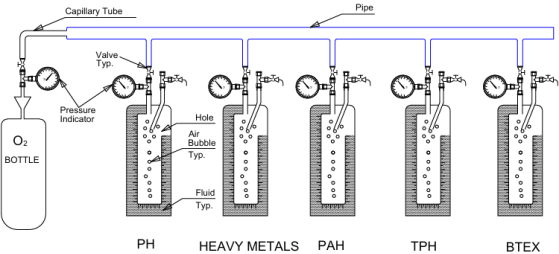
Baseline pH, Heavy metals, PAH, TPH, and BTEX were measured for the contaminated groundwater prior to treatment as shown in Figure 1. These parameters were essential for interpreting biosparging performance because oxygen delivery and redox conditions controlled aerobic biodegradation capacity.
2.2.3. Laboratory-scale Biosparging System Design and Construction
Figure 1. Experimental Set-up of Biosparging.
2.2.4. Process Description of Biosparging Laboratory Bioreactors Set-up
Figure 1 shows the experimental set-up of the biosparging treatment mechanisms for different bioreactors. The bioreactors considered are A1 for treatment of pH value of acidic or alkaline to neutral, and A2 treatment enhanced heavy metal reduction to the acceptable limit as recommended by WHO standard. Bioreactor A3 was subjected in biosparging treatment for the mitigation of polyaromatic hydrocarbons, whereas the bioreactor A4 is for the treatment of total petroleum hydrocarbon, whereas the bioreactor A5 for the treatment of benzene-Toluene-ethylbenzene-xylene (BTEX).
The experimental procedure involve the use of oxygen bottle connected through a capillary tube and co-joint with plastic pipe of 1.5" PVC and different tapping or connection from the main flow line. The first connection continued from the main flow line. The second connection on tapping was for the treatment of pH and the bioreactor configurations contains perforated pipe for oxygen distribution which the major component for biosparging, control valve, pressure gauge, PVC bottle etc. Each of the equipment perform a positive role in achieving the aim and objectives of the research.
Samples for analysis is collected from bioreactor A1 by switching off the main source of the oxygen supply after 3 days and the purpose is to determine the performance of the microbes inoculated in bioreactor A1. The microorganism inoculated in bioreactor A1 are Enterococcus spp, Enterobacter aerogenes and Clostridia spp. Research has demonstrated the significance of these organisms in the treatment of contaminated ground water.
Bioreactor A2 was designed for the treatment of groundwater contaminated with heavy metals through biosparging. The bioreactor was operated to investigate the reduction of heavy metal concentrations to acceptable limits recommended by the World Health Organization (WHO). Oxygen was supplied through a perforated pipe to facilitate aeration and influence the biological and chemical conditions within the reactor. Groundwater samples were collected after three days of treatment for laboratory analysis to determine changes in heavy metal concentrations before and after treatment. The performance of the bioreactor was assessed based on the extent of heavy metal reduction and the suitability of the treated groundwater for its intended use. Since heavy metals cannot be biodegraded, they transform from a dangerous moving, dissolved liquid state into a state bound tightly to the acquirer’s soil particles, the water is trapped in place. The microrganisms present are: Bacillus, Pseudomonas, Ochrobactrum and Sreptomyces.
Bioreactor A3 was designed for the treatment of groundwater contaminated with polycyclic aromatic hydrocarbons (PAHs) using biosparging. The system involved the injection of oxygen into the contaminated groundwater to enhance aerobic microbial activity and promote the degradation of petroleum-derived organic pollutants. The oxygen supply was distributed through a perforated pipe connected to the main flow line, while the control valve and pressure gauge were used to regulate and monitor the operating conditions. Groundwater samples were collected after three days of treatment and analysed to determine the reduction in PAH concentrations. The performance of the bioreactor was evaluated based on the extent of PAH removal and the effectiveness of the treatment process in reducing the concentration of these persistent organic contaminants. The bacterial present are: Escherichia coli, Enterrobacter aerogens and Citrobacters freundi.
Bioreactor A4 was employed for the treatment of groundwater contaminated with total petroleum hydrocarbons (TPH) through biosparging. The treatment involved introducing oxygen into the reactor to improve oxygen availability and stimulate aerobic microorganisms capable of degrading petroleum hydrocarbons. The system consisted of an oxygen supply, connecting pipes, a perforated oxygen-distribution pipe, a control valve, and a pressure gauge. These components facilitated oxygen delivery and regulation throughout the treatment process. Groundwater samples were collected after three days of operation for laboratory analysis to determine the remaining TPH concentrations. The effectiveness of the bioreactor was evaluated by comparing the initial and final TPH concentrations and calculating the percentage reduction achieved during treatment.
Bioreactor A5 was designed for the treatment of groundwater contaminated with benzene, toluene, ethylbenzene, and xylene (BTEX) compounds using biosparging. These compounds are important petroleum-related contaminants because of their mobility in groundwater and potential adverse effects on human health and the environment. The treatment system supplied oxygen through a perforated pipe to enhance aerobic microbial activity and promote the biodegradation of biodegradable BTEX compounds. The oxygen supply and flow conditions were regulated using the installed control valve and pressure gauge. Groundwater samples were collected after three days of treatment and analysed to determine the residual concentrations of individual BTEX compounds. The performance of the bioreactor was assessed by comparing the concentrations before and after treatment to establish the extent of BTEX removal and the effectiveness of biosparging under the experimental conditions.
3. Results and Discussion
3.1. Heavy Metals Results
Table 1. Variation in Heavy Metal Concentrations during Biosparging.

Treatment Time (Days)

Pb (mg/L)

Cd (mg/L)

Cr (VI) (mg/L)

As (V) (mg/L)

Zn (mg/L)

Ni (mg/L)

Total Dissolved Metals (mg/L)

0

4.88

1.94

2.98

1.97

3.92

2.43

18.12

3

4.78

1.90

2.97

1.97

3.83

2.38

17.83

6

4.50

1.81

2.93

1.95

3.59

2.26

17.04

9

4.15

1.70

2.89

1.93

3.29

2.14

16.10

12

3.83

1.62

2.86

1.91

3.09

2.05

15.36

15

3.68

1.58

2.83

1.90

2.98

1.99

14.96

Table 1 presents the variation in heavy metal concentrations during biosparging over 15 days. The results indicate a general decline in the concentrations of lead (Pb), cadmium (Cd), chromium (VI) [Cr (VI)], arsenic (V) [As (V)], zinc (Zn), and nickel (Ni), suggesting that the treatment process influenced the concentrations of dissolved metals in the groundwater. The total dissolved metals concentration decreased from 18.12 mg/L at day 0 to 14.96 mg/L at day 15, representing an overall reduction of approximately 17.44%.
Lead concentration decreased from 4.88 to 3.68 mg/L, corresponding to a reduction of 24.59%. Similarly, cadmium declined from 1.94 to 1.58 mg/L, representing an 18.56% reduction. Chromium (VI) decreased slightly from 2.98 to 2.83 mg/L, giving a reduction of 5.03%, while arsenic (V) decreased from 1.97 to 1.90 mg/L, equivalent to 3.55%. These results indicate that lead and cadmium exhibited greater concentration reductions than chromium and arsenic during the treatment period.
Zinc concentration decreased from 3.92 to 2.98 mg/L, representing a 23.98% reduction, while nickel declined from 2.43 to 1.99 mg/L, corresponding to an 18.11% reduction. The relatively greater reductions in lead and zinc suggest that their concentrations responded more strongly to the treatment conditions than those of chromium and arsenic. However, the mechanisms responsible for these differences cannot be established from concentration measurements alone.
Overall, the progressive reduction in total dissolved metals suggests that biosparging was associated with a decline in the measured metal concentrations. Nevertheless, because heavy metals cannot be biodegraded, their reduction may have resulted from indirect processes such as adsorption onto soil or reactor surfaces, biosorption, precipitation, or changes in metal speciation and mobility caused by aeration. Further investigation of pH, dissolved oxygen, oxidation-reduction potential, and metal concentrations in the solid phase would help establish the dominant removal mechanisms.
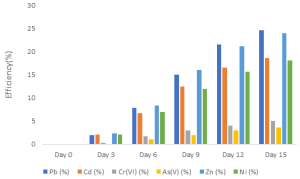
Figure 2. Variation in heavy metal reduction efficiency (%) during biosparging.
Figure 2 illustrates the variation in heavy metal reduction efficiency during biosparging over 15 days. The results show a progressive increase in the reduction efficiencies of lead (Pb), cadmium (Cd), chromium (VI) [Cr (VI)], arsenic (V) [As (V)], zinc (Zn), and nickel (Ni) as the treatment period increased. This trend indicates that longer treatment durations were associated with greater reductions in the concentrations of dissolved metals.
At day 3, the reduction efficiencies were relatively low, with Pb and Cd at approximately 2%, while Cr (VI), As (V), Zn, and Ni showed minimal changes. By day 6, the efficiencies increased, particularly for Pb and Zn, which reached approximately 7.7% and 8.4%, respectively. At day 9, further improvements were observed, with Pb reaching approximately 14.8%, Zn 16.0%, Cd 12.3%, and Ni 12.0%. In comparison, Cr (VI) and As (V) recorded lower efficiencies of approximately 3.0% and 2.0%, respectively.
At day 12, Pb and Zn achieved reduction efficiencies of approximately 21.5% and 21.2%, respectively, while Cd and Ni reached about 16.4% and 15.5%. The reduction efficiencies increased further by day 15, with Pb recording the highest value of approximately 24.5%, followed by Zn at 24.0%, Cd at 18.5%, Ni at 18.0%, Cr (VI) at 5.0%, and As (V) at 3.6%. These results suggest that Pb and Zn responded more strongly to the treatment conditions, whereas Cr (VI) and As (V) exhibited comparatively limited reductions.
The differences in reduction efficiency may be associated with variations in metal speciation, adsorption characteristics, precipitation behaviour, and interactions with microbial biomass and reactor surfaces. Although biosparging primarily promotes aerobic biodegradation of organic contaminants, oxygen injection can alter groundwater pH and oxidation-reduction conditions, potentially influencing the mobility and retention of metals. However, these mechanisms cannot be confirmed from reduction efficiencies alone and would require supporting geochemical measurements.
3.2. PAH Results
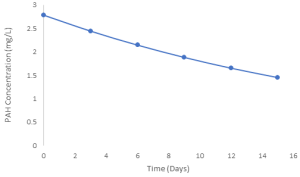
Figure 3. Variation in PAH Concentration during biosparging.
Figure 3 illustrates the variation in polycyclic aromatic hydrocarbon (PAH) concentration during biosparging over 15 days. The results show a continuous decline in PAH concentration from approximately 2.80 mg/L at day 0 to 1.45 mg/L at day 15, indicating progressive removal of PAHs during the treatment period.
At day 3, the PAH concentration decreased to approximately 2.45 mg/L, representing a reduction of about 12.5%. By day 6, the concentration further declined to 2.15 mg/L, corresponding to a cumulative reduction of approximately 23.2%. At day 9, the concentration reached 1.88 mg/L, indicating a reduction of about 32.9%. The concentration subsequently decreased to 1.65 mg/L on day 12 and 1.45 mg/L on day 15, representing cumulative reductions of approximately 41.1% and 48.2%, respectively.
The progressive decline in PAH concentration suggests that biosparging enhanced the removal of these contaminants over time. The injection of oxygen into the groundwater may have stimulated aerobic microorganisms capable of degrading biodegradable PAH compounds into simpler substances. However, the extent of degradation depends on factors such as oxygen availability, microbial activity, PAH molecular structure, contaminant bioavailability, and groundwater conditions. Higher-molecular-weight PAHs may degrade more slowly because of their lower solubility and reduced bioavailability.
3.3. TPH Results
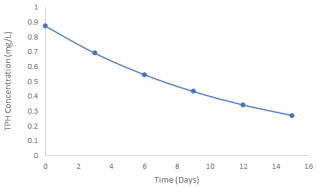
Figure 4 illustrates the variation in total petroleum hydrocarbon (TPH) concentration during biosparging over 15 days. The results show a continuous decrease in TPH concentration from approximately 0.87 mg/L at day 0 to 0.27 mg/L at day 15, indicating progressive reduction of petroleum hydrocarbon contaminants during the treatment period.
Figure 4. Variation in TPH Concentration during biosparging.
At day 3, the TPH concentration decreased to approximately 0.69 mg/L, representing a reduction of about 20.7%. By day 6, the concentration further declined to 0.54 mg/L, corresponding to a cumulative reduction of approximately 37.9%. At day 9, the concentration reached 0.43 mg/L, representing a reduction of about 50.6%. The concentration subsequently decreased to 0.34 mg/L on day 12 and 0.27 mg/L on day 15, corresponding to cumulative reductions of approximately 60.9% and 69.0%, respectively.
The observed decline in TPH concentration suggests that biosparging enhanced the reduction of petroleum hydrocarbons over time. This may be attributed to the introduction of oxygen into the groundwater, which can stimulate aerobic microorganisms capable of degrading biodegradable hydrocarbon compounds. The effectiveness of this process depends on oxygen transfer, microbial activity, nutrient availability, temperature, and the chemical composition of the petroleum contaminants.
3.4. BTEX Results
Table 2. Variation in BTEX concentrations during biosparging.

Treatment time (Days)

Benzene (mg/L)

Toluene (mg/L)

Ethylbenzene (mg/L)

Xylenes (mg/L)

0

0.811

0.587

0.356

0.831

3

0.658

0.483

0.297

0.685

6

0.505

0.379

0.237

0.538

9

0.351

0.275

0.178

0.392

12

0.198

0.171

0.119

0.246

15

0.142

0.133

0.097

0.192

Table 2 presents the variation in benzene, toluene, ethylbenzene, and xylenes (BTEX) concentrations during biosparging over 15 days. The results show a progressive decline in the concentrations of all four compounds, indicating that the treatment process was associated with the reduction of BTEX contaminants in groundwater.
Benzene concentration decreased from 0.811 mg/L on day 0 to 0.142 mg/L on day 15, representing an overall reduction of approximately 82.49%. Similarly, toluene decreased from 0.587 to 0.133 mg/L, corresponding to a reduction of 77.34%. Ethylbenzene concentration declined from 0.356 to 0.097 mg/L, representing a reduction of 72.75%, while xylenes decreased from 0.831 to 0.192 mg/L, equivalent to a reduction of 76.90%.
The decline in BTEX concentrations may be attributed to the increased availability of oxygen during biosparging, which can stimulate aerobic microorganisms capable of degrading these petroleum-derived compounds. Benzene exhibited the highest percentage reduction (82.49%), followed by toluene (77.34%), xylenes (76.90%), and ethylbenzene (72.75%). These differences may reflect variations in biodegradability, microbial interactions, and the physicochemical properties of the individual compounds. However, the concentration data alone do not establish the specific mechanisms responsible for the observed reductions.
The results also demonstrate that substantial reductions occurred throughout the 15-day treatment period. By day 15, the concentrations of all four compounds were considerably lower than their initial values, suggesting that biosparging has potential for treating BTEX-contaminated groundwater. Nevertheless, residual concentrations remained, particularly for xylenes (0.192 mg/L) and benzene (0.142 mg/L). Continued treatment and further monitoring may therefore be necessary to determine whether the remaining concentrations meet the applicable groundwater quality standards.
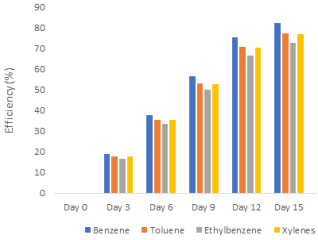
Figure 5. Variation in BTEX Reduction Efficiency (%) During Biosparging.
Figure 5 illustrates the variation in benzene, toluene, ethylbenzene, and xylenes (BTEX) reduction efficiencies during biosparging over 15 days. The results show a progressive increase in the reduction efficiencies of all four compounds with increasing treatment time, indicating improved contaminant reduction as the biosparging process continued.
At day 3, the reduction efficiencies were relatively low, ranging from approximately 16% to 18%. By day 6, the efficiencies increased to about 33-37%, demonstrating further reductions in BTEX concentrations. At day 9, benzene achieved approximately 57% reduction, while toluene, ethylbenzene, and xylenes reached about 54%, 50%, and 53%, respectively. This trend continued at day 12, when benzene reached approximately 75%, followed by xylenes at 71%, toluene at 70%, and ethylbenzene at 66%.
By day 15, benzene recorded the highest reduction efficiency of approximately 82.5%, followed by xylenes at 76.9%, toluene at 77.3%, and ethylbenzene at 72.8%. These results indicate that benzene exhibited the greatest percentage reduction, whereas ethylbenzene showed the lowest. The differences may be associated with variations in biodegradability, microbial activity, compound-specific physicochemical properties, and the availability of oxygen within the groundwater system.
The progressive increase in reduction efficiency may be attributed to oxygen injection during biosparging, which can stimulate aerobic microorganisms capable of degrading biodegradable petroleum hydrocarbons. However, biosparging can also promote the volatilization of some BTEX compounds, meaning that concentration reductions alone cannot establish the proportion removed through biodegradation.
4. Conclusion
This study evaluated the effectiveness of biosparging for remediating groundwater contaminated with heavy metals and petroleum hydrocarbons over 15 days. The results demonstrated reductions in all measured contaminant groups. Total dissolved metals decreased by 17.44%, while PAH and TPH concentrations declined by 48.21% and 68.97%, respectively. Among the BTEX compounds, benzene recorded the highest reduction of 82.49%, followed by toluene (77.34%), xylenes (76.90%), and ethylbenzene (72.75%). These findings indicate that biosparging was more effective in reducing petroleum hydrocarbons than heavy metals under the investigated conditions. The comparatively low removal of chromium (VI) and arsenic (V) further suggests that additional treatment processes may be necessary to improve heavy metal removal. Overall, biosparging offers potential as an in-situ groundwater remediation technique, particularly for petroleum hydrocarbon contamination. Further studies should investigate the effects of operating conditions, microbial activity, and groundwater geochemistry, as well as the integration of biosparging with complementary metal-removal technologies, to improve treatment performance and establish compliance with relevant groundwater quality standards.
Abbreviations

TPH

Total Petroleum Hydrocarbons

WHO

World Health Organization

PVC

Polyvinyl Chloride

PAH

Polycyclic Aromatic Hydrocarbons

BTEX

Benzene, Toluene, Ethylbenzene and Xylenes

Author Contributions
Leton Agatha Kabari: Formal Analysis, Methodology, Software
Kenneth Kekpugile Dagde: Conceptualization, Supervision
Emmanuel Odianyegbuehua Ehirim: Data curation, Resources
Patience Nne Ikenyiri: Writing – review & editing
Conflicts of Interest
The authors declare no conflict of interest.
References
[1] Kao, C. M., Chen, C. Y., Chen, S. C., Chien, H. Y., & Chen, Y. L. (2008). Application of in situ biosparging to remediate a petroleum-hydrocarbon spill site: Field and microbial evaluation. Chemosphere, 70(8), 1492-1499.
[2] Brown, R. A., Hinchee, R. E., Norris, R. D., & Wilson, J. T. (1996). Bioremediation of petroleum hydrocarbons: A flexible, variable speed technology. Remediation, 6(3), 95-109.
[3] Heaston, M. S., Hartig, L. L., Robinson, M., & Woodward, D. S. (2010). Enhanced aerobic bioremediation of a gasohol release in a fractured bedrock aquifer. Remediation, 20(2), 45-59.
[4] Tijani, S., Obafemi, A., Babalola, A., & Usman, A. (2022). Assessment of radius of influence of sparging well and biosparging operations in Ozzmukpbu, Zizkwere LGA, Rivers State, Nigeria. Scientia Africana, 20(3), 95-100.
[5] Microbial bioremediation and biodegradation of petroleum products—A mini review. (2022). Applied Sciences, 12(23), Article 12212.
[6] Remediation of soil and water contaminated with petroleum hydrocarbon: A review. (2020). Environmental Technology & Innovation, 17, Article 100526.
[7] Petroleum hydrocarbons (PH) in groundwater aquifers: An overview of environmental fate, toxicity, microbial degradation and risk-based remediation approaches. (2018). Environmental Technology & Innovation, 10, 175-193.
[8] Yuan, L., Wang, K., Zhao, Q., Yang, L., Wang, G., Jiang, M., & Li, L. (2024). An overview of in situ remediation for groundwater co-contaminated with heavy metals and petroleum hydrocarbons. Journal of Environmental Management, 349, Article 119342.
[9] Adeniran, M. A., Oladunjoye, M. A., & Doro, K. O. (2023). Soil and groundwater contamination by crude oil spillage: A review and implications for remediation projects in Nigeria. Frontiers in Environmental Science, 11, Article 1137496.
[10] Hashim, M. A., Mukhopadhyay, S., Sahu, J. N., & Sengupta, B. (2011). Remediation technologies for heavy metal contaminated groundwater. Journal of Environmental Management, 92(10), 2355-2388.
[11] Sarker, A., Al Masud, M. A., Deepo, D. M., Das, K., Nandi, R., Ansary, M. W. R., Islam, A. R. M. T., & Islam, T. (2023). Biological and green remediation of heavy metal contaminated water and soils: A state-of-the-art review. Chemosphere, 332, Article 138861.
[12] Yaashikaa, P. R., Palanivelu, J., & Hemavathy, R. V. (2024). Sustainable approaches for removing toxic heavy metal from contaminated water: A comprehensive review of bioremediation and biosorption techniques. Chemosphere, 357, Article 141933.
[13] Akomah, U., Nwaogazie, I. L., & Akaranta, O. (2021). A review on current trends in heavy metal removal from water between 2000-2021. International Journal of Environment and Climate Change, 11(12), 67-90.
[14] Farhadian, M., Vachelard, C., Duchez, D., & Larroche, C. (2008). In situ bioremediation of monoaromatic pollutants in groundwater: A review. Bioresource Technology, 99(13), 5296-5308.
[15] Huang, S., Yin, Y., Sun, R., & Tan, X. (2021). In situ anaerobic bioremediation of petroleum hydrocarbons in groundwater of typical contaminated site in Shanghai, China: A pilot study. Environmental Engineering Science, 38(11), 1052-1064.
[16] Ławniczak, Ł., Woźniak-Karczewska, M., Loibner, A. P., Heipieper, H. J., & Chrzanowski, Ł. (2020). Microbial degradation of hydrocarbons—Basic principles for bioremediation: A review. Molecules, 25(4), Article 856.
[17] Key, K. C., Sublette, K. L., Johannes, T. W., Raes, E., Sullivan, E., Duba, J., Ogles, J., Baldwin, B. R., & Biernacki, A. (2013). An in situ bioreactor for the treatment of petroleum hydrocarbons in groundwater. Remediation, 23, 55-84.
[18] Akbarnejad-Nesheli, S., Bozorg Haddad, O., & Loáiciga, H. A. (2016). Optimal in situ bioremediation design of groundwater contaminated with dissolved petroleum hydrocarbons. Journal of Hazardous, Toxic, and Radioactive Waste, 20(2).
[19] Qasem, N. A. A., Mohammed, R. H., & Lawal, D. U. (2021). Removal of heavy metal ions from wastewater: A comprehensive and critical review. npj Clean Water, 4, Article 36.
[20] Sati, S., Sharma, P. K., Naithani, P., Jha, P. K., Panwar, V., Behera, N. R., Karmakar, R. K., Prashant, & Mittal, A. (2026). Bioremediation of heavy metals in contaminated water: Conventional vs. advanced methods. Frontiers in Water, 8, Article 1749800.
Cite This Article
  • APA Style

    Kabari, L. A., Dagde, K. K., Ehirim, E. O., Ikenyiri, P. N. (2026). Remediation of Groundwater Contaminated with Heavy Metals and Petroleum Hydrocarbons Using Biosparging. Journal of Chemical, Environmental and Biological Engineering, 10(2), 90-97. https://doi.org/10.11648/j.jcebe.20261002.16

    Copy | Download

    ACS Style

    Kabari, L. A.; Dagde, K. K.; Ehirim, E. O.; Ikenyiri, P. N. Remediation of Groundwater Contaminated with Heavy Metals and Petroleum Hydrocarbons Using Biosparging. J. Chem. Environ. Biol. Eng. 2026, 10(2), 90-97. doi: 10.11648/j.jcebe.20261002.16

    Copy | Download

    AMA Style

    Kabari LA, Dagde KK, Ehirim EO, Ikenyiri PN. Remediation of Groundwater Contaminated with Heavy Metals and Petroleum Hydrocarbons Using Biosparging. J Chem Environ Biol Eng. 2026;10(2):90-97. doi: 10.11648/j.jcebe.20261002.16

    Copy | Download

  • @article{10.11648/j.jcebe.20261002.16,
      author = {Leton Agatha Kabari and Kenneth Kekpugile Dagde and Emmanuel Odianyegbuehua Ehirim and Patience Nne Ikenyiri},
      title = {Remediation of Groundwater Contaminated with Heavy Metals and Petroleum Hydrocarbons Using Biosparging},
      journal = {Journal of Chemical, Environmental and Biological Engineering},
      volume = {10},
      number = {2},
      pages = {90-97},
      doi = {10.11648/j.jcebe.20261002.16},
      url = {https://doi.org/10.11648/j.jcebe.20261002.16},
      eprint = {https://article.sciencepublishinggroup.com/pdf/10.11648.j.jcebe.20261002.16},
      abstract = {Groundwater contamination by heavy metals and petroleum hydrocarbons poses significant environmental and public health challenges, particularly in oil-producing regions. This study investigated the remediation of contaminated groundwater using biosparging over a 15-day treatment period. Groundwater samples were collected from Alesa Eleme, Rivers State, Nigeria, and treated using a laboratory-scale biosparging system designed to evaluate changes in heavy metal, polycyclic aromatic hydrocarbon (PAH), total petroleum hydrocarbon (TPH), and benzene, toluene, ethylbenzene, and xylenes (BTEX) concentrations. The results showed that total dissolved metals decreased from 18.12 to 14.96 mg/L, representing a 17.44% reduction. Lead exhibited a 24.59% reduction, while zinc decreased by 23.98%. PAH concentration declined from 2.80 to 1.45 mg/L, corresponding to a 48.21% reduction, whereas TPH decreased from 0.87 to 0.27 mg/L, representing a 68.97% reduction. For BTEX compounds, benzene, toluene, ethylbenzene, and xylenes recorded reductions of 82.49%, 77.34%, 72.75%, and 76.90%, respectively. These findings demonstrate that biosparging was associated with substantial reductions in petroleum hydrocarbon concentrations, while heavy metal removal was comparatively limited. The study indicates that biosparging has potential for treating petroleum-contaminated groundwater, although supplementary treatment may be required to improve heavy metal removal. Further investigation of geochemical conditions and contaminant-removal mechanisms is recommended to establish treatment effectiveness and compliance with applicable groundwater quality standards.},
     year = {2026}
    }
    

    Copy | Download

  • TY  - JOUR
    T1  - Remediation of Groundwater Contaminated with Heavy Metals and Petroleum Hydrocarbons Using Biosparging
    AU  - Leton Agatha Kabari
    AU  - Kenneth Kekpugile Dagde
    AU  - Emmanuel Odianyegbuehua Ehirim
    AU  - Patience Nne Ikenyiri
    Y1  - 2026/11/11
    PY  - 2026
    N1  - https://doi.org/10.11648/j.jcebe.20261002.16
    DO  - 10.11648/j.jcebe.20261002.16
    T2  - Journal of Chemical, Environmental and Biological Engineering
    JF  - Journal of Chemical, Environmental and Biological Engineering
    JO  - Journal of Chemical, Environmental and Biological Engineering
    SP  - 90
    EP  - 97
    PB  - Science Publishing Group
    SN  - 2640-267X
    UR  - https://doi.org/10.11648/j.jcebe.20261002.16
    AB  - Groundwater contamination by heavy metals and petroleum hydrocarbons poses significant environmental and public health challenges, particularly in oil-producing regions. This study investigated the remediation of contaminated groundwater using biosparging over a 15-day treatment period. Groundwater samples were collected from Alesa Eleme, Rivers State, Nigeria, and treated using a laboratory-scale biosparging system designed to evaluate changes in heavy metal, polycyclic aromatic hydrocarbon (PAH), total petroleum hydrocarbon (TPH), and benzene, toluene, ethylbenzene, and xylenes (BTEX) concentrations. The results showed that total dissolved metals decreased from 18.12 to 14.96 mg/L, representing a 17.44% reduction. Lead exhibited a 24.59% reduction, while zinc decreased by 23.98%. PAH concentration declined from 2.80 to 1.45 mg/L, corresponding to a 48.21% reduction, whereas TPH decreased from 0.87 to 0.27 mg/L, representing a 68.97% reduction. For BTEX compounds, benzene, toluene, ethylbenzene, and xylenes recorded reductions of 82.49%, 77.34%, 72.75%, and 76.90%, respectively. These findings demonstrate that biosparging was associated with substantial reductions in petroleum hydrocarbon concentrations, while heavy metal removal was comparatively limited. The study indicates that biosparging has potential for treating petroleum-contaminated groundwater, although supplementary treatment may be required to improve heavy metal removal. Further investigation of geochemical conditions and contaminant-removal mechanisms is recommended to establish treatment effectiveness and compliance with applicable groundwater quality standards.
    VL  - 10
    IS  - 2
    ER  - 

    Copy | Download

Author Information
  • Department of Chemical/Petrochemical Engineering, Rivers State University, Port Harcourt, Nigeria
  • Department of Chemical/Petrochemical Engineering, Rivers State University, Port Harcourt, Nigeria

  • Department of Chemical/Petrochemical Engineering, Rivers State University, Port Harcourt, Nigeria

  • Department of Chemical/Petrochemical Engineering, Rivers State University, Port Harcourt, Nigeria