Abstract
Small to Medium Enterprise (SMMEs) are today’s reality, as most of the population work for them; they are also tomorrow’s future, because they have great potential to contribute to the structural transformation and diversification of the economy. This study sought to investigate strategies to overcome the obstacles faced by SMEs in Bulawayo by drawing insights from successful policies and practices implemented across Southern African countries. The primary objective of the study was to explore how Bulawayo's business ecosystem can be revitalized to stimulate SMME growth, enhance their contribution to economic development, and address pervasive socio-economic challenges. By examining case studies from neighboring Southern African countries, the research identified adaptable strategies that can foster a conducive environment for SMMEs in Bulawayo. The findings of the study reveal that SMME success in Southern African cities and provinces such as Gaborone, Gauteng, and Maseru is often underpinned by strong institutional support, streamlined regulatory processes, targeted financial interventions, and robust business development programs. Furthermore, partnerships between the public and private sectors emerge as a common thread in fostering sustainable growth. Applying these insights, the study identifies actionable recommendations for Bulawayo. From the study, if policymakers and stakeholders adopt a multi-faceted approach that prioritizes both systemic reform and localized solutions tailored to the city's unique challenges, it could position Bulawayo as a thriving hub for entrepreneurship and innovation in Zimbabwe. The research concludes that with strategic interventions, informed by regional successes, Bulawayo can enhance its economic resilience and drive inclusive growth.
|
Published in
|
Journal of Finance and Accounting (Volume 14, Issue 4)
|
|
DOI
|
10.11648/j.jfa.20261404.11
|
|
Page(s)
|
167-177 |
|
Creative Commons
|

This is an Open Access article, distributed under the terms of the Creative Commons Attribution 4.0 International License (http://creativecommons.org/licenses/by/4.0/), which permits unrestricted use, distribution and reproduction in any medium or format, provided the original work is properly cited.
|
|
Copyright
|
Copyright © The Author(s), 2026. Published by Science Publishing Group
|
Keywords
SMMEs, Entrepreneurship, Start-ups, Bulawayo, Southern Africa, Zimbabwe
1. Introduction
In recent years, entrepreneurship has been on the rise in Zimbabwe due to economic difficulties and a growing appetite for self-reliance among citizens. This trend mirrors a wider move towards innovation and enterprise in Africa as nations strive to diversify their economies and create jobs
| [20] | Makina, D., Fanta, A. B., Mutsonziwa, K., Khumalo, J., &Maposa, O. (2015). Financial access and SME size in South Africa. FinMark Trust. |
[20]
. The microfinance industry is one of the most promising and well-known industries in Zimbabwe. The reputation of this industry is highly recognized through trade activities, business operations and economic contribution to the country’s socio-economic development
| [21] | Maponga, K. R. (n.d.). A qualitative assessment of entrepreneurial development to enhance economic development in Zimbabwe: A case study of SMEs in Bulawayo.
https://doi.org/10.9790/0837-2503030614 |
[21]
. Regardless of the fact that SMEs are indispensable from an economic perspective, they still receive far less than the deserved support from policy makers in most developing countries
.
The role of SMMEs in employment creation and industrial development in Africa came into prominence after large companies failed to generate meaningful employment and hence contribute towards the development of the economy
| [17] | Kah, S., O’Brien, S., Kok, S., & Gallagher, E. (2022). Entrepreneurial motivations, opportunities, and challenges: An international perspective. Journal of African Business, 23(2), 380–399. https://doi.org/10.1080/15228916.2020.1838835 |
| [49] | Sibanda, W. S. (2024). Bulawayo MSMEs embrace digital future at Winter Expo. KoNtuthu, June 14. |
[17, 49]
. As postulated by
| [7] | Chikukutu, W., & van der Merwe, S. (2025). Framework for recycling entrepreneurial talent to sustain SMMEs in Botswana. SAJESBM, 17(1). |
[7]
, regional production and productivity is significantly higher in areas with greater entrepreneurial capital compared to that lacking such resources. As reported by the Chronicle
| [42] | Phiri, A. (2024). Small and medium enterprises urged to form sector clusters. Chronicle, February 21. |
[42]
, the economy of Bulawayo (Zimbabwe's second-largest city) is said to be undergoing structural transformation with SMEs coming in strong in influencing production and marketing trends, including the need for strategic synergies across sectors. The economic growth of the city therefore, hinges on unlocking the full potential of its small, micro, and medium enterprises (SMMEs) as they form a critical part of the city’s economic fabric, fostering employment and innovation
. Banks and other lenders demand collateral from SMEs in order to grant loans. Although the government should ideally guarantee these loans, moral hazard by SMEs themselves is a problem in Zimbabwe and other developing nations
| [15] | Kabonga, I., Zvokuomba, K., &Nyagadza, B. (2021). The challenges faced by young entrepreneurs in informal trading in Bindura, Zimbabwe. Journal of Asian and African Studies, 56(8), 1780–1794. https://doi.org/10.1177/0021909621990850 |
[15]
. The majority of SMEs misuse loans that the government extends to them at concessionary rates. This necessitates a vigorous campaign to teach SME leaders soft skills and fundamental managerial abilities. Previous research shows that the government plays a crucial role in the ecosystem of SMEs, and it is anticipated that this role will become more prominent in order to guarantee rapid growth.
| [16] | Kafidi, E. T., &Kaulihowa, T. (2023). Investigating the effect of strategic planning on the financial performance of SMEs in Namibia. Economics and Business Quarterly Reviews, 20–32. https://doi.org/10.31014/aiw.1992.06.02.505 |
[16]
found that SMEs have had difficulty weathering the storm due to their limited resources. As a result, governments all over the world employed safety nets to keep companies from completely collapsing by striving for the unachievable goal of eradicating the effects but ultimately settling on reducing the impact on transaction costs. However, the private sector, venture capitalists, and the SMMEs themselves must find ways to support the survival and expansion of SMMEs in Zimbabwe given the government's ongoing deficits. It is therefore the purpose of this study to unlock the economic potential of SMMEs in Bulawayo through policies and practices inspired by Southern African and Bulawayo Start-up success stories.
Zimbabwe won independence from Britain in 1980, after decades of colonial rule and a period of relative stability under former President Robert Mugabe. Nevertheless,
| [41] | Olawoyin, F. S., &Chiwetu, F. (2024). Youth entrepreneurship in Zimbabwe: Unlocking the next generation’s potential. In Exploring Entrepreneurship: Unpacking the Mosaic of Entrepreneurship across Africa (pp. 181–202). Springer Nature Switzerland. https://doi.org/10.1007/978-3-031-56343-0_8 |
[41]
disagree and claim that the economy started to regress in the early 2000s because of land reform disagreements, hyperinflation, and political turbulence. The economic crisis caused mass unemployment and poverty, forcing most Zimbabweans to find other means of income. Consequently, entrepreneurship increasingly emerged as a pathway to self-preservation and financial independence
| [33] | Munyoro, G., & Ncube, P. (2020). The role of entrepreneurship in sustaining churches’ operations in Zimbabwe: A case study of Bulawayo Metropolitan. Journal of Business Administration and Management Sciences Research, 8(1), 1–25.
http://www.apexjournal.org |
[33]
. Connie-Marlene Theyse, Head of Enterprise Banking at FNB Namibia, predicts that by the end of 2025, microeconomic businesses will account for 60% of emerging markets, with women leading 58% of these businesses
. According to
| [13] | Guruwo, P. T., &Segolame, S. (2018). Evaluating problems encountered by SMEs in accessing financial support from commercial banks in Botswana. International Journal of Innovative Research and Development.
https://doi.org/10.24940/ijird/2018/v7/i6/JUN18063 |
[13]
, SMMEs play a significant role in the economy, as demonstrated by
| [45] | Ruzvidzo, C. (2015). 2,000 SMEs captured on Bulawayo database. Chronicle, February 5. |
[45]
, who noted that 3.4 million SMMEs in Zimbabwe employ 4.8 million people full-time and contribute USD 8.6 billion to GDP. According to the same survey, the government's, the business communities, and the general public's roles in harnessing and optimizing the sector's development serve as the foundation for SMMEs' critical role in the country's economy. Furthermore,
| [53] | Tshuma, N., Ndebele, V., Setoboli, T. and Sibanda, E., (2025). An Analysis of the Impact of Survival Entrepreneurship on Economic Development: A Case Study of the Informal Sector in Zimbabwe. International Journal of Research and Innovation in Social Science, 9(15), pp. 405-414. |
[53]
stated that the SMME sector accounts for over 70% of employment in Zimbabwe. This intuitively implies that the SMMEs sector has greatly reduced poverty, thereby curing many other socioeconomic "ills" linked to poverty. The performance of the economic transformation, which is based on empowering SMEs and creating more indigenously owned and operated businesses, will determine Zimbabwe's national economic growth trajectory as outlined in Vision 2030
| [45] | Ruzvidzo, C. (2015). 2,000 SMEs captured on Bulawayo database. Chronicle, February 5. |
[45]
.
According to earlier research
| [47] | Sánchez-Ballesta, J. P., &Yagüe, J. (2023). Tax avoidance and the cost of debt for SMEs: Evidence from Spain. Journal of Contemporary Accounting and Economics, 19, 1–14.
https://doi.org/10.1016/j.jcae.2023.100362 |
[47]
, all stakeholder groups must work together if Zimbabwe is to realize its 2030 vision, with a particular emphasis on SMMEs, which are predicted to make a significant contribution to becoming an upper middle-income nation by 2030. According to
| [39] | OECD. (2016). Supporting business creation from unemployment in Finland: Rapid policy assessments of inclusive entrepreneurship policies and programmes. OECD Publishing. |
[39]
, fostering entrepreneurship is essential for achieving equitable and sustainable growth as well as a means of addressing emerging economic issues, creating jobs, and overcoming social and economic disadvantage. This suggests that a nation's low commercial potential is reflected in higher unemployment rates, among other social issues. Additionally, the World Economic Forum asserts that entrepreneurship is crucial to reducing youth unemployment because it can give young people the assistance they require to create markets and job opportunities
.
The number of registered SMMEs has been increasing every year for the last 10 years
| [21] | Maponga, K. R. (n.d.). A qualitative assessment of entrepreneurial development to enhance economic development in Zimbabwe: A case study of SMEs in Bulawayo.
https://doi.org/10.9790/0837-2503030614 |
[21]
, indicating a growing belief that opening an entrepreneurial business will be profitable.
| [29] | Moyo, B., & Ndlovu, N. (2023). Examining the challenges and survival strategies of the informal sector during COVID-19 induced lockdowns and restrictions in Bulawayo.
https://doi.org/10.52589/AJSSHR-FPMVJYPG |
[29]
government had also taken steps to encourage this trend through policies aimed to support small businesses. Initiatives like Kumvana, which facilitate networking, mentorship, and access to funding, are helping to create a more vibrant and interconnected entrepreneurial community in Zimbabwe.
| [8] | Chinyowa, N. P. (2019). An evaluation of the challenges that hinder business growth of MSMEs in Zimbabwe: The case of cellphone accessories businesses in Harare (2010–2018) (Doctoral dissertation, University of Zimbabwe). |
| [30] | Moyo, S. (2023). 45 SMEs formalised in Bulawayo. Chronicle, February 23. |
[8, 30]
mentioned that embracing the power of collaboration, Zimbabwean entrepreneurs are finding new ways to navigate the challenges they face and unlock unprecedented opportunities for growth. As the Zimbabwean entrepreneurial landscape continues to evolve, the stories of resilience, innovation, and collaboration serve as a testament to the indomitable spirit of the country’s business leaders. In addition, a review of the National Budget Statements shows that the country has been experiencing perennial budget deficits with the Ministry of Finance always exploring opportunities for harnessing revenues from the different sectors, the most recent being formalization of the informal sector from which most SMMEs are situated.
Entrepreneurship Climate in Bulawayo
The economic growth of Bulawayo, Zimbabwe's second-largest city, hinges on unlocking the full potential of its small, micro, and medium enterprises (SMMEs). These enterprises form a critical part of the city’s economic fabric, fostering employment and innovation. However, they face significant challenges, including limited access to finance, inadequate infrastructure, regulatory bottlenecks, power shortages and constrained market access. Post the COVID-19 pandemic and the economic hardships that resulted, it is important to re-examine how SMMEs are included in African policy making, particularly in rural African settings. Bulawayo Chamber of Small to Medium Enterprises provincial head, reported that more than 2,600 SMMEs have been recorded in the Bulawayo database as part of the ongoing SMEs registration process which started in January 2015 out of these, only 600 have paid the required fee of $3 to be part of the formalisation programme with at least 21 registration centres being set in different city suburbs as part of sensitisation programmes. According
| [8] | Chinyowa, N. P. (2019). An evaluation of the challenges that hinder business growth of MSMEs in Zimbabwe: The case of cellphone accessories businesses in Harare (2010–2018) (Doctoral dissertation, University of Zimbabwe). |
| [37] | Nautwina, J. P., & Asa, R. (2021). The impact of microfinance support on the development of manufacturing SMEs operating in Windhoek, Namibia. Archives of Business Research, 9(12). https://doi.org/10.14738/abr.912.11417 |
[8, 37]
there are 229,091 MSMEs in Bulawayo of which 45 among the total were formalised in 2022, 33 SMMEs representatives underwent training in cluster formation in 2024. By the end of year 2022, SME sector accounted for 70% of business transactions in Zimbabwe
| [45] | Ruzvidzo, C. (2015). 2,000 SMEs captured on Bulawayo database. Chronicle, February 5. |
[45]
. According to
| [53] | Tshuma, N., Ndebele, V., Setoboli, T. and Sibanda, E., (2025). An Analysis of the Impact of Survival Entrepreneurship on Economic Development: A Case Study of the Informal Sector in Zimbabwe. International Journal of Research and Innovation in Social Science, 9(15), pp. 405-414. |
[53]
, most of the SMEs in Bulawayo are also facing economic ups and downs which affect their revenue streams and require exploring alternative sources of funding, and leveraging technology to increase efficiency and reach. By embracing a mindset of resilience and adaptability, SMMEs cannot not only survive but thrive in the face of Bulawayo’s business volatile environment. A post-Covid 19 study by
| [29] | Moyo, B., & Ndlovu, N. (2023). Examining the challenges and survival strategies of the informal sector during COVID-19 induced lockdowns and restrictions in Bulawayo.
https://doi.org/10.52589/AJSSHR-FPMVJYPG |
[29]
found that the increase in the cost of doing business is driven by a number of factors, including the ever-deteriorating exchange rate, which has a ripple effect on the price index, resulting in increases in the cost of raw materials and other services such as insurance. Most SMEs have responded to this challenge by raising the cost of goods and services or reducing their workforce. However,
| [13] | Guruwo, P. T., &Segolame, S. (2018). Evaluating problems encountered by SMEs in accessing financial support from commercial banks in Botswana. International Journal of Innovative Research and Development.
https://doi.org/10.24940/ijird/2018/v7/i6/JUN18063 |
| [40] | Okurut, F. N., Molefhe, L., Mupimpila, C., Nkuba, M., &Okurut, M. L. (2015). Determinants of SME growth in Botswana. IDR, 13, 1–2. |
[13, 40]
show that a rise in the cost of goods or services has a detrimental impact on business expansion.
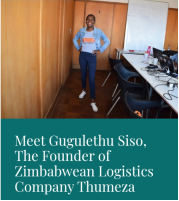
Despite all these challenges bedeviling the City of Bulawayo, the city is reported as growing as a hub of entrepreneurship and innovation and boasts trail blazers in the startup ecosystem. Four of these startups made it into the “Gumiguru 50 and under 30 emerging leaders’ class of 2020.” The founders of these startups who are making waves in the entrepreneurship ecosystem are Ryan Katayi, CEO and Co-founder of FarmHut Africa; Gugulethu Siso, founder of Thumeza; Kudakwashe Dhliwayo, founder of Vital Recycling and Nkosana Masuku, cofounder and CEO of Phenomenon Technologies. This study therefore, delves into the unique challenges and opportunities that define the entrepreneurial landscape in Bulawayo, and explore how some of the city’s most inspiring business leaders have navigated these complexities. The paper sought to determine strategies that can be used by SMMEs in Bulawayo Metropolitan to reduce costs of doing business and increase revenue post Covid-19. The primary objective of this study is to explore how Bulawayo's business ecosystem can be revitalized to stimulate SMME growth, enhance their contribution to economic development, and address pervasive socio-economic challenges.
Entrepreneurship in Zimbabwe has witnessed a significant surge, becoming a vital avenue for economic empowerment amidst a declining economy characterized by unemployment and poverty since the early 2000s. This resilience has laid a foundation for sectorial growth, with a steady increase in registered SMEs reflecting growing confidence in entrepreneurial ventures. Despite government efforts to support small businesses through policies and initiatives like Kumvana, a lot still has to be done to ensure that SMMES in Bulawayo continue to grow and strive post COVID-19 and also within any crisis that might arise. The primary obstacles include persistent economic instability, leading to volatile revenue streams and a pressing need for entrepreneurs to explore alternative funding sources and leverage technology for efficiency. Due to strict collateral requirements from formal financial institutions and concerns about moral hazard with government-backed loans, many SMEs in Bulawayo struggle to obtain capital and frequently rely on personal savings or unofficial lenders. Bulawayo's aging and unreliable infrastructure, marked by inconsistent power supply, limited internet connectivity, and inadequate transportation networks, severely hinders business operations and growth. While SMEs are recognized as indispensable for socio-economic development, employment creation, and poverty alleviation, and are crucial for Zimbabwe's Vision 2030, they still grapple with limited resources and insufficient policy support, with a large informal sector limiting access to formal services and markets. Consequently, despite the indomitable spirit and adaptability of Bulawayo's entrepreneurs, these systemic hurdles impede their ability to consistently thrive and contribute to the city's economic transformation, necessitating a deeper understanding of how these businesses can not only survive but achieve sustainable growth in a volatile environment. This context necessitates a deeper understanding of effective policies and practices that can unlock the full economic potential of SMMEs in Bulawayo, drawing inspiration from successful strategies implemented in other Southern African contexts, to enable these businesses to achieve sustainable growth in a volatile environment. The study provides a way forward to policymakers of SMEs and government and enables them to develop targeted interventions and support mechanisms by drawing lessons from Southern African success stories, thereby bolstering Bulawayo's contribution to Zimbabwe's economic transformation and Vision 2030. For researchers, it contributes to the academic discourse by offering empirical evidence on entrepreneurial resilience and growth in volatile environments, particularly in the under-researched Bulawayo context. Moreover, its findings on the necessity for creativity, adaptability, and leveraging technology directly inform Education 5.0 by providing practical context for curriculum development focused on innovation, industrialization, and human-centered problem-solving in entrepreneurial training. The remainder of this study is organized as follows: the next section presents a theoretical and empirical literature review that connects the topic. Section 4 describes the study methodology, emphasizing the essential techniques. Sections 5 and 6 present the results and offer policy recommendations.
2. Literature Survey
SMMEs are the subject of several theories, some of which were put forth by
| [14] | Jongwe, P. (2024). Entrepreneurship skills and growth of SMMEs in Zimbabwe: The case of Masvingo City (Doctoral dissertation, University of South Africa). |
| [49] | Sibanda, W. S. (2024). Bulawayo MSMEs embrace digital future at Winter Expo. KoNtuthu, June 14. |
[14, 49]
. Among these is the resource-based view, which contends that a company's internal resources and capabilities rather than external variables are the main forces behind survival and competitive advantage. As a result, SMMEs are advised to recognize and capitalize on their special resources and capabilities in order to generate value for clients and gain a competitive edge. The competitive advantage theories demonstrate how SMMEs can achieve and sustain a competitive advantage over rivals suggesting that SMMEs can gain a competitive advantage by focusing on their strengths, offering unique value propositions and adapting to changing market conditions. In support of that,
| [54] | Weilbach, N. (2025). Strategic framework for enhancing SMME sustainability: Insights from the Northern Cape Province, South Africa. Open Journal of Business and Management, 13(2), 946–967. https://doi.org/10.4236/ojbm.2025.132051 |
[54]
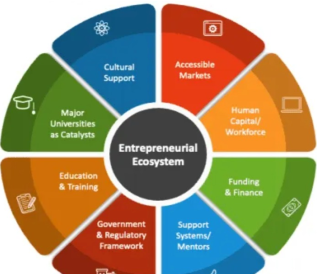
added that effective leadership and entrepreneurial spirit are crucial for SMME survival as postulated by the leadership and entrepreneurial theories. This is especially true during crises and as such SMMEs owners and managers need to be visionary, adaptable and innovative to navigate challenges and seize opportunities. As propounded by the strategic choice theory; firms make strategic choices based on their assessment of the external environment and their capabilities implying that SMMEs must carefully assess their environment and make strategic choices that maximize their chances of survival and success. In order to enhance a national entrepreneurship ecosystem, the World Bank highlighted a number of factors that have to be considered. These are summarized in
Figure 1.
Figure 1. Entrepreneurial Ecosystem.
According to
| [29] | Moyo, B., & Ndlovu, N. (2023). Examining the challenges and survival strategies of the informal sector during COVID-19 induced lockdowns and restrictions in Bulawayo.
https://doi.org/10.52589/AJSSHR-FPMVJYPG |
[29]
; Start-up or entrepreneurial ecosystems are a set of interconnected entrepreneurial actors, entrepreneurial organizations, institutions and entrepreneurial processes. In simple terms, these are a set of independent actors and factors, coordinated to allow productive entrepreneurship. It is the presence of those actors and factors and their interaction that determine the success of the ecosystems.
Vast empirical evidence exists on the challenges faced by SMMES in developing countries the world over and how to mitigate them. What can be deduced from all these studies are that SMMEs all over the continent and globe face more or less similar challenges. Studies done internationally include those by
| [2] | Alawamleh, M., Francis, Y. H., & Alawamleh, K. J. (2023). Entrepreneurship challenges: The case of Jordanian start-ups. Journal of Innovation and Entrepreneurship, 12(1), 21.
https://doi.org/10.1186/s13731-023-00286-z . |
| [11] | Edge Growth. (2024). Impact report: Finding the balance—What is the best way to help SMEs in South Africa? |
| [25] | Mensah, A. O., Fobih, N., &Adom, Y. A. (2019). Entrepreneurship development and new business start-ups: Challenges and prospects for Ghanaian entrepreneurs. African Research Review, 13(3), 27–41.
http://dx.doi.org/10.4314/afrrev.v13i3.3 |
[2, 11, 25]
. For Southern African Countries; studies include those done by
| [6] | Chaurura, P., & Dar, J. (2024). An evaluation of the nature and extent of challenges encountered by SMMEs in Botswana during COVID-19. International Journal of Advanced Business Studies, 3(4). https://doi.org/10.5985711JAB53438 |
| [13] | Guruwo, P. T., &Segolame, S. (2018). Evaluating problems encountered by SMEs in accessing financial support from commercial banks in Botswana. International Journal of Innovative Research and Development.
https://doi.org/10.24940/ijird/2018/v7/i6/JUN18063 |
| [27] | Mhlongo, T., &Daya, P. (2023). Challenges faced by small, medium and micro enterprises in Gauteng: A case for entrepreneurial leadership as an essential tool for success. SAJESBM, 15(1), 591. |
[6, 13, 27]
and
| [7] | Chikukutu, W., & van der Merwe, S. (2025). Framework for recycling entrepreneurial talent to sustain SMMEs in Botswana. SAJESBM, 17(1). |
| [32] | Munodawafa, T., Naude, M., & Govender, K. (2024). Assuring the sustainability and growth of small and medium-sized manufacturing enterprises in Botswana: An exploratory study. International Journal of Economics and Financial Issues, 14(4), 253–266.
https://doi.org/10.32479/ijefi.16632 |
[7, 32]
developed a framework that demonstrated how SMMEs can achieve sustainability by employing sustainability measures, leveraging ecosystem actors and resources and making entrepreneurial decisions. Empirically some studies found that there was a strong positive relationship between microfinance support and SMEs development and competitiveness in Namibia
| [37] | Nautwina, J. P., & Asa, R. (2021). The impact of microfinance support on the development of manufacturing SMEs operating in Windhoek, Namibia. Archives of Business Research, 9(12). https://doi.org/10.14738/abr.912.11417 |
[37]
. Another study found that the support needed by SMMEs in the North Eastern Regions of Namibia were provision of skills/vocational training, access to market information, a common facility center, technical advice and assistance with business plan development for accessing of loans
| [31] | Mukata, C. M., & Swanepoel, E. (2017). Development support for SMMEs in the financially constrained north eastern regions of Namibia. Southern African Business Review, 2, 198-220. |
[31]
. Additionally,
| [4] | Bank of Namibia. (2010). SME development in Namibia: 12th Annual Symposium. |
| [16] | Kafidi, E. T., &Kaulihowa, T. (2023). Investigating the effect of strategic planning on the financial performance of SMEs in Namibia. Economics and Business Quarterly Reviews, 20–32. https://doi.org/10.31014/aiw.1992.06.02.505 |
[4, 16]
found that strategic planning has a positive effect on the financial performance of SMEs with many SMEs in Namibia indicating that they have never done any strategic plan. Besides that,
| [3] | Amadasun, D. O. E., &Mutezo, A. T. (2022). Influence of access to finance on the competitive growth of SMEs in Lesotho. Journal of Innovation and Entrepreneurship, 11(56), 1–20. |
[3]
revealed that access to finance significantly affects the competitive growth of SMEs in Lesotho. For Bulawayo,
| [36] | Nani, G. V., & Ndlovu, I. (2022). Survival of the fittest: How SMEs in the Bulawayo Metropolitan Province, Zimbabwe experienced the COVID-19 pandemic. Journal of Global Business and Technology, 18(1), 56–70. |
[36]
found that businesses can survive even during pandemics as long as appropriate survival strategies are applied
| [23] | Matekenya, W., &Moyo, C. (2022). Innovation as a driver of SMME performance in South Africa: A quantile regression approach. African Journal of Economic and Management Studies, 13(3), 452–467.
https://doi.org/10.1108/AJEMS-06-2021-0306 . |
[23]
revealed that high failure rate of SMMEs is linked to the entrepreneurial climate, which is not beneficial to the expansion and growth of businesses. R & D expenditures had a positive and significant effect on performance for firms with higher sales (high growth or larger firms). They also found evidence that the introduction of new products/services promotes performance for low growth/smaller firms.
2.1. Challenges Faced by SMMEs in Bulawayo, Zimbabwe
2.1.1. Taxation
Business and Entrepreneurial Taxation is an important aspect that policy makers need to take into consideration since SMMEs and Entrepreneurial constitute the bulk of the firms and almost always account for most of the jobs
| [26] | Mgammal, M. H., Al-Matari, E. M., &Alruwaili, T. F. (2023). Value-added tax rate increases: A comparative study using difference-in-difference with an ARIMA modelling approach. Humanities and Social Sciences Communications, 10(1), 1–17. https://doi.org/10.1057/s41599-023-01608-y |
[26]
. An exhaustive variety of Business and Entrepreneurial taxation issues can arise that the state needs to address such as implications that may be faced on the start up, structure and/or growth of a Business and Entrepreneurial. Arguments for and against tax incentives for Business and Entrepreneurial and ways in which the relative high cost of tax compliance for Business and Entrepreneurial is reduced. SMEs and Entrepreneurial growth and profits are determined by the country's taxation structure since the more taxes are paid the less profit they earn
| [5] | Bhalla, N., Kaur, I., & Sharma, R. K. (2022). Examining the effect of tax reform determinants, firms’ characteristics and demographic factors on the financial performance of small and micro enterprises. Sustainability, 14(14), 1–18.
https://doi.org/10.3390/su14148270 |
| [48] | Senin, S. M., Juhdi, N. H., Omar, A. R. C., & Hashim, N. A. (2024). Small and medium enterprises’ survival during the global crises: Systematic review of theoretical perspectives of building resilience in the time of crisis. Cogent Business and Management, 11(1), 1–19.
https://doi.org/10.1080/23311975.2024.2395428 |
[5, 48]
. The costs of company tax and VAT in Zimbabwe are some of the highest in the World. In addition to these costs, the Zimbabwe Tax System is complicated adding to the taxpayer's burden. This burden is much more important in terms of Business and Entrepreneurial cost of doing business as well because a huge percentage of small medium and micro sized enterprises find it hard to control the tax return and or use a tax return system and end up looking for assistance from tax experts which is costly since mostly tax experts will charge a fee
| [12] | FinScope. (2022). Micro, Small and Medium Enterprises Survey Zimbabwe: Topline findings. |
| [23] | Matekenya, W., &Moyo, C. (2022). Innovation as a driver of SMME performance in South Africa: A quantile regression approach. African Journal of Economic and Management Studies, 13(3), 452–467.
https://doi.org/10.1108/AJEMS-06-2021-0306 . |
[12, 23]
. Small medium and micro-sized enterprises have a large tax compliance burden compared to multi-national corporations therefore this need to be amended either administratively and or policy wise to try and assist the Business and Entrepreneurial who face barriers of tax compliance cost. Tax compliance cost considerations are indispensable and should be an important factor to be considered for policy makers.
2.1.2. Access to Capital
A vital component of business and entrepreneurial development and survival is the availability of funding. When a business or entrepreneurial venture is founded, it is especially important to have a steady stream of revenue and capital. One factor that negatively affects entrepreneurship is the inability to raise business funding for business and entrepreneurial endeavors because of limited access to financing from financial institutions
| [12] | FinScope. (2022). Micro, Small and Medium Enterprises Survey Zimbabwe: Topline findings. |
| [35] | Mvula, A. E. (2018). Entrepreneurial intentions and start-up realities: The case of industrial design students in South Africa (Doctoral dissertation, University of South Africa). |
[12, 35]
. During difficult times, established businesses and entrepreneurs might not have the resources to buy raw materials, hire skilled workers, build infrastructure, handle distribution and transportation logistics, or acquire the requisite knowledge to grow or endure. Competitiveness and growth may be constrained as a result
| [28] | Mini, G. K., &Thankappan, K. R. (2017). Pattern, correlates, and implications of non-communicable disease multimorbidity among older adults in selected Indian states: A cross-sectional study. BMJ Open, 7(3), 1–6.
https://doi.org/10.1136/bmjopen-2016-013529 |
| [38] | Nkwabi, J., & Mboya, L. (2019). A review of factors affecting the growth of small and medium enterprises (SMEs) in Tanzania. European Journal of Business and Management, 11(33), 1–8. |
[28, 38]
. Through tax breaks, grants, equity financing options, and loans, the government can help businesses and entrepreneurs expand. But the problem still remains that businesses and entrepreneurs in Bulawayo do not receive funding from the public or private sectors. The difficulty of finding more information about financing still persists, impeding Bulawayo's business and entrepreneurial development. The availability of information, funding access, and further guidance on the requirements for funding are among the ongoing challenges
| [2] | Alawamleh, M., Francis, Y. H., & Alawamleh, K. J. (2023). Entrepreneurship challenges: The case of Jordanian start-ups. Journal of Innovation and Entrepreneurship, 12(1), 21.
https://doi.org/10.1186/s13731-023-00286-z . |
| [10] | Cusmano, L. (2018). SME and entrepreneurship financing: The role of credit guarantee schemes and mutual guarantee societies in supporting finance for small and medium-sized enterprises. OECD SME and Entrepreneurship Papers. OECD Publishing. https://dx.doi.org/10.1787/35b8fece-en. |
| [19] | Legoabe, D. M. (2017). An exploratory study of small, medium and micro enterprises in Mamelodi Township (Doctoral dissertation, Tshwane University of Technology). |
[2, 10, 19]
. It also covers helpful criticism in the event that the corresponding business and entrepreneur is unable to secure funding for their ventures or is not eligible for funding. This increases the chances that subsequent grant applications will be approved. Training, advice, and mentorship on a range of business topics and disciplines should also be encouraged by access to funding and capital for business and entrepreneurship
| [1] | Agrawal, R., Bakhshi, P., Chandani, A., Birau, R., & Mendon, S. (2023). Challenges faced by women entrepreneurs in South Asian countries using interpretive structural modeling. Cogent Business & Management, 10(2), 2244755.
https://doi.org/10.1080/23311975.2023.2244755 |
| [9] | Confidente. (2025). Women now lead more local SMEs. Confidente Namibia. https://confidentenamibia.com/women-now-lead-more-local-smes |
[1, 9]
.
2.2. Impact of Macroeconomic Instability on SMME Performance
Because of the financial instability and uncertainty caused by inflation, consumers and buyers are compelled to reduce their spending on goods and services, which lowers demand for them and ultimately shrinks the market. Because central banks may have to raise interest rates in order to control inflation
| [23] | Matekenya, W., &Moyo, C. (2022). Innovation as a driver of SMME performance in South Africa: A quantile regression approach. African Journal of Economic and Management Studies, 13(3), 452–467.
https://doi.org/10.1108/AJEMS-06-2021-0306 . |
[23]
, which could lead to high credit costs
, a rising inflation rate hurts business and entrepreneurship because it also affects the rate at which credit is made available to these entities. Wealth is directly impacted by this, which reduces business and entrepreneurial opportunities
| [46] | Samudzimu, B. P. H. and Munkumba, M. D. B., (2022) Determinants of Small to Medium Enterprises Access to Capital: An Analytical Framework for SME financing in Zimbabwe. |
[46]
. The price of the supplies and services needed to run a business may increase due to inflation. Due to present supply chain issues and labor shortages, inflation may also raise the cost of goods and services. As a result, the cost of goods supplied to businesses and entrepreneurs may rise. In order to counteract the rising costs of commodities, which negatively impact profit margins, businesses and entrepreneurs may want to consider raising the prices of goods and services if the cost of services, raw materials, and supplies rises
| [34] | Musara, M., &Nieuwenhuizen, C. (2020). Informal sector entrepreneurship, individual entrepreneurial orientation and the emergence of entrepreneurial leadership. Africa Journal of Management, 6(3), 194–213. |
[34]
.
3. Methodology
A review of Southern African policy frameworks and literature complements the methodology used in this study. In order to evaluate the applicability and potential impact of best practices in the Zimbabwean context, the study draws important lessons from the experiences of local startups and a comparative analysis. Furthermore, a substantial portion of comparative analysis is incorporated into the data analysis approach. This examines different viewpoints, opposing conclusions, and perspectives found in earlier narratives. A crucial tool for identifying differences, points of agreement, and points of disagreement among the previously reviewed stories is comparative analysis. In the end, it provides a thorough and impartial viewpoint on the research topic by making it easier to extract subtle insights from the variety of viewpoints expressed in the literature. This study aims to give a comprehensive understanding of the complex environment surrounding SMMEs in Bulawayo, Zimbabwe, by thoroughly reviewing a variety of historical accounts from Southern Africa. Procedures for gathering data from previous successful stories include thorough database searches and focused keyword selection; the next stage of data analysis entails identifying recurrent themes and applying comparative analysis techniques. In order to address Bulawayo's business and entrepreneurial challenges, this all-encompassing approach seeks to uncover important insights and develop evidence-based recommendations, thereby supporting well-informed decision-making and policy formulation. The study's ethical considerations are mainly related to the appropriate and responsible use of previously successful narratives. In order to maintain academic integrity and prevent plagiarism, the research complies with ethical standards by properly citing and referencing all information gathered from outside sources. Additionally, there are no ethical issues with data collection or research participants because all of the data used in this study are publicly available.
3.1. Strategies for Unlocking the Economic Potential of SMMEs in Bulawayo
As postulated by
| [7] | Chikukutu, W., & van der Merwe, S. (2025). Framework for recycling entrepreneurial talent to sustain SMMEs in Botswana. SAJESBM, 17(1). |
| [18] | Khwae, G. B. (2024). Impact of entrepreneurial orientation on small and medium enterprises’ performance in Botswana. Journal of Asian and African Studies.
https://doi.org/10.1177/00219096241295639 |
| [45] | Ruzvidzo, C. (2015). 2,000 SMEs captured on Bulawayo database. Chronicle, February 5. |
[7, 18, 45]
at the Bank of Botswana Symposium, “There is no one “magic bullet” that will ensure growth in a country’s SMME sector.” There are a number of policies and practices drawn from the experiences of regions and cities located in Southern African Countries, as well as experiences of successful start-ups located in the City of Bulawayo that can be implemented to ensure the long term survival of SMMEs in Bulawayo even amid any crises that may arise are presented hereunder.
3.2. Lessons Drawn from Successful Bulawayo Startups
1) Thumeza (Fintech-Logistics)
About-GugulethuSiso successfully co-founded two start-ups; Ninety-Nine Investments, at 22 years of age, which is a B2B trolley management start-up in Namibia and Thumeza, a supply chain fintech startup in South Africa and Zimbabwe founded in April of 2018. Ninety-Nine offers trolley guards and repair services to major retailers in Namibia. When Gugulethu exited from Ninety-Nine Investments in 2017, the start-up had over 50 employees; netted private equity investment for growth and had an impressive client list ranging from Shoprite, Checkers, Pinck n Pay, Food Lovers Market to Wool worths. Gugulethu secured R8 million in venture capital funding when she sold off her shares.
What they do- Thumeza provides a data powered financing or transporters in Africa, uses loan management platform to provide credit through early invoice settlement solutions and debtor factoring to small-scale transporters in Africa. It is an online logistics platform that helps enterprises coordinates the movement of their loads to the supply of transporters. The business is worth over millions. They also work with big companies like Pick n Pay and many others to finance transportation in the region.
Partners- The start-up counts, among its partners and clients, the UNDP, Lori Systems, MPost and KTU Express.
Awards- Through Thumeza, Gugulethu is an alumnus of the 2020 class of the Google for Startups Africa Accelerator; the 2021 Startup boot Afritech Alumni and also winners of the Southern Africa Fintech Challenge powered by the World Bank in 2023.
2) Farmhut (2018)-Agritech
About-The start-up was founded by
| [42] | Phiri, A. (2024). Small and medium enterprises urged to form sector clusters. Chronicle, February 21. |
[42]
who found out that small-scale farmers, particularly females, do not get the best deals when selling their produce (African Business Communities). It is an AI powered market place that connects farmers to markets that pay fair prices for their produce and hence enables the farmers to grow their business fast throughout the year. This ensures that consumers get fresh, local and sustainably grown food from small producers in their local area and hence promoting the local economic ecosystem. Through Farmhut, farmers are offered an online market place for them to meet with buyers who in most cases are remotely situated. Their start-up was a way of addressing the inclusivity gap.
Aim-Farmhutassists small-holder farmers to scale their operations by helping with access to funding, markets and insurance
Coverage-Able to assist almost 600 farmers from across the country, raise funds for women farmers in Masvingo, Lupane, Nyazura, and Murewa through crowd funding efforts. To date, 84 000 farmers have been assisted.
Funding- Received US$100 000 investment from Hult Price Foundation
Innovations- the startup launched its new user-friendly and easy access platform that lets farmers sell directly to consumers. Farmhut also launched a WhatsApp-based chat bot, uMudhumeni, that is meant to address the connectivity challenges most farmers in Zimbabwe face. This implies that farmers will be able to sign up to the Farmhut platform and learn about farming, receive quotations and get help from virtual agronomists.
3) Vital Recycling- Waste Management
About- Vital Recycling is a Zimbabwe Company originating from Vital Manufacturing Pvt Ltd- a manufacturing company based in Bulawayo. The startup was founded by Kudakwashe Dhliwayo (The Palstic Doctor). Their core business is plastic recycling, pellets manufacturing and outdoor marketing on bins and cages.
Aim-Vital Recycling manages plastic waste as a resource promoting sustainable environmentally sound and cost-effective practices and has a goal of keeping as much plastic waste out of the landfills as well as providing excellent waste management services to their clients as an integral part of their business.
Services- Integrated system of waste reduction, reuse, recycling, customer service and education
Products- Vital Recycling manufactures LDPE and HDPE pellets and shredded plastic for recycling and brick making
Funding and Support: GiHub project run by SNV and funded by UNICEF
Awards- The start-up’s awards and honors include; 3rd prize Best Recycling and Waste Management company in Zimbabwe by Green Enterprise in April 2019; Top 7 startups in Demo Africa Harare Tour by Demo Africa in partnership with Micah Foundation in 2018; Top 15 Green Innovators that are making a difference in their communities with their initiatives and improving the environment in Zimbabwe.
4) Phenomenon Technologies
About- the company was co-founded by Nkosana Masuku and Nhlanhla Sibanda. Their startup is a high school science lab experiment on a smart phone through augmented reality technology (cite.org.zw). Phenomenon Technology’s business model is a business to consumer (B2C) and business to business (B2B) as it offers the application to students’ services available on Google play store and also to schools to use in their own school laboratories. They trade in applied science learning.
Funding- The startup won the African Union award which came with grant money in 2018 and also raised an equity crowd fund for them to actually produce the application in to the market after they launched Science.
Awards- Phenomenon Technologies won a number of awards that include; African Union top ten education innovations in 2018; first Zimbabwean start-up to actually enter the Google for Startup Accelerator joining an alumnus of startups like Pace Steak.
3.3. What SMMEs Start-ups in Bulawayo Can Learn from These Successful Start-ups
Africa is bedeviled with a number of socio-economic problems and entrepreneurship has been observed to some if not most of these problems. For SMMEs in Bulawayo to thrive, they have to be introducing into the market, a product that solves the society’s problems. With society turning to entrepreneurship as a way out of unemployment and poverty, current and future startups have to shy away from reproducing ideas and products that are already on offer if ever they are to strive and survive. A look at the four Bulawayo startups presented in this study reveals that all of them were birthed out of a need to solve a specific problem hence their success. Thumeza was birthed to assist individuals and enterprises who were struggling to move goods within the country, especially within rural areas. From Gugulethu’s own words, the startup came to be “out of frustration,” when she faced challenges in delivering essentials to her grandmother who lived in a remote area. That prompted her to start up her own company as a way of solving that specific problem thereby bridging the gap for individuals, small, medium and large enterprises tpo access affordable, accountable and transparent delivery solutions. This is done by leveraging informal and small-scale operators that are vetted by the company.
Similarly, Farmhut discovered that small scale farmers, particularly female, do not get the best deals when selling their produce hence developed an AI powered market place that connected them to markets which pay fair prices for their produce thereby solving the inclusivity gap. Vital Recycling works on our rubbish problem. Kudakwashe Dhliwayo, an Applied Chemistry graduate from NUST, discovered that companies she worked for, for a year after graduating were poorly managing their waste and hence decided to come up with a solution to help them do a better job. That is how her company was birthed. In addition, she also discovered that currently in Zimbabwe, waste is dumped in landfills, mixed (plastic, paper and bio waste 0 which makes it difficult to retrieve waste for recycling. Her startup then provided bins and cages for recyclable material thereby solving that specific problem.
1) Know the problem intimately through market research
It might not be enough to identify a specific problem in your ecosystem, founders of the four successful startups, advises current and potential startups to know their problem intimately. This can be done through market research. That is where universities, incubation hubs and other research institutions come in. An in-depth analysis of the existing problem will help SMMEs develop a solution that will go a long way in eradicating the identified problem. Thumeza was birthed out of frustration; the founder was unable to get essential goods delivered to her grandmother who lived in a village, 850kms from Bulawayo. Thumeza did a market research to discover how goods were being moved around the Zimbabwe market and came up with a gap that their startup covered. In addition, Thumeza advises fellow startups to know the market deeply and should avoid assuming that what works in their market will also work elsewhere in Africa. Farmhut targeted mostly female small scale farmers as research revealed that they were the most vulnerable. Through research, Vital recycling discovered that in Zimbabwe waste is dumped in landfills, mixed (plastic, paper and bio waste) which makes it difficult to retrieve for recycling. It was that in depth research that made the startup comes with different ways of solving these problems.
2) Continue to adapt and innovate
The Zimbabwean economy is volatile, to survive startups should learn to adapt at the spur of the moment. The global economy had has gone through pandemics and now is experiencing climate change. All these and other shocks have a way of making a business idea redundant. As such, SMMEs need to continue to develop new ideas, improve existing models for them to continue to thrive. The COVID-19 pandemic affected most industries including the fast food business. Companies that survived are those that quickly adapted and came up with innovative ways of ensuring their continuity even under lockdown conditions. Enterprises that were not quick to adapt faced closure and loss of revenues. The most exciting innovation from Vital Recycling is the plastic brick-greens lab- made with both cement and plastic; 30% cheaper than regular cement bricks but even more durable. Farmhut announced the launch of its user-friendly and easy to access platform that lets farmers sell directly to consumers, launched a WhatsApp based chat- uMudhumeni- that will address the connectivity challenge most farmers in Zimbabwe; Phenomenon Technologies started to work on a pivot of their Science App as a way of recovering from loss in Revenue caused by inflation. During that period, they had to let go some employees but the new products they were developing helped them navigate the problem of inflation. SMMEs are also advised to learn to stick to their long term vision even amidst crises.
3) Always communicate with clients-
As already alluded to, the environment in which Zimbabwean enterprises operate is volatile, as such, these SMMEs will find themselves having to change their business model or delivery of services as they adapt to the changing operating environment. As the saying goes, “the customer is king,” it is important to keep the customers/clients informed of any changes that affect the way they do their business. As such SMMEs should let them know that some changes are more of a reaction to what is happening around you, a way of trying to survive in a volatile environment and not them being difficult but just trying to survive in an environment that is quite volatile. SMMEs are also advised to learn to stick to their long term vision
4. Startup Ecosystem in Selected African Countries
Namibia:
Public, Private Partnerships
The National Commission on Research, Science and Technology (NCRST); the Namibia Investment Promotion and Development Board (NIPDP) and various stakeholders joined forces to launch Scale up Namibia (SUN), an initiative designed to foster innovation, accelerate startup growth and position Namibia as a global leader in emerging solutions. SUN was officially launched on 27 February 2025 marking a significant step towards Namibia’s transition into a knowledge-based economy. This collaborative intervention was aimed at bridging the gap between ideation and commercialization for Namibia startups.
Government Initiatives:
1) Regulatory sandboxes: the government of Namibia has shown openness to innovation through regulation sandboxes for digital finance services enhancing the environment for startups.
2) Startup legislation- efforts are underway to pass startup legislation aiming to create a more structured and supportive ecosystem.
Zambia
1) Funding and Investment: (i) Venture capital- In 2021 only 3 companies received a total of US$3 million in funding which increased to US$30 million in 2022. Venture capital remains low though compared to more established markets.
2) Zambian Business Angel Network (ZBAN)- founded in 2020, ZBAN connects angel investors looking for startup opportunities, having funded six projects by 2023, with deal sizes ranging from US$1000 to US$100 000.
Botswana:
Pulaspace- (Founding partner-Mooketsi Benedict)
Pula Space was established as a platform for micro investment that links investors and startups. The founders felt that venture capital and support should be given to underrepresented Agri tech entrepreneurs who are developing solutions for challenging issues in expanding markets. Ngwana Africa startup Incubator, Spaghetti Value Venture Studio, and Venture Capital Fund Pula space Capital make up the company. The company has been helping startups and developing the innovation ecosystem in South Africa and Botswana for ten years. Pula Space provided support to Brastorne, a startup that created a USSD mobile app that gives rural farmers access to markets to sell their produce as well as information and tools for better farming practices. Farmers were able to ensure food security and economic stability by increasing their yield, cutting waste, and adapting to the effects of climate change thanks to this support. Financial inclusion is a crucial area for innovation in Botswana, as Fintech innovations like Pula Space seek to close the gap by offering accessible and reasonably priced financial services to those who most need them. Additionally, Pula Space provides Fintech startups in Botswana and the Southern African region with investor-matching services, market entry and business experience support, training, and investment readiness. Ipachi Capital, Unipay, and Tribease are a few of these. In addition to helping Fintech startups, Pula Space started a coding program for students in secondary schools in Gaborone and Francistown, giving the next generation the skills they'll need for the future economy. The startup delivered pilots in two schools in collaboration with a few private businesses, and the first group of students graduated in August 2024.
4.1. Funding Landscape
The funding landscape for Botswana startup ecosystem includes sources such as venture capital, angel investors and government backed funds aimed at SMEs
| [52] | Tshuma, N., Kufa, A. T., Sibanda, E., &Setoboli, T. (2024). An assessment of financial inclusion challenges among women vendors at the Bulawayo Vegetable Market. International Journal of Research and Innovation in Social Science, 8(4), 1366–1379. |
[52]
. The major investors in the sector remain local banks and development institutions though access to capital remains limited for early-stage startups, with a trend toward increasing interest from international investors of investment entities.
4.2. Strategies that Can Be Implemented to Fuel Enterprises in Botswana
It has been suggested that Botswana cease being the courteous youngster in the venture room. This was stated because the nation struggles to draw in venture capital despite having the most stable democracy on the continent, strong credit ratings, one of the fastest-growing economies in Africa over the past 50 years, and the largest diamond producer in the world.
5. Conclusions and Recommendations
As posited by the
, SMMEs are today’s reality, as most of the population work for them; they are also tomorrow’s future, because they have great potential to contribute to the structural transformation and diversification of the economy. The
also postulated that supporting SMMEs is not just a matter of philanthropy; it is an investment in the future of a country’s economy. By addressing the key challenges faced by SMMEs and implementing strategies to help them thrive, one can create a more vibrant, inclusive and prosperous business landscape.
The study identified the following actionable recommendations for entrepreneurs in Bulawayo:
Solve real and not artificial problems- Startups should be informed by research and aim to identify real problems then come up with innovations meant to solve those problems. Also, to succeed, they should build something of value that solves real problems, test the idea through the minimal viable products in the market and then move from that kind of feedback. Avoid a common mistake of delaying the release of a product because you want to perfect it.
Break the cycle (marketplace, software, and lending then closure)- Entrepreneurs should understand their market deeply and not assume that what works in their market works elsewhere in Africa.
Cash flow is king- Their business model should address cash flows constraints otherwise they are in trouble.
Importance of Networking: Should leverage the networks they have, shamelessly, e.g. a quick, casual WhatsApp call by simply asking for help and connections can save conversations that might take 6 months. SMMEs should also attend critical networking events like golf weekends.
Build trust with the industry players before trying to disrupt them and know when to pivot.
Priorities sustainability over hype-SMMEs should focus on long-term viability and responsible practices instead of short-term gains or trendy marketing tactics. This might imply making decisions that might entail sacrificing some immediate profit for the greater good.
Collaborate with other local startups- Vital recycling uses Thumeza for the pick-up of waste from collection points.
Attract Venture Capital from Outside the Country
Connie Ferguson, a successful entrepreneur based in South Africa, highlighted the importance of authenticity while speaking at the FNB Business Summit in Windhoek, Namibia in June of 2025. In Connie’s words,
“As an African entrepreneur, it is important to own your story. Your why should be absolutely clear, because when you understand your purpose, it becomes easier to navigate the challenges. Your unique voice is what will set you apart in a crowded market place. Know your value, own your story and market what makes you different.”
The research concludes that with strategic interventions, informed by regional and local start-ups successes, Bulawayo can enhance its economic resilience and drive inclusive growth. In addition, the government should address gender-specific challenges while fostering an environment conducive to entrepreneurial growth. Through this, entrepreneurship policy will likely see an increased emphasis on inclusivity, technological integration, and support for innovative financing models to ensure the growth and sustainability of entrepreneurial ventures. More so, if policymakers and stakeholders adopt a multi-faceted approach that prioritizes both systemic reform and localized solutions tailored to the city's unique challenges, it could position Bulawayo as a thriving hub for entrepreneurship and innovation in Zimbabwe.
Abbreviations
SMEs | Small to Medium Enterprise |
ILO | Internal Labour Orgnaisation |
NCRST | The National Commission on Research, Science and Technology |
SUP | Scale Up Namibia |
ZBAN | Zambian Business Angel Network |
Author Contributions
Talent Kondo: Conceptualization, Writing – original draft
Victoria Stella Masere: Validation, Visualization, Writing – review & editing
Zachary Tambudzai: Data curation, Formal Analysis
Funding
There is no funding specifically associated with this study.
Conflicts of Interest
The authors declare no conflicts of interest regarding the publication of this paper.
References
| [1] |
Agrawal, R., Bakhshi, P., Chandani, A., Birau, R., & Mendon, S. (2023). Challenges faced by women entrepreneurs in South Asian countries using interpretive structural modeling. Cogent Business & Management, 10(2), 2244755.
https://doi.org/10.1080/23311975.2023.2244755
|
| [2] |
Alawamleh, M., Francis, Y. H., & Alawamleh, K. J. (2023). Entrepreneurship challenges: The case of Jordanian start-ups. Journal of Innovation and Entrepreneurship, 12(1), 21.
https://doi.org/10.1186/s13731-023-00286-z
.
|
| [3] |
Amadasun, D. O. E., &Mutezo, A. T. (2022). Influence of access to finance on the competitive growth of SMEs in Lesotho. Journal of Innovation and Entrepreneurship, 11(56), 1–20.
|
| [4] |
Bank of Namibia. (2010). SME development in Namibia: 12th Annual Symposium.
|
| [5] |
Bhalla, N., Kaur, I., & Sharma, R. K. (2022). Examining the effect of tax reform determinants, firms’ characteristics and demographic factors on the financial performance of small and micro enterprises. Sustainability, 14(14), 1–18.
https://doi.org/10.3390/su14148270
|
| [6] |
Chaurura, P., & Dar, J. (2024). An evaluation of the nature and extent of challenges encountered by SMMEs in Botswana during COVID-19. International Journal of Advanced Business Studies, 3(4).
https://doi.org/10.5985711JAB53438
|
| [7] |
Chikukutu, W., & van der Merwe, S. (2025). Framework for recycling entrepreneurial talent to sustain SMMEs in Botswana. SAJESBM, 17(1).
|
| [8] |
Chinyowa, N. P. (2019). An evaluation of the challenges that hinder business growth of MSMEs in Zimbabwe: The case of cellphone accessories businesses in Harare (2010–2018) (Doctoral dissertation, University of Zimbabwe).
|
| [9] |
Confidente. (2025). Women now lead more local SMEs. Confidente Namibia.
https://confidentenamibia.com/women-now-lead-more-local-smes
|
| [10] |
Cusmano, L. (2018). SME and entrepreneurship financing: The role of credit guarantee schemes and mutual guarantee societies in supporting finance for small and medium-sized enterprises. OECD SME and Entrepreneurship Papers. OECD Publishing.
https://dx.doi.org/10.1787/35b8fece-en.
|
| [11] |
Edge Growth. (2024). Impact report: Finding the balance—What is the best way to help SMEs in South Africa?
|
| [12] |
FinScope. (2022). Micro, Small and Medium Enterprises Survey Zimbabwe: Topline findings.
|
| [13] |
Guruwo, P. T., &Segolame, S. (2018). Evaluating problems encountered by SMEs in accessing financial support from commercial banks in Botswana. International Journal of Innovative Research and Development.
https://doi.org/10.24940/ijird/2018/v7/i6/JUN18063
|
| [14] |
Jongwe, P. (2024). Entrepreneurship skills and growth of SMMEs in Zimbabwe: The case of Masvingo City (Doctoral dissertation, University of South Africa).
|
| [15] |
Kabonga, I., Zvokuomba, K., &Nyagadza, B. (2021). The challenges faced by young entrepreneurs in informal trading in Bindura, Zimbabwe. Journal of Asian and African Studies, 56(8), 1780–1794.
https://doi.org/10.1177/0021909621990850
|
| [16] |
Kafidi, E. T., &Kaulihowa, T. (2023). Investigating the effect of strategic planning on the financial performance of SMEs in Namibia. Economics and Business Quarterly Reviews, 20–32.
https://doi.org/10.31014/aiw.1992.06.02.505
|
| [17] |
Kah, S., O’Brien, S., Kok, S., & Gallagher, E. (2022). Entrepreneurial motivations, opportunities, and challenges: An international perspective. Journal of African Business, 23(2), 380–399.
https://doi.org/10.1080/15228916.2020.1838835
|
| [18] |
Khwae, G. B. (2024). Impact of entrepreneurial orientation on small and medium enterprises’ performance in Botswana. Journal of Asian and African Studies.
https://doi.org/10.1177/00219096241295639
|
| [19] |
Legoabe, D. M. (2017). An exploratory study of small, medium and micro enterprises in Mamelodi Township (Doctoral dissertation, Tshwane University of Technology).
|
| [20] |
Makina, D., Fanta, A. B., Mutsonziwa, K., Khumalo, J., &Maposa, O. (2015). Financial access and SME size in South Africa. FinMark Trust.
|
| [21] |
Maponga, K. R. (n.d.). A qualitative assessment of entrepreneurial development to enhance economic development in Zimbabwe: A case study of SMEs in Bulawayo.
https://doi.org/10.9790/0837-2503030614
|
| [22] |
Masama, B., &Bruwer, J. P. (2018). Revisiting the economic factors which influence fast food South African small, medium and micro enterprise sustainability. Expert Journal of Business and Management, 6(1), 19–28.
http://hdl.handle.net/11159/2437
|
| [23] |
Matekenya, W., &Moyo, C. (2022). Innovation as a driver of SMME performance in South Africa: A quantile regression approach. African Journal of Economic and Management Studies, 13(3), 452–467.
https://doi.org/10.1108/AJEMS-06-2021-0306
.
|
| [24] |
Matlali, L. (2021). Why entrepreneurship and innovation are key to addressing youth unemployment. World Economic Forum.
https://www.weforum.org/agenda/2021/09/the-role-of-entrepreneurship-and-innovation-in-tackling-unemployment-in-africa-youth-jobs-employment-education/
|
| [25] |
Mensah, A. O., Fobih, N., &Adom, Y. A. (2019). Entrepreneurship development and new business start-ups: Challenges and prospects for Ghanaian entrepreneurs. African Research Review, 13(3), 27–41.
http://dx.doi.org/10.4314/afrrev.v13i3.3
|
| [26] |
Mgammal, M. H., Al-Matari, E. M., &Alruwaili, T. F. (2023). Value-added tax rate increases: A comparative study using difference-in-difference with an ARIMA modelling approach. Humanities and Social Sciences Communications, 10(1), 1–17.
https://doi.org/10.1057/s41599-023-01608-y
|
| [27] |
Mhlongo, T., &Daya, P. (2023). Challenges faced by small, medium and micro enterprises in Gauteng: A case for entrepreneurial leadership as an essential tool for success. SAJESBM, 15(1), 591.
|
| [28] |
Mini, G. K., &Thankappan, K. R. (2017). Pattern, correlates, and implications of non-communicable disease multimorbidity among older adults in selected Indian states: A cross-sectional study. BMJ Open, 7(3), 1–6.
https://doi.org/10.1136/bmjopen-2016-013529
|
| [29] |
Moyo, B., & Ndlovu, N. (2023). Examining the challenges and survival strategies of the informal sector during COVID-19 induced lockdowns and restrictions in Bulawayo.
https://doi.org/10.52589/AJSSHR-FPMVJYPG
|
| [30] |
Moyo, S. (2023). 45 SMEs formalised in Bulawayo. Chronicle, February 23.
|
| [31] |
Mukata, C. M., & Swanepoel, E. (2017). Development support for SMMEs in the financially constrained north eastern regions of Namibia. Southern African Business Review, 2, 198-220.
|
| [32] |
Munodawafa, T., Naude, M., & Govender, K. (2024). Assuring the sustainability and growth of small and medium-sized manufacturing enterprises in Botswana: An exploratory study. International Journal of Economics and Financial Issues, 14(4), 253–266.
https://doi.org/10.32479/ijefi.16632
|
| [33] |
Munyoro, G., & Ncube, P. (2020). The role of entrepreneurship in sustaining churches’ operations in Zimbabwe: A case study of Bulawayo Metropolitan. Journal of Business Administration and Management Sciences Research, 8(1), 1–25.
http://www.apexjournal.org
|
| [34] |
Musara, M., &Nieuwenhuizen, C. (2020). Informal sector entrepreneurship, individual entrepreneurial orientation and the emergence of entrepreneurial leadership. Africa Journal of Management, 6(3), 194–213.
|
| [35] |
Mvula, A. E. (2018). Entrepreneurial intentions and start-up realities: The case of industrial design students in South Africa (Doctoral dissertation, University of South Africa).
|
| [36] |
Nani, G. V., & Ndlovu, I. (2022). Survival of the fittest: How SMEs in the Bulawayo Metropolitan Province, Zimbabwe experienced the COVID-19 pandemic. Journal of Global Business and Technology, 18(1), 56–70.
|
| [37] |
Nautwina, J. P., & Asa, R. (2021). The impact of microfinance support on the development of manufacturing SMEs operating in Windhoek, Namibia. Archives of Business Research, 9(12).
https://doi.org/10.14738/abr.912.11417
|
| [38] |
Nkwabi, J., & Mboya, L. (2019). A review of factors affecting the growth of small and medium enterprises (SMEs) in Tanzania. European Journal of Business and Management, 11(33), 1–8.
|
| [39] |
OECD. (2016). Supporting business creation from unemployment in Finland: Rapid policy assessments of inclusive entrepreneurship policies and programmes. OECD Publishing.
|
| [40] |
Okurut, F. N., Molefhe, L., Mupimpila, C., Nkuba, M., &Okurut, M. L. (2015). Determinants of SME growth in Botswana. IDR, 13, 1–2.
|
| [41] |
Olawoyin, F. S., &Chiwetu, F. (2024). Youth entrepreneurship in Zimbabwe: Unlocking the next generation’s potential. In Exploring Entrepreneurship: Unpacking the Mosaic of Entrepreneurship across Africa (pp. 181–202). Springer Nature Switzerland.
https://doi.org/10.1007/978-3-031-56343-0_8
|
| [42] |
Phiri, A. (2024). Small and medium enterprises urged to form sector clusters. Chronicle, February 21.
|
| [43] |
Ratten, V., &Leitão, J. (2022). The role of context in entrepreneurship. In V. Ratten& J. Leitão (Eds.), Context-based entrepreneurship (pp. 1–5). Springer.
https://doi.org/10.1007/978-3-031-05307-8_1
|
| [44] |
Research Council of Zimbabwe (2018)
https://www.rcz.ac.zw,annual_report.php
|
| [45] |
Ruzvidzo, C. (2015). 2,000 SMEs captured on Bulawayo database. Chronicle, February 5.
|
| [46] |
Samudzimu, B. P. H. and Munkumba, M. D. B., (2022) Determinants of Small to Medium Enterprises Access to Capital: An Analytical Framework for SME financing in Zimbabwe.
|
| [47] |
Sánchez-Ballesta, J. P., &Yagüe, J. (2023). Tax avoidance and the cost of debt for SMEs: Evidence from Spain. Journal of Contemporary Accounting and Economics, 19, 1–14.
https://doi.org/10.1016/j.jcae.2023.100362
|
| [48] |
Senin, S. M., Juhdi, N. H., Omar, A. R. C., & Hashim, N. A. (2024). Small and medium enterprises’ survival during the global crises: Systematic review of theoretical perspectives of building resilience in the time of crisis. Cogent Business and Management, 11(1), 1–19.
https://doi.org/10.1080/23311975.2024.2395428
|
| [49] |
Sibanda, W. S. (2024). Bulawayo MSMEs embrace digital future at Winter Expo. KoNtuthu, June 14.
|
| [50] |
The International Trade Center (2019), Annual Report 2019-ITC.
https://www.intracen.org
|
| [51] |
The Edge Growth Impact Report (2024).
https://edgegrowth.com
|
| [52] |
Tshuma, N., Kufa, A. T., Sibanda, E., &Setoboli, T. (2024). An assessment of financial inclusion challenges among women vendors at the Bulawayo Vegetable Market. International Journal of Research and Innovation in Social Science, 8(4), 1366–1379.
|
| [53] |
Tshuma, N., Ndebele, V., Setoboli, T. and Sibanda, E., (2025). An Analysis of the Impact of Survival Entrepreneurship on Economic Development: A Case Study of the Informal Sector in Zimbabwe. International Journal of Research and Innovation in Social Science, 9(15), pp. 405-414.
|
| [54] |
Weilbach, N. (2025). Strategic framework for enhancing SMME sustainability: Insights from the Northern Cape Province, South Africa. Open Journal of Business and Management, 13(2), 946–967.
https://doi.org/10.4236/ojbm.2025.132051
|
Cite This Article
-
APA Style
Kondo, T., Masere, V. S., Tambudzai, Z. (2026). Addressing Business and Entrepreneurial Challenges in Bulawayo: Unlocking the Economic Potential of SMMEs Through Policies and Practices Inspired by SSA Stories. Journal of Finance and Accounting, 14(4), 167-177. https://doi.org/10.11648/j.jfa.20261404.11
 Copy
|
Copy
|
 Download
ACS Style
Kondo, T.; Masere, V. S.; Tambudzai, Z. Addressing Business and Entrepreneurial Challenges in Bulawayo: Unlocking the Economic Potential of SMMEs Through Policies and Practices Inspired by SSA Stories. J. Finance Account. 2026, 14(4), 167-177. doi: 10.11648/j.jfa.20261404.11
Copy
|
Download
AMA Style
Kondo T, Masere VS, Tambudzai Z. Addressing Business and Entrepreneurial Challenges in Bulawayo: Unlocking the Economic Potential of SMMEs Through Policies and Practices Inspired by SSA Stories. J Finance Account. 2026;14(4):167-177. doi: 10.11648/j.jfa.20261404.11
Copy
|
Download
-
@article{10.11648/j.jfa.20261404.11,
  author = {Talent Kondo and Victoria Stella Masere and Zachary Tambudzai},
  title = {Addressing Business and Entrepreneurial Challenges in Bulawayo: Unlocking the Economic Potential of SMMEs Through Policies and Practices Inspired by SSA Stories},
  journal = {Journal of Finance and Accounting},
  volume = {14},
  number = {4},
  pages = {167-177},
  doi = {10.11648/j.jfa.20261404.11},
  url = {https://doi.org/10.11648/j.jfa.20261404.11},
  eprint = {https://article.sciencepublishinggroup.com/pdf/10.11648.j.jfa.20261404.11},
  abstract = {Small to Medium Enterprise (SMMEs) are today’s reality, as most of the population work for them; they are also tomorrow’s future, because they have great potential to contribute to the structural transformation and diversification of the economy. This study sought to investigate strategies to overcome the obstacles faced by SMEs in Bulawayo by drawing insights from successful policies and practices implemented across Southern African countries. The primary objective of the study was to explore how Bulawayo's business ecosystem can be revitalized to stimulate SMME growth, enhance their contribution to economic development, and address pervasive socio-economic challenges. By examining case studies from neighboring Southern African countries, the research identified adaptable strategies that can foster a conducive environment for SMMEs in Bulawayo. The findings of the study reveal that SMME success in Southern African cities and provinces such as Gaborone, Gauteng, and Maseru is often underpinned by strong institutional support, streamlined regulatory processes, targeted financial interventions, and robust business development programs. Furthermore, partnerships between the public and private sectors emerge as a common thread in fostering sustainable growth. Applying these insights, the study identifies actionable recommendations for Bulawayo. From the study, if policymakers and stakeholders adopt a multi-faceted approach that prioritizes both systemic reform and localized solutions tailored to the city's unique challenges, it could position Bulawayo as a thriving hub for entrepreneurship and innovation in Zimbabwe. The research concludes that with strategic interventions, informed by regional successes, Bulawayo can enhance its economic resilience and drive inclusive growth.},
 year = {2026}
}
Copy
|
Download
-
TY  - JOUR
T1  - Addressing Business and Entrepreneurial Challenges in Bulawayo: Unlocking the Economic Potential of SMMEs Through Policies and Practices Inspired by SSA Stories
AU  - Talent Kondo
AU  - Victoria Stella Masere
AU  - Zachary Tambudzai
Y1  - 2026/08/11
PY  - 2026
N1  - https://doi.org/10.11648/j.jfa.20261404.11
DO  - 10.11648/j.jfa.20261404.11
T2  - Journal of Finance and Accounting
JF  - Journal of Finance and Accounting
JO  - Journal of Finance and Accounting
SP  - 167
EP  - 177
PB  - Science Publishing Group
SN  - 2330-7323
UR  - https://doi.org/10.11648/j.jfa.20261404.11
AB  - Small to Medium Enterprise (SMMEs) are today’s reality, as most of the population work for them; they are also tomorrow’s future, because they have great potential to contribute to the structural transformation and diversification of the economy. This study sought to investigate strategies to overcome the obstacles faced by SMEs in Bulawayo by drawing insights from successful policies and practices implemented across Southern African countries. The primary objective of the study was to explore how Bulawayo's business ecosystem can be revitalized to stimulate SMME growth, enhance their contribution to economic development, and address pervasive socio-economic challenges. By examining case studies from neighboring Southern African countries, the research identified adaptable strategies that can foster a conducive environment for SMMEs in Bulawayo. The findings of the study reveal that SMME success in Southern African cities and provinces such as Gaborone, Gauteng, and Maseru is often underpinned by strong institutional support, streamlined regulatory processes, targeted financial interventions, and robust business development programs. Furthermore, partnerships between the public and private sectors emerge as a common thread in fostering sustainable growth. Applying these insights, the study identifies actionable recommendations for Bulawayo. From the study, if policymakers and stakeholders adopt a multi-faceted approach that prioritizes both systemic reform and localized solutions tailored to the city's unique challenges, it could position Bulawayo as a thriving hub for entrepreneurship and innovation in Zimbabwe. The research concludes that with strategic interventions, informed by regional successes, Bulawayo can enhance its economic resilience and drive inclusive growth.
VL  - 14
IS  - 4
ER  -
Copy
|
Download





 Share This Article
 Twitter
 Linked In
 Facebook