Case Report | | Peer-Reviewed

Faculty Self-Efficacy Regarding a Potential Active Shooter Event: A Case Study of a Northeastern University

Received: 21 January 2026     Accepted: 25 February 2026     Published: 9 March 2026
Views:       Downloads:
Abstract

The purpose of this qualitative case study was to use an interpretive, thematic analytical approach to examine faculty self-efficacy related to an active shooter event at a northeastern university, focusing on how faculty responded to institutionally provided training and how these experiences shaped their reported sense of preparedness. The chosen northeastern university has been selected because it is adjacent to the number one most dangerous urban city in the state, and its location is listed as one of the top ten most dangerous cities in that state. This research employed a qualitative design intended to gather information regarding the training faculty in one northeastern university have been exposed to, their self-efficacy, and perceptions they have to an active shooter event. This study's sample (n=11) was ascertained using a simple random sampling design. An email was sent requesting volunteers who matched the case study’s predetermined criteria. Cognitive Theory (SCT), particularly enactive mastery experience, vicarious experience, verbal persuasion, and affective state, was used to examine faculty beliefs regarding their active shooter preparedness. This research provided a regional understanding of the faculty's self-efficacy, training expectations, and training participation. The results were grouped into themes that established a baseline regarding the selected campus. Key findings promoted three conclusions 1-faculty members that have received AST reported that their self-efficacy was related to the content of the AST and protocol that was explained; 2-faculty members that have not received AST reported that their self-efficacy was related to vicarious learning and predetermining a self-oriented perspective that was based on outside influences that were unrelated to situational awareness of an active shooter event; and 3-faculty members that have and have not received AST reported that their self-efficacy was related to predetermining a calm physiological response during an ASE. The outcomes can be used to shed light on how other higher education institutions can effectively impose training strategies for faculty development.

Published in International Journal of Law and Society (Volume 9, Issue 1)
DOI 10.11648/j.ijls.20260901.22
Page(s) 116-131
Creative Commons

This is an Open Access article, distributed under the terms of the Creative Commons Attribution 4.0 International License (http://creativecommons.org/licenses/by/4.0/), which permits unrestricted use, distribution and reproduction in any medium or format, provided the original work is properly cited.

Copyright

Copyright © The Author(s), 2026. Published by Science Publishing Group

Keywords

Active Shooter Event (ASE), Active Shooter Training (AST), Faculty, Higher Education Institution (HEI), Self-Efficacy, Social Cognitive Theory (SCT), Threat Assessment

1. Introduction
In 1966, Charles Whitman, a student at the University of Texas, killed his family and proceeded to randomly shoot individuals who were walking across the university campus. This specific active shooter event (ASE) resulted in 13 killed and over 30 wounded. Forty-one years later, the third deadliest mass shooting in modern United States (U.S.) history occurred at Virginia Tech on April 16, 2007. In nine minutes, one individual killed 32 people, wounded 17, and killed himself as police entered the building where the massacres had occurred .
In what might be called an active shooter epidemic at higher education institutions (HEI), ASEs have reverberated globally . The number of ASEs in HEIs has risen substantially in the 21st century, raising the need for faculty active shooter training (AST) preparedness . ASEs on college campuses are unpredictable and evolve rapidly. Over time, an ASE can negatively impact an institution by disadvantaging the academic community due to post-traumatic stress, injury and loss of colleagues and students. The aftermath can harm the safety reputation of a campus .
As one possible remedy, HEIs can put into place a faculty training protocol should such an event occur. The purpose of this case study was to examine the reports of faculty at a northeastern university regarding their self-efficacy in an active shooter event prior to and after receiving AST . It might be hypothesized that training would serve to raise the self-efficacy of those in attendance if such an unfortunate event were to occur. However, if faculty who have not been trained exhibit similar self-efficacy levels, it might be possible to conclude that training needs to focus more heavily on increasing faculty efficacy in an ASE.
The university chosen for this case study is adjacent to one of the most dangerous urban cities within this northeastern region. It is listed among the state's top 10 most dangerous cities. The overall crime rate is 73% higher than other cities and towns of all sizes within the state . Compared to the U.S. national average, the property crime rate is higher . The campus remains vulnerable due to its openness to the surrounding community. This leaves faculty (as well as students and staff) vulnerable during day and night classes and administrative meetings.
This case study examined the reports of faculty at a northeastern university regarding their self-efficacy in an ASE prior to and after receiving AST. Faculty AST could be located at either the institution in which this study will take place or at another institution of higher education, prior to faculty being hired. Self-efficacy in this case study was defined as the beliefs that faculty hold about their capabilities to perform in given situations and their ability to achieve or effect desired outcomes . Although self-efficacy has been examined in such settings as public service, little is known regarding faculty efficacy in an ASE . This study sought to determine if faculty members report whether they feel more self-efficacious in a potential ASE after receiving AST. It also examined what faculty who have not received AST reported regarding their self-efficacy in a potential ASE.
There is a need to fuse AST with faculty efficacy and readiness; however, little is known regarding faculty self-efficacy should such an event occur. Typically, faculty on a campus may or may not have AST from their employer. Some faculty may come with AST training from other institutions. This research was not intended to evaluate received AST, but rather to ascertain whether such training guided faculty believing they have self-efficacy should an ASE occur. This research proved highly significant to AST research as the faculty who have received AST and faculty who have not received AST exhibited similar self-efficacy.
Nearly a decade ago, the Federal Bureau of Investigation (FBI) reported that 70% of the ASEs that occurred in the U.S. between the years of 2000 and 2013 happened in educational settings . Specifically, on HEIs, 16 ASEs reported by the FBI occurred between 2000 and 2016. Since the University of Texas tragedy in 1966, there have been six notable ASEs that occurred in HEIs, resulting in mass killings and many wounded.
As illustrated in Table 1, targeted gun violence on HEIs has resulted in significant numbers of individuals killed and wounded throughout the U.S. Millions of dollars in civil expenses have also been incurred . The literature on active shooter training in higher education indicates a lack of faculty training . Moreover, research suggests a lack of education about the Clery Act, emergency procedures, violence prevention, and participation in campus-wide drills .
Research by Liu et al. (2015), supports the contention that perceived (supposed) knowledge might be a better predictor of self-efficacy and perceived preparedness than actual (real) knowledge . One hundred and eleven faculty and staff at a university in the United States' Midwest were surveyed, revealing that women were more knowledgeable than men in crisis response. Staff members reported higher levels of knowledge and self-efficacy than faculty . Further exploration is needed to explain why this gender disparity exists. This case study research did help aide in an overall understanding regarding faculty reports of self-efficacy should they be involved in an ASE. This case study research was important due to the increasing amounts of ASEs occurring in educational institutions and highlighted the need for faculty to be self-efficacious should an ASE occur within an HEI. Self-efficacy contributed to faculty not panicking and learning how to evacuate the premises, protect students from harm, prevent an active shooter from entering a hiding place, or acting against the active shooter.
Given the public attention that has been brought to ASEs and its impact given the tragedies that occurred at Columbine High School (1999) and at a concert venue in Las Vegas, Nevada (2017), AST should be at the forefront of thinking by higher education administrators considering protecting the campus community. Beginning in the K-12 setting, the history of ASE stems from the Columbine High School attack in Columbine, Colorado, that occurred on April 20, 1999. Two active shooters went on a shooting spree, killing 13 people and wounding more than 20 others before fatally turning their guns on themselves. The years since Columbine have demonstrated that an active shooter incident can occur at any location, time and can target any individual(s) .
In 2017, the deadliest mass shooting in the United States occurred in Las Vegas, Nevada. Sixty individuals were killed, 411 wounded, with panic developing during the gunfire resulting in 867 more injuries . A lone gunman crafted carnage that could easily occur within a higher education institution without proactive measures in place.
As ASEs occur, legislation needs to progress to diminish future instances of bloodshed. Evolution of legislation involving active shooter training protocols includes the implementation of the Clery Act at all HEIs (in 1990; expanded in 2013 by the Campus SaVE Act), state legislation mandating threat assessment teams at every institution of higher education institution, and active shooter training protocols highlighting the importance of active shooter training for faculty .
The U.S. federal government Department of Homeland Security (DHS) has also adopted training for agencies that describe an emergency response statewide in National Incident Management System (NIMS). NIMS, developed in 2004, by the DHS, provides a systematic, proactive approach for government agencies at all levels. It allows for the private sector, and non-government organizations to work seamlessly to prevent, protect against, respond to, recover from, and mitigate the effects of incidents regardless of the cause, size, location, or complexity . NIMS to colleges and universities requires recognizing its emergency response capabilities. An incident commander is necessary for any operation, but only if the event dictates the need. Planning, operations, logistics and administration, and finance are four elements associated with NIMS. NIMS provides campuses with a much-needed method of protection to reduce the loss of life, preserve property, and protect the environment.
Faculty members of a campus community have a responsibility to be aware of an ASE's potentiality and feel a sense of efficacy if such an act was to occur. The need for faculty to be prepared and trained for an ASE is crucial. Believing that their actions will produce desired results influences the chosen activities and environments . The different multi-faceted and multi-layered administrative levels in HEIs must interact cohesively to effectively achieve its mission of keeping a campus a safe learning environment.
All individuals on the campus community should practice and train for an active shooter event . This research attempted to understand faculty’s self-efficacy and establish a baseline regarding the selected campus in question. This case study provided insight adding to existing research.
2. Methods: Conceptual Framework
Social Cognitive Theory (SCT) suggests behavior is a shared interaction between cognitive, personal, environmental, and behavioral . SCT, particularly four parts that include: enactive mastery experience, vicarious experience, verbal persuasion, and affective state, was used to examine faculty beliefs regarding their active shooter preparedness. Enactive mastery experience can be defined as the strongest influencer, which involves active participation of the faculty member and performance accomplishments . Learning is usually divided into chunks with enactive mastery experience, depicting realistic goals and appropriate time frame of accomplishment. When success with graduated learning is ascertained, progress may lead to greater achievements in the future. The most significant source of self-efficacy comes from active experimentations; however, enactive mastery experiences alone do not increase self-efficacy. The value that is placed on each performance activity will dictate whether the individual will change their self-efficacious response .
Vicarious experience can be defined as seeing or visualizing people in action who are like them. This enables humans to imagine achieving a similar level of accomplishment . This occurs when an individual learns through observations without direct reinforcement or punishment of the behavior . When people have not been exposed to life experiences in a particular arena, they may have little idea of their potential capabilities. Hearing stories of others’ attainments permits the individual to envision the performance of an activity. This may be true if faculty are provided first-hand accounts of public safety officers in active shooter events. According to Bandura (1997), vicarious learning involved the use of symbolic modeling, listening to stories of success, and envisioning the desired performance; hence the potential experience could reverberate to faculty . These modeling behaviors might empower faculty to exercise a measure of control over their thoughts, feelings, and actions. If certain steps can be visualized without anxiety, fear in the actual situation is reduced . Articulated by Coon et al. (2019), what it means to be human is having the ability to control an individual’s life. This is a crucial element for faculty in HEI that could be involved in an ASE .
Verbal persuasion, as defined, involves the use of spoken encouragement by respected sources or persons significant to the faculty member. Bandura (1977) felt that people could be influenced by others' suggestions attempting activities that previously may have been avoided . As a result, the influencer's source is important since when credible, the message is largely followed and not dismissed. It should also be noted that over time, the effect of verbal persuasion tends to diminish if not repeated; hence, the importance of positive and negative feedback.
Affective state refers to bodily responses to a given or potential situation that has been associated with self-efficacy interpretations . These may include such physicalities as increased heart rate, blood pressure, sweating, and fatigue, as well as responses of anxiety, defensiveness, or anger. The present mood that an individual is experiencing at the time may impact the perceived self-efficacy related to the affective state as well. In addition, the uncontrollable physiological responses when confronted with a rapidly evolving, uncertain, and tense situation relate to the overall affective state of a faculty member.
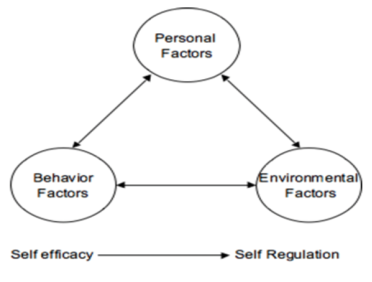
Furthermore, the shared interaction theory set forth by psychologist Albert Bandura, known as reciprocal determinism, is the central concept of SCT . This refers to the dynamic and reciprocal interaction of a person (individual with a set of learned experiences), environment (external social context), and behavior (responses to stimuli to achieve goals) that all influence each other . Figure 1 illustrates the three factors in Bandura's model.
3. Review of Literature
Violence occurs in every facet of life and is often unpredicted, tense, and evolves precipitously. Although much has been written regarding those, who lead in public safety efforts on college campuses, limited information is known concerning AST in higher education . Research regarding preparedness and perceptions in active shooter training from the lens of faculty in HEIs has not been scrutinized. However, perceived knowledge has been shown to be a better predictor of self-efficacy and perceived preparedness than actual knowledge. This was found in research conducted by . Liu et al. (2015) employed a quantitative study amongst 111 faculty and staff at a university in the United States' Midwest . A 44-question survey gathered information regarding perception variables related to risk and crisis preparedness. The results revealed that women were more knowledgeable than men in crisis response. Staff members reported higher levels of knowledge and self-efficacy than faculty. Overwhelmingly women reported being more knowledgeable on crisis response than men, which was also revealed in a quantitative study that examined message characteristics on motivations to engage in an active-shooter response video .
Based on the comparisons to numerous ASE in HEIs, it was apparent that faculty are at an increased risk of being involved in an ASE while on campus. The second most common place an ASE occurs is in educational settings . Since the average active shooter incident lasts about 12 minutes (Virginia Tech incident was nine minutes), law enforcement personnel often arrive after an ASE, indicating a need to be proactive in allowing for faculty to get AST in higher education .
Existing literature on legislation involving AST protocols includes multiple programs that HEIs can follow to address active shooter situations . Programs such as ALICE, ALERRT, NIMS, and RUN-HIDE-FIGHT are the most common programs that are utilized. While these programs' goals remain similar, the origin, action plan, and effectiveness levels differ with each one. The Clery Act was signed into law in 1990 requiring HEIs to provide timely warnings to students and employees about any crimes that may pose a threat to campus, to disclose campus reported crime statistics, and to distribute campus security policies . Statistics published annually in October, the Clery Act implementation has shown improved crime reporting practices and some programs and services' quality improvements in HEIs .
4. Research Questions
Two main research questions guided this case study. The first question examined what faculty at one northeastern university who have received AST report regarding their self-efficacy in an active shooter event. In addition, the second question queried what faculty who have not received AST reported regarding their self-efficacy in an active shooter event.
1) What do faculty at one northeastern university who have received AST report regarding their self-efficacy in an active shooter event?
2) What do faculty at one urban northeastern university who have not received AST report regarding their self-efficacy in an active shooter event?
The eight sub-questions were as follows:
1) What do faculty on an urban northeastern university campus who have received AST report regarding their enactive mastery experience provided given a potential active shooter event?
2) What do faculty on an urban northeastern university campus who have received AST report regarding their vicarious experience provided given a potential active shooter event?
3) What do faculty on an urban northeastern university campus who have received AST report regarding verbal persuasion in a potential active shooter event?
4) What do faculty on an urban northeastern university campus who have received AST report regarding their affective state given a potential active shooter event?
5) What do faculty on an urban northeastern university campus who have not received AST report regarding their enactive mastery experience given a potential active shooter event?
6) What do faculty on an urban northeastern university campus who have not received AST report regarding their vicarious experience given a potential active shooter event?
7) What do faculty on an urban northeastern university campus who have not received AST report regarding verbal persuasion given a potential active shoot event?
8) What do faculty on an urban northeastern university campus who have not received AST report regarding their affective state given a potential active shooter event?
5. Research Design and Methodology
Using an employment list provided by the northeastern university, the researcher emailed all faculty who met the predetermined criteria for inclusion in the case study, inviting them to volunteer. A cross-sectional survey was used to collect preliminary information, including basic demographic data and relevant background characteristics. Upon completing the survey, faculty members were invited to participate in an individual interview. Those who volunteered were asked to provide an email address and preferred contact information. The researcher aimed to secure a balanced representation of male and female faculty members as well as varied racial and ethnic backgrounds for the semi structured interviews. A total of 11 faculty participants were contacted to schedule interviews, which were conducted virtually using the cloud based video communication platform Zoom. The individual interviews provided for the collection of rich participant data and provided the researcher with details regarding participant self-efficacy in a way that quantitative studies cannot match .
6. Data Sources
This case study sample was ascertained using a simple random sampling design . Faculty in a single higher education institution within the northeastern U.S. did comprise the initial sample for the survey. The research participants were required to meet the following minimum criteria to fit the case study parameters: (a) Full-time faculty at the institution for at least two years. Two years were selected to ensure adequate time on the campus. The initial survey assessment size was approximately 75. Interview participants was selected to be at least ten, and the interviews would be conducted and recorded via Zoom, transcribed, and coded.
7. Significance of the Study
Winston (2014) suggests that diverse groups are more proactive and reach more creative solutions than homogeneous groups . A. Korshykava (personal communication, April 8, 2021) reported the demographics of faculty at the HEI within the case study being investigated is comprised of predominantly female faculty (68%). The ethnic composition of faculty within the case study being investigated is varied, mainly White at 76% (A. Korshykava, personal communication, April 8, 2021). Black or African American was reported to be 16%, and Hispanic, Asian, and American Indian or Alaska Native faculty comprise the remainder of the faculty at 7% (A. Korshykava, personal communication, April 8, 2021). By attempting to interview a diverse group of faculty made up of different genders, ethnicities, and varied races it was possible to ascertain wide-ranging levels of self-efficacious responses. Semi-structured interviews with faculty aided in explaining what faculty reported regarding their enactive mastery experience, vicarious experience, verbal persuasion, and affective state for those who have and who have not received AST. There have been no existing research focusing on faculty efficacy should an ASE occur. Given the precarious location of the campus being investigated and the potential for dangerous situations, as laypersons, faculty members may not feel properly equipped to defend themselves, others or preserve the campus structure in an ASE. Exploring faculty self-efficacy given a potential ASE may be vital for the next steps in AST. It was imperative to understand if it led to faculty reporting higher or the same levels of self-efficacy for those who have received AST and those who have not.
8. Research Design and Methodology
This study used a qualitative case study designed to collect rich participant data and provided the researcher with details regarding participant self-efficacy given a possible active shooter event (ASE). Quantitative studies fail to capture the nuances evident in human reports . The notion of self-efficacy is psychologically tied to individuals. The complex social phenomenon chosen requires the in-depth real-life context for better comprehension. A singular case study was selected for this investigation which the research questions sought to explain the contemporary circumstance. Yin (2018) defines a case study as "an empirical method that investigates a contemporary phenomenon (the “case”) in depth and within its real-world context, especially when the boundaries between phenomenon and context may not be clearly evident” (p. 14).
9. Participants
The faculty participants must have been at least 18 years old and must be full-time faculty at the institution for at least two years to participate in the individual qualitative interviews. The initial survey assessment size was approximately 75. Interview participants were hopeful to be at least ten, and the individual one-to-one interviews would be conducted and recorded via Zoom, transcribed, and coded for themes emerging from the data.
This campus's demographics are predominantly female faculty at 68%, whereas males comprise 32% (A. Korshykava, personal communication, April 8, 2021). It may be that female faculty might report less self-efficacy and a greater level of fearfulness in the event of an ASE occurring. In contrast, male faculty may tend to report greater self-efficacy than female faculty . This assumption may have highlighted that a HEI is more vulnerable to an ASE with a higher prevalence rate of female faculty. This was not concluded to be the situation at the university under investigation. By interviewing a diverse group of faculty, it was possible to ascertain the self-efficacy of those who have not been trained.
10. Instruments or Data Collection Tools
Qualitative research uses a naturalistic approach that seeks to understand phenomena in context-specific settings, such as "real world setting [where] the researcher does not attempt to manipulate the phenomenon of interest" (p. 39). Methods for collecting data in this study included conducting face-to-face semi-structured individual interviews. These face-to-face semi-structured individual interviews served as the primary source of data. The interview guide constructed by this researcher was based on Social Cognitive Theory focusing on four types of self-efficacy: enactive mastery experience, vicarious experience, verbal persuasion, and affective state .
Reliability and Validity of the Instrument
The data collection methods used in this study included an interview guide. The interview guide consisted of a close-ended and several open-ended questions, which allow for hearing and examining faculty participant responses. All the faculty who selected to participate in the one-to-one individual interviews had the opportunity to review their interview transcriptions for accuracy. In addition to this protocol, pilot tests were conducted on the interview guide.
Although the term reliability is a concept used for testing or evaluating quantitative research, the idea is most often used in all kinds of research. A good qualitative study can help us "understand a situation that would otherwise be enigmatic or confusing" (p. 58). This relates to the concept of a good quality research given that reliability is a concept to evaluate quality in a quantitative study with a "purpose of explaining" while quality concept in the qualitative study has the purpose of "generating understanding" (p. 551).
11. Data Collection Narrative
Qualitative data was gathered through the individual one-to-one interviews. Faculty participants were asked by the initial survey and individual interviews if the university provided any formal or informal training in dealing with active shooter events. In this particular state in the northeast, the selected university does have AST disseminated to administration, faculty, and staff members. In addition, K. Myers (personal communication, May 3, 2021) informed the researcher that the current format for AST is a PowerPoint with an embedded video. After the administration, faculty, or staff members completes the AST, a ten-question quiz to assess their knowledge of what they learned in training shall be completed. Furthermore, their respective office space is used for practice (exiting and locking down) to gauge whether the AST was effective. By the time the entire training is done, it is typically a total of two to two and a half hours (K. Myers, personal communication, May 3, 2021).
Creswell (2013) identified five processes in analyzing qualitative data: (1) organizing data, (2) conducting a read-through of the data, (3) coding and organizing themes, (4) representing the data, and (5) forming interpretations and drawing conclusions . The investigator transcribed and coded the interviews to identify themes and patterns, employing an unbiased and systematic approach. Zoom’s live-transcription feature was utilized during each interview, after which the transcripts were downloaded and printed for review. Conducting the coding manually enabled the investigator to engage more closely with the data, fostering deeper familiarity and more deliberate analytic interpretation. Major themes emerged as key findings that reflected diverse participant perspectives, with direct quotations and explanations used to further illuminate these results. The investigator followed the analytical procedures outlined, which included: (a) organizing the data, (b) conducting a comprehensive read-through, (c) coding and categorizing themes, (d) representing the data, and (e) forming interpretations and drawing conclusions . An interview guide was developed in advance, incorporating preliminary thematic areas to support consistent coding and analysis both across and within data sources.
12. Protection of Human Subjects
As required by the University of Hartford, this investigator completed and successfully passed a series of computer-based learning modules on human subjects. Also, the research proposal was reviewed and approved by the selected northeastern university’s Institutional Review Board Committee before the study began.
Each participant in the study gave their consent initially upon inception of the survey, subsequently when they provided an email address and preferable contact information, and verbally prior to the start of the individual interview. The faculty participants were clearly notified initially and thereafter that their participation was entirely voluntary; they could withdraw at any time and at any stage of the study. Each faculty participant was notified that their confidentiality would be maintained throughout the research study to include but not limited to consent, contact information, audio recordings and transcriptions. Furthermore, the faculty participants were apprised of the data storage procedures to include password-protected files on a removable storage drive that would be destroyed three years after the close of the study. The potential benefits to participated included the opportunity to share their reports from the semi-structured interviews thereby not only contributing to the study, but also the findings could have added concrete value to the existing AST research if faculty who have received AST and the faculty who have not received AST exhibited the same or similar self-efficacy when interviewed.
The following procedures were used to protect the confidentiality of the data collection records. The individual interview audio and transcription were downloaded to a removable storage drive. All electronic files containing identifiable information were password protected on the removable storage drive. The transcriptions were not coded in an identifiable way. The research participants' names were not associated with any responses. The researcher kept all study records, including any codes to the data, in a secure location. The removable storage drive was stored in a locked filing cabinet. Research records were labeled with a code. A master key that links names and codes was maintained in a separate and secure location. The master key and removable storage drive would be destroyed three years after the close of the study. Any computer hosting such files initially also had a password protection system in place to prevent access by unauthorized users. Only the members of the research staff had access to the passwords. The highest confidentiality was always adhered to throughout the study.
There were no known risks associated with this research study; however, a possible inconvenience may be the time it took to complete the survey plus the additional time if the faculty participant volunteered to partake in the individual interview. There were also no apparent physical risks for participation in any stage of this research study.
13. Results of this Case Study
The data gathered from the 11 individual interviews that were conducted are provided, and the findings are discussed. A total of six females and five males were interviewed, ranging from 37 to 63 years old. Four females reported their race/ethnicity as white, with the two remaining females reported their race/ethnicity to be black. All five males reported white as their race/ethnicity. Data were coded and analyzed as guided by Creswell (2013) to identify specific characteristics within each interview question, reflecting on Social Cognitive Theory (SCT) of self-efficacy. SCT suggests behavior is a shared interaction between cognitive, personal, environmental, and behavioral . SCT, mainly four parts that include: enactive mastery experience, vicarious experience, verbal persuasion, and affective state, were used to examine faculty beliefs regarding their active shooter preparedness. Each part is, in essence, a lens for taking different views of situations and identifying unique challenges facing faculty in the situation if an ASE should occur.
For data analysis (tables three through six), the faculty were anonymous and labeled the following: Respondents A, C, D, F, G, and I were faculty members that reported receiving AST. Respondents B, E, H, J, and K were faculty members who reported not receiving AST.
Data Collection
The primary sources of data were face-to-face semi-structured individual interviews. The investigator followed the questions in the interview guide derived from the conceptual framework (SCT) of self-efficacy, which were consistent with the research questions. Each participant's questions included one close-ended and several open-ended questions, which provided the opportunity to hear and examine the faculty members’ in-depth responses.
The face-to-face semi-structured individual interviews occurred virtually via the cloud-based video communication software platform named Zoom. Interviews averaged 19 minutes, with the shortest lasting 11 minutes and the longest-lasting 32 minutes. During the interviews, the participants were asked to turn off their video per both Institutional Review Boards approval processes allowing for privacy. All the participants verbally consented digitally to participate in the interview. None of the participants expressed their desire to stop or withdraw from the study prior, during, or after the interview. All the participants received a transcript of their interview sent to them through email.
Qualitative Findings
Research Question 1.0 What do faculty on an urban northeastern university campus who have received active shooter training (AST) report regarding their enactive mastery experience given a potential active shooter event (ASE)?
Finding 1.1a Six out of six faculty members at one urban northeastern university campus that have received AST reported that their enactive mastery experience was related to immediate student protection. One representative interview quotation noted by Respondent I, who was highly trained through martial arts experience. She had this to say about student protection of life. “I would feel very confident. My background is teaching in middle school for 12 years, and from that, I know the importance of drills. Just by proxy, I think in that, in that case, I'm the one who's responsible to make sure that we follow procedures to make sure that students are safe and quiet, and again, that stems from years and years of sitting on the floor in the dark with eighth-graders.” Finding 1.2a Four out of six faculty members at one urban northeastern university campus that have received AST reported that their enactive mastery experience was related to situational assessment. For this finding, as stated by Respondent D, “From all my prior training that I’ve had before, I can’t say that anything would be really actively thought about it would be more, just assessing the situation and staying fluid.” Respondent F said if he was breaking down his reactions step by step it would encompass, “…kind of in everyday life, make sure that we are using situational awareness, we know what’s going on around us…that you’re familiar with that plan or procedure needs to happen.” Respondent G said that he would take cover and, "I would exit the area to someplace where I could lock the door or get outside and assess the situation as it unfolded." Finding 1.3a Five out of six faculty members at one urban northeastern university campus that have received AST reported that their enactive mastery experience was related to de-escalation techniques. A few respondents were quoted as saying (Respondent A) “I think one of the most important things is to not escalate conflicts." Respondent D recalled his military training and applied it to the classroom: “Focus on students first, get them out or secure in the classroom. I feel personally I would then try to de-escalate the situation in any way I possibly could. I would go into the situation by the numbers with my military training, muscle memory kind of thing.”
Research Question 2.0 What do faculty on an urban northeastern university campus who have not received AST report regarding their enactive mastery experience given a potential active shooter event?
Finding 2.1a Three out of five faculty members at one urban northeastern university campus that have not received AST reported that their enactive mastery experience was related to exhibiting a calm demeanor. As Respondent B indicated, "I would calmly direct others to hide, to barricade the door, to stay quiet, that sort of thing…I would just do everything I could to protect others, not necessarily confronting the shooter." Having this basic sense of competence elevated her self-efficacy as a teacher. Respondent H deferred to one of her strengths as being someone to emulate during a crisis. “I tend to be pretty calm in emergency situations. The students look up to me, so I don’t want to be frazzled and have them get all up in arms.” Respondent K shared a personal story recalling several movies she has watched over the years to pinpoint how she would respond given a potential ASE. “I will tell everybody to stay calm as I will try my best to stay as calm as possible. I think those are some of the steps I will take it [sic] initially.”
Finding 2.2a Three out of five faculty members at one urban northeastern university campus that have not received AST reported that their enactive mastery experience was related to the critical thinking of classroom lockdown and concealment. Respondent E envisioned himself functioning by the numbers as he explained further, “I would lock the doors, instruct students to lock the doors if there were multiple doors and basically try to then barricade the doors and hide the students as best they could be hidden. After that, I would try to use whatever phones and communicate with the outside world.” Respondent J described what she would actively do in an attempt to secure the classroom and students: “…have people go in a closet or hide, you know, just try to think as quickly as possible…I’ve actively thought about this in my classroom. Not all students could fit in the closet, but first just locking the doors and there’s an area in the back of the room that you can’t really see from the window. From the doors, rather, because both of the doors have windows in the classroom, and just getting the students to like go to the back of the classroom, and, you know stay there until we knew what our next step was. Maybe even lay down, use a desk for cover, get ready to push a desk on top of somebody who breaches the doors.”
Research Question 3.0 What do faculty on an urban northeastern university campus who have received AST report regarding their vicarious experience given a potential active shooter event?
Finding 3.1a Six out of six faculty members at one urban northeastern university campus that have received AST reported that their vicarious experience given a potential active shooter event was related to learning from observations of competent others in action during AST. Respondent I was able to illuminate her mental visualization if ever being involved in an ASE, “I have imagined it on campus like a Newtown situation. I’ve imagined being in a classroom full of kids…the second floor classrooms, there are you know they’re beautiful but there’s windows everywhere which makes it impossible to hide things so I’ve certainly you know looked at the classroom itself and thought okay well if I needed to put people in a corner like I was trying to in public school, then it would be this corner of the room. It’s far away from the door and someone could conceivably look in the window and not see anyone. My first instinct is to hide, lock the door, and fight back if I have to. I learned all of this during drills throughout my career teaching in middle school.” Respondent A immediately replied, “Run, hide, fight. Yeah, that was it. That is what I remember. I saw it in action watching videos…I can’t remember anything other specifics than that.” Respondent A, along with Respondent C, discussed key points recalled from the training. Respondent A added that the guided trainer "explained how to hide in an office effectively." Respondent C could remember, "My particular office does not have a lock, so when it was explained to me about hiding, the options were go under my desk or around the other side of my desk.”Finding 3.2a Three out of six faculty members at one urban northeastern university campus that have received AST reported that their vicarious experience given a potential active shooter event was related to a survival instinct. From his EMT experience Respondent F relates his vicarious experience given a potential ASE to a survival instinct, “The only training I ever received in self-defense was in EMT paramedic school which was first and foremost never put yourself in [sic] your patient between you and the door, never turn your back on the patient, and then you know using a pen as an ability to like neutralize somebody. And then hiding if somebody does start shooting like at the ambulance or whatever almost as an inner survival mode because bullets won’t pierce the ambulance that easily.” Much like Respondent F, Respondent G really has not learned how to defend himself, “I think will be born out of a survival instinct.”
Research Question 4.0 What do faculty on an urban northeastern university campus who have not received AST report regarding their vicarious experience given a potential active shooter event?
Finding 4.1a Three out of five faculty members at one urban northeastern university campus that have not received AST reported that their vicarious experience given a potential active shooter event was related to their ability to judge their capabilities relevant to the attainment of others. Faculty respondents made inferences about their self-efficacy based on observations of performance from speaking and seeing others. In addition, comments from their colleagues when a discussion about what to do if there was an ASE impacted their self-efficacy beliefs. Respondent E stated, “Talking to my parents and talking to my friends about all of the shootings that have happened. Those are the primary ways I learn and determine if in fact, I would be able to stay alive and my students; yes, my students…defending myself physically is not a very common event, so I run by [sic] my thoughts to gauge my ability.” Respondent H explained her office talks became highly efficacious amongst her colleagues. She elaborated what was discussed in her mind if an ASE should occur, “I have done this this many times, and again I'm thinking like if I were in the office, we have locks on the door. I've got to hide and possibly hide students and keep myself and the students and my colleague safe. That would be my first priority…So my colleagues in the office and I have had conversations, and since there are several cubicles, we discussed locking the door, who can we see from our desks, and what we should actually do so visualizing and assessing any threat. None of us were sure exactly if the actions were right, but because of what has been happening worldwide I wanted to see what other people were thinking.”
Research Question 5.0 What do faculty on an urban northeastern university campus who have received AST report regarding verbal persuasion given a potential active shoot event?
Finding 5.1a Six out of six faculty members at one urban northeastern university campus that have received AST reported that their verbal persuasion given a potential active shooter event was related to receiving feedback from credible sources about their capabilities. Respondent F highlighted the importance of taking the mock AST scenario seriously, “I was coached during that AST training, and it was a police officer retired police officer…They basically did a real kind of engaging scenario in a school. We had to put like our hands walking single file in a line in the middle of a hallway. Put our hands on each other's shoulders, and they would like, you know, he would tap the person in front of us, repeat the message, and allow that to get carried up to the person in front, as well. Maybe normal common sense tells you to do; they would coach you right then and there and say, let's not do that, let's do this. At the end we kind of did this like big scenario, and then we talked about it as a group and debriefed it and I'll be frank with you, I think that was the most important piece of it, because you got to see kind of how it works live, how chaotic it can get, and you learn from your mistakes in in [sic] that simulated event.” Finding 5.2a Three out of six faculty members at one urban northeastern university campus that have received AST reported that their verbal persuasion given a potential active shooter event was advanced by an ability to encourage faculty to enable success. Verbal encouragement received by faculty who have participated in AST was an essential attribute with a feeling of high self-efficacy. Respondents F, I, and A explained similar situations during their AST when they were provided encouragement, resulting in a successful vision to live. Respondent I said that she was provided with words of encouragement, "You could do that," especially with self-defense tactics. Respondent A recalled his coaches said to him, “You got it; go ahead and do that or this.” Respondent F recalled that his police officer coach during AST “encouraged me to make me feel comfortable during the debriefing, and I felt validated.”
Research Question 6.0 What do faculty on an urban northeastern university campus who have not received AST report regarding verbal persuasion given a potential active shoot event?
Finding 6.1a Three out of five faculty members at one urban northeastern university campus that have not received AST reported that their verbal persuasion given a potential active shooter event was related to self-actualization. Respondent B spoke about how she was influenced that she could succeed in a case of an ASE from "…no surprise. I think that teacher up there in Newtown…Sandy Hook, yeah. She influenced me." Moreover, in the television show Law and Order and miscellaneous other movies, Respondent B draws from those experiences. "Motivating me if a tragedy like this happens again, I am motivated to do everything that I could to prevent such tragedy happening again if I could." Respondent H recalled a video she watched years ago when she was an adjunct instructor that was very upsetting. “I know in my life people who have more training than I do, so I defer to like my landlord who is a retired police officer regarding safety situations. Not specific active shooter training.” Respondent K has been influenced by watching many movies and staying current with what happens at colleges nationwide, "I would think back to what I learned from different movies…there's been obviously active type shooting, events, and a lot of movies I can draw from."
Research Question 7.0 What do faculty on an urban northeastern university campus who have received AST report regarding their affective state given a potential active shooter event?
Finding 7.1a Five out of six faculty members at one urban northeastern university campus that have received AST reported that their affective state given a potential active shooter event was related to associated self-efficacy interpretations. Respondent F recalled when he participated in AST years ago while a part of a local ambulance service, “I felt scared. I [sic] initially it was very scary because you were in an empty school on the weekend. You can hear voices echoing through the hallway and as you did the simulation and [sic] became very real, so I remember feeling scared, but I also remember during like the last simulation piece that we did honestly, I feel very prepared like I knew what to do.” Respondent F sensed he was scared initially but reported a feeling of confidence at the end of the AST because he felt prepared on what to do if he were involved in an ASE. Respondent G also recalled the AST that he was involved with as a paramedic. “If I heard shots being fired on a hot [sic] I would be terrified.” Respondent G maintained that he would be able to channel the adrenaline better than somebody who has not been in those types of intense situations before like he had been as a paramedic. Respondent D is not necessarily anxious on campus with his background in the military. Still, he did mention that after going through AST, he felt much better, a sense of relief when his concerns were heard, and the misconceptions that were being taught were corrected. "I do have a sense of feeling apprehensive about the situation. I guess I would be more the way I am, anxious and concerned. Things like that." Respondent A explained that the AST he participated in was beneficial and appreciated the continuous repetition of AST. Respondent A said that he has been exposed to the same AST information and that he has created a cognitive muscle type memory. "I don't feel anxious personally about an active shooter event, but I feel anxious for other people who feel anxious about it who have not been through any active shooter training." Finding 7.2a Three out of six faculty members at one urban northeastern university campus that have received AST reported that their affective state given a potential active shooter event was related to a physiological response. Respondent C was able to identify some of her body's automatic reactions to the potential stimulus (ASE). If placed in a stressful situation, Respondent C indicated that she would feel, “Shortness of breath, trembling, scared, and panic would infuse my body.” She has been through AST before but does not profess to be brave. Respondent A reported that he feels anxious and experiences shortness of breath when discussing the possibility of an ASE on campus. Respondent F recalls an incident similar to an ASE that caused his mind to be jumbled, and he felt "…kind of jittery and sweaty." He said that thinking about an ASE methodically, he would have to give it more attention than what he has been since during the incident he was describing, he felt, "Unprepared, nervous, sweaty, and a jumbled mind."
Question 8.0 What do faculty on an urban northeastern university campus who have not received AST report regarding their affective state given a potential active shooter event?
Finding 8.1a Five out of five faculty members at one urban northeastern university campus that have not received AST reported that their affective state given a potential active shooter event was related to a physiological reaction. One hundred percent of the faculty interviewed had thoughts of being in an ASE encompassed by a physiological reaction. The faculty perceived that they would be under stress or danger and ill-prepared to survive. Whether real or imagined, the responses provided by all the respondents were the way their body would protect themselves in an ASE. Respondent E indicted that he would experience sweaty palms and a racing heart. “The thought of being in an active shooter event makes me feel like I’m on pins and needles. I maybe would need to decide will I fight or fly.” Respondent B felt a little overwhelmed at first because she had not thought about being in an ASE. She explained, “I would tremble and sweat. I know this, but I'd like to think I'd be brave…we never know how we will react as a gun is pointing in our face. I hope I never find out, but I need to be prepared…If I died protecting others, then I feel pretty good about that.” Respondent K revealed that the thought of being in an ASE makes her feel scared and does not think fighting is the answer. She said that she would try to look and resolve the issue as she was, "Trembling, having tunnel vision, and trying to figure out how I am going to get out of this." Respondent J explained that the thought "petrifies" her to her core. "I mean, just not knowing you know what the best thing to do is with [sic] the best plan is, makes me anxious and want to scream." Respondent J felt as if her body would shut down, and she would almost freeze if ever involved in an ASE. Respondent J shared a personal story that frightened her to her core unrelated to an ASE, “I remember being in a parking lot, and I'm in my car. I'm getting ready to get out and somebody, and I just know where we were, we had just got in the car with all boys all in the car seat and all of a sudden, this this person was like standing at the passenger's side window and he's hitting the window with what looks like a gun and of course I scream. It was actually one of my son’s friends like it was like a play toy gun when the boys have play guns. So just like the sight of the gun scared me. I mean, because I didn't know what he was doing standing there, and he just was like tapping the window with like the butt of a pistol. I'm like, ‘Oh my god.’ So I just remember that was extremely scary because I thought, you know, this person had a like a pistol in their hand and I froze.” Respondent H explains an unrelated incident from an ASE involving a student’s behavior in the classroom that was odd and concerning. At that time, she felt nervous, concerned and noticed that her body was hot, sweaty, and anxious. "I still feel anxious and that sort of thing. Unfortunately, I don't feel much better because I haven’t had any formal training…nervous and sad.” Respondent E’s fight or flight response is actually a common way that the body protects itself. A sense of automatic protection by producing stress hormones, cortisol, and adrenaline, so that a person can either be ready to fight or run. To recollect, in the case of an ASE, one of the dominant approaches endorsed by the federal government is "Run, Hide, Fight." All of the respondents who have not had AST indicated that the thought of being in an ASE makes them have an uncontrollable physiological reaction.
The final question asked to all the respondents interviewed related to anything they wanted to tell the researcher that they thought should be known. One hundred percent of the respondents who have and have not had AST reported wanting more of it or wanting to participate in it regularly. It is a clear message stating that the current AST is lacking.
14. Summary of Key Findings
This case study investigated the reports of faculty at one northeastern university regarding their self-efficacy in an ASE prior to and after receiving AST based on aspects of the conceptual framework of . Face-to-face semi-structured individual interviews with 11 faculty were conducted. Study findings were reported according to the four research questions based on the sources of self-efficacy, and the final question asked for any additional information that the investigator should know .
Key findings promoted three conclusions extracted from the results of this case study research. The first conclusion is: faculty members at one urban northeastern university campus that have received AST reported that their self-efficacy was related to the content of the AST and protocol that was explained; second, faculty members at one urban northeastern university campus that have not received AST reported that their self-efficacy was related to vicarious learning and predetermining a self-oriented perspective that was based on outside influences that were unrelated to situational awareness of an active shooter event; and third, faculty members at one urban northeastern university campus that have and have not received AST reported that their self-efficacy was related to predetermining a calm physiological response during an ASE. Although, as a vulnerable population, faculty require additional protection from external threats, they need to feel a higher level of self-efficacy if faced in an ASE situation and can practice and refine their situational awareness during AST.
One overall finding was extracted from the individual interviews: All 11 faculty respondents reported that they either want more AST or want to participate in AST regularly to elevate their confidence in their ability to be better prepared in the case of an ASE.
15. Tables
Table 1. Active Shooter Events at Higher Education Institutions.

HEI

Year

Killed*

Wounded *

University of Texas

1966

31

18

Virginia Tech

2007

33

23

Northern Illinois University

2008

6

19

Hampton University

2009

0

3

University of Alabama

2010

3

3

Ohio State University

2010

2

1

Oikos University

2012

7

3

*includes shooter killing/wounding self
Table 2. Data Source and Analysis Chart.

Research Question

Data Source

Type of Analysis

Interview Survey Items

Question 1: What do faculty on an urban northeastern university campus who have and have not received AST report regarding their enactive mastery experience given a potential active shooter event?

Interview guide section related to enactive mastery experience

Open coding of patterns and themes

2

Question 2: What do faculty on an urban northeastern university campus who have and have not received AST report regarding their vicarious experience given a potential active shooter event?

Interview guide section related to vicarious experience

Open coding of patterns and themes

3

Question 3: What do faculty on an urban northeastern university campus who have and have not received AST report regarding verbal persuasion given a potential active shoot event?

Interview guide section related to verbal persuasion

Open coding of patterns and themes

4

Question 4: What do faculty on an urban northeastern university campus who have and have not received AST report regarding their affective state given a potential active shooter event?

Interview guide section related to affective state

Open coding of patterns and themes

5

Table 3. Enactive Mastery Experience.

A

B

C

D

E

F

G

H

I

J

K

Immediate Student protection 6/6

X

X

X

X

X

X

Situational assessment 4/6

X

X

X

X

De-escalation techniques 5/6

X

X

X

X

X

Exhibiting a calm demeanor 3/5

X

X

X

Critical thinking of classroom lockdown and concealment 3/5

X

X

X

Table 4. Vicarious Experience.

A

B

C

D

E

F

G

H

I

J

K

Learning from observations of competent others in action during AST 6/6

X

X

X

X

X

X

A survival instinct 3/6

X

X

X

Their ability to judge their capabilities relevant to the attainment of others 3/5

X

X

X

Table 5. Verbal Persuasion.

A

B

C

D

E

F

G

H

I

J

K

Receiving feedback from credible sources about their capabilities 6/6

X

X

X

X

X

X

Advanced by an ability to provide encouragement to faculty to enable success 3/6

X

X

X

Self-actualization 3/5

X

X

X

Table 6. Affective State.

A

B

C

D

E

F

G

H

I

J

K

Associated self-efficacy interpretations 5/6

X

X

X

X

X

Physiological response 3/6

X

X

X

A physiological reaction 5/5

X

X

X

X

X

Figure 1. Reciprocal Determinism.
16. Conclusions and Recommendations
Conclusions derived from this case study and recommendations for practice and future research follow. The conclusions are presented by research question and are followed by the recommendations for practice and the recommendations for future research. The conclusions should be viewed as provisional propositions, as they were derived from a small sample of faculty at one northeastern university. Conclusion One: Faculty members at one urban northeastern university campus that have received AST reported that their self-efficacy was related to the content of the AST and protocol that was explained (1.1a, 1.2a, 1.3a, 3.1a, 5.1a, and 5.2a). Recommendation for Future Research Related to Research Question 1. Qualitative and quantitative studies should be conducted to identify best practices for disseminating clear and concise AST components. In addition, such studies may identify changes needed based on faculty feedback and communication initiatives that could foster a more proactive approach in faculty preparedness, contributing to an elevated level of their self-efficacy if involved in an ASE. Conclusion Two: Faculty members at one urban northeastern university campus that have not received AST reported that their self-efficacy was related to vicarious learning and predetermining a self-oriented perspective that was based on outside influences that were unrelated to situational awareness of an active shooter event (2.1a, 2.2a, and 4.1a). Recommendations for Practice Related to Research Question 2. Quasi-effective training has demonstrated an unsettled self-efficacious response. With heightened national attention on college campuses and the faculty and student safety at risk in response to ASEs, it has become clear the need for faculty to have some type of formal training and supplement with refresher training to maintain a long-term memory of best practices. Consistent and well-understood training for an ASE should be implemented and enforced at a minimum of once a year to the entire campus community to include classroom training and practical drills to build a greater sense of self-efficacy if involved in an ASE. Additional studies examining AST should be conducted with various universities, including four-year institutions comprising public and private colleges and universities and liberal arts colleges. In addition, two-year institutions including community colleges, trade schools, and for-profit universities could be examined that may be vulnerable to transient populations. Conclusion Three: Faculty members at one urban northeastern university campus that have and have not received AST reported that their self-efficacy was related to predetermining a calm physiological response during an ASE (3.2a, 4.1a, 6.1a, 7.1a, 7.2a, and 8.1a). Recommendations for Practice Related to Research Question 3. Faculty following their instincts and paying attention to what is going can pay huge dividends. By identifying available options, the faculty can mentally log and build a playbook for if-then scenarios. Options-based active shooter defensive tactical training for faculty and school administrators may provide the help they need to remain safe. Recommendation for Future Research Related to Research Question 3. Training and drill programs should be evaluated to ensure the programs address the faculty participation’s feelings after being a part of AST. Strategies to better control the body's automatic reactions to a stimulus when placed in a stressful situation should be embedded in the various AST programs. Stress can be overwhelming; however, practicing various strategies can help the body better face the fight-or-flight response when involved in stressful situations. In addition, future research can investigate other types of emotional control variables such as terror and frustration that could also contribute to increased survival response strategies.
17. Final Thoughts About the Implications of the Study
As depicted in this study, the reports of self-efficacy from the faculty who participated in the individual interviews reported many different views of their confidence level, what they recall from participating in AST, who was most impactful relating to an ASE, and how they felt during AST or how they think their body would react if involved in an ASE. Through the lens of SCT using the four types of self-efficacy: enactive mastery experience, vicarious experience, verbal persuasion, and affective state, this case study revealed existing challenges that have hindered or enhanced faculty’s self-efficacy regarding a potential ASE . Clearly, there is a need to strive for consistency in ASE preparedness across all campuses for a potential active shooter. Preparedness efforts within colleges and universities are valuable safety assets that must be supported. Training about active shooter situations and drills for faculty, students, and university administration must occur. "Whether the crisis involves violence, terrorism, or natural disaster, the lesson remains the same: plan, prepare, and practice" (p. 20). Such effort can save lives in our communities.
The recent, unfortunate tragedies that continue all over the United States serve as blatant reminders of the importance of safety and security on college and university campuses in preparation for an ASE. Discussing these incidents, learning from them, and preparing for another mass casualty should not be a forbidden topic. As a society, we need to face these real-life events and be prepared for the unthinkable. The longer there is a reactive strategy imposed, the more lives are at risk. It is ultimately the responsibility of everyone in HEIs to ensure the best possible AST implementation with positive outcomes. Concluding with this quote that was published in roughly 5th century BC, Sun Tzū stated in his book The Art of War, “One who is prepared and waits for the unprepared will be victorious” . Therefore, it is imperative to be prepared at all times.
Abbreviations

SCT

Social Cognitive Theory

HEI

Higher Education Institution

ASE

Active Shooter Event

AST

Active Shooter Training

Acknowledgments
The authors have no contributions to acknowledge that do not meet authorship criteria.
Author Contributions
Jennifer Lynn Feitel: Conceptualization, Data curation, Formal analysis, Funding acquisition, Investigation, Methodology, Project administration, Resources, Software, Supervision, Validation, Visualization, Writing – original draft, Writing – review & editing
Funding
This work is not supported by any external funding.
Data Availability Statement
The data supporting the outcome of this research work has been reported in this manuscript.
Conflicts of Interest
The author declares no conflicts of interest.
References
[1] Akers, C. R. (2007). Evolution of emergency operations strategies: structure and process of crisis response in college student affairs (Publication No. 3292920) [Doctoral dissertation]. ProQuest Dissertation and Theses Global.
[2] Bandura, A. (1977). Self-efficacy: Toward a unifying theory of behavioral change. Psychological Review, 84(2), 191-215.
[3] Bandura, A. (1978). The self-system in reciprocal determinism. American Psychologist, 33(4), 344–358.
[4] Bandura, A. (1986). Social foundations of thought and action: A social cognitive theory. Prentice-Hall.
[5] Bandura, A. (1994). Self-efficacy. In V. S. Ramachaudran (Ed.), Encyclopedia of human behavior (Vol. 4, pp. 71-81). New York: Academic Press. (Reprinted in H. Friedman [Ed.], Encyclopedia of mental health. San Diego: Academic Press, 1998).
[6] Bandura, A. (1997). Self-efficacy: The exercise of control. W. H. Freeman and Company.
[7] Bandura, A. (2001). Social cognitive theory: An agentic perspective. Annual Review of Psychology, 52, 1-26.
[8] Blair, J. P., & Schweit, K. W. (2014). A Study of Active Shooter Incidents, 2000 - 2013. Texas State University and Federal Bureau of Investigation, U.S. Department of Justice, Washington D.C. 2014.
[9] Booker Jr., L. (2014). Crisis management: Changing times for colleges. Journal of College Admission, 222, 16-23.
[10] CNN Editorial Research. (2020). Virginia tech shootings fast facts.
[11] Cohen, K., & Collens, P. (2012). The impact of trauma work on trauma workers: A metasynthesis on vicarious trauma and vicarious posttraumatic growth. Psychological Trauma, n.p.
[12] Coon, D., Mitterer, J., & Martini, T. (2019). Introduction to psychology: Gateways to mind & behavior (15th ed.). Massachusetts: Cengage.
[13] Creswell, J. W. (2013). Qualitative inquire and research design: Choosing among five approaches (3rd ed). California: Sage.
[14] DeBell, A. (2020). What is observational learning?
[15] Doherty, M. (2016). From protective intelligence to threat assessment: Strategies critical to preventing targeted violence and the active shooter. Journal of Business Continuity & Emergency Planning, 10(1), 9-17.
[16] Drysdale, D. A., Modzeleski, W., & Simons, A. B. (2010). Campus attacks targeted violence affecting institutions of higher education.
[17] Eisner, E. W. (1991). The enlightened eye: Qualitative inquiry and the enhancement of educational practice. New York: Macmillan Publishing Company.
[18] Fazzini, M. (2009). The importance of NIMS to campus emergency response. FBI Law Enforcement Bulletin, 78(9), 14-19.
[19] Ford, J. L., & Frei, S. S. (2016). Training for the unthinkable: Examining message characteristics on motivations to engage in an active-shooter response video. Communication Studies, 67(4), 438-454.
[20] Fox, J., & Savage, J. (2009). Mass murder goes to college: An examination of changes on college campuses following Virginia Tech. American Behavioral Scientist, 52(10), 1465-1485.
[21] Hughes, S., White, R., & Hertz, G. (2008). A new technique for mitigating risk on US college campuses. Journal of Higher Education Policy and Management, 30(3), 309-318.
[22] Jacobsen, C. B., & Andersen, L. B. (2017). Leading public service organizations: How to obtain high employee self-efficacy and organizational performance. Public Management Review 19(2), 253-273.
[23] Janosik, S. M. & Gregory, D. E. (2009). The Clery Act, campus safety, and the perceptions of senior student affairs officers. NASPA Journal, 46: 2, 208-227.
[24] Jervis, R. (2017). 10 years after Va. Tech shooting: How gun laws have changed.
[25] Johnson, O., Carlson, P., Murphy, B., Flory, D., Lankford, B., & Wyllie, D. (2016). Preparing civilians to survive an active shooter event. Journal of Law Enforcement, 5(2), 1-13.
[26] Kirby, R. (2020). The 10 most dangerous cities in Connecticut: 2020 rankings. Patch.
[27] Liu, M., Blankson, I., & Brooks, L. S. (2015). From Virginia Tech to Seattle Pacific U: An exploratory study of perceptions regarding risk and crisis preparedness among university employees. Atlantic Journal of Communication, 23(4), 211-224.
[28] Madrigal, D. (2014). Strengths and weaknesses of qualitative and quantitative research. Journal of Field Research in Organizations, 33(4), 242-266.
[29] Mitroff, I. I., & Alpaslan, M. C. (2003). Preparing for evil. Harvard Business Review, 81(4), 109-115.
[30] Mulvey, V. E. (2018). Active shooters on campus: Student perceptions and institutional recommendations at the University of Mississippi (honor’s thesis). The University of Mississippi, Oxford, Mississippi.
[31] Myers, K. (2016). Plan, prepare, and respond for an active shooter situation: An investigation of public safety directors at private four-year colleges and universities (Publication No. 10099641) [Doctoral dissertation, University of Hartford]. ProQuest Dissertation and Theses Global.
[32] Neighborhood Scout. (2021). East Hartford Connecticut crime rates. Retrieved April 25, 2021, from
[33] The New York Times. (2017). Multiple weapons found in Las Vegas gunman’s hotel room.
[34] Patton, M. Q. (2002). Qualitative evaluation and research methods (3rd ed.). California: Sage.
[35] Rosenbaum, D. P., Schuck, A. M., Costello, S. K., Hawkins, D. F., & Ring, M. K. (2005). Attitudes Toward the Police: The Effects of Direct and Vicarious Experience. Police Quarterly, 8(3), 343–365.
[36] Saus, E., Johnsen, B. H., Eid, J., Riisem, P. K., Andersen, R., & Thayer, J. F. (2006). The effect of brief situational awareness training in a police shooting simulator: An experimental study [Supplemental material]. Military Psychology, 18, S3-S21.
[37] Schultz, D. P., & Schultz, S. E. (2017). Theories of personality (11th ed.). Massachusetts: Cengage.
[38] Sloan, M. M. (2014). The consequences of emotional labor for public sector workers and the mitigating role of self-efficacy. The American Review of Public Administration, 44(3), 274–290.
[39] Snyder, G. M. (2014). The effects of active shooter resilience training programs on college students’ perceptions of personal safety [Doctoral dissertation, Liberty University, Lynchburg, VA]. ProQuest Dissertations and Theses Global.
[40] Stearns, P. N. (2008). Texas and Virginia: A bloodied window into changes in American public Life. Journal of Social History, 42(2), 299-318.
[41] Stenbacka, C. (2001). Qualitative research requires quality concepts of its own. Management Decision, 39(7), 551-555.
[42] Sullivan, D. K. (2012). 2011 Higher education emergency management survey. Journal of Chemical Health & Safety, 19(4), 36-43.
[43] Thompson, A. J., Price, J. H., Mrdjenovich, A. J., & Khubchandani, J. (2009). Reducing firearm-related violence on college campuses-police chiefs' perceptions and practices. Journal of American College Health, 58(3), 247-254.
[44] Trump, K., & Lavarello, C. (2003). No safe havens: Are schools vulnerable to terrorism? A national survey raises troubling questions. American School Board Journal, 190(3), 19-21.
[45] Tzu, S. (2010). The art of war [PDF]. Capstone Publishing.
[46] Wang, J., & Hutchins, H. M. (2010). Crisis management in higher education: What have we learned from Virginia Tech? Advances in Developing Human Resources, 12(5), 552-572.
[47] Whissemore, T. (2015). Clery Act changes the landscape of campus safety. Community College Journal, 86(3), 4-5.
[48] Winston, J., Jr. (2014). 5 reasons diversity is important in the fire service.
[49] Yin, R. K. (2018). Case study research and applications: Design and methods (6th ed.). California: Sage.
[50] Zdziarski, E. L. (2016). Campus crisis: It's not just about responding. Presidency, 19(2), 26-30.
Cite This Article
  • APA Style

    Feitel, J. L. (2026). Faculty Self-Efficacy Regarding a Potential Active Shooter Event: A Case Study of a Northeastern University. International Journal of Law and Society, 9(1), 116-131. https://doi.org/10.11648/j.ijls.20260901.22

    Copy | Download

    ACS Style

    Feitel, J. L. Faculty Self-Efficacy Regarding a Potential Active Shooter Event: A Case Study of a Northeastern University. Int. J. Law Soc. 2026, 9(1), 116-131. doi: 10.11648/j.ijls.20260901.22

    Copy | Download

    AMA Style

    Feitel JL. Faculty Self-Efficacy Regarding a Potential Active Shooter Event: A Case Study of a Northeastern University. Int J Law Soc. 2026;9(1):116-131. doi: 10.11648/j.ijls.20260901.22

    Copy | Download

  • @article{10.11648/j.ijls.20260901.22,
      author = {Jennifer Lynn Feitel},
      title = {Faculty Self-Efficacy Regarding a Potential Active Shooter Event: A Case Study of a Northeastern University},
      journal = {International Journal of Law and Society},
      volume = {9},
      number = {1},
      pages = {116-131},
      doi = {10.11648/j.ijls.20260901.22},
      url = {https://doi.org/10.11648/j.ijls.20260901.22},
      eprint = {https://article.sciencepublishinggroup.com/pdf/10.11648.j.ijls.20260901.22},
      abstract = {The purpose of this qualitative case study was to use an interpretive, thematic analytical approach to examine faculty self-efficacy related to an active shooter event at a northeastern university, focusing on how faculty responded to institutionally provided training and how these experiences shaped their reported sense of preparedness. The chosen northeastern university has been selected because it is adjacent to the number one most dangerous urban city in the state, and its location is listed as one of the top ten most dangerous cities in that state. This research employed a qualitative design intended to gather information regarding the training faculty in one northeastern university have been exposed to, their self-efficacy, and perceptions they have to an active shooter event. This study's sample (n=11) was ascertained using a simple random sampling design. An email was sent requesting volunteers who matched the case study’s predetermined criteria. Cognitive Theory (SCT), particularly enactive mastery experience, vicarious experience, verbal persuasion, and affective state, was used to examine faculty beliefs regarding their active shooter preparedness. This research provided a regional understanding of the faculty's self-efficacy, training expectations, and training participation. The results were grouped into themes that established a baseline regarding the selected campus. Key findings promoted three conclusions 1-faculty members that have received AST reported that their self-efficacy was related to the content of the AST and protocol that was explained; 2-faculty members that have not received AST reported that their self-efficacy was related to vicarious learning and predetermining a self-oriented perspective that was based on outside influences that were unrelated to situational awareness of an active shooter event; and 3-faculty members that have and have not received AST reported that their self-efficacy was related to predetermining a calm physiological response during an ASE. The outcomes can be used to shed light on how other higher education institutions can effectively impose training strategies for faculty development.},
     year = {2026}
    }
    

    Copy | Download

  • TY  - JOUR
    T1  - Faculty Self-Efficacy Regarding a Potential Active Shooter Event: A Case Study of a Northeastern University
    AU  - Jennifer Lynn Feitel
    Y1  - 2026/03/09
    PY  - 2026
    N1  - https://doi.org/10.11648/j.ijls.20260901.22
    DO  - 10.11648/j.ijls.20260901.22
    T2  - International Journal of Law and Society
    JF  - International Journal of Law and Society
    JO  - International Journal of Law and Society
    SP  - 116
    EP  - 131
    PB  - Science Publishing Group
    SN  - 2640-1908
    UR  - https://doi.org/10.11648/j.ijls.20260901.22
    AB  - The purpose of this qualitative case study was to use an interpretive, thematic analytical approach to examine faculty self-efficacy related to an active shooter event at a northeastern university, focusing on how faculty responded to institutionally provided training and how these experiences shaped their reported sense of preparedness. The chosen northeastern university has been selected because it is adjacent to the number one most dangerous urban city in the state, and its location is listed as one of the top ten most dangerous cities in that state. This research employed a qualitative design intended to gather information regarding the training faculty in one northeastern university have been exposed to, their self-efficacy, and perceptions they have to an active shooter event. This study's sample (n=11) was ascertained using a simple random sampling design. An email was sent requesting volunteers who matched the case study’s predetermined criteria. Cognitive Theory (SCT), particularly enactive mastery experience, vicarious experience, verbal persuasion, and affective state, was used to examine faculty beliefs regarding their active shooter preparedness. This research provided a regional understanding of the faculty's self-efficacy, training expectations, and training participation. The results were grouped into themes that established a baseline regarding the selected campus. Key findings promoted three conclusions 1-faculty members that have received AST reported that their self-efficacy was related to the content of the AST and protocol that was explained; 2-faculty members that have not received AST reported that their self-efficacy was related to vicarious learning and predetermining a self-oriented perspective that was based on outside influences that were unrelated to situational awareness of an active shooter event; and 3-faculty members that have and have not received AST reported that their self-efficacy was related to predetermining a calm physiological response during an ASE. The outcomes can be used to shed light on how other higher education institutions can effectively impose training strategies for faculty development.
    VL  - 9
    IS  - 1
    ER  - 

    Copy | Download

Author Information
  • Department of Educational Leadership, University of Hartford, West Hartford, the United States of America

    Biography: Jennifer Lynn Feitel is currently an Assistant Professor at American International College located in Springfield, Massachusetts. In 2018, she retired as a Captain and Unit Manager for the Connecticut Department of Correction (DOC). She has built a long career in corrections, starting as a correctional officer, then becoming a treatment officer, lieutenant, and ultimately a captain. She was the first female chemical weapons operator and impact weapons operator assigned to the Correctional Emergency Response Team (C.E.R.T.) for the DOC. Toward the end of her career, she worked at the Maloney Center for Training and Staff Development, where she applied her leadership skills and passion for advanced training to both new and current correctional staff. In 2022, Dr. Feitel earned her Ed.D. in Educational Leadership from the University of Hartford located in West Hartford, Connecticut. She continues to empower aspiring criminal justice leaders in the college classroom and recently co-authored the textbook Correctional Best Practices in the 21st Century, published by Kendall Hunt.

    Research Fields: The Future of Corrections, Corrections in the Global Context, Correctional Staff Wellness and Work–Life Balance, Active Shooter Preparedness, Situational Awareness, Examining Challenges and Developments in Higher Education, Forensic Investigation