Research Article | | Peer-Reviewed

Knowledge, Attitude, and Practice of Primary School Teachers Towards Seizing Children, Jimma Town, South Western Ethiopia, Cross Sectional Study

Received: 9 September 2025     Accepted: 22 September 2025     Published: 6 February 2026
Views:       Downloads:
Abstract

Background: Seizure is one of the most common abnormal neurologic conditions that represent the uncontrolled, abnormal electrical activity of the brain that may cause changes in the level of consciousness, behaviour, memory, or feelings. Seizure is poorly understood by the public and has been associated with numerous misconceptions and beliefs. It can disrupt daily activities, hinder educational progress, and lead to social stigma and discrimination. Since teachers have a key role in society as educators assessing their knowledge, attitude, and practice towards seizing children and knowing their gaps have a significant input in correcting the misconceptions and wrong beliefs in the public and improving the care and future life of children with seizures. Objective: the aim of the study is to assess the knowledge, attitude and practice (KAP) of primary school teachers towards seizing children in Jimma town, south-western Ethiopia. Methods: A facility based cross-sectional study design was conducted among teachers in private and public primary schools found in Jimma town from March to December, 2023. In this study 24 governmental and 26 private primary schools were included which was selected by stratified random sampling technique. Data were collected using pre-tested and structured questionnaire. The data were entered into Epi-data 3.1 and double entry verification was made and then exported to SPSS version 25 for analysis. Logistic regression analysis was done to identify covariates associated with the outcome variable. Results: This finding revealed that, 45.1%, 59.8% and 35.8% of study participants had good knowledge, had positive attitude and had good practice towards seizing children respectively. Factors associated with good knowledge among teachers towards seizing children was age, sex and educational status. Similarly age, genders, level of education, school type, knowledge and attitude were significantly associated with practiceand attitude of the respondents. Conclusion and recommendation: The majority respondents in Jimma town had poor level of knowledge, positive attitude, and poor practice towards seizing children. Generally, the current new findings will initiate further studies to limit the barrier, to disseminate appropriate information, or to improve teacher's knowledge, attitude, and practice towards seizing children because there is still a student with seizure that has been treated with a negative attitude and poor practice of teachers.

Published in Innovation Education (Volume 1, Issue 1)
DOI 10.11648/j.iedu.20260101.13
Page(s) 16-28
Creative Commons

This is an Open Access article, distributed under the terms of the Creative Commons Attribution 4.0 International License (http://creativecommons.org/licenses/by/4.0/), which permits unrestricted use, distribution and reproduction in any medium or format, provided the original work is properly cited.

Copyright

Copyright © The Author(s), 2026. Published by Science Publishing Group

Keywords

Attitude, Children, Epileptic, Knowledge, Practice, School Teachers, Seizure

1. Introduction
Seizures are unexpected, uncontrollable electrical abnormalities in the brain that can cause a variety of physical and behavioural symptoms. People of all ages, from infants to elderly adults, can experience seizures, which can range in intensity and length. Depending on the part of the brain that is affected, seizures may manifest with a range of symptoms. These symptoms can range from brief periods of staring or confusion to convulsions, loss of consciousness, and involuntary movements of the body. It is important to note that not all seizures involve convulsions, and some may present as subtle behavioural changes or absence seizures, which can be easily overlooked or misinterpreted .
One of the most frequent causes of seizures is epilepsy, a neurological condition marked by recurring seizures. According to the World Health Organization (WHO), epilepsy affects approximately 50 million people worldwide, making it a significant public health concern . And 80% of them live in the developing world. It is a common, chronic, non-communicable condition or conglomeration of disorders with distinguishing characteristics in both social and mental health. It refers to a class of diseases known as epileptic seizures, which are sudden, unpredictable pauses of regular brain activity . It affects people of both sexes and all ages, but it is more prevalent in childhood, adolescent, and aging populations .
Seizures are frequently linked to a variety of cultural notions around the world, including divine retribution, curses, demonic possession, infectious diseases, and psychiatric disorders. These myths, sadly, have the potential to cause inadequate therapies, shame, abandonment, and neglect of those who have seizures. As a result, those who are impacted may incur considerable socioeconomic effects and social isolation . Teachers in primary schools may face a number of difficulties as a result of their lack of information and possible knowledge gaps. First of all, it's possible that there will be a delay in delivering the right care and assistance during seizures, which could worsen the situation and jeopardize the safety of the seizing child. Second, teachers may have incorrect beliefs about seizures, which could cause them to react inappropriately or to panic unnecessarily while a student is having a seizure .
It is estimated that approximately 10% of people may experience seizure during their lifetime and that those who experience seizure may present with different clinical symptoms depending on whether the seizure is focal or generalized . If a patient has at least two unprovoked seizures that occur more than 24 hours apart, or if the patient has one unprovoked seizure and the likelihood of subsequent seizures is comparable to the general recurrence risk after two unprovoked seizures, occurring over the next 10 years, then the patient is considered to have epilepsy. In addition, if he or she was diagnosed with epilepsy syndrome, they could also be labelled epileptics . To address these challenges and ensure the safety and well-being of seizing children, it is crucial to assess the knowledge, attitudes, and practices of primary school teachers towards seizures. This assessment will help identify specific areas of improvement and develop targeted training programs that address the identified gaps. By enhancing the knowledge and preparedness of primary school teachers, we can create a more inclusive and supportive learning environment for all students, including those who experience seizures.
2. Methods
2.1. Study Area and Period
The study was conducted in selected public and private primary schools found in Jimma town, South-west Ethiopia. Jimma town is located in south-western part of Ethiopia, Oromia region, 352km from Addis Ababa. It has altitude of 1780 meters above the sea level. There are 50 primary schools in the town among from which 24 are government/public and 26 are private. The study was conducted from March to December 2024.
2.2. Study Design
An institutional based Cross-sectional study design was employed.
2.3. Population
2.3.1. Source Population
All primary school teachers in Jimma town during the study period.
2.3.2. Study Population
Primary school teachers of selected primary schools who fulfil inclusion criteria.
2.4. Inclusion and Exclusion Criteria
2.4.1. Inclusion Criteria
Teachers who are teaching in primary schools in Jimma town and present during data collection.
2.4.2. Exclusion Criteria
Teachers who are not willing to participate in the study.
2.5. Sample Size Determination and Sampling Procedure
Lottery sampling method was used to collect information from all teachers in the selected schools. Sample size was determined by using a single population proportion formula, then
n = (Zα/2)2p (1-p) / d2
n = (1.96)20.5(1-0.5)/ (0.05)2= 384
Where: n = size sample, Zα/2= standard normal value, d=error of precision and P= Prevalence
Assumptions:
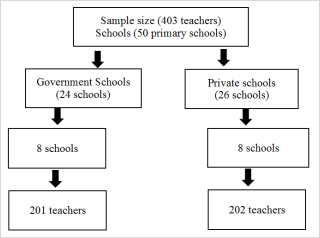
Prevalence was taken as 50%, Margin of error d= 5% was accepted, A confidence interval of 95% was assumed (Zα/2=1.96). There are a total of 50 schools and 1219 teachers in Jimma town. 5% non-response rate was considered: the final sample size was 384+19=403.
Therefore kth value was ~ 3 (1219/403) totally 16 schools was selected by stratified random sampling technique. The following diagram shows the general sampling technique of this study (Figure 1).
Figure 1. sampling technique.
2.6. Study Variables
2.6.1. Dependent Variable
1) Knowledge of seizing children
2) Attitude towards seizing children
3) Practice towards seizing children
2.6.2. Independent Variable
Age, sex, marital status, year of experience, qualification (educational level), training on first aid for seizure and school type.
2.7. Data Collection and Measurements
A self-administrated validated questionnaire in Afaan Oromo, Amharic and English languages were used. The Questionnaires had two Sections: the first section included demographic questions (marital status, age, gender, qualification), and the second section included questions on knowledge of seizing children, attitude towards seizing children and practice for seizing children. The questions assessed the participants’ knowledge, attitude and practice towards seizing children in school.
The answers was added together to form a knowledge score. The teachers’ knowledge was classified into good (> 50% correct answers) and poor (<50% correct answers) . And there was also general awareness question for which association with knowledge was assessed.
Attitude of teachers towards seizing children was measured by using 3 points Likert scale which contains agree, disagree and not sure options. It was graded as negative attitude for those who scored <60% and positive for those scoring >60% .
The practice of teachers towards seizing children was assessed by practice related questions where the steps of WHO approach to seizing children was used and their answer was scored as good if they correctly answer >50% and poor <50% and was labelled as wrong practice if they choose the wrong option .
2.8. Data Quality Control
The questionnaire was pre-tested on 5% of the sample in schools not chosen for the current study, and adjustments was made in accordance with the results. The pre-test evaluated the validity of the knowledge, attitude and practice items. The professional data collectors gathered the necessary information. The primary investigator checked the completed forms, and any errors or inconsistencies was corrected as soon as possible. To reduce errors, data entry was done using Epi Data version 3.1. Before summing up the data, the analysis looked for missing values and outliers.
2.9. Data Analysis
The collected data were entered into EpiData 3.1 then exported to SPSS version 25 for further analysed. Descriptive statistics was utilized to summarize the information. The scores for knowledge and attitude was determined, as well as the percentage of respondents who fall into each category of knowledge and attitude. Binary logistic regression and multivariate logistic regression was used to evaluate the relationship between knowledge, attitude, practice and independent variables. The first analysis was a bivariate binary logistic regression. Multivariable binary logistic regression considered variables with p-values less than 0.25 as candidates. P<0.05 will be used to declare statistical significance in multivariable analysis. To show the degree to which an outcome is correlated with independent factors, odds ratios and matching 95% confidence intervals was employed.
2.10. Ethical Consideration
Ethical clearance was obtained from institutional review board of Institute of Health, Jimma University. Permission was obtained from the authorities of the town education office and schools, after letter was written for them from the department. Written informed consent was obtained from each study participant. Confidentiality was assured by collecting data anonymously. Collected data was used only for research and academic purpose.
Operational Definitions
School Teachers: - Refers to the professionals who have completed diploma or related degree in education, and currently working in teaching of students
Epilepsy: - Two or more unprovoked seizure occur in a time frame of > 24 hour
Seizure: - Abnormal body movement which is characterized by fall, shake, jerk, drooling of saliva or foaming and become unaware of what’s going on around for few seconds to minutes
Seizing Child: - is a child with new onset seizure and/or previously diagnosed with seizure disorder
First aid: - is the immediate assistance provided to a seizing child until professional help arrive.
Knowledge: - The fact or condition of knowing seizure or seizure awareness.
Poor (score< 50%) and good (score>50%)
Attitude: - The way teachers think and behave toward seizing children
Negative (score< 60%) and positive (score>60%)
Practice: - Expected procedure or way of doing of something to support seizing children.
Poor (< 50% correct answers), good (> 50% correct answers) and wrong (for incorrect answers)
Primary School: - It is a school which teaches from Grade 1- Grade 8.
3. Results
3.1. Socio-demographic Characteristics
From a total of 403 calculated sample size, 388 were participated in this study with 96.3% response rate. Most (70.6%) of study participants are in between 18 to 35 age group and half (50.8%) of them were male by sex. More than half (62.6%) of respondents were married 54.4% had diploma in educational level (Table 1).
Table 1. Socio-demographic characteristics of primary school teachers in Jimma town, South West, Ethiopia, 2023.

Charactemristics

Category

Frequency

Percent (%)

Age

18 to 35 year

274

70.6

36 to 45 year

114

29.4

Genders

Male

191

49.2

Female

197

50.8

Marital status

Married

243

62.6

Single

133

34.3

Divorce

12

3.1

level of education

Diploma

211

54.4

Degree

177

45.6

Religion

orthodox

137

35.3

Muslim

194

50.0

protestant

57

14.7

Working experience

< 5 year

90

23.2

6 to 10 year

202

52.1

>11 year

96

24.7

School type

Government

190

49

Private

198

50

3.2. Knowledge Towards Seizing Child
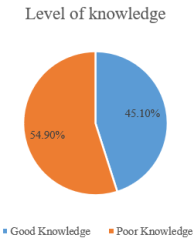
The finding showed that, 45.1% of study participants had good knowledge towards seizure and seizing children (Figure 2). Most (86.1%) of respondents heard about seizure of which, (38.5%) from health profession and about (36.5%) from public media. Most (77.6%) of respondents knew the cause of seizure in children is biological. Epilepsy (80.1%), psychiatric illness (80.1%), brain tumor (33.9%), brain infection (33.6%) and genetic disorder (31.9%) were the biological causes of epilepsy as they mentioned. Additionally, respondents thought that witchcraft (22.6%), the evil spirit (58.1%), and the curse of God (19.3%) were spiritual causes of seizures. Of all, 298(76.8%) of study participants were seen a child with seizure. Convulsion (70.6%), loss of consciousness with saliva drooling (62.6%), and short behavioral alteration (41%), were the most common seizure manifestations. Merely 1.5% of those surveyed thought that seizures could be passed from one person to another. Most (79.4%) of respondents knew seizure is treated or controlled of which; majority (86%) of them choose modern medicine or medical treatment (Table 2).
Table 2. Knowledge of primary school teachers towards seizing children in Jimma town, South West, Ethiopia, 2023.

Variables

Category

N

%

Ever heard about seizure

Yes

334

86.1

No

54

13.9

Sources of information

Public media

124

37.1

Neighbors

73

21.9

Health professional

131

39.2

Friends

6

1.8

Books

6

1.8

what do you think is the cause of seizure in children

Biological cause

301

77.6

Spiritual cause

31

8.0

I don't know

56

14.4

If your answer is biological cause which one do you know

Genetic disorder

96

31.9

Brain infection

101

33.6

Epilepsy

241

80.1

Psychiatric illness

241

80.1

Brain tumor

102

33.9

Head trauma

91

30.2

Fever

47

15.6

Hypoglycemia

83

27.6

If your answer is spiritual cause which one do you know

Curse of God

6

19.3

Evil sprit

18

58.1

Witch craft

7

22.6

Ever known/seen a child with seizure

Yes

298

76.8

No

90

23.2

The manifestation of seizure

Convulsion

274

70.6

Loss of consciousness with drooling of saliva

243

62.6

Brief behavioral change

159

41.0

Foaming

138

35.6

Urine incontinency

110

28.4

Do you think seizure is transmitted from one person to another

Yes

6

1.5

No

247

63.7

I do not know

135

34.8

Do you believe that seizure is treated or controlled

Yes

308

79.4

No

13

3.4

I do not know

67

17.3

Type of treatment

Modern medicine or medical treatment

265

86.0

Traditional healer or medicine

30

9.7

Religious treatment

67

21.8

Figure 2. Figure showing knowledge of primary school teachers towards seizing child, Jimma town, south-western Ethiopia, 2023.
3.3. Attitude Towards Seizing Child
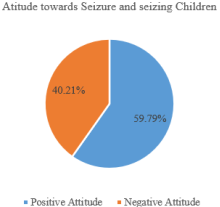
The current study finding revealed that, 59.8% of study participants had positive attitude towards seizing child (Figure 3). Only 1.5% agreed that seizure is contagious and some (14.2%) of them believed that children with seizure are insane. Most (76.8%) of respondents believed that; children with seizure have normal intelligence and should be allowed to continue learning. Most (65.5%) of respondents agreed to allow their child to play with children with seizure and only 4.6% of them believed children with seizure are burden to society (Table 3).
Table 3. Attitude of primary school teachers towards seizing child in Jimma town, South West, Ethiopia, 2023.

Variables

Agree N (%)

Disagree N (%)

Not sure N (%)

Seizure is contagious

6(1.5)

304(78.5)

78(20)

Children with seizure are insane

55(14.2)

261(67.3)

72(18.5)

Children with seizure have normal intelligence

298(76.8)

54(13.9)

36(9.3)

Children with seizure should be isolated from community

6(1.5)

313(80.7)

69(17.8)

Children with seizure should allowed to continue learning

310(79.9)

48(12.4)

30(7.7)

Children with seizure should learn in special school

79(20.4)

211(54.4)

98(25.4)

Allow your child to play with children with seizure

254(65.5)

37(9.5)

97(25)

Children with seizure can lead a healthy life style

266(68.6)

25(6.4)

97(25)

Allow your child to marry child with seizure

120(30.9)

99(25.5)

169(43.6)

Children with seizure should be offended or rejected

-

313(80.7)

75(19.3)

Children with seizure are burden to society

18(4.6)

277(71.4)

93(24)

Seizure is evil sprit

13(3.3)

187(48.2)

188(48.5)

3.4. Practices Towards Seizing Child
Based on the current study finding; 35.8% of respondents had good practice towards seizing children (Figure 4). About half (51.5%) of respondents had ever seen seizing child in their classroom/schools, of which 85% gave first aid. Of those who administered first aid, the majority (75.3%) used a cloth to shield the child's head and quickly moved him away from harm, while 64.1% assisted the child in lying on his side. In other ways, 61.2% of them used to give the child their prescribed medication by sticking a spoon or gag into their mouth. Just 4.6% of those responded had received training in seizure first aid. Of those who have never seen a child being seized, 96.8% believe they are able to providing first aid if they happen to come. Promptly move the child away from danger (76.9%), avoid touching the students during the seizure (69.8%) and make the students smell something to the seizure (50%) were the most type of first aid the participants believed to give if they encountered. Only 4.6% of the respondents were ever trained regarding first aid of seizure in their life time (Table 4).
Figure 3. Figure showing Attitude of primary school teachers towards seizing child, Jimma town, south-western Ethiopia, 2023.
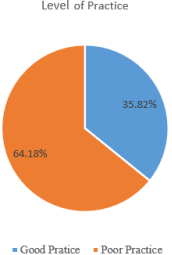
Table 4. Practices of primary school teachers towards seizing children in Jimma town, South West, Ethiopia, 2023.

Variables

Category

N

%

have you ever seen seizing child in your classroom or schools

Yes

200

51.5

No

188

48.5

if yes, have you given first aid

Yes

170

85.0

No

30

15.0

Type of first aid given by those who encountered seizure

Hold the legs and arms

122

71.8

make the students smell something to the seizure

115

67.6

avoid touching the students during the seizure

92

54.1

promptly move the child away from danger

128

75.3

lay the child on his side

109

64.1

protect his head by putting a cloth under his head

128

75.3

avoid touching the child saliva

115

67.6

inserting a spoon or gag into the mouth

104

61.2

be by the side of child till seizure stops and regains consciousness

109

64.1

give the child prescribed medication

104

61.2

loosen clothes or anything around neck pour water on the face of the child

109

64.1

97

57.1

if no, do you think that you are able to give first aid if you encounter

yes

182

96.8

no

6

3.2

hold the legs and arms

43

23.6

make the students smell something to the seizure

91

50.0

avoid touching the students during the seizure

127

69.8

promptly move the child away from danger

140

76.9

lay the child on his side

31

17

protect his head by putting a cloth under his head

73

40.1

avoid touching the child saliva

43

23.6

inserting a spoon or gag into the mouth

43

23.6

call a doctor or an ambulance

133

73.1

be by the side of child till seizure stops and regains consciousness

73

40.1

give the child prescribed medication

25

13.7

loosen clothes or anything around neck

37

20.3

pour water on the face of the child

50

27.5

ever been trained regarding first aid of seizure in life time

Yes

18

4.6

No

370

95.4

Figure 4. Figure showing practice of primary school teachers towards seizing child, Jimma town, south western Ethiopia, 2023.

3.5. Factors Associated with KAP Teachers Towards Seizing Child
3.5.1. Factors Associated with Practice Towards Seizing Child
Age, gender, level of education, religions, school type, knowledge and attitude were the candidate variables on bi-variate logistic regression analysis at p value ≤0.25. Whereas, on Multi-variate logistic regression; age, gender, level of education, school type, knowledge and attitude were variables having significantly associated with the level of practice (P< 0.05). The odds of having poor practice was 4 times (AOR: 4.5, 95%CI: 2.42, 8.367) higher among respondents with 18 to 35 year, when compared with its counter parts. Being male decreases the odds of having poor practice by 56.2% (AOR: 0.438, 95%CI: 0.246, 0.78) when compared with female. Being diploma in educational level increases the chance of having poor practices by 2 times (AOR: 2.309, 95%CI: 1.259, 4.235) when compared with degree holders. The odds of having of having poor practice was 2 times (AOR: 2.322, 95%CI: 1.024, 4.121) higher among respondents in governmental school when compared with private school. Lack of previous training on first aid towards seizing children increases the risk of having poor practice by 4.8 times (AOR: 4.832, 95%CI: 1.323,9.432). Having poor knowledge towards seizure, increases the odds of having poor practice by 5 times (AOR: 5.365, 95%CI: 3.056, 9.418) when compared with its counter parts. Having negative attitude increases the odds of having poor practice by 67.7% (AOR: 0.323, 95%CI: 0.184, 0.568) when compared with its counter parts (Table 5).
Table 5. Bi-variate and multi-variate logistic regression model to identify factors associated with level of practice towards seizing children among school teachers in Jimma Town, Oromia, South West Ethiopia, 2023.

Variables

Category

Practice

COR

AOR (95%CI)

P-value

Good

Poor

Age

36 - 45yr

66(57.9)

48(42.1)

1

1

.000

18 – 35yr

73(26.6)

201(73.4)

3.786

4.5(2.42,8.367)

Genders

Female

51(25.9)

146(74.1)

1

1

.005

Male

88(46.1)

103(53.9)

0.409

0.438(0.246,0.78)

Level of education

Degree

81(45.8)

96(54.2)

1

1

.007

Diploma

58(27.5)

153(72.5)

2.226

2.309(1.259,4.235)

Religion

Protestant

27(47.4)

30(52.6)

1

1

1

Orthodox

58(42.3)

79(57.7)

1.226

0.988(0.431,2.261)

.977

Muslim

54(27.8)

140(72.2)

2.333

1.488(0.704,3.144)

.298

School type

Private

127(66.8)

63(33.2)

1

1

0.043

Gov’t

92(46.5)

106(53.5)

2.932

2.322(1.024,4.121)

Ever been trained

Yes

12(66.7)

6(33.3)

1

1

0.004

No

105(28.4)

265(71.6)

5.047

4.832(1.323,9.432)

Knowledge

Good

108(61.7)

67(38.3)

1

1

.000

Poor

31(14.6)

182(85.4)

9.464

5.365(3.056,9.418)

Attitude

Negative

44(19)

188(81)

1

1

.000

Positive

95(60.9)

61(39.1)

0.15

0.323(0.184,0.568)

3.5.2. Factors Associated with Knowledge Towards Seizing Child
Age, genders, level of education, religions and attitude were the candidate variables on Bi-variate logistic regression analysis at p value ≤0.25. Whereas, on multi-variate binary logistic regression; age, genders, level of education and attitude were variables which had significantly associated with the level of knowledge towards seizure and seizing children among the study participants at (P< 0.05) with 95% CI AOR.
The odd of having poor knowledge was 5 times (AOR: 5197, 95%CI: 2.881, 9.378) higher among respondents with 18 to 35 year, when compared with its counter parts. Being male in gender decreases the odds of having poor knowledge by 61.3% (AOR: 0.387, 95%CI: 0.221, 0.679) when compared with female. Being diploma in educational level increases the chance of having poor knowledge by 2 times (AOR: 2.571, 95%CI: 1.456, 4.539) when compared with degree holders. Having negative attitude increases the odds of having poor knowledge by 81.7% (AOR: 0.183, 95%CI: 0.109, 0.306) when compared with its counter parts (Table 6).
Table 6. Bi-variate and multi-variate logistic regression model to identify factors associated with knowledge towards seizing children among school teachers in Jimma Town, Oromia, South West Ethiopia, 2023.

Variables

Category

Knowledge

COR

AOR (95%CI)

P-value

Good

Poor

Age

36 - 45yr

65(57)

49(43)

1

1

.000

18 – 35yr

110(40.1)

164(59.9)

3.786

5.197(2.881,9.378)

Genders

Female

69(35)

128(65)

1

1

.001

Male

106(55.5)

85(44.5)

.409

0.387(0.221,0.679)

level of education

Degree

92(52)

85(48)

1

1

.001

Diploma

83(39.3)

128(60.7)

2.226

2.571(1.456,4.539)

Religion

Protestant

33(57.9)

24(42.1)

1

1

1

Orthodox

57(41.6)

80(58.4)

1.226

1.093(0.508,2.353)

.820

Muslim

85(43.8)

109(56.2)

2.333

1.504(0.737,3.068)

.262

Attitude

Positive

61(26.3)

171(73.7)

1

1

.000

Negative

114(73.1)

42(26.9)

0.15

0.183(0.109,0.306)

3.5.3. Factors Associated with Attitude Towards Seizing Child
Age, genders, level of education, ever heard about seizure and knowledge were the candidate variables on Bi-variate analysis at p value ≤0.25. On Multi-variate logistic regression genders, ever seen child with seizure knowledge were variables which had significantly associated with level of attitude towards seizure and seizing children at p value < 0.05 with 95% CI AOR.
Being male in gender increases the odds of having negative attitude by 2 times (AOR: 2.333, 95%CI: 1.44, 3.78) when compared with female. The risk of having negative attitude was decreased by 64.8% among those who had ever seen child with seizure (AOR: 0.352, 95%CI: 0.191, 0.651) when compared with its counterparts. Having poor knowledge increases the odds of having negative attitude by 85% (AOR: 0.150, 95%CI: 0.093, 0.241) when compared with its counter parts (Table 7).
Table 7. Bi-variate and multi-variate logistic regression model to identify factors associated with attitude towards seizing children among school teachers in Jimma Town, Oromia, South West Ethiopia, 2023.

Variables

Category

Attitude

COR

AOR (95% CI)

P

Negative

Positive

Age

36 - 45yr

58(50.9)

56(49.1)

1

1

.054

18 – 35yr

98(35.8)

176(64.2)

0.538

0.589(0.344,1.01)

Genders

Female

57(28.9)

140(71.1)

1

1

.001

Male

99(51.8)

92(48.2)

2.643

2.333(1.44,3.78)

level of education

Degree

80(45.2)

97(54.8)

1

1

.273

Diploma

76(36)

135(64)

.683

0.766(0.475,1.234)

ever seen child with seizure

No

138(46.3)

160(53.7)

1

1

.001

Yes

18(20)

72(80)

.29

0.352(0.191,0.651)

Knowledge

Poor

114(65.1)

61(34.9)

1

1

.000

Good

42(19.7)

171(80.3)

.131

0.150(0.093,0.241)

4. Discussions
This study was attempted on the determination of the level of knowledge, attitude, and practice towards seizing children among school teachers in Jimma Town. This study finding suggested the presence of poor level of knowledge, positive attitude, and poor practice of primary school teachers towards seizing children. Schoolteachers were study participants in this study because seizure and its influences are often observed among students in the schools. Notably, the students pass their vital part of their age in the schools through interaction with the teachers. Negative influence from the school environment will harm their present, as well as their future achievements. For example, students with seizure are often seen exposed for poor grade achievement, poor self-esteem, learning difficulties, poor attention, and social isolation.
This study found that teachers who have good knowledge were 45.1% which is in line with the study done in Addis Ababa (41.1%) . Compared with another study, this finding was much smaller than the study conducted in India’s Persian city (97%) Burkina Faso Bobo cities (98%) and Pakistan (89.3%) . The difference might be the study setting, the educational status of teachers, the difference in educational curriculum, or lack of information access, and training. For instance, in Ethiopia majority of high school teachers have their Bachelor’s degrees or less, and they do not have good information access due to poor networking systems. The educational curriculum of Ethiopia also does not include first aid in the teacher’s educational textbook (guidance). This study is higher than a study conducted in Saudi Arabia which revealed 17% .
The difference could be that all respondents were high school teachers, rather in this study, primary school teachers were the study groups. Based on this study, among respondents, 86.1% have heard about seizure or seizing children and goes in line with the study done in Addis Ababa which is 90% and much lower than the study done in Assiut city, Egypt where familiarities is 100% . The major source of information in our study being health professional in 38.5% followed by public media which is 36.5%. Most of the participants (77.6%) knew the cause of seizure to be biological where 80.1% stated epilepsy and psychiatric followed by brain tumor (33.9%), brain infection (33.6%) and genetic disorder (31.9%) which is lower than the study done in Greece where 83.1% stated reasonable answers such as brain tumour, infection, genetics and trauma and this could be due to the teaching set up in developed countries. Moreover; Curse of God (19.3%), Evil spirit (58.1%) and Witch craft (22.6%) were respondents who believed the cause as spiritual this is in line with the study done in Addis Ababa where 25% and 12.6% of them considered psychiatric illness and evil spirit, respectively. Of all, 298 (76.8%) of study participants have seen a child with seizure.
Regarding manifestation of seizure; convulsion (70.6%), loss of consciousness with drooling of saliva (62.6%) and brief behavioral change (41%) were the top listed. Only 1.5% of respondents had believes that seizure is transmitted from one person to another. Most (79.4%) of respondents knew seizure is treated or controlled of which; majority (86%) of them choose modern medicine or medical treatment this also goes online with the study done in Addis Ababa where most the respondents (98%) have seen a child with seizure and stated the common manifestation as convulsion (83.5%).
The current study finding revealed that, 59.8% of study participants had positive attitude towards seizing child which goes in line with the study done in armachiho where the teachers had an attitude (52.1%) towards epilepsy and lower than the one done in Ghana where the participants had more favourable attitude (88.8%). Only 1.5% agreed that seizure is contagious and some (14.2%) of them believed that, children with seizure are insane. Most (76.8% & 79.9%) of respondents believed that; children with seizure have normal intelligence and should be allowed to continue learning.
Most (65.5%) of respondents agreed to allow their child to play with children with seizure and only 4.6% of them believed children with seizure are burden to society. This is in line with the study done in assiut city, Egypt 76.8% of teachers stated it is the same as to any other student or feel sympathy and deal with him or her as with a chronic health problem, and only 1.1% stated that they would rather avoid an epileptic student in their class.
Based on the current study; 35.8% of respondents had safe practice towards seizing children. About half (51.5%) of respondents had seen seizing child in their classroom/schools, of which 85% gave first aid. Of first aid given; most (75.3%) of them used to protect head by putting a cloth under his head and promptly move the child away from danger, while 64.1% of them helped the child to lied on his side. In other ways, (61.2%) of them were used to insert a spoon or gag into the mouth and give the child prescribed medication. Only 4.6% of the respondents were trained regarding first aid of seizure. This goes in line with the study done in Addis Ababa where protecting the child from harmful materials until seizure relief by itself was the first selected activity, followed by lying on the ground in a safe position.
Being a male is positively correlated with the knowledge level, this finding is supported by the study conducted in Khartoum and Central Nepal. The possible reason may be due to the fact that female teachers had less chance to observe the onset of seizure attack, the local norms and customs compromised their movements, but males have more opportunity, in this regard, to see the onset of the seizure.
Being a more educated teacher (having above diploma level) is positively associated with the knowledge level. Our result is strongly supported by the study conducted in Goncha Siso Enesie Woreda, Addis Ababa and Northern Nigerian which shows as the level of education increases, the likelihood of getting information that influences their knowledge will increase.
Ever heard about seizure or having information about seizing child is significantly related with having good knowledge as compared with their counterparts. A similar result was observed in Sululta and Addis Ababa studies. This can be explained with the idea that a person that knows or heard about seizure or seizing child has better access to develop awareness. The study has also found that married teachers possessed more adequate knowledge than their single counterparts, a finding similar to the study done in Ghana where the tradition among many ethnic groups requires that comprehensive background checks are made before marriage is contracted between couples .
Regarding the determinant factors, being an older age is positively related to the level of attitude towards seizing children. Participants above thirty-seven years are more likely to develop a favourable attitude towards seizing children. These findings are supported by the study conducted in the Sululta District and Khartoum State. Meaning, older teachers have more experience and familiarity with seizure and seizing children. It may be related to the more teachers are exposed to the environment for a long period, the more they will develop a good awareness, and they will have an opportunity of changing their attitude through the process.
Teachers who had previous first-aid training are more likely to have good practice as compared with their counterparts. This association is in line with the study conducted in Sululta. It might be due to the fact that globally, one can observe that the more trained people are, the larger the amount of practicing the management is. Truly speaking, skill, or practice, is affected by the experience that we have and the training that we took.
Strength and limitation of the study
This study was performed based on a random or probability sampling method, and it has a high sample size to increase precision and has also high response rate. The study has assessed the knowledge, attitude, and practice of primary schoolteachers towards seizing children for the first time in the town, which can function as base line for further studies and also as an input for stakeholders. Since the study was a cross-sectional, no practical skills could be tested in this setting, and the responses were most likely subjective and it was only conducted in primary schools, thus, its results may have limited generalisability. Since the study didn’t exclude seizing mimicking disorders it may overestimate the exposure of the teachers.
5. Conclusion and Recommendations
5.1. Conclusion
This study showed that the majority of teachers in Jimma town had poor level of knowledge, positive attitude, and poor practice towards seizing children. The poor level of knowledge and practice found among teachers demonstrates the need for health education program and first aid trainings to handle seizing children.
5.2. Recommendation
For researchers and concerned bodies: Further studies are needed to explore the barriers and facilitators of teachers’ knowledge, attitude, and practice towards seizing children, and to evaluate the effectiveness of health education program and first aid trainings for teachers.
For government policymakers: Special needs courses should be incorporated in the educational curriculum of the teachers, to enhance their awareness and skills in dealing with students with seizure and other special needs.
For schoolteachers: First aid trainings should be provided to all level schoolteachers, to equip them with the necessary knowledge and practice to handle seizing children in a safe and appropriate manner.
Abbreviations

JU

Jimma University

JMC

Jimma Medical Center

JU ERC

Jimma University Ethical Review Committee

PWE

People with Epilepsy

KAP

Knowledge Attitude and Practice

SSA

Sub-Saharan Africa

SPSS

Statistical Package for Social Sciences

WHO

World Health Organization

Author Contributions
Mohammod Ibrahim: Conceptualization, Data curation, Formal Analysis, Methodology, Project administration, Writing – original draft, Writing – review & editing
Jemal Mohammod: Conceptualization, Methodology, Writing – original draft, Writing – review & editing
Hunde Ahmed: Conceptualization, Data curation, Formal Analysis, Investigation, Methodology, Project administration, Resources, Validation, Writing – original draft, Writing – review & editing
Kelemu Fentie: Conceptualization, Formal Analysis, Methodology, Project administration, Software, Supervision, Visualization, Writing – review & editing
Sabona Lemessa: Conceptualization, Data curation, Funding acquisition, Investigation, Methodology, Project administration, Supervision, Validation, Visualization, Writing – original draft, Writing – review & editing
Conflicts of Interest
The authors declare no conflicts of interest.
References
[1] Fisher, R. S., Acevedo, C., Arzimanoglou, A., Bogacz, A., Cross, J. H., Elger, C. E., Engel, J., Forsgren, L., French, J. A., Glynn, M., Hesdorffer, D. C., Lee, B. I., Mathern, G. W., Moshé, S. L., Perucca, E., Scheffer, I. E., Tomson, T., Watanabe, M., Wiebe, S., 2014. ILAE Official Report: A practical clinical definition of epilepsy. Epilepsia 55, 475–482.
[2] WHO, 2019. EPIL EPSY : World Health Organisation. Retrieved from
[3] Fisher, R. S., Boas, W. V. E., Blume, W., Elger, C., Genton, P., Lee, P., Engel, J., 2005. Epileptic Seizures and Epilepsy: Definitions Proposed by the International League Against Epilepsy (ILAE) and the International Bureau for Epilepsy (IBE). Epilepsia 46, 470–472.
[4] Meyer AC, Dua T, Ma J, Saxena S, Birbeck G. Global disparities in the epilepsy treatment gap: a systematic review. Bull World Health Organ. 2010 Apr; 88(4): 260-6.
[5] Beltrão ICSL, Carneiro YVA, Delmondes GA, Lima Junior LB, Kerntopf MR. Concepts, Beliefs, and Traditional Treatment for Childhood Seizures in a Quilombola Community in Northeastern Brazil: Analysis by the Discourse of the Collective Speech. Int J Environ Res Public Health. 2021; 18(4): 1875. Published 2021 Feb 15.
[6] Glauser, T. A., Shinnar, S., Gloss, D., Alldredge, B., Arya, R., Bainbridge, J. & Hesdorffer, D. (2017). Evidence-based guideline: Treatment of convulsive status epilepticus in children and adults: Report of the Guideline Committee of the American Epilepsy Society. Epilepsy Currents, 17(6), 363-372.
[7] Alkhotani, Amal M., Almalki, W. M., Alkhotani, Amar M., Turkistani, M. A., 2019. Makkah female teachers’ knowledge of seizure first aid. Epilepsy & Behavior 98, 10–13.
[8] Adal, O., Abebe, A., 2022. First aid knowledge and practice toward students with epileptic seizure among governmental high school teachers in Addis Ababa, Ethiopia: Cross-sectional study. Epilepsy & Behavior 134, 108767.
[9] Alzhrani SH, AlSufyani MH, Abdullah RI, Almalki S. Schoolteacher's knowledge, attitudes, and practice toward student with epilepsy in Taif, Saudi Arabia: Cross-sectional study. J Family Med Prim Care. 2021 Jul; 10(7): 2668-2678.
[10] Thacker AK, Verma AM, Ji R, Thacker P, Mishra P. Knowledge awareness and attitude about epilepsy among schoolteachers in India. Seizure. 2008 Dec; 17(8): 684-90.
[11] Millogo A, Siranyan AS. Knowledge of epilepsyand attitudes towards the condition among schoolteachers in Bobo-Dioulasso (Burkina Faso). Centre Hospitalier National Souro Sanou Bobo-Dioulasso Burkina Faso; 2004. p. 6.
[12] Akhtar W, Akhtar SW, Zarine M. Knowledge, attitude and practice of epilepsy among schoolteachers in Pakistan. Pak J Neurol Sci 2016; 11: 7.
[13] Maher Alsulami, First-Aid Knowledge and Attitudes of Schoolteachers in Saudi Arabia: A Systematic Review, Risk Management and Healthcare Policy, 769-777, 2023,
[14] Shehata, G. A., Mahran, D. G., 2010. Knowledge, attitude and practice with respect to epilepsy among school teachers in Assiut city, Egypt. Epilepsy Research 92, 191–200.
[15] Kaleyias, J., Tzoufi, M., Kotsalis, C., Papavasiliou, A., Diamantopoulos, N., 2005. Knowledge and attitude of the Greek educational community toward epilepsy and the epileptic student. Epilepsy & Behavior 6, 179–186.
[16] Oumer M, Girma A, Ayeligne A. Epilepsy knowledge, attitude, practice, and associated factors among primary, secondary, and preparatory schoolteachers in Lay-Armachiho District, Northwest Ethiopia. Epilepsy Behav. 2020 Nov; 112: 107387.
[17] Ahmed, Khalid & Asare, Richard Opoku & Boakye-yiadom, Akwasi & Aryee, Paul. (2020). Teachers’ Knowledge, Attitudes And Practices Toward Epilepsy In Tarkwa-nsuaem Municipality. European Journal of Health Sciences. 5. 51.
Cite This Article
  • APA Style

    Ibrahim, M., Mohammod, J., Ahmed, H., Fentie, K., Lemessa, S. (2026). Knowledge, Attitude, and Practice of Primary School Teachers Towards Seizing Children, Jimma Town, South Western Ethiopia, Cross Sectional Study. Innovation Education, 1(1), 16-28. https://doi.org/10.11648/j.iedu.20260101.13

    Copy | Download

    ACS Style

    Ibrahim, M.; Mohammod, J.; Ahmed, H.; Fentie, K.; Lemessa, S. Knowledge, Attitude, and Practice of Primary School Teachers Towards Seizing Children, Jimma Town, South Western Ethiopia, Cross Sectional Study. Innov. Educ. 2026, 1(1), 16-28. doi: 10.11648/j.iedu.20260101.13

    Copy | Download

    AMA Style

    Ibrahim M, Mohammod J, Ahmed H, Fentie K, Lemessa S. Knowledge, Attitude, and Practice of Primary School Teachers Towards Seizing Children, Jimma Town, South Western Ethiopia, Cross Sectional Study. Innov Educ. 2026;1(1):16-28. doi: 10.11648/j.iedu.20260101.13

    Copy | Download

  • @article{10.11648/j.iedu.20260101.13,
      author = {Mohammod Ibrahim and Jemal Mohammod and Hunde Ahmed and Kelemu Fentie and Sabona Lemessa},
      title = {Knowledge, Attitude, and Practice of Primary School Teachers Towards Seizing Children, Jimma Town, South Western Ethiopia, Cross Sectional Study},
      journal = {Innovation Education},
      volume = {1},
      number = {1},
      pages = {16-28},
      doi = {10.11648/j.iedu.20260101.13},
      url = {https://doi.org/10.11648/j.iedu.20260101.13},
      eprint = {https://article.sciencepublishinggroup.com/pdf/10.11648.j.iedu.20260101.13},
      abstract = {Background: Seizure is one of the most common abnormal neurologic conditions that represent the uncontrolled, abnormal electrical activity of the brain that may cause changes in the level of consciousness, behaviour, memory, or feelings. Seizure is poorly understood by the public and has been associated with numerous misconceptions and beliefs. It can disrupt daily activities, hinder educational progress, and lead to social stigma and discrimination. Since teachers have a key role in society as educators assessing their knowledge, attitude, and practice towards seizing children and knowing their gaps have a significant input in correcting the misconceptions and wrong beliefs in the public and improving the care and future life of children with seizures. Objective: the aim of the study is to assess the knowledge, attitude and practice (KAP) of primary school teachers towards seizing children in Jimma town, south-western Ethiopia. Methods: A facility based cross-sectional study design was conducted among teachers in private and public primary schools found in Jimma town from March to December, 2023. In this study 24 governmental and 26 private primary schools were included which was selected by stratified random sampling technique. Data were collected using pre-tested and structured questionnaire. The data were entered into Epi-data 3.1 and double entry verification was made and then exported to SPSS version 25 for analysis. Logistic regression analysis was done to identify covariates associated with the outcome variable. Results: This finding revealed that, 45.1%, 59.8% and 35.8% of study participants had good knowledge, had positive attitude and had good practice towards seizing children respectively. Factors associated with good knowledge among teachers towards seizing children was age, sex and educational status. Similarly age, genders, level of education, school type, knowledge and attitude were significantly associated with practiceand attitude of the respondents. Conclusion and recommendation: The majority respondents in Jimma town had poor level of knowledge, positive attitude, and poor practice towards seizing children. Generally, the current new findings will initiate further studies to limit the barrier, to disseminate appropriate information, or to improve teacher's knowledge, attitude, and practice towards seizing children because there is still a student with seizure that has been treated with a negative attitude and poor practice of teachers.},
     year = {2026}
    }
    

    Copy | Download

  • TY  - JOUR
    T1  - Knowledge, Attitude, and Practice of Primary School Teachers Towards Seizing Children, Jimma Town, South Western Ethiopia, Cross Sectional Study
    AU  - Mohammod Ibrahim
    AU  - Jemal Mohammod
    AU  - Hunde Ahmed
    AU  - Kelemu Fentie
    AU  - Sabona Lemessa
    Y1  - 2026/02/06
    PY  - 2026
    N1  - https://doi.org/10.11648/j.iedu.20260101.13
    DO  - 10.11648/j.iedu.20260101.13
    T2  - Innovation Education
    JF  - Innovation Education
    JO  - Innovation Education
    SP  - 16
    EP  - 28
    PB  - Science Publishing Group
    UR  - https://doi.org/10.11648/j.iedu.20260101.13
    AB  - Background: Seizure is one of the most common abnormal neurologic conditions that represent the uncontrolled, abnormal electrical activity of the brain that may cause changes in the level of consciousness, behaviour, memory, or feelings. Seizure is poorly understood by the public and has been associated with numerous misconceptions and beliefs. It can disrupt daily activities, hinder educational progress, and lead to social stigma and discrimination. Since teachers have a key role in society as educators assessing their knowledge, attitude, and practice towards seizing children and knowing their gaps have a significant input in correcting the misconceptions and wrong beliefs in the public and improving the care and future life of children with seizures. Objective: the aim of the study is to assess the knowledge, attitude and practice (KAP) of primary school teachers towards seizing children in Jimma town, south-western Ethiopia. Methods: A facility based cross-sectional study design was conducted among teachers in private and public primary schools found in Jimma town from March to December, 2023. In this study 24 governmental and 26 private primary schools were included which was selected by stratified random sampling technique. Data were collected using pre-tested and structured questionnaire. The data were entered into Epi-data 3.1 and double entry verification was made and then exported to SPSS version 25 for analysis. Logistic regression analysis was done to identify covariates associated with the outcome variable. Results: This finding revealed that, 45.1%, 59.8% and 35.8% of study participants had good knowledge, had positive attitude and had good practice towards seizing children respectively. Factors associated with good knowledge among teachers towards seizing children was age, sex and educational status. Similarly age, genders, level of education, school type, knowledge and attitude were significantly associated with practiceand attitude of the respondents. Conclusion and recommendation: The majority respondents in Jimma town had poor level of knowledge, positive attitude, and poor practice towards seizing children. Generally, the current new findings will initiate further studies to limit the barrier, to disseminate appropriate information, or to improve teacher's knowledge, attitude, and practice towards seizing children because there is still a student with seizure that has been treated with a negative attitude and poor practice of teachers.
    VL  - 1
    IS  - 1
    ER  - 

    Copy | Download

Author Information
  • Abstract
  • Keywords
  • Document Sections

    1. 1. Introduction
    2. 2. Methods
    3. 3. Results
    4. 4. Discussions
    5. 5. Conclusion and Recommendations
    Show Full Outline
  • Abbreviations
  • Author Contributions
  • Conflicts of Interest
  • References
  • Cite This Article
  • Author Information