Abstract
This study aimed to characterize camel farming systems and identify the main constraints faced by herders in the Wadi Fira province, located in eastern Chad. A field survey was conducted from July 10 to October 12, 2025, with 120 households across the province. The data collected covered the socioeconomic characteristics of the households, the main activities of the respondents, the methods of acquiring camels, the objectives of camel farming, and the various constraints encountered by the herders. The results show that camel farming is primarily practiced by men (75%), the majority of whom are married (58.34%). The main objectives of this farming are selling the animals (65%) and self-consumption (20%). The study also revealed that herders face several types of constraints, including environmental, health, security and conflict-related, socio-economic, technical, institutional, and transhumance-related constraints. Animal theft (49%) appears to be one of the major constraints, which explains the strict control of herd movements. Other constraints include disease (45%), water-related constraints (55%), and a lack of support for herders (46%). A thorough understanding of the constraints related to camel herding in this area is an essential step toward improving production systems and reducing the factors hindering the sustainable development of dromedary herding in the Wadi-Fira province.
Keywords
Characterization, Constraints, Herding, Dromedary, System, Wadi-Fira, Chad
1. Introduction
Camelid husbandry plays a vital role in the economic and social life of communities in arid and semi-arid regions
| [1] | Faye B, Senoussi H, Jaouad M. 2017. The dromedary and the oasis: from caravanserai to peri-urban farming. Cah. Agric. 26: 14001. |
| [2] | Wayua F. O., Okoth M. W., Wangoh J. (2012). Survey of postharvest handling, preservation and processing practices along the camel milk chain in Isiolo district, Kenya. African Journal of Food, Agriculture, Nutrition and Development, 12(7). |
[1, 2]
. It provides various products such as meat, milk, hair, leather, wool, and manure, as well as several services, including transportation, portage, animal traction in agriculture, recreation, racing, and beauty contests
| [3] | Adamou A. (2009). Notes on the polyfunctionality of camel farming. Algerian Journal of Arid Regions, 8: 108-122. |
| [4] | Senoussi A. (2011). The camel: a factor of biodiversity and a multi-purpose animal. Proceedings of the International Seminar on Wildlife Biodiversity in Arid and Semi-arid Zones, pp. 265-273. |
| [5] | Faye, B., Jaouad, M., Bhrawi, K., Senoussi, A., Bengoumi, M. (2014), Camel breeding in North Africa: current situation and perspectives. Review of livestock farming and veterinary medicine in tropical countries, 2014, 67 (4): 213-221. |
| [6] | Faye B. (2020). From the dune to the stable: the second domestication of the camel. Les Cahiers of the SFSIC [Online]. |
[3-6]
. In Chad, livestock farming accounts for approximately 37% of the total value of agricultural production and contributes between 14% and 20% to the gross domestic product (GDP). It also plays a major role in the country’s food security, as livestock is, after oil, the main export product ahead of cotton
| [7] | PNDE, 2017. National Livestock Development Plan. Ministry of Livestock, FAO, N’Djamena, Chad, 103 p. |
[7]
. This sector employs nearly 40% of the working population and provides a livelihood for more than 70% of the rural population through the income it generates
| [7] | PNDE, 2017. National Livestock Development Plan. Ministry of Livestock, FAO, N’Djamena, Chad, 103 p. |
[7]
. In addition to its economic importance, livestock farming is deeply rooted in the traditions and sociocultural practices of rural communities in Chad
| [8] | Deye AH, Duteurtre G, Ouagal M, 2021. Farcha Laboratory and rinderpest eradication programs in Chad from 1949 to 2007: a review. Rev. Elev. Med. Vet. Pays Trop., 74 (4): 213-224.
https://doi.org/10.19182/remvt.2007.36816 |
[8]
According to the General Livestock Census, Chad’s livestock population is estimated at 93,803,192 head, consisting mainly of cattle, small ruminants, and camelids
| [9] | MEPA (Ministry of Livestock and Animal Production), 2015. General Livestock Census (RGE) 2012-2015. Presentation of the main results, 20p. |
[9]
. Camelids account for approximately 8,254,646 head, of which 898,478 are recorded in the Wadi-Fira province. In this province, nearly 85% of the population derives its livelihood from agro-pastoral activities
| [10] | INSEED, 2009. National Institute of Statistics, Economic and Demographic Studies. Demographic Projections 2009-2050. 230p. |
[10]
. Pastoral systems, which rely heavily on the exploitation of natural resources, dominate the region and account for approximately 80% of production systems. In a context marked by severe rural poverty and increasing climate variability, dromedaries play an increasingly important role in areas where forage resources are limited
| [11] | Zahraddeen D, Butswat ISR, Mbap ST, (2007). Gestation length, kidding interval and reproductive problems in goats in Bauchi, Nigeria. J. Agric. Res Policies. 2007; 2(4): 11-16p. |
[11]
. Thanks to their ability to adapt to harsh environmental conditions, they constitute a strategic resource for pastoralist populations. Animal production contributes significantly to food security through the supply of animal-based protein from milk and meat
| [12] | KAMUANGA M, 2002. Role of animals and livestock in spaces and systems agrarians of the Sudano-Sahelian savannahs ILRI-CIRES, Bobo-2Dioulasso; Burkina Faso. In: Proceedings of the conference, April 27-May 3, 2002, Garoua, Cameroon. |
[12]
. Livestock farming thus plays a strategic role in the national economy due to the size of the livestock population, the existence of vast pastoral lands, the expertise of herding communities, and government support. According to a 2016 study conducted by the Support Platform for Pastoralism Stakeholders in Chad, livestock farming accounts for 14% of the national GDP and 53% of the rural sector’s GDP. It also generates nearly 30% of non-oil export revenues. This sector employs approximately 40% of the rural population, or nearly 3.5 million people, the majority of whom belong to the most vulnerable groups. Annual income from livestock farming is estimated at 140 billion CFA francs
| [13] | ALFAROUKH O. The sectoral policy of pastoralism in Chad, orientation. Moundou, Chad. 2021, 183p. |
[13]
. Camelids are one of the main species raised in Sahelian areas, with the dromedary being particularly well-suited to arid and semi-arid environments. Camel husbandry is primarily practiced in the dry regions of Chad, which cover more than two-thirds of the national territory
| [14] | Meutchieye F., Djomtchaigue B. H. 2015. The dromedary, an animal at the service of human resilience in the Sahelian environment. Sustainable agriculture with low external inputs N°32 volume 4 - December 2016 AGRIDAPE is the African regional edition French-speaking LEISA magazines co-published by ILEIA and IED Afrique ISSN n°0851 -7932. Edited, 9-12. |
[14]
. Despite its socio-economic importance, this livestock system faces numerous constraints that may limit its performance and development. This study was conducted in a province bordering Sudan. As Sudan has been at war for several years, there is a presence of Sudanese refugees in this province. Armed conflicts are sometimes cross-border, and water and pasture resources are insufficient because the refugees also have animals. Therefore, this province faces particular conflicts compared to other provinces, hence the particular aspect of our study compared to studies conducted in other provinces. In this context, it appears necessary to identify the main constraints affecting camel husbandry in the Wadi-Fira province in order to propose appropriate strategies for improving production systems and ensuring the sustainable development of this activity in eastern Chad.
2. Materials and Methods
2.1. Overview of the Wadi-fira Region
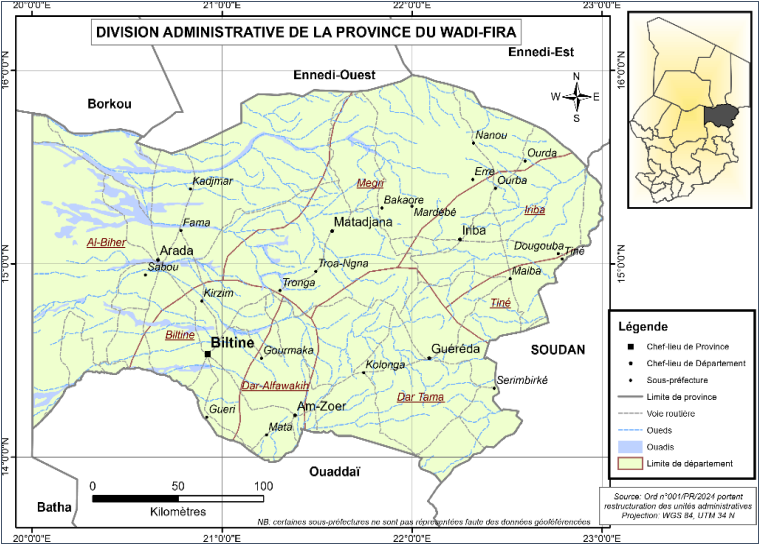
The province of Wadi-Fira is located in eastern Chad, between the 11th and 16th parallels of north latitude and the 20th and 23rd meridians of east longitude. It is bordered to the east by Sudan, to the north by the Ennedi Province, to the west by the Batha Province, and to the south by the Ouaddaï Province. The Wadi-Fira Province is part of Chad’s Sahelian zone. Its climate is characterized by high temperatures and low rainfall. The vegetation is primarily steppe-like and exhibits a gradient of increasing density from the desert north toward the Sahelian south. This vegetation cover is dominated by herbaceous and woody species adapted to arid and semi-arid climatic conditions. Rainfall is one of the main factors determining agro-pastoral activities in the region. In the town of Biltine, the main settlement in the study area, average annual precipitation ranges from 300 to 500 mm depending on the year
| [15] | MEPA, Ministry Of Livestock And Animal Production; Chad, National livestock development plan. -Ndjamena: Ministry of Livestock, Ndjamena Chad. 2021, 62 p. |
[15]
. These ecological conditions favor the development of pastoral activities, particularly the raising of dromedaries, which are especially well-suited to Sahelian environments.
2.2. Sampling and Data Collection Methods
The study was conducted through a survey in the Wadi-Fira province over a three-month period, from July 10 to October 12, 2025. Camel herders were identified through direct field surveys. The selection criteria for camel herders were based on, firstly, the sedentary nature of their households and, secondly, on the ownership of a minimum of thirty (30) camels. A total of 380 camels were surveyed beforehand, of which 120 were selected for this study.
2.3. Survey Procedure and Period
The study was conducted using a longitudinal survey, with the aid of a scale and a data collection form developed and validated in advance following a preliminary survey. Observations were conducted daily, morning and evening, upon the animals' return from pasture, after obtaining the informed consent of the herders. Interviews and questions were conducted in the local dialect, Arabic, and, in some cases, French, to facilitate communication and ensure the accuracy of the information collected.
2.4. Statistical Analysis
The collected data were entered into an Excel spreadsheet. SPSS software (version 27.0.1) was used for statistical analysis. Descriptive analysis was used to calculate measures of dispersion (mean, standard deviations, minimums, and maximums) at the 5% significance level.
Figure 1. Map of the Study Area (CNRD 2024).
3. Results
3.1. Household Characteristics
Camel herding in the province of Wadi-Fira was predominantly carried out by men, who accounted for 70% of the herders surveyed, while women’s participation remained marginal (p < 0.05). The majority of respondents were married, with single, widowed, and divorced individuals constituting only a small proportion of the sample studied (p < 0.05). Regarding educational attainment, the largest proportion of herders had received a Koranic education, followed by those who had completed primary school. Conversely, herders with a secondary or higher level of education were the least represented in the sample (p < 0.05).
Table 1. Profiles of camel herders in the province of Wadi-Fira.
Parameters | Modality | Effective | Percentage (%) |
Sex | Male | 90 | 75% |
Female | 30 | 25% |
Marital status | Married | 70 | 58.34% |
Single | 36 | 30% |
Widowed | 10 | 8.33% |
Divorced | 4 | 3.33% |
Level of education | Primary | 42 | 35% |
Secondary | 22 | 18.33% |
Quranic Schools | 52 | 43.33% |
Higher Education | 4 | 3.33% |
3.2. Main Activities of the Respondents
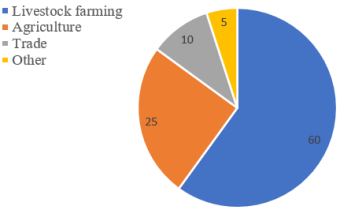
In Wadi-Fira Province, livestock farming was the primary economic activity for more than half of the camel herders surveyed, while 60% of them were primarily engaged in trade. In contrast, a small proportion, 20.5%, engaged in agriculture, and the remainder were involved in other activities such as livestock farming. The differences observed between these categories of activities were statistically significant (p < 0.05) (see
Figure 2).
Figure 2. Distribution of camel herders according to activities.
3.3. Method of Acquisition
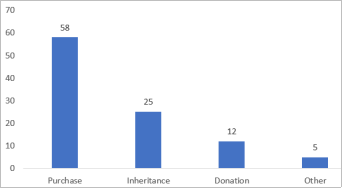
Among the herders surveyed, purchase was the primary method of acquiring camels, accounting for 58% of cases, followed by inheritance at 25% and donations at 12%. The differences observed between these various methods of acquisition were statistically significant (p < 0.05).
Figure 3. Distribution of breeders according to method of acquiring dromedaries.
3.4. Objectives of Camel Breeding
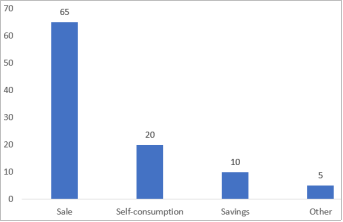
More than half of the camel breeders surveyed raised dromedaries primarily for commercial purposes (65%), with the sale of animals being the main source of income from this activity. Self-consumption (20%) ranked second among the objectives of dromedary breeding in the study area. In contrast, a smaller proportion of herders viewed camels as a means of saving or raised them for other purposes. The differences observed between the various breeding purposes were statistically significant (p < 0.05).
Figure 4. Distribution of herders by livestock-raising objectives.
4. The Main Constraints Faced by Dromedary Herders in This Province
4.1. Environmental Constraints
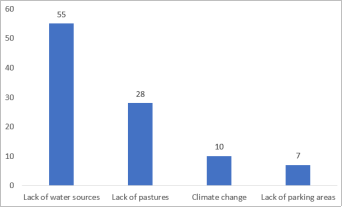
The survey results show that water scarcity is perceived as the main environmental constraint affecting camel husbandry in Wadi-Fira Province, according to 55% of respondents. This is followed by insufficient pasture (28%), the impacts of climate change (10%), and a lack of grazing areas, cited by a smaller proportion of respondents.
Figure 5. Environmental Constraints.
4.2. Health Constraints
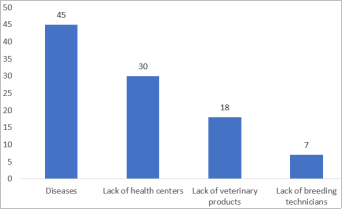
The survey results reveal that animal diseases are the main constraint faced by camel herders in Wadi-Fira Province, cited by 45% of respondents. The lack of veterinary health centers ranks second among the difficulties mentioned, accounting for 30% of responses. This constraint is followed by the shortage of veterinary products, mentioned by 18% of respondents. In contrast, the shortage of livestock technicians appears to be the least frequently cited constraint, with only 7% of respondents mentioning it.
Figure 6. Health Constraints.
4.3. Conflict- and Security-Related Constraints
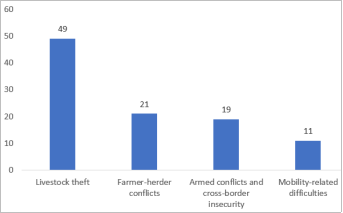
The survey results show that livestock theft is the main security constraint affecting camel herders in Wadi-Fira Province, according to 49% of respondents. This issue is followed by conflicts between farmers and herders (21%), then by armed conflicts in border areas with Sudan (19%). Mobility-related difficulties are the least frequently mentioned, with a mention rate of 11%.
Figure 7. Conflict- and security-related constraints.
4.4. Socio-economic Constraints
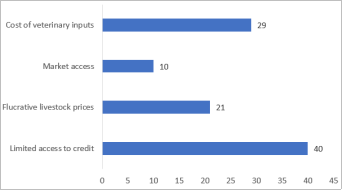
From a socio-economic perspective, camel herding in Wadi-Fira Province faces several major constraints, including limited access to credit services (40%), volatile livestock prices (21%), difficulties in accessing markets (10%), the high cost of livestock inputs, and the economic vulnerability of pastoralist households (29%). These constraints limit herders’ capacity for production, investment, and marketing.
Figure 8. Socioeconomic constraints.
4.5. Technical Constraints
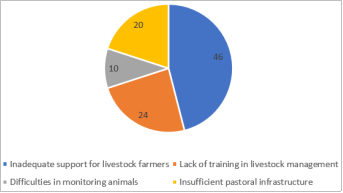
From a technical standpoint, the main constraints faced by camel herders in Wadi-Fira Province are the low level of technical support, the lack of training in livestock management, difficulties related to animal identification and tracking, as well as inadequate pastoral infrastructure, particularly vaccination stations, resting areas, and transhumance corridors. These constraints limit the improvement of husbandry practices and the effective management of herds.
Figure 9. Technical constraints.
4.6. Institutional Constraints
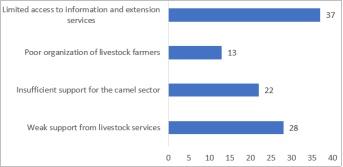
At the institutional level, camel husbandry in Wadi-Fira Province faces several major constraints, including limited support from livestock services, inadequate policies to support the camel sector, poor organization of herders into associations or cooperatives, and limited access to information and extension services. These constraints limit opportunities for support, structuring, and sustainable development of the sector.
Figure 10. Institutional Constraints.
4.7. Constraints Related to Transhumance
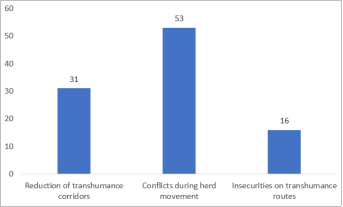
The survey results reveal that the transhumance of camel herds in the province of Wadi-Fira faces several major constraints, including the reduction or obstruction of transhumance corridors, conflicts arising during herd movements, difficulties accessing water sources and pastures, as well as the insecurity prevailing along transhumance routes. These constraints hinder herders’ mobility and compromise the optimal management of pastoral resources.
Figure 11. Constraints Related to Transhumance.
5. Discussion
5.1. Characteristics of Camel Herders
The results of this study show that camel herding in the Wadi-Fira province is primarily carried out by men, who represent 75% of the herders surveyed, compared to 25% women. This male predominance could be linked to the roles traditionally assigned to men in herd management and pastoral activities. However, this proportion remains lower than that reported by
| [16] | Touka, A., Bamare Djomtchaigue, H., Youssouf, I., Oudanang, K. M., Ahmat Mahamat, A. M., & Salako Kolawole, V. (2025). Camel breeding in the province of Ennedi- West in Chad: characteristics and typology. Cameroon Journal of Experimental Biology, 18(2), 17-23.
https://doi.org/10.4314/cajeb.v18i2.3 |
[16]
. In the Ennedi West province, where men constituted 81.75% of camel herders and corroborate these findings obtained by
| [17] | Adamou Karimou, I., Zakou, A., & Alhassane, A. (2025). Camel livestock farming system in peri-urban areas of Niger: Characteristics and econometric evaluation of its goods and services attributes. Moroccan Journal of Agronomic and Veterinary Sciences. |
[17]
the majority of camel breeders are men (98%) of married status (87%),. Furthermore, the results of the present study differ from those obtained by
| [18] | Bedda H, Adamou A, Baaissa B., 2015. Camel Production systems in Algerian Sahara: Case Study of the Region of Ouargla, 127 pages. |
[18]
. in Algeria, who observed an exclusively male practice of camel herding, with no herds belonging to women being recorded. This difference could be explained by the socio-cultural, economic, and organizational specificities that characterize the livestock farming systems specific to each region regarding marital status, more than half of the herders interviewed (58.34%) were married. This high proportion reflects the socio-economic importance of camel herding in the study area, where this activity often constitutes the main source of income and subsistence for pastoral households. Concerning education level, herders who had received Koranic instruction were the most numerous (43.33%), followed by those who had reached primary school (35%). This situation highlights the low level of formal schooling and the relatively high rate of illiteracy that characterize the rural areas of the Wadi-Fira province. These results also differ from those reported by
| [16] | Touka, A., Bamare Djomtchaigue, H., Youssouf, I., Oudanang, K. M., Ahmat Mahamat, A. M., & Salako Kolawole, V. (2025). Camel breeding in the province of Ennedi- West in Chad: characteristics and typology. Cameroon Journal of Experimental Biology, 18(2), 17-23.
https://doi.org/10.4314/cajeb.v18i2.3 |
[16]
. thus underscoring the existence of socio-educational disparities. between the different camel-breeding regions of Chad.
5.2. Main Activity of Herders
In the study area, camel breeding is the main activity for the majority of camel herders, accounting for 58% of respondents. Agriculture is the second most common activity, practiced by 20% of respondents. These results contrast with those of
| [19] | Chaibo, M., Faye B. Zootechnical productivity of the desert: the case of the dairy basin from Agadez to Niger, Doctoral thesis, Montpellier II France, 2005, 310 pages. CIRAD. |
[19]
. in Niger, where agriculture was identified as the main activity for most camel herders. This difference could be explained by the specific agro-ecological, economic, and socio-cultural characteristics of each study area.
5.3. Method of Acquiring Camels
In the study area, camel breeding is the main activity for the majority of camel herders, accounting for 58% of respondents. Agriculture ranks second among the activities undertaken, practiced by 20% of respondents. These results contrast with those of
| [19] | Chaibo, M., Faye B. Zootechnical productivity of the desert: the case of the dairy basin from Agadez to Niger, Doctoral thesis, Montpellier II France, 2005, 310 pages. CIRAD. |
[19]
. in Niger, where agriculture was identified as the main activity for most camel herders. This difference could be explained by the specific agro-ecological, economic, and socio-cultural characteristics of each study area. The Purpose of Camel Farming in the Wadi-Fira Province.
5.4. Constraints on Camel Farming in the Wadi-Fira Province
The study identified several major constraints likely to limit the development of camel farming in the Wadi-Fira province. Among the main difficulties noted are the significant presence of Sudanese refugees in the study area, environmental constraints, agropastoral conflicts, health problems, insecurity, livestock theft, and various technical constraints related to animal mobility and tracking. Camel theft emerged as the primary security constraint cited by herders, with a frequency of 49%. This situation could be linked to the high economic value of this species and its considerable mobility, which facilitates the rapid transfer of animals over long distances, including across national borders. The geographical location of the Wadi-Fira province, situated near Sudan, could encourage the cross-border movement of stolen animals and make their recovery difficult for owners. Similar results were reported by. The tensions and conflicts observed in this country have led to significant population movements and an increase in security risks in the regions bordering Chad. Similar observations were made by
| [20] | Ouologuem B, Coulibaly D M., 2008. Camel breeding system in the region of Gao: Knowledge of people is essential to improve breeding. The rural economy notebooks 6: 5 12. Ram. |
[20]
. in the pastoral systems of the Gao region in Mali, where insecurity was a limiting factor for livestock farming activities. Health constraints also play a major role in the difficulties faced by livestock farmers. Indeed, 45% of respondents reported the presence of animal diseases affecting their herds. This constraint is followed by insufficient veterinary infrastructure (30%), a lack of veterinary products (18%), and a shortage of specialized livestock technicians. These results reflect the limitations of the veterinary support system in pastoral areas and the potential effects of these deficiencies on the productivity and sustainability of camel herds.
From an environmental perspective, water availability is the main difficulty encountered by herders, cited by 55% of respondents. This observation aligns with the findings of
| [18] | Bedda H, Adamou A, Baaissa B., 2015. Camel Production systems in Algerian Sahara: Case Study of the Region of Ouargla, 127 pages. |
[18]
. In Algeria, where access to water resources was also a major concern for camel herders. Other constraints were also identified, including insufficient pasture (28%), difficulties related to accessing and managing transhumance routes (10%), and a lack of designated areas for herds (7%). These constraints illustrate the fragility of camel farming systems in the face of environmental changes and increasing pressures on pastoral resources in Sahelian areas. The problem of grazing areas in the Wadi Fira province is more acute in the border area with Sudan; these results are consistent with those obtained by
| [21] | Amsidder, L. (2022). Accessing resources in arid environments: a matter of networks? The social investment strategies of camel herders in southwestern Morocco as a factor in adapting to the socio-political and climatic changes in pastoral areas. Doctoral dissertation, AgroParisTech. |
[21]
.
6. Conclusion
The aim of this study was to identify and analyze the main constraints affecting camel farming in the Wadi-Fira province, based on data collected from 120 herding households. The results revealed several limiting factors, including environmental constraints, agropastoral conflicts, health problems, insecurity, livestock theft, and technical difficulties related to herd mobility and animal identification. These constraints represent a major obstacle to the development of camel farming, affecting herd productivity and the sustainability of pastoral systems. Addressing these challenges requires the implementation of appropriate strategies to strengthen herders' adaptive capacities, improve access to veterinary services, secure grazing areas, and promote the rational and sustainable management of natural resources. Furthermore, the constraints faced by herders are amplified by the effects of climate change, the intensification of community conflicts, and security instability in some neighboring regions, particularly in Sudan and Libya. These factors contribute to increasing the vulnerability of pastoral systems and underscore the need for greater commitment from public authorities and development partners to the camel sector. Despite the numerous challenges that characterize the Sahel-Saharan zones and the still insufficiently recognized role of the dromedary in livestock development policies, this species remains a strategic resource for the pastoral communities of Wadi-Fira. Camel herding plays a vital role in food security, income generation, and maintaining household livelihoods. It is therefore essential to strengthen actions aimed at supporting, modernizing, and sustainably developing this sector to ensure its contribution to the socio-economic development of the region.
Abbreviations
GDP | Gross Domestic Product |
PNDE | National Plan for the Development of Livestock Farming |
CNRD | National Research Center for Development |
INSED | National Institute of Statistics, Economic and Demographic Studies |
MEPA | Ministry of Livestock and Animal Production |
Acknowledgments
Our thanks go to the research Directorate of the Ministry of Higher Education, Research and Vocation Training, Project for the Development Bank (IDB) and the administrative and academic authorities of INSTA.
Author Contributions
Adam Bakhit Mustapha: Conceptualization, Data curation, Formal Analysis
Issa Youssouf Adoum: Supervision, Validation, Writing – original draft, Writing – review & editing
Mahamat Seid Souleyman: Funding acquisition, Investigation, Methodology, Visualization, Writing – review & editing
Conflicts of Interest
The authors declare no conflicts of interest.
References
| [1] |
Faye B, Senoussi H, Jaouad M. 2017. The dromedary and the oasis: from caravanserai to peri-urban farming. Cah. Agric. 26: 14001.
|
| [2] |
Wayua F. O., Okoth M. W., Wangoh J. (2012). Survey of postharvest handling, preservation and processing practices along the camel milk chain in Isiolo district, Kenya. African Journal of Food, Agriculture, Nutrition and Development, 12(7).
|
| [3] |
Adamou A. (2009). Notes on the polyfunctionality of camel farming. Algerian Journal of Arid Regions, 8: 108-122.
|
| [4] |
Senoussi A. (2011). The camel: a factor of biodiversity and a multi-purpose animal. Proceedings of the International Seminar on Wildlife Biodiversity in Arid and Semi-arid Zones, pp. 265-273.
|
| [5] |
Faye, B., Jaouad, M., Bhrawi, K., Senoussi, A., Bengoumi, M. (2014), Camel breeding in North Africa: current situation and perspectives. Review of livestock farming and veterinary medicine in tropical countries, 2014, 67 (4): 213-221.
|
| [6] |
Faye B. (2020). From the dune to the stable: the second domestication of the camel. Les Cahiers of the SFSIC [Online].
|
| [7] |
PNDE, 2017. National Livestock Development Plan. Ministry of Livestock, FAO, N’Djamena, Chad, 103 p.
|
| [8] |
Deye AH, Duteurtre G, Ouagal M, 2021. Farcha Laboratory and rinderpest eradication programs in Chad from 1949 to 2007: a review. Rev. Elev. Med. Vet. Pays Trop., 74 (4): 213-224.
https://doi.org/10.19182/remvt.2007.36816
|
| [9] |
MEPA (Ministry of Livestock and Animal Production), 2015. General Livestock Census (RGE) 2012-2015. Presentation of the main results, 20p.
|
| [10] |
INSEED, 2009. National Institute of Statistics, Economic and Demographic Studies. Demographic Projections 2009-2050. 230p.
|
| [11] |
Zahraddeen D, Butswat ISR, Mbap ST, (2007). Gestation length, kidding interval and reproductive problems in goats in Bauchi, Nigeria. J. Agric. Res Policies. 2007; 2(4): 11-16p.
|
| [12] |
KAMUANGA M, 2002. Role of animals and livestock in spaces and systems agrarians of the Sudano-Sahelian savannahs ILRI-CIRES, Bobo-2Dioulasso; Burkina Faso. In: Proceedings of the conference, April 27-May 3, 2002, Garoua, Cameroon.
|
| [13] |
ALFAROUKH O. The sectoral policy of pastoralism in Chad, orientation. Moundou, Chad. 2021, 183p.
|
| [14] |
Meutchieye F., Djomtchaigue B. H. 2015. The dromedary, an animal at the service of human resilience in the Sahelian environment. Sustainable agriculture with low external inputs N°32 volume 4 - December 2016 AGRIDAPE is the African regional edition French-speaking LEISA magazines co-published by ILEIA and IED Afrique ISSN n°0851 -7932. Edited, 9-12.
|
| [15] |
MEPA, Ministry Of Livestock And Animal Production; Chad, National livestock development plan. -Ndjamena: Ministry of Livestock, Ndjamena Chad. 2021, 62 p.
|
| [16] |
Touka, A., Bamare Djomtchaigue, H., Youssouf, I., Oudanang, K. M., Ahmat Mahamat, A. M., & Salako Kolawole, V. (2025). Camel breeding in the province of Ennedi- West in Chad: characteristics and typology. Cameroon Journal of Experimental Biology, 18(2), 17-23.
https://doi.org/10.4314/cajeb.v18i2.3
|
| [17] |
Adamou Karimou, I., Zakou, A., & Alhassane, A. (2025). Camel livestock farming system in peri-urban areas of Niger: Characteristics and econometric evaluation of its goods and services attributes. Moroccan Journal of Agronomic and Veterinary Sciences.
|
| [18] |
Bedda H, Adamou A, Baaissa B., 2015. Camel Production systems in Algerian Sahara: Case Study of the Region of Ouargla, 127 pages.
|
| [19] |
Chaibo, M., Faye B. Zootechnical productivity of the desert: the case of the dairy basin from Agadez to Niger, Doctoral thesis, Montpellier II France, 2005, 310 pages. CIRAD.
|
| [20] |
Ouologuem B, Coulibaly D M., 2008. Camel breeding system in the region of Gao: Knowledge of people is essential to improve breeding. The rural economy notebooks 6: 5 12. Ram.
|
| [21] |
Amsidder, L. (2022). Accessing resources in arid environments: a matter of networks? The social investment strategies of camel herders in southwestern Morocco as a factor in adapting to the socio-political and climatic changes in pastoral areas. Doctoral dissertation, AgroParisTech.
|
Cite This Article
-
APA Style
Mustapha, A. B., Adoum, I. Y., Souleyman, M. S. (2026). Characterization and Constraints of Camel Farming Systems in the Province of Wadi Fira, in Eastern Chad. American Journal of Bioscience and Bioengineering, 14(3), 40-47. https://doi.org/10.11648/j.bio.20261403.12
 Copy
|
Copy
|
 Download
ACS Style
Mustapha, A. B.; Adoum, I. Y.; Souleyman, M. S. Characterization and Constraints of Camel Farming Systems in the Province of Wadi Fira, in Eastern Chad. Am. J. BioSci. Bioeng. 2026, 14(3), 40-47. doi: 10.11648/j.bio.20261403.12
Copy
|
Download
AMA Style
Mustapha AB, Adoum IY, Souleyman MS. Characterization and Constraints of Camel Farming Systems in the Province of Wadi Fira, in Eastern Chad. Am J BioSci Bioeng. 2026;14(3):40-47. doi: 10.11648/j.bio.20261403.12
Copy
|
Download
-
@article{10.11648/j.bio.20261403.12,
  author = {Adam Bakhit Mustapha and Issa Youssouf Adoum and Mahamat Seid Souleyman},
  title = {Characterization and Constraints of Camel Farming Systems in the Province of Wadi Fira, in Eastern Chad},
  journal = {American Journal of Bioscience and Bioengineering},
  volume = {14},
  number = {3},
  pages = {40-47},
  doi = {10.11648/j.bio.20261403.12},
  url = {https://doi.org/10.11648/j.bio.20261403.12},
  eprint = {https://article.sciencepublishinggroup.com/pdf/10.11648.j.bio.20261403.12},
  abstract = {This study aimed to characterize camel farming systems and identify the main constraints faced by herders in the Wadi Fira province, located in eastern Chad. A field survey was conducted from July 10 to October 12, 2025, with 120 households across the province. The data collected covered the socioeconomic characteristics of the households, the main activities of the respondents, the methods of acquiring camels, the objectives of camel farming, and the various constraints encountered by the herders. The results show that camel farming is primarily practiced by men (75%), the majority of whom are married (58.34%). The main objectives of this farming are selling the animals (65%) and self-consumption (20%). The study also revealed that herders face several types of constraints, including environmental, health, security and conflict-related, socio-economic, technical, institutional, and transhumance-related constraints. Animal theft (49%) appears to be one of the major constraints, which explains the strict control of herd movements. Other constraints include disease (45%), water-related constraints (55%), and a lack of support for herders (46%). A thorough understanding of the constraints related to camel herding in this area is an essential step toward improving production systems and reducing the factors hindering the sustainable development of dromedary herding in the Wadi-Fira province.},
 year = {2026}
}
Copy
|
Download
-
TY  - JOUR
T1  - Characterization and Constraints of Camel Farming Systems in the Province of Wadi Fira, in Eastern Chad
AU  - Adam Bakhit Mustapha
AU  - Issa Youssouf Adoum
AU  - Mahamat Seid Souleyman
Y1  - 2026/07/22
PY  - 2026
N1  - https://doi.org/10.11648/j.bio.20261403.12
DO  - 10.11648/j.bio.20261403.12
T2  - American Journal of Bioscience and Bioengineering
JF  - American Journal of Bioscience and Bioengineering
JO  - American Journal of Bioscience and Bioengineering
SP  - 40
EP  - 47
PB  - Science Publishing Group
SN  - 2328-5893
UR  - https://doi.org/10.11648/j.bio.20261403.12
AB  - This study aimed to characterize camel farming systems and identify the main constraints faced by herders in the Wadi Fira province, located in eastern Chad. A field survey was conducted from July 10 to October 12, 2025, with 120 households across the province. The data collected covered the socioeconomic characteristics of the households, the main activities of the respondents, the methods of acquiring camels, the objectives of camel farming, and the various constraints encountered by the herders. The results show that camel farming is primarily practiced by men (75%), the majority of whom are married (58.34%). The main objectives of this farming are selling the animals (65%) and self-consumption (20%). The study also revealed that herders face several types of constraints, including environmental, health, security and conflict-related, socio-economic, technical, institutional, and transhumance-related constraints. Animal theft (49%) appears to be one of the major constraints, which explains the strict control of herd movements. Other constraints include disease (45%), water-related constraints (55%), and a lack of support for herders (46%). A thorough understanding of the constraints related to camel herding in this area is an essential step toward improving production systems and reducing the factors hindering the sustainable development of dromedary herding in the Wadi-Fira province.
VL  - 14
IS  - 3
ER  -
Copy
|
Download





 Share This Article
 Twitter
 Linked In
 Facebook