
 ,
Komilov Ne’matilla Muxammadjonovich,
Ergashev Muxriddinxon Fazliddinxon o‘g‘li*
This article presents the results of field trials and an economic efficiency assessment of a developed film-laying machine designed for potato ridges. The main objective of the study was to evaluate the machine’s operational performance, the quality of the technological process, and its economic advantages compared with the existing manual method. The developed machine was aggregated with tractors of classes 0.9–1.4 and tested under actual production conditions on farms in the Namangan region of Uzbekistan. During the field trials, several key indicators were determined to assess the quality and efficiency of the machine’s operation, including soil density, planting depth, ridge-top width, ridge height, and fuel consumption. The experimental results showed that soil density ranged from 1.14 to 1.16 g/cm3, planting depth was 6.7–7.7 cm, ridge-top width was 26.8–29.0 cm, and ridge height was 17.3–18.2 cm. Fuel consumption during operation ranged from 3.1 to 3.9 kg/ha. These indicators were used to characterize the machine’s performance and its suitability for use in potato cultivation. In addition to the field trials, technical and economic calculations were conducted to determine the practical benefits of introducing the developed machine into agricultural production. The economic assessment focused on labor requirements and operating costs per hectare, which are important factors affecting the efficiency of potato cultivation. The results demonstrated that, compared with the existing manual method, the proposed machine reduced labor requirements by 86.23% and operating costs per hectare by 23.51%. These findings indicate that the developed film-laying machine can improve the mechanization of potato ridge preparation, reduce the labor burden on agricultural workers, and lower production costs. Overall, the study confirms the machine’s potential to improve operational efficiency and support more economical potato production under the tested field conditions.
| Published in | American Journal of Mechanical and Industrial Engineering (Volume 11, Issue 5) |
| DOI | 10.11648/j.ajmie.20261105.16 |
| Page(s) | 147-151 |
| Creative Commons |
This is an Open Access article, distributed under the terms of the Creative Commons Attribution 4.0 International License (http://creativecommons.org/licenses/by/4.0/), which permits unrestricted use, distribution and reproduction in any medium or format, provided the original work is properly cited. |
| Copyright |
Copyright © The Author(s), 2026. Published by Science Publishing Group |
Potato, Film-laying Machine, Leveling and Compacting Roller, Field Trials, Economic Efficiency, Planting Depth, Ridge Height, Fuel Consumption
Parameter | Unit | Value |
|---|---|---|
Type | – | Mounted |
Compatible tractor class | – | 0.9–1.4 |
Operating speed | km/h | 6–8 |
Field capacity | ha/h | 0.86–1.12 |
Number of furrow-opening discs | units | 4 |
Number of film holders | units | 4 |
Number of film-covering discs | units | 4 |
Number of compacting rollers | units | 2 |
Overall dimensions (length × width × height) | mm | 2160 × 1500 × 1200 |
Total mass | kg | 660 |
est location | Soil density, g/cm3 | Tuber placement depth, cm | Ridge-top width, cm | Ridge height, cm | Fuel consumption, kg/ha |
|---|---|---|---|---|---|
Boburxon | 1.18 | 10.5 | 27.5 | 21.3 | 3.1 |
Usmon Ali | 1.16 | 11.5 | 26.7 | 20.9 | 3.3 |
Chust Otaxon Dadaxonov | 1.17 | 10.2 | 27.8 | 21.5 | 3.2 |
Average value | 1.17 | 10.7 | 27.3 | 21.2 | 3.2 |
Parameter | Manual method (existing) | Film-laying machine |
|---|---|---|
Total cost per hectare, soums | 399,719.56 | 305,730.22 |
Total labor requirements, person-hours/ha | 22.30 | 3.07 |
Annual economic benefit, soums | – | 13,263,774.33 |
| Central Point |
| Rotational Radius |
| Bending Radius |
| Lateral Angle |
| [1] | RD Uz 63.03-98. Testing of Agricultural Machinery. Methodology for Calculating the Economic Efficiency of Tested Agricultural Machinery. Tashkent, 1998. |
| [2] | Research results obtained by the authors: field-trial reports for the film-laying machine, 2025. |
| [3] | Nuriddinov, A. D. Substantiation of the Parameters of a Plough Device for Simultaneous Soil Tillage. Doctor of Technical Sciences (DSc) dissertation. Tashkent, 2020, p. 107. |
| [4] | Mukimova, D. K. Substantiation of the Parameters of Disc Rollers of a Combined Machine Used for Sequential Tillage of Ploughed Land. Abstract of the dissertation for the Doctor of Philosophy (PhD) degree, pp. 12–13. |
| [5] | Komilov, N. M., Akbarov, Sh. B., and Ergashev, M. F. Theoretical Foundations for Developing the Design and Parameters of a Soil-Leveling and Compacting Roller. Research article. |
| [6] | Pervushin, V. F., Salimzyanov, M. Z., Casimov, N. G., Shmykov, S. N., Costin, A. V. Justification of the parameters and operating modes of a rotary cultivator for potato crops. Journal of Agriculture and Horticulture Research, 2026, 9(2), 1–11. |
| [7] | Bayboboev, A. N., Kodirov, S. T., Akbarov, Sh. B., Goipov, U. G., Khamzaev, A. A. Calculation of the technological process of soil separation using a loosening drum. |
| [8] | Akhmetov, Adilbek Agabekovich. Development of a combined machine with rotary working elements for pre-sowing tillage of saline soils. |
| [9] | Bayboboev, N. G., Mukhamedov, J. M., Akbarov, Sh. B. Optimization of the parameters of the support-copying device of a potato harvester. Bulletin of Ryazan State Agrotechnological University named after P. A. Kostychev, 2015, 4(28), 45–48. |
| [10] | Umirov, A. T. Mechanization of Vegetable and Potato Production. 2023, 30 p. |
| [11] | Shoumarova, M., Abdillayev, T. Agricultural Machinery. Tashkent: Sharq, 2014, 300 p. |
| [12] | Bayboboev, N. G., Khamzaev, A. A. Harvesting Jerusalem artichoke using potato diggers. Scientific Knowledge of Modernity, 2017, No. 3, 24–27. |
| [13] | Akmalkhonovich, K. A., Dzhorayevich, A. Z., Rafiqjon o‘g‘li, X. X. Calculation of operating modes of cardan transmissions of an experimental digger for harvesting Jerusalem artichoke. British Journal of Global Ecology and Sustainable Development, 2023, 16, 121–126. |
| [14] | Turdaliev, Vohidjon Mahsudovich. Scientific and Technical Solutions for the Development of a Combined Machine for Soil Tillage and Vegetable Crop Sowing. Tashkent, 2018. |
| [15] | Kidirov, Adham Rustamovich. Justification of the Parameters of a Passive Rotary Tiller for Surface Soil Tillage. Dissertation. Na mangan, 2023. |
APA Style
G‘ulomovic, B. N., Muxammadjonovich, K. N., o‘g‘li, E. M. F. (2026). A Device for Laying Film on Potato Ridges. American Journal of Mechanical and Industrial Engineering, 11(5), 147-151. https://doi.org/10.11648/j.ajmie.20261105.16
ACS Style
G‘ulomovic, B. N.; Muxammadjonovich, K. N.; o‘g‘li, E. M. F. A Device for Laying Film on Potato Ridges. Am. J. Mech. Ind. Eng. 2026, 11(5), 147-151. doi: 10.11648/j.ajmie.20261105.16
@article{10.11648/j.ajmie.20261105.16,
  author = {Bayboboev Nabijon G‘ulomovic and Komilov Ne’matilla Muxammadjonovich and Ergashev Muxriddinxon Fazliddinxon o‘g‘li},
  title = {A Device for Laying Film on Potato Ridges},
  journal = {American Journal of Mechanical and Industrial Engineering},
  volume = {11},
  number = {5},
  pages = {147-151},
  doi = {10.11648/j.ajmie.20261105.16},
  url = {https://doi.org/10.11648/j.ajmie.20261105.16},
  eprint = {https://article.sciencepublishinggroup.com/pdf/10.11648.j.ajmie.20261105.16},
  abstract = {This article presents the results of field trials and an economic efficiency assessment of a developed film-laying machine designed for potato ridges. The main objective of the study was to evaluate the machine’s operational performance, the quality of the technological process, and its economic advantages compared with the existing manual method. The developed machine was aggregated with tractors of classes 0.9–1.4 and tested under actual production conditions on farms in the Namangan region of Uzbekistan. During the field trials, several key indicators were determined to assess the quality and efficiency of the machine’s operation, including soil density, planting depth, ridge-top width, ridge height, and fuel consumption. The experimental results showed that soil density ranged from 1.14 to 1.16 g/cm3, planting depth was 6.7–7.7 cm, ridge-top width was 26.8–29.0 cm, and ridge height was 17.3–18.2 cm. Fuel consumption during operation ranged from 3.1 to 3.9 kg/ha. These indicators were used to characterize the machine’s performance and its suitability for use in potato cultivation. In addition to the field trials, technical and economic calculations were conducted to determine the practical benefits of introducing the developed machine into agricultural production. The economic assessment focused on labor requirements and operating costs per hectare, which are important factors affecting the efficiency of potato cultivation. The results demonstrated that, compared with the existing manual method, the proposed machine reduced labor requirements by 86.23% and operating costs per hectare by 23.51%. These findings indicate that the developed film-laying machine can improve the mechanization of potato ridge preparation, reduce the labor burden on agricultural workers, and lower production costs. Overall, the study confirms the machine’s potential to improve operational efficiency and support more economical potato production under the tested field conditions.},
 year = {2026}
}
TY  - JOUR
T1  - A Device for Laying Film on Potato Ridges
AU  - Bayboboev Nabijon G‘ulomovic
AU  - Komilov Ne’matilla Muxammadjonovich
AU  - Ergashev Muxriddinxon Fazliddinxon o‘g‘li
Y1  - 2026/10/31
PY  - 2026
N1  - https://doi.org/10.11648/j.ajmie.20261105.16
DO  - 10.11648/j.ajmie.20261105.16
T2  - American Journal of Mechanical and Industrial Engineering
JF  - American Journal of Mechanical and Industrial Engineering
JO  - American Journal of Mechanical and Industrial Engineering
SP  - 147
EP  - 151
PB  - Science Publishing Group
SN  - 2575-6060
UR  - https://doi.org/10.11648/j.ajmie.20261105.16
AB  - This article presents the results of field trials and an economic efficiency assessment of a developed film-laying machine designed for potato ridges. The main objective of the study was to evaluate the machine’s operational performance, the quality of the technological process, and its economic advantages compared with the existing manual method. The developed machine was aggregated with tractors of classes 0.9–1.4 and tested under actual production conditions on farms in the Namangan region of Uzbekistan. During the field trials, several key indicators were determined to assess the quality and efficiency of the machine’s operation, including soil density, planting depth, ridge-top width, ridge height, and fuel consumption. The experimental results showed that soil density ranged from 1.14 to 1.16 g/cm3, planting depth was 6.7–7.7 cm, ridge-top width was 26.8–29.0 cm, and ridge height was 17.3–18.2 cm. Fuel consumption during operation ranged from 3.1 to 3.9 kg/ha. These indicators were used to characterize the machine’s performance and its suitability for use in potato cultivation. In addition to the field trials, technical and economic calculations were conducted to determine the practical benefits of introducing the developed machine into agricultural production. The economic assessment focused on labor requirements and operating costs per hectare, which are important factors affecting the efficiency of potato cultivation. The results demonstrated that, compared with the existing manual method, the proposed machine reduced labor requirements by 86.23% and operating costs per hectare by 23.51%. These findings indicate that the developed film-laying machine can improve the mechanization of potato ridge preparation, reduce the labor burden on agricultural workers, and lower production costs. Overall, the study confirms the machine’s potential to improve operational efficiency and support more economical potato production under the tested field conditions.
VL  - 11
IS  - 5
ER  -
The Department of Mechanization agriculture, Namangan State Technical University, Namangan, Uzbekistan
Biography: Bayboboev Nabijon G‘ulomovich is a highly respected Doctor of Technical Sciences and a professor, renowned for his extensive contributions to the field. He has conducted extensive research in the field of agricultural machinery, particularly in fertilizer application and potato cultivation technologies. Currently, he works as a professor at the Department of Agricultural Mechanization at the Namangan State Technical University He is also the chairman of the specialized academic council for doctoral dissertations in technical sciences. Bayboboev is the author of more than 100 scientific publications, including monographs, articles, and teaching manuals. He holds several patents for inventions that have been practically implemented in Uzbekistan’s agricultural sector.
The Department of Mechanization agriculture, Namangan State Technical University, Namangan, Uzbekistan
Biography: Komilov Ne’matilla Muxammadjonovich is a respected PhD-qualified associate professor at the Namangan State Technical University, with specialized expertise in agricultural mechanization—particularly in soil tillage and fertilizer application technologies. His impactful work in both theoretical and applied research supports ongoing innovations in Uzbekistan’s mechanized agriculture sector.
Research Fields: Soil Tillage Mechanization, Fertilizer Distribution Systems, Theoretical and Experimental Studies of Rotary and Disk-based Working Tools, Kinematics of Granular Fertilizer Flow
The Department of Road safety, Namangan State Technical University, Namangan, Uzbekistan
Biography: Ergashev Muxriddinxon Fazliddinxon o‘g‘li is a researcher specializing in agricultural engineering and agricultural machinery. His research interests include the design, development, and optimization of agricultural machines and working implements for soil tillage and crop cultivation. His scientific activities focus particularly on mechanization technologies for potato and other row crops, rotary tillage implements, soil-engaging working elements, and the theoretical and experimental investigation of their operating parameters.
Research Fields: Mechanization of Harvesting Processes, Baler-collector Design, Humate-treated Forage Harvesting Technologies, Optimization of Machine Parameters for Crop Handling
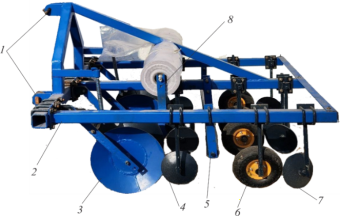
Figure 1. General view of the film-laying device.
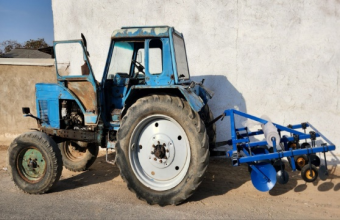
Figure 2.
The machine aggregated with a tractor.
Information


 Share This Article
 Twitter
 Linked In
 Facebook


 Copy
 Download