Abstract
The Shela coal occurrence in the Kindo-Didaye area of southern Ethiopia is a coal-bearing locality for which deposit-scale information on physicochemical quality and processing requirements remains limited. This study evaluates the proximate composition, calorific value, sulfur content, and Hardgrove Grindability Index of five coal samples collected from exposed coal seams. Moisture, volatile matter, ash, and fixed carbon contents were 1.21–1.99%, 15.45–26.37%, 28.19–71.26%, and 11.21–44.23%, respectively. Gross calorific values ranged from 2388.02 to 9801.32 Btu/lb (1326.68–5445.18 kcal/kg), sulfur from <0.02 to 2.93%, and HGI from 53.6 to 66.0. Samples S2 and S4 contained substantially less ash and higher fixed carbon and calorific value than S1, S3, and S5, demonstrating strong within-occurrence variability. Ash is the principal quality constraint in several samples, whereas the sulfur concentration in S2 requires particular attention during utilization. The calorific-value range provides a preliminary indication of rank variability, but definitive ASTM D388 rank assignment should not be made from the available data alone because the required mineral-matter-free and basis conversions were not fully established. The results support selective mining, additional washability and mineralogical investigation, and targeted beneficiation before industrial utilization. The study provides a baseline for sustainable evaluation of the Shela coal resource by linking coal quality, processing requirements, energy value, and environmental considerations.
|
Published in
|
American Journal of Applied Chemistry (Volume 14, Issue 5)
|
|
DOI
|
10.11648/j.ajac.20261405.11
|
|
Page(s)
|
85-94 |
|
Creative Commons
|

This is an Open Access article, distributed under the terms of the Creative Commons Attribution 4.0 International License (http://creativecommons.org/licenses/by/4.0/), which permits unrestricted use, distribution and reproduction in any medium or format, provided the original work is properly cited.
|
|
Copyright
|
Copyright © The Author(s), 2026. Published by Science Publishing Group
|
Keywords
Coal Characterization, Proximate Analysis, Calorific Value
1. Introduction
Coal remains an important energy and industrial raw material worldwide, although its role is changing as energy systems increasingly incorporate renewable and lower-carbon technologies. Global coal demand remained close to its record level in 2025, demonstrating the continued importance of coal in electricity generation and industrial applications
. Coal is a heterogeneous combustible sedimentary material composed of organic matter and variable amounts of mineral matter and moisture. Its quality and suitability for specific applications depend on its chemical composition, degree of coalification, mineral-matter content, calorific value, sulfur concentration, and physical properties. Proximate analysis, calorific-value determination, sulfur analysis, and other physicochemical techniques are therefore widely used to evaluate coal quality and utilization potential
| [2] | Speight, J. G. Handbook of Coal Analysis. Wiley: Hoboken, NJ, USA; 2005. https://doi.org/10.1002/0471718513 |
| [3] | Meshram, P., Purohit, B. K., Sinha, M. K., Sahu, S. K., Pandey, B. D. Demineralization of low grade coal – A review. Renewable and Sustainable Energy Reviews. 2015, 41, 745–761. https://doi.org/10.1016/j.rser.2014.08.072 |
[2, 3]
. Moisture reduces useful heating value, whereas high ash content decreases the combustible fraction and increases ash generation during combustion. Fixed carbon and volatile matter influence combustion behavior and provide useful indicators of coal rank, while sulfur is an important environmental and technological parameter.
Coal preparation and beneficiation are important pre-utilization processes for coals containing excessive mineral matter and other undesirable constituents. Physical separation methods can reduce ash and associated impurities by exploiting differences in particle size, density, and other properties between coal and mineral matter
| [3] | Meshram, P., Purohit, B. K., Sinha, M. K., Sahu, S. K., Pandey, B. D. Demineralization of low grade coal – A review. Renewable and Sustainable Energy Reviews. 2015, 41, 745–761. https://doi.org/10.1016/j.rser.2014.08.072 |
| [4] | Noble, A., Luttrell, G. H. A review of state-of-the-art processing operations in coal preparation. International Journal of Mining Science and Technology. 2015, 25, 511–521.
https://doi.org/10.1016/j.ijmst.2015.05.001 |
[3, 4]
. Consequently, reliable characterization of raw coal is essential for identifying quality limitations and selecting appropriate beneficiation strategies.
Ethiopia contains numerous coal occurrences associated mainly with Tertiary volcanic and inter-trappean sedimentary successions. Coal-bearing sediments commonly occur in fluvio-lacustrine and paludal environments within tectonically controlled basins and grabens. Important occurrences include Delbi-Moye, Yayu, Chilga, Nejo, Wuchale, Mush Valley, and other localities distributed mainly across southwestern, central Ethiopia and northwestern Ethiopia
. Ethiopian coals range from lignite to bituminous coal and their quality vary considerably, with ash content representing an important quality constraint
. Recent studies have also demonstrated the potential for beneficiation of Ethiopian coal through processes such as froth flotation
| [7] | Usman, T., Abicho, S., Meshesha, D., Adam, G. Froth flotation beneficiation and physiochemical characterization of coal from Achibo-Sombo-Dabaso area, southwestern Ethiopia. Heliyon. 2022, 8, e11313.
https://doi.org/10.1016/j.heliyon.2022.e11313 |
[7]
.
The Kindo-Didaye area of southern Ethiopia contains coal-bearing sedimentary rocks interbedded with volcanic units. Previous investigations established the occurrence and distribution of coal in the area; however, detailed information on the physicochemical quality of the Shela coal remains limited, particularly with respect to proximate composition, calorific value, sulfur content, preliminary rank indication, and grindability. This information gap limits assessment of the coal's energy characteristics, utilization potential, and potential beneficiation requirements.
Therefore, this study characterizes Shela coal from the Kindo-Didaye area using the original five-sample analytical dataset. The study determines moisture, volatile matter, ash, fixed carbon, gross calorific value, sulfur content, and Hardgrove Grindability Index, and evaluates the resulting data in terms of preliminary coal-rank characteristics, quality variation, utilization potential, and implications for beneficiation. The study provides baseline analytical information for future detailed characterization, beneficiation testing, and sustainable utilization of the Shela coal occurrence.
2. Materials and Methods
2.1. Study Area and Sampling Design
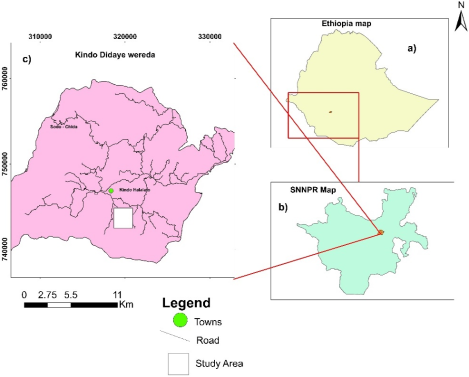
Figure 1. Location map of the study area.
The study was conducted in the Shela area of Kindo-Didaye, southwestern Ethiopia. The investigation focused on exposed coal-bearing strata and was designed to characterize the quality and energy characteristics of the exposed coal through laboratory analysis. Preliminary desk-based work included a review of available geological and coal-related literature, geological maps, and remote-sensing information. Google Earth and ArcGIS were used during the pre-field stage to examine the regional setting, identify accessible coal exposures, and support field planning (
Figure 1).
Field investigations were subsequently undertaken to examine exposed coal seams and select representative sampling locations. Five coal samples (S1–S5) were collected from exposed coal occurrences in the Shela area. Sampling locations were selected at different positions and with spatial intervals along the exposed coal-bearing zone to capture the observed variation in coal quality. Approximately 1.5 kg of coal was collected from each sampling location, giving a total field sample mass of approximately 7.5 kg.
The samples were collected from exposed coal material using manual excavation/trenching and pick-and-sampling methods, depending on the condition and accessibility of the exposure. Particular care was taken to avoid obvious surface contamination by loose soil, weathered material, and foreign debris. Each sample was separately placed in a plastic bag, sealed with masking tape, labeled with its sample identification number, and transported to the laboratory for analysis. The sampling approach was intended to obtain representative material from the exposed coal occurrences rather than to estimate the total geological resource or establish subsurface seam continuity.
2.2. Sample Preparation
Before laboratory analysis, the collected coal samples were air-dried and reduced in size to obtain representative and homogeneous analytical samples. The dried samples were crushed using a jaw crusher to approximately 1 mm, followed by fine grinding and sieving through a 60 µm (approximately 80-mesh) sieve. The prepared samples were stored separately in airtight plastic bags until analysis. Sample reduction and preparation were conducted following established procedures for coal sample preparation and laboratory analysis
| [9] | ASTM International. ASTM D2013/D2013M-24: Standard Practice for Preparing Coal Samples for Analysis. ASTM International: West Conshohocken, PA, USA; 2024.
https://doi.org/10.1520/D2013_D2013M-24 |
[9]
. The same preparation procedure was applied to all five samples to maintain consistency among the analytical results.
2.3. Analytical Methods
The prepared coal samples were analyzed at the Central Geological Survey Laboratory of Ethiopia. The analytical program included proximate analysis, gross calorific value, gravimetric sulfur analysis, and Hardgrove Grindability Index (HGI) determination. These analyses were selected to characterize the coal in terms of its basic composition, energy content, sulfur concentration, and grinding behavior. Proximate analysis and sample preparation followed ASTM D3172/D3172M and ASTM D2013/D2013M, respectively; gross calorific value followed ASTM D5865/D5865M; total sulfur was determined by the gravimetric barium sulfate procedure described in the laboratory method
| [11] | Association of Official Analytical Chemists (AOAC). Official Methods of Analysis of the Association of Official Analytical Chemists, 15th ed.; Association of Official Analytical Chemists: Arlington, VA, USA; 1990; p. 345. |
[11]
; and HGI was determined using the Hardgrove procedure
| [12] | ASTM International. ASTM D409/D409M: Standard Test Method for Grindability of Coal by the Hardgrove-Machine Method. ASTM International: West Conshohocken, PA, USA. |
| [13] | Bureau of Indian Standards. IS 4433: 1979, Method for Determination of Hardgrove Grindability Index of Coal. Bureau of Indian Standards: New Delhi, India; 1979. |
[12, 13]
.
2.3.1. Proximate Analysis
Proximate analysis was performed to determine moisture content (MC), volatile matter (VM), ash content (A), and fixed carbon (FC). These parameters are commonly used for preliminary evaluation of coal quality and are determined under specified heating and weighing conditions.
1) Moisture content
The moisture content of the prepared coal samples was determined by drying a known mass of the analysis sample in a preheated electric hot-air oven at approximately 104–110°C for 1 h. After heating, the sample was removed from the oven, cooled in a desiccator, and reweighed. The procedure followed ASTM D3173/D3173M for determination of moisture in the analysis sample of coal and coke
| [15] | ASTM International. ASTM D3173/D3173M: Standard Test Method for Moisture in the Analysis Sample of Coal and Coke. ASTM International: West Conshohocken, PA, USA.
https://doi.org/10.1520/D3173_D3173M-25 |
[15]
.
The moisture content was calculated from the mass loss during drying:
Where (M) is the moisture content (%), (I) is the initial mass of the sample before drying (g), and (F) is the final mass of the sample after drying (g). The determined moisture values were used in the proximate characterization of the five coal samples.
2) Volatile matter
Volatile matter was determined by heating a known mass of the prepared coal sample in a covered crucible at approximately 950 ± 20°C for exactly 7 min. Under these controlled conditions, the mass loss resulting from heating, after correction for moisture, was used to determine the volatile-matter content. The procedure followed ASTM D3175 for the determination of volatile matter in the analysis sample of coal and coke
| [16] | ASTM International. ASTM D3175-26: Standard Test Method for Volatile Matter in the Analysis Sample of Coal and Coke. ASTM International: West Conshohocken, PA, USA; 2026. https://doi.org/10.1520/D3175-26 |
[16]
.
The volatile-matter content was calculated using:
V = (100* (Mb – Ma) / (Mb – Mel)) – Ma(2)
where (V) is the volatile-matter content (%), (M_ {ad}) is the moisture content of the analysis sample on an air-dried basis (%), (M_ {el}) is the mass of the empty crucible and lid (g), (M_b) is the mass of the crucible, lid, and sample before heating (g), and (M_a) is the mass of the crucible, lid, and sample after heating (g).
The calculated volatile-matter values represent the mass loss during the standardized heating procedure after exclusion of moisture. The results were used together with moisture, ash, and fixed-carbon contents to characterize the proximate composition of the five coal samples.
3) Ash content
Ash content was determined by heating a known mass of the prepared coal sample under controlled conditions until the combustible matter was removed and a stable inorganic residue remained. Approximately 1 g of the prepared sample was placed in a pre-weighed, uncovered crucible and heated in a muffle furnace under controlled air conditions. The furnace temperature was maintained at approximately 700 ± 50°C, following the applicable ASTM procedure
| [17] | ASTM International. ASTM D3174: Standard Test Method for Ash in the Analysis Sample of Coal and Coke from Coal. ASTM International: West Conshohocken, PA, USA.
https://doi.org/10.1520/D3174 |
[17]
.
After completion of ashing, the crucible was removed, cooled in a desiccator, and weighed. The ash content was calculated from the mass of the remaining residue relative to the original sample mass using:
A = (M3 –M1) / (M2 - M1) *100)(3)
Where (A) is the ash content (%), (M1) is the mass of the empty crucible (g), (M2) is the mass of the crucible and sample before ashing (g), and (M3) is the mass of the crucible and ash after ashing (g).
The determined ash contents were used as a component of the proximate analysis and to evaluate the variability of inorganic residue among the five coal samples. The ash values also provided an important basis for assessing coal quality and the potential need for beneficiation.
4) Fixed carbon
Fixed carbon was not determined by a separate direct measurement. Instead, it was calculated by difference from the measured moisture, volatile-matter, and ash contents obtained from the proximate analysis. The fixed-carbon content was calculated as:
Fixed Carbon, FC = 100 - (M + V + A)(4)
Where (FC) is the fixed-carbon content (%), (M) is the moisture content (%), (V) is the volatile-matter content (%), and (A) is the ash content (%).
The calculated fixed-carbon content represents the solid combustible residue remaining after accounting for moisture, volatile matter, and ash. The values were calculated on the same analytical basis as the corresponding proximate-analysis parameters, following the conventional proximate-analysis approach described in ASTM D3172/D3172M
| [8] | ASTM International. ASTM D3172/D3172M: Standard Practice for Proximate Analysis of Coal and Coke. ASTM International: West Conshohocken, PA, USA.
https://doi.org/10.1520/D3172_D3172M |
[8]
.
2.3.2. Calorific-value Determination
The gross calorific value (GCV) of each coal sample was determined to evaluate its energy-producing potential. The measurement was based on the heat released by complete combustion of a known mass of coal under controlled laboratory conditions using a bomb calorimeter. The temperature rise produced by combustion was used to determine the gross heating value following established bomb-calorimetric procedures
| [10] | ASTM International. ASTM D5865/D5865M: Standard Test Method for Gross Calorific Value of Coal and Coke. ASTM International: West Conshohocken, PA, USA.
https://doi.org/10.1520/D5865 |
[10]
.
The calorific value was calculated from the measured temperature rise and the calibrated energy equivalent of the calorimeter:
Where (GCV) is the gross calorific value, (ΔT) is the corrected temperature rise of the calorimeter (°C), and (C) is the calibrated energy equivalent or heat capacity of the calorimetric system (cal/°C). The calorimeter was calibrated using standard benzoic acid in accordance with the applicable bomb-calorimetric procedure 10.
The calorific value was reported in Btu/lb and converted to kcal/kg for comparison with commonly reported coal-quality data. The same analytical basis was retained for all five samples to ensure consistency in the comparison of their calorific values.
Because calorific value is affected by the analytical basis, moisture content, and mineral-matter content, the measured raw calorific values were not used alone to assign formal coal rank. ASTM D388 requires the appropriate basis conversion and consideration of mineral matter for coal-rank classification
| [14] | ASTM International. ASTM D388/D388M: Standard Classification of Coals by Rank. ASTM International: West Conshohocken, PA, USA. https://doi.org/10.1520/D0388-23 |
[14]
. Therefore, the calorific values in this study were used primarily as indicators of energy content and relative coal-quality variation among the investigated samples.
2.3.3. Sulfur Analysis
Total sulfur content was determined for each coal sample using the gravimetric sulfur-analysis procedure applied at the Central Geological Survey laboratory. In this method, sulfur present in the coal was converted to sulfate and subsequently precipitated as barium sulfate (BaSO4). The precipitate was recovered, dried, ignited, and weighed gravimetrically. The procedure is based on the established gravimetric determination of sulfur in which the mass of BaSO4 is converted to sulfur using a stoichiometric conversion factor of 0.1374 11.
The sulfur content was calculated as:
%S = 100 × 0.1374 × Y/X(6)
Where X is the mass of coal sample taken (g) and Y is the mass of BaSO4 precipitate formed (g).
2.3.4. Hardgrove Grindability Index
The Hardgrove Grindability Index (HGI) was determined to evaluate the relative grindability of the coal samples. The test was conducted using the standard Hardgrove procedure, in which a specified quantity of prepared coal is ground under controlled conditions and the mass of the ground material passing through a 75 µm sieve is determined
| [12] | ASTM International. ASTM D409/D409M: Standard Test Method for Grindability of Coal by the Hardgrove-Machine Method. ASTM International: West Conshohocken, PA, USA. |
| [13] | Bureau of Indian Standards. IS 4433: 1979, Method for Determination of Hardgrove Grindability Index of Coal. Bureau of Indian Standards: New Delhi, India; 1979. |
[12, 13]
.
Following grinding, the material passing through the 75 µm sieve was weighed, and the HGI was calculated using the calibration relationship applied in the laboratory procedure
| [13] | Bureau of Indian Standards. IS 4433: 1979, Method for Determination of Hardgrove Grindability Index of Coal. Bureau of Indian Standards: New Delhi, India; 1979. |
[13]
.
Where (W) is the mass, in grams, of the ground test material passing through the 75 µm sieve. The HGI is a dimensionless index; higher values indicate comparatively easier grinding, whereas lower values indicate greater resistance to grinding under the specified test conditions
| [12] | ASTM International. ASTM D409/D409M: Standard Test Method for Grindability of Coal by the Hardgrove-Machine Method. ASTM International: West Conshohocken, PA, USA. |
| [13] | Bureau of Indian Standards. IS 4433: 1979, Method for Determination of Hardgrove Grindability Index of Coal. Bureau of Indian Standards: New Delhi, India; 1979. |
[12, 13]
. The HGI values were therefore used to compare the relative grindability of samples S1–S5.
3. Results
3.1. Proximate Composition
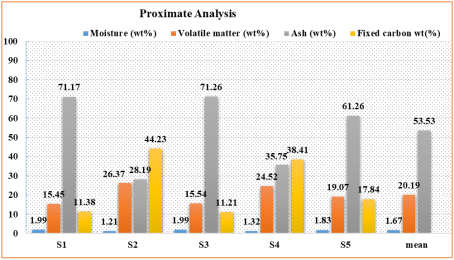
Figure 2. Variation of moisture, volatile matter, ash, and fixed carbon among samples (S1–S5).
Table 1. Proximate composition of the Shela coal samples.
Sample ID | Moisture (%) | Volatile matter (%) | Ash (%) | Fixed carbon (%) |
S1 | 1.99 | 15.45 | 71.17 | 11.38 |
S2 | 1.21 | 26.37 | 28.19 | 44.23 |
S3 | 1.99 | 15.54 | 71.26 | 11.21 |
S4 | 1.32 | 24.52 | 35.75 | 38.41 |
S5 | 1.83 | 19.07 | 61.26 | 17.84 |
The five Shela coal samples exhibited pronounced variability in proximate composition (
Figure 2 and
Table 1). Moisture content was relatively low, ranging from 1.21 to 1.99%. Volatile matter varied from 15.45 to 26.37%, whereas ash content showed the greatest variation, ranging from 28.19 to 71.26%. The calculated fixed-carbon content ranged from 11.21 to 44.23%.
Sample S2 had the lowest ash content (28.19%) and the highest fixed-carbon content (44.23%), followed by S4, which contained 35.75% ash and 38.41% fixed carbon. In contrast, S1 and S3 had the highest ash contents (71.17 and 71.26%, respectively) and the lowest fixed-carbon contents (11.38 and 11.21%, respectively). S5 showed an intermediate composition, with 61.26% ash and 17.84% fixed carbon. The results indicate substantial compositional heterogeneity among the investigated coal samples, particularly in ash and fixed-carbon contents.
3.2. Calorific Value
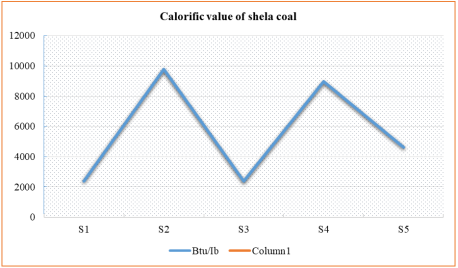
Figure 3. Gross calorific values of the Shela coal samples.
Table 2. Gross calorific values of the Shela coal samples.
Sample ID | Calorific value (cal/g) | Calorific value (kcal/kg) | Calorific value (Btu/lb) |
S1 | 1347.66 | 1347.66 | 2425.79 |
S2 | 5445.18 | 5445.18 | 9801.32 |
S3 | 1326.68 | 1326.68 | 2388.02 |
S4 | 4995.83 | 4995.83 | 8992.49 |
S5 | 2586.83 | 2586.83 | 4656.29 |
As shown in
Table 2 and
Figure 3, gross calorific values range from 2388.02 to 9801.32 Btu/lb (1326.68 to 5445.18 kcal/kg). S2 has the highest measured value, followed by S4, whereas S1 and S3 have the lowest values. S5 has an intermediate value. The ranking of samples by calorific value broadly corresponds to their ash and fixed-carbon differences: samples with lower ash and higher fixed carbon have higher measured energy content.
3.3. Sulfur Content
Sulfur content varies from below the analytical reporting limit of 0.02% to 2.93%. S1 and S3 are reported as <0.02%, S5 contains 0.03%, S4 contains 0.89%, and S2 contains 2.93%. Thus, the samples are not uniform with respect to sulfur, and S2 represents a distinct sulfur-enriched sample in the dataset (see
Table 3).
Table 3. Sulfur content of the Shela coal samples.
Sample ID | Sulfur (%) |
S1 | <0.02 |
S2 | 2.93 |
S3 | <0.02 |
S4 | 0.89 |
S5 | 0.03 |
3.4. Hardgrove Grindability Index
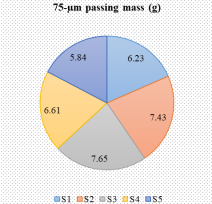
HGI values range from 53.6 to 66.0. S4 has the highest HGI value (66.0), followed by S2 (64.5), while S5 has the lowest value (53.6). S1 and S3 have intermediate values of 56.2 and 58.8, respectively. The dataset therefore shows measurable variation in grinding behavior. The details of the grindiblity test results summarized in the
Table 4 and
Figure 5.
Figure 5. Hardgrove Grindability Index of shela coal.
Table 4. Hardgrove Grindability Index of shela coal.
Sample | Mass passing 75 μm after test (g) | HGI |
S1 | 6.23 | 56.2 |
S2 | 7.43 | 64.5 |
S3 | 7.65 | 58.8 |
S4 | 6.61 | 66.0 |
S5 | 5.84 | 53.6 |
4. Discussion
4.1. Comparison with Published Ethiopian Coal Studies
Table 5 below compares the proximate composition of Shela coal with published data from other Ethiopian coal deposits. The Shela samples show substantially lower moisture contents than the Achibo–Sombo–Dabaso coal reported by Usman et al.
| [7] | Usman, T., Abicho, S., Meshesha, D., Adam, G. Froth flotation beneficiation and physiochemical characterization of coal from Achibo-Sombo-Dabaso area, southwestern Ethiopia. Heliyon. 2022, 8, e11313.
https://doi.org/10.1016/j.heliyon.2022.e11313 |
[7]
, whereas their volatile-matter and fixed-carbon ranges partly overlap. The principal distinction is the markedly wider and generally higher ash content of several Shela samples. Compared with the broader Ethiopian coal dataset reported by Wolela
, the Shela samples have comparable ranges of volatile matter and fixed carbon, but the upper ash values at Shela exceed those reported for the coal deposits summarized by Wolela. These differences indicate substantial variability in inorganic matter and coal quality within the Shela occurrence and highlight the importance of beneficiation and sample-specific evaluation.
Table 5. Comparison of proximate composition and calorific value of Shela coal with published Ethiopian coal data.
Parameter | Shela coal, Kindo-Didaye (this study) | Achibo–Sombo–Dabaso, southwestern Ethiopia | [7] | Usman, T., Abicho, S., Meshesha, D., Adam, G. Froth flotation beneficiation and physiochemical characterization of coal from Achibo-Sombo-Dabaso area, southwestern Ethiopia. Heliyon. 2022, 8, e11313.
https://doi.org/10.1016/j.heliyon.2022.e11313 |
[7] | Ethiopian coal deposits, broader dataset |
Moisture (%) | 1.21–1.99 | 11.81–20.27 | 0.3–20.7* |
Volatile matter (%) | 15.45–26.37 | 22.74–34.85 | 17.9–46.5* |
Ash (%) | 28.19–71.26 | 22.47–36.58 | 11.2–48.8* |
Fixed carbon (%) | 11.21–44.23 | 23.85–38.31 | 10.6–58.1* |
Calorific value (kcal/kg) | 1,326.68–5,445.18 | 3,243.59–5,295.34 | 2,520–6,595* |
Main observation | High and highly variable ash; strong variation among samples | Lower ash and higher moisture than Shela | Wide variability among Ethiopian deposits |
Ranges compiled from reported individual coal localities in Wolela
; analytical bases and geological settings may differ among deposits and therefore should not be interpreted as a direct quality ranking.
The high ash content of Shela coal, particularly in samples S1, S3, and S5, is the most important compositional characteristic distinguishing the studied material from several previously reported Ethiopian coals. Because ash represents non-combustible mineral matter, its high concentration is associated with reduced combustible fraction and calorific value and may increase the need for coal-cleaning or beneficiation before selected applications.
4.2. Coal Quality Variability and the Role of Ash
Ash is the most variable parameter, ranging from 28.19% in S2 to 71.26% in S3. Such high and variable ash contents have important implications for fuel quality and beneficiation. Coal mineral matter may originate from detrital input, biogenic activity, and authigenic precipitation, but the specific minerals responsible for the ash cannot be identified from proximate analysis alone
.
A general inverse association between ash and measured calorific value is evident in the dataset. S2, with 28.19% ash, has the highest calorific value (9801.32 Btu/lb) and fixed carbon (44.23%), whereas S1 and S3, with approximately 71% ash, have much lower calorific values and fixed-carbon contents. This reflects dilution of the combustible fraction by inorganic material
.
From a beneficiation perspective, selective mining of relatively cleaner coal horizons may reduce the amount of material requiring downstream cleaning. However, ash content alone is insufficient for selecting a processing method because washability depends on mineral density, liberation, and particle size. Therefore, density-based washability testing should precede selection of a specific beneficiation flowsheet
| [4] | Noble, A., Luttrell, G. H. A review of state-of-the-art processing operations in coal preparation. International Journal of Mining Science and Technology. 2015, 25, 511–521.
https://doi.org/10.1016/j.ijmst.2015.05.001 |
[4]
.
4.3. Volatile Matter and Fixed Carbon
Volatile matter ranges from 15.45 to 26.37%, while fixed carbon ranges from 11.21 to 44.23%. S2 and S4 have the highest fixed-carbon and calorific-value contents, consistent with their lower ash contents. Because fixed carbon is calculated by difference, it should be interpreted together with moisture, volatile matter, and ash rather than as an independent measurement.
The observed variability may reflect differences in organic-matter accumulation, detrital dilution, depositional conditions, or post-depositional modification. Additional channel sampling along and across the coal seams would help distinguish geological variability from sampling-scale variation.
4.4. Calorific Value and Utilization Implications
The calorific values range from 2388.02 to 9801.32 Btu/lb, demonstrating substantial variability among the Shela samples. S2 and S4 contain considerably more energy per unit mass than S1, S3, and S5. High-ash, low-calorific samples may require upgrading before applications where fuel quality is critical, whereas relatively cleaner samples may be considered for selective extraction or blending.
These results should not, however, be used alone to establish suitability for a specific industrial application. Further evaluation of ash chemistry, ash-fusion behavior, combustion characteristics, and slagging/fouling potential is required for application-specific assessment.
4.5. Sulfur variability and Environmental Considerations
Total sulfur ranges from less than 0.02% to 2.93%, with S2 showing the highest value. This variability indicates that sulfur should be evaluated spatially rather than represented by a single value for the occurrence. Coal sulfur commonly occurs as pyritic, organic, and sulfate sulfur
| [19] | Rait, N., Aruscavage, P. J. The determination of forms of sulfur in coal. In Methods for Sampling and Inorganic Analysis of Coal; U.S. Geological Survey Bulletin 1823; U.S. Geological Survey: Reston, VA, USA. |
[19]
.
Because the present analysis did not distinguish sulfur forms, the most appropriate sulfur-removal mechanism cannot be established. Mineral-associated sulfur may be reduced by physical beneficiation when sufficiently liberated, whereas organically bound sulfur generally requires different treatment
| [19] | Rait, N., Aruscavage, P. J. The determination of forms of sulfur in coal. In Methods for Sampling and Inorganic Analysis of Coal; U.S. Geological Survey Bulletin 1823; U.S. Geological Survey: Reston, VA, USA. |
[19]
. Therefore, future work should include sulfur speciation and mineralogical characterization. The relatively high sulfur content of S2 is particularly important because it coincides with the highest calorific value.
4.6. Grindability and Processing Implications
The HGI values of 53.6–66.0 indicate variable grindability among the samples. S2 and S4 have comparatively higher HGI values, indicating easier grinding under the test conditions. However, HGI should not be interpreted directly as mill power consumption because actual grinding performance also depends on feed size, moisture, mill design, coal rank, petrographic composition, and mineral matter
| [20] | Hower, J. C., Bagherieh, A. H., Dindarloo, S. R., Trimble, A. S., Chehreh Chelgani, S. Soft modelling of the Hardgrove grindability index of bituminous coals: An overview. International Journal of Coal Geology. 2021, 247, 103846.
https://doi.org/10.1016/j.coal.2021.103846 |
| [21] | Sengupta, A. N. An assessment of grindability index of coal. Fuel Processing Technology. 2002, 81, 1–15.
https://doi.org/10.1016/S0378-3820(01)00236-3 |
[20, 21]
.
The observed variation may therefore reflect differences in coal composition and mineral matter. Additional mineralogical and petrographic analyses would be required to establish the specific causes of the observed grindability differences.
4.7. Implications for Beneficiation
The results support a staged beneficiation investigation rather than immediate selection of a full-scale flowsheet. Additional channel and bench-scale sampling should first establish vertical and lateral quality variation. Representative samples should then undergo proximate analysis, sulfur determination, calorific-value measurement, particle-size analysis, density fractionation, and mineralogical characterization.
Washability testing should determine whether ash-forming minerals can be effectively separated. Depending on mineral liberation and particle size, potential methods include dense-medium separation, jigging, spirals, and flotation. Coal preparation commonly uses physical separation and dewatering operations to remove unwanted mineral matter and improve product quality
.
A sustainable beneficiation strategy should also consider product yield, ash and sulfur reduction, energy recovery, water consumption, and reject generation. Thus, the Shela occurrence should be evaluated through integrated quality, washability, and mass-balance studies before a commercial beneficiation route is selected.
5. Conclusions and Recommendations
The five Shela coal samples show substantial variability in physicochemical properties. Moisture, volatile matter, ash, and fixed carbon range from 1.21–1.99%, 15.45–26.37%, 28.19–71.26%, and 11.21–44.23%, respectively.
Calorific values range from 2388.02 to 9801.32 Btu/lb, demonstrating strong differences in useful energy content among sampled horizons.
S2 and S4 have comparatively lower ash, higher fixed carbon, and higher calorific values than S1, S3, and S5. This variability supports selective extraction and/or blending rather than assuming uniform coal quality.
Sulfur ranges from <0.02 to 2.93%. The high value in S2 requires particular attention in future utilization studies, despite S2 also having the highest calorific value.
HGI values of 53.6–66.0 indicate variable grinding behavior and should be considered during preliminary process and milling assessment.
The data provide only a preliminary rank indication; definitive ASTM D388 classification requires documented mineral-matter-free and basis conversions, and washability, mineralogical, and beneficiation testing are recommended before industrial-scale utilization decisions.
Abbreviations
ASTM | American Society for Testing and Materials |
FC | Fixed Carbon |
GCV | Gross Calorific Value |
HGI | Hardgrove Grindability Index |
MC | Moisture Content |
VM | Volatile Matter |
XRD | X-ray Diffraction |
XRF | X-ray Fluorescence |
Acknowledgments
The authors gratefully acknowledge the Center for Ethio-Mines Development, Department of Mineral Process Engineering, Addis Ababa Institute of Technology, Ethiopia, for academic and laboratory support, and the Ethiopian Geological Institute and Ministry of Mines for their support during the graduate study.
Author Contributions
Abinet Markos: Conceptualization, Data curation, Formal Analysis, Investigation, Methodology, Validation, Visualization, Writing – original draft, Writing – review & editing
Yohanes Belachew: Conceptualization, Data curation, Formal Analysis, Investigation, Methodology, Validation, Visualization, Writing – review & editing
Getnet Belachew: Data curation, Formal Analysis, Investigation, Validation, Visualization, Writing – review & editing
Conflict of Interest
The authors declare no conflicts of interest.
References
| [1] |
IEA. Global Energy Review 2026: Coal. International Energy Agency: Paris, France; 2026.
https://www.iea.org/reports/global-energy-review-2026/coal
|
| [2] |
Speight, J. G. Handbook of Coal Analysis. Wiley: Hoboken, NJ, USA; 2005.
https://doi.org/10.1002/0471718513
|
| [3] |
Meshram, P., Purohit, B. K., Sinha, M. K., Sahu, S. K., Pandey, B. D. Demineralization of low grade coal – A review. Renewable and Sustainable Energy Reviews. 2015, 41, 745–761.
https://doi.org/10.1016/j.rser.2014.08.072
|
| [4] |
Noble, A., Luttrell, G. H. A review of state-of-the-art processing operations in coal preparation. International Journal of Mining Science and Technology. 2015, 25, 511–521.
https://doi.org/10.1016/j.ijmst.2015.05.001
|
| [5] |
Wolela, A. Fossil fuel energy resources of Ethiopia: Coal deposits. International Journal of Coal Geology. 2007, 72(3–4), 293–314.
https://doi.org/10.1016/j.coal.2007.02.006
|
| [6] |
Genetu, M., Kebede, B. Ethiopian coal deposits and resource development prospects. Environmental Quality Management. 2024, 34(1), e22289.
https://doi.org/10.1002/tqem.22289
|
| [7] |
Usman, T., Abicho, S., Meshesha, D., Adam, G. Froth flotation beneficiation and physiochemical characterization of coal from Achibo-Sombo-Dabaso area, southwestern Ethiopia. Heliyon. 2022, 8, e11313.
https://doi.org/10.1016/j.heliyon.2022.e11313
|
| [8] |
ASTM International. ASTM D3172/D3172M: Standard Practice for Proximate Analysis of Coal and Coke. ASTM International: West Conshohocken, PA, USA.
https://doi.org/10.1520/D3172_D3172M
|
| [9] |
ASTM International. ASTM D2013/D2013M-24: Standard Practice for Preparing Coal Samples for Analysis. ASTM International: West Conshohocken, PA, USA; 2024.
https://doi.org/10.1520/D2013_D2013M-24
|
| [10] |
ASTM International. ASTM D5865/D5865M: Standard Test Method for Gross Calorific Value of Coal and Coke. ASTM International: West Conshohocken, PA, USA.
https://doi.org/10.1520/D5865
|
| [11] |
Association of Official Analytical Chemists (AOAC). Official Methods of Analysis of the Association of Official Analytical Chemists, 15th ed.; Association of Official Analytical Chemists: Arlington, VA, USA; 1990; p. 345.
|
| [12] |
ASTM International. ASTM D409/D409M: Standard Test Method for Grindability of Coal by the Hardgrove-Machine Method. ASTM International: West Conshohocken, PA, USA.
|
| [13] |
Bureau of Indian Standards. IS 4433: 1979, Method for Determination of Hardgrove Grindability Index of Coal. Bureau of Indian Standards: New Delhi, India; 1979.
|
| [14] |
ASTM International. ASTM D388/D388M: Standard Classification of Coals by Rank. ASTM International: West Conshohocken, PA, USA.
https://doi.org/10.1520/D0388-23
|
| [15] |
ASTM International. ASTM D3173/D3173M: Standard Test Method for Moisture in the Analysis Sample of Coal and Coke. ASTM International: West Conshohocken, PA, USA.
https://doi.org/10.1520/D3173_D3173M-25
|
| [16] |
ASTM International. ASTM D3175-26: Standard Test Method for Volatile Matter in the Analysis Sample of Coal and Coke. ASTM International: West Conshohocken, PA, USA; 2026.
https://doi.org/10.1520/D3175-26
|
| [17] |
ASTM International. ASTM D3174: Standard Test Method for Ash in the Analysis Sample of Coal and Coke from Coal. ASTM International: West Conshohocken, PA, USA.
https://doi.org/10.1520/D3174
|
| [18] |
Ward, C. R. Analysis, origin and significance of mineral matter in coal: An updated review. International Journal of Coal Geology. 2016, 165, 1–27.
https://doi.org/10.1016/j.coal.2016.08.011
|
| [19] |
Rait, N., Aruscavage, P. J. The determination of forms of sulfur in coal. In Methods for Sampling and Inorganic Analysis of Coal; U.S. Geological Survey Bulletin 1823; U.S. Geological Survey: Reston, VA, USA.
|
| [20] |
Hower, J. C., Bagherieh, A. H., Dindarloo, S. R., Trimble, A. S., Chehreh Chelgani, S. Soft modelling of the Hardgrove grindability index of bituminous coals: An overview. International Journal of Coal Geology. 2021, 247, 103846.
https://doi.org/10.1016/j.coal.2021.103846
|
| [21] |
Sengupta, A. N. An assessment of grindability index of coal. Fuel Processing Technology. 2002, 81, 1–15.
https://doi.org/10.1016/S0378-3820(01)00236-3
|
Cite This Article
-
APA Style
Markos, A., Belachew, Y., Belachew, G. (2026). Physicochemical Characterization of Shela Coal from the Kindo-didaye Area, Southern Ethiopia: Implications for Beneficiation and Sustainable Utilization. American Journal of Applied Chemistry, 14(5), 85-94. https://doi.org/10.11648/j.ajac.20261405.11
 Copy
|
 Download
ACS Style
Markos, A.; Belachew, Y.; Belachew, G. Physicochemical Characterization of Shela Coal from the Kindo-didaye Area, Southern Ethiopia: Implications for Beneficiation and Sustainable Utilization. Am. J. Appl. Chem. 2026, 14(5), 85-94. doi: 10.11648/j.ajac.20261405.11
Copy
|
Download
AMA Style
Markos A, Belachew Y, Belachew G. Physicochemical Characterization of Shela Coal from the Kindo-didaye Area, Southern Ethiopia: Implications for Beneficiation and Sustainable Utilization. Am J Appl Chem. 2026;14(5):85-94. doi: 10.11648/j.ajac.20261405.11
Copy
|
Download
-
@article{10.11648/j.ajac.20261405.11,
  author = {Abinet Markos and Yohanes Belachew and Getnet Belachew},
  title = {Physicochemical Characterization of Shela Coal from the Kindo-didaye Area, Southern Ethiopia: Implications for Beneficiation and Sustainable Utilization},
  journal = {American Journal of Applied Chemistry},
  volume = {14},
  number = {5},
  pages = {85-94},
  doi = {10.11648/j.ajac.20261405.11},
  url = {https://doi.org/10.11648/j.ajac.20261405.11},
  eprint = {https://article.sciencepublishinggroup.com/pdf/10.11648.j.ajac.20261405.11},
  abstract = {The Shela coal occurrence in the Kindo-Didaye area of southern Ethiopia is a coal-bearing locality for which deposit-scale information on physicochemical quality and processing requirements remains limited. This study evaluates the proximate composition, calorific value, sulfur content, and Hardgrove Grindability Index of five coal samples collected from exposed coal seams. Moisture, volatile matter, ash, and fixed carbon contents were 1.21–1.99%, 15.45–26.37%, 28.19–71.26%, and 11.21–44.23%, respectively. Gross calorific values ranged from 2388.02 to 9801.32 Btu/lb (1326.68–5445.18 kcal/kg), sulfur from <0.02 to 2.93%, and HGI from 53.6 to 66.0. Samples S2 and S4 contained substantially less ash and higher fixed carbon and calorific value than S1, S3, and S5, demonstrating strong within-occurrence variability. Ash is the principal quality constraint in several samples, whereas the sulfur concentration in S2 requires particular attention during utilization. The calorific-value range provides a preliminary indication of rank variability, but definitive ASTM D388 rank assignment should not be made from the available data alone because the required mineral-matter-free and basis conversions were not fully established. The results support selective mining, additional washability and mineralogical investigation, and targeted beneficiation before industrial utilization. The study provides a baseline for sustainable evaluation of the Shela coal resource by linking coal quality, processing requirements, energy value, and environmental considerations.},
 year = {2026}
}
Copy
|
Download
-
TY  - JOUR
T1  - Physicochemical Characterization of Shela Coal from the Kindo-didaye Area, Southern Ethiopia: Implications for Beneficiation and Sustainable Utilization
AU  - Abinet Markos
AU  - Yohanes Belachew
AU  - Getnet Belachew
Y1  - 2026/10/28
PY  - 2026
N1  - https://doi.org/10.11648/j.ajac.20261405.11
DO  - 10.11648/j.ajac.20261405.11
T2  - American Journal of Applied Chemistry
JF  - American Journal of Applied Chemistry
JO  - American Journal of Applied Chemistry
SP  - 85
EP  - 94
PB  - Science Publishing Group
SN  - 2330-8745
UR  - https://doi.org/10.11648/j.ajac.20261405.11
AB  - The Shela coal occurrence in the Kindo-Didaye area of southern Ethiopia is a coal-bearing locality for which deposit-scale information on physicochemical quality and processing requirements remains limited. This study evaluates the proximate composition, calorific value, sulfur content, and Hardgrove Grindability Index of five coal samples collected from exposed coal seams. Moisture, volatile matter, ash, and fixed carbon contents were 1.21–1.99%, 15.45–26.37%, 28.19–71.26%, and 11.21–44.23%, respectively. Gross calorific values ranged from 2388.02 to 9801.32 Btu/lb (1326.68–5445.18 kcal/kg), sulfur from <0.02 to 2.93%, and HGI from 53.6 to 66.0. Samples S2 and S4 contained substantially less ash and higher fixed carbon and calorific value than S1, S3, and S5, demonstrating strong within-occurrence variability. Ash is the principal quality constraint in several samples, whereas the sulfur concentration in S2 requires particular attention during utilization. The calorific-value range provides a preliminary indication of rank variability, but definitive ASTM D388 rank assignment should not be made from the available data alone because the required mineral-matter-free and basis conversions were not fully established. The results support selective mining, additional washability and mineralogical investigation, and targeted beneficiation before industrial utilization. The study provides a baseline for sustainable evaluation of the Shela coal resource by linking coal quality, processing requirements, energy value, and environmental considerations.
VL  - 14
IS  - 5
ER  -
Copy
|
Download





 Share This Article
 Twitter
 Linked In
 Facebook