Abstract
Rambutan is increasingly popular in Europe but remains underexploited in Cameroon, both locally and within the agro-food industry. The aim of this study was to evaluate the nutritional potential, phytochemical composition, and antioxidant activity of its pulp and seeds. Ripe fruits were harvested, sorted, washed, and separated into pulp and seeds. After oven-drying and grinding, the resulting powders were used for analyses. Protein, lipid, carbohydrate, and crude fiber contents were determined using standard methods. Minerals were quantified using fluorescence spectrometry. Polyphenols, flavonoids, and tannins were assessed using colorimetric methods. Antioxidant activity was evaluated in vitro using DPPH, ABTS, and FRAP assays, and ex vivo through the quantification of malondialdehyde levels and the activities of catalase and superoxide dismutase. The results showed that the pulp was characterized by a high moisture content, whereas the seed exhibited significantly higher levels of total carbohydrates (22.95g/100g FM), proteins (2.66g/100g FM), lipids (5.86g/100g FM), dietary fiber (4.59g/100g FM), and ash (10.36g/100g FM). From a mineral perspective, the seed contained higher concentrations of potassium (37mg/100g FM), calcium (10.54mg/100 g FM), iron (0.61mg/100g FM), manganese (0.59mg/100g FM), zinc (0.061mg/100g FM), and copper (0.48mg/100g FM), whereas the pulp exhibited a higher phosphorus content. Phytochemical analysis demonstrated higher concentrations of total polyphenols, flavonoids, and condensed tannins in the seeds than in the pulp. The in vitro antioxidant activity confirmed the reducing power and free radical scavenging ability of the extracts, as demonstrated by the FRAP, DPPH, and ABTS assays. Ex vivo assays revealed an increase in antioxidant enzyme activity alongside a reduction in malondialdehyde levels, suggesting a protective effect against oxidative stress. Rambutan is rich in nutritional and bioactive compound, making it a promising resource for dietary supplements.
1. Introduction
Fruits play an essential role in a balanced diet
| [1] | Malik, K. S., Maiga S., Nabie, F., & Sackou K. J. (2024). Knowledge of the Benefits of Consuming Fruits and Vegetables in a Population of Ivorian Students. Health Sciences & Disease, 25(8), 24–28. https://doi.org/10.5281/hsd.v25i8.5964 |
[1]
and are associated with a reduced risk of premature mortality and overall improved health
| [2] | Robinson, S., Antoneta, G., Alfonso, J., Cruz-Jentoft, & Avan, A. S. (2023). The role of nutrition in the prevention of sarcopenia. The American Journal of Clinical Nutrition, 118, 852–864. https://doi.org/10.1016/j.ajcnut.2023.08.015 |
[2]
. Among these fruits is rambutan (
Nephelium lappaceum L.), a tropical fruit belonging to the Sapindaceae family.
Nephelium lappaceum L. has an ovoid to spherical shape, with a leathery skin covered in flexible spines, and its color ranges from red to yellow, and even green
| [3] | Hernández-Hernández, C. N., Aguilar, R. Rodríguez-Herrera, A. C., Flores-Gallegos, J., Morlett-Chávez, M., Govea-Salas, J. A., & Ascacio-Valdes. (2019). Rambutan (Nephelium lappaceum L.): Nutritional and functional properties. Trends in Food Science & Technology, 85, 201–210.
https://doi.org/10.1016/j.tifs.2019.01.018 |
| [4] | Minh, N. P., Tan, T. V., Quach V. T., Nguyen V. B., & Tan L. H. (2019). Application of CMC, xanthan gum as biodegradable coating on storage of rambutan (Nephelium lappaceum) fruit. Journal of Pharmaceutical Sciences & Research, 11(3), 1063–1067. www.jpsr.pharmainfo.in |
[3, 4]
.
From a nutritional standpoint, the fruits of
Nephelium lappaceum L. contain high amounts of carbohydrates, proteins, and lipids, as well as several minerals such as potassium, calcium, magnesium, and iron. This nutritional richness gives them an interesting energy and functional value for human consumption
| [5] | Tsong, J. L., Goh, L. P. W., Gansau, J. A., & How, S. E. (2021). Review of Nephelium lappaceum and Nephelium ramboutan-ake: A high potential supplement. Molecules, 26, 7005.
https://doi.org/10.3390/molecules26227005 |
[5]
. They are also rich in dietary fiber, vitamin C, and phenolic compounds, and are distinguished by their antioxidant properties
| [6] | Thi Ngan Nguyen, Thi Thu Tra Tran, and Van Viet Man Le (2025). Nutritional composition, antioxidant potential, physical characteristics, overall acceptance, and in vitro glycaemic index of cookies fortified with rambutan (Nephelium lappaceum L.) seed powder. International Journal of Food Science and Technologie, 60(1): vvae029.
https://doi.org/10.1093/IJFOOD/vvae029 |
| [7] | Mistriyani, S. R., Anjar, W., & Abdul Rohman. (2021). Antioxidant Activities and Identification of an Active Compound from Rambutan (Nephelium lappaceum L.) Peel. Indonesian Journal of Chemistry, 21(2), 259–267. https://doi.org/10.22146/ijc.50421 |
[6, 7]
.
Nephelium lappaceum L. also contains various secondary metabolites, including polyphenols, flavonoids, tannins, and saponins, which are recognized for their protective effects against oxidative stress
| [3] | Hernández-Hernández, C. N., Aguilar, R. Rodríguez-Herrera, A. C., Flores-Gallegos, J., Morlett-Chávez, M., Govea-Salas, J. A., & Ascacio-Valdes. (2019). Rambutan (Nephelium lappaceum L.): Nutritional and functional properties. Trends in Food Science & Technology, 85, 201–210.
https://doi.org/10.1016/j.tifs.2019.01.018 |
[3]
. Among these, gallic acid, geraniin, and corilagin are among the main compounds responsible for the fruit’s antioxidant activity. Their levels vary depending on the part of the fruit
| [8] | Afzaal, M., Saeed, F., Bibi, M., Ejaz, A., Shah, Y. A., Faisal, Z., Ateeq, H., Akram, N., Asghar, A., & Shah, M. A. (2023). Nutritional, pharmaceutical, and functional aspects of rambutan in industrial perspective: An updated review. Food Science & Nutrition, 11, 3675–3685.
https://doi.org/10.1002/fsn3.3379 |
[8]
. Thus, the fruits of
Nephelium lappaceum L. have unique nutritional compositions and are rich sources of bioactive compound, contributing to beneficial health effects
| [9] | Azzatul, F., Jahurul, M. H. A., Norliza, J., Norazlina, M. R., Hasmadi, M., Sharifudin M. S., Matanjun, P., & Lee J. S. (2020). Characteristics of rambutan (Nephelium lappaceum L.) seed fat fractions and their potential application as cocoa butter improver. Foods Research, 4, 852–859.
https://doi.org/10.26656/fr.2017.4(3).413 |
[9]
.
Traditionally,
Nephelium lappaceum L. is widely used in traditional medicine, particularly in Southeast Asia, for the treatment of various disorders. The entire plant bark, leaves, roots, and seeds is utilized for its medicinal properties. In Malaysia, dried bark is traditionally used to manage diabetes and hypertension
| [10] | Bhat, R. (2020). Bioactive Compounds of Rambutan (Nephelium lappaceum L.). In: Murthy, H., Bapat, V. (eds) Bioactive Compounds in Underutilized Fruits and Nuts. Reference Series in Phytochemistry. Springer, Cham.
https://doi.org/10.1007/978-3-030-30182-8_4 |
[10]
. Root decoctions are used to reduce fever, while the seeds are sometimes employed as a remedy for diarrhea. These traditional uses also include the treatment of gastrointestinal disorders, skin diseases, dysentery, and giardiasis
| [8] | Afzaal, M., Saeed, F., Bibi, M., Ejaz, A., Shah, Y. A., Faisal, Z., Ateeq, H., Akram, N., Asghar, A., & Shah, M. A. (2023). Nutritional, pharmaceutical, and functional aspects of rambutan in industrial perspective: An updated review. Food Science & Nutrition, 11, 3675–3685.
https://doi.org/10.1002/fsn3.3379 |
| [11] | Mahmood, K., Fazilah, A., Yang, T. A., Sulaiman, S., & Kamilah, H. (2018). Valorization of rambutan (Nephelium lappaceum) by-products: Food and non-food perspectives. International Food Research Journal, 25(3), 890-902.
http://www.ifrj.upm.edu.my |
| [12] | Sukmandari, N. S., Dash, G. K., Jusof, W. H. W., Hanafi, M. (2017). A review on Nephelium lappaceum L. Research Journal of Pharmacy & Technology, 10(8), 2017.
https://doi.org/10.5958/0974-360X.2017.00498 |
[8, 11, 12]
. In addition to its traditional uses, the fruit of
Nephelium lappaceum L. exhibits important therapeutic properties and is recognized for its antidiarrheal, antidiabetic, anthelmintic, astringent, and carminative effects
| [13] | Palanisamy, U., Ling, L., Manaharan, T., & Appleton D. (2011). Rapid isolation of geraniin from Nephelium lappaceum rind and its antihyperglycemic activity. Food Chemistry, 127(1), 21–27. https://doi.org/10.1016/j.foodchem.2010.12.070 |
[13]
. Furthermore, studies have reported anti-arthritic and anti-inflammatory effects of the ethanolic bark extract in rats
| [9] | Azzatul, F., Jahurul, M. H. A., Norliza, J., Norazlina, M. R., Hasmadi, M., Sharifudin M. S., Matanjun, P., & Lee J. S. (2020). Characteristics of rambutan (Nephelium lappaceum L.) seed fat fractions and their potential application as cocoa butter improver. Foods Research, 4, 852–859.
https://doi.org/10.26656/fr.2017.4(3).413 |
[9]
, as well as anticancer properties associated with the inhibition of certain tumor cell lines
| [14] | Angalammal, P., Mohamad, S. A., Sivakumari, K. S. D., Rajesh, S., & Vairakannu, T. (2021). Phytochemical evaluation and anticancer activity of rambutan (Nephelium lappaceum) fruit endocarp extracts against human hepatocellular carcinoma (HepG-2) cells. Saudi Journal of Biological Sciences, 28(3), 1816–1825. https://doi.org/10.1016/j.sjbs.2020.12.027 |
[14]
.
Despite these benefits, Nephelium lappaceum L. remains underutilized in Cameroon in terms of consumption, processing, and domestication, and there is a lack of comprehensive research on this fruit. The aim of this study was to determine the nutritional composition, phytochemical compound, and antioxidant activity of rambutan (Nephelium lappaceum L.) pulp and seeds, with the goal of valorizing this fruit by providing nutritional information to promote its consumption within dietary and therapeutic contexts.
2. Materials and Methods
2.1. Plant Material
The rambutan fruit was identified at the National Herbarium of Cameroon under No. 67584/HNC as Nephelium lappaceum L., by comparison with the original material consisting of branches, leaves, stem, and fruit.
2.2. Preparation of Plant Material
Ripe and fresh fruits of Nephelium lappaceum L. were harvested from fields in the town of Njombe. Upon arrival at the laboratory, the fruits were sorted and manually cleaned using a sterile kitchen knife. Pulp and seed samples were oven-dried at 50°C for 8 hours and 12 hours, respectively. The dried samples were then ground using a BLINDER brand food processor. The ground samples were packaged in sealed kraft paper bags for analysis.
2.3. Determination of Moisture Content
Moisture content was determined according to the AOAC method
, which is based on measuring the mass of water lost from pulp and seed samples after oven-drying at 105°C until a constant dry weight was achieved.
2.4. Determination of Macronutrient Content
The contents of proteins, lipids, total carbohydrates, and dietary fibers were determined in the pulp and seeds of Nephelium lappaceum.
2.4.1. Protein Content
Total nitrogen was determined using the Kjeldahl method
| [16] | AOAC (Association of Official Analytical Chemists). (1990). Official methods of analysis (15thedition). Washington D. C., USA. 808-835. |
[16]
. This method involved three stages, namely digestion, distillation, and titration. These steps allowed the determination of total nitrogen content in the different samples. Protein content was then calculated by multiplying the nitrogen content by the conversion factor 6.25.
2.4.2. Lipid Content
Lipid content was determined using the Soxhlet extraction method with hexane, following the AOAC procedure
| [15] | AOAC (Association of Official Analytical Chemists). (2012). Official Methods of Analysis. Gaithersburg, Maryland, U.S.: AOAC International. |
[15]
. A known mass of pulp and seed powder was placed in an extraction thimble and then inserted into a Soxhlet extractor containing hexane. After complete extraction and cooling, the cellulose thimble was removed from the extractor and the residual solvent was transferred into a flask. A rotary evaporator (Büchi Rotavapor R-205) was used to concentrate the oil contained in the samples, and lipid content relative to dry mass was determined gravimetrically.
2.4.3. Crude Fiber Content
Dietary fiber content was determined using the enzymo-gravimetric method
| [16] | AOAC (Association of Official Analytical Chemists). (1990). Official methods of analysis (15thedition). Washington D. C., USA. 808-835. |
[16]
, based on digestion and filtration steps. A sample mass was treated with an α-amylase solution at 90°C under agitation for 15 minutes. Proteins were then digested using protease, and residual starch was degraded with amyloglucosidase. After precipitation, the residue was washed with ethanol and acetone, followed by filtration using filter paper. The crude fiber content was then determined gravimetrically.
2.4.4. Carbohydrate Content
Total carbohydrate content was determined by difference. On a dry weight basis, the amounts of ash, proteins, lipids, crude fiber, and moisture were subtracted from the total sample weight
| [16] | AOAC (Association of Official Analytical Chemists). (1990). Official methods of analysis (15thedition). Washington D. C., USA. 808-835. |
[16]
.
2.5. Ash Content Determination
Total ash content was determined using the AOAC method
| [15] | AOAC (Association of Official Analytical Chemists). (2012). Official Methods of Analysis. Gaithersburg, Maryland, U.S.: AOAC International. |
[15]
, which involved incinerating dried pulp and seed samples at 550°C in an oxidizing atmosphere until a constant residue mass was obtained.
2.6. Mineral Content Determination
Mineral contents were determined using an energy-dispersive X-ray fluorescence spectrometer (EDXRF), model EDX-7000 (Shimadzu). Each ash sample was dissolved in 20% nitric acid and then filtered through Whatman filter paper. Calcium and magnesium were quantified by complexometric titration, while total phosphorus was determined colorimetrically at 430 nm using the mineralized extract. Iron was measured using the orthophenanthroline method by colorimetry with a maximum absorption at 510 nm. Copper, sodium, potassium, and manganese contents were determined by atomic absorption spectrophotometry after ash solubilization. All analyses were carried out using standard methods described by AOAC
| [16] | AOAC (Association of Official Analytical Chemists). (1990). Official methods of analysis (15thedition). Washington D. C., USA. 808-835. |
[16]
.
2.7. Preparation of Extracts
Drying of the different samples was carried out in an oven at 45°C for 10 hours, and 100 g of the resulting powder were macerated in 800 mL of distilled water and left to stand for 24 hours at room temperature. After filtration, the extracts were obtained and used for the determination of phytochemical compound and antioxidant activities.
2.8. Phytochemical Analysis
2.8.1. Total Phenolic Content Determination
Approximately 1 mL of Folin–Ciocalteu reagent was added to a tube containing 200 μL of the aqueous extract of the samples. After vigorous shaking, 800 μL of sodium carbonate solution (0.75%) were added, and the tubes were incubated in the dark for 90 minutes. Total phenolic content was expressed as mg gallic acid equivalent (GAE) and calculated from the calibration curve (y = 0.0216x) obtained from the linear regression of values derived from the standard solution.
2.8.2. Flavonoid Content Determination
A volume of 500 μL of the sample was placed in a tube with 1 mL of a 2% aluminium trichloride (AlCl3) solution. After incubation in the dark for 15 minutes at room temperature, absorbance was measured at 430 nm. Flavonoid content was determined using a calibration curve (y = 0.0348x − 0.015) obtained from the linear regression of values derived from the standard solution.
2.8.3. Tannin Content Determination
A volume of 0.5 mL of extract was added to 1 mL of a 4% vanillin solution in test tubes. After mixing, 750 μL of concentrated HCl were added, and the mixture was left to stand at room temperature in the dark for 20 minutes. Absorbance was measured at 500 nm, and tannin content was expressed as mg tannic acid equivalent, based on a calibration curve (y = 0.0011x) obtained from the linear regression of values derived from the standard solution.
2.9. In Vitro and ex Vivo Antioxidant Activity Evaluation
2.9.1. In Vitro Antioxidant Activity Evaluation
(i). DPPH Radical Scavenging Assay
In a volume of 800 μL of DPPH (2,2-diphenyl-1-picrylhydrazyl) solution, 200 μL of sample at different concentrations (2000, 1000, 500, 250, and 125 μg/mL) were added, along with vitamin C as a positive control. The mixture was incubated in the dark at room temperature for 30 minutes, and absorbance was measured at 517 nm, protected from light (Rumpf et al., 2023). The obtained absorbance values were used to calculate the radical scavenging activity.
(ii). ABTS Assay
ABTS (2,2′-Azinobis (3-Ethylbenzothiazoline 6-Sulfonique Acide)) radical scavenging activity was evaluated according to the method described by Rumpf et al.
| [17] | Rumpf, J., Burger, R., & Schulze M. (2023). Statistical evaluation of DPPH, ABTS, FRAP, and Folin-Ciocalteu assays to assess the antioxidant capacity of lignins. International Journal of Biological Macromolecules, 233, 123470.
https://doi.org/10.1016/j.ijbiomac.2023.123470 |
[17]
with slight modifications. The ABTS solution was diluted until an absorbance of 1.5 was obtained at 734 nm. A volume of 5 μL of each sample or vitamin C at different concentrations (125, 250, 500, 1000, and 2000 μg/mL) was added to 1800 μL of ABTS solution. The mixture was incubated in the dark for 15 minutes, and absorbance was measured at 734 nm using a spectrophotometer against a blank. The percentage of inhibition was then determined.
(iii). Reducing Power (FRAP: Ferric Reducing Antioxidant Power)
A volume of 1.25 mL of phosphate buffer (0.2 M, pH 6.6) and 1.25 mL of 1% potassium ferricyanide were added to 500 μL of the different sample concentrations. After incubation at 50°C for 20 minutes, 1.25 mL of 10% trichloroacetic acid (TCA) solution was added to the reaction mixture. The mixture was then centrifuged at 3000 rpm for 10 minutes. Subsequently, 1.25 mL of distilled water and 250 μL of 0.1% FeCl
3 were added to 1.25 mL of the supernatant, and absorbance was measured at 700 nm
| [17] | Rumpf, J., Burger, R., & Schulze M. (2023). Statistical evaluation of DPPH, ABTS, FRAP, and Folin-Ciocalteu assays to assess the antioxidant capacity of lignins. International Journal of Biological Macromolecules, 233, 123470.
https://doi.org/10.1016/j.ijbiomac.2023.123470 |
[17]
.
2.9.2. Ex Vivo Antioxidant Activity Evaluation
It was assessed using sheep erythrocytes according to the method described and modified by Nkouandou et al.
| [18] | Nkouandou, P. M., Longo, F., Tchamgoue, A. D., Tchokouaha, L. R. Y., Domekouo, U. L. F., Mba, R. J., Mokale, A. L. K., Weyepe, L. F. C., Tarkang, P. A., & Agbor G. A. (2016). Antioxidant capacity of spices/vegetables protects erythrocyte toxicity ex-vivo. International Journal of Pharmaceutical Sciences Review & Research, 39(2), 73-80.
www.globalresearchonline.net |
[18]
. This evaluation provides an approach to simulate physiological conditions and to assess the protective capacity of the extracts against induced oxidative stress.
(i). Preparation of Sheep Erythrocytes
Blood from a healthy sheep collected in EDTA tubes was centrifuged at 3600 rpm for 15 minutes, and red blood cells were separated from the plasma. The erythrocytes were washed three times with physiological saline solution (0.9% NaCl). During the final wash, the erythrocytes were centrifuged for 10 minutes to obtain a packed cell preparation, which was then resuspended in physiological saline. Copper sulfate was used to induce hemolysis by promoting the oxidation of membrane lipids and proteins. Then, 500 μL of the erythrocyte suspension were mixed with 500 μL of physiological solution containing 250 μL of sample at different concentrations and 100 μL of copper sulfate (10 mM in 0.9% NaCl). The different reaction mixtures were incubated at room temperature for 30 minutes with gentle agitation. After incubation, the reaction mixture was diluted with physiological solution and then centrifuged at 3600 rpm for 5 minutes. Complete hemolysis of the red blood cells was achieved by adding ice-cold distilled water, and the samples were stored at −20°C for further analysis.
(ii). Measurement of Oxidative Stress Parameters
(a). Malondialdehyde Assay
A volume of 500 μL of orthophosphoric acid and 500 μL of precipitation mixture (1% thiobarbituric acid in 1% acetic acid) were added to 100 μL of homogenate. The reaction mixture was homogenized and incubated in a water bath at 100°C for 15 minutes, then cooled for 30 minutes. The mixture was centrifuged for 10 minutes, and the absorbance of the supernatant was measured using a spectrophotometer at 532 nm
| [18] | Nkouandou, P. M., Longo, F., Tchamgoue, A. D., Tchokouaha, L. R. Y., Domekouo, U. L. F., Mba, R. J., Mokale, A. L. K., Weyepe, L. F. C., Tarkang, P. A., & Agbor G. A. (2016). Antioxidant capacity of spices/vegetables protects erythrocyte toxicity ex-vivo. International Journal of Pharmaceutical Sciences Review & Research, 39(2), 73-80.
www.globalresearchonline.net |
[18]
.
(b). Superoxide Dismutase Assay
Approximately 150 μL of homogenates, 500 μL of carbonate–bicarbonate buffer (pH 10.2, 0.3 M, pKa 10.3), 250 μL of EDTA solution (0.6 mM), and 350 μL of distilled water were mixed. The mixture was homogenized, and 250 μL of adrenaline (4.5 μM) were added to initiate the reaction. Adrenaline auto-oxidation was monitored by measuring optical density at 480 nm after 30 seconds and 180 seconds using a spectrophotometer, following adrenaline addition. SOD activity was expressed as percentage inhibition
| [18] | Nkouandou, P. M., Longo, F., Tchamgoue, A. D., Tchokouaha, L. R. Y., Domekouo, U. L. F., Mba, R. J., Mokale, A. L. K., Weyepe, L. F. C., Tarkang, P. A., & Agbor G. A. (2016). Antioxidant capacity of spices/vegetables protects erythrocyte toxicity ex-vivo. International Journal of Pharmaceutical Sciences Review & Research, 39(2), 73-80.
www.globalresearchonline.net |
[18]
.
(c). Catalase Activity Assay
Approximately 375 μL of phosphate buffer (pH 7.4) were added to 25 μL of tissue homogenate, followed by 100 μL of hydrogen peroxide (50 mM). Subsequently, 2 mL of dichromate/acetic acid solution were added to stop the reaction after 60 seconds. All tubes were then incubated at 100°C for 10 minutes
| [18] | Nkouandou, P. M., Longo, F., Tchamgoue, A. D., Tchokouaha, L. R. Y., Domekouo, U. L. F., Mba, R. J., Mokale, A. L. K., Weyepe, L. F. C., Tarkang, P. A., & Agbor G. A. (2016). Antioxidant capacity of spices/vegetables protects erythrocyte toxicity ex-vivo. International Journal of Pharmaceutical Sciences Review & Research, 39(2), 73-80.
www.globalresearchonline.net |
[18]
. After cooling in an ice bath, optical densities were measured at 570 nm using a spectrophotometer.
2.10. Statistical Analyses
Quantitative data were expressed as mean ± standard deviation. All chemical analyses were performed in triplicate (n= 3). Differences between samples were assessed using Student’s t-test for pairwise comparisons. Statistical significance was set at P<0.05.
3. Results and Discussion
3.1. Results
3.1.1. Proximate Composition of Rambutan Pulp and Seed
Table 1 presents the moisture contents, proteins, lipids, carbohydrates, dietary fiber, and ash in the pulp and seed of rambutan per 100 g of fresh matter (FM). It appears that the pulp is characterized by a higher moisture contents compared to the seed. The carbohydrate, lipid, protein, and dietary fiber contents of the seed were significantly higher than those of the pulp, with coverage rates of 12.80%, 28.40%, 17.70%, and 32.80%, respectively. The ash content of the seed was also higher than that of the pulp. The recommended daily intakes were for children aged 1 to 3 years according to FAO/WHO, 2015.
Table 1. Proximate Composition of Rambutan Fruit per 100 g of Fresh Matter and Recommended Daily Intakes.
Macronutrients (g/100g FM) | Seed | Pulp | RDI for children (1-3 years) (g/j) |
Total carbohydrates | 22.95 ± 1.90a | 11.59 ± 0.60b | 180 |
Lipids | 9.95 ± 0.13a | 0.27 ± 0.02b | 35 |
Proteins | 2.65 ± 0.09a | 0.46 ± 0.02b | 15 |
Crude fibers | 4.59 ± 0.07a | 3.74 ± 0.16b | 14 |
Ash | 10.86 ± 1.13a | 2.94 ± 0.20b | / |
Moisture contents | 49 ± 1a | 81 ± 1b | / |
These values represent the mean ± standard deviation; n = 3; values in the same row that do not share the same superscript letters are significantly different (P< 0.05); FM = Fresh Matter; RDI = Recommended Daily Intake.
3.1.2. Mineral Composition of Rambutan
The mineral contents of the pulp and seed of rambutan are presented in
Table 2. The results show that the pulp has a significantly higher phosphorus content (P<0.05) compared to the seed. In contrast, the seed contains significantly higher levels of potassium, calcium, iron, zinc, manganese, and copper than the pulp. These values correspond to contributions to the recommended daily intakes for children aged 1 to 3 years, estimated at 4.60% for potassium, 1.50% for calcium, 8.70% for iron, 2% for zinc, 49.20% for manganese, and 64% for copper, according to FAO/WHO recommendations
| [19] | FAO/WHO (2015). Proposed draft additional or revised nutrient reference values for labelling purposes in the Guidelines on Nutrition Labelling (CX/NFSDU 15/37/4). Joint FAO/WHO Food Standards Programme, Codex Committee on Nutrition and Foods for Special Dietary Uses, 37th Session, Bad Soden am Taunus, Germany, 23–27 November. |
[19]
.
Table 2. Mineral Content in Rambutan Fruits per 100 g of Fresh Matter.
Minerals (mg/100g) | Seed | Pulp | RDI for children (g/j) |
K | 37 ± 1a | 10 ± 0.10b | 800 |
Ca | 10.54 ±0.18a | 5.83 ± 0.55b | 700 |
Fe | 0.61±0.001a | 0.14±0.11b | 7 |
P | 0.91±0.02a | 2.15±0.20b | 250 |
Mn | 0.59±0.03a | 0.10±0.08b | 1.20 |
Zn | 0.061±0.008a | 0.019±0.007b | 3 |
Cu | 0.48±0.01a | 0.03±0.003b | 0.75 |
These values represent the mean ± standard deviation; n = 3; values in the same row that do not share the same superscript letters are significantly different (P< 0.05); FM = Fresh Matter; RDI = Recommended Daily Intake.
3.1.3. Phytochemical Composition
The phytochemical analysis of the aqueous extracts of rambutan pulp and seed showed that the seed extract contained significantly higher levels of flavonoids and tannins compared to the pulp (
Table 3). The total polyphenol content of the seed was higher than that of the pulp, although the difference was not statistically significant. The presence of polyphenols, flavonoids, and tannins indicates that both parts of rambutan (
Nephelium lappaceum L.) represent interesting natural sources of bioactive compounds.
Table 3. Phytochemical Compound Contents of Nephelium lappaceum L.
Samples | Polyphenols (µg AGE/mg) | Flavonoids (µg QE/mg) | Tannins (µg ATE/mg) |
Pulp | 449.20 ± 21.70a | 26.60 ± 4.60a | 0.20 ± 0.04a |
Seed | 523.04 ± 61.10a | 51.70 ± 1.35b | 0.50 ± 0.04b |
These values are expressed as mean ± standard deviation; n = 3. Values within the same row not sharing the same superscript letter are significantly different (P< 0.05).
3.1.4. In Vitro Antioxidant Activity of Rambutan Extracts
The results presented in
Figure 1 showed that both pulp and seed extracts of rambutan exhibited antioxidant activity, as assessed by the DPPH method (IC₅₀ values of 18.6 and 16.6 µg/mL for pulp and seed, respectively) and the ABTS assay (IC₅₀ values of 22.1 and 19.2 µg/mL for pulp and seed, respectively), although these IC₅₀ values were slightly lower than that of vitamin C used as a reference. For the FRAP assay, IC₅₀ values were 15.5 µg/mL, 11.7 µg/mL, and 14.5 µg/mL for pulp, seed, and vitamin C, respectively. The seed exhibited the highest reducing activity.
Figure 1. Inhibitory Concentration of Different Extracts in Antioxidant Assays.
3.1.5. Ex Vivo Antioxidant Activity of Rambutan Extracts
(i). Malondialdehyde Concentration
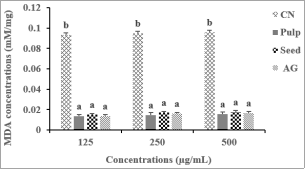
Figure 2 illustrates the effect of rambutan pulp and seed extracts on malondialdehyde (MDA) levels. The highest MDA values were recorded in the negative control (CN), with an average concentration of approximately 0.09 mM/mg for the three tested concentrations, indicating strong lipid oxidative degradation.
Figure 2. Effect of Rambutan Pulp and Seed extracts on MDA Concentration.
(ii). Superoxide Dismutase Activity
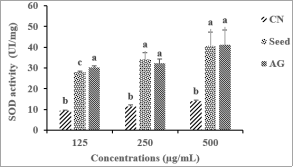
Figure 3 shows the evolution of superoxide dismutase (SOD) activity as a function of the concentrations of rambutan pulp and seed extracts. An increase in enzymatic activity was observed with increasing extract concentrations (125, 250, and 500 µg/mL), indicating a dose-dependent effect. The negative control (CN) showed low and constant values, reflecting an unbalanced oxidative stress state. At 125 µg/mL, both pulp and seed extracts exhibited similar activities (26.7 and 27.93 U/mg, respectively), which were significantly higher than that of the negative control (9.31 U/mg), but slightly lower than that of the standard gallic acid (30.4 U/mg). At 250 and 500 µg/mL, SOD activity increased further, reaching approximately 38 to 41.3 U/mg in the treated groups.
Figure 3. Effect of Rambutan Pulp and Seed Extracts on Superoxide Dismutase Activity.
(iii). Catalase Activity
The results of catalase activity are presented in
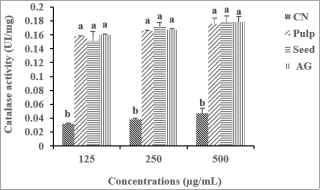
Figure 4. The enzyme activity was very low in the negative control (CN), with values close to 0.04 U/mg. In contrast, the rambutan pulp and seed extracts, as well as gallic acid (AG), showed significantly higher activities, with values of 0.15, 0.16, and 0.17 U/mg at concentrations of 125, 250, and 500 µg/mL, respectively.
Figure 4. Effect of rambutan pulp and seed extracts on catalase activity.
3.2. Discussion
The proximate composition of rambutan pulp presented in
Table 1 showed a high moisture content, which is consistent with the values reported by Mahmood et al.
| [11] | Mahmood, K., Fazilah, A., Yang, T. A., Sulaiman, S., & Kamilah, H. (2018). Valorization of rambutan (Nephelium lappaceum) by-products: Food and non-food perspectives. International Food Research Journal, 25(3), 890-902.
http://www.ifrj.upm.edu.my |
[11]
, ranging from 78.5 to 84.7 g/100 g fresh matter (FM), but higher than those reported by Afzaal et al.
| [8] | Afzaal, M., Saeed, F., Bibi, M., Ejaz, A., Shah, Y. A., Faisal, Z., Ateeq, H., Akram, N., Asghar, A., & Shah, M. A. (2023). Nutritional, pharmaceutical, and functional aspects of rambutan in industrial perspective: An updated review. Food Science & Nutrition, 11, 3675–3685.
https://doi.org/10.1002/fsn3.3379 |
[8]
, which varied between 34.25 and 34.6 g/100 g FM. These differences may be attributed to varietal differences or the ripening stage of the rambutan fruit
| [20] | Biswas S. (2021). Nutritional and phytochemical profile of rambutan: a concise review. International Journal of Food and Nutritional Sciences, 10(12), 2021. |
| [21] | Jahurul, M. H. A., Azzatul, F. S., Sharifudin, M. S., Norliza, M. J., Hasmadi, M., Lee, J. S., Patricia, M., Jinap, S., Ramlah, G. M. R., Khan, M. F., & Zaidul, I. S. M. (2020). Functional and nutritional properties of rambutan (Nephelium lappaceum L.) seed and its industrial application: A review. Trends in Food Science & Technology, 99, 367–374.
https://doi.org/10.1016/j.tifs.2020.03.016 |
[20, 21]
. Its carbohydrate content was 11.59 ± 0.2 g/100 g FM, which is lower than the values reported by Afzaal et al.
| [8] | Afzaal, M., Saeed, F., Bibi, M., Ejaz, A., Shah, Y. A., Faisal, Z., Ateeq, H., Akram, N., Asghar, A., & Shah, M. A. (2023). Nutritional, pharmaceutical, and functional aspects of rambutan in industrial perspective: An updated review. Food Science & Nutrition, 11, 3675–3685.
https://doi.org/10.1002/fsn3.3379 |
[8]
, ranging from 33.63 to 61.5 g/100 g FM, and also lower compared to some commonly consumed fruits such as mango, which contains higher carbohydrate levels (14.98 g/100 g)
| [22] | Lebaka, V. R., Wee, Y. J., Ye, W., & Korivi, M. (2021). Nutritional composition and bioactive compound in three different parts of mango fruit. Int. J. Environ. Res. Public Health, 18, 741. https:// doi.org/10.3390/ijerph18020741 |
[22]
. This carbohydrate content could contribute approximately 6.4% of the recommended dietary allowance (RDA) for children aged 1 to 3 years, according to FAO/WHO
| [19] | FAO/WHO (2015). Proposed draft additional or revised nutrient reference values for labelling purposes in the Guidelines on Nutrition Labelling (CX/NFSDU 15/37/4). Joint FAO/WHO Food Standards Programme, Codex Committee on Nutrition and Foods for Special Dietary Uses, 37th Session, Bad Soden am Taunus, Germany, 23–27 November. |
[19]
. The dietary fiber content was higher than the 1.6 g/100 g reported in mango
| [22] | Lebaka, V. R., Wee, Y. J., Ye, W., & Korivi, M. (2021). Nutritional composition and bioactive compound in three different parts of mango fruit. Int. J. Environ. Res. Public Health, 18, 741. https:// doi.org/10.3390/ijerph18020741 |
[22]
and the 3.10 ± 0.06 g/100 g found in papaya
. This high fiber content could meet approximately 26.70% of the recommended daily intake (RDI), giving the pulp a nutritional interest for digestive regulation and the prevention of metabolic and gastrointestinal disorders
| [24] | Sereme, D. C., Tapsoba, F. W. B., Zoenabo, D., Compaore, C. S., Dicko, M. H., & Lingani, H. S. (2022). A review on dietary fiber: definitions, classification, importance and advantages for human diet and guidelines to promote consumption. Int. J. Biol. Chem. Sci., 16(6), 2916-2929.
https://dx.doi.org/10.4314/ijbcs.v16i6.36 |
[24]
. The lipid and protein contents (
Table 1) were low compared to the ranges of 18.20 to 36.10 g/100 g FM and 2.21 to 2.91 g/100 g FM reported by Biswas (2021), respectively, indicating the low energy value of the pulp. The ash content (2.94 ± 0.15 g/100 g FM) was lower than the values reported by Afzaal et al.
| [8] | Afzaal, M., Saeed, F., Bibi, M., Ejaz, A., Shah, Y. A., Faisal, Z., Ateeq, H., Akram, N., Asghar, A., & Shah, M. A. (2023). Nutritional, pharmaceutical, and functional aspects of rambutan in industrial perspective: An updated review. Food Science & Nutrition, 11, 3675–3685.
https://doi.org/10.1002/fsn3.3379 |
[8]
, which ranged from 11.05 to 14.2 g/100 g FM, suggesting a lower mineral density. The proximate composition of rambutan seed (
Table 1) showed a carbohydrate content of 22.9 ± 1.53 g/100 g fresh matter (FM), corresponding to 12.7% of the recommended daily intake for children aged 1 to 3 years. This value falls within the range of 15.5 to 18.99 g/100 g FM reported by Afzaal et al.
| [8] | Afzaal, M., Saeed, F., Bibi, M., Ejaz, A., Shah, Y. A., Faisal, Z., Ateeq, H., Akram, N., Asghar, A., & Shah, M. A. (2023). Nutritional, pharmaceutical, and functional aspects of rambutan in industrial perspective: An updated review. Food Science & Nutrition, 11, 3675–3685.
https://doi.org/10.1002/fsn3.3379 |
[8]
. These variations are likely due to differences in extraction methods and growing conditions. Its lipid content was higher than the values reported by Mahmood et al.
| [11] | Mahmood, K., Fazilah, A., Yang, T. A., Sulaiman, S., & Kamilah, H. (2018). Valorization of rambutan (Nephelium lappaceum) by-products: Food and non-food perspectives. International Food Research Journal, 25(3), 890-902.
http://www.ifrj.upm.edu.my |
[11]
, which ranged from 0.45 to 1.03 g/100 g FM, but lower than the 38.90 ± 0.32 g/100 g FM reported by Rakariyatham et al.
| [25] | Rakariyathama, K., Zhoua, D., Rakariyathamd, N., & Fereidoon, S. F. (2020). Sapindaceae (Dimocarpus longan and Nephelium lappaceum) seed and peel by products: Potential sources for phenolic compounds and use as functional ingredients in food and health applications. Journal of Functional Foods, 67 (2020), 103846.
https://doi.org/10.1016/j.jff.2020.103846 |
[25]
, confirming the role of the seed as an important energy reserve for embryonic development and suggesting that it could contribute approximately 16.7% of the recommended daily intake. The protein content was lower than the 12.4 ± 0.22 g/100 g FM reported by Rakariyatham et al.
| [25] | Rakariyathama, K., Zhoua, D., Rakariyathamd, N., & Fereidoon, S. F. (2020). Sapindaceae (Dimocarpus longan and Nephelium lappaceum) seed and peel by products: Potential sources for phenolic compounds and use as functional ingredients in food and health applications. Journal of Functional Foods, 67 (2020), 103846.
https://doi.org/10.1016/j.jff.2020.103846 |
[25]
, highlighting the potential of the seed as a complementary source of plant proteins. The fiber content of the seed was higher compared to the values reported by Afzaal et al.
| [8] | Afzaal, M., Saeed, F., Bibi, M., Ejaz, A., Shah, Y. A., Faisal, Z., Ateeq, H., Akram, N., Asghar, A., & Shah, M. A. (2023). Nutritional, pharmaceutical, and functional aspects of rambutan in industrial perspective: An updated review. Food Science & Nutrition, 11, 3675–3685.
https://doi.org/10.1002/fsn3.3379 |
[8]
and Biswas
| [20] | Biswas S. (2021). Nutritional and phytochemical profile of rambutan: a concise review. International Journal of Food and Nutritional Sciences, 10(12), 2021. |
[20]
, which ranged from 0.29 to 2.70 g/100 g FM. These high fiber levels could cover nearly 32.8% of the recommended daily intake (RDI), thereby contributing effectively to intestinal transit regulation and the prevention of digestive disorders
| [24] | Sereme, D. C., Tapsoba, F. W. B., Zoenabo, D., Compaore, C. S., Dicko, M. H., & Lingani, H. S. (2022). A review on dietary fiber: definitions, classification, importance and advantages for human diet and guidelines to promote consumption. Int. J. Biol. Chem. Sci., 16(6), 2916-2929.
https://dx.doi.org/10.4314/ijbcs.v16i6.36 |
[24]
. The ash content was higher than the 2.26 ± 0.42 g/100 g fresh matter reported by Rakariyatham et al.
| [25] | Rakariyathama, K., Zhoua, D., Rakariyathamd, N., & Fereidoon, S. F. (2020). Sapindaceae (Dimocarpus longan and Nephelium lappaceum) seed and peel by products: Potential sources for phenolic compounds and use as functional ingredients in food and health applications. Journal of Functional Foods, 67 (2020), 103846.
https://doi.org/10.1016/j.jff.2020.103846 |
[25]
, suggesting a notable mineral density. Compared with other commonly consumed fruits such as mango and papaya
| [22] | Lebaka, V. R., Wee, Y. J., Ye, W., & Korivi, M. (2021). Nutritional composition and bioactive compound in three different parts of mango fruit. Int. J. Environ. Res. Public Health, 18, 741. https:// doi.org/10.3390/ijerph18020741 |
| [23] | Ugo, N. J., Ade, A. R., & Joy, A. T. (2019). Nutrient composition of Carica Papaya leaves extracts. Journal of Food Science and Nutrition Research, 2(2019), 274-282.
https://doi.org/10.26502/jfsnr.2642-11000026 |
[22, 23]
, rambutan is characterized by a low lipid, carbohydrate, and protein content, but a high fiber content. This makes it suitable for dietary regimens aimed at low energy density and supports intestinal transit regulation and proper digestive function
| [24] | Sereme, D. C., Tapsoba, F. W. B., Zoenabo, D., Compaore, C. S., Dicko, M. H., & Lingani, H. S. (2022). A review on dietary fiber: definitions, classification, importance and advantages for human diet and guidelines to promote consumption. Int. J. Biol. Chem. Sci., 16(6), 2916-2929.
https://dx.doi.org/10.4314/ijbcs.v16i6.36 |
[24]
.
Table 2 shows that the pulp has a significantly higher phosphorus content (p<0.05) compared to the seed. In contrast, the seed contains significantly higher levels of potassium, calcium, iron, zinc, manganese, and copper than the pulp. These levels highlight the potential nutritional role of the seed, as potassium contributes to the regulation of blood pressure and heart rhythm, while calcium helps prevent osteoporosis and maintains bone density, particularly in elderly individuals and postmenopausal women
. The iron content could cover approximately 8.7% of the recommended daily intake for children aged 1 to 3 years, potentially supporting hemoglobin formation and playing a crucial role in oxygen transport in the blood as well as energy metabolism
| [27] | Gombart, A. F., Pierre, A., & Maggini, S. (2020). A Review of micronutrients and the immune system–working in harmony to reduce the risk of infection. Nutrients, 12, 236.
https://doi.org/10.3390/nu12010236 |
[27]
. Meanwhile, the zinc and copper contents in the seed may contribute to nucleic acid synthesis and play an essential role in immune function and wound healing
| [28] | Weyh, C., Kruger, K., Peeling, P., & Castell L. (2022). The Role of Minerals in the Optimal Functioning of the Immune System. Nutrients, 14(3), 644. https://doi.org/10.3390/nu14030644 |
[28]
. The potassium, calcium, and manganese contents to the seed was also lower than those reported by Torgbo et al.
| [29] | Torgbo, S., Rugthaworn, P., Sukatta, U., &Sukya P. (2022). Biological characterization and quantification of Rambutan (Nephelium lappaceum L.) peel extract as a sotential Source of valuable minerals and ellagitannins for industrial applications. ACS Omega, 2022(7), 34647−34656.
https://doi.org/10.1021/acsomega.2c04646 |
[29]
, with values of 525.10 ± 7.87 mg/100 g, 452.89 ± 3.62 mg/100 g, and 17.69 ± 0.53 mg/100 g, respectively. These differences may be attributed to varietal differences or the ripening stage of the rambutan fruit. The mineral content in rambutan fruits (
Table 2) indicate that the seed has a higher mineral density than the pulp, highlighting its nutritional interest in human diets, particularly in the context of dietary strategies aimed at improving micronutrient intake.
The antioxidant activity of rambutan pulp and seed extracts was evaluated using three complementary methods (DPPH, ABTS, and FRAP). The IC₅₀ values for pulp, seed, and vitamin C in the DPPH assay were not significantly different (
Figure 1). These results indicate a good free radical scavenging capacity against DPPH, with a slight trend toward higher efficiency in the seed extract. For the ABTS assay, the IC₅₀ values obtained for pulp, seed, and vitamin C were also not significantly different. Although these differences were not statistically significant, the seed extract showed a more pronounced antioxidant activity, close to that of vitamin C, likely due to the presence of water-soluble flavonoids such as quercetin and catechins, which are known for their effective interaction with the ABTS⁺ radical
| [3] | Hernández-Hernández, C. N., Aguilar, R. Rodríguez-Herrera, A. C., Flores-Gallegos, J., Morlett-Chávez, M., Govea-Salas, J. A., & Ascacio-Valdes. (2019). Rambutan (Nephelium lappaceum L.): Nutritional and functional properties. Trends in Food Science & Technology, 85, 201–210.
https://doi.org/10.1016/j.tifs.2019.01.018 |
[3]
. The performance of vitamin C in this assay may be explained by a favorable interaction kinetic with the ABTS⁺ radical. The FRAP assay highlighted a lower IC₅₀ value for the seed compared to the pulp and vitamin C, indicating a stronger reducing power of the seed. This result could be attributed to a better synergy between hydrophilic and lipophilic compounds in the seed, facilitating electron transfer to ferric iron, as well as its richness in phenolic acids such as gallic acid
| [3] | Hernández-Hernández, C. N., Aguilar, R. Rodríguez-Herrera, A. C., Flores-Gallegos, J., Morlett-Chávez, M., Govea-Salas, J. A., & Ascacio-Valdes. (2019). Rambutan (Nephelium lappaceum L.): Nutritional and functional properties. Trends in Food Science & Technology, 85, 201–210.
https://doi.org/10.1016/j.tifs.2019.01.018 |
[3]
.
Table 3 shows that the seed contained significantly higher levels of flavonoids and tannins compared to the pulp. This richness in phenolic compounds in the seed may be related to the presence of protective structures such as the cuticle and sclereid cells, which play a role in chemical defense against biotic and abiotic stresses
| [11] | Mahmood, K., Fazilah, A., Yang, T. A., Sulaiman, S., & Kamilah, H. (2018). Valorization of rambutan (Nephelium lappaceum) by-products: Food and non-food perspectives. International Food Research Journal, 25(3), 890-902.
http://www.ifrj.upm.edu.my |
[11]
. Total polyphenols, although slightly more concentrated in the seed than in the pulp, did not show a statistically significant difference. This may be explained by the diversity of phenolic compounds as well as the influence of ripening stage, geographical origin, and extraction methods
| [3] | Hernández-Hernández, C. N., Aguilar, R. Rodríguez-Herrera, A. C., Flores-Gallegos, J., Morlett-Chávez, M., Govea-Salas, J. A., & Ascacio-Valdes. (2019). Rambutan (Nephelium lappaceum L.): Nutritional and functional properties. Trends in Food Science & Technology, 85, 201–210.
https://doi.org/10.1016/j.tifs.2019.01.018 |
| [25] | Rakariyathama, K., Zhoua, D., Rakariyathamd, N., & Fereidoon, S. F. (2020). Sapindaceae (Dimocarpus longan and Nephelium lappaceum) seed and peel by products: Potential sources for phenolic compounds and use as functional ingredients in food and health applications. Journal of Functional Foods, 67 (2020), 103846.
https://doi.org/10.1016/j.jff.2020.103846 |
[3, 25]
. The high content of flavonoids and tannins in the seed appears to be directly related to its stronger antioxidant capacity in radical scavenging assays (DPPH and ABTS) and in reducing power (FRAP), as these compounds are well known for their effectiveness in neutralizing reactive oxygen species
| [30] | Pereira-Freire, J. A., Barros, K. B. N., Lima, L. K., Maciel, M. J., De Carvalho, A. Y., Da Silva, O. G. L., De Souza, A. J., & Ferreira P. M. P. (2016). Phytochemistry Profile, Nutritional Properties and Pharmacological Activities of Mauritia flexuosa. Journal of Food Science, 81(11), 2611–2622.
https://doi.org/10.1111/1750-3841.13529 |
[30]
. The pulp, on the other hand, also exhibited notable antioxidant activity, attributable to its soluble polyphenols, particularly gallic acid and its derivatives, as well as anthocyanins
| [8] | Afzaal, M., Saeed, F., Bibi, M., Ejaz, A., Shah, Y. A., Faisal, Z., Ateeq, H., Akram, N., Asghar, A., & Shah, M. A. (2023). Nutritional, pharmaceutical, and functional aspects of rambutan in industrial perspective: An updated review. Food Science & Nutrition, 11, 3675–3685.
https://doi.org/10.1002/fsn3.3379 |
| [25] | Rakariyathama, K., Zhoua, D., Rakariyathamd, N., & Fereidoon, S. F. (2020). Sapindaceae (Dimocarpus longan and Nephelium lappaceum) seed and peel by products: Potential sources for phenolic compounds and use as functional ingredients in food and health applications. Journal of Functional Foods, 67 (2020), 103846.
https://doi.org/10.1016/j.jff.2020.103846 |
[8, 25]
.
The ex vivo antioxidant activity highlighted the potential protective effect of the tested rambutan pulp and seed extracts. Exposure of erythrocytes to copper resulted in a significant increase in malondialdehyde (MDA) levels in the negative control group (
Figure 2), reflecting substantial lipid peroxidation. In contrast, co-incubation with the tested extracts significantly reduced MDA levels, indicating a marked inhibition of lipid peroxidation. At 500 µg/mL, MDA values were very close to those observed in the reference group, suggesting an effect comparable to that of a standard antioxidant such as catechin used in the comparative study by Pereira-Freire et al.
| [30] | Pereira-Freire, J. A., Barros, K. B. N., Lima, L. K., Maciel, M. J., De Carvalho, A. Y., Da Silva, O. G. L., De Souza, A. J., & Ferreira P. M. P. (2016). Phytochemistry Profile, Nutritional Properties and Pharmacological Activities of Mauritia flexuosa. Journal of Food Science, 81(11), 2611–2622.
https://doi.org/10.1111/1750-3841.13529 |
[30]
. In parallel, superoxide dismutase (SOD) activity increased in a dose-dependent manner with the extracts, reaching approximately 41 U/mg at 500 µg/mL, a level higher than that observed at 125 µg/mL and slightly higher than that of the reference compound (
Figure 3). This enzymatic induction is consistent with the findings reported by Nkouandou et al.
| [18] | Nkouandou, P. M., Longo, F., Tchamgoue, A. D., Tchokouaha, L. R. Y., Domekouo, U. L. F., Mba, R. J., Mokale, A. L. K., Weyepe, L. F. C., Tarkang, P. A., & Agbor G. A. (2016). Antioxidant capacity of spices/vegetables protects erythrocyte toxicity ex-vivo. International Journal of Pharmaceutical Sciences Review & Research, 39(2), 73-80.
www.globalresearchonline.net |
[18]
, where SOD activity also increased in the presence of polyphenolic extracts in a concentration-dependent manner. In contrast to SOD, catalase activity did not show significant variation across the different extract concentrations, although the measured values were markedly higher than those of the negative control. This activity plateau observed from 125 µg/mL (≈ 0.15 U/mg) may indicate maximal enzyme activation at the lowest tested concentration, or alternatively suggest saturation of the enzymatic system beyond a certain threshold.
Author Contributions
Nicolas Policarpe Nolla: Conceptualization, Methodology, Data curation, Formal Analysis, Writing – original draft, Writing – review & editing
Erine Verina Metegoussong: Data curation, Methodology, Writing – review & editing
Aymar Rodrigue Fogang Mba: Conceptualization, Methodology, Writing – review & editing
Wilfred Ngaha Damndja: Conceptualization, Methodology, Writing – review & editing
Isabelle Meyengue Moke: Data curation, Methodology
Jules Christophe Koule Manz: Investigation, Software, Validation
Marie Modestine Kana Sop: Conceptualization, Writing – review & editing, Validation, Supervision
Marlyne Josephine Mananga: Conceptualization, Writing – review & editing, Validation, Supervision

 ,
Aymar Rodrigue Fogang Mba
,
Aymar Rodrigue Fogang Mba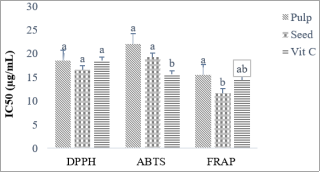



 Share This Article
 Twitter
 Linked In
 Facebook
 Copy
Copy Download