
Micronutrient deficiencies, particularly iron and zinc deficiencies, represent a significant global public health challenge, especially among children under five years of age in low- and middle-income countries. Early childhood is a critical period for brain development, physical growth, and immune maturation, all of which depend on adequate micronutrient intake. Iron deficiency is the most common cause of anemia worldwide and is strongly associated with impaired cognitive development, delayed psychomotor performance, reduced attention span, and poor learning capacity. Zinc deficiency contributes to growth retardation, compromised immune function, increased susceptibility to infections, and elevated risks of morbidity and mortality in young children. Food fortification with iron and zinc has emerged as a cost-effective, scalable, and sustainable intervention to address these deficiencies at the population level. Fortifying commonly consumed staple foods and complementary foods allows for widespread micronutrient delivery without requiring major dietary behavior changes. Evidence from randomized controlled trials and national nutrition programs indicates that iron and zinc fortification can improve hemoglobin concentrations, reduce anemia prevalence, support linear growth, and enhance cognitive and motor development during the preschool years. This review evaluates the role of iron and zinc fortification in improving cognitive and physical development among under-five children, focusing on the crucial preschool period. Findings from clinical studies, large-scale fortification initiatives, and World Health Organization (WHO) guidelines are synthesized to highlight the physiological benefits of these micronutrients. In addition, key implementation challenges—such as micronutrient bioavailability, fortification selection, program coverage, quality control, and monitoring—are discussed. The review underscores the importance of well-designed fortification strategies and strong policy support in combating hidden hunger and improving child health outcomes globally.
| Published in | World Journal of Food Science and Technology (Volume 10, Issue 1) |
| DOI | 10.11648/j.wjfst.20261001.11 |
| Page(s) | 1-6 |
| Creative Commons |
This is an Open Access article, distributed under the terms of the Creative Commons Attribution 4.0 International License (http://creativecommons.org/licenses/by/4.0/), which permits unrestricted use, distribution and reproduction in any medium or format, provided the original work is properly cited. |
| Copyright |
Copyright © The Author(s), 2026. Published by Science Publishing Group |
Micronutrient Deficiency, Under-five Children, Iron Fortification, Zinc Fortification, Food Fortification, Cognitive Development, Preschool Nutrition, Hidden Hunger
Study | Country | Intervention | Key Outcomes |
|---|---|---|---|
Bhutta et al., 2013 | Multiple LMICs | Zinc and iron-fortified cereal | ↑ height-for-age, ↓ infections |
Dewey et al., 2001 | Guatemala | Iron-fortified milk | ↑ motor development, ↑ hemoglobin |
Mayo-Wilson et al., 2014 | Global meta-analysis | Micronutrient powders | ↑ cognitive scores, ↓ anemia |
| [1] | World Health Organization. (2020). Guideline: Use of Multiple Micronutrient Powders for Home Fortification of Foods Consumed by Infants and Children. |
| [2] | Black RE, Victora CG, et al. (2013). Maternal and child undernutrition and overweight in low-income and middle-income countries. The Lancet. |
| [3] | Dewey KG, et al. (2001). Effect of iron supplementation on growth and cognitive development. J Nutr. |
| [4] | Bhutta ZA, Ahmed T, et al. (2013). What works? Interventions for maternal and child undernutrition and survival. The Lancet. |
| [5] | UNICEF. (2024). State of the World’s Children Report. |
| [6] | Mayo-Wilson E, et al. (2014). Zinc supplementation for preventing mortality and morbidity in children. Cochrane Database. |
| [7] | Allen LH. (2003). Interventions for micronutrient deficiency control in developing countries: past, present and future. Journal of Nutrition, 133 ( 11 Suppl 2), 3875S–3878S. |
| [8] | Lopez de Romaña D, et al. (2016). Efficacy and safety of iron-fortified foods for children under five years of age. Cochrane Database of Systematic Reviews, Issue 8. |
| [9] | Neufeld LM, et al. (2007). The impact of zinc supplementation on child health: a meta-analysis of randomized controlled trials. Food and Nutrition Bulletin, 28 (3_suppl3), S399–S414. |
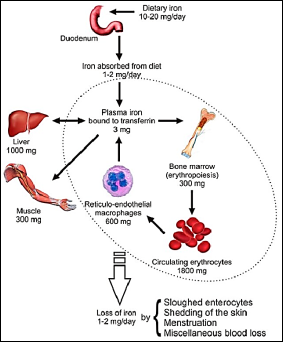
| [10] | Anderson, G. J., and D. M. Frazer. 2017. Current understanding of iron homeostasis. The American Journal of Clinical Nutrition 106(6): 1559S-66S. |
| [11] | Zhang L, Kleiman-Weiner M, Luo R, et al. Multiple micronutrient supplementation reduces anemia and anxiety in rural China’s elementary school children. J Nutr 2013; 143: 640-647. |
| [12] | Pasricha SR, Drakesmith H, Black J, et al. Control of iron deficiency anemia in low- and middle-income countries. Blood 2013; 121: 2607-2617. |
| [13] | Eden AN, Sandoval C. Iron deficiency in infants and toddlers in the United States. Pediatr Hematol Oncol 2012; 29: 704-709. |
| [14] | Radlowski EC, Johnson RW. Perinatal iron deficiency and neurocognitive development. Front Hum Neurosci 2013; 7: 585. |
| [15] | Abdullah K, Kendzerska T, Shah P, et al. Efficacy of oral iron therapy in improving the developmental outcome of preschool children with nonanaemic iron deficiency: a systematic review. Public Health Nutr 2013; 16: 1497- 1506. |
| [16] | Duley L, Batey N. Optimal timing of umbilical cord clamping for term and preterm babies. Early Hum Dev 2013; 89: 905-908. |
| [17] | Hurrell, R. F., Juillerat, M. A., Reddy, M. B., Lynch, S. R., Dassenko, S. A., and Cook, J. D. 1992. Soy protein, phytate, and iron absorption in man. Am. J. Clin. Nutr. 56: 573-578. |
| [18] | Imdad A, Bhutta ZA. (2011). Effect of preventive zinc supplementation on linear growth in children under 5 years of age in developing countries: a meta-analysis of studies for input to the Lives Saved Tool. BMC Public Health, 11 (Suppl 3), S22. |
| [19] | Erickson-Owens DA, Mercer JS, Oh W. Umbilical cord milking in term infants delivered by cesarean section: a randomized controlled trial. J Perinatol 2012; 32: 580-584. |
APA Style
Hossian, M., Ahmed, T., Ferdous, J., Saha, P. (2026). Beneficiary Role of Zinc and Iron Fortification for Foods in Under-5 Children: Supporting & Enhancing Cognitive and Physical Development During the Preschool Years. World Journal of Food Science and Technology, 10(1), 1-6. https://doi.org/10.11648/j.wjfst.20261001.11
ACS Style
Hossian, M.; Ahmed, T.; Ferdous, J.; Saha, P. Beneficiary Role of Zinc and Iron Fortification for Foods in Under-5 Children: Supporting & Enhancing Cognitive and Physical Development During the Preschool Years. World J. Food Sci. Technol. 2026, 10(1), 1-6. doi: 10.11648/j.wjfst.20261001.11
AMA Style
Hossian M, Ahmed T, Ferdous J, Saha P. Beneficiary Role of Zinc and Iron Fortification for Foods in Under-5 Children: Supporting & Enhancing Cognitive and Physical Development During the Preschool Years. World J Food Sci Technol. 2026;10(1):1-6. doi: 10.11648/j.wjfst.20261001.11
@article{10.11648/j.wjfst.20261001.11,
  author = {Muazzem Hossian and Tofayel Ahmed and Jannatul Ferdous and Priyanaka Saha},
  title = {Beneficiary Role of Zinc and Iron Fortification for Foods in Under-5 Children: Supporting & Enhancing Cognitive and Physical Development During the Preschool Years},
  journal = {World Journal of Food Science and Technology},
  volume = {10},
  number = {1},
  pages = {1-6},
  doi = {10.11648/j.wjfst.20261001.11},
  url = {https://doi.org/10.11648/j.wjfst.20261001.11},
  eprint = {https://article.sciencepublishinggroup.com/pdf/10.11648.j.wjfst.20261001.11},
  abstract = {Micronutrient deficiencies, particularly iron and zinc deficiencies, represent a significant global public health challenge, especially among children under five years of age in low- and middle-income countries. Early childhood is a critical period for brain development, physical growth, and immune maturation, all of which depend on adequate micronutrient intake. Iron deficiency is the most common cause of anemia worldwide and is strongly associated with impaired cognitive development, delayed psychomotor performance, reduced attention span, and poor learning capacity. Zinc deficiency contributes to growth retardation, compromised immune function, increased susceptibility to infections, and elevated risks of morbidity and mortality in young children. Food fortification with iron and zinc has emerged as a cost-effective, scalable, and sustainable intervention to address these deficiencies at the population level. Fortifying commonly consumed staple foods and complementary foods allows for widespread micronutrient delivery without requiring major dietary behavior changes. Evidence from randomized controlled trials and national nutrition programs indicates that iron and zinc fortification can improve hemoglobin concentrations, reduce anemia prevalence, support linear growth, and enhance cognitive and motor development during the preschool years. This review evaluates the role of iron and zinc fortification in improving cognitive and physical development among under-five children, focusing on the crucial preschool period. Findings from clinical studies, large-scale fortification initiatives, and World Health Organization (WHO) guidelines are synthesized to highlight the physiological benefits of these micronutrients. In addition, key implementation challenges—such as micronutrient bioavailability, fortification selection, program coverage, quality control, and monitoring—are discussed. The review underscores the importance of well-designed fortification strategies and strong policy support in combating hidden hunger and improving child health outcomes globally.},
 year = {2026}
}
TY  - JOUR
T1  - Beneficiary Role of Zinc and Iron Fortification for Foods in Under-5 Children: Supporting & Enhancing Cognitive and Physical Development During the Preschool Years
AU  - Muazzem Hossian
AU  - Tofayel Ahmed
AU  - Jannatul Ferdous
AU  - Priyanaka Saha
Y1  - 2026/02/06
PY  - 2026
N1  - https://doi.org/10.11648/j.wjfst.20261001.11
DO  - 10.11648/j.wjfst.20261001.11
T2  - World Journal of Food Science and Technology
JF  - World Journal of Food Science and Technology
JO  - World Journal of Food Science and Technology
SP  - 1
EP  - 6
PB  - Science Publishing Group
SN  - 2637-6024
UR  - https://doi.org/10.11648/j.wjfst.20261001.11
AB  - Micronutrient deficiencies, particularly iron and zinc deficiencies, represent a significant global public health challenge, especially among children under five years of age in low- and middle-income countries. Early childhood is a critical period for brain development, physical growth, and immune maturation, all of which depend on adequate micronutrient intake. Iron deficiency is the most common cause of anemia worldwide and is strongly associated with impaired cognitive development, delayed psychomotor performance, reduced attention span, and poor learning capacity. Zinc deficiency contributes to growth retardation, compromised immune function, increased susceptibility to infections, and elevated risks of morbidity and mortality in young children. Food fortification with iron and zinc has emerged as a cost-effective, scalable, and sustainable intervention to address these deficiencies at the population level. Fortifying commonly consumed staple foods and complementary foods allows for widespread micronutrient delivery without requiring major dietary behavior changes. Evidence from randomized controlled trials and national nutrition programs indicates that iron and zinc fortification can improve hemoglobin concentrations, reduce anemia prevalence, support linear growth, and enhance cognitive and motor development during the preschool years. This review evaluates the role of iron and zinc fortification in improving cognitive and physical development among under-five children, focusing on the crucial preschool period. Findings from clinical studies, large-scale fortification initiatives, and World Health Organization (WHO) guidelines are synthesized to highlight the physiological benefits of these micronutrients. In addition, key implementation challenges—such as micronutrient bioavailability, fortification selection, program coverage, quality control, and monitoring—are discussed. The review underscores the importance of well-designed fortification strategies and strong policy support in combating hidden hunger and improving child health outcomes globally.
VL  - 10
IS  - 1
ER  -
Department of Paediatric, Jalalabad Ragib Rabeya Medical College Hospital, Sylhet, Bangladesh
Department of Paediatric, Jalalabad Ragib Rabeya Medical College Hospital, Sylhet, Bangladesh
Department of Paediatric, Jalalabad Ragib Rabeya Medical College Hospital, Sylhet, Bangladesh
Department of Paediatric, Jalalabad Ragib Rabeya Medical College Hospital, Sylhet, Bangladesh

Information



 Share This Article
 Twitter
 Linked In
 Facebook
 Copy
Copy Download