
 ,
Ogunsanwo Babatunde,
Osobamiro Temitope Monsurat,
Alegbe Monday John*,
Moronkola Bridget Adekemi
,
Ogunsanwo Babatunde,
Osobamiro Temitope Monsurat,
Alegbe Monday John*,
Moronkola Bridget Adekemi
The Non-conventional psychoactive mixtures are consumed indiscriminately, causes behavioral risks and criminal outcomes is linked to violence, aggression, impaired decision-making, and criminal activity for certain groups like area boys, street gangs in Lagos State. These substances frequently bypass the conventional regulatory systems, and are driven by poverty, social influence, and functional needs. Health impacts of users are severe but remain under-researched. The aim of this study is to identify and assess the psychoactive compounds as the possible agents responsible for psychoactive activity among youth in Lagos State, Nigeria. Material and methods: The experimental of this study involves dissolution and extraction method in aqueous and ethanol medium. The analytical techniques used for this study was gas chromatography-mass spectrometry (GC-MS). Results: The phytochemical results revealed that the ethanol extracts of natural plant samples alkaloid concentrations ranged approximately from 31.23 mg/100 g - 50.68 mg/100 g, while the aqueous extracts recorded values ranging from 23.01 mg/100 g - 52.48 mg/100 g. This study reveals that Lagos youths increasingly consume non-classical psychoactive substances notably concoctions and synthetic opioids that are informally produced, packaged, and consumed. In conclusion: The high presence of alkaloids, saponins, phenols and flavonoids are particularly significant because they are well known for their psychoactive properties.
| Published in | World Journal of Applied Chemistry (Volume 11, Issue 2) |
| DOI | 10.11648/j.wjac.20261102.13 |
| Page(s) | 46-58 |
| Creative Commons |
This is an Open Access article, distributed under the terms of the Creative Commons Attribution 4.0 International License (http://creativecommons.org/licenses/by/4.0/), which permits unrestricted use, distribution and reproduction in any medium or format, provided the original work is properly cited. |
| Copyright |
Copyright © The Author(s), 2026. Published by Science Publishing Group |
Psychoactive Compounds, Extraction, GC-MS, Synthetic, Mixture
Location | Longitude | Latitude |
|---|---|---|
L1 | 6.45909193900 | 3.38825133000 |
L2 | 6.56214790100 | 3.23678440100 |
L3 | 6.58027236000 | 3.48913271400 |
L4 | 6.58155193600 | 3.98527942700 |
L5 | 6.52170893700 | 3.35632155300 |
Code | Alkaloid | Tannin | Phloba Tannin | Saponnin | Terpenoid | Cardiac Glycosides | Steroid | Reducing Sugar | Flavonoid | Phenol |
|---|---|---|---|---|---|---|---|---|---|---|
Ethanol | Extract | |||||||||
MM2 | ++ | + | + | ++ | + | + | + | + | + | + |
JW2 | + | + | + | +++ | + | + | + | + | + | + |
EG2 | ++ | + | + | +++ | + | + | + | + | + | ++ |
IY2 | ++ | + | + | ++ | + | + | + | + | + | ++ |
KA2 | + | + | + | ++ | + | + | + | + | + | + |
TT | ++ | + | + | ++ | + | + | + | + | + | ++ |
Aqueous | Extract | |||||||||
IY1 | + | + | + | + | + | + | + | + | + | + |
TT1 | + | + | + | + | + | + | + | + | + | + |
JW1 | ++ | + | + | + | + | + | + | + | + | ++ |
EG1 | + | + | + | + | + | + | + | + | + | + |
SS1 | + | + | + | + | + | + | + | + | + | + |
MM1 | + | + | + | + | + | + | + | + | + | + |
KA1 | + | + | + | + | + | + | + | + | + | + |
Code | Alkaloids | Tannin | Phloba Tannin | Saponin | Phenol | Reducing Sugar | Steroids | Cardiac Glycoside | Terpe Noids | Flavo Noids |
|---|---|---|---|---|---|---|---|---|---|---|
Aqueous | Extract | |||||||||
T1 | ++ | + | + | + | + | + | + | + | + | ++ |
S1 | + | + | - | ++ | + | + | + | + | + | + |
V1 | + | + | + | ++ | + | + | + | + | + | + |
Q1 | + | + | - | ++ | + | + | + | + | + | ++ |
R1 | ++ | + | + | ++ | + | + | + | + | + | + |
P1 | ++ | + | + | ++ | + | + | + | + | + | + |
Ethanol | Extract | |||||||||
T2 | ++ | + | + | ++ | ++ | + | + | + | + | ++ |
S2 | + | + | + | ++ | + | + | + | + | + | ++ |
V2 | ++ | + | + | ++ | + | + | + | + | + | + |
Q2 | ++ | + | ++ | + | ++ | + | + | + | ++ | ++ |
R2 | ++ | + | + | + | + | + | + | + | + | ++ |
P2 | ++ | + | + | ++ | + | ++ | + | + | + | + |
SYNTHETIC | CODE | MIXTURE | CODE |
|---|---|---|---|
Arizona | V | Gutter water | CA |
Monkey-tail | P | Saponsapon | SS |
Molly | M | Jediwewe | JW |
Loud | R | Ele | DL |
Colorado | T | Jekonmo | CN |
Scottish weed | S | Skuchies | EG |
Iyere | IY |
RSC | Reducing Sugar Content |
NCM | Non-Conventional mixture |
GC-MS | Gas Chromatography-Mass Spectrometry |
UV-VIS | Ultra Violet-Visible |
HPLC | High Liquid Performance Chormatography |
E. D. T. A | Ethylene Diammine Tetra Acetic Acid |
| [1] | World Health Organization. (2024). Compendium of WHO and other UN guidance in health and environment, 2024 update. World Health Organization. |
| [2] | Balogun, O. S., Olaleye, S. A., Moshin, M., Haataja, K., Gao, X. Z., & Toivanen, P. (2021). Investigating Drug Peddling in Nigeria Using a Machine Learning Approach. In International Conference on Intelligent Systems Design and Applications (pp. 103-120). Cham: Springer International Publishing. |
| [3] | Da Costa, M. P. & Moreira, D. N., (2020). The impact of the Covid-19 pandemic in the precipitation of intimate partner violence. International journal of law and psychiatry, 71, 101606. |
| [4] | Olowe, A. O., Ademuyiwa, I. Y., Oyelade, O. O., & Ifelowo, E. O. (2024). Situation of use and factors associated with psychoactive substances use among undergraduates of the College of Medicine University of Lagos, Nigeria. Research Journal of Health Sciences, 12(3), 219–227. |
| [5] | Martin, S. S., Aday, A. W., Allen, N. B., Almarzooq, Z. I., Anderson, C. A., Arora, P.,... & American Heart Association Council on Epidemiology and Prevention Statistics Committee and Stroke Statistics Committee. (2025). 2025 heart disease and stroke statistics: a report of US and global data from the American Heart Association. Circulation, 151(8), e41-e660. |
| [6] | Dumbili, E. W. (2021]. Drug-related harms among young adults in Nigeria: implications for intervention. J. Hum. Behav. Soc. Environ. 30(8), 1013–1029. |
| [7] | Onaolapo, O. J., Olofinnade, A. T., Ojo, F. O., Adeleye, O., Falade, J., & Onaolapo, A. Y. (2022). Substance use and substance use disorders in Africa: An epidemiological approach to the review of existing literature. World journal of psychiatry, 12(10), 1268. |
| [8] | Bauer, I (2019). Travel medicine, coca and cocaine: demystifying and rehabilitating Erythroxylum – a comprehensive review. 7, 1–14. |
| [9] | Atakan, Z. (2012). Cannabis, a complex plant: different compounds and different effects on individuals. 241–254. |
| [10] | United Nations Office on Drugs and Crime (UNODC). Global Overview Drug Demand Drug Supply. 2022. Accessed on June 18, 2024. |
| [11] | Akhlash P. Singh and Sunil Kumar (2019). Applications of Tannins in Industry. IntechOpen, the world’s leading publisher of Open Access books Built by scientists, for scientists. |
| [12] | Aliyu, D., Adeleke, I. T., Anyebe, E. E., Omoniyi, S. O., & Ibrahim, L. Y. (2016). Occurrence, Pattern and Effects of Nonconventional Use of Substances among Youth in North-Central, Nigeria. World Journal of Preventive Medicine, Vol. 4, 2016, Pages 12-19, 4(1), 12–19. |
| [13] | Wada, Y. H., Khalid, G. M., Shitu, Z., & Ibrahim, U. I. (2021). Prevalence and impacts of psychoactive substance abuse amongst undergraduate university students in Katsina State, Nigeria. Addiction & Health, 13(4), 221. |
| [14] | Igben, V. O., Iju, W. J., Itivere, O. A., & Oyem, J. C. (2023). Datura metel stramonium exacerbates behavioral deficits, medial prefrontal cortex, and hippocampal neurotoxicity in mice via redox imbalance. 1–19. |
| [15] | Olley, B. O. (2007). Is dried paw-paw leaf a psychoactive substance? International Journal, 15 (July), 9–21. |
| [16] | Santos, I. C., Maia, D., Dinis-Oliveira, R. J., & Barbosa, D. J. (2024). New Psychoactive Substances: Health and Legal Challenges. Psychoactives, 3(2), 285–302. |
| [17] | Prasad, N., & Basalingappa, K. M. (2020). A Review on significance of carica papaya linn: a promising review article a review on significance of carica papaya linn : a promising medicinal plant. July. |
| [18] | Emmanuel, G. O., Akinsolu, F. T., Abodunrin, O. R., & Ezechi, O. C. (2024). Prevalence and Patterns of substance use in West Africa: A systematic review and meta-analysis. PLOS Global Public Health, 4(12), e0004019. |
| [19] | Safdari R, Esmaeili M, Marashi Shooshtari SS, & Javanmard Z. (2022). Drug Classification Systems: Applications and Characteristics. Health Man & Info Sci. 2021; 8(3): 149-158. |
| [20] | Soni, P., Siddiqui, A. A., Dwivedi, J., & Soni, V. (2012). Pharmacological properties of Datura stramonium L. as a potential medicinal tree: An overview. 2(12), 1002–1008. |
| [21] | Rates, S. M. K. (2001). Plants as source of drugs. Toxicon, 39(5), 603–613. |
| [22] | Veeresham, C (2012). Natural products derived from plants as a source of drugs. In Journal of Advanced Pharmaceutical Technology and Research (Vol. 3, Issue 4, pp. 200–201). |
| [23] | Babaei Heydarabadi, A., Ramezankhani, A., Barekati, H., Vejdani, M., Shariatinejad, K., Panahi, R., Kashfi, S. H., & Imanzad, M. (2015). Prevalence of Substance Abuse Among Dormitory Students of Shahid Beheshti University of Medical Sciences, Tehran, Iran. International Journal of High-Risk Behaviours & Addiction, 4(2), e22350. |
| [24] | Anyanwu J. C., Rufus L. N. Duluora, J. O. Egbuawa O. I. Nwobu E. A. & Onwuagba C. G (2020). Comparative analysis of heavy metals in carica papaya (pawpaw) fruit and soil in selected urban, rural and forestland in Owerri, Imo State. International Journal of Advanced Research. Article. |
| [25] | Alice Arbenz & Luc Avérous (2015). Chemical modification of tannins to elaborate aromatic biobased macromolecular architectures journal The Royal Society of Chemistry 2015 Green Chem., 2015, 17, 2626 |
| [26] | Zapata, F., Matey, J. M., Montalvo, G., & García-ruiz, C. (2021). Document downloaded from the institutional repository of the University of This is a postprint version of the following published document: This work is licensed under a Creative Commons Attribution-Non Commercial-No Derivatives Chemical classification of. |
| [27] | Lucci, P., Pacetti, D., Núñez, O., & Frega, N. G. (2014). Current Trends in Sample Treatment Techniques for Current Trends in Sample Treatment Techniques for Environmental and Food Analysis. October. |
| [28] | Ugo, N. J., Ade, A. R., & Joy, A. T. (2019). Nutrient Composition of Carica Papaya Leaves Extracts. 2(3), 274–282. |
| [29] | Krotulski, A. J., Mata, D. C., Smith, C. R., Palmquist-Orlando, K. B., Modell, C., Vikingsson, S., & Truver, M. T. (2024). Advances in Analytical Methodologies for Detecting Novel Psychoactive Substances (NPS): A Review. Journal of Analytical Toxicology, bkae098. |
| [30] | Al-Salman, H. N. K. (2018). Analytical methods for diagnosis a mixture of narcotic substances in seized materials. International Journal of Green Pharmacy (IJGP), 12(03). |
| [31] | Al-Fregi, A. A., Hussein, H. H., & Al-Nuaim, M. (2018). Chemical analytical methods for diagnosing three narcotic substances in opiate neural drugs. International Journal of Green. |
| [32] | Bhupinder Singh Punia, Praveen Kumar Yadav, G. S. B and R. M. S. (2017). Analysis of Illicit Liquor by Headspace Gas Chromatography- Mass Spectrometry (HS-GC-MS): A Preliminary Study. 109–125. |
| [33] | Kaur, H., Gupta, M., Ahmed, Z., & Nargotra, A. (2025). Psychoactive Plant Database: a phytochemical resource for neurological drug discovery. Frontiers in Pharmacology, 16, 1569127. |
| [34] | Mind (2016). Recreational drugs and alcohol. Arabian Journal of Chemistry. |
| [35] | Page, R., Jauncey, M., Brett, J., Wood, W., & Roxburgh, A. (2024). The role of on-site drug analysis within supervised injecting facilities: A case presentation of an adverse event highlighting the need. Drug and Alcohol Review, 43(6), 1592-1596. |
| [36] | Teixeira, H. M. (2025). Phytocanabinoids and synthetic cannabinoids: from recreational consumption to potential therapeutic use – a review. January, 1–16. |
| [37] | Patil, V., Tewari, A., & Rao, R. (2016). New psychoactive substances: Issues and challenges. Journal of Mental Health and Human Behavior, 21(2), 98. |
| [38] | Alves, V. L., Gonçalves, J. L., Aguiar, J., Teixeira, H. M., & Câmara, J. S. (2020). The synthetic cannabinoids phenomenon: from structure to toxicological properties. A review. Critical Reviews in Toxicology, 50(5), 359-382. |
| [39] | Bag, S., Mondal, A., Majumder, A., & Banik, A. (2022). Tea and its phytochemicals: Hidden Health benefits & modulation of signaling cascade by phytochemicals. Food Chemistry, 371, 131098. |
| [40] | Bonson, K. R., Dalton, T., & Chiapperino, D. (2019). Scheduling synthetic cathinone substances under the Controlled Substances Act. Psychopharmacology, 236, 845-860. |
| [41] | Javadian, R., Eglima, M., & Behzadmanesh, M. (2010). An investigation into narcotic drugs awareness among students of Islamic Azad University. 5, 392–397. |
| [42] |
Goreishi, A., & Shajari, Z. (2012). Substance Abuse among Students of Zanjan’ s Universities (Iran): A Knot of Today’ s Society. 5(1), 66–72.
http://ahj.kmu.ac.ir, 4 April. |
| [43] | Zamble, A., Carpentier, M., Kandoussi, A., Sahpaz, S., Petrault, O., Ouk, T., Hennuyer, N., Fruchart, J. C., Staels, B., Bordet, R., Duriez, P., Bailleul, F., & Martin-Nizard, F. (2006). Paullinia pinnata extracts rich in polyphenols promote vascular relaxation via endothelium-dependent mechanisms. Journal of Cardiovascular Pharmacology, 47(4), 599–608. |
| [44] | Fattore, L., & Weinstein, A. M. (2019). Editorial: Novel Psychoactive Drugs. 10(March), 1–3. |
| [45] | Magadula, J. J (2014). Phytochemistry and pharmacology of the genus Macaranga: A review. 8(12), 489–503. |
| [46] | Kurek, J. (2019). We are IntechOpen, the world’ s leading publisher of Open Access books Built by scientists, for scientists TOP 1% Introductory Chapter: Alkaloids - Their Importance in Nature and for Human Life. 1–7. |
| [47] | Verpoorte, R., Kim, H. K., & Choi, Y. H. (2006). CHAPTER 19 Plants as source of Medicine. Leiden/Amsterdam Centre for Drugs. |
| [48] | Graziano, S., Orsolini, L., Concetta, M., Tittarelli, R., Schifano, F., & Pichini, S. (2017). Herbal Highs: Review on Psychoactive Effects and Neuropharmacology. 750–761. |
| [49] | Sharma, A., Sharma, R., Sharma, M., Kumar, M., Barbhai, M. D., Lorenzo, J. M., & Mekhemar, M. (2022). Carica papaya L. leaves: Deciphering its antioxidant bioactives, biological activities, innovative products, and safety aspects: oxidative medicine and cellular longevity, 2022(1), 2451733. |
| [50] | Berlinck, R. G. S (2017). Modern Alkaloids: Structure, Isolation, Synthesis and Biology (E. F. and O. Taglialatela-Scafat (Ed.); Issue September). WILEY-VCH Verlag and Co. KGaA. |
| [51] |
Vera et al. (2021). Overview of the major classes of new psychoactive substances, psychoactive effects, analytical determination and conformational analysis of selected illegal drugs. Article Medicinal and Aromatic Plants, 60–106.
https://doi.org/ 10.1515/chem.2021.0196 |
| [52] | Castiglioni, S and V. (2016). Assessing illicit drugs in wastewater. A global overview of wastewater-based drug epidemiology (I. Sara Castiglioni Mario Negri Institute, Milan (ed.)). Luxembourg: Publications Office of the European Union, 2016 ISBN. |
| [53] | Otu, S. E., Nnam, M. U., Eteng, M. J., Amugo, I. M., & Idowu, B. M. (2023). Beyond evidence and reality: The politics, political economy, and fallout of hawkish regulatory policy on prescription drugs in Nigeria. Drugs, Habits and Social Policy, 24(4), 320-341. |
| [54] | Tradit, A. J., Altern, C., Sasidharan, S., Chen, Y., Saravanan, D., Sundram, K. M., Latha, L. Y., Bedong-semeling, J., & Nasi, B. A. (2011). Extraction, Isolation and Characterization Of Bioactive Compounds From Plants’ Extracts. Institute for Research in Molecular Medicine (INFORM), Universiti Sains Malaysia, Minden 11800, 8, 1–10. |
| [55] | Proestos, C., Zeng, M., Elobeid, T., Sneha, K., & Oz, F. (2023). Major Phytochemicals: Recent Advances in Health Benefits and Extraction Method. 1–41. |
| [56] | Saba, A. (2025). Forensic Toxicology: Advances in the Identification of New Psychoactive Substances (NPS). |
| [57] | Xu, M., Gao, Y., Wang, X., Han, X. X., & Zhao, B. (2021). Comprehensive Strategy for Sample Preparation for the Analysis of Food Contaminants and Residues by GC – MS / MS : A Review of Recent Research Trends. |
| [58] | Harborne, J. B. (1991). The chemical basis of plant defense. Plant defenses against mammalian herbivory, 45. |
| [59] | Ejikeme C. M., C. S. Ezeonu, and A. N. Eboatu, (2014). “Determination of physical and phytochemical constituents of some tropical timbers indigenous to Niger Delta Area of Nigeria,” European Scientific Journal, vol. 10, no. 18, pp. 247–270. |
| [60] | Krivorotova, T., & Sereikaite, J. (2014). Determination of fructan exohydrolase activity in the crude extracts of plants. Electronic Journal of Biotechnology, 17(6), 329–333. |
| [61] | Sawitri, A. D., Yuniastuti, E., Purwanto, E., & Parjanto, P. (2025). Phytochemical screening and GC-MS analysis of local durian (Durio zibethinus) leaf extract from Criwik, Rembang, Central Java, Indonesia. Biodiversitas Journal of Biological Diversity, 26(1). |
| [62] | Vellapandian, C. (2022). Phytochemical studies, antioxidant potential, and identification of bioactive compounds using GC–MS of the ethanolic extract of Luffa cylindrica (L.) fruit. Applied Biochemistry and Biotechnology, 194(9), 4018-4032. |
| [63] | Agidew, M. G. (2022). Phytochemical analysis of some selected traditional medicinal plants in Ethiopia. Bulletin of the National Research Centre. |
| [64] | Bitwell, C., Indra, S. S., Luke, C., & Kakoma, M. K. (2023). A review of modern and conventional extraction techniques and their applications for extracting phytochemicals from plants. Scientific African, 19, e01585. |
| [65] | Hameed, L. A., Shah, S. Q., Pirzado, A. A., Soomro, Q. A., Talpur, R. A., & Sathio, R. (2022). FTIR Spectrum, Phytochemical Assessment and Biological Properties of Solanum Surrattense. Annals of the Romanian Society for Cell Biology, 26(1). |
APA Style
Adeola, O. A., Babatunde, O., Monsurat, O. T., John, A. M., Adekemi, M. B. (2026). Phytochemical Identification and Assessment of Informal Psychoactives in Illicit Mixtures Used Among Youth Cohorts in Lagos State, Nigeria. World Journal of Applied Chemistry, 11(2), 46-58. https://doi.org/10.11648/j.wjac.20261102.13
ACS Style
Adeola, O. A.; Babatunde, O.; Monsurat, O. T.; John, A. M.; Adekemi, M. B. Phytochemical Identification and Assessment of Informal Psychoactives in Illicit Mixtures Used Among Youth Cohorts in Lagos State, Nigeria. World J. Appl. Chem. 2026, 11(2), 46-58. doi: 10.11648/j.wjac.20261102.13
@article{10.11648/j.wjac.20261102.13,
  author = {Omowonuola Adenike Adeola and Ogunsanwo Babatunde and Osobamiro Temitope Monsurat and Alegbe Monday John and Moronkola Bridget Adekemi},
  title = {Phytochemical Identification and Assessment of Informal Psychoactives in Illicit Mixtures Used Among Youth Cohorts in Lagos State, Nigeria},
  journal = {World Journal of Applied Chemistry},
  volume = {11},
  number = {2},
  pages = {46-58},
  doi = {10.11648/j.wjac.20261102.13},
  url = {https://doi.org/10.11648/j.wjac.20261102.13},
  eprint = {https://article.sciencepublishinggroup.com/pdf/10.11648.j.wjac.20261102.13},
  abstract = {The Non-conventional psychoactive mixtures are consumed indiscriminately, causes behavioral risks and criminal outcomes is linked to violence, aggression, impaired decision-making, and criminal activity for certain groups like area boys, street gangs in Lagos State. These substances frequently bypass the conventional regulatory systems, and are driven by poverty, social influence, and functional needs. Health impacts of users are severe but remain under-researched. The aim of this study is to identify and assess the psychoactive compounds as the possible agents responsible for psychoactive activity among youth in Lagos State, Nigeria. Material and methods: The experimental of this study involves dissolution and extraction method in aqueous and ethanol medium. The analytical techniques used for this study was gas chromatography-mass spectrometry (GC-MS). Results: The phytochemical results revealed that the ethanol extracts of natural plant samples alkaloid concentrations ranged approximately from 31.23 mg/100 g - 50.68 mg/100 g, while the aqueous extracts recorded values ranging from 23.01 mg/100 g - 52.48 mg/100 g. This study reveals that Lagos youths increasingly consume non-classical psychoactive substances notably concoctions and synthetic opioids that are informally produced, packaged, and consumed. In conclusion: The high presence of alkaloids, saponins, phenols and flavonoids are particularly significant because they are well known for their psychoactive properties.},
 year = {2026}
}
TY  - JOUR
T1  - Phytochemical Identification and Assessment of Informal Psychoactives in Illicit Mixtures Used Among Youth Cohorts in Lagos State, Nigeria
AU  - Omowonuola Adenike Adeola
AU  - Ogunsanwo Babatunde
AU  - Osobamiro Temitope Monsurat
AU  - Alegbe Monday John
AU  - Moronkola Bridget Adekemi
Y1  - 2026/06/27
PY  - 2026
N1  - https://doi.org/10.11648/j.wjac.20261102.13
DO  - 10.11648/j.wjac.20261102.13
T2  - World Journal of Applied Chemistry
JF  - World Journal of Applied Chemistry
JO  - World Journal of Applied Chemistry
SP  - 46
EP  - 58
PB  - Science Publishing Group
SN  - 2637-5982
UR  - https://doi.org/10.11648/j.wjac.20261102.13
AB  - The Non-conventional psychoactive mixtures are consumed indiscriminately, causes behavioral risks and criminal outcomes is linked to violence, aggression, impaired decision-making, and criminal activity for certain groups like area boys, street gangs in Lagos State. These substances frequently bypass the conventional regulatory systems, and are driven by poverty, social influence, and functional needs. Health impacts of users are severe but remain under-researched. The aim of this study is to identify and assess the psychoactive compounds as the possible agents responsible for psychoactive activity among youth in Lagos State, Nigeria. Material and methods: The experimental of this study involves dissolution and extraction method in aqueous and ethanol medium. The analytical techniques used for this study was gas chromatography-mass spectrometry (GC-MS). Results: The phytochemical results revealed that the ethanol extracts of natural plant samples alkaloid concentrations ranged approximately from 31.23 mg/100 g - 50.68 mg/100 g, while the aqueous extracts recorded values ranging from 23.01 mg/100 g - 52.48 mg/100 g. This study reveals that Lagos youths increasingly consume non-classical psychoactive substances notably concoctions and synthetic opioids that are informally produced, packaged, and consumed. In conclusion: The high presence of alkaloids, saponins, phenols and flavonoids are particularly significant because they are well known for their psychoactive properties.
VL  - 11
IS  - 2
ER  -
Department of Chemistry,Olabisi Onabanjo University, Ogun, Nigeria;Department of Chemistry, Lagos State University, Lagos, Nigeria
Department of Chemistry,Olabisi Onabanjo University, Ogun, Nigeria
Department of Chemistry,Olabisi Onabanjo University, Ogun, Nigeria
Department of Chemistry, Lagos State University, Lagos, Nigeria
Department of Chemistry, Lagos State University, Lagos, Nigeria
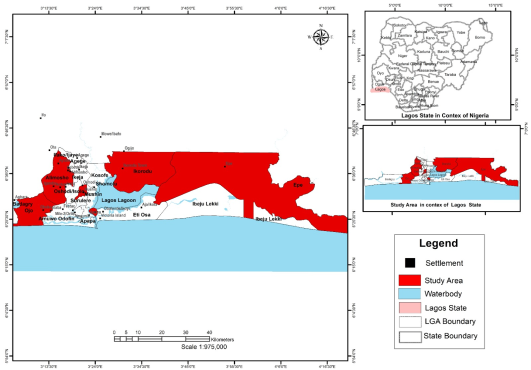
Figure 1. Map of Sampling points within the study Area. Source (GIS Lab).
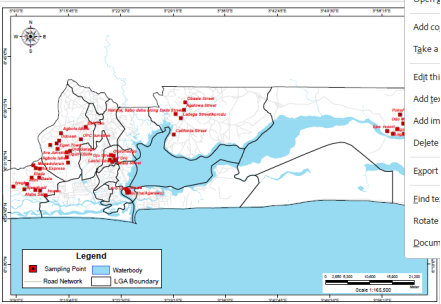
Figure 2. Map of study Areas (GIS Lab).
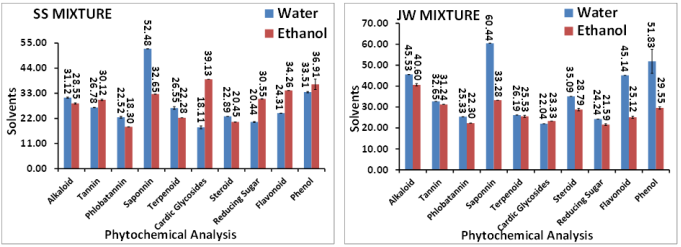
Figure 3. Quantitative analysis of SS and JW psychoactive mixtures.
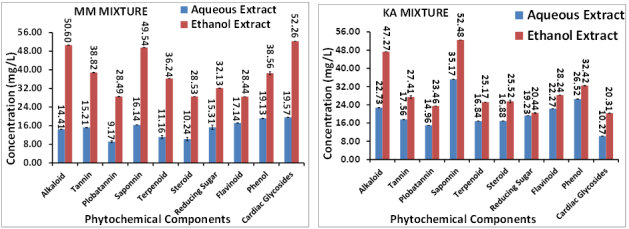
Figure 4. Quantitative analysis of MM and KA psychoactive mixtures.
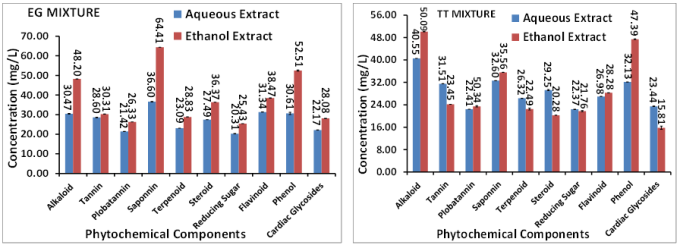
Figure 5. Quantitative analysis of EG and TT psychoactive mixtures.
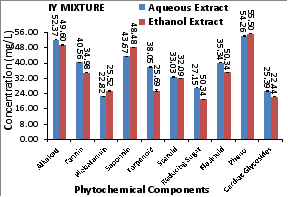
Figure 6. Quantitative analysis of IY psychoactive mixture.
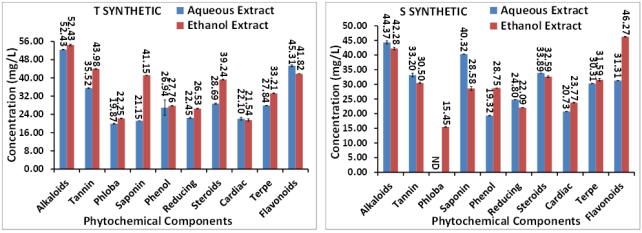
Figure 7. Quantitative analysis of T and S synthetic psychoactive samples.
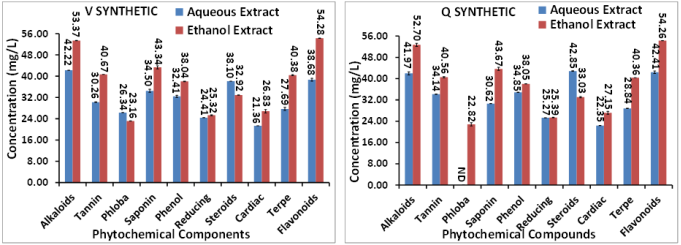
Figure 8. Quantitative analysis of V and Q synthetic psychoactive samples.
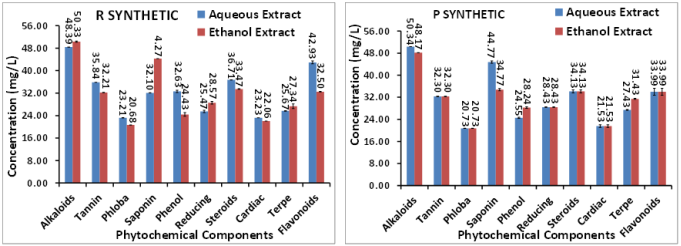
Figure 9. Quantitative analysis of R and P synthetic psychoactive samples.

Information


 Share This Article
 Twitter
 Linked In
 Facebook
 Copy
Copy Download