Research Article | | Peer-Reviewed

Investigating Nectar Secretion Dynamics and Honey Production Potentials of Erythrina brucei, Ehretia cymosa and Persea americana

Received: 6 February 2026     Accepted: 3 March 2026     Published: 19 March 2026
Views:       Downloads:
Abstract

This study aimed to evaluate the nectar secretion patterns and honey production potential of three plant species: Erythrina brucei, Ehretia cymosa, and Persea americana. To measure nectar volume and concentration, five inflorescences from different parts of each tree were enclosed in fine mesh bags one day prior to sampling. From these, fifty flowers per tree were randomly selected, and nectar volume was measured at one-hour intervals. The average nectar volume per flower over 24 hours, mean nectar concentration, and sugar content per flower per season, as well as per tree and honey yield per tree, were determined for each species. The results showed that E. brucei produced 9 µl of nectar per flower with 40.34% sugar concentration, amounting to 8.08 kg of sugar per flower/season and 9.85 kg per tree. E. cymosa produced 5.8 µl of nectar with 20% sugar, resulting in 5.8 kg per flower/season and 7 kg per tree. P. americana produced 4.37 µl of nectar with 24% sugar, totaling 9.1 kg per flower/season and 11 kg per tree. The actual harvestable honey was estimated at approximately half of the potential yield (895.5 kg/ha). Mean nectar volume and concentration varied significantly throughout the day, with temperature positively correlated with nectar concentration. Based on honey production potential, one hectare of productive trees can support the following number of colonies: E. brucei -127 (traditional), 59 (transitional), 33 (frame); E. cymosa -125, 58, 33; P. americana -212, 98, 55, respectively. Given their high nectar potential, these species can be used to produce honey wherever they are abundant. Therefore, propagation and in-situ conservation are recommended to ensure sustainable honey production and environmental conservation.

Published in Science Discovery Plants (Volume 1, Issue 1)
DOI 10.11648/j.sdplants.20260101.17
Page(s) 62-71
Creative Commons

This is an Open Access article, distributed under the terms of the Creative Commons Attribution 4.0 International License (http://creativecommons.org/licenses/by/4.0/), which permits unrestricted use, distribution and reproduction in any medium or format, provided the original work is properly cited.

Copyright

Copyright © The Author(s), 2026. Published by Science Publishing Group

Keywords

Nectar Secretion Dynamics, Honey Production Potential, Erythrina Brucei, Sugar Concentration

1. Introduction
Honeybee forage plants are species that provide nectar and/or pollen as essential food resources for honeybees . Their contribution to overall honey production is largely determined by their nectar secretion capacity, which is influenced by various biotic and abiotic factors such as plant physiology, temperature, humidity, and soil conditions . In addition, different bee plant species vary significantly in the extent to which they contribute to total honey yield.
Understanding nectar secretion dynamics is vital for assessing the honey production potential of bee forage plants, as these dynamics directly influence both the quantity and quality of nectar accessible to foraging honeybees. Evaluating the honey production potential of plant species is also essential for estimating the carrying capacity of honeybee colonies within a specific vegetation type . Such assessments promote efficient use of floral resources during honey flow periods, minimize overexploitation of bee forage plants, and help ensure sustainable and optimal honey production .
Erythrina brucei, Ehretia cymosa, and Persea americana are key multipurpose plants in Ethiopia whose nectar secretion dynamics directly influence honey production potential. Understanding their floral biology, nectar flow patterns, and ecological roles is critical for optimizing apiculture and improving honey yields in diverse agro-ecologies.
In Ethiopia, the determination of nectar secretion and honey production potential of flowering plants has not been adequately explored compared with the availability of flowering plant species. Notably, key bee forage plants such as Erythrina brucei, Ehretia cymosa, and Persea americana have not yet been evaluated for nectar secretion and honey production potential.
Ehretia cymosa is widely grown in montane and riverine forests, evergreen bushland, hedgerows around homesteads, and as remnant trees in cultivated fields and plantations, this species occurs at altitudes of 900–2400 m across nearly all floristic regions. Flowering takes place almost year-round, with a pronounced peak from September to December. The flowers produce abundant nectar and pollen, which are intensively collected by honeybees throughout the day. Owing to its extended flowering period and high forage value, it is considered an exceptionally important honeybee tree.
Erythrina brucei Schweinf is an endemic deciduous tree that can reach up to 30 m in height. It is major honey plants and give flowers from November to February and is widely distributed across the Ethiopian plateau at elevations between 1,550 and 2,800m. The species commonly occurs at forest edges, along streams, in woodlands, and in open areas of upland forests .
Persea americana is an evergreen tree reaching up to 10 m in height. Originally from Central America, it is now widely cultivated for its edible fruit in warmer regions worldwide and at altitudes of 1600–2400 m in Ethiopia, including Welega, Shewa, Arsi, Kefa, Gamo Gofa, Sidamo, Bale, and Harerge floristic regions. It is a major bee forage plant, flowering in September and October, during which honeybees collect both pollen and nectar from its flowers .
Although. E. cymosa, E. brucei, and P. americana play a significant role in honey production, their nectar secretion dynamics and honey production potential remain unquantified. This study therefore aims to evaluate their nectar secretion patterns and estimate their honey production potential.
2. Materials and Methods
2.1. Study Area
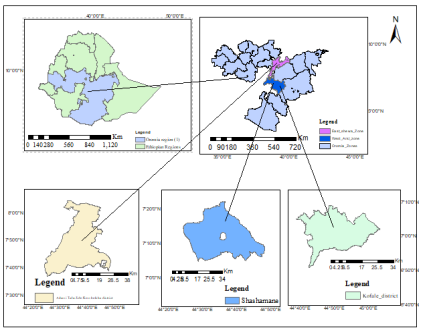
The study was conducted for three species, Ehretia cymosa in Adami Tullu Jido kombolcha district from East Shewa and Erythrina brucei in kofale and Persea americana in shashemene districs from West Arsi Zones of Oromia (Figure 1). The three plant species were selected based on their ecological adaptation range, foraging intensity of honeybees, and accessibility of the flower for nectar measurement.
Figure 1. Map of study area.
2.2. Materials Used
Micropipettes, Micropipettes’ tips, Digital refractometer, Hygrometer, GPS, Meter, Ladder and Mesh bags.
2.3. Phenology
Observations were carried out on three bee-forage plant species: Erythrina brucei, Ehretia cymosa, and Persea americana to determine the timing of anther dehiscence and nectar secretion. For each species, five flower buds (15 buds in total) were tagged with string and monitored .
2.4. Determining the Number of Flower Heads per Tree
A total of twenty-four flowering trees were randomly selected to determine the mean number of flower heads per plant. For each tree, all primary branches were counted, and three branches were purposively selected to assess the number of inflorescences per branch. From each of these branches, ten inflorescences were sampled, and the number of flower heads per inflorescence was recorded .
The total number of flower heads per tree was then calculated using the formula:
Number of flower heads per tree = (Total number of branches per tree) × (Mean number of inflorescences per branch) × (Mean number of flower heads per inflorescence) .
2.5. Determination of Nectar Volume and Concentration
For nectar sampling, five inflorescences on different parts of each tree were enclosed with fine mesh bags (40 × 40 cm) one day prior to nectar volume measurement to prevent insect visitation . From each tree, fifty flower heads were randomly selected, and nectar volume was measured at various times of the day, beginning at the onset of secretion and continuing until it ceased.
In total, 900 flower heads were examined to determine the mean nectar yield per flower head. The volume of nectar produced within a 24-hour period was measured directly at the time of sampling using micropipettes .
2.6. Determination Dynamics of Nectar Secretion
Nectar volume, nectar concentration, and ambient temperature were recorded at one-hour intervals using three flower heads at each sampling time. Nectar samples were collected from three flowers per sampling period for seven consecutive days (3 flowers × 6 sampling times × 7 days = 126 flowers).
In addition, to estimate nectar productivity, the total nectar quantity (mg) secreted over the lifespan of an individual flower was measured. For this purpose, five bagged flowers were monitored daily from the onset of nectar secretion until secretion ceased . This procedure enabled the determination of the duration of the nectar secretion period for the species.
2.7. Determination of Sugar Amount in Nectar per Flower
The mean sugar content of nectar was estimated using nectar volume, sugar concentration, and sucrose density. Most refractometers provide readings as sucrose equivalents, expressed as milligrams of sugar per 100 mg of solution. These values were converted to milligrams of sugar per flower by first converting the sucrose equivalent to g L-1 and then multiplying by the measured nectar volume . The conversion of sucrose concentration to density followed the equation of , while total sugar content was calculated using the formula described by . The total sugar yield per tree was determined by multiplying the mean number of flower heads per plant by the average sugar content per flower . Considering that the acceptable international market standard for one kilogram of honey is 18% moisture and 82% sugar, the potential honey yield per tree was estimated by multiplying the average number of flowers per tree by the mean sugar content per flower . The number of plants per hectare was estimated based on the canopy area occupied by each species, using the formula: A = πr², where A represents the canopy area, π = 3.14, and r is the radius of the tree canopy . Finally, the expected honey yield per hectare was calculated by multiplying the sugar yield per tree by the estimated number of plants per hectare .
2.8. Estimating Optimum Honeybee Colony Carrying Capacity
The optimum number of traditional (TH), intermediate (IH), and Frame hives (FH) for the given area was estimated as follows :
TH =Expected potential honey yield per areaHoney yield of well managed traditional hive *2 
IH ==Expected potential honey yield per areaHoney yield of well managed intermediate hive *2 
FH=Expected potential honey yield per areaHoney yield of well managed frame hive *2 
Honeybee colonies consumed 1 kg of honey to store 1 kg of surplus honey for dearth period use and that is why honey productivity potential is divided by two .
2.9. Data Analysis
Data were analyzed using descriptive statistics and one-way ANOVA, with Tukey’s test applied for mean separation among treatments. Additionally, a linear regression model was computed to examine the relationship between temperature and nectar volume and concentration.
3. Results and Discussions
The mean number of branches per tree was 14.53 for Erythrina brucei, 14.68 for Ehretia cymosa, and 15.60 for Persea americana. Likewise, the mean number of inflorescences per branch was 89.93 in E. brucei, 108.00 in E. cymosa, and 344.42 in P. americana. The mean number of flower heads per inflorescence for P. americana and Ehretia cymosa was 254.38 and 224.5, respectively. The mean number of flower heads per tree and the mean number of inflorescences per branch varied among species, as expected due to inherent species-specific characteristics (Table 1). The variation in the mean number of flower heads per tree could be attributed to the variations in their ecological distribution and the climatic factors .
Table 1. Mean number of branches per tree, inflorescences per branch, flower heads per inflorescences, and flower heads per tree (± SE) for E. brucei, E. cymosa and P. america.

Plant species

Mean Number of branches per tree

Mean no of inflorescences per branch ± SE

Mean no of flower heads per inflorescence ± SE

Mean no of flower heads per tree ± SE

E. brucei

14.53±2.76

89.93±30.27

189.66± 37.46

260733.34±86683.02

E. cymosa

14.68±2.05

108.0± 16.89

224.5 ±34.48

470959.81±204116.49

P. america

15.6±2.98

344.42 ±55.23

254.38 ± 29.145

1071966.16±1143574.35

3.1. Nectar Volume and Concentration of E. brucei, E. cymosa and P. americana per Flower Head
Table 2. Mean nectar volume (µl) in 24 hours per flower head, nectar concentration (%) per flower head with ± SE of the mean of E.brucei, E. cymosa and P. america.

Plant species

Mean nectar volume (µl)

Mean nectar concentration (%)

Mean nectar secretion length (days)

E. brucei

9.0± 0.3

40.34± 1.22

6.98 ±0.46

E. cymosa

5.88±0.17

20.038± 0.61

4.78±0.32

P. america

4.37± 0.24

24.84± 0.97

5.1±0.3

The mean nectar volume secreted per flower head over a 24-hour period and nectar concentration differed significantly among Erythrina brucei, Ehretia cymosa, and Persea americana. The average 24-hour nectar volumes were 9.0 µL for E. brucei, 5.88 µL for E. cymosa, and 4.37 µL for P. americana (Table 2). Erythrina brucei flowers during the dearth period (December–January), whereas E. cymosa blooms two to three times annually. Across all species, nectar volume was highest at the onset of secretion and declined toward the end of the secretion period. Similar patterns were reported by for Antigonon leptopus and Thevetia peruviana, where nectar production peaked during the early hours of the day.
Temporal variation in nectar secretion may be attributed to ecological factors and microclimatic conditions. Comparable trends were observed by in Ziziphus spina-christi and by in Croton macrostachyus, both of whom reported significant variation in nectar secretion rates among individual trees. The causes of nectar secretion variability between flowers on the same plant may be due to position on the flowering stem and/or exposure to ambient microclimate .
3.2. Effect of Temperature on Nectar Volume, Humidity and Concentration of E. brucei, E. cymosa and P. america
Linear regression analysis revealed a strong and statistically significant positive relationship between temperature (°C) and nectar concentration in Erythrina brucei and Persea americana. During the sampling period, temperatures ranged from 22–27.5°C for E. brucei and 20–30°C for P. americana. In both species, nectar concentration increased significantly with rising temperature. Conversely, in Ehretia cymosa, the linear relationship between nectar concentration and temperature was weak and not statistically significant, indicating that temperature was not a reliable predictor of nectar concentration for this species. Nectar volume in E. brucei showed a highly significant negative correlation with temperature. Since all three species (E. brucei, E. cymosa, and P. americana) initiate nectar secretion in the morning, temperature strongly influenced nectar volume. As temperature increased, nectar concentration rose in E. brucei and P. americana, likely due to reduced ambient humidity, which led to greater evaporation and more concentrated nectar. Both mean nectar concentration and nectar volume varied significantly across different hours of the day. The lowest mean nectar concentration was recorded at 9:00 for E. brucei, 10:00 for E. cymosa, and 12:00 for P. americana. In E. brucei, the highest concentration occurred at 13:00 and was significantly greater than values recorded at 9:00 and 10:00. For E. cymosa, peak concentration was also observed at 13:00, although it did not differ significantly from values measured between 10:00 and 12:00. In P. americana, the highest concentration was recorded at 11:00. These diurnal patterns correspond to temperature fluctuations throughout the day.
At the onset of nectar secretion, nectar volume was relatively high due to higher humidity, but it declined as temperature increased. Nectar concentration followed the opposite trend. Rapid crystallization of nectar sugars is influenced by floral morphology and environmental conditions . while humidity and dry conditions further affect nectar concentration These findings indicate that peak periods for nectar volume and nectar concentration do not coincide, primarily because of environmental variation. Differences in nectar secretion among flowers on the same plant may also be attributed to flower position within the inflorescence and microclimatic exposure .
The mean sugar content of nectar also varied significantly across different times of the day in all three species. Daily weather fluctuations may further modify nectar characteristics. Morphological and phenological traits influence nectar secretion patterns; generally, larger flowers produce more nectar than smaller ones, and phenological stages such as protandry, protogyny, and floral ageing also affect nectar output . Additionally, soil properties, light intensity, and altitude play important roles in determining nectar secretion potential.
The method used for nectar extraction depends largely on flower size, nectar volume, and concentration. Micropipettes are appropriate for measuring nectar volumes greater than 0.5 μL and concentrations below 70% . However, nectar crystallization on the floral surface may hinder efficient nectar collection by legitimate pollinators, including honeybees. Under conditions of high temperature and low humidity, the amount of nectar accessible to bees—and consequently the actual honey yield—may be lower than the estimated production potential of the plant .
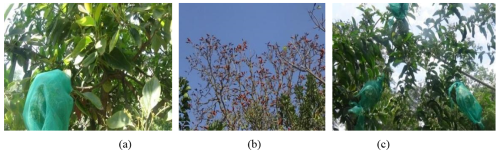
Figure 2. Flowers of E. brucei (b), E. cymosa (c) and P. Americana (a).
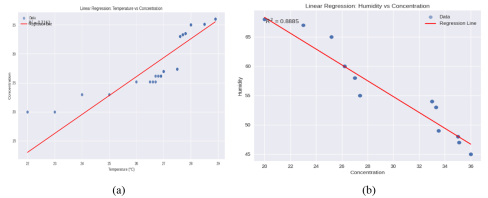
Figure 3. Effects of temperature on nectar concentration (a), Humidity (b) P. americana.
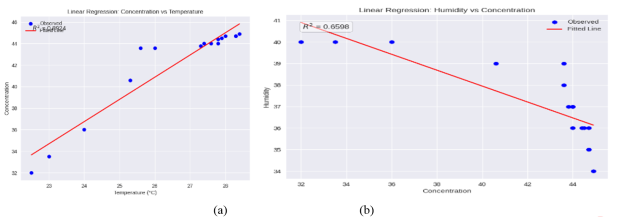
Figure 4. Effect of temperature on nectar concentrations (a) and Humidity (b) of E. brucei.
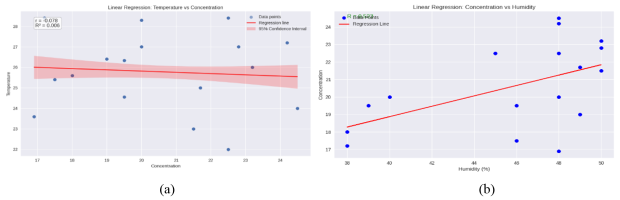
Figure 5. Effect of temperature on nectar concentrations (a) and Humidity (b) E. cymosa.

Table 3. Mean nectar concentration (%), nectar volume (µl) and amount sugar (mg) in nectar per flower at 1-hour intervals per flower with ± (SE) of E. brucei in 9:00 to 13:00 hours.

Time (hour)

Average nectar concentration (%) + SE

Average nectar volume (µl) ± SE

Average sugar amount per flower/1hr intervals

9:00

30.96c±0.69

10.6a ± 0.6

2.81a ± 0.48

10:00

41.52ab±0.78

9.83a± 0.6

4.46bc ± 0.42

11:00

39.7ab± 1.7

10.0a ± 0.58

6.56ab ± 0.41

12:00

44.1a ± 0.24

9.33a ± 0.21

3.0a ± 0.35

13:00

44.6a ± 0.36

7.67ab ± 0.43

3.87a±0.164

Note: Means with the same letter along a column are not significantly different from each other (p>0.05).
Table 4. Mean nectar concentration (%), nectar volume (µl) and amount sugar (mg) in nectar per flower at 1-hour intervals per flower with ± (SE) of E. cymosa in 1:00 to 13:00 hours.

Time (hour)

Average nectar concentration (%) + SE

Average nectar volume (µl) ± SE

Average sugar amount per flower/1hr intervals

10:00

21.17bc ± 1.13

5.27ab±0.33

2.3bc ± 0.38

11:00

23.02a ± 2.34

7.04a±0.87

2.94bc ± 0.45

12:00

22.55a ± 2.28

2.63bc±0.16

2.12bc ± 0.24

13:00

24.35a ± 1.18

3.18bc±0.35

1.75abc ± 0.47

Note: Means with the same letter along a column are not significantly different from each other (p>0.05)
Table 5. Mean nectar concentration (%), nectar volume (µl) and amount sugar (mg) in nectar per flower at 1-hour intervals per flower with ± (SE) of P. americana in 9:00 to 14:00 hours.

Time (hour)

Average nectar concentration (%) + SE

Average nectar volume (µl) ± SE

Average sugar amount per flower/1hr intervals

9:00

22.19c ± 0.73

2.9c±0.62

1.19c ± 0.09

10:00

26.2a± 0.7

3.93ab±0.53

3.7ab ± 0.64

11:00

28.27ab ± 1.54

4.18ab±0.55

1.59c ± 0.14

12:00

21.94c ± 0.57

6.81a±1.73

2.62a ± 0.25

13:00

26.2a ± 0.76

5.93bc±2.23

1.98c ± 0.26

14:00

23.38c ±0.48

8.62abc±1.52

5.4ab ± 1.03

Note: Means with the same letter along a column are not significantly different from each other (p>0.05)
3.3. Honey Production Potential of Erythrina brucei, Ehretia cymosa, and Persea americana
Erythrina brucei, Ehretia cymosa, and Persea americana are characterized by large, expansive crowns capable of supporting a high number of flowers per tree, making them important nectar sources for honey production. For Erythrina brucei, the average number of flowers per tree was estimated at 260,733. The mean amount of sugar produced per tree was approximately 8.08 kg, with a range of 4.19–11.97 kg. Given that 1 kg of honey containing 18% moisture consists of about 820 g of dissolved sugars, this sugar yield corresponds to an estimated honey production of 9.85 kg per tree per flowering season (range: 5.1–14.6 kg). Based on canopy coverage, each E. brucei tree occupies approximately 49 m², allowing about 205 trees per hectare. Under ideal conditions, this translates to a potential honey yield of approximately 1,656.4 kg per hectare per flowering season (range: 858.95–2,453.85 kg). Considering that honeybees consume nearly half of the available nectar, the estimated harvestable honey yield is about 828.2 kg per hectare. The high honey production potential of E. brucei is mainly attributed to its highly branched, spreading crown, large canopy surface area, and favorable flowering characteristics.
For Ehretia cymosa, the mean number of flowers per tree was 470,959. Using the same calculation approach, the average sugar production per tree was estimated at 5.8 kg (range: 3.19–7.06 kg), corresponding to approximately 7.07 kg of honey per tree per season (range: 3.9–8.6 kg). With an average canopy coverage of 36 m² per tree, around 277 trees can be accommodated per hectare. Accordingly, the honey production potential of an E. cymosa forest is about 1,628.5 kg per hectare per flowering season (range: 883.63–1,955.62 kg). After accounting for nectar consumption by honeybees, the estimated harvestable honey yield is approximately 814.25 kg per hectare.
Persea americana exhibited the highest floral abundance, with an average of 1,071,966 flowers per tree. Based on sugar estimates derived from 126 sampled flower heads, the mean sugar production per tree was approximately 9.1 kg, ranging from 6.3 to 14.04 kg. This corresponds to an estimated honey yield of about 11 kg per tree per season (range: 7.6–17.8 kg). With a canopy coverage requirement of approximately 40 m² per tree, a hectare can support about 250 trees. Under optimal conditions, the honey production potential of a P. americana forest is estimated at 2,750 kg per hectare per flowering season (range: 1,900–4,450 kg). After accounting for honeybee consumption of roughly half of the nectar, the actual harvestable honey yield is estimated at 1,375 kg per hectare.
Overall, the honey production potentials observed in this study are comparable to those reported for other major nectar-producing plants and crops, including Croton macrostachyus (234–1,770 kg/ha; Bareke et al., 2020), lime species (Tilia spp.) with yields ranging from 90 to 1,200 kg/ha . Ziziphus spina-christi (550–1,300 kg/ha; , and annual crops such as Brassica juncea and Sinapis alba, which produce 65.5 and 71.2 kg/ha of honey, respectively .
3.4. Determining Honeybee Colony Carrying Capacity Based on Honey Production Potential
Knowledge of bee colony carrying capacity is very important to utilize the flora resource of a given site. Some beekeepers stated that the apiary site is nearby the forest area where the diversity of bee forage species is high and the strength of honeybee colony is good throughout the year, but honey obtained from the area is very low . This is because only a few bee forage plants were flowering at the same time. In such areas, estimation of honeybee colony carrying capacity is very important in order to use the resource effectively. Balancing a number of honeybee colonies with the available resource is used to increase the productivities of honeybee colonies by overcoming the problem of colony overstocking . Honey yields from well-managed honeybee colonies in the Mid Rift Valley of Ethiopia have been reported to average 6.5 kg for traditional hives, 14 kg for transitional hives, and 25 kg for frame hives . Using these maximum current yields for the three hive types, the expected number of colonies required to utilize 1 hectare of E. brucei, E. cymosa, and P. americana forests was estimated. Accordingly, the optimum number of colonies per hectare of E. brucei forest was estimated at 127 colonies for traditional hives, 59 colonies for transitional hives, and 33 colonies for frame hives. For E. cymosa forest, the estimates were 125 traditional colonies 58 transitional colonies, and 33 frame hive colonies. In P. americana forest, the optimum stocking rates were 212 colonies for traditional hives, 98 colonies for transitional hives, and 55 colonies for frame hives. These optimum stocking rates vary from place to place depending on local honey yields and environmental conditions. Understanding the colony carrying capacity of an area is essential for the effective utilization of available floral resources. Some beekeepers have noted that although their apiaries are located near forests with high forage diversity and maintain strong colonies throughout the year, honey yields remain low . This is often due to limited overlap in flowering periods among key forage species. In such situations, estimating honeybee carrying capacity becomes critical to maximizing resource use and preventing overstocking. Properly balancing the number of colonies with available forage helps improve colony productivity and mitigate the negative effects of resource competition .
4. Conclusions and Recommendations
This study demonstrates that all the three species are had good honey production potential and major nectar-producing species that contributes significantly to honey production. Temperature had a significant influence on nectar volume in E. brucei, E. cymosa, and P. americana. Both nectar volume and concentration in these species varied throughout the day. The honey production potential per hectare was estimated at 1,656.4 kg for E. brucei, 1,628.5 kg for E. cymosa, and 2,750 kg for P. americana. Based on these potentials, one hectare of productive E. brucei forest can support approximately 127 traditional hives, 59 transitional hives, or 33 frame hives. Similarly, one hectare of P. americana forest can support 212 traditional hives, 98 transitional hives, or 55 frame hives. Given the high nectar potential and flowering during dearth periods, these species offer opportunities for producing monofloral honey wherever they are abundant. Therefore, propagation and in-situ conservation of these species are recommended to enhance sustainable honey production and promote environmental conservation. Additionally, assessing the honey production potential of other major bee forage plants is essential to further increase honey yields while avoiding overstocking and maintaining colony productivity.
Abbreviations

TH

Traditional Hives

IH

Intermediate Hives

FH

Frame Hives

Acknowledgments
We gratefully acknowledge the Adami Tulu Agricultural Research Center and the Oromia Agricultural Research Institute for providing the necessary facilities and logistical support.
Author Contributions
Mekonen Wolditsadik Beyi: Conceptualization, Data curation, Formal Analysis, Investigation, Methodology, Resources, Software, Supervision, writing – original draft, Writing – review & editing
Taye Beyene Lema: Investigation, Methodology, Resources, Supervision
Desta Abi Gemadi: Investigation, Methodology, Resources, Supervision, Visualization
Conflicts of Interest
The authors declare no conflicts of interest.
References
[1] Addi, A., and T. Bareke. 2019. “Review: Floral Resources Diversity of Honeybees in Important Types of Vegetation of Ethiopia.” 3(2): 64-68.
[2] Adgaba, N., A. Al-ghamdi, Y. Tadesse, A. Getachew, A. M. Awad, M. J. Ansari and A. S. Alqarni. 2017. “Nectar Secretion Dynamics and Honey Production Potentials of Some Major Honey Plants in Saudi Arabia. Saudi Journal of Biological Sciences 24(1): 180–191.
[3] Adgaba, N., A. M. Awad, A. A. Al-Ghamdi, A. S. Alqarni, and S. E. Radloff. 2012. “Nektar Ziziphus spina-christi (L.) Willd (Rhamnaceae): Dynamika Nektarowania I Wydajność Miodowa.” Journal of ApiculturalScience 56(2): 49–59.
[4] Adjaloo, M., A. Ankomah, K. Yeboah-Gyan, and B. Dzomeku. 2015. “Nectar Production Dynamics in Two Melliferous Plant Species.” Genetics and Plant Physiology 5(2): 145–161.
[5] Afik, O., Dag, A., Kerem, Z. et al. Analyses of Avocado (Persea americana) Nectar Properties and their Perception by Honey bees (Apis mellifera). J Chem Ecol 32, 1949–1963 (2006).
[6] Al-Ghamdi, A., N. Adgaba, A. Getachew, and Y. Tadesse. 2016. “New Approach for Determination of an Optimum Honeybee Colony’s Carrying Capacity Based on Productivity and Nectar Secretion Potential of Bee Forage Species.” Saudi Journal of Biological Sciences 23(1): 92–100.
[7] Bareke, K. T., M. A. Addi, and H. Wakjira. 2014. “Evaluation of Propagation Methods of Schefflera abyssinica.” American Journal of Agriculture and Forestry 2(6): 278–283.
[8] Bareke, T., and A. Addi. 2018. “Honeybee Flora Resources of Guji Zone, Ethiopia Honeybee Flora Resources of Guji Zone, Ethiopia.” Journal of Biology, Agriculture and Healthcare 8(21).
[9] Bareke, T., and A. Addi. 2019. “Bee Flora Resources and Honey Production Calendar of Gera Forestin Ethiopia.” Asian Journal of Forestry 3(2): 69-74.
[10] Bareke, T., T. Kumsa, K. Roba, and A. Addi. 2020. “Nectar Secretion Dynamics and Honey Production Potential of Croton macrostachyus L., Euphorbiaceae.” Bee World.
[11] Beyene, T., D. Abi, G. Chalchissa and M. WoldaTsadik. 2015. Evaluation of Transitionaland Modern Hives for Honey Production in Mid RiftValley of Ethiopia. Global Journal of Animal Scientific Research. 3(1): 48-5.
[12] Bolten, A. B., P. Feinsinger, H. G. Baker, and I. Baker. 1979. “On the calculation of sugar concentration in flower nectar. Oecologia 304: 301–304.
[13] Center for International Forestry Research. Erythrina brucei – Useful Trees and Shrubs of Ethiopia. World Agroforestry Centre; 2006. Available from:
[14] Chaudhary, G. N. 2009. “The Economics of Honey Production in Alberta.” Crane, E., P. Walker, and R. Day. 1984. “Directory of Important World Honey Sources.” International Bee Research Association, London. pp. 384.
[15] Crane, E. 1990. Bees and Beekeeping: Science, Practice and World Resources. London: Heinnmann Newness.
[16] Dafni, A. 1992. book-Pollination Ecology, edited by B. D. Rickwood and D. Hames. Oxford University Press. APrcticalApprocachA.dafni55optimized.pdf
[17] Farkas, Á., and Z. S. Orosz-Kovács. 2003. “Nectar Secretion Dynamics of Hungarian Local Pear Cultivars.” Plant. Syst. Evol. 238: 57-67.
[18] Fichtl, R., and A. Adi. 1994. Honeybee Flora of Ethiopia. Margraf Verlag. Germany. 43-50. Jakobsen, H. B., and K. Kristjansson. 1994. “Influence of Temperature and Floret Age on Nectar Secretion in Trifolium repens L.” Annals of Botany. 74: 327-334.
[19] Jakobsen, H. B., and K. Kristjansson. 1994. “Influence of Temperature and Floret Age on Nectar Secretion in Trifolium repens L.” Annals of Botany. 74: 327-334.
[20] Kim, S. H., A. Lee, D. Kang, H. Y. Kwon, Y. Park, and M. S. Kim. 2017. “Análisis de Características de Néctar Floral de Espino Blanco Coreano y Chino (Crataegus pinnatifida Bunge).” Journal of Apicultural Research 57(1): 119–128.
[21] Macukanovic, M., S. Duletic, and G. Jocic. 2004 “Nectar Production in Three Melliferous Species of Lamiaceae in Natural and Experimental Conditions.” Acta Vet. Beograd 54(5-6): 475- 487.
[22] Masierowska, M. L. 2003. “Floral Nectaries and Nectar Production in Brown Mustard (Brassica juncea) and White Mustard (Sinapis alba) (Brassicaceae).” Plant Systematic and Evolution 238: 97–107.
[23] Mohammed Bikamo Biramo and Demelash Bassa Belayneh, 2024. Beekeeping Calendar and Identification of Honeybee Floras for Honey Production in Different Agro-Ecologies of SNNPR, Ethiopia. International Journal of Botany, 20: 151-166.
[24] Mulugeta, Y., T. Bekele, and E. Kelbessa. 2015. “Floristic Composition, Species Diversity and Vegetation Structure of Gera Moist Montane Forest, Jimma Zone of Oromia National Regional State, Southwest Ethiopia.” Ethiopian Journal of Biological Sciences 14(1): 45– 68.
[25] Negash L. Erythrina brucei: propagation attributes, leaf nutrient concentration and impact on barley grain yield. Agroforestry Systems. 2002, 56: 39–46.
[26] Pattrick, JG, Scott J, Wright GA. The concentration and energetic content of floral nectar sugars: calculation, conversions, and common confusions. Journal of Pollination Ecology. 2025; 38(11): 161–170.
[27] Petanidou, T., and E. Smets. 1996. “Does Temperature Stress Induces Nectar Secretion in Mediterranean Plants?” New Phytol. 133: 513-518.
[28] Prys-Jones, O. E., and S. A. Corbet. 1987. Bumblebees: Naturalists' Handbooks 6. The Richmond Publishing Co. Ltd, Slough.
[29] Shenkute, A. G., D. Assefa, N. Adgaba, and W. A. Wodajo. 2012. “Honey Production Tropical Plants Database, Ken Fern. 2025-11-27. tropical.theferns.info/viewtropical.php?id=Erythrina+brucei
Cite This Article
  • APA Style

    Beyi, M. W., Lema, T. B., Gemadi, D. A. (2026). Investigating Nectar Secretion Dynamics and Honey Production Potentials of Erythrina brucei, Ehretia cymosa and Persea americana. Science Discovery Plants, 1(1), 62-71. https://doi.org/10.11648/j.sdplants.20260101.17

    Copy | Download

    ACS Style

    Beyi, M. W.; Lema, T. B.; Gemadi, D. A. Investigating Nectar Secretion Dynamics and Honey Production Potentials of Erythrina brucei, Ehretia cymosa and Persea americana. Sci. Discov. Plants 2026, 1(1), 62-71. doi: 10.11648/j.sdplants.20260101.17

    Copy | Download

    AMA Style

    Beyi MW, Lema TB, Gemadi DA. Investigating Nectar Secretion Dynamics and Honey Production Potentials of Erythrina brucei, Ehretia cymosa and Persea americana. Sci Discov Plants. 2026;1(1):62-71. doi: 10.11648/j.sdplants.20260101.17

    Copy | Download

  • @article{10.11648/j.sdplants.20260101.17,
      author = {Mekonen Wolditsadik Beyi and Taye Beyene Lema and Desta Abi Gemadi},
      title = {Investigating Nectar Secretion Dynamics and Honey Production Potentials of Erythrina brucei, Ehretia cymosa and Persea americana},
      journal = {Science Discovery Plants},
      volume = {1},
      number = {1},
      pages = {62-71},
      doi = {10.11648/j.sdplants.20260101.17},
      url = {https://doi.org/10.11648/j.sdplants.20260101.17},
      eprint = {https://article.sciencepublishinggroup.com/pdf/10.11648.j.sdplants.20260101.17},
      abstract = {This study aimed to evaluate the nectar secretion patterns and honey production potential of three plant species: Erythrina brucei, Ehretia cymosa, and Persea americana. To measure nectar volume and concentration, five inflorescences from different parts of each tree were enclosed in fine mesh bags one day prior to sampling. From these, fifty flowers per tree were randomly selected, and nectar volume was measured at one-hour intervals. The average nectar volume per flower over 24 hours, mean nectar concentration, and sugar content per flower per season, as well as per tree and honey yield per tree, were determined for each species. The results showed that E. brucei produced 9 µl of nectar per flower with 40.34% sugar concentration, amounting to 8.08 kg of sugar per flower/season and 9.85 kg per tree. E. cymosa produced 5.8 µl of nectar with 20% sugar, resulting in 5.8 kg per flower/season and 7 kg per tree. P. americana produced 4.37 µl of nectar with 24% sugar, totaling 9.1 kg per flower/season and 11 kg per tree. The actual harvestable honey was estimated at approximately half of the potential yield (895.5 kg/ha). Mean nectar volume and concentration varied significantly throughout the day, with temperature positively correlated with nectar concentration. Based on honey production potential, one hectare of productive trees can support the following number of colonies: E. brucei -127 (traditional), 59 (transitional), 33 (frame); E. cymosa -125, 58, 33; P. americana -212, 98, 55, respectively. Given their high nectar potential, these species can be used to produce honey wherever they are abundant. Therefore, propagation and in-situ conservation are recommended to ensure sustainable honey production and environmental conservation.},
     year = {2026}
    }
    

    Copy | Download

  • TY  - JOUR
    T1  - Investigating Nectar Secretion Dynamics and Honey Production Potentials of Erythrina brucei, Ehretia cymosa and Persea americana
    AU  - Mekonen Wolditsadik Beyi
    AU  - Taye Beyene Lema
    AU  - Desta Abi Gemadi
    Y1  - 2026/03/19
    PY  - 2026
    N1  - https://doi.org/10.11648/j.sdplants.20260101.17
    DO  - 10.11648/j.sdplants.20260101.17
    T2  - Science Discovery Plants
    JF  - Science Discovery Plants
    JO  - Science Discovery Plants
    SP  - 62
    EP  - 71
    PB  - Science Publishing Group
    UR  - https://doi.org/10.11648/j.sdplants.20260101.17
    AB  - This study aimed to evaluate the nectar secretion patterns and honey production potential of three plant species: Erythrina brucei, Ehretia cymosa, and Persea americana. To measure nectar volume and concentration, five inflorescences from different parts of each tree were enclosed in fine mesh bags one day prior to sampling. From these, fifty flowers per tree were randomly selected, and nectar volume was measured at one-hour intervals. The average nectar volume per flower over 24 hours, mean nectar concentration, and sugar content per flower per season, as well as per tree and honey yield per tree, were determined for each species. The results showed that E. brucei produced 9 µl of nectar per flower with 40.34% sugar concentration, amounting to 8.08 kg of sugar per flower/season and 9.85 kg per tree. E. cymosa produced 5.8 µl of nectar with 20% sugar, resulting in 5.8 kg per flower/season and 7 kg per tree. P. americana produced 4.37 µl of nectar with 24% sugar, totaling 9.1 kg per flower/season and 11 kg per tree. The actual harvestable honey was estimated at approximately half of the potential yield (895.5 kg/ha). Mean nectar volume and concentration varied significantly throughout the day, with temperature positively correlated with nectar concentration. Based on honey production potential, one hectare of productive trees can support the following number of colonies: E. brucei -127 (traditional), 59 (transitional), 33 (frame); E. cymosa -125, 58, 33; P. americana -212, 98, 55, respectively. Given their high nectar potential, these species can be used to produce honey wherever they are abundant. Therefore, propagation and in-situ conservation are recommended to ensure sustainable honey production and environmental conservation.
    VL  - 1
    IS  - 1
    ER  - 

    Copy | Download

Author Information
  • Abstract
  • Keywords
  • Document Sections

    1. 1. Introduction
    2. 2. Materials and Methods
    3. 3. Results and Discussions
    4. 4. Conclusions and Recommendations
    Show Full Outline
  • Abbreviations
  • Acknowledgments
  • Author Contributions
  • Conflicts of Interest
  • References
  • Cite This Article
  • Author Information