Research Article | | Peer-Reviewed

Foam Mat Drying of Soursop Pulp: Evaluation of Phytochemicals and Physico-chemical Properties of Powder Obtained

Received: 28 July 2026     Accepted: 7 August 2026     Published: 9 October 2026
Views:       Downloads:
Abstract

Foam mat drying (FMD) was employed to dry soursop pulp, with the objective of assessing the powder quality parameters. Egg albumen was applied at 3%, 6%, 9%, 12%, and 15% wt/wt and methylcellulose at 0.4%, 0.8%, 1.2%, 1.6%, and 2% wt/wt as foaming and stabilizing agents, respectively. The samples were air-dried at different temperatures of 55, 60, 65, 70, and 75°C. The experimental design was determined using central composite. Physicochemical properties of the powders [hygroscopicity, bulk density (BD), pH, water absorption capacity (WAC), total soluble solids (TSS) and color], were evaluated. Additionally, qualitative analysis of the phytochemicals present, such as tannins, alkaloids, saponins, flavonoids, and anthocyanins, was conducted. Phytochemical analysis revealed the presence of tannins, alkaloids, saponins, and flavonoids in soursop powder; anthocyanins were detected at selected drying temperatures indicating their retention under certain drying conditions. Identification of these phytochemicals is important for their potential application in functional foods. pH value ranged from 4.5 to 5.3, and TSS ranged from 3.9 to 6.95 brix. Hygroscopicity increased with increasing methylcellulose content, whereas the color parameters (L*, a*, and b*) were affected by the drying temperature, leading to discoloration during the process. BD, WAC, color, and wettability were significantly affected by drying temperature (p < 0.05). Based on these data, FMD may be considered a viable method for dehydrating soursop pulp; the resulting powder can be readily reconstituted for food formulations. Thus, soursop powder has significant potential for the development of functional foods.

Published in Science Discovery Nutrition (Volume 1, Issue 1)
DOI 10.11648/j.sdnutr.20260101.15
Page(s) 51-67
Creative Commons

This is an Open Access article, distributed under the terms of the Creative Commons Attribution 4.0 International License (http://creativecommons.org/licenses/by/4.0/), which permits unrestricted use, distribution and reproduction in any medium or format, provided the original work is properly cited.

Copyright

Copyright © The Author(s), 2026. Published by Science Publishing Group

Keywords

Phytochemicals, Egg Albumen, Methylcellulose, Drying Temperature, Functional Foods, Soursop Pulp

1. Introduction
Soursop, a diminutive tropical tree or shrub classified under the genus Annona in the Annonaceae family, has gained considerable interest because of its nutritional richness, leading to widespread recognition . The fruit is composed of 12% sugar, primarily glucose, fructose, pectin, calcium chloride, sodium, potassium, and citrate . Its edible white pulp is composed of 80-81% water, 1% protein, 18% carbohydrates, 24.5% non-reducing sugars, and crucial vitamins B1, B2, and C . Traditionally, preparations of A. muricata have been employed to address various health issues, including coughs, skin conditions, cancer, and diabetes, making it an ethnomedicinally important species. In addition, soursop pulp serves as a raw material to produce powder, fruit bars, and flakes. In Nigeria, the industrial utilization of this fruit's potential remains predominantly untapped, primarily due to the lack of advanced processing and preservation methodologies. Thus, drying is a crucial step in ensuring year-round availability of soursop, as it facilitates the production of stable natural components that can be seamlessly integrated into various food formulations. Foam mat drying (FMD) is a promising dehydration method that can reduce nutrient loss, conserve energy, and shorten the drying time, making it a viable option for soursop preservation. However, limited research exists on the application of FMD to soursop pulp, particularly using egg albumen and methylcellulose as foaming and stabilizing agents respectively. Egg albumin has an ability to form and incorporate air into food systems, whereas, methylcellulose serves as a hydrocolloid stabilizer which enhances the stability and persistence of the foam during drying. Chang et al. explored enzyme-treated spray drying of soursop, while Costa de Paula et al. investigated its physicochemical characteristics using conventional drying. Yet, these approaches often compromise phytochemical integrity or require costly equipment.
This study addresses that gap by evaluating the effects of FMD on the physicochemical and phytochemical properties of soursop powder. By integrating egg albumen and methylcellulose, we aim to optimize drying conditions and enhance powder functionality. The findings contribute to the growing body of knowledge on fruit dehydration and support the development of soursop-based functional foods in tropical regions.
2. Materials and Methods
2.1. Samples and Sample Preparation
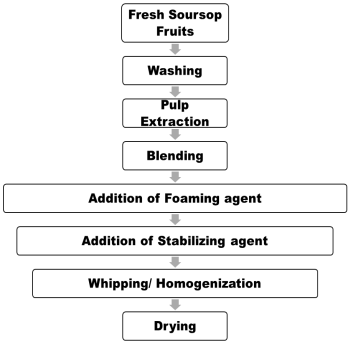
Fresh soursop fruit was purchased from Oje fruit market in Ibadan, Nigeria. Figure 1 shows the flow chart of foam mat drying of soursop pulp. Soursop pulp was manually extracted and homogenized for 10 min using an electric blender (Orpat-HBE 100E, India) at 18000 rpm. Foaming (egg albumen at 3-15%) and stabilizing agent (methylcellulose at 0.4-2%) were incorporated simultaneously to stabilize the pulp until stable foams were formed prior to drying.
Figure 1. Flow chart of foam mat drying of soursop pulp.
2.2. Experimental Design
The experiments were conducted using a central composite design for the three variables, implemented using Design Expert software (version 13.0; Stat-Ease Inc., USA). This approach aimed to investigate how independent variables (egg albumin, methylcellulose, and drying temperature) affect various responses (hygroscopicity, bulk density, pH, water absorption capacity, color, total soluble solids, wettability, and phytochemicals). The study comprised 20 experimental runs, with each response measured in triplicate and reported as the average value. To assess the significance of the results and mitigate collinearity issues, the experimental data underwent model fitting, analysis of variance, and regression analysis.
2.3. Drying Experiment
The foamed pulp was distributed on a food-grade stainless-steel tray and dried in a laboratory oven (Uniscope, SM 9053, England) at five different air temperatures (55, 60, 65, 70, and 75°C) with a constant air velocity. The oven was operated until the desired temperature inside the chamber was stable. Sample weights were recorded before, during, and after the drying process using a digital electronic scale (Yongkang Yongzhou Weighing Apparatus, Model SF 400A, China, with a 0.20 g resolution). Moisture loss was documented at 30-minute intervals for the initial three hours, followed by 60-minute intervals until a constant weight was achieved. The dried samples were scraped and packaged for subsequent analysis.
2.4. Determination of Phytochemical Properties
Based on qualitative analysis, some of the phytochemical compounds determined in this study were alkaloids, tannins, saponins, flavonoids, and anthocyanins. The complexity of the phytochemicals ranged from 0 (absent) to 3 (maximum presence). The properties of the dried product were compared with those of the fresh soursop pulp.
1) Alkaloid: A 0.5 mL sample of juice was combined with 0.2 mL of 1% HCl and agitated in a water bath for 5 min, and then filtered using WhatmanTM 1002-147. The solution was prepared by dissolving 2 g of potassium iodide and 1.27 g of iodine in 5 mL of distilled water, followed by dilution to 100 mL with distilled water. The filtrate was tested by adding two drops of this solution, and the formation of a brown precipitate indicated the presence of alkaloids .
2) Tannins: Approximately 0.30 g of each finely ground powder sample was placed in test tubes and heated in a water bath containing 30 cm3 of water for 10 min. The mixture was then filtered using Whatman filter paper. To detect the presence of tannins, 5 cm3 of filtrate was combined with three drops of 0.1% ferric chloride solution. The formation of a blue-black or blue-green precipitate indicated the presence of tannins in the sample .
3) Saponins: Saponins were identified through a screening test that utilized their capacity to create foams in water-based solutions. In this procedure, 0.30 g of soursop powder was mixed with 3 mL of heated distilled water in a test tube. The mixture was vigorously shaken for 1 min to generate continuous and consistent froth .
4) Flavonoids: A sample of 0.30 g of the powder was placed in a beaker. Subsequently, 1 mL 10% ammonia (in the form of NH4OH) and 1 mL concentrated H2SO4 were added. The emergence of a yellow color, which faded over time, indicated the presence of flavonoids. .
5) Anthocyanins: Determined using ethanol and ammonium sulfate .
The test is positive for anthocyanin if a pink, red, or violet color appears in low-phase ammonia.
2.5. Determination of Physico-chemical Properties
Standard analytical methods were used to evaluate powder characteristics . Sample sizes and conditions were adapted to suit soursop pulp matrix:
1) pH: Measured from a 1 g powder sample mixed with 3 mL distilled water using a calibrated pH meter.
2) Total Soluble Solids (TSS): The Abbe refractometer (Model C10; Bellingham Stanley Limited, Kent, UK) was standardized using distilled water, with results expressed in °Brix.
3) Water Absorption Capacity (WAC): Assessed by centrifuging 2 g of powder in 15 mL distilled water at 3500 rpm for 30 min.
4) The bulk density is defined as the ratio of the weight of the powder to the solid volume occupied by the powder expressed in equation (1).
ρ=mv (1)
Where;
ρ is density (gcm-3)
m is weight of sample (g)
v is volume occupied (cm-3)
5) Hygroscopicity: A 10 g sample of soursop powder was placed in a petri dish and placed inside an airtight desiccator. The desiccator contained a saturated Na2SO4 solution, maintaining 81% relative humidity at 25°C for one week. Hygroscopicity was quantified by calculating the mass difference, expressed as 1 g of adsorbed moisture per 100 g of dry solids (g/100 g), using Equation (2).
Hygroscopicity =∆m(m+m1)1+(∆mm)(2)
Where:
∆m corresponds to the increasing of powder’s weight after reaching equilibrium (g)
m is the powder’s initial mass (g)
m1 is the free water content of the powder being expressed to air’s relative humidity (g/ 100g).
6) Color: A simple digital imaging approach was used to measure the color characteristics of the powders. Specifically, L* values represent the lightness of color on a scale from 0 (black) to 100 (white), a* is redness (positive a* value) and green (negative a* value) while b*, represents yellow (positive b* value) or blue (negative b* value) color. These are mathematically represented by Equations (3-5). Fresh soursop pulp was selected as the ideal sample.
L*=lightness255×100(3)
a*=240a255-120(4)
b*=240b255-120(5)
7) Wettability: Time required for 3 g of powder to fully saturate in water was recorded using a stopwatch.
2.6. Statistical Analysis
The impact of air-drying temperature on various quality parameters was evaluated using the Response Surface Methodology (RSM) feature of Design Expert Software. Analysis of variance was used for statistical analysis. The results are expressed as mean ± standard deviation, and statistical significance was set at p < 0.05.
3. Results and Discussion
3.1. Phytochemical Properties of Soursop Pulp Powder
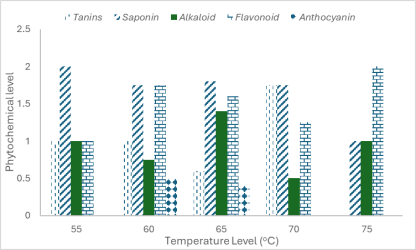
The phytochemical profile of freeze-dried soursop pulp powder is shown in Figure 2. The tannin content exhibited temperature-dependent variations, with no detection at 75°C, minimal presence at 65°C, and peak concentration at 70°C. The control samples of fresh pulp displayed a tannin value of 3, underscoring the impact of temperature on tannin levels. The absence of tannins at higher temperatures can be attributed to their thermal degradation, which is a phenomenon consistent with their protein-inhibiting properties. Kolla et al. corroborated this trend, demonstrating a reduction in tannin content in oven-dried double-fruit samples within the 50-70°C range. Conversely, storage at 40°C resulted in elevated tannin levels compared with fresh fruit pulp. Collectively, these observations indicate an inverse relationship between temperature and tannin preservation in various dried specimens.
Anthocyanins were observed at 60°C and 65°C, with the highest levels detected at 60°C, but not at other temperatures. The anthocyanin content in fresh samples was 3, suggesting that temperature fluctuations may affect the anthocyanin concentrations in dried specimens. Anthocyanins play a role in food pigmentation and are highly susceptible to pH changes. The processing of phytochemical-rich foods is expected to modify their phytochemical profiles. A substantial number of foods abundant in phytochemicals typically experience a decrease in these compounds when subjected to heat-based processing techniques, including sterilization, pasteurization, and dehydration . Saponin was detected across the entire temperature spectrum, with the highest and lowest concentrations recorded at 55°C and 75°C, respectively. Hot air drying produced the lowest saponin content in carrot peel (21.03 mg EE/g dried sample), while microwave drying at 1200 W yielded the highest level (353.87 mg EE/g dried sample). This was followed by MWD, freeze drying, and vacuum drying at 50 ℃, resulting in 291.23, 283.58, and 262.11 mg EE/g dried sample, respectively .
Analysis of dried samples at various temperatures revealed the presence of flavonoids, with maximum and minimum concentrations detected at 75°C and 55°C, respectively. Flavonoids are known for their antioxidant properties and are ubiquitous in numerous fruits and vegetables such as apples, grapes, lemons, tomatoes, onions, lettuce, and broccoli . Fresh samples had saponin and flavonoid concentrations of 2 and 3, respectively. These compounds, prevalent in fruits and vegetables, can produce soap lathers when extracted from plant materials . The highest alkaloid content was observed at 65°C, while the lowest was recorded at 70°C. Notably, the presence of alkaloids remained consistent across all temperatures, with fresh samples displaying a value of 3. Alkaloids are known to enhance the immune response and possess chemopreventive properties that contribute to a reduced incidence of cancer. Furthermore, Agu and Okolie and Prasetyorini et al. demonstrated the presence of alkaloids, tannins, flavonoids, and saponins in fresh soursop fruit.
Phytochemical screening in the present study was performed by qualitative analysis, with a scale of 0 (absent) to 3 (maximum presence) being used to determine the existence of compounds. Although the method is fast and economical in terms of bioactive constituent identification, it is not as precise as the quantitative methods like spectrophotometry or HPLC. Due to resource constraints and the exploratory nature of this study, quantitative analysis was not performed. Future work should incorporate validated quantitative techniques to better characterize the concentration and stability of phytochemicals under varying drying conditions. Nonetheless, the qualitative trends observed here offer valuable preliminary insights into the retention of functional compounds in foam mat-dried soursop pulp.
Figure 2. Phytochemical properties of soursop pulp powder.
3.2. Effect of MC, EA, and Drying Temperature on Properties of Powder
3.2.1. Hygroscopicity of Soursop Pulp Powder
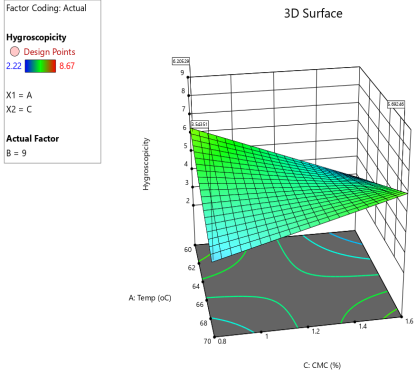
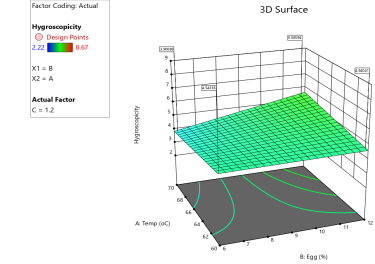
The hygroscopicity values of foam mat-dried soursop ranged from 2.22 to 8.67 g/100 g, with an average of 4.66 g/100 g. These values classify the soursop powders as non-hygroscopic (<10%) according to the GEA Niro's classification system . This classification aligns with research conducted by Nur et al. , who reported similar hygroscopicity values for foam mat dried pineapple (3.52-8.70 g/100 g), unfoamed pineapple powder (control) (8.82 g/100 g), and spray-dried powder (2.42 g/100 g). A slight linear increase in hygroscopicity was observed with increasing temperature and egg albumin concentrations, whereas a more pronounced increase was noted with higher methylcellulose levels (Figure 3 and 4). Statistical analysis revealed no significant effect of the treatments on powder hygroscopicity (p > 0.05). In contrast, when maltodextrin was employed as a carrier agent during spray drying of soursop pulp, increasing maltodextrin concentrations were associated with decreased hygroscopicity values .
Figure 3. Response surface plot of hygroscopicity to variations in temperature and methylcellulose.
Figure 4. Response surface plot of hygroscopicity to variations in temperature and egg albumin.
3.2.2. Bulk Density of Soursop Pulp Powder
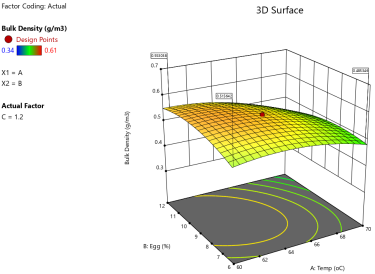
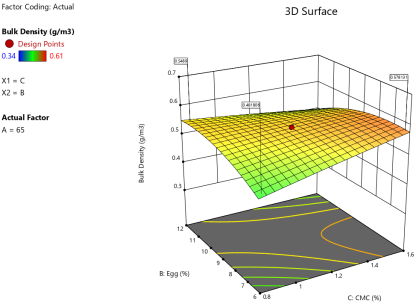
The bulk density values of the dried samples ranged from 0.31 g/cm3 to 0.61 g/cm3, with the maximum value observed at 65°C using 9% egg albumin and 2% methylcellulose. This parameter was employed to characterize the final product obtained through the milling or drying processes . Response surface plots in Figure 5 demonstrates an overall decline in bulk density with further increases in drying temperature suggesting a non-liner relationship and a dependency on the formulation as temperature alone does not determine bulk density. At much higher temperature region, more rapid moisture removal may have influenced structural changes and increased porosity or reduced particle packing, thereby lowering bulk density. In contrast, Figure 6 shows that increased concentrations of methylcellulose and egg albumin resulted in higher bulk density, potentially due to the high molecular weight proteins in egg albumin . These observations align with the reported bulk density of 0.78 g/cm3 for foam mat drying of soursop using fish gelatin . Statistical analysis indicated significant variations (p< 0.05) in the bulk density of the soursop powder (Table 1). Quadratic model was best suitable to predict the equation as shown in Equation (6) below:
BD=-5.89290+0.166534a+0.179564b+0.724858c-0.001250ab-0.005625ac-0.032292bc-0.001195a2-0.003321b2-0.014915c2(6)
(R2= 0.7939Adjusted R2= 0.6084Mean= 0.5080SD= 0.0445)
Where BD is bulk density; a is temperature; b is egg albumin and c is methylcellulose
Figure 5. Response surface plot of drying temperature and egg albumin against bulk density.
Figure 6. Response surface plot of egg albumin and methylcellulose against bulk density.
Table 1. Variance analysis for bulk density of foam mat dried soursop pulp powder.

Source

Sum of Squares

df

MeanSquare

F-value

p-value

Model

0.0763

9

0.0085

4.28

0.0165

significant

A-Temp

0.0189

1

0.0189

9.54

0.0115

B-Egg

6.250E-06

1

6.250E-06

0.0032

0.9563

C-CMC

0.0028

1

0.0028

1.39

0.2655

AB

0.0028

1

0.0028

1.42

0.2610

AC

0.0010

1

0.0010

0.5110

0.4910

BC

0.0120

1

0.0120

6.06

0.0335

A2

0.0225

1

0.0225

11.33

0.0072

B2

0.0225

1

0.0225

11.33

0.0072

C2

0.0001

1

0.0001

0.0723

0.7935

Residual

0.0198

10

0.0020

Lack of Fit

0.0198

5

0.0040

Pure Error

0.0000

5

0.0000

Cor Total

0.0961

19

3.2.3. PH of Soursop Pulp Powder
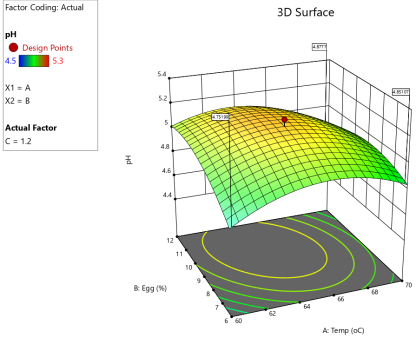
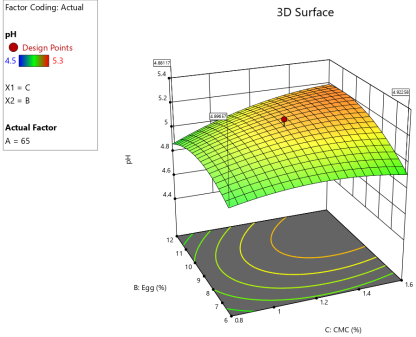
The foam mat-dried soursop pulp exhibited pH levels ranging from 4.5 to 5.3, indicating a mildly acidic nature, whereas the control sample (unfoamed) had a pH of 3.6. Comparable findings show that foam mat dried soursop powder using fish gelatin and arabic gum had pH ranges of 4.52 to 4.94 and 4.34 to 4.41, respectively . pH, which measures the hydrogen ion concentration, indicates the acidity or alkalinity of the dried samples. The pH of the powder was higher than that of the unfoamed pulp's (unfoamed) due to dehydration and the use of foaming agents. Figures 7 and 8 demonstrate a concave relationship between temperature and pH, with a slight increase observed as methylcellulose and egg albumin concentrations increased. In foam dried sour cherry, pH increased when egg albumin concentrations were raised from 2 g/100g to 3 g/100g and methylcellulose from 1.5 to 2 g/100 g . The variance of analysis (Table 2) shows that pH value has p-value of 0.04 which makes the model Equation (7) significant (p<0.05).
pH=-29.77955+0.976818a+0.500379b+1.44034c-0.005000ab-0.012500ac+0.062500bc-0.007091a2-0.012753b2-0.0404830c2(7)
(R2= 0.89, Adjusted R2= 0.72, Mean= 4.86, SD= 0.3)
Where a is temperature; b is egg albumin and c is methylcellulose
Figure 7. Response surface plot of pH to variations in drying temperature and egg albumin.
Figure 8. Response surface plot of pH to variations in egg albumin and methylcellulose.
Table 2. Variance analysis for pH of foam mat dried soursop pulp powder.

Source

Sum of Squares

df

Mean Square

F-value

p-value

1.04

9

0.1378

2.52

0.0434

significant

A-Temp

0.0100

1

0.0100

0.1826

0.67821

B-Egg

0.0625

1

0.0625

1.14

0.03105

C-CMC

0.1225

1

0.1225

2.24

0.01657

AB

0.0450

1

0.0450

0.8216

0.3860

AC

0.0050

1

0.0050

0.0913

0.7687

BC

0.0450

1

0.0450

0.8216

0.3860

A2

0.7901

1

0.7901

14.43

0.0035

B2

0.3312

1

0.3312

6.05

0.0337

C2

0.1055

1

0.1055

1.93

0.1953

Residual

0.5477

10

0.0548

Lack of Fit

0.5477

5

0.1095

Pure Error

0.0000

5

0.0000

Cor Total

1.79

19

3.2.4. Total Soluble Solids of Soursop Pulp Powder
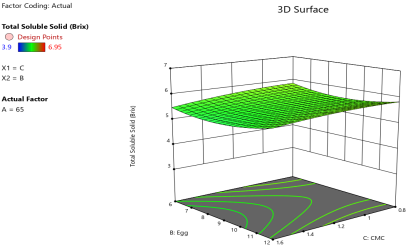
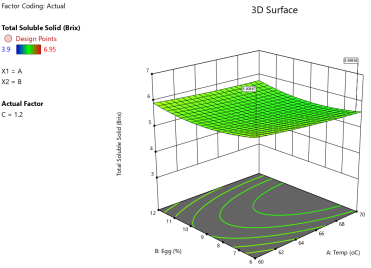
The observed range of total soluble solids was between 3.9 and 6.95 ˚Brix. This measurement encompasses the overall quantity of dissolved substances in a solution, including sugars, salts, proteins, acids, and other components that contribute to flavor and consumer acceptance . These findings suggested that the dehydration process affected the chemical makeup of the pulp and resulted in reduced sugar content in the powder. Nascimento et al. found similarly low total soluble solids in frozen soursop pulp, with values from 4.77 to 7.90 ˚Brix, falling short of the 9.00 ˚Brix minimum set by Brazilian regulations for quality and identity standards . Factors such as fruit genetic variety and climatic conditions can influence variations in this property. However, it is worth considering the potential addition of water during pulp extraction, a common practice in northeastern Brazil, to enhance processing ease and increase the product yield . Alamar et al. attributed high moisture levels and low soluble solids content in some frozen guava and passion fruit pulp samples to water addition . Figure 9 and 10 show the linear correlation between egg albumin, methylcellulose, drying temperature, and total soluble solids.
Figure 9. Response surface plot of total soluble solids to variations in methylcellulose and egg albumin.
Figure 10. Response surface plot of total soluble solids to variations in drying temperature and egg albumin.
3.2.5. Water Absorption Capacity of Soursop Pulp Powder
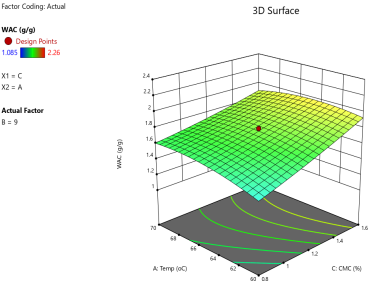
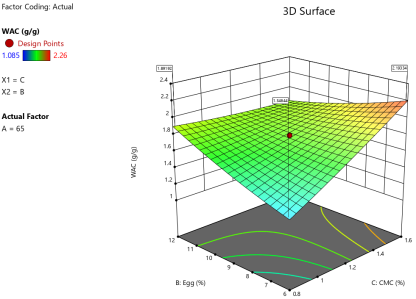
Water absorption capacity (WAC) measurements ranged from 1 to 2.26 g/g. The effects of drying temperature, methylcellulose, and egg albumin on WAC are shown in Figure 11 and 12. An increase in WAC was observed with increasing concentrations of egg albumin and methylcellulose as well as elevated drying temperatures. This trend aligns with findings reported by Vasudevan et al., who noted an enhancement in water absorption (3.26 to 4.00) when employing fish gelatin (5 to 20%) as a foaming agent during the foam mat drying of soursop pulp . Moreover, research conducted by Nur et al. revealed that spray-dried pineapple powder displayed a WAC value of 1.68 g, whereas foam mat-dried pineapple powder showed WAC values spanning from 5.35 to 6.32 g. . The analysis of variance (ANOVA) results presented in Table (3) indicate statistical significance for WAC (p<0.05) and the quadratic model predicting the relationship between independent variables is presented in Equation (8).
WAC= -11.79639+0.348244a-0.146733+3.77763+0.005042ab-0.027812ac-0.196354bc-0.002709a2+0.003933b2+0.123580c2(8)
(R2= 0.89Adjusted R2= 0.79Mean= 1.75SD= ±0.29)
Where WAC is water absorption capacity; a is temperature; b is egg albumin and c is methylcellulose
Figure 11. Response surface plot of water absorption capacity to variations in drying temperature and methylcellulose.
Figure 12. Response surface plot of water absorption capacity to variations in methylcellulose and egg albumin.
Table 3. Variance analysis for water absorption capacity of foam dried soursop powder.

Source

Sum of Squares

df

Mean Square

F-value

p-value

Model

1.41

9

0.1572

9.05

0.0010

significant

A-Temp

0.0260

1

0.0260

1.50

0.2491

B-Egg

0.0375

1

0.0375

2.16

0.1722

C-CMC

0.6380

1

0.6380

36.74

0.0001

AB

0.0458

1

0.0458

2.64

0.1356

AC

0.0248

1

0.0248

1.43

0.2600

BC

0.4442

1

0.4442

25.58

0.0005

A2

0.1153

1

0.1153

6.64

0.0275

B2

0.0315

1

0.0315

1.81

0.2077

C2

0.0098

1

0.0098

0.5661

0.4691

Residual

0.1736

10

0.0174

Lack of Fit

0.1736

5

0.0347

Pure Error

0.0000

5

0.0000

Cor Total

1.59

19

3.2.6. Colour Attributes Soursop Pulp Powder
Colorimetric analysis revealed that lightness (L*), redness (a*), and yellowness (b*) spanned ranges of 38.24-73.9, 4.7-14.01, and 24.95-45.14, respectively. Notably, fresh soursop pulp demonstrated a higher lightness value (L*) of 93.76, indicative of its white coloration, whereas dried samples exhibited reduced lightness, appearing darker than their fresh counterparts. This observation suggests that the drying process induced a darkening effect in the resultant pulp powder. Such darkening is consistent with the typical outcomes of fruit drying, which often leads to enzymatic and non-enzymatic browning reactions, as well as potential pigment degradation . The statistical evaluation revealed that the drying conditions exerted a significant influence (p<0.05) on all three color parameters: lightness, redness, and yellowness, as shown in Table 4 and 5.
Analysis of fresh soursop pulp samples revealed negative values for redness (a*), indicating the absence of red hues in the pulp. In contrast, the foam mat dried soursop powder exhibited elevated redness (a*) values, potentially resulting from non-enzymatic browning processes such as caramelization, which may have occurred during the drying procedure.
This study employed the b* value as a metric for assessing carotenoid pigment deterioration in juice samples. The control sample exhibited a b* value of 14.97, which was lower than that observed for dried soursop powder. This observation indicated substantial degradation of carotenoid pigments during the soursop pulp whipping process during powder production. Furthermore, the addition of egg albumin to watermelon powder at concentrations above 10% led to a loss of the powder's distinctive red-orange coloration . Model equations predicting the influence of the drying conditions on the colour attributes of foam mat dried soursop powder are stated in equations (9, 10 and 11) below:
Lightness = -50.042 + 0.769T -0.226B +147.403C +0.055TB -0.975TC -1.283BC + 0.0004T2- 0.181B2-28.880C2(9)
(R2= 0.78, Adj.R2 = 0.75, Mean= 7.13, S.D. = ±0.42)
Redness = 45.216 + 0.342T - 1.826B - 65.840C - 0.006TB + 0.640TC + 0.930BC –0.009T2+ 0.081B2+ 6.412C2(10)
(R2= 0.70. Adj.R2= 0.69, Mean 8.85, S.D.= ±1.03)
Yellowness = -384.161 + 12.044T- 4.801B + 85.265C + 0.076TB – 0.561TC + 0.882BC –0.090T2- 0.112B2- 23.295C2(11)
(R2= 0.81, Adj.R2= 0.79, Mean 7.4, S.D.= ±0.9)
Where T is drying temperature; B is egg albumin and C is methylcellulose
Table 4. Variance analysis for lightness and redness of foam dried soursop pulp powder.

Source

Sum of Squares

df

Mean Square

F-value

p-value

LIGHTNESS (L*)

Model

981.40

9

109.04

1.54

0.0256

Significant

A-Temp

7.56

1

7.56

0.1066

0.0350

B-Egg

312.41

1

312.41

4.40

0.0523

C-CMC

25.65

1

25.65

0.3615

0.5611

AB

5.35

1

5.35

0.0753

0.7893

AC

30.42

1

30.42

0.4286

0.5274

BC

18.97

1

18.97

0.2673

0.6164

A2

0.0021

1

0.0021

0.0000

0.9957

B2

66.36

1

66.36

0.9350

0.3564

C2

536.84

1

536.84

7.56

0.0205

Residual

709.68

10

70.97

Lack of Fit

709.68

5

141.94

Pure Error

0.0000

5

0.0000

Cor Total

1691.08

19

REDNESS

Model

88.10

9

9.79

2.62

0.0444

Significant

A-Temp

2.18

1

2.18

0.5853

0.4619

B-Egg

21.28

1

21.28

5.70

0.0381

C-CMC

0.6931

1

0.6931

0.1858

0.6756

AB

0.0561

1

0.0561

0.0150

0.9048

AC

13.08

1

13.08

3.51

0.0906

BC

9.97

1

9.97

2.67

0.1331

A2

1.19

1

1.19

0.3199

0.5841

B2

13.34

1

13.34

3.58

0.0879

C2

26.46

1

26.46

7.10

0.0237

Residual

37.30

10

3.73

Lack of Fit

37.30

5

7.46

Pure Error

0.0000

5

0.0000

Cor Total

125.40

19

Table 5. Variance analysis for yellowness of foam dried soursop pulp powder.

Source

Sum of Squares

df

Mean Square

F-value

p-value

Model

563.07

9

62.56

2.27

0.0109

significant

A-Temp

33.03

1

33.03

1.20

0.2994

B-Egg

92.79

1

92.79

3.36

0.0965

C-CMC

1.88

1

1.88

0.0683

0.7991

AB

10.47

1

10.47

0.3795

0.5516

AC

10.06

1

10.06

0.3647

0.5594

BC

8.97

1

8.97

0.3252

0.5811

A2

128.81

1

128.81

4.67

0.0560

B2

25.57

1

25.57

0.9271

0.3583

C2

349.28

1

349.28

12.66

0.0052

Residual

275.78

10

27.58

Lack of Fit

275.78

5

55.16

Pure Error

0.0000

5

0.0000

Cor Total

838.86

19

3.2.7. Wettability of Soursop Pulp Powder
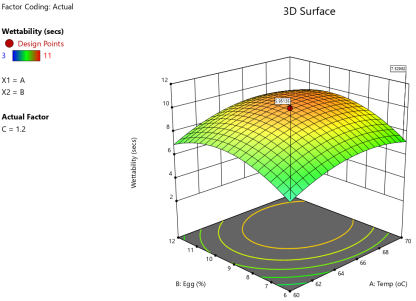
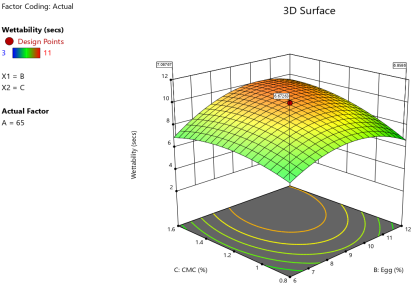
The dried specimens demonstrated wettability values ranging from 3 s to 11 s, with an arithmetic mean of 7.05 ±2.63. Wettability denotes the propensity of powder particulates to surmount interfacial tension at the solid-liquid boundary at a specified temperature, conventionally measured as the time requisite for comprehensive powder wetting . ANOVA-based statistical evaluation (Table 6) revealed a statistically significant influence on the wettability of the desiccated specimens at p< 0.05 while the quadratic model developed to express the independent variables is presented in Equation (12). Elevated concentrations of methylcellulose and egg albumin exhibited a positive correlation with wettability values, whereas increased drying temperatures yielded marginal enhancement (Figure 13 and 14). In the lyophilization of soursop pulp, wettability escalated from 0.36 to 1.26 min concomitant with rising freezing rates .
Wt= -164.72159+5.17614a+2.22159b-18.65057c+0.008333ab+0.437500ac+0.520833bc-0.043182a2-0.175505b2-5.18466c2(12)
(SD= 2.63, Mean= 7.05, R2= 0.91, Adj R2 = 0.82, P- value= 0.0004)
Where: a is the drying temperature (OC), b is egg albumin (%) and c is methylcellulose (%)
Table 6. Variance analysis for the wettability of foam mat dried soursop pulp powder.

Source

Sum of Squares

df

Mean Square

F-value

p-value

Model

118.80

9

13.20

10.86

0.0004

Significant

A-Temp

10.56

1

10.56

8.69

0.0146

B-Egg

7.56

1

7.56

6.22

0.0317

C-CMC

10.56

1

10.56

8.69

0.0146

AB

0.1250

1

0.1250

0.1029

0.7550

AC

6.12

1

6.12

5.04

0.0486

BC

3.13

1

3.13

2.57

0.1399

A2

29.30

1

29.30

24.11

0.0006

B2

62.73

1

62.73

51.62

< 0.0001

C2

17.30

1

17.30

14.24

0.0036

Residual

12.15

10

1.22

Lack of Fit

12.15

5

2.43

Pure Error

0.0000

5

0.0000

Cor Total

130.95

19

Figure 13. Response surface plot of wettability to variations in drying temperature and egg albumin.
Figure 14. Response surface plot of wettability to variations in egg albumin and methylcellulose.
3.2.8. Model Adequacy and Statistical Fit
The regression models developed for key response variables, including bulk density, pH, water absorption capacity (WAC), color parameters (L*, a*, b*), and wettability, demonstrated statistical significance (p < 0.05), indicating strong model performance. For instance, the WAC model yielded an F-value of 9.05 (p = 0.0010), while the wettability model showed an F-value of 10.86 (p = 0.0004). Similarly, models for lightness (L), redness (a), and yellowness (b) were significant with p-values of 0.0256, 0.0444, and 0.0109, respectively (Table 7).
Reported and adjusted R2, the high F-values and low residual errors support the reliability and predictive strength of the fitted models. These results validate the use of response surface methodology (RSM) for optimizing foam mat drying parameters in soursop pulp processing.
Table 7. Summary of Model Significance.

Response Variable

Model F-value

Model p-value

Lack-of-Fit p-value

Adjusted R2

R2

Significance

Bulk Density

4.28

0.0165

< 0.05

0.61

0.79

Significant

pH

2.52

0.0434

< 0.05

0.72

0.89

Significant

Water Absorption Capacity

9.05

0.0010

< 0.05

0.79

0.89

Significant

Lightness (L*)

1.54

0.0256

< 0.05

0.75

0.78

Significant

Redness (a*)

2.62

0.0444

< 0.05

0.69

0.70

Significant

Yellowness (b*)

2.27

0.0109

< 0.05

0.79

0.81

Significant

Wettability

10.86

0.0004

< 0.05

0.82

0.91

Significant

4. Conclusion
This study examined the phytochemical and physicochemical attributes of soursop pulp subjected to foam-mat drying. The phytochemical analysis of the resulting powder revealed the presence of tannins, alkaloids, saponins, and flavonoids. Notably, the absence of anthocyanins at specific temperatures can be attributed to pH fluctuations. Elucidating these phytochemicals is important for their potential integration into functional food products. The drying process parameters exerted a statistically significant influence (p < 0.05) on various properties, including the bulk density, water absorption capacity, wettability, and color parameters (L*, a*, b*). The produced powder exhibited non-hygroscopic characteristics, with pH values indicative of mild acidity and total soluble solids ranging from 3.9 to 6.95°Brix. These findings suggest that soursop powder possesses stable natural properties that are conducive to its reconstitution and incorporation into diverse food formulations.
Abbreviations

FMD

Foam Mat Drying

WAC

Water Absorption Capacity

TSS

Total Soluble Solid

BD

Bulk Density

RSM

Response Surface Methodology

MC

Methylcellulose

EA

Egg Albumin

SD

Standard Deviation

Author Contributions
Bridget Tola-Winjobi: Conceptualization, Formal Analysis, Project administration, Writing – original draft
Babatunde Adewumi: Visualization, Writing – review & editing
Usman Dairo: Data curation, Investigation, Supervision, Validation
Philip Sobukola: Methodology, Resources, Software
Conflicts of Interest
The authors declare no conflict of interest.
References
[1] L. S. Chang, R. Karim, S. M. Abdulkarim, and H. M. Ghazali, “Production and characterization of enzyme-treated spraydried soursop (Annona muricata L.) powder,” Journal of Food Process Engineering, vol. 41, pp. 1-12, 2018.
[2] E. G. T. Menezes, E. R. Oliveira, G. R. Carvalho, I. C. Guimaraes, and F. Queiroz, “Assessment of chemical, nutritional and bioactive properties of Annona crassiflora and Annona muricata wastes,” Food Science and Technology, vol. 39, pp. 662-672, 2019.
[3] V. C. George, D. R. N. Kumar, P. K. Suresh, and R. A. Kumar, “Antioxidant, DNA protective efficacy and HPLC analysis of Annona muricata (soursop) extracts,” Journal of Food Science & Technology, vol. 52, pp. 2328-2335, 2015.
[4] N. Badrie and A. G. Schauss, “Soursop (Annona muricata L.): composition, nutritional value, medicinal uses and toxicology,” Bioactive Foods in Promoting Health- foods and vegetables, pp. 621-643. 2010. Available at:
[5] A. Joshi, M. Bhobe and A. Saatarkar, “Phytochemical investigation of the roots of Grewia microcos Linn,” J. Chem. Pharm. Res, vol. 5, pp. 80-87, 2013.
[6] W. C. Evans, “Trease and Evans Pharmacognosy,” Elsevier Health Sciences, New York, USA, (16th ed), 2009.
[7] E. A. Sofowara, “Medicinal Plants and Traditional Medicine in Africa,” Spectrum Books Ltd, Ibadan, Nigeria, pp. 289, 1993.
[8] S. Rohit, J. Pallavi, S. S. Bhagwan and T. S. Gulab, “Conventional method for saponin extraction from chlorophytum,” Global Journal of Research on Medicinal Plant& Indigenous Medicine, vol. 3, pp. 33-39, 2014.
[9] O. Paulina, A. Diego and G. M. Elvira, “Extraction techniquues and analyss of anthocyanins from food sources by mass spectrometry,” 2018. Available at:
[10] AACC (American Association of Cereal Chemist). Laboratory Methods, (10thed), St Paul, MN, USA, 2000.
[11] K. O. Falade and A. O. Olugbuyi, “Effects of maturity and drying method on the physico-chemical and reconstitution properties of plantain flour.” Int. Journal of Food Science & Tech, vol. 45, pp. 170-178, 2010.
[12] A. P. Sharma, H. S. Gujral and C. M. R. Rosell, “Effects of roasting on barley b-glucan, thermal, textural and pasting properties,” Journal of Cereal Science, vol. 53, pp. 25-30, 2011.
[13] N. L. Tze, C. P. Han, Y. A. Yusof and M. G. Aziz, “Physicochemical and nutritional properties of spray dried pitaya fruit powder as natural colorant,” Food Science and Biotechnology, vol. 21, pp. 675-682, 2012.
[14] Nur Atiqah Shaari., Rabiha Sulaiman. and Russly Abdul Raham., Production of pineapple fruit (Ananas comosus powder using foam mat drying: Effect of whipping time and egg albumen concentration. Journal of Food Processing and Preservation, 2017. Available at:
[15] K. L. Yam and S. E. Papadakis, “A simple digital imaging method for measuring and analyzing colour of food surfaces,” Journal of Food Engineering, vol. 61, pp. 137-142, 2004.
[16] M. C. Kolla, A. Laya, J. P. Bayang and B. B. Koubala, “Effect of different drying methods and storage conditions on physical, nutritional, bioactive compounds and antioxidant properties of doum (Hyphaene thebaica) fruits” (2021). Available at:
[17] P. S. Negi, “Plant extracts for the control of bacterial growth: efficacy, stability and safety issues for food application,” International Journal of Food Microbiology, vol. 156, pp. 7-17, 2012.
[18] V. T. Nguyen and M. D. Le, “influence of various drying conditions on phytochemical compounds and antioxidant activity of carrot peel,” Beverages, vol. 4, pp. 80, 2018.
[19] A. Ippolito and F. Nigro, “Natural antimicrobials for preserving fresh fruit and vegetables,” Improving the safety of fresh fruit and vegetables, vol. 17, pp. 513-555, 2005. Available at:
[20] M. Tajkarimi and S. A. Ibrahim, “Phytochemicals as anti‐microbial food preservatives,” Dietary Phytochemicals and Microbes, chp. 7, pp. 207-225, 2012. Available at:
[21] K. C. Agu and P. N. Okolie, “Proximate composition, phytochemical analysis, and in vitro antioxidant potentials of extracts of Annona muricata (Soursop).” Food Science & Nutrition; vol. 5, pp. 1029-1036, 2017.
[22] Prasetyorini Moerfiah, Erni Rustiani and Sri Wardatun, “Development of soursop fruit instant granules (Annona Muricata L.) from fruit juice, ethyl acetate and ethanol extract as lowering uric acid and blood pressure,” Asian Journal of Microbiology, Biotechnology and Environmental Science, vol. 17, pp. 341-347, 2015.
[23] GEA Niro Research Laboratory. Analytical methods dry milk products (Niro Analytical Methods, No. 15a). Soeborg, 2003.
[24] Costa de Paula, Rocha de Freitas and Costa, Jose Maria, “Study of the physicochemical characteristics of soursop powder obtained by spray drying,” Food Science and Technology, Campinas, vol. 34, pp. 663-666, 2014. Available at:
[25] K. Johanson, “Powder flow properties”, Encapsulation and powdered foods, pp. 331-361, 2005. Boca Raton: CRC Press.
[26] D. L. Nelson and M. M. Cox, “Principles of Biochemistry,” (4th ed), 2004. Available at:
[27] N. Vasudevan, R. Sulaiman, and N. A. Shaari, “ Development of foam mat dried soursop powder using arabic gum and fish gelatin as foaming agent,” Food Research, vol. 4, pp. 237 - 243, 2020.
[28] E. Abbasi and M. Azizpour, “Evaluation of physicochemical properties of foam mat dried sour cherry powder,” LWT - Food Science and Technology, vol. 68, pp. 105-110, 2016. Available at:
[29] R. R. Moraes, “Refractometry,” 2006. Available at:
[30] M. M. Nascimento, Raildo Mota de Jesus and H. M. Santos, “Quality pattern evaluation of frozen soursop pulps based on chemometric analysis,” Food Science and Technology, Campinas, vol. 40, pp. 508-516, 2020.
[31] Brazil Ministry of Agriculture and Supply. Approve the General Technical Regulation for establishing Identity Standards and Quality for Fruit Pulp (Normative Instruction nº 1, of 07 January 2000). Official Gazette of the Federative Republic of Brazil (original title in Portuguese).
[32] M. S. R. Bastos, M. E. B. Oliveira and T. Feitosa. Diagnosis sector of the fruit pulp agroindustry in the northeast region (Bulletin of research), 1998. Fortaleza: Embrapa-CNPAT.
[33] P. D Alamar, E. T. S. Caramês, R. J. Poppi and J. A. L. “Pallone, Quality evaluation of frozen guava and yellow passion fruit pulps by NIR spectroscopy and chemometrics,” Food Research International, vol. 85, pp. 209-214, 2016.
[34] S. Damodaran, K. L. Parkin and O. R. Fennema, Fennema’s food chemistry (4th ed), 2010. London: CRC Press.
[35] S. Y. Quek, N. K Chok and P. Swedlund, “The physiochemical properties of spray-dried watermelon powders,” Chemical Engineering and Processing, vol. 46, pp. 386-392, 2007.
[36] NIRO. Niro Method, (Wettability), 2005d. Available at:
[37] A. M. Ceballos, G. I. Giraldo and C. E. Orrego C. E, “Effect of freezing rate on quality parameters of freeze dried soursop fruit pulp,” Journal of Food Engineering, vol. 111, pp. 360-365, 2012.
Cite This Article
  • APA Style

    Tola-Winjobi, B., Adewumi, B., Dairo, U., Sobukola, P. (2026). Foam Mat Drying of Soursop Pulp: Evaluation of Phytochemicals and Physico-chemical Properties of Powder Obtained. Science Discovery Nutrition, 1(1), 51-67. https://doi.org/10.11648/j.sdnutr.20260101.15

    Copy | Download

    ACS Style

    Tola-Winjobi, B.; Adewumi, B.; Dairo, U.; Sobukola, P. Foam Mat Drying of Soursop Pulp: Evaluation of Phytochemicals and Physico-chemical Properties of Powder Obtained. Sci. Discov. Nutr. 2026, 1(1), 51-67. doi: 10.11648/j.sdnutr.20260101.15

    Copy | Download

    AMA Style

    Tola-Winjobi B, Adewumi B, Dairo U, Sobukola P. Foam Mat Drying of Soursop Pulp: Evaluation of Phytochemicals and Physico-chemical Properties of Powder Obtained. Sci Discov Nutr. 2026;1(1):51-67. doi: 10.11648/j.sdnutr.20260101.15

    Copy | Download

  • @article{10.11648/j.sdnutr.20260101.15,
      author = {Bridget Tola-Winjobi and Babatunde Adewumi and Usman Dairo and Philip Sobukola},
      title = {Foam Mat Drying of Soursop Pulp: Evaluation of Phytochemicals and Physico-chemical Properties of Powder Obtained},
      journal = {Science Discovery Nutrition},
      volume = {1},
      number = {1},
      pages = {51-67},
      doi = {10.11648/j.sdnutr.20260101.15},
      url = {https://doi.org/10.11648/j.sdnutr.20260101.15},
      eprint = {https://article.sciencepublishinggroup.com/pdf/10.11648.j.sdnutr.20260101.15},
      abstract = {Foam mat drying (FMD) was employed to dry soursop pulp, with the objective of assessing the powder quality parameters. Egg albumen was applied at 3%, 6%, 9%, 12%, and 15% wt/wt and methylcellulose at 0.4%, 0.8%, 1.2%, 1.6%, and 2% wt/wt as foaming and stabilizing agents, respectively. The samples were air-dried at different temperatures of 55, 60, 65, 70, and 75°C. The experimental design was determined using central composite. Physicochemical properties of the powders [hygroscopicity, bulk density (BD), pH, water absorption capacity (WAC), total soluble solids (TSS) and color], were evaluated. Additionally, qualitative analysis of the phytochemicals present, such as tannins, alkaloids, saponins, flavonoids, and anthocyanins, was conducted. Phytochemical analysis revealed the presence of tannins, alkaloids, saponins, and flavonoids in soursop powder; anthocyanins were detected at selected drying temperatures indicating their retention under certain drying conditions. Identification of these phytochemicals is important for their potential application in functional foods. pH value ranged from 4.5 to 5.3, and TSS ranged from 3.9 to 6.95 brix. Hygroscopicity increased with increasing methylcellulose content, whereas the color parameters (L*, a*, and b*) were affected by the drying temperature, leading to discoloration during the process. BD, WAC, color, and wettability were significantly affected by drying temperature (p < 0.05). Based on these data, FMD may be considered a viable method for dehydrating soursop pulp; the resulting powder can be readily reconstituted for food formulations. Thus, soursop powder has significant potential for the development of functional foods.},
     year = {2026}
    }
    

    Copy | Download

  • TY  - JOUR
    T1  - Foam Mat Drying of Soursop Pulp: Evaluation of Phytochemicals and Physico-chemical Properties of Powder Obtained
    AU  - Bridget Tola-Winjobi
    AU  - Babatunde Adewumi
    AU  - Usman Dairo
    AU  - Philip Sobukola
    Y1  - 2026/10/09
    PY  - 2026
    N1  - https://doi.org/10.11648/j.sdnutr.20260101.15
    DO  - 10.11648/j.sdnutr.20260101.15
    T2  - Science Discovery Nutrition
    JF  - Science Discovery Nutrition
    JO  - Science Discovery Nutrition
    SP  - 51
    EP  - 67
    PB  - Science Publishing Group
    UR  - https://doi.org/10.11648/j.sdnutr.20260101.15
    AB  - Foam mat drying (FMD) was employed to dry soursop pulp, with the objective of assessing the powder quality parameters. Egg albumen was applied at 3%, 6%, 9%, 12%, and 15% wt/wt and methylcellulose at 0.4%, 0.8%, 1.2%, 1.6%, and 2% wt/wt as foaming and stabilizing agents, respectively. The samples were air-dried at different temperatures of 55, 60, 65, 70, and 75°C. The experimental design was determined using central composite. Physicochemical properties of the powders [hygroscopicity, bulk density (BD), pH, water absorption capacity (WAC), total soluble solids (TSS) and color], were evaluated. Additionally, qualitative analysis of the phytochemicals present, such as tannins, alkaloids, saponins, flavonoids, and anthocyanins, was conducted. Phytochemical analysis revealed the presence of tannins, alkaloids, saponins, and flavonoids in soursop powder; anthocyanins were detected at selected drying temperatures indicating their retention under certain drying conditions. Identification of these phytochemicals is important for their potential application in functional foods. pH value ranged from 4.5 to 5.3, and TSS ranged from 3.9 to 6.95 brix. Hygroscopicity increased with increasing methylcellulose content, whereas the color parameters (L*, a*, and b*) were affected by the drying temperature, leading to discoloration during the process. BD, WAC, color, and wettability were significantly affected by drying temperature (p < 0.05). Based on these data, FMD may be considered a viable method for dehydrating soursop pulp; the resulting powder can be readily reconstituted for food formulations. Thus, soursop powder has significant potential for the development of functional foods.
    VL  - 1
    IS  - 1
    ER  - 

    Copy | Download

Author Information
  • Agricultural Engineering Program, Abiola Ajimobi Technical University, Ibadan, Nigeria

  • Agricultural and Bio-Resources Engineering, Federal University of Agriculture, Abeokuta, Nigeria
  • Agricultural and Bio-Resources Engineering, Federal University of Agriculture, Abeokuta, Nigeria

  • Food Science and Technology, Federal University of Agriculture, Abeokuta, Nigeria

  • Abstract
  • Keywords
  • Document Sections

    1. 1. Introduction
    2. 2. Materials and Methods
    3. 3. Results and Discussion
    4. 4. Conclusion
    Show Full Outline
  • Abbreviations
  • Author Contributions
  • Conflicts of Interest
  • References
  • Cite This Article
  • Author Information