Research Article | | Peer-Reviewed

Response to COVID-19 Vaccines in Individuals with Chronic Kidney Disease: A Systematic Review and Meta-analysis Protocol of Randomised Controlled Trials

Received: 13 June 2025     Accepted: 29 January 2026     Published: 25 February 2026
Views:       Downloads:
Abstract

Since SARS-CoV-2 detection, the infection had spread globally resulting in insidious outcomes. The pathogenic mechanism of SARS-CoV-2 indicated that the virus does not only ignite respiratory distress, but can also adversely impact varying organs. Evidence shows patients with chronic kidney disease, particularly those on dialysis or who have received kidney transplant have been disproportionately impacted by SARS-CoV-2. This population group experience significant higher rates of infection, severe disease, hospitalization and mortality compared to the general population. However, long-term response and outcomes in relation to SARS-CoV-2 vaccines in people with chronic kidney disease requires further research. This systematic review and meta-analysis protocol, aims to compare the safety and efficacy of COVID-19 vaccines in patients with chronic kidney disease. We will include randomized controlled trials that assess and evaluates the safety and efficacy as outcomes of COVID-19 vaccines in chronic kidney disease patients. Medline, Embase, Web of Science, CINAHL, LILACS, SCOPUS, Cochrane Library, ClinicalTrials.gov will be searched from January 2020 to December 2025 for eligible studies. Three reviewers will independently screen, identify and select research studies that meet eligibility criteria, assess methodological quality and extract information. A meta-analysis will be performed, if possible and the grading of recommendations, assessment, development and evaluations summary of findings will be presented.

Published in Science Discovery Medicine (Volume 1, Issue 1)
DOI 10.11648/j.sdmed.20260101.13
Page(s) 13-18
Creative Commons

This is an Open Access article, distributed under the terms of the Creative Commons Attribution 4.0 International License (http://creativecommons.org/licenses/by/4.0/), which permits unrestricted use, distribution and reproduction in any medium or format, provided the original work is properly cited.

Copyright

Copyright © The Author(s), 2026. Published by Science Publishing Group

Keywords

COVID-19, Chronic Kidney Disease, Infection, Controlled Trials

1. Introduction
In the early December 2019, in a city of Wuhan a novel infectious disease outbreak rendered by the severe acute respiratory syndrome coronavirus 2 (SARS-CoV-2) virus was detected. By September 2021 over 200-million people had been infected and over 4.6 million deaths were reported globally. With the death toll rapidly continuing to rise wide and far through mutated SARS-CoV-2 strains, the World Health Organization (WHO) declared the outbreak as a global emergency concern in March 2020 . Covid-19 infection results in an ignition of local and systemic inflammatory response and viral injury to many organs inclusive of the respiratory system such as cardiovascular, gastrointestinal ad renal system. Renal system has been confirmed to be amongst the prime target for SARS-CoV-2 virus resulting in the potential of renal dysfunction and organ injury .
Renal disease or chronic kidney disease a progressive condition affects >10% of individuals world-wide mounting to >800 millions of individuals . The prevalence of chronic kidney disease has gradually been rising partly due to the rise in risk factors such as obesity and diabetes mellitus but the disease remains to be one of the leading causes of mortality worldwide . It is established that in relation to general population chronic kidney disease patients have a complex impairment of the innate and adaptive immune system driven by remarked levels of pro-inflammatory cytokines, which inversely predisposes this patient group to increased risk of infection .
Concurrently, the swiftness at which COVID-19 vaccines were developed amidst the heightened rate of the epidemic were unprecedented, and a number of vaccines of varying platforms . While vaccination is an effective method to dampen infection-related morbidity and mortality especially preventing critical illness in high risk vulnerable patients . However, COVID-19 vaccine immunogenicity is not well understood in chronic kidney disease patients of different stages and to date little is known about the immunogenicity responses as well as long-term safety to the varying vaccine platforms available in this population group.
2. Objectives
This systematic review and meta-analysis protocol aim to assess and compare the response and safety of SARS-CoV-2 vaccines available in patient with chronic kidney disease.
3. Methods and Analysis
The study protocol follows the Preferred Reporting Items for Systematic Review and Meta-Analysis Protocols guidelines._bookmark9 This protocol is registered with the International Prospective Register of Systematic Reviews (PROSPERO).
3.1. Eligibility Criteria
The inclusion criteria involved: (1) randomized controlled trial (RCT)-type studies that evaluated the response of COVID-19 vaccine; (2) experiments involving human beings; (3) studies evaluating the efficacy, safety, immunogenicity of the vaccines in CKD; (4) studies that presented similar vaccination protocols; (5) studies published since January 2020 until December 2025; and (6) studies published in English language.
The exclusion criteria were the following: (1) observational studies, and (2) case reports, meeting abstracts, review papers and commentaries.
3.2. Patients, Intervention, Comparison, Outcome Strategy and Types of Studies
Patients: Adults aged 18 years or older who have any stage of CKD (eGFR <60 mL/min/1.73 m2 for 3 months or more) and previously SARS-CoV-2 infection free.
Intervention: COVID-19 vaccine or a combination of vaccines against SARS-CoV-2 infection.
Comparator/control: placebo.
Outcome: Immunogenicity response (determined by antibody response defined using WHO International Standard for evaluation of the antibody response to COVID-19 vaccines ), safety and tolerability.
Types of studies: RCTs.
3.3. Searchers
The following databases will be searched: Medline, Web of Science, Embase, LILACS, SCOPUS, ClinicalTrials.gov, International Clinical Trials Registry Platform (ICTRP) and Cochrane Central Controlled Trials Registry from January 2020 to December 2025. Moreover, eligible studies will be searched for and may be included from the reference lists of included articles.
3.4. Patient and Public Involvement
Patient data will not be presented and neither will patient involvement be a requirement in the study and its undertaking. Literature search will be carried out using the defined databases.
3.5. Searchers Strategy
A search strategy unifying commonly used search terms and Medical Subject Headings (MeSH) algorithm will be applied. The keywords that will be used will be a combination of; COVID-19 OR SARS-CoV-2 OR 2019-nCoV OR coronavirus) AND (vaccines OR vaccination OR COVID-19 vaccine OR SARS-CoV-2 vaccine OR BNT162 vaccine OR mRNA-1273 vaccine OR COVID-19 aAPC vaccine OR INO-4800 vaccine OR LV-SMENP-DC COVID-19 vaccine OR Ad5-nCoV vaccine OR ChAdOx1 COVID-19 vaccine OR MNA SARS-CoV-2 S1 subunit vaccines OR Pitt CoVacc OR Inactivated novel coronavirus 2019-CoV vaccine Vero cells OR Inactivated Vaccines OR SARS-CoV-2 inactivated vaccines OR Viral Vaccines OR Gam-COVID-Vac vaccine OR Ad26. COV2. S vaccine OR Epi VacCorona vaccine) AND (Response OR Safety OR Toxicity OR Vaccine Immunogenicity OR side effects OR adverse events) AND Chronic Kidney Disease OR Renal Disease AND (randomized controlled trial OR double blind method OR clinical trial). A list of vaccines available at WHO was also used.
3.6. Study Records
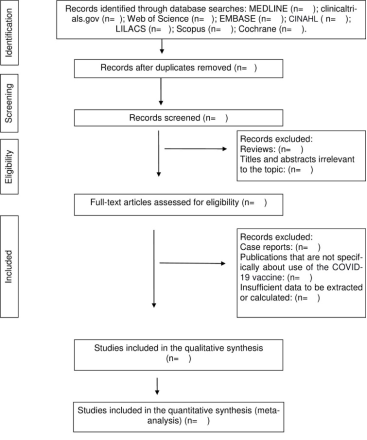
Figure 1. Flow diagram for the search for eligible studies on the safety and efficacy of COVID-19 vaccines.
Three reviewers Muna Adan (MA), Ayan Hag (AH) and Hodan Hersi (HH), will independently identify and screen articles for eligibility by title and abstract using Covidence tool. Disagreements in the eligibility of articles will be settled by consensus. Full text articles will be sought and reviewed for inclusion or exclusion. The flow chart of this study is presented in Figure 1.
3.7. Data Collection Process and Management
Information that will be extracted include (but not limited to) data on; the journal, publication date, first author, study design, sample size, study participation criteria, patient demographics, clinical medical history (including comorbidities, current medical therapies), healthy controls, type and regimen of COVID-19 vaccination(s), antibody response, clinical and safety outcomes. Covidence software will be used, which allows the user to enter protocols; complete reviews; include text, characteristics of the studies, comparison tables and study data; and perform meta-analyses.
3.8. Risk of Bias in Studies
Both reviewers will assess the risk of bias in each included study using the relevant tool for each study design and any disagreements will be resolved through discussion. We will use the CASP (https://caspuk.net/casp-tools-checklists) risk of bias assessment tools for each type of study.
3.9. Ethics and Dissemination
This study will review published data, and thus it is unnecessary to obtain ethical approval. The findings of this systematic review will be published in a peer-reviewed journal.
PROSPERO registration number CRD420212311.
4. Statistical Analysis
Normally distributed continuous variables will be presented as mean±standard deviation (SD) and for skewed distribution median (interquartile range (IQR)) will be reported. Mean and standard deviation will be used to compute mean differences (SMD) with 95% confidence intervals. Antibody response of vaccinated CKD-patients and control will be analyzed using random effect models with inverse variance weighting. The magnitude of heterogeneity will be estimated using Cochran’s Q test and I2. An I² < 30%, I² 30-60%, and I² > 60% will be defined as low, moderate and high heterogeneity, respectively. The pooled effects of antibody response will be presented as weighted risk difference with corresponding 95% confidence interval (CI). We will investigate possible sources of heterogeneity among studies by conducting subgroup analyses. Univariate meta-regression will be utilized to assess the differences in categorical variables. Publication bias will be tested by means of funnel plots and Egger’s linear regression statistic All statistical analysis will be performed using SATA version 17.0 (College Station, Texas, USA) and R, p-value of <0.05 will be considered as statistical significance.
5. Discussion
Studies of the pathogenic mechanism of SARS-CoV-2 infection has indicated that the virus does not only ignite adaptive immune system that triggers inflammation and cytokines release in the respiratory system, but also in varying organs including the digestive system and in particular the renal system . It has also been proven that SARS-Co-2 virus is able to gain entrance, proliferate its activity and catalyze clinical complications through the binding of angiotensin-converting enzyme 2 (ACE2) functional receptor, which are highly expressed in a number of organs . More precisely, ACE2 receptors are highly expressed in the kidneys (arguably to a greater level than what has been detected in the respiratory system) and this may have a direct cytopathic activity on infected renal cells, thus, indicating that the renal system is amongst the prime target for SARS-CoV-2 virus’ sinister organ activity . Concomitantly, recent studies have denoted a mortality risk in chronic kidney disease (CKD) patients (with eGFR<30mL/min/1.73m2) associated with SARS-CoV-2 to be as high as an adjusted hazard ratio (HR) of 2.52, a HR of 3.69 in dialysis patients and a HR of 3.53 in renal transplant . This is beside the myriad of other potential adverse clinical outcomes due to SARS-CoV-infection in those population groups.
Correspondingly, the swiftness at which COVID-19 vaccines were developed amidst the heightened rate of the epidemic were unprecedented . Approved vaccines to date from clinical trials have utilized varying platforms including whole virus vaccines, viral vector vaccines, nucleic acid vaccines of ribonucleic acid (RNA), deoxyribonucleic acid (DNA) and hybrid forms generating antibodies of varying spectrum . Notwithstanding, the mRNA vaccine platforms is the more recent approved vaccine platform that works by mirroring native nucleic acid translation to generate target proteins to lymphocytes for immunological memory. The two approved mRNA vaccines (BNT126b2 and mRNA-1273) have demonstrated to have a 95% and 94.1% vaccine effectiveness as defined by immunogenicity testing for SARS-CoV-2 binding antibodies (as well as secondary end point measures such as respiratory rate, heart rate, oxygen saturation etc.) .
However, CKD patients have often been excluded from SARS-CoV-2 vaccines clinical trials have included immunocompromised patients, in specific CKD patients (including dialysis and renal transplant patients). Thus, the impact of the vaccines is not fully comprehended in this immune-compromised patient . Furthermore, observational studies have consistently shown that CKD patients experience severe disease manifestation, hospitalization and severe complications . Consequently, studying the effectiveness of different approved COVID-19 vaccination in these patients is paramount. Studies in this area have also indicated that CKD patients have a decreased vaccine response possibly due to changes to innate, cellular and humoral immunity, and the more severe the renal impairment the reduced the immunogenicity of vaccine is with significant immunogenicity reduction of vaccine reported in patients with kidney transplants compared to non-kidney transplant patients/non-dialysis CKD patients and non-CKD patients .
The lack of sufficient data on vaccine immunogenicity in patients with CKD continues to be a perpetuate saga stemming from the low inclusion rates of kidney disease patients in clinical trials as indicated earlier. Furthermore, many CKD patients are prevailed and burdened by comorbidities such as cardiovascular, hypertension, diabetes as well as be on multiple pharmacological therapies (including immunosuppressants), which may play a significant role in derailing Covid-19 vaccine immunogenicity . However, evidence on how CKD patients respond to varying vector SARS-CoV-2 vaccines is not well understood. Moreover, the impact of confounding factors (particularly immunosuppressant use) on SARS-CoV-2 vaccinations response in CKD patients has not been fully characterized and summarized. Thus, undertaking a systematic review to summaries the current evidence will add valuable evidence for future vaccination policy in these vulnerable patient group.
This study will improve our understanding of the efficacy of different types of COVID-19 vaccines in patients at early and late stages of CKD and factors that modify the impact of vaccine immunogenicity. This will help to tackle the vaccine inequality in vulnerable patients such as CKD patients. The result from this study will add useful information in improving future vaccine clinical trials and for clinical policy formation with regards to the use of COVID-19 vaccines in these patient groups.
6. Ethics and Dissemination
This study will review published data, and thus it is unnecessary to obtain ethical approval. The findings of this systematic review will be published in a peer-reviewed journal.
Abbreviations

SARS

Severe Acute Respiratory Syndrome

CoV-2

Coronavirus-2

WHO

World Health Organization

CKD

Chronic Kidney Disease

SMD

Standard Mean Difference

Author Contributions
Muna Adan: Conceptualization, Methodology, Writing – original draft
Ayan Hag: Data curation, Formal analysis, Project administration
Hodan Hersi: Validation, Resources, Writing – review & editing
Funding
The authors have declared no specific grant for this research form any funding agency in the public, commercial or non-for-profit sectors.
Conflicts of Interest
The authors declare no conflicts of interest.
References
[1] World Health Organization. WHO Coronavirus (COVID-19) Dashboard; 2021. Available at:
[2] Hariharan, A., Hakeem, AR., Radhakrishnan, S., Reddy, MS. & Rela, M. The role and therapeutic potential of NF-kappa-B pathway in severe COVID-19 patients. Inflammopharmacology 29, 91–100 (2020).
[3] Kovesdy, Csaba P. "Epidemiology of chronic kidney disease: an update 2022." Kidney international supplements. 2022, 7-11.
[4] Nawaz S, Chinnadurai R, Al‐Chalabi S, Evans P, Kalra PA, Syed AA, Sinha S. Obesity and chronic kidney disease: a current review. Obesity Science & Practice. 2023, 9(2), 61-74.
[5] Syed-Ahmed, Maaz, and Mohanram Narayanan. "Immune dysfunction and risk of infection in chronic kidney disease." Advances in chronic kidney disease 26.1 (2019): 8-15.
[6] Nagy, A., Alhatlani, B. An overview of current COVID-19 vaccine platforms. Comput Struct Biotechnol Journal, 2021, 2508-2517.
[7] Bourgonje, AR., et al. "Angiotensin‐converting enzyme 2 (ACE2), SARS‐CoV‐2 and the pathophysiology of coronavirus disease 2019 (COVID‐19). The Journal of Pathology 251.3, 228-248 (2020).
[8] Gavriatopoulou, M., et al. Organ-specific manifestations of COVID-19 infection. Clinical and Experimental Medicine 20.4, 493-506 (2020).
[9] Williamson, EJ., Walker, AJ., Bhaskaran, K., Bacon, S., Bates, C., Morton, CE., et al. OpenSAFELY: factors associated with COVID-19 death in 17 million patients. Nature 584 (7821), 430-436 (2020).
[10] Gansevoort, RT., Hilbrands, LB., CKD is a key risk factor for COVID-19 mortality. Nat Rev Nephrol 16, 705–706 (2020).
[11] Pakhchanian, H., Raiker, R., Mukherjee, A., Khan, A., Singh, S., Chatterjee, A. Outcomes of COVID-19 in CKD Patients: A Multicenter Electronic Medical Record Cohort Study. Clin J Am Soc Nephrol 16(8), 1-2 (2021).
[12] Baden, LR., El Sahly, HM., Essink, B., Kotloff, K., Frey, S., Novak, R., Diemert, D., Spector, SA., Rouphael, N., Creech, CB., McGettigan, J., Khetan, S., Segall, N., Solis, J., Brosz, A., Fierro, C., Schwartz, H., Neuzil, K., Corey, L., Gilbert, P., Janes, H., Follmann, D., Marovich, M., Mascola, J., Polakowski, L., Ledgerwood, J., Graham, BS., Bennett, H., Pajon, R., Knightly, C., Leav, B., Deng, W., Zhou, H., Han, S., Ivarsson, M., Miller, J., Zaks, T. COVE Study Group. Efficacy and Safety of the mRNA-1273 SARS-CoV-2 Vaccine. N Engl J Med 384(5), 403-416 (2021).
[13] Oetjens, MT., Luo, JZ., Chang, A., et al. Electronic health record analysis identifies kidney disease as the leading risk factor for hospitalization in confirmed COVID-19 patients. PLoS ONE 15(11), e0242182 (2020).
[14] Flythe, JE., Assimon, MM., Tugman, MJ., et al. Characteristics and outcomes of individuals with pre-existing kidney disease and COVID-19 admitted to intensive care units in the United States. Am J Kidney Dis 77(2), 190–203 (2020).
[15] Portolés, J., Marques, M., López-Sánchez, P., et al. Chronic kidney disease and acute kidney injury in the COVID-19 Spanish outbreak. Nephrol Dial Transplant 35(8), 1353–1361 (2020).
[16] Degarege, A., Naveed, Z., Kabayundo, J., Brett-Major, D. Risk factors for severe illness and death in COVID-19: a systematic review and meta-analysis. MedRxiv 323: 2052 (2020).
[17] Zhou, Y., Yang, Q., Chi, J., Dong, B., Lv, W., Shen, L., Wang, Y. Comorbidities and the risk of severe or fatal outcomes associated with coronavirus disease: A systematic review and meta-analysis. Int J Infect Dis 99, 47–56 (2020).
[18] Piscitani, L., Del, PR., Basili, A., Tunno, M., Ferri, C. Humoral Immune Response to COVID-19. Vaccination in Hemodialysis Patients: A Retrospective, Observational Case-Control Pilot Study. High Blood Press Cardiovasc Prev 29(2), 163-167 (2022).
[19] Babel, N., Hugo, C., Westhoff, TH. Vaccination in patients with kidney failure: lessons from COVID-19. Nat Rev Nephrol 18(11), 708-723 (2022).
[20] Wall, Nadezhda A., et al. "Humoral immunity to memory antigens and pathogens is maintained in patients with chronic kidney disease." PloS one 13(4) e0195730 (2018).
[21] Kurts, C., Panzer, U., Anders, H. J., & Rees, A. J. The immune system and kidney disease: basic concepts and clinical implications. Nature Reviews Immunology, 13(10), 738-753 (2013).
Cite This Article
  • APA Style

    Adan, M., Hag, A., Hersi, H. (2026). Response to COVID-19 Vaccines in Individuals with Chronic Kidney Disease: A Systematic Review and Meta-analysis Protocol of Randomised Controlled Trials. Science Discovery Medicine, 1(1), 13-18. https://doi.org/10.11648/j.sdmed.20260101.13

    Copy | Download

    ACS Style

    Adan, M.; Hag, A.; Hersi, H. Response to COVID-19 Vaccines in Individuals with Chronic Kidney Disease: A Systematic Review and Meta-analysis Protocol of Randomised Controlled Trials. Sci. Discov. Med. 2026, 1(1), 13-18. doi: 10.11648/j.sdmed.20260101.13

    Copy | Download

    AMA Style

    Adan M, Hag A, Hersi H. Response to COVID-19 Vaccines in Individuals with Chronic Kidney Disease: A Systematic Review and Meta-analysis Protocol of Randomised Controlled Trials. Sci Discov Med. 2026;1(1):13-18. doi: 10.11648/j.sdmed.20260101.13

    Copy | Download

  • @article{10.11648/j.sdmed.20260101.13,
      author = {Muna Adan and Ayan Hag and Hodan Hersi},
      title = {Response to COVID-19 Vaccines in Individuals with Chronic Kidney Disease: A Systematic Review and 
    Meta-analysis Protocol of Randomised Controlled Trials},
      journal = {Science Discovery Medicine},
      volume = {1},
      number = {1},
      pages = {13-18},
      doi = {10.11648/j.sdmed.20260101.13},
      url = {https://doi.org/10.11648/j.sdmed.20260101.13},
      eprint = {https://article.sciencepublishinggroup.com/pdf/10.11648.j.sdmed.20260101.13},
      abstract = {Since SARS-CoV-2 detection, the infection had spread globally resulting in insidious outcomes. The pathogenic mechanism of SARS-CoV-2 indicated that the virus does not only ignite respiratory distress, but can also adversely impact varying organs. Evidence shows patients with chronic kidney disease, particularly those on dialysis or who have received kidney transplant have been disproportionately impacted by SARS-CoV-2. This population group experience significant higher rates of infection, severe disease, hospitalization and mortality compared to the general population. However, long-term response and outcomes in relation to SARS-CoV-2 vaccines in people with chronic kidney disease requires further research. This systematic review and meta-analysis protocol, aims to compare the safety and efficacy of COVID-19 vaccines in patients with chronic kidney disease. We will include randomized controlled trials that assess and evaluates the safety and efficacy as outcomes of COVID-19 vaccines in chronic kidney disease patients. Medline, Embase, Web of Science, CINAHL, LILACS, SCOPUS, Cochrane Library, ClinicalTrials.gov will be searched from January 2020 to December 2025 for eligible studies. Three reviewers will independently screen, identify and select research studies that meet eligibility criteria, assess methodological quality and extract information. A meta-analysis will be performed, if possible and the grading of recommendations, assessment, development and evaluations summary of findings will be presented.},
     year = {2026}
    }
    

    Copy | Download

  • TY  - JOUR
    T1  - Response to COVID-19 Vaccines in Individuals with Chronic Kidney Disease: A Systematic Review and 
    Meta-analysis Protocol of Randomised Controlled Trials
    AU  - Muna Adan
    AU  - Ayan Hag
    AU  - Hodan Hersi
    Y1  - 2026/02/25
    PY  - 2026
    N1  - https://doi.org/10.11648/j.sdmed.20260101.13
    DO  - 10.11648/j.sdmed.20260101.13
    T2  - Science Discovery Medicine
    JF  - Science Discovery Medicine
    JO  - Science Discovery Medicine
    SP  - 13
    EP  - 18
    PB  - Science Publishing Group
    UR  - https://doi.org/10.11648/j.sdmed.20260101.13
    AB  - Since SARS-CoV-2 detection, the infection had spread globally resulting in insidious outcomes. The pathogenic mechanism of SARS-CoV-2 indicated that the virus does not only ignite respiratory distress, but can also adversely impact varying organs. Evidence shows patients with chronic kidney disease, particularly those on dialysis or who have received kidney transplant have been disproportionately impacted by SARS-CoV-2. This population group experience significant higher rates of infection, severe disease, hospitalization and mortality compared to the general population. However, long-term response and outcomes in relation to SARS-CoV-2 vaccines in people with chronic kidney disease requires further research. This systematic review and meta-analysis protocol, aims to compare the safety and efficacy of COVID-19 vaccines in patients with chronic kidney disease. We will include randomized controlled trials that assess and evaluates the safety and efficacy as outcomes of COVID-19 vaccines in chronic kidney disease patients. Medline, Embase, Web of Science, CINAHL, LILACS, SCOPUS, Cochrane Library, ClinicalTrials.gov will be searched from January 2020 to December 2025 for eligible studies. Three reviewers will independently screen, identify and select research studies that meet eligibility criteria, assess methodological quality and extract information. A meta-analysis will be performed, if possible and the grading of recommendations, assessment, development and evaluations summary of findings will be presented.
    VL  - 1
    IS  - 1
    ER  - 

    Copy | Download

Author Information
  • Abstract
  • Keywords
  • Document Sections

    1. 1. Introduction
    2. 2. Objectives
    3. 3. Methods and Analysis
    4. 4. Statistical Analysis
    5. 5. Discussion
    6. 6. Ethics and Dissemination
    Show Full Outline
  • Abbreviations
  • Author Contributions
  • Funding
  • Conflicts of Interest
  • References
  • Cite This Article
  • Author Information