The New Frontier; space architecture is an emerging and specialized field in the space sector. Space architecture plays a vital role in the development of facilities like space research stations, analog habitats, and disaster-resilient structures. It also involves the study of human factors and how humans interact with their environment in confined and extreme conditions. While the ultimate goal of space architecture is to design for outer space, a significant portion of the work is done right here on Earth. Nigeria is a hub of diverse talent in Africa and the globe, particularly in the creative sectors, with a young tech-savvy workforce and a growing number of global professionals ready to drive innovative ideas. The practice of space architecture in Nigeria will open a new world of possibilities in space research and exploration. This paper utilizes a qualitative research methodology; the paper explains the necessity of integrating space architecture into the National Space Research and Development Agency’s vision and mission, so as to drive space science development in Nigeria. It highlights the current Space Centres in Nigeria, identifies key challenges, and proposes strategic pathways for integrating space architecture into Nigeria’s space development plans. The recommendations include the introduction of space architecture as a science field in Nigeria. The National Space Research and Development Agency (NASRDA), as the lead agency in collaboration with the National Universities Commission (NUC), will be pivotal to the development of this field in the higher institutions and in the establishment of a specialized centre for space architecture in Nigeria.
This is an Open Access article, distributed under the terms of the Creative Commons Attribution 4.0 International License (http://creativecommons.org/licenses/by/4.0/), which permits unrestricted use, distribution and reproduction in any medium or format, provided the original work is properly cited.
Space Architecture: The New Frontier for Nigeria is a proposed policy paper based on targeted literature review and Nigeria's space sector ecosystem. Space architecture is an interdisciplinary field focused on the design, planning, and construction of habitable environments for humans in outer space and other extreme environments. This field can be studied by individuals with backgrounds in architecture, engineering, industrial design, or related sciences. According to Howe and Sherwood
[1]
Howe, A. S., & Sherwood, B. (Eds.). (2009). Out of this world: The new field of space architecture. American Institute of Aeronautics and Astronautics.
[1]
, space architecture is the theory and practice of designing and building habitable settlements in outer space. This includes everything from orbital habitats to planetary surface structures, with a focus on how humans live and work in space now and in the future. Space architecture dates back to the mid-20th century, when it was theoretical and speculative.
In the 1970s, Gerard K. O’Neill
[2]
O’Neill, G. K. (1977). The high frontier: Human colonies in space. William Morrow & Company.
[2]
and
[3]
O’Neill, G. K. (1981). 2081: A hopeful view of the human future. Simon & Schuster.
[3]
, an American physicist and space activist, developed a core architectural proposal to build human settlement in outer space, known as the O’Neill cylinder (O’Neill colony). His vision is that humans can and should build large, permanent, and pleasant dwelling places in space that are self-sufficient and capable of supporting human existence
[2]
O’Neill, G. K. (1977). The high frontier: Human colonies in space. William Morrow & Company.
[3]
O’Neill, G. K. (1981). 2081: A hopeful view of the human future. Simon & Schuster.
[2, 3]
. As human ventures beyond the boundaries of the Earth, the concept of space architecture has emerged as an important discipline that blends architectural design, advanced engineering, space science, and sustainability to create habitable environments in extraterrestrial environments. Space architecture has gone beyond science fiction, with designs on lunar bases to Martian habitats. It is rapidly evolving with applications in the real world. Global world powers like the United States of America, Russia, China, and member countries of the European Space Agency have made significant strides in space exploration and infrastructure. Other countries from emerging economies are beginning to understand the importance of joining this strategic frontier
[1]
Howe, A. S., & Sherwood, B. (Eds.). (2009). Out of this world: The new field of space architecture. American Institute of Aeronautics and Astronautics.
[4]
Akinade, S. (2024). Space development in Nigeria. Olisa Agbakoba Legal.
. Crucially, the advancement of these nations relies on the academic institutionalization of the discipline. For instance, the Sasakawa International Center for Space Architecture (SICSA) at the University of Houston, USA, established in 1987, the world's first M. S. Space Architecture Program, and it serves as a premier research and education body proving how targeted academic leadership and strategic habitat design can directly support national space missions
[26]
SpaceX. (2024). Mars base alpha master plan [Digital architectural rendering]. SpaceX Media Gallery.
. The major milestones and institutional achievements that define SICSA's legacy include: Landmark NASA Partnership and Hardware Development, Terrestrial Innovations & Dual-Use Technology Transfer, Project UNIT & Modular Hybrids. Similarly, prominent European institutions like TU Wien (Vienna University of Technology) in Austria have successfully integrated space architecture into their technological and environmental research ecosystems, creating a highly skilled workforce ready for the global space economy. The achievements of TU Wien in space architecture include: Launching Europe’s first executive MBA in Space Architecture, Foundational Literature on Astronaut Habitability, Principal Research in Analogue Missions & Habitat Design, Driving Global Aerospace Design Integration, Twin-Use Earth-Space Innovation (Sustainability & Resiliency)
[5]
Sasakawa International Center for Space Architecture. (n.d.). Sasakawa International Center for Space Architecture (SICSA). University of Houston.
Nigeria is Africa’s most populous nation and a fast-rising hub for technology, standing at a pivotal moment in her developmental trajectory. Nigeria has a space agency, the National Space Research and Development Agency (NASRDA), established on May 5, 1999. The strategic blueprints for Nigeria’s space missions are contained in this core document
[7]
Federal Government of Nigeria. (2001). National space policy and Programme. National Space Research and Development Agency (NASRDA).
[7]
; The National Space Policy and Programme (2001). The country operates under the 25-year Space Roadmap that was originally approved in 2005. The mandate of the National Space Policy and Programme states that; Nigeria shall vigorously pursue the attainment of space capabilities as an essential tool for the socio-economic development and enhancement of the quality of life of Nigerians
[7]
Federal Government of Nigeria. (2001). National space policy and Programme. National Space Research and Development Agency (NASRDA).
[8]
NASRDA. (2005). 25-year roadmap for the Nigerian space Programme. National Space Research and Development Agency.
[7, 8]
.
With growing interest in the space science field, evidenced by the launch of satellites like NigeriaSat-1 on 27 September 2003 and NigeriaSat-X, launched on 17 August 2011, established Nigeria as a space faring nation. NASRDA has also established specialized centers across the country, such as the Centre for Satellite Technology Development (CSTD) in Abuja, Centre for Basic Space Science (CBSS) in Enugu, Centre for Space Transport and Propulsion (CSTP) in Lagos, Centre for Geodesy and Geodynamics (CGG) in Bauchi, Centre for Atmospheric Research (CAR) in Kogi, and National Centre for Remote Sensing (NCRS) in Jos, among others. Through these centres Nigeria has laid a solid foundation for participation in the global space race, demonstrating a clear commitment to developing indigenous space capabilities
[9]
Fakile, A. S., & Chizea, F. D. (2023). Indigenous satellite development in Nigeria: Progress and challenges. Journal of Space Science and Technology.
[9]
.
However, as the global space economy advances rapidly, the national focus must also evolve from orbital observation to structural habitation
[10]
Kulu, E. (2025). In-space economy in 2025: Analysis and deep dives into in-space transportation and reentry vehicles. Factories in Space.
. The potentials of space architecture as a transformative opportunity for Nigeria are limitless. By investing in this frontier, Nigeria can position itself as a giant in Africa’s space exploration, inspire a new generation of scientists, engineers, and architects, and contribute meaningfully to humans' quest for interplanetary habitation
[1]
Howe, A. S., & Sherwood, B. (Eds.). (2009). Out of this world: The new field of space architecture. American Institute of Aeronautics and Astronautics.
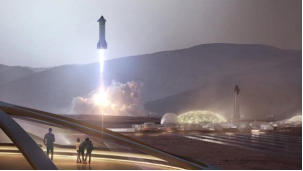
Figure 1. Digital rendering of a family observing a Starship launch and the integrated Martian colony, including habitats and solar arrays. Source: SpaceX. https://www.spacex.com/
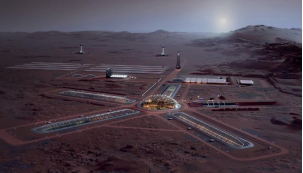
Figure 2. SpaceX. (2024). Mars base alpha master plan [Digital architectural rendering]. Source: SpaceX Media Gallery https://www.spacex.com/human-spaceflight/mars/
[26]
SpaceX. (2024). Mars base alpha master plan [Digital architectural rendering]. SpaceX Media Gallery.
2. Methodology for the Actualization of Space Architecture
The methodology for the actualization of space architecture employs policy-oriented, qualitative research aimed at evaluating the feasibility, strategic imperatives, and implementation pathways for integrating space architecture into Nigeria’s national space policy. The framework is structured to translate technical architectural capabilities into actionable policy recommendations for NASRDA.
To ensure evidence-based policy formulation, data were gathered and cross-referenced from three distinct source types:
1) Primary Institutional Review: The review of statutory policy frameworks governing Nigerian science and education, specifically the National Space Policy and Programme (2001), NASRDA’s 25-Year Space Roadmap (2005), and the NUC’s Core Curriculum and Minimum Academic Standards (CCMAS) (2023).
2) Global Benchmark Analytics: A review of premier global space architecture ecosystems—specifically the Sasakawa International Center for Space Architecture (SICSA) at the University of Houston, USA, and TU Wien, Austria—to extract scalable structural parameters for academic and facility deployment.
3) Infrastructure Diagnostic Assessment: An assessment of existing domestic assets across active space centers in Nigeria (e.g., CBSS Enugu, CSTD Abuja) to evaluate their capacity to host low-fidelity analogue environments and small-scale test beds.
The results of the reviews support that the introduction and practice of space architecture in Nigeria will require a multifaceted approach involving government, academia, international and industry cooperation. This will involve different phases outlined as a strategic plan for the actualization and presented below.
2.1. First Phase: Policy and Curriculum Blueprint
The objective of the first phase is to establish the legal framework and academic foundation for space architecture. NASRDA as the lead institution has the strategic approach and regulatory authority of the national space policy as approved by the presidency. The Agency will provide the legal framework and national roadmap for space architecture aligned with Nigeria’s space policy. NASRDA will provide the technical requirements document (TRD) for space architecture
[7]
Federal Government of Nigeria. (2001). National space policy and Programme. National Space Research and Development Agency (NASRDA).
[7]
.
The National Universities Commission (NUC) will play the role of ensuring that space architecture is integrated in the academic and research ecosystem in Nigerian universities and other recognized institutions of higher learning. NUC will use NASRDA’s technical requirements document to create the core curriculum and minimum academic standard for a master of science in space architecture, ensuring it is recognized as a degree in Nigerian universities.
2.2. Second Phase: Physical and Academic Infrastructure
The objective of the second phase will be to build the physical and academic infrastructure. NASRDA’s role will be to set up a dedicated Centre for Space Architecture. This center will coordinate architectural and habitat design for space exploration, coordinate research, fund pilot projects, and engage with stakeholders.
The NUC will give approval to Nigerian universities
[11]
National Universities Commission. (2023). Core curriculum and minimum academic standards (CCMAS) for Nigerian universities.
, especially those with the best-performing faculties in Engineering, Architecture and Material Science. Such universities will be selected from the Northern, Southern, Eastern and Western parts of Nigeria. The selected universities will serve as a pioneer institution and will be equipped with state-of-the-art facilities for the first accredited space architecture programs, and they will explore extraterrestrial design and sustainability in extreme environments. These institutions will also develop the core curriculum and minimum academic standards. Facilities like Design studios, laboratories, and workshops as required will be provided in these institutions to create and develop ideas.
2.3. Third Phase: National Space Mission and Global Partnerships
The objective of this phase will be the commissioning of a habitat for a space mission. NASRDA’s role is to lead the practical testing of human-rated space infrastructure at domestic analogue research sites. NASRDA will partner with the private sector and fund National Lunar Habitat Design Competitions to create space mission prototypes. The NUC role will be to oversee postgraduate specialization and facilitate global fellowships for Nigerian space architects.
3. The Relevance of Space Architecture in Nigeria
3.1. Human Capacity Development
Investing in space architecture will cultivate a highly skilled, interdisciplinary workforce at the intersection of design, engineering, and environmental science. This initiative will significantly strengthen Nigeria’s human capital development in the fields of Science, Technology, Engineering, and Mathematics (STEM), producing a new generation of space architects. Graduates will be equipped for diverse, high-impact careers across the global space industry, national research agencies, sustainable infrastructure firms, and advanced academia
[12]
SpaceArchitect.org. (2021, February 28). How to become a space architect. Retrieved from
Architectural innovations designed for extreme space environments such as resilient structures, advanced energy systems, and closed-loop life support systems can be adapted to solve critical issues on Earth. In Nigeria, these technologies offer high-performance solutions for sustainable housing in arid regions, disaster-resilient infrastructure, and resource-efficient urban development
[12]
SpaceArchitect.org. (2021, February 28). How to become a space architect. Retrieved from
Engaging in space architecture will push the boundaries of national innovation in material science, robotics, life-support systems, and sustainable design. This expertise can yield significant spin-off benefits for terrestrial architecture and other industrial sectors in Nigeria, fostering a high-tech ecosystem capable of solving complex environmental and structural challenges
[13]
Vengerova, G., Lipsky, I., Hutchinson, G. A., Averesch, N. J. H., & Berliner, A. J. (2024). Space bioprocess engineering as a potential catalyst for sustainability. Nature Sustainability, 7, 238–246.
As Nigeria strategically diversifies its economy beyond crude oil and petroleum products, investing in space architecture will create a high-tech industrial niche
[7]
Federal Government of Nigeria. (2001). National space policy and Programme. National Space Research and Development Agency (NASRDA).
[7]
. This sector can generate specialized employment, stimulates the local manufacturing of space-grade materials, and attracts Foreign Direct Investment (FDI) by positioning Nigeria as a regional leader in Africa's growing space economy
[14]
Klinger, J. (2020). China, Africa, and the rest: Recent trends in space science, technology, and satellite development (CARI Working Paper No. 38). Johns Hopkins University School of Advanced International Studies.
[14]
.
3.5. Global Collaboration
Through participation in international space architecture projects, Nigeria can secure its position on the global stage, driving diplomatic collaborations and ensuring that the country plays a vital role in the future of humanity’s exploration and transition into space habitation
[15]
Croshier, R. (2022). Opportunities for US–Africa space cooperation and development (CGD Policy Paper 256). Center for Global Development.
. NASRDA can become a key player in the future of space migration by positioning itself through early, strategic involvement in habitat design and orbital infrastructure design and development
[7]
Federal Government of Nigeria. (2001). National space policy and Programme. National Space Research and Development Agency (NASRDA).
[7]
.
4. Potential Roles for Space Architects
4.1. Design and Development of Space Infrastructure and Habitats
Space architects are involved in the design and planning of space-based assets, including potential future orbital stations or lunar bases, focusing on life support systems and specialized ground-based stations
[17]
Irawan, J., De Kestelier, X., Ozruh, L., Cullen, D., Solly, J., & Angelaki, E. M. (2026). Design of a scalable framework for lunar habitats (Open Space Innovation Program Research Brief). Cranfield University & European Space Agency.
. A space architect works closely with engineers, scientists, and other space experts to develop human-centered designs that ensure the safety and comfort of humans. The designs will not only be aesthetically pleasing but also highly functional, addressing issues like radiation protection, microgravity adaptation, resource management, and adapting terrestrial architecture to suit extreme environments
[18]
Inocente, D. (2025, September 15). Earth to space. Daniel Inocente Architecture.
Space architects can apply space design principles to Earth-based, resource-constrained environments. This involves creating eco-friendly, sustainable, and energy-efficient structures that reduce waste, much like space habitats. In a space station, every drop of sweat and urine is purified back into drinking water
[19]
Konstantatou, M. (2023). Learning lessons from Earth and Space towards sustainable multi-planetary design. SPOOL, 10(1), 45–62.
Volpin, F., Badeti, U., Wang, C., Jiang, J., Vogel, J., Freguia, S., Fam, D., Cho, J., Phuntsho, S., & Shon, H. K. (2020). Urine treatment on the International Space Station: Current practice and novel approaches. Membranes, 10(11), Article 327.
. Space architects can apply these circular economy principles to design “off-grid” housing in arid regions of Nigeria, creating homes that require zero external water or power connections. The materials developed for the harsh lunar night (extreme temperature swings) can be used to create emergency housing that is fireproof, thermally insulated, and rapidly deployable for internally displaced persons (IDPs) or victims of flooding
[21]
Bannova, O. K. (2016). Current trends in incorporating new technologies into housing industry. Chalmers University of Technology.
. As Nigerian cities grow in population, the “space-saving” architectural modular designs used in space stations can provide blueprints for hyper-efficient, high-quality micro-apartments in urban centers like Lagos
[19]
Konstantatou, M. (2023). Learning lessons from Earth and Space towards sustainable multi-planetary design. SPOOL, 10(1), 45–62.
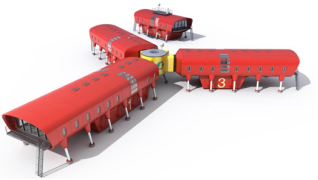
Figure 3. Aerial layout of the modular, elevated living and research wings of the Juan Carlos I, Antarctic Research Station. Designed by Hugh Broughton Architects & ARC. Source: https://spacearchitect.org/portfolio-item/juan-carlos-1-antarctic-base/.
[27]
Space Architecture Technical Committee. (n.d.). Juan Carlos 1 Spanish Antarctic Base. SpaceArchitect.org.
Space architecture is a “gateway” discipline. It is often more relatable to students than pure physics or calculus because it is visual and tangible. The Next Generation can be inspired by introducing space architecture into Nigerian universities; the field merges the arts (design/creative thinking) with pure sciences. This “STEAM” (Science, Technology, Engineering, Arts, and Mathematics) approach attracts a more diverse range of students. Design competitions and institutionalized research initiatives, modeled after global frameworks like the Exploration Habitat (X-Hab) Academic Innovation Challenge, will provide Nigerian university students and researchers with a critical platform to develop homegrown solutions to real-world NASRDA infrastructural, architectural, and engineering problems. This provides hands-on experience in project management, 3D modeling, and materials science. Developing this field in Nigeria creates a specialized workforce that is not just prepared for the space race but is equipped with the high-tech design skills needed for the global 21st-century economy
[22]
Space Foundation. (2026). Space education: Driving workforce development and economic opportunity for students.
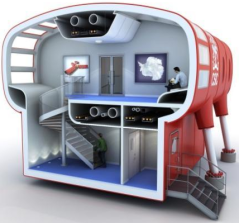
Figure 4. Cross-section, elevated living and research wings of the Juan Carlos I, Antarctic Research Station. Designed by Hugh Broughton Architects, & ARC. Source: https://spacearchitect.org/portfolio-item/juan-carlos-1-antarctic-base/.
[27]
Space Architecture Technical Committee. (n.d.). Juan Carlos 1 Spanish Antarctic Base. SpaceArchitect.org.
Space programs are generally expensive ventures. To overcome the high capital requirements of space programs, NASRDA would adopt a staged pilot model integrated with a Public-Private Partnership (PPP) framework by breaking development into phases, and moving from lab-scale prototypes to operational analogs. This approach invites private sector investment, transitioning space architecture from a traditional government expense into a bankable, multi-sectorial economic opportunity
[24]
NASRDA Media and Corporate Communications. (2026, January 20). Adepoju calls for stronger public-private partnerships to drive Nigeria’s space economy.
[25]
Iderawumi, M. (2024, September 10). The next chapter in Nigerian space programme: Insights from NASRDA’s leadership. Space in Africa.
While Nigeria possesses a robust pool of skilled architects and engineers, the transition to space-specific design requires a specialized shift in technical competency. To address this, a strategic partnership with international space agencies and universities is essential. By establishing a visiting faculty program, Nigeria can import global best practices in human-rated systems. Furthermore, the collaboration between NASRDA and the NUC will foster an environment where theoretical research meets practical mission requirements.
5.3. Infrastructure
The primary challenge lies in the lack of specialized space-grade facilities. However, NASRDA can overcome this by adopting a tiered infrastructure strategy. By establishing an analog test-bed and low-fidelity terrestrial simulators, NASRDA and participating universities can conduct high-value research in life support, human factors, and material durability at a fraction of the cost. These test beds will serve as the essential bridge between academic theory and the execution of flight-ready space architecture.
5.4. Private Sector Involvement
Currently, architectural firms and construction companies primarily focus on terrestrial development projects. These firms will be encouraged to invest in space-related projects and collaborate with NASRDA. The goal of this collaboration would be to create innovative ideas and structures that meet the unique demands of space environments.
6. Conclusion
Space architecture is essential to every phase of mission development, ensuring that safety, habitability, and sustainability are seamlessly integrated into spacecraft and habitat design. By prioritizing human-centric factors, this discipline renders exploration beyond Earth both viable and practical. In the coming years, it will remain a vital nexus of collaboration for astronauts, engineers, and scientists globally. As an emerging frontier within Nigeria's space sector, space architecture offers a unique opportunity to bridge the gap between terrestrial sustainability and the rigorous demands of extraterrestrial exploration.
7. Recommendations
The National Space Research and Development Agency (NASRDA) should officially integrate space architecture into the national space strategy by providing a Technical Requirements Document (TRD). This would serve as the legal and operational roadmap, ensuring that the discipline is recognized not just as an academic pursuit but as a regulatory authority-led initiative aligned with Nigeria’s space roadmap.
The National Universities Commission (NUC) should formally approve space architecture as a specialized postgraduate program. By utilizing NASRDA’s technical requirements to create a core curriculum for a Master of Science in Space Architecture, NUC should ensure that degrees are recognized nationally and meet the minimum academic standards required to produce a globally competitive workforce.
Nigeria should invest in a dedicated space architecture centre to coordinate habitat design and funding for pilot projects. This should include the development of analogue research sites and terrestrial simulators, which allow for the practical testing of life-support systems and material durability.
Abbreviations
NASRDA
National Space Research and Development Agency
SICSA
Sasakawa International Center for Space Architecture
ISU
International Space University
NUC
National Universities Commission
PPP
Public-Private Partnership
FDI
Foreign Direct Investment
STEM
Science, Technology, Engineering and Mathematics
CSTD
Centre for Satellite Technology Development
CBSS
Centre for Basic Space Science
CSTP
Centre for Space Transport and Propulsion
CGG
Centre for Geodesy and Geodynamics
CAR
Centre for Atmospheric Research
NCRS
National Centre for Remote Sensing
UNN
University of Nigeria Nsukka
STEAM
Science, Technology, Engineering, Arts, and Mathematics
Author Contributions
Chukwuka Prosper Chukwuebuka: Conceptualization, Resources, Writing – original draft
The authors have no conflict of interest in this work.
References
[1]
Howe, A. S., & Sherwood, B. (Eds.). (2009). Out of this world: The new field of space architecture. American Institute of Aeronautics and Astronautics.
[2]
O’Neill, G. K. (1977). The high frontier: Human colonies in space. William Morrow & Company.
[3]
O’Neill, G. K. (1981). 2081: A hopeful view of the human future. Simon & Schuster.
[4]
Akinade, S. (2024). Space development in Nigeria. Olisa Agbakoba Legal.
Vengerova, G., Lipsky, I., Hutchinson, G. A., Averesch, N. J. H., & Berliner, A. J. (2024). Space bioprocess engineering as a potential catalyst for sustainability. Nature Sustainability, 7, 238–246.
Klinger, J. (2020). China, Africa, and the rest: Recent trends in space science, technology, and satellite development (CARI Working Paper No. 38). Johns Hopkins University School of Advanced International Studies.
[15]
Croshier, R. (2022). Opportunities for US–Africa space cooperation and development (CGD Policy Paper 256). Center for Global Development.
Irawan, J., De Kestelier, X., Ozruh, L., Cullen, D., Solly, J., & Angelaki, E. M. (2026). Design of a scalable framework for lunar habitats (Open Space Innovation Program Research Brief). Cranfield University & European Space Agency.
Volpin, F., Badeti, U., Wang, C., Jiang, J., Vogel, J., Freguia, S., Fam, D., Cho, J., Phuntsho, S., & Shon, H. K. (2020). Urine treatment on the International Space Station: Current practice and novel approaches. Membranes, 10(11), Article 327.
NASRDA Media and Corporate Communications. (2026, January 20). Adepoju calls for stronger public-private partnerships to drive Nigeria’s space economy.
[25]
Iderawumi, M. (2024, September 10). The next chapter in Nigerian space programme: Insights from NASRDA’s leadership. Space in Africa.
Chukwuebuka, C. P., Sam-Amobi, C., Chukwunonyerem, J., Obumneme, E. C., Cletus, O. E., et al. (2026). Space Architecture: The New Frontier for Nigeria. Science Futures, 2(3), 196-202. https://doi.org/10.11648/j.scif.20260203.12
Chukwuebuka, C. P.; Sam-Amobi, C.; Chukwunonyerem, J.; Obumneme, E. C.; Cletus, O. E., et al. Space Architecture: The New Frontier for Nigeria. Sci. Futures2026, 2(3), 196-202. doi: 10.11648/j.scif.20260203.12
Chukwuebuka CP, Sam-Amobi C, Chukwunonyerem J, Obumneme EC, Cletus OE, et al. Space Architecture: The New Frontier for Nigeria. Sci Futures. 2026;2(3):196-202. doi: 10.11648/j.scif.20260203.12
@article{10.11648/j.scif.20260203.12,
  author = {Chukwuka Prosper Chukwuebuka and Chinwe Sam-Amobi and Justus Chukwunonyerem and Ejianya Chiogo Obumneme and Odira Eze Cletus and Ezeoyili Nnamdi Martin},
  title = {Space Architecture: The New Frontier for Nigeria},
  journal = {Science Futures},
  volume = {2},
  number = {3},
  pages = {196-202},
  doi = {10.11648/j.scif.20260203.12},
  url = {https://doi.org/10.11648/j.scif.20260203.12},
  eprint = {https://article.sciencepublishinggroup.com/pdf/10.11648.j.scif.20260203.12},
  abstract = {The New Frontier; space architecture is an emerging and specialized field in the space sector. Space architecture plays a vital role in the development of facilities like space research stations, analog habitats, and disaster-resilient structures. It also involves the study of human factors and how humans interact with their environment in confined and extreme conditions. While the ultimate goal of space architecture is to design for outer space, a significant portion of the work is done right here on Earth. Nigeria is a hub of diverse talent in Africa and the globe, particularly in the creative sectors, with a young tech-savvy workforce and a growing number of global professionals ready to drive innovative ideas. The practice of space architecture in Nigeria will open a new world of possibilities in space research and exploration. This paper utilizes a qualitative research methodology; the paper explains the necessity of integrating space architecture into the National Space Research and Development Agency’s vision and mission, so as to drive space science development in Nigeria. It highlights the current Space Centres in Nigeria, identifies key challenges, and proposes strategic pathways for integrating space architecture into Nigeria’s space development plans. The recommendations include the introduction of space architecture as a science field in Nigeria. The National Space Research and Development Agency (NASRDA), as the lead agency in collaboration with the National Universities Commission (NUC), will be pivotal to the development of this field in the higher institutions and in the establishment of a specialized centre for space architecture in Nigeria.},
 year = {2026}
}
TY  - JOUR
T1  - Space Architecture: The New Frontier for Nigeria
AU  - Chukwuka Prosper Chukwuebuka
AU  - Chinwe Sam-Amobi
AU  - Justus Chukwunonyerem
AU  - Ejianya Chiogo Obumneme
AU  - Odira Eze Cletus
AU  - Ezeoyili Nnamdi Martin
Y1  - 2026/06/26
PY  - 2026
N1  - https://doi.org/10.11648/j.scif.20260203.12
DO  - 10.11648/j.scif.20260203.12
T2  - Science Futures
JF  - Science Futures
JO  - Science Futures
SP  - 196
EP  - 202
PB  - Science Publishing Group
SN  - 3070-6289
UR  - https://doi.org/10.11648/j.scif.20260203.12
AB  - The New Frontier; space architecture is an emerging and specialized field in the space sector. Space architecture plays a vital role in the development of facilities like space research stations, analog habitats, and disaster-resilient structures. It also involves the study of human factors and how humans interact with their environment in confined and extreme conditions. While the ultimate goal of space architecture is to design for outer space, a significant portion of the work is done right here on Earth. Nigeria is a hub of diverse talent in Africa and the globe, particularly in the creative sectors, with a young tech-savvy workforce and a growing number of global professionals ready to drive innovative ideas. The practice of space architecture in Nigeria will open a new world of possibilities in space research and exploration. This paper utilizes a qualitative research methodology; the paper explains the necessity of integrating space architecture into the National Space Research and Development Agency’s vision and mission, so as to drive space science development in Nigeria. It highlights the current Space Centres in Nigeria, identifies key challenges, and proposes strategic pathways for integrating space architecture into Nigeria’s space development plans. The recommendations include the introduction of space architecture as a science field in Nigeria. The National Space Research and Development Agency (NASRDA), as the lead agency in collaboration with the National Universities Commission (NUC), will be pivotal to the development of this field in the higher institutions and in the establishment of a specialized centre for space architecture in Nigeria.
VL  - 2
IS  - 3
ER  -
Chukwuebuka, C. P., Sam-Amobi, C., Chukwunonyerem, J., Obumneme, E. C., Cletus, O. E., et al. (2026). Space Architecture: The New Frontier for Nigeria. Science Futures, 2(3), 196-202. https://doi.org/10.11648/j.scif.20260203.12
Chukwuebuka, C. P.; Sam-Amobi, C.; Chukwunonyerem, J.; Obumneme, E. C.; Cletus, O. E., et al. Space Architecture: The New Frontier for Nigeria. Sci. Futures2026, 2(3), 196-202. doi: 10.11648/j.scif.20260203.12
Chukwuebuka CP, Sam-Amobi C, Chukwunonyerem J, Obumneme EC, Cletus OE, et al. Space Architecture: The New Frontier for Nigeria. Sci Futures. 2026;2(3):196-202. doi: 10.11648/j.scif.20260203.12
@article{10.11648/j.scif.20260203.12,
  author = {Chukwuka Prosper Chukwuebuka and Chinwe Sam-Amobi and Justus Chukwunonyerem and Ejianya Chiogo Obumneme and Odira Eze Cletus and Ezeoyili Nnamdi Martin},
  title = {Space Architecture: The New Frontier for Nigeria},
  journal = {Science Futures},
  volume = {2},
  number = {3},
  pages = {196-202},
  doi = {10.11648/j.scif.20260203.12},
  url = {https://doi.org/10.11648/j.scif.20260203.12},
  eprint = {https://article.sciencepublishinggroup.com/pdf/10.11648.j.scif.20260203.12},
  abstract = {The New Frontier; space architecture is an emerging and specialized field in the space sector. Space architecture plays a vital role in the development of facilities like space research stations, analog habitats, and disaster-resilient structures. It also involves the study of human factors and how humans interact with their environment in confined and extreme conditions. While the ultimate goal of space architecture is to design for outer space, a significant portion of the work is done right here on Earth. Nigeria is a hub of diverse talent in Africa and the globe, particularly in the creative sectors, with a young tech-savvy workforce and a growing number of global professionals ready to drive innovative ideas. The practice of space architecture in Nigeria will open a new world of possibilities in space research and exploration. This paper utilizes a qualitative research methodology; the paper explains the necessity of integrating space architecture into the National Space Research and Development Agency’s vision and mission, so as to drive space science development in Nigeria. It highlights the current Space Centres in Nigeria, identifies key challenges, and proposes strategic pathways for integrating space architecture into Nigeria’s space development plans. The recommendations include the introduction of space architecture as a science field in Nigeria. The National Space Research and Development Agency (NASRDA), as the lead agency in collaboration with the National Universities Commission (NUC), will be pivotal to the development of this field in the higher institutions and in the establishment of a specialized centre for space architecture in Nigeria.},
 year = {2026}
}
TY  - JOUR
T1  - Space Architecture: The New Frontier for Nigeria
AU  - Chukwuka Prosper Chukwuebuka
AU  - Chinwe Sam-Amobi
AU  - Justus Chukwunonyerem
AU  - Ejianya Chiogo Obumneme
AU  - Odira Eze Cletus
AU  - Ezeoyili Nnamdi Martin
Y1  - 2026/06/26
PY  - 2026
N1  - https://doi.org/10.11648/j.scif.20260203.12
DO  - 10.11648/j.scif.20260203.12
T2  - Science Futures
JF  - Science Futures
JO  - Science Futures
SP  - 196
EP  - 202
PB  - Science Publishing Group
SN  - 3070-6289
UR  - https://doi.org/10.11648/j.scif.20260203.12
AB  - The New Frontier; space architecture is an emerging and specialized field in the space sector. Space architecture plays a vital role in the development of facilities like space research stations, analog habitats, and disaster-resilient structures. It also involves the study of human factors and how humans interact with their environment in confined and extreme conditions. While the ultimate goal of space architecture is to design for outer space, a significant portion of the work is done right here on Earth. Nigeria is a hub of diverse talent in Africa and the globe, particularly in the creative sectors, with a young tech-savvy workforce and a growing number of global professionals ready to drive innovative ideas. The practice of space architecture in Nigeria will open a new world of possibilities in space research and exploration. This paper utilizes a qualitative research methodology; the paper explains the necessity of integrating space architecture into the National Space Research and Development Agency’s vision and mission, so as to drive space science development in Nigeria. It highlights the current Space Centres in Nigeria, identifies key challenges, and proposes strategic pathways for integrating space architecture into Nigeria’s space development plans. The recommendations include the introduction of space architecture as a science field in Nigeria. The National Space Research and Development Agency (NASRDA), as the lead agency in collaboration with the National Universities Commission (NUC), will be pivotal to the development of this field in the higher institutions and in the establishment of a specialized centre for space architecture in Nigeria.
VL  - 2
IS  - 3
ER  -





 Share This Article
 Twitter
 Linked In
 Facebook
 Copy
Copy Download