Research Article | | Peer-Reviewed

Clinical Outcomes of Aggressive Multimodal Management in Cervicothoracic Myofascial Pain Syndrome: A Prospective Controlled Observational Study

Received: 14 March 2026     Accepted: 26 March 2026     Published: 8 July 2026
Views:       Downloads:
Abstract

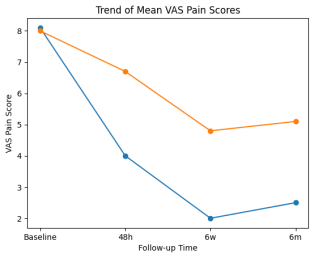
Myofascial pain syndrome (MPS) is one of the most common causes of chronic neck and shoulder pain encountered in clinical practice; however, despite its high prevalence, it is frequently underdiagnosed because of overlapping clinical presentations with other musculoskeletal and neurological disorders. The condition is characterized by hyperirritable trigger points within skeletal muscles that produce localized tenderness, referred pain, restricted mobility, and functional impairment. This prospective controlled observational study aimed to evaluate the clinical outcomes of aggressive multimodal therapy compared with conventional conservative treatment in patients with cervicothoracic MPS. Sixty patients diagnosed with cervicothoracic MPS were enrolled and allocated into two groups: Group A (n = 30) received aggressive multimodal therapy, while Group B (n = 30) received conventional conservative treatment. Baseline evaluation included assessment of pain intensity using the Visual Analog Scale (VAS), cervical range of motion measurements, and trigger point mapping, with follow-up assessments conducted at 48 hours, 6 weeks, and 6 months. Baseline pain intensity was comparable between the two groups, with mean VAS scores of 8.1 in Group A and 8.0 in Group B. The intervention group demonstrated significantly greater pain reduction at all follow-up time points, with mean VAS scores decreasing to 4.0 versus 6.7 at 48 hours, 2.0 versus 4.8 at 6 weeks, and 2.5 versus 5.1 at 6 months in Groups A and B, respectively. Significant clinical improvement was observed in 80% of patients receiving aggressive multimodal therapy compared with 40% of those receiving conventional treatment (p < 0.001). These findings suggest that aggressive multimodal therapy, consisting of trigger point injections and structured rehabilitation, provides superior pain relief and functional recovery compared with conventional conservative management in patients with cervicothoracic myofascial pain syndrome.

Published in Rehabilitation Science (Volume 11, Issue 2)
DOI 10.11648/j.rs.20261102.12
Page(s) 37-43
Creative Commons

This is an Open Access article, distributed under the terms of the Creative Commons Attribution 4.0 International License (http://creativecommons.org/licenses/by/4.0/), which permits unrestricted use, distribution and reproduction in any medium or format, provided the original work is properly cited.

Copyright

Copyright © The Author(s), 2026. Published by Science Publishing Group

Keywords

Myofascial Pain, Trigger Point Injection, Neck and Shoulder Pain, Posture, Pain

1. Introduction
Myofascial pain syndrome (MPS) is a common yet frequently overlooked cause of chronic musculoskeletal pain and has been recognized as a major contributor to pain and dysfunction in clinical practice . It is characterized by hyperirritable trigger points located within taut bands of skeletal muscle fibers.
Compression of these trigger points produces:
1) Localized pain
2) Referred pain patterns
3) Muscle stiffness
4) Functional limitation
The cervical and shoulder girdle muscles—particularly:
1) Upper trapezius
2) Levator scapulae
3) Scalenes
are commonly affected.
Patients often present with:
1) Chronic neck pain
2) Shoulder stiffness
3) Headache
4) Fatigue
5) Sleep disturbance
6) Reduced concentration
Occupational factors such as prolonged computer use, poor posture, repetitive strain, and ergonomic stressors contribute significantly to the development of myofascial pain.
Traditional conservative treatment approaches often provide partial relief. Targeted trigger point therapy combined with rehabilitation strategies may produce superior clinical outcomes.
Materials and Methods
Study Design
Prospective controlled observational clinical study.
Study Setting
Department of Physical Medicine and Rehabilitation, tertiary care teaching hospital.
Study Duration
18 months.
Ethical Considerations
The study followed ethical principles described in the Declaration of Helsinki. Written informed consent was obtained from all participants.
Patient Allocation
A total of 60 patients diagnosed with cervicothoracic myofascial pain syndrome were included.
Table 1. Group of patientsa.

Group

Treatment

Patients

Group A

Aggressive multimodal therapy

30

Group B

Conventional conservative therapy

30

Inclusion Criteria
1) Age 18–60 years
2) Chronic neck or shoulder pain >3 months
3) Palpable trigger points
4) Reproduction of pain with trigger point compression
5) VAS score ≥6
Exclusion Criteria
1) Cervical radiculopathy with neurological deficit
2) Fibromyalgia syndrome
3) Inflammatory rheumatic diseases
4) Pregnancy
5) Severe systemic illness
6) Contraindication to injection therapy
Baseline Assessment
All patients underwent clinical history taking, pain mapping, trigger point examination, Visual Analog Scale (VAS) as-sessment, cervical range of motion measurement, and postural analysis. Pressure threshold assessment has been re-ported as a useful adjunctive tool for the diagnosis and evaluation of treatment outcomes in myofascial pain syndrome .
2. Treatment Protocol
Group A – Aggressive Multimodal Therapy
1) Trigger point injection (2% Lidocaine + Methylprednisolone)
2) Accessory nerve infiltration
3) Botulinum toxin injection in selected cases
4) Short course analgesics
5) Structured stretching exercises
6) Posture correction and ergonomic counseling
7) Vitamin D and iron supplementation
Group B – Conventional Therapy
1) Nonsteroidal Anti-inflammatory drugs (NSAIDs)
2) Muscle relaxants
3) Physiotherapy sessions
4) General stretching exercises
5) Ergonomic advice
No trigger point injections were given in this group.
Outcome Measures
Primary Outcome
Reduction in VAS pain score.
Secondary Outcomes
1) Cervical range of motion improvement
2) Reduction in trigger point tenderness
3) Functional improvement
4) Patient satisfaction
5) Need for repeat intervention
Statistical Analysis
Continuous variables were expressed as mean ± SD.
Statistical tests used:
1) Paired t-test
2) Independent t-test
3) Multiple linear regression
A p-value <0.05 was considered statistically significant.
3. Results
Table 2. Baseline Characteristics.

Variable

Group A

Group B

Patients

30

30

Mean age

38.6 ± 9.2

39.1 ± 8.7

Female

21 (70%)

20 (67%)

Male

9 (30%)

10 (33%)

Mean symptom duration

15 ± 6 months

14 ± 7 months

No significant baseline difference was observed.
Table 3. VAS Pain Scores.

Time

Group A

Group B

Baseline

8.1

8.0

48 hours

4.0

6.7

6 weeks

2.0

4.8

6 months

2.5

5.1

Pain reduction was significantly greater in Group A (p < 0.001).
Figure 1. Trend of Mean VAS Pain Score.
Table 4. Clinical Outcome.

Outcome

Group A

Group B

Significant improvement

24 (80%)

12 (40%)

Moderate improvement

4 (13%)

10 (33%)

Mild improvement

2 (7%)

8 (27%)

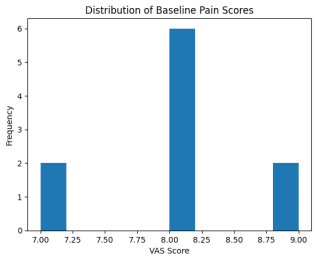
Figure 2. Distribution of Baseline Pain Scores.
Table 5. Cervical Range of Motion Improvement.

Outcome

Group A

Group B

Improved ROM

25 (83%)

15 (50%)

No change

5 (17%)

15 (50%)

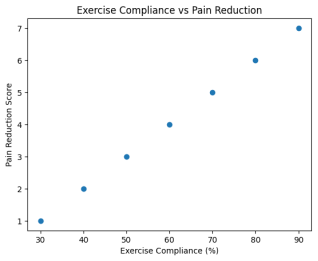
Figure 3. Exercise Compliance vs Pain Reduction.
Table 6. Regression Analysis.

Variable

Beta

p-value

Age

0.12

0.18

Baseline VAS

0.44

0.01

Exercise compliance

−0.56

0.003

Exercise compliance showed the strongest association with sustained pain reduction.
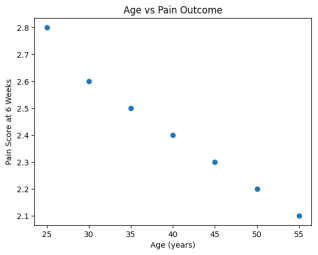
Figure 4. Age vs Pain Outcome.
Additional Clinical Tables
Table 7. Ergonomic Risk Factors.

Factor

Patients

Percentage

Prolonged computer use

16

53%

Poor workstation ergonomics

18

60%

Forward head posture

20

67%

Smartphone overuse

14

47%

Overhead activity

9

30%

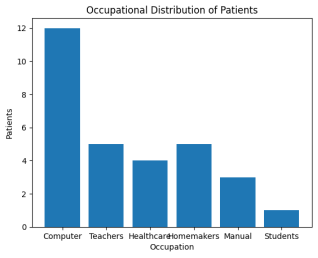
Table 8. Occupational Distribution.

Occupation

Patients

Percentage

Computer professionals

12

40%

Teachers

5

17%

Healthcare workers

4

13%

Homemakers

5

17%

Manual workers

3

10%

Students

1

3%

Figure 5. Occupational Distribution of Pain.
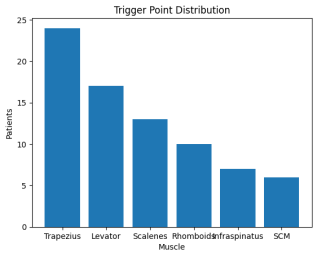
Table 9. Trigger Point Distribution.

Muscle

Patients

Percentage

Upper trapezius

24

80%

Levator scapulae

17

57%

Scalenes

13

43%

Rhomboids

10

33%

Infraspinatus

7

23%

Sternocleidomastoid

6

20%

Figure 6. Trigger Point Distribution.
4. Discussion
The present prospective controlled observational study demonstrates that aggressive multimodal therapy provides significantly superior outcomes compared with conventional conservative treatment in patients with cervicothoracic myofascial pain syndrome. Patients treated with trigger point injections, accessory nerve infiltration, and structured rehabilitation exhibited rapid pain reduction, improved cervical mobility, and better functional recovery compared with those receiving standard conservative therapy alone.
One of the most striking findings of this study was the rapid reduction in pain within 48 hours following trigger point intervention. This observation strongly supports the hypothesis that active myofascial trigger points represent a major peripheral pain generator in cervicothoracic myofascial pain syndrome. Trigger points are known to contain elevated levels of nociceptive substances such as substance P, calcitonin gene-related peptide, bradykinin, and inflammatory cytokines, which contribute to localized hyperalgesia and referred pain patterns . Injection therapy may interrupt this pathological cycle by reducing nociceptive input, improving local circulation, and promoting muscle relaxation. Various trigger point management techniques, including injection therapy, have been shown to provide clinically meaningful pain relief and functional improvement in patients with myofascial pain syn-drome .
The significant improvement in cervical range of motion observed in the intervention group further highlights the role of trigger points in restricting muscle function. Previous studies have demonstrated that sustained contraction of muscle fibers within trigger points results in localized ischemia and metabolic stress, leading to pain and reduced muscle extensibility . By deactivating these trigger points, targeted interventions allow restoration of normal muscle length and improved joint mobility.
The superiority of multimodal therapy observed in the present study is consistent with the integrated model of myofascial pain management proposed by Travell and Simons, who emphasized the importance of addressing both the peripheral trigger points and the contributing biomechanical factors . Conservative treatment strategies such as analgesics and physiotherapy alone often fail to provide sustained relief because they do not directly deactivate the trigger points responsible for nociceptive input.
Another important finding of the present study was the strong association between exercise compliance and long-term pain reduction. Regression analysis identified exercise adherence as the strongest predictor of sustained clinical improvement. Rehabilitation exercises likely contribute to recovery by improving muscle flexibility, correcting biomechanical imbalance, and restoring normal neuromuscular control. Previous studies have emphasized that stretching and strengthening programs targeting the cervical and scapular musculature are essential for preventing recurrence of myofascial pain .
Occupational analysis in the present study revealed that computer professionals constituted the largest group of affected patients, accounting for approximately 40% of the study population. This finding is consistent with previous epidemiological studies demonstrating a strong association between prolonged computer work, forward head posture, and chronic neck pain . Sustained static postures increase mechanical load on cervical muscles, particularly the upper trapezius and levator scapulae, predisposing them to the development of trigger points.
Ergonomic factors therefore play a critical role in both the development and recurrence of myofascial pain syndrome. In the present study, a high proportion of patients demonstrated forward head posture and poor workstation ergonomics. Correction of these biomechanical abnormalities through ergonomic counseling and posture retraining was therefore included as a key component of the multimodal treatment strategy.
The role of botulinum toxin injections in selected patients also deserves consideration. Botulinum toxin reduces acetylcholine release at the neuromuscular junction, thereby decreasing sustained muscle contraction and trigger point activity . Although only selected patients in this study required botulinum toxin therapy, its inclusion may provide additional benefit in refractory cases of myofascial pain syndrome.
The findings of the present study are consistent with previous research supporting the effectiveness of trigger point therapy in chronic neck pain. Dommerholt and colleagues reported that targeted trigger point interventions combined with rehabilitation strategies significantly improved pain and functional outcomes in patients with myofascial pain syndrome . Similarly, Shah et al. demonstrated that biochemical abnormalities within trigger points can be normalized following targeted injection therapy .
From a clinical perspective, the results of this study emphasize the importance of early diagnosis and targeted management of myofascial trigger points. Many patients with cervicothoracic myofascial pain are misdiagnosed with nonspecific neck pain, tension headache, or cervical spondylosis, leading to prolonged use of analgesics without addressing the underlying pathology. Early identification of trigger points and implementation of multimodal therapy may therefore prevent chronic pain progression and reduce long-term disability.
Another clinically relevant observation is the role of central sensitization in chronic myofascial pain. Persistent nociceptive input from trigger points can lead to increased excitability within central pain pathways, resulting in widespread pain sensitivity and reduced pain thresholds . Timely deactivation of trigger points may therefore help prevent the development of chronic centralized pain states.
The present study also highlights the importance of a multidisciplinary rehabilitation approach in the management of myofascial pain syndrome. Optimal outcomes were achieved through the combined use of interventional pain management techniques, rehabilitation exercises, ergonomic correction, and patient education. This integrated approach addresses both the biological and biomechanical components of the disorder.
Despite the encouraging results observed in this study, several limitations should be considered. First, the study was conducted at a single tertiary care center, which may limit the generalizability of the findings. Second, although the inclusion of a control group strengthened the study design, the observational nature of the study may still introduce potential bias. Third, long-term outcomes beyond six months were not evaluated.
Future research should focus on randomized controlled trials with larger patient populations and longer follow-up periods to further validate the effectiveness of aggressive multimodal therapy in cervicothoracic myofascial pain syndrome. In addition, future studies may explore the role of ultrasound-guided trigger point injections, advanced rehabilitation techniques, and neuromodulation strategies in the management of chronic myofascial pain.
Clinical Implications
1) Early diagnosis prevents chronic disability
2) Trigger point therapy provides rapid relief
3) Rehabilitation and ergonomic correction are essential
4) Exercise compliance is the strongest predictor of success
Limitations
1) Moderate sample size
2) Single-center study
3) Observational design
4) Potential selection bias
Future randomized controlled trials are required.
5. Conclusion
Aggressive multimodal therapy combining trigger point injections, accessory nerve infiltration, and rehabilitation provides superior clinical outcomes compared with conventional conservative therapy in cervicothoracic myofascial pain syndrome.
This approach significantly improves:
1) Pain scores
2) Cervical mobility
3) Functional outcomes
4) Quality of life
Abbreviations

MPS

Myofascial Pain Syndrome

VAS

Visual Analog Scale

NSAIDs

Nonsteroidal Anti-inflammatory Drugs

Author Contributions
Sonu Singh: Conceptualization, Data curation, Formal Analysis, Investigation, Methodology, Project administration, Resources, Supervision, Validation, Visualization, Writing – original draft, Writing – review & editing
Conflicts of Interest
The authors declare no conflicts of interest.
References
[1] Travell JG, Simons DG. Myofascial Pain and Dysfunction: The Trigger Point Manual. Baltimore: Williams & Wilkins; 1999.
[2] Simons DG. Review of enigmatic myofascial trigger points as a common cause of musculoskeletal pain and dysfunction. Journal of Electromyography and Kinesiology. 2004, 14(1), 95–107.
[3] Gerwin RD. Classification, epidemiology, and natural history of myofascial pain syndrome. Current Pain and Headache Reports. 2001, 5(5), 412–420.
[4] Dommerholt J, Fernández-de-las-Peñas C. Trigger point dry needling: an evidence and clinical-based approach. Journal of Bodywork and Movement Therapies. 2013, 17(1), 131–138.
[5] Wheeler AH. Botulinum toxin A for the treatment of chronic neck pain. Clinical Journal of Pain. 2001, 17(4 Suppl), S76–S82.
[6] Shah JP, Gilliams EA. Uncovering the biochemical milieu of myofascial trigger points using in vivo microdialysis: an application of muscle pain concepts to myofascial pain syndrome. Archives of Physical Medicine and Rehabilitation. 2008, 89(1), 16–23.
[7] Fernández-de-las-Peñas C, Dommerholt J. Myofascial trigger points: peripheral or central phenomenon? Current Pain and Headache Reports. 2014, 18(10), 395.
[8] Mense S. Muscle pain: mechanisms and clinical significance. Deutsches Ärzteblatt International. 2008, 105(12), 214–219.
[9] Baldry P. Management of myofascial trigger point pain. Acupuncture in Medicine. 2002, 20(1), 2–10.
[10] Fischer AA. Pressure threshold measurement for diagnosis of myofascial pain syndrome and evaluation of treatment results. Pain. 1987, 30(1), 115–126.
[11] Fernández-de-las-Peñas C, Cuadrado ML, Pareja JA. Myofascial trigger points, neck mobility, and forward head posture in chronic tension-type headache. Headache. 2006, 46(3), 454–460.
Cite This Article
  • APA Style

    Singh, S. (2026). Clinical Outcomes of Aggressive Multimodal Management in Cervicothoracic Myofascial Pain Syndrome: A Prospective Controlled Observational Study. Rehabilitation Science, 11(2), 37-43. https://doi.org/10.11648/j.rs.20261102.12

    Copy | Download

    ACS Style

    Singh, S. Clinical Outcomes of Aggressive Multimodal Management in Cervicothoracic Myofascial Pain Syndrome: A Prospective Controlled Observational Study. Rehabil. Sci. 2026, 11(2), 37-43. doi: 10.11648/j.rs.20261102.12

    Copy | Download

    AMA Style

    Singh S. Clinical Outcomes of Aggressive Multimodal Management in Cervicothoracic Myofascial Pain Syndrome: A Prospective Controlled Observational Study. Rehabil Sci. 2026;11(2):37-43. doi: 10.11648/j.rs.20261102.12

    Copy | Download

  • @article{10.11648/j.rs.20261102.12,
      author = {Sonu Singh},
      title = {Clinical Outcomes of Aggressive Multimodal Management in Cervicothoracic Myofascial Pain Syndrome: 
    A Prospective Controlled Observational Study},
      journal = {Rehabilitation Science},
      volume = {11},
      number = {2},
      pages = {37-43},
      doi = {10.11648/j.rs.20261102.12},
      url = {https://doi.org/10.11648/j.rs.20261102.12},
      eprint = {https://article.sciencepublishinggroup.com/pdf/10.11648.j.rs.20261102.12},
      abstract = {Myofascial pain syndrome (MPS) is one of the most common causes of chronic neck and shoulder pain encountered in clinical practice; however, despite its high prevalence, it is frequently underdiagnosed because of overlapping clinical presentations with other musculoskeletal and neurological disorders. The condition is characterized by hyperirritable trigger points within skeletal muscles that produce localized tenderness, referred pain, restricted mobility, and functional impairment. This prospective controlled observational study aimed to evaluate the clinical outcomes of aggressive multimodal therapy compared with conventional conservative treatment in patients with cervicothoracic MPS. Sixty patients diagnosed with cervicothoracic MPS were enrolled and allocated into two groups: Group A (n = 30) received aggressive multimodal therapy, while Group B (n = 30) received conventional conservative treatment. Baseline evaluation included assessment of pain intensity using the Visual Analog Scale (VAS), cervical range of motion measurements, and trigger point mapping, with follow-up assessments conducted at 48 hours, 6 weeks, and 6 months. Baseline pain intensity was comparable between the two groups, with mean VAS scores of 8.1 in Group A and 8.0 in Group B. The intervention group demonstrated significantly greater pain reduction at all follow-up time points, with mean VAS scores decreasing to 4.0 versus 6.7 at 48 hours, 2.0 versus 4.8 at 6 weeks, and 2.5 versus 5.1 at 6 months in Groups A and B, respectively. Significant clinical improvement was observed in 80% of patients receiving aggressive multimodal therapy compared with 40% of those receiving conventional treatment (p < 0.001). These findings suggest that aggressive multimodal therapy, consisting of trigger point injections and structured rehabilitation, provides superior pain relief and functional recovery compared with conventional conservative management in patients with cervicothoracic myofascial pain syndrome.},
     year = {2026}
    }
    

    Copy | Download

  • TY  - JOUR
    T1  - Clinical Outcomes of Aggressive Multimodal Management in Cervicothoracic Myofascial Pain Syndrome: 
    A Prospective Controlled Observational Study
    AU  - Sonu Singh
    Y1  - 2026/07/08
    PY  - 2026
    N1  - https://doi.org/10.11648/j.rs.20261102.12
    DO  - 10.11648/j.rs.20261102.12
    T2  - Rehabilitation Science
    JF  - Rehabilitation Science
    JO  - Rehabilitation Science
    SP  - 37
    EP  - 43
    PB  - Science Publishing Group
    SN  - 2637-594X
    UR  - https://doi.org/10.11648/j.rs.20261102.12
    AB  - Myofascial pain syndrome (MPS) is one of the most common causes of chronic neck and shoulder pain encountered in clinical practice; however, despite its high prevalence, it is frequently underdiagnosed because of overlapping clinical presentations with other musculoskeletal and neurological disorders. The condition is characterized by hyperirritable trigger points within skeletal muscles that produce localized tenderness, referred pain, restricted mobility, and functional impairment. This prospective controlled observational study aimed to evaluate the clinical outcomes of aggressive multimodal therapy compared with conventional conservative treatment in patients with cervicothoracic MPS. Sixty patients diagnosed with cervicothoracic MPS were enrolled and allocated into two groups: Group A (n = 30) received aggressive multimodal therapy, while Group B (n = 30) received conventional conservative treatment. Baseline evaluation included assessment of pain intensity using the Visual Analog Scale (VAS), cervical range of motion measurements, and trigger point mapping, with follow-up assessments conducted at 48 hours, 6 weeks, and 6 months. Baseline pain intensity was comparable between the two groups, with mean VAS scores of 8.1 in Group A and 8.0 in Group B. The intervention group demonstrated significantly greater pain reduction at all follow-up time points, with mean VAS scores decreasing to 4.0 versus 6.7 at 48 hours, 2.0 versus 4.8 at 6 weeks, and 2.5 versus 5.1 at 6 months in Groups A and B, respectively. Significant clinical improvement was observed in 80% of patients receiving aggressive multimodal therapy compared with 40% of those receiving conventional treatment (p < 0.001). These findings suggest that aggressive multimodal therapy, consisting of trigger point injections and structured rehabilitation, provides superior pain relief and functional recovery compared with conventional conservative management in patients with cervicothoracic myofascial pain syndrome.
    VL  - 11
    IS  - 2
    ER  - 

    Copy | Download

Author Information
  • Department of Physical Medicine & Rehabilitation, Mahatma Gandhi Medical College & Hospital, Jaipur, India