Abstract
Background: Healthcare workers are increasingly exposed to occupational stressors that predispose them to poor mental wellbeing and burnout, particularly in resource-constrained public health settings. Understanding staff mental wellness needs is essential for informing effective institutional wellness interventions. Objective: This study assessed the prevalence of work-related stress and burnout, coping mechanisms, utilization of mental health services, and staff perceptions regarding the need for a structured wellness program at Machakos County Referral Hospital. Methods: A descriptive cross-sectional online Survey was conducted among 182 clinical and non-clinical staff members. Data was collected using a structured self-administered questionnaire covering demographic characteristics, Self-reported stress frequency, mental wellbeing, Self-reported exhaustion experience, coping strategies, organizational support, awareness and utilization of mental health services, and preferred wellness interventions. Descriptive statistics and chi-square tests were used for data analysis. Results: Work-related stress was highly prevalent, with 91.2% of respondents reporting feeling stressed at least sometimes. Self-reported exhaustion was nearly universal, reported by 93.4% of participants. Only 7.1% rated their mental wellbeing as excellent, while 20.3% rated it as poor or very poor. High workload, lack of support, and lack of recognition were the most cited contributors to burnout. Gender, age, employment type, job role, and years of service were not significantly associated with burnout (p > 0.05). Coping strategies were predominantly informal, including talking to colleagues, rest, and prayer, while professional mental health service utilization was low (15.4%), mainly due to confidentiality concerns and fear of stigma. Despite moderate awareness of available services (65.9%), utilization remained limited. A strong majority (92.9%) expressed the need for a structured staff wellness program, with stress management workshops and recreational activities being the most preferred interventions. Conclusion: There is a high burden of stress and self-reported exhaustion among staff at Machakos County Referral Hospital, coupled with low utilization of formal mental health services. Staff demonstrate strong readiness for structured wellness interventions. Institutional investment in comprehensive, confidential, and accessible staff wellness programs is urgently required to promote workforce wellbeing and sustain quality healthcare delivery.
|
Published in
|
Psychology and Behavioral Sciences (Volume 15, Issue 3)
|
|
DOI
|
10.11648/j.pbs.20261503.11
|
|
Page(s)
|
37-45 |
|
Creative Commons
|

This is an Open Access article, distributed under the terms of the Creative Commons Attribution 4.0 International License (http://creativecommons.org/licenses/by/4.0/), which permits unrestricted use, distribution and reproduction in any medium or format, provided the original work is properly cited.
|
|
Copyright
|
Copyright © The Author(s), 2026. Published by Science Publishing Group
|
Keywords
Mental Wellness, Workplace, Healthcare, High Workload, Burnout
1. Introduction
The mental wellness of health care workers is now a key focus of global public health concerns. Compared to other occupational groups, health care workers experience higher levels of psychological distress. All the factors that contribute to clinical work burnout including long hours, emotional exhaustion, moral distress, trauma, and other clinical work challenges put health care workers at high risk for anxiety and depression. The World Health Organization
stated that one in four people will at some point in their life encounter a mental health problem, and for health care workers, this is certainly the case at a higher rate. The WHO also stated that untreated depression and anxiety result in one trillion USD losses in productivity globally. These statistics indicate that mental health problems are not simply personal issues and also show the effect that mental health problems in health care workers can have on health care systems, patient safety, and the overall productivity of a nation.
Like other publications, the
recognized an increase in burnout, emotional exhaustion, and workplace harassment among health workers, most notably post-COVID. Between 2018 and 2022, the percentage of poor health-mentally U.S. health workers almost doubled, especially affecting the nurses and hospital support staff disproportionately. Similar patterns have been recorded in Europe, Asia, and sub-Saharan Africa, demonstrating the universal nature of healthcare personnel mental distress that demands attention at the structural level instead of the individual. Job-related burnout resulting from inequitable workload distribution, lack of recognition, and unresponsive leadership was found to be prevalent in over 50% of numerous physicians and nurses in the study published in the
JAMA Health Forum . Such global evidence is apparent that the lack of workplace well-being is an issue that must be addressed to ensure the continuity of healthcare systems.
The same is true in Kenya although there are unique geographical contextual issues. Public health facilities in Kenya are characterized by inadequate staffing and high patient-to-staff ratios, which in turn, put a strain on available resources
| [6] | Omondi, A. O., Mwangi, J. K., & Otieno, L. M. (2022). Occupational stress and its effects on healthcare workers in tertiary hospitals in Kenya. East African Medical Journal, 99(4), 215–222. |
[6]
and the result is increased stress and emotional exhaustion. The Kenya Mental Health Policy (2021-2030) describes workers in the health sector as an occupational group experiencing the greatest stress, and recommends the development of workplace wellness programs as one of the pillars of institutional health promotion. A national assessment conducted by the Ministry of Health in 2023 reported that 62% of public hospital staff experienced stress on a regular basis, 47% reported burnout, and only 18% utilized available psychosocial support services. Concerns around stigma, unpaid sick leave, and unreasonable workloads all contribute to help-seeking reluctance.
The adverse impact of unwell health workers on the country's health systems is unarguable. Research at tertiary health facilities, for example, Kenyatta National Hospital and the Moi Teaching and Referral Hospital, show that stressed staff result in absenteeism, a lack of compassion on the job, and a higher likelihood of making mistakes in the clinical setting
| [6] | Omondi, A. O., Mwangi, J. K., & Otieno, L. M. (2022). Occupational stress and its effects on healthcare workers in tertiary hospitals in Kenya. East African Medical Journal, 99(4), 215–222. |
[6]
. Consistent emotional stress weakens morale, increases turnover, and reduces productivity. For this reason, the Ministry of Health has requested counties to institutionalize Staff Wellness Programs within the framework of the Kenya Health Human Resources Strategy (2021–2026). Nevertheless, the level of mental staff wellness within county-referral-hospitals, particularly in lower-resourced settings outside of Nairobi, still needs to be addressed.
Machakos County Referral Hospital offers good insight into these issues. As one of the largest regional referral hospitals in Kenya, it has a broad catchment population that includes Machakos and the neighbouring counties of Makueni, Kitui, and Kajiado. Its staff team includes the clinical officers and nurses, doctors, laboratory personnel, and a number of non-clinical staff all of whom are labouring under significant workload pressures. Staff stress-related absenteeism and strained interpersonal harmony concerning the within team order have also been noted in the internal reviews. No formal Staff Wellness Program exists and there has been no active Mental Health trend in the facility. An assessment of the situation at Machakos County referral Hospital is timely. It enables baseline data for institutional planning, guides the implementation of national policies, and aids the development of mental health scholarship specifically regarding Kenya’s work environments.
Building on the mental health theory of the workplace, the Job Demand–Control–Support Model
| [3] | Karasek, R., & Theorell, T. (1990). Healthy work: Stress, productivity, and the reconstruction of working life. Basic Books. |
[3]
explains the mental strain that occurs when job demands exceed the level of control workers have and the social support available. For hospitals such as Machakos County Referral Hospital, the combination of having a high number of patients (demand) and having limited resources (low control) and inadequate managerial support (social capital) increases strain. Studies from other countries, such as
| [4] | Maunder, R. G., Heeney, N. D., Jeffs, L. P., Wiesenfeld, L. A., & Hunter, J. J. (2024). A longitudinal study of hospital workers’ mental health from fall 2020 to the end of the COVID-19 pandemic in 2023. Scientific Reports, 14, 26137.
https://doi.org/10.1038/s41598-024-77493-5 |
[4]
, show that long-term workplace stress causes serious mental effects. These include burnout and emotional withdrawal. In Kenya, this idea helps us see that mental wellness depends on workplace conditions, not just personal strength.
This study was carried out to collect data on the mental well-being of staff at Machakos County Referral Hospital. It examined how staff cope, what support they receive, and what kind of wellness programs they prefer. The findings will design a suitable staff wellness program for the hospital. They will also support national discussions on improving mental health at work.
2. Problem Statement
Healthcare workers operate in high-pressure environments characterized by heavy workloads, staff shortages, emotional demands, and frequent exposure to illness, suffering, and death. These occupational stressors place healthcare staff at increased risk of poor mental wellness, including burnout, anxiety, depression, emotional exhaustion, and reduced job satisfaction. When unaddressed, compromised mental wellness among staff negatively affects productivity, absenteeism, quality of care, patient safety, and staff retention, ultimately weakening health system performance.
Machakos County Referral Hospital, as a major referral facility in Machakos County, delivers essential services to a large and diverse population. The hospital’s staff are expected to meet increasing service demands amid resource constraints and evolving healthcare challenges. Despite this, mental wellness support for healthcare workers is often fragmented, informal, or reactive, with limited institutionalized wellness programs tailored to the specific needs of staff. The absence of structured, evidence-based staff wellness initiatives increases the likelihood that mental health challenges among staff remain unidentified and inadequately addressed.
Currently, there is limited empirical data on the mental wellness status, stressors, coping mechanisms, and preferred support interventions among staff at Machakos County referral Hospital. Without a systematic assessment of these needs, efforts to design or implement staff wellness programs risk being misaligned with actual staff experiences and priorities, reducing their effectiveness and sustainability.
3. Significance of the Study
The Study sought to fill an important gap in the Kenyan health care system: mental wellness at work of hospital staff. With implementation of a Staff Wellness Programs, there are expected improvements in employee morale, reduction of burnout, productivity improvements, and patient care and service quality improvements, as well as increased patient safety. In addition, the work will inform policy frameworks at the hospital and regional level on workplace mental wellness in line with the WHO guidelines on health and resilient systems, and mental health in the workplace.
4. Objectives
1) To assess the prevalence and frequency of work-related stress and self-reported exhaustion among staff at Machakos County Referral Hospital.
2) To examine coping mechanisms and levels of organizational and managerial support available to staff.
3) To determine awareness, accessibility, and utilization of existing mental health and wellness services.
4) To identify preferred wellness interventions and communication channels for promoting mental well-being.
5) To recommend the establishment of a structured, sustainable Staff Wellness Program.
5. Methodology
The study used a cross-sectional descriptive online Survey. This method helped to show the current state of staff mental well-being within a set period. The study involved clinical and non-clinical staff at Machakos County Referral Hospital.
A total of 182 participants were chosen using a census sampling method. Census sampling was adopted in this study as the health providers were few and could not allow other sampling methods. Data were collected using a structured online questionnaire between November and December 2025. The questionnaire had four parts: personal information, mental health and well-being, coping and support systems, and staff suggestions. Data were analyzed using descriptive statistics such as frequencies, percentages, and cross-tabulations. Basic tests were used to check association between staff characteristics and mental health outcomes at an alpha value of 0.05. Open ended questions were included in the survey to elicit more information on the factors contributing to emotional exhaustion, barriers to mental health access and ways of improving staff well-being. These data were analyzed thematically.
The tool was tested with 15 workers from a nearby hospital to check clarity and reliability (Cronbach’s α = 0.82). Data collection took two weeks from 26th November 26th to 10th December 2025..
Ethical approval was granted by the Machakos County Referral Hospital Ethics Committee, approval number MKS/DHES/RSCH/2075/74. Written consent was voluntarily obtained from the study participants. No personal identifying information was collected. Data were kept were kept in a password-protected computer which was accessible to the researcher only.
6. Results
6.1. Sample Characteristics
A total of 182 staff members participated in the study. Respondents included both clinical and non-clinical staff across different employment categories (permanent, contract, internship/attachment, and locum). The majority were permanently employed (156/182; 85.7%), with females constituting the larger proportion of respondents. This sample size exceeded the minimum proposed in the concept paper and provided adequate representation across cadres.
Table 1. Gender of Respondents.
Gender | (%) | (n) |
Female | 76.9% | 140 |
Male | 21.4% | 39 |
Prefer not to say | 1.6% | 3 |
The age distribution indicated that the study population was predominantly middle-aged adults. The largest percentage of respondents falls within the 35–44 years age group, accounting for 42.9% (n = 78) of the sample. While, respondents under 25 years were minimally represented at 2.7% (n = 5). Generally, there was limited participation from younger and older age groups.
Table 2. Age distribution of respondents.
Age | (%) | (n) |
Under 25 | 2.7 | 5 |
25-34 | 24.6 | 44 |
35-44 | 42.8 | 78 |
45-54 | 23.0 | 42 |
55 and above | 7.1 | 13 |
6.2. Prevalence and Frequency of Work-Related Stress and Burnout
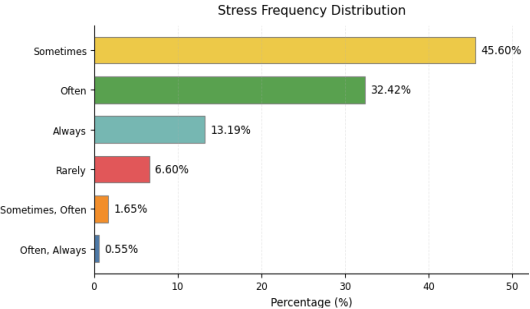
Work-related stress was highly prevalent among respondents. Nearly half of the staff reported feeling stressed sometimes (83/182; 45.6%), while often (59/182; 32.4%) and always (24/182; 13.2%) stressed categories were also substantial. Only 6.6% (12/182) reported rarely feeling stressed.
Figure 1. Bar chart showing frequency of work-related stress among staff.
Table 3. Distribution of self-reported work-related stress frequency, mental wellbeing ratings, and lifetime experience of burnout among staff at Machakos County referral Hospital.
Variable | Category | n | % |
Stress frequency | Always | 24 | 13.2 |
| Often | 59 | 32.4 |
| Sometimes | 83 | 45.6 |
| Rarely | 12 | 6.6 |
Mental wellbeing | Excellent | 13 | 7.1 |
| Good | 55 | 30.2 |
| Fair | 77 | 42.3 |
| Poor | 27 | 14.8 |
| Very poor | 10 | 5.5 |
Exhaustion ever | Yes | 170 | 93.4 |
| No | 10 | 5.5 |
Self-rated mental wellbeing further reflected this burden. Only 7.1% (13/182) rated their mental wellbeing as excellent, while 42.3% (77/182) rated it as fair and 20.3% (37/182) rated it as poor or very poor.
Self-reported exhaustion was almost universal, with 93.4% (170/182) of the hospital staff reporting having ever felt emotionally exhausted or burned out at work. High workload was the most frequently cited contributing factor (30.9% of all responses), followed by lack of support (17.7%) and lack of recognition (12.3%).
Chi-square test was conducted to determine whether the demographic characteristics influenced the Self reported exhaustion and stress the primary outcomes of the study. Results indicated that gender does not have a significant association with self reported exhaustion (χ2 = 0.74, df = 2, p = 0.691). in addition, there was also no significant association between age, employment and self reported exhaustion association (χ2 = 2.50, df = 8, p = 0.962) and (χ2 = 1.09, df = 4, p = 0.896) respectively. This indicated that carders from different age groups and employment type experienced self- reported exhaustion.
6.3. Coping Mechanisms and Organizational Support
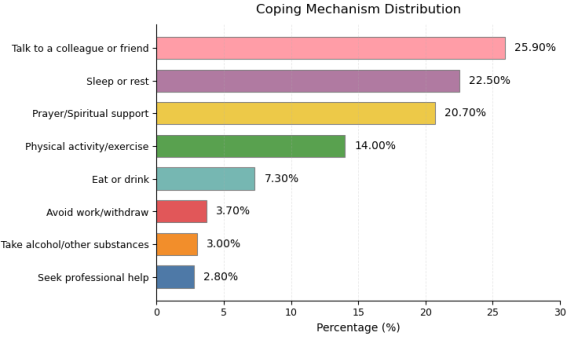
Figure 2. Distribution of coping mechanisms used by staff.
The most common coping strategies used by health providers were talking to a colleague or friend (120/182; 25.9%), sleep or rest (104/182; 22.5%), and prayer or spiritual support (96/182; 20.7%). Seeking professional help was least reported (13/182; 2.8%), indicating a heavy reliance on informal coping mechanisms and support systems.
Table 4. Staff perceptions of the level of support received from supervisors or managers regarding work-related stress and wellbeing.
Level of support | n | % |
Always | 44 | 24.2 |
Often | 37 | 20.3 |
Sometimes | 74 | 40.7 |
Rarely | 22 | 12.1 |
Never | 5 | 2.8 |
The perception on supervisory support varied among the participants. While 24.2% (44/182) reported always feeling supported, the largest group reported that they only received support sometimes (40.7%; 74/182). A smaller percentage (2.8%; 5/182) reported never receiving supervisory support. A chi-square test was conducted to check the relationship between stress frequency and the history of burnout. However, the relationship was not statistically significant, χ2 = 11.37, df = 10, p = 0.329. While a small relationship exists (Cramer’s V = 0.177), there is no statistically significant association, suggesting that burnout is widespread even among those who do not report daily high-frequency stress.
6.4. Awareness, Accessibility, and Utilization of Mental Health Services
Table 5. Awareness and utilization of mental health services among staff and reported barriers to accessing such services.
Variable | Category | n | % |
Aware of services | Yes | 120 | 65.9 |
No | 62 | 34.1 |
Ever accessed services | Yes | 28 | 15.4 |
No | 154 | 84.6 |
Barriers to access* | Lack of confidentiality | 49 | 19 |
Fear of stigma | 43 | 17.5 |
Belief services not necessary | 31 | 12.6 |
Awareness of mental health services was moderate, with 65.9% (120/182) reporting awareness. However, actual utilization was low with only 15.4% (28/182) having ever accessed mental health services. Among those who had not accessed services, the main barriers were lack of confidentiality (19%), fear of stigma (17.5%), and the belief that services were unnecessary (12.6%). There was no significant relationship between job role and burnout, χ2 = 18.06, df = 22, p = 0.703. This existed in both clinical and non-clinical roles, suggesting that barriers and stressors affect all job types similarly. Years of service and stress frequency (χ2 = 10.96, df = 9, p = 0.278) were not statistically significant. The length of time an employee has worked at the facility does not significantly change how often they feel overwhelmed.
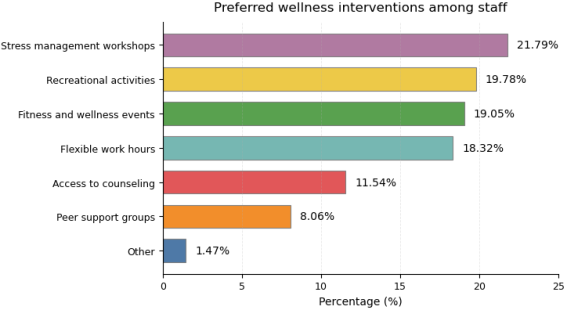
Figure 3. Preferred wellness interventions among staff.
Findings highlighted that the most preferred wellness interventions were stress management workshops (119 responses; 21.8%), recreational activities (108; 19.8%), fitness and wellness events (104; 19.0%), and flexible work hours (100; 18.3%). Regarding communication, in-person sessions or CME forums were preferred by 68.1% (124/182), followed by WhatsApp groups (24.7%) and posters or notice boards (7.1%).
Table 6. Staff perceptions regarding the necessity of establishing a structured Staff Wellness Program at Machakos County Referral Hospital.
Response | n | % |
Yes | 169 | 92.9 |
Maybe | 8 | 4.4 |
No | 2 | 1.1 |
A substantial 92.9% (169/182) of respondents indicated that a structured Staff Wellness Program is necessary, while only 1.1% (2/182) felt it was unnecessary.
7. Discussion
The study demonstrated a high burden of work-related stress and burnout among staff at Machakos County Referral Hospital, consistent with national data indicating that over 60% of public-sector healthcare workers in Kenya experience significant occupational stress (Aiken et al., 2023). The near-universal experience of burnout suggests systemic workplace pressures rather than individual vulnerability.
Coping strategies were predominantly informal, highlighting gaps in institutional mental health support. Despite moderate awareness of services, utilization remained low, largely due to stigma and confidentiality concerns barriers commonly reported in healthcare settings.
Strong preference for structured wellness interventions and in-person engagement underscores staff readiness to participate in organized programs if they are accessible and trusted. The near-unanimous support for a staff wellness program provides compelling justification for immediate institutional action.
7.1. Self Reported Exhaustion and Organizational Factors
The high Self-reported exhaustion rate (93.4% percent) by the staff identified in this study reflects the long-term risk of excessive workload, inadequate rest, and limited recognition. The job demands-control-support model
| [3] | Karasek, R., & Theorell, T. (1990). Healthy work: Stress, productivity, and the reconstruction of working life. Basic Books. |
[3]
helps to explain this relationship: Employees subjected to high demands with low control and weak social support exhibit higher psychological distress. In the Machakos County Referral hospital, structural challenges such as staff shortages, rigid hierarchies and inconsistent communication can limit workers' autonomy and sense of belonging.
observed that higher workplace social capital – defined as trust, mutual respect, and collective problem-solving – protects against psychological distress. As a result, interventions targeting team cohesion and participative management may reduce burnout within this setting.
7.2. Awareness, Stigma, and Barriers to Help-Seeking
Majority of the respondents (65.9%) were aware of available mental-health services, and only 28 percent had accessed them. The low use reflects the barriers cited in WHO's working policy brief
in mental health, including fear of stigma and concerns about privacy. Within Kenyan health care culture, mental-health discussions often carry negative connotations, leading many staff to internalize distress rather than seek professional help.
| [5] | Ministry of Health (Republic of Kenya). (2023). National Health Workforce Report 2023. Government Printer, Nairobi. |
[5]
similarly reported that more than 60 percent of health care workers across the country considered counseling services inaccessible or stigmatized. Addressing this issue requires a commitment from leadership to normalize help-seeking, ensure confidentiality, and integrate mental-health resources into everyday workplace processes. Increasing communication through inclusive channels like departmental meetings and WhatsApp groups can ensure that information reaches all cadres equally.
7.3. Coping Mechanisms and Cultural Dimensions
The study also highlighted various coping strategies, many of which are rooted in Kenya's social and cultural context. The most common coping behaviors were talking with coworkers and engaging in prayer or spiritual practice. These approaches reinforce the collective orientation of African workplaces, where communal communication and trust play an important role in emotional regulation. Although such methods provide short-term relief, they are inadequate substitutes for structured institutional interventions. Notably, 12 percent of participants admitted to using alcohol or substances to manage stress, underscoring the potential for maladaptive coping when formal support systems are weak. The reliance on spirituality mirrors the findings of
| [2] | Coppens, E., Hogg, B., Greiner, B. A., Paterson, C., de Winter, L., Mathieu, S., Arensman, E. (2023). Promoting employee wellbeing and preventing non-clinical mental-health problems in the workplace: A preparatory consultation survey. Journal of Occupational Medicine and Toxicology, 18(17).
https://doi.org/10.1186/s12995-023-00378-2 |
[2]
, who emphasized that culturally tailored coping methods can complement, but not replace, professional psychological care. Hospitals should therefore develop integrated wellness programs that acknowledge cultural values while promoting evidence-based mental-health practices.
7.4. Preferred Welfare Interventions
The expressed preference for stress-management workshops, peer support groups, and flexible work hours underscores employees' desire for involvement and a preventative approach. Such interventions are consistent with global best practices emphasized by
which prioritizes connection, resiliency, and inclusion as pillars of well-being.
Studies in European and Asian hospital systems have shown that employees who participate in structured wellness activities report less burnout and higher job satisfaction
| [2] | Coppens, E., Hogg, B., Greiner, B. A., Paterson, C., de Winter, L., Mathieu, S., Arensman, E. (2023). Promoting employee wellbeing and preventing non-clinical mental-health problems in the workplace: A preparatory consultation survey. Journal of Occupational Medicine and Toxicology, 18(17).
https://doi.org/10.1186/s12995-023-00378-2 |
[2]
. For Machakos County Referral Hospital, adopting a similar model would mean incorporating wellness activities into daily routines rather than offering them as separate events. Regular debriefing sessions, peer mentoring networks and access to confidential counseling can make a lasting impact. Additionally, digital communication platforms such as WhatsApp and e-bulletins can increase reach and engagement, especially among younger employees, who have expressed strong preferences for these media.
7.5. Implications for Policy and Practice
The findings have important implications for health sector governance in Kenya. They provide empirical support for implementing the Kenya Mental Health Policy (2021-2030), which calls for integrating psychosocial support into workplace structures. For Machakos County Referral Hospital, the establishment of a formal staff wellness program would represent a practical step towards policy achievement. In addition to institutional benefits, improving employee mental health leads to better patient care, reduced absenteeism, and increased organizational efficiency.
From a research perspective, these results contribute to the limited literature on sub-Saharan African health care worker well-being. They reinforce the argument that mental-health interventions should be context-specific, addressing both individual coping abilities and systemic organizational determinants.
In summary, this discussion demonstrates that the mental health challenges of staff at Machakos County Referral Hospital are multidimensional – shaped by workload pressures, gender dynamics, cultural factors and institutional support systems. The study is in line with global evidence showing that promoting psychological safety and supportive leadership can significantly reduce stress and burnout. Therefore, the next logical step for the hospital is to design an integrated, culturally responsive staff wellness program rooted in the realities of Kenyan health care professionals.
8. Study Limitations
One limitation of this study is that exhaustion was assessed using self-reported measures, which cannot be objectively validated or directly measured through physiological or observational data. Self-reported data are inherently subject to several potential biases, including recall bias and social desirability bias, which may lead respondents to either underreport or overreport their symptoms. As a result, the accuracy of the reported levels of exhaustion may be compromised, potentially influencing the validity and generalizability of the findings.
9. Conclusions
This study concludes that the mental health of Machakos County Referral hospital staff is significantly affected by persistent occupational stress, burnout and limited institutional support. The results indicate that workload imbalance, poor communication and inadequate managerial support are major contributors to psychological stress. Despite the existence of some wellness resources, there is a moderate awareness and utilization is low, hindered by stigma, privacy concerns, and lack of time. The findings emphasize that mental health cannot be separated from organizational culture in health care settings. Individual coping efforts – such as prayer, peer conversation, and comfort – provide temporary relief but are inadequate in the absence of structural intervention. Burnout, if not addressed, threatens workforce retention, morale, and patient safety.
In line with global evidence
the study highlights the urgent need for systems-level solutions to healthcare staff’s wellbeing. The Kenya Mental Health Policy (2021-2030) already provides a policy framework that emphasizes psychosocial support and healthy workplaces. Evidence from the Machakos County Referral Hospital confirms that implementing such a framework at the county level is both necessary and feasible. Ultimately, improving staff mental health is not simply a welfare issue but a critical component of health-system performance, quality service delivery, and professional sustainability.
10. Recommendations
Based on the findings and conclusions, a number of strategic recommendations are proposed to strengthen mental well-being among staff at Machakos County Referral Hospital:
1) The hospital should institutionalize a formal program involving counseling services, stress-management workshops, and peer-support groups. Such program should operate throughout the year and be accessible to all cadres of employees.
2) Managers and supervisors should be trained in empathetic leadership, communication, and conflict resolution. Supportive supervision can reduce stress and promote a psychologically safe workplace.
3) Awareness initiatives should normalize conversations about mental health through departmental briefings, posters and digital channels like WhatsApp groups. Confidentiality must be guaranteed to build trust.
4) Implement flexible scheduling, proper shift rotation, and adequate rest periods.
5) Establish regular employee feedback forums and welfare committees to facilitate open communication between employees and administrators.
6) Conduct annual employee-well-being surveys to track progress and inform continuous improvement. Data-driven evaluation will ensure accountability and sustainability of interventions.
7) Partner with the Ministry of Health and the Machakos County Health Department to align hospital wellness initiatives with national mental-health policy priorities and secure needed funding.
Implementing these recommendations will position the Machakos County Referral Hospital as a model for institutional wellness within Kenya's public-health sector. In the long term, increased employee well-being will translate into better clinical outcomes, improved patient satisfaction and a stronger, more resilient healthcare workforce.
Abbreviations
USD | US Dollar |
US | United States |
WHO | World Health Organization |
Author Contributions
Kavita Vincent: Conceptualization, Resources
Kilemi Henry: Data curation, Methodology
Nzuki Winfred: Formal Analysis, Investigation
Conflicts of Interest
The authors declare no conflicts of interest.
References
| [1] |
Aiken, L. H., Lasater, K. B., Sloane, D. M., et al. (2023). Physician and nurse well-being and preferred interventions. JAMA Health Forum, 4(7), e232023.
https://doi.org/10.1001/jamahealthforum.2023.2023
|
| [2] |
Coppens, E., Hogg, B., Greiner, B. A., Paterson, C., de Winter, L., Mathieu, S., Arensman, E. (2023). Promoting employee wellbeing and preventing non-clinical mental-health problems in the workplace: A preparatory consultation survey. Journal of Occupational Medicine and Toxicology, 18(17).
https://doi.org/10.1186/s12995-023-00378-2
|
| [3] |
Karasek, R., & Theorell, T. (1990). Healthy work: Stress, productivity, and the reconstruction of working life. Basic Books.
|
| [4] |
Maunder, R. G., Heeney, N. D., Jeffs, L. P., Wiesenfeld, L. A., & Hunter, J. J. (2024). A longitudinal study of hospital workers’ mental health from fall 2020 to the end of the COVID-19 pandemic in 2023. Scientific Reports, 14, 26137.
https://doi.org/10.1038/s41598-024-77493-5
|
| [5] |
Ministry of Health (Republic of Kenya). (2023). National Health Workforce Report 2023. Government Printer, Nairobi.
|
| [6] |
Omondi, A. O., Mwangi, J. K., & Otieno, L. M. (2022). Occupational stress and its effects on healthcare workers in tertiary hospitals in Kenya. East African Medical Journal, 99(4), 215–222.
|
| [7] |
Pedersen, L. M., et al. (2023). Is mental health positively associated with workplace social capital? Social Science & Medicine, 326, 115984.
https://doi.org/10.1016/j.socscimed.2023.115984
|
| [8] |
U.S. Centers for Disease Control and Prevention (CDC). (2023). Health worker mental health: Vital Signs report 2023.
https://www.cdc.gov/vitalsigns/health-worker-mental-health
|
| [9] |
U.S. Department of Health and Human Services. (2025). Workplace mental health and well-being: The U.S. Surgeon General’s framework.
https://www.hhs.gov/surgeongeneral/reports-and-publications/workplace-well-being
|
| [10] |
World Health Organization. (2022). Mental health at work: Policy brief. World Health Organization.
https://www.who.int/publications/i/item/9789240067928
|
Cite This Article
-
APA Style
Vincent, K., Henry, K., Winfred, N. (2026). Mental Wellness Needs Among Staff at Machakos County Referral Hospital: A Cross‑Sectional Study. Psychology and Behavioral Sciences, 15(3), 37-45. https://doi.org/10.11648/j.pbs.20261503.11
 Copy
|
Copy
|
 Download
ACS Style
Vincent, K.; Henry, K.; Winfred, N. Mental Wellness Needs Among Staff at Machakos County Referral Hospital: A Cross‑Sectional Study. Psychol. Behav. Sci. 2026, 15(3), 37-45. doi: 10.11648/j.pbs.20261503.11
Copy
|
Download
AMA Style
Vincent K, Henry K, Winfred N. Mental Wellness Needs Among Staff at Machakos County Referral Hospital: A Cross‑Sectional Study. Psychol Behav Sci. 2026;15(3):37-45. doi: 10.11648/j.pbs.20261503.11
Copy
|
Download
-
@article{10.11648/j.pbs.20261503.11,
  author = {Kavita Vincent and Kilemi Henry and Nzuki Winfred},
  title = {Mental Wellness Needs Among Staff at Machakos County Referral Hospital: A Cross‑Sectional Study},
  journal = {Psychology and Behavioral Sciences},
  volume = {15},
  number = {3},
  pages = {37-45},
  doi = {10.11648/j.pbs.20261503.11},
  url = {https://doi.org/10.11648/j.pbs.20261503.11},
  eprint = {https://article.sciencepublishinggroup.com/pdf/10.11648.j.pbs.20261503.11},
  abstract = {Background: Healthcare workers are increasingly exposed to occupational stressors that predispose them to poor mental wellbeing and burnout, particularly in resource-constrained public health settings. Understanding staff mental wellness needs is essential for informing effective institutional wellness interventions. Objective: This study assessed the prevalence of work-related stress and burnout, coping mechanisms, utilization of mental health services, and staff perceptions regarding the need for a structured wellness program at Machakos County Referral Hospital. Methods: A descriptive cross-sectional online Survey was conducted among 182 clinical and non-clinical staff members. Data was collected using a structured self-administered questionnaire covering demographic characteristics, Self-reported stress frequency, mental wellbeing, Self-reported exhaustion experience, coping strategies, organizational support, awareness and utilization of mental health services, and preferred wellness interventions. Descriptive statistics and chi-square tests were used for data analysis. Results: Work-related stress was highly prevalent, with 91.2% of respondents reporting feeling stressed at least sometimes. Self-reported exhaustion was nearly universal, reported by 93.4% of participants. Only 7.1% rated their mental wellbeing as excellent, while 20.3% rated it as poor or very poor. High workload, lack of support, and lack of recognition were the most cited contributors to burnout. Gender, age, employment type, job role, and years of service were not significantly associated with burnout (p > 0.05). Coping strategies were predominantly informal, including talking to colleagues, rest, and prayer, while professional mental health service utilization was low (15.4%), mainly due to confidentiality concerns and fear of stigma. Despite moderate awareness of available services (65.9%), utilization remained limited. A strong majority (92.9%) expressed the need for a structured staff wellness program, with stress management workshops and recreational activities being the most preferred interventions. Conclusion: There is a high burden of stress and self-reported exhaustion among staff at Machakos County Referral Hospital, coupled with low utilization of formal mental health services. Staff demonstrate strong readiness for structured wellness interventions. Institutional investment in comprehensive, confidential, and accessible staff wellness programs is urgently required to promote workforce wellbeing and sustain quality healthcare delivery.},
 year = {2026}
}
Copy
|
Download
-
TY  - JOUR
T1  - Mental Wellness Needs Among Staff at Machakos County Referral Hospital: A Cross‑Sectional Study
AU  - Kavita Vincent
AU  - Kilemi Henry
AU  - Nzuki Winfred
Y1  - 2026/07/22
PY  - 2026
N1  - https://doi.org/10.11648/j.pbs.20261503.11
DO  - 10.11648/j.pbs.20261503.11
T2  - Psychology and Behavioral Sciences
JF  - Psychology and Behavioral Sciences
JO  - Psychology and Behavioral Sciences
SP  - 37
EP  - 45
PB  - Science Publishing Group
SN  - 2328-7845
UR  - https://doi.org/10.11648/j.pbs.20261503.11
AB  - Background: Healthcare workers are increasingly exposed to occupational stressors that predispose them to poor mental wellbeing and burnout, particularly in resource-constrained public health settings. Understanding staff mental wellness needs is essential for informing effective institutional wellness interventions. Objective: This study assessed the prevalence of work-related stress and burnout, coping mechanisms, utilization of mental health services, and staff perceptions regarding the need for a structured wellness program at Machakos County Referral Hospital. Methods: A descriptive cross-sectional online Survey was conducted among 182 clinical and non-clinical staff members. Data was collected using a structured self-administered questionnaire covering demographic characteristics, Self-reported stress frequency, mental wellbeing, Self-reported exhaustion experience, coping strategies, organizational support, awareness and utilization of mental health services, and preferred wellness interventions. Descriptive statistics and chi-square tests were used for data analysis. Results: Work-related stress was highly prevalent, with 91.2% of respondents reporting feeling stressed at least sometimes. Self-reported exhaustion was nearly universal, reported by 93.4% of participants. Only 7.1% rated their mental wellbeing as excellent, while 20.3% rated it as poor or very poor. High workload, lack of support, and lack of recognition were the most cited contributors to burnout. Gender, age, employment type, job role, and years of service were not significantly associated with burnout (p > 0.05). Coping strategies were predominantly informal, including talking to colleagues, rest, and prayer, while professional mental health service utilization was low (15.4%), mainly due to confidentiality concerns and fear of stigma. Despite moderate awareness of available services (65.9%), utilization remained limited. A strong majority (92.9%) expressed the need for a structured staff wellness program, with stress management workshops and recreational activities being the most preferred interventions. Conclusion: There is a high burden of stress and self-reported exhaustion among staff at Machakos County Referral Hospital, coupled with low utilization of formal mental health services. Staff demonstrate strong readiness for structured wellness interventions. Institutional investment in comprehensive, confidential, and accessible staff wellness programs is urgently required to promote workforce wellbeing and sustain quality healthcare delivery.
VL  - 15
IS  - 3
ER  -
Copy
|
Download





 Share This Article
 Twitter
 Linked In
 Facebook