Research Article | | Peer-Reviewed

Application of Calcium Chloride, Cytokinin and Abscisic Acid Increases the Postharvest Quality of Rose Cut-flower (Rosa hybrida)

Received: 27 December 2025     Accepted: 21 January 2026     Published: 24 February 2026
Views:       Downloads:
Abstract

Postharvest quality deterioration remains a major limitation in the cut rose industry due to accelerated senescence driven by physiological and biochemical processes such as ethylene production, respiration, microbial contamination, and water imbalance. This study evaluated the effects of calcium chloride (CaCl₂), cytokinin, and abscisic acid (ABA), applied at different concentrations and application timings, on postharvest quality of tea hybrid rose (Rosa hybrida L.) cv. Rhodos. The experiment was conducted at Redlands Roses PLC, Ruiru, Kiambu County, Kenya, during two production flushes: November–December 2024 and January–February 2025. Treatments comprised CaCl₂ at 250, 500, and 750 mg L-1, cytokinin at 150, 250, and 350 mg L-1, and ABA at 5, 10, and 15 mg L-1, applied as preharvest-only, postharvest-only, or combined preharvest and postharvest applications, alongside an untreated control. Postharvest quality parameters assessed at two-day intervals included chlorophyll content (SPAD values), petal colour (CIE L*, a*, b*), percentage weight loss, and vase life. Data were analyzed using analysis of variance in SAS version 9.4, with mean separation at P ≤ 0.05. Postharvest application of CaCl₂ significantly enhanced chlorophyll retention in a concentration-dependent manner, increasing SPAD values from 55.33 and 51.77 in the control to 64.53 and 58.73 at 750 mg L-1 in the first and second flushes, respectively. Preharvest application of cytokinin produced the highest chlorophyll content, reaching SPAD values of 69.23 and 62.50 at 350 mg L-1, while postharvest cytokinin application was not significant. ABA consistently reduced chlorophyll content, particularly under preharvest application. Calcium chloride significantly improved petal brightness and colour intensity, with the highest L*, a*, and b* values recorded at 750 mg L-1 under combined application. Cytokinin enhanced petal redness, achieving maximum a* values of 57.83 and 62.44 at 350 mg L-1 across both flushes, whereas ABA suppressed colour development. Weight loss was lowest under postharvest CaCl₂ application at 750 mg L-1 and preharvest ABA at 10 mg L-1. Vase life was significantly extended by preharvest CaCl₂ and cytokinin, reaching 14.67 and 13.67 days, respectively, compared with 11.61 days in the control. The study demonstrates that preharvest application of calcium chloride and cytokinin is an effective strategy for improving postharvest quality, extending vase life, and enhancing marketability of cut roses under commercial production conditions.

Published in Journal of Plant Sciences (Volume 14, Issue 1)
DOI 10.11648/j.jps.20261401.14
Page(s) 51-67
Creative Commons

This is an Open Access article, distributed under the terms of the Creative Commons Attribution 4.0 International License (http://creativecommons.org/licenses/by/4.0/), which permits unrestricted use, distribution and reproduction in any medium or format, provided the original work is properly cited.

Copyright

Copyright © The Author(s), 2026. Published by Science Publishing Group

Keywords

Rose Cut Flower, Postharvest Quality, Calcium Chloride, Abscisic Acid, Cytokinin

1. Introduction
Postharvest quality is the biggest concern for the cut rose flower market and commercial growers . The postharvest quality of rose is affected by preharvest and postharvest activities, due to physiological and biochemical changes notably ethylene production, respiration, microbial contamination and water imbalance, which speed up senescence and reduce market value. According to El-Beltagi et al. constantly used cold treatment and preservatives do little to improve the quality, and the vase life of roses as required by the market . This is because of the greater loss of cell wall integrity caused by increased respiration and nutrient depletion in the rose plant, resulting in a decrease in rose economic value. According to Omar et al. and Omar et al. the retail sector experienced the greatest loss (39.82%), followed by wholesalers (27.52%), producers (18.87%), and local merchants (13.78%) . As a result, there is a greater need for approaches and techniques that can increase and maintain cut rose flower freshness from farm to market. According to Ahmed and Saleem, the global cut-flower industry is strongly reliant on optimal postharvest handling techniques to retain quality, prevent postharvest losses, and increase vase life . As a result, calcium chloride and growth regulators can become instrumental in improving the postharvest quality of cut rose flowers. calcium chloride, cytokinin, and abscisic acid influence a variety of physiological process notably glucose mobilization , stomatal control, and ethylene sensitivity . Through these processes’ calcium chloride, cytokinin, and abscisic acid can reduce petal wilting, maintain chlorophyll content, reduce leaf abscission, improve water uptake, delay senescence, and enhance overall vase life in Cut-roses .
Kumar and Pandey reported that calcium chloride stimulates the synthesis of hormones and enzymes that regulate plant activities . Moreover, it promotes appropriate cell wall formation and helps to preserve the quality of fresh vegetables . Previous research has indicated that calcium affects the quality and longevity of several vegetable products, including cucumber and strawberry . Additionally, adding calcium chloride to fruits after they are harvested, increases their nutritional value, delays the ripening process, reduces rotting, and increases the amount of calcium in the treated fruit . The impacts of applying calcium chloride after harvest on some fruits and vegetables include reduced respiration, ripening development, and senescence . Thus, calcium chloride application in roses may improve the postharvest quality of roses by slowing down the pace of degradation and metabolism, reducing losses and increasing the economic benefit. Argueso and Kieber observed that cytokinin helps create a balance between photosynthesis and respiration . It has been demonstrated to be crucial to postharvest quality by delaying the senescence of fruits and vegetables, thereby extending their shelf life . Additionally, it has been shown to reduce the incidence of chilling injury, which can negatively affect the quality of harvested produce . Supply of rose flowers with cytokinin has a potential of improving the vase life because of the delayed senescence. Abscisic acid is essential for stomata opening and closing, water uptake regulation, and stress response control . Therefore, it can be used to regulate the growth and market value of roses because of its ability to delay leaf senescence, induce a response to stress and regulate water uptake.
Calcium chloride contributes to cell wall integrity, which theoretically regulates the quality of plants by their harmonious activity , cytokinin contributes to reduced senescence rate , and abscisic acid helps the plant respond to biotic and abiotic stresses . Furthermore, Kaur and Prakash et al. observed that growth regulators can be manipulated as strategies for improving the quality of roses, extending vase life, decreasing losses, and increasing profitability in the floriculture value chain . Understanding the most effective concentration will help improve flower visual quality, reduce postharvest losses, and enhance market competitiveness. The findings will provide evidence-based recommendations for commercial postharvest management.
2. Materials and Methods
2.1. Study Site
The study was conducted in Redlands Roses PLC, Ruiru, Kiambu County, Kenya. The experimental layout was done in vase life testing room which was well-ventilated, with a temperature between 18-22°C and humidity levels between 60-70%. The room had adequate working space and tables for conducting experiments and data collection. The first experiment was conducted between November and December 2024 and the second experiment between January and February 2025.
2.2. Experimental Design and Treatments
The study was laid out in a complete randomized design (CRD) and replicated three times. The experiment comprised of different sets of treatment with a total of 28 treatments. The first set of ten treatments comprised of zero (control); calcium chloride (250, 500 and 750 mg/L), cytokinin (150, 250 and 350 mg/L), and abscisic acid (5, 10 and 15 mg/L) treated in the field. In the second set the cut flowers were subjected to the treatments in the field and during postharvest. The third set cut flowers were treated only at postharvest stage.
2.3. Harvesting and Application of Treatments
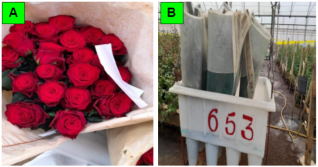
The flowers were harvested in the morning when the temperature was low and atmospheric humidity high. Using a sharp secateur, the flowers were cut when at harvest stage 3 (the petals have started forming rings and showing bright colour) [Figure 1A]. The cut was made on the first true leaf above the point of origin of the flowering stem. During harvesting, the flowers were held in an upright position with the flower heads slightly above the shoulder to prevent mechanical damages. The secateurs were disinfected with 300 ppm sodium hypochlorite after every cut before moving to the next crop. After every 20 stems harvested, the flowers were taken to the shaded harvesting table and the quality examined. Conforming flowers were wrapped with nets in a conical shape and put in clean farm formulated postharvest solution in an egg tray bucket. The growth regulators sourced from Precise Lab Limited, Nairobi were measured based on weights of different treatments using an analytical scale D475730236 Model number TX4202L from Japan at Syngenta, Research and Development Laboratory, Kiambu. Prior to laying out, the vases were disinfected with 300 ppm sodium hypochlorite solution and filled with plain water. The overnight precooled flowers were taken to room condition for grading and sorting before vasing. They were shaken to remove excess postharvest solution and checked under light for pest and disease. Hand defoliation of 60 cm and 70 cm was done at 25 cm, and 80 cm and above was done at 30 cm. The stems were trimmed at 20 mm to prevent blockage of xylem vessels and allow for uptake of water.
The application of the treatments on the flowers was done through foliar spraying using the different treatments and the treated vases were placed in the vaselife room for observation and data collection. The vasing water was changed after 2 days and cleaning of the vases done simultaneously. The postharvest solution had a temperature of 8˚C and a pH of 4.8. The harvested flowers were transported to the cold room for precooling using the flower transport line (Figure 1B). As part of the cold chain management, harvested flowers took at most 25 minutes in the greenhouse to mitigate the reduction of degree-hours and accumulation of heat in the harvesting solution. The flowers were held overnight in the cold storage 4 ± 2 ºC to remove the field heat before grading and vasing. The cold room was installed with UV air purifiers to prevent contamination of harvested flowers by botrytis.
2.4. Data Collection
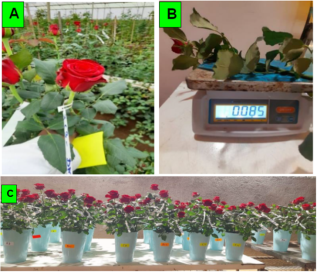
The flowers for data collection were tagged at preharvest before harvesting (Figure 2A). The impacts of calcium chloride and growth regulators on postharvest quality of cut roses was assessed through chlorophyll content, petal color, Weight loss and vase life. Chlorophyll content measurement was done before vasing and during the termination of the vase life on the fully grown leaves (fourth alternate leaves from the top). It was done using a chlorophyll meter and recorded in SPADS. The petal colour was measured using a Chroma meter. The Chroma meter was placed on top of the petals to measure the intensity of the light reflecting off the petals in three different wavelengths (L*, a* and b*). The wavelengths were used to generate numerical values for the colour intensity of the petals.
Figure 1. Harvested Flowers for Postharvest Experiment (A) and Transportation of Flowers Using the Flower Transport Line (B).
Figure 2. Tagged Plants for Data Collection at Postharvest (A), Collection of Weight Loss Data (B) and Vaselife Test for Flowers (C).
The mean of the numerical value per treatment was used to measure the petal colour variation at 2 days’ interval until when the aesthetic value of the flower was lost. The initial weight of the freshly harvested produce of cut rose was measured immediately after harvesting on the tagged plants (Figure 2B). The percentage of weight loss of each treatment was determined at an interval of two days. The weight difference percentage was calculated by differences between initial and final weights divided by the initial weights of cut stems. The weight loss (%) was calculated as.
Weight loss%= Initial weight -final weight Initial weight ×100
Vase life involved the period from the first day when cut roses was placed in vase solutions until they lost their ornamental value (Figure 2C). The loss of ornamental value was defined by drooping, rotting, petal falling, leaf yellowing, complete leaf abscission, maximum opening and changing of petal colour. The data was collected daily, and vase life recorded in days. Vase life days was calculated as.
Vaselife= Di​​n
Where ∑Di = Sum of vase life (days) for each individual stem and n = number of stems .
2.5. Data Analysis
The collected data was subjected to analysis of variance using SAS version 9.4 and significantly different means separated using Least Significance Difference at α=0.05.
3. Results and Discussion
The effects of calcium chloride, cytokinin and abscisic acid on postharvest quality of Red Rhodos cut rose was assessed at different rates and at different times of application. The analysis of variance showed that chlorophyll content, petal colour, weight loss and vase life were affected by the different rates and different times of application of calcium chloride, cytokinin and abscisic acid.
3.1. Effects of Calcium Chloride, Cytokinin and Abscisic Acid on Chlorophyll Content
The analysis of the treatment effect showed that the application of calcium chloride at 250, 500, and 750 at postharvest significantly increased the chlorophyll content reaching 64.17–64.53 SPAD in flush 1 and 58.23–58.73 SPAD in flush 2 across concentrations, which was markedly higher than the control (55.33 and 51.77 SPAD, in flush 1 and 2 respectively) [Table 1]. Preharvest-only application produced chlorophyll contents (55.53–56.93 SPAD in flush 1 and 52.83–53.43 SPAD in flush 2) comparable to the control, with only a slight improvement at 750 mg/L (56.93 SPAD in flush 1 and 53.43 SPAD in flush 2) [Table 1]. In contrast, combined preharvest and postharvest application consistently reduced chlorophyll content (52.40–52.70 SPAD in flush 1 and 49.33–49.83 SPAD in flush 2) [Table 1], indicating a potential negative interaction when calcium chloride was applied at preharvest and postharvest due to high concentration in the crop. It could be that the calcium chloride application at postharvest helped in maintaining the cell integrity, reduced cellular degradations and therefore preserving the chlorophyll content. Additionally, according to Elshawa et al. postharvest application of calcium has ability to reduce the respiration rate . Similar observations were reported by El-Beltagi et al. in broccoli . They observed that postharvest application of calcium chloride preserved the overall number of phenols and flavonoids while delaying yellowing and the breakdown of chlorophyll content in broccoli. According to Pareek et al., fresh produce can retain their green colour for longer when treated with calcium chloride because it stabilizes cell membranes and inhibits enzymatic breakdown reactions that cause chlorophyll degradation . On a similar study in French beans, it was reported that treatments with high concentrations of calcium chloride had a negative impact on the green colour of freshly chopped green beans . Based on the findings of this study, it is very likely that the administration of calcium chloride at high concentration could have contributed to the chlorophyll degradation. Additionally, Sung et al. observed that high concentrations of calcium chloride Degrades Chlorophyll . It has been reported that application of calcium chloride can have a direct impact on the routes that harvested produce uses to synthesize chlorophyll . Although calcium is necessary for several enzymatic processes related to the manufacture of chlorophyll, these processes can be interfered with by high or unbalanced calcium concentrations .
Table 1. Effects of Calcium Chloride, Cytokinin and Abscisic Acid on the postharvest chlorophyll content in flush 1 and 2.

Treatment

Application Time

Rate in mg/L

Chlorophyll Content in Flush 1

Chlorophyll Content in Flush 2

CaCl2

Preharvest

250

55.53c*

53.10c

500

55.70c

52.83c

750

56.93c

53.43c

Pre and Postharvest

250

52.40d

49.33d

500

52.70d

49.83d

750

52.60d

49.40d

Postharvest

250

64.17b

58.23b

500

64.53b

58.73b

750

64.43b

58.60b

Cytokinin

Preharvest

150

63.63b

56.53b

250

65.77b

58.80b

350

69.23a

62.50a

Pre and Postharvest

150

63.93b

57.73b

250

66.47b

59.43b

350

66.43b

59.43b

Postharvest

150

55.73c

53.83c

250

55.83c

53.33c

350

55.47c

52.83c

Abscisic Acid

Preharvest

5

44.07i

41.27i

10

46.60f

44.77f

15

44.20h

43.53h

Pre and Postharvest

5

46.53f

44.77f

10

47.53f

44.80f

15

44.40g

44.37g

Postharvest

5

50.30e

48.07e

10

51.37e

48.13e

15

50.20e

47.63e

Control

No Application

0

55.33c

51.77c

LSD

2.92

3.54

CV

3.19

4.14

*Means followed by the same letter(s) along the column for flush 1 and 2 are not significantly different at 5% probability level.
The findings also showed that cytokinin application done both at preharvest and at pre and postharvest significantly increased the chlorophyll content of harvested flowers at postharvest. It was observed that preharvest application induced a clear dose-dependent increase in chlorophyll content, with the highest SPAD values recorded at 350 mg/L (69.23 SPAD in flush 1 and 62.50 SPAD in flush 2), which were significantly higher than the control (55.33 and 51.77 SPAD, respectively) [Table 1]. Lower preharvest concentrations (150–250 mg/L) also enhanced chlorophyll levels (63.63–65.77 SPAD in flush 1 and 56.53–58.80 SPAD in flush 2). Combined preharvest and postharvest application resulted in moderate increases in chlorophyll content (63.93–66.47 SPAD in flush 1 and 57.73–59.43 SPAD in flush 2), but did not exceed the highest preharvest-only treatment. In contrast, postharvest application alone produced SPAD values (55.47–55.83 in flush 1 and 52.83–53.83 in flush 2) comparable to the control, indicating no significant effect. According to Dobránszki, and Mendler-Drienyovszki, cytokinin takes at least 3 weeks to accumulate in the plant after application . It is very likely that cytokinin showed limited effectiveness in chlorophyll content after the postharvest application because of the slow translocation rate in the crop. However, the positive impact of cytokinin in flowers treated at postharvest was evident because of the already build up levels of cytokinin in the plant at preharvest. Additionally, cytokinin boost the synthesis of chlorophyll, and extend the time that leaves remain photosynthetic . This explains why preharvest and pre and postharvest increased the chlorophyll content of the leaves at postharvest thereby increasing the freshness of the flowers at vase. Chlorophyll content at postharvest is very important because it helps to keep the freshness of the cut flowers for more days. When degraded, chlorophyll leads to leaf yellowing which affects the ornamental value of cut flowers. In research on impacts of cytokinin on crops Sosnowski et al. reported that externally administered cytokinin enhances the amount of chlorophyll in aging leaf tissues by inhibiting the loss of this pigment and postponing the senescence process . By preventing chlorophyll loss and preserving the green hue of the leaves, cytokinin inhibit or retard the aging process of plants . This condition arises because of phytohormones' suppression of the breakdown of green pigment. In a study on the invitro apples Dobránszki, and Mendler-Drienyovszki, reported that the effect of cytokinin on the leaves were visible after three weeks of application . This explains why the application of cytokinin at postharvest, during the current study had no significance on the chlorophyll content.
Abscisic acid application consistently decreased chlorophyll content across both flushes, with stronger effects observed when applied at the preharvest stage. Preharvest application resulted in the lowest SPAD values, ranging from 44.07–46.60 in flush 1 and 41.27–44.77 in flush 2, which were substantially lower than the control (55.33 and 51.77 SPAD, respectively) [Table 1]. Combined preharvest and postharvest application produced similarly reduced chlorophyll levels (44.40–47.53 SPAD in flush 1 and 44.37–44.80 SPAD in flush 2) [Table 1], indicating no recovery of chlorophyll retention when abscisic acid was applied at preharvest and postharvest. Postharvest application alone resulted in slightly higher SPAD values (50.20–51.37 in flush 1 and 47.63–48.13 in flush 2) [Table 1] than preharvest treatments, but these remained significantly lower than the control. Because of its active role in aging and senescence, it is justifiable that abscisic acid stimulated the breakdown of chlorophyll therefore reducing its concentration in the plant. The findings of this study agree with Ferrante et al. who reported that Chlorophyll concentration dropped sharply within a 24-hour period of exogenous application of abscisic acid treatments . Consistent to this study, Wang et al. observed that long-term abscisic acid treatment suppressed growth and decreased chlorophyll levels physiologically, but short-term abscisic acid treatment had no effect on chlorophyll content . It also produced leaf yellowing and hindered chloroplast division. It has been reported by Xie et al. that abscisic acid accelerates senescence . Chlorophyll degradation happens during senescence because of cellular structures breaking down . Therefore, it is very likely that in this study that the exogenous application of abscisic acid hastened leaf senescence, which resulted in the breakdown and reduction of chlorophyll content. Zhao et al. reported that the first 48 hours following abscisic acid administration considerably increased the expression of genes related to chloroplast production, dehydration impact responses, and chlorophyll breakdown . According to Gao et al. abscisic acid controls the expression of genes and the activity of enzymes that regulate the chain reactions leading to the synthesis of chlorophyll, which has an indirect effect on the process . Elevated abscisic acid levels have the potential to suppress the expression of genes that code for the enzymes needed for the manufacturing of chlorophyll , so reducing the amount of chlorophyll that is produced and accumulates in plant tissues.
3.2. Effects of Calcium Chloride, Cytokinin and Abscisic Acid on Petals Colour (CIE L*, a*, b* Values)
Calcium chloride treatments significantly enhanced petal colour attributes of rose flowers compared with the untreated control in both flushes. Control flowers recorded the lowest lightness (L* = 19.26–19.82), redness (a* = 40.65–45.43), and yellowness (b* = 6.97–7.47), indicating dull and weak colour expression (Table 2). In contrast, calcium chloride application increased L* values to 26.25–31.01, reflecting improved petal brightness, with the highest lightness observed at 750 mg L-1 applied at both preharvest and postharvest (L* = 28.93 and 31.01 in flushes 1 and 2, respectively) [Table 2]. Redness (a*), a key indicator of red colour intensity, increased markedly with calcium chloride concentration, rising from control values of 40.65–45.43 to 55.13–59.52 at 750 mg L-1 pre and postharvest application (Table 2). Similarly, yellowness (b*) improved from 6.97–7.47 in the control to 14.17–17.68 across calcium chloride-treated flowers, with consistently higher b* values recorded in flush 2. Overall, calcium chloride application, particularly at 750 mg L-1, intensified petal brightness and colour saturation relative to the control, with combined preharvest and postharvest treatments producing the strongest colour enhancement. Exogenous application of calcium increases the level of calmodulin in plants . Calmodulin influences the transportation of photosynthetic products and the resistance mechanisms to various biotic and abiotic stresses . It is likely that application of various concentrations of calcium chloride at different times, increased the level of calmodulin in Rhodos variety. This helped in transportation of photosynthetic products necessary for petal colour development and retaining of the integrity of the cells in the reproductive structures of the plant even after separation from the mother plant. Therefore, the flowers produced their pigments more effectively and had brighter, richer hues. The rigidity and stability of the cell wall are dependent on calcium . Flowers can wilt and lose some of their brightness due to cell wall breakdown caused by insufficient calcium . It has been reported that application of calcium chloride supports the maintenance of ideal cell turgor pressure, which keeps fresh produce turgid and erect and enhances their entire brightness and aesthetic appeal . According to Guo et al. application of calcium chloride enhanced calcium contents in the plant , improved the physiological functions of calmodulin , and heightened the expression of genes responsible for anthocyanin biosynthesis in the petals. Consequently, sufficient amounts of calcium encourage the synthesis and stability of pigments like carotenoids, anthocyanins, and flavonoids that give flowers their color. Zhu et al. reported that calcium facilitates the plant's transportation of photosynthetic products, supplying the building blocks needed for the synthesis of anthocyanins .
Cytokinin application at 150, 250, and 350mg/L during preharvest, and preharvest and postharvest significantly increased the lightness of the petals. However, the significance on the lightness of Petal color varied with the concentration of cytokinin and the time of application. Cytokinin treatment applied only in the postharvest had no significant effect on lightness of petal color compared to the control (0 mg/L) [Table 2]. Irrespective of the different concentration and different times of application, cytokinin significantly increased the redness of the petal color. Nevertheless, 350 mg/L cytokinin applied both in the field and in postharvest had the highest redness of 57.83 and 62.44 both in flush 1 and flush 2 (Table 2). In both flushes, the yellowness of the petal color responded significantly to cytokinin (150, 250, and 350 mg/L) applied only at preharvest, both at preharvest and postharvest, and only at postharvest. The outcomes showed that 350mg/L of cytokinin applied at preharvest recorded the highest yellowness of 17.62 and 18.89 in flush 1 and flush 2 respectively (Table 2). Cytokinin application significantly improved rose petal colour attributes compared with the untreated control across both flushes. Control flowers exhibited the lowest colour values, with L* of 19.26–19.82, a* of 40.65–45.43, and b* of 6.97–7.47 (Table 2). Preharvest cytokinin treatments increased petal brightness and colour intensity, with L* rising to 26.53–29.15, a* to 46.13–53.30, and b* to 16.48–18.90 as concentration increased from 150 to 350 mg L-1 (Table 2). The greatest enhancement in red colour intensity was observed when cytokinin was applied at both preharvest and postharvest, particularly at 350 mg L-1, which recorded the highest a* values (57.83 and 62.44 in flushes 1 and 2, respectively) alongside elevated L* (27.67 and 29.47 in flushes 1 and 2, respectively) [Table 2]. In contrast, postharvest-only cytokinin applications resulted in limited improvements in lightness (L* = 21.56 and 22.80 in flushes 1 and 2, respectively) [Table 2] despite moderate increases in a* and b* values relative to the control. Overall, combined preharvest and postharvest cytokinin application, especially at higher concentrations, was most effective in enhancing petal brightness and colour saturation compared with untreated flowers. According to Kaur and Jhanji, cytokinin has an ability to delay senescence in plants . It is possible that the cytokinin delayed the breakdown of Carotenoids and anthocyanins pigments which are responsible for the red colour in plants. It is possible that this, helped the plants to look more radiant and retain their color for long. Additionally, Shibuya and Ichimura observed that application of cytokinin to cut flowers prolonged the time that they looked fresh and brilliant, which increased their overall radiance by retarding the natural aging process .
Table 2. Effects of Calcium Chloride, Cytokinin and Abscisic Acid on petal color in flush 1 and 2.

Treatment

Application Time

Rate in mg/L

Lightness (L*)

Redness (a*)

Yellowness (b*)

Flush 1

Flush 2

Flush 1

Flush 2

Flush 1

Flush 2

Calcium Chloride

Preharvest

250

27.44a*

29.44a

45.84e

49.24e

14.17b

15.22b

500

27.29a

29.32a

47.39d

50.91c

15.42b

16.54b

750

27.41a

29.42a

49.70d

53.41d

16.24b

17.45b

Pre and Postharvest

250

27.29a

29.30a

48.33d

51.90c

13.93c

14.96c

500

27.70a

29.87a

49.68d

53.38d

15.58b

16.75b

750

28.93a

31.01a

55.13b

59.52b

15.97b

17.18b

Postharvest

250

26.25d

28.14d

47.67d

51.22c

16.46b

17.68b

500

28.49a

30.76a

49.89c

53.48d

15.43b

16.57b

750

28.12a

30.14a

52.09c

55.84d

14.47b

15.52b

Cytokinin

Preharvest

150

26.53c

28.49c

46.13e

49.55d

16.50b

17.70b

250

26.74b

28.73b

46.66e

50.13c

16.48b

17.69b

350

27.13a

29.15a

49.63d

53.30d

17.62a

18.90a

Pre and Postharvest

150

27.23a

29.25a

52.89b

56.81c

15.14b

16.26b

250

27.13a

29.14a

53.76b

57.79b

14.16b

15.23b

350

27.67a

29.47a

57.83a

62.44a

15.30b

16.52b

Postharvest

150

22.80e

22.61e

48.53d

52.14c

15.48b

16.62b

250

22.65e

22.53e

48.24d

51.73c

14.36b

15.43b

350

21.56e

22.39e

47.92d

51.37c

15.99b

17.25b

Abscisic Acid

Preharvest

5

8.54f

9.18f

33.73h

36.16h

7.812d

7.24d

10

8.95f

9.62f

37.27g

40.05g

7.15d

7.69d

15

7.12g

7.65g

32.26i

34.66i

8.84d

9.49d

Pre and Postharvest

5

6.64h

7.14g

36.76g

39.49g

8.31d

9.00d

10

6.88h

7.43g

32.15i

34.47j

8.46d

9.09d

15

6.49i

6.98g

37.41g

40.18g

8.46d

9.13d

Postharvest

5

20.52e

22.05e

36.90g

39.67g

6.78d

7.28d

10

19.57e

20.65e

36.24g

39.13g

7.50d

7.75d

15

20.53e

22.15e

34.74h

37.24h

6.87d

8.83d

Control

No Application

0

19.26e

19.82e

40.65f

45.43f

6.97d

7.47d

LSD

1.80

1.95

2.36

2.56

2.35

2.52

CV

5.05

5.08

3.23

3.25

11.48

11.46

*Means followed by the same letter(s) along the column for flush 1 and 2 are not significantly different at 5% probability level.
Abscisic acid application significantly influenced petal colour attributes (CIE L*, a*, b*) relative to the untreated control in both flushes. Control flowers exhibited moderate lightness (L* = 19.26–19.82) and the highest redness values (a* = 40.65–45.43), indicating more intense red coloration than most abscisic acid treated flowers (Table 2). Preharvest abscisic application substantially reduced petal brightness and redness, with L* declining to 7.12–9.62 and a* to 32.26–40.05 at 5–15 mg L-1, reflecting darker and less saturated petals compared with the control (Table 2). Similar reductions in L* (6.49–7.43) were observed when abscisic acid was applied at both preharvest and postharvest, accompanied by lower a* values (32.15–40.18) (Table 2). In contrast, postharvest-only abscisic acid treatments-maintained lightness values (L* = 19.57–22.15) comparable to the control but still resulted in reduced redness (a* = 34.74–39.67) (Table 2). Yellowness (b*) remained relatively unchanged across abscisic acid treatments (6.78–9.49) and did not differ markedly from the control (6.97–7.47) (Table 2). Abscisic acid application, particularly at preharvest-only, and preharvest and postharvest stages, suppressed petal brightness and red colour intensity relative to untreated flowers. Ahmad and Tahir reported that abscisic acid is a stress hormone that increases senescence in plants . The increase in senescence reduces the concentration of anthocyanins and carotenoids therefore making the flowers reduce the brightness and radiance of the petals of the Rhodos variety. Xia et al. reported that the yellow-to-red hue of flowers is largely attributed to the presence of carotenoids . While investigating into the effects of abscisic acid in Camellia sinensis, Baldermann et al. observed that the carotenoid levels decreased with increasing abscisic acid concentration in the plant . Moreover, Liu et al. reported that Application of abscisic acid altered the carotenoid concentration of flower petals, hence affecting their coloring . Ahmad and Tahir also reported that application of abscisic acid at certain developmental phases or in high doses hastened the senescence process in flowers, causing wilting, fading, and decreased brightness .
3.3. Effects of Calcium Chloride, Cytokinin and Abscisic Acid on the Weight Loss
Calcium chloride application significantly affected weight loss (%) in rose flowers compared with the control. Postharvest application was the most effective, with 750 mg/L producing the lowest weight loss (15.94% in flush 1 and 14.31% in flush 2), markedly lower than the control (17.62% and 15.95%, respectively) [Table 3]. Combined preharvest and postharvest application at the same concentration also reduced weight loss to 16.65% in flush 1 and 15.14% in flush 2 [Table 3]. Preharvest application did not consistently reduce weight loss at low to moderate concentrations. At lower concentrations (250–500 mg/L), weight loss was comparable to or slightly higher than the control (17.62% in flush 1 and 15.95% in flush 2), with 250 mg/L showing 18.03% and 16.31% in flushes 1 and 2, respectively, and 500 mg/L recording 17.48% and 15.93%. However, at the highest preharvest concentration of 750 mg/L, weight loss decreased to 16.84% in flush 1 and 15.24% in flush 2, indicating that preharvest application can reduce weight loss, but the effect is concentration-dependent and only evident at higher doses. Therefore, application of calcium chloride enhanced the integrity of the cells in Rhodos variety, reducing the rate of degeneration which in turn reduced the weight loss. However, based on these findings it is evident that calcium translocation is slow and can only reduce weight loss in roses upon build up within the plant. These findings agree with Thakur et al. who did a study on effects of calcium chloride on fresh fruits . They reported that over the course of 20 days of storage, fresh cut guava, muskmelon, and papaya all saw a significant decrease in weight loss or absence of weight loss when exposed to calcium chloride. The current study was also consistent with Chepngeno et al. who reported the least amount of weight lost by tomatoes and African eggplant hydro cooled in water containing calcium chloride . These findings concur with those of Lou et al. who discovered that cut flower of perpetual carnation treated with calcium chloride at postharvest had a reduced weight loss . According to Thakur et al. calcium has an ability to maintain the functional and structural integrity of membrane systems by strengthening the cell wall and protecting them from deterioration . Ramezanian et al. reported that calcium reduced the transpiration rate by preventing loss of water from the produce's surfaces, which maintained its moisture content . As a result, the reduced transpiration reduced the percentage weight loss. In fruits and vegetables, Gao et al. observed that calcium chloride prolonged shelf life by inhibiting the activity of the enzymes that break down cells, which further prevented weight loss from deterioration . Therefore, this serves as the major underlying reason for the reduction in weight or the absence of weight loss in cut flowers treated with calcium chloride.
Analysis of treatment showed that cytokinin application influenced weight loss (%) in rose flowers compared with the control (17.62% in flush 1 and 15.95% in flush 2) [Table 3]. Preharvest application at the highest concentration (350 mg/L) was most effective, reducing weight loss to 15.91% in flush 1 and 14.24% in flush 2 [Table 3], indicating a clear concentration-dependent improvement. Lower preharvest concentrations (150–250 mg/L) produced weight losses comparable to the control (17.00–17.13% in flush 1 and 15.25–15.49% in flush 2) [Table 3]. Combined preharvest and postharvest application-maintained weight losses similar to the control (17.33–17.89% in flush 1 and 15.20–16.20% in flush 2 [Table 3], while postharvest-only application tended to increase weight loss, particularly at higher concentrations (18.33–18.42% in flush 1 and 16.86–16.91% in flush 2) [Table 3], suggesting that postharvest cytokinin alone is less effective at reducing water loss. Consistent to the current outcomes Ainalidou et al. found that preharvest treatment of cytokinin effectively lowered weight reduction in kiwifruit by 33% and prolonged storage by two months when compared to the control; these observations demonstrated the effectiveness of cytokinin in preventing structural deterioration in fruits . Moreover, Marzouk and Kassem reported that cytokinin treatment prior to harvest greatly decreased the reduction in weight in Thompson seedless grapes . In research on the effects of growth regulators on the quality of cucumber Qian et al. observed that application of cytokinin significantly reduced the weight loss of cucumber fruit at postharvest . According to Li et al. the capacity of cytokinin to deter senescence in fresh produce becomes especially useful during processing following harvest . By delaying the natural senescence process, plants treated with cytokinin could retain their water content and their structural strength for extended periods of time observed that early senescence causes weight loss, but delay in senescence slows it down, keeping the peach fruit fresh and commercially viable throughout storage and transit. Moreover, cytokinin ability to reduce physiological responses to stress in plants strengthens its role in preventing weight loss. This keeps the cut flowers hydrated and healthy, reducing weight loss and increasing market value all the way through the postharvest process.
Table 3. Effects of Calcium Chloride, Cytokinin and Abscisic Acid on weight loss in flush 1 and 2.

Treatment

Application Time

Rate in mg/L

Weight Loss in Flush 1

Weight Loss in Flush 2

Calcium Chloride

Preharvest

250

18.03a*

16.31a

500

17.48a

15.93a

750

16.84a

15.24a

Pre and Postharvest

250

17.15a

15.33a

500

17.21a

15.44a

750

16.65b

15.14b

Postharvest

250

17.46a

15.76a

500

17.39a

15.75a

750

15.94b

14.31b

Cytokinin

Preharvest

150

17.00a

15.49a

250

17.13a

15.25a

350

15.91b

14.24b

Pre and Postharvest

150

17.89a

16.20a

250

17.64a

15.20a

350

17.33a

15.69a

Postharvest

150

16.83a

16.16a

250

18.33a

16.86a

350

18.42a

16.91a

Abscisic Acid

Preharvest

5

10.04c

9.82c

10

8.41c

8.42c

15

9.53c

8.98c

Pre and Postharvest

5

9.22c

8.76c

10

8.94c

8.56c

15

9.54c

9.35c

Postharvest

5

18.13a

16.70a

10

18.08a

16.31a

15

16.64b

14.96b

Control

No Application

0

17.62a

15.95a

LSD

1.676

1.74

CV

6.61

7.46

*Means followed by the same letter(s) along the column for flush 1 and 2 are not significantly different at 5% probability level.
Abscisic acid application significantly influenced weight loss (%) in rose flowers compared with the control (17.62% in flush 1 and 15.95% in flush 2) [Table 3]. Preharvest application at 10 mg/L was most effective in reducing weight loss, recording 8.41% in flush 1 and 8.42% in flush 2 [Table 3], followed closely by other preharvest treatments (5–15 mg/L) and combined preharvest and postharvest applications, which also lowered weight loss to values between 8.56–10.04% in flush 1 and 8.76–9.82% in flush 2 [Table 3]. In contrast, postharvest-only application generally increased weight loss, particularly at 5–10 mg/L, reaching 18.08–18.13% in flush 1 and 16.31–16.70% in flush 2, while 15 mg/L postharvest slightly reduced losses to 16.64% in flush 1 and 14.96% in flush 2 [Table 3]. These results indicated that abscisic is most effective at minimizing weight loss when applied preharvest, whereas postharvest application may exacerbate water loss depending on the concentration. It is possible that abscisic acid significantly reduced the weight loss in Rhodos variety because of its ability to induce stomata closure to reduce moisture loss at postharvest. observed that exogenous abscisic acid administration, considerably reduced postharvest lettuce's weight loss. According to Dar et al. abscisic acid is considered as a stress hormone and that it helps plants cope with abiotic stress . Through stomata closure, it reduces the moisture loss in fresh produce . Huang et al. reported that significant water loss during storage resulted in both the loss of marketable weight and clear quality problems like shrivelling in kiwi fruit . According to Hung et al. transpiration is thought to be the primary factor causing leafy vegetable quality degradation and weight loss . This is because vegetable water loss after harvesting is a serious issue since it causes withering of the leaves and fresh weight loss, which affects the produce' appearance and shelf life .
3.4. Effects of Calcium Chloride, Cytokinin and Abscisic Acid on Vase Life of Rose Cut-flower
Analysis of treatment revealed that calcium chloride application significantly extended vase life of rose flowers compared with the untreated control in both flushes. Control stems recorded the shortest vase life of 11.61 and 10.33 days in flushes 1 and 2, respectively [Table 4]. Preharvest calcium chloride application increased vase life in a concentration-dependent manner, reaching a maximum of 14.67 days in both flushes at 750 mg L-1, representing an extension of approximately 3.1–4.3 days relative to the control [Table 4]. Similarly, combined preharvest and postharvest application at 750 mg L-1 maintained a prolonged vase life of 14.67 days in flush 1 and 13.00 days in flush 2 [Table 4]. In contrast, postharvest-only calcium chloride treatments resulted in modest improvements, with vase life ranging from 10.67 to 12.67 days, values that were comparable to or only slightly higher than the control [Table 4]. Overall, higher calcium chloride concentrations, particularly when applied at preharvest or in preharvest and postharvest treatment, were most effective in enhancing rose vase life. It is conceivable that calcium accumulated in plants promoting the bonding of pectin polymers in the cell wall structure that boosts mechanical strength and delays cell disintegration. This study observation on the effect of calcium chloride on vase life on cut roses were consistent to the study by . They reported that the Vase life of "Dolce Vita" roses was increased by varying calcium chloride concentrations with the highest concentration of calcium chloride and salicylic acid having the longest vase life. Similarly, reported that calcium chloride significantly improved the Vase life of Heliconia. They reported no wilted flowers in calcium chloride treatment after 9 days in vase which was contrary to other treatment. reported that calcium spray effectively decreased bending and strengthened the scape by more than 10%, extending the gerbera flowers vase life. Additionally, reported that application of calcium chloride prior to harvesting prolonged the vase life and antioxidant capability of cut roses while also delaying senescence. Prior research has demonstrated the advantageous impact of exogenous calcium application in mitigating environmental variations in plants. The physiological processes responsible for these beneficial effects have been identified as osmotic adjustment and enhanced antioxidant responses which in turn enhance the life of a plant . According to Divya Sharma et al, calcium controls the architecture, signalling pathways, and functionality of membranes by its capacity of bonding to the phospholipid bilayer . As a result, this engagement makes it easier for plants to mitigate harmful variations in the environmental conditions by strengthening and improving the structural stability and integrity of their membranes. Additionally, earlier observations by Timalsina et al. indicated that calcium builds up in plants promoting the bonding of pectin polymers in the centre of lamella to produce a cell wall structure that boosts mechanical strength and delays stem bending . This explains why calcium chloride application in the current study increased the vase life of Rose cut-flower Variety Rhodos.
Analysis of treatment revealed that cytokinin application significantly (p <0.05) extended the vase life of rose flowers compared with the untreated control across both flushes. Control stems exhibited the shortest vase life, recording 11.61 days in flush 1 and 10.33 days in flush 2. Preharvest cytokinin application enhanced vase life in a concentration-dependent manner, increasing longevity to 12.33–13.67 days in flush 1 and 11.67–12.67 days in flush 2 at 150–350 mg L-1. The longest vase life was achieved with 350 mg L-1 cytokinin applied at both preharvest and postharvest, reaching 14.33 days in flush 1 and 12.67 days in flush 2, representing an extension of approximately 2.7–3.0 days relative to the control. In contrast, postharvest-only cytokinin treatments resulted in limited improvements, with vase life ranging from 11.33 to 12.00 days in flush 1 and 10.33 to 11.00 days in flush 2, values comparable to or only marginally higher than the control. Overall, cytokinin was most effective in extending rose vase life when applied at preharvest and when combined with preharvest and postharvest application, particularly at higher concentrations. It could be that cytokinin was able to increase vase life because of its ability to counter the effect of ethylene. Additionally, it is likely that cytokinin slowed down the aging process of plant components by delaying the breakdown of their protein and chlorophyll because of its ability to delay senescence. In a study on the response of cut flowers to cytokinin and 1-metylcylcopropene Mirzakhani et al. reported similar outcomes . They observed that higher concentration of cytokinin reduced the amount of ethylene present in cut flowers, which in turn extended the vase life. Similarly, Kaur et al. reported that cytokinin inhibited petal senescence by blocking the production of ethylene or by lessening the cells' sensitivity to it and therefore increasing the vase life of cut flowers . Additionally, Shaya et al. reported that degeneration was slowed down when the concentration of cytokinin was elevated at the abscission layer in the fruitlets of persimmon .
Table 4. Effects of Calcium Chloride, Cytokinin and Abscisic Acid on vase life in flush 1 and 2.

Treatment

Application Time

Rate in mg/L

Vase life in Flush 1

Vase life in Flush 2

Calcium Chloride

Preharvest

250

12.33b*

11. 67b

500

12.67b

11.67b

750

14.67a

12.67a

Pre and Postharvest

250

13.00b

11.67b

500

13.00b

12.00b

750

14.67a

13.00a

Postharvest

250

11.67c

10.67c

500

12.67b

11.67b

750

12.67b

11.67b

Cytokinin

Preharvest

150

12.33b

11.67b

250

13.67a

12.00b

350

13.67a

12.67a

Pre and Postharvest

150

13.00b

11.67b

250

13.33b

12.00b

350

14.33a

12.67a

Postharvest

150

11.33c

10.33c

250

12.00c

10.67c

350

12.00c

11.00c

Abscisic Acid

Preharvest

5

11.33c

10.33c

10

11.33c

10.33c

15

10.67d

9.67d

Pre and Postharvest

5

11.00c

10.00c

10

11.00c

10.33c

15

10.33e

9.67e

Postharvest

5

11.67c

10.33c

10

12.00c

10.67c

15

12.00c

11.00c

Control

No Application

0

11.607c

10.330c

LSD

1.26

1.13

CV

6.27

6.16

*Means followed by the same letter(s) along the column for flush 1 and 2 are not significantly different at 5%probability level.
Abscisic acid application had a generally neutral to negative effect on the vase life of rose flowers compared with the untreated control across both flushes. Control stems recorded a vase life of 11.61 days in flush 1 and 10.33 days in flush 2 [Table 4]. Preharvest abscisic acid application at 5–10 mg L-1 resulted in comparable vase life values (11.33 and 10.33 days), whereas increasing the concentration to 15 mg L-1 reduced longevity to 10.67 days in flush 1 and 9.67 days in flush 2 [Table 4]. A similar trend was observed when abscisic acid was applied at both preharvest and postharvest, with the shortest vase life recorded at 15 mg L-1 (10.33 and 9.67 days) [Table 4]. In contrast, postharvest-only abscisic acid treatments slightly increased vase life, reaching 12.00 days in flush 1 and 11.00 days in flush 2 at 15 mg L-1, although these values were not significantly higher than the control [Table 4]. Higher abscisic acid concentrations applied at preharvest and at preharvest and postharvest were associated with reduced vase life compared to the control. Abscisic acid is a stress hormone that induces aging. It is likely that after the separation from the mother plant, abscisic acid stimulated the aging process in the flowers at postharvest therefore reducing the vaselife. It is also possible that abscisic acid enhanced closure of stomata as a response to abiotic stress, affecting water uptake and gaseous exchange, thereby causing early senescence. Similar to the outcomes of this study on the effects of abscisic acid on vase life, Costa et al. reported that abscisic acid decreased the stem longevity of cut gladiolus flowers by increasing the senescence rate. The findings were also consistent with Zhong and Ciafre, who reported that abscisic acid treatment hastens the senescence of lily petals, indicating that abscisic acid plays a direct function in the initial stages of deterioration in petals independent of endogenous ethylene levels . Geng et al. also agreed with the current findings and reported accelerated opening of cut buds and reduction in the time that flowers and leaves remained in the vase when higher concentrations of abscisic acid were applied in in cut lilies .
According to Shibuya and Ichimura, abscisic acid speeds up senescence and the decomposition of cut flowers . Upon harvesting, flowers are deprived of their nutrition source and exposed to a number of stressors, including mechanical harm, hormone imbalances, and water shortage . As a result, plants produce more abscisic acid in reaction to these stresses which is harmful to cut flowers. Aalifar et al. reported that abscisic acid shortens vase life by enhancing stomata closure . Even though stomata closure helps save water in plants, it reduces the amount of water absorbed by cut flowers . Limitations in water intake hasten the process of dehydration, resulting in withering and early senescence . According to Imadi et al. dehydration and early senescence causes tissue disintegration and a loss of turgidity . This hastens the decomposition of cellular components such as structural proteins and chlorophyll, which gives cut flowers their vivid color. Therefore, based on the findings of this study, in case of high abscisic acid levels, cut roses age more quickly and show symptoms including petal abscission, wilting, and yellowing.
4. Conclusion
Calcium chloride and cytokinin treatments consistently improved the postharvest performance of Rhodos roses. This was shown by better chlorophyll retention, more stable petal colour, less weight loss, and a longer vase life. The most significant effects were seen at higher concentrations and when applied before harvest or in programs that combined preharvest and postharvest treatments. In contrast, higher concentrations of abscisic acid, or its use during preharvest, preharvest and postharvest, and postharvest negatively affected most quality measures. These included chlorophyll content, petal lightness and redness, and the number of days the flowers lasted in a vase. Therefore, calcium chloride and cytokinin exhibited strong potential as effective regulators for improving postharvest quality and longevity in cut roses, whereas abscisic acid showed either negligible or detrimental effects depending on rate and timing.
5. Recommendation
Based on the findings, to achieve optimal postharvest quality and vaselife of cut roses, growers can apply calcium chloride (500 and 750 mg/L) and cytokinin (250 and 350 mg/L) at preharvest and/or at postharvest. Application of calcium chloride at higher concentrations, particularly 750 mg/L, is recommended for improving chlorophyll retention, increasing petal brightness, reducing weight loss, and extending vase life. Similarly, the use of high concentration cytokinin (250 and 350 mg/L) at preharvest and preharvest and at postharvest is recommended for enhancing petal lightness, redness, yellowness, and overall flower longevity. In contrast, the use of abscisic acid at higher concentrations, especially 15 mg/L, should be avoided as it negatively affects chlorophyll content, petal coloration, and vase life. Additionally, further study can be done in various geographical regions to collect data on roses cultivated throughout Kenya, particularly in the areas that produce flowers.
Abbreviations

CRD

Complete Randomized Design

CaCl2

Calcium Chloride

LSD

Least Significant Difference

CV

Coefficient of Variation

CIE

Colour Internationale de I’Eclairage

L*

Ligthness

a*

Redness

b*

Yellowness

PLC

Public Limited Company

Acknowledgments
The authors appreciate the Redlands Roses PLC, Ruiru for allowing the research to be conducted on their farm, Olij Kenya Propagator for the timely supply of quality planting materials, Department of Plant Science, Chuka University for providing the laboratory equipment and Syngenta Research and Development Centre, Kiambu for allowing access and use of their laboratory.
Conflicts of Interest
The authors declare that they have no known competing interest that could have appeared to influence the work reported in this paper.
References
[1] Aalifar, M., Aliniaeifard, S., Arab, M., Mehrjerdi, M. Z., & Serek, M. (2020). Blue light postpones senescence of carnation flowers through regulation of ethylene and abscisic acid pathway-related genes. Plant physiology and biochemistry, 151, 103-112.
[2] Abdolmaleki, M., Khosh, K. M., Eshghi, S., & Ramezanian, A. (2015). Improvement in vase life of cut rose cv. “Dolce Vita” by preharvest foliar application of calcium chloride and salicylic acid.
[3] Ahmad, S. S., & Tahir, I. (2016). How and why of flower senescence: understanding from models to ornamentals. Indian journal of plant physiology, 21, 446-456.
[4] Ahmed, M. F., & Saleem, M. F. (2016). Postharvest physiology and handling of cut roses. Postharvest Biology and Technology, 111, 22-27.
[5] Ainalidou, A., Tanou, G., Belghazi, M., Samiotaki, M., Diamantidis, G., Molassiotis, A., & Karamanoli, K. (2016). Integrated analysis of metabolites and proteins reveal aspects of the tissue-specific function of synthetic cytokinin in kiwifruit development and ripening. Journal of Proteomics, 143, 318-333.
[6] Akintoye, H. A., Shokalu, O. A., Olatunji, M. T., Adebayo, A. G., Aina, O. O., & James, I. E. (2016). Effect of calcium chloride and salicylic acid solutions on the vase life of Heliconia spp. In III All Africa Horticultural Congress 1225 (pp. 205-210).
[7] Amiri, S., Rezazad B. L., Malekzadeh, S., Mostashari, P., & Ahmadi G. P. (2021). Effect of Aloe vera gel-based active coating incorporated with catechin nano emulsion and calcium chloride on postharvest quality of fresh strawberry fruit. Journal of Food Process and Preservation. 15960. F.
[8] Argueso, C. T., & Kieber, J. J. (2024). Cytokinin: from autoclaved DNA to two-component signaling. The Plant Cell, koad 327.
[9] Aziz, M. M., Rashid, S., Kousar, H., Hussain, R., & Saeed, T. (2021). Impact of various preservative solutions on vase life and post-harvest quality of cut roses. Pakistan Journal of Agriculture, Agricultural Engineering and Veterinary Sciences, 37(2), 71–78.
[10] Baldermann, S., Yang, Z., Sakai, M., Fleischmann, P., Morita, A., Todoroki, Y., & Watanabe, N. (2013). Influence of exogenously applied abscisic acid on carotenoid content and water uptake in flowers of the tea plant (Camellia sinensis). Journal of the Science of Food and Agriculture, 93(7), 1660-1664.
[11] Barman, K., Sharma, S., & Siddiqui, M. W. (2018) Emerging Postharvest Treatment of Fruits and Vegetables.
[12] Ben-Fadhel, Y., Ziane, N., Salmieri, S., & Lacroix, M. (2018). Combined Post-Harvest Treatments for Improving Quality and Extending Shelf-Life of Minimally Processed Broccoli Florets (Brassica oleracea var. italica). 11, 84–95.
[13] Burr, C. A., Sun, J., Yamburenko, M. V., Willoughby, A., Hodgens, C., Boeshore, S. L., & Kieber, J. J. (2020). The HK5 and HK6 cytokinin receptors mediate diverse developmental pathways in rice. Development, 147(20), dev 191734.
[14] Chen, F., Li, Y., Sun, H., Wei, Q., Fang, C., Lin, X., & Cao, Z. (2025). Petal damage and bent flower detection method of rose cut flowers based on computer vision. Scientia Horticulturae, 340, 113927.
[15] Chen, S. (2024). Review of Recent Advances in Chemical Preservatives for Cut Flowers. Br. J. Biol. Stud, 4, 1-8.
[16] Chepngeno, J., Owino, W., Kinyuru, J., & Nenguwo, N. (2016). Effect of calcium chloride and hydrocooling on postharvest quality of selected vegetables.
[17] Cid-Lopez, M. L., Soriano-Melgar, L., Garcia-Gonzalez, A., Cortez-Mazatan, G., Mendoza-Mendoza, E., Rivera-Cabrera, F., & Peralta-Rodríguez, R. D. (2021). The benefits of adding calcium oxide nanoparticles to biocompatible polymeric coatings during cucumber fruits postharvest storage. Scientia Horticulturae. 287, 110285.
[18] Cortleven, A., Leuendorf, J. E., Frank, M., Pezzetta, D., Bolt, S., & Schmülling, T. (2019). Cytokinin action in response to abiotic and biotic stresses in plants. Plant, Cell & Environment, 42(3), 998-1018.
[19] Costa, L. C. D., Araujo, F. F. D., Lima, P. C. C., Pereira, A. M., & Finger, F. L. (2016). Action of abscisic and gibberellic acids on senescence of cut gladiolus flowers. Bragantia, 75, 377-385.
[20] Danilova, M. N., Doroshenko, A. S., Kudryakova, N. V., Klepikova, A. V., Shtratnikova, V. Y., & Kusnetsov, V. V. (2020). The crosstalk between cytokinin and auxin signaling pathways in the control of natural senescence of Arabidopsis thaliana leaves. Russian Journal of Plant Physiology, 67, 1028-1035.
[21] Dar, N. A., Amin, I., Wani, W., Wani, S. A., Shikari, A. B., Wani, S. H., & Masoodi, K. Z. (2017). Abscisic acid: A key regulator of abiotic stress tolerance in plants. Plant gene, 11, 106-111.
[22] Divya Sharma, D. S., Gautam Jamra, G. J., Singh, U. M., Salej Sood, S. S., & Anil Kumar, A. K. (2017). Calcium biofortification: three pronged molecular approaches for dissecting complex trait of calcium nutrition in finger millet (Eleusine coracana) for devising strategies of enrichment of food crops.
[23] Dobránszki, J., & Mendler-Drienyovszki, N. (2014). Cytokinin-induced changes in the chlorophyll content and fluorescence of in vitro apple leaves. Journal of plant physiology, 171(16), 1472-1478.
[24] Ehsanimehr, N., Hosseinifarahi, M., Abdipour, M., Eshghi, S., & Jamali, B. (2024). Improving postharvest quality and vase life of cut rose flowers by pre-harvest foliar co-applications of γ-aminobutyric acid and calcium chloride. Scientific Reports, 14(1), 14520.
[25] El-Beltagi, H. S., Ali, M. R., Ramadan, K. M., Anwar, R., Shalaby, T. A., Rezk, A. A., & El-Mogy, M. M. (2022). Exogenous postharvest application of calcium chloride and salicylic acid to maintain the quality of broccoli florets. Plants, 11(11), 1513.
[26] Elshawa, G., R. Ibrahim, F., & A. Arafat, L. A. (2023). Effect of nano calcium, calcium chloride, and salicylic acid on bent neck in cut roses. The Journal of Horticultural Science and Biotechnology, 98(2), 233-245.
[27] Eroğul, D., Gundogdu, M., Sen, F., & Tas, A. (2024). Impact of postharvest calcium chloride treatments on decay rate and physicochemical quality properties in strawberry fruit. BMC Plant Biology, 24(1), 1088.
[28] Feng, D., Wang, X., Gao, J., Zhang, C., Liu, H., Liu, P., & Sun, X. (2023). Exogenous calcium: Its mechanisms and research advances involved in plant stress tolerance. Frontiers in Plant Science, 14, 1143963.
[29] Ferrante, A., Vernieri, P., Serra, G., & Tognoni, F. (2004). Changes in Abscisic Acid during Leaf Yellowing of Cut Stock Flowers. Plant Growth Regulation, 43(2), 127–134.
[30] Gao, H., Zhang, Z. K., Chai, H. K., Cheng, N., Yang, Y., Wang, D. N., & Cao, W. (2016). Melatonin treatment delays postharvest senescence and regulates reactive oxygen species metabolism in peach fruit. Postharvest Biology and Technology, 118, 103-110.
[31] Gao, Q., Tan, Q., Song, Z., Chen, W., Li, X., & Zhu, X. (2020). Calcium chloride postharvest treatment delays the ripening and softening of papaya fruit. Journal of Food Processing and Preservation, 44(8), e14604.
[32] Geng, X. M., Liu, J., Li, M., Okubo, H., & Ozaki, Y. (2015). Pulsing treatments of abscisic acid and sucrose for improving postharvest quality of cut lily flowers.
[33] Guo, Y., Liu, Y., Zhang, Y., Liu, J., Gul, Z., Guo, X. R., & Tang, Z. H. (2021). Effects of exogenous calcium on adaptive growth, photosynthesis, ion homeostasis and phenolics of Gleditsia sinensis Lam. plants under salt stress. Agriculture, 11(10), 978.
[34] Hao, Y., & Zhang, H. (2020). Abscisic acid: An important plant hormone involved in plant growth and development. Frontiers in Plant Science, 11, 1048.
[35] Henry, E. E., Sossa, E., Noumavo, A. P., Amadji, G., Baba-Moussa, L., & Gandonou, C. B. (2021). Ions and organic solutes as implicated in the ameliorative effect of exogenous application of calcium on salt stressed tomato (Lycopersicon esculentum mill.) plants. International Journal of Plant & Soil Science, 33(18), 200-212.
[36] Huang, W., Billing, D., Cooney, J., Wang, R., & Burdon, J. (2021). The role of ethylene and abscisic acid in kiwifruit ripening during postharvest dehydration. Postharvest Biology and Technology, 178, 111559.
[37] Hung, D. V., Tong, S., Tanaka, F., Yasunaga, E., Hamanaka, D., Hiruma, N., & Uchino, T. (2011). Controlling the weight loss of fresh produce during postharvest storage under a nano-size mist environment. Journal of Food Engineering, 106(4), 325-330.
[38] Imadi, S. R., Gul, A., Dikilitas, M., Karakas, S., Sharma, I., & Ahmad, P. (2016). Water stress: types, causes, and impact on plant growth and development. Water stress and crop plants: a sustainable approach, 2, 343-355.
[39] Jha, A., Pathania, D., Damathia, B., Raizada, P., Rustagi, S., Singh, P., & Chaudhary, V. (2023). Panorama of biogenic nano-fertilizers: A road to sustainable agriculture. Environmental Research, 116456.
[40] Kasim, R., & Kasim, M. U. (2015). Biochemical changes and color properties of fresh-cut green bean (Phaseolus vulgaris L. cv. gina) treated with calcium chloride during storage. Food Science and Technology, 35, 266-272.
[41] Kaur, G., & Jhanji, S. (2023). Plant growth regulators improved cutting induced physio-biochemical responses to postponement senescence in chrysanthemum.
[42] Kaur, L. (2025). Methods of Enhancing Post-Harvest Life in Floricultural. Multidisciplinary Research in Arts, Science & Commerce (Volume-17), 26.
[43] Kaur, P., Mukherjee, S., & Mukherjee, D. (2017). Physiology of cut flowers and senescence regulation. Trends in Biosciences, 10(45), 9226-9232.
[44] Kitamura, Y., Kato, Y., Yasui, T., Aizawa, H., & Ueno, S. (2017). Relation between increases in stomatal conductance of decorative sepals and the quality of antique stage cut hydrangea flowers. The horticulture journal, 86(1), 87-93.
[45] Kumar, D., & Pandey, D. (2017). Calcium Chloride in Plant Growth and Development.
[46] Li, F., Shan, Y., Wang, H., Jiang, G., Ding, X., Liang, H., & Jiang, Y. (2023). A NAC transcriptional factor BrNAC029 is involved in cytokinin-delayed leaf senescence in postharvest Chinese flowering cabbage. Food Chemistry, 404, 134657.
[47] Li, H., Hussain, M., & Lee, S. (2024). The role of Stay-Green in broccoli florets: Insights for improve post-harvest quality. Postharvest Biology and Technology, 210, 112744.
[48] Liu, S., Yang, M., Zhao, H., Li, H., Suo, B., & Wang, Y. (2015). Exogenous abscisic acid inhibits the water-loss of postharvest romaine lettuce during storage by inducing stomatal closure. Food Science and Technology, 35, 729-733.
[49] Liu, X., Zhou, X., Li, D., Hong, B., Gao, J., & Zhang, Z. (2023). Rose WRKY13 promotes disease protection to Botrytis by enhancing cytokinin content and reducing abscisic acid signaling. Plant Physiology, 191(1), 679-693.
[50] Liu, Y., Dong, B., Zhang, C., Yang, L., Wang, Y., & Zhao, H. (2020). Effects of exogenous abscisic acid (ABA) on carotenoids and petal color in Osmanthus fragrans ‘Yanhonggui’. Plants, 9(4), 454.
[51] Liu, Y., Qiao, Y., & Liao, W. (2025). Calmodulin-Binding Transcription Factors: Roles in Plant Response to Abiotic Stresses. Plants, 14(4), 532.
[52] Liu, Z., Luo, Y., & Liao, W. (2024). Postharvest physiology of fresh-cut flowers. In Oxygen, Nitrogen and Sulfur Species in Post-Harvest Physiology of Horticultural Crops (pp. 23-42). Academic Press.
[53] Lou, X., Anwar, M., Wang, Y., Zhang, H., & Ding, J. (2020). Impact of inorganic salts on vase life and postharvest qualities of the cut flower of Perpetual Carnation. Brazilian Journal of Biology, 81, 228-236.
[54] Luo, F., Cheng, S. C., Cai, J. H., Wei, B. D., Zhou, X., Zhou, Q., & Ji, S. J. (2019). Chlorophyll degradation and carotenoid biosynthetic pathways: Gene expression and pigment content in broccoli during yellowing. Food Chemistry, 297, 124964.
[55] Mahajan, P., Oliveira, F., & Macedo, I. (2008). Effect of temperature and humidity on the transpiration rate of the whole mushrooms. Journal of Food Engineering, 84(2), 281-288.
[56] Manhone, P. R., Lopes, J. C., Alexandre, R. S., Lima, P. A. M., Lopes, S. O., Mengarda, L. H. G., & Mello, T. (2024). Plant growth regulators and mobilization of reserves in imbibition phases of yellow passion fruit. Brazilian Journal of Biology, 84, e273999.
[57] Martins, V., Garcia, A., Alhinho, A. T., Costa, P., Lanceros-Méndez, S., Costa, M. M. R., & Gerós, H. (2020). Vineyard calcium sprays induce changes in grape berry skin, firmness, cell wall composition and expression of cell wall-related genes. Plant physiology and biochemistry, 150, 49-55.
[58] Marzouk, H., & Kassem, H. A. (2011). Improving yield, quality, and shelf life of Thompson seedless grapevine by preharvest foliar applications. Sci. Hortic. 130, 425–430.
[59] Mazumder, M. N., Misran, A., Ding, P., Wahab., P. E., & Mohamad, A. (2021) Effect of Harvesting Stages and Calcium Chloride Application on Postharvest Quality of Tomato Fruits. Coatings, 11, 1445.
[60] Michailidis, M., Karagiannis, E., Tanou, G., Karamanoli, K., Lazaridou, A., Matsi, T., & Molassiotis, A. (2017). Metabolomic and physico-chemical approach unravel dynamic regulation of calcium in sweet cherry fruit physiology. Plant physiology and biochemistry, 116, 68-79.
[61] Mirzakhani, A., Farazmandi, M., Sajedi, N. A., Nasri, M., & Gomariyan, M. (2020). Physiological characteristics and vase life responses of rose cut flowers (Rosa hybrida L. cv.‘Royal Baccara’) to benzyl adenine and 1-metylcylcopropene. Notulae Botanicae Horti Agrobotanici Cluj-Napoca, 48(4), 2279-2291.
[62] Negin, B., Yaaran, A., Kelly, G., Zait, Y., & Moshelion, M. (2019). Mesophyll abscisic acid restrains early growth and flowering but does not directly suppress photosynthesis. Plant Physiology, 180(2), 910-925.
[63] Omar, A., Van Dam, J., Zewdie, S., & Wubie, A. (2014). Postharvest losses of cut rose in Ethiopia. Postharvest Biology and Technology, 89, 17–24.
[64] Omar, M. I., Chowdhury, M., Islam, M. T., Islam, M. R., & Islam, M. (2014). Marketing Efficiency and Post-Harvest Loss of Flower in Bangladesh. IOSR Journal of Business and Management, 16(1), 45–51.
[65] Pareek, S., Sagar, N. A., Sharma, S., Kumar, V., Agarwal, T., González‐Aguilar, G. A., & Yahia, E. M. (2017). Chlorophylls: Chemistry and biological functions. Fruit and Vegetable Phytochemicals: Chemistry and Human Health, 2nd Edition, 269-284.
[66] Park, J., & Kim, W. S. (2022). Preharvest spraying of CaCl2 alleviates the scape bending of gerbera ‘Harmony’flowers by strengthening the pectin crosslinks through Calcium ion bonds. Horticulturae, 8(6), 523.
[67] Prakash, U. S., Srisha Velisala, & Kalluri kalyani. (2024). Use of growth regulators in floriculture: Effects on flower quality and marketability. International Journal of Advanced Biochemistry Research, 8(10), 1502–1513.
[68] Qian, C., Ren, N., Wang, J., Xu, Q., Chen, X., & Qi, X. (2018). Effects of exogenous application of CPPU, NAA and GA on parthenocarpy and fruit quality in cucumber (Cucumis sativus L.). Food chemistry, 243, 410-413.
[69] Rabiza-Świder, J., Skutnik, E., Jędrzejuk, A., & Łukaszewska, A. (2020). Postharvest treatments improve quality of cut peony flowers. Agronomy, 10(10), 1583.
[70] Ramezanian, A., Dadgar, R., & Habibi, F. (2018). Postharvest attributes of “Washington Navel” orange as affected by preharvest foliar application of calcium chloride, potassium chloride, and salicylic acid. International journal of fruit science, 18(1), 68-84.
[71] Serek, M., & Reid, M. S. (2024). Role of growth regulators in the postharvest life of ornamentals. In Plant growth regulators in agriculture and horticulture (pp. 147-174). CRC Press.
[72] Shaya, F., David, I., Yitzhak, Y., & Izhaki, A. (2019). Hormonal interactions during early physiological partenocarpic fruitlet abscission in persimmon (Diospyros Kaki Thunb.) ‘Triumph’and ‘Shinshu’cultivars. Scientia horticulturae, 243, 575-582.
[73] Shibuya, K., & Ichimura, K. (2016). Physiology and molecular biology of flower senescence. In Postharvest ripening physiology of crops (pp. 109-129). Boca Raton: CRC Press.
[74] Sosnowski, J., Truba, M., & Vasileva, V. (2023). The impact of auxin and cytokinin on the growth and development of selected crops. Agriculture, 13(3), 724.
[75] Sung, J.-H., Je, S.-M., Kim, S.-H., & Kim, Y.-K. (2009). Effect of Calcium Chloride (CaCl2) on the Characteristics of Photosynthetic Apparatus, Stomatal Conductance, and Fluorescence Image of the Leaves of Cornus kousa. Korean Journal of Agricultural and Forest Meteorology, 11(4), 143–150.
[76] Tavakkoli, E., & Rudell, D. R. (2016). Role of cytokinin in the regulation of plant growth and development. Frontiers in plant science, 7, 1567. 2.
[77] Thakur, N., Sharma, V., & Kishore, K. (2016). Leaf senescence: an overview. Indian Journal of Plant Physiology, 21, 225-238.
[78] Thakur, R. J., Shaikh, H., Gat, Y., & Waghmare, R. B. (2019). Effect of calcium chloride extracted from eggshell in maintaining quality of selected fresh-cut fruits. International Journal of Recycling of Organic Waste in Agriculture, 8, 27-36.
[79] Thor, K. (2019). Calcium—nutrient and messenger. Frontiers in plant science, 10, 449564.
[80] Timalsina, S., Poudel, P. R., Acharya, A. K., Pathak, R., & Pun, U. K. (2023). Effect of calcium chloride and floral preservatives in the vase life of gerbera cut flower. Nepal Agriculture Research Journal, 15(1), 125-135.
[81] Wang, L., Liu, Z., Han, S., Liu, P., Sadeghnezhad, E., & Liu, M. (2023). Growth or survival: what is the role of calmodulin-like proteins in plant? International Journal of Biological Macromolecules, 124733.
[82] Wang, M., Lee, J., Choi, B., Park, Y., Sim, H. J., Kim, H., & Hwang, I. (2018). Physiological and molecular processes associated with long duration of ABA treatment. Frontiers in Plant Science, 9, 176.
[83] Xia, Y., Chen, W., Xiang, W., Wang, D., & Liang, G. (2020). Petal Color-Transition in lonicera japonica is mainly associated with increase of the carotenoid content and carotenoid biosynthetic gene expression. Research Square Platform LLC.
[84] Xie, W., Li, X., Wang, S., & Yuan, M. (2022). OsWRKY53 promotes abscisic acid accumulation to accelerate leaf senescence and inhibit seed germination by downregulating abscisic acid catabolic genes in rice. Frontiers in Plant Science, 12, 816156.
[85] Yadav, S., & Prasad, M. (2015). Role of cytokinins in postharvest physiology and quality maintenance of horticultural crops. Postharvest biology and technology, 109, 137-145.
[86] Yamburenko, M. V., Zubo, Y. O., & Börner, T. (2015). Abscisic acid affects transcription of chloroplast genes via protein phosphatase 2C‐dependent activation of nuclear genes: repression by guanosine‐3′‐5′‐bisdiphosphate and activation by sigma factor 5. The Plant Journal, 82(6), 1030-1041.
[87] Zhao, Y., Chan, Z., Gao, J., Xing, L., Cao, M., & Yu, C. (2016). ABA receptor PYL9 promotes drought resistance and leaf senescence. Proc. Natl. Acad. Sci. U.S.A. 113, 1949–1954.
[88] Zhong, Y. and Ciafre, C. (2011). Role of ABA in ethylene-independent Iris flower senescence. In International Conference on Food Engineering and Biotechnology, IP.
[89] Zhu, M., Ma, W., Deng, J., Liu, J., Kang, L., & Yu, J. (2023). Effect of nano-calcium on carotenoid and anthocyanin contents of nectarine fruit. Plant Physiology and Biochemistry, 204, 108088.
[90] Zhu, M., Yu, J., Tang, W., Fan, S., Bai, M., Chen, M., & Yang, G. (2019). Role of calcium in regulating anthocyanin accumulation in ‘Manicure Finger’grape berries. Scientia horticulturae, 256, 108585.
Cite This Article
  • APA Style

    Wakomi, M. R., Kingori, G. G., Opetu, O. G. (2026). Application of Calcium Chloride, Cytokinin and Abscisic Acid Increases the Postharvest Quality of Rose Cut-flower (Rosa hybrida). Journal of Plant Sciences, 14(1), 51-67. https://doi.org/10.11648/j.jps.20261401.14

    Copy | Download

    ACS Style

    Wakomi, M. R.; Kingori, G. G.; Opetu, O. G. Application of Calcium Chloride, Cytokinin and Abscisic Acid Increases the Postharvest Quality of Rose Cut-flower (Rosa hybrida). J. Plant Sci. 2026, 14(1), 51-67. doi: 10.11648/j.jps.20261401.14

    Copy | Download

    AMA Style

    Wakomi MR, Kingori GG, Opetu OG. Application of Calcium Chloride, Cytokinin and Abscisic Acid Increases the Postharvest Quality of Rose Cut-flower (Rosa hybrida). J Plant Sci. 2026;14(1):51-67. doi: 10.11648/j.jps.20261401.14

    Copy | Download

  • @article{10.11648/j.jps.20261401.14,
      author = {Mburu Reginah Wakomi and Gathungu Geofrey Kingori and Oloo-Abucheli Grace Opetu},
      title = {Application of Calcium Chloride, Cytokinin and Abscisic Acid Increases the Postharvest Quality of Rose Cut-flower (Rosa hybrida)},
      journal = {Journal of Plant Sciences},
      volume = {14},
      number = {1},
      pages = {51-67},
      doi = {10.11648/j.jps.20261401.14},
      url = {https://doi.org/10.11648/j.jps.20261401.14},
      eprint = {https://article.sciencepublishinggroup.com/pdf/10.11648.j.jps.20261401.14},
      abstract = {Postharvest quality deterioration remains a major limitation in the cut rose industry due to accelerated senescence driven by physiological and biochemical processes such as ethylene production, respiration, microbial contamination, and water imbalance. This study evaluated the effects of calcium chloride (CaCl₂), cytokinin, and abscisic acid (ABA), applied at different concentrations and application timings, on postharvest quality of tea hybrid rose (Rosa hybrida L.) cv. Rhodos. The experiment was conducted at Redlands Roses PLC, Ruiru, Kiambu County, Kenya, during two production flushes: November–December 2024 and January–February 2025. Treatments comprised CaCl₂ at 250, 500, and 750 mg L-1, cytokinin at 150, 250, and 350 mg L-1, and ABA at 5, 10, and 15 mg L-1, applied as preharvest-only, postharvest-only, or combined preharvest and postharvest applications, alongside an untreated control. Postharvest quality parameters assessed at two-day intervals included chlorophyll content (SPAD values), petal colour (CIE L*, a*, b*), percentage weight loss, and vase life. Data were analyzed using analysis of variance in SAS version 9.4, with mean separation at P ≤ 0.05. Postharvest application of CaCl₂ significantly enhanced chlorophyll retention in a concentration-dependent manner, increasing SPAD values from 55.33 and 51.77 in the control to 64.53 and 58.73 at 750 mg L-1 in the first and second flushes, respectively. Preharvest application of cytokinin produced the highest chlorophyll content, reaching SPAD values of 69.23 and 62.50 at 350 mg L-1, while postharvest cytokinin application was not significant. ABA consistently reduced chlorophyll content, particularly under preharvest application. Calcium chloride significantly improved petal brightness and colour intensity, with the highest L*, a*, and b* values recorded at 750 mg L-1 under combined application. Cytokinin enhanced petal redness, achieving maximum a* values of 57.83 and 62.44 at 350 mg L-1 across both flushes, whereas ABA suppressed colour development. Weight loss was lowest under postharvest CaCl₂ application at 750 mg L-1 and preharvest ABA at 10 mg L-1. Vase life was significantly extended by preharvest CaCl₂ and cytokinin, reaching 14.67 and 13.67 days, respectively, compared with 11.61 days in the control. The study demonstrates that preharvest application of calcium chloride and cytokinin is an effective strategy for improving postharvest quality, extending vase life, and enhancing marketability of cut roses under commercial production conditions.},
     year = {2026}
    }
    

    Copy | Download

  • TY  - JOUR
    T1  - Application of Calcium Chloride, Cytokinin and Abscisic Acid Increases the Postharvest Quality of Rose Cut-flower (Rosa hybrida)
    AU  - Mburu Reginah Wakomi
    AU  - Gathungu Geofrey Kingori
    AU  - Oloo-Abucheli Grace Opetu
    Y1  - 2026/02/24
    PY  - 2026
    N1  - https://doi.org/10.11648/j.jps.20261401.14
    DO  - 10.11648/j.jps.20261401.14
    T2  - Journal of Plant Sciences
    JF  - Journal of Plant Sciences
    JO  - Journal of Plant Sciences
    SP  - 51
    EP  - 67
    PB  - Science Publishing Group
    SN  - 2331-0731
    UR  - https://doi.org/10.11648/j.jps.20261401.14
    AB  - Postharvest quality deterioration remains a major limitation in the cut rose industry due to accelerated senescence driven by physiological and biochemical processes such as ethylene production, respiration, microbial contamination, and water imbalance. This study evaluated the effects of calcium chloride (CaCl₂), cytokinin, and abscisic acid (ABA), applied at different concentrations and application timings, on postharvest quality of tea hybrid rose (Rosa hybrida L.) cv. Rhodos. The experiment was conducted at Redlands Roses PLC, Ruiru, Kiambu County, Kenya, during two production flushes: November–December 2024 and January–February 2025. Treatments comprised CaCl₂ at 250, 500, and 750 mg L-1, cytokinin at 150, 250, and 350 mg L-1, and ABA at 5, 10, and 15 mg L-1, applied as preharvest-only, postharvest-only, or combined preharvest and postharvest applications, alongside an untreated control. Postharvest quality parameters assessed at two-day intervals included chlorophyll content (SPAD values), petal colour (CIE L*, a*, b*), percentage weight loss, and vase life. Data were analyzed using analysis of variance in SAS version 9.4, with mean separation at P ≤ 0.05. Postharvest application of CaCl₂ significantly enhanced chlorophyll retention in a concentration-dependent manner, increasing SPAD values from 55.33 and 51.77 in the control to 64.53 and 58.73 at 750 mg L-1 in the first and second flushes, respectively. Preharvest application of cytokinin produced the highest chlorophyll content, reaching SPAD values of 69.23 and 62.50 at 350 mg L-1, while postharvest cytokinin application was not significant. ABA consistently reduced chlorophyll content, particularly under preharvest application. Calcium chloride significantly improved petal brightness and colour intensity, with the highest L*, a*, and b* values recorded at 750 mg L-1 under combined application. Cytokinin enhanced petal redness, achieving maximum a* values of 57.83 and 62.44 at 350 mg L-1 across both flushes, whereas ABA suppressed colour development. Weight loss was lowest under postharvest CaCl₂ application at 750 mg L-1 and preharvest ABA at 10 mg L-1. Vase life was significantly extended by preharvest CaCl₂ and cytokinin, reaching 14.67 and 13.67 days, respectively, compared with 11.61 days in the control. The study demonstrates that preharvest application of calcium chloride and cytokinin is an effective strategy for improving postharvest quality, extending vase life, and enhancing marketability of cut roses under commercial production conditions.
    VL  - 14
    IS  - 1
    ER  - 

    Copy | Download

Author Information
  • Abstract
  • Keywords
  • Document Sections

    1. 1. Introduction
    2. 2. Materials and Methods
    3. 3. Results and Discussion
    4. 4. Conclusion
    5. 5. Recommendation
    Show Full Outline
  • Abbreviations
  • Acknowledgments
  • Conflicts of Interest
  • References
  • Cite This Article
  • Author Information