1. Introduction
Sexual and Gender-Based Violence (SGBV) continues to pose profound challenges to public safety, and social development. SGBV constitutes a complex social phenomenon that manifests in sexual, physical, economic, and psychological forms of abuse perpetrated against a person as a result of their sex or gender
| [30] | Ugowe, D. A. V. I. E. S. (2022). Gender-based Violence: Its Prevalence, Forms, Causes and Consequences. ScienceOpen Preprints. |
[30]
. Although this crime transcends gender, it disproportionately affects women and girls across various economic and social contexts. Beyond its immediate psychological and physical consequences, SGBV destabilizes individual well-being and imposes significant social and economic costs on households and communities. According to the World Health Organization (2024)
| [33] | World Health Organization (WHO). United Nations Office on Drugs and Crime (UNODC). (2020). International Standards for the Treatment of Drug Use Disorders: Revised Edition Incorporating Results of Field-Testing. |
[33]
, approximately 1 in 3 women globally experiences physical and/or sexual violence during her lifetime. However, this has been very pronounced in low and middle-income countries where structural inequalities and limited institutional responses have persisted. These are often attributed to inadequate infrastructure, and high population density within the informal settlements. In response, community-based neighborhood surveillance has emerged as a participatory community policing strategy that promotes collective vigilance, information sharing, and informal social control to deter crime and enhance public safety.
In UK, Violence against women and girls (VAWG) has been widely recognized as a persistent challenge within the conventional security system. The National Police Chiefs' Council and the College of Policing, pointed out that domestic abuse (DA) constituted 17% of all documented crimes recorded in 2021
| [7] | College of Policing and National Police Chiefs Council (2021). Policing violence against women and girls. National Framework for delivery: Year 1. College of Policing. Available online @ Policing violence against women and girls - National framework for delivery: Year 1 (npcc.police.uk). |
[7]
. Further UK Children’s Commissioner’s (2018) report noted that 825,000 children were living in homes with domestic violence
. Contrarily, the Police Presence on High Streets-House of Commons Library, (2025) reports shows that there were more than 147,746 Full-Time-Equivalent (FTE) officers and Police Community Support Officers (PCSOs) in the post in Wales and England in 2024 for neighborhood policing roles. This disparity indicated an increase of 0.2% from the previous year. The report infers that neighborhood police surveillance and presence improve the confidence in police from the community. This statistic shows disconnect between the established legal and communal safety mechanism and the SGBV crimes prevalence.
Somalia equally also grapples with high incidences of SGBV, often exacerbated by conflict, poverty, and cultural practices. Women, adolescent girls, and children represent 95% of the affected Populations of the survivors who reported incidents of GBV in 2020
. Most, 75% were from displaced communities. In 2020, trends show that 45% of reported incidents occurred at the survivors' residences while others were on the streets, at markets/shopping, at perpetrators' residences, and in camp settings
. The SGBV/FGM assessment of 2020 exposed that the total number of GBV survivor's calls for help hotlines had risen by 283% in Federal Member States (FMS) and 767 percent in Somaliland. In response, Somalia government has implemented GBV prevention program within IDP sites and informal settlements such as Community Focal Points (CPF), referral pathways for improve access to justice. despite of this measure, chronic insecurity, weak rule-of-law and cultural barriers severely limit sustainable formal-to-informal service linkages, leaving many survivors dependent on time-limited humanitarian interventions.
In 2017 the Uganda Police Force (UPF) published a Strategy on Community Policing (COP) in informal and formal arrangements. The objective of the strategy was to offer a guideline on the operationalization of COP in the country
| [9] | Divon, S. (2020). Police, Policing, and the Community: Community Policing in Theory and Practice in Gulu, Uganda: Community Policing; Police Reform; Post Conflict; Security Assemblage; Uganda Police Force. Journal of human security, 16(2). https://doi.org/10.12924/johs2021.16020149 |
[9]
. The country has since addressed SGBV cases by setting up legal policing systems that includes both the Domestic Violence Act of 2010 and the Prevention and Prohibition of Torture Act of 2012. However, a 2021 report by the Uganda Bureau of Statistics revealed that one in three women aged 15 to 49 had experienced physical or sexual violence
| [29] | Uganda Bureau of Statistics, K. (2021). Uganda Bureau of Statistics. Kampala, Uganda, and Calverton. |
[29]
. The violences encompasses a range of violations, including rape, female genital mutilation, domestic violence as well as early and forced marriages. Study established that survivors of SGBV were three times more likely to experience mental health issues compared to non-survivors
| [26] | Schulz, P. (2017). Conflict-Related Sexual Violence Against Men and Transitional Justice in Northern Uganda (Doctoral dissertation, Ulster University). |
[26]
. Conversely, in 2019, the World Bank projected that gender-based violence cost Uganda nearly 0.35% of its GDP annually
. This figure mirrors a loss in productivity, increased healthcare expenses, and high social services expenditures. further, the underlying effect on survivors' capacity to work and sustain their families is particularly noticeable when survivors are unable to return to work as a result of physical injuries or trauma.
The Kenya Demographic and Health Survey (KDHS) equally reported that 34% of women aged 15-49 years have faced physical violence, while 13% have experienced sexual violence
| [8] | Demographic, K. Health Survey [KDHS]. (2022). Kenya Demographic and Health Survey 2022. |
[8]
. The survey noted that 34% of women in Kenya have experienced sexual violence since age 15. In 2013 government of Kenya came up with Nyumba Kumi (10 households) program together with Community Policing Committees (CPCs) and Forums as the main community policing structures particularly in the informal system
. The program was launched to bring the National Police Service Act (2011) and the National Security Strategy into practice and to enhance surveillance of the neighborhoods. It also aimed at building trust between the citizens and the police, and improve the intelligence collection on the ground. Though, the number of women who became victims of sexual abuse in the 12 months before the survey had dropped from 20% in 2014 to 16% in 2022
| [8] | Demographic, K. Health Survey [KDHS]. (2022). Kenya Demographic and Health Survey 2022. |
[8]
. These assertions are aggravated by the overcrowding, poverty, and weak policing infrastructure intensify exposure to intimate-partner violence, sexual assault which are predominantly among girls and women who have limited access to formal protection service. In another survey, National Crime Research Centre (2022), noted that 71.0% of the 2,416 cases of gender-based violence recorded in the first half of 2020 were victimization cases
| [18] | Katungati, S. & Shiundu, M. Preliminary Report On The 2022 National Crime Victimization Survey. National Crime Research Center (NCRC), National Crime Victimization Survey. |
[18]
. These statistics indicate higher prevalence despite the government aspiration to translate national protections into community-level prevention and rapid response mechanisms.
1.1 Purpose of the Study
The purpose of the study was to analyze the relationship between community policing neighborhood surveillance and the prevention of SGBV in the informal settlements of Likoni sub-county in Mombasa County Kenya.
1.2. Hypothesis of the Study
There is no statistically significant relationship between community policing neighborhood surveillance and the prevention of SGBV in Likoni sub-county in Mombasa County Kenya.
2. Literature Review
Technological advancements have become an important component of neighborhood surveillance strategies aimed at enhancing community security. Chipatiso,
| [6] | Chipatiso, E. (2024). Analysing Gender-Based Violence Incidents Using Geographic Information Systems: Case of Mutoko District in Zimbabwe. Available at SSRN 4863984.
https://dx.doi.org/10.2139/ssrn.4863984 |
[6]
conducted a study analyze GBV incidents using GIS within Mutuko district in Zimbabwe. The study noted that, geospatial technology is an essential tool in mapping GBV within the area with a dispersion pattern showing a Nearest Neighbor Index (NNI) greater than 1. Even though GBV risks and prevalence can be assessed and monitored using conventional means, the study appreciated how integration of geospatial techniques, community surveys and web applications plays a significant role in monitoring GBV comprehensively within the community. Equally, Tobias and Mwanza
| [27] | Tobias, C. & Mwanza, B. (2024). Spatial and Temporal Analysis: A GIS-Based Application Tool for Crime Monitoring and Clustering in Malawi. ESI Preprints (European Scientific Journal, ESJ), 20(8), 167-167.
https://doi.org/10.19044/esj.2024.v20n8p167 |
[27]
noted that by using GIS, the relationships and patterns between the crimes were revealed hence allowing for targeted response and identification of hotspots. The research maintained that conventional systems for criminal and intelligence keeping had failed in satisfying the contemporary demands of criminal situation. Findings by Adams et al.
| [1] | Adams, A., Lea, S. & D’Silva, E. (2021). Digital technologies and interventions against gender-based violence in rural areas. International criminal justice review, 31(4), 438-455.
https://doi.org/10.1177/10575677211040413 |
[1]
, also indicated that the major obstacles to the creation of change within informal settings in India include patriarchal mindsets that promote a communal silence among women's rights, digital illiteracy, lack of education, and absence of digital tools and services. Adams et al.
| [1] | Adams, A., Lea, S. & D’Silva, E. (2021). Digital technologies and interventions against gender-based violence in rural areas. International criminal justice review, 31(4), 438-455.
https://doi.org/10.1177/10575677211040413 |
[1]
, results highlight the intricate socio-cultural and structural obstacles to the prevention and response to GBV in informal environments. The study identifies how SGBV is sustained by deeply entrenched inequalities that go beyond individual behaviors such as patriarchal norms, communal silence on gender issues, digital illiteracy, limited educational opportunities, and poor access to digital resources.
Collective efficacy and neighborly social networks have been recognized as a critical mechanism at the neighborhood level for preventing and controlling intimate partner violence. In a study to determining if the knowledge of neighborhood cohesion and contemporary institutional changes, such as residential mobility and infrastructure, are associated with IPV exposure, Fedina et al.
| [12] | Fedina, L., Mushonga, D., Bessaha, M., Jun, H., Narita, Z. & DeVylder, J. (2021). Moderating effects of perceived neighborhood factors on intimate partner violence, psychological distress, and suicide risk. Journal of interpersonal violence, 36(21-22), 10546-10563.
https://doi.org/10.1177/0886260519884687 |
[12]
, showed that the prevalence of intimate partner violence (IPV) was high in the neighborhoods where residents experienced a greater lack of connection and social isolation. The study underlines the protective value of neighborhoods perceived to have strong informal social control and communal oversight. Similarly, Patric
| [25] | Patric, M. (2022). The Impact of Gender Based Violence on Women's Life in Monduli District, Tanzania (Doctoral dissertation, Kampala International University). |
[25]
showed that the widely used mechanism in resolving GBV in Monduli Tanzania was gender mainstreaming strategy and litigation. The study by Fedina et al.
| [12] | Fedina, L., Mushonga, D., Bessaha, M., Jun, H., Narita, Z. & DeVylder, J. (2021). Moderating effects of perceived neighborhood factors on intimate partner violence, psychological distress, and suicide risk. Journal of interpersonal violence, 36(21-22), 10546-10563.
https://doi.org/10.1177/0886260519884687 |
[12]
, and Patric
| [25] | Patric, M. (2022). The Impact of Gender Based Violence on Women's Life in Monduli District, Tanzania (Doctoral dissertation, Kampala International University). |
[25]
has however, focused on neighborhood factors and structured formal gender responsive poling and showed a gap on how the two domains manifest within an underserved, highly fluid environments such as Likoni informal settlement.
Neighborhoods with high levels of collective efficacy tend to intervene when they perceive a threat to community safety, such as when they witness SGBV, according to research. Wright & Skubak
| [34] | Wright, E. & Skubak Tillyer, M. (2020). Neighborhoods and intimate partner violence against women: the direct and interactive effects of social ties and collective efficacy. Journal of interpersonal violence, 35(19-20), 3913-3938.
https://doi.org/10.1177/0886260517712276 |
[34]
established that neighborhood social ties and residents' willingness to exercise informal social control were associated with reduced levels of intimate partner violence against women. Likewise, Yesberg & Bradford
| [35] | Yesberg, J. & Bradford, B. (2021). Policing and collective efficacy: A rapid evidence assessment. International Journal of Police Science & Management, 23(4), 417-430.
https://doi.org/10.1177/14613557211026938 |
[35]
maintained that community-oriented policing practices that build trust and engagement between citizens can lead to the creation of collective efficacy, thereby strengthening neighborhood surveillance capabilities. In conflict-affected and marginalized settings, Treves-Kagan et al.
| [28] | Treves-Kagan, S., Peterman, A., Gottfredson, N. C., Villaveces, A., Moracco, K. E., & Maman, S. (2022). Love in the time of war: identifying neighborhood-level predictors of intimate partner violence from a longitudinal study in refugee-hosting communities. Journal of interpersonal violence, 37(11-12), NP10170-NP10195. https://doi.org/10.1177/0886260520986267 |
[28]
, further observed that weakened community connectedness and diminished social cohesion increase women's vulnerability to intimate partner violence. Together, these studies indicate that neighborhood surveillance goes beyond technology to the relationship aspects of community life. However, the existing evidence emerged from stable urban communities and refugee-hosting contexts, with limited attention paid to densely populated informal settlements where transient populations, weak institutional presence, and economic precarity may constrain the effectiveness of informal surveillance mechanisms.
In addition, recent scholarship highlighted the need to operationalize a community knowledge system alongside data-driven strategies for better prevention and response to SGBV. Friedberg et al.
| [13] | Friedberg, R., Sarnquist, C., Nyairo, G., Amuyunzu-Nyamongo, M., & Baiocchi, M. (2020). Understanding the spatial burden of gender-based violence: Modelling patterns of violence in Nairobi, Kenya through geospatial information. arXiv preprint arXiv: 2002.06710.
https://doi.org/10.48550/arXiv.2002.06710 |
[13]
, showed that spatiotemporal analysis of GBV data in Nairobi could help uncover localized perceptions of insecurity and understand what environmental factors relate to increased risks of GBV. Friedberg et al.
| [13] | Friedberg, R., Sarnquist, C., Nyairo, G., Amuyunzu-Nyamongo, M., & Baiocchi, M. (2020). Understanding the spatial burden of gender-based violence: Modelling patterns of violence in Nairobi, Kenya through geospatial information. arXiv preprint arXiv: 2002.06710.
https://doi.org/10.48550/arXiv.2002.06710 |
[13]
, study discovered that community-based geographical information can help local partners to promote safer communities and targeted interventions. This infers that social capital and neighborhood networks have a significant influence on coping mechanisms among residential slums. These studies highlight the need to not view neighborhood surveillance for SGBV prevention as merely a matter of using technology. Instead, a geospatial innovation combined with locally rooted social networks which can support information sharing, early detection, and collective action to prevent violence is likely to be more effective in the context of surveillance systems. However, there is still limited empirical knowledge of how such hybrid surveillance works in the context of underserved places like Likoni informal settlement, which warrants the need for the present study.
3. Methodology
The study was conducted in Likoni Sub-County. It is located on the southern mainland of Mombasa. According to the Kenya National Bureau of Statistics census
| [17] | K.N.B.S Statistics, K. (2019). The 2009 Kenya population and housing census. Nairobi: Kenya National Bureau of Statistics. |
[17]
, Likoni Sub-County has a total population of 250,358 residents, comprising of 126,962 males and 123,392 females. The location of the study was selected purposively because as it is one of the SGBV hotspots in Mombasa County
| [23] | Mkutu, K., Otieno, E., Gioto, V., Wandera, G., Kajumbi, O. & Palmreuther, S., 2017 Crime and Violence Prevention Training in Mombasa and Isiolo Counties. |
[23]
. The researcher employed correlational research design. The design enabled the researcher to quantitatively assess how and whether the changes in the implementation of community neighborhood surveillance within the informal settlements are statistically linked to the prevalence and variation in SGBV prevention outcomes. The target population for this study was 250,358 residents of the informal settlement of Likoni sub-county
| [17] | K.N.B.S Statistics, K. (2019). The 2009 Kenya population and housing census. Nairobi: Kenya National Bureau of Statistics. |
[17]
. These populations constituted the general residents who are directly or indirectly involved in community policing and or affected by SGBV crimes. Conversely, the accessible population was 151,006 residents aged between 18- 69 years, representing the adult population and accounting for 60.3% of Likoni sub-county's population residing in informal settlements
| [17] | K.N.B.S Statistics, K. (2019). The 2009 Kenya population and housing census. Nairobi: Kenya National Bureau of Statistics. |
[17]
.
Additionally, the study adopted stratified random sampling technique to ensure adequate representation of various strata (wards) within the study area. The researcher then selected samples randomly from each stratum. To determine the appropriate sample size for the study, Yamane’s formula (1967) for sample size calculation was used. That is:
Where:
= sample size
= accessible population
= margin of error (0.05 for 95% confidence level)
Since the accessible population (N) is 151,006 residents;
n therefore is:
Therefore, 399 respondents were selected to participate in this research.
The study population was stratified by the official administrative ward units within the sub-county. For equitable distribution of the respondents across all strata in the sub-county, the research allocated sample size proportionately based on the population size of every stratum relative to the research target population of the ward, as shown in the information in
Table 1. The first respondent’s household was purposively identified, after which the researcher selected every 7th household purposively in each stratum from which potential participants who met the study criteria was sampled. This was done iteratively until the required sample size for each stratum was achieved. This method ensured that all wards were equally represented and had equal and know chances of selection thus reduced the likelihood of obtaining skewed data with biases. The Kotharis formula was be used in proportionate distribution of the sample size among within each stratum as shown in
Table 1.
Where:
: The sample size per ward
The total ward population
: The sample size gotten using (Yamane formula)
: The total target population for the study
Table 1. The Sampling Procedure Framework.
Wards | Population (2019 census) | % of Total Population (151,006) | Sample Size (per ward) | % of Total Sample (399) |
Mtongwe | 25,168 | 16.67 | 67 | 16.8 |
Shika Adabu | 23,036 | 15.25 | 61 | 15.2 |
Bofu | 26,154 | 17.32 | 69 | 17.3 |
Likoni | 18,639 | 12.34 | 49 | 12.3 |
Timbwani | 58,011 | 38.42 | 153 | 38.4 |
Total | 151,006 | 100% | 399 | 100 |
For the qualitative data, 10 key informant interviews were conducted. The key informants included two senior police officers from every stratum within the sub-county. The study utilized a structured questionnaire as the primary instrument for quantitative data collection. The questionnaires consisted of both closed and Likert scale questions aimed at assessing respondents' understanding of the relationship between variables of the study within the study area. The questionnaires were organized into section A&B. Sections A contained the demographic data whereas section B contained the question items aligned to the objective of the study. Each item was rated using a 10-point ordinal scale to correlate the data. Additionally, the researcher conducted structured interviews with 10 purposively selected key informants using a structured interview guide. The guide contained a set of open-ended questions designed to elicit in-depth responses from key informants. Each question was followed by probe questions, which allowed for follow-up and the exploration of emerging themes that could not have been anticipated in the original design. The interviews were conducted face-to-face and at the convenience of the informants within the confines of research timeline. Every informant was interviewed separately at a public safe place. The session was recorded with the permission of the respondents, and transcribed for the thematic analysis. The study observed the ethical principles governing research involving human respondents and ensured the protection of respondents' dignity, rights, and welfare. Primarily, ethical approval was acquired from Chuka University's Ethics Review Committee and thereafter from Kenya National Commission for Science, Technology and Innovation (NACOSTI). Respondents were informed fully of the purpose, nature, and procedures of the study and their informed consent was acquired orally prior to participation. Conversely, respondents’ rights to willingly decline, participate, or withdraw at any phase were guaranteed without any consequences.
The study also undertook a pilot test to evaluate the clarity, effectiveness, and suitability of research instruments for the research context. The piloting was done in Kibra Constituency within Nairobi County, which has socio-cultural and policing characteristics similar to those of Likoni sub-county. To test the reliability of research instruments, the Cronbach’s Alpha reliability technique was used to measure the internal consistency of the questionnaire. The research noted a Cronbach Alpha value of 0.774 which exceeds a recommended reliability coefficient of 0.70. According to Ahmad et al.
| [2] | Ahmad, N., Alias, F., Hamat, M. & Mohamed, S. (2024). Reliability analysis: application of cronbach's alpha in research instruments. Pioneering the Future: Delving Into E‐Learning's Landscape, 114-119. |
[2]
, Cronbach’s alpha coefficient of 0.70 or higher is generally acceptable for research, indicating sufficient internal consistency. The research reliability coefficient therefore confirms the internal consistency of the questionnaire items indicating that items collectively measured the intended construct of the study. The information in
Table 2 indicates the Cronbach’s Alpha test results.
Table 2. Cronbach’s Alpha Coefficient Results.
Reliability Statistics |
Cronbach's Alpha | Cronbach's Alpha Based on Standardized Items | N of Items |
0.774 | 0.774 | 7 |
4. Results
This chapter presents the results and discussions of the collected data in regards to the research objective.
4.1. Demographics Analysis
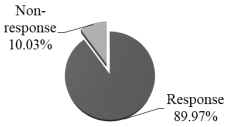
The researcher distributed a total of 399 structured questionnaires to the respondents across all the five strata in Likoni sub-county. Out of these, 359 questionnaires were dully filled and returned whereas 41 questionnaires were not returned. This represents a response rate of 89.97% compared to a non-response rate of 10.03% as shown in the information in
Figure 1. Additionally, all the 10 key informants actively participated in the study through structured interview hence registering a 100% response rate.
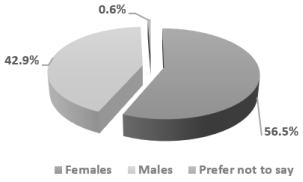
Findings further showed that of the 359 respondents, 203 were female constituting 56.5% compared to 154 males constituting 42.9%. Two respondents (0.6%) preferred not to disclose their gender. The findings are as summarized in
Figure 2.
Figure 2. Distribution of Respondents by Gender.
Further the results show that the study sample largely comprised of middle-aged and young adults. Respondents aged between 24-34 years accounted for 179 (49.9%) whereas those aged between 18-24 years were 122 amounting to 34.0%. These two groups collectively formed 83.8% of the respondents inferring that substantive number of respondents were middle aged and young adults. Additionally, respondents aged between 35-44 years and 45-54 years were 47 and 34, constituting 13.1% and 1.9% respectively. The smallest represented aged groups among the respondents were those aged 55 years and above who were 4 (1.1%) as shown in the information in
Table 3.
Table 3. Distribution of Respondents by Age.
| Frequency | Percent |
Valid | 18-24 | 122 | 34.0 |
25-34 | 179 | 49.9 |
35-44 | 47 | 13.1 |
45-54 | 7 | 1.9 |
55 and above | 4 | 1.1 |
Total | 359 | 100.0 |
The higher percentage of the respondents aged between 25-34 years reflects the demographic structure of the informal settlements in the urban cities in Kenya where huge percentage of the urban population falls within the youthful age bracket
| [17] | K.N.B.S Statistics, K. (2019). The 2009 Kenya population and housing census. Nairobi: Kenya National Bureau of Statistics. |
[17]
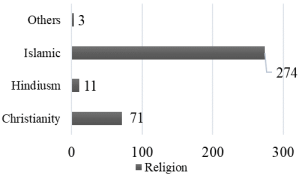
. Analyzing the age composition of participants allowed the researcher to evaluate whether the data collected were informed by individuals who are most likely to participate in, and contribute to community-based prevention efforts. On religious status, Majority of the respondents identified as Islamic (Muslim) accounting for 274 respondents (76.3%). On the other hand, Christians were 71 respondents (19.8%) whereas Hinduism were 11 accounting for 3.1% of the total participants. Relatively smaller proportion, 3 participants (0.8%) indicated other religious affiliations as shown in the information in the
Figure 3.
Figure 3. Distribution of Respondents by Religion.
The study showed Islamic as the dominant religion (76.6%) within the study area. This distribution depicts the broader demographic composition of the coastal Kenya, from which the significant number of the residents adheres to Muslim practice. According to the K.N.B.S,
| [17] | K.N.B.S Statistics, K. (2019). The 2009 Kenya population and housing census. Nairobi: Kenya National Bureau of Statistics. |
[17]
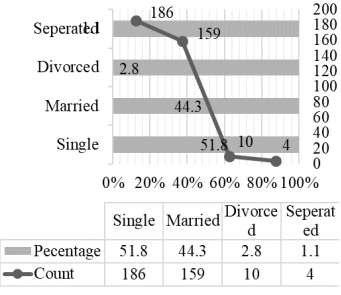
survey, Islam is a major religion in Mombasa County, representing about 37.3% (450,740) persons of the county population. Comparatively, 19.8% of the Christians and other religions (3.9%) represented the minority groups that reflects the religious diversity within Likoni sub-county. Further, the research findings indicate that more than half of the respondents were single 186 participants (51.8%). Comparatively, married respondents were 159 (44.3%) whereas divorced respondents were 10 (2.8%) compared to 4 separated respondents accounting for 1.1%. The information in
Figure 4 shows the distribution of respondents by marital status.
Figure 4. Distribution of Respondents by Marita-Status.
The substantial representation of married respondents (44.3%) provided valuable insights into the influence of community policing initiatives within marital and household contexts. The distribution of the married respondents and single respondents (44.3% against 51.8%) shows that the researcher captured the views of both the married and unmarried in the study area hence understanding distinct context in which SGBV occur and relevant prevention measures. Conversely, the study sought to examine the education levels of the respondents. The research findings indicated that majority of the respondents 87.4% had post-secondary education. This comprises of the 208 respondents having college education and 106 respondents having university education constituting 57.9% and 29.5% respectively. Additionally, 11.4% of respondents indicated having secondary education whereas 0.8% showed that they had primary education. Only 1 respondent had no formal education constituting 0.3% of the total participants.
The level of education distribution indicates that majority of respondents (87.4%) were well educated inferring that they had positive understanding of the subject under the study and gave informed responses. The higher proportion of respondents also implied elaborate awareness and knowledge on SGBV preventions hence enhanced the reliability and quality of data collected. The respondents were further sampled from across all the five wards of Likoni sub-county to reflect the geographical diversity of the research area. The information in
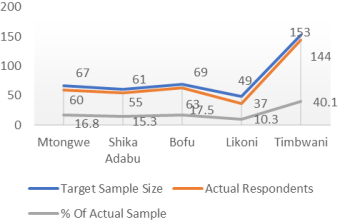
Figure 5 shows the distribution of the targeted sample size per strata and the actual number of respondents who participated in the research.
Figure 5. Distribution of Respondents by Administrative Ward.
The research findings in
Figure 5 indicate that Timbwani ward registered highest number of participants that is 144 respondents (40.1%) compared to 153 targeted participants. This statistic reflects the population distribution of Timbwani ward as it is the most populous ward in Likoni sub-county accounting for 38.42% for the general population of Likoni sub-county
| [17] | K.N.B.S Statistics, K. (2019). The 2009 Kenya population and housing census. Nairobi: Kenya National Bureau of Statistics. |
[17]
. Bofu and Mtongwe ward registered 63 and 60 respondents accounting for 17.5% and 16.8% respectively. Additionally, Shika Adabu had 55 respondents (15.3%) compared to the targeted respondent of 61. Likoni ward on the other hand, registered the lowest number of respondents with 37 respondents participating accounting for 10.9%. Even though the general response rate slightly differs from the targeted number, every ward indicated substantial number of participants enabling generalizability of the study across the study area.
4.2. Inferential Analysis
This section contains the both the diagnostic test and the hypothesis test results. The researcher undertook the diagnostic test to first confirm the assumptions for both correlation and regression analysis proceeding the hypothesis test for the study.
4.2.1. Diagnostic Test
The researcher conducted a diagnostic test to ascertain that the correlation assumptions had been met and that the models estimated were reliable for making inferences. Skewness and kurtosis statistics were used to assess the normality of the study variables. The results showed that neighborhood surveillance practices (skewness= -0.104, kurtosis= -0.451), and the prevalence of SGBV (skewness = -0.385, kurtosis= -0.213) had skewness and kurtosis values within acceptable limits for normal distribution as shown by information in
Table 4.
Table 4. Normality Test Results for Variables.
| N | Mean | Std. Deviation | Skewness | Kurtosis |
Statistic | Statistic | Statistic | Statistic | Std. Error | Statistic | Std. Error |
Neighborhood surveillance practices | 359 | 5.8671 | 2.25848 | -.104 | .129 | -.451 | .257 |
SGBV prevalence | 359 | 6.3589 | 2.21869 | -.385 | .129 | -.213 | .257 |
Valid N (listwise) | 359 | | | | | | |
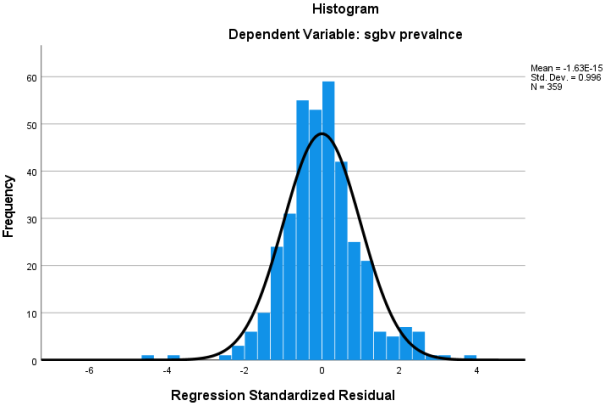
Additionally, the histogram analysis revealed that the residuals were approximately bell-shaped and centered around zero (Mean = -1.63E-15; SD = 0.996; N = 359), indicating that the residuals were reasonably normally distributed as shown in
Figure 6.
Figure 6. Normality of Distribution of Variables.
A study by Kline
| [19] | Kline, R. (2023). Principles and practice of structural equation modeling. Guilford publications. |
[19]
suggested that data are approximately normal if skewness falls between -3 and +3 and kurtosis falls between -10 and +10. Similarly, Hatem et al.
| [15] | Hatem, G., Zeidan, J., Goossens, M., & Moreira, C. (2022). Normality testing methods and the importance of skewness and kurtosis in statistical analysis. BAU Journal-Science and Technology, 3(2), 7.
https://doi.org/10.54729/KTPE9512 |
[15]
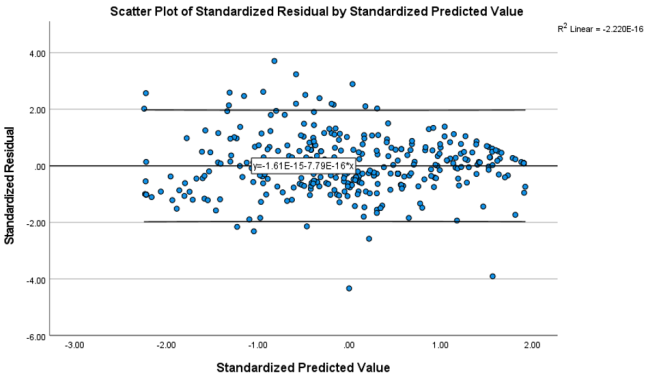
, recommends that skewness and kurtosis values of ±2 are indicative of acceptable normality for most multivariate analyses. The negative skewness values observed across all variables indicate a slight concentration of responses however; the magnitudes of these were very small and did not show any significant deviation from normality. Conversely, a scatterplot of standardized residuals on standardized predicted values was used to check the assumption of homoscedasticity. A visual examination of the scatterplot showed that the residuals were not systematically clustered near the zero line, nor had a funnel shape or curve as shown in the
Figure 7.
Figure 7. Homoscedasticity of Distribution of Variables.
Figure 8. Linearity of Distribution of Variables.
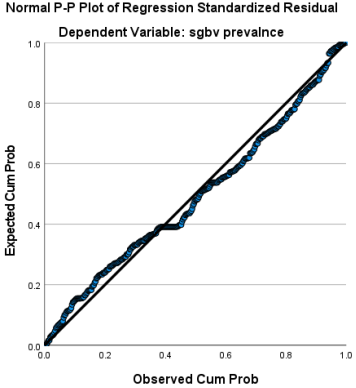
The analysis showed that the spread of the residuals seemed to be fairly leveled at all levels of the predicted values. These observations indicate that the assumption of homoscedasticity was satisfied. The research further undertook a linearity test using a Normal P-P Plot of Regression Standardized Residuals. The results were as shown in the
Figure 8.
The Normal P-P Plot showed that the observed cumulative probabilities closely followed the expected cumulative probabilities along the diagonal reference line. The results indicated that the residuals were not significantly different from normal distribution and the linear regression model met the linearity assumptions. The data were thus considered appropriate for subsequent Pearson correlation and regression analyses, and the estimated parameters were deemed to be reliable and statistically valid.
4.2.2. Hypothesis Test
The researcher examined the relationship between the community neighborhood surveillance and the prevention of SGBV within the study area. A 5-point Likert scale (1=SD Strongly Disagree, 2=D Disagree, 3=N Neutral, 4=A Agree, and 5=SA Strongly Agree) was used to grade the levels of agreements from respondents on the statements. The study first undertook a frequency distribution analysis to determine the respondent’s agreement with each research item. The results were as shown in
Table 5.
Table 5. Respondents’ Frequency Distribution on Community Policing Neighborhood Surveillance.
Statement | | SD | D | TD | N | A | SA | TA |
Community watch groups actively monitor hotspots | F | 8 | 27 | 35 | 88 | 186 | 50 | 236 |
N% | 2.2% | 7.6% | 9.8% | 24.5% | 51.8% | 13.9% | 65.7% |
Community watch groups regularly share safety alerts | F | 8 | 22 | 30 | 70 | 188 | 71 | 259 |
N% | 2.2% | 6.1% | 8.3% | 19.5% | 52.4% | 19.8% | 72.2% |
Information-sharing networks help identify and report SGBV quickly | F | 6 | 25 | 31 | 77 | 192 | 59 | 251 |
N% | 1.7% | 7.0% | 8.7% | 21.4% | 53.5% | 16.4% | 69.9% |
Residents willingly share information on prevention of SGBV | F | 8 | 28 | 36 | 76 | 170 | 77 | 247 |
N% | 2.2% | 7.8% | 10.0% | 21.2% | 47.4% | 21.4% | 68.8% |
The analysis shows that 65.7% (236) of respondents agreed that the Community watch groups actively monitor hotspots. On the other hand, only 9.8% strongly disagreed whereas 24.5% were neutral as presented in the data in the
Table 5. The study findings indicate that majority respondents generally perceive community watch groups as actively sharing safety alerts within their neighborhoods. The study further sought to understand whether community watch groups regularly share safety alerts. The analysis shows that 72.2% of respondents agreed, however, 8.3% strongly disagreed and 19.5% were neutral as shown in
Table 5. These results indicate that significant proportions (72.2%) of the respondents are aware of the role of communication in promoting the safety of the neighborhood. Moreover, the respondents were asked whether Information-sharing networks contribute to detecting and reporting SGBV in a timely manner within the study area. The findings in
Table 5 showed that 69.9% of respondents agreed. Comparatively, 8.7% disagreed whereas only 77 respondents (21.4%) remained neutral. Conversely, when questioned whether residents willingly share information on prevention of SGBV, respondents showed substantial agreement. The research findings showed that 68.8% of respondents agreed. However, 10% of respondents expressed disagreement, while 21.2% remained neutral as shown in
Table 5. These findings suggest that although a significant proportion of residents demonstrate willingness to share information; their will is not uniformly distributed across the study area.
The researcher further sought to examine whether mutual social control contributes to the early detection of SGBV risks. The study indicates that 73.0% of respondents agreed with the statement whereas only 7.8% of respondents disagreed and only 19.2% remained neutral as shown in the
Table 6.
Table 6. Frequency Distribution on Community Policing Neighborhood Surveillance.
Statement | | SD | D | TD | N | A | SA | TA |
Mutual social control contributes to the early detection of SGBV risks | F | 7 | 21 | 28 | 69 | 197 | 65 | 262 |
N% | 1.9% | 5.9% | 7.8% | 19.2% | 54.9% | 18.1% | 73.0% |
Collective community actions have reduced fear of SGBV | F | 5 | 14 | 19 | 76 | 192 | 72 | 264 |
N% | 1.4% | 3.8% | 5.2% | 21.2% | 53.5% | 20.1% | 73.6% |
The collaboration of residents in surveillance networks enhances the prevention of SGBV in my area | F | 5 | 21 | 26 | 70 | 198 | 65 | 263 |
N% | 1.4% | 5.8% | 7.2% | 19.5% | 55.2% | 18.1% | 73.3% |
Moreover, the researcher questioned respondents on whether collective community actions have reduced fear of SGBV within the study area, respondents demonstrated a relative equal rate of agreement. The research revealed that 73.6% of the respondents agreed. A lower percentage of 5.2% disagreed whereas 21.2% (76) were neutral. Similarly, results on whether the collaboration of residents in surveillance networks enhances the prevention of SGBV in the study area indicated that 73.3% of respondents agreed while only 7.2% of respondents disagreed or strongly disagreed, with only 19.5% who remained neutral as shown in the by the information in
Table 6.
The study further sought to assess the extent to which neighborhood surveillance practices contribute to the prevention of SGBV in Likoni Sub-County. The mean descriptive statistics presented in
Table 7 indicate that the composite score for neighborhood surveillance practices had a mean of 5.87 (SD = 2.26) on a 10-point rating scale.
Table 7. Mean Descriptive Statistics on Community Neighborhood Surveillance.
Descriptive Statistics |
| N | Min | Max | Mean | Std. D |
Neighbourhood surveillance practices | 359 | 1.00 | 10.00 | 5.8671 | 2.25848 |
Valid N (listwise) | 359 | | | | |
The mean score suggests that respondents generally held favorable perceptions regarding the effectiveness of neighborhood surveillance practices, such as community watch groups, information-sharing networks, mutual social control, and collective community actions, in supporting SGBV prevention efforts. A standard deviation of 2.26 indicated a moderate variation in individuals' perceptions, suggesting some variation in experience and perceptions across the sample of respondents.
To further examine and understand the relationship between community policing neighborhood surveillance strategies and the prevention of SGBV, the researcher conducted a Pearson correlation analysis and the results were as shown in the
Table 8.
Table 8. Correlation Between Community Policing Neighborhood Surveillance and the Prevention of SGBV.
Correlationsb |
| SGBV prevalence | Neighborhood surveillance practices |
SGBV prevalence | Pearson Correlation | 1 | .803** |
Sig. (2-tailed) | | .000 |
Neighbourhood surveillance practices | Pearson Correlation | .803** | 1 |
Sig. (2-tailed) | .000 | |
b. Listwise N=359
The results showed a positive strong and statistically significant relationship between neighborhood surveillance practices and SGBV prevalence (r=.803, p <.001, n=359). The correlation coefficient of 0.803 shows that the two variables were highly correlated, meaning that better neighborhood surveillance practices is associated with better SGBV prevention outcomes in the study area. Since the p-value (0.01) was below the significance level, the null hypothesis of no significant relationship was rejected. Therefore, the findings demonstrate that neighborhood surveillance practices have a significant relationship with the prevention of SGBV within the study area. Moreover, the correlation confidence level analysis confirmed the relation between the variables as indicated in the
Table 9.
Table 9. Regression Coefficient Community Policing Neighborhood Surveillance.
Confidence Intervals |
| Pearson Correlation | Sig. (2-tailed) | 95% Confidence Intervals (2-tailed) a |
Lower | Upper |
SGBV Prevalence - Neighbourhood surveillance practices | .803 | .000 | .763 | .837 |
a. Estimation is based on Fisher's r-to-z transformation.
The 95% confidence interval for the correlation coefficient ranged from 0.763 to 0.837, indicating a high degree of precision in the estimated relationship. Since the confidence interval did not include zero, the correlation was statistically significant and unlikely to have occurred by chance. To further examine the predictive effect of neighborhood surveillance on SGBV outcomes, a simple linear regression analysis was conducted. The information in the
Table 10 shows the model summary of the regression analysis.
Table 10. Regression Model Summary on the Community Neighborhood Surveillance.
Model Summaryb |
Model | R | R Square | Adjusted R Square | Std. Error of the Estimate |
1 | .803a | .644 | .643 | 1.32496 |
a. Predictors: (Constant), Neighbourhood surveillance practices
b. Dependent Variable: SGBV prevalence
The model results in
Table 10 show that neighborhood surveillance practices and prevalence of SGBV are positively associated, with a correlation of R=.803. The coefficient of determination (R
2 =.644) indicated that neighborhood surveillance practices explained 64.4% of the variation in SGBV prevalence. The adjusted R
2 value of .643 suggests that the model retained substantial explanatory power on the predictors. Conversely, the regression coefficients results indicated that neighborhood surveillance practices significantly predicted SGBV prevalence (B=0.789, β=0.803, t=25.433, p<.001) as indicated in
Table 11.
Table 11. Regression Coefficients Community Neighborhood Surveillance.
Coefficientsa |
Model | Unstandardized Coefficients | Standardized Coefficients | t | Sig. | 95.0% Confidence Interval for B |
B | Std. Error | Beta | Lower Bound | Upper Bound |
1 | (Constant) | 1.732 | .195 | | 8.888 | .000 | 1.349 | 2.116 |
Neighbourhood surveillance practices | .789 | .031 | .803 | 25.433 | .000 | .728 | .850 |
a. Dependent Variable: SGBV Prevalence
The coefficient result indicates that a one-unit rise in neighborhood surveillance practices was linked to a 0.789-unit rise in the SGBV prevalence score. The standardized coefficient (β=0.803) demonstrates a strong positive effect of neighborhood surveillance practices on SGBV prevalence. Further, the researcher undertook the ANOVA analysis and the results indicated that the regression model predicting SGBV prevalence from neighborhood surveillance practices was statistically significant, F (1, 357) =646.855, p<.001 as indicated by information in
Table 12.
Table 12. ANOVA Analysis Results Community Neighborhood Surveillance.
ANOVAa |
Model | Sum of Squares | df | Mean Square | F | Sig. |
1 | Regression | 1135.562 | 1 | 1135.562 | 646.855 | .000b |
Residual | 626.718 | 357 | 1.756 | | |
Total | 1762.279 | 358 | | | |
a. Dependent Variable: SGBV Prevalence
b. Predictors: (Constant), Neighborhood Surveillance Practices
The regression model accounted for a regression sum of squares of 1135.562, while the residual sum of squares was 626.718, yielding a total sum of squares of 1762.279. The statistically significant F-statistic demonstrates that neighborhood surveillance practices significantly predict variations in SGBV prevalence among the respondents. The p value (0.001) was lower than the usual significance level, 0.05, and the null hypothesis that neighborhood surveillance practices have no significant relationship with SGBV prevalence was rejected.
5. Discussion
These findings have far-reaching implications in the dynamics of SGBV prevention. Community policing heavily relies on information dissemination which boosts awareness, preparedness and timely response to possible threats. These results are consistent with the findings of Dlamini et al.
| [10] | Dlamini, T., Maseko, L., Nkosi, S., Khumalo, Z., Ndlovu, J., Smith, A. & Tshabalala, A. (2024). Evaluation of Collaborative Data Sharing Mechanisms for Comprehensive Cyber Threat Mitigation in National Security Crises. Int. J. Appl. Soc. Anal, 9, 1-22. |
[10]
, who found that although the collaborative data-sharing mechanisms contribute to the detection and mitigation of threats to a high degree, their effectiveness largely depends on the foundation of healthy trust frameworks, technological collaboration, and well-defined legal agreements. Comparatively, Ezeaka & Bartholomew
| [11] | Ezeaka, N. & Bartholomew, C. (2025). Gender-Based Violence in Nigeria: Exploring the Role of Communication in Prevention and Intervention Strategies. Saudi Journal of Humanities and Social Sciences, 10(2), 69-74.
https://doi.org/10.36348/sjhss.2025.v10i02.004 |
[11]
maintained that effective communication strategies are key to preventing GBV and supporting survivors. This infers that strengthening ethical media reporting, and promoting community-based awareness programs assist the community in developing effective mitigation measures. The findings of the current study allude that established community neighborhood surveillance and vigilante groups significantly contribute to crime prevention in informal settings through localized monitoring and intelligence sharing. That collective efficacy in the sharing of safety alerts enhances the capacity of community members to collaborate in order to deliver on shared objectives like preventing crime. Consequently, neighborhood surveillance in hotspots leads to a substantial reduction in violent crimes, including gender-based violence.
Timely reporting is essential in preventing escalation, ensuring victim support, and facilitating justice processes. This implies that information sharing within communities can be used to increase evidence-based interventions and better outcomes in management of crime. When communities are interconnected through information networks, they become more vigilant and responsive, thereby reducing opportunities for SGBV. However, factors such as fear of retaliation, stigma, and lack of confidentiality may hinder participation. These assertions reflect the results of the study undertaken by Woldearegay et al.
| [32] | Woldearegay, H., Gebretnsae, H., Mackey, A., Bigalky, J. & Petrucka, P. (2025). Understanding nature, barriers, and facilitators in addressing sexual and gender-based violence (SGBV) in conflict zones of Africa: A scoping review. BMC Public Health, 25(1), 3583. |
[32]
, who noted that the factors that impeded successful response were entrenched socio-cultural stigma, poor legal frameworks, health system disintegration, insecurity, lack of awareness, and knowledge. This means that willingness to share information represents the backbone of effective community policing and neighborhood surveillance systems. In contrast to structural interventions like patrols or surveillance technologies, information sharing is intrinsically reliant upon human agency, trust and social bonding. Awoyemi, et al.
| [4] | Awoyemi, O., Attah, R., Basiru, J., Leghemo, I. & Pub, A. (2025). A community-policing innovation model to build sustainable trust and effectively reduce crime in urban areas. International Journal of Multidisciplinary Research and Growth Evaluation, 6(1), 848-853. |
[4]
, underscored the importance of co-produced safety solutions in creating sustainable urban environments. The study implied that evidence-based policing is reinforced through the successful community involvement in information sharing and enhances the crime detection and prevention performance. The desire of residents to exchange information increases the existence of effective guardians in the community. Information is a surveillance device and makes the potential offenders feel more threatened and consequently discourages crime.
Unlike formal policing structures, mutual social control operates through everyday interactions, shared norms, and collective vigilance. The higher agreement rate among respondents indicates that residents of Likoni Sub-County possess a degree of social cohesion that enables them to monitor and regulate behavior. This infers that maintaining order at the micro-level discourages more serious crimes. In this regard, by community members closely monitoring behavior and intervening in situations that could deteriorate to SGBV, they are creating a condition that dissuades deviance. Additionally, while the reciprocity of social control increases guardianship and minimizes crime opportunities, it may also be influenced by prevailing cultural norms that either support or undermine gender equality. This implies that, social control can reinforce abusive behaviors or deter victims to report abuse as a result of being stigmatized or feeling ostracized. The findings underscore the importance of mutual social control as a cornerstone of neighborhood surveillance; however, even though, it significantly contributes to early detection of SGBV risks, its effectiveness depends on the nature of the norms it enforces. Strengthening positive social norms while addressing harmful cultural practices will enhance its role in preventing SGBV.
The findings were further supported by the insights from key informants. According to key informant KI-08 “Neighbors are more attentive to unusual behavior, conflicts, and distress within themselves, and they are increasingly willing to intervene or alert authorities. This kind of informal monitoring is especially important in areas where police can’t reach quickly. But it is it can sometimes be biased, depending on relationships and family dynamics within the community.” This means that Cultural norms, and concerns about social stigma still discourage some individuals from engaging fully. Specifically, women and youth may occasionally be unwilling to participate hence restricting the overall effectiveness of the community-based interventions.
The results support the assertions by Gracia, et al.
| [14] | Gracia, E., López-Quílez, A., Marco, M., Escobar-Hernández, P. & Lila, M. (2026). Neighborhood disadvantage and social cohesion as contextual determinants of inequalities in intimate partner violence risk across city neighborhoods. Cities, 168, 106506.
https://doi.org/10.1016/j.cities.2025.106506 |
[14]
, who reported that in neighborhoods low in social cohesion, the relative risk of IPV was greater than the city average. The study noted that, social cohesion emerged as a neighborhood-level protective factor for IPV risk. Similarly, Mabeyo
| [22] | Mabeyo, Z., Nyoni, J., Yusuf, D. & Manyama, W. (2025). Navigating tensions between indigenous norms and international frameworks protecting women from gender-based violence in Tanzania: Insights for social work practice. Journal of Comparative Social Work, 20(1), 137-166.
https://doi.org/10.31265/jcsw.v20i1.736 |
[22]
emphasized that social workers should think and act in a culturally sensitive and reflective manner in designing gender-based interventions by clarifying what norms are acceptable and what norms can be abandoned. These studies reinforce the argument that social cohesion is a critical determinant of safety in informal environments. According to Broken Windows Theory, maintaining order at the micro-level discourages more serious crimes. These imply that, as long as community members closely observe the behavior and intervene in circumstances that can lead to SGBV; they will develop an environment that deters deviance.
One informant
KI-05 emphasized that
“community surveillance has become more visible and intentional in monitoring hotspots, and in areas where they are active, there is a noticeable deterrent effect.” This is indicative of the situational effect of surveillance which is in line with Routine Activity Theory. The theory assumes that the availability of effective guardians can prevent crime. However, the same informant noted that “
such effectiveness is not uniform across all areas, pointing to spatial and operational inconsistencies”. This imbalance is essential in determining why strategies might not be able to encompass local successes. Similarly, another key informant
KI-10 observed that
“information sharing within the community has improved considerably, and residents are more alert and responsive to safety concerns.” These reflects the descriptive results in which most respondents indicated that safety alerts and communication networks are active and working. The results are conversely supported empirically by the works of Longinus,
| [20] | Longinus, E. (2024) Evaluation of community intelligence and interagency synergies as a proficient strategy for addressing crime in South African communities. Hong Kong Journal of Social Sciences, (64).
https://doi.org/10.55463/hkjss.issn.1021-3619.64.16 |
[20]
who recommended the use of community and social intelligence to identify and reveal social interactions, group behaviors, and community dynamics and technology to map and analyze crime. The study maintained that, effective crime detection and prevention require information and intelligence sharing, with community intelligence playing a vital role in identifying and understanding criminal groups and behaviors.
While residents generally expressed willingness to share information, key informants highlighted persistent barriers such as cultural norms. According to one of the informants
KI-03,
“…this willingness is not universal, and some people are reluctant because of fear and social stigmatization”. This insight is consistent with results of the study by Adams et al.
| [1] | Adams, A., Lea, S. & D’Silva, E. (2021). Digital technologies and interventions against gender-based violence in rural areas. International criminal justice review, 31(4), 438-455.
https://doi.org/10.1177/10575677211040413 |
[1]
, who highlighted the necessity of collaborative efforts involving governmental agencies, non- governmental organizations, and international bodies to effectively address GBV. Moreover, the findings suggest that neighborhood surveillance is particularly effective in influencing behavioral and perceptual dimensions of SGBV prevention. A key informant
KI-09 corroborated this by stating that
“there is a growing culture of speaking out, and community members are more willing to report incidents than before.” This shift is significant, as increased reporting often reflects improved trust and reduced stigma, even if it does not immediately translate into reduced prevalence. This observation aligns with the results of Jiang, et al.
| [16] | Jiang, S., Chen, Y. & Wang, L. (2024). Effectiveness of community-based programs on aggressive behavior among children and adolescents: a systematic review and meta-analysis. Trauma, Violence, & Abuse, 25(4), 2845-2861.
https://doi.org/10.1177/15248380241227986 |
[16]
, who revealed that community-based interventions are most effective to change attitudes and behaviors but might take extended periods of time to change real incidence rates of violence. Similarly, Ogunbambi,
| [24] | Ogunbambi, T. (2025). Traditional Institutions as Change Agents: Understanding Cultural Norms and Practices Promoting Gender-Based Violence in Nigerian Communities. |
[24]
argues that there is a moderate positive relationship between perceptions of traditional institutions and feelings of safety, suggesting that individuals who feel safer are more likely to trust these institutions' effectiveness in addressing GBV.
5.1. Summary and Conclusion
The study sought to examine the relationship between community policing neighborhood surveillance strategies and SGBV prevention. The results showed a positive and statistically significant correlation between neighborhood surveillance practices and SGBV prevention. The regression model produced a correlation coefficient of R=0.803, indicating a strong association between the predictor and the outcome variable. Further, neighborhood surveillance practices accounted for 64.4% of the variance in SGBV prevalence (R2=0.644), which indicates significant predictive ability. The regression analysis further showed that neighborhood surveillance practices significantly influenced SGBV prevalence (β=0.803, B=0.789, t=25.433, p < 0.001).
The findings indicated high level of agreement among the respondents in relation to the effectiveness of community watch groups, information sharing networks, mutual social control and collective community action in preventing SGBV. The findings infer that improving neighborhood surveillance mechanism could be an effective approach for enhancing community-based prevention and response to SGBV in informal settlements. Neighborhood surveillance strategies have been proved to be valuable in improving awareness and social cohesion, and have a direct statistically significant effect on SGBV prevention. However, surveillance cannot be used alone and should be combined with other interventions including awareness campaigns, institutional support, and community policing patrols.
5.2. Recommendation and Suggestion for Future Study
Based on the findings and conclusions of the study, the following recommendations are proposed:
1) Institutionalize Joint Campaign Programs: Government agencies should formalize and scale up joint community-police campaigns as a core strategy for SGBV prevention, given their high impact.
2) Future research should examine the role of the digital community policing platforms and the technology-driven reporting platforms (e.g., mobile apps, anonymous digital reporting systems, social media networks, and community policing groups on WhatsApp) in the prevention of SGBV in informal settlements.









 Share This Article
 Twitter
 Linked In
 Facebook
 Copy
Copy Download