
 ,
MárciaMarlyWinck Yamamoto,
JamillyAparecida Vicente Jacomeli,
José Maria Soares Junior,
Gustavo Arantes Rosa Maciel,
Edmund Chada Baracat
,
MárciaMarlyWinck Yamamoto,
JamillyAparecida Vicente Jacomeli,
José Maria Soares Junior,
Gustavo Arantes Rosa Maciel,
Edmund Chada Baracat
This comprehensive review focuses on the relevance of hyperinsulinemia in women with polycystic ovary syndrome (PCOS). It highlights the most robust scientific evidence on the management of this condition within the context of PCOS. A systematic search of studies published in English language was conducted using Google Scholar, PubMed, and Cochrane databases. Keywords used alone or combined with “PCOS” included: hyperinsulinemia, incretin hormones, and dipeptidyl peptidase-4. The search strategy was complemented by manual review of references from selected articles. Glucagon-like peptide-1 receptor agonist and glucagon-dependent insulin tropic polypeptide provide various metabolic beneficial effects in addition to the weight loss. Dipeptidyl peptidase-4 inhibitors, expressed by various cells, prevent GLP-1 degradation and decreases insulin signaling in different cells, particularly in hepatocytes, and adipocytes. Regarding the management of hyperinsulinemia, the review suggests that incretin hormone agonist and dipeptidyl peptidase-4 inhibitors may represent favorable therapeutic options for addressing insulin resistance in women with PCOS, particularly those with obesity. However, this review does not explore dietary interventions and physical activity as primary strategies for managing dysglycemia in this population.
| Published in | Journal of Gynecology and Obstetrics (Volume 14, Issue 3) |
| DOI | 10.11648/j.jgo.20261403.12 |
| Page(s) | 75-85 |
| Creative Commons |
This is an Open Access article, distributed under the terms of the Creative Commons Attribution 4.0 International License (http://creativecommons.org/licenses/by/4.0/), which permits unrestricted use, distribution and reproduction in any medium or format, provided the original work is properly cited. |
| Copyright |
Copyright © The Author(s), 2026. Published by Science Publishing Group |
Polycystic Ovary Syndrome, Hyperinsulinism, Incretin Hormone, Dipeptylpeptidase
Parameter | Cut offs | Ranges | References |
|---|---|---|---|
SHBG(nmol/l) | 20 | 20-37 | Chen et al, 2021 |
Jayagopal et al, 2003 | |||
Nadaraja et al, 2018 | |||
Baseline insulin (pmol/l) | 85 | 68-105 | McAuley et al, 2001 |
Lewandowsky et al, 2019 | |||
Lee et al, 2003 | |||
HOMA-IR | 2.2 | 1.8-3.8 | De Medeiros et al, 2017 |
Lewandowsky et al, 2019 | |||
Gayoso-Diz et al, 2013 | |||
Abdesselan et al, 2021 | |||
Quicki | 0.357 | 0.310-0.360 | Martins et al, 2007 |
Kartz et al, 2000 | |||
Park et al, 2021 |
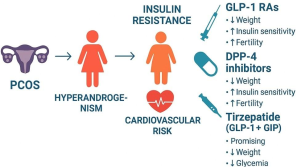
Glucagon-like peptídeo-1 receptor agonist (GLP-1 RA) |
Exenatide |
Liraglutide |
Semaglutide |
Dipeptidyl peptidase-4 (DDP-4) inhibitors |
Sitagliptin |
Alogliptin Sexagliptin |
GLP-1 RA and GIP synergic activities |
Tirzepatide |
3 B-HSD | 3-Beta-hydroxysteroid Dehydrogenase |
A4 | Androstenediona |
AMPK | Activated Protein Kinase |
AN | Acanthosis Nigricans |
BID | Twice daily |
BMI | Body Mass Index |
CRD | Calorie-Restricted Diet |
CRP | C- Reactive Protein |
CVD | Cardiovascular Disease |
CYP | Aromatase |
DBP | Diastolic Blood Pressure |
DHEA | Dehydroepiandrosterone |
DHEAS | Dehydroepiandrosterone Sulfate |
DPP-4 | Dipeptidyl peptidase-4 |
FDA | Food and Drug Administration |
FSH | Follicle-Stimulating Hormone |
GI | Glucose Intolerance |
GIP | Glucose-dependent Insulinotropic Polypeptide |
GLP-1 | Glucagon-Like Peptide-1 |
GPL-1 RA | Glucagon-Like Peptide-1 Receptor Agonist |
HbA1C | Glycated Hemoglobin |
HDL- C | High-Density Lipoprotein Cholesterol |
HOMA-IR | Homeostasis Model Assessment of Insulin Resistance |
IFG | Impaired Fasting Glucose |
IGF-1 | Insulin-like Growth Factor-1 |
IR | Insulin Resistance |
ITG | Impaired Tolerance Glucose |
LH | Luteinizing Hormone |
MASLD | Metabolic Dysfunction-Associated Steatotic Liver Disease |
OGTT | Oral Glucose Tolerance Test |
PMOS | Polyendocrine Ovarian Metabolic Syndrome |
PCOM | Polycystic Ovary Morphology |
PCOS | Polycystic Ovary Syndrome |
QUICKI | Quantitative Insulin Sensitivity Check Index |
SBP | Systolic Blood Pressure |
SC | Subcutaneous |
SHBG | Sex Hormone-Binding Globulin |
StAR | Steroidogenic Acute Regularoy Protein |
T | Total Testosterone |
T2DM | Diabetes Mellitus Tipo 2 |
TG | Triglycerides |
VAT | Visceral Adipose Tissue |
WC | Waist Circumference |
| [1] | Teede HJ, Tay CH, Laven J, et al. Recommendations from the 2023 international evidence-based guideline for the assessment and management of polycystic ovary syndrome. J Clin Endocrinol Metab. 2023; 108(10): 2447-2469. |
| [2] | de Medeiros SF, deMedeiros AKLWY, de Magalhães LF, et al. Fundamentals to diagnosing polycystic ovary syndrome in adolescents: A critical literature review.J Gynecol Obstet. 2024; 12(4): 67-80. |
| [3] | Salari N, Nankali A, Ghanbari A, et al. Global prevalence of polycystic ovary syndrome in women worldwide: a comprehensive systematic review and meta-analysis. Arch Gynecol Obstet. 2024; 310(3): 1303-1314. |
| [4] | Naz MSG, Therani FR, Majd HA, et al.The prevalence of polycystic ovary syndrome in adolescents: a systematic review and meta-analysis. Int J Reprod Biomed. 2019; 13(8): 533-542. |
| [5] | Teede, H. J., Khomami, M. B., Morman, R., Laven, J. S. E., Joham, A. E., Costello, M. F., Patil, M., Rees, D. A., Berry, L., Cree, M. G., Zhao, H., Norman, R. J., Dokras, A., Piltonen, T., & Global Name Change Consortium. (2026). Polyendocrine metabolic ovarian syndrome, the new name for polycystic ovary syndrome: a multistep global consensus process. The Lancet, 407, 2329–2339. |
| [6] |
de Medeiros SF, Barbosa BB, de Medeiros MAS, Yamamoto AKLW, Yamamoto MMW. Adrenal androgen predictive effects on clinical and metabolic abnormalities of polycystic ovary syndrome. Rev Bras Ginecol Obstet. 2022; 44(2):142-153. HYPERLINK "
https://doi.org/10.1055/s-0041-1741030" \t "_blank" https://doi.org/10.1055/s-0041-1741030 |
| [7] | de Medeiros SF, Rodgers RJ, Norman RJ. Adipocyte and steroidogenic cell crosstalk in polycystic ovary syndrome. Hum Reprod Update. 2021; 27(4):771-796. |
| [8] | Unluhizarci K, Karaca Z, Kelestimur F. Role of insulin and insulin resistance inandrogen excess disorders. World J Diabetes. 2021; 12(5): 616-629. |
| [9] | Banu H, Morshed M, Akhtar N, et al. Total testosterone significantly correlates with insulin resistance in polycystic ovary syndrome. Gynecol Reprod Endocrinol Metab. 2021; 2: 106-111. |
| [10] | Wang T, Zhang T, Wang J, Lu T. Evolving PCOS Management: From Symptom Control to Phenotype-Targeted Therapy. Diabetes Metab Syndr Obes. 2026; 19: 560296. |
| [11] | Cowan S, Lim S, Alycia C, et al. Lifestyle management in polycystic ovary syndrome-beyond diet and physical activity. BMC Endocr Disord. 2023; 23(1): 14. |
| [12] | Wang J, Wu D, Guo H, et al. Hyperandrogenemia and insulin resistance: The chief culprit of polycystic ovary syndrome. Life Sci. 2019; 236: 116940. |
| [13] | Legro RS. Hyperandrogenism and Hyperinsulinemia. In: Global Library of Women's Medicine. London: GLOWM; 2008. |
| [14] | Chang KJ, Chen JH, Chen KH. The pathophysiological mechanism and clinical treatment of polycystic ovary syndrome: A molecular and cellular review of the literature. Int J Mole Sci. 2024. |
| [15] | Ding H, Zhang J, Zhang F, et al. Resistance to the insulin and elevated level of androgen: A major cause of polycystic ovary syndrome. Front Endocrionl. 2021; 12: 741764. |
| [16] | Zhu JL, Chen Z, Feng WJ, et al. Sex hormone-binding globulin and polycystic ovary syndrome. Clin Chim Acta. 2019; 499: 142-148. |
| [17] | Xing C, Zhang J, Zhao H, et al. Effect of sex hormone-binding globulin on polycystic ovary syndrome: Mechanisms, manifestations, genetics, and treatment. Int J Womens Health. 2022; 14: 91-105. |
| [18] | Videira-Silva A, Albuquerque C, Fonseca H. Acanthosis nigricans as a clinical marker of insulin resistance among overweight adolescents. Ann Pediatr Endocrinol Metab. 2019; 24(2): 99-103. |
| [19] | Khan B, Basu R. Acanthosis nigricans in adolescents with polycystic ovary syndrome. Int J Reprod Contracept Obstet Gynecol. 2022; 11(3): 765-769. |
| [20] | Abusailik MA, Muhanna AM, Almuhisen AA, et al. Cutaneous manifestation of polycystic ovary syndrome. Dermatol Reports. 2021; 13(2): 8799. |
| [21] | Lee S, An H, Rhee S, et al. Optimal fasting insulin cutoff value to predict clinical and/or biochemical hyperandrogenism in Korean women with polycystic ovary syndrome. Clin Exp Obstet Gynecol. 2023; 50(1): 238. |
| [22] | Martins WP, Santana LF, Nastri CO, et al. Agreement among insulin sensitivity indexes on the diagnosis of insulin resistance in polycystic ovary syndrome and ovulatory women. Eur J Obstet Gynecol Reprod Biol. 2007; 133(2): 203-207. |
| [23] | Jayagopal V, Kilpatrick ES, Jennings PE, et al. The biological variation of testosterone and sex hormone-binding globulin (SHBG) in polycystic ovarian syndrome: implications for SHBG as a surrogate marker of insulin resistance. J Clin Endocrinol Metab. 2003; 88(4): 1528-1533. |
| [24] | Nadaraja RND, Sthaneshwar P, Razali N. Establishing the cut off values of androgen markers in the assessment of polycystic ovarian syndrome. Malays J Pathol. 2018; 40(1): 33-39. |
| [25] | Chen F, Liao Y, Chen M, et al. Evaluation of the efficacy of sex hormone binding globulin in insulin resistance assessment based on HOMA-R in patients with PCOS. Reprod Sci. 2021; 28(9): 2504-2513. |
| [26] | Lewandowski KC, Skowronska-Jozwiak E, Ukasiak K, Galuszko K, et al. How much insulin resistance in polycystic ovary syndrome? Comparison of HOMA-IR and insulin resistance (Belfiore) index models. Arch Med Sci. 2019; 15(3): 613-618. |
| [27] | Katz A, Nambi SS, Mather K, et al. Quantative insulin sensitivity check index: a simple, accurate method for assessing insulin sensitivity in humans. J Clin Endocrinol Metab. 2000; 85(7): 2402-2410. |
| [28] | Park SY, Gautier JF, Chon S. Assessment of insulin secretion and insulin resistance in human. Diabetes Metab J. 2021; 45(5): 641-654 |
| [29] | Gayoso-Diz P, Otero-Gonzáles A, Rodrigues-Alvarez MX, et al. Insulin resistance (HOMA-IR) cut-off values and the metabolic syndrome in a general adult population: effect o fender and age: EPIRCE cross-sectional study. BMC Endocr Dis. 2013; 13(1): 47. |
| [30] | Abdesselam A, Zidoum H, Zadjali F, et al. Estimate of the HOMAR-IR cut-off value for identifying subjects at risk of insulin resistance using a machine learning approach. Sultan Qaboos Uni Med J. 2021; 21(4): 604-612. |
| [31] | de Medeiros SF, Ormond CM, de Medeiros MAS, et al. Metabolic and endocrine connections of 17-hydroxypregnenolone in polycystic ovary syndrome women. Endocr Connect. 2017; 6(7): 479-488. |
| [32] | McAuley KA, Williams SM, Mann JI, Wlaker RJ, Lewis-Barned NJ, Temple LA, Duncan AW. Diagnosing insulin resistance in the general population. Diabetes Care. 2001; 24(3): 460-464. |
| [33] | Tehrani FN, Fayas M, Firouuzi F, et al. Longitudinal trajectories of insulin resistance in women with polycystic ovary syndrome: A functional data analysia approach. Endocr Connect. 2025; 14(8): e250266. |
| [34] | Abdalla MA, Deshmukh H, Atkin S, et al. The potential role of incretin-based therapies for polycystic ovary syndrome: a narrative review of the current evidence. Therap Advan Endocrinol Metab. 2021; 12: 1-16. |
| [35] | Siamashvili M, Davis SN. Update on the effects of GLP-1 receptor agonists for the treatment of polycystic ovary syndrome. Exp Rev Clin Pharmacol. 2021; 14(9): 1081-1089. |
| [36] | Ghafari A, Maftoohi M, Samarin ME, et al. The last update on polycystic ovary syndrome (PCOS), diagnosis criteria, and novel treatment. 2025; 17: 100228. |
| [37] | Santos-Hernández M, Reimann F, Gribble FM. Cellular mechanisms of incretin hormone secretion. J Mol Endocrinol. 2024; 72(4): e230112. |
| [38] | Celik O, Yazici D, Ciudin A, et al. GLP-1receptor analogs: evidence linking to effect on metabolic and reproductive functions in patients with PCOS and obesity. Obs Facts. 2025; 31: 1-15. |
| [39] | Papaetis GS, Kyriacou A. GLP-1 receptor agonists, polycystic ovary syndrome and reproductive dysfunction: Current research and future horizons. Adv Clin Exp Med. 2022; 31(11): 1265-1274. |
| [40] | Bader S, Bhatti R, Abusanana S. A systematic review of GLP-1on anthropometric PCOS. Women’s Health. 2024; 20. |
| [41] | Morais BAAH, Prizão VM, Souza MM, et al. The efficacy and safety of GLP-1 agonists in PCOS women living with obesity in promoting weight loss and hormonal regulation: A meta-analysis of randomized controlled trials. J Diab Complicat. 2024; 30(10): 108834. |
| [42] | Rahim S, Pergolizzi J. The potential role of glucagon-like peptide-1 (GLP-1) agonist for polycystic ovary syndrome. Cureus. 2025; 17(1): e77998. |
| [43] | Xing C, Li C, He B. Insulin sensitizers for improving the endocrine and metabolic profile in overweight women with PCOS. J Clin Endocrinol Metab.2020; 105(9): 2950-2963. |
| [44] | Lin S, Deng Y, Huang J, et al. Efficacy and safety of GLP-1 receptor agonists on weight management and metabolic parameters in PCOS women: a meta-analysis of randomized controlled trials. Sci Rep. 2025; 15(1): 16512. |
| [45] | Srinivasan D, Lofton HF. Effect of GLP-1 agonists on weight loss in patients with polycystic ovary syndrome and obesity: A single-center study. Obesi Pillars. 2022; 2: 100016 |
| [46] | Alhomoud IS, Wheeler SE, Dixon DL. Repurposing incretin therapies: a narrative review of emerging indications across cardiometabolic, liver, kidney, neurological, psychiatric, and other systems. Can J Physiol Pharmacol. 2025; 103(9): 298-311. |
| [47] | Bu T, Su Z, Pan Y, et al. Glucagon-like peptide-1: New regulator in lipid metabolism. Diabetes Metab J. 2024; 48(3): 354-372. |
| [48] | Mullur N, Morissette A, Morrow NM, et al. GLP-1 receptor agonist-based therapies and cardiovascular risk: a review of mechanisms. J Endocrino. 2024; 263: e240046. |
| [49] | Szczesnowicz A, Szeliga A, Niwczyk O, et al. Do GLP-1 analogs have a place in the tratment of PCOS? New insights and promising therapies. J Clin Med. 2023; 13(18): 5915. |
| [50] | Sridharan K, Sivaramakrishnan G. Expanding therapeutic horizons: glucagon-like peptide-1receptor agonists ando sodium glucose transporte-2 inhibitors in polycystic ovarian syndrome: A comprehensive review including systematic review and network meta-analysis of randomized clinical trials. Diabetol Metab Syndr. 2025; 17(1): 168. |
| [51] | Gleason E, Levine L, Lee IT, Koelper N, Amaro A, Dokras A. Effect of glucagon-like peptide 1 receptor agonist medications on weight loss in patients with and whitout polycystic ovary syndrome. Fertil Steril. 2025; 124 (3): 562-564. |
| [52] | Tang L, Yuan L, Yang G, et al. Changes in whole metabolities after exenatide treatment in overweight/obese polycystic ovary syndrome patients. Clin Endocrinol.2019; 91(4):508-516. |
| [53] | Ye ZR, Yan CQ, Liao N, et al. The effectiveness and safety of exenatide versus metformin in patients with polycystic ovary syndrome: A meta-analysis of randomized controlled trials. Reprod Sci. 2023; 30(8): 2349-2361. |
| [54] | Vatankhah A, Jamhiri M, Vatankhah S, et al. Improved ovarian adiponectin system expression in polycystic ovary syndrome treated with exenatide. Clin Exp Reprod Med. 2025; 52(1): 98-100. |
| [55] | Hu Y, Song X, Hamiti S, et al. Comparison of exenatide alone or combined with metformin versus metformin in treatment of polycystic ovaries: a systematic review and meta-analysis. BMC Endocr Disord. 2023; 23(1): 250. |
| [56] | Bai C, Wang Y, Niu Z, et al. Exatinade improves hepatocyte insulin resistence induced by different regional adipose tissue. Front Endocrinol. 2002; 13: 1012904. |
| [57] | Tang L, Yuan L. Changes in whole metabolities after exenatide treatment in overweight/ obese polycystic ovary syndrome patients. Clin Endocrinol. 20019; 91(4): 508-516. |
| [58] | Dawson JA. Sathyapalan T, Vince R, et al. The effect of exantide on Cardiovascular risk markers in women with polycystic ovary syndrome. Front Endocrinol. 2019; 10: 189. |
| [59] | Elkind-Hirsch KE, Chappeell N, Shaler D, et al. Liraglutide 3 mg on weight, body composition and hormonal and metabolic parameters in women with obesity and Polycystic ovary syndrome. A randomized placebo- phase 3 study. Fertil Steril. 2022: 118(2): 371-381. |
| [60] | Van Can J, Sloth B, Jensen C, et al. Effects of the once-daily GLP-1 analong Liraglutide on gastric emptying glycemin parameters, appetite and energy metabolism obese, non-diabetic adults. Int J Obstet. 2024; 38(6): 784-793. |
| [61] | Frossing S, Nylander M, Chabanova E, et al. Effect of liraglutide on ectopic fat in polycystic ovary syndrome: A randomized clinical tria. Diabetes Obes Metab. 2018; 20(1): 215-218. |
| [62] | Wu LM, Wang YX, Zhan Y, Liu AH, Wang YX, Shen HF, Wang YF, Wang LY, Tao ZB, Wang YQ. Dulaglutide, a long-acting GLP-1 receptor agonist, can improve hyperandrogenemia and ovarian function in DHEA-induced PCOS rats. Peptides. 2021; 145: 170624. |
| [63] | Van J, Frias JP, Bonara E, Raha S, et al. Gastrointestinal tolerability of once-weekly dulaglutide 3.0mg and 4.5 mg: A post hoc analysis of the incidence and prevalence of náusea, vomiting and diarrhea in AWARD-11. Diabetes Ther. 2021; 12(10): 2783-2794. |
| [64] | Bhaskaran D, Angappan S. Targeting Obesity in PCOS: A Review of Current Pharmacological Interventions and Future Directions. CMMB. 2025; 32 (3):229. |
| [65] | Guo L, Zhang B, Hou J, et al. Evaluation of characteristics of gastrointestinal adverse events with once-weekly dulaglutide treatment in Chinese patients with type 2 diabetes: A post hoc pooled analysis of two randomized trials. Diabetes Ther. 2020; 11(8): 1821-1833. |
| [66] | Nauck MA, Quast DR, Wefers J, Meler JJ. GLP-1 receptor agonists in the treatment of type 2 diabetes ‘state-of-the-art. Mol Metab. 2021; 46: 101102. |
| [67] | Zhang Y, Qu Z, Lu T, et al. Effects of a dulaglutide plus calorie-restricted diet versus a calorie-restricted diet on visceral fat and metabolic profiles in women with polycystic ovary syndrome: A randomized controlled trial. Nutrients. 2023; 15 (3): 556. |
| [68] | Jensterle M, Ferjan S, Lezaic L, et al. Semaglutide delays 4-hour gastric emptying in women with polycystic ovary syndrome and obesity. Diabetes Obes Metab.2023; 25(4): 975-984. |
| [69] | Rudofsky G, Catarin AM, Favre L, et al. Real-world use of once-weekly semaglutide in patients with type 2 diabetes: Results from the SURE Switzerland multicentre, prospective, observational study. Diabetes Res Clin Pract. 2021; 178: 108931. |
| [70] | Rubino D, Abrahamsson N, Davies M, et al. Effect of continued weekly subcutaneous semaglutide vs placeboon weight loss maintenance in adults with overweight or obesity: the STEP 4 randomized clinical trial. J Amer Med Assoc. 2021; 325(14): 1414-1425. |
| [71] | Carmina E, Longo RA. Semaglutide treatment of excessive body weight in obese PCOS patients unresponsive to lifestyle programs. J Clin Med. 2021; 12(18): 5921. |
| [72] | Jensterle SM, Ferjan S, Vovk A, et al. Semaglutide reduces fat accumaltion in the tongue: A randomized sinle-blind, pilot study. Diabetes Res Clin Pract. 2021; 2: 178. |
| [73] | Gadve S, Chavanda S, Gadve S, et al. Oral semaglutide helps in maintaining β-cell function in patients with recent-onset latent autoimmune diabetes in adults: a 6 months prospective study. EndocrinePractice.2024; 30(5): S22-S23. |
| [74] | Liu M, Guo S, Li X, et al. Semaglutide alleviates ovary inflammation via the AMPK/SIRT1/NK-κB singnaling pathway in polycystic ovary syndrome mice. Drugs Des Devel Ther. 2024; 18:3925-3938. |
| [75] | Knop FK, Aroda VR, do Vale RD, et al. Oral semaglutide 50 mg taken once per day in adults with overweight or obesity (OASIS1): A randomised, double-blind, placebo-controlled, phase 3 trial. Lancet. 2023; 402(10403):705-719. |
| [76] | Jensterle M, Ferjan S, Janez A. The maintenance of long-term weight loss after semalgutide withdrawal in obese women with PCOS treated with metformin: a 2-year observational study. Front Endocrinol. 2024; 15: 13669490. |
| [77] | Kapitza C, Nosek L, Jensen L, et al. Semaglutide, a once-weekly human GLP-1 analog, does not reduce the bioavailability of the combined oral contraceptive, ethinylestradiol/levonorgestrel. J Clin Pharmacol. 2015; 55(5): 497-504. |
| [78] | Abolghasemi M, Mahjoub S, Esmaeilzadeh S. Serum dipeptidyl peptidase-4 activity and proganulin levels in polycystic ovary syndrome patients. Caspian J Inter Med. 2022; 13(1): 70-75. |
| [79] | Haidi SS, Nada SZ, Allaq MM. Dipeptidyl peptidase 4 in women with polycystic ovary syndrome. Medical-legal Update. 2020; 20(4): 991-998. |
| [80] | Kahraman S, Eroglu AA, Elgun S, et al. Serum activities of dipeptidyl peptidase-4 and adenosine deaminase in polycystic ovary syndrome: associated with obesity. Gynecol Endocrinol. 2019; 35(8): 714-718. |
| [81] | Syabakhash RA, Alwasiti E, Adnan E. Activity of dupeptidyl peptidase-4 (DPP-4) in polycystic ovary syndrome and its association with insulin resistance. Biochem Cell Arch. 2020; 20(1): 1711-1716. |
| [82] | Devin JK, Nian H, Celedonio JE, et al. Sitagliptin decreases visceral fat and blood glucose in women with polycystic ovarian syndrome. J Clin Endocrinol Metab.2020; 105(1): 136-151. |
| [83] | Devin, J., Nian, H., Wright, P., & Brown, N. (2019). MON-474 Dipeptidyl Peptidase-4 (DPP4) Inhibition Decreases Visceral Fat and Improves Glucose Metabolism in Overweight Women with Polycystic Ovarian Syndrome. Journal of the Endocrine Society, 3(Suppl 1), MON-474. |
| [84] | Willard FS, Douros JD, Gabe MBN, et al. Tirzepatide is an imbalanced and bised dual GIP and GLP-1 receptor agonist. 2020; 5(17): e140532. |
| [85] | Buffa R, Polak M, Pearse AGE, et al. Identification of the intestinal cell storing gastric inhibitory peptide. Histochemistry. 1975; 43(3): 249-255. |
| [86] | Min T, Bain SC. The role of tirzepatide, dual GIP and GLP-1 receptor agonist, in the management of type 2diabetes: te SURPASS clinical trials. Diabetes. 2021; 12(1): 143-157. |
| [87] | Frías JP, Nauck MA, Van J, et al. Efficacy and safety of LY3298176, a novel dual GIP and GLP-1receptor agonist, in patients with type 2 diabetes: a randomized, placebo-controlled and active comparator-controlled phase 2 trial. Lancet. 2018; 392(10160): 2180-2193 |
| [88] | Rosenstock J, Whysham C, Frías JP, et al. Efficacy and safety of a novel dual GIP and GLP-1receptor agonist tirzepatide in patients with type 2 diabetes (SURPASS-1): A double-blind, randomized, phase 3 trial. Lancet. 2021; 398(10295): 143-155. |
| [89] | MaoH, Zhang S, Ahmad NN, et al, SURMOUNT- 2 investigators. Tirzepatide once weekly for the treatment of obesity in people with type 2 diabetes (SURMOUT-2): A double-blind, randomised, multicentre, placebo-controlled, phase 3 trial. Lancet. 2023; 402(10402): 613-626. |
| [90] | Frias JP, De Block C, Brown K, et al.Tirzapatide improved markers of islet cell function and insulin sensititvity in people with T2D (SURPASS-2). J Clin Endocrinol Metab. 2024; 109(7): 1745-1753. |
| [91] | Ludvik B, Giorgino F, Jodar E, et al. Once-weekly tirzepatide versus once-daily insulin degludec as add-on to metformin with or whitout SGLT 2 inhibitors in patients with type 2 diabetes (SURPASS-3): A randomised, open-label, parallel-group, phase 3 trial. Lancet. 2021; 398: 583-598. |
| [92] | Frías JP, Davies MJ, Rosenstock J, et al. Tirzepatide versus semaglutide once weeklyin patients with type 2 diabetes. N Engl J Med. 2021; 385(6): 503-515. |
| [93] | Sinha R, Papamargaritis D, Sargeant JA, et al. Efficacy and safety of tirzepatide in type 2 diabetes and obesity management. J Obes Metab Syndr. 2023; 32(1): 25-45 |
| [94] | Jastreboff AM, Aronne LJ, Ahmad NN, et al. Tirzepatide once weekly for the treatment of obesity. N Engl J Med. 2022; 387(3): 205-216. |
| [95] | Wang R, Lin Z, He M, et al. The role of gut microbiota in tirzepatide-mediated alleviation of high-fat diet-induced obesity. Eur J Pharmacol. 2025; 5(1002): 177827. |
| [96] | Skelley JW, Swearengin K, York AL, et al. The impact of tirzepatide and glucagon-like peptide 1 receptor agonists on oral hormone contraception. J American Pharm Associat. 2024; 64(1): 204-211. |
| [97] | Anala AD, Saifudeen ISH, Ibrahim M, et al. The potential utility of tirzepatide for the management of polycystic ovary syndrome. J Clin Med. 2023; 12(14): 4575. |
| [98] | Ferdous J, Hossain MM, Faika MJ, et al. Role of tirzepatide in obesity management among women with polycystic ovary syndrome. Int J Diab Endocrinol. 2025; 10(2): 37-44. |
| [99] | Mitrovic T, Bjelica A, Petrovic D, et al. Review of current therapeutic approaches for polycystic ovary syndrome. Med Pregl. 2024; 77(9-12): 309-316. |
| [100] | MinT, BainSC.The role of tirzepatide, dual GIP and GLP-1 receptor agonist, in the management of type 2diabetes: te SURPASS clinical trials. Diabetes. 2021; 12(1): 143-157. |
APA Style
Medeiros, S. F. D., Yamamoto, M., Jacomeli, J. V., Junior, J. M. S., Maciel, G. A. R., et al. (2026). Exploring on the Hyperinsulinism Management in Women with Polycystic Ovary Syndrome. Journal of Gynecology and Obstetrics, 14(3), 75-85. https://doi.org/10.11648/j.jgo.20261403.12
ACS Style
Medeiros, S. F. D.; Yamamoto, M.; Jacomeli, J. V.; Junior, J. M. S.; Maciel, G. A. R., et al. Exploring on the Hyperinsulinism Management in Women with Polycystic Ovary Syndrome. J. Gynecol. Obstet. 2026, 14(3), 75-85. doi: 10.11648/j.jgo.20261403.12
@article{10.11648/j.jgo.20261403.12,
  author = {Sebastião Freitas de Medeiros and MárciaMarlyWinck Yamamoto and JamillyAparecida Vicente Jacomeli and José Maria Soares Junior and Gustavo Arantes Rosa Maciel and Edmund Chada Baracat},
  title = {Exploring on the Hyperinsulinism Management in Women with Polycystic Ovary Syndrome},
  journal = {Journal of Gynecology and Obstetrics},
  volume = {14},
  number = {3},
  pages = {75-85},
  doi = {10.11648/j.jgo.20261403.12},
  url = {https://doi.org/10.11648/j.jgo.20261403.12},
  eprint = {https://article.sciencepublishinggroup.com/pdf/10.11648.j.jgo.20261403.12},
  abstract = {This comprehensive review focuses on the relevance of hyperinsulinemia in women with polycystic ovary syndrome (PCOS). It highlights the most robust scientific evidence on the management of this condition within the context of PCOS. A systematic search of studies published in English language was conducted using Google Scholar, PubMed, and Cochrane databases. Keywords used alone or combined with “PCOS” included: hyperinsulinemia, incretin hormones, and dipeptidyl peptidase-4. The search strategy was complemented by manual review of references from selected articles. Glucagon-like peptide-1 receptor agonist and glucagon-dependent insulin tropic polypeptide provide various metabolic beneficial effects in addition to the weight loss. Dipeptidyl peptidase-4 inhibitors, expressed by various cells, prevent GLP-1 degradation and decreases insulin signaling in different cells, particularly in hepatocytes, and adipocytes. Regarding the management of hyperinsulinemia, the review suggests that incretin hormone agonist and dipeptidyl peptidase-4 inhibitors may represent favorable therapeutic options for addressing insulin resistance in women with PCOS, particularly those with obesity. However, this review does not explore dietary interventions and physical activity as primary strategies for managing dysglycemia in this population.},
 year = {2026}
}
TY  - JOUR
T1  - Exploring on the Hyperinsulinism Management in Women with Polycystic Ovary Syndrome
AU  - Sebastião Freitas de Medeiros
AU  - MárciaMarlyWinck Yamamoto
AU  - JamillyAparecida Vicente Jacomeli
AU  - José Maria Soares Junior
AU  - Gustavo Arantes Rosa Maciel
AU  - Edmund Chada Baracat
Y1  - 2026/07/11
PY  - 2026
N1  - https://doi.org/10.11648/j.jgo.20261403.12
DO  - 10.11648/j.jgo.20261403.12
T2  - Journal of Gynecology and Obstetrics
JF  - Journal of Gynecology and Obstetrics
JO  - Journal of Gynecology and Obstetrics
SP  - 75
EP  - 85
PB  - Science Publishing Group
SN  - 2376-7820
UR  - https://doi.org/10.11648/j.jgo.20261403.12
AB  - This comprehensive review focuses on the relevance of hyperinsulinemia in women with polycystic ovary syndrome (PCOS). It highlights the most robust scientific evidence on the management of this condition within the context of PCOS. A systematic search of studies published in English language was conducted using Google Scholar, PubMed, and Cochrane databases. Keywords used alone or combined with “PCOS” included: hyperinsulinemia, incretin hormones, and dipeptidyl peptidase-4. The search strategy was complemented by manual review of references from selected articles. Glucagon-like peptide-1 receptor agonist and glucagon-dependent insulin tropic polypeptide provide various metabolic beneficial effects in addition to the weight loss. Dipeptidyl peptidase-4 inhibitors, expressed by various cells, prevent GLP-1 degradation and decreases insulin signaling in different cells, particularly in hepatocytes, and adipocytes. Regarding the management of hyperinsulinemia, the review suggests that incretin hormone agonist and dipeptidyl peptidase-4 inhibitors may represent favorable therapeutic options for addressing insulin resistance in women with PCOS, particularly those with obesity. However, this review does not explore dietary interventions and physical activity as primary strategies for managing dysglycemia in this population.
VL  - 14
IS  - 3
ER  -
Department of Gynecology and Obstetrics, Federal University of Mato-Grosso, Cuiabá, Brazil;Tropical Institute of Reproductive Medicine, Cuiabá, Brazil
Tropical Institute of Reproductive Medicine, Cuiabá, Brazil
Tropical Institute of Reproductive Medicine, Cuiabá, Brazil
Department of Gynecology and Obstetrics, University of São Paulo, São Paulo, Brazil
Department of Gynecology and Obstetrics, University of São Paulo, São Paulo, Brazil
Department of Gynecology and Obstetrics, University of São Paulo, São Paulo, Brazil

Information


 Share This Article
 Twitter
 Linked In
 Facebook
 Copy
Copy Download