
One of the main challenges to the performance of photovoltaic (PV) modules is the reduction in efficiency resulting from their high working temperature. Air-based photovoltaic/thermal (PV/T) devices offer a solution. This work presents the development of a photovoltaic/thermal air heat collector to optimize the performance of PV modules: Experimental case with monocrystalline and polycrystalline silicon photovoltaic solar modules. This was accomplished by designing, constructing, and positioning a thermal collector under the solar modules that had a surface area of 0.378 m2 and a height of 0.11 m. A real-time experimental study conducted on a sunny day in the courtyard of ISABEE of university of Ebolowa, Cameroon, showed that the proposed collector maintained the temperature below the monocrystalline solar panel at 49°C and that of the polycrystalline panel at 51°C, respectively, in order to an average power of 56.24 W (a power gain of 9 W compared to conventional PV) for the monocrystalline panel and 62.4 W (a power gain of 18 W) for the polycrystalline panel. DC fans where set up at the collector’s outlet were used to control the air flow rate to optimize cooling. In terms of thermal performance, a power output of 242 W (52% efficiency) was achieved for the monocrystalline module, while the polycrystalline module reached 295.94 W (56.46% efficiency). The tests, conducted under average sunlight of 936.36 W/m2 (between nine in the morning and three in the afternoon), demonstrated the system's efficiency. This study not only validates the optimization of electrical and thermal performance using the proposed technique, but also reveals the different behavior of the two types of cells. This collector can be considered highly suitable for optimizing the efficiency of PV modules in domestic solar installations, particularly in regions with an equatorial climate (such as the southern region of Cameroon) and high ambient temperatures.
| Published in | International Journal of Sustainable and Green Energy (Volume 15, Issue 1) |
| DOI | 10.11648/j.ijsge.20261501.14 |
| Page(s) | 31-44 |
| Creative Commons |
This is an Open Access article, distributed under the terms of the Creative Commons Attribution 4.0 International License (http://creativecommons.org/licenses/by/4.0/), which permits unrestricted use, distribution and reproduction in any medium or format, provided the original work is properly cited. |
| Copyright |
Copyright © The Author(s), 2026. Published by Science Publishing Group |
Heat Collector, Cooling, Types of Solar Modules, Hybrid PV/T Solar Air System, Energy Savings, Optimization
Module type | class A 12V |
|---|---|
Maximum Power | 50W |
Current at Maximum Power | 2,78A |
Voltage at Maximum Power | 18 |
Short-Circuit Current | 3,38A |
Open-Circuit Voltage | 21,7V |
Nominal Operating Cell Temperature | 25ºC |
Maximum Surface Load | 700N/m2 |
Cells in Series | 12 |
Weight | 3 kg |
Dimensions | 700 x 540 x 40 mm |
Module type | class A 12V |
|---|---|
Maximum Power | 50W |
Current at Maximum Power | 2,54A |
Voltage at Maximum Power | 18V |
Short-Circuit Current | 3,06A |
Open-Circuit Voltage | 21,7V |
Nominal Operating Cell Temperature | 25ºC |
Maximum Surface Load | 700N/m2 |
Cells in Series | 12 |
Weight | 3 kg |
Dimensions | 700 x 540 x 40 mm |
Configuration | Peak Temperature | Average Power (9am-3pm) | Gain vs. Reference |
|---|---|---|---|
Reference PV | 51°C | 45 W | - |
Unventilated PV/T | 58°C | 44 W | -1 W (-2.2%) |
Ventilated PV/T | 49°C | 51 W | +6 W (+13.3%) |
Configuration (Polycrystalline) | Peak Temperature | Average Power (9am-3pm) | Gain vs. Reference |
|---|---|---|---|
Reference PV | 54°C | 44 W | - |
Unventilated PV/T | 58°C | N/A | Negative |
Ventilated PV/T | 51°C | 62.42 W | +18.42 W |
Metric | Monocrystalline PV/T | Polycrystalline PV/T | Polycrystalline Advantage |
|---|---|---|---|
Average Power | 56 W | 62,42 W | +6,42 W |
Average Electrical Efficiency | 14,57% | 16,1% | +1,53 points |
Average Thermal Efficiency | 52% | 56,46% | +14,46% |
Optimal operating temperature | 49°C | 51°C | +2°C |
DC | Direct Curent |
LCD | Liquid Crystal Display |
PV | Photovoltaic |
PV/T | Photovoltaic Thermal |
RTC | Real-Time Clock |
| [1] | Saeed Abdul-Ganiyu, Investigation of Solar Photovoltaic-Thermal (PVT) and Solar Photovoltaic (PV) Performance: A Case Study in Ghana. Energies 2020, 13, 2701. |
| [2] |
N. Renewable Energy Lab, “NREL Best Research Cell Efficiencies Chart”, Accessed: Nov. 12, 2023.
https://www.nrel.gov/pv/assets/pdfs/best-research-cell-efficiencies.pdf |
| [3] | Sheik MS, Kakati P, Dandotiya D, CS R., “A comprehensive review on various cooling techniques to decrease an operating temperature of solar photovoltaic panels,” Energy Nexus, vol. 8, no. July, p. 100161, Dec. 2022, |
| [4] | Abdulhammed K. Hamzat, Ahmet. Sahin, Mayowa I. Omisanya, Luai M. Alhems. Advances in PV and PVT cooling technologies: A review. Sustainable Energy Technologies and Assessments. Vol 47, October 2021, 101360. |
| [5] | Hudișteanu S-V, Cherecheș N-C, Țurcanu F-E, Hudișteanu I, Verdeș M, Ancaș A-D. Experimental analysis of innovative perforated heat sinks for enhanced photovoltaic efficiency. Energy Convers Manage: X Jan. 2025; 25: 100842. |
| [6] | TRIPANAGNOSTOPOULOS, MALEK A, HADDADI M, «Experimental study of the hybrid photovoltaic-thermal sensor, Renewable Energy Review 2007; 9: 143- 154. |
| [7] | Tonui JK, TripanagnostopoulosY. Performance improvement of PV/T solar Collectors with natural air flow operation. Sol Energy 2008; 82(1): 1–12. |
| [8] | Bilen, K.; Erdo ˘gan, I. Effects of Cooling on Performance of Photovoltaic/Thermal (PV/T) Solar Panels: A Comprehensive Review. Sol. Energy 2023, 262, 111829. |
| [9] | Faraz Ahmad F, Said Z, Amine Hachicha A. Experimental performance evaluation of closed loop mist/fog cooling system for photovoltaic module application. Energy Convers Managem X May 2022; 14(March): 100226. |
| [10] | Carmo, J. E., Torres, J. P. N., Cruz, G., & Marques Lameirinhas, R. A. Effect of the inclusion of photovoltaic solar panels in the autonomy of uav timeof flight. Energies, 2021, 14(4), 876. |
| [11] | Zafar S, Fahad F A. Maximizing solar photovoltaic efficiency with Mist Cooled sandwich bifacial panels under extreme hot climate conditions. Energy Conversion and Management. May 2025; |
| [12] | Niranjan Singh B, Nikhil Chander. Performance comparison of mono and polycrystalline silicon solar photovoltaic modules under tropical wet and dry climatic conditions in east-central India. Clean Energy, 2022, 6, 165–177. |
| [13] | Ali HM. Recent advancements in PV cooling and efficiency enhancement integrating phase change materials based systems: a comprehensive review. Sol Energy, 2020, 197: 63–198. |
| [14] | Fatih Bayrak, Hakan F. Oztop, Fatih Selimefendigil Experimental study for the application of different cooling techniques in photovoltaic (PV) panels Energy Convers Manag 2020. |
| [15] | Nizetic S, Papadopoulos A M, Giama E. Comprehensive analysis and general economic-environmental evaluation of cooling techniques for photovoltaic panels, Part I: Passive cooling techniques. Energy Convers Manag 2017 |
| [16] | Harish K Khyani, Jayashri Vajpai, Rajendra Karwa. Experimental study of improved performance solar panels with cooling systems using fins and phase change materials on the rear plate. Journal of Solar Energy Engineering. 2025, |
| [17] | Toto S, Ghazali O, Noreffendy T, Priyono S, Muhammad R-S, Angesta R & Mohamad Y. Performance comparison of monocrystalline and polycrystalline photovoltaic modules before testing with a cooling system. Cogent Engineering, 2024, |
| [18] | Natalie AD, Pengfei L, Anas F, Yan Y, Vaclav D, Chuang W. Performance evaluation of a solar photovoltaic-thermal (PV/T) air collector system. Energy Conversion and Management: X 20 (2023) 100466. |
| [19] | Malik F. Jaffar, Ahmed Qasim Ahmed, Abdulrahman Th. Mohammadand Wisam A M AlShohani. Performance evaluation of the polycrystalline photovoltaic module under Iraqi harsh weather conditions. International Journal of Advanced Technology and Engineering Exploration, 2022, |
| [20] | Gong Y, Wang Z, Lai Z, Jiang M. TVACPSO-assisted analysis of the effects of temperature and irradiance on the PV module performances. Energy. 2021. |
| [21] | Subhash Chander, A. Purohit, Anshu Sharma, Arvind, S. P. Nehra, M. S. Dhaka. A study on photovoltaic parameters of mono-crystalline silicon solar cell with cell temperature. Energy Reports. |
| [22] | Basem, A.; Mukhtar, A.; Salem Elbarbary, Z. M.; Atamurotov, F.; Benti, N. E. Experimental study on the various varieties of photovoltaic panels (PVs) cooling systems to increase their electrical efficiency. PLoS ONE 2024, 19, e0307616. |
| [23] | Grigore, R.; Vernica, S. G.; Popa, S. E.; Banu, I. V. Simulation and Experimental Results for Energy Production Using Hybrid Photovoltaic Thermal Technology. Energies 2024, 17, 1422. |
| [24] | Hudis, teanu, V.-S.; Chereches,, N. C.; T, urcanu, F.-E.; Hudis, teanu, I.; Romila, C. Impact of Temperature on the Efficiency of Monocrystalline and Polycrystalline Photovoltaic Panels: A Comprehensive Experimental Analysis for Sustainable Energy. Sustainability 2024; 16: 10566. |
| [25] | Mohammad E. Kashan, AlanS.Fung, Amir Hossein Eisapour, John Swift. Utilizing novel industrialized heat exchanger plate in air-based photovoltaic/thermal collectors to enhance thermal and electrical efficiency. Energy Convers Manag X 2024; 24: 00752. |
| [26] | Chandrasekar M, Suresh S, Senthilkumar T, Ganeshkarthikeyan M. Passive cooling of standalone flat PV module with cotton wick structures. Energy Convers Manag 2013; 71(JournalArticle): 43–50. |
| [27] | Jin-Hee Kim, Se-Hyeon Park, Jun-Tae Kim. Experimental performance of a photovoltaic-thermal air collector. Energy Procedia 2014; 48: 888–94. |
| [28] | Si chaib, A., Khaled, A. & Sari, Z. H. Etude d’un système de captation-stockage de l’énergie solaire thermique. International Journal of Scientific Research & Engineering Technology (IJSET), 2014; 3: 60–65. |
| [29] | Heng zhang, Liu Haowen, Chen Haiping, Guo Xinxine, Liang Kai, Yao Pengbo. Research on the Performance of Flat-Box Photovoltaic/Thermal Collector with Cooling Channels. Journal of Solar Energy Engineering, 2018, |
APA Style
Alexis, L. K., Stephane, K. L., Pierre, P. M. J., Fabrice, M. K., Kewir, T. J. (2026). Development and Experimental Evaluation of a New Photovoltaic-thermal Air Collector to Optimise the Performance of PV Solar Modules. International Journal of Sustainable and Green Energy, 15(1), 31-44. https://doi.org/10.11648/j.ijsge.20261501.14
ACS Style
Alexis, L. K.; Stephane, K. L.; Pierre, P. M. J.; Fabrice, M. K.; Kewir, T. J. Development and Experimental Evaluation of a New Photovoltaic-thermal Air Collector to Optimise the Performance of PV Solar Modules. Int. J. Sustain. Green Energy 2026, 15(1), 31-44. doi: 10.11648/j.ijsge.20261501.14
@article{10.11648/j.ijsge.20261501.14,
  author = {Lontsi Kuefouet Alexis and Kenfack Lontsi Stephane and Pesdjock Mathieu Jean Pierre and Mbakop Kwefeu Fabrice and Tangka Julius Kewir},
  title = {Development and Experimental Evaluation of a New Photovoltaic-thermal Air Collector to Optimise the Performance of PV Solar Modules},
  journal = {International Journal of Sustainable and Green Energy},
  volume = {15},
  number = {1},
  pages = {31-44},
  doi = {10.11648/j.ijsge.20261501.14},
  url = {https://doi.org/10.11648/j.ijsge.20261501.14},
  eprint = {https://article.sciencepublishinggroup.com/pdf/10.11648.j.ijsge.20261501.14},
  abstract = {One of the main challenges to the performance of photovoltaic (PV) modules is the reduction in efficiency resulting from their high working temperature. Air-based photovoltaic/thermal (PV/T) devices offer a solution. This work presents the development of a photovoltaic/thermal air heat collector to optimize the performance of PV modules: Experimental case with monocrystalline and polycrystalline silicon photovoltaic solar modules. This was accomplished by designing, constructing, and positioning a thermal collector under the solar modules that had a surface area of 0.378 m2 and a height of 0.11 m. A real-time experimental study conducted on a sunny day in the courtyard of ISABEE of university of Ebolowa, Cameroon, showed that the proposed collector maintained the temperature below the monocrystalline solar panel at 49°C and that of the polycrystalline panel at 51°C, respectively, in order to an average power of 56.24 W (a power gain of 9 W compared to conventional PV) for the monocrystalline panel and 62.4 W (a power gain of 18 W) for the polycrystalline panel. DC fans where set up at the collector’s outlet were used to control the air flow rate to optimize cooling. In terms of thermal performance, a power output of 242 W (52% efficiency) was achieved for the monocrystalline module, while the polycrystalline module reached 295.94 W (56.46% efficiency). The tests, conducted under average sunlight of 936.36 W/m2 (between nine in the morning and three in the afternoon), demonstrated the system's efficiency. This study not only validates the optimization of electrical and thermal performance using the proposed technique, but also reveals the different behavior of the two types of cells. This collector can be considered highly suitable for optimizing the efficiency of PV modules in domestic solar installations, particularly in regions with an equatorial climate (such as the southern region of Cameroon) and high ambient temperatures.},
 year = {2026}
}
TY  - JOUR
T1  - Development and Experimental Evaluation of a New Photovoltaic-thermal Air Collector to Optimise the Performance of PV Solar Modules
AU  - Lontsi Kuefouet Alexis
AU  - Kenfack Lontsi Stephane
AU  - Pesdjock Mathieu Jean Pierre
AU  - Mbakop Kwefeu Fabrice
AU  - Tangka Julius Kewir
Y1  - 2026/02/06
PY  - 2026
N1  - https://doi.org/10.11648/j.ijsge.20261501.14
DO  - 10.11648/j.ijsge.20261501.14
T2  - International Journal of Sustainable and Green Energy
JF  - International Journal of Sustainable and Green Energy
JO  - International Journal of Sustainable and Green Energy
SP  - 31
EP  - 44
PB  - Science Publishing Group
SN  - 2575-1549
UR  - https://doi.org/10.11648/j.ijsge.20261501.14
AB  - One of the main challenges to the performance of photovoltaic (PV) modules is the reduction in efficiency resulting from their high working temperature. Air-based photovoltaic/thermal (PV/T) devices offer a solution. This work presents the development of a photovoltaic/thermal air heat collector to optimize the performance of PV modules: Experimental case with monocrystalline and polycrystalline silicon photovoltaic solar modules. This was accomplished by designing, constructing, and positioning a thermal collector under the solar modules that had a surface area of 0.378 m2 and a height of 0.11 m. A real-time experimental study conducted on a sunny day in the courtyard of ISABEE of university of Ebolowa, Cameroon, showed that the proposed collector maintained the temperature below the monocrystalline solar panel at 49°C and that of the polycrystalline panel at 51°C, respectively, in order to an average power of 56.24 W (a power gain of 9 W compared to conventional PV) for the monocrystalline panel and 62.4 W (a power gain of 18 W) for the polycrystalline panel. DC fans where set up at the collector’s outlet were used to control the air flow rate to optimize cooling. In terms of thermal performance, a power output of 242 W (52% efficiency) was achieved for the monocrystalline module, while the polycrystalline module reached 295.94 W (56.46% efficiency). The tests, conducted under average sunlight of 936.36 W/m2 (between nine in the morning and three in the afternoon), demonstrated the system's efficiency. This study not only validates the optimization of electrical and thermal performance using the proposed technique, but also reveals the different behavior of the two types of cells. This collector can be considered highly suitable for optimizing the efficiency of PV modules in domestic solar installations, particularly in regions with an equatorial climate (such as the southern region of Cameroon) and high ambient temperatures.
VL  - 15
IS  - 1
ER  -
Department of Rural Engineering, University of Ebolowa, Ebolowa, Cameroon
Department of Rural Engineering, University of Ebolowa, Ebolowa, Cameroon
Department of Rural Engineering, University of Ebolowa, Ebolowa, Cameroon

Figure 1. Heat collector designed in solidworks.
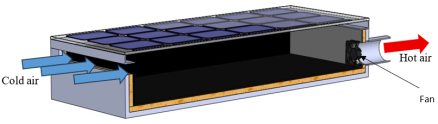
Figure 2. Longitudinal section of the manifold ventilation.
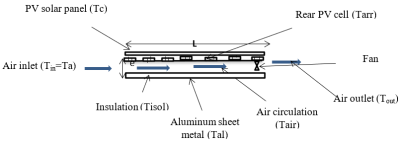
Figure 3. Diagram of the different heat exchanges on the PV/T air collector.
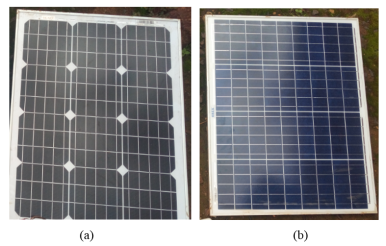
Figure 4. (a) monocrystalline PV solar pannel (b) polycrystalline PV solar panel.
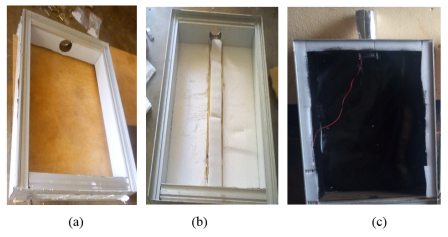
Figure 5. (a) Collector box (b) Collector insulation (c) Absorber and fan.
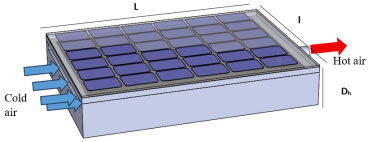
Figure 6. Air PV/T system designed in SOLIDWORKS.
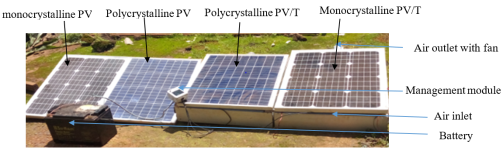
Figure 7. Experimental device constructed.
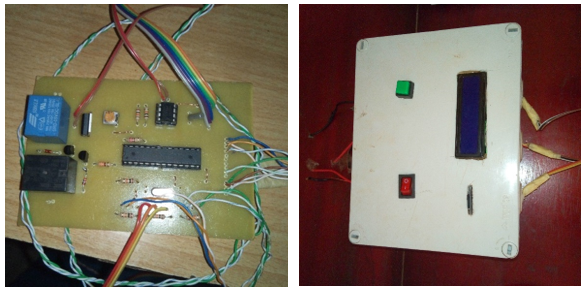
Figure 8. Data acquisition and management module.
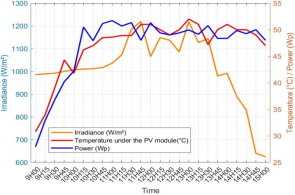
Figure 9. Performance of the reference monocrystalline PV module.
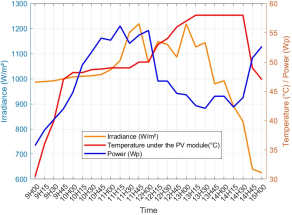
Figure 10. Performance of the monocrystalline PV/T module without cooling.
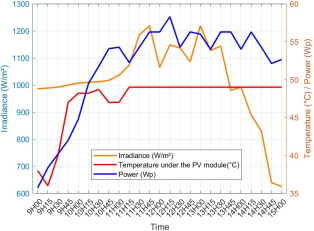
Figure 11. The monocrystalline PV/T module's cooling performance.
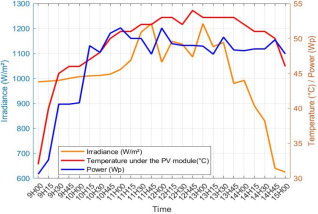
Figure 12. The standard polycrystalline PV module's performance.
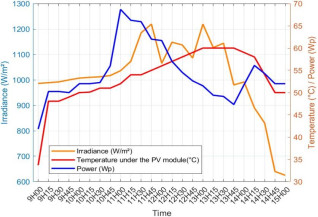
Figure 13. The polycrystalline PV/T module's performance without cooling.
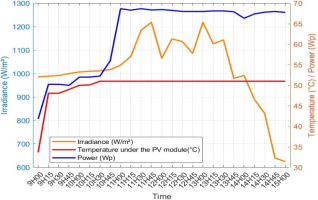
Figure 14. The polycrystalline PV/T module's cooling performance.
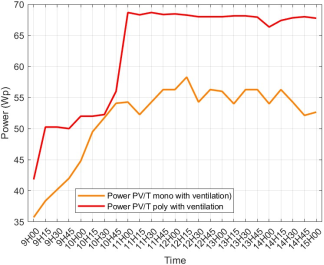
Figure 15. Power comparison of the cooled monocrystalline and polycrystalline PV/T modules.

Information



 Share This Article
 Twitter
 Linked In
 Facebook
 Copy
Copy Download