Review Article | | Peer-Reviewed

A Review on Eco-friendly Bricks Using Effluent Treatment Sludge (ETS) and Spinning Waste Fibers as a Sustainable Alternative to Traditional Clay Bricks

Received: 6 March 2026     Accepted: 17 March 2026     Published: 27 March 2026
Views:       Downloads:
Abstract

The utilization of dyeing sludge in conjunction with soft waste in the manufacturing of brick is a contemporary way of disposing of trash that is both economically and practically viable. Bricks made of conventional and regular clay are used extensively in the construction industry. These bricks cause significant environmental damage, including air pollution caused by toxic fumes, deforestation for the purpose of providing fuel for kilns, soil degradation caused by the removal of topsoil, which can cause damage to agricultural land and can also lead to an increase in flooding, and an increase in carbon emissions. At the same time, the textile sector is responsible for the generation of a significant amount of trash, which includes effluent treatment sludge (ETS) sludge and spinning fiber remnants, both of which are classified as soft waste. This results in significant complications for the environment. We explore the development of eco-friendly bricks by utilizing a novel combination of ETS and spinning waste fibers as substitutes for clay. The goal of this review is to develop bricks that are both cost-effective and environmentally friendly. These bricks serve as an alternative solution for the management of solid waste, the conservation of natural resources, and the earning of carbon credits. A dual-waste, non-fired, clay-free solution that offers an expandable and sustainable approach that is associated with the concepts of a circular economy is offered as an alternative to conventional bricks and other green alternatives that are already in existence.

Published in International Journal of Sustainable Development Research (Volume 12, Issue 1)
DOI 10.11648/j.ijsdr.20261201.15
Page(s) 64-73
Creative Commons

This is an Open Access article, distributed under the terms of the Creative Commons Attribution 4.0 International License (http://creativecommons.org/licenses/by/4.0/), which permits unrestricted use, distribution and reproduction in any medium or format, provided the original work is properly cited.

Copyright

Copyright © The Author(s), 2026. Published by Science Publishing Group

Keywords

Eco-friendly, Bricks, Effluent, Sludge, Fibres, Sustainable

1. Introduction
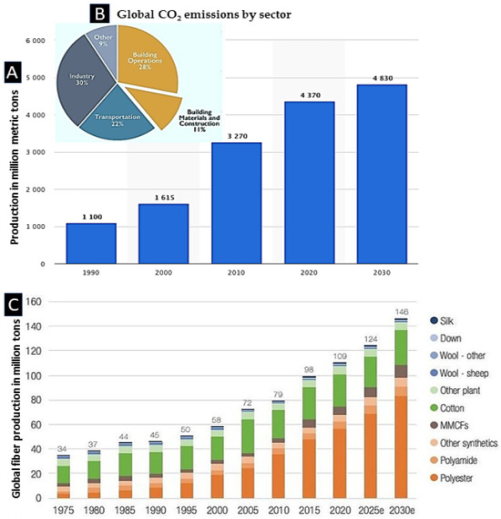
Bricks have been playing a major role in construction and building materials since ancient civilization . The first brick made by humans was 10,000 BCE in Egypt . At that time, hand-moulded clay bricks also dried by the sun were mainly used. Around 4000 BCE, clay bricks were used for construction as adopted main material in the ancient city of Ur (modern Iraq) . The use of clay bricks increased and became more specialized to spread their advantages during Roman era . From ancient civilizations to modern times, various methods of producing different kinds of bricks have been invented for the rapid urbanization of developing countries . In the construction industry, a significant annual increase of 5.6% has been observed because of rapid urbanization in populated countries . The production activity of the brick industry has a great impact on environmental contamination such as water, soil & air pollution . Technologies used for traditional and conventional brick production methods such as clamp kilns, high-draught kilns, and Bull’s Trench kilns require substantial amounts of fuel including coal, firewood, and other forms of biomass . As a result, the manufacturing process of conventional bricks is not only a threat to the environment but also a standing obstacle towards achieving the Sustainable Development Goal (SDG) . So the eco-friendly bricks using ETP sludge and spinning waste fibres will be a great alternative to traditional clay bricks and other conventional bricks. Figure 1 gives a full picture of how industrial growth is closely linked to rising environmental pressures. The first graph (A) shows that cement production is growing quickly; it will more than quadruple from 1990 to 2030. This shows that cities are still pushing for more infrastructure, but it also means that energy use and CO2 emissions will go up, since making cement uses a lot of carbon. The pie chart (B) shows that the building industry is responsible for 39% of worldwide CO2 emissions, making it the biggest single contributor. This shows how important it is to use sustainable building processes and materials. The third graph (C) shows how textile fiber production has changed over time. It shows a big jump from 24 million metric tons in 1975 to estimates of 146 million metric tons by 2030. This increase is mostly due to synthetic fibers, especially polyester, which are cheap and can be used in many ways. However, they come from fossil fuels and pollute the environment. These graphs together show an important relationship: as the demand for textiles and construction rises, so do the greenhouse gas emissions from those industries. This shows how important it is to use cleaner technologies, sustainable materials, and more efficient industrial processes to balance economic growth with protecting the environment.
Brick manufacturing is one of the main causes of air pollution. Brickfields emits a huge amount of greenhouse gases . The uncontrolled use of coal in brick manufacturing is significantly responsible for the emissions of carbon dioxide (CO2), particulate matter containing black carbon, sulfur dioxide (SO2), nitrogen oxides (NO2), carbon monoxide (CO) and other pollutants. Depending on the kiln technology and the type of fuel used, brick kilns emit about 70–282 g of carbon dioxide(CO2), 0.001–0.29 g of black carbon, 0.29–5.78 g of carbon monoxide (CO), and 0.15–1.56 g of particulate matter per kilogram of bricks produced . Across South Asia, brick kilns are expected to emit about 127 million tons of CO2, 3.9 million tons of carbon monoxide, and around 0.94 million tons of particulate matter. These high-level pollutants and gases cause serious risks to human health, including respiratory issues. Peoples related to brick kiln work, modulators, firemen, loaders and unloaders are the direct sufferers of that exposure and the highest risk of contamination , which violets Sustainable Development Goal 3 (Good Health and Well-Being), Sustainable Development Goal 11 (Sustainable Cities and Communities) and Sustainable Development Goal 13 (Climate Action). Coal or wood is used as fuel to burn the brick to make the brick hard . But a large number of trees are being cut down to collect wood illegally, which leads to deforestation . Existing brick production technologies, such as Clamps, high-draught kilns and bull’s trench kilns, are the present technologies that use coal, firewood, and other biomass as fuel . As a result, the greenhouse gases are emitted uncontrollably also leads to climate change by raising the world’s temperature, which contradicts the Sustainable Development Goal .
Figure 1. (A) Graph showing the cement production 1990–2030 (B) Graph showing the global CO2 emission by sector (C) graph showing the textile fiber production 1975–2030; Adopted from Buildings, MDPI, .
Soil and mud is a necessary component in conventional brick-making processes (example: clay brick) . Traditional clay bricks are produced by mixing ground clay with water, then shaping it into the required form by using wooden blocks and hardening it by drying and firing it . So a huge amount of soils are needed to fulfill the requirements of the construction sector. Brick production is one of the main causes of topsoil reduction . The removal of topsoil reduces agricultural output and leads to nutrient loss. Brick kilns emit several greenhouse gases along with harmful heavy metals. Most of these consist of lead (Pb), zinc (Zn), mercury (Hg), copper (Cu), nickel (Ni), selenium (Se), iron (Fe), and cadmium (Cd) . Soil contains heavy metals lower the cation exchange ability of the soil, decrease organic carbon content and reduce the water holding capacity of the soil . these things lead the production of the agricultural sectors towards destruction. Brings harmful consequences for farmers and normal human beings as well.
In parallel, the textile sectors in developing countries like Bangladesh, India & Vietnam are progressing day by day, along with the construction sector. With the development of the textile industry, the amount of waste is also increasing alarmingly . The wastage of textiles comes from the 1st phase of distinctive textile manufacturing departments, which are spinning, weaving, dyeing, finishing, garments manufacturing and even from the end phase, which is consumer end . Even in America, around 16 million tons of textile waste generates which makes uparound 6% of overall municipal waste . Various technologies are using to addressing this issue in many textile mills, effluent treatment plant (ETP) is one of them . The residue of textile ETP contains heavy metals like Cd, Zn, Cu, Cr, Co, Pb, Mn, Ni, Hg which harmful due to their non-biodegradable nature, long biological half-lives . Many previous researches and studies have found the way of using this sludge as a recyclable material by using them as brick’s material .
Small short fibre, waste from spinning section known as soft waste is also a concern for the environment .
By 2003, global annual fiber production had reached 58.146 million tons, excluding inorganic fibers and all natural fibers except cotton and wool. With increased production the amount of waste is also increasing which is alarming for the future of the world. So the fibre can be recycled because of its lower thermal conductivity, flexibility, strength and moisture absorption behavior . Despite these evolutions, most existing research has focused on the use of a single waste stream, either sludge or fiber. Hardly any studies have explored the use of both in a single product, particularly in non-fired, clay-free bricks.
This study aims to minimize this gap by developing a dual-waste, air-cured brick that not only reroutes two significant industrial waste streams from landfills but also eliminates the need for clay extraction and burning by combining ETP sludge and spinning fiber waste in specific ratios along with stabilizing agents like fly ash, cement or lime. The proposed bricks offer huge benefits in terms of compressive strength, thermal performance, cost-effectiveness and environmental safety. This review the developing field of construction by offering a flexible model for sustainable brick production that aligns with global goals for industrial mutualism and low-carbon development.
2. Textile Waste for Bricks Fabrication
2.1. Effluent Treatment SLUDGE (ETS)
Textile sludge is a waste byproduct that is produced during the wet processing of fabrics in the textile industry. It is composed of chemicals, residual colors, a high water content, as well as organic and inorganic impurities. Table 1 shows the chemical composition of textile sludge. In spite of the fact that it presents environmental issues due to the organic content it contains and the possibility of contamination, it also presents opportunity for the environmentally responsible reuse of construction materials . Despite the fact that its high organic content might contribute to increased porosity and reduced durability after burning, textile sludge has the potential to improve certain features of bricks, such as their strength and lifetime, when it is handled in the suitable manner . To effectively incorporate textile sludge into building materials, it is necessary to undergo the appropriate treatment, which includes drying and homogenization. This makes textile sludge a resource that is both promising and problematic for the management of waste and the implementation of sustainable construction methods . ETS has been observed in various studies due to its potential in pozzolanic compounds like silica and alumina. Bricks constructed by ETS with fly ash and lime gained a compressive strength of up to 9.5 MPa and low water absorption. 20 to 40% interchange of clay with textile sludge met basic construction requirements. ETS also has potential environmental hazards due to residual toxic elements. Several researchers suggested the use of stabilizers like lime or cement to neutralize heavy metals and enhance matrix binding. Also, leachate analysis conducted according to TCLP protocols is generally used to ensure environmental safety .
Table 1. Chemical composition of textile sludge .

Constituents

Active Percent Present

SiO2

6.90

Al2O3

0.93

Fe2O3

0.21

CaO

0.30

MgO

0.68

Na2O

-

K2O

0.14

TiO2

0.54

2.2. Fabrication of Textile Waste Sludge Based Bricks
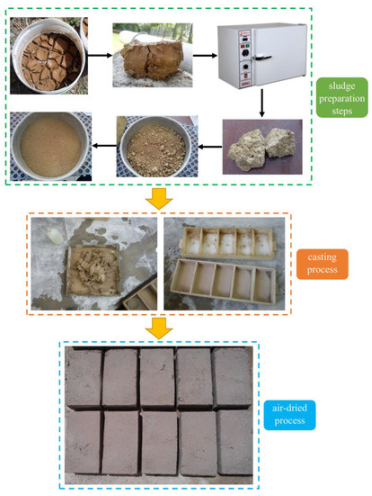
The first step is to gather and mix the basic materials. This makes a sludge that is like clay and has moisture in it. After that, the mixture is dried, usually in an oven, to get rid of any extra moisture that could have been there. After the material has dried, it is cut into smaller pieces that are easier to work with. After that, it is either treated more or rehydrated to get the right consistency for molding. To move on to the next step, you need to finish these steps to make sure the material is even and can be worked with. After the essential steps are done, the sludge is put into rectangular molds to make the brick shape. The casting method makes sure that all the bricks in the batch are the same size and shape. After that, the molds need to be filled and leveled, and then the mixture needs to be crushed to get rid of any air pockets and help the material get the shape and density it needs for structural uses. And, finally, the material has been poured into the molds, the bricks are taken out and left to dry in the sun. This technique gives the bricks a chance to slowly remove any moisture that may still be there, which makes them stronger and ready to use. The last picture shows the finished bricks after they have dried in the air. It shows their shape and smooth surfaces. The brick preparation steps are shown in Figure 2 .
Figure 2. The brick preparation steps, adopted from Sustainability, MDPI .
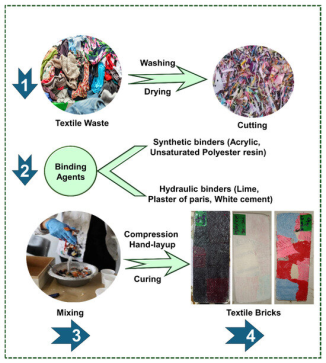
Another way to make the bricks from textile waste where the initial stage in the process is to collect textile waste. After that, the trash is washed, dried, and chopped into smaller pieces. The next step is to add binding agents to the pieces of cloth that have been cut. These binding agents can be synthetic binders, such acrylic or unsaturated polyester resin, or they can be hydraulic binders, like lime, plaster of Paris, or white cement. After the third phase is done, which involves fully mixing the textile waste with the chosen binders, the mixture is then turned into bricks using either compression or hand-layup methods. Finally, the bricks are cured to make sure they are strong and stable enough. In the end, bricks are constructed from scraps of fabric. These bricks could be utilized as a long-lasting building material because they recycle rubbish and have less of an effect on the environment. A Schematic (Figure 3) showed the fabrication of textile waste sludge based bricks.
M. Ahmadi et.al , experimented for the production eco-friendly bricks out of Water Treatment Sludge (WTS), the first step was to dry the sludge at 110°C for 24 hours to get rid of the moisture. To make sure the mixing was done well, the dry sludge was crushed into pieces that can fit through a No. 16 mesh (1.18 mm). It was mixed this crushed WTS with local clay in certain amounts, such 20%, 40%, 60%, or 80% WTS replacement. Then it was blended it dry for around 60 seconds. Water was added in two steps. The first half was mixed in and blended for 120 seconds, and then the rest of the water was mixed in and blended for another 150 seconds to make sure the mixture is even. The mixture was put into molds that are 210 mm × 100 mm × 55 mm and then use a hydraulic piston to condense it so it doesn't change shape or crack. After that, the molds were left at room temperature (20–25°C) for about a week to let the moisture evaporate. After that, the samples were put in an electric kiln and heated to between 800°C and 1000°C at a rate of about 5°C/min. The firing temperature has a big effect on the bricks' final attributes, like strength, porosity, and durability. This makes the procedure a good way to make building materials that were good for the environment by using waste sludge and having less of an effect on the environment. Whereas, M. Arisiketty , experimented the WTS needs to be gathered, dried, and processed into bricks that can be readily put together. To make bricks, dry sludge is combined with quarry dust, lime, and GGBS. They take out some clay at 5%, 10%, and 15%. A homogeneous mixture is made by mixing raw parts well. Bricks are made by hand or machine from the mixture. To lower the moisture content, these bricks are cured in a controlled setting. When bricks were burned at 500°C–1200°C, they become weaker and less durable. This phase is all about the properties you want. When the organic parts of WTS break down in fire, it becomes weaker and more porous. To check their quality, bricks were tested for compressive strength and water absorption after they were made. WTS makes bricks weaker, but if use the right mix patterns and burn them in the right way, it may build bricks that are useful. This makes it seem likely that this technique may make bricks that are good for the environment .
Beshah et al. did a study that found that bricks containing varied amounts of textile sludge—about 10%, 20%, 30%, and 40%—when mixed with clay and burned at 1200°C, had a range of compressive strength from 2.73 MPa to 30.43 MPa. The bricks with 30% sludge inclusion level exhibited the highest compressive strength, which is very surprising .
Fatema et al. found that when bricks with 9% textile sludge are mixed with soil, the bricks that come out have a compressive strength of 15.33 MPa, which shows that the material could be used in building . M. Ahmadi et.al shows that adding water treatment sludge (WTS) to fired clay bricks changes their physical and mechanical qualities in a way that nevertheless meets the standards for building materials. As the amount of WTS rises, the Atterberg limits and apparent porosity go up, but the bulk density, compressive strength, and flexural strength go down. Also, bricks with a higher WTS content show mild efflorescence, and their color changes because of the metals in the sludge. Even with these alterations, bricks with up to 40% WTS still had good mechanical qualities. This shows that WTS can be used as a partial replacement for clay to make eco-friendly bricks, which helps with sustainable waste management and resource conservation .
Figure 3. Scheme for the fabrication of textile waste based bricks. Adopted from Sustainability, MDPI .
2.3. Water Treatment Sludge Impact Environmental Sustainability
Using water treatment sludge in brick making is good for the environment since it cuts down on the usage of natural resources like clay, cuts down on the amount of trash that goes to landfills, and cuts down on the greenhouse gas emissions that come from making bricks the old-fashioned way. It provides a long-term solution for dealing with trash by turning sludge that would otherwise pollute the land or need energy-intensive disposal methods into something useful. Using waste materials also helps protect natural ecosystems and makes construction materials less harmful to the environment. The study shows that WTS may be used safely in brick making without causing major environmental problems like toxicity or leaching. This adds to its benefits for sustainability.
2.4. Spinning Waste Fibers
Spinning fiber waste, often treated as landfill or burning material has shown valuable result in improving cementitious composites. Natural and synthetic fibers like coir, jute and cotton can improve tensile strength, impact resistance as well as thermal insulation in cementitious materials. The addition of short and uniformly distributed fibers was shown to control micro-cracking and improve durability . Presents challenges like reduced compressive strength and poor bonding with matrices may happen when fiber length and volume are not optimized. Studies suggest to keep fiber content under 10% and using pre-treated fibers to improve interface bonding . Biomass materials like rice husk, sawdust, bagasse, jute sticks or other agro-waste are burned in the kiln to fire the bricks, which may cut down the carbon emission but increase the heat of the environment . Fly ash, gypsum and silica fume are commonly used pozzolanic additives that enhance the mechanical performance and reduce permeability in eco-brick compositions. Their part is particularly critical when dealing with high-moisture or toxic materials like sludge. Studies ensure that a well-balanced mix of binders and fillers ensures high durability, low water absorption and environmental safety .
People are starting to pay attention to spinning waste fibers, which are by-products of the textile industry, as a long-lasting material for making bricks. Manufacturers can reuse what would otherwise be thrown away by adding these fibers to clay or cement mixtures. This cuts down on pollution and the demand for new raw materials . Adding spinning waste fibers to bricks makes them stronger, more durable, and better at insulating. This new use not only keeps trash out of landfills, but it also helps make building materials that are better for the environment . Using spinning waste fibers to make bricks that last a long time is a good step toward circular economy techniques in the textile and building industries. These bricks are better at keeping heat in and are lighter, which makes them more energy-efficient and easier to work with when building . Using spinning waste also helps minimize the carbon footprint of the typical process of making bricks. As more people want eco-friendly building materials, using spinning waste fibers in brick manufacture is a good way to make construction more environmentally friendly and responsible .
Cotton dust, and more precisely cotton microdust, is a sort of little trash that is made in vast amounts in the textile industry. This is especially true in places like blow rooms and carding units, where the dust is more likely to get in. It is made up of a lot of different pollutants, such as plant debris, fibers, bacteria, fungi, soil, pesticides, and other things that have built up throughout the processing and storage of cotton . Cotton dust is used to make bricks instead of clay soil and cement, which are more common raw materials. This is done as part of making bricks. Microdust is usually between 15 and 50 micrometers in size . Adding it to brick mixes changes the bricks' physical and mechanical properties, making them lightweight composites with great compressive strength and good water absorption that meet the standards for construction bricks . Cotton dust makes the clay more cohesive, which increases its ability to absorb energy. It also stops the clay from breaking quickly under stress. However, the water absorption of bricks also goes up as the amount of cotton dust in them goes up. This is because cotton dust can soak up water. But when about forty percent of the bricks are replaced, their water absorption stays within the range that is acceptable for first-class bricks . Also, bricks created with cotton dust are lighter than regular bricks. This is because cotton fibers are not very dense, which makes them cheaper and easier to work with. Also, their surfaces are smoother than those of regular concrete bricks, which can be useful for some building projects .
M. Teklehaimanot , developed bricks from cotton dust waste by mixing fine cotton microdust from textile factories with clay soil, cement, sand, and gravel, which were all typical brick-making elements. To get the best results, the cotton dust was first measured and blended evenly with clay soil and other ingredients in particular ratios, usually about 25–30% cotton dust and 70–75% soil. To make the mixture smooth and even, water was added slowly while mixing. This helps prevent cracking as the mixture dries. Next, the mixture was shaped into bricks using molds that are the right size and allow for shrinkage. To get rid of free moisture without drying too quickly, the molded bricks were air-dried in a covered area for 7 to 14 days. Firing the bricks in a kiln for about two weeks after they have dried makes them stronger and longer-lasting . Also, the Indian Institute of Technology, explored the use of cotton fiber waste in cement blocks and discovered that it significantly improved crack resistance, ductility and thermal insulation by approximately 12% . The fibers acted as micro-reinforcements, bridging shrinkage cracks and reducing brittleness in hardened cement matrices . While the compressive strength slightly decreased at higher fiber ratios, optimal mixes maintained sufficient strength for non-load-bearing applications (5–8 MPa). Increased water absorption, due to the porous nature of the fibers, but could be lessened with additives like gypsum or waterproofing agents . This review confirms the usefulness of using spinning waste fibers in sustainable construction and highlights their contribution to material performance. Many of these research projects were done by using only one waste material as the main ingredient. But little work has been done on combining sludge and fiber waste together. The suggested study combines both materials to capitalize on their supportive benefits, strength from sludge and insulation from fibers without using clay or firing processes. This synergy is expected to yield improved compressive strength, lower thermal conductivity and decrease the cost of production.
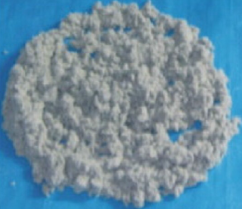
Figure 4. The cotton dust, adopted from Hindawi, Journal of Engineering .
2.5. Sustainability and Eco-friendly Concern
Using textile sludge and spinning refuse to make bricks is good for the environment and saves resources. This method keeps a lot of industrial waste out of landfills, cuts down on the need to mine natural clay and topsoil, and gets rid of the significant carbon emissions that come from firing typical clay bricks. Using air-drying and non-fired curing technologies reduces energy use, which is in line with aspirations for low-carbon construction and the concepts of a circular economy. But eco-friendly production also needs to pay close attention to the environmental concerns that heavy metals and hazardous chemicals in textile sludge might bring. This means that strong leachate management and stabilization measures are needed. When done right, this new way of turning textile industry waste into bricks not only helps with the important problem of solid waste management, but it also helps make building materials that are better for the environment and last longer.
2.6. Challenges to Produce Bricks Using Textile Sludge and Spinning Waste
There are a number of technical and practical hurdles that must be overcome in order to manufacture bricks using textile sludge and spinning waste. The variety and composition of textile sludge is one of the key challenges. Textile sludge frequently comprises a mixture of organic and inorganic compounds, heavy metals, and residual dyes, all of which have the potential to influence the physical qualities and environmental safety of the brick product that is ultimately produced. The moisture level and particle size of the sludge make it difficult to achieve a consistent and workable combination. In order to meet quality standards, it is necessary to carefully dry, homogenize, and occasionally undergo extra treatment. Spinning waste fibers, while good for reinforcing and insulation, can also impair the compressive strength of the bricks if they are not properly proportioned and blended. Additionally, it may lead to poor bonding with the matrix if the fibers are not properly blended. In addition, it might be a delicate balancing act to make certain that the bricks that are produced are up to the criteria for building in terms of their strength, durability, and water absorption, particularly when a significant amount of waste materials are utilized. This necessitates the use of stabilizers such as lime or cement, as well as rigorous testing, in order to guarantee that the bricks are safe for use and do not present any environmental dangers. Leachate toxicity and heavy metal stabilization are also significant issues.
3. Conclusions
Adding textile sludge and spinning waste fibers to brick production is a new and promising way to solve both the pollution of the environment and the loss of natural resources that come from making bricks the old-fashioned way. These eco-friendly bricks minimize greenhouse gas emissions, safeguard farmland, and help solve the rising problem of industrial textile waste by replacing traditional clay and cutting down on the requirement for energy-intensive fire. When ETP sludge and spinning fibers are mixed together, they make a product that is not only cheap but also has good mechanical and thermal properties. However, this is only possible if the issues of mixture consistency, compressive strength, and environmental safety are properly dealt with through careful formulation and the use of stabilizing agents.
Textile-waste-based bricks could change the construction industry and help make buildings more environmentally friendly if the right technology is used, strict quality control is in place, and supportive policies are in place. Their acceptance can bring about significant societal and economic advantages, aligning with essential components of the Sustainable Development Goals by promoting economic expansion, social integration, and environmental conservation. In the end, this method shows how methods for industrial symbiosis and the circular economy can lead to new ideas in building and managing resources in a way that is good for the environment.
Abbreviations

ETS

Effluent Treatment Sludge

WTS

Water Treatment Sludge

SDG

Sustainable Development Goal

Acknowledgments
The authors would like to express their heartfelt gratitude to the Department of Textile Engineering at Ahsanullah University of Science and Technology (AUST).
Author Contributions
Mohammad Mahbubul Alam: Conceptualization, Data curation, Methodology, Formal Analysis, Investigation, Project administration, Supervision, Visualization, Validation, Writing – original draft, Writing – review & editing
Md. Rahim-ul-Islam Chowdhury: Conceptualization, Data curation, Methodology, Writing – original draft
Conflicts of Interest
The authors declare no conflicts of interest.
References
[1] L. Zhang, Production of bricks from waste materials - A review, Construction and Building Materials 47 (2013) 643-655.
[2] Z. Zhang, Y. Wong, A. Arulrajah, S. Horpibulsukab, A review of studies on bricks using alternative materials and approaches, Construction and Building Materials 188 (2018) 1101-1118.
[3] G. Abed, J. Manii, J. Hussain, J. Manii, J. Al-Zubaydi, Some Engineering Properties of Ancient Fire Clay Bricks Discovered at the Dilbat Archaeological Site, South of Hilla City, Iraqi Geological Journal 55 (2022) 121-130.
[4] B. Ghiassi, P. Lourenco, Long-term Performance and Durability of Masonry Structures., 2019.
[5] Types of waste, properties, and durability of pore-forming waste-based fired masonry bricks, in: Eco-Efficient Masonry Bricks and Blocks, Woodhead Publishing, 2015: pp. 103-127.
[6] G. Schiller, J. Roscher, Impact of urbanization on construction material consumption: A global analysis, Journal of Industrial Ecology 27 (2023) 1021-1036.
[7] T. Suhariyanto, H. M. Asih, F. S. Ramadhan, A. R. Nasution, Environmental Impact Assessment of Brick Production in Indonesia, Engineering Science Letter 1 (2022) 20-23.
[8] B. Begum, S. Biswas, A. Markwitz, P. Hopke, Identification of Sources of Fine and Coarse Particulate Matter in Dhaka, Bangladesh, Aerosol and Air Quality Research 10 (2010) 345-353.
[9] W. Fei, A. Opoku, K. Agyekum, J. A. Oppon, V. Ahmed, C. Chen, K. L. Lok, The Critical Role of the Construction Industry in Achieving the Sustainable Development Goals (SDGs): Delivering Projects for the Common Good, Sustainability 13 (2021) 9112.
[10] S. Sasi, P. Joseph, R. Haigh, M. Sandanayake, Z. Vrcelj, E. Yaghoubi, A Review on the Effects of Waste Textile Polymer Fiber on Concrete Strength: Exploring the Key Parameters, Buildings 14 (2024) 1486.
[11] B. Cohen, Urbanization in developing countries: Current trends, future projections, and key challenges for sustainability, Technology in Society 28 (2006) 63-80.
[12] A. L. Murmu, A. Patel, Towards sustainable bricks production: An overview, Construction and Building Materials 165 (2018) 112-125.
[13] A. Raza, Z. Ali, Impact of Air Pollution Generated by Brick Kilns on the Pulmonary Health of Workers, J Health Pollut 11 (2021) 210906.
[14] T. E. Aniyikaiye, J. N. Edokpayi, J. O. Odiyo, S. J. Piketh, Traditional Brick Making, Environmental and Socio-Economic Impacts: A Case Study of Vhembe District, South Africa, Sustainability 13 (2021) 10659.
[15] A. Shakir, A. Mohammed, Manufacturing of Bricks in the Past, in the Present and in the Future: A state of the Art Review, International Journal of Advances in Applied Sciences 2 (2013).
[16] A. Hepautwa, Y. Jande, Mechanical, chemical performance, and microstructural behavior of montmorillonite-burnt red soil bricks incorporating coffee ash biochar, Frontiers in Built Environment 11 (2025).
[17] D. Chong, The sustainable development goals and climate change, Social Alternatives 37 (2018) 43-48.
[18] N. Dalkılıç, A. Nabikoğlu, Traditional manufacturing of clay brick used in the historical buildings of Diyarbakir (Turkey), Frontiers of Architectural Research 6 (2017) 346-359.
[19] V. Kathuria, R. Balasubramanian, Environmental Cost of Using Top-soil for Brick-Making: A Case Study from Tamil Nadu, India, Review of Market Integration 5 (2013) 171-201.
[20] S. Ahmed, I. Hossain, Applicability of Air pollution Modeling in a Cluster of Brickfields in Bangladesh, Chemical Engineering Research Bulletin 12 (2008) 28-34.
[21] A. A. Duker, E. J. M. Carranza, M. Hale, Arsenic geochemistry and health, Environ Int 31 (2005) 631-641.
[22] M. Ishtiaq, I. Hussain, K. H. Bhatti, M. Maqbool, K. Shafique Ahmed, M. Ajaib, A. ullah Shah, W. Mushtaq, T. Hussain, A. Ghani, H. Khanum, M. Waqas Mazhar, M. Mazhar, T. Sardar, O. Nasif, M. Javed Ansari, P. Ondrisik, Study of impacts of brickkiln emanations on soil quality of agriculture lands in selected areas of District Bhimber, Azad Jammu and Kashmir, Pakistan, PLoS One 17 (2022) e0258438.
[23] M. Hossain, K. Mahmud, Bangladesh’s Ready-made Garment Industry in the Era of Sustainable Development: A Triple Bottom Line Appraisal, Studia Ecologiae et Bioethicae 23 (2025) 49-69.
[24] I. Yalcin-Enis, M. Kucukali-Ozturk, H. Sezgin, Risks and Management of Textile Waste, in: K. M. Gothandam, S. Ranjan, N. Dasgupta, E. Lichtfouse (Eds.), Nanoscience and Biotechnology for Environmental Applications, Springer International Publishing, Cham, 2019: pp. 29-53.
[25] M. Shamsuzzaman, M. Islam, Md. A. Al. Mamun, R. Rayyaan, K. Sowrov, S. Islam, A. S. M. Sayem, Fashion and textile waste management in the circular economy: A systematic review, Cleaner Waste Systems 11 (2025) 100268.
[26] M. S. Hasan, M. B. Mia, M. R. Ahammed, M. J. Alam, M. Biswas, M. M. H. Moon, Evaluation of Textile Wastewater Treatment via ETP in Bangladesh, IJRSI XI (2024) 356-368.
[27] M. Hossain, S. Das, J. M. M. Islam, M. Mamun, M. Khan, Reuse of Textile Mill ETP Sludge in Environmental Friendly Bricks - Effect of Gamma Radiation, Radiation Physics and Chemistry 151 (2018) 77-83.
[28] S. Singh, A. Kumar, Soft Waste Management in Spinning Industry, in: Lecture Notes in Civil Engineering, 2019: pp. 213-217.
[29] P. Sadrolodabaee, G. D. Rienzo, I. Farina, C. Salzano, N. Singh, F. Colangelo, Characterization of Eco-Friendly Lightweight Aggregate Concretes Incorporating Industrial Wastes, Key Engineering Materials 944 (2023) 209-217.
[30] A. Bartl, A. Hackl, B. Mihalyi, M. Wistuba, I. Marini, Recycling of Fibre Materials, Process Safety and Environmental Protection 83 (2005) 351-358.
[31] A. Alhuthali, I. M. Low, C. Dong, Characterisation of the water absorption, mechanical and thermal properties of recycled cellulose fibre reinforced vinyl-ester eco-nanocomposites, Composites Part B: Engineering 43 (2012) 2772-2781.
[32] I. S. ELDeeb, A. Bakry, A. M. Nasr, E. A. Showaib, Sustainable Clay Brick Manufacturing: A Review of Mechanical Properties, Firing Technologies, Emissions, and Control Strategies, Journal of Engineering Research 8 (2025).
[33] H. Jamshaid, A. Shah, M. Shoaib, R. K. Mishra, Recycled-Textile-Waste-Based Sustainable Bricks: A Mechanical, Thermal, and Qualitative Life Cycle Overview, Sustainability 16 (2024) 4036.
[34] M. Ahmadi, B. Hakimi, A. Mazaheri, M. Kioumarsi, Potential Use of Water Treatment Sludge as Partial Replacement for Clay in Eco-Friendly Fired Clay Bricks, Sustainability 15 (2023) 9389.
[35] U. Patil, S. P. Raut, R. V. Ralegaonkar, M. V. Madurwar, Sustainable building materials using textile effluent treatment plant sludge: a review, Green Materials 10 (2021) 154-168.
[36] H. A. Aziz, M. F. Ghazali, A. Omran, M. Umar, Solidification and stabilization of the incinerated wastewater sludge from textile industry, AIP Conf. Proc. 1892 (2017) 040029.
[37] M. Arisiketty, D. Cruze, Sustainable clay bricks incorporating textile sludge, quarry dust, lime, and GGBS: an investigation of strength parameters, Matéria (Rio de Janeiro) 29 (2024).
[38] D. A. Beshah, G. A. Tiruye, Y. S. Mekonnen, Characterization and recycling of textile sludge for energy-efficient brick production in Ethiopia, Environ Sci Pollut Res Int 28 (2021) 16272-16281.
[39] K. Fatema, M. A. Nayem, M. S. Sanzid, Characterization of textile effluent treatment plant sludge and its industrial application in fired clay bricks with health risk assessment, J Environ Manage 351 (2024) 119965.
[40] S. Sharma, G. D. Kumar, G. D. R. N., P. Kumar, Micro fiber reinforced cement paste and mortar overlays - A review, International Journal of Pavement Research and Technology 6 (2013) 765-772.
[41] V. H. Martinez-Landeros, S. Y. Vargas-Islas, C. Cruz-González, S. Barrera, K. Mourtazov, R. Ramírez-Bon, Studies on the influence of surface treatment type, in the effectiveness of structural adhesive bonding, for carbon fiber reinforced composites, Journal of Manufacturing Processes 39 (2019) 160-166.
[42] N. Gupta, B. K. Mahur, A. M. D. Izrayeel, A. Ahuja, V. K. Rastogi, Biomass conversion of agricultural waste residues for different applications: a comprehensive review, Environ Sci Pollut Res 29 (2022) 73622-73647.
[43] P. Yadav, A. Petrella, F. Todaro, S. De Gisi, C. Vitone, R. Petti, M. Notarnicola, Ex Situ Stabilization/Solidification Approaches of Marine Sediments Using Green Cement Admixtures, Materials 17 (2024) 3597.
[44] S. S. Rahman, S. Siddiqua, C. Cherian, Sustainable applications of textile waste fiber in the construction and geotechnical industries: A retrospect, Cleaner Engineering and Technology 6 (2022) 100420.
[45] M. Seifali Abbas-Abadi, B. Tomme, B. Goshayeshi, O. Mynko, Y. Wang, S. Roy, R. Kumar, B. Baruah, K. De Clerck, S. De Meester, D. R. D’hooge, K. M. Van Geem, Advancing Textile Waste Recycling: Challenges and Opportunities Across Polymer and Non-Polymer Fiber Types, Polymers (Basel) 17 (2025) 628.
[46] J. Saravanan, P. V. Rao, Past investigations on development of sustainable bricks - A comprehensive review, Sustainable Chemistry for the Environment 3 (2023) 100030.
[47] M. M. Abedin, I. Siddique, A Research on Reducing Waste and Better Managing Resources in the Spinning Industry using Efficient Methods, 9 (2024) 40-49.
[48] R. Sarkar, R. Kurar, A. K. Gupta, A. Mudgal, V. Gupta, Use of paper mill waste for brick making, Cogent Engineering 4 (2017) 1405768.
[49] Utkarsh, P. K. Jain, Enhancing the properties of swelling soils with lime, fly ash, and expanded polystyrene -A review, Heliyon 10 (2024) e32908.
[50] M. Teklehaimanot, H. Hailay, T. Tesfaye, Manufacturing of Ecofriendly Bricks Using Microdust Cotton Waste, Journal of Engineering 2021 (2021) 8815965.
[51] C. George, S. Senthil Selvan, V. Sathish Kumar, G. Murali, J. Giri, E. Makki, T. Sathish, Enhancing the fire-resistant performance of concrete-filled steel tube columns with steel fiber-reinforced concrete, Case Studies in Construction Materials 20 (2024) e02741.
[52] P. Kumar, R. Upadhyay, K. K. Sharma, S. Madhuri, A. Gogineni, P. K. Vagestan, Mechanical performance of fiber reinforced concrete incorporating rice husk ash and brick aggregate, Innov. Infrastruct. Solut. 10 (2025) 362.
[53] K. Sonar, S. Sathe, Exploring fiber reinforcements in concrete and its challenges: a comprehensive review, Multiscale and Multidiscip. Model. Exp. and Des. 7 (2024) 3099-3131.
[54] L. Wang, M. Cao, X. Li, W. Du, X. Wang, A novel approach for improving the water resistance of gypsum plaster by internal mixing hypromellose and external coating waterproofing agent, Construction and Building Materials 401 (2023) 132940.
Cite This Article
  • APA Style

    Alam, M. M., Chowdhury, M. R. (2026). A Review on Eco-friendly Bricks Using Effluent Treatment Sludge (ETS) and Spinning Waste Fibers as a Sustainable Alternative to Traditional Clay Bricks. International Journal of Sustainable Development Research, 12(1), 64-73. https://doi.org/10.11648/j.ijsdr.20261201.15

    Copy | Download

    ACS Style

    Alam, M. M.; Chowdhury, M. R. A Review on Eco-friendly Bricks Using Effluent Treatment Sludge (ETS) and Spinning Waste Fibers as a Sustainable Alternative to Traditional Clay Bricks. Int. J. Sustain. Dev. Res. 2026, 12(1), 64-73. doi: 10.11648/j.ijsdr.20261201.15

    Copy | Download

    AMA Style

    Alam MM, Chowdhury MR. A Review on Eco-friendly Bricks Using Effluent Treatment Sludge (ETS) and Spinning Waste Fibers as a Sustainable Alternative to Traditional Clay Bricks. Int J Sustain Dev Res. 2026;12(1):64-73. doi: 10.11648/j.ijsdr.20261201.15

    Copy | Download

  • @article{10.11648/j.ijsdr.20261201.15,
      author = {Mohammad Mahbubul Alam and Md. Rahim-ul-Islam Chowdhury},
      title = {A Review on Eco-friendly Bricks Using Effluent Treatment Sludge (ETS) and Spinning Waste Fibers as a Sustainable Alternative to Traditional Clay Bricks},
      journal = {International Journal of Sustainable Development Research},
      volume = {12},
      number = {1},
      pages = {64-73},
      doi = {10.11648/j.ijsdr.20261201.15},
      url = {https://doi.org/10.11648/j.ijsdr.20261201.15},
      eprint = {https://article.sciencepublishinggroup.com/pdf/10.11648.j.ijsdr.20261201.15},
      abstract = {The utilization of dyeing sludge in conjunction with soft waste in the manufacturing of brick is a contemporary way of disposing of trash that is both economically and practically viable. Bricks made of conventional and regular clay are used extensively in the construction industry. These bricks cause significant environmental damage, including air pollution caused by toxic fumes, deforestation for the purpose of providing fuel for kilns, soil degradation caused by the removal of topsoil, which can cause damage to agricultural land and can also lead to an increase in flooding, and an increase in carbon emissions. At the same time, the textile sector is responsible for the generation of a significant amount of trash, which includes effluent treatment sludge (ETS) sludge and spinning fiber remnants, both of which are classified as soft waste. This results in significant complications for the environment. We explore the development of eco-friendly bricks by utilizing a novel combination of ETS and spinning waste fibers as substitutes for clay. The goal of this review is to develop bricks that are both cost-effective and environmentally friendly. These bricks serve as an alternative solution for the management of solid waste, the conservation of natural resources, and the earning of carbon credits. A dual-waste, non-fired, clay-free solution that offers an expandable and sustainable approach that is associated with the concepts of a circular economy is offered as an alternative to conventional bricks and other green alternatives that are already in existence.},
     year = {2026}
    }
    

    Copy | Download

  • TY  - JOUR
    T1  - A Review on Eco-friendly Bricks Using Effluent Treatment Sludge (ETS) and Spinning Waste Fibers as a Sustainable Alternative to Traditional Clay Bricks
    AU  - Mohammad Mahbubul Alam
    AU  - Md. Rahim-ul-Islam Chowdhury
    Y1  - 2026/03/27
    PY  - 2026
    N1  - https://doi.org/10.11648/j.ijsdr.20261201.15
    DO  - 10.11648/j.ijsdr.20261201.15
    T2  - International Journal of Sustainable Development Research
    JF  - International Journal of Sustainable Development Research
    JO  - International Journal of Sustainable Development Research
    SP  - 64
    EP  - 73
    PB  - Science Publishing Group
    SN  - 2575-1832
    UR  - https://doi.org/10.11648/j.ijsdr.20261201.15
    AB  - The utilization of dyeing sludge in conjunction with soft waste in the manufacturing of brick is a contemporary way of disposing of trash that is both economically and practically viable. Bricks made of conventional and regular clay are used extensively in the construction industry. These bricks cause significant environmental damage, including air pollution caused by toxic fumes, deforestation for the purpose of providing fuel for kilns, soil degradation caused by the removal of topsoil, which can cause damage to agricultural land and can also lead to an increase in flooding, and an increase in carbon emissions. At the same time, the textile sector is responsible for the generation of a significant amount of trash, which includes effluent treatment sludge (ETS) sludge and spinning fiber remnants, both of which are classified as soft waste. This results in significant complications for the environment. We explore the development of eco-friendly bricks by utilizing a novel combination of ETS and spinning waste fibers as substitutes for clay. The goal of this review is to develop bricks that are both cost-effective and environmentally friendly. These bricks serve as an alternative solution for the management of solid waste, the conservation of natural resources, and the earning of carbon credits. A dual-waste, non-fired, clay-free solution that offers an expandable and sustainable approach that is associated with the concepts of a circular economy is offered as an alternative to conventional bricks and other green alternatives that are already in existence.
    VL  - 12
    IS  - 1
    ER  - 

    Copy | Download

Author Information
  • Department of Textile Engineering, Ahsanullah University of Science and Technology, Dhaka, Bangladesh

    Biography: Mohammad Mahbubul Alam is an Associate Professor at Ahsanullah University of Science and Technology, Textile Engineering Department. He completed his PhD in Material, Structure and Nanotechnology Engineering from University of Salento, Lecce, Italy, and his Master of textile Engineering from the Polytechnic University of Turin, Italy. Recognized for his exceptional results in Bachelor of Science in Technology, Dr. Alam honored with Dean’s List from his University. In addition, he worked in national and multinational company for three years. Currently Dr. Alam serves on the Editorial Boards of numerous publications.

    Research Fields: Dyeing, Printing and Finishing, Materials Science, Chemical Engineering, Nanotechnology, Sustainability, Coating, Fiber Science

  • Department of Textile Engineering, Ahsanullah University of Science and Technology, Dhaka, Bangladesh

    Research Fields: Textile, Dyeing, printing, Fiber science, Coating, Sustainability