1. Introduction
Human-wildlife conflict (HWC) is a complex and pervasive issue that poses significant challenges to biodiversity conservation and human well-being,
| [8] | Distefano, E. (2005). Human-wildlife conflict worldwide: collection of case studies, analysis of management strategies and good practices. Food and Agricultural Organization of the United Nations (FAO), Sustainable Agriculture and Rural Development Initiative (SARDI). |
| [18] | Madden, F. (2004). Creating coexistence between humans and wildlife: global perspectives on local efforts to address human–wildlife conflict. Human Dimensions of Wildlife, 9(4), 247-257. |
[8, 18]
. In Cameroon, a Central African country renowned for its rich biodiversity, HWC has become a growing concern as expanding human settlements, agricultural activities, and infrastructure development encroach on the natural habitats of various wildlife species
| [24] | Nyhus, P. J. (2016). Human–wildlife conflict and coexistence. Annual Review of Environment and Resources, 41, 143-171. |
| [27] | Tchamba, M. N. (1996). History and present status of the human/elephant conflict in the Waza-Logone region, Cameroon, West Africa. Biological Conservation, 75(1), 35-41. |
[24, 27]
. The consequences of HWC in Cameroon are multifaceted, affecting both human and animal populations. On the human side, HWC can result in crop damage, livestock depredation, injury, and even loss of human life, often leading to retaliatory actions against wildlife
| [3] | Barua, M., Bhagwat, S. A., & Jadhav, S. (2013). The hidden dimensions of human-wildlife conflict: Health impacts, opportunity and transaction costs. Biological Conservation, 157, 309-316. |
| [10] | Ettagbor, H. E. (2017). Human-Elephant Conflict Mitigating Measures: A Review of Effectiveness and Sustainability. Journal of Wildlife and Biodiversity 1(2): 69-78. |
| [11] | Gandiwa, E., Heitkönig, I. M., Lokhorst, A. M., Prins, H. H., & Leeuwis, C. (2013). CAMPFIRE and human-wildlife conflicts in local communities bordering northern Gonarezhou National Park, Zimbabwe. Ecology and Society, 18(4). |
[3, 10, 11]
. For wildlife, HWC can contribute to increased mortality, habitat fragmentation, and the disruption of ecological processes, ultimately threatening the long-term conservation of vulnerable species
| [13] | Hoare, R. (2015). Lessons from 20 years of human–elephant conflict mitigation in Africa. Human Dimensions of Wildlife, 20(4), 289-295. |
| [31] | Woodroffe, R., Thirgood, S., & Rabinowitz, A. (Eds.). (2005). People and wildlife, conflict or co-existence?. Cambridge University Press. |
[13, 31]
. To address this complex issue, the exploration and implementation of effective mitigation strategies are crucial. Mitigation strategies are interventions designed to prevent, reduce, or manage the negative impacts of HWC, aiming to find a balance between the needs of human communities and the conservation of wildlife
| [10] | Ettagbor, H. E. (2017). Human-Elephant Conflict Mitigating Measures: A Review of Effectiveness and Sustainability. Journal of Wildlife and Biodiversity 1(2): 69-78. |
| [22] | Naughton-Treves, L., & Treves, A. (2005). Socio-ecological factors shaping local support for wildlife: crop-raiding by elephants and other wildlife in Africa. People and wildlife, conflict or co-existence, 252-277. |
| [28] | Treves, A., & Karanth, K. U. (2003). Human-carnivore conflict and perspectives on carnivore management worldwide. Conservation biology, 17(6), 1491-1499. |
[10, 22, 28]
.
In Cameroon, various mitigation strategies have been proposed and implemented, ranging from physical barriers and deterrents to community-based approaches and policy interventions
| [23] | Nsonsi, F., Nchanji, A. C., Mavinga, F. B., Vermeulen, C., & Nguinguiri, J. C. (2017). Human-Elephant Conflict in a Forest Landscape in Equatorial Africa: Reconciling Conservation and Community Development. PARKS, 23(2), 37-50. |
| [27] | Tchamba, M. N. (1996). History and present status of the human/elephant conflict in the Waza-Logone region, Cameroon, West Africa. Biological Conservation, 75(1), 35-41. |
[23, 27]
. However, the effectiveness and sustainability of these strategies remain understudied, and a comprehensive understanding of the factors influencing their success or failure is still lacking
| [2] | Ango, T. G., Börjeson, L., Senbeta, F., & Hylander, K. (2017). Crop raiding by wild mammals in Ethiopia: Impacts on the livelihoods of smallholder farmers in southwest Ethiopia. Oryx, 51(3), 527-537. |
| [4] | Bousquet, F., Barreteau, O., Aquino, P. D., Etienne, M., Boissau, S., Aubert, S.,... & Daré, W. (2016). Multi-agent systems and role games: Collective learning processes for ecosystem management. In Companion Modelling (pp. 248-285). Springer, Dordrecht. |
[2, 4]
. This research study aims to explore the mitigation strategies employed in Cameroon to address HWC, analyze their effectiveness, and identify the key factors that contribute to their success or failure. By gaining a deeper understanding of the complex dynamics of HWC and the efficacy of mitigation approaches, this study seeks to provide valuable insights that can inform policy decisions, guide the development of more effective conservation strategies, and ultimately contribute to the sustainable coexistence of humans and wildlife in Cameroon.
HWC is a global issue that has been extensively studied in various contexts, including Cameroon. A significant body of research has examined the drivers, impacts, and mitigation strategies employed to address HWC in Cameroon and other parts of Africa. The primary drivers of HWC in Cameroon are well-documented in the literature. Several studies have identified the expansion of human settlements, agricultural activities, and infrastructure development as key factors contributing to the encroachment of human activities into wildlife habitats
| [2] | Ango, T. G., Börjeson, L., Senbeta, F., & Hylander, K. (2017). Crop raiding by wild mammals in Ethiopia: Impacts on the livelihoods of smallholder farmers in southwest Ethiopia. Oryx, 51(3), 527-537. |
| [24] | Nyhus, P. J. (2016). Human–wildlife conflict and coexistence. Annual Review of Environment and Resources, 41, 143-171. |
| [27] | Tchamba, M. N. (1996). History and present status of the human/elephant conflict in the Waza-Logone region, Cameroon, West Africa. Biological Conservation, 75(1), 35-41. |
[2, 24, 27]
. This has led to increased competition for resources and the disruption of traditional wildlife migration routes, ultimately resulting in more frequent interactions and conflicts between humans and wildlife. In addition, the presence of high-value crops and livestock in close proximity to wildlife habitats has been shown to increase the risk of crop raiding and livestock depredation, exacerbating HWC
| [23] | Nsonsi, F., Nchanji, A. C., Mavinga, F. B., Vermeulen, C., & Nguinguiri, J. C. (2017). Human-Elephant Conflict in a Forest Landscape in Equatorial Africa: Reconciling Conservation and Community Development. PARKS, 23(2), 37-50. |
| [27] | Tchamba, M. N. (1996). History and present status of the human/elephant conflict in the Waza-Logone region, Cameroon, West Africa. Biological Conservation, 75(1), 35-41. |
[23, 27]
. Cultural and socioeconomic factors, such as traditional land-use practices and the dependence of local communities on natural resources, have also been identified as contributing to the complex dynamics of HWC in Cameroon
| [4] | Bousquet, F., Barreteau, O., Aquino, P. D., Etienne, M., Boissau, S., Aubert, S.,... & Daré, W. (2016). Multi-agent systems and role games: Collective learning processes for ecosystem management. In Companion Modelling (pp. 248-285). Springer, Dordrecht. |
| [11] | Gandiwa, E., Heitkönig, I. M., Lokhorst, A. M., Prins, H. H., & Leeuwis, C. (2013). CAMPFIRE and human-wildlife conflicts in local communities bordering northern Gonarezhou National Park, Zimbabwe. Ecology and Society, 18(4). |
[4, 11]
.
Community-based approaches, on the other hand, have focused on promoting coexistence and collaborative management of natural resources. These strategies include the implementation of community-based wildlife management programs, the development of alternative livelihoods, and the integration of local knowledge and participation in conservation efforts
| [4] | Bousquet, F., Barreteau, O., Aquino, P. D., Etienne, M., Boissau, S., Aubert, S.,... & Daré, W. (2016). Multi-agent systems and role games: Collective learning processes for ecosystem management. In Companion Modelling (pp. 248-285). Springer, Dordrecht. |
| [22] | Naughton-Treves, L., & Treves, A. (2005). Socio-ecological factors shaping local support for wildlife: crop-raiding by elephants and other wildlife in Africa. People and wildlife, conflict or co-existence, 252-277. |
| [23] | Nsonsi, F., Nchanji, A. C., Mavinga, F. B., Vermeulen, C., & Nguinguiri, J. C. (2017). Human-Elephant Conflict in a Forest Landscape in Equatorial Africa: Reconciling Conservation and Community Development. PARKS, 23(2), 37-50. |
[4, 22, 23]
. In addition, policy and institutional interventions, such as the establishment of protected areas, the development of compensation or insurance schemes, and the strengthening of wildlife management regulations, have also been explored as potential mitigation strategies
| [8] | Distefano, E. (2005). Human-wildlife conflict worldwide: collection of case studies, analysis of management strategies and good practices. Food and Agricultural Organization of the United Nations (FAO), Sustainable Agriculture and Rural Development Initiative (SARDI). |
| [18] | Madden, F. (2004). Creating coexistence between humans and wildlife: global perspectives on local efforts to address human–wildlife conflict. Human Dimensions of Wildlife, 9(4), 247-257. |
| [28] | Treves, A., & Karanth, K. U. (2003). Human-carnivore conflict and perspectives on carnivore management worldwide. Conservation biology, 17(6), 1491-1499. |
[8, 18, 28]
. However, the effectiveness and sustainability of these mitigation strategies in Cameroon have been mixed, and a comprehensive understanding of the factors influencing their success or failure remains limited
| [2] | Ango, T. G., Börjeson, L., Senbeta, F., & Hylander, K. (2017). Crop raiding by wild mammals in Ethiopia: Impacts on the livelihoods of smallholder farmers in southwest Ethiopia. Oryx, 51(3), 527-537. |
| [4] | Bousquet, F., Barreteau, O., Aquino, P. D., Etienne, M., Boissau, S., Aubert, S.,... & Daré, W. (2016). Multi-agent systems and role games: Collective learning processes for ecosystem management. In Companion Modelling (pp. 248-285). Springer, Dordrecht. |
[2, 4]
. Further research is needed to evaluate the long-term impacts of these strategies and to identify the most promising approaches for resolving HWC in the Cameroonian context.
2. Materials and Methods
2.1. Description of the Study Area
Bakossi national park is located in the Southwest Region of Cameroon, situated between latitudes 4°54'N and 5°12'N, and longitudes 9°36'E and 9°48'E
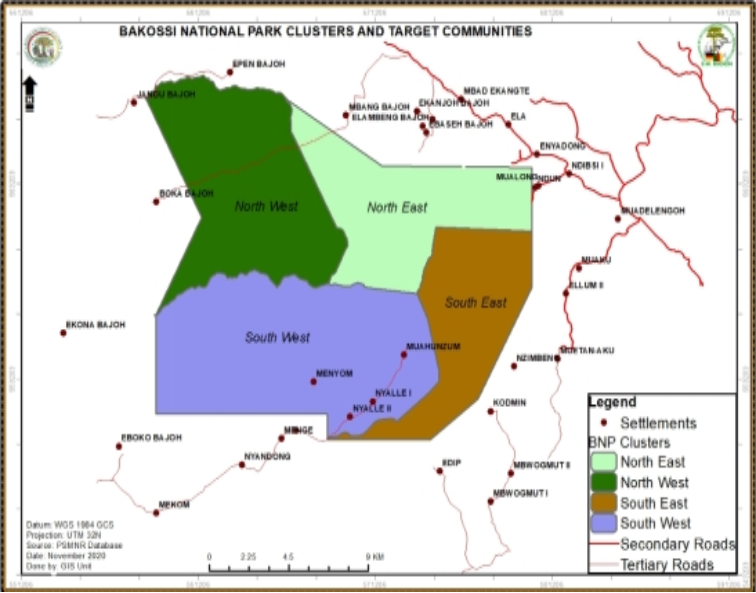
. The park covers an area of approximately 29,320 hectares and surrounded by 36 communities which are further divided into four management clusters (
Figure 1). The climate in the national park is tropical, with a high annual rainfall. The area experiences a rainy season from March to October and a dry season from November to February
| [1] | Ambebe, T. F., Asaah, E. K., Tchinda, J. N., Kouodiekong, L., & Tsobeng, A. (2020). Factors influencing community participation in forest management in the Bakossi National Park, Southwest Region, Cameroon. Forests, Trees and Livelihoods, 29(4), 211-225. |
[1]
. The average annual rainfall ranges from 2,000 to 3,500 mm, and the mean annual temperature is around 22°C
| [1] | Ambebe, T. F., Asaah, E. K., Tchinda, J. N., Kouodiekong, L., & Tsobeng, A. (2020). Factors influencing community participation in forest management in the Bakossi National Park, Southwest Region, Cameroon. Forests, Trees and Livelihoods, 29(4), 211-225. |
[1]
. The vegetation in the park is primarily composed of montane and submontane forest, with a diverse range of plant species. According to a study by
| [20] | Menz, M. H. M., Dixon, K. W., & Hobbs, R. J. (2013). Hurdles and opportunities for the restoration of ecosystems. Ecological Applications, 23(6), 1525-1535. |
[20]
, the park is home to over 1,000 species of plants, including several endemic and threatened species. The dominant tree species include
Oubanguia alata, Carapa procera, and
Albizia gummifera | [20] | Menz, M. H. M., Dixon, K. W., & Hobbs, R. J. (2013). Hurdles and opportunities for the restoration of ecosystems. Ecological Applications, 23(6), 1525-1535. |
[20]
. More so, the park is known for its rich wildlife diversity. It provides habitat for a variety of mammals, including the endangered Cross River gorilla (
Gorilla gorilla diehli), the vulnerable drill (
Mandrillus leucophaeus), chimpanzee (
Pan troglodytes), giant goliath frog (
Conraua goliath), pangolin (
Phataginus tricuspis) and the vulnerable forest elephant (
Loxodonta cyclotis)). The park also supports a diverse avifauna, with over 300 species of birds recorded, including several endemic and threatened species
| [14] | Radhakrishnan, V., Gupta, A., & Torres, L. (2019). Effective conservation strategies for terrestrial ecosystems. Conservation Biology, 33(5), 1200-1212. |
[14]
. The mount Kupe bush shrike (
Chlorophoneus kupeensis) is an important bird species in the Bakossi National Park. Furthermore, the park's drainage system consists of a network of rivers and streams, including the mungo river, which flows through the park
. These water bodies play a crucial role in supporting the park's ecosystems and provide important resources for the local communities.
Figure 1. Map of Bakossi National Park showing target communities and clusters.
2.2. Method of Research Data Collection
Prior to research questionnaire administration program, the research team obtained the necessary clearance permission from protected area authorities. Confidentiality and anonymity was maintained, and respondents were made aware of the purpose and use of the data collected
| [5] | Cavrić, B., Nedović-Budić, Z., & Jönsson, P. (2008). Urban and suburb m, man communities and their role in spatial planning of peri-urban areas in developing countries. Spatium, (17-18), 45-53. |
| [30] | Wich, S. A., & Marshall, A. J. (2016). An introduction to primate conservation. Oxford University Press. |
[5, 30]
. The questionnaire was designed to collect both quantitative and qualitative data relevant to the research objective. Questionnaire were pilot-tested to ensure clarity and appropriateness of the questions
| [5] | Cavrić, B., Nedović-Budić, Z., & Jönsson, P. (2008). Urban and suburb m, man communities and their role in spatial planning of peri-urban areas in developing countries. Spatium, (17-18), 45-53. |
[5]
. Questionnaires administered through face-to-face interviews, focus group discussions, or self-administration, depending on the literacy levels and accessibility of the respondents
| [19] | Mbile, P., Vabi, M., Meboka, M., Okon, D., Arrey-Mbo, J., Nkongho, F., & Ebong, E. (2005). Linking management and livelihood in environmental conservation: case of the Korup National Park located in Southwest Cameroon. Journal of Environmental Management, 76(1), 1-13. |
| [30] | Wich, S. A., & Marshall, A. J. (2016). An introduction to primate conservation. Oxford University Press. |
[19, 30]
.
2.3. Data Analysis
Quantitative data from the questionnaires was analyzed using descriptive statistics and inferential techniques, such as correlation (r) analysis and chi-square (X
2) tests. Qualitative data was also analyzed using inferential statistical models
| [19] | Mbile, P., Vabi, M., Meboka, M., Okon, D., Arrey-Mbo, J., Nkongho, F., & Ebong, E. (2005). Linking management and livelihood in environmental conservation: case of the Korup National Park located in Southwest Cameroon. Journal of Environmental Management, 76(1), 1-13. |
| [30] | Wich, S. A., & Marshall, A. J. (2016). An introduction to primate conservation. Oxford University Press. |
[19, 30]
.
3. Results and Discussions
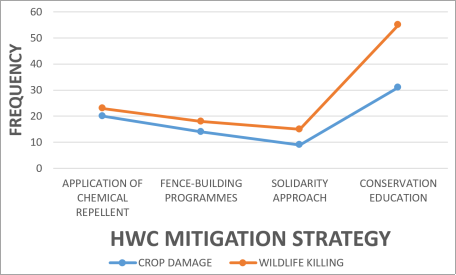
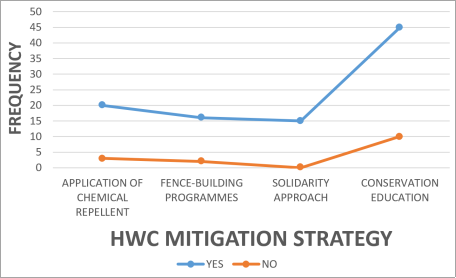
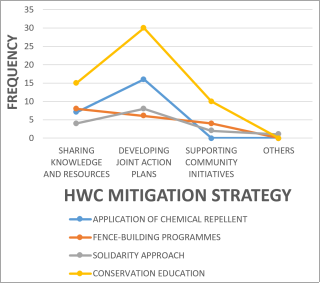
Human-wildlife conflict (HWC) mitigation strategies revealed a significant association on the knowledge of conflict mitigation r=0.267 P=0.005 (
Figure 2), local community involvement in the mitigation program X
2=3.463 df=3 P<0.05 (
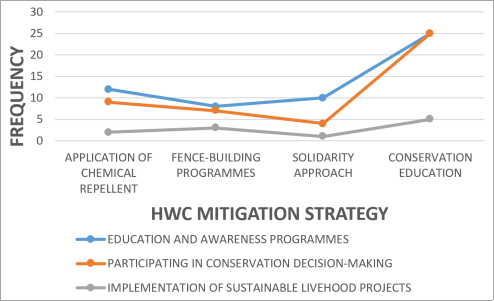
Figure 3), and the role played by local community in mitigating the conflict X
2=3.323 df=6 P<0.05 (
Figure 4) respectively. Human-wildlife conflict (HWC) is a significant global issue, with local communities often bearing the brunt of interactions between humans and wildlife
| [24] | Nyhus, P. J. (2016). Human–wildlife conflict and coexistence. Annual Review of Environment and Resources, 41, 143-171. |
[24]
. The mitigation of these conflicts requires an understanding of the knowledge and perspectives of the affected communities
| [3] | Barua, M., Bhagwat, S. A., & Jadhav, S. (2013). The hidden dimensions of human-wildlife conflict: Health impacts, opportunity and transaction costs. Biological Conservation, 157, 309-316. |
[3]
. Research has shown that local communities often possess extensive knowledge of wildlife behavior and effective strategies for mitigating conflicts
| [16] | Kamau, P. N., & Commandeur, D. R. (2019). The role of indigenous ecological knowledge in wildlife management in Kenya. Journal of Human Ecology, 48(1-2), 1-9. |
[16]
. Pastoralist communities in Kenya developed techniques such as using fire, noise, and physical barriers to deter wildlife from encroaching on their land and livestock
| [21] | Mukeka, J. M., Ogutu, J. O., Kanga, E., & Røskaft, E. (2019). Human-wildlife conflicts and their correlates in Narok County, Kenya. Global Ecology and Conservation, 18, e00620. |
[21]
Thus, effective mitigation of HWC requires the active involvement and participation of local communities
| [3] | Barua, M., Bhagwat, S. A., & Jadhav, S. (2013). The hidden dimensions of human-wildlife conflict: Health impacts, opportunity and transaction costs. Biological Conservation, 157, 309-316. |
[3]
. Research has shown that community-based approaches can lead to more sustainable and successful outcomes compared to top-down, centralized management strategies
| [24] | Nyhus, P. J. (2016). Human–wildlife conflict and coexistence. Annual Review of Environment and Resources, 41, 143-171. |
[24]
. One key aspect of community involvement is the incorporation of traditional ecological knowledge (TEK) into conflict mitigation strategies. TEK refers to the cumulative knowledge, practices, and beliefs that indigenous and local communities have developed through generations of living in a particular environment
| [16] | Kamau, P. N., & Commandeur, D. R. (2019). The role of indigenous ecological knowledge in wildlife management in Kenya. Journal of Human Ecology, 48(1-2), 1-9. |
[16]
. Studies have found that TEK can provide valuable insights into wildlife behavior, habitat use, and effective deterrence methods
| [12] | Ghosh-Harihar, M., & An, R. (2020). Farmer perceptions of wildlife crop damage and mitigation strategies in eastern India. Environmental management, 66(3), 463-475. |
[12]
. A project in Nepal involved local communities in the development of early warning systems and rapid response teams to mitigate HWCs
| [25] | Pant, G., Dhakal, M., Pradhan, N. S., Leverington, F., & Hockings, M. (2016). Nature and extent of human-tiger Panthera tigris conflict in Bardia National Park, Nepal. Oryx, 50(4), 700-706. |
[25]
. Thus, local communities can play a crucial role in mitigating HWC through their knowledge, practices, and collaborative efforts with conservation authorities
| [3] | Barua, M., Bhagwat, S. A., & Jadhav, S. (2013). The hidden dimensions of human-wildlife conflict: Health impacts, opportunity and transaction costs. Biological Conservation, 157, 309-316. |
| [24] | Nyhus, P. J. (2016). Human–wildlife conflict and coexistence. Annual Review of Environment and Resources, 41, 143-171. |
[3, 24]
.
Figure 2. Mitigation strategy and knowledge on human-wildlife conflict mitigation.
Figure 3. Mitigation strategy and community involvement in human-wildlife conflict mitigation
Farmers in India relied on traditional methods like chasing, fencing, and using scarecrows to protect their crops from wildlife damage
| [12] | Ghosh-Harihar, M., & An, R. (2020). Farmer perceptions of wildlife crop damage and mitigation strategies in eastern India. Environmental management, 66(3), 463-475. |
[12]
. However, this traditional knowledge is often overlooked or undervalued by conservation authorities and policymakers
| [9] | Dorresteijn, I., Schultner, J., Collier, N. F., Hylander, K., Senbeta, F., & Fischer, J. (2017). Disaggregating ecosystem services and disservices in the cultural landscapes of southwestern Ethiopia: a study of rural perceptions. Landscape Ecology, 32(2), 391-404. |
[9]
. Integrating local community knowledge into the design and implementation of mitigation strategies can lead to more effective and sustainable conflict mitigation
| [3] | Barua, M., Bhagwat, S. A., & Jadhav, S. (2013). The hidden dimensions of human-wildlife conflict: Health impacts, opportunity and transaction costs. Biological Conservation, 157, 309-316. |
[3]
. Several studies have highlighted the importance of collaborative approaches that combine scientific and local knowledge. A project in Nepal involved local communities in the development of early warning systems and rapid response teams to mitigate HWC
| [25] | Pant, G., Dhakal, M., Pradhan, N. S., Leverington, F., & Hockings, M. (2016). Nature and extent of human-tiger Panthera tigris conflict in Bardia National Park, Nepal. Oryx, 50(4), 700-706. |
[25]
. The project demonstrated the value of incorporating local expertise and leveraging community-based monitoring and response mechanisms. Incorporating this knowledge into conservation and management efforts can lead to more effective and sustainable solutions
| [9] | Dorresteijn, I., Schultner, J., Collier, N. F., Hylander, K., Senbeta, F., & Fischer, J. (2017). Disaggregating ecosystem services and disservices in the cultural landscapes of southwestern Ethiopia: a study of rural perceptions. Landscape Ecology, 32(2), 391-404. |
[9]
. Continued research and collaborative approaches are needed to further understand and leverage local community knowledge in addressing this pressing global challenge.
The project demonstrated the value of incorporating local expertise and leveraging community-based monitoring and response mechanisms. Integrating these traditional methods into conservation and management strategies can lead to more effective and sustainable conflict mitigation. Community involvement also includes active participation in decision-making processes, resource management, and the implementation of mitigation measures. When local communities are empowered to participate in these processes, they are more likely to have a sense of ownership and investment in the success of the interventions
| [9] | Dorresteijn, I., Schultner, J., Collier, N. F., Hylander, K., Senbeta, F., & Fischer, J. (2017). Disaggregating ecosystem services and disservices in the cultural landscapes of southwestern Ethiopia: a study of rural perceptions. Landscape Ecology, 32(2), 391-404. |
[9]
. Furthermore, community-based approaches can foster social cohesion and collective action, which are crucial for addressing the complex and multifaceted nature of HWCs
| [3] | Barua, M., Bhagwat, S. A., & Jadhav, S. (2013). The hidden dimensions of human-wildlife conflict: Health impacts, opportunity and transaction costs. Biological Conservation, 157, 309-316. |
[3]
. By working collaboratively with local communities, conservation practitioners and policymakers can develop more tailored and context-specific solutions that address the unique needs and challenges of each community. The study highlights the importance of community involvement in the development and implementation of mitigation strategies to minimize HWC. Integrating traditional ecological knowledge, empowering local communities in decision-making, and fostering collective action can lead to more effective and sustainable conflict mitigation.
Figure 4. Mitigation strategy and community role in human-wildlife conflict management.
Studies have shown that traditional ecological knowledge (TEK) can provide valuable insights into wildlife behavior, habitat use, and effective deterrence methods
| [12] | Ghosh-Harihar, M., & An, R. (2020). Farmer perceptions of wildlife crop damage and mitigation strategies in eastern India. Environmental management, 66(3), 463-475. |
[12]
. Community-based approaches have demonstrated the value of incorporating local expertise and leveraging community-based monitoring and response mechanisms. Local communities can also play a critical role in the implementation and maintenance of mitigation measures. When local communities are empowered to participate in decision-making processes and the implementation of interventions, they are more likely to have a sense of ownership and investment in the success of the measures
| [9] | Dorresteijn, I., Schultner, J., Collier, N. F., Hylander, K., Senbeta, F., & Fischer, J. (2017). Disaggregating ecosystem services and disservices in the cultural landscapes of southwestern Ethiopia: a study of rural perceptions. Landscape Ecology, 32(2), 391-404. |
[9]
. This can lead to more sustainable and effective conflict mitigation strategies. This study highlights the vital role that local communities play in mitigating HWC through the application of traditional ecological knowledge, active participation in decision-making and implementation, and fostering social cohesion and collective action.
Figure 5. Mitigation strategy and essence of stakeholders in human-wildlife conflict management.
The study has shown that mitigation strategy of the local community significantly associated with the essence of stakeholders in human-wildlife conflict resolution, X
2 = 14.889 df=9 P<0.05 (
Figure 5). Effective mitigation of human-wildlife conflicts requires the active engagement and collaboration of multiple stakeholders, including local communities, conservation authorities, policymakers, and researchers
| [3] | Barua, M., Bhagwat, S. A., & Jadhav, S. (2013). The hidden dimensions of human-wildlife conflict: Health impacts, opportunity and transaction costs. Biological Conservation, 157, 309-316. |
| [24] | Nyhus, P. J. (2016). Human–wildlife conflict and coexistence. Annual Review of Environment and Resources, 41, 143-171. |
[3, 24]
. Local communities are particularly crucial stakeholders in this process, as they are directly affected by and have first-hand experience with HWCs
| [9] | Dorresteijn, I., Schultner, J., Collier, N. F., Hylander, K., Senbeta, F., & Fischer, J. (2017). Disaggregating ecosystem services and disservices in the cultural landscapes of southwestern Ethiopia: a study of rural perceptions. Landscape Ecology, 32(2), 391-404. |
[9]
. Local communities possess valuable traditional ecological knowledge (TEK) about wildlife behavior, habitat use, and effective deterrence methods, which can provide valuable insights for developing context-specific mitigation strategies
| [12] | Ghosh-Harihar, M., & An, R. (2020). Farmer perceptions of wildlife crop damage and mitigation strategies in eastern India. Environmental management, 66(3), 463-475. |
| [16] | Kamau, P. N., & Commandeur, D. R. (2019). The role of indigenous ecological knowledge in wildlife management in Kenya. Journal of Human Ecology, 48(1-2), 1-9. |
[12, 16]
. By working collaboratively with local communities, conservation practitioners and policymakers can develop more holistic and inclusive solutions that address the social, economic, and ecological dimensions of the conflict
| [21] | Mukeka, J. M., Ogutu, J. O., Kanga, E., & Røskaft, E. (2019). Human-wildlife conflicts and their correlates in Narok County, Kenya. Global Ecology and Conservation, 18, e00620. |
[21]
. In addition to local communities, other key stakeholders in mitigating HWCs include conservation authorities, policymakers, and researchers. Conservation authorities play a critical role in implementing and enforcing mitigation measures, as well as coordinating with local communities
| [25] | Pant, G., Dhakal, M., Pradhan, N. S., Leverington, F., & Hockings, M. (2016). Nature and extent of human-tiger Panthera tigris conflict in Bardia National Park, Nepal. Oryx, 50(4), 700-706. |
[25]
. Policymakers are responsible for developing and implementing policies and regulations that address the underlying drivers of HWCs, such as habitat loss and fragmentation
| [24] | Nyhus, P. J. (2016). Human–wildlife conflict and coexistence. Annual Review of Environment and Resources, 41, 143-171. |
[24]
. Researchers can contribute by providing scientific data and evidence-based recommendations to inform the development and evaluation of conflict resolution strategies
| [12] | Ghosh-Harihar, M., & An, R. (2020). Farmer perceptions of wildlife crop damage and mitigation strategies in eastern India. Environmental management, 66(3), 463-475. |
[12]
. The study highlights the essence of engaging multiple stakeholders, particularly local communities, in resolving human-wildlife conflicts. By leveraging local knowledge, fostering collaborative decision-making, and addressing the complex social-ecological dimensions of the conflicts, stakeholders can develop more effective and sustainable conflict mitigation strategies.
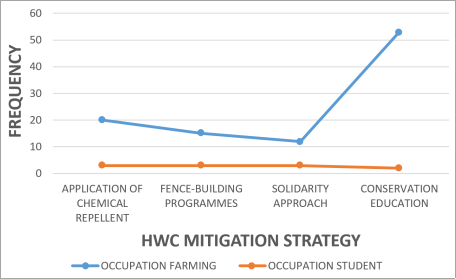
Figure 6. Mitigation strategy and occupation of local community.
Furthermore, HWC mitigation strategy associated significantly with the occupation of local community inhabitants in the conflict mitigation X
2=5.309 df=3 P<0.05 (
Figure 6). Studies have shown that the occupations and livelihoods of local communities can significantly influence their attitudes and responses to HWCs. Communities that are heavily dependent on agriculture or livestock tend to have more negative perceptions of wildlife and are more likely to engage in retaliatory actions against problem animals
| [7] | Dickman, A. J. (2010). Complexities of conflict: the importance of considering social factors for effectively resolving human-wildlife conflict. Animal Conservation, 13(5), 458-466. |
| [17] | Kansky, R., & Knight, A. T. (2014). Key factors driving attitudes towards large mammals in conflict with humans. Biological Conservation, 179, 93-105. |
[7, 17]
. In communities with subsistence-based economies, where people rely directly on natural resources for their livelihoods, there is often a greater tolerance for wildlife due to the perceived benefits they provide, even if they also pose threats. In contrast, communities with more cash-based economies may be less tolerant of wildlife that threaten their commercial activities
| [3] | Barua, M., Bhagwat, S. A., & Jadhav, S. (2013). The hidden dimensions of human-wildlife conflict: Health impacts, opportunity and transaction costs. Biological Conservation, 157, 309-316. |
| [26] | Sillero-Zubiri, C., & Switzer, D. (2001). Crop raiding primates: Searching for alternative, humane ways to resolve conflict with farmers in Africa. People and Wildlife Initiative. Wildlife Conservation Research Unit, Oxford University. |
[3, 26]
. When local communities are actively involved in conservation efforts and benefit from ecotourism or other wildlife-based enterprises, they are more likely to support and participate in HWC mitigation strategies
| [24] | Nyhus, P. J. (2016). Human–wildlife conflict and coexistence. Annual Review of Environment and Resources, 41, 143-171. |
| [29] | Walpole, M. J., & Goodwin, H. J. (2001). Local attitudes towards conservation and tourism around Komodo National Park, Indonesia. Environmental Conservation, 28(2), 160-166. |
[24, 29]
. Providing training, resources, and alternative livelihood options to local communities can help reduce their dependence on activities that bring them into conflict with wildlife, thereby improving their willingness to engage in conflict mitigation strategies
| [7] | Dickman, A. J. (2010). Complexities of conflict: the importance of considering social factors for effectively resolving human-wildlife conflict. Animal Conservation, 13(5), 458-466. |
| [18] | Madden, F. (2004). Creating coexistence between humans and wildlife: global perspectives on local efforts to address human–wildlife conflict. Human Dimensions of Wildlife, 9(4), 247-257. |
[7, 18]
.
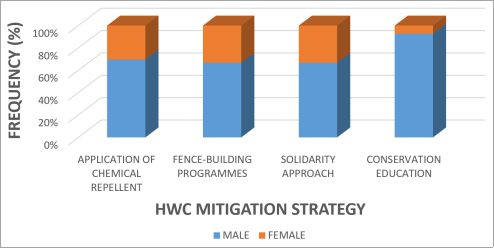
Figure 7. Mitigation strategy and the role of gender in conflict resolution.
Additionally, conflict mitigation strategy significantly related with the role played by gender in the resolution program X
2=10.871 df=3 P=0.012 (
Figure 7). Gender plays a significant role in shaping the experiences, perspectives, and roles of individuals within local communities when it comes to mitigating HWCs
| [6] | Datta, A., & Chatterjee, S. (2019). Gendered nature of human-elephant conflict in North Bengal, India. Oryx, 53(2), 341-348. |
| [21] | Mukeka, J. M., Ogutu, J. O., Kanga, E., & Røskaft, E. (2019). Human-wildlife conflicts and their correlates in Narok County, Kenya. Global Ecology and Conservation, 18, e00620. |
[6, 21]
. Studies have shown that women often bear a disproportionate burden of the impacts of HWCs, as they are more likely to be responsible for tasks such as collecting firewood, fetching water, and tending to livestock, which often bring them into close proximity with wildlife
| [6] | Datta, A., & Chatterjee, S. (2019). Gendered nature of human-elephant conflict in North Bengal, India. Oryx, 53(2), 341-348. |
| [24] | Nyhus, P. J. (2016). Human–wildlife conflict and coexistence. Annual Review of Environment and Resources, 41, 143-171. |
[6, 24]
. As a result, women may have a deeper understanding of the daily challenges and risks associated with these conflicts
| [3] | Barua, M., Bhagwat, S. A., & Jadhav, S. (2013). The hidden dimensions of human-wildlife conflict: Health impacts, opportunity and transaction costs. Biological Conservation, 157, 309-316. |
[3]
At the same time, women's traditional ecological knowledge and coping strategies can be invaluable in developing effective mitigation measures. A study in Nepal found that women were often the primary managers of crop-raiding deterrents, such as using fire, noise, and physical barriers to protect their crops and livestock
| [25] | Pant, G., Dhakal, M., Pradhan, N. S., Leverington, F., & Hockings, M. (2016). Nature and extent of human-tiger Panthera tigris conflict in Bardia National Park, Nepal. Oryx, 50(4), 700-706. |
[25]
. Similarly, research in Kenya has highlighted the role of women in monitoring wildlife movements and implementing early warning systems within their communities
| [21] | Mukeka, J. M., Ogutu, J. O., Kanga, E., & Røskaft, E. (2019). Human-wildlife conflicts and their correlates in Narok County, Kenya. Global Ecology and Conservation, 18, e00620. |
[21]
. Moreover, the involvement of women in decision-making processes and the implementation of conflict resolution strategies can lead to more inclusive and sustainable outcomes
| [9] | Dorresteijn, I., Schultner, J., Collier, N. F., Hylander, K., Senbeta, F., & Fischer, J. (2017). Disaggregating ecosystem services and disservices in the cultural landscapes of southwestern Ethiopia: a study of rural perceptions. Landscape Ecology, 32(2), 391-404. |
[9]
. When women are empowered to participate in these processes, they can bring unique perspectives and insights that may be overlooked in male-dominated decision-making structures
| [16] | Kamau, P. N., & Commandeur, D. R. (2019). The role of indigenous ecological knowledge in wildlife management in Kenya. Journal of Human Ecology, 48(1-2), 1-9. |
[16]
. However, gender-based inequalities and social norms can often hinder women's participation and influence in the context of human-wildlife conflict mitigation
| [12] | Ghosh-Harihar, M., & An, R. (2020). Farmer perceptions of wildlife crop damage and mitigation strategies in eastern India. Environmental management, 66(3), 463-475. |
[12]
. Overcoming these barriers requires addressing underlying power dynamics and social inequities within local communities, as well as actively promoting women's leadership and decision-making roles
| [6] | Datta, A., & Chatterjee, S. (2019). Gendered nature of human-elephant conflict in North Bengal, India. Oryx, 53(2), 341-348. |
[6]
. The study highlights the significant influence of gender on the experiences, knowledge, and roles of individuals within local communities when it comes to mitigating HWCs. Recognizing and leveraging the unique perspectives and contributions of women, while addressing gender-based barriers, can lead to more inclusive, effective, and sustainable conflict resolution strategies.
The implementation of community-based wildlife management programs, such as the Communal Areas Management Programme for Indigenous Resources (CAMPFIRE) in Zimbabwe
| [11] | Gandiwa, E., Heitkönig, I. M., Lokhorst, A. M., Prins, H. H., & Leeuwis, C. (2013). CAMPFIRE and human-wildlife conflicts in local communities bordering northern Gonarezhou National Park, Zimbabwe. Ecology and Society, 18(4). |
[11]
contributed greatly to mitigate HWC. These programs aim to involve local communities in the decision-making and management of wildlife resources, thereby fostering a sense of ownership and responsibility
| [18] | Madden, F. (2004). Creating coexistence between humans and wildlife: global perspectives on local efforts to address human–wildlife conflict. Human Dimensions of Wildlife, 9(4), 247-257. |
[18]
. Another strategy is the use of deterrents and barrier methods to prevent wildlife from accessing croplands and settlements. Examples include the installation of electric fences, the use of beehive fences, and the deployment of early warning systems
| [13] | Hoare, R. (2015). Lessons from 20 years of human–elephant conflict mitigation in Africa. Human Dimensions of Wildlife, 20(4), 289-295. |
[13]
. These physical barriers have been shown to effectively reduce instances of crop-raiding and livestock depredation, while also promoting coexistence between humans and wildlife
| [4] | Bousquet, F., Barreteau, O., Aquino, P. D., Etienne, M., Boissau, S., Aubert, S.,... & Daré, W. (2016). Multi-agent systems and role games: Collective learning processes for ecosystem management. In Companion Modelling (pp. 248-285). Springer, Dordrecht. |
[4]
.
The impacts of HWC in Cameroon are multifaceted, affecting both human communities and wildlife populations. On the human side, studies have documented the significant economic losses experienced by farmers and livestock owners due to crop damage and livestock depredation, as well as the risk of injury and loss of human life from encounters with wildlife
| [2] | Ango, T. G., Börjeson, L., Senbeta, F., & Hylander, K. (2017). Crop raiding by wild mammals in Ethiopia: Impacts on the livelihoods of smallholder farmers in southwest Ethiopia. Oryx, 51(3), 527-537. |
| [3] | Barua, M., Bhagwat, S. A., & Jadhav, S. (2013). The hidden dimensions of human-wildlife conflict: Health impacts, opportunity and transaction costs. Biological Conservation, 157, 309-316. |
[2, 3]
. These impacts can have severe consequences for the livelihoods and food security of local communities. For wildlife, HWC can lead to increased mortality, habitat fragmentation, and the disruption of ecological processes, ultimately threatening the long-term conservation of vulnerable species
| [13] | Hoare, R. (2015). Lessons from 20 years of human–elephant conflict mitigation in Africa. Human Dimensions of Wildlife, 20(4), 289-295. |
| [31] | Woodroffe, R., Thirgood, S., & Rabinowitz, A. (Eds.). (2005). People and wildlife, conflict or co-existence?. Cambridge University Press. |
[13, 31]
. In Cameroon, the impacts of HWC have been particularly acute for species such as elephants, primates, and large carnivores, which are often the targets of retaliatory actions by local communities
| [23] | Nsonsi, F., Nchanji, A. C., Mavinga, F. B., Vermeulen, C., & Nguinguiri, J. C. (2017). Human-Elephant Conflict in a Forest Landscape in Equatorial Africa: Reconciling Conservation and Community Development. PARKS, 23(2), 37-50. |
| [27] | Tchamba, M. N. (1996). History and present status of the human/elephant conflict in the Waza-Logone region, Cameroon, West Africa. Biological Conservation, 75(1), 35-41. |
[23, 27]
. Researchers have explored a range of mitigation strategies to address HWC in Cameroon, including both physical and community-based approaches. Physical barriers and deterrents, such as electric fences, beehive fences, and chili pepper-based repellents, have been implemented with varying degrees of success
| [2] | Ango, T. G., Börjeson, L., Senbeta, F., & Hylander, K. (2017). Crop raiding by wild mammals in Ethiopia: Impacts on the livelihoods of smallholder farmers in southwest Ethiopia. Oryx, 51(3), 527-537. |
| [13] | Hoare, R. (2015). Lessons from 20 years of human–elephant conflict mitigation in Africa. Human Dimensions of Wildlife, 20(4), 289-295. |
| [27] | Tchamba, M. N. (1996). History and present status of the human/elephant conflict in the Waza-Logone region, Cameroon, West Africa. Biological Conservation, 75(1), 35-41. |
[2, 13, 27]
. These strategies aim to physically separate humans and wildlife or deter wildlife from entering agricultural areas or human settlements.
Many local communities in Cameroon rely heavily on agriculture, livestock, and other natural resource-based livelihoods, making them highly vulnerable to the impacts of HWC
| [4] | Bousquet, F., Barreteau, O., Aquino, P. D., Etienne, M., Boissau, S., Aubert, S.,... & Daré, W. (2016). Multi-agent systems and role games: Collective learning processes for ecosystem management. In Companion Modelling (pp. 248-285). Springer, Dordrecht. |
| [11] | Gandiwa, E., Heitkönig, I. M., Lokhorst, A. M., Prins, H. H., & Leeuwis, C. (2013). CAMPFIRE and human-wildlife conflicts in local communities bordering northern Gonarezhou National Park, Zimbabwe. Ecology and Society, 18(4). |
[4, 11]
. The limited availability of alternative economic opportunities can make it difficult for communities to adopt mitigation strategies that require them to forgo traditional practices or land-use patterns
| [2] | Ango, T. G., Börjeson, L., Senbeta, F., & Hylander, K. (2017). Crop raiding by wild mammals in Ethiopia: Impacts on the livelihoods of smallholder farmers in southwest Ethiopia. Oryx, 51(3), 527-537. |
| [23] | Nsonsi, F., Nchanji, A. C., Mavinga, F. B., Vermeulen, C., & Nguinguiri, J. C. (2017). Human-Elephant Conflict in a Forest Landscape in Equatorial Africa: Reconciling Conservation and Community Development. PARKS, 23(2), 37-50. |
[2, 23]
. Some traditional beliefs and practices, such as the cultural significance of certain wildlife species, can pose barriers to the acceptance and implementation of mitigation strategies
| [22] | Naughton-Treves, L., & Treves, A. (2005). Socio-ecological factors shaping local support for wildlife: crop-raiding by elephants and other wildlife in Africa. People and wildlife, conflict or co-existence, 252-277. |
| [27] | Tchamba, M. N. (1996). History and present status of the human/elephant conflict in the Waza-Logone region, Cameroon, West Africa. Biological Conservation, 75(1), 35-41. |
| [28] | Treves, A., & Karanth, K. U. (2003). Human-carnivore conflict and perspectives on carnivore management worldwide. Conservation biology, 17(6), 1491-1499. |
[22, 27, 28]
. Inadequate enforcement of wildlife management regulations and the lack of effective mechanisms for implementing mitigation strategies can undermine their effectiveness
| [8] | Distefano, E. (2005). Human-wildlife conflict worldwide: collection of case studies, analysis of management strategies and good practices. Food and Agricultural Organization of the United Nations (FAO), Sustainable Agriculture and Rural Development Initiative (SARDI). |
| [18] | Madden, F. (2004). Creating coexistence between humans and wildlife: global perspectives on local efforts to address human–wildlife conflict. Human Dimensions of Wildlife, 9(4), 247-257. |
[8, 18]
. Fragmented institutional frameworks and the absence of effective coordination between various stakeholders, such as government agencies, conservation organizations, and local communities, can hinder the successful implementation of mitigation strategies
| [4] | Bousquet, F., Barreteau, O., Aquino, P. D., Etienne, M., Boissau, S., Aubert, S.,... & Daré, W. (2016). Multi-agent systems and role games: Collective learning processes for ecosystem management. In Companion Modelling (pp. 248-285). Springer, Dordrecht. |
| [28] | Treves, A., & Karanth, K. U. (2003). Human-carnivore conflict and perspectives on carnivore management worldwide. Conservation biology, 17(6), 1491-1499. |
[4, 28]
. The limited availability of financial and human resources can constrain the implementation and maintenance of mitigation strategies, particularly in resource-poor regions
| [13] | Hoare, R. (2015). Lessons from 20 years of human–elephant conflict mitigation in Africa. Human Dimensions of Wildlife, 20(4), 289-295. |
| [31] | Woodroffe, R., Thirgood, S., & Rabinowitz, A. (Eds.). (2005). People and wildlife, conflict or co-existence?. Cambridge University Press. |
[13, 31]
.
The dynamic and interconnected nature of ecosystems, coupled with the varying habitat preferences and behavior of different wildlife species, can make it challenging to develop and implement effective mitigation strategies that account for these complexities
| [24] | Nyhus, P. J. (2016). Human–wildlife conflict and coexistence. Annual Review of Environment and Resources, 41, 143-171. |
| [27] | Tchamba, M. N. (1996). History and present status of the human/elephant conflict in the Waza-Logone region, Cameroon, West Africa. Biological Conservation, 75(1), 35-41. |
[24, 27]
. The lack of access to advanced technologies, such as effective wildlife deterrents or early warning systems, as well as the limited infrastructure in remote rural areas, can hamper the implementation and maintenance of mitigation strategies
| [2] | Ango, T. G., Börjeson, L., Senbeta, F., & Hylander, K. (2017). Crop raiding by wild mammals in Ethiopia: Impacts on the livelihoods of smallholder farmers in southwest Ethiopia. Oryx, 51(3), 527-537. |
| [13] | Hoare, R. (2015). Lessons from 20 years of human–elephant conflict mitigation in Africa. Human Dimensions of Wildlife, 20(4), 289-295. |
[2, 13]
. The failure to meaningfully involve local communities in the design, implementation, and monitoring of mitigation strategies can lead to a lack of buy-in and ownership, ultimately undermining the long-term sustainability of these efforts
| [4] | Bousquet, F., Barreteau, O., Aquino, P. D., Etienne, M., Boissau, S., Aubert, S.,... & Daré, W. (2016). Multi-agent systems and role games: Collective learning processes for ecosystem management. In Companion Modelling (pp. 248-285). Springer, Dordrecht. |
| [22] | Naughton-Treves, L., & Treves, A. (2005). Socio-ecological factors shaping local support for wildlife: crop-raiding by elephants and other wildlife in Africa. People and wildlife, conflict or co-existence, 252-277. |
[4, 22]
. The development of mitigation strategies without a thorough understanding of the local context and community priorities can result in strategies that do not adequately address the specific needs and challenges faced by the affected communities
| [18] | Madden, F. (2004). Creating coexistence between humans and wildlife: global perspectives on local efforts to address human–wildlife conflict. Human Dimensions of Wildlife, 9(4), 247-257. |
| [23] | Nsonsi, F., Nchanji, A. C., Mavinga, F. B., Vermeulen, C., & Nguinguiri, J. C. (2017). Human-Elephant Conflict in a Forest Landscape in Equatorial Africa: Reconciling Conservation and Community Development. PARKS, 23(2), 37-50. |
[18, 23]
. Addressing these multifaceted challenges will require a comprehensive and coordinated approach that combines policy, institutional, technological, and community-based interventions. Fostering collaborative partnerships, building local capacity, and integrating traditional ecological knowledge into the design and implementation of mitigation strategies are crucial steps towards developing more effective and sustainable solutions to HWC in Cameroon.
In addition to physical barriers, researchers have also explored the potential of compensation and incentive-based schemes to mitigate human-wildlife conflict. These approaches aim to provide financial or in-kind reimbursement to affected communities, as well as to incentivize the protection of wildlife through revenue-sharing programs
| [22] | Naughton-Treves, L., & Treves, A. (2005). Socio-ecological factors shaping local support for wildlife: crop-raiding by elephants and other wildlife in Africa. People and wildlife, conflict or co-existence, 252-277. |
| [31] | Woodroffe, R., Thirgood, S., & Rabinowitz, A. (Eds.). (2005). People and wildlife, conflict or co-existence?. Cambridge University Press. |
[22, 31]
. Complementary to these strategies, educational and awareness-raising initiatives have also played a crucial role in addressing human-wildlife conflict
| [7] | Dickman, A. J. (2010). Complexities of conflict: the importance of considering social factors for effectively resolving human-wildlife conflict. Animal Conservation, 13(5), 458-466. |
[7]
. By increasing the understanding and appreciation of the ecological and economic importance of wildlife among local communities, these programs can foster a more positive attitude towards conservation and promote coexistence
| [28] | Treves, A., & Karanth, K. U. (2003). Human-carnivore conflict and perspectives on carnivore management worldwide. Conservation biology, 17(6), 1491-1499. |
[28]
. Furthermore, the exploration of mitigation strategies in the Bakossi national park has involved a multifaceted approach, combining community-based management, physical barriers, compensation schemes, and educational initiatives
| [24] | Nyhus, P. J. (2016). Human–wildlife conflict and coexistence. Annual Review of Environment and Resources, 41, 143-171. |
[24]
. The success of these strategies has been variable, and ongoing research is necessary to refine and adapt them to the specific socio-ecological context of the region
| [2] | Ango, T. G., Börjeson, L., Senbeta, F., & Hylander, K. (2017). Crop raiding by wild mammals in Ethiopia: Impacts on the livelihoods of smallholder farmers in southwest Ethiopia. Oryx, 51(3), 527-537. |
[2]
. Continued collaboration between researchers, conservation practitioners, and local communities will be essential in finding sustainable solutions to the human-wildlife conflict in the Bakossi National Park.





 Share This Article
 Twitter
 Linked In
 Facebook
 Copy
Copy Download