Abstract
This research explores how modern biotechnologies, such as genetic modification and molecular breeding, improve productivity, quality, and sustainability in dairy farming in response to increasing global demand, environmental challenges, and constrained natural resources. Utilising secondary qualitative data from academic literature, industry reports, and policy documents, the study employs thematic analysis to pinpoint major trends, advantages, and difficulties linked to incorporating biotechnology into dairy production systems. The results show that contemporary biotechnologies greatly enhance animal health and productivity via sophisticated genetic selection and molecular breeding methods, leading to enhanced disease resistance, better reproductive outcomes, and higher milk production, which lessens dependence on medical treatments and promotes economic viability along with environmental sustainability. Moreover, biotechnological advancements like fermentation and bio-processing improve the nutritional content, longevity, and functional characteristics of dairy items, facilitating the creation of value-added products enriched with probiotics, vitamins, and bioactive substances to satisfy the rising consumer demand for healthier food choices. Regardless of these benefits, broad implementation is still limited by elevated startup costs, infrastructure challenges, supply variability, and a lack of technical skills and digital literacy, especially among small producers. The research thus advises that decision-makers and industry participants offer financial incentives, technical assistance, and specialized training initiatives to enhance digital skills and promote the sustainable incorporation of advanced biotechnologies in the dairy industry.
Keywords
Rationale, Methodology, Philosophy, Dairy Market, Supply Chain Management
1. Introduction
1.1. Background of the Study
The global dairy industry has remained a cornerstone of agricultural systems and human nutrition.
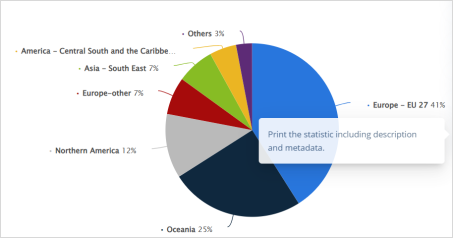
Figure 1. Dairy Market Trade Value.
The above diagram shows that the EU accounts for 36% of the global dairy market value, and Oceania accounts for 27%
| [1] | Almaiah, M. A., Alfaisal, R., Salloum, S. A., Hajjej, F., Shishakly, R., Lutfi, A., Alrawad, M., Al Mulhem, A., Alkhdour, T. and Al-Maroof, R. S., 2022. Measuring institutions’ adoption of artificial intelligence applications in online learning environments: integrating the innovation diffusion theory with technology adoption rate. Electronics, 11(20), p. 3291.
https://www.mdpi.com/2079-9292/11/20/3291 |
[1]
. The growth of the dairy sector has been driven by urbanisation and is shifting the pattern of production with technological advancement in processing. However, diary production has faced threats with environmental concern and with global trade imbalance. In this context, the study has explored how the use of biotechnical techniques can add value in dairy production.
1.2. Rationale
As per recent data, the growth of the dairy product-based market has slowed down due to factors such as decline in some regional trade and shifting demand of the customers for plant-based alternatives. Further, environmental and regulatory pressures introduced the need to reduce methane emissions and limit land and water use with traditional dairy expansion (Bačėninaitė
et al. Again, it is evidenced that milk output growth is uneven regionally and the industry may encounter structural tightness, higher prices and trade dependencies without productivity upgradation. The global dairy sector faces modest supply growth of 1.5% annually to 2030, and hence demand for dairy products has risen mostly in emerging markets (Farm extension,
| [1] | Almaiah, M. A., Alfaisal, R., Salloum, S. A., Hajjej, F., Shishakly, R., Lutfi, A., Alrawad, M., Al Mulhem, A., Alkhdour, T. and Al-Maroof, R. S., 2022. Measuring institutions’ adoption of artificial intelligence applications in online learning environments: integrating the innovation diffusion theory with technology adoption rate. Electronics, 11(20), p. 3291.
https://www.mdpi.com/2079-9292/11/20/3291 |
[1]
). Thus, the study has shed light on how the implication of bio technology has supported the global dairy sector to prepare products by enhancing quality and sustainability.
1.3. Aim and Objectives
Aim: The study has aimed to explore the application of biotechnical techniques in dairy production and product development. It has covered areas on how these innovations enhance quality and sustainability in the dairy industry.
Objectives:
1) To identify the role of biotechnology in improving the milk production and enhancing nutritious value.
2) To explore the challenges faced by the diary production firms during the implementation of biotechnology in their production process.
3) To develop recommendation to address the issues in implementation of biotechnology in regard to enhance sustainability in the dairy industry.
1.4. Questions
1) What is the role of biotechnology in the global dairy sector for improving milk production?
2) What are the issues faced by the dairy industry for adopting biotechnology in their food production?
3) How to improve biotechnology-based practices and enhance sustainability in the dairy industry?
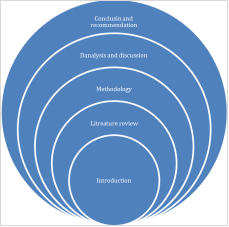
1.5. Outline
Figure 2. Dissertation structure.
2. Literature Review
2.1. Chapter Introduction
The chapter has aimed to discover the facts explored by the previous scholars regarding the implementation of technology in dairy product development. It has assisted me to find out the loopholes that existing studies have and it has become the motivation to develop current study.
2.2. Literature Review
In the words of Nimbalkar
et al. | [2] | Bačėninaitė, D., Džermeikaitė, K. and Antanaitis, R., 2022. Global warming and dairy cattle: How to control and reduce methane emission. Animals, 12(19), p. 2687.
https://www.mdpi.com/2076-2615/12/19/2687 |
[2]
adoption of new technologies have revised the traditional production process of the dairy sector. Advancement in the production process can cultivate beneficial bacteria and has allowed to develop probiotic rich dairy products. Moreover, the adoption of technology in the production can slow the wastage and can produce the materials with lower water and land pollution. However, with the increase in demand for daily based products, small scale farming with local adoption of breed can be challenging to satisfy the requirement of a diverse dairy market
| [3] | Darcy, A., Daniels, J., Salinger, D., Wicks, P. and Robinson, A., 2021. Evidence of human-level bonds established with a digital conversational agent: cross-sectional, retrospective observational study. JMIR Formative Research, 5(5), p. e27868.
https://formative.jmir.org/2021/5/e27868 |
[3]
. It can eventually lead to inconsistency in maintaining quality.
On the other hand, due to high operational cost many of the firms are not capable of adopting tech-based solutions in their diary processing. Some others have felt less confident to implement such due to lack of standardised biosafety frameworks and regulatory restrictions.
Orelle
et al.
has developed the opinion that developing nations are suffering from poor infrastructure and uneven technological adoption in diverse regions. It has made the process of implementing tech-based solutions challenging. Moreover, lack of digital literacy among the staff, data management issues and limited awareness among the firms have threatened sustainable innovation in the dairy industry. There is increased demand for policy support to recover the situation and sufficient investment is essential for integration of biotechnology.
2.3. Theoretical Discussion
Innovation Diffusion Theory: The theory has been developed to explain how rapidly the technology and new innovative solution for an ongoing process is accepted Almaiah
et al. . In the research context, biotechnologies such as genetic modification and microbial cultures are perceived to be beneficial for revising the production process. The application of the theory thus can help in analysing the patterns followed among the farms and industry to foster diffusion of sustainability. It can help to address the challenges of productivity by leveraging smart solutions. Furthermore, scholars have mentioned designing capability building programs for the farmers to improve the selection of generic production processes.
Sustainable Development Theory: The theory has highlighted a framework that can meet the needs and ensures that future generations will also not compromise to attain their needs Ozili,
. In the dairy sector, the implementation of biotechnology can support in improving the product quality through eco-friendly innovations. The theory can prove to be a supportive framework to balance the economic growth, animal welfare and environmental conservation by accurate implementation of responsible biotechnological practices.
2.4. Literature Gap
The literature prices have mostly discussed the traditional dairy production method and have identified the need to implement technological solutions according to market demand. There were some discussions on the innovation in the production process however comprehensive analysis was missing that can integrate biotechnology with sustainable product development.
2.5. Chapter Summary
The review of the literature has highlighted adoption of biotechnology in the dairy production with implementation of genetic modification and microbial technologies. It has developed an opportunity to revise the traditional process however costing is a huge pressure. Further theoretical frameworks have supported in understanding tech adoption and sustainability practices. Identification of the literature gap further has made the study more interesting to address the gap of previous scholars.
3. Methodology
3.1. Chapter Introduction
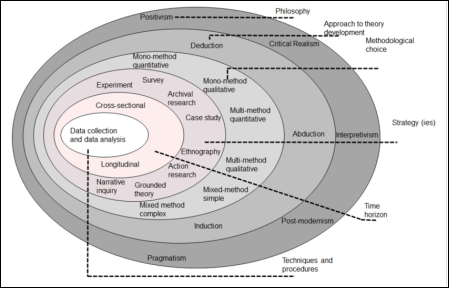
The purpose of the chapter is to explore the methods that have been adopted to conduct the study. It has developed proper justification on why the method has been adopted without selecting the alternatives. Saunders research onion layers have been followed to describe the methodological selections.
Figure 3. Research onion.
3.2. Philosophy
In the context of the study,
interpretivism has been adopted as it focuses on understanding subjective experiences William,
. It has helped to explore the perspective of the farmers, and understanding the decision-making process of the management team before implementation of biotechnology. Additionally, positivism, the most common alternative has been neglected as it only relies on factual aspects. It starts from the generalised perspective to end up with a specific solution. Interpretivism is completely opposite and supports in attaining objective outcomes regarding the technological solutions in diary firms.
3.3. Approach
An inductive approach is suitable in this study as it has supported exploring patterns and insights from real-world experiences of dairy farmers. Application of the approach has been supported in evaluating interest of the stakeholders regarding biotechnical adoption. It can support the development of new theories based on observations. Deductive approach has been avoided as it begins with pre-existing theories and does not prioritise contextual variations.
3.4. Strategy
Archival strategy is suitable for the study as it has helped in developing an in-depth understanding of the subject matter
| [8] | Jafri, S. H., Adnan, K. M., Baimbill Johnson, S., Talukder, A. A., Yu, M. and Osei, E., 2024. Challenges and solutions for small dairy farms in the US: A review. Agriculture, 14(12), p. 2369. https://www.mdpi.com/2077-0472/14/12/2369 |
[8]
. In comparison to the alternatives, it is suitable for the research as it has allowed the study to utilise existing records and historical data on the procedure of diary production. Biotechnological adoption and product development has been evaluated with the implementation of a cost effective, time efficient way of analysing the patterns and trends in the market.
3.5. Choice
As per the research onion,
mono method qualitative can be suitable for exploring in-depth perceptions, experience and challenges of the dairy farmers. Use of the qualitative method can allow richness of data exposure and hence be supported in decision making
. It can eventually highlight the contextual factors that can influence technological implementation and sustainable dairy production. Application of mixed method approach or even quantitative data might have increased complexity in the research process and hence is avoided.
3.6. Timeframe
Cross sectional time frame has been preferred as it can capture data on biotechnological adoption, dairy production practices and perception stakeholders within specific time
. This approach has assisted the study to analyse current trends, challenges and outcomes without requiring long term observations. This swiftness of collecting data is not possible following the longitudinal approach and hence it has been avoided.
3.7. Technique and Procedures
3.7.1. Data Collection
The research has been conducted with existing records, industry reports and research articles published from government authenticated websites. It has helped to gather information regarding technological adoption and dairy product development. Thus, the
secondary data collection process has been accepted as it is time efficient in examining historical and current pattering without investing more as required for conducting interviews or surveys
| [11] | Orelle, A., Nikiema, A., Zakaryan, A., Albetkova, A. A., Rayfield, M. A., Peruski, L. F., Pierson, A. and Kachuwaire, O., 2021. National biosafety management system: a combined framework approach based on 15 key elements. Frontiers in Public Health, 9, p. 609107.
https://www.frontiersin.org/journals/public-health/articles/10.3389/fpubh.2021.609107/pdf |
[11]
. Further, a
purposive sampling process has been applied in order to select relevant documents, reports and case studies that might provide relevant insights. In the sampling process, inclusion and exclusion criteria have been adopted to overcome the filter and the wider data range. Sampling of data thus has simplified the overall research process.
3.7.2. Data Analysis
Thematic data analysis method as instructed by Braun and Clarke has been applied in the study as it has added flexibility in data patterning
. Each stage of the thematic analysis has carried forward the analysis with systematic identification of patterns and themes within qualitative data from secondary sources. It has supported in establishing new insights on biotechnology adoption, dairy production practices, challenges, and outcomes.
3.8. Ethical Consideration
The study has followed the university guidelines and has ensured to maintain confidentiality of each data set. It has been declared that each data will be protected under data protection act in 2010 and will be destroyed after three months of publishing the research.
3.9. Summary
The chapter has systematically explained the reasons behold selection of methods have explained their contribution in the study. Integration of philosophy, approach, strategy and choices have complemented the process of data collection and analysis to bring out expected outcomes.
4. Data Analysis and Discussion
4.1. Chapter Introduction
The chapter has the aim to explore the facts regarding the biotechnology based dairy production from the secondary data sources. It has led towards establishing key findings and has supported in establishing the relationship with existing literatures.
4.2. Data Analysis
4.2.1. Biotechnology Implementation Has Changed the Market Position of Diary Sector Worldwide
Biotechnology has transformed the global dairy sector and has contributed in enhancing both production efficiency and nutrition value.
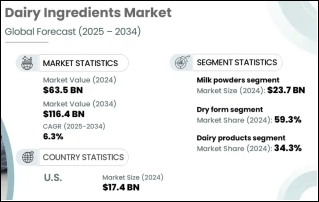
Figure 4. Diary ingredient market.
The market value of global dairy ingredients is USD 63.5 billion in 2024. It is expected to reach USD 116.4 billion within
(GMI,
). The growth has reflected the CSGR of over 6.3% as its growth is driven by innovation. The adoption of genetic modification as well as microbial fermentation have improved the milk yield and has addressed nutritious value in the products. In addition, the fortified milk market is valued at USD 119.5 billion in 2024 and is expecting enhancement till 2034. It has reflected a strong preference for increasing the nutritious value of dairy products globally.
4.2.2. Technology Has Supported in Increasing the Product Volume of Diary Sector Globally
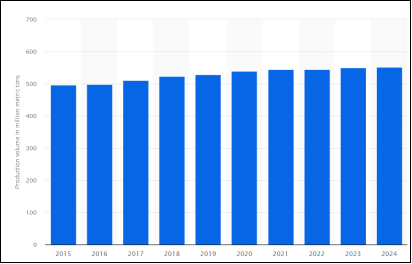
It is the advancement of technology that has significantly enhanced the global dairy production with the improvement of efficiency and yield.
The graph shows that global milk production has reached 982 million tonnes in 2023. This consistency has been maintained in 2024 making a 1.4% increase from the previous year's record
| [14] | Remtulla, R., Hagana, A., Houbby, N., Ruparell, K., Aojula, N., Menon, A., Thavarajasingam, S. G. and Meyer, E., 2021. Exploring the barriers and facilitators of psychological safety in primary care teams: a qualitative study. BMC health services research, 21(1), p. 269.
https://link.springer.com/content/pdf/10.1186/s12913-021-06232-7.pdf |
[14]
. The growth has been attained due to advancements such as genetic modification, improvement in the breeding technique and newly optimised feed formulation. The innovation has supported dairy farmers to produce more milk per cow and thus increase overall volume of production.
Figure 5. Volume of cow milk production.
4.2.3. High Input Cost Challenges Has Restricted the Adoption of Technology in Dairy Industry
It has been identified from reports that High input costs have significantly hindered the adoption of advanced technologies in the dairy industry considering the US. Despite strong demand and rising prices in 2024, dairy producers face escalating expenses in feed, labour, equipment, and interest rates. As per the USDA project reports, the average milk price has stood at $21.60 per hundred weights
. It is high in comparison to 2024 reflecting a gradual increase in operational cost. Thus, this financial pressure has limited the capability of dairy farms to invest in innovative technology. It therefore has restricted the potential for productivity gain and improvement of sustainability.
4.2.4. Imbalance in the Supply of the Product Has Increased Export of Dairy Products in Multiple Regions
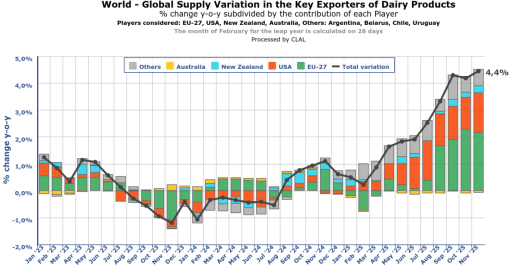
There is evidence of imbalance in domestic dairy supply and it has led to increase in exports in various regions.
Figure 6. Supply chain imbalance.
The data has evidenced that Argentina has experienced a 13% decline in milk production from January 2024 to June. It has indicated an increase in export by 10%. In the similar phase, the US has exported $8.2 billion in dairy products to Mexico, Canada and China
. It has accounted for over half of total export value. Thus, the global trend of dairy production has reflected a shortfall in production in a single market that can drive an increase in export to meet global demand.
4.2.5. Training of the Staffs Using Iot Can Improvise the Adoption of Technology in Diary Firms
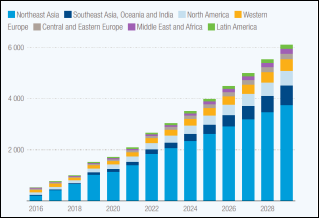
It has been understood that behind the failure of biotechnological adoption in dairy firms, there is lack of efficiency and digital skill among the staff. Training staff in Internet of Things (IoT) technologies can significantly enhance technology adoption in dairy firms.
Figure 7. Increase demand for data transmission though IoT.
IoT enables real-time monitoring of cow health, milk production, and environmental conditions, leading to improved efficiency and productivity
| [20] | William, F. K. A., 2024. Interpretivism or constructivism: Navigating research paradigms in social science research. Interpretivism or Constructivism: Navigating Research Paradigms in Social Science Research, 143(1), pp. 5. |
[20]
. Hence, investment in comprehensive training programs ensures that employees can effectively utilize IoT systems.
4.3. Discussion
4.3.1. Biotechnology Has Strengthened Global Dairy Production and Market Position
As noted in theme 1, the incorporation of biotechnology has fortified the market position of the worldwide dairy industry. Among technological advancements, genetic engineering, and microbial fermentation are the ones that can elevate the amount of milk produced while also improving its nutritional quality. Theme 2 has highlighted the fact that global milk production hit 982 million tonnes in the year
and is predicted to grow by 1.4% in
. This has allowed for the creation of both nutrient-dense product lines and a significant rise in total output. Therefore, it has proved that biotechnology is the main factor that determines the market competition and product quality and has consequently answered the first research question.
4.3.2. Economic and Supply Challenges Have Impacted the Technology Adoption and Has Expanded the Export Dynamics Worldwide
In inputs for planning feed, labour, equipment, and interest rates the high costs have been very much limited the third theme. The dairy sector has seen the situation so that there hardly anything, if at all, losses in productivity and the use of unsustainable practices. Moreover, imbalances in domestic milk supply which have led to exports going up so as to satisfy the world's demand have been discussed in theme 4. Argentina, for example, is reported to be facing a decline in production. Besides, the U.S. has been praised for its $8.2 billion dairy products sales to major markets like Mexico, Canada, and China
| [21] | Fodouop Kouam Arthur William, Interpretivism or Constructivism: Navigating Research Paradigms in Social Science Research, International Journal of Research Publication (Volume: 143, Issue: 1), https://ijrp.org/paper-detail/6086. |
[21]
. The financial constraints and supply fluctuations, which affect the technology adoption, have thus provided an answer to the second question of the study.
4.3.3. Staff Training and Digitalization Can Mitigate Supply Challenges and Enhance Technology Adoption in Dairy Firms
Theme 4 has highlighted imbalances in dairy supply that has increased export pressures Theme 5 has mentioned efficient production management by investing in staff training in IoT technologies. It can enable real-time monitoring of milk production, cow health, and environmental conditions, improving operational efficiency. Thus, by enhancing digital skills, dairy firms can better manage supply fluctuations and hence research question 3 has been addressed.
4.4. Summary
It has been detected that there is a transformative impact on the adoption of biotechnology in the dairy sector. However, challenges with the implementation of technology lies in cost pressure and imbalance in the supply chain. Therefore, digitalisation through IoT and staff training is significant to reduce barriers in transforming the dairy industry.
5. Conclusion and Recommendation
5.1. Conclusion
The study has been developed to explore the role of biotechnological techniques in the global dairy production process. Secondary qualitative data analysis has been applied to establish key findings for the research. Secondary data has evidenced that advancement of technology has increased efficiency and has boosted production. There is a challenge with cost pressure and supply chain issues that have become barriers in transformation. Again, recommendation has been raised to increase staff skill and generate IoT to attain efficiency in operations.
5.2. Linking with Objectives
The outcome of the study satisfied objective 1 of the study by exploring the impact of biotechnology in dairy firms. Objective 2 has been met by highlighting the reasons behind implementation issues in dairy product management practices. In their comparison objective 3 has been partially met with limited evidence to address cost pressure in the dairy industry.
5.3. Research Gap and Future Scope
The research has been planned with secondary data collection and primary data gathering has completely been avoided. Henceforth, the future researcher can integrate the two processes to attain more valid outcomes.
5.4. Implication of the Study
After the identification of the implementation challenges, the proposals for improving the practices can assist the dairy product management team to conduct a sustainable product development process. It will assist the researchers to get updated data on tech implementation in the dairy industry.
5.5. Recommendation
Policymakers and industry stakeholders should provide financial incentives, subsidies, or low-interest loans to offset high input costs and encourage technology integration. Further, improvement of supply chain management and infrastructure can reduce production imbalances and support stable exports.
Abbreviations
DF | Dairy Farming |
ICT | Information and Communication Technology |
GE | Genetic Engineering |
PCR | Polymerase Chain Reaction |
MB | Molecular Breeding |
R & D | Research and Development |
Acknowledgments
The successful completion of this dissertation would not have been possible without the unwavering support and guidance of many individuals and university. Special thanks go to my colleagues and fellow students, whose collaboration and constructive discussions enriched my knowledge and helped me to overcome different challenges during this process.
Author Contributions
Prajapati Pavankumar: Conceptualization, Resources, Formal analysis, Methodology, Writing – original draft, Writing – review & editing, Data curation
Conflicts of Interest
The author declares that there is no conflicts of interest regarding the publication of this study.
References
| [1] |
Almaiah, M. A., Alfaisal, R., Salloum, S. A., Hajjej, F., Shishakly, R., Lutfi, A., Alrawad, M., Al Mulhem, A., Alkhdour, T. and Al-Maroof, R. S., 2022. Measuring institutions’ adoption of artificial intelligence applications in online learning environments: integrating the innovation diffusion theory with technology adoption rate. Electronics, 11(20), p. 3291.
https://www.mdpi.com/2079-9292/11/20/3291
|
| [2] |
Bačėninaitė, D., Džermeikaitė, K. and Antanaitis, R., 2022. Global warming and dairy cattle: How to control and reduce methane emission. Animals, 12(19), p. 2687.
https://www.mdpi.com/2076-2615/12/19/2687
|
| [3] |
Darcy, A., Daniels, J., Salinger, D., Wicks, P. and Robinson, A., 2021. Evidence of human-level bonds established with a digital conversational agent: cross-sectional, retrospective observational study. JMIR Formative Research, 5(5), p. e27868.
https://formative.jmir.org/2021/5/e27868
|
| [4] |
Farm extension, 2024a. The Future of Global Dairy: Economic Trends, Regional Developments, and Market Vulnerabilities through 2030. Available at:
https://farms.extension.wisc.edu/articles/the-future-of-global-dairy-economic-trends-regional-developments-and-market-vulnerabilities-through-2030/
(Accessed: 23 October 2025).
|
| [5] |
Farms extension, 2024b. Dairy market update. Available at:
https://farms.extension.wisc.edu/articles/august-2024-dairy-market-update/
(Accessed: 23 October 2025).
|
| [6] |
Ganesha, H. R. and Aithal, P. S., 2022. How to choose an appropriate research data collection method and method choice among various research data collection methods and method choices during Ph. D. program in India. International Journal of Management, Technology, and Social Sciences, 7(2), pp. 455-489.
https://www.academia.edu/download/100063600/26._How_to_Choose_an_Appropriate_Research_Data.pdf
|
| [7] |
Gminsight, 2024. Dairy ingredient market insight. Available at:
https://www.gminsights.com/industry-analysis/dairy-ingredients-market
(Accessed: 23 October 2025).
|
| [8] |
Jafri, S. H., Adnan, K. M., Baimbill Johnson, S., Talukder, A. A., Yu, M. and Osei, E., 2024. Challenges and solutions for small dairy farms in the US: A review. Agriculture, 14(12), p. 2369.
https://www.mdpi.com/2077-0472/14/12/2369
|
| [9] |
Kurniasari, Z. and Tjahjono, H. K., 2025. The sustainability about the corporate sustainability itself (environment, social and governance): Methodological review in guidance of research onion. BIS Economics and Business, 2, pp. V225018-V225018.
https://unimma.press/conference/index.php/biseb/article/download/263/246
|
| [10] |
Nimbalkar, V., Verma, H. K. and Singh, J., 2021. Dairy farming innovations for productivity enhancement. In New Advances in the Dairy Industry. IntechOpen.
https://www.intechopen.com/chapters/79567
|
| [11] |
Orelle, A., Nikiema, A., Zakaryan, A., Albetkova, A. A., Rayfield, M. A., Peruski, L. F., Pierson, A. and Kachuwaire, O., 2021. National biosafety management system: a combined framework approach based on 15 key elements. Frontiers in Public Health, 9, p. 609107.
https://www.frontiersin.org/journals/public-health/articles/10.3389/fpubh.2021.609107/pdf
|
| [12] |
Ozili, P. K., 2025. Theories of Sustainable Development. In Sustainable Development, Humanities, and Social Sciences for Society 5.0 (pp. 1-12). IGI Global Scientific Publishing.
https://mpra.ub.uni-muenchen.de/123287/1/MPRA_paper_123287.pdf
|
| [13] |
Pregoner, J. D., 2024. Research approaches in education: A comparison of quantitative, qualitative and mixed methods. IMCC Journal of Science, 4(2), pp. 31-36.
https://hal.science/hal-04655066v1/file/Pregoner-2024.pdf
|
| [14] |
Remtulla, R., Hagana, A., Houbby, N., Ruparell, K., Aojula, N., Menon, A., Thavarajasingam, S. G. and Meyer, E., 2021. Exploring the barriers and facilitators of psychological safety in primary care teams: a qualitative study. BMC health services research, 21(1), p. 269.
https://link.springer.com/content/pdf/10.1186/s12913-021-06232-7.pdf
|
| [15] |
Sabharwal, R. and Miah, S. J., 2021. A new theoretical understanding of big data analytics capabilities in organizations: a thematic analysis. Journal of Big Data, 8(1), p. 159.
https://link.springer.com/content/pdf/10.1186/s40537-021-00543-6.pdf
|
| [16] |
Statista, 2024a. Distribution of global dairy market volume by region. Available at:
https://www.statista.com/markets/415/consumer-goods-fmcg/
(Accessed: 23 October 2025).
|
| [17] |
Statista, 2024b. Production of milk worldwide. Available at:
https://www-statista-com.roe.idm.oclc.org/statistics/263952/production-of-milk-worldwide/
|
| [18] |
The bullvine, 2024. High Input Costs Challenge U.S. Dairy Producers Despite Strong 2024 Demand and Rising Prices. Available at:
https://www.thebullvine.com/news/high-input-costs-challenge-u-s-dairy-producers-despite-strong-2024-demand-and-rising-prices/
(Accessed: 23 October 2025).
|
| [19] |
Unctad.org, 2024. Digital economy reports, 2024. Available at:
https://unctad.org/publication/digital-economy-report-2024
(Accessed: 23 October 2025).
|
| [20] |
William, F. K. A., 2024. Interpretivism or constructivism: Navigating research paradigms in social science research. Interpretivism or Constructivism: Navigating Research Paradigms in Social Science Research, 143(1), pp. 5.
|
| [21] |
Fodouop Kouam Arthur William, Interpretivism or Constructivism: Navigating Research Paradigms in Social Science Research, International Journal of Research Publication (Volume: 143, Issue: 1),
https://ijrp.org/paper-detail/6086.
|
Cite This Article
-
-
@article{10.11648/j.ijnfs.20261502.11,
  author = {Prajapati Pavankumar},
  title = {Application of Biotechnical Techniques in Dairy Production and Product Development},
  journal = {International Journal of Nutrition and Food Sciences},
  volume = {15},
  number = {2},
  pages = {25-33},
  doi = {10.11648/j.ijnfs.20261502.11},
  url = {https://doi.org/10.11648/j.ijnfs.20261502.11},
  eprint = {https://article.sciencepublishinggroup.com/pdf/10.11648.j.ijnfs.20261502.11},
  abstract = {This research explores how modern biotechnologies, such as genetic modification and molecular breeding, improve productivity, quality, and sustainability in dairy farming in response to increasing global demand, environmental challenges, and constrained natural resources. Utilising secondary qualitative data from academic literature, industry reports, and policy documents, the study employs thematic analysis to pinpoint major trends, advantages, and difficulties linked to incorporating biotechnology into dairy production systems. The results show that contemporary biotechnologies greatly enhance animal health and productivity via sophisticated genetic selection and molecular breeding methods, leading to enhanced disease resistance, better reproductive outcomes, and higher milk production, which lessens dependence on medical treatments and promotes economic viability along with environmental sustainability. Moreover, biotechnological advancements like fermentation and bio-processing improve the nutritional content, longevity, and functional characteristics of dairy items, facilitating the creation of value-added products enriched with probiotics, vitamins, and bioactive substances to satisfy the rising consumer demand for healthier food choices. Regardless of these benefits, broad implementation is still limited by elevated startup costs, infrastructure challenges, supply variability, and a lack of technical skills and digital literacy, especially among small producers. The research thus advises that decision-makers and industry participants offer financial incentives, technical assistance, and specialized training initiatives to enhance digital skills and promote the sustainable incorporation of advanced biotechnologies in the dairy industry.},
 year = {2026}
}
 Copy
|
Copy
|
 Download
-
TY  - JOUR
T1  - Application of Biotechnical Techniques in Dairy Production and Product Development
AU  - Prajapati Pavankumar
Y1  - 2026/03/05
PY  - 2026
N1  - https://doi.org/10.11648/j.ijnfs.20261502.11
DO  - 10.11648/j.ijnfs.20261502.11
T2  - International Journal of Nutrition and Food Sciences
JF  - International Journal of Nutrition and Food Sciences
JO  - International Journal of Nutrition and Food Sciences
SP  - 25
EP  - 33
PB  - Science Publishing Group
SN  - 2327-2716
UR  - https://doi.org/10.11648/j.ijnfs.20261502.11
AB  - This research explores how modern biotechnologies, such as genetic modification and molecular breeding, improve productivity, quality, and sustainability in dairy farming in response to increasing global demand, environmental challenges, and constrained natural resources. Utilising secondary qualitative data from academic literature, industry reports, and policy documents, the study employs thematic analysis to pinpoint major trends, advantages, and difficulties linked to incorporating biotechnology into dairy production systems. The results show that contemporary biotechnologies greatly enhance animal health and productivity via sophisticated genetic selection and molecular breeding methods, leading to enhanced disease resistance, better reproductive outcomes, and higher milk production, which lessens dependence on medical treatments and promotes economic viability along with environmental sustainability. Moreover, biotechnological advancements like fermentation and bio-processing improve the nutritional content, longevity, and functional characteristics of dairy items, facilitating the creation of value-added products enriched with probiotics, vitamins, and bioactive substances to satisfy the rising consumer demand for healthier food choices. Regardless of these benefits, broad implementation is still limited by elevated startup costs, infrastructure challenges, supply variability, and a lack of technical skills and digital literacy, especially among small producers. The research thus advises that decision-makers and industry participants offer financial incentives, technical assistance, and specialized training initiatives to enhance digital skills and promote the sustainable incorporation of advanced biotechnologies in the dairy industry.
VL  - 15
IS  - 2
ER  -
Copy
|
Download





 Share This Article
 Twitter
 Linked In
 Facebook