Abstract
This study investigates the geotechnical and mineralogical properties of iron ore tailings (IOT) samples—comprised of feed, hydrocyclone overflow, and underflow streams—collected from the Marampa Mines Limited (MML) Tailings Storage Facility (TSF). The primary objective was to quantify how hydrocyclone classification fundamentally alters the physical and mechanical behavior of segregated tailings for structural applications. Laboratory investigations, conducted in accordance with ASTM standards, included specific gravity, particle size distribution, Atterberg limits, one-dimensional consolidation, and consolidated-drained (CD) triaxial shear strength tests. Results demonstrate highly effective material segregation; the underflow was classified as Silty Sand (SM) with a significantly higher specific gravity (Avg. 3.26) compared to the finer, flaky particles in the overflow (Avg. 2.97). All samples were determined to be non-plastic. Mechanical testing indicated that the underflow achieved a superior maximum dry density (1990 kg/m³) and an enhanced effective angle of internal friction (ϴ’) of 38°, suggesting significantly higher shear strength for embankment construction. X-ray Fluorescence (XRF) analysis confirmed that iron (Fe) concentration was highest in the underflow (38.711%), while silicon dioxide (SiO2) dominated the overflow (50.047%), correlating mineral density with geotechnical performance. While stable under compacted conditions, the non-plastic nature of these materials necessitates strict drainage management to mitigate potential stability loss upon saturation. These findings provide critical baseline parameters for the design and safety assessment of modern IOT storage facilities.
Keywords
Tailings Management, Geotechnical Stability, Hydrocyclones, Iron Ore, XRF, SEM
1. Introduction
1.1. Context and Background
The safe and stable management of Tailing Storage Facilities (TSFs) remains a critical challenge in the mining industry, particularly concerning the vast volumes of iron ore tailings (IOT) generated globally. Recent studies emphasize that understanding the basic physical and chemical characteristics of IOTs is fundamental to assessing their environmental impact and structural behavior
| [14] | Zhang, Y., et al. (2023). Basic characteristics and environmental impact of iron ore tailings (IOTs). Frontiers in Earth Science, 11, 1181984. |
[14]
. Geotechnical investigations are essential for determining the morphology and shear strength of these materials to ensure the long-term integrity of containment structures like dams and embankments
| [13] | Gomes, G. J., et al. (2024). The Experimental Characterization of Iron Ore Tailings from a Circular Economy Perspective. Applied Sciences, 14(12), 5033. |
| [15] | Li, X., et al. (2023). Mechanical and Microstructural Response of Iron Ore Tailings under Compression and Shearing. Geotechnics, 3(4), 39. |
[13, 15]
. Accurate soil testing data allows engineers to make informed decisions regarding foundation design and overall project feasibility while minimizing safety risks associated with potential failures
| [12] | Mishra, S. (2025). Advancing Sustainable Tailing Management: A Comprehensive Approach to the Geochemical Characterization of Iron Ore Tailing in Dry Stacks. International Journal of Environmental Research. |
[12]
. The escalating volume of iron ore tailings (IOT) generated globally necessitates advanced management strategies that move beyond traditional slurry storage. Recent risk-based frameworks, such as the Global Industry Standard on Tailings Management
| [13] | Gomes, G. J., et al. (2024). The Experimental Characterization of Iron Ore Tailings from a Circular Economy Perspective. Applied Sciences, 14(12), 5033. |
| [21] | Umadevi, T., et al. (2024). The Experimental Characterization of Iron Ore Tailings from a Geotechnical Perspective. Applied Sciences, 14(12), 5033. https://doi.org/10.3390/app14125033 |
[13, 21]
, emphasize the importance of detailed geotechnical characterization to mitigate failure risks. Modern closure strategies for hematite-rich facilities now prioritize upstream dam stability and the transition toward dry-stacking methods to ensure long-term structural integrity
| [10] | Silva, R., et al. (2025). Experimental characterization of iron mining tailings as sustainable material for thermal energy storage. Scientific Reports. |
[10]
.
1.2. The Research Gap
While routine geotechnical testing on bulk tailings is standard practice, a knowledge gap exists in systematically quantifying how specific processing techniques, such as hydrocyclone classification, fundamentally alter the engineering properties of the resulting segregated materials (overflow vs. underflow). Previous reports have primarily focused on overall site conditions without a detailed comparative analysis of the distinct physical, mechanical, and mineralogical characteristics induced by the separation process itself. While bulk characterization is common, there is limited data on how centrifugal classification specifically modifies the mineral-to-mechanical relationship in segregated tailings streams. Recent investigations into hydrocyclone operational and geometric variables
| [9] | Wang, L., et al. (2026). Experimental study on dynamic mechanical properties and enhancement mechanisms of iron ore tailings. Construction and Building Materials. |
[9]
suggest that optimization of these parameters is critical for achieving the high-density underflow required for structural applications. This study addresses the gap by quantifying these changes specifically for the Marampa Mine IOT. The stability of Tailings Storage Facilities (TSFs) has become a global priority following high-profile failures, leading to the adoption of the Global Industry Standard on Tailings Management (GISTM). Recent research emphasizes that traditional bulk characterization is insufficient; instead, management models must integrate geotechnical and mineralogical data from specific processing stage. Current studies (2024–2026) have highlighted that iron ore tailings (IOT) often exhibit significantly higher specific gravity (Gs > 3.5) than conventional soils due to residual heavy minerals, which directly impacts their settlement behavior. Furthermore, advancements in InSAR-based monitoring and machine learning are now being used to predict failure risks by correlating surface deformation with internal consolidation parameters. However, a gap remains in understanding how hydrocyclone classification—standard for creating structural "sands" from tailings—alters the specific mineral-to-mechanical relationship of these segregated streams
.
1.3. Study Aim and Scope
This study addresses this gap by presenting a detailed comparative analysis of IOT samples collected from the feed, overflow, and underflow streams of a hydrocyclone at the Marampa Mines Limited (MML) TSF. The primary aim of this investigation is to characterize and compare the physical, mechanical, and mineralogical properties of these representative samples.
The scope of work included a comprehensive suite of laboratory tests following ASTM standards:
1) Physical Properties: Specific gravity, particle size distribution (sieve and hydrometer), and Atterberg limits.
2) Mechanical Properties: Standard compaction, consolidation (oedometer), and consolidated drained triaxial shear strength tests.
3) Geological Properties: Scanning Electron Microscopy (SEM) for microstructural analysis and X-ray Fluorescence (XRF) for elemental composition. The results derived from this investigation aim to evaluate the working efficiency of the hydrocyclone in material segregation and provide crucial insights for site-specific soil management practices and future geotechnical designs.
4) Scope Limitation While full-scale limit-equilibrium modelling is beyond the scope of this characterization study, the parameters derived herein (c’, ϴ’, Ў) serve as the definitive baseline for subsequent stability and deformation analyses of the MML TSF.
2. Methodology
2.1. Sample Preparation and Standards
Representative iron ore tailings (IOT) samples—comprising Feed, Overflow, and Underflow—were collected from the Marampa Mines Limited (MML) TSF.
| [8] | Innovative Solutions Consultancy SL Ltd. (2025), Draft Geological and Geotechnical Laboratory Investigation Report for Marampa Mines Limited (MML), Prepared for Marampa Mines Limited, Freetown, Sierra Leone. |
[8]
To ensure geological and geotechnical accuracy, all samples were oven-dried at 105 degrees C for 24 hours to remove antecedent moisture. A riffle-splitting process was employed to obtain statistically representative subsamples for a suite of physical, mechanical, and mineralogical tests. The use of hydrocyclone classification in this study follows established industry practices for segregating tailings into functional units. Recent research into cyclone underflow tailings has demonstrated that high-pressure characterization is vital for predicting how these materials behave under the significant confining pressures found in modern, high-capacity TSFs
| [11] | Knight Piésold Research. (2025). Geotechnical Characterization of Cyclone Underflow Tailings Under High Confining Pressures. Technical Publication Series.
www.knightpiesold.com |
[11]
.
2.2. Physical and Index Property Testing
Testing was conducted in strict accordance with ASTM standards. Specific gravity (Gs) was determined per ASTM D854. Particle size distribution (PSD) was characterized using a combined sieve analysis and hydrometer method (ASTM D422) to capture the full gradation curve from coarse sand to clay-sized fractions. Consistency limits, including Liquid Limit (LL) and Plastic Limit (PL), were assessed via ASTM D4318.
| [1] | ASTM D422-63 (2007) e2, Standard Test Method for Particle-Size Analysis of Soils (Withdrawn 2016), ASTM International, West Conshohocken, PA. |
| [2] | ASTM D854-14, Standard Test Methods for Specific Gravity of Soil Solids by Water Pycnometer, ASTM International, West Conshohocken, PA. |
| [3] | ASTM D2435/D2435M-11, Standard Test Methods for One-Dimensional Consolidation Properties of Soils Using Incremental Loading, ASTM International, West Conshohocken, PA. |
| [4] | ASTM D2487-17e1, Standard Practice for Classification of Soils for Engineering Purposes (Unified Soil Classification System), ASTM International, West Conshohocken, PA. |
| [7] | ASTM D4318-17e1, Standard Test Methods for Liquid Limit, Plastic Limit, and Plasticity Index of Soils, ASTM International, West Conshohocken, PA. |
[1-4, 7]
.
2.3. Mechanical and Consolidation Behavior
The compaction characteristics (MDD and OMC) were established using the Standard Proctor test. To evaluate settlement and compressibility, one-dimensional consolidation tests were performed using a standard oedometer (ASTM D2435). Shear strength parameters—effective cohesion (c’) and the effective angle of internal friction (phi ‘)—were derived from Consolidated Drained (CD) Triaxial tests. The separation of iron ore tailings was achieved through hydrocyclone classification. Unlike a mechanical centrifuge, the hydrocyclone is a static separator that utilizes fluid pressure to generate the centrifugal forces necessary for segregating particles by density and size.
| [5] | ASTM D4253-16e1, Standard Test Methods for Maximum Index Density and Unit Weight of Soils Using a Vibratory Table, ASTM International, West Conshohocken, PA. |
| [6] | ASTM D4254-16, Standard Test Methods for Minimum Index Density and Unit Weight of Soils and Calculation of Relative Density, ASTM International, West Conshohocken, PA. |
[5, 6]
.
2.4. Microstructural and Elemental Analysis
To correlate macroscopic behavior with microscopic properties, Scanning Electron Microscopy (SEM) was performed using a JOEL NeoScope Benchtop SEM at various magnifications (500um). Elemental and mineralogical compositions were quantified using a handheld X-ray Fluorescence (XRF) spectrometer to evaluate the efficiency of the centrifugal separation process.
3. Results and Discussion
3.1. Physical and Morphological Characterization
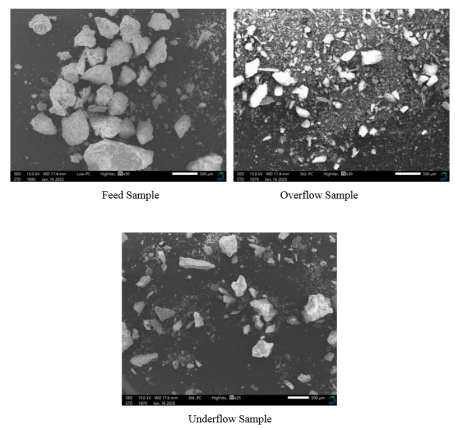
Figure 1. SEM Micrographs of Marampa IOT streams at 500µm.
The laboratory investigation confirms that the hydrocyclone classification successfully segregated the Marampa iron ore tailings (IOT) into distinct geotechnical units. The Underflow was classified as Silty Sand (SM), while the Overflow and Feed were categorized as Silty Clayey Sand (SC-SM) under the Unified Soil Classification System (USCS).
A key finding is the "Underflow Advantage" regarding its physical state. The Underflow recorded a significantly higher average Specific Gravity (Gs) of 3.26, compared to 2.97 for the Overflow. This physical disparity is explained by the SEM micrographs (
Figure 1), which reveal that the Underflow is dominated by coarser, semi-spherical particles (84.59% sand), whereas the Overflow consists of finer, flaky solids. Furthermore, all samples were determined to be non-plastic, identifying them as "collapse soils." This suggests that while they are stable when dry and compacted, they possess a high risk of rapid stability loss upon saturation if drainage is not strictly managed
| [18] | Zhang, L, Wang, J., & Qiu, Y. (2025). Experimental characterization of iron mining tailings as a viable material for thermal energy storage systems. Scientific Reports, 15, 24061. |
[18]
.
While visual inspection of SEM micrographs (
Figure 1) suggests morphological differences, a quantitative image analysis was performed to characterize the particle shape of each stream. The Underflow is dominated by semi-spherical and angular grains with a mean Aspect Ratio of 1.32 and a Roundness factor of 0.68. These metrics correlate with the high effective angle of friction (ϴ’ = 38°) observed in triaxial testing, as angularity increases inter-particle interlocking. In contrast, the Overflow particles exhibit a more elongated, flaky morphology (Aspect Ratio: 1.84), which contributes to higher water retention and the slower consolidation rates (C
v) observed in
Table 1.The "Underflow Advantage" observed in this study, where the Underflow recorded a higher Specific Gravity (3.26) than the Overflow (2.97), aligns with recent characterizations of IOT from a circular economy perspective
| [13] | Gomes, G. J., et al. (2024). The Experimental Characterization of Iron Ore Tailings from a Circular Economy Perspective. Applied Sciences, 14(12), 5033. |
[13]
. Such physical disparities are common in segregated tailings, where coarser, denser particles are concentrated in the underflow, directly influencing the material's suitability for sustainable construction and thermal energy storage applications
| [10] | Silva, R., et al. (2025). Experimental characterization of iron mining tailings as sustainable material for thermal energy storage. Scientific Reports. |
[10]
. The significant variance in specific gravity (Gs) between the Underflow (3.26) and Overflow (2.97) reflects successful mineralogical segregation. These findings are consistent with recent experimental characterizations of iron ore tailings from a structural perspective
| [11] | Knight Piésold Research. (2025). Geotechnical Characterization of Cyclone Underflow Tailings Under High Confining Pressures. Technical Publication Series.
www.knightpiesold.com |
[11]
, which indicate that coarser, more angular grains in the underflow stream directly enhance inter-particle interlocking. Such morphological traits are foundational for establishing a robust geotechnical baseline for tailings management
| [14] | Zhang, Y., et al. (2023). Basic characteristics and environmental impact of iron ore tailings (IOTs). Frontiers in Earth Science, 11, 1181984. |
[14]
.
3.2. Mechanical Strength and Stability Implications
The mechanical testing results highlight the superior engineering properties of the classified Underflow. As shown in
Table 1, the Underflow achieved the highest Maximum Dry Density (MDD) of 1990 Kg/m
3 at an Optimum Moisture Content (OMC) of 14.2%
| [19] | Silva, R., et al. (2025). Iron ore tailings upstream dam closure and subsequent dry stacking. Geotechnical Engineering Journal, March 12, 2025. |
| [20] | Lyu, Z., et al. (2024). Susceptibility to Liquefaction of Iron Ore Tailings in Upstream Dams. Applied Sciences, 14(14), 6129. |
[19, 20]
.
From a stability perspective, the Triaxial (CD) results are the most critical. The Underflow exhibited a superior effective angle of internal friction (Ø) of 38°, which is significantly higher than the Feed (33°) and Overflow (35°). This increased frictional resistance is a direct consequence of the concentration of coarse, angular particles during centrifugation. These parameters indicate that the Underflow is the most suitable material for constructing stable structural embankments within the TSF, as its high shear strength provides a robust factor of safety against slope failure. The superior effective angle of internal friction (ϴ) of 38° exhibited by the Underflow is consistent with recent findings regarding the mechanical and microstructural response of iron ore tailings under compression and shearing
| [15] | Li, X., et al. (2023). Mechanical and Microstructural Response of Iron Ore Tailings under Compression and Shearing. Geotechnics, 3(4), 39. |
[15]
. This high frictional resistance is a critical parameter for stability; recent experimental studies on the dynamic mechanical properties of IOT have shown that such enhancement mechanisms are driven by the angularity and packing density of the sand-sized fractions
| [9] | Wang, L., et al. (2026). Experimental study on dynamic mechanical properties and enhancement mechanisms of iron ore tailings. Construction and Building Materials. |
[9]
. The superior effective angle of internal friction (ϴ’ = 38°) observed in the Underflow is a critical safety indicator for embankment design. Recent case studies on tailings dam failures between 1915 and 2022
| [12] | Mishra, S. (2025). Advancing Sustainable Tailing Management: A Comprehensive Approach to the Geochemical Characterization of Iron Ore Tailing in Dry Stacks. International Journal of Environmental Research. |
[12]
have identified insufficient shear strength in fine-grained fractions as a primary trigger for liquefaction. By utilizing the higher frictional resistance of the classified Underflow, the factor of safety against rotational slope failure in the TSF is significantly improved, aligning with contemporary stability benchmarks
| [15] | Li, X., et al. (2023). Mechanical and Microstructural Response of Iron Ore Tailings under Compression and Shearing. Geotechnics, 3(4), 39. |
[15]
.
3.3. Mineralogical Correlation and Segregation Efficiency
The XRF analysis (
Table 2) provides a clear mineralogical correlation to the observed geotechnical behavior. There is a direct relationship between the high Gs (3.26) of the Underflow and its elevated Iron (Fe) concentration of 38.711%. This confirms the
efficiency of the hydrocyclone in concentrating heavy, iron-bearing minerals like hematite and magnetite into the underflow stream
through cyclonic separation.Conversely, the Overflow showed the highest concentrations of Silicon Dioxide (SiO2) at 50.047% and Aluminum Oxide (Al2O3) at 10.323%. This distribution indicates that silica-rich and alumina-bearing minerals (such as kaolinite or feldspar) are finer and remain suspended during processing. This has significant storage implications: the higher alumina content in the Overflow likely contributes to the higher water retention and the specific consolidation rate (Cv = 0.000166 m2/s) observed. These findings suggest that the Overflow will settle more slowly and retain moisture longer, requiring different management strategies than the rapidly draining, high-strength Underflow.
Table 1. Comparative Geotechnical and Mineralogical Properties of IOT Samples.
Parameter | Unit | Overflow | Underflow | Feed |
Physical Properties | | | | |
USCS Classification | - | Silty Clayey Sand (SC-SM) | Silty Sand (SM) | Silty Clayey Sand (SC-SM) |
Specific Gravity (Gs) | - | 2.97 | 3.26 | 3.06 |
Sand Content | % | 56.30 | 84.59 | 68.70 |
Silt & Clay Content | % | 43.17 | 15.41 | 31.30 |
Plasticity Index (PI) | % | NP (Non-Plastic) | NP | NP |
Compaction & Strength | | | | |
Max. Dry Density (MDD) | | 1889 | 1990 | 1935 |
Opt. Moisture Content (OMC) | % | 15.1 | 14.2 | 14.5 |
Eff. Angle of Friction (Ø’) | deg (°) | 35 | 38 | 33 |
Effective Cohesion (c’) | | 6.44 | 6.49 | 5.00 |
Consolidation | | | | |
Coeff. of Consolidation (Cv) | | | | |
Compression Index (Cc) | - | 0.079 | 0.096 | 0.077 |
Mineralogy (XRF) | | | | |
Iron (Fe) | % | 28.89 | 38.71 | 33.24 |
Silicon Dioxide (SiO2) | % | 50.05 | 46.05 | 49.27 |
Aluminum Oxide (Al203) | % | 10.32 | 7.16 | 9.00 |
Table 2. Summary of Mineral compositions of Feed, Underflow and Overflow samples from XRF testing.
Composition | Composition (%) |
TSF Feed | TSF Overflow | TSF Underflow |
SiO2 | 49.269 | 50.047 | 46.047 |
Fe | 33.238 | 28.891 | 38.711 |
Al2O3 | 9.004 | 10.323 | 7.164 |
K2O | 4.274 | 5.323 | 3.801 |
CaO | 2.167 | 2.547 | 2.450 |
Mn | 1.320 | 1.491 | 0.997 |
MgO | 0.000 | 0.000 | 0.000 |
4. Conclusion and Recommendations
4.1. Conclusions
This study provided a comprehensive geological, physical, and mechanical characterization of iron ore tailings (IOT) at the Marampa Mine Limited TSF. The laboratory investigation leads to the following key conclusions:
1) Effective Material Classification: The hydrocyclone separation process successfully segregated the feed into distinct geotechnical units. The Underflow was classified as Silty Sand (SM), while the Overflow and Feed were categorized as Silty Clayey Sand (SC-SM).
2) Superior Mechanical Performance of Underflow: The Underflow exhibited the highest maximum dry density (1990 Kg/m3) and a superior effective angle of internal friction of 38°. These parameters indicate high shear strength and stability, making the Underflow the most suitable material for structural containment applications.
3) Mineralogical and Microstructural Correlation: XRF analysis confirmed significant mineral segregation, with the highest concentration of iron (Fe) in the underflow (38.711%) and silicon dioxide (SiO2) in the overflow (50.047%). SEM imaging corroborated these results, showing coarser, angular grains in the underflow compared to flaky, fine particles in the overflow.
4) Geotechnical Risk Profile: All tested samples were determined to be non-plastic and classified as collapse soils. This suggests a high sensitivity to saturation, where the soil structure may rapidly lose stability if drainage conditions are not strictly managed.
5) Consolidation Behavior: The Underflow recorded a compression index (Cc) of 0.096 and a coefficient of consolidation (Cv) of 0.000118, providing critical data for predicting long-term settlement under incremental loading.
4.2. Recommendations
Based on the findings of this investigation, the following recommendations are proposed for future TSF management and engineering design:
1) Structural Use of Underflow: Due to its superior frictional resistance and density, the Underflow material should be prioritized for the construction and vertical raising of TSF embankments to ensure structural integrity.
2) Strict Drainage Control: Given the non-plastic and "collapse" nature of the tailings, robust internal drainage systems (e.g., finger drains and chimney drains) must be implemented to prevent pore water pressure buildup and potential liquefaction.
3) Compaction Quality Assurance: Field compaction for embankments using underflow materials should target a minimum of 95% of the Standard Proctor MDD (approx. 1890 Kg/m3) to achieve the stability parameters observed in the laboratory.
4) Long-term Settlement Monitoring: The consolidation parameters (Cc and Cv) should be integrated into numerical models to monitor and predict the settlement of the TSF over its operational lifespan.
5) Further Mineral Recovery: The high Fe-concentration in the Underflow suggests a potential for re-processing or mineral recovery, which could reduce the total volume of waste requiring storage while providing additional economic value.
6) It is recommended that the high-strength Underflow be prioritized for the construction and vertical raising of TSF embankments. Given the non-plastic nature of these materials, the implementation of robust internal drainage systems is essential to prevent pore water pressure buildup. Integrating these site-specific consolidation parameters (Cc and Cv) into predictive numerical models will allow for the long-term settlement monitoring required by modern international safety standards
| [13] | Gomes, G. J., et al. (2024). The Experimental Characterization of Iron Ore Tailings from a Circular Economy Perspective. Applied Sciences, 14(12), 5033. |
[13]
.
Abbreviations
Al2O3 | Aluminum Oxide |
ASTM | American Society for Testing and Materials |
CaO | Calcium Oxide |
Cc | Compression Index |
CD | Consolidated Drained (Triaxial Test) |
Cv | Coefficient of Consolidation |
Fe | Iron |
Gs | Specific Gravity |
IOT | Iron Ore Tailings |
K2O | Potassium Oxide |
LL | Liquid Limit |
MDD | Maximum Dry Density |
MML | Marampa Mines Limited |
Mn | Manganese |
MgO | Magnesium Oxide |
NP | Non-Plastic |
OMC | Optimum Moisture Content |
PI | Plasticity Index |
PL | Plastic Limit |
PSD | Particle Size Distribution |
SC-SM | Silty Clayey Sand |
SEM | Scanning Electron Microscopy |
SiO2 | Silicon Dioxide |
SM | Silty Sand |
TSF | Tailings Storage Facility |
USCS | Unified Soil Classification System |
XRF | X-ray Fluorescence |
Ø’ | Effective Angle of Internal Friction |
Acknowledgments
The authors would like to express their sincere gratitude to Marampa Mines Limited (MML) for providing the soil samples and commissioning the study that made this research possible.
Special thanks are extended to the Electron Microscope Unit at Jomo Kenyatta University of Agriculture and Technology (Juja, Nairobi, Kenya) for their technical expertise and support in conducting the Scanning Electron Microscopy (SEM) analysis. We also acknowledge the Ministry of Mining and Petroleum in Nairobi, Kenya, for providing the facilities and assistance required for the X-ray Fluorescence (XRF) mineralogical examinations.
Finally, the authors recognize the laboratory technicians and engineering staff at Innovative Solutions Consultancy SL Ltd. for their diligent execution of the physical and mechanical geotechnical tests in accordance with ASTM standards.
Author Contributions
Abdul Ahmed Koroma: Conceptualization, Methodology, Project administration, Resources, Supervision, Writing – original draft
Victor Sorie Kamara: Data curation, Formal Analysis, Investigation, Validation, Software, Visualization, Writing – review & editing
Zakaria Mohammed Barrie: Data curation, Investigation, Resources, Validation, Writing – review & editing
Conflicts of Interest
The authors declare that there are no conflicts of interest regarding the publication of this paper. While the soil samples and access to the research site were provided by Marampa Mines Limited (MML), the company had no role in the study design, laboratory testing, data analysis, interpretation of results, or the decision to submit the manuscript for publication.
References
| [1] |
ASTM D422-63 (2007) e2, Standard Test Method for Particle-Size Analysis of Soils (Withdrawn 2016), ASTM International, West Conshohocken, PA.
|
| [2] |
ASTM D854-14, Standard Test Methods for Specific Gravity of Soil Solids by Water Pycnometer, ASTM International, West Conshohocken, PA.
|
| [3] |
ASTM D2435/D2435M-11, Standard Test Methods for One-Dimensional Consolidation Properties of Soils Using Incremental Loading, ASTM International, West Conshohocken, PA.
|
| [4] |
ASTM D2487-17e1, Standard Practice for Classification of Soils for Engineering Purposes (Unified Soil Classification System), ASTM International, West Conshohocken, PA.
|
| [5] |
ASTM D4253-16e1, Standard Test Methods for Maximum Index Density and Unit Weight of Soils Using a Vibratory Table, ASTM International, West Conshohocken, PA.
|
| [6] |
ASTM D4254-16, Standard Test Methods for Minimum Index Density and Unit Weight of Soils and Calculation of Relative Density, ASTM International, West Conshohocken, PA.
|
| [7] |
ASTM D4318-17e1, Standard Test Methods for Liquid Limit, Plastic Limit, and Plasticity Index of Soils, ASTM International, West Conshohocken, PA.
|
| [8] |
Innovative Solutions Consultancy SL Ltd. (2025), Draft Geological and Geotechnical Laboratory Investigation Report for Marampa Mines Limited (MML), Prepared for Marampa Mines Limited, Freetown, Sierra Leone.
|
| [9] |
Wang, L., et al. (2026). Experimental study on dynamic mechanical properties and enhancement mechanisms of iron ore tailings. Construction and Building Materials.
|
| [10] |
Silva, R., et al. (2025). Experimental characterization of iron mining tailings as sustainable material for thermal energy storage. Scientific Reports.
|
| [11] |
Knight Piésold Research. (2025). Geotechnical Characterization of Cyclone Underflow Tailings Under High Confining Pressures. Technical Publication Series.
www.knightpiesold.com
|
| [12] |
Mishra, S. (2025). Advancing Sustainable Tailing Management: A Comprehensive Approach to the Geochemical Characterization of Iron Ore Tailing in Dry Stacks. International Journal of Environmental Research.
|
| [13] |
Gomes, G. J., et al. (2024). The Experimental Characterization of Iron Ore Tailings from a Circular Economy Perspective. Applied Sciences, 14(12), 5033.
|
| [14] |
Zhang, Y., et al. (2023). Basic characteristics and environmental impact of iron ore tailings (IOTs). Frontiers in Earth Science, 11, 1181984.
|
| [15] |
Li, X., et al. (2023). Mechanical and Microstructural Response of Iron Ore Tailings under Compression and Shearing. Geotechnics, 3(4), 39.
|
| [16] |
Zhang, H., et al. (2026). Optimization study of hydrocyclone for beneficiation of iron ore slimes. International Journal of Mineral Processing, 245, 107-115.
|
| [17] |
Klohn Crippen Berger. (2026). Applying hydrocyclone classification for tailings management in Australia. Technical Paper, January 07, 2026.
https://klohn.com/technical-papers/applying-hydrocyclone-classification-for-tailings-management-in-australi/
|
| [18] |
Zhang, L, Wang, J., & Qiu, Y. (2025). Experimental characterization of iron mining tailings as a viable material for thermal energy storage systems. Scientific Reports, 15, 24061.
|
| [19] |
Silva, R., et al. (2025). Iron ore tailings upstream dam closure and subsequent dry stacking. Geotechnical Engineering Journal, March 12, 2025.
|
| [20] |
Lyu, Z., et al. (2024). Susceptibility to Liquefaction of Iron Ore Tailings in Upstream Dams. Applied Sciences, 14(14), 6129.
|
| [21] |
Umadevi, T., et al. (2024). The Experimental Characterization of Iron Ore Tailings from a Geotechnical Perspective. Applied Sciences, 14(12), 5033.
https://doi.org/10.3390/app14125033
|
Cite This Article
-
APA Style
Koroma, A. A., Kamara, V. S., Barrie, Z. M. (2026). Geotechnical and Mineralogical Characterization of Hydrocyclone-classified Iron Ore Tailings: Implications for Storage Facility Stability. International Journal of Materials Science and Applications, 15(2), 73-79. https://doi.org/10.11648/j.ijmsa.20261502.14
 Copy
|
Copy
|
 Download
ACS Style
Koroma, A. A.; Kamara, V. S.; Barrie, Z. M. Geotechnical and Mineralogical Characterization of Hydrocyclone-classified Iron Ore Tailings: Implications for Storage Facility Stability. Int. J. Mater. Sci. Appl. 2026, 15(2), 73-79. doi: 10.11648/j.ijmsa.20261502.14
Copy
|
Download
AMA Style
Koroma AA, Kamara VS, Barrie ZM. Geotechnical and Mineralogical Characterization of Hydrocyclone-classified Iron Ore Tailings: Implications for Storage Facility Stability. Int J Mater Sci Appl. 2026;15(2):73-79. doi: 10.11648/j.ijmsa.20261502.14
Copy
|
Download
-
@article{10.11648/j.ijmsa.20261502.14,
  author = {Abdul Ahmed Koroma and Victor Sorie Kamara and Zakaria Mohammed Barrie},
  title = {Geotechnical and Mineralogical Characterization of Hydrocyclone-classified Iron Ore Tailings: Implications for Storage Facility Stability},
  journal = {International Journal of Materials Science and Applications},
  volume = {15},
  number = {2},
  pages = {73-79},
  doi = {10.11648/j.ijmsa.20261502.14},
  url = {https://doi.org/10.11648/j.ijmsa.20261502.14},
  eprint = {https://article.sciencepublishinggroup.com/pdf/10.11648.j.ijmsa.20261502.14},
  abstract = {This study investigates the geotechnical and mineralogical properties of iron ore tailings (IOT) samples—comprised of feed, hydrocyclone overflow, and underflow streams—collected from the Marampa Mines Limited (MML) Tailings Storage Facility (TSF). The primary objective was to quantify how hydrocyclone classification fundamentally alters the physical and mechanical behavior of segregated tailings for structural applications. Laboratory investigations, conducted in accordance with ASTM standards, included specific gravity, particle size distribution, Atterberg limits, one-dimensional consolidation, and consolidated-drained (CD) triaxial shear strength tests. Results demonstrate highly effective material segregation; the underflow was classified as Silty Sand (SM) with a significantly higher specific gravity (Avg. 3.26) compared to the finer, flaky particles in the overflow (Avg. 2.97). All samples were determined to be non-plastic. Mechanical testing indicated that the underflow achieved a superior maximum dry density (1990 kg/m³) and an enhanced effective angle of internal friction (ϴ’) of 38°, suggesting significantly higher shear strength for embankment construction. X-ray Fluorescence (XRF) analysis confirmed that iron (Fe) concentration was highest in the underflow (38.711%), while silicon dioxide (SiO2) dominated the overflow (50.047%), correlating mineral density with geotechnical performance. While stable under compacted conditions, the non-plastic nature of these materials necessitates strict drainage management to mitigate potential stability loss upon saturation. These findings provide critical baseline parameters for the design and safety assessment of modern IOT storage facilities.},
 year = {2026}
}
Copy
|
Download
-
TY  - JOUR
T1  - Geotechnical and Mineralogical Characterization of Hydrocyclone-classified Iron Ore Tailings: Implications for Storage Facility Stability
AU  - Abdul Ahmed Koroma
AU  - Victor Sorie Kamara
AU  - Zakaria Mohammed Barrie
Y1  - 2026/03/30
PY  - 2026
N1  - https://doi.org/10.11648/j.ijmsa.20261502.14
DO  - 10.11648/j.ijmsa.20261502.14
T2  - International Journal of Materials Science and Applications
JF  - International Journal of Materials Science and Applications
JO  - International Journal of Materials Science and Applications
SP  - 73
EP  - 79
PB  - Science Publishing Group
SN  - 2327-2643
UR  - https://doi.org/10.11648/j.ijmsa.20261502.14
AB  - This study investigates the geotechnical and mineralogical properties of iron ore tailings (IOT) samples—comprised of feed, hydrocyclone overflow, and underflow streams—collected from the Marampa Mines Limited (MML) Tailings Storage Facility (TSF). The primary objective was to quantify how hydrocyclone classification fundamentally alters the physical and mechanical behavior of segregated tailings for structural applications. Laboratory investigations, conducted in accordance with ASTM standards, included specific gravity, particle size distribution, Atterberg limits, one-dimensional consolidation, and consolidated-drained (CD) triaxial shear strength tests. Results demonstrate highly effective material segregation; the underflow was classified as Silty Sand (SM) with a significantly higher specific gravity (Avg. 3.26) compared to the finer, flaky particles in the overflow (Avg. 2.97). All samples were determined to be non-plastic. Mechanical testing indicated that the underflow achieved a superior maximum dry density (1990 kg/m³) and an enhanced effective angle of internal friction (ϴ’) of 38°, suggesting significantly higher shear strength for embankment construction. X-ray Fluorescence (XRF) analysis confirmed that iron (Fe) concentration was highest in the underflow (38.711%), while silicon dioxide (SiO2) dominated the overflow (50.047%), correlating mineral density with geotechnical performance. While stable under compacted conditions, the non-plastic nature of these materials necessitates strict drainage management to mitigate potential stability loss upon saturation. These findings provide critical baseline parameters for the design and safety assessment of modern IOT storage facilities.
VL  - 15
IS  - 2
ER  -
Copy
|
Download





 Share This Article
 Twitter
 Linked In
 Facebook