Research Article | | Peer-Reviewed

Double Burden of Tuberculosis-HIV Co-infection and Drug Resistance in the Post-Conflict Far-North Region of Cameroon

Received: 17 July 2026     Accepted: 3 August 2026     Published: 9 October 2026
Views:       Downloads:
Abstract

In Cameroon, the Far-north region counts as one of the ten regions that lacks data’s concerning tuberculosis dynamics. Subject to national insecurity few years ago, some of the direct consequences include promiscuity, poverty, under diagnosis, treatment absence, leading to high burden of tuberculosis (TB). The present research was conducted across the Far-North Region of Cameroon for the first time, to investigate pulmonary tuberculosis among affected TB patients. Sputum specimens were collected following a rigorous questionnaire‑based investigation and HIV screening test. The specimens were subjected to microscopic examination, followed by culture. Strains of M. tuberculosis (MTB) complex isolated were tested for susceptibility to antibiotics and molecular detection of drug resistance (DR) was performed with MTB/DRplus. Between May 2022 to December 2025, 213 questionnaires were administered to randomly selected participants at the Maroua Regional Hospital, Mokolo and Koza District Hospitals, Koza Adventist Hospital and Minawao Health Center. Among these included participants, 146 of the 191 sputum samples were confirmed positive for M. tuberculosis complex, yielding a TB positivity rate of 76.4%. HIV seroprevalence of 13.6%, was noted and TB-HIV co-infection rate was 9.9%. Tuberculosis was significantly associated to male sex (p = 0.007), urban residence (p = 0.049), occupational activity primarily in the agricultural sector (p = 0.021) and infection status (p<0.001). 40 randomly selected culture-positive LJ strains of MTBC were subjected to the GenoType MTBDRplus test. While 80% of these strains were susceptible to both rifampicin and isoniazid, 20% exhibited at least one resistance with 7.5% classified as rifampicin monoresistance, 5% isoniazid monoresistance and 7.5% multi-resistant to both drugs. The mutation associated with rifampicin resistance was D516V in rpoB gene. for isoniazid resistance, mutation was identified at katG gene (S315T) and the inhA promoter region (C-15T and A-16G). These findings underscore the need to target sociodemographic determinants of TB in healthcare access and diagnostic delay (male sex, rural residence, agricultural occupation, infection status). The lack of association between HIV status and smear positivity, combined with the well-established risk of paucibacillary disease in HIV-positive individuals, represents an important limitation to acknowledge, and supports advocating need for the use of more sensitive conventional and molecular diagnostics interventions (e.g., Xpert MTB/RIF, LPA) in HIV-positive presumptive TB cases in this setting.

Published in International Journal of Microbiology and Biotechnology (Volume 11, Issue 4)
DOI 10.11648/j.ijmb.20261104.11
Page(s) 151-162
Creative Commons

This is an Open Access article, distributed under the terms of the Creative Commons Attribution 4.0 International License (http://creativecommons.org/licenses/by/4.0/), which permits unrestricted use, distribution and reproduction in any medium or format, provided the original work is properly cited.

Copyright

Copyright © The Author(s), 2026. Published by Science Publishing Group

Keywords

Tuberculosis, Mycobacterium Tuberculosis Complex, Drug Resistance, Co-infection, Post-Conflict, Far- North, Cameroon

1. Introduction
Tuberculosis (TB) still remains one of the most devastating infectious diseases worldwide. It is an infectious and contagious disease caused by Mycobacterium tuberculosis complex strains . With 25% of new cases, TB represents the second highest disease burden in African countries. Claiming millions of lives each year and disproportionately affecting vulnerable populations with an estimated 10.7 million people who fell ill with TB in 2024 and 1.23 million deaths registered worldwide . As a public health dilemma, drug resistance has been an obstacle to achieve the goal of effective TB control. Multidrug-resistant (MDR) tuberculosis may arise by inadequate antituberculosis treatment or by direct transmission of drug-resistant strains from one individual to another . The worldwide increase in MDR-TB rate (resistance to at least rifampicin [RMP] and isoniazid [INH]) has made the timely identification of resistant Mycobacterium tuberculosis complex (MTBC) strains to achieve effective disease management and to prevent their spread extremely important.
In Cameroon, the burden of tuberculosis is still heavily present with a total TB incidence of 38 000 cases recorded in 2024 to unfolds against the backdrop of a prolonged insecurity sanitary situation of crise as is the case in the Far-North region. Over the past decade, violence and displacement have profoundly weakened local health services, disrupted disease surveillance systems, troubled access to diagnosis and weaken treatment access and follow-up. Entire communities have been displaced, healthcare facilities destroyed or abandoned, and routine TB control activities severely compromised. In such contexts, the silent spread of tuberculosis is often overshadowed by the visible consequences of conflict, allowing the disease to persist and potentially evolve unnoticed.
Compounding this challenge is the intersection of TB with HIV/AIDS infection (which impairs immune system that makes the body able to fight diseases). This justifies why TB is the leading cause of death of people with HIV . With 150 000 deaths among people with HIV suffering from tuberculosis, indeed HIV is a well-established driver of TB morbidity . The coexistence of these two diseases amplifies clinical severity, complicates treatment outcomes, and underscores the urgent need for integrated epidemiological and microbiological investigations. The Core Group (2013) reports that in 2010, 13% of all TB deaths where in people who were HIV infected. According WHO/UNAIDS (2004) . cited in Noeske et al., (2006) ., 5.5% (4.8-9.8%) of sexually active adults (15 - 49 years old) in Cameroon are living with HIV/AIDS and easily die from TB.
In recent years, molecular typing methods have been widely used in epidemiological studies to aid the control of TB, but this usage has not been the case with many African countries, including Cameroon . Several areas of Cameroon, particularly the Far-North remain largely unexplored in terms of pathogen diversity and resistance patterns. This lack of genomic and microbiological data represents a critical gap in our understanding of TB transmission dynamics, drug resistance emergence, and the effectiveness of current therapeutic approaches.
The prevalence of TB in large urban areas is complicated by the close human-to-human contacts and potential multiple sources of MTB strains from different ethnic and migratory populations. Leading to increase in strains resistant rate which is the main problem in TB control. INH and RMP are the most important first-line antituberculosis drugs, and resistance to these drugs often results in treatment failures and fatal clinical out- come . Against this backdrop, the present research was conducted across the Far-North Region of Cameroon to investigate pulmonary tuberculosis among affected patients using a comprehensive approach integrating clinical, epidemiological, microbiological and genetic data. By combining patient questionnaire data, HIV testing results, microscopy and culture findings, as well as antibiotic susceptibility profiles, with Line Probe Assay (LPA) results. This research aimed to shed light on the epidemiological and biological landscape of TB in a region that has not been exploited due to conflict.
2. Materials and Methods
2.1. Study Design
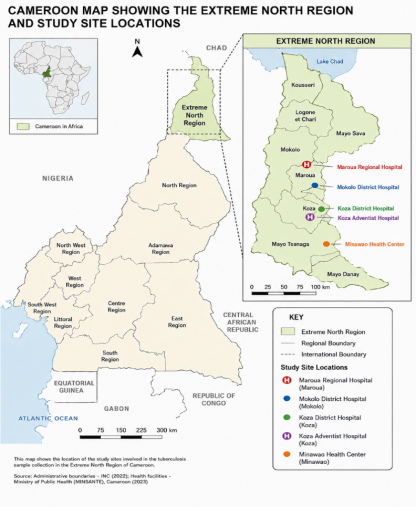
A cross-sectional research study was conducted from May 2022 to December 2025. During this period, 213 well-designed study questionnaires were randomly administered to patients selected for the study to obtain clinical and epidemiological data. Were included all consented smear-positive pulmonary tuberculosis patients aged 15 years and above, and consulting at our five Tuberculosis Diagnosis and Treatment Centers (CDT) in the Far-North region (Maroua Regional Hospital, the Mokolo and Koza District Hospitals, the Koza Adventist Hospital and the Minawao Health Center) as shown in Figure 1.
Figure 1. Study area location sites involved in tuberculosis sample collection in the Far-North region of Cameroon .
2.2. Sample Processing
Each participant with productive cough provided sputum on two successive days, following HIV testing with respect to routine sampling procedures. Smear-positive sputa were held at +4°C and transported twice weekly to the Laboratory for Tuberculosis Research and Pharmacology (LTRP) of the Biotechnology Center of the University of Yaoundé́ 1 (BTC UYI). where culture, drug susceptibility testing, molecular analysis and quality control (internal and external) were realized. Ziehl-Neelsen or auramine smears were performed at the recruitment site. Only the highest-grade smear-positive specimens were forwarded in a cooler within 24 hours to the LTRP for confirmation microscopy and culture. Every specimen underwent decontamination using the cetylpyridinium chloride/NaCl.
2.3. HIV Diagnosis
HIV screening of recruited participants relied on the DetermineTMHIV-1/2 rapid assay as a first-line test. Reactive results were confirmed with a second independent test, the OraQuick ADVANCE Rapid HIV-1/2assay (OraSure Technologies Inc, Bethlehem, PA, USA). Only participants reactive to both assays were classified as HIV-positive.
2.4. Culture and Identification
On arrival at the LTRP, sputum sediments were rinsed three times in sterile distilled water by successive 20 minutes centrifugation cycles, with the supernatant discarded after each spin. Three to four drops of the resulting decontaminated pellet were used to seed three Lowenstein Jensen (LJ) slants. Two of these slants contained 0.75% glycerol (pyruvate free) and one contained 0.4% pyruvate, each received approximately 0.1-0.3ml of sediment and was incubated at 37 ̊C. Absence of visible colonies after eight weeks of incubation defines a negative culture, and slants were kept inclined throughout. Isolates that grew were further characterized for drug susceptibility by the indirect proportion method on Löwenstein Jensen at the following critical concentrations: INH (H1: 1 mg/ml and H2: 2 mg/ml), Streptomycin (STM- S: 4 mg/ml), RIF (R: 40 mg/ml), Ethambutol (EMB) -E: 2 mg/ml) .
2.5. DNA Extraction
Bacterial DNA was extracted by scraping a loopful of mycobacterial colonies from Lowenstein-Jensen slants into Tris-EDTA (10 mM, 1 mM, pH 8) and heating the suspension for 30 minutes at 90°C. Following centrifugation at 13,000 ×g, the resulting supernatant was transferred to a fresh tube and stored at -20°C until further use .
2.6. Molecular Detection of Drug Resistance by LPA
Drug resistance genotyping was performed with MTB/DRplus line-probe assay (Hain Diagnostics), which interrogate wild-type sequences and known mutations at rpoB codons 516, 526 and 531 (rifampicin resistance), and katG codon 315 and inhA promoter position-16 (isoniazid resistance) , strictly following the manufacturer’s instructions , with kit version 1.0. Isolate were scored susceptible when every wild-type band was present and no mutation band appeared, resistance was called whenever at least one wild-type band was absent and/or any mutation band was detected. Strains showing an intact wild-type pattern together with a mutation band at the sane locus were classified as heteroresistant, reflecting a mixed population of susceptible and resistant M. tuberculosis .
2.7. Ethical Considerations
The study received administrative clearance from the Institutional Ethics Committee Research on Human Health in Cameroon (No: 3541CEI-Udo/03/2023/T). All study procedures were explained before and during the study to participants. Written, informed and signed consent (provided in French and English languages) was obtained from each enrolled patient who incurred no cost for sample processing. Data collection was conducted in a hybrid manner, combining physical (paper -based) and digital administration of questionnaires to maximize participation rates. All drug susceptibility test results were reported to the respective health facilities for further management of the patients.
2.8. Data Analysis
The sample size was calculated by the formula n = z2×p(1-p)/m2. With p = 0.27, z = 1.96, m = margin which yielded a target of 303 participants. In practice, logistical and security constraints inherent to the post-conflict setting limited enrollment to 213 administered questionnaires, of which 191 were complete and exploitable. Socio-demographic and clinical data obtained through questionnaires and the results of laboratory tests were entered, cleaned and analyzed using the statistical software for social sciences (SPSS) version 22.1. Categorial variables were summarized as frequencies and percentage. Associations between sociodemographic characteristics and HIV status, smear microscopy result, and infection status were assessed using the chi-square test of independence, with Fisher’s exact test applied where expected cell counts were below 5. Pearson's chi-square test was used for the 2x2 comparison between HIV status and smear microscopy result. A P- values < 0.05 was considered statistically significant.
3. Results
3.1. Epidemiological Results of Study Population
Sociodemographic Characteristics of the Study Population
From the study population, chosen 191 readily available participants information from the Maroua Regional Hospital, the Mokolo and Koza District Hospitals, the Koza Adventist Hospital and the Minawao Health Center were selected. The rest being incompletely filled. The sociodemographic characteristics described below cover age, sex, area of residence, main occupation and infectious status (Table 1).
Table 1. Sociodemographic characteristics of the study population (n = 191).

Variables

Numbers

Frequencies (%)

Age

15-30 years

61

31.9

30-45 years

75

39.3

45-60 years

33

17.3

60-75 years

18

9.4

Under 15 years

1

0.5

Over 75 years

3

1.6

Sex

Female

50

26.2

Male

141

73.8

Residence

Rural

47

24.6

Urban

144

75.4

Main occupation

Farmer/herder

49

25.7

Butcher

8

4.2

Trader

30

15.7

Student (school)

8

4.2

Employee

3

1.6

Civil servant

17

8.9

Informal - porter

2

1.0

Informal - pusher

1

0.5

Mason

2

1.0

Mechanic

8

4.2

Housewife

37

19.4

Moto-taxi/driver

16

8.4

Prisoner

10

5.2

HIV test result

Negative

165

86.4

Positive

26

13.6

Infection status

No infection

38

19.9

Co-infection

19

9.9

TB mono-infection

127

66.5

HIV mono-infection

7

3.7

Regarding age distribution, the most represented age group was 30–45 years (39.3%), followed by 15-30 years (31.9%). These two groups together accounted for 71.2% of the sample, indicating that the affected population is predominantly composed of young adults of working age. Other age range Participants constituted only 28.8% of the total.
In terms of sex, our study population comprised 191 individuals, predominantly male (141/191, 73.8%), yielding a male-to-female ratio of approximately 2.8:1. Regarding area of residence, three-quarters of participants (75.4%) lived in urban areas, with only 24.6% residing in rural settings, reflecting the predominance of tuberculosis in densely populated urban environments. With respect to educational level, the majority had attained secondary education (50.3%), 35.1% had primary education, and 13.1% were illiterate. Only 1.6% had reached university level. As for occupation, farmers and livestock keepers constituted the largest occupation.
3.2. Paraclinical and Clinical Characteristics — TB and HIV Prevalence
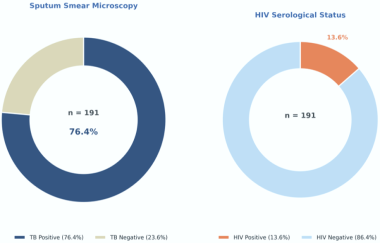
Figure 2 presents the results of paraclinical and clinical examinations performed on all 191 participants of the study population. Two tests were conducted: sputum smear microscopy for the detection of mycobacteria (tuberculosis), and an HIV serological screening test.
Regarding tuberculosis, 146 out of 191 participants tested positive by sputum smear microscopy, yielding a prevalence of 76.4%. With respect to HIV serological status, 26 participants were HIV-positive (13.6%), while 165 were HIV-negative (86.4%). The cross-tabulation of both results revealed that among the 146 TB-positive participants, 19 were also HIV-positive, representing a co-infection rate of 13.0% among TB patients (19/146) and 9.9% across the entire study sample (19/191).
Figure 2. Sputum smear microscopy result (left) and HIV serological status (right) (n = 191). TB prevalence: 76.4%; HIV seroprevalence: 13.6%.
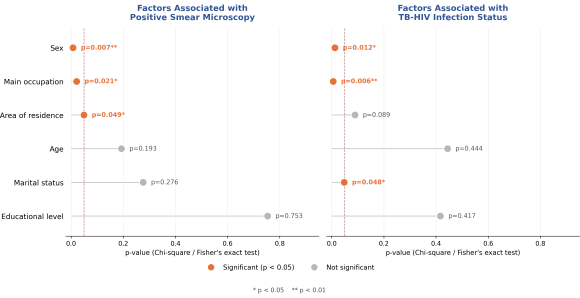
Figure 3. Sociodemographic factors associated with TB and TB-HIV co-infection (n = 191).
Sociodemographic factors associated with positive smear microscopy (left) and TB-HIV infection status (right), n = 191. * p < 0.05; ** p < 0.01.
Sociodemographic Factors Associated with TB and TB-HIV Co-infection
The analysis of factors associated with tuberculosis and TB-HIV infection status was conducted using cross-tabulations with the chi-square test of independence and Fisher's exact test applied according to expected cell counts. A p-value below 0.05 was considered statistically significant.
Sex, main occupation, and area of residence were significantly associated with positive smear microscopy (p=0.007, p=0.021, and p=0.049, respectively), while age, marital status, and educational level showed no significant association. For TB-HIV infection status, sex, main occupation, and marital status were significantly associated (p=0.012, p=0.006, and p=0.048, respectively), whereas area of residence, age, and educational level were not significant.
3.3. Results of Tuberculous Mycobacteria Cultures and Resistance Pattern to First Line Anti-Tb Drugs
From our study population of 119 positive cultures, 108 Mycobacterium tuberculosis isolates were analyzed for susceptibility to first-line anti-tuberculosis drugs (11 cultures being contaminated) including isoniazid (INH), rifampicin (RIF), streptomycin (STM), and ethambutol (EMB). Resistance to isoniazid was detected at 1.9% (2/108) at low concentration (INH0.2) and 3.7% (4/108) at high concentration (INH1). Rifampicin resistance was identified 1.9% (2/108). The highest resistance rate was observed for streptomycin at 10.2% (11/108), followed by ethambutol at 5.6% (6/108). Importantly, 2.7% were (MDR-TB).
3.4. Drug Resistance Profile Results to Molecular Hybridization Using the Line Probe Assay (Lpa)
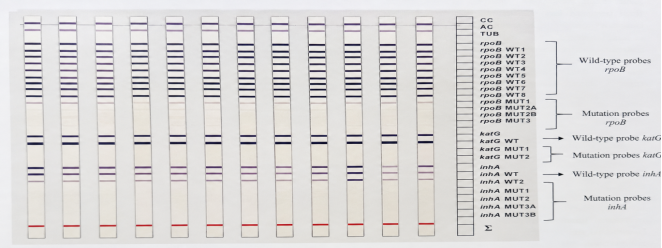
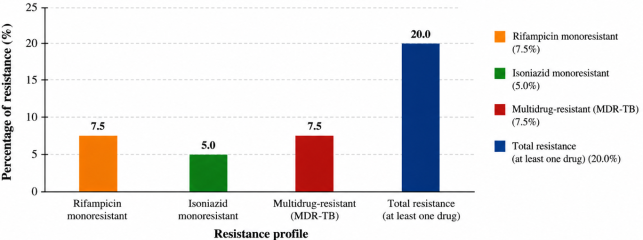
Forty culture strains were subjected to Hybridization and detection performed with LPA (MTB/DRplus version 1.0 kit). Thirty-two (80%) isolates were found to be sensitive to both rifampicin (RIF) and isoniazid (INH), while 8 (20%) isolates exhibited resistance to at least one of these first-line anti-tuberculosis drugs, (rpoB gene (rifampicin resistance): 6 (75%) isolates harbored the D516V mutation at codon 516, among which 3/6 were associated with multidrug resistance. 1 (12.5%) isolate in both katG gene (isoniazid resistance) with S315T mutation at codon 315, associated with multidrug resistance and inhA promoter region (isoniazid resistance) combined mutations C-15T and A-16G, associated with multidrug resistance were observed. Three (7.5%) isolates showed rifampicin monoresistance, 2(5%) isolates showed isoniazid monoresistance and 3 (7.5%) isolates exhibited multidrug resistance (MDR-TB). Two isolates (25%) had the C-15T mutation alone.
Figure 4. Hybridized strips after laboratory manipulations.
* p < 0.05 — significant ** p < 0.01 — highly significant Values in red indicate statistically significant associations.

Download: Download full-size image

Figure 5. Percentage of resistance of mycobacterium tuberculosis complex strains.

Table 2. Distribution of mutation detected in resistant isolates.

Gene

Mutation

Number of isolates (n=8)

Percentage (%)

Associated resistance

rpoB

D516V

6

75.0

Rifampicin

katG

S315T

1

12.5

Isoniazid

inhA

C-15T + A-16G

1

12.5

Isoniazid

inhA

C-15T

2

25.0

Isoniazid

4. Discussion
Effective management of drug-resistant tuberculosis relies on several elements, including detection, treatment, prevention, surveillance, and ongoing program evaluation. The main aim of this research was to determine the prevalence of tuberculosis, resistance to anti-tuberculosis drugs and genotyping the isolates of MTBC among patients in Far-North region. we observed the predominance of males (73.8%) and a median age range of 30-45 years (33.0%), consistent with the established profile of TB in sub-Saharan Africa, where the disease disproportionately affects young adults in their prime productive years . The majority of participants were urban residents (75.4%), employed in farming or livestock keeping (25.1%), in monogamous unions (53.4%), and had secondary-level education (50.3%), reflecting the socioeconomic fabric of the Diamaré Division, where 75% of the population lives in absolute poverty .
The prevalence of bacteriologically confirmed tuberculosis by sputum smear microscopy was 76.4% (146/191). This high figure is primarily attributable to the facility-based recruitment in CDTs, where patients are referred because TB is already suspected or confirmed. Co- infection rate was 9.9% of the total sample (19/191) or 9.1% among confirmed TB cases. These figures are below the national PNLT estimate of 20.3% HIV among TB patients in 2021 (down from 35.8% in 2015) , reflecting the structurally lower HIV prevalence in our study population. In neighboring Niger, found 6.93% at the Niamey national anti-TB center. In Chad, which directly borders our study area, a national TB epidemiology study reports 7.4% TB-HIV co-infection, with strains predominantly of the 'Cameroon' genotype (43%) — confirming the molecular continuity of TB transmission across this transboundary region .
Three sociodemographic variables showed statistically significant associations with TB. Male sex was the strongest predictor (p = 0.007), with a male-to-female ratio of 2.8:1 among TB-positive cases. This finding is corroborated across the regional literature: Kuaban A. et al., (2021) identified male sex as an independent predictor of unfavorable TB outcomes in Cameroon (p < 0.001), and Balkissou et al., (2021), in a retrospective cohort covering the North and West regions of Cameroon, confirmed that male sex significantly increased the risk of death during TB treatment. These male-driven patterns align with WHO global data (54% of 2024 TB cases were men) and are explained by greater occupational exposure, risky social behaviors, and well-documented barriers to care-seeking among men in the Far-North . Urban residence also was significantly associated with TB (p = 0.049), with 75.4% of participants residing in urban areas. Occupation showed a significant association with TB (p = 0.021). Farmers /hearer were the most represented group (25.7%), followed by housewife (19.4%), traders (15.7%), moto-taxi drivers (8.4%) and Prisoners (5.2%), all TB-positive, shaping the occupational profile of TB risk.
Concerning drug susceptibility testing, we noticed a rifampicin resistance of 1.9% in our study, suggesting a relatively low burden of drug-resistant tuberculosis, but however different from the higher rates reported in urban regions such as the Littoral, where rifampicin resistance reached 6.7%. this finding may reflect differences in treatment access, prior Tb treatment history, and diagnostic referral patterns between rural Far -North settings and more centralized urban regions of Cameroon. The Isoniazid resistance (up to 3.7%) aligns with previous studies in Cameroon showing that isoniazid mono-resistance is one of the most common resistance patterns, often associated with mutations in the katG and inhA genes . The concentration-dependent pattern observed her, with a higher resistance rate at INH1 than at INH0.2, is consistent with the presence of both high-level and low-level isoniazid resistance mechanisms within the study population, further revealing the clinical relevance of testing at multiple drug concentration to avoid underestimating resistance. these findings emphasize the clinical importance of highlighting significant geographical disparities within the country and detecting isoniazid and rifampicin resistance, as it may compromise the effectiveness of standard first-line treatment regimens.
The highest resistance rate observed for streptomycin (10.2%) is consistent with earlier reports from Cameroon and neighboring countries. Studies conducted in Nigeria have documented persistently high levels of streptomycin resistance, reflecting its historical overuse and widespread availability . This suggests that streptomycin resistance in the region may largely reflect legacy treatment practices rather than ongoing programmatic failures.
Regarding multidrug resistance, we recorded 3 cases (2.7%). These results remain lower than the 4.8% obtained in the Littoral . This could be explained by the lower proportion of previously treated or retreated TB cases within the study population. Indeed, retreatment cases are well known to have a significantly higher risk of developing MDR-TB due to prior exposure to anti-tuberculosis drugs and possible inadequate treatment adherence. This result could also be associated to the difference in access to diagnostics tools, particularly assays such as GeneXpert. Limited access to advanced diagnostics in the Far-North region could have led to under detection of resistance cases in our study, thereby contributing to a lower observed prevalence.
Regarding the rpoB gene, six (75%) of the eight (100%) resistant strains carried the D516V mutation at codon 516, of which three were associated with multidrug resistance. Although the common mutations associated with rifampicin resistance are amino acid alterations at codons 531, 526, and 516; This could be due to differences in strains and lineages. It is likely that among the strains included in this study, some did not belong to the lineages which could be commonly encountered in this area, or that the strains typically found in this area may have undergone mutations that favored a greater predisposition toward mutation at codon 516.
For the katG gene, one strain (12.5%) carried the S315T mutation at codon 315, which was associated with multidrug resistance. The S315T mutation has been the most studied katG mutation worldwide and has been used in most tests as a molecular target to detect isoniazid . Therefore, the low rate of katG mutations detected by this study may not reflect the true prevalence. Consequently, the use of new katG gene probes or futher molecular analysis to detect new mutations that have been selected under therapeutic pressure or have evolved in different geographic areas would be needed to improve detection.
Regarding the inhA gene, only one (12.5%) simultaneously carried the mutations C-15T at position -15 and A-16G at position -16, associated with multidrug resistance, and 2 carried a C-15T mutation (25%). Conversely, a relatively low frequency (2.0%) of mutations in the inhA regulatory region has been observed in Zambia and in Nigeria . These results would probably be due to the fact that mutations in the inhA region confer low-level resistance to isoniazid, but when they occur in combination with mutations in the katG gene, an increase in the levels of resistance to isoniazid is observed; This would explain the low rate of isoniazid resistance observed in these results.
The apparent discordance between the MDR-TB prevalence estimated by phenotypic testing (2.7%, n=108) and molecular testing (7.5%, n=40) should not be interpreted as a direct contradiction, but rather as a consequence of differing sample scope and detection principles between the two methods. First, the two assays were performed on non-equivalent sample sizes. Beyond sampling considerations, phenotypic and genotypic testing interrogate resistance through fundamentally different mechanisms. Phenotypic DST measures observed bacterial growth in the presence of the drug and can be influenced by inoculum size, culture viability, and the presence of heteroresistant subpopulations, where a dominant susceptible population may mask a minority resistant clone. LPA, in contrast, detects specific mutations within defined hot-spot regions of the rpoB, katG, and inhA genes; while highly sensitive for common mutations such as rpoB D516V, it cannot detect resistance-conferring mutations located outside these targeted regions, nor resistance mechanisms unrelated to the genes covered by the assay, such as efflux-pump-mediated resistance. This asymmetry explains why molecular assays can, in some instances, detect more genetic resistance markers than are phenotypically expressed, and conversely why some phenotypically resistant strains may lack any mutation identifiable by LPA.
Such phenotype-genotype discordance has been widely documented in the literature, with concordance rates for rifampicin typically reported between 85% and 95%, and somewhat lower for isoniazid, reflecting the greater genetic heterogeneity underlying INH resistance mechanisms. Taken together, these observations support the complementary rather than interchangeable nature of phenotypic and molecular drug susceptibility testing in this setting, with LPA serving as a valuable rapid triage tool while phenotypic DST remains the reference standard for confirming and fully characterizing resistance.
5. Conclusion
This first regional assessment shows a high burden of TB and TB-HIV co-infection in the Far-North Region, a post-conflict, cross border setting where population movement likely worsens diagnostic delay. TB was associated with male sex, urban residence, and agricultural occupation. The higher MDR rate by LPA (7.5%) versus culture-based resistance (rifampicin 1.9%, isoniazid 3.7%) confirms the greater sensitivity of molecular methods, especially relevant given paucibacillary disease risk in HIV-positive patients. These findings support scaling up molecular diagnostics (Xpert MTB/RIF, LPA) and cross-border surveillance in this underserved region.
Abbreviations

TB

Tuberculosis

HIV

Human Immunodeficiency Virus

AIDS

Acquired Immunodeficiency Syndrome

UNAIDS

Joint United Nations Programme on HIV/AIDS

MDR (MDR-TB)

Multidrug-Resistant (Tuberculosis)

DR

Drug Resistance

DST

Drug Susceptibility Testing

CDT

Tuberculosis Diagnosis and Treatment Center

MTB

Mycobacterium Tuberculosis

MTBC

Mycobacterium Tuberculosis Complex

LJ

Löwenstein-Jensen

RIF

Rifampicin

INH

Isoniazid

EMB

Ethambutol

STM

Streptomycin

LPA

Line Probe Assay

DNA

Deoxyribonucleic Acid

SPSS

Statistical Package for the Social Sciences

BP

Base Pairs

Acknowledgments
We acknowledge the support and are sincerely grateful to the Laboratory for Tuberculosis Research and Pharmacology (LTRP) for their contribution in reagents/ materials/analysis tools in the realization of this research. We thank Professor Penlap Beng Veronique, Head of LTRP laboratory for all technical support and guidance; Prof Assam Assam Jean Paul, associate professor in Microbiology and Research scientist at the LTRP laboratory (BTC/UYI) for all scientific and technical support in the field work supervision; Prof Ngono Ngane Rosalie Annie, Head of laboratory and Department of Biochemistry at the Faculty of Science, University of Douala for all assistant and, scientific support, We also thank Amandine Plidikoua for the article revision, Albert Noubissi Toyim for the statistical analysis reviewing and all of our study participants, counselors and health staff from the Maroua Regional Hospital, the Mokolo and Koza District Hospitals, the Koza Adventist Hospital and the Minawao Health Center, all laboratory technicians at the LTRP laboratory for all technical support in carrying out this research work.
Author Contributions
Tchoupe Alix Kevine: Conceptualization, Data curation, Formal Analysis, Funding acquisition, Investigation, Methodology, Project administration, Resources, Writing – original draft, Writing – review & editing
Assam Assam Jean Paul: Conceptualization, Data curation, Formal Analysis, Funding acquisition, Investigation, Methodology, Project administration, Resources, Supervision, Validation, Writing – review & editing
Youchaou Mobet: Data curation, Methodology, Writing – original draft
Yonga Tchoumi Loida Cindy: Writing – original draft
Beack Bayengue Sandrine Suzanne: Writing – original draft
Njike Ngamga Fabrice Herve: Writing – original draft
Ngono Ngane Rosalie Annie: Conceptualization, Funding acquisition, Investigation, Methodology, Project administration, Resources, Supervision, Validation
Penlap Beng Veronique: Conceptualization, Funding acquisition, Methodology, Project administration, Resources, Supervision, Validation
Conflicts of Interest
The authors declare no conflicts of interest.
References
[1] Ratovonirina, N. H., Rakotosamimanana, N., Razafimahatratra, S. L., Raherison, M. S., Refrégier, G., Sola, C., Rakotomanana, F., Rasolofo Razanamparany, V. (2017). Assessment of tuberculosis spatial hotspot areas in Antananarivo, Madagascar, by combining spatial analysis and genotyping. BMC Infectious Diseases, 17, 562.
[2] World Health Organization. Global Tuberculosis Report 2025. Geneva: WHO; 2025.
[3] . Niobe-Eyangoh, S. N., Kuaban, C., Sorlin, P., Cunin, P., Thonnon, J., Sola, C., Rastogi, N., Vincent, V., Gutierrez, M. C. (2003). Genetic biodiversity of Mycobacterium tuberculosis complex strains from patients with pulmonary tuberculosis in Cameroon. Journal of Clinical Microbiology, 41(6), 2547-2553.
[4] Clarkson, J. A. (2016). Tuberculosis transmission dynamics and control strategies.
[5] Vassall, A., et al. (2009). Cost-effectiveness of tuberculosis control strategies. Health Policy and Planning, 24(5), 356–364.
[6] CORE Group. (2013). Community-based tuberculosis control: guidance document. CORE Group Publications.
[7] World Health Organization & UNAIDS. (2004). Policy on collaborative TB/HIV activities. WHO Press.
[8] Noeske, J., et al. (2006). Tuberculosis control in Cameroon: epidemiology and program evaluation. International Journal of Tuberculosis and Lung Disease.
[9] . Tiani, L. U., Ambassa, A. C., Assam Assam, J. P., Andoseh, G., Zeukeng, F., Tchinda Fossi, C., Tsasse Martine Augusta Flore, Nkah Numfor, L., Gonsu Kamga, H., Kouanfack, C., Pefura Yone, E. W., Djuidje Ngounoue, M., Bigoga, J. D., Ntoumi, F., Penlap Beng, V. (2022). Prevalence of drug resistance and genetic characterization of Mycobacterium tuberculosis complex strains from pulmonary tuberculosis patients co-infected with malaria at Jamot Hospital in Yaoundé. African Journal of Biotechnology.
[10] Koro Koro, F., Um Boock, A., Kaiyven, A. L., Noeske, J., Gutierrez, C., Kuaban, C., Etoa, F. X., Eyangoh, S. I. (2016). Genetic structure and drug susceptibility patterns of Mycobacterium tuberculosis complex strains responsible of human pulmonary tuberculosis in the major rearing region in Cameroon. BioMed Research International, 2016, 2904832.
[11] Dommati S, GottimukkulaP, Patil R. (2025). Multidrug Resistance and Rifampicin Tuberculosis: Challenges and advances in Diagnosis and Management. International Journal od Pharmaceutical Sciences.; 3(7). Article ID: IJPS/250307098.
[12] Nkenfou, C. N., Kembou, J. E., Temgoua, E. S., Djikeng, A., Mouafo, L. M., Ndzie, E. N., Donkam, I., Colizzi, V., SanouSobzé, M. (2013). Evaluation of OraQuick® HIV-1/2 as oral rapid test. African Journal of Infectious Diseases, 7(2), 27-30.
[13] Canetti, G., Fox, W., Khomenko, A., Mahler, H. T., Menon, N. K., Mitchison, D. A., Rist, N., Smelev, N. A. (1969). Advances in techniques of testing mycobacterial drug sensitivity, and the use of sensitivity tests in tuberculosis control programmes. Bulletin of the WHO, 41(1), 21-43.
[14] Kent PT, Kubica GP. Public Health Mycobacteriology: A Guide for the Level III Laboratory. CDC; 1985.
[15] Van Soolingen D, Hermans PWM, de Haas PEW, Soll DR, van Embden JDA. Occurence and stability of insertion sequences in Mycobacteruim tuberculosis complex strains. et al. (1991). Journal of Clinical Microbiology.
[16] Molina-Moya, B., Lacoma, A., Prat, C., Pimkina, E., Diaz, J., García-Sierra, N., Haba, L., Maldonado, J., Samper, S., Ruiz-Manzano, J., Ausina, V., Dominguez, J. (2015). Diagnostic accuracy study of multiplex PCR for detecting tuberculosis drug resistance. Journal of Clinical Microbiology.
[17] WHO. The Use of Molecular Line Probe Assays for the Detection of Resistance to Isoniazid and Rifampicin. 2016.
[18] Hillemann, D., Rüsch-Gerdes, S., Richter, E. (2007). Evaluation of the GenoType MTBDRplus assay for rifampin and isoniazid susceptibility testing of Mycobacterium tuberculosis strains and clinical specimens. Journal of Clinical Microbiology, 45(8), 2635-2640.
[19] Wanie, G. M., et al. (2013). Tuberculosis epidemiology in Cameroon rural areas. International Journal of Mycobacteriology.
[20] Programme National de Lutte contre la Tuberculose (PNLT). (2023). Rapport annuel sur la tuberculose au Cameroun. Ministère de la Santé Publique.
[21] Djika, M., Koudokpon, C. H., Dougnon, V. T., Sanoussi, N., Alphazazi, S., Ballé, B., Daouda, H., Assogba, P., Bankole, H., Agbangla, C. (2024). Epidemiology, treatment outcome and resistance profile of pulmonary tuberculosis cases at the Niamey national anti-tuberculosis center in Niger. Pan African Medical Journal, 47, 214.
[22] Doungous, D. M., et al. (2025). Epidemiological surveillance of tuberculosis-HIV co-infection and genotypic strains of the Mycobacterium tuberculosis complex in four departments at the Centre Hospitalier Universitaire de Référence Nationale in N'Djamena, Chad. Pan African Medical Journal.
[23] Kuaban A., Balkissou A. D., Ekongolo M. C. E., Pefura-YoneE. W., et al (2021). Incidence and factors associated with unfavourable treatment outcome among patients with rifampicine- resistance pulmonary tuberculosis in Yaounde, Cameroon, Pan African Medical Journal,38: 229.
[24] Balkissou, A. D., Poka-Mayap, V., Massongo, M., Pefura-Yone, E. W. (2021). Incidence et facteurs prédictifs de décès au cours de la tuberculose dans deux régions camerounaises. Revue des Maladies Respiratoires Actualités, 13(1), 230.
[25] Nono, V. N., Nantia, E. A., Mutshembele, A., Nguimfack Teagho, S., Kamdem Simo, Y. W., Takong, B. S., Djieugoue, Y. J., Assolo, Y. P., Ongboulal, S. M., Awungafac, S. N., Eyangoh, S., Mensah, E., Makhado, N. A., Donkeng Donfack, V. F. (2025). Genetic mutations associated with isoniazid resistance in Cameroon. BMC Microbiology.
[26] Oladimeji, O., et al. (2018). TB knowledge and treatment adherence in sub-Saharan Africa. BMC Public Health.
[27] Mbuh T., Wandji A., Keugni L., Mboh S., Anyangwe I, Mbacham W. et Meriki H. (2021). Predictors of Drug-Resistant Tuberculosis among High-Risk Population Diagnosed under National Program Conditions in the Littoral Region, Cameroon. BioMed research international. 8817442.P 5.
[28] Zaw, K. K., et al. (2018). Drug-resistant tuberculosis epidemiology in Southeast Asia. PLoS ONE.
[29] Tseng, S. T., et al. (2015). Genetic diversity of Mycobacterium tuberculosis strains. Emerging Infectious Diseases.
[30] Solo E., Nakajima C., Kaile T., Bwalya P., Mbulo G., Fukushima Y., Chila S., Kapata N., Shah Y., et Suzuki Y. (2020). Mutations in rpoB and katG genes and the inhA operon in multidrug-resistant Mycobacterium tuberculosis isolates from Zambia. Journal of global antimicrobial resistance, 22, P 302–307.
Cite This Article
  • APA Style

    Kevine, T. A., Paul, A. A. J., Mobet, Y., Cindy, Y. T. L., Suzanne, B. B. S., et al. (2026). Double Burden of Tuberculosis-HIV Co-infection and Drug Resistance in the Post-Conflict Far-North Region of Cameroon. International Journal of Microbiology and Biotechnology, 11(4), 151-162. https://doi.org/10.11648/j.ijmb.20261104.11

    Copy | Download

    ACS Style

    Kevine, T. A.; Paul, A. A. J.; Mobet, Y.; Cindy, Y. T. L.; Suzanne, B. B. S., et al. Double Burden of Tuberculosis-HIV Co-infection and Drug Resistance in the Post-Conflict Far-North Region of Cameroon. Int. J. Microbiol. Biotechnol. 2026, 11(4), 151-162. doi: 10.11648/j.ijmb.20261104.11

    Copy | Download

    AMA Style

    Kevine TA, Paul AAJ, Mobet Y, Cindy YTL, Suzanne BBS, et al. Double Burden of Tuberculosis-HIV Co-infection and Drug Resistance in the Post-Conflict Far-North Region of Cameroon. Int J Microbiol Biotechnol. 2026;11(4):151-162. doi: 10.11648/j.ijmb.20261104.11

    Copy | Download

  • @article{10.11648/j.ijmb.20261104.11,
      author = {Tchoupe Alix Kevine and Assam Assam Jean Paul and Youchaou Mobet and Yonga Tchoumi Loida Cindy and Beack Bayengue Sandrine Suzanne and Njike Ngamga Fabrice Herve and Ngono Ngane Rosalie Annie and Penlap BengVeronique},
      title = {Double Burden of Tuberculosis-HIV Co-infection and Drug Resistance in the Post-Conflict Far-North Region of Cameroon},
      journal = {International Journal of Microbiology and Biotechnology},
      volume = {11},
      number = {4},
      pages = {151-162},
      doi = {10.11648/j.ijmb.20261104.11},
      url = {https://doi.org/10.11648/j.ijmb.20261104.11},
      eprint = {https://article.sciencepublishinggroup.com/pdf/10.11648.j.ijmb.20261104.11},
      abstract = {In Cameroon, the Far-north region counts as one of the ten regions that lacks data’s concerning tuberculosis dynamics. Subject to national insecurity few years ago, some of the direct consequences include promiscuity, poverty, under diagnosis, treatment absence, leading to high burden of tuberculosis (TB). The present research was conducted across the Far-North Region of Cameroon for the first time, to investigate pulmonary tuberculosis among affected TB patients. Sputum specimens were collected following a rigorous questionnaire‑based investigation and HIV screening test. The specimens were subjected to microscopic examination, followed by culture. Strains of M. tuberculosis (MTB) complex isolated were tested for susceptibility to antibiotics and molecular detection of drug resistance (DR) was performed with MTB/DRplus. Between May 2022 to December 2025, 213 questionnaires were administered to randomly selected participants at the Maroua Regional Hospital, Mokolo and Koza District Hospitals, Koza Adventist Hospital and Minawao Health Center. Among these included participants, 146 of the 191 sputum samples were confirmed positive for M. tuberculosis complex, yielding a TB positivity rate of 76.4%. HIV seroprevalence of 13.6%, was noted and TB-HIV co-infection rate was 9.9%. Tuberculosis was significantly associated to male sex (p = 0.007), urban residence (p = 0.049), occupational activity primarily in the agricultural sector (p = 0.021) and infection status (prpoB gene. for isoniazid resistance, mutation was identified at katG gene (S315T) and the inhA promoter region (C-15T and A-16G). These findings underscore the need to target sociodemographic determinants of TB in healthcare access and diagnostic delay (male sex, rural residence, agricultural occupation, infection status). The lack of association between HIV status and smear positivity, combined with the well-established risk of paucibacillary disease in HIV-positive individuals, represents an important limitation to acknowledge, and supports advocating need for the use of more sensitive conventional and molecular diagnostics interventions (e.g., Xpert MTB/RIF, LPA) in HIV-positive presumptive TB cases in this setting.},
     year = {2026}
    }
    

    Copy | Download

  • TY  - JOUR
    T1  - Double Burden of Tuberculosis-HIV Co-infection and Drug Resistance in the Post-Conflict Far-North Region of Cameroon
    AU  - Tchoupe Alix Kevine
    AU  - Assam Assam Jean Paul
    AU  - Youchaou Mobet
    AU  - Yonga Tchoumi Loida Cindy
    AU  - Beack Bayengue Sandrine Suzanne
    AU  - Njike Ngamga Fabrice Herve
    AU  - Ngono Ngane Rosalie Annie
    AU  - Penlap BengVeronique
    Y1  - 2026/10/09
    PY  - 2026
    N1  - https://doi.org/10.11648/j.ijmb.20261104.11
    DO  - 10.11648/j.ijmb.20261104.11
    T2  - International Journal of Microbiology and Biotechnology
    JF  - International Journal of Microbiology and Biotechnology
    JO  - International Journal of Microbiology and Biotechnology
    SP  - 151
    EP  - 162
    PB  - Science Publishing Group
    SN  - 2578-9686
    UR  - https://doi.org/10.11648/j.ijmb.20261104.11
    AB  - In Cameroon, the Far-north region counts as one of the ten regions that lacks data’s concerning tuberculosis dynamics. Subject to national insecurity few years ago, some of the direct consequences include promiscuity, poverty, under diagnosis, treatment absence, leading to high burden of tuberculosis (TB). The present research was conducted across the Far-North Region of Cameroon for the first time, to investigate pulmonary tuberculosis among affected TB patients. Sputum specimens were collected following a rigorous questionnaire‑based investigation and HIV screening test. The specimens were subjected to microscopic examination, followed by culture. Strains of M. tuberculosis (MTB) complex isolated were tested for susceptibility to antibiotics and molecular detection of drug resistance (DR) was performed with MTB/DRplus. Between May 2022 to December 2025, 213 questionnaires were administered to randomly selected participants at the Maroua Regional Hospital, Mokolo and Koza District Hospitals, Koza Adventist Hospital and Minawao Health Center. Among these included participants, 146 of the 191 sputum samples were confirmed positive for M. tuberculosis complex, yielding a TB positivity rate of 76.4%. HIV seroprevalence of 13.6%, was noted and TB-HIV co-infection rate was 9.9%. Tuberculosis was significantly associated to male sex (p = 0.007), urban residence (p = 0.049), occupational activity primarily in the agricultural sector (p = 0.021) and infection status (prpoB gene. for isoniazid resistance, mutation was identified at katG gene (S315T) and the inhA promoter region (C-15T and A-16G). These findings underscore the need to target sociodemographic determinants of TB in healthcare access and diagnostic delay (male sex, rural residence, agricultural occupation, infection status). The lack of association between HIV status and smear positivity, combined with the well-established risk of paucibacillary disease in HIV-positive individuals, represents an important limitation to acknowledge, and supports advocating need for the use of more sensitive conventional and molecular diagnostics interventions (e.g., Xpert MTB/RIF, LPA) in HIV-positive presumptive TB cases in this setting.
    VL  - 11
    IS  - 4
    ER  - 

    Copy | Download

Author Information
  • Abstract
  • Keywords
  • Document Sections

    1. 1. Introduction
    2. 2. Materials and Methods
    3. 3. Results
    4. 4. Discussion
    5. 5. Conclusion
    Show Full Outline
  • Abbreviations
  • Acknowledgments
  • Author Contributions
  • Conflicts of Interest
  • References
  • Cite This Article
  • Author Information