1. Introduction
Academic writing in English has been widely recognized as the lingua franca of academic discourse, which serves as the primary medium for scientific scholarship and publication
| [1] | Bennett, K. English as a lingua franca in academia: Combating Epistemicide through Translator Training. Interpreter and Translator Trainer. 2013, 7(2), pp. 151-161.
https://doi.org/10.1080/03075079412331382007 |
| [2] | Hyland, K. Academic Discourse: English in a Global Context. London: Continuum; 2009.
https://doi.org/10.5040/9781474211673 |
| [3] | Jenkins, J, Panero, S. M. GLOBAL ENGLISHES: A Resource Book for Students. 4th ed. New York: Routledge; 2025.
https://doi.org/10.4324/9781003027805 |
| [4] | Mauranen, A. Exploring ELF: Academic English Shaped by Non-native Speakers. Cambridge: Cambridge Applied Linguistics; 2012. |
[1-4]
. Academic discourse is a social practice in which a community of scholars, researchers and students demonstrates and transmits knowledge within a disciplinary context using conventional language and discoursal characteristics to achieve common goals
| [5] | Hyland, K. Disciplinary Discourses. Social Interactions in Academic Writing. Michigan Classics Edition. Ann Arbor, MI: University of Michigan Press; 2004.
https://doi.org/10.3998/mpub.6719 |
| [6] | Paltridge, P. Genre and second-language academic writing. Language Teaching. 2014, 47(3), pp. 303 - 318.
https://doi.org/10.1017/S0261444814000068 |
| [7] | Swales, J. Genre Analysis: English in Academic and Research Settings. Cambridge: Cambridge University Press; 1990. |
[5-7]
. These discoursal conventions vary across disciplinary fields, reflecting the nature of knowledge and epistemological foundations through which they seek and establish that knowledge
| [5] | Hyland, K. Disciplinary Discourses. Social Interactions in Academic Writing. Michigan Classics Edition. Ann Arbor, MI: University of Michigan Press; 2004.
https://doi.org/10.3998/mpub.6719 |
| [6] | Paltridge, P. Genre and second-language academic writing. Language Teaching. 2014, 47(3), pp. 303 - 318.
https://doi.org/10.1017/S0261444814000068 |
| [7] | Swales, J. Genre Analysis: English in Academic and Research Settings. Cambridge: Cambridge University Press; 1990. |
[5-7]
. One influential taxonomy for grouping academic disciplines by the nature of their “subject matter” is Biglan’s
| [8] | Biglan, A. The characteristics of subject matter in different academic areas. Journal of Applied Psychology, 57(3), pp. 195-203. https://doi.org/10.1037/h0034701 |
[8]
, which provides four categories: hard-pure, soft-pure, hard-applied, and soft-applied. Biglan
| [8] | Biglan, A. The characteristics of subject matter in different academic areas. Journal of Applied Psychology, 57(3), pp. 195-203. https://doi.org/10.1037/h0034701 |
[8]
argues that hard disciplines such as physics and biology are characterized by a high degree of consensus on content, methods and theories, whereas such aspects “tend to be idiosyncratic” in soft disciplines such as sociology and literature. The pure/applied distinction concerns the extent to which a discipline prioritizes the advancement of knowledge, as in mathematics and physics, or the application of knowledge to solve real-life problems, as in engineering and nursing
| [8] | Biglan, A. The characteristics of subject matter in different academic areas. Journal of Applied Psychology, 57(3), pp. 195-203. https://doi.org/10.1037/h0034701 |
[8]
.
Medicine is a broad area of knowledge concerning systems of the human body, physiological processes, diagnosis and treatment of diseases and effects of drugs which is cumulated from hard sciences such as biology, chemistry, mathematics and physics
| [9] | Becher, T., & Trowler, P. R. Academic Tribes and Territories: Intellectual Enquiry and the Cultures of Disciplines (2nd ed.). Buckingham: Open University Press; 2001. |
| [10] | Fryer, D. L. Engagement in medical research discourse: A multisemiotic approach to dialogic positioning. New York: Routledge; 2022. https://doi.org/10.4324/9781003041146 |
| [11] | Gotti, M., & Salagar-Meyer, F. Advances in Medical Discourse Analysis: Oral and Written Contexts. New York: Peter Lang; 2006. https://doi.org/10.3726/978-3-0351-0396-0 |
[9-11]
. Knowledge in these hard sciences is cumulated through paradigm-based systematic and rigorous methods of enquiry which seek universal and objective accounts for the relative phenomena; hence, medicine is a hard science by proxy
| [8] | Biglan, A. The characteristics of subject matter in different academic areas. Journal of Applied Psychology, 57(3), pp. 195-203. https://doi.org/10.1037/h0034701 |
[8]
. At the same time, medicine is an applied discipline with the primary objective of applying medical knowledge in the actual practice of healthcare
. Applied linguistics, as the name suggests, is an applied discipline fundamentally concerned with the practical applications of knowledge of language to solve real-life problems and enhance the quality of related professional and pedagogical practices
| [9] | Becher, T., & Trowler, P. R. Academic Tribes and Territories: Intellectual Enquiry and the Cultures of Disciplines (2nd ed.). Buckingham: Open University Press; 2001. |
[9]
. Furthermore, applied linguistics is a soft science since knowledge of language is predominantly built on knowledge from soft sciences such as sociology, psychology, history, literature and anthropology which collect information and examine phenomena through various paradigms
.
This study explores how Engagement
| [13] | Martin, J. R., & White, P. R. R. The Language of Evaluation: Appraisal in English. Sydney: Palgrave Macmillan; 2005. |
[13]
is used in a prominent subgenre of academic discourse, the review article (hereafter, RA) in the disciplines of applied linguistics (hereafter, AL) and medicine (hereafter, MD). Engagement is a key subsystem of the Appraisal framework
| [13] | Martin, J. R., & White, P. R. R. The Language of Evaluation: Appraisal in English. Sydney: Palgrave Macmillan; 2005. |
[13]
, which provides a systematic account of how writers create a dialogic positioning in a text as they convey their stance toward propositions of others and those of their own. Hyland
argues that professional academic writers are able to establish an interactive writer-reader dialogue in their texts that corresponds to the conventions and goals of their disciplinary contexts. The RA belongs to the academic review genre, which is essentially a survey of the relevant literature on a specific issue in a particular discipline
| [15] | Hyland, K., & Diani, G. Academic evaluation: Review genres in university settings. London: Palgrave Macmillan; 2009. |
[15]
. There are major types of the RA, including systematic reviews, meta-analyses, narrative reviews, scoping reviews, umbrella reviews and literature reviews
| [16] | Grant, M. J., & Booth, A. A typology of reviews: an analysis of 14 review types and associated methodologies. Health information & libraries journal. 2009, 26(2), pp. 91-108.
https://doi.org/10.1111/j.1471-1842.2009.00848.x |
| [17] | Noguchi, J. (2009). Reviewing science in an information-overloaded world. In Academic Evaluation: Review Genres in University Settings. London: Palgrave Macmillan; 2009, pp. 34-49. https://doi.org/10.1057/9780230244290_3 |
[16, 17]
. Each type of these RAs is associated with specific epistemological goals, methodological and statistical techniques and synthetic presentations
. The literature review is the type of RA with which the current study is concerned. According to Grant and Booth
, the term literature review, as a type of RA, refers to the examination and synthesis of existing literature which “can cover a wide range of subjects at various levels of completeness and comprehensiveness” depending on the focus of the research and approach taken by the author.
Hyland and Diani explain that since RAs are highly cited publications, they offer opportunities for researchers and academic faculty members to “gain institutional credit and a publication profile”
| [15] | Hyland, K., & Diani, G. Academic evaluation: Review genres in university settings. London: Palgrave Macmillan; 2009. |
[15]
. However, Byrnes argues that writers often struggle to assess prior research and to present their “critical perspective” in literature reviews, which often leads to rejection of manuscripts by reputable journals
. Furthermore, RAs are highly demanded as assignments by university students, particularly postgraduate students
| [15] | Hyland, K., & Diani, G. Academic evaluation: Review genres in university settings. London: Palgrave Macmillan; 2009. |
[15]
. Hence, writing successful RAs is important for students to fulfil the requirements of their courses and advance in their academic journey. However, Hood points out that students, even postgraduate students, who typically have a higher command of English, are “criticised for summarising the contributions of others without indicating a position in relation to those ideas”
| [19] | Hood, S. Appraising research: Evaluation in academic writing. New York: Springer; 2010. |
[19]
. Additionally, the number of studies on RAs remains limited. Most of these studies have analyzed the typology and generic structure of RAs, e.g.,
| [16] | Grant, M. J., & Booth, A. A typology of reviews: an analysis of 14 review types and associated methodologies. Health information & libraries journal. 2009, 26(2), pp. 91-108.
https://doi.org/10.1111/j.1471-1842.2009.00848.x |
| [17] | Noguchi, J. (2009). Reviewing science in an information-overloaded world. In Academic Evaluation: Review Genres in University Settings. London: Palgrave Macmillan; 2009, pp. 34-49. https://doi.org/10.1057/9780230244290_3 |
| [20] | Azar, A. S., & Hashim, A. Towards an analysis of review article in applied linguistics: Its classes, Purposes and characteristics. English Language Teaching. 20147(10), pp. 76-88.
https://doi.org/10.5539/elt.v7n10p76 |
| [21] | Azar, A. S., & Hashim, A. Analysing the Macroorganisational Structure of the Review Article Genre in Applied Linguistics. Issues in Language Studies. 2017, 6(1), pp. 1-28.
https://doi.org/10.33736/ils.471.2017 |
| [22] | Blümel, C., & Schniedermann, A. Studying review articles in scientometrics and beyond: a research agenda. Scientometrics. 2020, 124(1), pp. 711-728.
https://doi.org/10.1007/s11192-020-03431-7 |
| [23] | Morales, O. A., Perdomo, B., Cassany, D., & Izarra, É. The generic structure of Spanish systematic reviews in Dentistry. Circle of Applied Linguistics to Communication. 2020, 83, pp. 133-146. https://doi.org/10.5209/clac.70569 |
| [24] | Myers, G. Stories and Styles in Two Molecular Biology Review Articles. In Textual Dynamics of the Professions: Historical and Contemporary Studies of Writing in Professional Communities. Wisconsin: The University of Wisconsin Press; 1991, pp. 45-74. |
| [25] | Noguchi, J. The Science Review Article: An Opportune Genre in the Construction of Science. Linguistics Insights. Bern: Peter Lang; 2006. |
[16, 17, 20-25]
. Other studies have examined authorial identity and attitude markers in RAs, e.g.,
| [26] | Azar, A. S., & Hashim, A. The impact of attitude markers on enhancing evaluation in the review article genre. GEMA Online Journal of Language Studies. 2019, 19(1), pp. 153-173.
https://doi.org/10.17576/gema-2019-1901-09 |
| [27] | Azar, A. S., & Hashim, A. Analysing Authorial Identity Construction in the Review Article Genre in Applied Linguistics. Studies in English Language and Education. 2022. 19(1), pp. 94-114. https://doi.org/10.24815/siele.v9i1.21898 |
[26, 27]
. To the best of our knowledge, no previous study has examined Engagement in RAs employing Martin and White’s
| [13] | Martin, J. R., & White, P. R. R. The Language of Evaluation: Appraisal in English. Sydney: Palgrave Macmillan; 2005. |
[13]
Appraisal framework. Therefore, this study fills a gap in the literature by examining how professional academic writers convey Engagement in RAs, published in top-tier journals, across two disciplines, namely, AL and MD.
Previous related studies have employed the Appraisal framework to examine Engagement in various academic genres. However, the literature is predominantly focused on Engagement in published research articles, e.g.,
| [10] | Fryer, D. L. Engagement in medical research discourse: A multisemiotic approach to dialogic positioning. New York: Routledge; 2022. https://doi.org/10.4324/9781003041146 |
| [28] | Alotaibi, H. S. An Exploration of Authorial Stance in SSCI-ranked Journals versus Non-SSCI-ranked Journals. 3L: Language, Linguistics, Literature. 2019, 25(3), 65-78.
https://doi.org/10.17576/3L-2019-2503-05 |
| [29] | Amornrattanasirichok, S., Jaroongkhongdach, W. Engagement in literature reviews of Thai and International Research Articles in Applied Linguistics. In Proceedings of the International Conference: DRAL 3/19th ESEA, King Mongkut’s University of Technology, Bangkok, Thailand, 2017. |
| [30] | Alshehri, A. The Construction of Stance and Authorial Voice in Medical Texts Written by EFL Saudi Students and Professional Scholars: A Contrastive Study of the Use of the Appraisal Resources. Ph.D. Thesis, King Saud University, 2020. |
| [31] | Cheng, F. W., Unsworth, L. Stance-taking as negotiating academic conflict in applied linguistics research article discussion sections. Journal of English for Academic Purposes. 2016, 24, 43-57. https://doi.org/10.1016/j.jeap.2016.09.001 |
| [32] | Deng, L., Cheng, Y., Gao, X. Engagement patterns in research article introductions: A cross-disciplinary study. System. 2024, 120. https://doi.org/10.1016/j.system.2023.103204 |
| [33] | Hu, G., Wang, G. Disciplinary and ethnolinguistic influences on citation in research articles. Journal of English for Academic Purposes. 2014, 14, pp. 14-28.
https://doi.org/10.1016/j.jeap.2013.11.001 |
| [34] | Moyano, E. I. Knowledge construction in discussions of research articles in two disciplines in Spanish: The role of resources of appraisal. Journal of Pragmatics. 2019, 139, pp. 231-246. https://doi.org/10.1016/j.pragma.2018.09.011 |
| [35] | Sun, F., Zhang, L. Engagement resources across disciplines in research articles: A corpus-based study. Sino-US English Teaching. 2022, 19(9), pp. 332-337.
https://doi.org/10.17265/1539-8072/2022.09.006 |
| [36] | Xu, X., Nesi, H. Differences in engagement: A comparison of the strategies used by British and Chinese research article writers. Journal of English for Academic Purposes. 2019, 38, pp. 121-134. https://doi.org/10.1016/j.jeap.2019.02.003 |
| [37] | Yahya, A., Alyousef, H. S. The construction of stance and authorial voice in medical texts written by professional scholars. Sumerianz Journal of Education, Linguistics and Literature. 2022, 53, 58-70. https://doi.org/10.47752/sjell.53.58.70 |
| [38] | Zhao, J. Appraisal Analysis of the Literature Review Section in Published Journal Articles of Applied Linguistics. 2022. Available from:
https://ssrn.com/abstract=4146824 (Accessed: Jan. 01, 2025). |
[10, 28-38]
, and dissertations, e.g.,
| [39] | Geng, Y. Appraisal in Discussion Sections of Doctoral Theses in the Discipline of ELT: A Corpus-based Analysis. Doctoral Dissertation, University of Warwick, Warwick, 2015. |
| [40] | Hashemi, A., Mahdavirad, F. A cross-cultural, cross-disciplinary, and cross-gender study on Appraisal resources in PhD dissertation abstracts: Martin & White’s (2005) Appraisal Theory in focus. Heliyon. 2023, 9(11), pp. 1-13.
https://doi.org/10.1016/j.heliyon.2023.e22074 |
| [41] | Hemmati, A., Validi, M., Chamran, S. Heteroglossic engagement resources in discussion sections of good and excellent Master of Arts theses written by Iranian EFL students in applied linguistics. Teaching English Language. 2023, 17(2), pp. 135-167. https://doi.org/10.22132/tel.2023.384338.1435 |
| [42] | Hsiao, C. H. Attitudes: Authorial Stance in the Review Genre of Taiwanese MA Graduates. Journal of Teaching English for Specific and Academic Purposes, 2019, 7(2), pp. 171-183.
https://doi.org/10.22190/JTESAP1902171H |
| [43] | Loghmani, Z., Ghonsooly, B., Ghazanfari, M. Engagement in doctoral dissertation discussion sections written by English native speakers. Journal of English for Academic Purposes. 2020, 45. https://doi.org/10.1016/J.JEAP.2020.100851 |
| [44] | Xie, J. Direct or indirect? Critical or uncritical? Evaluation in Chinese English-major MA thesis literature reviews. Journal of English for Academic Purposes. 2016, 23, pp. 1-25.
https://doi.org/10.1016/j.jeap.2016.05.001 |
[39-44]
, in different academic disciplines. Furthermore, Engagement has been examined mostly in specific sections, such as introductions, literature reviews, and discussions.
The review of relevant literature highlights patterns of Engagement in academic discourse. Generally, heteroglossic resources are more frequently employed than monoglossic resources, suggesting that academic discourse is dialogic and involves the explicit recognition of alternative positions, e.g.,
| [10] | Fryer, D. L. Engagement in medical research discourse: A multisemiotic approach to dialogic positioning. New York: Routledge; 2022. https://doi.org/10.4324/9781003041146 |
| [29] | Amornrattanasirichok, S., Jaroongkhongdach, W. Engagement in literature reviews of Thai and International Research Articles in Applied Linguistics. In Proceedings of the International Conference: DRAL 3/19th ESEA, King Mongkut’s University of Technology, Bangkok, Thailand, 2017. |
| [30] | Alshehri, A. The Construction of Stance and Authorial Voice in Medical Texts Written by EFL Saudi Students and Professional Scholars: A Contrastive Study of the Use of the Appraisal Resources. Ph.D. Thesis, King Saud University, 2020. |
| [36] | Xu, X., Nesi, H. Differences in engagement: A comparison of the strategies used by British and Chinese research article writers. Journal of English for Academic Purposes. 2019, 38, pp. 121-134. https://doi.org/10.1016/j.jeap.2019.02.003 |
| [37] | Yahya, A., Alyousef, H. S. The construction of stance and authorial voice in medical texts written by professional scholars. Sumerianz Journal of Education, Linguistics and Literature. 2022, 53, 58-70. https://doi.org/10.47752/sjell.53.58.70 |
| [38] | Zhao, J. Appraisal Analysis of the Literature Review Section in Published Journal Articles of Applied Linguistics. 2022. Available from:
https://ssrn.com/abstract=4146824 (Accessed: Jan. 01, 2025). |
[10, 29, 30, 36-38]
. The findings of previous related studies suggest that this recognition of other views through heteroglossia may be either contractive or expansive, depending on the disciplinary background or generic context (i.e., section of the research article or dissertation). For instance, Engagement in the introduction and discussion sections of research articles and dissertations is mostly contractive
| [30] | Alshehri, A. The Construction of Stance and Authorial Voice in Medical Texts Written by EFL Saudi Students and Professional Scholars: A Contrastive Study of the Use of the Appraisal Resources. Ph.D. Thesis, King Saud University, 2020. |
| [31] | Cheng, F. W., Unsworth, L. Stance-taking as negotiating academic conflict in applied linguistics research article discussion sections. Journal of English for Academic Purposes. 2016, 24, 43-57. https://doi.org/10.1016/j.jeap.2016.09.001 |
| [32] | Deng, L., Cheng, Y., Gao, X. Engagement patterns in research article introductions: A cross-disciplinary study. System. 2024, 120. https://doi.org/10.1016/j.system.2023.103204 |
| [37] | Yahya, A., Alyousef, H. S. The construction of stance and authorial voice in medical texts written by professional scholars. Sumerianz Journal of Education, Linguistics and Literature. 2022, 53, 58-70. https://doi.org/10.47752/sjell.53.58.70 |
| [39] | Geng, Y. Appraisal in Discussion Sections of Doctoral Theses in the Discipline of ELT: A Corpus-based Analysis. Doctoral Dissertation, University of Warwick, Warwick, 2015. |
| [43] | Loghmani, Z., Ghonsooly, B., Ghazanfari, M. Engagement in doctoral dissertation discussion sections written by English native speakers. Journal of English for Academic Purposes. 2020, 45. https://doi.org/10.1016/J.JEAP.2020.100851 |
[30-32, 37, 39, 43]
. For the literature review section, the available findings suggest that Engagement is predominantly realized through expansive resources
| [29] | Amornrattanasirichok, S., Jaroongkhongdach, W. Engagement in literature reviews of Thai and International Research Articles in Applied Linguistics. In Proceedings of the International Conference: DRAL 3/19th ESEA, King Mongkut’s University of Technology, Bangkok, Thailand, 2017. |
| [38] | Zhao, J. Appraisal Analysis of the Literature Review Section in Published Journal Articles of Applied Linguistics. 2022. Available from:
https://ssrn.com/abstract=4146824 (Accessed: Jan. 01, 2025). |
| [44] | Xie, J. Direct or indirect? Critical or uncritical? Evaluation in Chinese English-major MA thesis literature reviews. Journal of English for Academic Purposes. 2016, 23, pp. 1-25.
https://doi.org/10.1016/j.jeap.2016.05.001 |
[29, 38, 44]
. Furthermore, Engagement in soft disciplines tends to be expansive, while it is mostly contractive in hard disciplines. More specifically, writers in applied linguistics tend to prefer expansive Engagement
| [29] | Amornrattanasirichok, S., Jaroongkhongdach, W. Engagement in literature reviews of Thai and International Research Articles in Applied Linguistics. In Proceedings of the International Conference: DRAL 3/19th ESEA, King Mongkut’s University of Technology, Bangkok, Thailand, 2017. |
| [33] | Hu, G., Wang, G. Disciplinary and ethnolinguistic influences on citation in research articles. Journal of English for Academic Purposes. 2014, 14, pp. 14-28.
https://doi.org/10.1016/j.jeap.2013.11.001 |
| [36] | Xu, X., Nesi, H. Differences in engagement: A comparison of the strategies used by British and Chinese research article writers. Journal of English for Academic Purposes. 2019, 38, pp. 121-134. https://doi.org/10.1016/j.jeap.2019.02.003 |
| [38] | Zhao, J. Appraisal Analysis of the Literature Review Section in Published Journal Articles of Applied Linguistics. 2022. Available from:
https://ssrn.com/abstract=4146824 (Accessed: Jan. 01, 2025). |
| [44] | Xie, J. Direct or indirect? Critical or uncritical? Evaluation in Chinese English-major MA thesis literature reviews. Journal of English for Academic Purposes. 2016, 23, pp. 1-25.
https://doi.org/10.1016/j.jeap.2016.05.001 |
[29, 33, 36, 38, 44]
in their texts, while writers in medicine seem to favor contractive Engagement
| [30] | Alshehri, A. The Construction of Stance and Authorial Voice in Medical Texts Written by EFL Saudi Students and Professional Scholars: A Contrastive Study of the Use of the Appraisal Resources. Ph.D. Thesis, King Saud University, 2020. |
| [33] | Hu, G., Wang, G. Disciplinary and ethnolinguistic influences on citation in research articles. Journal of English for Academic Purposes. 2014, 14, pp. 14-28.
https://doi.org/10.1016/j.jeap.2013.11.001 |
| [37] | Yahya, A., Alyousef, H. S. The construction of stance and authorial voice in medical texts written by professional scholars. Sumerianz Journal of Education, Linguistics and Literature. 2022, 53, 58-70. https://doi.org/10.47752/sjell.53.58.70 |
[30, 33, 37]
. The review also points out correlations between Engagement and the quality of the academic text. For one thing, the predominance of heteroglossia seems to be associated with proficient published academic texts, particularly those published in high-ranked journals
| [28] | Alotaibi, H. S. An Exploration of Authorial Stance in SSCI-ranked Journals versus Non-SSCI-ranked Journals. 3L: Language, Linguistics, Literature. 2019, 25(3), 65-78.
https://doi.org/10.17576/3L-2019-2503-05 |
[28]
. Additionally, the effective use of Engagement is associated with higher grades in academic texts
| [41] | Hemmati, A., Validi, M., Chamran, S. Heteroglossic engagement resources in discussion sections of good and excellent Master of Arts theses written by Iranian EFL students in applied linguistics. Teaching English Language. 2023, 17(2), pp. 135-167. https://doi.org/10.22132/tel.2023.384338.1435 |
[41]
.
2. Methodology
The current study adopted a comparative, mixed-methods, corpus-based research design to analyze Engagement in published RAs in the disciplines of applied linguistics and medicine. Corpus-based research involves the systematic analysis of large collections of authentic texts to identify linguistic patterns and features
| [45] | Bowker, L., Pearson, J. Working with Specialized Language: A Practical Guide to Using Corpora. London: Routledge; 2002. |
[45].
Furthermore, a mixed methods research design “involves the collection or analysis of both quantitative and qualitative data in a single study with some attempts to integrate the two approaches at one or stages of the research process”
| [46] | Dornyei, Z. Research Methods in Applied Linguistics: Quantitative, Qualitative, and Mixed Methodologies. Oxford: OUP Oxford; 2007. |
[46]
. Creswell and Creswell point out that mixed methods research designs are developed based upon the premise that “the integration of qualitative and quantitative data yields additional insight beyond the information provided by either the quantitative or qualitative data alone”
| [47] | Creswell, J. W., Creswell, J. D. Research Design: Qualitative, Quantitative, and Mixed Methods Approaches. 5th Ed, Thousand Oaks, California: Sage Publications, 2018. |
[47]
.
More specifically, the current study adopted an explanatory sequential mixed methods design in which the qualitative examination further developed the quantitative results
| [47] | Creswell, J. W., Creswell, J. D. Research Design: Qualitative, Quantitative, and Mixed Methods Approaches. 5th Ed, Thousand Oaks, California: Sage Publications, 2018. |
| [48] | Creswell, J. W. Educational Research: Planning, Conducting, and Evaluating Quantitative and Qualitative Research, 5th Ed. London: Pearson, 2015. |
[47-48]
. The application of a qualitative analysis following a quantitative analysis is widely supported in corpus-based research as the uncovered linguistic patterns are complemented by a detailed exploration into how they are used in specific contexts
| [49] | Baker, P. Using Corpora in Discourse Analysis. London: Continuum, 2006. https://doi.org/10.5040/9781350933996 |
| [50] | Biber, D. Representativeness in corpus design. Literary and Linguistic Computing. 1993, 8(4), pp. 243-257.
https://doi.org/10.1093/llc/8.4.243 |
| [51] | Biber, D., Conrad, S., Reppen, R. Corpus Linguistics: Investigating Language Structure and Use. Cambridge: Cambridge University Press; 1998. |
| [52] | Hunston, S. Corpora in Applied Linguistics. 2nd Ed, Cambridge: Cambridge University Press; 2022. |
[49-52]
. Accordingly, the data from this study were first analyzed quantitatively to extract descriptive and inferential statistics. These quantitative results were followed by qualitative analyses of selected excerpts from the data. These excerpts were purposively selected on the basis of frequency, representativeness, clarity and distribution.
2.1. Building the Corpus: Data Collection and Sampling
The sampling procedure for this study involved two major phases: sampling the scientific academic journals in which the RAs are published and sampling the RAs from the sampling pool. The sampling of the scientific academic journals was based on the criteria of disciplinary scope, database indexing, impact factor and impact factor quartiles. Thus, academic journals specialized in applied linguistics and medicine, which are indexed in the core collections of the Web of Science (WoS) database belonging to the first quartile (Q1) as ranked by their 2024 Journal Impact Factor (JIF), were eligible for sampling. The RAs, on the other hand, were sampled on the basis of the criteria of text genre, text format, access, date of publication, number of authors and authors’ academic affiliation. Hence, eligible for sampling were those open-access RAs which fall under the category of literature review, with the general format identified by Swales
and Azar and Hashim
| [21] | Azar, A. S., & Hashim, A. Analysing the Macroorganisational Structure of the Review Article Genre in Applied Linguistics. Issues in Language Studies. 2017, 6(1), pp. 1-28.
https://doi.org/10.33736/ils.471.2017 |
[21]
, published between the years 2024 and 2014, and authored by multiple academic writers affiliated with institutions in Anglophone countries (i.e., the United States, the United Kingdom, Ireland, Canada, Australia and New Zealand). Swales
describes the general format of an RA as organized into content-based sub-headings different from the typical Introduction, Methods, Results and Discussion (IMRD) format. Swales also adds that “the review article is, of course, essentially a literature review, sometimes prefaced by some scene-setting material and often closing with some overall evaluation”
. In addition, Azar and Hashim
| [21] | Azar, A. S., & Hashim, A. Analysing the Macroorganisational Structure of the Review Article Genre in Applied Linguistics. Issues in Language Studies. 2017, 6(1), pp. 1-28.
https://doi.org/10.33736/ils.471.2017 |
[21]
outline the macro-organizational structure of the RA in applied linguistics as comprising four major sections: the abstract, introduction, theme-bound units in the body, and conclusion.
2.2. Data Preparation
The 50 RAs were cleaned by removing any irrelevant data from the original texts such as titles, authors’ names and affiliations, abstracts, figures, tables, section and sub-section titles, block quotations, excerpts of data, footnotes, headers and footers, acknowledgments, references and appendices. Each cleaned RA was further divided into three text files, the introduction, body and conclusion sections, representing the major sections of the RA. The decision to divide the RAs into these three sections is based on two primary reasons. Firstly, the introduction, body involving several theme-based sub-headings and conclusion sections have been described in the literature as the fundamental sections of an RA, e.g.,
| [21] | Azar, A. S., & Hashim, A. Analysing the Macroorganisational Structure of the Review Article Genre in Applied Linguistics. Issues in Language Studies. 2017, 6(1), pp. 1-28.
https://doi.org/10.33736/ils.471.2017 |
| [27] | Azar, A. S., & Hashim, A. Analysing Authorial Identity Construction in the Review Article Genre in Applied Linguistics. Studies in English Language and Education. 2022. 19(1), pp. 94-114. https://doi.org/10.24815/siele.v9i1.21898 |
| [53] | Swales, J. M. Research Genres: Exploration and Applications. New York: Cambridge University Pres; 2004.
https://doi.org/10.1017/CBO9781139524827 |
[21, 27, 53]
. Secondly, this format was observed in the majority of the sampled RAs, as summarized in
Table 1.
Table 1. Distribution of Organizational Structures in Sampled RAs.
Discipline | Organizational Structures | Frequency | Percentage |
Applied Linguistics | Introduction, Body, and Conclusion. | 43 | 86.00% |
Introduction, Method, Body, Discussion, and Conclusion. | 2 | 4.00% |
Introduction, Body, Discussion and Conclusion. | 2 | 4.00% |
Introduction, Method, Body, Conclusion. | 3 | 6.00% |
Medicine | Introduction, Body, and Conclusion. | 45 | 90.00% |
Introduction, Method, Body, and Conclusion. | 2 | 4.00% |
Introduction, Body, and Discussion. | 3 | 6.00% |
A very few RAs (i.e., five and two, respectively) in both applied linguistics and medicine included a brief method section that describes the scope and objectives of the review, the inclusion and exclusion criteria for the reviewed literature and the overall literature search techniques. Since the content of these methods sections aligns with what Swales
| [7] | Swales, J. Genre Analysis: English in Academic and Research Settings. Cambridge: Cambridge University Press; 1990. |
[7]
describes as the typical rhetorical moves and steps of an introduction section, these sections were combined with the introduction sections of the RA. In addition, a few RAs included only a discussion section (i.e., three RAs in medicine), both a discussion and a conclusion section (i.e., two RAs in applied linguistics), or combined the two into a single section (i.e., two RAs in applied linguistics). As Swales points out regarding discussions and conclusions, it is not uncommon for research articles to “coalesce the two”
| [7] | Swales, J. Genre Analysis: English in Academic and Research Settings. Cambridge: Cambridge University Press; 1990. |
[7]
. Hence, to maintain comparability, all discussion-only sections, separate discussion and conclusion sections and combined discussion and conclusion sections were treated as a conclusion section of these RAs. Furthermore, the theme-based subsections of the body were combined into one section, the literature review. The following step was constructing two subcorpora, each consisting of 50 files and 150 section-specific texts. This data preparation procedure resulted in a corpus comprising two comparable subcorpora, including a total of 100 RAs in the disciplines of AL and MD.
Table 2 demonstrates the description of each subcorpus in the current study. Finally, the corpus was imported into the MAXQDA software, the MAXQDA Analytics Pro Academia version, to conduct the coding procedures. The software is a qualitative data analysis tool increasingly employed in discourse analysis studies.
Table 2. The Corpus in the Current Study.
Sub-corpus | Range of word count | Mean word count | Total word count |
Medicine | 1206 - 9050 | 4444.26 | 222,213.00 |
1. Introductions | 106 - 1407 | 394.66 | 19733 |
2. Literature Reviews | 786 - 8167 | 3792.48 | 189624 |
3. Conclusions | 37 - 1170 | 257.12 | 12856 |
Applied Linguistics | 2659 - 18004 | 7705.02 | 385,251.00 |
1. Introductions | 209 - 2658 | 845.96 | 42298 |
2. Literature Reviews | 1039 - 16733 | 6118.62 | 305931 |
3. Conclusions | 89 - 3188 | 740.44 | 37022 |
| Total word count of the corpus | 607,464.00 |
2.3. The Engagement Subsystem
Martin and White’s
| [13] | Martin, J. R., & White, P. R. R. The Language of Evaluation: Appraisal in English. Sydney: Palgrave Macmillan; 2005. |
[13]
Appraisal framework extends Systemic Functional Linguistics (SFL) through the concept of the interpersonal metafunction. The framework provides a systemic and comprehensive analysis of the various ways language is used for evaluation. Martin and White
| [13] | Martin, J. R., & White, P. R. R. The Language of Evaluation: Appraisal in English. Sydney: Palgrave Macmillan; 2005. |
[13]
introduce three major subsystems within the Appraisal framework: Attitude, Graduation and Engagement. The subsystem of Engagement concerns the interactive nature of texts as manifested in the dialogic positioning assumed between the writer and the reader. Engagement provides a systematic account of how writers present their own propositions and those of others in a text and simultaneously evaluate their alignment or disalignment with these propositions
| [13] | Martin, J. R., & White, P. R. R. The Language of Evaluation: Appraisal in English. Sydney: Palgrave Macmillan; 2005. |
[13]
. Through the lexicogrammatical realizations of Engagement, writers are able to interact with the internal voice (i.e., the writer’s position) and external voice (i.e., alternative positions) of the text
| [13] | Martin, J. R., & White, P. R. R. The Language of Evaluation: Appraisal in English. Sydney: Palgrave Macmillan; 2005. |
[13]
.
Engagement can be monoglossic or heteroglossic. Monoglossic Engagement occurs when writers “make no reference to other voices and viewpoints”
| [13] | Martin, J. R., & White, P. R. R. The Language of Evaluation: Appraisal in English. Sydney: Palgrave Macmillan; 2005. |
[13]
. Using monoglossic Engagement, writers present propositions as bare assertions taken for granted and presuppose readers’ agreement with them. On the other hand, heteroglossic Engagement takes place when writers “invoke or allow for dialogistic alternatives”
| [13] | Martin, J. R., & White, P. R. R. The Language of Evaluation: Appraisal in English. Sydney: Palgrave Macmillan; 2005. |
[13]
.
Through heteroglossic Engagement, writers can engage with the other voices in two ways: contraction (i.e., challenging or restricting alternative voices) or expansion (i.e., allowing for alternative voices). Martin and White
| [13] | Martin, J. R., & White, P. R. R. The Language of Evaluation: Appraisal in English. Sydney: Palgrave Macmillan; 2005. |
[13]
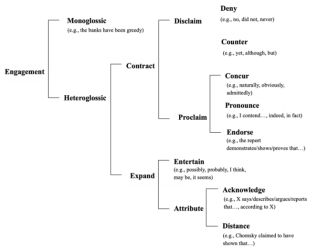
explain that Engagement falls in a cline between contractive heteroglossia, which closes down the dialogic space for any opposing view, and expansive heteroglossia, which opens up the dialogic space to all available views. The contraction of alternative voices can be achieved through the resources of disclaim (i.e., denying or countering alternative voices) or proclaim (i.e., concurring, pronouncing or endorsing alternative voices). The alternative voices can be expanded through the resources of entertain (i.e., using epistemic modality to support the possibility of propositions) or attribute (i.e., attributing propositions to external sources).
Figure 1 illustrates the taxonomy of the Engagement subsystem and provides some example realizations.
2.4. Coding Procedures
The initial step in Appraisal coding is determining the level of granularity, i.e., the degree of detail or specificity in coding each category
| [54] | Hood, S. Appraising Research: Taking a Stance in Academic Writing. Ph.D. Thesis, University of Technology, Sydney, 2004. |
| [55] | Fuoli, M. A stepwise method for annotating appraisal. Functions of Language. 2018, 25(2), pp. 229 - 258.
https://doi.org/10.1075/fol.15016.fuo |
[54, 55]
.
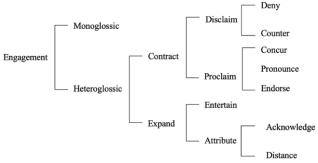
Figure 2 illustrates the level of granularity used to code the identified Engagement instances in the current study.
Figure 2. Level of Granularity of the Coding System of Engagement.
Following that, an initial coding scheme, which includes a list of the Engagement categories and sub-categories, their definitions and their lexicogrammatical realizations, was established. The development of this initial coding scheme followed a series of steps. First, the Engagement typology
| [13] | Martin, J. R., & White, P. R. R. The Language of Evaluation: Appraisal in English. Sydney: Palgrave Macmillan; 2005. |
[13]
and relevant previous studies, e.g.,
| [10] | Fryer, D. L. Engagement in medical research discourse: A multisemiotic approach to dialogic positioning. New York: Routledge; 2022. https://doi.org/10.4324/9781003041146 |
| [30] | Alshehri, A. The Construction of Stance and Authorial Voice in Medical Texts Written by EFL Saudi Students and Professional Scholars: A Contrastive Study of the Use of the Appraisal Resources. Ph.D. Thesis, King Saud University, 2020. |
| [38] | Zhao, J. Appraisal Analysis of the Literature Review Section in Published Journal Articles of Applied Linguistics. 2022. Available from:
https://ssrn.com/abstract=4146824 (Accessed: Jan. 01, 2025). |
| [39] | Geng, Y. Appraisal in Discussion Sections of Doctoral Theses in the Discipline of ELT: A Corpus-based Analysis. Doctoral Dissertation, University of Warwick, Warwick, 2015. |
| [56] | Al-Busafi, R. Analyzing Stance in Parliamentary Debates: A Corpus-Assisted Study using the APPRAISAL Framework. Ph.D. Thesis, University of Birmingham, Birmingham, 2022. |
| [57] | Farnia, M., Saeedi, M., Ataei, Z. A cross-disciplinary study on evaluative strategies in research articles conclusion sections. International Journal of Research in English Education. 2020, 5(1), pp. 1-18. https://doi.org/10.29252/ijree.5.1.1 |
| [58] | Jalilifar, A., Hayati, A. M., Mashhadi, A. Evaluative strategies in Iranian and international research article introductions: Assessment of academic writing. Research in Applied Linguistics. 2012, 3(1), pp. 81-109. http://rals.scu.ac.ir/article_10373.html |
| [59] | Taboada, M., Carretero, M., Hinnell, J. Loving and hating the movies in English, German and Spanish. Languages in Contrast. 2014, 14(1), pp. 127 - 161.
https://doi.org/10.1075/lic.14.1.07tab |
| [60] | Xie, J. Evaluation in Mainland Chinese English-major MA Thesis Literature Review Chapters. Doctoral Dissertation, Chinese University of Hong Kong, Hong Kong, 2014. |
| [61] | Zhang, W., Cheung, Y. L. The construction of authorial voice in writing research articles: A corpus-based study from an appraisal theory perspective. International Journal of English Studies. 2018, 18(2), pp. 53-75.
https://doi.org/10.6018/ijes/2018/2/320261 |
[10, 30, 38, 39, 56-61]
, were consulted to construct an initial list of the lexicogrammatical realizations of Engagement. Next, a manual coding process was conducted on 10% of each sub-corpus (i.e., five RAs per discipline). This step was undertaken to search for any context-specific lexical realizations of Engagement that might not have been identified in the framework or consulted previous research. Through this step, some new lexicogrammatical realizations were discovered and added to the list (see Appendix 1). According to Fuoli
, informal exploration of corpus data is fruitful during the early stages of establishing a coding scheme. Using this initial list, the corpus was searched for the compiled lexicogrammatical realizations and those which were not found were removed. Fuoli
explains that the constructed coding schemes and manuals should be context-specific, i.e., aligned with the objectives of the research and the characteristics of the texts under analysis. Thus, removing realizations that do not exist in the corpus is highly important to enhance the reliability and replicability of the coding, particularly during intra-coder and inter-coder reliability procedures.
2.5. Coding Unitization
Deciding on the coding unitization, i.e., the textual segments to which a code is assigned, is fundamental before the full-scale coding of the data to enhance reliability and statistical rigor
| [55] | Fuoli, M. A stepwise method for annotating appraisal. Functions of Language. 2018, 25(2), pp. 229 - 258.
https://doi.org/10.1075/fol.15016.fuo |
| [62] | Campbell, J. L., Quincy, C., Osserman, J., Pedersen, O. K. Coding in-depth semistructured interviews: Problems of unitization and intercoder reliability and agreement. Sociological Methods and Research. 2013, 42(3).
https://doi.org/10.1177/0049124113500475 |
| [63] | Krippendorff, K. Content Analysis: An Introduction to Its Methodology, 4th Ed. SAGE, 2019. |
[55, 62, 63]
. Engagement exhibits structural diversity in its lexicogrammatical realizations, which range from single lexis to entire sentences
| [13] | Martin, J. R., & White, P. R. R. The Language of Evaluation: Appraisal in English. Sydney: Palgrave Macmillan; 2005. |
[13]
. This variation in length poses significant challenges for consistent coding unitization and statistical rigor. Heteroglossic Engagement is realized at the word level (e.g.,
may, never, clearly, report), phrase level (e.g.,
on the other hand, according to X…), and even clause level (e.g.,
it is widely recognized that…, it has been rumored that…). Given that multiple instances of heteroglossic Engagement can appear in a single clause, unitizing at the clause level is statistically inappropriate as it would deflate the proportion of heteroglossia within the corpus. Therefore, instances of heteroglossic Engagement were unitized at the word level, with each coded instance assigned a weight corresponding to its word count via the built-in weight feature in MAXQDA.
Table 3 demonstrates the coding unitization for heteroglossic Engagement.
Table 3. Coding Unitization for Heteroglossic Engagement.
Extract | Coded Unit | Code | Code Weight |
Nonetheless, scholars have yet to generate theoretical models that can effectively predict the role of LLS…(AL. LR. 12). | Nonetheless, | Engagement> Heteroglossic> Contract> Disclaim> Counter | 1 |
yet | Engagement> Heteroglossic> Contract> Disclaim> Counter | 1 |
can | Engagement> Heteroglossic> Expand> Entertain | 1 |
It is widely recognized that host microbiota has mutual interactions…(MD. CON. 11) | It is widely recognized that | Engagement> Heteroglossic> Contract> Proclaim> Pronounce | 5 |
Monoglossic Engagement, on the other hand, is realized by independent clauses that convey propositions communicated as bare assertions
| [13] | Martin, J. R., & White, P. R. R. The Language of Evaluation: Appraisal in English. Sydney: Palgrave Macmillan; 2005. |
[13]
. Nevertheless, monoglossic instances of Engagement were also unitized at the word level. This decision was guided by several methodological and analytical considerations. First, the manual identification and classification of clauses in a large corpus such as the current one is a complex, time-consuming and error-prone process. Moreover, MAXQDA does not support automated clause identification, and the accuracy of other external segmentation tools cannot be verified. Second, resorting to unitization at the sentence level, as supported by MAXQDA, would deflate the frequency of monoglossic Engagement because multiple monoglossic segments within a single complex sentence would be counted as a single unit. Furthermore, applying a different unitization scheme for monoglossic Engagement would compel an isolated statistical treatment for the data and separate reporting of the results due to incomparability considerations. Taking these practical constraints into account, word-level unitization of monoglossic Engagement was adopted despite its theoretical limitations. In the current coding, monoglossic instances of Engagement were identified using the exclusion options in the extended text search. Hence, any stretches of monoglossia within the texts, i.e., stretches free of the heteroglossic realizations, were identified regardless of their grammatical structures. Once a monoglossic instance was identified, it was assigned a code with a weight corresponding to its word count. This unitization scheme is illustrated in
Table 4.
Table 4. Coding Unitization for Monoglossic Engagement.
Extract | Coded Unit | Code | Code Weight |
Good communication is a pillar of medical professionalism. (MD. INT. 1). | Good communication is a pillar of medical professionalism. | Engagement> Monoglossic | 8 |
2.6. Achieving Coding Reliability
A pilot study was conducted to assess the reliability of the constructed coding scheme and ensure overall analytical rigor before the full-scale coding process. Fuoli
asserts that the developed coding schemes and guidelines should be assessed and refined until satisfactory reliability levels are achieved. Throughout this pilot study, the researcher conducted two coding trials to measure intra-coder reliability, i.e., the stability of coding by the same coder at different points in time.
A subset of the RAs, comprising 20% of the corpus (i.e., 10 RAs from each subcorpus), was randomly selected for coding. According to Campbell et al.
| [62] | Campbell, J. L., Quincy, C., Osserman, J., Pedersen, O. K. Coding in-depth semistructured interviews: Problems of unitization and intercoder reliability and agreement. Sociological Methods and Research. 2013, 42(3).
https://doi.org/10.1177/0049124113500475 |
[62]
, there is limited agreement in the literature on the sufficient proportion of the corpus for assessing intra-coder and inter-coder reliability. However, O’Connor and Joffe
| [64] | O’Connor, C., Joffe, H. Intercoder reliability in qualitative research: Debates and practical guidelines. International Journal of Qualitative Methods. 2020, 19, 1-13.
https://doi.org/10.1177/1609406919899220 |
[64]
argue that, depending on the size of the corpus, a proportion between 10% and 25% is typically sufficient for conducting reliability testing. This subset was imported into MAXQDA and organized in the same manner as the main corpus. The initial Engagement coding scheme was employed for the first coding trial. The second coding trial was conducted two months after the initial one. The results demonstrate that high intra-coder percentage agreement was achieved in the coding of the subcorpora of medicine (99%) and applied linguistics (98%) (see Appendix 2). According to Miles et al.
| [65] | Miles, M. B., Huberman, A. M., Saldana, J. Qualitative Data Analysis: A Methods Sourcebook, 3rd Ed. Sage Publications, 2014. |
[65]
, intra-coder and inter-coder agreement of 85% and higher is considered acceptable in discourse analysis.
2.7. Statistical Interpretation of Results
Following the recommendations of Biber et al.
| [51] | Biber, D., Conrad, S., Reppen, R. Corpus Linguistics: Investigating Language Structure and Use. Cambridge: Cambridge University Press; 1998. |
[51]
and Brezina
| [66] | Brezina, V. Statistics in Corpus Linguistics: A Practical Guide. Cambridge: Cambridge University Press; 2018. |
[66]
, the raw frequencies of the coded Engagement instances were normalized per 10,000 words, since the two subcorpora differ in size. These normalized frequencies were used to facilitate comparisons between subcorpora and improve statistical accuracy
| [51] | Biber, D., Conrad, S., Reppen, R. Corpus Linguistics: Investigating Language Structure and Use. Cambridge: Cambridge University Press; 1998. |
| [66] | Brezina, V. Statistics in Corpus Linguistics: A Practical Guide. Cambridge: Cambridge University Press; 2018. |
[51, 66]
. To determine whether there were statistically significant differences between medicine and applied linguistics in the use of Engagement, the Mann–Whitney U test was used. This non-parametric test is typically used when the assumptions of normal distribution of the data (Shapiro-Wilk tests,
Ps <.001) required for the parametric alternatives are not met, as in the data of the current study
| [66] | Brezina, V. Statistics in Corpus Linguistics: A Practical Guide. Cambridge: Cambridge University Press; 2018. |
[66]
.
3. Results and Discussion
3.1. Monoglossic Engagement Across the RA Sections of AL and MD
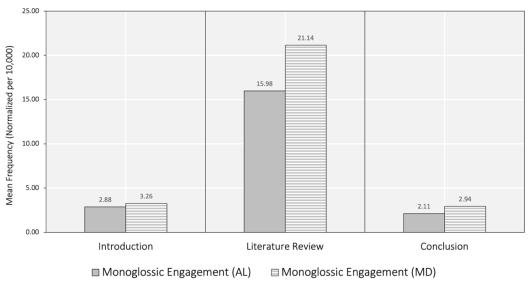
Figure 3. Monoglossic Engagement across the RA sections of AL and MD.
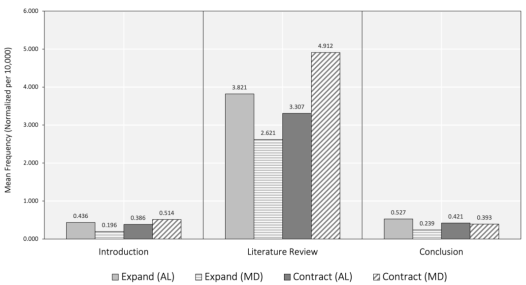
Table 5. Monoglossic Engagement across the RA sections of AL and MD.
Category | Section | AL | MD | p-value |
Total | Total (per 10,000) | Mean (per 10,000) | Total | Total (per 10,000) | Mean (per 10,000) |
Monoglossic Engagement | Introduction | 5546 | 143.958 | 2.879 | 3626 | 163.177 | 3.264 | 0.038* |
Literature Review | 30777 | 798.882 | 15.978 | 23484 | 1056.824 | 21.136 | 0.274 |
Conclusion | 4067 | 105.568 | 2.111 | 3272 | 147.246 | 2.945 | 0.000*** |
Figure 3 demonstrates the distribution of the mean normalized frequencies for monoglossic Engagement across the RA sections in the disciplines of AL and MD. The mean normalized frequencies for monoglossic Engagement were higher in MD than AL across the introduction (
Ms= 3.26 and 2.88, respectively), literature review (
Ms= 21.14 and 15.98, respectively) and conclusion (
Ms= 2.94 and 2.11) sections. Results of the Mann-Whitney U test, presented in
Table 5, revealed statistically significant differences in the normalized frequencies of monoglossic Engagement between AL and MD in the introduction (
p =.038) and conclusion (
p <.001) sections.
In the introduction section of the AL and MD RAs, monoglossic instances were incorporated to achieve essential functions; namely, introduce the topic or issue of the RA and assign it centrality in the disciplinary field. The higher occurrence of monoglossic instances in MD introductions compared to those in AL (Ms= 3.26 and 2.88, respectively) indicated that claiming credibility of propositions to introduce the topic of the RA is more common in hard-applied academic disciplines than in soft-applied ones. Examples (1) and (2) are extracts from the corpus that demonstrate monoglossic Engagement in MD and AL introductions.
Example (1): Good communication is a pillar of medical professionalism (MD. INT. 1).
Example (2): As the twentieth century began, analogy stood at the center of linguistic theories of productivity and the productivity of inflectional wordforms (AL. INT. 15).
In the literature review section, monoglossic Engagement exhibited distinct discipline-specific patterns. In MD literature reviews, monoglossic instances of Engagement were commonly used in the discussion of biomedical processes or chemical reactions. Examples (3), (4) and (5) demonstrate this observed use of monoglossic Engagement in MD literature reviews. On the other hand, monoglossic Engagement in AL literature reviews was frequently incorporated in the presentation of theoretical or practical claims, particularly those of previous studies. Examples (6) to (7) illustrate this finding regarding monoglossic Engagement in AL literature reviews. Nonetheless, monoglossic Engagement appeared frequently in stretches of text in which writers, from both disciplines, presented their own positions with authority and assertiveness, as in examples (8) and (9).
Example (3): Hyperemesis gravidarum increases the risk of both antenatal and postnatal venous thromboembolism (MD. LR. 3).
Example (4): Major and minor congenital malformations are associated with exposure to sodium valproate, carbamazepine, phenobarbital and topiramate (MD. LR. 4).
Example (5): This adjuvant treatment consisted of one dose of atezolizumab (anti-PDL1 (programmed death ligand 1) antibody) and eight doses (one week) of mRNA neoantigen vaccines, followed by 12 cycles of mFOLFIRINOX (MD. LR. 12).
Example (6): Overlapping representations of multiword units and their constituent morpho-syntactic components enhance children’s ability to make accurate predictions as language unfolds over time (AL. LR. 45).
Example (7): In second language acquisition (SLA) research, learner engagement is conceptualized as a tripartite construct: cognitive, behavioral, and affective (AL. LR. 20).
Example (8): It is imperative that researchers familiarize themselves with the corpora that they use (AL. LR. 44).
Example (9): Further work is therefore needed in this area to enable timely delivery of therapy (MD. LR. 14).
Monoglossic Engagement was used in the conclusion section of the AL and MD RAs to conclude the reviews by highlighting some limitations in the research area and recommending implications or future directions for research. Examples (10) and (11) demonstrate the use of monoglossic Engagement in the RA conclusions of MD and AL.
Example (10): The overarching field of AI, inclusive of ML, NNs, DL, NLP, XAI, and other domains and methodologies, offers a promising avenue for improving all aspects of lung cancer management with data-driven approaches (MD. CON. 32).
Example (11): At this time, more high-quality research is needed that is conducted in authentic instructed settings, employing robust instructional techniques (AL. CON. 48).
The findings revealed that monoglossic Engagement was more prevalent in the RA sections of MD than in those of AL, suggesting that construing propositions as non-negotiable facts is more frequent in MD discourse than in AL. This finding might be attributed to the epistemic conventions in MD as a hard-applied discipline in which knowledge is stabilized through disciplinary consensus and paradigmatic grounding
| [8] | Biglan, A. The characteristics of subject matter in different academic areas. Journal of Applied Psychology, 57(3), pp. 195-203. https://doi.org/10.1037/h0034701 |
| [9] | Becher, T., & Trowler, P. R. Academic Tribes and Territories: Intellectual Enquiry and the Cultures of Disciplines (2nd ed.). Buckingham: Open University Press; 2001. |
[8, 9]
. Nonetheless, in both subcorpora, monoglossic Engagement enhanced the presence of the writers’ authorial voice as their positions were assumed to be taken for granted by the assumed reader with no consideration of other possible positions
| [13] | Martin, J. R., & White, P. R. R. The Language of Evaluation: Appraisal in English. Sydney: Palgrave Macmillan; 2005. |
[13]
. This would consequently persuade the reader to accept the writer’s positions and arguments
| [13] | Martin, J. R., & White, P. R. R. The Language of Evaluation: Appraisal in English. Sydney: Palgrave Macmillan; 2005. |
[13]
.
3.2. Contractive and Expansive Heteroglossic Engagement Across the RA Sections of AL and MD
Figure 4. Contractive and Expansive Engagement across the RA sections of AL and MD.
Table 6. Contractive and Expansive Engagement across the RA sections of AL and MD.
Category | Section | AL | MD | p-value |
Total | Total (per 10,000) | Mean (per 10,000) | Total | Total (per 10,000) | Mean (per 10,000) |
Contractive Engagement | Introduction | 743 | 19.286 | 0.386 | 571 | 25.719 | 0.514 | 0.023** |
Literature Review | 6371 | 165.373 | 3.307 | 5457 | 245.598 | 4.912 | 0.003** |
Conclusion | 810.0 | 21.025 | 0.421 | 436 | 19.643 | 0.393 | 0.154 |
Expansive Engagement | Introduction | 839 | 21.778 | 0.436 | 218 | 9.81 | 0.196 | 0.000*** |
Literature Review | 7359 | 191.031 | 3.821 | 2912 | 131.045 | 2.621 | 0.000*** |
Conclusion | 1016 | 26.372 | 0.527 | 265 | 11.925 | 0.239 | 0.005** |
Note. *p <.05, **p <.01, ***p <.001
The results illustrated in
Figure 4 show a discipline-specific distribution of the contractive and expansive heteroglossic Engagement realizations across the RA sections. For one thing, expansive realizations (
Ms= 0.436, 3.821 and 0.527, respectively) were higher than the contractive ones (
Ms= 0.386, 3.307 and 0.421, respectively) in the AL introduction, literature review and conclusion sections of the RA. This finding indicates that MD RAs have a narrow dialogic space in which alternative positions are acknowledged but are either rejected entirely or challenged. This finding is consistent with those of Yahya and Alyousef
| [37] | Yahya, A., Alyousef, H. S. The construction of stance and authorial voice in medical texts written by professional scholars. Sumerianz Journal of Education, Linguistics and Literature. 2022, 53, 58-70. https://doi.org/10.47752/sjell.53.58.70 |
[37]
and Alshehri
| [30] | Alshehri, A. The Construction of Stance and Authorial Voice in Medical Texts Written by EFL Saudi Students and Professional Scholars: A Contrastive Study of the Use of the Appraisal Resources. Ph.D. Thesis, King Saud University, 2020. |
[30]
, who reported a prevalence of contractive over expansive Engagement in published MD research articles.
Conversely, the introduction, literature review and conclusion sections in the MD RAs exhibited high mean normalized frequencies of contractive realizations (
Ms= 0.514, 4.912 and 0.393, respectively). These values were higher than the expansive realizations in the introduction, literature review and conclusion sections (
Ms= 0.196, 2.621 and 0.239, respectively). Hence, this finding suggests that AL RAs maintain an open dialogic space that acknowledges other positions. This finding is consistent with previous studies which reported the tendency of writers in soft disciplines to use more expansive Engagement resources than those in hard disciplines
| [29] | Amornrattanasirichok, S., Jaroongkhongdach, W. Engagement in literature reviews of Thai and International Research Articles in Applied Linguistics. In Proceedings of the International Conference: DRAL 3/19th ESEA, King Mongkut’s University of Technology, Bangkok, Thailand, 2017. |
| [33] | Hu, G., Wang, G. Disciplinary and ethnolinguistic influences on citation in research articles. Journal of English for Academic Purposes. 2014, 14, pp. 14-28.
https://doi.org/10.1016/j.jeap.2013.11.001 |
| [35] | Sun, F., Zhang, L. Engagement resources across disciplines in research articles: A corpus-based study. Sino-US English Teaching. 2022, 19(9), pp. 332-337.
https://doi.org/10.17265/1539-8072/2022.09.006 |
| [38] | Zhao, J. Appraisal Analysis of the Literature Review Section in Published Journal Articles of Applied Linguistics. 2022. Available from:
https://ssrn.com/abstract=4146824 (Accessed: Jan. 01, 2025). |
[29, 33, 35, 38]
. Such results might be attributed to the nature of knowledge in soft disciplines which is often interpretive, individualistic and open to multiple perspectives
| [8] | Biglan, A. The characteristics of subject matter in different academic areas. Journal of Applied Psychology, 57(3), pp. 195-203. https://doi.org/10.1037/h0034701 |
| [9] | Becher, T., & Trowler, P. R. Academic Tribes and Territories: Intellectual Enquiry and the Cultures of Disciplines (2nd ed.). Buckingham: Open University Press; 2001. |
[8, 9]
.
Comparing the AL and MD sections, the AL introduction, literature review and conclusion sections had more expansive realizations than their comparable MD sections. As shown in
Table 6, these differences between AL and MD were statistically significant in all three sections of the RA (
ps <.001, <.001, and.005, respectively). In addition, the MD introduction (
M= 0.514) and literature review (
M= 4.912) sections exhibited more contractive resources of Engagement than the AL introduction (
M= 0.386) and literature review (
M= 3.307) sections. Indeed, the results revealed that these differences were statistically significant (
ps=.023 and.003, respectively). Nonetheless, contractive resources of Engagement were comparably similar in AL (
M= 0.42) and MD (
M= 0.39) conclusion section, with this difference being statistically insignificant (
p >.05).
3.2.1. Contractive Heteroglossic Engagement
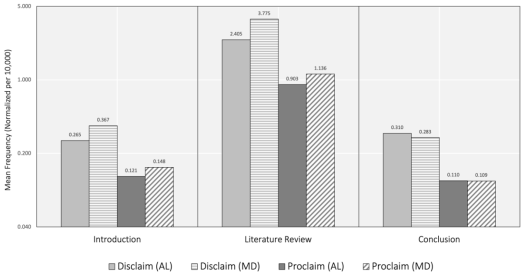
Figure 5. Disclaim and Proclaim across the RA sections of AL and MD.
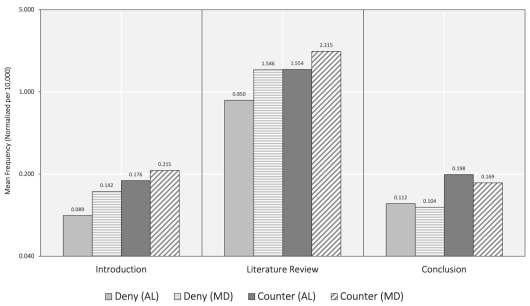
Table 7. Disclaim and Proclaim across the RA sections of AL and MD.
Category | Section | AL | MD | p-value |
Total | Total (per 10,000) | Mean (per 10,000) | Total | Total (per 10,000) | Mean (per 10,000) |
Disclaim | Introduction | 510 | 13.238 | 0.265 | 407 | 18.338 | 0.367 | 0.029* |
Literature Review | 4632 | 120.233 | 2.405 | 4194 | 188.76 | 3.775 | 0.000*** |
Conclusion | 598 | 15.522 | 0.31 | 314 | 14.131 | 0.283 | 0.626 |
Proclaim | Introduction | 233 | 6.048 | 0.121 | 164 | 7.38 | 0.148 | 0.092 |
Literature Review | 1739 | 45.139 | 0.903 | 1262 | 56.792 | 1.136 | 0.312 |
Conclusion | 212 | 5.503 | 0.11 | 121 | 5.468 | 0.109 | 0.260 |
Note. *p <.05, **p <.01, ***p <.001
Figure 5 demonstrates the distribution of proclaim and disclaim across the AL and MD RA sections. The figure shows that contractive Engagement was primarily realized via disclaim across all sections of the RA in both disciplines. More specifically, the mean normalized frequencies for disclaim were significantly (
ps=.029 and <.001, respectively) higher in the MD than AL introduction (
Ms= 0.367 and 0.265, respectively) and literature review (
Ms= 3.775 and 2.405, respectively) sections (see
Table 7).
Figure 6. Deny and Counter across the RA sections of AL and MD.
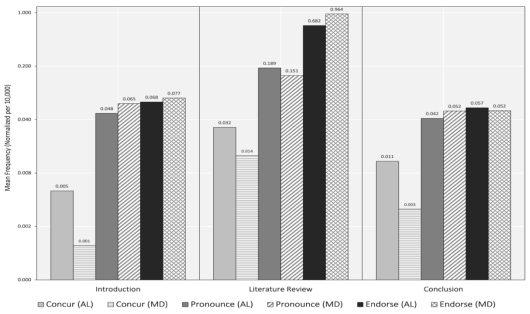
Table 8. Deny and Counter across the RA sections of AL and MD.
Category | Section | AL | MD | p-value |
Total | Total (per 10,000) | Mean (per 10,000) | Total | Total (per 10,000) | Mean (per 10,000) |
Deny | Introduction | 171 | 4.439 | 0.089 | 158 | 7.11 | 0.142 | 0.014* |
Literature Review | 1638 | 42.518 | 0.85 | 1718 | 77.313 | 1.546 | 0.000*** |
Conclusion | 216 | 5.607 | 0.112 | 116 | 5.22 | 0.104 | 0.369 |
Counter | Introduction | 339 | 8.799 | 0.176 | 238 | 10.733 | 0.215 | 0.250 |
Literature Review | 2994 | 77.716 | 1.554 | 2461 | 110.772 | 2.215 | 0.008** |
Conclusion | 382 | 9.916 | 0.198 | 187 | 8.438 | 0.169 | 0.966 |
Note. *p <.05, **p <.01, ***p <.001
Figure 6 presents the distribution of the two disclaim categories, deny and counter. The figure shows that counter was more prevalent than deny in the RA sections of both disciplines. For the use of both deny and counter, MD (
Ms= 1.546 and 2.215, respectively) surpassed AL (
Ms= 0.850 and 1.554, respectively) in the literature review section, with this difference being statistically significant (
ps <.001 and =.008, respectively). The same can also be said for deny and counter in the introduction section as they were used more by MD (
Ms= 0.142 and 0.215, respectively) than AL (
Ms= 0.084 and 0.176, respectively) writers. However, a statistically significant difference between the disciplines was found only in the use of deny (
p=.01) as shown in
Table 8. Nonetheless, these patterns did not persist in the conclusion section since both deny and counter were used more by AL (
Ms= 0.112 and 0.198, respectively) than MD (
Ms= 0.104 and 0.169, respectively) professional academic writers with no statistically significant differences (
p >.05). Examples (12), (13), (14) and (15) demonstrate some of the frequent realizations (e.g.,
not, cannot, impossible, never) of deny from the AL and MD subcorpora while examples (16), (17), (18) and (19) illustrate some of those of counter (e.g.,
but, however, although, while). Examples (12), (13), (14) and (15) show how lexicogrammatical realizations of deny were used to negate and reject a proposition or point of view explicitly; hence, the positive alternative is invoked and assumed by the reader (Martin & White, 2005). Conversely, examples (16), (17), (18) and (19) demonstrate how using the lexicogrammatical realizations of counter challenged and replaced a proposition that is likely to be assumed by the reader by introducing an opposing proposition rather than completely rejecting it.
Example (12): … one article, including this one, cannot do justice to the vast topic of open research (AL. INT. 43).
Example (13): …remote work will never replace the relationship-building that comes with face-to-face interaction… (AL. CON. 17).
Example (14): …current evidence does not support the notion that the presence of ketonuria is associated with, or a marker of disease severity for, hyperemesis gravidarum… (MD. LR. 3).
Example (15): Hence, it’s impossible to have a general outline that applies to all (MD. LR. 21).
Example (16): While many parts of the world are still grappling with containment of the COVID-19 pandemic, international travel restrictions are starting to lift… (MD. INT. 23).
Example (17): Although XR technology has existed for decades, its popularity has risen only in the past few years (MD. CON. 7).
Example (18): EEG/ERP techniques enable fine-grained temporal analyses of brain activation patterns but have a poor spatial resolution (AL. INT. 2).
Example (19): However, when this option is not realistic, a more gradual approach is appropriate (AL. LR. 12).
Figure 7. Concur, Pronounce and Endorsement across the RA sections of AL and MD.
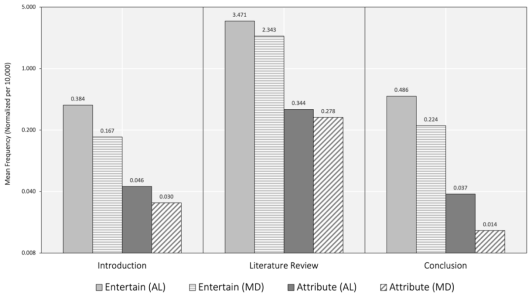
Table 9. Concur, Pronounce and Endorsement across the RA sections of AL and MD.
Category | Section | AL | MD | p-value |
Total | Total (per 10,000) | Mean (per 10,000) | Total | Total (per 10,000) | Mean (per 10,000) |
Concur | Introduction | 9 | 0.234 | 0.005 | 1 | 0.045 | 0.001 | 0.009** |
Literature Review | 61 | 1.583 | 0.032 | 15 | 0.675 | 0.014 | 0.002** |
Conclusion | 22 | 0.571 | 0.011 | 3 | 0.135 | 0.003 | 0.007** |
Pronounce | Introduction | 93 | 2.414 | 0.048 | 72 | 3.24 | 0.065 | 0.001** |
Literature Review | 365 | 9.474 | 0.189 | 167 | 7.538 | 0.151 | 0.180 |
Conclusion | 80 | 2.077 | 0.042 | 57 | 2.588 | 0.052 | 0.000*** |
Endorse | Introduction | 131 | 3.4 | 0.068 | 85 | 3.825 | 0.077 | 0.997 |
Literature Review | 1313 | 34.082 | 0.682 | 1071 | 48.197 | 0.964 | 0.093 |
Conclusion | 110 | 2.855 | 0.057 | 58 | 2.61 | 0.052 | 0.778 |
Note. *p <.05, **p <.01, ***p <.001
For the proclaim categories,
Figure 7 reveals that endorse was the most frequently used category, followed by pronounce in the introduction, literature review and conclusion sections by both AL and MD. Concur, on the other hand, was the least frequent of the proclaim categories.
Endorse was employed quite similarly in the introduction (
Ms= 0.068 and 0.077, respectively) and conclusion (
Ms= 0.057 and 0.052, respectively) sections in AL and MD. In the literature review section, endorse was more frequently used by MD (
M= 0.9) than by AL (
M= 0.6) professional academic writers. However, these differences in the frequency of endorse between AL and MD in all sections were not statistically significant (
p >.05) as presented in
Table 9. Examples (20), (21), (22) and (23) illustrate how lexicogrammatical realizations of endorse (e.g., demonstrate, showed, findings, confirmed, revealed) were used in the AL and MD subcorpora to assign propositions to external sources.
Example (20): Strand and Johnson (1996), Strand (1999), and Munson (2011) all demonstrate that visual information about the gender of a speaker influences categorical perception... (AL. LR. 24).
Example (21): Gómez (2002) showed that infants can learn dependencies between nonadjacent words…(AL. LR. 26).
Example (22): Findings from a large cohort of NSCLC patients treated with anti-PD-1 confirmed that the presence of A. muciniphila is related to greater objective response rates and longer OS (MD. LR. 11).
Example (23): …the studies typically revealed a lack of awareness of these guidelines by relevant healthcare and public health professionals (MD. CON. 8).
Although the AL (M= 0.189) literature review section exhibited a higher frequency of pronounce compared to that of MD (M= 0.151), this difference was not statistically significant (p=.180). Nonetheless, pronounce was used more in the MD introduction (M= 0.065) and conclusion (M= 0.052) sections than in their AL (Ms= 0.048 and 0.042, respectively) counterparts, with these differences being statistically significant (p <.001 and.001, respectively). Examples (24), (25), (26), and (27) show how professional academic writers from AL and MD foregrounded their authorial voice by inserting authorial interventions, namely, the lexicogrammatical realizations of pronounce (e.g., given that, indeed, in fact, importantly).
Example (24): Given that physicians and other health care providers are still among the most trusted figures when it comes to health care advice… (MD. INT. 36).
Example (25): Indeed, infection with one virus could enhance or suppress replication of another virus in hosts… (MD. LR. 19).
Example (26): In fact, even the terminology associated with SA poses challenges to scholars who seek to provide even a broad overview (AL. INT. 13).
Example (27): Importantly, these classifications transcend individual languages, relying on the universal interplay of meaning and syntactic behavior as the key classification criterion (AL. INT. 30).
Concur was the least frequent proclaim category across all RA sections in both disciplines. However, concur was extremely less frequent in the MD introduction (
M=0.001), literature review (
M= 0.014) and conclusion (
M= 0.003) sections as compared to those of AL (
Ms= 0.005, 0.032 and 0.011, respectively); indeed, these differences were statistically significant (
ps=.009,.002 and.007, respectively). Lexicogrammatical realizations of concur shown in examples (28), (29), (30), and (31) (i.e.,
certainly, of course, admittedly, we know that), were used in the AL and MD subcorpora to explicitly presuppose an agreement between the writer and reader in their stance toward the subject matter
| [13] | Martin, J. R., & White, P. R. R. The Language of Evaluation: Appraisal in English. Sydney: Palgrave Macmillan; 2005. |
[13]
.
Example (28): While optimism regarding genAI is certainly warranted, so too is skepticism (MD. INT. 13).
Example (29): Of course, the ability to rapidly shape-shift creates its own challenges (MD. LR. 13).
Example (30): Admittedly, this is more about citizenship in general than linguistic citizenship… (AL. LR. 11).
Example (31): We know that human communication systems are interconnected, both across and within brain regions and networks and from central to peripheral nervous system function (AL. LR. 14).
3.2.2. Expansive Heteroglossic Engagement
Figure 8. Entertain and Attribute across the RA sections of AL and MD.
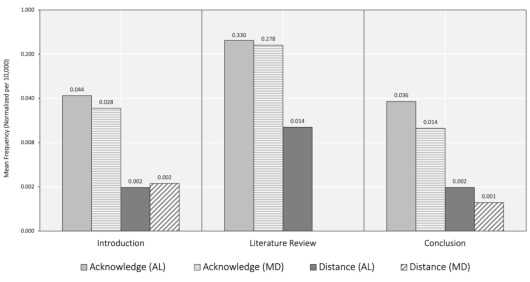
Table 10. Entertain and Attribute across the RA sections of AL and MD.
Category | Section | AL | MD | p-value |
Total | Total (per 10,000) | Mean (per 10,000) | Total | Total (per 10,000) | Mean (per 10,000) |
Entertain | Introduction | 740 | 19.221 | 0.384 | 185 | 8.325 | 0.167 | 0.000*** |
Literature Review | 6686 | 173.549 | 3.471 | 2603 | 117.14 | 2.343 | 0.000*** |
Conclusion | 935 | 24.283 | 0.486 | 249 | 11.205 | 0.224 | 0.016* |
Attribute | Introduction | 88 | 2.284 | 0.046 | 33 | 1.485 | 0.03 | 0.033* |
Literature Review | 662 | 17.184 | 0.344 | 309 | 13.906 | 0.278 | 0.164 |
Conclusion | 72 | 1.869 | 0.037 | 16 | 0.72 | 0.014 | 0.001** |
Note. *p <.05, **p <.01, ***p <.001
Figure 8 illustrates a notable pattern in the use of the major expansive categories, entertain and attribute, across the RA sections in both AL and MD. Expansive Engagement was predominantly realized through the lexicogrammatical realizations of entertain in all RA sections in both disciplines. In the RA sections of AL, the mean normalized frequencies of entertain were significantly higher than attribute across all sections: introduction (0.384 vs. 0.046), literature review (3.471 vs. 0.344), and conclusion (0.486 vs. 0.037). Similarly, the mean normalized frequencies of entertain surpassed those of attribute in the introduction (0.167 vs. 0.030), literature review (2.343 vs. 0.278), and conclusion (0.224 vs. 0.014) sections.
Entertain was substantially more frequent in the AL introduction (
M= 0.384), literature review (
M= 3.47) and conclusion (
M= 0.486) sections than in those of MD (
Ms= 0.167, 2.343 and 0.224, respectively). In fact, the results presented in
Table 10 show that these differences between AL and MD were statistically significant across all the RA sections (
ps= <.001, <.001 and.01). Similarly, attribute was also more prominent AL introduction (
M= 0.046), literature review (
M= 0.344) and conclusion (
M= 0.037) sections compared to those of MD (
Ms= 0.030, 0.278 and 0.014, respectively). Statistically significant differences between AL and MD in the use of attribute were identified in the introduction (
p=.03) and conclusion (
p=.001) sections. Examples from (32) to (39) demonstrate the use of the lexicogrammatical realizations of entertain in the AL and MD subcorpora. Such realizations (e.g.,
suggest, likely, indicates, can, potentially, if, should, would, it seems, possible, may) allowed the professional academic writers to mitigate the certainty and obligation of their claims or propositions across the RA sections.
Example (32): Observational studies suggest that empathic care has benefits ranging from reducing mortality… (MD. INT. 1).
Example (33): The most cost-effective approach is likely to involve a combination of interventions… (MD. LR. 8).
Example (34): This indicates that inflammation in fatal Covid-19 is a virus-independent immunopathologic process. (MD. LR. 9).
Example (35): Similarly, ZW18 can potentially improve the effectiveness of PD-1 inhibitors … (MD. LR. 11).
Example (36): …if bilinguals have distinct representations for language or process language differentially as compared to monolinguals, this should show up as distinctions in neural corollaries of processing (AL. INT. 7).
Example (37): The literature on SI would suggest that since beginners do not have the vocabulary to understand strategy explanations… (AL. LR. 12).
Example (38): It seems possible that children learning two languages might have different rates of typical … (AL. LR. 14).
Example (39): In our view, researching multilingually is built on the premise that … (AL. LR. 19).
Figure 9. Acknowledge and Distance across the RA sections of AL and MD.

Table 11. Acknowledge and Distance across the RA sections of AL and MD.
Category | Section | AL | MD | p-value |
Total | Total (per 10,000) | Mean (per 10,000) | Total | Total (per 10,000) | Mean (per 10,000) |
Acknowledge | Introduction | 85 | 2.206 | 0.044 | 31 | 1.395 | 0.028 | 0.024* |
Literature Review | 635 | 16.483 | 0.33 | 309 | 13.906 | 0.278 | 0.271 |
Conclusion | 69 | 1.791 | 0.036 | 15 | 0.675 | 0.014 | 0.000*** |
Distance | Introduction | 3 | 0.078 | 0.002 | 2 | 0.09 | 0.002 | 0.694 |
Literature Review | 27 | 0.701 | 0.014 | 0 | 0.0 | 0.0 | 0.000*** |
Conclusion | 3 | 0.078 | 0.002 | 1 | 0.045 | 0.001 | 1.000 |
Note. *p <.05, **p <.01, ***p <.001
The analysis of the distribution of acknowledge and distance, demonstrated by
Figure 9, revealed that attribution was almost entirely realized via acknowledge with a very limited use of distance in the RA sections across the disciplines of AL and MD. Mean normalized frequencies of acknowledge significantly surpassed those of distance in the introduction (0.044 vs. 0.002, respectively), literature review (0.330 vs. 0.014, respectively), and conclusion (0.036 vs. 0.002, respectively) sections of AL. Moreover, the mean normalized frequencies of acknowledge also exceeded those of distance in the introduction (0.028 vs. 0.002), literature review (0.278 vs. 0.000, respectively), and conclusion (.014 vs. 0.001, respectively) sections of MD. Furthermore, acknowledge was more frequent in the AL introduction (
M= 0.044), literature review (
M= 0.330), and conclusion (
M= 0.036) sections than in the MD (
Ms= 0.028, 0.278, and 0.014, respectively).
Table 11 shows that these differences were statistically significant in the introduction (
p=.02) and conclusion (
p <.001) sections. Overall, instances of distance occurred rarely in the corpus and reached their highest in the AL (
M= 0.014) literature review section, while no instances of distance were found in the MD literature reviews. This rendered the difference in use between AL and MD statistically significant (
p <.001). Examples (40), (41), (42) and (43) demonstrate how professional academic writers attributed a particular proposition to an external source without indicating alignment or disalignment with that proposition. Hence, external voices were brought into the dialogic space using the lexicogrammatical realizations of acknowledge (e.g., according to, proposed, states, statement), which neutrally presented external propositions without signaling the writers’ stance toward them. On the other hand, examples (44) and (45) show how the lexicogrammatical realization of distance (i.e., claim) was employed in the AL and MD subcorpora to explicitly disassociate the authorial voice from the attributed proposition, which consequently indicates skepticism or doubt
| [13] | Martin, J. R., & White, P. R. R. The Language of Evaluation: Appraisal in English. Sydney: Palgrave Macmillan; 2005. |
[13]
.
Example (40): According to one study, only 1 case has occurred in the United States involving a physician being sued for assisting in an IME, and that case was dismissed without hearing (MD. LR. 10).
Example (41): Others have proposed that SARS-CoV-2 infections may have induced immune dysregulation in children… (MD. LR. 19).
Example (42): Stump (2016) explicitly states that the Paradigm Function Morphology model he advances is a hybrid with abstractive elements…(AL. LR. 15).
Example (43): The Linguistic Society of America’s statement on race explicitly foregrounds antiracist initiatives…(AL. INT. 16).
Example (44): … Grosjean (1989) claimed that a bilingual is not two monolinguals in one (AL. LR. 25).
Example (45): …there has also been an exceptional amount of inflation about the abilities of AI and even sometimes claims that AI will replace human clinicians altogether (MD. INT. 25).