Case Report | | Peer-Reviewed

Science Museums as Engines of Cultural and Tourism Development: A Case Study with the Visitors Figure Analysis of Nehru Science Centre, Mumbai, India

Received: 2 July 2026     Accepted: 15 July 2026     Published: 10 August 2026
Views:       Downloads:
Abstract

This paper examines the transformative role of the Nehru Science Centre, Mumbai (NSCM), as a driver of tourism, education, and cultural enrichment. By analyzing visitor statistics and programmatic innovations from 2017 to 2024, the study positions NSCM as a model for museum-driven development within the global context. Strategic collaborations with travel agencies have enhanced NSCM's visibility, positioning it as a prominent destination for cultural and educational tourism. These partnerships have effectively bridged the gap between leisure travel and experiential learning, attracting diverse visitor demographics. NSCM has successfully integrated its exhibits and programs into educational frameworks, fostering a culture of curiosity and scientific literacy among students. Its adoption of hybrid learning models and experiential pedagogy has enriched formal education while inspiring youth engagement with science. The centre has played a pivotal role in embedding a culture of tourism in society by emphasizing the value of museums as spaces for public learning and engagement. During the COVID-19 pandemic, NSC adapted swiftly with virtual programs, demonstrating resilience and reinforcing the societal importance of museums. Through quantitative analysis and predictive modeling, this study highlights NSCM's contribution to Mumbai's tourism ecosystem and its broader implications for cultural development. The findings underscore how science museums can catalyze tourism growth while fostering education and community engagement, setting a benchmark for similar institutions worldwide.

Published in International Journal of Hospitality & Tourism Management (Volume 10, Issue 2)
DOI 10.11648/j.ijhtm.20261002.13
Page(s) 202-220
Creative Commons

This is an Open Access article, distributed under the terms of the Creative Commons Attribution 4.0 International License (http://creativecommons.org/licenses/by/4.0/), which permits unrestricted use, distribution and reproduction in any medium or format, provided the original work is properly cited.

Copyright

Copyright © The Author(s), 2026. Published by Science Publishing Group

Keywords

Nehru Science Centre, Travel Agency Collaboration, Museum Education, Tourism Culture, Public Engagement, Visitor Analysis

1. Introduction
National Council of Science Museums (NCSM) stands as a pioneering institution in India, dedicated to the widespread popularization of science and technology across the nation. The annual reports of NCSM underscore its commitment to communicating scientific ideas to the public through interactive exhibitions, digital outreach, and initiatives promoting innovation and research, such as Innovation Hubs and collaborations with research institutions. Nehru Science Centre (NSCM) in Mumbai, a prominent constituent unit of NCSM, has been at the forefront of this mission, organizing a wide array of programs and exhibitions, including Science on a Sphere, Mobile Science Exhibitions, and Teacher Training Programs. The substantial increase in visitors to NCSM's science museums and centres, from 6,41,423 in 2022-2023 to 7,03,509 in 2023-2024, highlights a growing public interest in science and technology and the effectiveness of NSCM's initiatives in making science accessible and engaging for all .
Since 2022, NSCM has consistently attracted over 700,000 visitors annually, providing them with opportunities to experience the fundamental principles and marvels of science and technology. In an era where museums are increasingly recognized for their multifaceted roles in society, NSCM has emerged as a significant contributor to both cultural enrichment and tourism development. The research presented here stems from the increasing recognition of museums as key players in the tourism sector, offering unique educational and cultural experiences that attract visitors, stimulate local economies, and promote cultural exchange.
This paper seeks to address the following research questions:
1) What role has NSCM played in integrating museum-based learning into educational curricula?
2) How has NSCM contributed to society enhancing public engagement with science?
3) How did the NSCM adapt to the challenges during the COVID-19 pandemic, and what does this show about the resilience of such institutions?
4) How has NSCM's collaboration with travel agencies influenced its visitor numbers and tourism impact?
To answer these questions, this paper will primarily analyze visitor data from 2017 to 2024, including total visitor numbers and program participation rates, and provide an overall historical context from 1977 to 2024, examining trends and patterns that reflect NSCM's impact on educational engagement and influence of tourism. Additionally, it will explore the centre's programmatic innovations, including its integration of hybrid learning models and experiential pedagogy. The structure of this paper will proceed with a review of existing literature, followed by methodology, findings, discussion, and finally, conclusion.
Nehru Science Centre, Mumbai, was specifically selected as the case study framework because it stands as India's largest interactive science facility operational in a high-density urban economic zone and prominent domestic tourist hub. This renders the centre uniquely qualified to illustrate how structural scale, continuous infrastructure modernization, and tactical public outreach directly optimize cultural tourism assets while scaling informal STEM literacy within a developing nation paradigm.
2. Literature Review
The role of museums has undergone a significant transformation in recent decades, evolving from primarily repositories of artifacts to dynamic centres for education, culture, and tourism. This literature review examines the diverse contributions of museums, with a particular focus on science museums, in promoting tourism development and enriching cultural landscapes .
2.1. Museums as Tourism Drivers
Museums have increasingly become essential components of the tourism industry, drawing visitors through their unique offerings and experiences . The relationship between museums and tourism is symbiotic, with museums enhancing a destination's appeal and contributing to its economic vitality. Research indicates that museums not only attract tourists but also encourage them to extend their stay and explore other local attractions, thereby providing a boost to the overall tourism economy. Cultural tourism, within which museum tourism is a significant subset, continues to gain popularity, emphasizing the importance of cultural attractions in providing learning environments that strengthen visitors' cultural understanding and consolidate cultural identity .
2.2. The Educational Role of Science Museums
Science museums play a crucial role in informal science education by making complex scientific concepts accessible to a broad audience . Through interactive exhibits and hands-on activities, these museums stimulate curiosity and promote scientific literacy. Literature highlights the importance of science museums in complementing formal education by providing experiential learning opportunities that can inspire lifelong learning and engagement with science . By bridging the gap between theoretical concepts and real-world applications, science museums help students understand how scientific principles translate into tangible results. This hands-on approach fosters a growth mindset, encouraging students to embrace challenges and learn from mistakes, ultimately igniting a passion for STEM fields .
2.3. Gaps in Literature
While existing literature offers valuable insights into the roles of museums in tourism and cultural development, there is a need for more focused research on the specific impact of science museums in the Indian context. Case studies analyzing the strategies and outcomes of collaborations between science museums and travel agencies in India, the integration of science museum learning into the Indian educational curriculum, and the economic impact of science museums on local tourism industries would contribute significantly to the field. Furthermore, research on the innovative programs implemented by science museums in India, particularly in response to challenges like the COVID-19 pandemic, would provide valuable insights for museum professionals and stakeholders.
3. Methodology
The study utilizes a mixed-methods approach, incorporating both quantitative and qualitative data. Primarily, the visitor statistics from 2017 to 2024 will be analyzed to identify trends and patterns in visitor numbers, including the impact of collaborations with travel agencies during the Year 1995-1996.
3.1. Quantitative Analysis: Visitor Statistics
The primary quantitative data source for this study is the visitor statistics of NSCM, spanning the period from 1977 to 2024 . This data includes:
1) Total Visitor Numbers: Annual visitor counts, providing an overview of overall footfall trends.
2) Visitor Demographics: Data on visitor categories, such as school groups, families, and individual tourists, allowing for an analysis of visitor diversity.
3) Impact of Specific Programs: Assessing the impact of specific events and exhibitions on visitor attendance through comparative analysis.
These statistics were analyzed using descriptive statistics and time-series analysis to identify trends, patterns, and correlations. Predictive modeling was also employed to assess the potential impact of specific initiatives on future visitor numbers .
3.2. Qualitative Analysis: Programmatic Reviews
In addition to quantitative data, this study incorporates qualitative insights derived from:
1) Review of NSCM's Educational Programs: Evaluation of the content, delivery, and impact of educational programs, including school workshops, science demonstrations, and interactive exhibits.
2) Assessment of Community Engagement Initiatives: Evaluation of NSCM's outreach programs, community events, and public engagement activities .
3) Contextual Analysis of COVID-19 Adaptation: Review of NSCM's strategies for adapting to the challenges posed by the COVID-19 pandemic, including the implementation of virtual programs and online resources.
This qualitative analysis was conducted through document reviews, program evaluations, and contextual analysis of NSCM's strategic initiatives.
3.3. Data Collection and Analysis Tools
1) Data related to visitor number was provided by the Nehru Science Centre Administration, Official Website .
2) MS Excel and Google Sheets were used for data analysis and graphical representation.
3) OLS Regression Analysis using Python Coding and Plotting of Data.
3.4. Hypothesis Model: Linear Trend Validity
1) Null Hypothesis (H0): A linear model adequately represents the trend of visitor numbers across the entire time period.
2) Alternative Hypothesis (H1): A non-linear model provides a better fit for the trend of visitor numbers across the entire time period.
3) Analysis: Compare the goodness-of-fit of linear regression models with non-linear models (e.g., polynomial regression) using statistical measures like R-squared or AIC/BIC.
4. Results
This section presents the findings of the study, focusing on the quantitative analysis of visitor statistics and the qualitative insights derived from programmatic reviews.
4.1. Quantitative Analysis
4.1.1. Infrastructure of Nehru Science Centre, Mumbai (NSCM)
Since its inception, the NSCM has developed a comprehensive infrastructure to support its mission of science popularization and education. The centre, conceived in the late 1960s and taking shape as India's one of the largest interactive science centres by 1977 with the opening of the 'Light & Sight' exhibition, followed by the Science Park in 1979, was fully opened to the public in 1985. The centre boasts a sprawling 6 acres (24,000 sq. m.) of science park, housing over 500 hands-on and interactive exhibits on various aspects of science and technology .
Table 1. Galleries & Facilities of NSCM.

Sl.No.

Names of the Galleries/Facilities

Floor Area sq. m.

Date of Inauguration

Date of major Renovation

No. of Exhibits

1

Reception Hall

385

11-Nov-1985

-

13

2

Sound & Hearing

385

15-Sep-2017

-

50

3

Light & Sight

370

11-Nov-1985

29-Mar-2007

72

4

Science for Children

545

11-Nov-1985

2-Nov-2007

68

5

Human & Machine

565

28-Dec-1996

5-Apr-2010

56

6

Prehistoric Animal Life

300

21-Jun-2003

27-May-2011

43

7

Our Technology Heritage

400

9-Oct-2006

-

50

8

Hall of Nuclear Power

700

20-Aug-2011

24-Mar-2025

70

9

Climate Change

368

5-Jun-2012

Dismantled

58

10

Mirror: the reflecting surface

180

23-Jun-2015

-

42

11

Hall of Evolution

240

6-Oct-2025

-

30

12

Machined to Think

380

8-May-2018

-

17

13

Hall of Aviation & Space

550

28-Feb-2022

-

52

14

Linguistic Diversity of India (Temporary Exhibition)

368

23-Nov-2021

31-Jan-2025 (Dismantled)

24

15

Dinosaurs Among Us (Temporary Exhibition)

368

28-Feb-2025

-

19

16

Science on a Sphere

200

5-Jun-2016

-

-

17

Science Odyssey

1350

19-Dec-2008

-

-

18

Innovation Hub

185

24-Feb-2014

-

-

19

Motion Simulator

120

8-Mar-2020

-

-

20

Biotechnology Lab

190

26-Nov-2024

-

-

21

Science Park

6 Acres

24-Nov-1979

56

Table 1 highlights the continuous development of the Nehru Science Centre's infrastructure over the years. Starting with key galleries like Light & Sight and Science for Children, which were inaugurated in 1985, the centre has expanded to include a diverse range of thematic galleries and modern facilities such as the Science on a Sphere (inaugurated in 2016) and the Innovation Hub (established in 2014). The presence of temporary exhibitions like "Linguistic Diversity of India" and "Dinosaurs Among Us" indicates the centre's commitment to offering fresh and engaging content to its visitors. Major renovations to galleries like Light & Sight and Science for Children in 2007, and Human & Machine in 2010, demonstrate the ongoing efforts to maintain and update the exhibits. The upcoming inauguration of the Hall of Evolution in October 2025 and the recent Hall of Aviation & Space in February 2022 further showcase the centre's dedication to expanding its offerings and keeping pace with advancements in science and technology. The Science Park, established in 1979, continues to be a significant attraction with its numerous outdoor exhibits.
4.1.2. Educational Programs - Science Demonstration Lectures (SDL) and Science Shows
As part of its educational programs, the NSCM conducts Science Demonstration Lectures (SDL) and Science Shows both within the centre and at outreach locations. These interactive sessions aim to engage students and the public with fundamental scientific concepts through demonstrations and engaging presentations. The following table (Table 2) provides details of the Science Demonstration Lectures (SDL) and Science Shows conducted by the NSCM, during the years 2017-2018 to 2023-2024:
Table 2. Educational Activities: Science Demonstrations.

Year

Science Demonstration Lectures (SDL) / Special Shows

No. of Lectures held in Science Centre

No. of Students Attended the lecture in NSC

No. of Lectures held outside Science Centre

No. of Students Attended the lecture outside

2017-18

Fun with Physics Science vs Miracles Properties of Air Colorful Chemistry Electricity & Magnetism Matter at Low Temperature Thermo-chemistry Sound Spark Theatre

1090

39898

151

45659

2017-18

Special Shows- I am a Mother &

other public demonstration

1050

38414

45

2018-19

Fun with Physics Science vs Miracles Properties of Air Colorful Chemistry Electricity & Magnetism Matter at Low Temperature

1307

51566

495

156470

2018-19

Special Shows Spark Theatre & I am a Mother

217

5729

2019-20

Fun with Physics Science vs Miracles Properties of Air Colorful Chemistry Matter at Low Temperature

1259

43024

302

90889

2019-20

Special shows Spark Theatre & I am a Mother

825

16969

2020-21

Fun with Physics Science vs Miracles Properties of Air Colourful Chemistry Matter at Low Temperature Special shows: Spark Theatre I am a Mother SOS Shows

342

5729

580 (online)

60,000 (viewers*)

2021-22

No physical demonstrations were conducted due to Covid restrictions

-

-

-

-

2022-23

Fun with Physics Science vs. Miracles Properties of Air Colorful Chemistry Matter at Low Temperature

254

13057

105

48669

2022-23

Special shows Sparkling High Voltage

320

9821

2023-24

Fun with Physics Science vs. Miracles Properties of Air Colorful Chemistry Matter at Low Temperature

160

9600

378

75600

2023-24

Special shows Sparkling High Voltage Science show (at reception)

1452

31283

* The viewers comprise the virtual participants who attended the online science demonstration lectures / science shows delivered by NSCM officials via various social media platforms.
1) The data reveals that NSCM consistently organized a significant number of Science Demonstration Lectures, Special Shows, featuring demonstrations like "Spark Theatre," "I am a Mother," and "Sparkling High Voltage", also garnered considerable attention. The years 2020-21 and 2021-22 saw a halt in offline activities due to the COVID-19 pandemic restrictions. Though demonstrations using online platforms like Facebook etc. gained popularity during the lockdown period.
2) However, the programs resumed in 2022-23 and 2023-24, indicating the centre's continued commitment to science education and public engagement.
3) The outreach lectures played a crucial role in extending the benefits of these educational programs to students beyond the immediate vicinity of the science centre.
4.1.3. Educational Programs - Science Shows, Popular Science Lectures (PSL), Sky Observation Programs, Other Activities
NSCM offers a wide array of educational programs, including film shows, science lectures, sky observation programs, and interactive activities. It is to be highlighted that ‘No offline activities could be conducted in 2020-21 due to Covid-19 Pandemic restrictions, however the online programs were specifically curated and conducted successfully even with subscription modes for the participants. The following table (Table 3) provides a detailed overview of these programs and their reach between 2017-18 and 2023-24:
Table 3. Educational Activities: Science Show, Lectures, Panel Discussions, Sky Observations, Webinar, Quiz etc.

Category

2017-18

2018-19

2019-20

2020-21

2021-22

2022-23

2023-24

Film Show at the Centre

3

49

98

-

-

2

4

Visitors

800

5485

7393

-

-

550

1650

Film Show at MSE Sites

192

395

260

-

-

317

609

Visitors

47785

125120

88342

-

-

50538

129937

Film Festival

17

45

21

-

-

-

1

Visitors

18481

5771

2919

-

-

-

1127

Popular Science Lectures

22

67

120

50 (Online)

15

19

15

Audience

4758

9263

14762

76432

22838

13433

4563

Panel Discussion

-

-

-

6 (Online)

-

-

-

Audience

-

-

-

7200

-

-

-

Science Webinar

-

-

-

10 (Online)

-

-

-

Audience

-

-

-

8230

-

-

-

Science Odyssey

-

-

-

-

506

1934

1917

Audience

-

-

-

-

13256

176226

199551

Science Quiz

43

59

109

44 (Online)

-

109

39

Participants

2055

2325

2632

21785

-

4229

1849

Audience

650

1065

880

16185

-

5259

2348

Sky Observation at Centre

20

40

46

47 (Live streaming)

4

84

57

Participants

1380

1630

3400

881300 (Viewers)

3425

9271

5864

Sky Observation at MSE Sites

Not Introduced

Not Introduced

21

-

-

62

162

Participants

-

-

7475

-

-

17361

11887

Sky Observation outside Centre

-

-

-

-

-

-

7

Participants

-

-

-

-

-

-

876

Science on A Sphere Show

822

1012

1190

-

1084

2113

2003

Visitors

44351

55535

63045

-

16000

117433

119131

3D Science Shows

2416

2510

530

-

881

4572

4514

Audience

73223

95766

13427

-

13427

175010

163827

Online Science Shows

-

-

-

36

-

-

-

Viewers

-

-

-

4300

-

-

-

Sessions at Innovation Hub

194

146

152

170 (Online)

-

36

43

Participants

5006

20655

15261

2347

-

87

90

Motion Simulator Show

-

-

-

-

2608

7776

5373

Visitors

-

-

-

-

35880

96360

55060

Key observations include:
1) Wide Reach: The centre engages a significant number of visitors through various programs, both within its premises and through outreach initiatives like the Mobile Science Exhibition (MSE).
2) Popularity of Immersive Experiences: Programs like the Science on a Sphere and 3D Science Shows consistently attract large audiences, indicating the effectiveness of immersive and interactive formats in science communication.
3) Strong Interest in Astronomy: The introduction and subsequent popularity of the Taramandal/Planetarium/Odyssey shows, along with the consistent engagement in sky observation programs, demonstrate a strong public interest in astronomy.
4) Adaptation During Pandemic: While the years 2020-21 saw a dip in activities due to the COVID-19 pandemic restrictions, the centre adapted by offering online lectures, live streaming of sky observation and virtual engagement, as seen in the online webinars, Popular Science Lectures and Sky observation programs.
5) Focus on Outreach: The continued efforts through the MSE program to reach visitors in remote areas and aspirational districts underscore NSCM's commitment to inclusive science education.
6) Innovation Hub Engagement: The Innovation Hub provides a platform for nurturing creativity and innovation among students, although participation numbers have varied.
4.1.4. Educational Programs - Mobile Science Exhibition (MSE) Bus and its activities
NSCM actively conducts outreach programs to reach diverse populations, especially in rural areas, through its MSE Bus. This initiative, supported by NCSM, aims to communicate science and foster a scientific temper among those who may not have easy access to the science centres. The MSE program utilizes specially designed buses equipped with interactive exhibits on various themes of science and technology, taking these exhibitions directly to schools and communities in remote locations. The following table (Table 4) provides details of the Mobile Science Exhibition (MSE) Bus program conducted by Nehru Science Centre, Mumbai, during the years 2017-2018 to 2023-2024.
Table 4. Mobile Science Exhibition Bus.

Year

Theme of MSE Bus Exhibition

No. of Exhibition Days

Km Travelled

No. of Exhibition Sites

No. of Visitors

2017-18

Curriculum Based

101

3119

55

105372

2018-19

Curriculum Based

129

5506

85

141114

2019-20

Curriculum Based

132

2619

68

106234

Hygiene & Sanitation (for Aspirational district)

92

3555

44

34290

2020-21

No activity took place due to covid pandemic restrictions

2021-22

2022-23

Curriculum Based

83

2387

52

42119

Hygiene & Sanitation

83

1400

43

25081

2023-24

Curriculum Based

120

1621

71

66271

Hygiene & Sanitation

125

2920

98

106972

Vaccine - Injecting Hope

46

1095

15

23108

The number of exhibition days, kilometers traveled, sites visited, and visitors reached highlight the significant impact of this initiative in taking science education to a wider audience, especially in areas with limited access to formal science centres.
4.1.5. Educational Programs - Creative Ability Centre (CAC) Activities
The Creative Ability Centre (CAC) at NSCM plays a crucial role in nurturing creativity, innovation, and scientific curiosity among students and the public. It is quite commendable that no offline activities could be conducted in 2020-21 due to COVID-19 Pandemic restrictions, however the online programs were specifically curated and conducted successfully even with subscription modes for the participants. The following table provides a detailed overview of the CAC's activities from 2017-18 to 2023-24:
Table 5. Creative Ability Centre Activities.

Activities

2017-18

2018-19

2019-20

2020-21

2021-22

2022-23

2023-24

Science Fair / Festival / Camp

Zonal Level Sc Fair

Zonal Level Sc Fair

No programs could take place due to Covid Pandemic restrictions

Zonal Level Sc Fair

Camp with NGO

Schools Participated

48

44

-

36

3

Participants

89

88

-

67

137

Projects

45

44

-

37

102

Visitors

6439

6100

-

5638

Innovation Festival

Schools/ Institutes Participated

-

52

8

No programs could take place due to Covid Pandemic restrictions

11

-

Participants

-

153

31

-

-

Projects

-

52

31

-

-

Visitors

-

9000

7000

5638

-

Indian National Junior Astronomy Olympiad OCSC

Schools Participated

Conducted by other centres of NCSM

Could not be conducted due to Covid Pandemic restrictions

19

Participants

20

Science Seminars

Regional Level

Regional Level

Regional Level

Regional Level

National Level

Participants

11

11

11

Could not be conducted due to Covid Pandemic restrictions

7

32

Schools Participated

11

11

11

7

32

Audiences

200

380

82

136

247

Vacation Hobby Workshop

Number of Workshops

31

38

30

42

-

15

25

Participants

880

875

806

2663 + 3200 (online)

-

186

428

Projects

270

208

224

-

-

47

2568

Other Activities (Participants)

Painting Contest

463

488

2079

-

427

-

316

Slogan Writing - Offline

233

126

660

-

-

-

6

Slogan Writing - Online

-

-

-

-

107

-

-

Quiz

1150

1509

1839

-

-

162

5083

Quiz - Online

144

-

-

-

11250

12337

-

Hindi Essay

10

48

-

-

-

-

-

Rangoli Competition

6

8

55

-

-

-

-

Elocution Contest - Offline

72

23

55

-

-

-

41

Elocution Contest - Online

-

-

-

-

11

-

-

Dance Competition

40

-

-

-

-

-

-

Poster Making Contest

-

150

-

-

-

-

-

Robotic Competition

-

260

72

-

-

-

-

Workshop-Offline

-

380

855

-

-

-

-

Online Workshop

-

-

-

-

1797

-

Traditional Art Forms

-

77

279

-

-

-

-

Panel Discussions

-

-

72

-

-

-

-

DIY - Take Home Activity

-

-

286

-

-

-

3326

Online Essay Writing Contest

-

-

59

-

-

-

-

Street Play Contest

-

-

187

-

-

-

348

Story Telling

-

-

30

-

-

-

-

Tree Plantation

-

-

215

-

-

-

-

Treasure Hunt Contest

-

-

14

-

-

-

80

Inter School Band Competition

-

-

97

-

-

-

-

Fancy Dress

-

-

8

-

204

-

-

This comprehensive data (Table 5) highlights the diverse activities conducted by the Creative Ability Centre. Key observations include:
1) Educational Enrichment: Science Seminars at the Regional and National level offer valuable opportunities for students and educators to delve deeper into scientific topics and interact with experts.
2) Hands-on Learning: Vacation Hobby Workshops and the Creative Ability Centre programs within and outside the Science Centre provide hands-on experiences that encourage creativity and practical application of scientific principles. The significant number of participants in CAC programs outside the centre in recent years indicates a strong outreach effort.
3) Diverse Creative Outlets: A wide array of creative programs and competitions, including painting, slogan writing, quizzes, essay writing, rangoli, elocution, dance, poster making, robotics, and workshops, cater to varied interests and nurture different skills. The shift towards online competitions and workshops during the pandemic broadened the reach of these activities.
4) Community Engagement: The CAC actively engages the community through events like science fairs and various creative competitions, fostering a culture of science and creativity beyond the formal education system.
4.1.6. Educational Programs - Training Activities
NSCM also conducts various Educational Training Programs aimed at teachers, students, and the public to enhance their skills and knowledge in specific areas of science and technology. It is to be considered that ‘No offline activities could be conducted in 2020-21 due to Covid-19 Pandemic restrictions, however the online programs were specifically curated and conducted successfully even with subscription modes for the participants. The following table provides details of these programs from 2017-18 to 2023-24:
Table 6. Educational Activities: Training Programs.

Category

2017-18

2018-19

2019-20

2020-21

2021-22

2022-23

2023-24

Teachers' Training Programs (TTP)

Programs

2

5

3

2

8

3

2

Teachers Trained

60

254

101

168

408

123

76

Teaching Aids / Kits developed

4

10

16

10

30

84

304

Computer Training Programs

Programs

1

1

1

-

-

-

-

Participants

21

20

24

-

-

-

-

Astronomy & Telescope Making Program

Programs

1

2

3

2

2

2

4

Participants

24

53

61

53

323

44

273

Projects Made

6

14

20

14

5

256

12

Aeromodelling

Programs

3

3

3

4 (online)

7

5

3

Participants

67

67

77

236

403

65

30

Models Made

21

24

27

12

32

6

165

Model Rocketry

Programs

4

4

3

-

1

6

3

Participants

86

115

86

-

80

74

58

Models Made

28

20

13

-

6

370

16

This data (Table 6) highlights the diverse educational training programs offered by NSCM:
1) Teachers' Training Programs (TTP): These programs show a consistent effort to enhance the skills and knowledge of teachers in science education. The significant increase in the number of teachers trained and teaching aids/kits developed in 2021-22 and 2023-24 indicates a strong focus on empowering educators.
2) Computer Training Programs: While fewer in number, these programs provide essential digital literacy skills to participants.
3) Astronomy & Telescope Making Program: This program fosters interest in astronomy and provides hands-on experience in telescope making, with a notable increase in participants and projects made in 2021-22 and 2023-24.
4) Aeromodelling: The aeromodelling training introduces participants to the principles of flight and model aircraft construction, with consistent program offerings and a significant number of models made in 2023-24.
5) Model Rocketry: This program engages participants in the exciting field of rocketry, providing both theoretical knowledge and practical model building experience, with a high number of models made in 2022-23.
4.1.7. Educational Programs - Community Programs & Commemorative Day Events
Nehru Science Centre is actively involved in various community programs aimed at promoting scientific temper, addressing social issues through science, and engaging the wider public. The following table provides details of these programs from 2017-18 to 2023-24:
Table 7. Community Programs & Commemorative Day Events.

Category

2017-18

2018-19

2019-20

2020-21

2021-22

2022-23

2023-24

Development of Scientific Temper

Programs

133

151

223

151

4

106

23

Audience

45659

41706

47812

41706

2065

52139

20331

Science Drama: Theme

Swachh Bharat: Role of Science and Technology and Green Energy

Science & Society

Could not be organized due to covid-pandemic

Science and Technology for the benefit of mankind

Regional Level

Schools

9

-

10

-

-

-

-

Participants

72

-

90

-

-

-

-

Audiences

260

-

150

-

-

-

-

Zonal Level

Schools

10

11

12

-

-

12

5

Participants

90

99

108

-

-

120

60

Audiences

230

220

250

-

-

350

310

National Level

Schools

10

-

-

-

-

-

10

Participants

100

-

-

-

-

-

120

Audiences

150

-

-

-

-

-

469

Other Community Programs & Commemorative Day Events

World No Tobacco Day World Water Day Science and Miracles shows Outreach programmes in rural area World Environment Day International Day of Yoga World Ozone Day Earth Day Swachh Bharat Abhiyan World Autism Day International Women's Day Marathi-Malayali Ethnic Fest Puppet show

Outreach programmes in rural area Science Drama Innovation Festival Solar & Lunar Eclipse Program Constitution Day National Unity Day Moon Landing Day Engineers Day Aviation Day National Science Day Remembering Dr. Vikram Sarabhai Hands-on Drone workshop Drone workshop-cum competition

This data of Table 7 highlights the Nehru Science Centre's commitment to community engagement:
1) Development of Scientific Temper: NSCM actively conducts programs aimed at fostering a scientific mindset within the community, reaching a significant audience over the years.
2) Science Drama: The centre utilizes science drama to communicate scientific and social themes, with participation at regional, zonal, and national levels, indicating a wide reach and engagement, connecting science with culture.
3) Other Community Programmes: NSCM organizes a diverse range of programs focusing on important days, scientific phenomena, and social issues, demonstrating its role as a community hub for science awareness and engagement.
4.1.8. Visitor Statistics of Nehru Science Centre, Mumbai
Table 8. Visitor Statistics (Year 2017-2024).

Financial Year (April to March)

Group visits

Students

General Visitors

Tourists

Total visitors

2017-18

1745

116577

499207

287431

957206

2017-19

1911

124830

513187

343047

1051567

2019-20

1760

112956

459543

302376

953676

2020-21

5

1999

32806

12809

47614 (Online Attendance 4677616)

2021-22

66

6518

126021

73474

208690

2022-23

1377

139471

501952

286698

641423

2023-24

1451

121986

553992

310889

703509

2024-25

1446

117938

463494

279349

608459

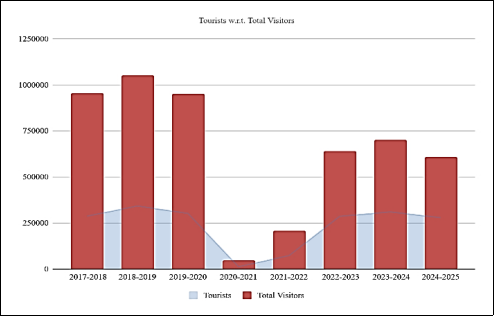
Highlight: The comparison of Tourists to Total Visitors in Pre-Pandemic & Post-Pandemic Scenario.

Download: Download full-size image

Figure 1. Comparison of Tourists with respect to total visitors to the science centre.
Table 9. Visitor Statistics (Year 1977-2024).

Year (Jan - Dec)

Groups (Students)

Students

General Visitors

Total (Excluding Outreach Visitors)

1977

64

3898

6591

10489

1978

199

11225

35678

46903

1979

499

39764

43280

83044

1980

828

44618

83958

128576

1981

800

50801

72489

123290

1982

406

33994

57806

91800

1983

424

38218

57732

95950

1984

367

35919

61731

97650

1985

459

42536

108354

150890

1986

1253

108804

150899

259703

1987

1269

108250

151640

259890

1988

1290

104737

165698

270435

1989

1395

110395

172744

283139

1990

3092

119561

186358

305919

1991

1057

78531

190772

269303

1992

1278

105052

201877

306929

1993

920

73917

168054

241971

1994

1159

105112

197894

303006

1995

1058

105120

205966

311086

1996

1153

104823

283890

388713

1997

1341

124136

375577

499713

1998

1416

132726

476234

608960

1999

1217

100223

401848

502071

2000

1337

104792

396691

501483

2001

1353

124223

377931

502154

2002

1475

126804

384474

511278

2003

1458

130671

439469

570140

2004

1663

177489

454926

632415

2005

1638

154250

467154

621404

2006

1780

158481

474312

632793

2007

1606

172705

527265

699970

2008

1435

150854

520563

671417

2009

1984

185880

549469

735349

2010

2130

197094

508532

705626

2011

2452

221900

542608

764508

2012

2323

205671

575551

781222

2013

2378

215668

529178

744846

2014

2189

218679

503890

722569

2015

2065

222792

492611

715403

2016

1998

182238

520186

702424

2017

1781

179676

501882

681558

2018

1887

183398

511855

695253

2019

1928

207159

481284

688443

2020

531

55412

85285

140697

2021

30

5177

101270

106447

2022

848

84933

438074

523007

2023

1409

152153

563098

715251

2024

1468

143994

464084

608078

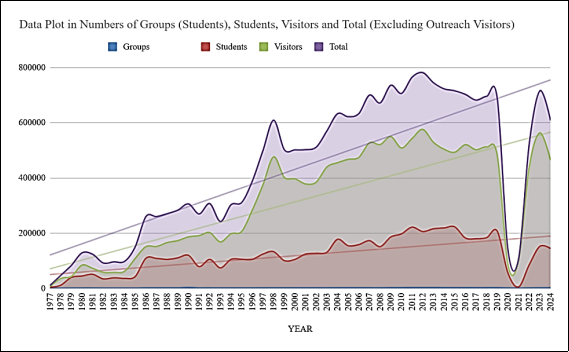
Figure 2. Comparison of student groups, students and general visitors with respect to total visitors from the establishment of science centre.
The data from (Table 8 and Table 9) highlights that the Significant increase in visitor figures after 1995, and this has happened after collaborating with the Local Tourist Bus operators like ‘Mumbai Darshan’, ‘Mumbai Safari’, ‘Neeta Travels’ etc .
4.2. Overview of the Mathematical Models for Visitor Statistics
The analysis of visitor statistics (Table 8 and Table 9) from 2017 to 2024 and overall period from 1977 to 2024 reveal several key trends and patterns:
1) Linear models, in the form of y = m*x + c, have been chosen for each period as a simplified yet informative way to understand the general direction and rate of change in visitor numbers. Here, 'y' represents the number of visitors, and 'x' represents the year. The parameter 'm' signifies the slope of the line, indicating the estimated annual change in visitor numbers, while 'c' is the y-intercept, representing the theoretical number of visitors in year zero, which may not have a practical interpretation within the context of this analysis.
2) The estimated parameters for the linear models, derived using Ordinary Least Squares (OLS) regression on the provided data for each visitor category and time period, are presented in the following summary table.
Table 10. Linear Model - Summary of Mathematical Models for Visitor Statistics of NSCM.

Visitor Category

Time Period

Mathematical Model

Estimated Parameters

Groups

1977-1984

y = m1 * x + c1

m1 ≈ 436.46, c1 ≈ -861214.57

1985-2019

y = m2 * x + c2

m2 ≈ 445.43, c2 ≈ -860824.23

2022-2024

y = m3 * x + c3

m3 ≈ 3001.50, c3 ≈ -6047915.00

Students

1977-1984

y = m1 * x + c1

m1 ≈ 603.04, c1 ≈ -1181829.71

1985-2019

y = m2 * x + c2

m2 ≈ 411.38, c2 ≈ -787122.95

2022-2024

y = m3 * x + c3

m3 ≈ -1021.50, c3 ≈ 2074360.00

Table 10 provides a structured overview of the estimated linear relationships between visitor numbers and time for different segments of the centre's audience across the three defined periods. The analysis in the following section will delve deeper into the interpretation of these parameters and the trends they represent.
To facilitate a clearer comparison of the rate of change in visitor numbers across different categories and time periods, the slope values ('m') from the provided models are summarized in the table below:
Table 11. Estimated Annual Change in Visitor Numbers (Slope 'm') by Category and Period.

Visitor Category

Pre-opening Slope (m1)

Post-opening Pre-pandemic Slope (m2)

Post-pandemic Recovery Slope (m3)

Groups

436.46

445.43

3001.50

Students

603.04

411.38

-1021.50

1) Pre-opening (1977-1984): A positive slope of both the categories indicates a steady and significant increase.
2) Post-opening, Pre-pandemic (1985-2019): Steady higher positive slopes confirm a strong growth trend in both the categories of visitors, likely driven by the centre's opening with additional facilities.
3) Post-pandemic Recovery (2022-2024): A large negative slope of -1021.50 reveals a substantial decline in number of Students Visits. This could be impacted due to the pandemic restrictions, general election of the nation during the peak seasons, environmental conditions like extreme heat wave etc.
4) Historical baseline validation using the long-term records in Table 9 establishes that from a modest launch footprint of 10,489 total visitors in 1977, NSCM systematically scaled its societal footprint, crossing the half-million annual visitors mark by 1998. This long-term evolution underlines the massive scaling power of the museum's service vector. By deploying the calculated pre-pandemic growth metric (m_2 ~ 445.43 for group visits) alongside the post-pandemic recovery slope (m_3 ~ 3001.50), short-term predictive tracking forecasts that total baseline annual footfall numbers are statistically positioned to transcend the 780,000 thresholds within the 2027–28 operating cycle, assuming standard environmental conditions and stable academic calendars.
4.3. Goodness-of-Fit Criteria for the Data and Hypotheses Model
The goodness-of-fit of linear versus polynomial regression models using R-squared. The desired analysis has been carried out with the Python Code and the corresponding interpretation of the results are as follows.
Table 12. R-squared values for both linear and polynomial models.

Category

Linear R2

Poly 2 R2

Poly 3 R2

Groups

0.3396

0.3409

0.3429

Students

0.1805

0.1818

0.1822

Visitors

0.3207

0.3458

0.4578

Total

0.3263

0.3486

0.4611

Interpretation of the Results:
Groups: The R-squared values are quite consistent across linear, quadratic (Poly 2), and cubic (Poly 3) models. The increase in R2 is very minimal when using polynomial models. This indicates that a linear model fits the "Groups" data reasonably well, and adding polynomial terms does not significantly improve the fit.
Students: Similar to "Groups", the R-squared values remain relatively consistent across all models. There is very little to no increase in r squared values when using polynomial models. Therefore, a linear model is sufficient.
Visitors: There is a noticeable increase in R-squared as we move from a linear model to a quadratic and then a cubic model. Specifically, the cubic model (Poly 3) shows a relatively significant improvement in the model fit. This suggests that the trend in "Visitors" data is better captured by a non-linear model, likely due to the sharp changes in recent years. The pattern for "Total" is very similar to "Visitors".
Hypotheses Testing:
"Groups" and "Students":
Linear model appears to be sufficient. The data doesn't strongly indicate a need for more complex polynomial models.
"Visitors" and "Total":
A cubic polynomial model provides a significantly better fit. This suggests that the trends in these categories are non-linear, and a cubic model is better at capturing the fluctuations, especially the sharp decline in recent years.
4.4. Qualitative Analysis: Programmatic Reviews
The qualitative analysis of NSCM's programs and initiatives provides valuable insights into the centre's impact on tourism, education, and cultural enrichment:
4.4.1. Collaboration with Travel Agencies and Tourism Impact
1) Strategic collaborations with travel agencies have been a key component of NSCM's strategy to enhance its visibility and position itself as a prominent destination for cultural and educational tourism. Significant increase in visitor figures after 1995, after collaborating with the Local Tourist Bus operators like Mumbai Darshan, Mumbai Safari, Neeta Travels etc.
2) Globally, examples of successful collaborations between museums and tourism entities highlight the potential benefits. For instance, UNESCO has partnered with the Boston Museum of Science to launch exhibitions on World Heritage sites, demonstrating how museums can leverage partnerships to raise awareness and attract visitors . Liberty Science Centre in New Jersey actively promotes itself as a must-see destination and provides information on nearby lodging and transportation, effectively integrating itself into the local tourism infrastructure.
4.4.2. Impact of Ticketing Categories and Packages
1) NSCM offers a diverse range of ticketing categories and packages designed to cater to various visitor segments and enhance public engagement. These options include entry tickets for general visitors, discount rates for group visits and students (including those from government and municipal schools), and special packages for families. These packages often offer a more economical way for visitors to experience multiple offerings.
2) For instance, a package ticket combining the Science Centre and Science Odyssey is priced at ₹130 for general visitors, while separate tickets would cost ₹70 and ₹80 respectively. Special provisions also exist for BPL cardholders, offering entry at a nominal fee of ₹5. The availability of family packages, like the one including the Science Centre, Science Odyssey, 3D Show, SOS, and Motion Simulator with a complimentary Sparkling High Voltage Demonstration, priced at ₹600 for a family of 4 and ₹900 for a family of 6, further encourages family visits by providing a comprehensive and value-driven experience.
4.4.3. Integration of Museum-Based Learning into Educational Curricula
1) NSCM has successfully integrated its exhibits and programs into educational frameworks, fostering a culture of curiosity and scientific literacy among students. The centre's adoption of hybrid learning models and experiential pedagogy has enriched formal education while inspiring youth engagement with science.
2) Best practices for integrating museum learning into educational curricula emphasize the use of real objects, hands-on activities, and exhibitions to make learning more meaningful. Museums can also provide resources and professional development for teachers to align museum visits with curriculum standards .
4.4.4. Fostering the Culture of Tourism and Public Engagement with Science
1) NSCM has played a pivotal role in embedding a culture of tourism in society by emphasizing the value of museums as spaces for public learning and engagement. Science museums can employ various strategies to foster tourism culture and enhance public engagement with science. These include embracing smartphone culture by encouraging social media sharing like Facebook, Instagram Reels, X (Earlier known as Twitter), YouTube etc., hosting educational events, bringing exhibits to the community .
2) The Association of Science and Technology Centres (ASTC) supports its members in building the civic capacities of their institutions and visitors, highlighting the role of science museums in addressing complex socio-scientific issues . NSCM, as a prominent science centre in India, likely employs a combination of these strategies to attract visitors and engage the public with the wonders of science.
4.4.5. Adaptation During the COVID-19 Pandemic
1) During the COVID-19 pandemic, NSCM adapted swiftly with virtual programs, demonstrating resilience and reinforcing the societal importance of museums. Science museums worldwide responded to the pandemic by rapidly increasing their digital engagement efforts.
2) They offered free online learning resources, access to digital collections, virtual tours, and online exhibits. Many museums moved their in-person experiences online, creating virtual field trips, online quizzes, podcasts, and 3D/Virtual tours of their spaces. The Museum of Science in Boston used artificial intelligence to create a virtual exhibit allowing people to ask questions about the coronavirus . NSCM also implemented online lectures and virtual engagement during this period. For instance, NSCM organized the online Sky Observation Programs, Hands-On Experiments at Home, Electronics Circuitry like Arduino etc.
4.4.6. Economic Impact on Mumbai's Tourism Ecosystem
1) Through quantitative analysis, this study highlights NSCM's contribution to Mumbai's tourism ecosystem and its broader implications for cultural development. While the provided snippets do offer specific data on the direct economic impact of NSCM on Mumbai's tourism industry between 1995 and 2019, the general economic trends in museum tourism in India suggest a positive contribution.
2) In 2016, tourism in Mumbai generated INR 312 billion or 3.2% of the city's GDP and supported 637,900 jobs, 7.3% of its total employment. The sector was predicted to grow at an average annual rate of 8.8% to INR 720 billion by 2026 (3.1% of GDP). Science centres, in general, render valuable service to their communities and have a profound impact on local economies by attracting visitors. They are considered major tourist attractions and prime elements in cultural tourism . NSCM, with its large annual visitor numbers exceeding 700,000, including a significant number of students, contributes to the local economy through visitor spending and by enhancing Mumbai's appeal as an educational and cultural destination.
5. Discussions
The consistently positive slopes observed for most visitor categories in the post-opening period (1985-2019) underscore the centre's success in attracting and engaging the public after its inauguration in 1985. Interestingly, the higher growth rates in the pre-opening period for several categories suggest that initial outreach efforts and the development of early attractions like the 'Light and Sight' exhibition and the Science Park effectively generated public interest and anticipation. The transition from the pre-opening phase to the operational phase of the centre brought about a change in the growth dynamics for different visitor segments, highlighting the influence of the physical infrastructure and the ongoing programs offered .
The pre-pandemic era (1985-2019) was characterized by a healthy growth trajectory across most visitor categories, indicating the Nehru Science Centre's sustained relevance and appeal. This growth was likely supported by factors such as Mumbai's increasing population, a growing awareness of the importance of science education, the centre's established reputation as a leading science museum, and its diverse range of exhibitions and educational programs. With over 700,000 visitors annually, including a significant number of school children, the centre has become a cornerstone of science engagement in the region.
Examining broader tourism trends in Maharashtra can provide context for the Nehru Science Centre's visitor patterns. Maharashtra has historically been a popular tourist destination, attracting both domestic and international visitors, with Mumbai being a major hub. Tourist arrivals in the state experienced growth before the pandemic but were significantly impacted in 2020 and 2021. Recovery began in 2022 and continued into 2024, with Maharashtra ranking among the top states for both domestic and foreign tourist visits.
6. Recommendations
To gain a more comprehensive understanding of the visitor statistics and to facilitate more accurate forecasting, future analysis could explore the use of non-linear time series models such as exponential smoothing or ARIMA (Autoregressive Integrated Moving Average and it's a technique for time series analysis and for forecasting possible future values of a time series.) to capture potential complexities and saturation effects in visitor numbers .
Incorporating external variables such as economic indicators, regional tourism trends, and significant events could enhance the explanatory power of the models. A dedicated analysis of the pandemic years (2020-2021) would be valuable in quantifying the specific impact on each visitor category. Furthermore, evaluating the effectiveness of post-pandemic initiatives and considering visitor demographics, if available, could provide actionable insights.
Exploring the influence of hybrid learning models on visitor engagement could also be beneficial. Understanding these trends and their influencing factors is crucial for the Nehru Science Centre to strategically plan its future activities and continue its mission of promoting scientific temper and engaging the wider community.
7. Conclusion
Nehru Science Centre, Mumbai, stands as a significant institution playing a dual role as an engine for cultural enrichment and tourism development. Through its interactive exhibits, educational programs, strategic collaborations, diverse ticketing options, well-developed infrastructure, extensive outreach through the Mobile Science Exhibition, engaging Science Shows and Lectures, the activities of the Creative Ability Centre, comprehensive Educational Training Programs, impactful Community Programmes, and regular Commemorative Events, NSCM has made substantial contributions to fostering scientific temper and attracting visitors. The centre's resilience during the COVID-19 pandemic, marked by its swift adoption of virtual programs, further underscores its societal importance. As the tourism sector in India continues to grow, science museums like NSCM are well-positioned to leverage their unique offerings to contribute to local economies and promote a culture of scientific literacy.
8. Limitations
Linearity Assumption: The analysis heavily relies on linear regression, assuming a linear relationship between time (years) and visitor numbers. This may not accurately capture non-linear trends or cyclical patterns in visitor behavior.
External Factors: The analysis does not account for various external factors that could influence visitor numbers, such as:
1) Economic conditions
2) Changes in educational policies
3) Competition from other attractions
4) Marketing and promotional activities
5) The quality and changes in the exhibitions
Lack of Demographic Data: The research does not include demographic data about the visitors, for example, age, location, and the purpose of the visit. This data would greatly increase the research depth.
9. Future Scope
Non-Linear Modeling: Explore non-linear regression models (e.g., polynomial, exponential) or time series analysis (e.g., ARIMA) to capture more complex trends.
External Factor Analysis: Incorporate external variables into the analysis (e.g., GDP, education spending, marketing budget) to understand their impact on visitor numbers.
Granular Time Series Analysis: Analyze monthly or weekly visitor data to identify seasonal patterns and short-term fluctuations.
Demographic Analysis: Collect and analyze demographic data to understand visitor profiles and preferences. This can inform targeted marketing and program development.
Comparative Analysis: Compare visitor trends at Nehru Science Centre with those at similar science centres in India or internationally.
Visitor Feedback Analysis: Collect and analyze visitor feedback (e.g., surveys, online reviews) to understand visitor satisfaction and identify areas for improvement.
Abbreviations

NCSM

National Council of Science Museums

NSCM

Nehru Science Centre, Mumbai

COVID-19

Coronavirus Disease of 2019

STEM

Science, Technology, Engineering, and Mathematics

AIC / BIC

Akaike Information Criterion / Bayesian Information Criterion

MSE

Mobile Science Exhibition

CAC

Creative Ability Centre

SDL

Science Demonstration Lectures

PSL

Popular Science Lectures

TTP

Teachers Training Programme

SOS

Science on Sphere

OLS

Ordinary Least Squares

ARIMA

Autoregressive Integrated Moving Average

ASTC

The Association of Science and Technology Centres

GDP

Gross Domestic Product

Author Contributions
Tapas Kumar Moharana: Conceptualization, Formal Analysis, Methodology, Resources, Software, Visualization, Writing – original draft
Anindita Mondal: Data curation, Investigation, Project administration, Supervision, Validation, Writing – review & editing
Conflicts of Interest
The authors declare no conflicts of interest.
References
[1] Al Shueili, K. (2015). Towards a sustainable urban future in Oman: Problem and process analysis (Muscat as a case study). Doctoral dissertation, The Glasgow School of Art.
[2] American Medical Association. (2004). American Medical Association family medical guide (4th ed.). Wiley.
[3] Annual Activity Reports & Visitor Statistics. (2017-2024). Nehru Science Centre Administration.
[4] Association of Science and Technology Centres (ASTC). (2022, April). Museum Digital Engagement: Before, During, and Beyond the COVID-19 Pandemic.
[5] D’Souza Aruna. (2018, June 21). Museums Inspire STEM Learning for the Whole Family. Carnegie Corporation of New York.
[6] Chen, J. (2024). Factors Affecting Cultural Transmission in Museum Tourism: An Empirical Study with Mediation Analysis. SAGE Open, 1-17.
[7] IBM. (2024, May 24). What are ARIMA Models? from
[8] Rautela, G.S., Sanyal, Indranil. (2014) Impact of Science Museums and Centres. Propagation, National Council of Science Museums, 1-11, from INDIAN CULTURE.
[9] Maharashtra Tourism Development Corporation (MTDC). Official Website: from
[10] Master Journals. (2021). THE ROLE OF MUSEUMS IN THE DEVELOPMENT OF TOURISM. CURRENT RESEARCH JOURNAL OF HISTORY 2(10): 27-32.
[11] Nehru Science Centre, Mumbai. Activity Report - Nehru Science Centre, Mumbai. from
[12] Nehru Science Centre, Mumbai. Official Website.
[13] India Tourism Statistics 2022.
[14] The Inclusive Museum Research Network. (2025). Our Partners,
[15] Short Jim. (2014). How Can Museums Help Teachers With the NGSS? Dimensions-The Metropolitan Museum of Art. 27-31.
[16] Choong-Ki Leea, Hak-Jun Songb, James W. Mjeldec. (2008). The forecasting of International Expo tourism using quantitative and qualitative techniques. ScienceDirect-Tourism Management, 29, 1084-1098.
[17] The Role of Museums in the Development of Tourism - Master Journals, from
[18] India Tourism Data Compendium Key Highlights 2024. Ministry of Tourism,
[19] UNESCO World Heritage Centre. (2010, February 10). UNESCO and the Boston Museum of Science launch an exhibition on World Heritage.
[20] Zubitashvili, T. (2024). The Role of Museums for the Issue of Tourism Development. Sciential Journal of Education Humanities and Social Sciences, Vol. 2.1, 1-6.
Cite This Article
  • APA Style

    Moharana, T. K., Mondal, A. (2026). Science Museums as Engines of Cultural and Tourism Development: A Case Study with the Visitors Figure Analysis of Nehru Science Centre, Mumbai, India. International Journal of Hospitality & Tourism Management, 10(2), 202-220. https://doi.org/10.11648/j.ijhtm.20261002.13

    Copy | Download

    ACS Style

    Moharana, T. K.; Mondal, A. Science Museums as Engines of Cultural and Tourism Development: A Case Study with the Visitors Figure Analysis of Nehru Science Centre, Mumbai, India. Int. J. Hosp. Tour. Manag. 2026, 10(2), 202-220. doi: 10.11648/j.ijhtm.20261002.13

    Copy | Download

    AMA Style

    Moharana TK, Mondal A. Science Museums as Engines of Cultural and Tourism Development: A Case Study with the Visitors Figure Analysis of Nehru Science Centre, Mumbai, India. Int J Hosp Tour Manag. 2026;10(2):202-220. doi: 10.11648/j.ijhtm.20261002.13

    Copy | Download

  • @article{10.11648/j.ijhtm.20261002.13,
      author = {Tapas Kumar Moharana and Anindita Mondal},
      title = {Science Museums as Engines of Cultural and Tourism Development: A Case Study with the Visitors Figure Analysis of Nehru Science Centre, Mumbai, India},
      journal = {International Journal of Hospitality & Tourism Management},
      volume = {10},
      number = {2},
      pages = {202-220},
      doi = {10.11648/j.ijhtm.20261002.13},
      url = {https://doi.org/10.11648/j.ijhtm.20261002.13},
      eprint = {https://article.sciencepublishinggroup.com/pdf/10.11648.j.ijhtm.20261002.13},
      abstract = {This paper examines the transformative role of the Nehru Science Centre, Mumbai (NSCM), as a driver of tourism, education, and cultural enrichment. By analyzing visitor statistics and programmatic innovations from 2017 to 2024, the study positions NSCM as a model for museum-driven development within the global context. Strategic collaborations with travel agencies have enhanced NSCM's visibility, positioning it as a prominent destination for cultural and educational tourism. These partnerships have effectively bridged the gap between leisure travel and experiential learning, attracting diverse visitor demographics. NSCM has successfully integrated its exhibits and programs into educational frameworks, fostering a culture of curiosity and scientific literacy among students. Its adoption of hybrid learning models and experiential pedagogy has enriched formal education while inspiring youth engagement with science. The centre has played a pivotal role in embedding a culture of tourism in society by emphasizing the value of museums as spaces for public learning and engagement. During the COVID-19 pandemic, NSC adapted swiftly with virtual programs, demonstrating resilience and reinforcing the societal importance of museums. Through quantitative analysis and predictive modeling, this study highlights NSCM's contribution to Mumbai's tourism ecosystem and its broader implications for cultural development. The findings underscore how science museums can catalyze tourism growth while fostering education and community engagement, setting a benchmark for similar institutions worldwide.},
     year = {2026}
    }
    

    Copy | Download

  • TY  - JOUR
    T1  - Science Museums as Engines of Cultural and Tourism Development: A Case Study with the Visitors Figure Analysis of Nehru Science Centre, Mumbai, India
    AU  - Tapas Kumar Moharana
    AU  - Anindita Mondal
    Y1  - 2026/08/10
    PY  - 2026
    N1  - https://doi.org/10.11648/j.ijhtm.20261002.13
    DO  - 10.11648/j.ijhtm.20261002.13
    T2  - International Journal of Hospitality & Tourism Management
    JF  - International Journal of Hospitality & Tourism Management
    JO  - International Journal of Hospitality & Tourism Management
    SP  - 202
    EP  - 220
    PB  - Science Publishing Group
    SN  - 2640-1800
    UR  - https://doi.org/10.11648/j.ijhtm.20261002.13
    AB  - This paper examines the transformative role of the Nehru Science Centre, Mumbai (NSCM), as a driver of tourism, education, and cultural enrichment. By analyzing visitor statistics and programmatic innovations from 2017 to 2024, the study positions NSCM as a model for museum-driven development within the global context. Strategic collaborations with travel agencies have enhanced NSCM's visibility, positioning it as a prominent destination for cultural and educational tourism. These partnerships have effectively bridged the gap between leisure travel and experiential learning, attracting diverse visitor demographics. NSCM has successfully integrated its exhibits and programs into educational frameworks, fostering a culture of curiosity and scientific literacy among students. Its adoption of hybrid learning models and experiential pedagogy has enriched formal education while inspiring youth engagement with science. The centre has played a pivotal role in embedding a culture of tourism in society by emphasizing the value of museums as spaces for public learning and engagement. During the COVID-19 pandemic, NSC adapted swiftly with virtual programs, demonstrating resilience and reinforcing the societal importance of museums. Through quantitative analysis and predictive modeling, this study highlights NSCM's contribution to Mumbai's tourism ecosystem and its broader implications for cultural development. The findings underscore how science museums can catalyze tourism growth while fostering education and community engagement, setting a benchmark for similar institutions worldwide.
    VL  - 10
    IS  - 2
    ER  - 

    Copy | Download

Author Information
  • Exhibit Development Division, Nehru Science Centre, Mumbai, India

    Biography: Tapas Kumar Moharana, a Mechanical Engineer and Science Communicator, has over 14 years of experience in designing and curating innovative science exhibits. He holds dual Master’s degrees in ‘Manufacturing Processes and Systems’ and ‘Science Communication’ and currently serves as a Curator at Nehru Science Centre, Mumbai, a unit of National Council of Science Museums (NCSM), India. Known for creating mechanical interactives and mobile science exhibits, he combines precision engineering with creative design. Skilled in SolidWorks, AutoCAD, Unity, CNC machining, and 3D printing, he has presented research internationally and authored publications on immersive technologies and exhibit design, contributing significantly to science education and public engagement.
  • Education Division, Nehru Science Centre, Mumbai, India

    Biography: Anindita Mondal is currently serving as a Curator (Science Communicator) at Nehru Science Centre, Mumbai under the National Council of Science Museums, Govt. of India. Holding a Ph.D. in Astrophysics from the University of Calcutta, her research specializes in multi-wavelength studies of novae, data modelling, and theoretical cosmology. With prior roles as post-doctoral researcher and lecturer, she has an extensive portfolio of publications in reputed journals and is the National Coordinator for the Indian National Junior Astronomy Olympiad Programme. She has over 5 years of experience in designing interactive exhibits and conducting educational programs promoting scientific literacy and public engagement.


  • Abstract
  • Keywords
  • Document Sections

    1. 1. Introduction
    2. 2. Literature Review
    3. 3. Methodology
    4. 4. Results
    5. 5. Discussions
    6. 6. Recommendations
    7. 7. Conclusion
    8. 8. Limitations
    9. 9. Future Scope
    Show Full Outline
  • Abbreviations
  • Author Contributions
  • Conflicts of Interest
  • References
  • Cite This Article
  • Author Information