Abstract
Youth skills development is a key driver of employment, which in turn contributes to poverty reduction. This study examined the role of youth skills development in reducing poverty in Rwanda, based on the perceptions of beneficiaries of Esther’s Aid Rwanda in Gasabo District. The study was grounded in the Human Capital Theory, which emphasizes that investment in skills enhances employability and productivity, alongside the Capability and Institutional theories, which highlight the importance of individual opportunities and systemic support. Despite ongoing investments, a mismatch between labour market demands and available skills continues to limit youth employment and income generation, posing challenges for policymakers and practitioners. Specialists emphasize that the gap between the skills required by the labour market and those held by the workforce continues to pose a major challenge for policymakers, educators, and employers. This study adopted a case study design with a mixed-methods approach. From a target population of 568 beneficiaries, a sample of 85 respondents was selected using accidental sampling. Data were collected through structured questionnaires and semi-structured interviews. Quantitative data were analysed using descriptive statistics (Frequencies, percentages, mean, and standard deviation) while qualitative data were analysed thematically to complement statistical findings. Findings indicate that 55.3% of respondents were employed, primarily in full-time positions within the hospitality sector (Mean = 0.55, SD = 0.50). Training support, internships, and financial assistance were identified as significant contributors to employment outcomes (Mean = 4.12, SD = 0.67 on a 5-point Likert scale). Additionally, over 97% of respondents expressed satisfaction with the program (Mean = 4.87, SD = 0.33), and more than 80% supported key strategies for improving livelihoods (Mean = 4.08, SD = 0.72). The study concludes that youth skills development through TVET plays a significant role in poverty reduction. However, challenges such as limited facilities, financial constraints, and skills mismatches persist. The study recommends strengthening school-industry partnerships, expanding access to quality training, and aligning programs with labour market needs.
Keywords
Youth Skills Development, Poverty Reduction, Employability, Human Capital, Rwanda
1. Introduction
Youth unemployment and poverty remain significant challenges in developing countries, including Rwanda, largely due to a mismatch between education outcomes and labour market demands
| [1] | Afeti, G. (2018). Technical and vocational education and training for industrialization. African Development Bank Group. |
[1]
. In response, Technical and Vocational Education and Training (TVET) has gained prominence as a practical approach to improving youth employability
| [2] | Adetona, T. (2025). Entrepreneurial skill acquisition and poverty alleviation. International Journal of Research and Innovation in Social Science, 9(1), 45–60. |
[2]
. Institutions such as Esther’s Aid Rwanda contribute to this effort by providing market-relevant skills that support job creation and income generation
| [3] | Alkire, S. (2005). Valuing Freedoms: Sen's Capability Approach and Poverty Reduction. Oxford University Press. |
[3]
. Enhancing the quality and relevance of vocational training is therefore essential for bridging the skills gap and promoting sustainable poverty reduction
| [1] | Afeti, G. (2018). Technical and vocational education and training for industrialization. African Development Bank Group. |
[1]
. This study, therefore, seeks to address these gaps by examining how beneficiaries of Esther’s Aid in Gasabo District perceive the role of youth skills development in contributing to poverty reduction.
1.1. Background
The United Nations Secretariat recognizes that the UN-Habitat (Youth Fund) defines youth as people aged between 15 and 32
| [4] | Angel, W. A. (2015). Resolutions on Youth Rights and Responsibilities Adopted by Special. |
[4]
. While the African Youth Charter has defined Youth as a cohort aged from 15 to 35
| [5] | Anwar, J., & Hasnu, S. A. F. (2013, May). Ideology, purpose, core values and leadership: How they influence the vision of an organization? International Journal of Learning and Development, 3(3), 168. https://doi.org/10.5296/ijld.v3i3.3642 |
[5]
. Literally, youth skills development contributes to poverty reduction. By acquiring market-relevant skills, young people can access better job opportunities, which leads to higher income levels and improved living standards
| [6] | Arum, R., & Shavit, Y. (1995). Persistent Inequality in Educational Attainment: A Comparative Study of Thirteen Countries. Boulder, CO: Westview Press. |
[6]
. The African Union’s Agenda 2063 aligns with the UN's SDGs by prioritizing education, skills, and innovation to drive development
| [7] | Asefer, A., & Abidin, Z. (2021). Soft skills and graduates’ employability in the 21st century from employers’ perspectives: A review of literature. International Journal of Infrastructure Research and Management, 9(2), 44-59. Available online 6 April 2005. |
[7]
. To reduce stigma and boost enrolment in TVET, African nations must invest in quality vocational training that meets labour market needs
| [8] | Baker, D. P. (2014). The Schooled Society: The Educational Transformation of Global Culture. Stanford, CA: Stanford University Press. |
[8]
.
Rwanda’s development vision aims to achieve middle-income status by 2035 and high-income status by 2050
| [9] | Balochistan Think Tank Network. (2024). Impact of skills development programs on household income and employment in Balochistan. BTTN Journal, 6(2), 112–128. |
[9]
. The revised Rwanda National Youth Policy defines youth as individuals aged 16 to 30, a shift from the previous 14–35 age range, aligning with global Sustainable Development Goals (SDG) frameworks
| [10] | Becker, G. S. (1993). Human capital: A theoretical and empirical analysis, with special reference to education (3rd ed.). Chicago, IL: University of Chicago Press. |
[10]
. According to the RPHC4 Rwanda
, the population increased from 10.5 million in 2012 to 13.2 million in 2022, while the proportion of youth under 30 declined from 70.3% to 65.3%. Projections indicate that by 2050, youth under 30 will account for 54.3% of the population, whereas the working-age population (16–64) will rise to 61.4%
. National development frameworks, including the National Strategy for Transformation, emphasize leveraging homegrown solutions to promote decent and productive employment, sustainable urbanization, and a globally competitive knowledge-based economy
| [32] | RDB (2020) Impact assessment of capacity development interventions among beneficiary institutions from 2014–2019. RDB: Kigali. |
[32]
. In this context, Esther’s Aid Rwanda, a U.S.-based non-governmental organization with grassroots origins, expanded its operations to Rwanda in the aftermath of the 1994 Genocide against the Tutsi to promote education and support vulnerable populations. Over the past two decades, the organization has empowered more than 100,000 youth and women by leveraging hospitality training and workforce development programs to create employment opportunities and foster entrepreneurship.
1.2. Problem Statement
The 2022 UN Transforming Education Summit emphasized the need for greater investment in skills, especially in low- and middle-income countries. Accessible, equitable, and high-quality TVET can support lifelong learning and sustainable development. In Rwanda, the main challenge is not just up-skilling, but improving conditions for vulnerable workers. Enhancing the skills of TVET instructors and polytechnic lecturers is key to improving training quality. Rwanda Development Board
| [34] | Rwanda Development Board. (2015–2020). Capacity Development and Training Programs. Kigali. RDB. |
[34]
, investing in skills development and workforce readiness, especially among youth, is critical for economic growth and poverty reduction. Youth participation in the labour market, which enhances collaboration among government agencies, educational institutions, NGOs, and the private sector, is crucial for promoting life skills and vocational training
| [15] | DeJaeghere, J. (2017). Educating entrepreneurial citizens: Neoliberalism and youth livelihoods in Tanzania. Routledge. Researches in the Globalizing World, 576. |
[15]
.
Skills development for youth is essential for poverty reduction, necessitating investment in capacity building that aligns with market demand. According to the World Bank, enhancing youth skills not only increases employability but also allows access to higher-paying jobs, thereby contributing to poverty alleviation
.
Although significant investments have been made in youth skills development in Rwanda, youth unemployment and underemployment remain high, limiting the potential of such initiatives to effectively reduce poverty
. Many existing studies emphasize training outputs (e.g., number of trainees) rather than outcomes such as income improvement or livelihood transformation. Furthermore, poverty is often not clearly measured, and beneficiaries’ perspectives are underexplored. This study aims to fill these gaps by exploring how beneficiaries of Esther’s Aid in Gasabo District perceive the contribution of youth skills development to poverty reduction.
1.3. Objectives of the Study
The primary objective of this is to examine the role of youth skills development in poverty reduction in Rwanda, based on the perceptions of beneficiaries of Esther’s Aid in Gasabo District and specifically the intends to attain (i) to assess the types of skills provided to youth through Esther’s Aid programs, (ii) to examine beneficiaries’ perceptions of the effect of these skills on employment and income generation, (iii) to evaluate the perceived contribution of skills development to poverty reduction and (iv) to identify challenges faced in applying acquired skills for sustainable livelihoods.
2. Literature Review
This section delves into the theoretical foundation, encompassing three key frameworks: the Capability Approach, Institutional Theory, and Human Capital Theory. Each framework offers unique perspectives on youth development and poverty alleviation. Additionally, it provides an empirical review of youth skills development and poverty reduction.
(i) Capability Approach (CA)
Capability approach originated from the seminal work of economist and philosopher Amartya Sen in the late 20th century. In 1999, he proposed that development should be assessed based on individuals’ capabilities to pursue and achieve valuable functioning, such as education, health, and participation in social and political life. One of the notable strengths of the Capability Approach is its multidimensional perspective on poverty and development. By framing poverty not just as a lack of income but as a deprivation of essential capabilities, the CA allows for a richer understanding of the complexities surrounding poverty
| [3] | Alkire, S. (2005). Valuing Freedoms: Sen's Capability Approach and Poverty Reduction. Oxford University Press. |
[3]
. For example, it acknowledges that individuals may have the financial resources but still lack the capabilities to utilize them effectively, such as accessing education or healthcare. Despite its strengths, the Capability Approach has several criticisms. One major concern is the challenge of measuring capabilities, which can be subjective and context-dependent
.
The Capability Approach is particularly relevant to the study as it focuses on enhancing the capabilities of youth
| [21] | Mbarushimana, N., Role, E., & Allida, V. (2017, June). Competency based curriculum in tourism and hospitality: A practical model for Rwanda. Journal of Research Innovation and Implications in Education, 1(3), 96–109. Journal of Research Innovation and Implications in Education. https://www.jriiejournal.com |
[21]
. This theory underscores the importance of equipping young individuals with the skills necessary to navigate their socio-economic environment effectively. Moreover, the CA aligns with contemporary development frameworks, such as the United Nations Sustainable Development Goals (SDGs), which emphasize the need for inclusive and equitable quality education and lifelong learning opportunities for all
| [43] | United Nations. (2015). Transforming our world: The 2030 Agenda for Sustainable Development (A/RES/70/1). United Nations General Assembly. |
[43]
.
(ii) Institutional theory
Douglass North, an economist and Nobel Laureate, significantly influenced the understanding of institutions in economic development by illustrating how formal and informal constraints impact economic performance and cooperation among individuals
| [26] | North, D. C. (1990). Institutions, Institutional Change and Economic Performance. Cambridge University Press. |
[26]
. This theory highlights the importance of understanding not only the formal structures of institutions, such as laws and regulations, but also informal norms and practices that guide behaviour within a society. One of the key strengths of Institutional Theory is its capacity to explain how institutions create the rules of the game, thereby influencing the incentives and behaviours of various actors, including individuals, organizations, and governments
| [16] | DiMaggio, P. J., & Powell, W. W. (1983). "The Iron Cage Revisited: Institutional Isomorphism and Collective Rationality in Organizational Fields." American Sociological Review, 48(2), 147-160. |
[16]
. For instance, strong educational institutions can facilitate youth skill development, leading to higher employability and better economic outcomes.
Institutional Theory helped researchers to evaluate Esther’s Aid skills development program, as well as focus on the organization’s capacity. Literally, it brought a better understanding of the strengths and weaknesses of the educational institutions in Rwanda, which are characterized by insufficient infrastructure, lack of funding, or outdated curricula, which may hinder access to quality education and training, perpetuating cycles of poverty. However, the Government of Rwanda is upgrading skills development programs through seeking partnerships and enhancing capacity building in public and private institutions.
(iii) Human capital theory
Human Capital Theory (HCT) emerged in the mid-20
th century, primarily through the works of economists such as Gary Becker, Theodore Shultz, and Jacob Mincer. Becker, who won the Nobel Prize in Economics in 1992, played a pivotal role in popularizing the concept by arguing that investments in education and training enhance individual productivity, thereby leading to higher wages and improved economic outcomes
| [8] | Baker, D. P. (2014). The Schooled Society: The Educational Transformation of Global Culture. Stanford, CA: Stanford University Press. |
[8]
. Education and health are crucial components of human capital; investing in these areas can yield significant economic returns for individuals and society
| [37] | Schultz, T. W. (1961). Investment in human capital. American Economic Review, 51(1), 1–17. |
[37]
. One of the primary strengths of Human Capital Theory is its empirical support, which demonstrates a clear correlation between education, skill acquisition, and economic productivity
| [30] | Psacharopoulos, G., & Patrinos, H. A. (2018). Returns to investment in education: A decennial review of the global literature. Education Economics, 26(5), 445–458. |
[30]
. Focusing on the role of human capital in driving economic development informs policymakers about the importance of investing in education and training programs to enhance the skills of the workforce.
Critics argue that Human Capital Theory can be overly simplistic, assuming a linear relationship between education and income without accounting for other factors, such as labour market conditions, discrimination, or structural inequalities that may affect employment outcomes
| [6] | Arum, R., & Shavit, Y. (1995). Persistent Inequality in Educational Attainment: A Comparative Study of Thirteen Countries. Boulder, CO: Westview Press. |
[6]
Furthermore, the theory tends to prioritize formal education over informal learning and experience, which can also significantly contribute to an individual’s skill set and employability
| [8] | Baker, D. P. (2014). The Schooled Society: The Educational Transformation of Global Culture. Stanford, CA: Stanford University Press. |
[8]
. This narrow focus may lead to a neglect of alternative pathways to skill development, particularly in contexts where formal education systems are inadequate or inaccessible. By emphasizing the role of human capital in individual and societal economic development, this theory provides a framework for analysing how effective skill development programs can empower young people to secure better job opportunities and improve their quality of life.
2.1. Empirical Review
Poverty reduction remains a critical global challenge, particularly in developing regions where economic opportunities are limited. In response, skills development programs have increasingly focused on equipping youth with competencies relevant to labour market demands. Developing key skills—critical thinking, problem-solving, digital literacy, and interpersonal communication, is essential for improving employability outcomes, as highlighted in previous studies
| [40] | Taylor, A., Nelson, J., O’Donnell, S., Davies, E., & Hillary, J. (2022, March). The Skills Imperative 2035: What does the literature tell us about essential skills most needed for work? Working Paper 1, National Foundation for Educational Research, Slough, UK. (Funded by the Nuffield Foundation). |
[40]
. The types of skills provided to youth through TVET, such as Esther’s Aid programs, underscore the importance of both technical and soft skills. Studies show that soft skills, such as communication, teamwork, and adaptability, complement technical competencies and are highly valued by employers
| [31] | Rahmat, N., Ayub, A. R., & Buntat, Y. (2017). Employability skills construct as predictors of job performance among Malaysian polytechnic graduates: A qualitative study of the ESWPP model. Geografia: Malaysian Journal of Society and Space, (date not specified). |
[31]
| [39] | Singh, R., Chawla, G., Agarwal, S., & Desai, A. (2017). Employability and innovation: development of a scale. International Journal of Innovation Science, 9(1), 20–37.
https://doi.org/10.1108/IJIS1020160041 |
[39]
. This suggests that effective youth programs should integrate a balanced mix of practical and transferable skills to meet workplace expectations.
The effect of skills on employment and income generation, existing evidence indicates that employability is strongly influenced by the possession of relevant skills. In today’s competitive job market, employers increasingly favour candidates who demonstrate strong workplace competencies. However, despite a large pool of applicants, only about 30% of interviewees secure jobs, revealing a persistent skills gap
| [24] | Nisha, S. M., & Rajasekaran, V. (2018). Employability skills: A review. IUP Journal of Soft Skills, 12(1), 29–37. |
[24]
. This highlights the perceived importance of skills development in enhancing employment prospects and income opportunities among youth.
Empirical evidence demonstrates that skills development plays a significant role in poverty reduction. For instance,
| [2] | Adetona, T. (2025). Entrepreneurial skill acquisition and poverty alleviation. International Journal of Research and Innovation in Social Science, 9(1), 45–60. |
[2]
found that entrepreneurial skills enhance income generation and economic empowerment, thereby reducing poverty. Similarly, cross-country evidence indicates that Technical and Vocational Education and Training (TVET) contributes both directly and indirectly to poverty reduction through improved productivity and employment outcomes
| [27] | OECD. (2019). Getting skills right: Future-ready adult learning systems. OECD Publishing. |
| [45] | World Bank. (2019). World Development Report 2019: The Changing Nature of Work. Retrieved from
https://www.worldbank.org/en/publication/wdr2019 |
[27, 45]
. Moreover, household-level studies show that participation in skills development programs significantly increases income and employment opportunities, leading to measurable improvements in living standards
| [9] | Balochistan Think Tank Network. (2024). Impact of skills development programs on household income and employment in Balochistan. BTTN Journal, 6(2), 112–128. |
[9]
. In addition, research confirms that skills acquisition reduces unemployment, a key driver of poverty, thus strengthening pathways toward sustainable livelihoods
| [1] | Afeti, G. (2018). Technical and vocational education and training for industrialization. African Development Bank Group. |
| [28] | Okoye, K. R. E., & Arimonu, M. O. (2016). Technical and vocational education in Nigeria: Issues, challenges and a way forward. Journal of Education and Practice, 7(3), 113–118. |
[1, 28]
.
The identified challenges faced in applying acquired skills for sustainable livelihoods, studies reveal that the successful implementation of skills, particularly soft skills, remains a significant concern. While training may be provided, its effectiveness depends on how well these skills are applied in real-world contexts.
| [18] | Hamid, M. S. A., Islam, R., & Manaf, N. H. A. (2014). Employability skills development approaches: An application of the analytic network process. Asian Academy of Management Journal, 19(1), 93–111. |
[18]
note that the successful application of soft skills is crucial for improving employability, yet barriers such as limited job opportunities, inadequate practical exposure, and mismatches between training and labour market needs can hinder this process.
Overall, the literature demonstrates that skills development plays a central role in enhancing employability, improving income generation, and contributing to poverty reduction, while also highlighting the challenges that may limit its effectiveness in achieving sustainable livelihoods.
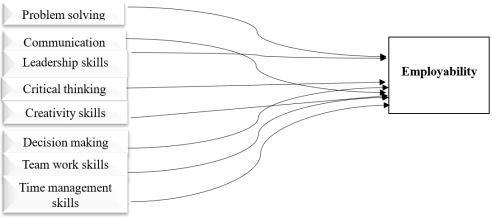
Figure 1. Employers' Perspectives on Soft Skills and Graduates' Employability Soft Skills.
The illustration above highlights the essential soft skills required in the 21st-century workforce, emphasizing that employability is shaped by a combination of transferable competencies rather than a single ability. Skills such as problem-solving, communication, leadership, critical thinking, creativity, decision-making, teamwork, and time management collectively enhance an individual’s capacity to secure and sustain employment. This demonstrates that employability depends on the integration of multiple skills that enable individuals to adapt to workplace demands, perform effectively, and respond to complex challenges, as reflected in
Figure 2.
2.2. Conceptual Framework
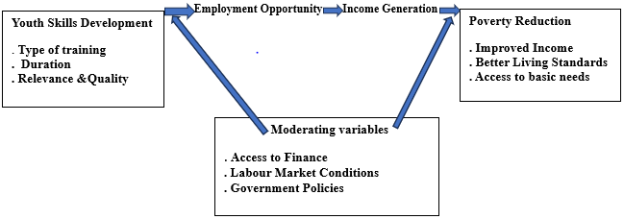
In this study, youth skills development is considered the independent variable, encompassing the type, quality, and duration of training provided to young people. These competencies enhance employment opportunities, which subsequently improve income generation; both employment and income act as mediating variables. As these improve, beneficiaries are better able to meet basic needs, enhance their living standards, and ultimately achieve poverty reduction, the dependent variable. However, this relationship is not automatic, as it is influenced by moderating factors such as access to finance, labour market conditions, government policies, and individual characteristics. These factors can either strengthen or weaken the extent to which skills development translates into meaningful poverty reduction outcomes.
Empirical evidence supports this framework. Research shows that comprehensive skills development is essential for reducing multidimensional poverty, as it enhances employability and positively impacts health, education, and living standards
| [48] | United Nations Development Programme (UNDP) & Oxford Poverty and Human Development Initiative (OPHI). (2022). 2022 Global Multidimensional Poverty Index (MPI): Unpacking deprivation bundles to reduce multidimensional poverty. New York, NY: UNDP. |
[48]
. Similarly, Technical and Vocational Education and Training (TVET) enhances employability by equipping youth and adults with practical, work-related skills, particularly in low- and middle-income countries. Effective TVET systems align skills with labour market demands and adapt to technological and economic changes, thereby promoting inclusive economic growth, decent work, and full employment
| [29] | Organisation for Economic Co operation and Development (OECD) (2019). OECD Employment Outlook 2019: The Future of Work. Paris: OECD Publishing.
https://doi.org/10.1787/9ee00155-en |
| [42] | UNESCO. (2023). Promoting quality employment through green skills, work-based learning and flexible certification systems. Paris, France: United Nations Educational, Scientific and Cultural Organization. United Nations World Conferences 1968–1993. In The International Law of Youth Rights (pp. 628-670). |
[29, 42]
.
Figure 2. Conceptual Framework.
In Rwanda, skills development initiatives have been instrumental in addressing challenges such as unemployment, financial constraints, and skills gaps. Government-led programs, particularly through the Ministry of Education, have focused on high-growth sectors including agriculture, tourism, and information technology, aligning workforce skills with national development priorities
. A notable example is the
Hanga Ahazaza initiative, a public–private partnership that provides youth with hospitality and tourism-related skills, contributing to employment creation and poverty reduction
| [41] | Top Africa News. (2023). Top Africa News [Digital news publication]. Kigali, Rwanda: Africa News Digest Ltd. Retrieved from https://www.topafricanews.com/ |
[41]
.
3. Research Methodology
This research utilised a mixed-methods design, combining descriptive statistics (Frequencies, percentages, mean, and standard deviation), and qualitative approaches coherently and systematically, drawing on the frameworks of
| [11] | Bryman, A. (2012). Social Research Methods (4th ed.). Oxford, UK: Oxford University Press. |
| [14] | Creswell, J. W. (2015). Research Design: Qualitative, Quantitative, and Mixed Methods Approaches (3rd ed.). London, UK: SAGE Publications. |
[11, 14]
, and
| [13] | Creswell, J. W., & Plano Clark, V. L. (2011). Designing and Conducting Mixed Methods Research (2nd ed.). Thousand Oaks, CA: SAGE Publications. |
[13]
.
In this study, the target population was 568 beneficiaries of the Esther’s Aid Rwanda programme, from which a sample size of 85 was drawn using formula
| [47] | Yamane, T. (1967). Statistics: An Introductory Analysis (2nd ed.). New York: Harper and Row. |
[47]
worded as follows: n = N/(+N(e)
2), where n (85) is the sample size, N is the population size (568), and e is the margin of error (10%). After determining the sample size, the respondents were selected based on convenience sampling, also known as accidental. Convenience sampling involves using respondents who are “convenient” to the researcher
. The study collected primary data via Structured questionnaires (Likert-scale for perceptions) and semi-structured interviews, while secondary data consisted of existing sources such as reports, scholarly journals, website materials, and academic papers that provided contextual background and reinforced the findings from the primary data.
The study used a five-point Likert scale consisting of Strongly Agree (SA), Agree (A), Neutral (N), Disagree (D), and Strongly Disagree (SD). Data were analysed using percentages, mean (M), and standard deviation (SD). Mean values were interpreted as low (1.00–2.49), moderate (2.50–3.49), and high (3.50–5.00). Standard deviation values were used to assess the level of variation in responses, where lower values indicate stronger consensus and higher values indicate greater variability among respondents.
4. Results
This section presents the study's findings based on data collected from respondents affiliated with Esther’s Aid Rwanda. The results are organized around the research objectives and key variables, providing both quantitative (using descriptive statistics) and qualitative insights into the programme's effectiveness.
4.1. Demographic Profile of Respondents
This demographic profile of respondents provides insight into the characteristics of the study population, such as gender, marital status, nationality, education level, and disability status. This demographic information is important because it allows researchers and readers to assess the diversity and generalizability of the sample.
Table 1. Demographic Profile of Participants.
Items | n | % |
Age group | | |
16-20 | 3 | 3.5 |
21-25 | 36 | 42.4 |
26-30 | 30 | 35.3 |
31-35 | 16 | 18.8 |
Total | 85 | 100 |
Gender | | |
Male | 30 | 35.3 |
Female | 55 | 64.7 |
Total | 85 | 100 |
Marital status | | |
Married | 21 | 24.7 |
Single | 64 | 75.3 |
Total | 85 | 100 |
Nationality | | |
Rwanda | 80 | 94.1 |
Burundi | 3 | 3.5 |
DRC | 2 | 2.4 |
Total | 85 | 100 |
Disability | | |
Yes | 1 | 1.2 |
No | 84 | 98.8 |
Total | 85 | 100 |
Educational level | | |
Under high school | 13 | 15.3 |
High school diploma | 56 | 65.9 |
TVT school | 7 | 8.2 |
Bachelor’s degree | 9 | 10.6 |
Total | 85 | 100 |
Source: Field data, 2024
According to
Table 1, the majority of respondents were female (64.7%), while males constituted 35.3%. Most participants were single (75.3%), with 24.7% being married. In terms of nationality, the majority (94.1%) were Rwandan, followed by 3.5% from Burundi and 2.4% from the Democratic Republic of Congo (DRC). Regarding education, 65.9% had completed high school, 15.3% had not completed secondary education, 8.2% had received technical and vocational education and training (TVET), and 10.6% held a Bachelor’s degree. Concerning disability status, 1.2% reported having a disability, while 98.8% did not. The demographic profile shows that the program largely targets young, female, single, and moderately educated individuals, primarily from Rwanda. While it demonstrates strengths in gender inclusion and local engagement, there is a need to enhance inclusivity for persons with disabilities and further diversify participation.
Program Duration and Completion
The duration of the program determines the time allocated for skill acquisition, hands-on practice, and competency development. Well-structured durations ensure that learners are neither rushed through content nor delayed unnecessarily, which contributes to meaningful learning outcomes and timely graduation.
Table 2. Program duration and Completion of Youth Participants in “Esther’s Aid” skills development.
Item | n | % |
Esther’s Aid Skills Development Programs | | |
3 months | 11 | 12.9 |
6 months | 34 | 40 |
12 months | 7 | 8.2 |
15 months | 33 | 38.8 |
Total | 85 | 100 |
Occupation status | | |
Student | 14 | 16.5 |
Internee | 15 | 17.6 |
Employer | 47 | 55.3 |
Unemployed | 3 | 3.5 |
Business owner | 6 | 7.1 |
Total | 85 | 100 |
Place of work, if employed or interning | | |
Hotel | 48 | 56.5 |
Restaurant | 10 | 11.8 |
Organization or company | 16 | 18.8 |
Bakery and coffee shop | 11 | 12.9 |
Total | 85 | 100 |
The option describes your current employment status | | |
Full-time | 51 | 60 |
Casual | 22 | 25.9 |
Self-employed | 12 | 14.1 |
Total | 85 | 100 |
Plan to pursue further education in the future. | | |
Yes | 30 | 35.3 |
No | 3 | 3.5 |
Undecided | 52 | 61.2 |
Total | 85 | 100 |
Source: Field data, 2024
The findings indicate that most participants completed 6-month (40%) and 15-month (38.8%) programs, suggesting a preference for medium-term training. A majority are currently employed (55.3%), mainly in hotels (56.5%), reflecting strong integration into the labour market. However, a large proportion remain undecided about further education (61.2%), indicating uncertainty about future academic or career pathways.
4.2. Perception of Learners on the Capacity of Esther’s Aid School for Fostering Career
Analysing employment and career status among beneficiaries of Esther’s Aid Rwanda is essential for assessing the success and real-world outcomes of the organization's training interventions, particularly in culinary arts and vocational education. By examining whether participants have secured employment, started their own businesses, or progressed in their careers, the analysis provides concrete evidence of the program’s impact on youth empowerment and poverty reduction.
The results in
Table 3 show that Esther’s Aid Rwanda has a strong capacity to promote employability, with most items recording high agreement (over 80%) and mean scores above 4.0. Core outcomes such as employability skills and quality human resource development achieved perfect agreement (Mean = 5.00, SD=0.00), indicating very high confidence among beneficiaries. The quality of training is also highly rated, with 58.8% strongly agreeing and 36.5% agreeing that trainers are qualified (Mean = 4.54, SD = 0.59). This confirms that human resource capacity is a key strength of the program, which is essential for effective skills transfer and long-term employability. However, some areas, such as fundamental courses and community training, show variability in perception (Mean = 4.08, SD = 1.38), suggesting differences in participant experiences. Internship and apprenticeship programs (Mean = 3.14, SD = 1.31) represent the main gap, with lower agreement and higher variability (only 11.8% strongly agree, while 42.3% disagree or strongly disagree), indicating limited industry linkage. Overall, the results confirm that the program significantly enhances youth employability and contributes to poverty reduction, though improvements are needed in practical exposure and support systems.
Table 3. The capacity of Esther’s Aid school to promote employability and connect its youth with industry practitioners.
No | Item | SA n (%) | A n (%) | Nn (%) | D n (%) | SD n (%) | Mean | SD |
1 | Availability of excellent kitchen equipment | 66 (77.6) | 19 (22.4) | 0 (0.0) | 0 (0.0) | 0 (0.0) | 4.78 | 0.42 |
2 | Trainers are qualified and professional | 50 (58.8) | 31 (36.5) | 4 (4.7) | 0 (0.0) | 0 (0.0) | 4.54 | 0.59 |
3 | Promoting employability skills | 85 (100) | 0 (0.0) | 0 (0.0) | 0 (0.0) | 0 (0.0) | 5.00 | 0.00 |
4 | Provide a fundamental course in culinary arts and hospitality | 55 (64.7) | 16 (18.8) | 0 (0.0) | 14 (16.5) | 0 (0.0) | 4.32 | 1.10 |
5 | Provide internship and apprenticeship programs | 10 (11.8) | 39 (45.9) | 0 (0.0) | 25 (29.4) | 11 (12.9) | 3.14 | 1.31 |
6 | Nutritious and healthy meal training in the community | 46 (54.1) | 26 (30.6) | 0 (0.0) | 0 (0.0) | 13 (15.3) | 4.08 | 1.38 |
7 | Funding for students from low-income families | 0 (0.0) | 69 (81.2) | 16 (18.8) | 0 (0.0) | 0 (0.0) | 3.81 | 0.39 |
8 | Provide study tour and workshop training | 78 (91.8) | 7 (8.2) | 0 (0.0) | 0 (0.0) | 0 (0.0) | 4.92 | 0.28 |
9 | Inspiring to build an excellent culinary arts college | 56 (65.9) | 6 (7.1) | 7 (8.2) | 16 (18.8) | 0 (0.0) | 4.20 | 1.20 |
10 | Producing quality human resources | 85 (100) | 0 (0.0) | 0 (0.0) | 0 (0.0) | 0 (0.0) | 5.00 | 0.00 |
Source: field data, 2024
4.3. Learners Satisfaction
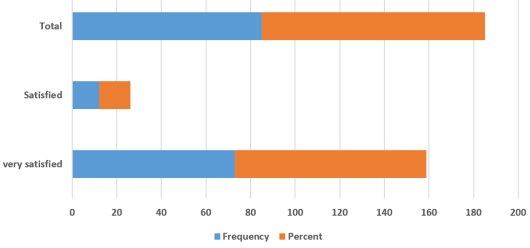
Learner satisfaction serves as a key indicator of how well the training programs at Esther’s Aid Rwanda are meeting the expectations, needs, and goals of participants. High levels of satisfaction often correlate with the perceived quality of instruction, relevance of the curriculum, and overall learning environment.
Figure 3. The satisfaction level of Esther's skills programmes.
Learner satisfaction with the training programs was notably high. According to the data, 85.9% of respondents reported being highly satisfied with their experience at Esther’s Aid, while another 12% expressed general satisfaction with the institution’s training and support.
4.4. Challenges Faced by Youth in the Journey of Learning to Reduce Poverty
Table 4. Perception of challenges faced by Youth (VH= Very high, H= High, M=Moderate, VLO= Very Low, n = Frequency).
No | Items | VH n (%) | H n (%) | M n (%) | LO n (%) | VLO n (%) | Mean | SD |
1 | Paying material fees is still a challenge | 12 (14.1%) | 0 (0.0%) | 26 (30.6%) | 18 (21.2%) | 29 (34.1%) | 2.39 | 1.39 |
2 | The school does not offer boarding facilities | 48 (56.5%) | 24 (28.2%) | 13 (15.3%) | 0 (0.0%) | 0 (0.0%) | 4.41 | 0.75 |
3 | Language barrier limits performance | 24 (28.2%) | 0 (0.0%) | 43 (50.6%) | 0 (0.0%) | 18 (21.2%) | 3.35 | 1.25 |
4 | Inadequate transport fees | 59 (69.4%) | 18 (21.2%) | 8 (9.4%) | 0 (0.0%) | 0 (0.0%) | 4.60 | 0.66 |
5 | Health issues affect academic progress | 0 (0.0%) | 10 (11.8%) | 58 (68.2%) | 17 (20.0%) | 0 (0.0%) | 2.92 | 0.56 |
6 | Difficulty correcting/replacing certificates | 0 (0.0%) | 23 (27.1%) | 29 (34.1%) | 21 (24.7%) | 12 (14.1%) | 2.74 | 1.08 |
Source: field data, 2024
Youth engaged in skills development programs often encounter various barriers that hinder the effective application of acquired knowledge toward poverty reduction. These challenges, ranging from limited resources to labour market constraints, affect their ability to translate learning into sustainable livelihoods.
The findings indicate that inadequate transport (Mean = 4.60, SD = 0.66) and the lack of boarding facilities (Mean = 4.41, SD = 0.75) constitute the most significant challenges faced by students, reflecting a strong level of agreement among respondents. Language barriers and health-related issues present moderate challenges, while financial constraints related to materials and certification processes appear less pronounced overall but exhibit considerable variability among learners. These challenges have important implications for students’ learning experiences and outcomes. Limited access to transport and accommodation can lead to irregular attendance and reduced participation in training activities. Similarly, language barriers may hinder effective communication and comprehension, thereby affecting the quality of learning. Consequently, such constraints may negatively influence the acquisition of practical skills, lower learners’ confidence, and reduce their readiness to meet labour market demands. Ultimately, these factors may limit graduates’ ability to secure and sustain employment, undermining the broader objective of youth skills development programs in contributing to poverty reduction. The findings, therefore, underscore the critical need to address structural and accessibility barriers to enhance the effectiveness and impact of such programmes.
4.5. Strategies for Youth Empowerment for Poverty Alleviation
Understanding these strategies sheds light on how youth perceive and engage with poverty alleviation efforts, contributing to a more youth-centred and participatory approach to development. In essence, the analysis not only evaluates the impact of Esther’s Aid Rwanda but also contributes to the broader discourse on youth-driven solutions to poverty in sub-Saharan Africa.
Table 5. Strategies for Youth to Address Poverty Reduction Challenges (n = 85).
No | Strategies | SA n (%) | A n (%) | N n (%) | D n (%) | SD n (%) | Mean | SD |
1 | Enhance collaboration across sectors | 70 (82.4) | 12 (14.1) | 2 (2.4) | 1 (1.2) | 0 (0.0) | 4.77 | 0.53 |
2 | Expand TVET programs | 70 (82.4) | 12 (14.1) | 2 (2.4) | 1 (1.2) | 0 (0.0) | 4.77 | 0.53 |
3 | Create an alumni database system | 40 (47.1) | 22 (25.9) | 10 (11.8) | 8 (9.4) | 5 (5.9) | 3.99 | 1.19 |
4 | Improve investment in quality education | 60 (70.6) | 17 (20.0) | 4 (4.7) | 3 (3.5) | 1 (1.2) | 4.55 | 0.78 |
5 | Develop a standardized curriculum | 60 (70.6) | 17 (20.0) | 4 (4.7) | 3 (3.5) | 1 (1.2) | 4.55 | 0.78 |
6 | Establish mentorship and apprenticeships | 50 (58.8) | 20 (23.5) | 5 (5.9) | 6 (7.1) | 4 (4.7) | 4.25 | 1.04 |
7 | Improve certification programs | 52 (61.2) | 20 (23.5) | 5 (5.9) | 5 (5.9) | 3 (3.5) | 4.33 | 0.98 |
8 | Expand partnerships for internships/jobs | 54 (63.5) | 19 (22.4) | 5 (5.9) | 4 (4.7) | 3 (3.5) | 4.36 | 0.94 |
9 | Offer entrepreneurship and ICT training | 56 (65.9) | 19 (22.4) | 4 (4.7) | 4 (4.7) | 2 (2.4) | 4.45 | 0.86 |
10 | Facilitate access to funding | 50 (58.8) | 19 (22.4) | 6 (7.1) | 6 (7.1) | 4 (4.7) | 4.24 | 1.03 |
Source: field data, 2024
The findings indicate strong agreement on most strategies, with over 96.5% (SA+A) of respondents supporting collaboration across sectors and the expansion of TVET programs (Mean = 4.77, SD = 0.53), reflecting a high level of consensus. Similarly, 90.6% emphasized the importance of improving investment in quality education and developing standardized curricula (Mean = 4.55, SD = 0.78), highlighting their critical role in enhancing employability. Strategies such as expanding partnerships for internships (85.9%, Mean = 4.36, SD = 0.94) and offering entrepreneurship and ICT training (88.3%, Mean = 4.45, SD = 0.86) also received strong support, with relatively low variability, indicating consistent perceptions among respondents. However, the creation of an alumni database system recorded comparatively lower support (73.0%, Mean = 3.99, SD = 1.19), suggesting mixed opinions and greater variability in responses. Mentorship and apprenticeship programs (82.3%, Mean = 4.25, SD = 1.04), certification improvement (84.7%, Mean = 4.33, SD = 0.98), and access to funding (81.2%, Mean = 4.24, SD = 1.03) were also positively rated but showed moderate variation, reflecting differences in respondents’ experiences. Furthermore, 81.2% of respondents emphasized the importance of facilitating access to grants, loans, and investment opportunities to support youth-led businesses. Overall, the consistently high mean scores (above 4.0) and strong agreement percentages confirm that these strategies are widely perceived as essential for promoting youth empowerment and achieving sustainable poverty reduction.
5. Discussion
The study findings highlight beneficiaries’ positive perceptions of Esther’s Aid Rwanda’s role in equipping youth with relevant skills for employment through its competency-based culinary training programs. A considerable proportion of respondents reported successful transitions into employment, which they largely attributed to short-term, market-oriented training. One graduate noted, “Before joining Esther’s Aid, I had no direction. But after completing my course, I was immediately employed by a local restaurant. The training was exactly what employers are looking for.” These responses suggest that participants perceive the program as responsive to labour market needs.
The availability of modern kitchen equipment, qualified trainers, and digital tools was also perceived to enhance hands-on learning. This aligns with
, who emphasizes the importance of practical training environments in culinary education. As one instructor explained,
“We ensure students practice using the latest kitchen technology, preparing them for professional kitchens.” Furthermore, respondents highlighted the integration of entrepreneurship, ICT, and communication skills as valuable components of training, consistent with the human capital perspective
| [19] | Heckman, James J. & Kautz, Tim D. (2012). “Hard Evidence on Soft Skills.” Labour Economics, 19(4), 451–464. Published by Elsevier in Amsterdam. |
[19]
.
Internships were widely perceived as critical in facilitating skill application and employment readiness. Alumni testimonies indicate that these opportunities contributed to confidence-building and workplace exposure. For example, one respondent shared,
“During my internship at Radisson Blu, I refined my culinary skills and gained confidence to work in a team.” This supports existing literature
| [20] | Koo, H., Kleemann, J., & Fürst, C. (2020). Integrating Ecosystem Services into Land-Use Modeling to Assess the Effects of Future Land Use Strategies in Northern Ghana. Land, 9(10), 379. Basel, Switzerland: MDPI.
https://doi.org/10.3390/land9100379 |
| [22] | McIntosh, C., & Zeitlin, A. (2022). Skills and Liquidity Barriers to Youth Employment: Medium?term Evidence from a Cash Benchmarking Experiment in Rwanda. arXiv.
https://doi.org/10.48550/arXiv.2209.08574 |
| [44] | Wang, Y., Huang, Q., Davison, R. M., & Yang, F. (2021). Role Stressors, Job Satisfaction, and Employee Creativity: The Cross?Level Moderating Role of Social Media Use within Teams. Information & Management, 58, Article 103317. Elsevier, Amsterdam, Netherlands. |
[20, 22, 44]
, highlighting experiential learning as a pathway to improved employability.
In addition, over 84% of respondents (
Table 3) acknowledged community-oriented training in nutrition and healthy meal preparation, reflecting a broader perception of improved well-being. Testimonies suggest that such training contributes to better household practices, particularly in the use of affordable local foods. This aligns with the capability approach, which emphasizes improvements in individuals’ ability to achieve better living conditions.
The findings further indicate that financial support mechanisms are perceived as enhancing access to training among vulnerable youth. Beneficiaries reported that scholarships enabled their participation, suggesting the importance of inclusive program design. Moreover, partnerships with hospitality institutions were viewed as strengthening training quality and professional exposure.
Respondents also emphasized the need for stronger collaboration with government and stakeholders, improved access to finance, and curriculum standardization. These perceptions are consistent with national policy directions, including the Rwanda TVET Board Strategic Plan
and
, which advocate for demand-driven skills development systems.
Overall, the findings suggest that beneficiaries perceive Esther’s Aid Rwanda as contributing positively to employment opportunities, income generation, and improved livelihoods, which are commonly associated with pathways toward poverty reduction. However, these findings are based on self-reported perceptions rather than objective measures, and several challenges remain.
6. Recommendations
The study identified key challenges, including limited infrastructure, insufficient financial support, weak public–private collaboration, and mismatches between training and labour market demands. In addition, rural youth remain underserved.
To address these issues, the study recommends:
(i) Strengthening training facilities and infrastructure,
(ii) Enhancing partnerships between training institutions, industry, and government,
(iii) Expanding financial support mechanisms for vulnerable youth, and
(iv) Regularly updating curricula to align with labour market needs.
These measures may enhance the effectiveness and inclusiveness of youth skills development initiatives.
7. Conclusion
This study assessed beneficiaries’ perceptions of youth skills development programs implemented by Esther’s Aid Rwanda and their contribution to employment, income generation, and livelihoods. The findings indicate that participants generally perceive these programs as beneficial in enhancing their employability and improving their living conditions.
While these perceived outcomes suggest a positive contribution to pathways associated with poverty reduction, the study does not establish causal impact due to its reliance on descriptive and self-reported data. Nonetheless, the results highlight the importance of skills development initiatives in supporting youth empowerment.
To maximize these benefits, there is a need to address existing structural challenges through coordinated efforts, improved resource allocation, and stronger alignment with labour market demands. Future research should incorporate objective and multidimensional measures of poverty to better assess the long-term impact of such programs.
Funding
This work received no financial support from any public, commercial, or not-for-profit funding bodies.
Conflicts of Interest
The authors declare that there were no conflicts of interest involved in the conduct and authorship of this research since it is original work not submitted to another publisher or institution for publication.
References
| [1] |
Afeti, G. (2018). Technical and vocational education and training for industrialization. African Development Bank Group.
|
| [2] |
Adetona, T. (2025). Entrepreneurial skill acquisition and poverty alleviation. International Journal of Research and Innovation in Social Science, 9(1), 45–60.
|
| [3] |
Alkire, S. (2005). Valuing Freedoms: Sen's Capability Approach and Poverty Reduction. Oxford University Press.
|
| [4] |
Angel, W. A. (2015). Resolutions on Youth Rights and Responsibilities Adopted by Special.
|
| [5] |
Anwar, J., & Hasnu, S. A. F. (2013, May). Ideology, purpose, core values and leadership: How they influence the vision of an organization? International Journal of Learning and Development, 3(3), 168.
https://doi.org/10.5296/ijld.v3i3.3642
|
| [6] |
Arum, R., & Shavit, Y. (1995). Persistent Inequality in Educational Attainment: A Comparative Study of Thirteen Countries. Boulder, CO: Westview Press.
|
| [7] |
Asefer, A., & Abidin, Z. (2021). Soft skills and graduates’ employability in the 21st century from employers’ perspectives: A review of literature. International Journal of Infrastructure Research and Management, 9(2), 44-59. Available online 6 April 2005.
|
| [8] |
Baker, D. P. (2014). The Schooled Society: The Educational Transformation of Global Culture. Stanford, CA: Stanford University Press.
|
| [9] |
Balochistan Think Tank Network. (2024). Impact of skills development programs on household income and employment in Balochistan. BTTN Journal, 6(2), 112–128.
|
| [10] |
Becker, G. S. (1993). Human capital: A theoretical and empirical analysis, with special reference to education (3rd ed.). Chicago, IL: University of Chicago Press.
|
| [11] |
Bryman, A. (2012). Social Research Methods (4th ed.). Oxford, UK: Oxford University Press.
|
| [12] |
Galloway, A. (2005). A-G Volume 1 (Elsevier) PDF retrieved from
https://www.sciencedirect.com/topics/computer-science/convenience-sampling
on September 15, 2023.
|
| [13] |
Creswell, J. W., & Plano Clark, V. L. (2011). Designing and Conducting Mixed Methods Research (2nd ed.). Thousand Oaks, CA: SAGE Publications.
|
| [14] |
Creswell, J. W. (2015). Research Design: Qualitative, Quantitative, and Mixed Methods Approaches (3rd ed.). London, UK: SAGE Publications.
|
| [15] |
DeJaeghere, J. (2017). Educating entrepreneurial citizens: Neoliberalism and youth livelihoods in Tanzania. Routledge. Researches in the Globalizing World, 576.
|
| [16] |
DiMaggio, P. J., & Powell, W. W. (1983). "The Iron Cage Revisited: Institutional Isomorphism and Collective Rationality in Organizational Fields." American Sociological Review, 48(2), 147-160.
|
| [17] |
Government of Rwanda. (2017). National Strategy for Transformation (NST1). Retrieved from
https://www.rwandagateway.org/fileadmin/user_upload/NST1%20English%20version%20final.pdf
|
| [18] |
Hamid, M. S. A., Islam, R., & Manaf, N. H. A. (2014). Employability skills development approaches: An application of the analytic network process. Asian Academy of Management Journal, 19(1), 93–111.
|
| [19] |
Heckman, James J. & Kautz, Tim D. (2012). “Hard Evidence on Soft Skills.” Labour Economics, 19(4), 451–464. Published by Elsevier in Amsterdam.
|
| [20] |
Koo, H., Kleemann, J., & Fürst, C. (2020). Integrating Ecosystem Services into Land-Use Modeling to Assess the Effects of Future Land Use Strategies in Northern Ghana. Land, 9(10), 379. Basel, Switzerland: MDPI.
https://doi.org/10.3390/land9100379
|
| [21] |
Mbarushimana, N., Role, E., & Allida, V. (2017, June). Competency based curriculum in tourism and hospitality: A practical model for Rwanda. Journal of Research Innovation and Implications in Education, 1(3), 96–109. Journal of Research Innovation and Implications in Education.
https://www.jriiejournal.com
|
| [22] |
McIntosh, C., & Zeitlin, A. (2022). Skills and Liquidity Barriers to Youth Employment: Medium?term Evidence from a Cash Benchmarking Experiment in Rwanda. arXiv.
https://doi.org/10.48550/arXiv.2209.08574
|
| [23] |
Ministry of Education, Rwanda. (2020). Technical and Vocational Education and Training (TVET). Retrieved from
https://www.mineduc.gov.rw/spip.php?article91
|
| [24] |
Nisha, S. M., & Rajasekaran, V. (2018). Employability skills: A review. IUP Journal of Soft Skills, 12(1), 29–37.
|
| [25] |
NISR (2022) Labour Force Survey trends-February 2022 Q1. Kigali, Rwanda: NISR.
https://www.statistics.gov.rw/datasource/labour–force–survey
|
| [26] |
North, D. C. (1990). Institutions, Institutional Change and Economic Performance. Cambridge University Press.
|
| [27] |
OECD. (2019). Getting skills right: Future-ready adult learning systems. OECD Publishing.
|
| [28] |
Okoye, K. R. E., & Arimonu, M. O. (2016). Technical and vocational education in Nigeria: Issues, challenges and a way forward. Journal of Education and Practice, 7(3), 113–118.
|
| [29] |
Organisation for Economic Co operation and Development (OECD) (2019). OECD Employment Outlook 2019: The Future of Work. Paris: OECD Publishing.
https://doi.org/10.1787/9ee00155-en
|
| [30] |
Psacharopoulos, G., & Patrinos, H. A. (2018). Returns to investment in education: A decennial review of the global literature. Education Economics, 26(5), 445–458.
|
| [31] |
Rahmat, N., Ayub, A. R., & Buntat, Y. (2017). Employability skills construct as predictors of job performance among Malaysian polytechnic graduates: A qualitative study of the ESWPP model. Geografia: Malaysian Journal of Society and Space, (date not specified).
|
| [32] |
RDB (2020) Impact assessment of capacity development interventions among beneficiary institutions from 2014–2019. RDB: Kigali.
|
| [33] |
Robeyns, I. (2017). "The Capability Approach." In The Stanford Encyclopedia of Philosophy, edited by E. N. Zalta. Stanford University. Retrieved from
https://plato.stanford.edu/archives/win2017/entries/capability-approach/
|
| [34] |
Rwanda Development Board. (2015–2020). Capacity Development and Training Programs. Kigali. RDB.
|
| [35] |
Rwanda Development Board. (2019). Rwanda's Vision 2050. Retrieved from
https://rdb.rw/rwandas-vision-2050/
|
| [36] |
Rwanda TVET Board (RTB). (2021). Strategic Plan 2021-2024. Retrieved September 24, 2024, from
https://www.rtb.gov.rw/index.php?
|
| [37] |
Schultz, T. W. (1961). Investment in human capital. American Economic Review, 51(1), 1–17.
|
| [38] |
Serdar, E. (2018). The Quality of Culinary Education in Tourism. Social Sciences UNESCO. (2018). UNESCO Strategy for Youth and Adult Literacy (2019–2025). Retrieved from
https://unesdoc.unesco.org/ark:/48223/pf0000366543
|
| [39] |
Singh, R., Chawla, G., Agarwal, S., & Desai, A. (2017). Employability and innovation: development of a scale. International Journal of Innovation Science, 9(1), 20–37.
https://doi.org/10.1108/IJIS1020160041
|
| [40] |
Taylor, A., Nelson, J., O’Donnell, S., Davies, E., & Hillary, J. (2022, March). The Skills Imperative 2035: What does the literature tell us about essential skills most needed for work? Working Paper 1, National Foundation for Educational Research, Slough, UK. (Funded by the Nuffield Foundation).
|
| [41] |
Top Africa News. (2023). Top Africa News [Digital news publication]. Kigali, Rwanda: Africa News Digest Ltd. Retrieved from
https://www.topafricanews.com/
|
| [42] |
UNESCO. (2023). Promoting quality employment through green skills, work-based learning and flexible certification systems. Paris, France: United Nations Educational, Scientific and Cultural Organization. United Nations World Conferences 1968–1993. In The International Law of Youth Rights (pp. 628-670).
|
| [43] |
United Nations. (2015). Transforming our world: The 2030 Agenda for Sustainable Development (A/RES/70/1). United Nations General Assembly.
|
| [44] |
Wang, Y., Huang, Q., Davison, R. M., & Yang, F. (2021). Role Stressors, Job Satisfaction, and Employee Creativity: The Cross?Level Moderating Role of Social Media Use within Teams. Information & Management, 58, Article 103317. Elsevier, Amsterdam, Netherlands.
|
| [45] |
World Bank. (2019). World Development Report 2019: The Changing Nature of Work. Retrieved from
https://www.worldbank.org/en/publication/wdr2019
|
| [46] |
World Bank. (2020). Skills for a Resilient Recovery: A Policy Agenda for the World Bank. Retrieved from
https://openknowledge.worldbank.org/handle/10986/34557
|
| [47] |
Yamane, T. (1967). Statistics: An Introductory Analysis (2nd ed.). New York: Harper and Row.
|
| [48] |
United Nations Development Programme (UNDP) & Oxford Poverty and Human Development Initiative (OPHI). (2022). 2022 Global Multidimensional Poverty Index (MPI): Unpacking deprivation bundles to reduce multidimensional poverty. New York, NY: UNDP.
|
Cite This Article
-
APA Style
Boaz, K. M., Chantal, I. (2026). The Role of Youth Skills Development in Poverty Reduction in Rwanda: Perceptions from Beneficiaries of Esther’s Aid in Gasabo District. International Journal of Finance and Banking Research, 12(2), 39-50. https://doi.org/10.11648/j.ijfbr.20261202.11
 Copy
|
Copy
|
 Download
ACS Style
Boaz, K. M.; Chantal, I. The Role of Youth Skills Development in Poverty Reduction in Rwanda: Perceptions from Beneficiaries of Esther’s Aid in Gasabo District. Int. J. Finance Bank. Res. 2026, 12(2), 39-50. doi: 10.11648/j.ijfbr.20261202.11
Copy
|
Download
AMA Style
Boaz KM, Chantal I. The Role of Youth Skills Development in Poverty Reduction in Rwanda: Perceptions from Beneficiaries of Esther’s Aid in Gasabo District. Int J Finance Bank Res. 2026;12(2):39-50. doi: 10.11648/j.ijfbr.20261202.11
Copy
|
Download
-
@article{10.11648/j.ijfbr.20261202.11,
  author = {Kagabika Muyuku Boaz and Imanishimwe Chantal},
  title = {The Role of Youth Skills Development in Poverty Reduction in Rwanda: Perceptions from Beneficiaries of Esther’s Aid in Gasabo District},
  journal = {International Journal of Finance and Banking Research},
  volume = {12},
  number = {2},
  pages = {39-50},
  doi = {10.11648/j.ijfbr.20261202.11},
  url = {https://doi.org/10.11648/j.ijfbr.20261202.11},
  eprint = {https://article.sciencepublishinggroup.com/pdf/10.11648.j.ijfbr.20261202.11},
  abstract = {Youth skills development is a key driver of employment, which in turn contributes to poverty reduction. This study examined the role of youth skills development in reducing poverty in Rwanda, based on the perceptions of beneficiaries of Esther’s Aid Rwanda in Gasabo District. The study was grounded in the Human Capital Theory, which emphasizes that investment in skills enhances employability and productivity, alongside the Capability and Institutional theories, which highlight the importance of individual opportunities and systemic support. Despite ongoing investments, a mismatch between labour market demands and available skills continues to limit youth employment and income generation, posing challenges for policymakers and practitioners. Specialists emphasize that the gap between the skills required by the labour market and those held by the workforce continues to pose a major challenge for policymakers, educators, and employers. This study adopted a case study design with a mixed-methods approach. From a target population of 568 beneficiaries, a sample of 85 respondents was selected using accidental sampling. Data were collected through structured questionnaires and semi-structured interviews. Quantitative data were analysed using descriptive statistics (Frequencies, percentages, mean, and standard deviation) while qualitative data were analysed thematically to complement statistical findings. Findings indicate that 55.3% of respondents were employed, primarily in full-time positions within the hospitality sector (Mean = 0.55, SD = 0.50). Training support, internships, and financial assistance were identified as significant contributors to employment outcomes (Mean = 4.12, SD = 0.67 on a 5-point Likert scale). Additionally, over 97% of respondents expressed satisfaction with the program (Mean = 4.87, SD = 0.33), and more than 80% supported key strategies for improving livelihoods (Mean = 4.08, SD = 0.72). The study concludes that youth skills development through TVET plays a significant role in poverty reduction. However, challenges such as limited facilities, financial constraints, and skills mismatches persist. The study recommends strengthening school-industry partnerships, expanding access to quality training, and aligning programs with labour market needs.},
 year = {2026}
}
Copy
|
Download
-
TY  - JOUR
T1  - The Role of Youth Skills Development in Poverty Reduction in Rwanda: Perceptions from Beneficiaries of Esther’s Aid in Gasabo District
AU  - Kagabika Muyuku Boaz
AU  - Imanishimwe Chantal
Y1  - 2026/04/25
PY  - 2026
N1  - https://doi.org/10.11648/j.ijfbr.20261202.11
DO  - 10.11648/j.ijfbr.20261202.11
T2  - International Journal of Finance and Banking Research
JF  - International Journal of Finance and Banking Research
JO  - International Journal of Finance and Banking Research
SP  - 39
EP  - 50
PB  - Science Publishing Group
SN  - 2472-2278
UR  - https://doi.org/10.11648/j.ijfbr.20261202.11
AB  - Youth skills development is a key driver of employment, which in turn contributes to poverty reduction. This study examined the role of youth skills development in reducing poverty in Rwanda, based on the perceptions of beneficiaries of Esther’s Aid Rwanda in Gasabo District. The study was grounded in the Human Capital Theory, which emphasizes that investment in skills enhances employability and productivity, alongside the Capability and Institutional theories, which highlight the importance of individual opportunities and systemic support. Despite ongoing investments, a mismatch between labour market demands and available skills continues to limit youth employment and income generation, posing challenges for policymakers and practitioners. Specialists emphasize that the gap between the skills required by the labour market and those held by the workforce continues to pose a major challenge for policymakers, educators, and employers. This study adopted a case study design with a mixed-methods approach. From a target population of 568 beneficiaries, a sample of 85 respondents was selected using accidental sampling. Data were collected through structured questionnaires and semi-structured interviews. Quantitative data were analysed using descriptive statistics (Frequencies, percentages, mean, and standard deviation) while qualitative data were analysed thematically to complement statistical findings. Findings indicate that 55.3% of respondents were employed, primarily in full-time positions within the hospitality sector (Mean = 0.55, SD = 0.50). Training support, internships, and financial assistance were identified as significant contributors to employment outcomes (Mean = 4.12, SD = 0.67 on a 5-point Likert scale). Additionally, over 97% of respondents expressed satisfaction with the program (Mean = 4.87, SD = 0.33), and more than 80% supported key strategies for improving livelihoods (Mean = 4.08, SD = 0.72). The study concludes that youth skills development through TVET plays a significant role in poverty reduction. However, challenges such as limited facilities, financial constraints, and skills mismatches persist. The study recommends strengthening school-industry partnerships, expanding access to quality training, and aligning programs with labour market needs.
VL  - 12
IS  - 2
ER  -
Copy
|
Download





 Share This Article
 Twitter
 Linked In
 Facebook