Introduction: Lower urinary retention is one of the most common urological emergencies in the hospital setting, primarily affecting elderly men and most often related to prostatic pathologies. This study aimed to describe the therapeutic modalities and outcomes of lower urinary retention managed at the Yalgado Ouedraogo University Hospital Center (CHU-YO). Methodology: This was a prospective, descriptive, longitudinal study conducted from August 1, 2023, to January 31, 2024, in the urological emergency department of CHU-YO. All patients admitted for urinary retention were included, except those already catheterized or non-consenting. Epidemiological, clinical, paraclinical, and therapeutic data were collected via Kobo Toolbox and analyzed with SPSS 20. Results: Out of 333 urological emergencies, 198 cases of urinary retention were identified (59.46%). After exclusions, 181 patients were analyzed. The mean age was 65.8 years, with a marked male predominance (92.8%). Retention was complete in 87.3% of cases and of sudden onset in 91.2%. Prostatic pathologies were the main etiology in men, followed by urethral strictures. Obstructive renal failure was present in 34.8% of patients prior to drainage. Transurethral bladder catheterization was the primary drainage method, with a failure rate of 10.9%. Post-drainage complications were dominated by decompression hematuria (5.0%) and post-obstructive diuresis syndrome (4.4%). The mean hospital stay was 3.7 days. Conclusion: Lower urinary retention remains a frequent emergency at CHU-YO, primarily affecting elderly men and dominated by prostatic pathologies. Late diagnosis exposes patients to a high risk of renal complications, underscoring the need for early screening of voiding disorders and strengthening of management capacities at the peripheral level.
This is an Open Access article, distributed under the terms of the Creative Commons Attribution 4.0 International License (http://creativecommons.org/licenses/by/4.0/), which permits unrestricted use, distribution and reproduction in any medium or format, provided the original work is properly cited.
. Acute urinary retention (AUR) corresponds to a sudden and total inability to pass urine despite a full bladder
[2]
Descazeaud A, Robert G, de La Taille A. Management of lower urinary tract obstruction related to BPH in patients with particular conditions and/or complications. Progrès en Urologie. Nov 1 2018; 28(15): 868-74.
. The definition of chronic urinary retention is not consensual. The American Urological Association (AUA) defines it as a progressive increase in post-void residual volume reaching 300 ml on two examinations six months apart
[3]
Stoffel JT, Peterson AC, Sandhu JS, Suskind AM, Wei JT, Lightner DJ. AUA White Paper on Nonneurogenic Chronic Urinary Retention: Consensus Definition, Treatment Algorithm, and Outcome End Points. The Journal of Urology. July 1 2017; 198(1): 153-60.
Urinary retention is by far the most common urological emergency
[4]
Diallo TO, Diabate I, Barry M, Bah OR. The profile of urological emergencies in a regional hospital in Senegal: a 20-month retrospective study. Pan African Medical Journal. 2022; 42(1).
Vadandi V, Mahamat A, Minguemadji A, Temga OM, Vounouzia B, Abdelmamoud C, et al. Management of Urine Retention in the Emergency Department of the Abeche University Teaching Hospital. Health sciences and disease. Nov 24 2023; 24(12).
Nonoa B, Sikpa KH, Sade SR, Agbedey MS, Botcho G, Padja E, et al. Acute urinary retention in adults at the teaching hospital of Kara: initial management and etiological diagnosis: Acute urinary retention in adults at the teaching hospital of Kara: initial management and etiological diagnosis. Journal of Scientific Research of the University of Lome Dec 20 2023; 25(3): 135-41.
. Elderly men are more affected, with risk increasing from the age of fifty due to prostatic pathologies. Indeed, prostatic tumors, whether benign or malignant, represent the main cause of urinary retention, with frequencies ranging from 50% to over 70% according to African series
[5]
Vadandi V, Mahamat A, Minguemadji A, Temga OM, Vounouzia B, Abdelmamoud C, et al. Management of Urine Retention in the Emergency Department of the Abeche University Teaching Hospital. Health sciences and disease. Nov 24 2023; 24(12).
Diabaté I, Ondo CZ, Sow I, Ba A, MBoup C. Urological emergencies at the Louga hospital center, Senegal: epidemiological aspects and evaluation of management. African journal of urology. Sept 1 2015; 21(3): 181-6.
Botcho G, Tengué K, Kpatcha TM, Sewa EV, Leloua E, Sikpa HK, et al. Management of acute urinary retention at the CHU Sylvanus Olympio in Lome. Journal of Scientific Research of the University of Lome. Nov 22 2016; 18(3): 181-8.
[5, 8, 9]
. Although rare in women, urinary retention most often occurs immediately following childbirth, post-operatively, or in a neurological context
[1]
Mevcha A, Drake MJ. Etiology and management of urinary retention in women. Indian Journal of Urology. June 2010; 26(2): 230.
Bladder drainage modalities include transurethral bladder catheterization, suprapubic catheterization, or cystostomy
[2]
Descazeaud A, Robert G, de La Taille A. Management of lower urinary tract obstruction related to BPH in patients with particular conditions and/or complications. Progrès en Urologie. Nov 1 2018; 28(15): 868-74.
Vadandi V, Mahamat A, Minguemadji A, Temga OM, Vounouzia B, Abdelmamoud C, et al. Management of Urine Retention in the Emergency Department of the Abeche University Teaching Hospital. Health sciences and disease. Nov 24 2023; 24(12).
Horgan AF, Prasad B, Waldron DJ, O'sullivan DC. Acute Urinary Retention. Comparison of Suprapubic and Urethral Catheterisation. British Journal of Urology. 1992; 70(2): 149-51.
. The choice of drainage route depends on the clinical context and suspected etiology. Complications of bladder urinary retention prior to drainage are dominated by acute obstructive renal failure, and more rarely bladder rupture
[2]
Descazeaud A, Robert G, de La Taille A. Management of lower urinary tract obstruction related to BPH in patients with particular conditions and/or complications. Progrès en Urologie. Nov 1 2018; 28(15): 868-74.
. Possible post-drainage complications include post-obstructive diuresis syndrome, decompression hematuria, and infections
[6]
Nonoa B, Sikpa KH, Sade SR, Agbedey MS, Botcho G, Padja E, et al. Acute urinary retention in adults at the teaching hospital of Kara: initial management and etiological diagnosis: Acute urinary retention in adults at the teaching hospital of Kara: initial management and etiological diagnosis. Journal of Scientific Research of the University of Lome Dec 20 2023; 25(3): 135-41.
Botcho G, Tengué K, Kpatcha TM, Sewa EV, Leloua E, Sikpa HK, et al. Management of acute urinary retention at the CHU Sylvanus Olympio in Lome. Journal of Scientific Research of the University of Lome. Nov 22 2016; 18(3): 181-8.
[12]
Tengue K, Kpatcha TM, Sewa E, Adabra K, Amavi AK, Sikpa K, et al. Management of urological emergencies in Togo. Uro-Andro. 2017 Mar 2; 1(7): 331-4.
[6, 9, 12]
.
This study aimed to analyze the therapeutic modalities and outcomes of lower urinary retention managed at CHU-YO from August 1, 2023, to January 31, 2024.
2. Methodology
This was a prospective, descriptive, longitudinal study conducted over a six-month period in the urological emergency department of CHU-YO. It included all patients admitted for urinary retention between August 1, 2023, and January 31, 2024. Patients already with a urinary catheter at admission and patients not consenting to participate in the study were excluded.
The studied variables concerned epidemiological, clinical, paraclinical, and therapeutic data. After emergency management, an interview and physical examination were conducted to complete the questionnaire after obtaining the patient's informed consent. Patients were then reviewed early during hospitalization and at the first follow-up consultation.
Data collected using Kobo Toolbox were exported to Excel format and then analyzed using SPSS version 20 software. Quantitative variables were expressed as mean ± standard deviation, and qualitative variables as frequency and percentage.
The anonymity of data collection forms and the confidentiality of information were respected. Data collection authorization was obtained from the CHU-YO administration.
3. Results
During the study period, 198 cases of urinary retention were identified among the 333 patients admitted for a urological emergency, corresponding to a frequency of 59.46%. Among these patients, 13 left the hospital against medical advice after bladder drainage and 4 refused to participate in the study. In total, 181 patients were included in the analysis. The mean age of patients was 65.8 years with extremes of 20 and 99 years. Men represented 92.82% with a male-to-female sex ratio of 12.92. Table 1 presents the sociodemographic characteristics of the patients.
Table 1. Distribution of patients according to sociodemographic data.
Sociodemographic characteristics
Frequency (n=181)
Percentage (%)
Age
< 25
6
3.31
[25-50]
14
7.73
[50-75]
82
45.54
≥ 75
79
43.42
Gender
Male
168
92.82
Female
13
7.18
Origin
Urban area
118
65.19
Rural area
63
34.81
Occupation
Farmer
88
48.62
Salaried employee
36
19.89
Merchant
20
11.05
Housewife
11
6.08
Retired
9
4.97
Other *
17
9.39
Literacy
Non-literate
121
66.85
Literate
60
33.15
Marital status
Married
132
75.00
Widowed
34
19.32
Single
10
5.68
*Livestock farmers, workers, pupils/students
3.1. Clinical Data
The majority of patients were referred by lower-level healthcare facilities (53.04%), and 43.09% were admitted directly. Complete retention was the most frequent reason for admission (87.3%), and 91.16% of patients reported a sudden onset of urinary retention. A history of urinary schistosomiasis in childhood was found in 22.65% of cases, and 19.30% of patients had been catheterized in the past. A history of repeated urethritis was found in 22 patients (12.15%). The distribution of patients according to anamnesis data is presented in Table 2.
Table 2. Distribution of patients according to anamnestic data.
Anamnestic Data
Frequency
Percentage (%)
Mode of admission
Referral
96
53.04
Direct admission
78
43.09
Transfer
7
3.87
Reason for admission
Complete retention
158
87.30
Incomplete retention
23
12.70
Circumstances of onset
Sudden
165
91.16
Progressive
7
3.87
Trauma
4
2.21
Post-anesthetic
3
1.66
Travel
1
0.55
Hematuria
1
0.55
Medical History
Hypertension
68
37.57
Diabetes
13
7.18
Stroke
8
4.42
Neuroleptic use
5
2.76
Urological History
Urinary schistosomiasis
41
22.65
Urinary catheterization
36
19.89
Repeated urethritis
22
12.15
Prostate surgery
7
3.87
Urethroplasty
3
1.65
Urinary lithiasis
2
1.10
The functional symptoms preceding urinary retention were essentially lower urinary tract symptoms. The duration of these symptoms averaged 15.39 months with extremes of 1 and 72 months. The majority of patients had a preserved general condition (88.4%), and a palpable bladder globe was found in 91.5% of cases. Digital rectal examination suggested a prostatic tumor in 82.87% of men. Tables 3 and 4 show the distribution of patients according to functional symptoms and physical signs on clinical examination, respectively.
Table 3. Distribution of patients according to functional symptoms preceding urinary retention.
Functional Symptoms
Frequency (n=181)
Percentage (%)
Filling Phase
Nocturia
147
81.22
Urgency
144
79.56
Frequency
142
78.45
Voiding Phase
Dysuria
145
80.11
Burning on micturition
45
24.86
Post-voiding Phase
Sensation of incomplete voiding
121
66.85
Double voiding
13
7.18
Physical Signs
Frequency
Percentage (%)
General condition according to WHO
Preserved (Stage 1, Stage 2)
160
88.40
Impaired (Stage 3, Stage 4)
21
11.60
Hypogastrium
Bladder globe
164
91.71
Mass
3
1.66
Digital Rectal Examination of Prostate *(n = 168)*
Increased volume
150
82.87
Prostate suggestive of benign origin
118
78.6
Prostate suggestive of malignancy
32
22.11
Flat prostatic fossa
6
3.31
Presence of a gynecological mass, *(n= 13)*
3
1.65
External Genitalia
Normal urethral meatus
168
92.88
Periurethral induration
22
12.15
3.2. Blood Tests
Emergency biological tests included complete blood count, blood glucose, urea, serum creatinine, and blood ionogram. Table 5 presents the distribution of patients according to the results of emergency blood tests.
Table 5. Distribution of patients according to the results of emergency blood tests.
Blood Tests
Frequency
Percentage (%)
Complete Blood Count
Normal hemoglobin level
80
61.54
Moderate anemia [7-12 g/dl]
40
30.77
Severe anemia ≤ 6 g/dl
10
7.69
Normal leukocyte count
90
69.23
Hyperleukocytosis
34
26.15
Leukopenia
6
4.62
Serum Creatinine
Normal
115
63.54
Elevated
66
36.46
Uremia
Normal
134
74.03
Elevated
47
25.97
Blood Glucose
Normal
142
78.45
Elevated
33
18.23
Low
6
3.32
Elevated
3
1.66
3.3. Imaging and Endoscopic Examinations
Urinary tract ultrasound was performed in 151 patients. Table 6 reports the results.
Table 6. Distribution of patients according to the results of urinary tract ultrasound.
Ultrasound Findings
Frequency
Percentage (%)
Kidneys and Upper Excretory Tract
Ureterohydronephrosis
23
15.23
Renal impairment
9
5.96
Prostate
Normal
55
36.42
Homogeneous prostate hypertrophy
59
39.07
Heterogeneous prostate hypertrophy
31
20.53
Bladder
Intravesical tissue mass
6
3.97
Thick-walled bladder
6
3.97
Bladder lithiasis
5
3.31
Post-void Residual (ml)
< 100
12
7.95
[100-300]
16
10.60
≥300
2
1.32
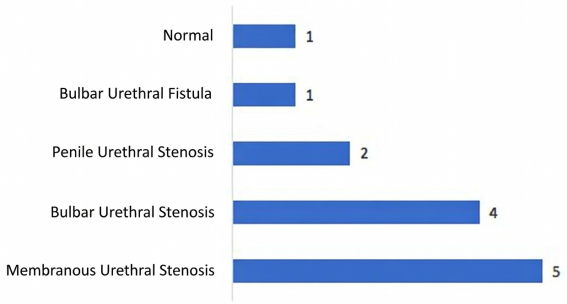
Retrograde micturating urethrocystography (RMUC) was performed in 12 patients. Figure 1 illustrates the RMUC data.
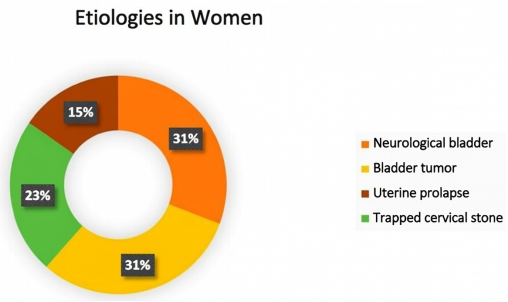
Figure 5. Distribution of patients according to the established etiological diagnosis in women.

3.6. Complications Related to Urinary Retention
Prior to bladder drainage, renal failure was noted in 63 patients (34.81%). Immediate complications after drainage were decompression hematuria in 9 patients (4.97%) and post-obstructive diuresis syndrome in 8 patients (4.42%). Ninety-eight patients were transferred to the urology department for hospitalization, and the mean hospital stay was 3.73 days with extremes of 1 and 12 days.
4. Discussion
Urinary retention represented 59.46% of urological emergencies recorded at CHU-YO during the study period. This high proportion confirms that urinary retention is the main urological emergency in referral hospitals in sub-Saharan Africa, as reported in Senegal, Togo, and Chad, where frequencies range between 45 and 65% of urological emergencies
[4]
Diallo TO, Diabate I, Barry M, Bah OR. The profile of urological emergencies in a regional hospital in Senegal: a 20-month retrospective study. Pan African Medical Journal. 2022; 42(1).
Vadandi V, Mahamat A, Minguemadji A, Temga OM, Vounouzia B, Abdelmamoud C, et al. Management of Urine Retention in the Emergency Department of the Abeche University Teaching Hospital. Health sciences and disease. Nov 24 2023; 24(12).
Nonoa B, Sikpa KH, Sade SR, Agbedey MS, Botcho G, Padja E, et al. Acute urinary retention in adults at the teaching hospital of Kara: initial management and etiological diagnosis: Acute urinary retention in adults at the teaching hospital of Kara: initial management and etiological diagnosis. Journal of Scientific Research of the University of Lome Dec 20 2023; 25(3): 135-41.
Botcho G, Tengué K, Kpatcha TM, Sewa EV, Leloua E, Sikpa HK, et al. Management of acute urinary retention at the CHU Sylvanus Olympio in Lome. Journal of Scientific Research of the University of Lome. Nov 22 2016; 18(3): 181-8.
[4-6, 9]
. The low literacy level, lack of financial means, and primary recourse to traditional treatment could contribute to delayed consultation, making urinary retention the circumstance of discovery of prostatic pathology.
The high mean age (65.8 ± 14.2 years) and clear male predominance (92.8%, M/F sex ratio = 12.9) are consistent with African series, where men over 60 constitute the most exposed population
[5]
Vadandi V, Mahamat A, Minguemadji A, Temga OM, Vounouzia B, Abdelmamoud C, et al. Management of Urine Retention in the Emergency Department of the Abeche University Teaching Hospital. Health sciences and disease. Nov 24 2023; 24(12).
Nonoa B, Sikpa KH, Sade SR, Agbedey MS, Botcho G, Padja E, et al. Acute urinary retention in adults at the teaching hospital of Kara: initial management and etiological diagnosis: Acute urinary retention in adults at the teaching hospital of Kara: initial management and etiological diagnosis. Journal of Scientific Research of the University of Lome Dec 20 2023; 25(3): 135-41.
Botcho G, Tengué K, Kpatcha TM, Sewa EV, Leloua E, Sikpa HK, et al. Management of acute urinary retention at the CHU Sylvanus Olympio in Lome. Journal of Scientific Research of the University of Lome. Nov 22 2016; 18(3): 181-8.
[5, 6, 9]
. This high prevalence reflects both the progressive aging of the male population and especially the contributory role of prostatic pathology in the etiologies of urinary retention.
Farmers represented nearly half of the cohort (48.6%), and 66.9% of patients were not literate, suggesting possible delayed consultation and lack of awareness of lower urinary tract symptoms.
Clinically, the predominance of complete retention of sudden onset aligns with the observations of Botcho et al. in Lome
[9]
Botcho G, Tengué K, Kpatcha TM, Sewa EV, Leloua E, Sikpa HK, et al. Management of acute urinary retention at the CHU Sylvanus Olympio in Lome. Journal of Scientific Research of the University of Lome. Nov 22 2016; 18(3): 181-8.
[9]
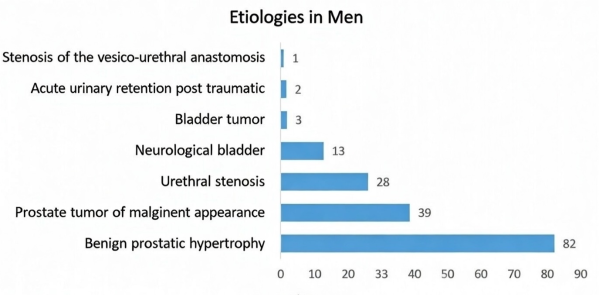
. Digital rectal examination primarily suggested prostatic pathology, confirming that benign hypertrophy and prostate cancer constitute the main etiologies of lower urinary retention in men over 50
[6]
Nonoa B, Sikpa KH, Sade SR, Agbedey MS, Botcho G, Padja E, et al. Acute urinary retention in adults at the teaching hospital of Kara: initial management and etiological diagnosis: Acute urinary retention in adults at the teaching hospital of Kara: initial management and etiological diagnosis. Journal of Scientific Research of the University of Lome Dec 20 2023; 25(3): 135-41.
Diabaté I, Ondo CZ, Sow I, Ba A, MBoup C. Urological emergencies at the Louga hospital center, Senegal: epidemiological aspects and evaluation of management. African journal of urology. Sept 1 2015; 21(3): 181-6.
Biologically, elevated serum creatinine was observed in 34.81% of patients, reflecting obstructive renal failure related to prolonged retention. This proportion is comparable to those reported in African series, ranging between 25 and 40%
[6]
Nonoa B, Sikpa KH, Sade SR, Agbedey MS, Botcho G, Padja E, et al. Acute urinary retention in adults at the teaching hospital of Kara: initial management and etiological diagnosis: Acute urinary retention in adults at the teaching hospital of Kara: initial management and etiological diagnosis. Journal of Scientific Research of the University of Lome Dec 20 2023; 25(3): 135-41.
Botcho G, Tengué K, Kpatcha TM, Sewa EV, Leloua E, Sikpa HK, et al. Management of acute urinary retention at the CHU Sylvanus Olympio in Lome. Journal of Scientific Research of the University of Lome. Nov 22 2016; 18(3): 181-8.
[12]
Tengue K, Kpatcha TM, Sewa E, Adabra K, Amavi AK, Sikpa K, et al. Management of urological emergencies in Togo. Uro-Andro. 2017 Mar 2; 1(7): 331-4.
[6, 9, 12]
. This underscores the potential severity of urinary retention when not managed early.
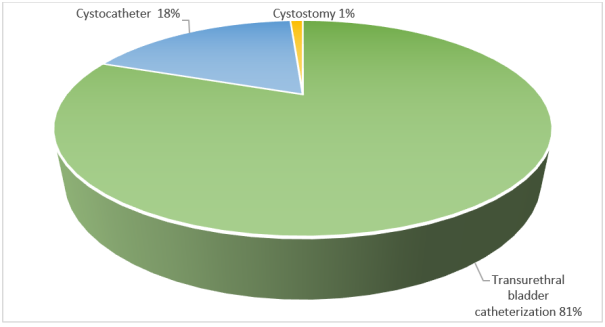
Transurethral bladder catheterization remained the most used drainage method, consistent with recommendations
[6]
Nonoa B, Sikpa KH, Sade SR, Agbedey MS, Botcho G, Padja E, et al. Acute urinary retention in adults at the teaching hospital of Kara: initial management and etiological diagnosis: Acute urinary retention in adults at the teaching hospital of Kara: initial management and etiological diagnosis. Journal of Scientific Research of the University of Lome Dec 20 2023; 25(3): 135-41.
Horgan AF, Prasad B, Waldron DJ, O'sullivan DC. Acute Urinary Retention. Comparison of Suprapubic and Urethral Catheterisation. British Journal of Urology. 1992; 70(2): 149-51.
Pinar U, Gas J, Sarrazin C, Anract J, Chevrot A, Fassi-Fehri H, et al. Management of acute urinary retention in men in the context of benign prostatic hyperplasia: literature review and good practice recommendations from the Male Voiding Disorders Committee (CTMH). Progrès en Urologie - FMC. Nov 1 2025; 35(7): 288-99.
. However, the failure rate of nearly 11% and the frequency of urethral bleeding underscore the need to strengthen staff training and ensure access to safe alternatives such as suprapubic catheterization, as suggested by Horgan et al
[11]
Horgan AF, Prasad B, Waldron DJ, O'sullivan DC. Acute Urinary Retention. Comparison of Suprapubic and Urethral Catheterisation. British Journal of Urology. 1992; 70(2): 149-51.
Immediate post-drainage complications were dominated by decompression hematuria and post-obstructive diuresis syndrome, with frequencies comparable to those reported in the literature
[6]
Nonoa B, Sikpa KH, Sade SR, Agbedey MS, Botcho G, Padja E, et al. Acute urinary retention in adults at the teaching hospital of Kara: initial management and etiological diagnosis: Acute urinary retention in adults at the teaching hospital of Kara: initial management and etiological diagnosis. Journal of Scientific Research of the University of Lome Dec 20 2023; 25(3): 135-41.
Botcho G, Tengué K, Kpatcha TM, Sewa EV, Leloua E, Sikpa HK, et al. Management of acute urinary retention at the CHU Sylvanus Olympio in Lome. Journal of Scientific Research of the University of Lome. Nov 22 2016; 18(3): 181-8.
[6, 9]
. Progressive bladder emptying followed by concomitant vascular filling helps reduce the frequency of complications after bladder drainage. Strengthening the capacity of healthcare personnel in urological emergency reception services could reduce the incidence of these avoidable complications.
The relatively short mean hospital stay (3.73 days) reflects the effectiveness of bladder drainage and initial management, but also the need for rapid referral for definitive etiological management.
5. Conclusion
Lower urinary retention remains the primary urological emergency at CHU-Yalgado Ouedraogo, occurring mainly in elderly men and being largely related to prostatic pathologies. Delayed consultation contributes to the high frequency of complications, particularly obstructive renal failure. Emergency bladder drainage is the cornerstone of initial management. Particular attention should be paid to strengthening the early detection of prostatic conditions through awareness campaigns, as well as improving access to healthcare for the elderly.
Descazeaud A, Robert G, de La Taille A. Management of lower urinary tract obstruction related to BPH in patients with particular conditions and/or complications. Progrès en Urologie. Nov 1 2018; 28(15): 868-74.
Stoffel JT, Peterson AC, Sandhu JS, Suskind AM, Wei JT, Lightner DJ. AUA White Paper on Nonneurogenic Chronic Urinary Retention: Consensus Definition, Treatment Algorithm, and Outcome End Points. The Journal of Urology. July 1 2017; 198(1): 153-60.
Diallo TO, Diabate I, Barry M, Bah OR. The profile of urological emergencies in a regional hospital in Senegal: a 20-month retrospective study. Pan African Medical Journal. 2022; 42(1).
Vadandi V, Mahamat A, Minguemadji A, Temga OM, Vounouzia B, Abdelmamoud C, et al. Management of Urine Retention in the Emergency Department of the Abeche University Teaching Hospital. Health sciences and disease. Nov 24 2023; 24(12).
Nonoa B, Sikpa KH, Sade SR, Agbedey MS, Botcho G, Padja E, et al. Acute urinary retention in adults at the teaching hospital of Kara: initial management and etiological diagnosis: Acute urinary retention in adults at the teaching hospital of Kara: initial management and etiological diagnosis. Journal of Scientific Research of the University of Lome Dec 20 2023; 25(3): 135-41.
Diabaté I, Ondo CZ, Sow I, Ba A, MBoup C. Urological emergencies at the Louga hospital center, Senegal: epidemiological aspects and evaluation of management. African journal of urology. Sept 1 2015; 21(3): 181-6.
Botcho G, Tengué K, Kpatcha TM, Sewa EV, Leloua E, Sikpa HK, et al. Management of acute urinary retention at the CHU Sylvanus Olympio in Lome. Journal of Scientific Research of the University of Lome. Nov 22 2016; 18(3): 181-8.
[10]
Bouhours AC, Bigot P, Orsat M, Hoarau N, Descamps P, Fournié A, et al. Postpartum bladder retention. Progrès en urologie. Jan 1 2011; 21(1): 11-7.
Horgan AF, Prasad B, Waldron DJ, O'sullivan DC. Acute Urinary Retention. Comparison of Suprapubic and Urethral Catheterisation. British Journal of Urology. 1992; 70(2): 149-51.
Tengue K, Kpatcha TM, Sewa E, Adabra K, Amavi AK, Sikpa K, et al. Management of urological emergencies in Togo. Uro-Andro. 2017 Mar 2; 1(7): 331-4.
[13]
Pinar U, Gas J, Sarrazin C, Anract J, Chevrot A, Fassi-Fehri H, et al. Management of acute urinary retention in men in the context of benign prostatic hyperplasia: literature review and good practice recommendations from the Male Voiding Disorders Committee (CTMH). Progrès en Urologie - FMC. Nov 1 2025; 35(7): 288-99.
Ouattara, A., Kirakoya, B., Sawadogo, H., Lingani, N., Traore, Y. J. R. P., et al. (2026). Management of Lower Urinary Retention at the Yalgado Ouedraogo University Hospital Center. International Journal of Clinical Urology, 10(1), 19-27. https://doi.org/10.11648/j.ijcu.20261001.15
Ouattara, A.; Kirakoya, B.; Sawadogo, H.; Lingani, N.; Traore, Y. J. R. P., et al. Management of Lower Urinary Retention at the Yalgado Ouedraogo University Hospital Center. Int. J. Clin. Urol.2026, 10(1), 19-27. doi: 10.11648/j.ijcu.20261001.15
Ouattara A, Kirakoya B, Sawadogo H, Lingani N, Traore YJRP, et al. Management of Lower Urinary Retention at the Yalgado Ouedraogo University Hospital Center. Int J Clin Urol. 2026;10(1):19-27. doi: 10.11648/j.ijcu.20261001.15
@article{10.11648/j.ijcu.20261001.15,
author = {Abdoul-Karim Ouattara and Brahima Kirakoya and Hassami Sawadogo and Neimatou Lingani and Yannick Jean Rodrigue Pingdwende Traore and Fatao Ouedraogo and Clotaire Alexis Marie Kiemdiba Donega Yameogo and Abdoul-Karim Pare and Adama Ouattara and Fasnewinde Aristide Kabore},
title = {Management of Lower Urinary Retention at the Yalgado Ouedraogo University Hospital Center},
journal = {International Journal of Clinical Urology},
volume = {10},
number = {1},
pages = {19-27},
doi = {10.11648/j.ijcu.20261001.15},
url = {https://doi.org/10.11648/j.ijcu.20261001.15},
eprint = {https://article.sciencepublishinggroup.com/pdf/10.11648.j.ijcu.20261001.15},
abstract = {Introduction: Lower urinary retention is one of the most common urological emergencies in the hospital setting, primarily affecting elderly men and most often related to prostatic pathologies. This study aimed to describe the therapeutic modalities and outcomes of lower urinary retention managed at the Yalgado Ouedraogo University Hospital Center (CHU-YO). Methodology: This was a prospective, descriptive, longitudinal study conducted from August 1, 2023, to January 31, 2024, in the urological emergency department of CHU-YO. All patients admitted for urinary retention were included, except those already catheterized or non-consenting. Epidemiological, clinical, paraclinical, and therapeutic data were collected via Kobo Toolbox and analyzed with SPSS 20. Results: Out of 333 urological emergencies, 198 cases of urinary retention were identified (59.46%). After exclusions, 181 patients were analyzed. The mean age was 65.8 years, with a marked male predominance (92.8%). Retention was complete in 87.3% of cases and of sudden onset in 91.2%. Prostatic pathologies were the main etiology in men, followed by urethral strictures. Obstructive renal failure was present in 34.8% of patients prior to drainage. Transurethral bladder catheterization was the primary drainage method, with a failure rate of 10.9%. Post-drainage complications were dominated by decompression hematuria (5.0%) and post-obstructive diuresis syndrome (4.4%). The mean hospital stay was 3.7 days. Conclusion: Lower urinary retention remains a frequent emergency at CHU-YO, primarily affecting elderly men and dominated by prostatic pathologies. Late diagnosis exposes patients to a high risk of renal complications, underscoring the need for early screening of voiding disorders and strengthening of management capacities at the peripheral level.},
year = {2026}
}
TY - JOUR
T1 - Management of Lower Urinary Retention at the Yalgado Ouedraogo University Hospital Center
AU - Abdoul-Karim Ouattara
AU - Brahima Kirakoya
AU - Hassami Sawadogo
AU - Neimatou Lingani
AU - Yannick Jean Rodrigue Pingdwende Traore
AU - Fatao Ouedraogo
AU - Clotaire Alexis Marie Kiemdiba Donega Yameogo
AU - Abdoul-Karim Pare
AU - Adama Ouattara
AU - Fasnewinde Aristide Kabore
Y1 - 2026/02/25
PY - 2026
N1 - https://doi.org/10.11648/j.ijcu.20261001.15
DO - 10.11648/j.ijcu.20261001.15
T2 - International Journal of Clinical Urology
JF - International Journal of Clinical Urology
JO - International Journal of Clinical Urology
SP - 19
EP - 27
PB - Science Publishing Group
SN - 2640-1355
UR - https://doi.org/10.11648/j.ijcu.20261001.15
AB - Introduction: Lower urinary retention is one of the most common urological emergencies in the hospital setting, primarily affecting elderly men and most often related to prostatic pathologies. This study aimed to describe the therapeutic modalities and outcomes of lower urinary retention managed at the Yalgado Ouedraogo University Hospital Center (CHU-YO). Methodology: This was a prospective, descriptive, longitudinal study conducted from August 1, 2023, to January 31, 2024, in the urological emergency department of CHU-YO. All patients admitted for urinary retention were included, except those already catheterized or non-consenting. Epidemiological, clinical, paraclinical, and therapeutic data were collected via Kobo Toolbox and analyzed with SPSS 20. Results: Out of 333 urological emergencies, 198 cases of urinary retention were identified (59.46%). After exclusions, 181 patients were analyzed. The mean age was 65.8 years, with a marked male predominance (92.8%). Retention was complete in 87.3% of cases and of sudden onset in 91.2%. Prostatic pathologies were the main etiology in men, followed by urethral strictures. Obstructive renal failure was present in 34.8% of patients prior to drainage. Transurethral bladder catheterization was the primary drainage method, with a failure rate of 10.9%. Post-drainage complications were dominated by decompression hematuria (5.0%) and post-obstructive diuresis syndrome (4.4%). The mean hospital stay was 3.7 days. Conclusion: Lower urinary retention remains a frequent emergency at CHU-YO, primarily affecting elderly men and dominated by prostatic pathologies. Late diagnosis exposes patients to a high risk of renal complications, underscoring the need for early screening of voiding disorders and strengthening of management capacities at the peripheral level.
VL - 10
IS - 1
ER -
Ouattara, A., Kirakoya, B., Sawadogo, H., Lingani, N., Traore, Y. J. R. P., et al. (2026). Management of Lower Urinary Retention at the Yalgado Ouedraogo University Hospital Center. International Journal of Clinical Urology, 10(1), 19-27. https://doi.org/10.11648/j.ijcu.20261001.15
Ouattara, A.; Kirakoya, B.; Sawadogo, H.; Lingani, N.; Traore, Y. J. R. P., et al. Management of Lower Urinary Retention at the Yalgado Ouedraogo University Hospital Center. Int. J. Clin. Urol.2026, 10(1), 19-27. doi: 10.11648/j.ijcu.20261001.15
Ouattara A, Kirakoya B, Sawadogo H, Lingani N, Traore YJRP, et al. Management of Lower Urinary Retention at the Yalgado Ouedraogo University Hospital Center. Int J Clin Urol. 2026;10(1):19-27. doi: 10.11648/j.ijcu.20261001.15
@article{10.11648/j.ijcu.20261001.15,
author = {Abdoul-Karim Ouattara and Brahima Kirakoya and Hassami Sawadogo and Neimatou Lingani and Yannick Jean Rodrigue Pingdwende Traore and Fatao Ouedraogo and Clotaire Alexis Marie Kiemdiba Donega Yameogo and Abdoul-Karim Pare and Adama Ouattara and Fasnewinde Aristide Kabore},
title = {Management of Lower Urinary Retention at the Yalgado Ouedraogo University Hospital Center},
journal = {International Journal of Clinical Urology},
volume = {10},
number = {1},
pages = {19-27},
doi = {10.11648/j.ijcu.20261001.15},
url = {https://doi.org/10.11648/j.ijcu.20261001.15},
eprint = {https://article.sciencepublishinggroup.com/pdf/10.11648.j.ijcu.20261001.15},
abstract = {Introduction: Lower urinary retention is one of the most common urological emergencies in the hospital setting, primarily affecting elderly men and most often related to prostatic pathologies. This study aimed to describe the therapeutic modalities and outcomes of lower urinary retention managed at the Yalgado Ouedraogo University Hospital Center (CHU-YO). Methodology: This was a prospective, descriptive, longitudinal study conducted from August 1, 2023, to January 31, 2024, in the urological emergency department of CHU-YO. All patients admitted for urinary retention were included, except those already catheterized or non-consenting. Epidemiological, clinical, paraclinical, and therapeutic data were collected via Kobo Toolbox and analyzed with SPSS 20. Results: Out of 333 urological emergencies, 198 cases of urinary retention were identified (59.46%). After exclusions, 181 patients were analyzed. The mean age was 65.8 years, with a marked male predominance (92.8%). Retention was complete in 87.3% of cases and of sudden onset in 91.2%. Prostatic pathologies were the main etiology in men, followed by urethral strictures. Obstructive renal failure was present in 34.8% of patients prior to drainage. Transurethral bladder catheterization was the primary drainage method, with a failure rate of 10.9%. Post-drainage complications were dominated by decompression hematuria (5.0%) and post-obstructive diuresis syndrome (4.4%). The mean hospital stay was 3.7 days. Conclusion: Lower urinary retention remains a frequent emergency at CHU-YO, primarily affecting elderly men and dominated by prostatic pathologies. Late diagnosis exposes patients to a high risk of renal complications, underscoring the need for early screening of voiding disorders and strengthening of management capacities at the peripheral level.},
year = {2026}
}
TY - JOUR
T1 - Management of Lower Urinary Retention at the Yalgado Ouedraogo University Hospital Center
AU - Abdoul-Karim Ouattara
AU - Brahima Kirakoya
AU - Hassami Sawadogo
AU - Neimatou Lingani
AU - Yannick Jean Rodrigue Pingdwende Traore
AU - Fatao Ouedraogo
AU - Clotaire Alexis Marie Kiemdiba Donega Yameogo
AU - Abdoul-Karim Pare
AU - Adama Ouattara
AU - Fasnewinde Aristide Kabore
Y1 - 2026/02/25
PY - 2026
N1 - https://doi.org/10.11648/j.ijcu.20261001.15
DO - 10.11648/j.ijcu.20261001.15
T2 - International Journal of Clinical Urology
JF - International Journal of Clinical Urology
JO - International Journal of Clinical Urology
SP - 19
EP - 27
PB - Science Publishing Group
SN - 2640-1355
UR - https://doi.org/10.11648/j.ijcu.20261001.15
AB - Introduction: Lower urinary retention is one of the most common urological emergencies in the hospital setting, primarily affecting elderly men and most often related to prostatic pathologies. This study aimed to describe the therapeutic modalities and outcomes of lower urinary retention managed at the Yalgado Ouedraogo University Hospital Center (CHU-YO). Methodology: This was a prospective, descriptive, longitudinal study conducted from August 1, 2023, to January 31, 2024, in the urological emergency department of CHU-YO. All patients admitted for urinary retention were included, except those already catheterized or non-consenting. Epidemiological, clinical, paraclinical, and therapeutic data were collected via Kobo Toolbox and analyzed with SPSS 20. Results: Out of 333 urological emergencies, 198 cases of urinary retention were identified (59.46%). After exclusions, 181 patients were analyzed. The mean age was 65.8 years, with a marked male predominance (92.8%). Retention was complete in 87.3% of cases and of sudden onset in 91.2%. Prostatic pathologies were the main etiology in men, followed by urethral strictures. Obstructive renal failure was present in 34.8% of patients prior to drainage. Transurethral bladder catheterization was the primary drainage method, with a failure rate of 10.9%. Post-drainage complications were dominated by decompression hematuria (5.0%) and post-obstructive diuresis syndrome (4.4%). The mean hospital stay was 3.7 days. Conclusion: Lower urinary retention remains a frequent emergency at CHU-YO, primarily affecting elderly men and dominated by prostatic pathologies. Late diagnosis exposes patients to a high risk of renal complications, underscoring the need for early screening of voiding disorders and strengthening of management capacities at the peripheral level.
VL - 10
IS - 1
ER -