Research Article | | Peer-Reviewed

Report on the Recent Situation of Heart Valve Replacement for Rheumatic Heart Disease in Burkina Faso, West Africa

Received: 12 March 2026     Accepted: 25 March 2026     Published: 7 April 2026
Views:       Downloads:
Abstract

Rheumatic heart disease (RHD) remains a major public health concern in low- and middle-income countries. Access to surgical treatment remains extremely limited. Specific treatment outcomes for the small group of patients who undergo surgery are not yet described in Burkina Faso, a country in western Africa. Our objective is to describe the scope and types of valve surgery of RHD performed in Burkina Faso, as well as the prognosis for patients. We conducted a retrospective study of all valve surgery procedures recorded between June 2021 and June 2025 in the Burkina Faso surgical registry. A total of 114 patients underwent heart valve surgical procedures. The majority of these patients belonged to the younger demographic (average age 27.2 years, with 45.6% aged ≤20 years), with 61 being female (53.5%). 61 were for mitral valve surgery (53.5%), 89 involved mitral valve replacement with concomitant interventions on multiple valves (78.1%), 23 were for aortic valve replacement (20.2%), and 8 involved the use of biological valves (7%). The perioperative mortality rate for these patients was 5.3% (6/114). Nearly 56 cases (46.1%) were performed within the past year, marking a significant increase compared to the previous four years, with no perioperative mortality. Postoperative examinations revealed a reduction in heart size and improved cardiac function. We find patients with RHD in Burkina Faso experience early-onset and severe disease. The number of patients receiving treatment has been increasing year by year, and both the technical level and treatment outcomes have been improving over time.

Published in International Journal of Cardiovascular and Thoracic Surgery (Volume 12, Issue 2)
DOI 10.11648/j.ijcts.20261202.19
Page(s) 75-79
Creative Commons

This is an Open Access article, distributed under the terms of the Creative Commons Attribution 4.0 International License (http://creativecommons.org/licenses/by/4.0/), which permits unrestricted use, distribution and reproduction in any medium or format, provided the original work is properly cited.

Copyright

Copyright © The Author(s), 2026. Published by Science Publishing Group

Keywords

Artificial Heart Valves, Rheumatic Heart Disease, Valve Replacement

1. Introduction
Rheumatic heart disease (RHD) remains a major heart valve disorder in countries across Asia, Africa, and Latin America . Typically, rheumatic fever affects the heart valves, initially manifesting as valve regurgitation and insufficiency, and later, chronic inflammation leads to valve fusion and stenosis . Valve replacement is a simple and effective treatment method . There is currently no reported data on valve surgery for RHD patients in Burkina Faso, a western African region. This article presents the following report.
This article analyzes the clinical data of a total of 114 patients who underwent valve replacement at the Cardiothoracic Surgery Department of the Tangadougou Hospital, the sole heart surgery center in Burkina Faso, West Africa, between July 2021 and July 2025. These surgeries were partially funded by visiting foreign medical teams. This study was approved by the Ethics Committee of the University Hospital of Tengandogo, Burkina Faso and all subjects provided signed informed consent. All participants provided informed consent prior to commencing study involvement.
2. General Situation
There were 114 patients with RHD in the entire cohort: 53 males and 61 females, aged 5 to 70 years, with an average age of 27.2 years. Of these, 52 were under the age of 20, accounting for 45.6% of the total. The duration of the disease ranged from 1.5 to 30 years, with an average of 2.7 years. Clinically diagnosed as rheumatic heart disease, mitral valve regurgitation (MI) was present in 87 cases, mitral valve stenosis (MS) or MS + MI in 2 cases, simple aortic valve regurgitation (AI) in 22 cases, aortic valve stenosis (AS) or AS + AI in 3 cases. Based on the NYHA classification, 106 patients had stage III heart function, and 8 had stage IV.
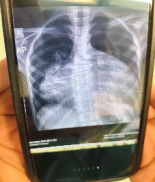
ECG examinations revealed 44 cases of sinus rhythm, 70 cases of atrial fibrillation, 15 cases of right ventricular hypertrophy, 20 cases of left ventricular hypertrophy, and 12 cases of both ventricular hypertrophy. Chest X-ray examination (Figure 1): heart-to-chest ratio 0.45-0.88, average 0.68 ± 0.12. Echocardiography indicated left atrial diameter 24.4-115 mm, average 68.09 ± 21.7 mm; left ventricular end-diastolic diameter 38-93.9 mm, average 62 ± 15.1 mm; left ventricular ejection fraction (EF) 36.5-82.4%, average 63.5 ± 10.2%.
3. Surgical Techniques
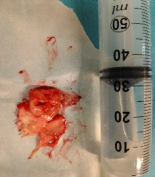
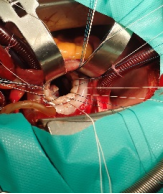
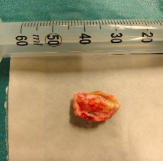
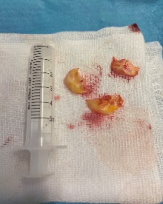
The types of surgery included simple mitral valve replacement (MVR) 60 cases, among which 8 were bioprosthetic valve replacements, mitral and aortic valve replacements (AVR) 8 cases, mitral and tricuspid ring annuloplasty (TVP) 15 cases, MVR + AVR + TVP 5 cases; combined left atrial thrombus removal 4 cases, combined ductus arteriosus occlusion 2 cases, mitral valvuloplasty (MVP) 1 case; the patients in this group mainly had severe mitral regurgitation, totaling 89 cases, accounting for 78.1%; simple AVR 23 cases, AVR + TVP 2 cases. All cases underwent general anesthesia, invasive arterial puncture to measure blood pressure, deep venous catheterization during surgery, moderate hypothermic extracorporeal circulation, intraoperative esophageal echocardiography, median sternotomy, right atrium placement of vena cava drainage tube, ascending aorta insertion of arterial perfusion conduit, parallel circulation, blood flow cooling, after clamping the ascending aorta, 4°C cold cardioplegic solution was perfused through the root of the aorta, the left atrium was accessed through the interatrial groove, or through the right atrium and interatrial septum to enter the left atrium. If there were clots, they were completely flushed out using large amounts of cold saline solution. In most cases, the anterior leaflet of the mitral valve was resected (Figure 2), while the posterior leaflet and its chordae tendineae were retained; the prosthetic valve was secured by interrupted sutures (Figure 3). During the anastomosis, the incision was sutured, and in severe stenosis and calcification, the entire leaflets of the mitral valve were resected (Figure 4). The needle was inserted from the atrial surface of the mitral valve ring at a distance of 0.5 cm from the edge of the valve, exited from the ventricular surface, and passed through the prosthetic valve ring. Two cases underwent mitral valve repair. For aortic valve replacement, an incision was made along the root of the aorta to remove thickened leaflets (Figure 5), followed by aortic valve replacement using interrupted sutures. Using the modified De Vega method, a tricuspid annuloplasty ring was used to constrict the tricuspid valve.
The types of mechanical valves used included Carbomedics (n = 65), Medtronic-Hall (n = 40), and other companies' valves. The total cardioplegic arrest time ranged from 36 to 196 minutes, with an average of 70 minutes. The single valve replacement duration ranged from 34 to 140 minutes, with an average of 58 minutes; the double valve replacement duration ranged from 83 to 192 minutes, with an average of 106 minutes; and the extracorporeal circulation duration ranged from 56 to 295 minutes, with an average of 108 minutes.
4. Outcome of Treatment
Six patients died during their hospital stay following the procedure, resulting in a perioperative mortality rate of 5.3%. Three patients after surgery were considered to have developed artificial valve thrombosis, leading to cardiac arrest and death. One of these patients was a 13-year-old who underwent mitral valve repair. During the procedure, the extracorporeal circulation oxygenator malfunctioned, leading to poor oxygenation. The oxygenator was replaced during surgery. Postoperatively, the patient developed low cardiac output syndrome and renal insufficiency, requiring dialysis and symptomatic treatment. Three weeks after surgery, the patient succumbed to multi-organ failure. Another patient experienced significant postoperative bleeding and coagulation dysfunction, with ineffective treatment leading to death. One patient developed infective endocarditis after surgery, which also resulted in death despite treatment. However, over the past year, there were 56 surgeries (46.1% of the total), marking a significant increase compared to the previous four years. The perioperative mortality rate for these 56 cases was 0%.
Of the 76 cases, follow-up examinations were conducted 1 to 6 months post-surgery, with re-evaluation of echocardiographic results. The left atrial diameter ranged from 25 to 95 mm, with an average of 51 mm; the left ventricular diastolic diameter ranged from 38 to 91 mm, with an average of 55 mm; the end-diastolic diameter of the left ventricle was 25 to 66 mm, with an average of 38 mm; and the EF value was 38.2-80.8%, with an average of 58.7%. X-ray chest films of 58 cases post-surgery showed a heart-to-chest ratio of 0.51-0.76, with an average of 0.63.
The results showed that the internal diameter of the left ventricle, the end-diastolic and end-systolic diameters of the left ventricle, and the heart-to-body ratio all exhibited varying degrees of reduction after surgery.
5. Discuss
RHD is a chronic, acquired heart disease. It has a higher incidence and mortality rate in low- and middle-income countries . Globally, there are at least 15.6 million people affected, with 282,000 new cases diagnosed each year, resulting in 233,000 deaths . It is a complication of acute rheumatic fever (ARF), which is caused by an autoimmune response triggered by untreated streptococcal pharyngitis in individuals with a genetic predisposition . Repeated episodes of ARF-induced autoimmune responses can lead to chronic inflammation and scarring of the valve apparatus. The mitral valve is the most commonly affected, followed by the aortic valve. The tricuspid and pulmonary valves are usually less severely affected. This condition places a hemodynamic burden on the heart, leading to clinical symptoms such as shortness of breath, palpitations, and heart failure . Surgery is the preferred treatment option once medical therapy has failed to prevent heart failure and improve symptoms.
Some children and young adults with RHD are unable to access heart surgery. Young patients often experience gradual functional decompensation within a short period, often due to conditions such as congestive heart failure, pulmonary arterial hypertension, and atrial arrhythmias . RHD is the primary cause of heart failure, and only a small percentage of RHD patients have access to treatment opportunities. Mortality rates remain high, posing a significant challenge for healthcare workers in Africa .
In patients with RHD endocarditis, the mitral valve is the primary site of endocardial involvement. Tricuspid chordal elongation or rupture leads to mitral valve leaflet prolapse, while mitral regurgitation is the most common finding in echocardiographic examinations . The traditional method of mitral valve replacement involves excising the diseased valve and attaching an artificial valve to the valve ring. Nowadays, most procedures involve preserving the posterior leaflet and chordae, which can prevent complications such as excessive expansion of the ventricular posterior wall leading to ventricular wall rupture. There is also a cushioning effect between the valve ring and the artificial valve. For mitral valve replacement, preserving the posterior leaflet or the entire valve requires a sufficiently sized mitral valve ring . In this region, most valve pathologies in patients with RHD show widespread thickening and contracture of the leaflets, but mild calcification. The valve ring expands, and the leaflets exhibit significant regurgitation. For patients with severe stenosis of the leaflets, complete stenosis, calcification, and rigidity necessitate complete removal of the valve leaflets.
The proportion of patients in this group who underwent bioprosthetic valve replacement was low (7%). Bioprosthetic valves do not require long-term anticoagulant medication, but many years later, they may need a second operation due to valve degeneration and damage. Most families of patients in this region consider the costs of a second operation and fear the risks associated with it, leading them to opt for mechanical valve replacement. Although bioprosthetic valves are more suitable for younger patients, for those aged 50 and above, mechanical valve replacement may be a more recommended alternative .
Although the medium- and long-term performance of mitral valve repair is less stable than that of degenerative disease , mitral valve repair techniques can provide satisfactory correction for patients with RHD mitral valve. The age of patients undergoing surgery in the region is generally small, with the youngest patient being 5 years old and the average age of surgery 27 years old. In developing countries, the majority of patients with RHD are of school age, and a large proportion of these patients have chronic disease due to recurrent wind-dampness and heat. For these children, valve repair is preferable to valve replacement due to anticoagulant treatment and its associated complications, an increased risk of endocarditis, and concerns about mismatches in subsequent patient valve replacement. In addition, younger patients have a higher incidence of degeneration when using biovalves, lower long-term survival rates, and higher mortality rates than adults. However, the proportion of repair surgery in this group was lower (1.8 percent). In this group of two mitral valve repair cases, one patient relapsed after repair, and oesophageal ultrasound observation still showed significant reflux, stopped again, and replaced with valve replacement. In adolescent female patients, pregnancy is an important issue in this age group, and difficulties in accessing facilities for monitoring and managing anticoagulant treatment in remote areas make reconstructive surgery a more urgent option . As the surgeon's experience increases, the likelihood of a successful repair increases . Repair is preferable to replacement regardless of age. Especially for younger patients, repair is the best option because it has a higher reoperative rate compared to replacement and many patients do not need replacement; Its mortality rate is still relatively low, while its survival rate is higher . Where feasible, repair of the mitral valve should be the preferred strategy for treating RHD in children. The use of biodegradable rings also helped to improve the durability of mitral valve repair in children with rheumatic heart disease . In patients with an average age of about 50 years, where only an expanded circular structure exists, the pathological process has stabilized and there is no significant calcification, valve repair is more feasible and effective .
However, research has also indicated that repair surgery and valve replacement surgery do not differ significantly in terms of mortality, survival rates, follow-up outcomes, and complications. RHD is not necessarily the first consideration for repair surgery; rather, it must take into account factors such as valve pathology, age, life expectancy, and prior medical history . The ability to undergo further surgery is also a consideration. Patients who undergo valve replacement surgery are at higher risk of subsequent anticoagulation-related complications and thromboembolic events, as well as increased risk of endocarditis. In our group, four patients experienced thromboembolic complications and subsequent death during the perioperative period following valve replacement surgery. Compared to degenerative changes, surgical repair of rheumatic mitral valve disease is technically more challenging and has a higher potential for failure. However, whenever feasible, opting for mitral valve repair rather than replacement is preferred for children undergoing primary correction, as it can maximize survival rates and reduce complications associated with valve replacement. In cases involving rheumatic etiology, mitral valve repair is a suitable option . As surgeons gain experience, the likelihood of successful repair also increases.
Through reports on patients with RHD who underwent valve surgery in Burkina Faso, a country in western Africa, it was learned that there are a significant number of RHD patients in the region, with a relatively young age of onset, severe disease severity, and an increasing number of patients currently receiving treatment each year. The level of medical technology and treatment outcomes have also been steadily improving.
Figure 1. Chest X-ray examination.
Figure 2. The anterior leaflet of the mitral valve.
Figure 3. The prosthetic valve was secured by interrupted sutures.
Figure 4. The entire leaflets of the mitral valve were resected.
Figure 5. The aorta thickened leaflets were removed.
Abbreviations

RHD

Rheumatic Heart Disease

ARF

Acute Rheumatic Fever

Acknowledgments
The authors are grateful to doctors of the University Hospital of Tengandogo, Burkina Faso and clinical supports during the entire study.
Author Contributions
Bingliang Li: Conceptualization, Formal Analysis, Methodology, Validation, Validation, Writing – original draft
Adama Sawadogo: Project administration, Resources, Software, Supervision
Yongshun Li: Data curation, Funding acquisition, Investigation, Writing – review & editing
Data Availability Statement
The datasets used and/or analysed during the current study are available from the corresponding author on reasonable request.
Conflicts of Interest
The authors declare that they have no competing interests.
References
[1] Noubiap, J. J. Agbor, V. N. Bigna, J. J. et al. Prevalence and progression of rheumatic heart disease: a global systematic review and meta-analysis of population-based echocardiographic studies. Sci Rep. 2019, 9, 17022.
[2] Zuhlke, L. Karthikeyan, G. Engel, M. E. Clinical outcomes in 3343 children and adults with rheumatic heart disease from 14 low- and middle-income countries: two-year follow-up of the global rheumatic heart disease registry (the REMEDY Study). Circulation. 2016, 134, 1456-1466.
[3] Remenyi, B. Carapetis, J. Wyber, R. et al. World Heart Federation Position statement of the World Heart Federation on the prevention and control of rheumatic heart disease. Nat Rev Cardiol. 2013, 10, 284-292.
[4] Kumar RK, Antunes MJ, Beaton A, et al. Contemporary Diagnosis and Management of Rheumatic Heart Disease: Implications for Closing the Gap: A Scientific Statement From the American Heart Association. Circulation. 2020, 11(17), 142(20): e337-e357.
[5] Chen, S.-W. Chen, C.-Y. Chien-Chia, V. Mitral valve repair versus replacement in patients with rheumatic heart disease. J Thorac Cardiovasc Surg. 2022, 164, 57-67.
[6] Steer AC, Carapetis JR. Prevention and treatment of rheumatic heart disease in the developing world. Nat Rev Cardiol. 2009, 6, 689-698.
[7] Marijon E, Mirabel M, Celermajer DS, et al. Rheumatic Heart Disease. Lancet 2012, 379, 953-964.
[8] GuilhermeL, Köhler KF, Postol E, et al. Genes, autoimmunity and pathogenesis of rheumatic heart disease. Ann Pediatr Cardiol. 2011, 4, 13-21.
[9] Carabello BA. Modern management of mitral stenosis. Circulation 2005, 112, 432-7.
[10] Zühlke L, Engel ME, Karthikeyan G, et al. Characteristics, complications, and gaps in evidence-based interventions in rheumatic heart disease: the Global Rheumatic Heart Disease Registry (the REMEDY study). Eur Heart J. 2015, 36, 115-22a.
[11] Antonio Grimaldi, Enrico Ammirati, Anna Chiara Vermi. Cardiac surgery for patients with heart failure due to structural heart disease in Uganda: access to surgery and outcomes. Cardiovasc J Afr. 2014, Sep-Oct, 25(5), 204-211.
[12] Vasan, R. S. Shrivastava, S. Vijayakumar, M. Echocardiographic evaluation of patients with acute rheumatic fever and rheumatic carditis Circulation. 1996, 94, 73-82.
[13] Kalangos, A. Beghetti, M. Vala, D. et al. Anterior mitral leaflet prolapse as a primary cause of pure rheumatic mitral insufficiency. Ann Thorac Surg. 2000, 69, 755-761.
[14] Yu J, Wang W. Bioprosthetic vs. mechanical mitral valve replacement for rheumatic heart disease in patients aged 50-70 years. Front Cardiovasc Med. 2022, 9, 904-958.
[15] Afksendiyos Kalangos, Jan T. Christenson, Maurice Beghetti et al. Mitral Valve Repair for Rheumatic Valve Disease in Children: Midterm Results and Impact of the Use of a Biodegradable Mitral Ring. Pediatric cardiac Volume 86, Issue 1. 2008 July p161-169.
[16] Srirup Chatterjee, Nikhil Bansal, Rajarshi Ghosh. Mitral valve repair in children with rheumatic heart disease. Indian J Thorac Cardiovasc Surg. 2021 Mar 25. 37(2), 175-182.
[17] Luís Henrique Oliveira Pereira, Kelvin Câmara, Tamires Santos Pinheiro et al. Rheumatic Mitral Valve Surgery: Repair or Replacement?Braz J Cardiovasc Surg. 2025 Feb 1, 40(2), e20230294.
Cite This Article
  • APA Style

    Li, B., Sawadogo, A., Li, Y. (2026). Report on the Recent Situation of Heart Valve Replacement for Rheumatic Heart Disease in Burkina Faso, West Africa. International Journal of Cardiovascular and Thoracic Surgery, 12(2), 75-79. https://doi.org/10.11648/j.ijcts.20261202.19

    Copy | Download

    ACS Style

    Li, B.; Sawadogo, A.; Li, Y. Report on the Recent Situation of Heart Valve Replacement for Rheumatic Heart Disease in Burkina Faso, West Africa. Int. J. Cardiovasc. Thorac. Surg. 2026, 12(2), 75-79. doi: 10.11648/j.ijcts.20261202.19

    Copy | Download

    AMA Style

    Li B, Sawadogo A, Li Y. Report on the Recent Situation of Heart Valve Replacement for Rheumatic Heart Disease in Burkina Faso, West Africa. Int J Cardiovasc Thorac Surg. 2026;12(2):75-79. doi: 10.11648/j.ijcts.20261202.19

    Copy | Download

  • @article{10.11648/j.ijcts.20261202.19,
      author = {Bingliang Li and Adama Sawadogo and Yongshun Li},
      title = {Report on the Recent Situation of Heart Valve Replacement for Rheumatic Heart Disease in Burkina Faso, West Africa},
      journal = {International Journal of Cardiovascular and Thoracic Surgery},
      volume = {12},
      number = {2},
      pages = {75-79},
      doi = {10.11648/j.ijcts.20261202.19},
      url = {https://doi.org/10.11648/j.ijcts.20261202.19},
      eprint = {https://article.sciencepublishinggroup.com/pdf/10.11648.j.ijcts.20261202.19},
      abstract = {Rheumatic heart disease (RHD) remains a major public health concern in low- and middle-income countries. Access to surgical treatment remains extremely limited. Specific treatment outcomes for the small group of patients who undergo surgery are not yet described in Burkina Faso, a country in western Africa. Our objective is to describe the scope and types of valve surgery of RHD performed in Burkina Faso, as well as the prognosis for patients. We conducted a retrospective study of all valve surgery procedures recorded between June 2021 and June 2025 in the Burkina Faso surgical registry. A total of 114 patients underwent heart valve surgical procedures. The majority of these patients belonged to the younger demographic (average age 27.2 years, with 45.6% aged ≤20 years), with 61 being female (53.5%). 61 were for mitral valve surgery (53.5%), 89 involved mitral valve replacement with concomitant interventions on multiple valves (78.1%), 23 were for aortic valve replacement (20.2%), and 8 involved the use of biological valves (7%). The perioperative mortality rate for these patients was 5.3% (6/114). Nearly 56 cases (46.1%) were performed within the past year, marking a significant increase compared to the previous four years, with no perioperative mortality. Postoperative examinations revealed a reduction in heart size and improved cardiac function. We find patients with RHD in Burkina Faso experience early-onset and severe disease. The number of patients receiving treatment has been increasing year by year, and both the technical level and treatment outcomes have been improving over time.},
     year = {2026}
    }
    

    Copy | Download

  • TY  - JOUR
    T1  - Report on the Recent Situation of Heart Valve Replacement for Rheumatic Heart Disease in Burkina Faso, West Africa
    AU  - Bingliang Li
    AU  - Adama Sawadogo
    AU  - Yongshun Li
    Y1  - 2026/04/07
    PY  - 2026
    N1  - https://doi.org/10.11648/j.ijcts.20261202.19
    DO  - 10.11648/j.ijcts.20261202.19
    T2  - International Journal of Cardiovascular and Thoracic Surgery
    JF  - International Journal of Cardiovascular and Thoracic Surgery
    JO  - International Journal of Cardiovascular and Thoracic Surgery
    SP  - 75
    EP  - 79
    PB  - Science Publishing Group
    SN  - 2575-4882
    UR  - https://doi.org/10.11648/j.ijcts.20261202.19
    AB  - Rheumatic heart disease (RHD) remains a major public health concern in low- and middle-income countries. Access to surgical treatment remains extremely limited. Specific treatment outcomes for the small group of patients who undergo surgery are not yet described in Burkina Faso, a country in western Africa. Our objective is to describe the scope and types of valve surgery of RHD performed in Burkina Faso, as well as the prognosis for patients. We conducted a retrospective study of all valve surgery procedures recorded between June 2021 and June 2025 in the Burkina Faso surgical registry. A total of 114 patients underwent heart valve surgical procedures. The majority of these patients belonged to the younger demographic (average age 27.2 years, with 45.6% aged ≤20 years), with 61 being female (53.5%). 61 were for mitral valve surgery (53.5%), 89 involved mitral valve replacement with concomitant interventions on multiple valves (78.1%), 23 were for aortic valve replacement (20.2%), and 8 involved the use of biological valves (7%). The perioperative mortality rate for these patients was 5.3% (6/114). Nearly 56 cases (46.1%) were performed within the past year, marking a significant increase compared to the previous four years, with no perioperative mortality. Postoperative examinations revealed a reduction in heart size and improved cardiac function. We find patients with RHD in Burkina Faso experience early-onset and severe disease. The number of patients receiving treatment has been increasing year by year, and both the technical level and treatment outcomes have been improving over time.
    VL  - 12
    IS  - 2
    ER  - 

    Copy | Download

Author Information