Abstract
Understanding the diversity of aquaculture production systems is essential to designing effective development strategies and targeted public policies. In Senegal, however, few quantitative typological approaches have been used to characterize freshwater fish farms. The objective of this study was to identify and characterize the main types of freshwater fish farms using a multivariate approach combining mixed-factorial data analysis and hierarchical principal component analysis. A descriptive analysis of thirty-six farms located in the main production areas of northern Senegal was conducted using quantitative and qualitative variables describing production infrastructure, farming systems, water resources, feeding practices, energy sources, hatchery availability and producer characteristics. The first five dimensions of mixed-factorial data analysis, which explained 59% of the total data variability, were used in the cluster analysis. Four distinct farm typologies were identified: river cage farming systems, groundwater-based tank farming systems, river-fed pond farming systems, and integrated hatchery farming systems. Farm differentiation was primarily driven by production infrastructure, water sources, feeding strategies, hatchery activities, and the level of production integration. The age of fish farmers and their aquaculture experience contributed little to the classification. The typology provides a valuable framework for tailoring extension services, investment priorities, and development policies to the different farm profiles. Additionally, this methodological approach can be applied to other aquaculture contexts and can be strengthened by the integration of economic, zootechnical, health, and environmental indicators in order to promote more resilient and sustainable aquaculture development.
Keywords
Fish Farming, Farm Typology, Multivariate Analysis, Mixed-Data Factor Analysis,
Hierarchical Principal Component Classification, Northern Senegal
1. Introduction
Aquaculture is currently the world’s fastest-growing food production sector and plays a major role in food security, nutrition, job creation, and economic development. According to
The State of World Fisheries and Aquaculture 2026, combined global production from fisheries and aquaculture has reached a record high, with aquaculture now supplying more than half of the aquatic animals intended for human consumption
| [13] | Food and Agriculture Organization of the United Nations (FAO). (2024). The State of World Fisheries and Aquaculture 2024: Blue Transformation in Action. Rome: FAO.
https://doi.org/10.4060/cd0683en |
[13]
. This growth reflects the sector’s increasing contribution to meeting global demand for animal protein, while helping to reduce pressure on wild fish stocks.
| [19] | Little, D. C., Newton, R. W., & Beveridge, M. C. M. (2016). Aquaculture: A rapidly growing and significant source of sustainable food? Status, transitions and potential. Proceedings of the Nutrition Society, 75(3), 274–286.
https://doi.org/10.1017/S0029665116000665 |
| [22] | Naylor, R. L., Hardy, R. W., Buschmann, A. H., Bush, S. R., Cao, L., Klinger, D. H., Little, D. C., Lubchenco, J., Shumway, S. E., & Troell, M. (2021). A 20-year retrospective review of global aquaculture. Nature, 591, 551–563.
https://doi.org/10.1038/s41586-021-03308-6 |
[19, 22]
In sub-Saharan Africa, aquaculture is now considered a strategic sector for meeting the growing demand for aquatic products, improving rural household incomes, and strengthening food security. Despite sustained growth in recent decades, its development remains limited by several structural constraints, including insufficient production of quality fingerlings, high feed costs, a lack of adequate infrastructure, limited access to technical services and financing, and weak organizational capacities among producers
| [8] | Brummett, R. E., Lazard, J., & Moehl, J. (2008). African aquaculture: Realizing the potential. Food Policy, 33(4), 371–385. https://doi.org/10.1016/j.foodpol.2008.01.005 |
| [13] | Food and Agriculture Organization of the United Nations (FAO). (2024). The State of World Fisheries and Aquaculture 2024: Blue Transformation in Action. Rome: FAO.
https://doi.org/10.4060/cd0683en |
| [27] | Ragasa, C., Charo-Karisa, H., Rurangwa, E., Tran, N., & Shikuku, K. M. (2022). Sustainable aquaculture development in sub-Saharan Africa. Nature Food, 3(2), 92–94.
https://doi.org/10.1038/s43016-022-00467-1 |
[8, 13, 27]
. Faced with these challenges, many African countries have integrated aquaculture development into their national growth and blue economy strategies to strengthen the resilience of food systems and support economic development.
In Senegal, aquaculture has become a strategic priority, supported by the establishment of the National Agency for Aquaculture (ANA), the Plan Sénégal Emergent, the Aquaculture Code and the National Sustainable Aquaculture Development Strategy
| [21] | Ministry of Fisheries and Maritime Economy. (2023). National Sustainable Aquaculture Development Strategy (SNDAq 2023–2032). Ministry of Fisheries and Maritime Economy, Dakar, Senegal. |
| [29] | Republic of Senegal. (2011). Decree No. 2011-486 of April 8, 2011 establishing and defining the organization and functioning of the National Agency for Aquaculture (ANA). Official Gazette of the Republic of Senegal, Dakar, Senegal. |
| [30] | Republic of Senegal. (2014). Plan Sénégal Émergent (PSE): Plan stratégique pour un Sénégal émergent. Government of Senegal, Dakar, Senegal. |
| [31] | Republic of Senegal. (2022). Law No. 2022-06 of April 15, 2022 on the Aquaculture Code. Official Gazette of the Republic of Senegal, Dakar, Senegal. |
[21, 29-31]
. Despite these efforts, production systems remain highly heterogeneous, reflecting differences in farm size, production objectives, access to water, technologies and investment capacity
| [11] | Diédhiou, I., Diadhiou, H. D., & Dème, M. (2020). La production et la consommation de poisson d'aquaculture à Saint-Louis du Sénégal. Journal of Applied Biosciences, 152(1), 15640–15649.
https://www.ajol.info/index.php/jab/article/view/233692 |
| [12] | Fall, S., Fall, J., Soung, A., Loum, A., & Pelebe, R. O. E. (2020). Acteurs, pratiques techniques, aspects économiques et contraintes de production des exploitations aquacoles au Sénégal, Afrique de l'Ouest. Afrique SCIENCE, 16(6), 216–231.
http://www.afriquescience.net/ |
[11, 12]
. Understanding this diversity is essential for designing targeted development and extension strategies.
Taking this heterogeneity into account is now recognized as essential for improving the governance of production systems. Farm typologies make it possible to group units with similar structural, technical, or organizational characteristics in order to better understand how they operate, identify their specific constraints, and target interventions more effectively
| [2] | Alvarez, S., Timler, C. J., Michalscheck, M., Paas, W., Descheemaeker, K., Tittonell, P., Andersson, J. A., Groot, J. C. J., & Schut, A. G. T. (2018). Capturing farm diversity with hypothesis-based typologies: An innovative methodological framework for farming system typology development. PLoS ONE, 13(5), e0194757.
https://doi.org/10.1371/journal.pone.0194757 |
| [17] | Joffre, O. M., & Bosma, R. H. (2009). Typology of shrimp farming in Bac Lieu Province, Mekong Delta, using multivariate statistics. Agriculture, Ecosystems & Environment, 132(1–2), 153–159.
https://doi.org/10.1016/j.agee.2009.03.010 |
| [18] | Köbrich, C., Rehman, T., & Khan, M. (2003). Typification of farming systems for constructing representative farm models: Two illustrations of the application of multivariate analyses in Chile and Pakistan. Agricultural Systems, 76(1), 141–157. https://doi.org/10.1016/S0308-521X(02)00013-6 |
| [20] | Michielsens, C. G. J., Lorenzen, K., Phillips, M. J., & Gauthier, R. (2002). Asian carp farming systems: Towards a typology and increased resource use efficiency. Aquaculture Research, 33(6), 403–413.
https://doi.org/10.1046/j.1365-2109.2002.00672.x |
[2, 17, 18, 20]
. More recently,
| [15] | Huber, R., Bartkowski, B., Brown, C., El Benni, N., Feil, J.-H., Grohmann, P., Joormann, I., Leonhardt, H., Mitter, H., & Müller, B. (2024). Farm typologies for understanding farm systems and improving agricultural policy. Agricultural Systems, 213, 103800. https://doi.org/10.1016/j.agsy.2023.103800 |
[15]
demonstrated that typologies serve as a reference tool for analyzing the diversity of agricultural systems, evaluating their performance, and designing policies tailored to local realities. In the field of aquaculture, this approach has been reinforced by the work of
| [20] | Michielsens, C. G. J., Lorenzen, K., Phillips, M. J., & Gauthier, R. (2002). Asian carp farming systems: Towards a typology and increased resource use efficiency. Aquaculture Research, 33(6), 403–413.
https://doi.org/10.1046/j.1365-2109.2002.00672.x |
| [26] | Partelow, S., Nagel, B., Gentry, R., Gephart, J. A., & Rocha, J. C. (2025). Archetypes of aquaculture development across 150 countries. Aquaculture, 595, 741484.
https://doi.org/10.1016/j.aquaculture.2024.741484 |
[20, 26]
, who demonstrate that identifying development archetypes is a key lever for understanding the diversity of aquaculture systems and guiding governance and development strategies at various scales.
Despite the growing interest in aquaculture development in Senegal, available studies have primarily focused on describing production systems, technical practices, economic performance, and constraints
| [11] | Diédhiou, I., Diadhiou, H. D., & Dème, M. (2020). La production et la consommation de poisson d'aquaculture à Saint-Louis du Sénégal. Journal of Applied Biosciences, 152(1), 15640–15649.
https://www.ajol.info/index.php/jab/article/view/233692 |
| [12] | Fall, S., Fall, J., Soung, A., Loum, A., & Pelebe, R. O. E. (2020). Acteurs, pratiques techniques, aspects économiques et contraintes de production des exploitations aquacoles au Sénégal, Afrique de l'Ouest. Afrique SCIENCE, 16(6), 216–231.
http://www.afriquescience.net/ |
[11, 12]
. Other studies have addressed specific topics, notably biosecurity practices in fish farms
| [14] | Faye, R., Diouf, N. D., Ly, M. A., & Ayih-Akakpo, J. A. (2020). Biosecurity Practices Applied in Aquacultural Farms in Northern Senegal, West Africa. European Scientific Journal, 16(6), 286–300. https://doi.org/10.19044/esj.2020.v16n6p286 |
[14]
. However, multivariate approaches aimed at objectively characterizing farm diversity and establishing a typology of fish farming systems remain underdeveloped in the Senegalese context, even though they are now recognized as tools for guiding public policies, development programs, and investment strategies in the aquaculture sector
| [1] | Adegbola, Y. P., Crinot, G. F., & Arouna, A. (2022). Fish farming systems diversity and implications in the Republic of Benin: Fish farm types and their economic performance. Aquaculture, Fish and Fisheries, 2(6), 522–539.
https://doi.org/10.1002/aff2.79 |
| [26] | Partelow, S., Nagel, B., Gentry, R., Gephart, J. A., & Rocha, J. C. (2025). Archetypes of aquaculture development across 150 countries. Aquaculture, 595, 741484.
https://doi.org/10.1016/j.aquaculture.2024.741484 |
[1, 26]
. This gap limits the ability of policymakers and sector stakeholders to adapt their interventions to different farm profiles.
In this context, the present study aims to identify and characterize the main types of freshwater fish farms in northern Senegal using a combination of Mixed Data Factor Analysis (MDFA) and Hierarchical Clustering on Principal Component (HCPC). Specifically, its objectives are (i) to describe the structural and organizational diversity of the farms, (ii) to identify the main factors explaining their differentiation, and (iii) to propose a typology that can guide development strategies, strengthen extension and advisory services, and public policies toward more productive, resilient, and sustainable aquaculture.
2. Materials and Methods
2.1. Study Area
This study was conducted in the regions of Saint-Louis, Louga, and Matam, located in northern Senegal. This region is the country’s main hub for inland fish farming, due to the availability of water resources from the Senegal River, its tributaries, natural lakes, and groundwater reserves. Aquaculture has expanded steadily in this area and plays a strategic role in national efforts to increase fish production, enhance food and nutrition security, create rural employment, and reduce pressure on capture fisheries.
The survey covered the main freshwater aquaculture production areas in these three regions, which are characterized by a variety of environmental conditions and farming systems. The locations of the 36 fish farms surveyed are shown in
Figure 1.
Figure 1. Geographical distribution of the surveyed fish farms in Senegal.
2.2. Sampling Strategy and Data Collection
The target population for this study consisted of freshwater fish farms located in northern Senegal. A census of active farms was conducted in each of the three study regions based on lists provided by the Regional Associations of Aquaculture Stakeholders (ARAFA), which served as the sampling frame. Farms were eligible if they were operational at the time of the survey, engaged in freshwater fish farming, and agreed to participate in the study. The sample size was defined to include at least 50% of the farms surveyed in each region; in order to represent the diversity of production, systems present in the study area. The farms were then selected by simple random sampling. In total, 36 fish farms were surveyed, distributed among Saint-Louis (n = 21), Matam (n = 11), and Louga (n = 4). Data were collected using a structured questionnaire administered during face-to-face interviews with farm owners or their designated representative. Information collected was verified through direct observations made during on-site farm visits to improve data reliability and minimize self-reporting bias. The survey covered production infrastructure, water resources, energy sources, species raised, feeding practices, sources of fry supply, hatchery activities, integrated production systems, and the socioeconomic characteristics of the producers.
2.3. Descriptive Analysis
Descriptive statistics were calculated to characterize the fish farms surveyed prior to the typological analysis. Qualitative variables were summarized as frequencies and percentages, while quantitative variables were described using the mean ± standard deviation (SD), the median, the interquartile range (IQR), and the minimum and maximum values.
The main structural and management characteristics of the farms were also summarized in a horizontal bar chart illustrating the most representative characteristics of the surveyed farms.
2.4. Variables Used for Farm Typology Analysis
A total of 24 variables describing the structural, technical, and organizational characteristics of fish farms were selected for the typological analysis. Twenty-two variables were qualitative and coded on a binary scale (Yes/No), while two variables (the producer’s age and experience in fish farming) were quantitative.
The variables were grouped into seven thematic categories:
1) production infrastructure (earth ponds, floating cages, concrete tanks, and above-ground tanks);
2) water sources (river, well, and lake);
3) energy sources (electricity, solar power, and diesel generator);
4) species farmed (Nile tilapia, African catfish, Heterobranchus spp., and Nile perch);
5) feed management (locally produced feed and imported feed);
6) sources of fingerlings (public hatcheries or development projects, private hatcheries, and fishermen);
7) production management practices (integrated production, hatchery activities, and on-farm feed production).
The age of the producers and their experience in fish farming were included as continuous variables to account for the characteristics of the farmers. The complete list of variables used in the analysis is presented in
Table 1.
Table 1. Variables used for the identification of fish farm typologies in Senegal.
Category | Variable | Type | Coding |
Infrastructure | Earthen ponds | Binary | Yes / No |
Infrastructure | Floating cages | Binary | Yes / No |
Infrastructure | Concrete tanks | Binary | Yes / No |
Infrastructure | Above-ground tanks | Binary | Yes / No |
Water source | River water | Binary | Yes / No |
Water source | Lake water | Binary | Yes / No |
Water source | Borehole water | Binary | Yes / No |
Energy | Solar energy | Binary | Yes / No |
Energy | Diesel generator | Binary | Yes / No |
Energy | Electricity | Binary | Yes / No |
Fish species | Nile tilapia (Oreochromis niloticus) | Binary | Yes / No |
Fish species | African catfish (Clarias gariepinus) | Binary | Yes / No |
Fish species | Heterobranchus spp. | Binary | Yes / No |
Fish species | Nile perch (Lates niloticus) | Binary | Yes / No |
Feed | Local feed | Binary | Yes / No |
Feed | Imported feed | Binary | Yes / No |
Fingerling source | Public hatcheries / projects | Binary | Yes / No |
Fingerling source | Private hatcheries | Binary | Yes / No |
Fingerling source | Fishermen | Binary | Yes / No |
Farm management | Integrated production | Binary | Yes / No |
Farm management | Hatchery activity | Binary | Yes / No |
Farm management | On-farm feed production | Binary | Yes / No |
Farmer characteristics | Age (years) | Continuous | Numeric |
Farmer characteristics | Farming experience (years) | Continuous | Numeric |
2.5. Identification of Fish Farm Typologies
Fish farm typologies were identified using a two-step, multivariate approach combining Mixed Data Factor Analysis (MDFA) and Hierarchical Principal Component Classification (HCPC). First, MDFA was applied to simultaneously analyze quantitative and qualitative variables while balancing their respective contributions to the overall variability of the data
| [16] | Husson, F., Lê, S., & Pagès, J. (2017). Exploratory Multivariate Analysis by Example Using R (2nd ed.). Chapman & Hall/CRC. |
| [25] | Pagès, J. (2014). Multiple Factor Analysis by Example Using R. Chapman & Hall/CRC. |
[16, 25]
. This method is particularly well-suited for datasets containing mixed-type variables and allows all farms to be projected into a common factor space. The number of dimensions chosen for classification was based on the screen plot and cumulative explained variance. HCPC classification was performed with five first dimensions, accounting for the greatest proportion of total variance. The MDFA dimensions selected were then used in Hierarchical Principal Component Analysis (HCPC). This method is followed by a step that consolidates the clusters, yielding stable groups that are well-separated. The present methodology allowed for the differentiation of the various fish farming types, corresponding to the principal production systems currently practiced in Senegal.
2.6. Comparison and Characterization of Fish Farm Typologies
After identifying the groups, the different types of fish farms were compared to characterize their structural profiles and management practices. Qualitative variables were summarized as the percentage of farms exhibiting each characteristic within each type, while quantitative variables were expressed as arithmetic means.
Quality variables were compared between types using Pearson's χ² test. In the case that the assumptions for this test could not be satisfied due to small sample sizes, Fisher’s exact test was performed instead. Since it was not possible to guarantee the assumptions of normality accounting for the relatively low sample size of some groups, the nonparametric Kruskal–Wallis test was used to compare age and experience in fish farming between typologies.
The distribution of the most important structural and management characteristics across the four typologies was represented in a heatmap using column and row normalization in order to allow for classification by color (i.e. what percentage of farms within each group exhibited a characteristic).
Then, identification of characteristics which significantly distinguish between each typology was performed via the v-test. It compares the frequency of each characteristic observed within a group with the frequency that would be expected if it were present throughout the entire dataset.
Characteristics with a P-value < 0.05 were considered significantly associated with a given typology and were used to describe the distinctive features of each production system.
All statistical analyses were performed using R software (version 4.6.0). Statistical significance was assessed at the 5% level, with P < 0.05 considered statistically significant.
3. Results
3.1. Characteristics of the Surveyed Freshwater Fish Farms
A total of 36 freshwater fish farms were surveyed in the northern regions. The principal structural and management features of the surveyed farms are summarized in
Figure 2, which shows the dominance of tilapia on those farms, the importance of river water as a source for water, ownership or production of at least some feed at local level, and limited participation from public hatcheries and development projects with regard to supplying fingerlings. This figure gives a very general overview of the main features of the production systems analyzed.
Figure 2. Main structural and management characteristics of surveyed freshwater fish farms. Percentages represent the proportion of farms reporting each characteristic. Multiple responses were allowed for several variables, percentages within each category do not necessarily sum to 100%.
The surveyed farms exhibited significant diversity in terms of production infrastructure, water sources, energy sources, and management practices. Earthen ponds were the primary production system (55.6%), followed by floating cages (41.7%). River water was the main source of water supply (75.0%), followed by well water (16.7%) and lake water (11.1%). The main energy sources were solar power (33.3%) and diesel-powered generators (30.6%), while only 5.6% of farms were connected to the national power grid.
Tilapia (Oreochromis niloticus) was by far the most commonly farmed species, present on 97.2% of the farms surveyed, while African catfish (Clarias gariepinus) was farmed on 16.7% of the farms. Feeding relied primarily on locally produced feed (83.3%), although 44.4% of farms also used imported feed. Fry were sourced primarily from public hatcheries or development projects (91.7%). In addition, 36.1% of farms operated an integrated production system, while on-farm hatcheries (11.1%) and feed-production units (2.8%) remained uncommon.
Descriptive statistics for the continuous variables are presented in
Table 2. The surveyed fish farmers had a mean age of 50.7 ± 14.8 years and an average of 10.3 ± 9.1 years of experience in aquaculture. Annual fish production averaged 1,272 ± 1,061 kg per farm, with production ranging from 10 to 5,000 kg, highlighting the considerable heterogeneity in production capacity among the surveyed farms.
Table 2. Descriptive statistics of the continuous characteristics of the surveyed freshwater fish farms (n = 36).
Variable | Mean ± SD | Median (IQR) | Range |
Age (years) | 50.7 ± 14.8 | 51.5 (37.8–64.5) | 24–80 |
Aquaculture experience (years) | 10.3 ± 9.1 | 7.0 (4.0–11.8) | 2–42 |
Annual production (kg) (n = 26) | 1272 ± 1061 | 1000 (549–1838) | 10–5000 |
3.2. Factor Analysis of Mixed Data
A Mixed-Data Factor Analysis (MDFA) was conducted to summarize the variability of the 24 quantitative and qualitative variables describing the surveyed fish farms. The first five dimensions explained approximately 59% of the total variance, thus providing a satisfactory representation of the multidimensional structure of the dataset. The first two dimensions explained the largest proportion of the total variability and revealed clear differences among farms in terms of infrastructure, water source, cultured species, feed source, and production management practices. These dimensions captured the main structural gradients underlying the diversity of freshwater aquaculture production systems in northern Senegal.
Hierarchical Clustering on Principal Components (HCPC), performed on the factor scores obtained from the FAMD, identified four distinct farm clusters. The projection of these clusters onto the first factorial plane showed a clear separation among groups, indicating the presence of well-defined and contrasting production system typologies within Senegalese freshwater aquaculture.
Figure 3. Projection of the fish farm typologies on the first two dimensions of the Mixed Data Factor Analysis (MDFA) identified using Hierarchical Clustering on Principal Components (HCPC). These results revealed four distinct types of fish farms, which are described in detail in the following section.
3.3. Identification of Fish Farm Typologies
Hierarchical Principal Component Classification (HCPC) identified four distinct types of fish farms (
Figure 4): 13 farms were classified as River cage farming systems (Cluster 1), 7 as Groundwater tank farming systems (Cluster 2), 12 in the River-fed pond farming systems category (Cluster 3), and 4 in the Integrated hatchery farming systems category (Cluster 4). These categories differed primarily in terms of their production infrastructure, water sources, energy sources, feed management practices, and production organization.
Figure 4. Hierarchical Classification of Fish Farming Systems in Northern Senegal.
The River cage farming systems category included farms that used exclusively floating cages installed in river environments. The Groundwater tank farming systems category consisted mainly of farms using concrete tanks supplied with water from boreholes. The River-fed pond farming systems typology corresponded to farms based on ponds fed primarily by river water, while the Integrated hatchery farming systems typology comprised specialized farms combining hatchery activities with integrated production systems.
The clear separation observed between these four typologies on the MDFA factor plot demonstrates that the approach combining MDFA and HCPC effectively distinguished the main fish farming systems currently present in Senegal.
3.4. Comparative Characterization of the Four Fish Farm Typologies
The main characteristics of the four types of fish farms identified are presented in
Table 3. Statistically significant differences were observed among the types with regard to production infrastructure, water sources, energy sources, feed management practices, fry supply sources, hatchery activities, and integrated production (P < 0.05). However, no significant differences were found in the age of the producers (P = 0.371) or in their experience in fish farming (P = 0.534).
Table 3. Characteristics of fish farm typologies identified in Senegal.
Characteristic | Cluster 1 River cage farming systems (n = 13) | Cluster 2 Groundwater-based tank farming systems (n = 7) | Cluster 3 River-fed pond farming systems (n = 12) | Cluster 4 Integrated hatchery farming systems (n = 4) | P-value |
INFRASTRUCTURE |
Pond (%) | 0.0 | 57.1 | 100.0 | 100.0 | <0.001 |
Cage (%) | 100.0 | 14.3 | 0.0 | 25.0 | <0.001 |
Concrete tank (%) | 0.0 | 57.1 | 0.0 | 0.0 | <0.001 |
Above-ground tank (%) | 0.0 | 0.0 | 0.0 | 25.0 | 0.042 |
WATER SOURCE |
River water (%) | 84.6 | 14.3 | 100.0 | 75.0 | <0.001 |
Borehole water (%) | 0.0 | 85.7 | 0.0 | 0.0 | <0.001 |
ENERGY SOURCE |
Solar energy (%) | 0.0 | 71.4 | 41.7 | 50.0 | 0.008 |
Diesel generator (%) | 0.0 | 14.3 | 58.3 | 75.0 | 0.002 |
FEED MANAGEMENT |
Local feed (%) | 92.3 | 100.0 | 83.3 | 25.0 | 0.008 |
Imported feed (%) | 53.8 | 28.6 | 25.0 | 100.0 | 0.046 |
FINGERLING SOURCE |
Public hatchery/project (%) | 100.0 | 100.0 | 91.7 | 50.0 | 0.012 |
PRODUCTION SYSTEM |
Integrated production (%) | 0.0 | 57.1 | 41.7 | 100.0 | 0.001 |
Hatchery activity (%) | 0.0 | 0.0 | 0.0 | 100.0 | <0.001 |
FARMER CHARACTERISTICS |
Farmer age (years), mean | 54.5 | 48.7 | 51.8 | 39.0 | 0.371 |
Farming experience (years), mean | 8.4 | 8.7 | 12.3 | 13.0 | 0.534 |
Percentages represent the proportion of farms within each cluster reporting each characteristic. Multiple responses were allowed for several variables, percentages within each section do not necessarily sum to 100%. |
The River cage farming systems category consisted exclusively of farms using floating cages (100%), primarily supplied with river water (84.6%) (Senegal river). These farms used mainly local feed (92.3%) and sourced their fry exclusively from public hatcheries or development projects support (100%). No hatchery activities or integrated production practices were observed in this category. This category thus represents specialized cage production systems located in river environments.
The Groundwater Tank Farming Systems category was characterized by a predominance of concrete tanks (57.1%) supplied with well water (85.7%). Solar energy was the primary energy source (71.4%), while more than half of the farms practiced integrated production (57.1%). All farms used local feed, while the use of imported feed remained relatively limited (28.6%).
The River-fed pond farming systems category consisted exclusively of farms using ponds fed by river water (100%). Diesel generators were frequently used (58.3%), while 41.7% of the farms practiced integrated production. Nile tilapia was farmed on all farms in this category, while African catfish was present only in a smaller proportion (25%). The feed consisted mainly of locally available foods (83.3%).
The most specialized production systems are represented in the category by Integrated Hatchery Farming Systems. All farms performed hatchery (100%) and integrated production practices (100%). They relied entirely on imported feed (100%) and had the highest percentage of open ponds (25%). In contrast, the local feed use was much smaller (25%), indicating a higher technical specialization and intensification compared to the other categories.
Figure 5 provides an overview of the distribution of these characteristics across the four categories and clearly shows that fish farming systems have different production profiles.
Figure 5. Distribution of the main structural and management characteristics across the four fish farm typologies. Values indicate the percentage of farms exhibiting each characteristic within each cluster.
To identify the characteristics that statistically distinguish each of the typologies, v-tests derived from the HCPC procedure were conducted (
Table 4). River cage farming systems were strongly associated with the presence of floating cages (v = 5.47; P < 0.001), the absence of ponds (v = 5.16; P < 0.001), the absence of integrated production (v = 3.48; P < 0.001), as well as the absence of solar power (v = 3.27; P = 0.001) and generators (v = 3.06; P = 0.002). Groundwater tank farming systems were significantly characterized by the use of well water (v = 4.63; P < 0.001), the presence of concrete ponds (v = 3.43; P < 0.001), the absence of river water supply (v = 3.63; P < 0.001), and the use of solar energy (v = 2.15; P = 0.032). River-fed pond farming systems were primarily associated with earthen ponds (v = 3.89; P < 0.001), the absence of floating cages (v = 3.68; P < 0.001), the use of river water (v = 2.46; P = 0.014), and the use of generators (v = 2.37; P = 0.018).
Finally, integrated hatchery farming systems were characterized by the presence of hatchery activities (v = 4.30; P < 0.001), the absence of locally sourced feed (v = 2.55; P = 0.011), the practice of integrated production (v = 2.51; P = 0.012), the absence of fry supplied by public hatcheries or projects (v = 2.20; P = 0.028), and the use of imported feed (v = 2.16; P = 0.031).
Table 4. Variables significantly characterizing the four fish farm typologies identified by Hierarchical Clustering on Principal Components (HCPC).
Farm typology | Characteristic modality | v-test | P-value |
Cluster 1 River cage farming systems | Floating cages | 5.468 | <0.001 |
Absence of ponds | 5.164 | <0.001 |
Non-integrated production | 3.483 | <0.001 |
No solar energy | 3.269 | 0.001 |
No diesel generator | 3.055 | 0.002 |
Cluster 2 Groundwater-based tank farming systems | Borehole water | 4.634 | <0.001 |
Absence of river water | 3.633 | <0.001 |
Concrete tanks | 3.434 | <0.001 |
Solar energy | 2.148 | 0.032 |
Cluster 3 River-fed pond farming systems | Earthen ponds | 3.889 | <0.001 |
Absence of cages | 3.678 | <0.001 |
River water | 2.460 | 0.014 |
Diesel generator | 2.375 | 0.018 |
Cluster 4 Integrated hatchery farming systems | Hatchery activity | 4.301 | <0.001 |
No local feed | 2.553 | 0.011 |
Integrated production | 2.508 | 0.012 |
No public hatchery/project fingerlings | 2.197 | 0.028 |
Imported feed | 2.158 | 0.031 |
Overall, these results show that the four identified typologies correspond to distinct production strategies, in terms of infrastructure, water resources, energy sources, production organization, and hatchery activities. The combination of descriptive statistics, comparative analyses, graphical representations, and the HCPC’s t-tests thus provides a robust and comprehensive characterization of the diversity of fish farming systems currently present in Senegal.
4. Discussion
4.1. Characterization of Freshwater Fish Farming Systems in Senegal
This study highlights the diversity of freshwater fish farming systems in northern Senegal, where aquaculture has developed considerably over the past two decades. This classification indicates that differences among farms are primarily based on production orientation, including choices related to system design, water consumption patterns, energy sources, and integration into the production process. In contrast, variations related to producer characteristics, primarily age and experience, play a smaller role in this differentiation. These findings suggest that fish farming systems in the study area are primarily influenced by technical methods and resource use rather than the socioeconomic characteristics of aquaculturists.
This heterogeneity matches the observation made in many agricultural and aquaculture systems, implying that farms operate with different resource endowments, intensification levels, production strategies and investment capacities
. In Senegal,
| [12] | Fall, S., Fall, J., Soung, A., Loum, A., & Pelebe, R. O. E. (2020). Acteurs, pratiques techniques, aspects économiques et contraintes de production des exploitations aquacoles au Sénégal, Afrique de l'Ouest. Afrique SCIENCE, 16(6), 216–231.
http://www.afriquescience.net/ |
[12]
highlighted important diversity among aquaculture farms in terms of technical practices, equipment levels and production constraints, without, however, proposing classification of. production systems. The findings presented here extend this work by revealing that this variability can be sorted into four distinct profiles using a multivariate approach. To our knowledge, this is the first quantitative typology of freshwater fish farms in northern Senegal. Farm typologies are now perceived as tools for understanding the complexity of production systems, by identifying groups of homogeneous farms and facilitating the design of development strategies adapted to the specific needs of each group
| [2] | Alvarez, S., Timler, C. J., Michalscheck, M., Paas, W., Descheemaeker, K., Tittonell, P., Andersson, J. A., Groot, J. C. J., & Schut, A. G. T. (2018). Capturing farm diversity with hypothesis-based typologies: An innovative methodological framework for farming system typology development. PLoS ONE, 13(5), e0194757.
https://doi.org/10.1371/journal.pone.0194757 |
| [18] | Köbrich, C., Rehman, T., & Khan, M. (2003). Typification of farming systems for constructing representative farm models: Two illustrations of the application of multivariate analyses in Chile and Pakistan. Agricultural Systems, 76(1), 141–157. https://doi.org/10.1016/S0308-521X(02)00013-6 |
[2, 18]
.
The combined use of MDFA and HCPC was found to be particularly appropriate for the context of this study. Due to the simultaneous presence of quantitative (farmers, age, experience and production level) and qualitative variables (infrastructure type, water source, feed, hatchery activities and integrated systems). MDFA reduced the dataset dimensionality while preserving discriminating information and highlighting the main gradients of variation between farms. HCPC then established the identification of homogeneous groups of farms sharing similar characteristics. This methodological complementarity is now widely recognized for developing robust typologies of agricultural and aquaculture systems
| [1] | Adegbola, Y. P., Crinot, G. F., & Arouna, A. (2022). Fish farming systems diversity and implications in the Republic of Benin: Fish farm types and their economic performance. Aquaculture, Fish and Fisheries, 2(6), 522–539.
https://doi.org/10.1002/aff2.79 |
| [5] | Bousbia, N., Gueroui, Y., Aouadi, A., Teweldebirhan, M. D., Bessa, R. J. B., Symeon, G., & Boudalia, S. (2024). Typology analysis of cattle farms in Northeast Algeria: Potential for sustainable development. Agricultural Systems, 218, 103995. https://doi.org/10.1016/j.agsy.2024.103995 |
| [16] | Husson, F., Lê, S., & Pagès, J. (2017). Exploratory Multivariate Analysis by Example Using R (2nd ed.). Chapman & Hall/CRC. |
| [24] | Pagès, J. (2004). Analyse factorielle de données mixtes. Revue de Statistique Appliquée, 52(4), 93–111. |
[1, 5, 16, 24]
.
The four farm types identified reflect contrasting development trajectories of freshwater aquaculture in northern Senegal. Floating-cage systems capitalize on the direct availability of water resources from the Senegal River, while borehole-fed farms operate under more capital-intensive conditions due to the infrastructure required for water abstraction and pumping. Surface water-fed pond systems remain predominantly extensive and low-input, whereas hatchery-based farms represent a more specialized production model characterized by greater technical capacity and vertical integration of hatchery and grow-out operations. These differences reveal that farms within the same geographic area, follow different development trajectories, depending on the availability of natural resources, investment capacities and production strategies. This finding is consistent with recent analyses showing that aquaculture development in sub-Saharan Africa follows multiple development pathways shaped by local resource availability, institutional support and investment capacity
| [27] | Ragasa, C., Charo-Karisa, H., Rurangwa, E., Tran, N., & Shikuku, K. M. (2022). Sustainable aquaculture development in sub-Saharan Africa. Nature Food, 3(2), 92–94.
https://doi.org/10.1038/s43016-022-00467-1 |
[27]
.
In Vietnam, a multivariate analysis distinguished four types of shrimp farming systems, differing by their level of intensification, technical management and economic performance
| [17] | Joffre, O. M., & Bosma, R. H. (2009). Typology of shrimp farming in Bac Lieu Province, Mekong Delta, using multivariate statistics. Agriculture, Ecosystems & Environment, 132(1–2), 153–159.
https://doi.org/10.1016/j.agee.2009.03.010 |
[17]
. Similarly,
| [2] | Alvarez, S., Timler, C. J., Michalscheck, M., Paas, W., Descheemaeker, K., Tittonell, P., Andersson, J. A., Groot, J. C. J., & Schut, A. G. T. (2018). Capturing farm diversity with hypothesis-based typologies: An innovative methodological framework for farming system typology development. PLoS ONE, 13(5), e0194757.
https://doi.org/10.1371/journal.pone.0194757 |
[2]
demonstrated that the typology is closely linked to the choice of discriminating variables and the statistical method used. More recently,
| [26] | Partelow, S., Nagel, B., Gentry, R., Gephart, J. A., & Rocha, J. C. (2025). Archetypes of aquaculture development across 150 countries. Aquaculture, 595, 741484.
https://doi.org/10.1016/j.aquaculture.2024.741484 |
[26]
highlighted that typologies and development archetypes are also decision-support tools to steer investments and public policies. Our findings support this vision by putting forward a typology suited to the context of northern Senegal for planning public interventions and development programs.
The typology brings new insights into the organization of inland fish farming in northern Senegal. While past studies have primarily examined production practices, economic performance and sector constraints
| [11] | Diédhiou, I., Diadhiou, H. D., & Dème, M. (2020). La production et la consommation de poisson d'aquaculture à Saint-Louis du Sénégal. Journal of Applied Biosciences, 152(1), 15640–15649.
https://www.ajol.info/index.php/jab/article/view/233692 |
| [12] | Fall, S., Fall, J., Soung, A., Loum, A., & Pelebe, R. O. E. (2020). Acteurs, pratiques techniques, aspects économiques et contraintes de production des exploitations aquacoles au Sénégal, Afrique de l'Ouest. Afrique SCIENCE, 16(6), 216–231.
http://www.afriquescience.net/ |
[11, 12]
or specific issues such as biosecurity
| [14] | Faye, R., Diouf, N. D., Ly, M. A., & Ayih-Akakpo, J. A. (2020). Biosecurity Practices Applied in Aquacultural Farms in Northern Senegal, West Africa. European Scientific Journal, 16(6), 286–300. https://doi.org/10.19044/esj.2020.v16n6p286 |
[14]
, this study employs a broader and statistically-supported classification of fish farms across the region. The four profiles identified indicate very different needs in terms of investment, technical advice (plan-focused capacity building). These results cannot be directly extrapolated to the national scale in Senegal, but form a preliminary basis that may be complemented with equivalent studies carried out in other aquaculture regions.
4.2. Role of Production Infrastructure in Farm Differentiation
Multivariate analysis identified production infrastructure as the main differentiating factor among freshwater fish farms in dominant northern Senegal. The four identified profiles are distinguished by different combinations of floating cages, earthen ponds and concrete tanks, resulting in different levels of intensification, investment and control of rearing conditions. These findings support those of
| [12] | Fall, S., Fall, J., Soung, A., Loum, A., & Pelebe, R. O. E. (2020). Acteurs, pratiques techniques, aspects économiques et contraintes de production des exploitations aquacoles au Sénégal, Afrique de l'Ouest. Afrique SCIENCE, 16(6), 216–231.
http://www.afriquescience.net/ |
[12]
, who described the diversity of equipment and production methods in Senegalese aquaculture farms, without, however, highlighting their organization into homogeneous profiles.
Floating cages farming systems rely on the direct use of natural water resources, thus reducing initial investments in hydraulic infrastructure. However, their operation is highly dependent on environmental conditions (flow rate, temperature, dissolved oxygen or water quality). These fluctuations can affect growth performance, fish health, and farm productivity. While cage systems offer high production potential, their sustainability depends on stocking densities managing and mitigating health and environmental risks
| [4] | Beveridge, M. C. M. (2004). Cage Aquaculture (3rd ed.). Blackwell Publishing. |
[4]
.
On the other side, farms with earthen ponds or concrete tanks allow for tighter control of production conditions. For example, concrete tanks offer advantages in terms of water quality management, cleaning, disinfection operations and effective implementation of biosecurity measures, justifying their preferred use in hatcheries and intensive systems. Earthen ponds, however, remain widespread due to their low installation and suitability for farms with limited investment capacity. As
pointed out, the choice of aquaculture infrastructure results from a compromise between investment capacity, the availability of land and water resources, and production objectives. Systems developed with concrete tanks, hatchery units and specific materials typically indicate more sophisticated and capital-intensive systems requiring higher transparency of inputs and production planning. On the other hand, systems relying on earthen ponds or floating cages place higher reliance on the natural resources available while engaging in much lower capital injections at first. These variations validate that the intensification of aquaculture does not have a fixed path but result from the interaction between economic constraints, environmental conditions and the institutional context
| [22] | Naylor, R. L., Hardy, R. W., Buschmann, A. H., Bush, S. R., Cao, L., Klinger, D. H., Little, D. C., Lubchenco, J., Shumway, S. E., & Troell, M. (2021). A 20-year retrospective review of global aquaculture. Nature, 591, 551–563.
https://doi.org/10.1038/s41586-021-03308-6 |
| [26] | Partelow, S., Nagel, B., Gentry, R., Gephart, J. A., & Rocha, J. C. (2025). Archetypes of aquaculture development across 150 countries. Aquaculture, 595, 741484.
https://doi.org/10.1016/j.aquaculture.2024.741484 |
[22, 26]
.
These results highlight the heterogeneity of farm needs in terms of investment, technical skills, infrastructure management, and institutional support. They argue for targeted development policies, tailored to the characteristics of each farm profile, rather than uniform approaches. Such a strategy will increase the effectiveness of public interventions, optimize resource allocation, and support the sustainable intensification of fish farming in northern Senegal.
4.3. Water and Energy Sources as Drivers of Farm Differentiation
Multivariate analysis showed that the main factor differentiating fish farms in northern Senegal was water source. The use of surface water, mainly drawn from the Senegal River, or groundwater through borehole shapes influences infrastructure choices, energy needs, management practices, and possibilities for intensification. These results confirm that access to water resources is a key factor shaping fish farming systems, influencing technological options, production costs, and farm development potential. Similar challenges have been reported across Africa, where access to reliable water resources and appropriate infrastructure largely determines the productivity and sustainability of aquaculture systems
| [9] | Chan, C. Y., Tran, N., Pethiyagoda, S., Crissman, C. C., Sulser, T. B., & Phillips, M. J. (2019). Prospects and challenges of fish for food security in Africa. Global Food Security, 20, 17–25. https://doi.org/10.1016/j.gfs.2018.12.002 |
[9]
.
Fish farms supplied with surface water generally benefit from abundant resources. However, these systems depend on seasonal changes in water levels and variation in physicochemical parameters which can affect livestock performance and health. Furthermore, the direct connection to the natural environment facilitates the spread of contaminants and pathogens between farms within the same watershed, thus increasing health risks. According to
| [3] | Aura, C. M., Musa, S., Yongo, E., Okechi, J. M., Njiru, J. M., Ogari, Z., Wanyama, R., Charo-Karisa, H., Mbugua, H., & Kidera, S. (2018). Integration of mapping and socio-economic status of cage culture: Towards balancing lake-use and culture fisheries in Lake Victoria, Kenya. Aquaculture Research, 49, 532–545. https://doi.org/10.1111/are.13484 |
| [4] | Beveridge, M. C. M. (2004). Cage Aquaculture (3rd ed.). Blackwell Publishing. |
| [9] | Chan, C. Y., Tran, N., Pethiyagoda, S., Crissman, C. C., Sulser, T. B., & Phillips, M. J. (2019). Prospects and challenges of fish for food security in Africa. Global Food Security, 20, 17–25. https://doi.org/10.1016/j.gfs.2018.12.002 |
[3, 4, 9]
the success of surface water-use systems relies on the quality of the receiving environment, in terms of its ability to maintain aquaculture activities.
In contrast, wells usually provide a more reliable and stable water supply for farms. They offer better control of rearing conditions, particularly in intensive systems and hatcheries. More significantly, this water autonomy requires larger investments, especially for the installation and the maintenance of intake and pumping equipment. These expenditures are justified by the high level of capital involved and the performance requirements specific to these production systems. The source of energy is directly connected to the water supply method. Borehole farms utilized solar power more often as this shows a measure to provide continuous water access while limiting electricity consumption costs. This correlation means that choices to invest in water, build infrastructure or develop energy are seen as one investment. As
| [22] | Naylor, R. L., Hardy, R. W., Buschmann, A. H., Bush, S. R., Cao, L., Klinger, D. H., Little, D. C., Lubchenco, J., Shumway, S. E., & Troell, M. (2021). A 20-year retrospective review of global aquaculture. Nature, 591, 551–563.
https://doi.org/10.1038/s41586-021-03308-6 |
[22]
, have pointed out that innovation in water resource management, combined with the use of renewable energies, constitute major levers to strengthen the sustainability, resilience and competitiveness of aquaculture systems.
4.4. Feed Management, Hatchery, Integration, and Farm Organization as Indicators of Structural Development
The type of integration of activities also became one major factor explaining differences between fish farms in northern Senegal, besides the production infrastructure and water resources, the feed supply methods (ownership, non-ownership) and fingerlings availability. The technical autonomy, vertical integration, and capitalization reflected in these variables highlight diverging industrial development paths.
The use of commercial feed was associated with the most intensive and capitalized farms, particularly those incorporating hatchery operations. This configuration is characteristic of a high level of intensification, based on zootechnical performances and the use of standardized-quality inputs. While the balanced composition of formulated feeds improves growth and feed efficiency, they also constitute the largest expenditure in intensive systems (in some cases exceeding 50% of total production cost;
. Thus, the use of these feeds can be seen as an indicator of modernization in production systems. This development aligns with global trends, where intensification, the integration of activities, and the professionalization of farms are major drivers of aquaculture developments
| [6] | Boyd, C. E., & McNevin, A. A. (2024). Resource Use and Pollution Potential in Feed-Based Aquaculture. Reviews in Fisheries Science & Aquaculture, 32(2), 306–333.
https://doi.org/10.1080/23308249.2023.2258226 |
| [19] | Little, D. C., Newton, R. W., & Beveridge, M. C. M. (2016). Aquaculture: A rapidly growing and significant source of sustainable food? Status, transitions and potential. Proceedings of the Nutrition Society, 75(3), 274–286.
https://doi.org/10.1017/S0029665116000665 |
| [22] | Naylor, R. L., Hardy, R. W., Buschmann, A. H., Bush, S. R., Cao, L., Klinger, D. H., Little, D. C., Lubchenco, J., Shumway, S. E., & Troell, M. (2021). A 20-year retrospective review of global aquaculture. Nature, 591, 551–563.
https://doi.org/10.1038/s41586-021-03308-6 |
[6, 19, 22]
.
The presence of a hatchery is also a key differentiating factor between farms. Farmers with their own fry production facilities were distinguished by a high level of integration and greater autonomy in their juvenile supply. This control over production ensures a regular supply of fry, allows for better planning of rearing cycles, and strengthens the control of the fish’s health. In particular, by reducing their dependence on external suppliers, these farms also improve their ability to secure and optimize their production processes. The development of efficient hatcheries has long been considered as a key driver of improved productivity in the emerging aquaculture sectors, where access to high-quality fry often remains limited
| [23] | Opiyo, M. A., Marijani, E., Muendo, P., Odede, R., Leschen, W., & Charo-Karisa, H. (2018). A review of aquaculture production and health management practices of farmed fish in Kenya. International Journal of Veterinary Science and Medicine, 6(2), 141–148.
https://doi.org/10.1016/j.ijvsm.2018.07.001 |
[23]
. More recently,
| [28] | Ragasa, C., Kruijssen, F., Agyakwah, S. K., Mensah, E. T. D., Asmah, R., Ataa-Asantewaa, M., Amewu, S., & Loison, S. A. (2026). Constraints and promising interventions to strengthen fish seed systems in Sub-Saharan Africa: Evidence from Ghana. Agricultural Systems, 231, 104511.
https://doi.org/10.1016/j.agsy.2025.104511 |
[28]
stressed that strengthening the technical capacities of hatcheries, improving the genetic quality of broodstock and better organizing seed production chains are among the strategic priorities to support the sustainable development of aquaculture in sub-Saharan Africa.
A third distinctive characteristic of these farms concern the level of integration of their production systems. They combine fish farming with fry production and other agricultural activities to optimize the use of available resources, diversify their income basis, and increase their resilience against economic uncertainties. Integration helps recycling of nutrients, supporting the use of agricultural byproducts and a more efficient consumption of natural resources, thus contributing to sustainability in production systems
| [33] | Troell, M., Naylor, R. L., Metian, M., Beveridge, M. C. M., Tyedmers, P. H., Folke, C., Arrow, K. J., Barrett, S., Crépin, A.-S., Ehrlich, P. R., Gren, A., Kautsky, N., Levin, S. A., Nyborg, K., Österblom, H., Polasky, S., Scheffer, M., Walker, B. H., Xepapadeas, T., & de Zeeuw, A. (2014). Does aquaculture add resilience to the global food system? Proceedings of the National Academy of Sciences, 111(37), 13257–13263.
https://doi.org/10.1073/pnas.1404067111 |
[33]
. According to
| [10] | Costa-Pierce, B. A. (2010). Sustainable ecological aquaculture systems: The need for a new social contract for aquaculture development. Marine Technology Society Journal, 44(3), 88–112. https://doi.org/10.4031/MTSJ.44.3.3 |
[10]
, these approaches represent one of the cornerstones of modern ecological aquaculture, uniting economic performance, resource efficiency and environmental sustainability.
Farms with their own hatcheries, using commercial feeds, and developing integrated operations were distinguished by a strong control over key production inputs. In contrast, large integrated farms that rely fully on external suppliers for feed or fingerlings. This dependence constitutes a major constraint to the development of aquaculture
| [19] | Little, D. C., Newton, R. W., & Beveridge, M. C. M. (2016). Aquaculture: A rapidly growing and significant source of sustainable food? Status, transitions and potential. Proceedings of the Nutrition Society, 75(3), 274–286.
https://doi.org/10.1017/S0029665116000665 |
| [22] | Naylor, R. L., Hardy, R. W., Buschmann, A. H., Bush, S. R., Cao, L., Klinger, D. H., Little, D. C., Lubchenco, J., Shumway, S. E., & Troell, M. (2021). A 20-year retrospective review of global aquaculture. Nature, 591, 551–563.
https://doi.org/10.1038/s41586-021-03308-6 |
[19, 22]
.
These results highlight that enhancing national fry production capacities, increasing the quality of fish feed and promoting integrated production systems adopted to the local context constitute strategic levers to simultaneously demonstrate the productivity, economic resilience and sustainability of fish farms in northern Senegal.
4.5. Implications of Farm Typology for Aquaculture Development and Public Policy
This study provides evidence of a large structural diversity between fish farms in northern Senegal. The four profiles identified, characterized by specific combinations of production infrastructure, water availability, feeding systems and fry supply mechanisms, and levels of activity integration, exhibit contrasting degrees of capitalization (capital intensity), productive autonomy and intensification. These typologies have expanded their descriptive value beyond gradually to decision tools that improves understanding of the diversity of production systems and customizes interventions at the farm level
| [2] | Alvarez, S., Timler, C. J., Michalscheck, M., Paas, W., Descheemaeker, K., Tittonell, P., Andersson, J. A., Groot, J. C. J., & Schut, A. G. T. (2018). Capturing farm diversity with hypothesis-based typologies: An innovative methodological framework for farming system typology development. PLoS ONE, 13(5), e0194757.
https://doi.org/10.1371/journal.pone.0194757 |
| [26] | Partelow, S., Nagel, B., Gentry, R., Gephart, J. A., & Rocha, J. C. (2025). Archetypes of aquaculture development across 150 countries. Aquaculture, 595, 741484.
https://doi.org/10.1016/j.aquaculture.2024.741484 |
[2, 26]
.
The four groups identified demonstrate that constraints and development opportunities differ according to the structural and organizational characteristics of the production systems and vary with the structural characteristics of the farms. Floating-cage farms are predominantly reliant on the hydrological conditions of the Senegal River; borehole-based farms need greater investment in water intake, pumping and energy supply systems. On the other hand, having a hatchery gives farms higher fingerling autonomy and better control of the production cycle; however, hatcheries also impose long-term needs for investment, specialization equipment, and technical knowledge. These differences highlight the importance of designing differentiated support strategies tailored to the specific characteristics, constraints, and development potential of each profile.
These different fish farming development outcomes will therefore need to be catered for through targeting policies according to specific farm profiles. Support addressing best practices in fish culture, water utilization, feed management and biosecurity should optimally target less developed systems whilst the most intensive farms can be supported through technical performance improvement, economic management support as well as input quality and fry production. Now, however, this kind of approach is recognized as a strategy to enhance the efficiency of agricultural and aquaculture policies by considering variation in production systems
| [13] | Food and Agriculture Organization of the United Nations (FAO). (2024). The State of World Fisheries and Aquaculture 2024: Blue Transformation in Action. Rome: FAO.
https://doi.org/10.4060/cd0683en |
| [26] | Partelow, S., Nagel, B., Gentry, R., Gephart, J. A., & Rocha, J. C. (2025). Archetypes of aquaculture development across 150 countries. Aquaculture, 595, 741484.
https://doi.org/10.1016/j.aquaculture.2024.741484 |
[13, 26]
.
The farms incorporate a hatchery, are a particular category, and highlight the strategic role of fingerling production within an integrated supply chain. Access to high quality juveniles remains a major constraint to the development of commercial aquaculture in many sub-Saharan African countries
| [23] | Opiyo, M. A., Marijani, E., Muendo, P., Odede, R., Leschen, W., & Charo-Karisa, H. (2018). A review of aquaculture production and health management practices of farmed fish in Kenya. International Journal of Veterinary Science and Medicine, 6(2), 141–148.
https://doi.org/10.1016/j.ijvsm.2018.07.001 |
| [28] | Ragasa, C., Kruijssen, F., Agyakwah, S. K., Mensah, E. T. D., Asmah, R., Ataa-Asantewaa, M., Amewu, S., & Loison, S. A. (2026). Constraints and promising interventions to strengthen fish seed systems in Sub-Saharan Africa: Evidence from Ghana. Agricultural Systems, 231, 104511.
https://doi.org/10.1016/j.agsy.2025.104511 |
[23, 28]
. The results of this study show that self-sufficiency in fingerling production is closely associated with the most structured and integrated farms. Strengthening the production capacity of hatcheries, improving the genetic quality of broodstock and better structuring of the production and distribution chains of fry and fingerlings appear as priority levers to consolidate the competitiveness, resilience and sustainability of fish farms in northern Senegal.
Overall, the surveyed farms showed considerable variation in infrastructure, water resources, production characteristics, and management practices. This diversity reflected the coexistence of several freshwater aquaculture production systems and supported the use of Factor Analysis of Mixed Data (FAMD), followed by Hierarchical Clustering on Principal Components (HCPC), to identify groups of farms with similar structural and management characteristics.
The resulting typology provides an objective characterization of freshwater fish farms in northern Senegal. However, its interpretation must be considered in light of certain limitations, especially the small sample size and the cross-sectional nature of data used. Additionally, the classification relies mainly on structural, technical and organizational variables, without incorporating indicators of economic, zootechnical, health or environmental performance. Last, this typology was applied in the specific area of study so that its validity is limited and needs further confirmation for generalization to other areas or times.
5. Conclusion
This study presents a typology of freshwater fish farms in northern Senegal. This typology was developed using mixed-data factor analysis and hierarchical principal component classification. This approach identified four farm profiles primarily based on production systems, water, feed, and energy resources, the presence of a hatchery, and integration activities.
The results demonstrate that the diversity of fish farms is primarily determined by structural, technical, and organizational factors, reflecting varying degrees of capitalization, productive autonomy, and intensification of production system. Thus, the proposed typology provides a relevant analytical framework for understanding the organization of inland fish farming in northern Senegal, highlighting the heterogeneity of farms' needs in terms of investment, technical support, and capacity building.
Future research should extend this approach to all major production areas in Senegal to develop a representative national typology of fish farms. Using a combination of zootechnical, economic, health, social, and environmental indicators allows for a more detailed characterization of farms. It also allows for an analysis of the relationships between the characterized profiles and their technical and economic performance, as well as their sustainability. These strategies would expand knowledge of Senegal’s fish farming systems and provide a solid scientific basis for developing appropriate public policies and strategies for aquaculture development, leading to more productive, resilient, and sustainable aquaculture.
Abbreviations
ANA | National Agency for Aquaculture |
ARAFA | Regional Associations of Aquaculture Stakeholders |
MDFA | Mixed Data Factor Analysis |
HCPC | Hierarchical Principal Component Classification |
Author Contributions
Mouhamadou Amadou Ly: Conceptualization, Data curation, Formal Analysis, Investigation, Methodology, Supervision, Vaidation, Writing – original draft
Robane Faye: Conceptualization, Data curation, Formal Analysis, Investigation, Methodology, Validation, Writing – original draft
Abdoulaye Loum: Conceptualization, Validation
Balla Moussa Kande: Conceptualization, Investigation
Ablaye Soungue: Conceptualization, Supervision
Jean Fall: Supervision, Validation
Data Availability Statement
The data is available from the corresponding author upon reasonable request.
Conflicts of Interest
The authors declare no conflicts of interest.
References
| [1] |
Adegbola, Y. P., Crinot, G. F., & Arouna, A. (2022). Fish farming systems diversity and implications in the Republic of Benin: Fish farm types and their economic performance. Aquaculture, Fish and Fisheries, 2(6), 522–539.
https://doi.org/10.1002/aff2.79
|
| [2] |
Alvarez, S., Timler, C. J., Michalscheck, M., Paas, W., Descheemaeker, K., Tittonell, P., Andersson, J. A., Groot, J. C. J., & Schut, A. G. T. (2018). Capturing farm diversity with hypothesis-based typologies: An innovative methodological framework for farming system typology development. PLoS ONE, 13(5), e0194757.
https://doi.org/10.1371/journal.pone.0194757
|
| [3] |
Aura, C. M., Musa, S., Yongo, E., Okechi, J. M., Njiru, J. M., Ogari, Z., Wanyama, R., Charo-Karisa, H., Mbugua, H., & Kidera, S. (2018). Integration of mapping and socio-economic status of cage culture: Towards balancing lake-use and culture fisheries in Lake Victoria, Kenya. Aquaculture Research, 49, 532–545.
https://doi.org/10.1111/are.13484
|
| [4] |
Beveridge, M. C. M. (2004). Cage Aquaculture (3rd ed.). Blackwell Publishing.
|
| [5] |
Bousbia, N., Gueroui, Y., Aouadi, A., Teweldebirhan, M. D., Bessa, R. J. B., Symeon, G., & Boudalia, S. (2024). Typology analysis of cattle farms in Northeast Algeria: Potential for sustainable development. Agricultural Systems, 218, 103995.
https://doi.org/10.1016/j.agsy.2024.103995
|
| [6] |
Boyd, C. E., & McNevin, A. A. (2024). Resource Use and Pollution Potential in Feed-Based Aquaculture. Reviews in Fisheries Science & Aquaculture, 32(2), 306–333.
https://doi.org/10.1080/23308249.2023.2258226
|
| [7] |
Boyd, C. E., & Tucker, C. S. (1998). Pond Aquaculture Water Quality Management. Springer.
https://doi.org/10.1007/978-1-4615-5407-3
|
| [8] |
Brummett, R. E., Lazard, J., & Moehl, J. (2008). African aquaculture: Realizing the potential. Food Policy, 33(4), 371–385.
https://doi.org/10.1016/j.foodpol.2008.01.005
|
| [9] |
Chan, C. Y., Tran, N., Pethiyagoda, S., Crissman, C. C., Sulser, T. B., & Phillips, M. J. (2019). Prospects and challenges of fish for food security in Africa. Global Food Security, 20, 17–25.
https://doi.org/10.1016/j.gfs.2018.12.002
|
| [10] |
Costa-Pierce, B. A. (2010). Sustainable ecological aquaculture systems: The need for a new social contract for aquaculture development. Marine Technology Society Journal, 44(3), 88–112.
https://doi.org/10.4031/MTSJ.44.3.3
|
| [11] |
Diédhiou, I., Diadhiou, H. D., & Dème, M. (2020). La production et la consommation de poisson d'aquaculture à Saint-Louis du Sénégal. Journal of Applied Biosciences, 152(1), 15640–15649.
https://www.ajol.info/index.php/jab/article/view/233692
|
| [12] |
Fall, S., Fall, J., Soung, A., Loum, A., & Pelebe, R. O. E. (2020). Acteurs, pratiques techniques, aspects économiques et contraintes de production des exploitations aquacoles au Sénégal, Afrique de l'Ouest. Afrique SCIENCE, 16(6), 216–231.
http://www.afriquescience.net/
|
| [13] |
Food and Agriculture Organization of the United Nations (FAO). (2024). The State of World Fisheries and Aquaculture 2024: Blue Transformation in Action. Rome: FAO.
https://doi.org/10.4060/cd0683en
|
| [14] |
Faye, R., Diouf, N. D., Ly, M. A., & Ayih-Akakpo, J. A. (2020). Biosecurity Practices Applied in Aquacultural Farms in Northern Senegal, West Africa. European Scientific Journal, 16(6), 286–300.
https://doi.org/10.19044/esj.2020.v16n6p286
|
| [15] |
Huber, R., Bartkowski, B., Brown, C., El Benni, N., Feil, J.-H., Grohmann, P., Joormann, I., Leonhardt, H., Mitter, H., & Müller, B. (2024). Farm typologies for understanding farm systems and improving agricultural policy. Agricultural Systems, 213, 103800.
https://doi.org/10.1016/j.agsy.2023.103800
|
| [16] |
Husson, F., Lê, S., & Pagès, J. (2017). Exploratory Multivariate Analysis by Example Using R (2nd ed.). Chapman & Hall/CRC.
|
| [17] |
Joffre, O. M., & Bosma, R. H. (2009). Typology of shrimp farming in Bac Lieu Province, Mekong Delta, using multivariate statistics. Agriculture, Ecosystems & Environment, 132(1–2), 153–159.
https://doi.org/10.1016/j.agee.2009.03.010
|
| [18] |
Köbrich, C., Rehman, T., & Khan, M. (2003). Typification of farming systems for constructing representative farm models: Two illustrations of the application of multivariate analyses in Chile and Pakistan. Agricultural Systems, 76(1), 141–157.
https://doi.org/10.1016/S0308-521X(02)00013-6
|
| [19] |
Little, D. C., Newton, R. W., & Beveridge, M. C. M. (2016). Aquaculture: A rapidly growing and significant source of sustainable food? Status, transitions and potential. Proceedings of the Nutrition Society, 75(3), 274–286.
https://doi.org/10.1017/S0029665116000665
|
| [20] |
Michielsens, C. G. J., Lorenzen, K., Phillips, M. J., & Gauthier, R. (2002). Asian carp farming systems: Towards a typology and increased resource use efficiency. Aquaculture Research, 33(6), 403–413.
https://doi.org/10.1046/j.1365-2109.2002.00672.x
|
| [21] |
Ministry of Fisheries and Maritime Economy. (2023). National Sustainable Aquaculture Development Strategy (SNDAq 2023–2032). Ministry of Fisheries and Maritime Economy, Dakar, Senegal.
|
| [22] |
Naylor, R. L., Hardy, R. W., Buschmann, A. H., Bush, S. R., Cao, L., Klinger, D. H., Little, D. C., Lubchenco, J., Shumway, S. E., & Troell, M. (2021). A 20-year retrospective review of global aquaculture. Nature, 591, 551–563.
https://doi.org/10.1038/s41586-021-03308-6
|
| [23] |
Opiyo, M. A., Marijani, E., Muendo, P., Odede, R., Leschen, W., & Charo-Karisa, H. (2018). A review of aquaculture production and health management practices of farmed fish in Kenya. International Journal of Veterinary Science and Medicine, 6(2), 141–148.
https://doi.org/10.1016/j.ijvsm.2018.07.001
|
| [24] |
Pagès, J. (2004). Analyse factorielle de données mixtes. Revue de Statistique Appliquée, 52(4), 93–111.
|
| [25] |
Pagès, J. (2014). Multiple Factor Analysis by Example Using R. Chapman & Hall/CRC.
|
| [26] |
Partelow, S., Nagel, B., Gentry, R., Gephart, J. A., & Rocha, J. C. (2025). Archetypes of aquaculture development across 150 countries. Aquaculture, 595, 741484.
https://doi.org/10.1016/j.aquaculture.2024.741484
|
| [27] |
Ragasa, C., Charo-Karisa, H., Rurangwa, E., Tran, N., & Shikuku, K. M. (2022). Sustainable aquaculture development in sub-Saharan Africa. Nature Food, 3(2), 92–94.
https://doi.org/10.1038/s43016-022-00467-1
|
| [28] |
Ragasa, C., Kruijssen, F., Agyakwah, S. K., Mensah, E. T. D., Asmah, R., Ataa-Asantewaa, M., Amewu, S., & Loison, S. A. (2026). Constraints and promising interventions to strengthen fish seed systems in Sub-Saharan Africa: Evidence from Ghana. Agricultural Systems, 231, 104511.
https://doi.org/10.1016/j.agsy.2025.104511
|
| [29] |
Republic of Senegal. (2011). Decree No. 2011-486 of April 8, 2011 establishing and defining the organization and functioning of the National Agency for Aquaculture (ANA). Official Gazette of the Republic of Senegal, Dakar, Senegal.
|
| [30] |
Republic of Senegal. (2014). Plan Sénégal Émergent (PSE): Plan stratégique pour un Sénégal émergent. Government of Senegal, Dakar, Senegal.
|
| [31] |
Republic of Senegal. (2022). Law No. 2022-06 of April 15, 2022 on the Aquaculture Code. Official Gazette of the Republic of Senegal, Dakar, Senegal.
|
| [32] |
Tacon, A. G. J., & Metian, M. (2015). Feed matters: Satisfying the feed demand of aquaculture. Reviews in Fisheries Science & Aquaculture, 23(1), 1–10.
https://doi.org/10.1080/23308249.2014.987209
|
| [33] |
Troell, M., Naylor, R. L., Metian, M., Beveridge, M. C. M., Tyedmers, P. H., Folke, C., Arrow, K. J., Barrett, S., Crépin, A.-S., Ehrlich, P. R., Gren, A., Kautsky, N., Levin, S. A., Nyborg, K., Österblom, H., Polasky, S., Scheffer, M., Walker, B. H., Xepapadeas, T., & de Zeeuw, A. (2014). Does aquaculture add resilience to the global food system? Proceedings of the National Academy of Sciences, 111(37), 13257–13263.
https://doi.org/10.1073/pnas.1404067111
|
Cite This Article
-
APA Style
Ly, M. A., Faye, R., Loum, A., Kande, B. M., Soungue, A., et al. (2026). Typology of Freshwater Aquaculture Farms in Northern Senegal: A Mixed Data and Hierarchical Clustering Approach. International Journal of Applied Agricultural Sciences, 12(5), 166-180. https://doi.org/10.11648/j.ijaas.20261205.11
 Copy
|
Copy
|
 Download
ACS Style
Ly, M. A.; Faye, R.; Loum, A.; Kande, B. M.; Soungue, A., et al. Typology of Freshwater Aquaculture Farms in Northern Senegal: A Mixed Data and Hierarchical Clustering Approach. Int. J. Appl. Agric. Sci. 2026, 12(5), 166-180. doi: 10.11648/j.ijaas.20261205.11
Copy
|
Download
AMA Style
Ly MA, Faye R, Loum A, Kande BM, Soungue A, et al. Typology of Freshwater Aquaculture Farms in Northern Senegal: A Mixed Data and Hierarchical Clustering Approach. Int J Appl Agric Sci. 2026;12(5):166-180. doi: 10.11648/j.ijaas.20261205.11
Copy
|
Download
-
@article{10.11648/j.ijaas.20261205.11,
  author = {Mouhamadou Amadou Ly and Robane Faye and Abdoulaye Loum and Balla Moussa Kande and Ablaye Soungue and Jean Fall},
  title = {Typology of Freshwater Aquaculture Farms in Northern Senegal: A Mixed Data and Hierarchical Clustering Approach},
  journal = {International Journal of Applied Agricultural Sciences},
  volume = {12},
  number = {5},
  pages = {166-180},
  doi = {10.11648/j.ijaas.20261205.11},
  url = {https://doi.org/10.11648/j.ijaas.20261205.11},
  eprint = {https://article.sciencepublishinggroup.com/pdf/10.11648.j.ijaas.20261205.11},
  abstract = {Understanding the diversity of aquaculture production systems is essential to designing effective development strategies and targeted public policies. In Senegal, however, few quantitative typological approaches have been used to characterize freshwater fish farms. The objective of this study was to identify and characterize the main types of freshwater fish farms using a multivariate approach combining mixed-factorial data analysis and hierarchical principal component analysis. A descriptive analysis of thirty-six farms located in the main production areas of northern Senegal was conducted using quantitative and qualitative variables describing production infrastructure, farming systems, water resources, feeding practices, energy sources, hatchery availability and producer characteristics. The first five dimensions of mixed-factorial data analysis, which explained 59% of the total data variability, were used in the cluster analysis. Four distinct farm typologies were identified: river cage farming systems, groundwater-based tank farming systems, river-fed pond farming systems, and integrated hatchery farming systems. Farm differentiation was primarily driven by production infrastructure, water sources, feeding strategies, hatchery activities, and the level of production integration. The age of fish farmers and their aquaculture experience contributed little to the classification. The typology provides a valuable framework for tailoring extension services, investment priorities, and development policies to the different farm profiles. Additionally, this methodological approach can be applied to other aquaculture contexts and can be strengthened by the integration of economic, zootechnical, health, and environmental indicators in order to promote more resilient and sustainable aquaculture development.},
 year = {2026}
}
Copy
|
Download
-
TY  - JOUR
T1  - Typology of Freshwater Aquaculture Farms in Northern Senegal: A Mixed Data and Hierarchical Clustering Approach
AU  - Mouhamadou Amadou Ly
AU  - Robane Faye
AU  - Abdoulaye Loum
AU  - Balla Moussa Kande
AU  - Ablaye Soungue
AU  - Jean Fall
Y1  - 2026/09/09
PY  - 2026
N1  - https://doi.org/10.11648/j.ijaas.20261205.11
DO  - 10.11648/j.ijaas.20261205.11
T2  - International Journal of Applied Agricultural Sciences
JF  - International Journal of Applied Agricultural Sciences
JO  - International Journal of Applied Agricultural Sciences
SP  - 166
EP  - 180
PB  - Science Publishing Group
SN  - 2469-7885
UR  - https://doi.org/10.11648/j.ijaas.20261205.11
AB  - Understanding the diversity of aquaculture production systems is essential to designing effective development strategies and targeted public policies. In Senegal, however, few quantitative typological approaches have been used to characterize freshwater fish farms. The objective of this study was to identify and characterize the main types of freshwater fish farms using a multivariate approach combining mixed-factorial data analysis and hierarchical principal component analysis. A descriptive analysis of thirty-six farms located in the main production areas of northern Senegal was conducted using quantitative and qualitative variables describing production infrastructure, farming systems, water resources, feeding practices, energy sources, hatchery availability and producer characteristics. The first five dimensions of mixed-factorial data analysis, which explained 59% of the total data variability, were used in the cluster analysis. Four distinct farm typologies were identified: river cage farming systems, groundwater-based tank farming systems, river-fed pond farming systems, and integrated hatchery farming systems. Farm differentiation was primarily driven by production infrastructure, water sources, feeding strategies, hatchery activities, and the level of production integration. The age of fish farmers and their aquaculture experience contributed little to the classification. The typology provides a valuable framework for tailoring extension services, investment priorities, and development policies to the different farm profiles. Additionally, this methodological approach can be applied to other aquaculture contexts and can be strengthened by the integration of economic, zootechnical, health, and environmental indicators in order to promote more resilient and sustainable aquaculture development.
VL  - 12
IS  - 5
ER  -
Copy
|
Download

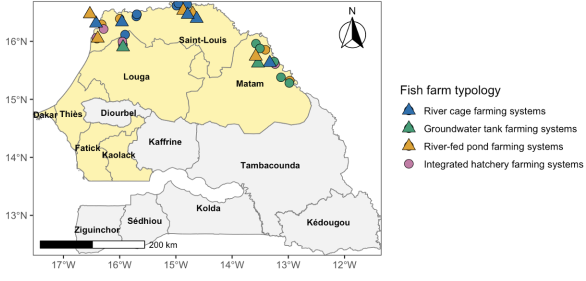
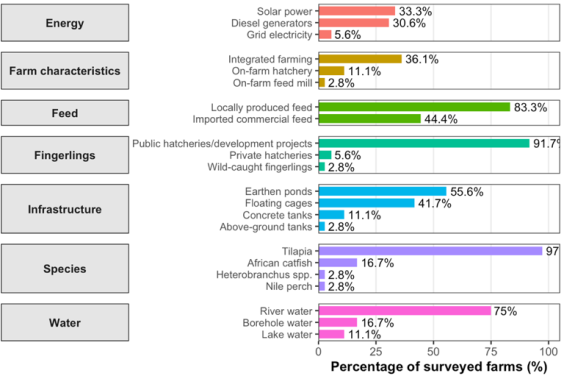
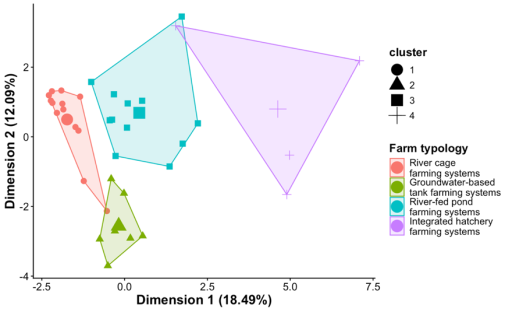
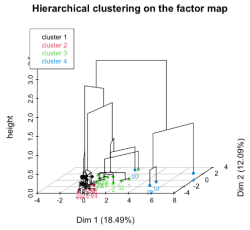
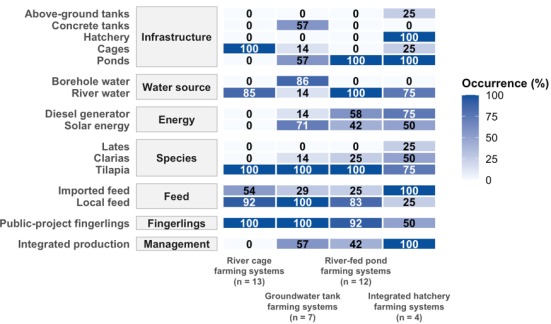




 Share This Article
 Twitter
 Linked In
 Facebook