
The building sector is a first-rate contributor to energy consumption and carbon emissions, making the development of climate-responsive building envelopes increasingly vital for countries experiencing rapid urbanization and environmental pressure. In Bangladesh, where high temperatures, humidity, solar exposure, and the growing intensity of urban heat create significant challenges to building performance, facade design has considerable potential to reduce energy demand and improve indoor environmental conditions. Although previous studies have examined individual sustainable facade techniques, including adaptive shading, high-performance materials, green walls, and other green facade technologies, there remains a lack of an integrated approach that evaluates these techniques collectively under the climatic and architectural conditions of Bangladesh. In particular, limited research has connected facade-level interventions with energy performance, indoor thermal comfort, and urban heat mitigation within a coherent green-envelope framework. This research, therefore, aims to examine the potential of the Green Envelope as an integrated approach to sustainable facade design in Bangladesh. The study has four major objectives: (1) to identify and critically examine sustainable facade techniques applicable to the climatic and environmental conditions of Bangladesh; (2) to evaluate the effectiveness of adaptive shading, high-performance materials, and green-wall systems in improving building energy performance and indoor thermal comfort; (3) to investigate the potential contribution of green facade interventions to reducing heat gain and mitigating urban heat-island effects; and (4) to develop design recommendations for integrating these strategies into climate-responsive and resilient building facades. The research combines a review of relevant literature with architectural case-study analysis, field-based observations, and environmental performance simulations to assess facade strategies under local climatic conditions. The findings are intended to establish a more integrated understanding of how green-envelope interventions can be combined rather than implemented as isolated measures. The study contributes a context-responsive framework for architects, urban planners, and policymakers seeking to improve building environmental performance and climate resilience in Bangladesh. While the research focuses mainly on facade-level strategies and simulated performance, further investigation through long-term monitoring and post-occupancy assessment is recommended. The proposed method can also provide a foundation for adapting green-envelope strategies to other developing-country contexts facing comparable climatic and urban challenges.
| Published in | International Journal of Architecture, Arts and Applications (Volume 12, Issue 3) |
| DOI | 10.11648/j.ijaaa.20261203.12 |
| Page(s) | 117-152 |
| Creative Commons |
This is an Open Access article, distributed under the terms of the Creative Commons Attribution 4.0 International License (http://creativecommons.org/licenses/by/4.0/), which permits unrestricted use, distribution and reproduction in any medium or format, provided the original work is properly cited. |
| Copyright |
Copyright © The Author(s), 2026. Published by Science Publishing Group |
Sustainable Facade Design, Resilient Architecture, Energy Efficiency in Buildings, Urban Heat Mitigation, Low-Cost Sustainable Materials, Green Building Strategies
Façade Building Material | Climate Change Impact on Facade Building Materials | Climate Change Parameters | References |
|---|---|---|---|
Brick Facade | Higher moisture content absorption in bricks, weakening their underlying strength and causing cracking can be caused Erosion or deterioration of brick facade is caused. The likelihood of freeze-thaw cycles, in which water trapped by bricks freezes is increased and eventually, the development of cracks and damage is also caused. | Moisture and precipitation variations. Extreme weather conditions, such as severe rain or storms. Temperature variations | [26, 32, 41] . |
Glass Facade | Climate change can have an impact on glass facades due to increased radiation from the sun and temperature. Increased temperatures and increased sunlight can cause more solar heat uptake, resulting in higher cooling demands and consumption of energy for climate management inside the building. Increased UV radiation from climate change may lead to fading or discoloration of the glass facade. | Temperature variations and solar radiation | [1, 58] . |
Concrete Facade | Temperature increases are capable of accelerating the carbonation process in concrete, resulting in rapid degradation and poorer durability. Increased temperatures also result in higher drying shrinkage in concrete, which can lead to cracks and poor structural integrity. Extreme weather conditions, including heat waves or droughts, are capable of accelerating the carbonation process in concrete, resulting in rapid degradation and poorer durability. Rising sea levels caused by climate change can further increase saltwater exposure and corrosion of concrete facades in areas near the coast. | Temperature variations Extreme weather conditions, such as heat waves or droughts. Rising sea levels | [19, 21, 32, 41] |
Stone Facade | An increase in precipitation and moisture can hasten the weathering of stone facade, causing erosion, staining, and numerous other kinds of degradation. Freeze-thaw cycles can additionally harm stone facade, particularly in areas with extreme temperature variations. Increased air pollution caused by climate change may accelerate the deterioration of stone facades because pollutants can interact with stone surfaces, causing discoloration as well as corrosion. | Precipitation variations Temperature variations Air pollution variation | [26, 32] |
Wooden Facade | Increased humidity and precipitation are capable of causing the wood to swell, bend, and rot, resulting in reduced durability and structural strength. Variations in patterns of precipitation can additionally affect the inherent durability of wood, hence decreasing its function as a facade material. Rising temperatures might raise the danger of infestations of insects and fungal degradation in timber facade. | Moisture and precipitation variations Temperature variations | [25, 26, 32] |
Metal Facade | Rising precipitation and moisture can hasten metal corrosion, resulting in rust and poor structural performance. Extreme weather occurrences, such as storms or hailstorms, are also capable of causing physical harm to metal facade, resulting in scratches, dents, and various other different kinds of deterioration. The rise in sea levels can further boost the likelihood of corrosion of metal facade in coastal locations owing to saltwater exposure. | Moisture and precipitation variations Extreme weather occurrences, such as storms or hailstorms Rising sea levels | [21, 32, 41] |
Facade Type | Environmental Impact of Facade Building Materials | References |
|---|---|---|
Brick Facade | Brick facades take less energy to cool and heat. Low carbon emissions can be traced back to construction. | [13, 14, 40] |
Glass Facade | Glass fronts are known for their beauty and flexibility to adapt to natural light. However, their energy consumption can be increased due to heat gain in summer as well as heat loss in winter. As a result, greenhouse gas emissions and energy costs can rise. | [5, 52, 53] |
Concrete Facade | Concrete surfaces last longer and are easier to maintain, but the production of cement, an important component of concrete, contributes significantly to greenhouse gas emissions, and because concrete does not act as a non-insulating material, it can lead to higher energy consumption. | [11] |
Stone Facade | Although stone facades last longer and require less maintenance, natural stone construction and shipping can produce more carbon dioxide. Also, stone is a poor insulator, so masonry facades may require more energy to heat and cool | [27, 37] |
Wooden Facade | Low energy can be observed in the process. Low carbon footprint due to the wooden facade. This face has a durable insulation. | [55] |
Metal Facade | Metal facades can be made from recyclable materials, reducing their impact on the environment. The metal, on the other hand, can act as a poor insulator, and the process can produce more greenhouse gases. | [15] |
strengths | Guidelines and frameworks are established Technologies and methods for Bangladesh context exist Local materials commonly used |
weaknesses | Lack of knowledge among stakeholders, need for capacity building and training of experts and sensitization of the populace Lack of coordination and collaboration among organizations. Financing frameworks are in nascent stages Lack of a national strategy and action plan |
opportunities | Increasing global awareness of GB Decreasing costs for GB Availability of foreign investors and development opportunities Many good practices exist internationally |
Threats | Dominance of conventional/western construction techniques Reluctance of building sector to change Increasing frequency of occurrence of natural disasters |
Country/Region | Solar Facade Installations | Expected Growth (2023-2027) | Percentage of Clean Energy Contribution |
|---|---|---|---|
Europe | Expanding | Significant | 50% by 2030 |
USA | Increasing | Rapid | 40% of new power capacity |
Asia | Growing | Substantial | Dominant in solar PV technology |
Australia | Emerging | Notable | The highest renewable energy usage |
| Semi-transparent BIPV modules |
| Full black modules of solar panel |
| Terracotta modules of solar panel |
| Colored glass modules of solar panel |
| Solar glass module |
| Aesthetic solar panel for facade design |
Solar Facade Type | Transparency | Ideal for | Aesthetic Integration | Energy Efficiency |
|---|---|---|---|---|
BIPV | Low to Medium | Any | High | High |
PV Glass Facades | High | Offices | High | Moderate |
Solar Cladding | None | Any | High | High |
Customizable | Customizable | Any | High | High |
Solar Shingles | None | Homes | High | Moderate |
Kinetic Facades | None | Any | Moderate | Very High |
Semi-Transparent | High | Any | Medium | Medium |
Ventilated | None | Home | Medium | High |
Outer wall without vegetation | Outer wall with vegetation | Improvement |
|---|---|---|
K- value | K-value | % |
1.5 | 1.0 | 33 |
1.0 | 0.75 | 25 |
0.6 | 0.50 | 16 |
0.3 | 0.27 | 10 |
Facade system | Main function | Major sustainability contribution | Suitability in Bangladesh |
|---|---|---|---|
Terracotta evaporative facade | Passive cooling | Reduces surrounding temperature with low energy use | High |
Hollow concrete blocks | Shading and ventilation | Material efficiency and reduced dependence on fired bricks | High |
Bamboo facade | Solar control and shading | Renewable and locally available material | High |
Wooden facade | Insulation and weather protection | Renewable material and thermal performance | Moderate-High |
Metal-sheet facade | Solar reflection and protection | Durability and recyclability | High |
Bioenergy facade | Energy and heat generation | Renewable energy and CO2 absorption | Moderate |
BIPV facade | Electricity generation | Renewable energy production | High |
Green facade | Shading and evapotranspiration | Cooling, biodiversity, air quality and urban environmental improvement | Very High |
BUET | Bangladesh University of Engineering and Technology |
CUET | Chittagong University of Engineering and Technology |
GHG | Greenhouse Gas |
GWP | Global Warming Potential |
LCA | Life Cycle Assessment |
NBRC | National Brick Research Center |
PV | Photovoltaic |
RTSPV | Rooftop Solar Photovoltaic |
UHI | Urban Heat Island |
UNEP | United Nations Environment Programme |
VGS | Vertical Green System |
WHO | World Health Organization |
Facade Type | Material Used | Thermal Resistance (R) [m2·K/W] | Estimated CO2 Savings [kg/year] |
|---|---|---|---|
Conventional Brick | Fired Clay Brick | 0.25 | 150 |
Green Wall System | Modular VGS | 0.65 | 320 |
Insulated Facade | EPS + Brick Veneer | 1.10 | 450 |
| [1] | Achintha, M. (2016) 'Sustainability of glass in construction', in Eco-Efficient Construction and Building Materials. Elsevier, pp. 79-102. |
| [2] |
ADSSheetMetal (n.d.) Is Sheet Metal Eco-Friendly and Cost-Friendly? Available at:
https://www.adssheetmetal.com/is-sheet-metal-eco-friendly-and-cost-friendly |
| [3] | Ahmed, Z. (2016) 'Sustainability in the built environment of Bangladesh: Participation of architects', Research Gate. Available at: |
| [4] | Akther, F., 2021. Green buildings gain momentum in Bangladesh, now it's time for a proper regulation. The Business Standard, 9 January. |
| [5] | Abdelsalam Aldawoud “Assessing the energy performance of modern glass facade systems.” |
| [6] | Aljumaa Aldakheel, J. and Tabet Aoul, K. (2017) 'Building applications, opportunities and challenges of active shading systems', Energies, 10(10), p. 1672. |
| [7] |
Amazulu Inc. (n.d.) Advantages of Bamboo Construction. Available at:
https://amazuluinc.com/what-are-advantages-of-bamboo-construction/ |
| [8] |
ArchDaily (2016) Bosco Verticale / Stefano Boeri Architetti. Available at:
https://www.archdaily.com/777498/bosco-verticale-stefano-boeri-architetti?ad_medium=gallery |
| [9] |
Architonic (2013) BIQ House / Arup. Available at:
https://www.architonic.com/en/project/arup-biq-house/5101636 |
| [10] | Ashan Senel Asmone, Ransi Salika Athauda, Sheila Conejos “Climate Change Impacts on Facade Building Materials: A Qualitative Study” |
| [11] |
Babor, D. T. et al. (2010) 'Environmental impact of concrete', Journal of Applied Engineering Sciences, 1(1), pp. 45-52. Available at:
https://www.researchgate.net/publication/40497595_Environmental_Impact_of_Concrete |
| [12] |
Bhattacharjee, A., 2021. Energy efficiency and green building pathways. New Age, 23 February.
https://www.newagebd.net/article/130872/energy-efficiency-and-green-building-pathways |
| [13] | Bhattarai Bishnu Hari, Bharat Raj Pahari, Sanjeev Maharjan “Comparison of Energy Efficiency of traditional Brick Wall and Inco- Panel Wall: A Case Study of Hotel Sarowar in Pokhara.” |
| [14] |
Brick Industry Association (n.d.) Commercial Brick Applications. Available at:
https://www.gobrick.com/content/userfiles/files/bia_commercial-collateral_4-pager.pdf |
| [15] | Buzatu, R. et al. (2023) 'Environmental impact assessment of steel-intensive facade systems', Sustainable Structural Engineering, pp. 621-634. |
| [16] | Cellparc (n.d.) Bioenergy Facade Functions. Available at: |
| [17] | Cheng, G.; Li, Z.; Xia, S. T.; Gao, M. F.; Ye, M. S.; Shi, T. T. Research on the Spatial Sequence of Building Facades in Huizhou Regional Traditional Villages. Buildings 2023, 13, 174. |
| [18] | Ding.G. K. C, "Sustainable Construction, the Role of Environmental Assessment Tools", Journal of Environmental Management, 86(2008), pp 451-464. |
| [19] | Doaa Adel Elemam (2023) 'Climate change in coastal areas: Egypt case study', Suez Canal University Journal. |
| [20] |
Dezeen (2012) Campanules by EXAR Architecture. Available at:
https://www.dezeen.com/2012/07/02/campanules-by-exar-architecture/ |
| [21] | Elemam, D. A. (2023) 'Climate change in coastal Egypt', Suez Canal University Journal, 6(1). |
| [22] |
Foulks, W. Historic Building Facades: The Manual for Maintenance and Rehabilitation; John Wiley & Sons Inc: Hoboken, NJ, USA, 1997.
https://books.google.je/books?id=i0q1DwAAQBAJ&printsec=copyright#v=onepage&q&f=false |
| [23] | GreenMatch (n.d.) Solar Panel Facades. Available at: |
| [24] |
Green Buildings Assessment Report for Bangladesh (n.d.) Available at:
https://www.switch-asia.eu/site/assets/files/3548/green_building_assessment_report_3-1.pdf |
| [25] |
Grenfell Tower Inquiry (GIA). Phase 1 Report; APS Group: Cheshire, UK, 2019. [Google Scholar]
https://webarchive.nationalarchives.gov.uk/ukgwa/20250320210859mp_/ https://assets.grenfelltowerinquiry.org.uk/GTI%20-%20Phase%201%20full%20report%20-%20volume%201.pdf |
| [26] | Grøntoft, T. (2011) 'Climate change impact on facades', International Journal of Climate Change Strategies, 3(2). |
| [27] | Hebib Rafik, Belaid Alloul, Djelloul Belhai, Zohra Derriche “Contribution of Natural Stones in the Sustainable Development of Constructions — Potentialities and Examples from the Algerian Alpine Chain.” |
| [28] | Herzog Thomas, Roland Krippner, Werner Lang “Facade Construction Manual” |
| [29] |
Highfield, D. (2000), The Construction of New Buildings Behind Historic Facades. Available at:
http://ndl.ethernet.edu.et/bitstream/123456789/38698/1/4.pdf |
| [30] | Hossein Zabihi, Farah Habib, Leila Mirsaeedie. “Sustainability in Building and Construction: Revising Definitions and Concepts” |
| [31] |
Inhabitat (n.d.) Zero-Energy Air Conditioner in India. Available at:
https://inhabitat.com/brilliant-zero-energy-air-conditioner-in-india-is-beautiful-and-functional/ |
| [32] | Intergovernmental Panel on Climate Change. Climate Change 2014 Synthesis Report; Pachauri, R. K., Meyer, L., Eds.; Intergovernmental Panel on Climate Change: Geneva, Switzerland, 2014; Volume 218, ISBN 9789291691432. |
| [33] |
Kamar K. M, Abdul Hamid. Z, "Collaboration Initiative on Green Construction and Sustainability Through Industrialized Buildings Systems (IBS) in the Malaysian Construction Industry", proceedings of ICON-BSE 09, UTHM, Johor Baharu, 2009.
https://publisher.uthm.edu.my/ojs/index.php/IJSCET/article/view/56/15 |
| [34] |
Kaltimber (n.d.) Benefits of Exterior Wooden Wall Cladding. Available at:
https://www.kaltimber.com/blog/the-benefits-of-exterior-wooden-wall-cladding |
| [35] |
Kamal Eldin, M. S. and Ibrahim, S. H. (2021) 'The role of bio facades in energy conservation', International Journal of Architectural Engineering, 4(2), pp. 95-113. Available at:
https://ijaeur.journals.ekb.eg/article_231354_19070d0df66b447737176263d09121e0.pdf |
| [36] |
Kameleon Solar (2022) Benefits of Solar Facades. Available at:
https://kameleonsolar.com/2022/03/31/benefits-of-solar-facades/ |
| [37] | Klemm, A. and Wiggins, D. (2016) 'Sustainability of natural stone', in Eco-Efficient Materials. Elsevier. |
| [38] |
Krion (n.d.) Sustainable Construction. Available at:
https://www.krion.com/en/news/sustainable-construction-krion |
| [39] | Lacasse, M. A., Abhishek Gaur, Travis V. Moore “Durability and Climate Change—Implications for Service Life Prediction and the Maintainability of Buildings.” |
| [40] | Lachheb M., Zohir Younsi, Nicolas Youssef, Salwa Bouadila, “Enhancing building energy efficiency and thermal performance with PCM-Integrated brick walls: A comprehensive review.” |
| [41] | Lassandro P., Silvia Di Turi. “Facade retrofitting: from energy efficiency to climate change mitigation” AiCARR 50th International Congress; Beyond NZEB Buildings, 10-11 May 2017, Matera, Italy. |
| [42] |
Lee, J. H.; Ostwald, M. J. Complexity and Diversity in Palladian Facades. Nexus Netw. J. 2023, 25, 15-21. [Google Scholar] [CrossRef:
https://link.springer.com/article/10.1007/s00004-023-00678-4 |
| [43] |
Lombardi, Pl and Brandon, PS; 2002; Sustainability in the built environment: a new holistic taxonomy of aspects for decision making; Int. J Environmental Technology and Management; Vol2, Nos 1/2/3; Inderscience Enterprises Ltd; UK; p23.
https://ideas.repec.org/a/ids/ijetma/v2y2002i1-2-3p22-37.html |
| [44] |
Malewczyk, M.; Taraszkiewicz, A.; Czyz, P. Composition Patterns of Contemporary Polish Residential Building Facades. Nexus Netw. J. 2022, 24, 767-785.
https://link.springer.com/article/10.1007/s00004-022-00614-y |
| [45] |
MIR Concrete Block (n.d.) Hollow Concrete Blocks. Available at:
https://mirconcreteblock.com/blog/everything-about-hollow-concrete-blocks/ |
| [46] | Mofidi Shemirani S. M, Akhtar Kavan M, Akhtar Kavan. H, "Sustainable Architecture, Energy and Environment", the Second Conference and Specialized Fair of Environment Engineering, Tehran University, Iran, 2008. |
| [47] |
Mohamed sameh kamal eldin, shaban hedek ibrahim - The role of bio facades in energy conservation, volume 4, issue 2, 2021, 95 - 113.
https://ijaeur.journals.ekb.eg/article_231354_19070d0df66b447737176263d09121e0.pdf |
| [48] |
Moso International (n.d.) Bamboo X-treme Cladding. Available at:
https://www.moso-bamboo.com/product/bamboo-x-treme-cladding/ |
| [49] | Moso International (n.d.) Bamboo Cladding in Apartment Blocks. Available at: |
| [50] |
Noaime, E.; Alnaim, M. M. Attempting to grasp the architectural formation of the facades overlooking the courtyard: Al-Jadida neighborhood housing in Aleppo during the late Ottoman period (since the 18th century). Open House Int. 2023.
https://www.emerald.com/insight/content/doi/10.1108/OHI-02-2023-0019/full/html |
| [51] | Noura Ali. “Sustainability in Building and Construction: Revising Definitions and Concepts.” |
| [52] | Nurul Hidayah, Mohd Rodzi Ismail. “Influence of building shapes on thermal and energy performances in glass facade high-rise buildings: A review.” |
| [53] | Pérez Carramiñana C., Samuel Canales, Angel Benigno Gonzalez Aviles, Antonio Galiano-Garrigos “Use of “Glass Curtain” Systems to Improve the Energy Efficiency and Thermal Comfort of Dwellings in a Warm Semi-Arid Mediterranean Climate.” |
| [54] | Ransi Salika Athauda, Ashan Senel Asmone, Sheila Conejos “Climate Change Impacts on Facade Building Materials: A Qualitative Study” |
| [55] | Schenk D., Ali Amiri. “Life cycle energy analysis of residential wooden buildings versus concrete and steel buildings: A review” |
| [56] | Shan, L. L.; Zhang, L. Application of intelligent technology in facade style recognition of Harbin modern architecture. Sustainability 2022, 14, 7073. |
| [57] |
Shen, Y.; Zhang, E. H.; Feng, Y. X.; Liu, S. Y.; Wang, J. L. Parameterizing the Curvilinear Roofs of Traditional Chinese Architecture. Nexus Netw. J. 2021, 23, 475-492.
https://link.springer.com/article/10.1007/s00004-020-00512-1 |
| [58] | Tahmasbi F., Adnan I. Khdair, Ghaida, A. Aburumman, Mohammad Tahmasebi, N. H. Thi, Masoud Afrand “Energy-efficient building facades: A comprehensive review of innovative technologies and sustainable strategies.” |
| [59] |
Tang, P.; Wang, X.; Shi, X. Generative design method of the facade of traditional architecture and settlement based on knowledge discovery and digital generation: A case study of Gunanjie Street in China. Int. J Archit. Herit. 2019, 13, 679-690.
https://www.tandfonline.com/doi/full/10.1080/15583058.2018.1463415 |
| [60] | Taş. A. “the negative impacts of climate change current trends in façade solutions for mitigation bibliometric analysis”. |
| [61] |
The Better India (2018) Natural Cooling Technique. Available at:
https://thebetterindia.com/199609/delhi-architect-innovation-natural-technique-system-cheap-india/ |
| [62] |
Thompson, G; 2000; The next Generation of Environmentalists; RSA on Community and Environment; Gower Publishing Ltd; England; p54.
https://www.researchgate.net/publication/5172604_The_next_generation_of_environmentalists |
| [63] | Urban Design Lab (n.d.) Vernacular Architecture. Available at: |
| [64] | Urban Green Blue Grids (n.d.) Green Facades. Available at: |
| [65] | Williams, D, E. FAIA. "Sustainable design (Ecology, Architecture, and Planning)". Wiley Publisher. USA, 2007. |
| [66] | World Data (n.d.) Bangladesh Climate. Available at: |
| [67] |
World Commission on Environment and Development (1987) Our Common Future. Available at:
https://sustainabledevelopment.un.org/content/documents/5987our-common-future.pdf |
| [68] |
Zacharia, J. L, Kennedy, C, Pressnail, K; 2002; what makes a Building Green? Int J Environmental Technology and Management; Vol2, Nos 1/2/3; Inderscience Enterprises Ltd; UK; p42.
https://www.researchgate.net/publication/249920994_What_makes_a_building_green |
| [69] | Zhang, L.; Zheng, L.; Chen, Y. L.; Huang, L.; Zhou, S. H. CGAN-assisted renovation of the styles and features of street facades—A case study of the Wuyi area in Fujian, China. Sustainability 2022, 14, 16575. |
| [70] | Zhang Xing (Centre for Research on Energy and Clean Air), Microalgae removal of CO2 from flue gas, April 2015, |
APA Style
Kabir, S., Siddique, A. F., Chowdhury, F., Hossain, A., Islam, T. (2026). The Green Envelope: Facade Design Strategies for Sustainable Architecture in Developing Countries like Bangladesh. International Journal of Architecture, Arts and Applications, 12(3), 117-152. https://doi.org/10.11648/j.ijaaa.20261203.12
ACS Style
Kabir, S.; Siddique, A. F.; Chowdhury, F.; Hossain, A.; Islam, T. The Green Envelope: Facade Design Strategies for Sustainable Architecture in Developing Countries like Bangladesh. Int. J. Archit. Arts Appl. 2026, 12(3), 117-152. doi: 10.11648/j.ijaaa.20261203.12
AMA Style
Kabir S, Siddique AF, Chowdhury F, Hossain A, Islam T. The Green Envelope: Facade Design Strategies for Sustainable Architecture in Developing Countries like Bangladesh. Int J Archit Arts Appl. 2026;12(3):117-152. doi: 10.11648/j.ijaaa.20261203.12
@article{10.11648/j.ijaaa.20261203.12,
  author = {Shahriar Kabir and Adnan Faisal Siddique and Farhana Chowdhury and Afnan Hossain and Tasdir Islam},
  title = {The Green Envelope: Facade Design Strategies for Sustainable Architecture in Developing Countries like Bangladesh},
  journal = {International Journal of Architecture, Arts and Applications},
  volume = {12},
  number = {3},
  pages = {117-152},
  doi = {10.11648/j.ijaaa.20261203.12},
  url = {https://doi.org/10.11648/j.ijaaa.20261203.12},
  eprint = {https://article.sciencepublishinggroup.com/pdf/10.11648.j.ijaaa.20261203.12},
  abstract = {The building sector is a first-rate contributor to energy consumption and carbon emissions, making the development of climate-responsive building envelopes increasingly vital for countries experiencing rapid urbanization and environmental pressure. In Bangladesh, where high temperatures, humidity, solar exposure, and the growing intensity of urban heat create significant challenges to building performance, facade design has considerable potential to reduce energy demand and improve indoor environmental conditions. Although previous studies have examined individual sustainable facade techniques, including adaptive shading, high-performance materials, green walls, and other green facade technologies, there remains a lack of an integrated approach that evaluates these techniques collectively under the climatic and architectural conditions of Bangladesh. In particular, limited research has connected facade-level interventions with energy performance, indoor thermal comfort, and urban heat mitigation within a coherent green-envelope framework. This research, therefore, aims to examine the potential of the Green Envelope as an integrated approach to sustainable facade design in Bangladesh. The study has four major objectives: (1) to identify and critically examine sustainable facade techniques applicable to the climatic and environmental conditions of Bangladesh; (2) to evaluate the effectiveness of adaptive shading, high-performance materials, and green-wall systems in improving building energy performance and indoor thermal comfort; (3) to investigate the potential contribution of green facade interventions to reducing heat gain and mitigating urban heat-island effects; and (4) to develop design recommendations for integrating these strategies into climate-responsive and resilient building facades. The research combines a review of relevant literature with architectural case-study analysis, field-based observations, and environmental performance simulations to assess facade strategies under local climatic conditions. The findings are intended to establish a more integrated understanding of how green-envelope interventions can be combined rather than implemented as isolated measures. The study contributes a context-responsive framework for architects, urban planners, and policymakers seeking to improve building environmental performance and climate resilience in Bangladesh. While the research focuses mainly on facade-level strategies and simulated performance, further investigation through long-term monitoring and post-occupancy assessment is recommended. The proposed method can also provide a foundation for adapting green-envelope strategies to other developing-country contexts facing comparable climatic and urban challenges.},
 year = {2026}
}
TY  - JOUR
T1  - The Green Envelope: Facade Design Strategies for Sustainable Architecture in Developing Countries like Bangladesh
AU  - Shahriar Kabir
AU  - Adnan Faisal Siddique
AU  - Farhana Chowdhury
AU  - Afnan Hossain
AU  - Tasdir Islam
Y1  - 2026/11/12
PY  - 2026
N1  - https://doi.org/10.11648/j.ijaaa.20261203.12
DO  - 10.11648/j.ijaaa.20261203.12
T2  - International Journal of Architecture, Arts and Applications
JF  - International Journal of Architecture, Arts and Applications
JO  - International Journal of Architecture, Arts and Applications
SP  - 117
EP  - 152
PB  - Science Publishing Group
SN  - 2472-1131
UR  - https://doi.org/10.11648/j.ijaaa.20261203.12
AB  - The building sector is a first-rate contributor to energy consumption and carbon emissions, making the development of climate-responsive building envelopes increasingly vital for countries experiencing rapid urbanization and environmental pressure. In Bangladesh, where high temperatures, humidity, solar exposure, and the growing intensity of urban heat create significant challenges to building performance, facade design has considerable potential to reduce energy demand and improve indoor environmental conditions. Although previous studies have examined individual sustainable facade techniques, including adaptive shading, high-performance materials, green walls, and other green facade technologies, there remains a lack of an integrated approach that evaluates these techniques collectively under the climatic and architectural conditions of Bangladesh. In particular, limited research has connected facade-level interventions with energy performance, indoor thermal comfort, and urban heat mitigation within a coherent green-envelope framework. This research, therefore, aims to examine the potential of the Green Envelope as an integrated approach to sustainable facade design in Bangladesh. The study has four major objectives: (1) to identify and critically examine sustainable facade techniques applicable to the climatic and environmental conditions of Bangladesh; (2) to evaluate the effectiveness of adaptive shading, high-performance materials, and green-wall systems in improving building energy performance and indoor thermal comfort; (3) to investigate the potential contribution of green facade interventions to reducing heat gain and mitigating urban heat-island effects; and (4) to develop design recommendations for integrating these strategies into climate-responsive and resilient building facades. The research combines a review of relevant literature with architectural case-study analysis, field-based observations, and environmental performance simulations to assess facade strategies under local climatic conditions. The findings are intended to establish a more integrated understanding of how green-envelope interventions can be combined rather than implemented as isolated measures. The study contributes a context-responsive framework for architects, urban planners, and policymakers seeking to improve building environmental performance and climate resilience in Bangladesh. While the research focuses mainly on facade-level strategies and simulated performance, further investigation through long-term monitoring and post-occupancy assessment is recommended. The proposed method can also provide a foundation for adapting green-envelope strategies to other developing-country contexts facing comparable climatic and urban challenges.
VL  - 12
IS  - 3
ER  -
Department of Architecture, Ahsanullah University of Science and Technology (AUST), Dhaka, Bangladesh
Biography: Shahriar Kabir is a Research Assistant at the Institute of Energy Technology, Chittagong University of Engineering and Technology (CUET), Bangladesh. He completed his Bachelor of Architecture from the Department of Architecture at Ahsanullah University of Science and Technology (AUST), Dhaka, Bangladesh. His academic and research interests include energy-efficient building design, sustainable architecture, climate-responsive design, building facades, and renewable energy technologies. His current research focuses on sustainable and energy-efficient approaches to the built environment, with particular interest in improving building performance through innovative architectural and energy strategies. He is also interested in the integration of architectural design with energy technologies to develop environmentally responsive and sustainable buildings. His professional and academic work combines architectural knowledge with energy-focused research to address contemporary challenges in sustainable development.
Research Fields: Sustainable Building Design, Energy-Efficient Facades, Climate-Responsive Architecture, Building Energy Performance, and Renewable Energy Integration.

Institute of energy technology, Chittagong University of Engineering and Technology (CUET), Chittagong, Bangladesh
Biography: Adnan Faisal Siddique is affiliated with the Institute of Energy Technology at Chittagong University of Engineering and Technology (CUET), Bangladesh. He received his Bachelor of Science in Electrical and Electronic Engineering from Chittagong University of Engineering and Technology in 2017 and completed his Master's degree in Renewable Energy and Technology from the Institute of Energy, University of Dhaka, in 2021. His academic and research interests include renewable energy technologies, energy systems, energy efficiency, sustainable energy development, and the integration of renewable energy into the built environment. His work focuses on exploring innovative and sustainable energy solutions to improve energy performance and reduce environmental impacts. He is particularly interested in renewable energy applications, energy-efficient technologies, and interdisciplinary approaches that connect energy systems with sustainable building and architectural design.
Research Fields: Renewable Energy Systems, Solar Energy Technologies, Energy-Efficient Building Systems, Energy Storage, Sustainable Energy Development, Building Energy Performance, and the Integration of Renewable Energy with the Built Environment.


Department of Architecture, Southeast University, Dhaka, Bangladesh
Biography: Afnan Hossain is a Research Assistant at Southeast University, Dhaka, Bangladesh. He completed his Bachelor of Architecture from the Department of Architecture at Southeast University. His academic and research interests encompass urban studies, architectural history, the built environment, sustainable energy development, and building energy performance. He is particularly interested in exploring the relationship between architectural and urban development and sustainable energy strategies. His research also focuses on the integration of renewable energy with the built environment and the development of energy-efficient and sustainable building solutions. Through his academic and research activities, he aims to contribute to the understanding of contemporary urban and architectural challenges while promoting sustainable approaches to the design and development of the built environment.
Research Fields: Urban Studies, Architectural History, Built Environment, Sustainable Architecture, Sustainable Energy Development, Building Energy Performance, Renewable Energy Integration, and Climate-Responsive Design.


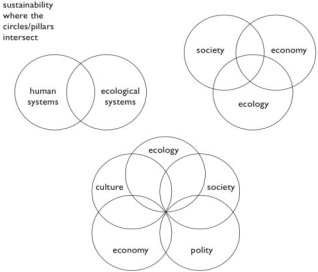
Figure 1. pillar concepts of sustainability [51].
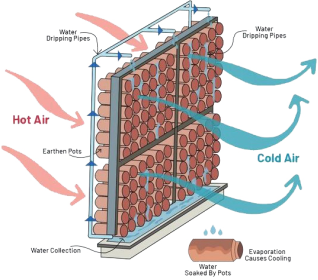
Figure 2. Diagram of beehives cooling system.
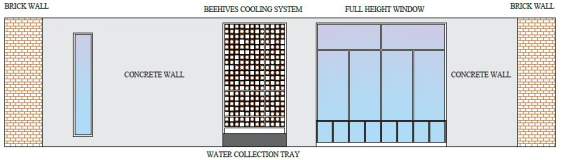
Figure 3. Possible facade design.
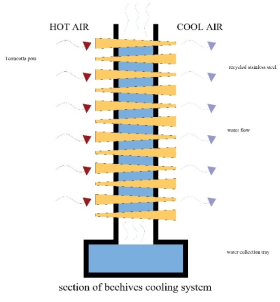
Figure 4. Beehives cooling system.
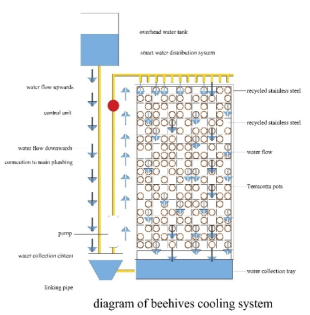
Figure 5. Section of beehives cooling system.
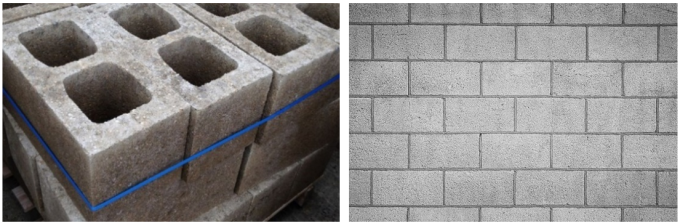
Figure 6. Hollow concrete blocks as facade.
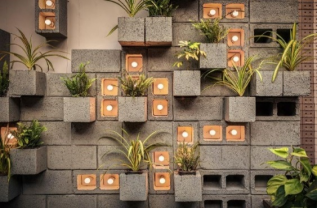
Figure 7. Hollow block as exterior facade with plantation on it.
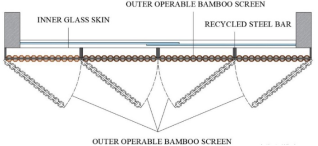
Figure 8. Plan of bamboo facade as operable screens.
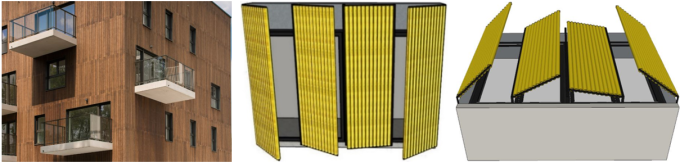
Figure 9. Bamboo facade as operable screens.
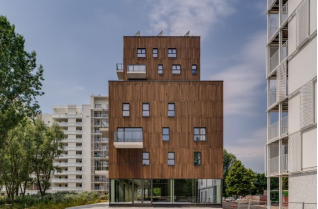
Figure 10. Bamboo cladding of Apartment blocks De Drie Hofsteden [49].
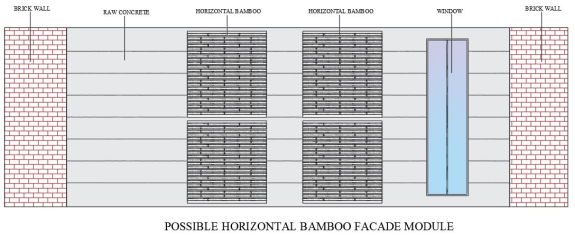
Figure 11. Drawings of horizontal bamboo facade with other materials.
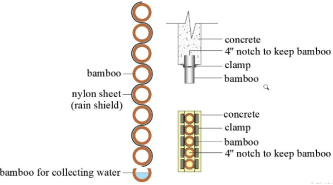
Figure 12. Possible horizontal bamboo facade module.
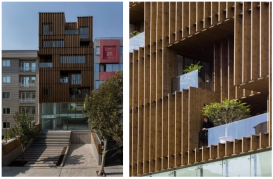
Figure 13. Seven-storied-office building in Tehran with louvered wooden facades.
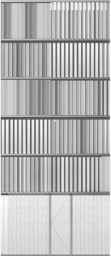
Figure 14. Possible wooden facade module.
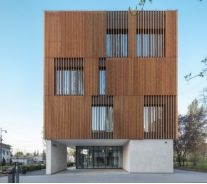
Figure 15. 696 office, Poland with wooden facade.
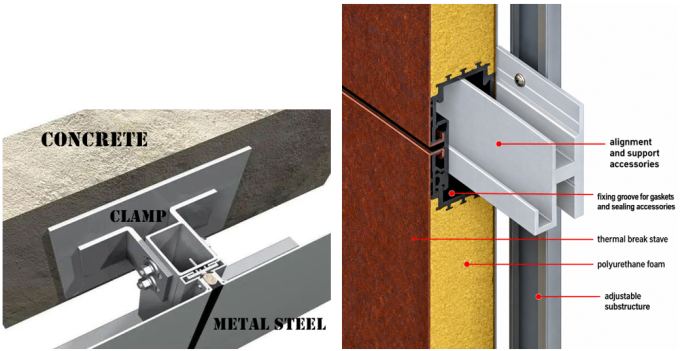
Figure 16. Metal steel joint for exterior facade.
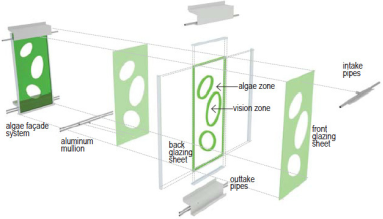
Figure 17. House with metal sheet as exterior facade [20].
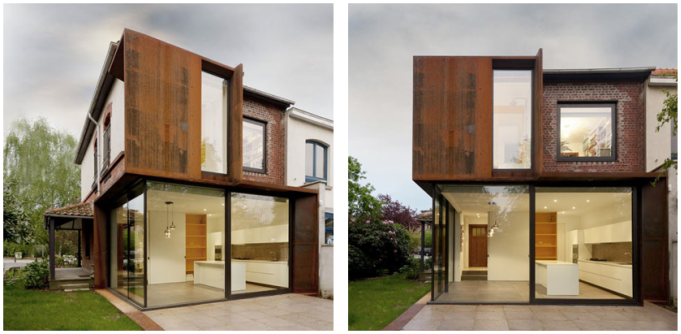
Figure 18. Algae facade system [6].
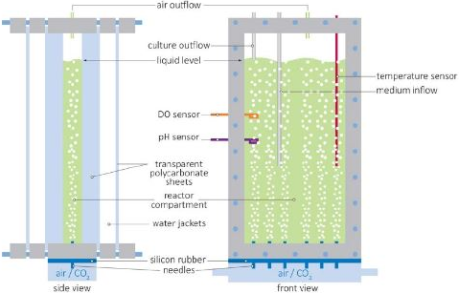
Figure 19. A flat panel of facade.
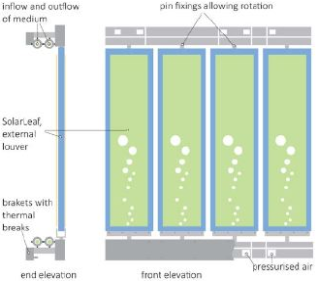
Figure 20. Construction methodology of the flat panel.
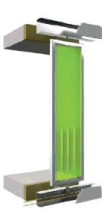
Figure 21. Single panel module.
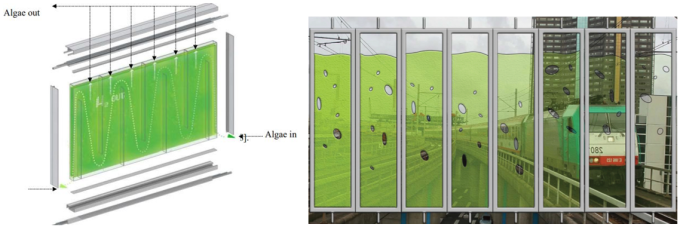
Figure 22. Visual communication of facade.
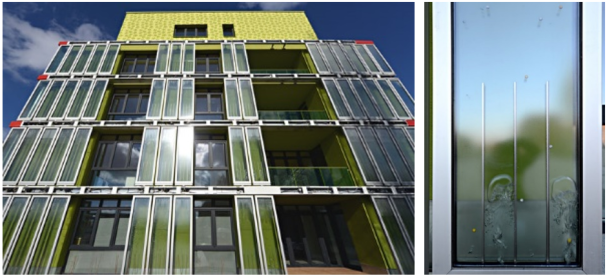
Figure 23. BIQ - The World´s first Solar Leaf-Building in Hamburg, Germany.
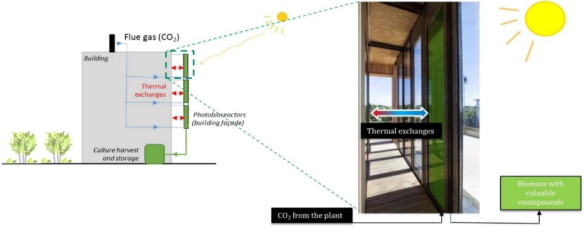
Figure 24. The bio energy facade [9].
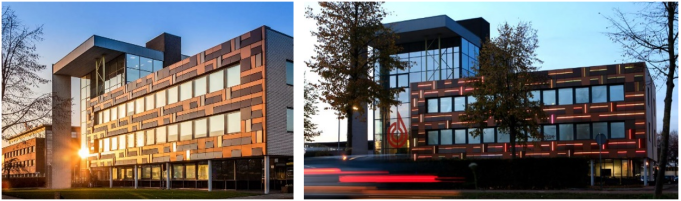
Figure 25. Kuijpers Installatie building facade of solar panel in Helmond, the Netherlands.
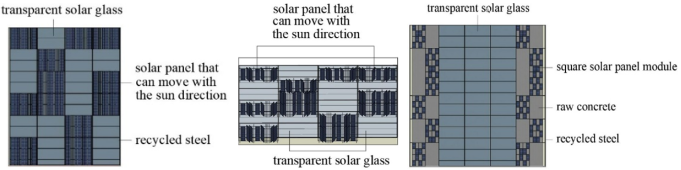
Figure 26. Possible facade design with solar panel for commercial building.
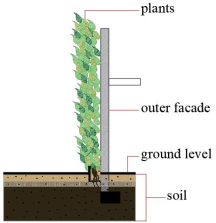
Figure 27. Section of self-climbing plants.
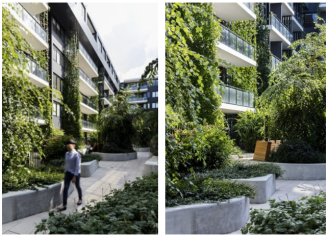
Figure 28. Self-climbing plants as exterior facade material of Eve Apartments in Erskineville.
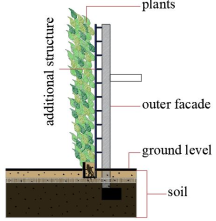
Figure 29. Section (single support for plants).
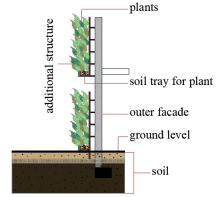
Figure 30. Section (multi-layer support for plants).
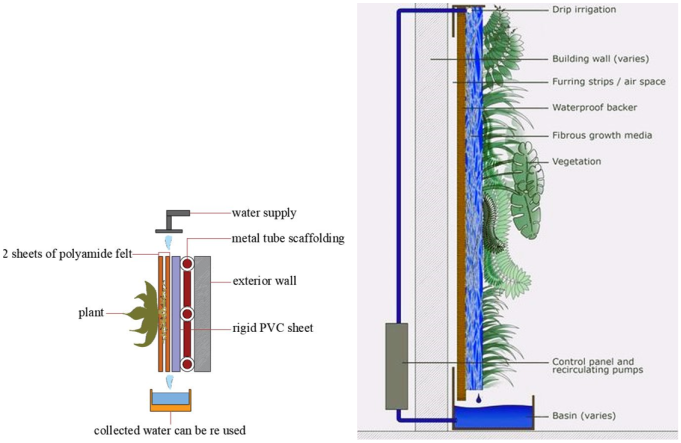
Figure 31. Section of living wall (outer facade).
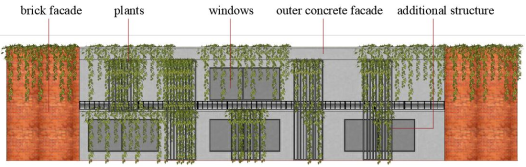
Figure 32. Possible facade design with plants having supporting structure.
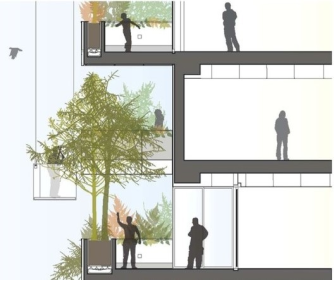
Figure 33. Section of plantation (balcony/veranda).
Figure 33. Section of plantation (balcony/veranda).
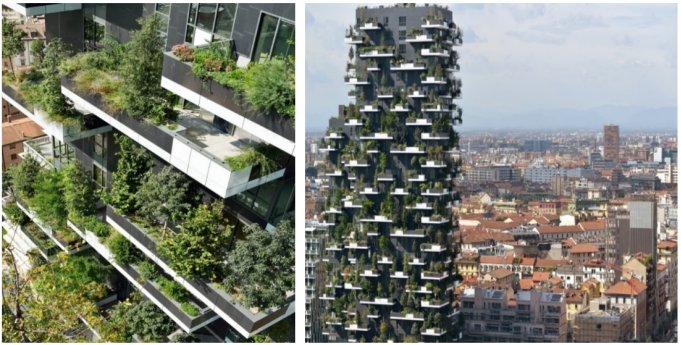
Figure 34. Exterior facade design with hanging balcony plants (Bosco Vertical in Milan) [8].
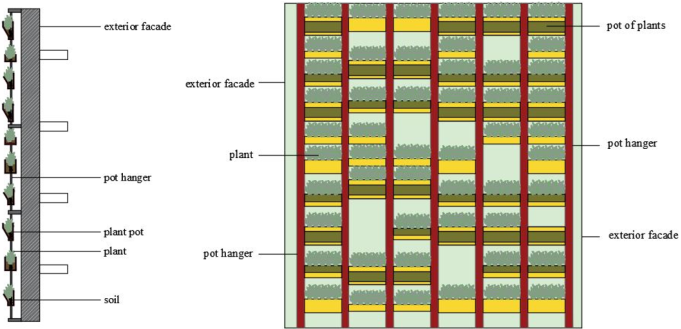
Figure 35. Section of pot plantation.
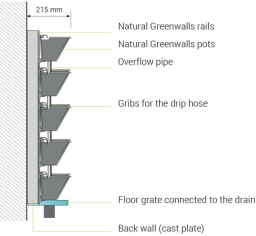
Figure 36. A module of exterior facade (pot plantation).

Information



 Share This Article
 Twitter
 Linked In
 Facebook


 Copy
 Download