Research Article | | Peer-Reviewed

The Advertiser’s Dilemma on YouTube: Balancing Ad Irritation with Informational and Entertainment Value

Received: 12 September 2025     Accepted: 4 February 2026     Published: 24 February 2026
Views:       Downloads:
Abstract

This study investigates the dual role of YouTube as a platform for both user gratification and commercial advertising, exploring the complex interplay between positive user experiences and disruptive ad encounters. To address this, the paper develops and empirically tests an integrated model that examines how social and entertainment gratifications, alongside perceived ad irritation, collectively influence advertising value and user intentions. A cross-sectional survey design was employed, gathering data from 359 active YouTube users. The relationships in the proposed model were tested using Pearson correlation analysis. The findings indicate that social gratifications positively enhance entertainment value and that both entertainment and informational content can increase advertising value, though through different mechanisms. Crucially, the study uncovered a counter-intuitive positive correlation between ad irritation and perceived advertising value, challenging the conventional view that annoyance universally destroys value. Theoretically, this research contributes a holistic framework that integrates Uses and Gratifications (U&G) theory with Psychological Reactance Theory (PRT) and Media Context Theory. Practically, the findings provide actionable insights for advertisers, highlighting the need for context-aware strategies that balance ad intrusiveness with the user's primary motivation for viewing, whether it be for entertainment or information.

Published in Innovation Economics (Volume 1, Issue 1)
DOI 10.11648/j.iecon.20260101.11
Page(s) 1-11
Creative Commons

This is an Open Access article, distributed under the terms of the Creative Commons Attribution 4.0 International License (http://creativecommons.org/licenses/by/4.0/), which permits unrestricted use, distribution and reproduction in any medium or format, provided the original work is properly cited.

Copyright

Copyright © The Author(s), 2026. Published by Science Publishing Group

Previous article
Keywords

YouTube, Advertising Value, Ad Irritation, Uses and Gratifications, Social Media Marketing

1. Introduction
The proliferation of digital media has fundamentally reshaped the landscape of marketing, with online video advertising emerging as a dominant and rapidly growing channel for consumer engagement . Social media platforms have emerged as pivotal channels of communication, information dissemination, entertainment, and social interaction in the digital age. These web-based platforms, which allow individuals to create, share, and interact with online content, encompass various types such as social networking sites, microblogging platforms, and content-sharing services . Among these, YouTube stands as a preeminent force, with over two billion monthly logged-in users who watch more than a billion hours of content daily, making it a critical arena for modern advertising .
Social media usage has grown exponentially, influencing numerous facets of life, including personal relationships, politics, education, business, and culture. They facilitate social networking, user-generated content creation, and participatory culture, significantly altering how individuals communicate and access information . In business, social media has become a key marketing tool, enabling targeted advertising, customer engagement, and market research . The evolution of YouTube, particularly since the launch of its Partner Program in 2007, has created a complex ecosystem where content creators, advertisers, and viewers coexist in a delicate balance, shaped by platform governance and participatory norms .
For advertisers, the platform offers unprecedented opportunities for targeted campaigns and direct consumer interaction . However, this commercialisation is not without friction. While advertising revenue sustains the platform and its creators, the intrusive nature of many ad formats can lead to significant user frustration, ad avoidance, and potential damage to brand perception. This dynamic creates a central paradox for scholars and practitioners: how can advertising value be maximised in an environment where the very mechanisms of delivery often generate annoyance? While substantial research has explored social media marketing effectiveness and the drivers of ad avoidance, there remains a limited understanding of how positive factors (e.g., informational and entertainment value) and negative factors (e.g., ad irritation) simultaneously influence user perceptions of advertising value within the unique context of YouTube . Existing models often examine these elements in isolation, failing to capture their complex interplay.
To address this gap, the present study develops and empirically tests an integrated model that examines the interplay between YouTube’s social and entertainment gratifications, the perceived annoyance of its ads, and their combined influence on both informational value and advertising value. By situating these competing forces within a unified framework, this research advances understanding of how users evaluate advertising in hybrid environments that blend gratification and irritation. In doing so, the study contributes to digital advertising literature by (1) integrating positive and negative advertising antecedents within a single model, (2) applying and extending advertising value theory to the YouTube context, and (3) offering actionable insights for advertisers seeking to balance effectiveness with user experience .
2. Literature Review
2.1. YouTube Social Media (YT-SM) and YouTube Entertainment (YT-E)
To understand the value users derive from YouTube, this study adopts the lens of Uses and Gratifications (U&G) theory. This framework posits that audiences are not passive recipients but are active consumers who select media to satisfy a range of intrinsic needs—cognitive, affective, and social . Within this framework, the perceived entertainment value of YouTube is not derived solely from its video content but is deeply intertwined with the social gratifications the platform enables. Unlike traditional, one-to-many broadcast media, YouTube facilitates a participatory culture where viewers are active co-creators of meaning through direct interaction . This interactivity fosters strong parasocial relationships, where viewers can develop a one-sided sense of intimacy and friendship with content creators, a phenomenon shown to be a powerful driver of viewer loyalty and engagement . Furthermore, recent scholarship confirms that social features such as commenting, liking, and sharing fulfil a fundamental user need for social connection and community integration . The platform’s features, particularly comment sections and live chats, transform passive viewing into an active, shared experience, allowing for immediate social validation and collective emotional responses (e.g., shared humour or excitement), which significantly heightens media enjoyment . This transformation from a solitary activity into a multi-layered social event, amplified by both creator–fan relationships and peer-to-peer interaction, is therefore theorised to significantly enhance the user's overall perception of entertainment value.
2.2. YouTube Entertainment and YouTube Annoying Ads
While YouTube provides significant entertainment value, its advertising-based model creates an inherent tension with the user experience. This tension is best understood through the concept of ad irritation, defined as the user's perception that advertising is unwanted, intrusive, and disruptive to their goals . To explain this phenomenon, we draw upon Psychological Reactance Theory (PRT). PRT posits that when an individual’s freedom to act is threatened or eliminated, they experience a state of psychological reactance, motivating them to restore that freedom . On YouTube, advertisements, particularly non-skippable pre-roll and mid-roll formats, can be perceived as a direct threat to a user’s freedom to consume their chosen content without interruption. The intensity of this reactance is not constant; it is magnified when the interruption is more disruptive to an engaging task. When a user is highly engrossed in entertaining content, experiencing a state of flow or deep engagement, an advertisement acts as a more jarring and significant impediment to their viewing goal. The interruption of a highly valued entertainment experience constitutes a greater threat to viewer autonomy than the interruption of less engaging content. This heightened reactance logically leads to a stronger negative perception of the ad, manifesting as increased irritation and annoyance . This leads to behaviours such as ad avoidance through ad-blocking technologies or skipping . Therefore, rather than entertainment mitigating ad annoyance, we propose that the value of the entertainment being disrupted will positively predict the level of irritation felt towards the ad.
2.3. YouTube Social Media (YT-SM) and Advertising Value (AV)
Advertising value in a digital context is understood as the utility and return on investment that businesses derive from their promotional activities on a platform . We argue that this value is created through the unique Social Media Marketing Capabilities (SMMCs) that a platform like YouTube affords to businesses . These capabilities can be understood as a firm's ability to utilize platform-specific resources to engage with consumers and achieve marketing objectives. On YouTube, these SMMCs manifest in several key ways. First, the platform enables precision targeting, allowing firms to leverage detailed demographic and behavioural data to reach relevant consumer segments, thereby enhancing efficiency and message relevance . Second, beyond simple broadcasting, YouTube facilitates engagement and community-building capabilities. Brands can operate their own channels and use interactive features to foster a sense of community, which strengthens brand loyalty . Third, the platform offers powerful influencer marketing capabilities, allowing brands to partner with creators who are perceived by their followers as authentic and credible sources, which can more effectively persuade consumers than traditional corporate advertising . Finally, YouTube provides sophisticated performance measurement capabilities, offering detailed analytics on viewer behaviour that enable firms to measure campaign effectiveness and calculate return on investment. These SMMCs, when leveraged effectively, allow businesses to execute more relevant, engaging, and measurable advertising campaigns.
2.4. YouTube Entertainment (YT-E) and Informative Value (IV)
Beyond its function as an entertainment hub, YouTube has emerged as a globally significant platform for informal learning and knowledge dissemination . While the platform hosts vast repositories of informational content, from academic lectures to practical how-to tutorials, the effectiveness of this content hinges on its ability to capture and sustain viewer attention. Here, the principles of entertainment play a crucial role. We argue that the perceived informative value of content is significantly enhanced when it is delivered in an engaging and entertaining format. This approach, often termed “edutainment,” leverages narrative, humour, high-quality visuals, and dynamic pacing to make complex topics more accessible and memorable . From a learning perspective, an entertaining format can increase cognitive engagement and reduce the cognitive load associated with processing new information, thereby facilitating deeper understanding and retention . When information is presented in a way that is emotionally appealing and intrinsically motivating, users are more likely to invest the mental effort required for learning. For instance, a well-produced science documentary is perceived as having higher informative value than a dry lecture covering the same topic precisely because its entertaining delivery mechanism promotes sustained engagement . Therefore, the use of entertainment techniques is a key strategy for enhancing the pedagogical effectiveness and perceived value of informational content on the platform.
2.5. YouTube Annoying Ads. (YT-AA) and Advertising Value (AV)
The generation of advertising value is fundamentally dependent on securing a positive or at least neutral reception from the target audience. When an advertisement triggers high levels of irritation, it undermines this goal and initiates a cascade of negative outcomes that actively destroy value for the advertiser. Drawing again on Psychological Reactance Theory (PRT), perceived ad irritation is a manifestation of a user's resistance to the perceived loss of their autonomy and freedom . This negative psychological state triggers cognitive, affective, and behavioural responses designed to defeat the intrusive advertising message. Affectively, the irritation felt towards the ad can be transferred directly to the brand itself, fostering negative brand attitudes and damaging hard-won brand equity . Cognitively, rather than processing the message, annoyed users are more likely to dismiss the information, ignore the brand's claims, and engage in active counter-argumentation, thereby nullifying any persuasive attempt. Behaviorally, users engage in overt ad avoidance, such as skipping ads, employing ad-blockers, or even ceasing to use the platform, which directly reduces the advertiser’s reach and return on investment . These combined effects—negative affect transfer, the shutdown of persuasive processing, and active avoidance—mean that high levels of ad irritation are not merely a neutral outcome, but a direct cause of value destruction. Thus, a strong negative relationship is expected.
2.6. YouTube Informative Value (YT-IV) and Advertising Value (AV)
The relationship between content and advertising is not zero-sum; the context in which an ad appears can significantly shape its reception and effectiveness. We propose that the perceived informative value of the primary YouTube content, such as tutorials, product reviews, or documentaries, has a positive influence on the value of advertisements embedded within it. This argument is grounded in Media Context and Congruity Theory, which suggests that advertisements are evaluated more favourably when they are placed in a media context that is congruent with the ad's message or of high quality . When users seek out YouTube content for its informative value, they are in a goal-oriented mindset, viewing the content as a useful and credible resource. This positive perception can create a “halo effect” that transfers to adjacent advertisements. An ad appearing within a trusted, informative video may be perceived as less of an unwanted intrusion and more of a relevant suggestion, thereby reducing psychological reactance. This increased receptivity can lead to higher advertising value, manifested through better ad recall, more positive brand attitudes, and a higher likelihood of click-through, especially when the ad is relevant to the information being sought . In essence, high-quality informational content creates a premium advertising environment, where consumers are more engaged and potentially more open to persuasive messaging that aligns with their informational goals.
2.7. Advertising Value (AV) and Total Impact of Adv. (TIA)
Advertising value refers to the benefits advertisers derive from their promotional campaigns, while the total impact of an advertisement extends beyond direct sales to include factors such as brand awareness, customer loyalty, and social influence. Advertising value encompasses several dimensions, including reach (number of people the ad is exposed to), frequency (number of times each person sees the ad), and relevance (how well the ad aligns with the audience's interests) . These factors can influence direct outcomes like click-through rates, conversion rates, and sales. However, the total impact of an advertisement extends beyond immediate deals. Ads can influence brand perceptions, creating or enhancing brand awareness and associations. They can also foster customer loyalty and encourage word-of-mouth marketing .
In addition, advertisements can have a social impact. For example, they can shape social norms, influence public opinion, and stimulate cultural conversations. This broader impact can also contribute to the long-term success of a brand . Quantifying the total impact of an advertisement can be challenging due to these indirect and long-term effects. However, marketers can use metrics such as brand equity, customer lifetime value, and social media sentiment to assess these broader impacts . The value of advertising is not limited to immediate financial returns; it also includes broader impacts on brand perception, customer loyalty, and social influence. These broader impacts can contribute significantly to the long-term success of a brand.
2.8. Research Hypotheses
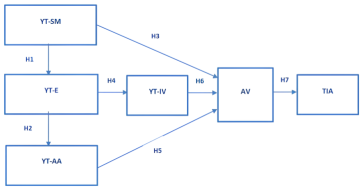
1) H1: Seeking social gratifications on YouTube has a positive impact on its perceived entertainment value.
2) H2: Perceived entertainment value has a positive impact on perceived ad irritation.
3) H3: The Social Media Marketing Capabilities afforded by YouTube have a positive impact on perceived advertising value.
4) H4: The use of entertainment elements in YouTube content has a positive impact on its perceived informative value.
5) H5: Perceived ad irritation has a negative impact on perceived advertising value.
6) H6: The perceived informative value of YouTube content has a positive impact on perceived advertising value.
7) H7: Perceived advertising value has a positive impact on brand patronage intentions.
Figure 1. Conceptual Study Framework.
“Note: YT-SM = YouTube Social Media; YT-E = YouTube Entertainment; YT-AA = YouTube Annoying Ads; YT-IV = YouTube Informative Value; AV = Advertising Value; TIA = Total Impact of Advertisement.”
3. Material and Methods
3.1. Research Design and Approach
This study employs a quantitative, cross-sectional survey design to test the proposed theoretical model and examine the relationships between its core constructs. Rooted in a positivist research philosophy, this approach is appropriate for deductively testing hypotheses and identifying the strength and direction of associations between variables at a single point in time . The primary data collection instrument was a structured online questionnaire administered via a unique hyperlink. This method was selected for its efficiency in reaching a geographically dispersed population of YouTube users and for ensuring consistency in the data gathering process. All survey items were measured using a 7-point Likert scale, with anchors ranging from 1 (“Strongly Disagree”) to 7 (“Strongly Agree”). The collected data were analysed using the Statistical Package for Social Sciences (SPSS). Descriptive statistics were used to profile the sample, and bivariate correlations were initially examined to assess basic associations among constructs. Hypothesis testing was subsequently conducted using model-based analyses, as detailed in the Data Analysis section.
The final sample of 359 respondents was composed primarily of males (n = 231) and non-Saudi nationals (n = 205). The largest age cohort was the 31–40-year age group (n = 177), and a significant majority of participants were married (n = 289). In terms of platform usage, a plurality of respondents (n = 176) reported spending up to three hours daily on YouTube, and YouTube was the most frequently selected preferred social media platform (n = 171). A complete demographic breakdown is provided in Table 1.
Table 1. Respondents Demographics.

Demographics

Options (if any)..

Frequency Total = 359

Percentage %

Gender

Male

231

64.34

Female

128

35.65

N=359

100%

Nationality

Saudi Nationals

154

42.89

Non- Saudi Nationals

205

57.10

N=359

100%

Age Group

Up to 20 Years

13

3.62

21-30

139

38.71

31-40

177

49.30

41-50

29

08.07

50 & above

01

0.27

N=359

100%

Marital Status

Married

289

80.50

Non-Married

70

19.49

N=359

100%

Education Level

Diploma/Certificate/etc.

11

03.06

Undergraduate

143

39.83

Graduate

194

54.03

PhD

06

01.67

None of them

05

1.39

N=359

100%

Time spent on YouTube in a Single day

</= 1 Hour

31

08.63

Up to 2 Hours

101

28.13

Up to 3 Hours

176

49.02

4 Hours and More …

51

14.20

N=359

100%

Favorite Social Media Platform

YouTube

171

47.63

Facebook

33

09.19

WhatsApp

21

05.84

Instagram

23

06.40

Twitter

34

09.47

All of the above

77

21.44

N=359

100%

3.2. Measurement Validity and Reliability Analysis
The internal consistency reliability of all multi-item measurement scales was assessed using Cronbach's alpha coefficient. This test evaluates the extent to which items within a scale measure the same underlying construct . A Cronbach's alpha value of 0.70 or higher is the generally accepted threshold for demonstrating adequate scale reliability in social science research . The analysis was conducted using SPSS, and the results, as presented in Table 2, indicate that all constructs exhibit strong internal consistency. The Cronbach's alpha values ranged from 0.759 for Advertising Value (AV) to 0.990 for YouTube Informative Value (YT-IV). As all coefficients comfortably exceed the 0.70 benchmark, the measures used in this study are deemed reliable.
Table 2. Cronbach’s Alpha values.

Constructs

Value of Cronbach Alpha

YouTube social media (YT-SM)

0.831

YouTube Entertainment (YT-E)

0.979

YouTube Annoying Ads. (YT-AA)

0.841

YouTube Informative Value (YT-IV)

0.990

Advertising Value (AV)

0.759

Total Impact of Adv. (TIA)

0.803

3.3. Descriptive Statistics of Constructs
Descriptive statistics, including the mean (M) and standard deviation (SD) for each of the study's core constructs, were calculated to summarise the central tendency and dispersion of participant responses. The results are presented in Table 3. The analysis shows that the construct with the highest mean score was the Total Impact of Advertising (TIA) (M = 6.101, SD = 0.813), followed by YouTube social media (YT-SM) (M = 6.012, SD = 0.803). The construct with the lowest mean score was YouTube Informative Value (YT-IV) (M = 4.056, SD = 0.762). Notably, the mean scores for all constructs were well above the neutral midpoint of 4.0 on the 7-point scale, indicating a general tendency toward agreement among respondents with the statements for each construct.
Table 3. Descriptive Analysis (Means & Standard Deviation).

Constructs

Mean

St. Deviation

Mean Level

YouTube social media (YT-SM)

6.012

0.803

Middle to the level

YouTube Entertainment (YT-E)

5.812

0.927

Middle to the level

YouTube Annoying Ads. (YT-AA)

5.137

0.900

Middle to the level

YouTube Informative Value (YT-IV)

4.056

0.762

Middle to the level

Advertising Value (AV)

5.321

0.969

Middle to the level

Total Impact of Adv. (TIA)

6.101

0.813

Middle to the level

3.4. Hypothesis Testing
To test the seven hypotheses, a Pearson product-moment correlation analysis was conducted to assess the direction and strength of the relationships between the core constructs. The significance level for the two-tailed tests was set at p < 0.01. The means, standard deviations, and correlation coefficients for all variables are presented in Table 4.
The results indicate that all hypothesised paths were statistically significant. The specific findings for each hypothesis are as follows:
1) H1: A moderate, positive correlation was found between Social Gratifications (YT-SM) and Perceived Entertainment Value (YT-E) (r =.689, p <.01), supporting H1.
2) H2: A strong, positive correlation was found between Perceived Entertainment Value (YT-E) and Perceived Ad Irritation (YT-AA) (r =.685, p <.01), supporting H2.
3) H3: A strong, positive correlation was found between Social Media Marketing Capabilities (YT-SM) and Perceived Advertising Value (AV) (r =.798, p <.01), supporting H3.
4) H4: A strong, positive correlation was found between the Use of Entertainment Elements (YT-E) and Perceived Informative Value (YT-IV) (r =.553, p <.01), supporting H4.
5) H5: The analysis revealed a strong, positive correlation between Perceived Ad Irritation (YT-AA) and Perceived Advertising Value (AV) (r =.609, p <.01). As H5 predicted a negative relationship, this hypothesis is not supported.
6) H6: A very strong, positive correlation was found between Perceived Informative Value (YT-IV) and Perceived Advertising Value (AV) (r =.903, p <.01), supporting H6.
7) H7: A strong, positive correlation was found between Perceived Advertising Value (AV) and Brand Patronage Intentions (TIA) (r =.801, p <.01), supporting H7.
A summary of the hypothesis testing results is provided in Table 5. The unexpected positive correlation for H5 represents a significant finding that will be interpreted in the Discussion section.
Table 4. Means, Standard Deviations, and Pearson Correlation Matrix.

Variable

M

SD

1

2

3

4

5

6

1. YT-SM

6.01

0.8

-

2. YT-E

5.81

0.93

.689**

-

3. YT-AA

5.14

0.9

.711**

.685**

-

4. YT-IV

4.06

0.76

.515**

.553**

.678**

-

5. AV

5.32

0.97

.798**

.698**

.609**

.903**

-

6. TIA

6.1

0.81

.781**

.886**

.715**

.883**

.801**

-

Note: ** p <.01 (2-tailed). M = Mean; SD = Standard Deviation. YT-SM = Social Gratifications; YT-E = Entertainment Value; YT-AA = Ad Irritation; YT-IV = Informative Value; AV = Advertising Value; TIA = Brand Patronage Intentions.
Table 5. Summary of Hypothesis Testing Results.

Hypothesis

Path

Predicted Direction

Correlation (r)

Result

H1

YT-SM → YT-E

+

0.689

Supported

H2

YT-E → YT-AA

+

0.685

Supported

H3

YT-SM → AV

+

0.798

Supported

H4

YT-E → YT-IV

+

0.553

Supported

H5

YT-AA → AV

-

0.609

Not Supported

H6

YT-IV → AV

+

0.903

Supported

H7

AV → TIA

+

0.801

Supported

Note: YT-SM = Social Gratifications; YT-E = Entertainment Value; YT-AA = Ad Irritation; YT-IV = Informative Value; AV = Advertising Value; TIA = Brand Patronage Intentions.
In summary, statistical analysis lends empirical support to the majority of the proposed theoretical framework. Significant positive relationships were found for six of the seven hypotheses, confirming many of the expected links between user gratifications, content value, and advertising outcomes. Notably, the test for H5 revealed a result that was both statistically significant and directly contrary to the established theory, presenting a compelling puzzle. The following Discussion section will now move from reporting these findings to interpreting their meaning. It will contextualize the supported relationships within the broader literature and, crucially, delve into the potential theoretical and practical implications of the unexpected finding for H5.
4. Discussion
This study set out to investigate the complex interplay of factors that shape the user experience and advertising value on YouTube. The findings provide empirical support for six of the seven proposed hypotheses, largely affirming the proposed conceptual model. The discussion now turns to interpreting these results, linking them back to their theoretical foundations and exploring their broader implications.
The results strongly support the application of Uses and Gratifications (U&G) Theory to the modern YouTube environment . The positive link found between seeking social gratifications and the perceived entertainment value of the platform (H1) confirms that users are active participants who co-create their experience within a participatory culture . The ability to interact with creators and other users through comments and other social features fulfils a key need for social connection, which in turn enhances media enjoyment . The findings also provide a nuanced picture of ad perception, primarily explained through Psychological Reactance Theory (PRT) . The strong positive relationship between entertainment value and perceived ad irritation (H2) supports our argument that the more engaged a viewer is, the more an ad is perceived as a jarring interruption that threatens their viewing freedom, thus heightening their annoyance . In contrast, the positive link between the informative value of content and advertising value (H6) aligns with Media Context and Congruity Theory . This suggests that within a credible, informational context, a congruent ad is viewed more as a relevant suggestion than an interruption, benefiting from a halo effect from the surrounding content .
The findings related to advertising outcomes align with established marketing models. The positive impact of YouTube's Social Media Marketing Capabilities, such as precision targeting, community building, and influencer marketing, on advertising value (H3) was confirmed, supporting the SMMC framework . Furthermore, the study confirmed that this advertising value subsequently contributes to the broader total impact of advertising (H7), which includes long-term metrics like brand equity and customer loyalty .
The most striking result of this study, however, was the significant positive correlation found between Perceived Ad Irritation and Perceived Advertising Value (H5), which directly contradicts our theoretical expectation that irritation destroys value . While unexpected, this anomaly prompts a deeper consideration of the user experience. One plausible explanation is that irritation functions as a proxy for ad salience or memorability. An irritating ad, while emotionally negative, is noticed. Respondents may have interpreted advertising value as merely the ad's ability to be recalled, a form of value based on mere exposure rather than positive sentiment. A second possibility is that of the “relevant but intrusive” ad; due to YouTube's sophisticated targeting , a user may be annoyed by a mid-roll interruption but simultaneously acknowledge the relevance of the product, leading to a conflicted but ultimately positive rating of its value.
Importantly, this association should be interpreted with caution. The positive relationship observed for H5 does not imply that advertising irritation directly enhances advertising effectiveness. Rather, it suggests a more complex relationship in which irritation may coexist with other advertising outcomes such as ad salience or recall. Without robustness analyses examining mediation, moderation, or non-linear effects, definitive conclusions cannot be drawn. Accordingly, this finding should be viewed as indicative rather than explanatory, and future research employing model-based techniques is required to unpack the underlying mechanisms underlying this relationship.
Theoretically, this research contributes by validating a holistic model that integrates U&G, PRT, and media context theories to explain the YouTube experience. From a managerial perspective, the implications are clear: context is key. Placing disruptive ads in highly entertaining content is likely to backfire, while placing relevant ads within informational videos can be highly effective. Brands should leverage YouTube's social features to build communities, which enhances the core user experience and, ultimately, fosters the positive attitudes that lead to favourable brand intentions.
5. Managerial Implications
The findings of this research offer several actionable insights for advertisers, brand managers, and platform strategists operating on YouTube. To maximize advertising effectiveness while maintaining a positive user experience, managers should consider the following:
1) Prioritise Context Over Interruption: The finding that ad irritation is amplified during highly entertaining content (H2), while advertising value is enhanced within informative content (H6), presents a clear strategic choice. Managers should avoid placing intrusive ad formats (e.g., unskippable mid-roll ads) in purely entertainment-focused videos where they will be most jarring. Instead, ad spend should be strategically directed toward informational and “how-to” contexts where users are more receptive to relevant solutions.
2) Invest in Community, Not Just Commercials: The strong link between social gratifications and entertainment value (H1) indicates that value is co-created with the audience. Brands should treat their YouTube presence as a community hub rather than just an ad platform. This means allocating resources to community management, responding to comments, and fostering creator-fan interactions to build the loyalty that ultimately drives brand patronage (H7).
3) Re-evaluate the Goal of “Annoying” Ads: The unexpected positive link between ad irritation and advertising value (H5) should be interpreted with caution, but it suggests a nuanced reality. While minimising annoyance is a safe strategy, it appears some value (perhaps in the form of brand recall or salience) is perceived even from disruptive ads. For campaigns focused purely on top-of-funnel awareness, this suggests that a highly memorable even if slightly irritating ad may not be as detrimental as previously thought, provided the product is highly relevant to the targeted user. This is a high-risk approach that warrants careful A/B testing.
6. Limitations and Future Research
This study, while providing valuable insights, is subject to several limitations that offer clear directions for future research. First, the use of a non-probability convenience sample, primarily distributed online, limits the generalisability of the findings to the entire population of YouTube users. Future research should seek to replicate this model using more diverse, probability-based samples across different cultural contexts. Second, the cross-sectional nature of the data means that while we have established strong correlations, we cannot definitively infer causality. Experimental designs are needed to confirm the causal directions proposed in our model. For instance, researchers could manipulate ad format (e.g., skippable vs. non-skippable) and measure the resulting changes in perceived irritation and brand attitude in a controlled lab setting. Finally, the counter-intuitive finding for H5 points to a limitation in our model and a pressing need for further investigation. The relationship between ad irritation and value is clearly more complex than a simple linear effect. Future research should aim to disentangle the effects of irritation, relevance, and ad recall on perceived value. A moderated model, where a factor like ad relevance moderates the relationship between irritation and value, could be a particularly fruitful avenue for scholarly investigation.
7. Conclusion
This research sets out to develop and test a holistic model of advertising effectiveness on YouTube, integrating user-centric gratifications with advertising-centric outcomes. The findings largely validate the proposed framework, confirming that the platform's value is derived from a complex interplay between its social, entertainment, and informational functions. The study makes a significant contribution by demonstrating the paradoxical nature of user engagement, which can concurrently amplify both the annoyance of ad interruptions and the value of contextually relevant advertising. Ultimately, this paper shows that effective advertising on platforms like YouTube is not merely a function of reach and frequency, but a delicate balancing act of managing context, respecting user goals, and creating value that extends beyond the advertisement itself. As digital platforms continue to evolve, understanding this balance will remain a critical challenge for both practitioners and academics alike.
Abbreviations

AV

Advertising Value

PRT

Psychological Reactance Theory

SMMCs

Social Media Marketing Capabilities

TIA

Total Impact of Advertising

U&G

Uses and Gratifications

YT-AA

YouTube Annoying Ads

YT-E

YouTube Entertainment

YT-IV

YouTube Informative Value

YT-SM

YouTube Social Media

Conflicts of Interest
The authors declare no conflicts of interest.
References
[1] Audrezet A, de Kerviler G, Guidry Moulard J, 2020. Authenticity under threat: When social media influencers need to go beyond self-presentation. Journal of Business Research 117: 557–569
[2] Boyd DM, Ellison NB, 2007. Social network sites: Definition, history, and scholarship. Journal of Computer‐Mediated Communication 13(1): 210-230.
[3] Burgess J, Green J, 2009. YouTube: Online video and participatory culture. Polity, London, UK.
[4] Burgess J, Green J, 2018. YouTube: Online video and participatory culture. John Wiley & Sons, Hoboken, NJ, USA.
[5] Chen Y, Stallaert J, 2014. An economic analysis of online advertising using behavioral targeting. MIS Quarterly 38(2): 429-449.
[6] Cheung CM, Luo C, Sia CL, Chen H, 2009. Credibility of electronic word-of-mouth: Informational and normative determinants of on-line consumer recommendations. International Journal of Electronic Commerce 13(4): 9-38.
[7] Chintalapati N, Daruri VSK, 2017. Examining the use of YouTube as a learning resource in higher education: Scale development and validation of TAM model. Telematics and Informatics 34(6): 853–860.
[8] Cronbach LJ, 1951. Coefficient alpha and the internal structure of tests. Psychometrika 16(3): 297-334.
[9] De Pelsmacker P, Geuens M, Anckaert P, 2002. Media context and advertising effectiveness: The role of context appreciation and context/ad similarity. Journal of Advertising 31(2): 49-61.
[10] Edwards SM, Li H, Lee JH, 2002. Forced exposure and psychological reactance: Antecedents and consequences of the perceived intrusiveness of pop-up ads. Journal of Advertising 31(3): 83-95.
[11] Freberg K, Graham K, McGaughey K, Freberg LA, 2011. Who are the social media influencers? A study of public perceptions of personality. Public Relations Review 37(1): 90-92.
[12] Fuchs C, 2017. Social media: A critical introduction. Sage, London, UK.
[13] Goodrich K, 2011. Anarchy on the internet: The influence of social media and user-generated content on advertising. Journal of Interactive Advertising 11(2): 7-18.
[14] Guo PJ, Kim J, Rubin R, 2014. How video production affects student engagement: An empirical study of MOOC videos. Proceedings of the First ACM Conference on Learning@ Scale Conference: 41-50.
[15] Hair JF, Black WC, Babin BJ, Anderson RE, Tatham RL, 2010. Multivariate data analysis, 7th edn. Pearson, New York, USA.
[16] Hajli N, 2014. A study of the impact of social media on consumers. International Journal of Market Research 56(3): 387-404.
[17] Hasell A, Halversen A, Weeks B, 2024. When social media attack: How exposure to political attacks on social media promotes anger and political cynicism. The International Journal of Press/Politics 30: 167-186.
[18] Jenkins H, 2006. Convergence culture: Where old and new media collide. NYU Press, New York, USA.
[19] Kaplan AM, Haenlein M, 2010. Users of the world, unite! The challenges and opportunities of social media. Business Horizons 53(1): 59-68.
[20] Keller KL, 2016. Reflections on customer-based brand equity: Perspectives, progress, and priorities. AMS Review 6(1-2): 1-16.
[21] Khamis S, Ang L, Welling R, 2017. Self-branding, ‘micro-celebrity’ and the rise of social media influencers. Celebrity Studies 8(2): 191-208.
[22] Khan ML, 2017. Social media engagement: What motivates user participation and consumption on YouTube? Computers in Human Behavior 66: 236-247.
[23] Lamberton C, Stephen AT, 2016. A thematic exploration of digital, social media, and mobile marketing: Research evolution from 2000 to 2015 and an agenda for future inquiry. Journal of Marketing 80(6): 146-172.
[24] Lange PG, 2007. Publicly private and privately public: Social networking on YouTube. Journal of Computer‐Mediated Communication 13(1): 361-380.
[25] Lange PG, 2014. Kids on YouTube: Technical identities and digital literacies. Left Coast Press, Walnut Creek, CA, USA.
[26] Matz SC, Kosinski M, Nave G, Stillwell DJ, 2017. Psychological targeting as an effective approach to digital mass persuasion. Proceedings of the National Academy of Sciences 114(48): 12714-12719.
[27] Mayer RE, Moreno R, 2003. Nine ways to reduce cognitive load in multimedia learning. Educational Psychologist 38(1): 43-52.
[28] McCoy S, Li H, Shaffer G, Vilanova R, 2018. A survey of users’ experiences with internet advertising: Effects of interruptive vs. non-interruptive ads. International Journal of Internet Marketing and Advertising 12(2): 188-204.
[29] Pope N, Voges K, Brown M, 2011. The effect of provocation in the form of mild irritation and amusement on brand perception and purchase behaviour. Journal of Advertising 40(1): 5-18.
[30] Pulizzi J, 2012. The rise of storytelling as the new marketing. Publishing Research Quarterly 28(2): 116-123.
[31] Statista. 2023. YouTube: number of users and usage statistics worldwide. Statista Research Department.
[32] Rust RT, Lemon KN, Zeithaml VA, 2004. Return on marketing: Using customer equity to focus marketing strategy. Journal of Marketing 68(1): 109-127.
[33] Saunders MN, Lewis P, Thornhill A, 2019. Research methods for business students, 8th edn. Pearson, London, UK.
[34] Snelson C, Perkins RA, 2018. From silent film to YouTube™: Tracing the historical roots of motion picture technologies in education. Journal of Visual Literacy 37(1-2): 54-71.
[35] Sukoco BM, Wu WY, 2015. The effects of ad-context congruity on responses to advertising in blogs among low- and high-involvement consumers. Internet Research 25(1): 2-22.
[36] Voorveld HA, Van Noort G, Malthouse EC, Van Berkel N, 2018. Engagement with social media and social media advertising: The differentiating role of platform type. Journal of Advertising 47(1): 38-54.
[37] Wang C, 2006. The influence of perceived value on consumer purchase intention: The moderating effect of advertising endorser. Journal of International Management Studies 1(1): 151-165.
[38] Wang RJH, Malthouse EC, Krishnamurthi L, 2015. On the go: How mobile shopping affects customer purchase behavior. Journal of Retailing 91(2): 217-234.
[39] Wang T, Bailey R, 2023. Processing peripherally placed advertising: The effect of thematic ad-content congruence and arousing content on the effectiveness of in-video overlay advertising. Journal of Interactive Advertising 23: 203-220.
[40] Katz E, Blumler JG, Gurevitch M, 1973. Uses and gratifications research. Public Opinion Quarterly 37(4): 509–523.
[41] Lee JE, Watkins B, 2016. YouTube vloggers’ influence on consumer luxury brand perceptions and intentions. Journal of Business Research 69(12): 5753–5760.
[42] Newman, M. Z. (2015). Video revolutions: On the history of a medium. University of California Press, Berkeley, CA, USA.
[43] Burgess J, Green J, 2018. YouTube: Online video and participatory culture. John Wiley & Sons, Hoboken, NJ, USA.
[44] Pew Research Center. 2023. Social media and video platform usage. Pew Research Center.
[45] Brehm JW, 1966. A theory of psychological reactance. Academic Press, New York, USA.
Cite This Article
  • APA Style

    Khan, M. A., Ullah, H. (2026). The Advertiser’s Dilemma on YouTube: Balancing Ad Irritation with Informational and Entertainment Value. Innovation Economics, 1(1), 1-11. https://doi.org/10.11648/j.iecon.20260101.11

    Copy | Download

    ACS Style

    Khan, M. A.; Ullah, H. The Advertiser’s Dilemma on YouTube: Balancing Ad Irritation with Informational and Entertainment Value. Innov. Econ. 2026, 1(1), 1-11. doi: 10.11648/j.iecon.20260101.11

    Copy | Download

    AMA Style

    Khan MA, Ullah H. The Advertiser’s Dilemma on YouTube: Balancing Ad Irritation with Informational and Entertainment Value. Innov Econ. 2026;1(1):1-11. doi: 10.11648/j.iecon.20260101.11

    Copy | Download

  • @article{10.11648/j.iecon.20260101.11,
      author = {Muhammad Ali Khan and Haseeb Ullah},
      title = {The Advertiser’s Dilemma on YouTube: Balancing Ad Irritation with Informational and Entertainment Value},
      journal = {Innovation Economics},
      volume = {1},
      number = {1},
      pages = {1-11},
      doi = {10.11648/j.iecon.20260101.11},
      url = {https://doi.org/10.11648/j.iecon.20260101.11},
      eprint = {https://article.sciencepublishinggroup.com/pdf/10.11648.j.iecon.20260101.11},
      abstract = {This study investigates the dual role of YouTube as a platform for both user gratification and commercial advertising, exploring the complex interplay between positive user experiences and disruptive ad encounters. To address this, the paper develops and empirically tests an integrated model that examines how social and entertainment gratifications, alongside perceived ad irritation, collectively influence advertising value and user intentions. A cross-sectional survey design was employed, gathering data from 359 active YouTube users. The relationships in the proposed model were tested using Pearson correlation analysis. The findings indicate that social gratifications positively enhance entertainment value and that both entertainment and informational content can increase advertising value, though through different mechanisms. Crucially, the study uncovered a counter-intuitive positive correlation between ad irritation and perceived advertising value, challenging the conventional view that annoyance universally destroys value. Theoretically, this research contributes a holistic framework that integrates Uses and Gratifications (U&G) theory with Psychological Reactance Theory (PRT) and Media Context Theory. Practically, the findings provide actionable insights for advertisers, highlighting the need for context-aware strategies that balance ad intrusiveness with the user's primary motivation for viewing, whether it be for entertainment or information.},
     year = {2026}
    }
    

    Copy | Download

  • TY  - JOUR
    T1  - The Advertiser’s Dilemma on YouTube: Balancing Ad Irritation with Informational and Entertainment Value
    AU  - Muhammad Ali Khan
    AU  - Haseeb Ullah
    Y1  - 2026/02/24
    PY  - 2026
    N1  - https://doi.org/10.11648/j.iecon.20260101.11
    DO  - 10.11648/j.iecon.20260101.11
    T2  - Innovation Economics
    JF  - Innovation Economics
    JO  - Innovation Economics
    SP  - 1
    EP  - 11
    PB  - Science Publishing Group
    UR  - https://doi.org/10.11648/j.iecon.20260101.11
    AB  - This study investigates the dual role of YouTube as a platform for both user gratification and commercial advertising, exploring the complex interplay between positive user experiences and disruptive ad encounters. To address this, the paper develops and empirically tests an integrated model that examines how social and entertainment gratifications, alongside perceived ad irritation, collectively influence advertising value and user intentions. A cross-sectional survey design was employed, gathering data from 359 active YouTube users. The relationships in the proposed model were tested using Pearson correlation analysis. The findings indicate that social gratifications positively enhance entertainment value and that both entertainment and informational content can increase advertising value, though through different mechanisms. Crucially, the study uncovered a counter-intuitive positive correlation between ad irritation and perceived advertising value, challenging the conventional view that annoyance universally destroys value. Theoretically, this research contributes a holistic framework that integrates Uses and Gratifications (U&G) theory with Psychological Reactance Theory (PRT) and Media Context Theory. Practically, the findings provide actionable insights for advertisers, highlighting the need for context-aware strategies that balance ad intrusiveness with the user's primary motivation for viewing, whether it be for entertainment or information.
    VL  - 1
    IS  - 1
    ER  - 

    Copy | Download

Author Information
  • School of Digital, Technology Innovation and Business, University of Staffordshire, Stoke-on-Trent, United Kingdom

    Biography: Muhammad Ali Khan is a senior lecturer in Digital Marketing at Staffordshire University Business School, United Kingdom. He has taught across undergraduate and postgraduate programmes, including modules such as Consumer and Organisational Behaviour, Managing Consumerism, and Marketing Innovation. His research interests include consumer behaviour, advertising effectiveness, digital marketing trends, media influence on decision-making, and marketing communication strategies. Dr. Khan has professional expertise in social media campaign management, SEO, PPC, and WordPress-based website development, and has worked with small businesses to enhance their online presence. His PhD research examined the effects of musical congruence and incongruence in radio advertising on consumer cognitive and emotional responses, employing Schema Incongruity Theory and the Elaboration Likelihood Model. He is currently developing multiple research articles for high-impact journals, including the Journal of Consumer Psychology and the Journal of Advertising.

  • Research and Studies Institute, Saudi Electronic University, Riyadh, Saudi Arabia

    Biography: Haseeb Ullah is an Assistant Professor at the Studies and Research High Institute in the Kingdom of Saudi Arabia. He has experience teaching and supervising students across a range of business and management disciplines. His research interests include marketing strategy, consumer behaviour, organisational performance, and the application of emerging technologies in business. He has contributed to academic and professional projects that explore innovative approaches to market research, digital transformation, and sustainable business practices. His work bridges theory and practice, with a focus on delivering insights that support both academic advancement and industry application.

  • Abstract
  • Keywords
  • Document Sections

    1. 1. Introduction
    2. 2. Literature Review
    3. 3. Material and Methods
    4. 4. Discussion
    5. 5. Managerial Implications
    6. 6. Limitations and Future Research
    7. 7. Conclusion
    Show Full Outline
  • Abbreviations
  • Conflicts of Interest
  • References
  • Cite This Article
  • Author Information