Research Article | | Peer-Reviewed

Health Infrastructures Accessibility and Diseases Management in Bamenda North West Region, Cameroon

Received: 13 May 2026     Accepted: 25 May 2026     Published: 10 June 2026
Views:       Downloads:
Abstract

Accessibility of healthcare infrastructure are growing globally in a sustained manner and approximately 7.3 billion people around the world are unable to access essential health infrastructures embedded with well-deserved services needed for the treatment of health-related challenges. Health infrastructures accessibility remains a major cause of disease burden in Bamenda, couple with spatial distribution, insufficient resources, inadequate infrastructures and poor access to health services impact disease outcomes. This study seeks to analyze the spatial distribution of health infrastructure in Bamenda in the context of disease management. To obtained relative data for this study, both qualitative and quantitative data tools were employed. A total of 400 questionnaires were administered and analyzed using a spatial correlation and was presented in tables, Figures and maps. Findings reveals that health infrastructures in Bamenda include; hospitals, clinics, health centers and pharmacies. These health facilities are unevenly distributed with a strong concentration in Bamenda II, followed by Bamenda III, and very limited facilities in Bamenda I. This clustering patterns is observed particularly in commercial zones such as Commercial Avenue, Azire, and Nkwen. It was further observed that this spatial distribution of health infrastructure is greatly influence by government policies. Government planning and regulation are foundational to where health infrastructure is located. Policies often establish formal plans or health system frameworks that directly guide the siting of health facilities to meet population needs. Governments and private investors are more likely to locate facilities in areas where staffing needs can be met. Findings further revealed that the availability of skilled health workforce is the most important driver influencing the distribution of health facilities in Bamenda with. Investments in workforce training, deployment, and retention can stimulate more balanced spatial distribution of health infrastructure, improving equity and population health outcomes.

Published in International Journal of Health Economics and Policy (Volume 11, Issue 2)
DOI 10.11648/j.hep.20261102.16
Page(s) 121-130
Creative Commons

This is an Open Access article, distributed under the terms of the Creative Commons Attribution 4.0 International License (http://creativecommons.org/licenses/by/4.0/), which permits unrestricted use, distribution and reproduction in any medium or format, provided the original work is properly cited.

Copyright

Copyright © The Author(s), 2026. Published by Science Publishing Group

Keywords

Health, Infrastructure, Accessibility, Diseases, Management, Bamenda

1. Introduction
Globally, about 4.5 billion people suffer from inadequate health infrastructure accessibility. This has pushed about 100 million people into poverty every year due to catastrophic health managements . It is argued that the accessibility of healthcare infrastructure and the management of diseases are growing globally in a sustained manner as evidenced by the Global Health Access and Quality Index Scores from 37.6/100 in 1900 to 42.4 in 2000 and 54.4 in 2016 . Approximately 7.3 billion people around the world are unable to access essential health infrastructures embedded with well-deserved services needed for the treatment of health-related challenges . Furthermore, more than 137 countries with estimated population of about 8.6 million people record a high death in 2016 triggered by poor health infrastructure accessibility and diseases management dynamics .
Health infrastructure accessibility means that all people have access to the health services they need, when and where they need them in sufficient quality to be effective, without financial difficulties . Accessibility on the other hand refers to the degree to which individuals can obtain and utilize goods, services, facilities, or opportunities without encountering barriers or discrimination based on their personal characteristics or circumstances. In the context of healthcare, accessibility refers to the ability of individuals to access healthcare services in a timely, affordable, and equitable manner . Health infrastructure accessibility is directly linked to diseases management , which in turn affects health outcomes such as immunization rates, coverage of interventions, and child mortality . The goals of health infrastructure accessibility include full range of essential health services, from health promotion to prevention, treatment, rehabilitation and palliative care and beyond to holistic improvement of well-being and quality of life. To achieve this, nations needs policy-makers committed in investing in health coverage, skilled health workers providing high-quality, people-centered care in a health system founded on a strong, people-centered primary health care rooted in the communities they serve. In the context of this study, health infrastructure accessibility is seen as the ease through which health personnel’s, patients, get to different health infrastructures such as privates and state health infrastructures.
Health infrastructure accessibility remains a major cause of global disease management burden especially in low resource settings where insufficient resources, inadequate infrastructures and poor access to health services impact disease outcomes, timely access to health facilities can prevent further disease progression and as a result improves individual and public health outcomes . Again, large disparities in health infrastructure accessibility and diseases management persist because facilities are present at fixed locations while health needs vary across space and time, which potentially poses higher risks to remote communities .
Distance is an important variable in health infrastructure accessibility. Longer travel distances to health infrastructures constitute barriers to repeated visits for example reveals that distance is the most important determinant that influence the accessibility of health infrastructures worldwide. The frequency of travel time to health infrastructures reflects the distances and the availability of management facilities. The inadequacies in the access to health infrastructures have reduced the life expectancy of most rural inhabitant and increased infant mortality rate. Rural inhabitants often trek over long distances on many occasions before reaching the nearest health infrastructure . It has been argued that transport is a key constraint for achieving health goals in many countries of the world. This is because transport and health infrastructure accessibility are inextricably linked. According to , 90% of people die at home, often without their families making an attempt to access health infrastructure for consultation and management due to inadequate means of transportation and transportation cost.
2. Location of the Study Area
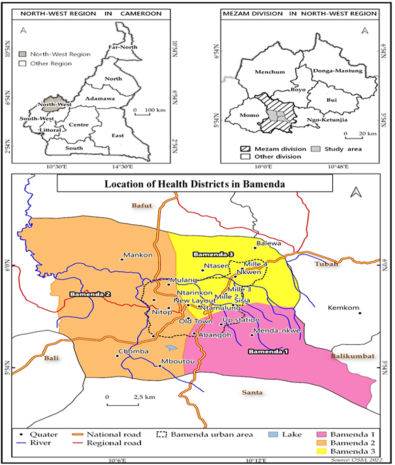
The study covers the three municipalities of Bamenda (Bamenda I, II and III) in the Mezam division of the North West Region of Cameroon corresponding to the seven villages; Bamendakwe, Nkwen, Ndzah, Mankon, Chomba, Nsongwa, and Mbatu. Bamenda in the North West Region, located 366 km (227 miles north-west of the Cameroonian capital, Yaoundé. Bamenda is located between latitudes 5ᵒ 56’ 58’’ North of the equator and longitudes 10ᵒ 09’ 11’’ East of the Greenwich Meridian. It lies at an average altitude of 1258 meters above sea level . Bamenda is bounded to the west by the Momo Division and Bali Sub-Division respectively. To the north, it is flanked by Bafut Sub-Division, to the northeast by Tubah Sub-Division and to the south by Santa Sub-Division. Within Bamenda there are three municipalities; Bamenda I (Bamendakwe), Bamenda II (Mankon, Nsongwa, Mbatu and Chomba), and Bamenda III (Nkwen and Ndzah). Figure 1. illustrates the location of Bamenda in Mezam Division of the North West Region of Cameroon.
The city of Bamenda experiences the Guinea-Savannah type of climate and is marked by two distinct seasons: the dry and rainy seasons. The rainy season runs from mid-March to mid-October. Rainfall ranges amid 2000 to 3000mm per year. The dry season is usually from October to February. The nights are very cold while the days are very hot. The mean annual rainfall is 2670 mm and the average annual temperature is 25°C . Strong winds and heavy clouds cover characterize the city. The dry seasons is characterized by very hot afternoons and very cold mornings and nights, temperature in the dry seasons, sometimes go as high as 38°C during the day and as low as 15°C during the night. In the rainy seasons the temperatures are generally milder with an average daily temperature of about 25°C . The nights/days are very cold with average temperatures hardly exceeding 19°C. Heavy clouds usually descend from the hills leading to advection fog and during such occurrence visibility is very poor . The climate of Bamenda greatly influenced health patterns. These changes in meteorological parameters such as temperature, rainfall and humidity have substantially increase respiratory morbidity and mortality in adult patients with common chronic respiratory diseases in the city. These respiratory diseases in the city of Bamenda similarly increase among children as they are the most vulnerable age group with less resistant systems to the cold weather. This cold exposure equally increases the overall respiratory diseases in individuals with underlying chronic obstructive pulmonary diseases (COPD), asthma, pneumonia, and allergic rhinitis. Given the significant health burdens associated with the climate, increased temperatures lead to an increase in ground level ozone which causes airway inflammations and damages lung tissues leading to breathing problems such as coughing, wheezing and chest pain .
Source: (Administrative map of Cameroon, 2014: Modified, 2024)

Download: Download full-size image

Figure 1. Location of Bamenda.
3. Materials and Methods
A mixed research approached was used to collect data for this study. Both qualitative and quantitative data tools were used as primary data collection tools to generate data for this study. Primary data were obtained through field observations, questionnaires, Focus group discussions and interviews. The purpose of the field observation was to evaluate the spatial distribution of health infrastructure in Bamenda and its implications on health condition management. Interviews were also conducted with health personnel and authorities. The administration of questionnaires allowed for the collection of data in order to assess population perceptions toward disease management and their prevalence in Bamenda. The target population included a diverse group of health professionals both government and private, patients admitted in the hospital and the population outside the hospital, each providing unique perspective on health infrastructure accessibility and disease management. This study purposively focused on the individuals from 15-65+ years. This age range is chosen because the rate of diseases diagnosed today in the hospitals are highly among this age group and they are exposed to risk factors of diseases such as alcohol, lifestyle, tobacco, negligent. A sample size of 400 was chosen for this study. The collected data was entered into a spreadsheet by using the Statistical Package for Social Sciences (SPSS) version 20. Descriptive and space-related techniques were used in this analysis to transform and aligned the data collected through narratives.
4. Findings
4.1. Spatial Distribution of Health Infrastructures in Bamenda
The spatial distribution of health infrastructures describes the geographical placement and spread of healthcare facilities within Bamenda urban area. These facilities include hospitals, health centers, clinics, pharmacies. How they are distributed significantly affects people’s ability to access healthcare, the fairness of service provision and overall health outcomes. Health facilities are general organized in to levels that is; the primary healthcare facilities to include clinics, which provide basic and preventive services, the secondary healthcare facilities including district or general hospitals that offers specialized medical care, the tertiary healthcare facilities such as teaching and referral hospitals which provide advanced and highly specialized treatment and lastly, the support services including pharmacies, laboratories. Health infrastructures are unevenly distributed in Bamenda thereby determining inequitable access, service coverage and response to public health needs, especially in the context of a rapidly growing urban population and the ongoing sociopolitical conflict in Bamenda.
4.2. Types of Health Infrastructures in Bamenda
Health infrastructures are the physical facilities and systems that make it possible to deliver healthcare services to the population. They are classified according to the level of care provided and their specific functions, and together they form an integrated healthcare system. The primary health infrastructure is the basic level of healthcare and the first point of contact for most people. These facilities are usually located within communities. They include clinics and health centers and they offer services such as treatment of common illnesses, immunization, maternal and child healthcare, family planning, health education, and disease prevention. The secondary health infrastructures which provide more advanced medical services and receives patients referred from primary healthcare facilities. They include district and general hospitals. These facilities offer inpatient care, surgical services, maternal care, emergency treatment and diagnostic services. They play an important role in managing conditions that cannot be treated at the primary level. The tertiary health infrastructures which represents the highest level of healthcare delivery and designed to handle complex and specialized medical cases. These include teaching and referral hospitals, and specialized centers such as cancer or diabetes or heart Dialysis. They provide advanced diagnostic services, specialized surgeries, intensive care and long-term treatment. In addition, tertiary facilities are involved in medical training, research and innovation. The support and auxiliary health infrastructures provide essential services that support the functioning of healthcare facilities. They include pharmacies, diagnostic laboratories, ambulance and medical supply facilities. These infrastructures ensure the availability of medicines, emergency transport, diagnostic support and follow-up care. These health infrastructures work together to ensure effective healthcare delivery in Bamenda. Therefore, a balanced development of these infrastructures is essential for accessibility, efficient, and equitable healthcare services.
The study reveals that hospitals, clinics, health centers, and pharmacies are dominant health infrastructures in Bamenda. For hospitals, they comprise of Public and private hospitals. The public hospitals are operated by the government and they are typically larger and well equipped with more resources and equipment’s for scanning of the human health for example, the regional hospital Bamenda which serves as a referral center for surrounding hospitals and in total, there are five government hospitals in Bamenda. On the other hand, we have confessional hospitals with a total of four hospitals and the legal private hospitals with a total of two, which are often run by private entities or organizations and offer higher-quality services and more comfortable accommodations to their patients such as Cameroon Baptist Convention Health Services, St. Blaise Catholic hospital, St. Mary hospital, Dr. Dee hospital. Despites its appellation, both offer services such as emergency care, surgical procedures, maternity wards, and specialized departments (for example., pediatrics, internal medicine, social department, TB Units, HIV/AIDS unit). For health centers, Bamenda has a total of about 14 health centers with 12 own by the government and two are owned by the confessional sector. These health centers are both Integrated Health Centers (IHC) own by the government and confessional health centers which combine many functions under one roof, including diseases management, maternal and child health, family planning, and nutrition. IHC provide comprehensive care that addresses various health needs in a coordinated manner. They often collaborate with NGOs and community organization for outreach programs. These numbers (16 health centers) reveal that more is still to be done in the study area as far as health infrastructure distribution is concern. Furthermore, for clinics, findings reveal that we have 5 confessional clinics to includes. St. Blaise catholic clinic Mankon, St. Patrick clinic, St. john Brother of God clinic, Mezam polyclinic and 45 legal clinic which are owned by private individuals for profit motives. Clinics are both modern and traditional offering outpatient services which include consultations, minor surgeries mostly for women with delivery complications, and routine health checkups for patients who seek their attentions. These clinics provide targeted treatments and offer advanced diagnostic services. Lastly, Pharmacies with a total of 20 pharmacies. All these pharmacies are own and control by private individuals. It should be noted that government and confessional pharmacies are located within their hospitals. These pharmacies play a crucial role in the healthcare system in Bamenda by providing medications, health consultations, and advice on over-the-counter treatments. Many patients visit pharmacies for minor health issues before seeking further medical attention. They also serve as important points for dispensing prescriptions and providing health education to the population.
4.3. Drivers Influencing the Spatial Distribution of Health Infrastructures in Bamenda
Source: Fieldwork, 2025

Download: Download full-size image

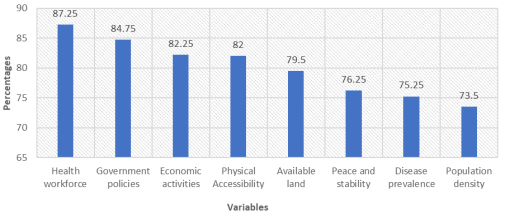
Figure 2. Drivers of the spatial distribution of health infrastructures in Bamenda.
Based on interviews conducted with health personnel, available planning documents at the delegation of public health, urban studies and a broader research on healthcare distribution in Cameroon/Bamenda, there are range of drivers influencing the spatial distribution of health infrastructures in Bamenda namely: government policies, economic activities, health workforce, accessibility, peace and stability, available land as shown on Figure 2.
4.3.1. Health Workforce Availability
Health infrastructure is not merely a physical entity but a functional socio-technical system whose viability depends fundamentally on the availability and stability of skilled health personnel. Health infrastructure cannot function without skilled personnel with specialized skills in different departments. Health infrastructure planning implicitly assumes the availability of personnel. In practice, areas unable to attract staff are considered non-viable sites for new facilities. Existing facilities in understaffed location face service downgrading or closure, thus workforce availability operates as a spatial filter, designing the geographic layout of health infrastructures without regard to population needs. A private owned health personnel during pre-field work interview explained that “location decisions are influenced by where health workers are available and willing to work under good housing quality, safety and security, social amenities and career opportunities that is why I have relocated my clinic from Nghomgham to Behindche because I want to fully gain ground and grow more bigger to save more people from going to early graves”. From interviews, health workforce availability recorded the highest value of (87.25%), showing that health workforce availability strongly attracts health infrastructure distribution in Bamenda. Healthcare management requires various departments with different specialists for effective operation and utilization by the population for their various health crisis. Therefore, health facilities are implanted in areas where they will have variety of workers to help achieve their goals.
4.3.2. Government Policies
In Bamenda, access to health services varies significantly from one neighborhood to another. These variations are not accidental, they are largely sharped by government policies related to health planning, urban development, budgeting and decentralization. Government policies determine where, when, and how health facilities are established. As a result, some areas enjoy adequate health coverage, while others remain underserved. Bamenda is a rapid growing urban center with both planned and unplanned settlements. Population growth, urban sprawl, and socio-political challenges have increased the demand for health services. However, the distribution of health infrastructure has not always kept pace with population changes. Most well-equipped health facilities tend to be concentrated in central urban area in Bamenda while peripheral areas often rely on small clinics or must travel long distances to access healthcare as a result of government policy decisions. The data collected during fieldwork reveals that 84.75% of Government decisions strongly shaped health infrastructure placement in Bamenda because she is the one responsible for the approval of any health facility implementation documents. It was also observed in Bamenda that areas that meet government criteria (such as population size or administrative importance) are more likely to receive government-funded health infrastructures.
4.3.3. Economic Activities
Economic activities are a major determinant of urban land use and service distribution. In Bamenda, the nature, intensity, and location of economic activities strongly influence where health infrastructure such as hospitals, clinics, pharmacies are located. Health facilities tend to follow people, and infrastructure. As a result, economic vibrant areas enjoy a high concentration of high services. It should be noted that economic activities in Bamenda are not evenly distributed but are concentrated in central commercial areas like markets, transport, administrative zones, high income residential neighborhood, roadside and transport corridors. Areas with intense commercial activities attract many health facilities because of large daily population movement which increase demand for healthcare. Field report reveal that over 80% of the population agree that economic vibrancy attracts health facilities. Busy areas like commercial avenue, Mobile Nkwen, hospital round-about have many pharmacies, clinics, and hospitals because commercial activity ensures a steady inflow of clients. Health facilities need strong economic environments to sustain costs such as rent, staff salaries, and utilities.
4.3.4. Physical Accessibility
A large majority (82%) of the health owners agree that accessibility is one of the key factors shaping where health infrastructures are located and how they serve the population in the city of Bamenda. Accessibility refers to how easily people can reach health facilities given the distance, quality of transport network, travel time. Many health facilities in Bamenda are located along major accessible routes such as the Mankon to food market road, Mile 4 Nkwen road, and Commercial Avenue, where patients and medical supplies can be easily accesses, ambulance services and logistics work are best in areas with good transportation networks. During focus group discussion, a patient in St. Blaise hospital expressed that “private hospitals and clinics are more accessible and culturally accepted, but they are not always affordable, they are too expensive for the poor population”.
4.3.5. Available Land
The availability of land is a fundamental determinant of the spatial distribution of health infrastructure in Bamenda. As a rapidly growing urban center in Cameroon’s North West Region, Bamenda has experienced intense demographic growth, urban sprawl, and competing land uses, all of which shape where health facilities are established. Land availability affects not only the location of health infrastructure but also its size, functionality, accessibility, and long-term sustainability. Bamenda urban structure is characterized by a dense central core and expanding peri-urban fringes. In the center areas, land is highly built-up and fragmented due to long-standing residential, commercial, and administrative uses. This scarcity of land limits opportunities for new health facilities and constraints the expansion of existing ones. As a result, health infrastructures in the city center tend to: be older facilities established when land was more available, operate on restricted space, limiting future expansion and modernization, experience overcrowding due to high population concentration within a limited service area. In contrast, peri-urban zones have comparatively more available land, allowing for the establishment of newer health facilities. However, these areas often lack adequate road networks and public transport system, which can reduce effective accessibility despite land availability. Also, a health personnel at the Region Hospital Bamenda added that “while land availability is essential, it must align with accessibility considerations. Health facilities requires sites that are reachable by both patients and emergency services. In Bamenda, available land along major roads or transport corridors is more likely to host hospitals and large health centers. Areas with abundant land and poor connectivity often remain underserve. The physical terrain of Bamenda including steep slopes and valleys further limits suitable land for health infrastructure”. Health personnel during interviews strongly agree that one of their motivation of health infrastructure establishment is land availability because their activities and services will be well organized and utilize by the population than when the available land is small.
4.3.6. Peace and Stability
Conflict and insecurity significantly influence where health infrastructures can operate. According to the health managers, 76.25% identified peace and stability as a major factor which has affected the spatial distribution of health facilities in Bamenda. The ongoing Anglophone crisis, political instability has severely disrupted health service delivery. Many health facilities in Bamenda have been damaged, abandoned, or relocated due to insecurity. Healthcare workers have fled, and movement restrictions have limited access to certain health centers or conflict-prone zones. This has resulted in an uneven distribution of functioning health facilities in the study area.
4.3.7. Disease Prevalence
Most clinics and health centers are located in areas prone to frequent diseases occurrence like malaria and typhoid. Because Bamenda is in the malarial and typhoid zone. Health management authorities, agree that most health infrastructures are established in areas with high disease prevalence, as their goal is to address the root causes of specific diseases, reduce their impact, raise awareness, and improve public knowledge on the issue. This believe has shape the spatial pattern of health infrastructure distribution in Bamenda. Communities with high malaria incidence (for example, low-lying zones around Nghomgham, Musang and Mulang) have more small clinics offering frequent malaria treatment and HIV/AIDS treatment center in the Regional Hospital Bamenda due to relatively higher prevalence since it is the main point to managing the disease.
4.3.8. Population Density
Population characteristics are a fundamental driver of health infrastructure distribution. In Bamenda, rapid population growth resulting from natural increase, rural urban migration, and displacement linked to regional insecurity has created uneven spatial demand for healthcare services. Highly-density neighborhood attract more health facilities because they guarantee patient volume and service utilization. Conversely to low-density or newly emerging settlements often remain underserved due to perceived low demand and uncertainty about future population stability. Age structure also matters. Areas with a higher concentration of women of reproductive age, children, and the elderly tend to generate stronger demand for maternal, pediatric and chronic care services, influencing where specific health facilities are located. A significant proportion of the population (73.5%) agree that densely populated areas attract more health infrastructures. This data suggests that the size, composition, and distribution of the population strongly determine where health facilities are located in Bamenda. Bamenda II and III with high population density has a high concentration of hospitals, clinics and pharmacies due to greater demand by the population. Also, investors tend to build in high-density zones where demand for health services is consistent. During interviews, hospitals managements in ST. Blaise, Mbongo annex Nkwen, Region hospital Bamenda confirm to this fact that they implant their health services in areas that have high population densities because of high demand.
4.4. Implications of Current Distribution of Health Infrastructures in Bamenda
The current distribution of health infrastructures in Bamenda has several implications for the community, impacting health outcomes, limiting access to care and overall public health as seen below.
4.4.1. Inequitable Access
It is observed in Bamenda that some neighborhoods have only few health facilities mostly clinics, while others are saturated with multiple options. For instance, residents in Mendankwe in Bamenda 1 have to travel over 5 kilometers to reach the nearest hospital for their medication. During field interviews, patients from these areas stated that the absence of a major hospital has a significant barrier to accessing basic healthcare services especially for those without transportation means. In critical conditions, such as during medical emergency, the lack of nearby facility can delay diagnosis, treatment, and potentially worsening health outcomes. For example, a person experiencing a heart attack may not receive timely care if the nearest hospital is far away.
4.4.2. Overcrowding in Major Health Facilities
Because health facilities are unevenly distributed, many patients converge on a small number of hospitals, overwhelming them. For example, the Regional Hospital Bamenda, receives patients from the whole city and surrounding rural areas which has resulted to long queues, bed shortages and staff fatigue are common. Because of this, delays in surgery, diagnoses and emergency care are very common, increased risk of hospital-acquired infections like Tuberculosis, and higher mortality among critically ill patients. In the same way, clinic that serves a larger population have long waiting times exceeding two hours which have discourage people from seeking care when sick. During interviews, a patient in regional hospital Bamenda with kidney failure and diabetes confesses that “I waited for 7 hours before I could see the doctor and taken to the ward for treatment due to overcrowding of patients and I think this hospital need more doctors in this department because this disease prevalence is in the rise in Bamenda”. In Cameroon Baptist Convention Health Services, another patient expressed her worries that “I have been waiting for hours. I was here at exactly 8: 00 am but now is 1: 35 pm and they have not called my name for consultation. Will I be able to see the doctor today?” this is a major issue that requires a multidimensional approach to solve the problem.
4.4.3. Increased Morbidity (Illnesses) and Mortality (Deaths)
Health infrastructures in Bamenda are unevenly distributed. Well-equipped hospitals, laboratories, and pharmacies are concentrated in the central parts of the city. While peripheral and newly developed neighborhoods have few facilities and mostly small clinics. For example, the Bamenda regional hospital, PMI district hospital, Mbingo annex Nkwen, St. Blaise catholic hospital are located in relatively central, accessible areas. Peripheral zones such as Mendankwe, Ntambag, mile 8, and part of Nkwen depend mainly on few or poorly equipped integrated health centers with limited staffs, drugs and equipment. As a result, patients in peripheral areas delay seeking care because of long distance and transport cost. Bamenda’s rugged, hilly terrain and poorly maintained road network make physical access to health facilities difficult, especially during the rainy season with steep and narrow slippery roads, making it difficult for ambulances to often reach patient promptly hence patients are sometimes carried on motorbikes at high cost or on foot. Illnesses like stroke patients, chronic malarial, respiratory infections, women in obstructed labor experience dangerous delays which worsen their conditions before treatment. Late arrival at referral hospitals leads to avoidable deaths through trauma and bleeding. Conditions that are medically manageable become fatal due to late medical intervention especially among children, the elderly and pregnant women.
4.4.4. Lack of Planning in the Health Sector
Because there is no strong, consistently implemented health master plan, health facilities in Bamenda are often established based on availability of land, private initiatives or convenience, rather than on population needs or spatial equity. For example, many private clinics and pharmacies are concentrated around Commercial Avenue, hospital roundabout, and food market areas, where there is high population flow and good access road. In contrast, fast-growing neighborhoods like new layout, Mendankwe have very few health facilities. As a result, central areas become over-served, while peripheral areas are under-served. Residents in poorly served areas must travel long distanced to access care. Also, the population is growing rapidly but health infrastructure planning has not kept pace with this expansion. Mendankwe expanded significantly before adequate clinics or a district hospital were planned and new settlements developed without reserved land for hospitals or health centers. As a result, health facilities remain concentrated in older planned parts of the city and new neighborhoods rely on small, poorly equipped clinics or distant hospitals. Health planning is often not coordinated with urban land-use planning, resulting in poorly located facilities. Some health centers are located on steep slopes making access difficult for the population. Narrow roads prevent ambulance from reaching patient easily as earlier mention above or even where facilities exist, they are not easily accessible, reducing effective coverage. Lack of planning has led to weak control over where private clinics are established. For example, several private clinics operates within short distances of each other in central Bamenda. The researcher noted here that health services follow profitability rather than public needs, thereby increasing spatial inequality in the study area.
4.4.5. Underutilization of Services in Some Hospitals
Healthcare providers explain that they are facing challenges in modern equipment that are rarely used due to lack of trained staff or insufficient patient demand. A department such as Nephrology, which specializes in the diagnoses and management of kidney disorders and related cardiovascular complications, serves as a critical example. Also, security challenges due to the political crisis have significantly hindered the effective delivery of healthcare services in certain areas of Bamenda, as incidents involving the abductions of staff by unidentified armed individuals have created a climate of fear and operational disruption. In St. Blaise catholic hospital, the assistant general supervision explained “that while their facility has the capacity to serve more patients, inadequate community outreach has limits patient’s turnout since the community is not aware about their advancement in services and technology”. Patients indicated that insecurity has cause them to avoid certain facilities, even if they are nearby due to fears of violence or unrest. Some added that they were unaware of the available services of certain hospitals due to poor communication and planning by health authorities and those with chronic conditions express their concern about missed appointments and medications refills due to insecurity which has exacerbated their health conditions.
5. Discussion
This study reveals that health infrastructures in Bamenda include; hospitals, clinics, health centers and pharmacies. These health facilities are unevenly distributed with a strong concentration in Bamenda II, followed by Bamenda III, and very limited facilities in Bamenda I. This clustering patterns is observed particularly in commercial zones such as Commercial Avenue, Azire, and Nkwen, which can be describe as “locational logic,” where private health providers situate facilities in areas promising high patient flow and economic returns. It was further revealed that this spatial distribution of health infrastructure is greatly influence by drivers such as government policies. Government planning and regulation are foundational to where health infrastructure is located. Policies often establish formal plans or health system frameworks that directly guide the siting of health facilities to meet population needs. Furthermore, skilled health workers, World Health Organization (2010) identifies workforce shortages as a central factor driving inequities in health service coverage. Areas with limited skilled personnel receive fewer investments in infrastructure, further entrenching spatial inequality and limiting progress toward universal health coverage. Therefore, understanding the relationship between skilled health workforce availability and spatial distribution of infrastructure is critical for effective health planning because if workforce issues are not addressed, infrastructure expansion alone will not improve access to care. Conversely, investments in workforce training, deployment, and retention can stimulate more balanced spatial distribution of health infrastructure, improving equity and population health outcomes.
Also, access to health infrastructure in Bamenda is a complex issue that extends beyond mere physical proximity to healthcare facilities. It is shaped by an interaction of spatial, socio-economic, infrastructural, and security-related factors, all of which influence disease management outcomes. Although the concentration of health facilities in Bamenda may be justified by higher population densities and economic considerations, it inadvertently creates disparities that limit equitable access to healthcare services. Long travel distances, high transportation costs, and difficult terrain discourage timely healthcare utilization. As a result, many individuals delay seeking medical attention to informal care practices which is detrimental in the management of chronic diseases such as hypertension, diabetes, and kidney-related disorders, where continuous monitoring and treatment are essential. Health facilities exist in Bamenda but remain effectively unreachable due to poor connectivity. Seasonal factors, such as heavy rainfall, Dust, as well as ongoing socio-political instability, often intensify these barriers by isolating communities and disrupting mobility.
6. Conclusion
This study demonstrates that accessibility to health infrastructure is a fundamental determinant of disease management in Bamenda. The uneven spatial distribution of healthcare facilities, coupled with infrastructural deficiencies and security challenges, has resulted in significant disparities in access to healthcare services. To address these issues, it is essential to adopt targeted and inclusive policy measures aimed at improving equitable access to healthcare. This includes expanding health infrastructure in underserved areas, improving transportation networks, and rehabilitating existing facilities. Ensuring the safety and protection of healthcare workers is also critical to maintaining consistent service delivery. Additionally, strengthening community-based healthcare approaches because it plays a vital role in bringing services closer to the population, enhancing the capacity of community health workers, promoting health education, and encouraging collaboration between public and private healthcare providers to support effective disease management. Achieving effective disease management in Bamenda requires a holistic and integrated strategy that addresses spatial, infrastructural, and socio-political barriers. By prioritizing equity, accessibility, and system resilience, it is possible to improve healthcare delivery and achieve better health outcomes for the population.
Abbreviations

WHO

World Health Organization

COPD

Chronic Obstructive Pulmonary Diseases

SPSS

Statistical Package for Social Sciences

IHC

Integrated Health Centers

NGOs

Non-Governmental Organizations

TB

Tuberculosis

HIV/AIDS

Human Immune Virus/Acquired Immune Deficiency Syndrome

Author Contributions
Ngyia Benis Akwanwi: Conceptualization, Methodology, Investigation, Writing – original draft
Sunday Shende Kometa: Data curation, Formal Analysis, Validation, Visualization
Nadine Yemelong Temgoua: Resources, Supervision, Project administration, Writing – review & editing
Conflicts of Interest
The authors declare that there are no conflicts of interest regarding the publication of this article.
References
[1] World Health Organization, (2018). Primary health care and health emergencies. World Health Organization.
[2] World Health Organization [WHO] & Bank. (2013). Tracking Universal Health Coverage: 2017 global monitoring report. World Health Organization.
[3] Kanuganti, S., Sarkar, A. K., Singh, A. P., & Arkatkar, S. S. (2015). Quantification of accessibility to health facilities in rural areas. Case Studies on Transport Policy, 3(3), 311–320.
[4] Makanga, P. T., Schuurman, N., Sacoor, C., Boene, H. E., Vilanculo, F., Vidler, M., Magee, L., von Dadelszen, P., Sevene, E., Munguambe, K., & Firoz, T. (2017). Seasonal variation in geographical access to maternal health services in regions of southern Mozambique. International Journal of Health Geographics, 16(1), 1.
[5] Tanou, M., Kishida, T., & Kamiya, Y. (2021). The effects of geographical accessibility to health facilities on antenatal care and delivery services utilization in Benin: A cross-sectional study. Reproductive Health, 18(1), 205.
[6] Mboera LE, Mfinanga SG, Karimuribo ED, Rumisha SF, Sindato C. The changing landscape of public health in sub-Saharan Africa: control and prevention of communicable diseases needs rethinking. Onderstepoort J Vet Res. 2014; 81(2): E1–6. Epub 2014/07/10.
[7] Gouda HN, Charlson F, Sorsdahl K, Ahmadzada S, Ferrari AJ, Erskine H, et al. Burden of non-communicable diseases in sub-Saharan Africa, 1990–2017: results from the Global Burden of Disease Study 2017. The Lancet Global Health. 2019; 7(10): e1375–e87.
[8] Delamater PL, Messina JP, Shortridge AM, Grady SC. Measuring geographic access to health care: raster and network-based methods. International journal of health geographics. 2012; 11(1): 15.
[9] Ajala, O. A., Sanni, L., Adeyinka, S. A. (2005). Accessibility to health care facilities: A panacea for sustainable rural development in Osun State south-western Nigeria. J Hum Ecol, 18(2): 121-128.
[10] World Meteorological Organization. (2023). Extreme weather caused two million deaths and $4 trillion in losses over 50 years. United Nations Office at Geneva.
[11] World Health Organization (WHO). (2010). Equitable access to essential medicines: A framework for collective action. Geneva: WHO.
[12] Tikkanen, R. S., & Eric C. Schneider. (2020). Social spending to improve population health—Does the United States spend as wisely as other countries? The New England Journal of Medicine, 382(10), 885–887.
[13] CDP. (2012). Bamenda city council development plan. Yaounde: MINDDEVEL.
[14] Centers for Disease Control and Prevention. (2020, February 14). Health equity considerations and racial and ethnic minority groups.
[15] United Nations. (2006). Convention on the rights of persons with disabilities.
[16] World Health Organization. (2020). Primary health care on the road to universal health coverage: 2019 monitoring report.
[17] SOP SOP Maturin Désiré, Abossolo Samuel Aimé, Nuebissi simo joseph Landry, Mbarga Manga J. M. V, Batha Romain Armand Soleil (2015). The influence of climate change/variability on the prevalence of respiratory diseases: The case of asthma in Bamenda. WWJMRD 2015; 1(4): 40-53.
[18] World Health Organization. (2022). Universal health coverage (UHC).
Cite This Article
  • APA Style

    Akwanwi, N. B., Kometa, S. S., Temgoua, N. Y. (2026). Health Infrastructures Accessibility and Diseases Management in Bamenda North West Region, Cameroon. International Journal of Health Economics and Policy, 11(2), 121-130. https://doi.org/10.11648/j.hep.20261102.16

    Copy | Download

    ACS Style

    Akwanwi, N. B.; Kometa, S. S.; Temgoua, N. Y. Health Infrastructures Accessibility and Diseases Management in Bamenda North West Region, Cameroon. Int. J. Health Econ. Policy 2026, 11(2), 121-130. doi: 10.11648/j.hep.20261102.16

    Copy | Download

    AMA Style

    Akwanwi NB, Kometa SS, Temgoua NY. Health Infrastructures Accessibility and Diseases Management in Bamenda North West Region, Cameroon. Int J Health Econ Policy. 2026;11(2):121-130. doi: 10.11648/j.hep.20261102.16

    Copy | Download

  • @article{10.11648/j.hep.20261102.16,
      author = {Ngyia Benis Akwanwi and Sunday Shende Kometa and Nadine Yemelong Temgoua},
      title = {Health Infrastructures Accessibility and Diseases Management in Bamenda North West Region, Cameroon},
      journal = {International Journal of Health Economics and Policy},
      volume = {11},
      number = {2},
      pages = {121-130},
      doi = {10.11648/j.hep.20261102.16},
      url = {https://doi.org/10.11648/j.hep.20261102.16},
      eprint = {https://article.sciencepublishinggroup.com/pdf/10.11648.j.hep.20261102.16},
      abstract = {Accessibility of healthcare infrastructure are growing globally in a sustained manner and approximately 7.3 billion people around the world are unable to access essential health infrastructures embedded with well-deserved services needed for the treatment of health-related challenges. Health infrastructures accessibility remains a major cause of disease burden in Bamenda, couple with spatial distribution, insufficient resources, inadequate infrastructures and poor access to health services impact disease outcomes. This study seeks to analyze the spatial distribution of health infrastructure in Bamenda in the context of disease management. To obtained relative data for this study, both qualitative and quantitative data tools were employed. A total of 400 questionnaires were administered and analyzed using a spatial correlation and was presented in tables, Figures and maps. Findings reveals that health infrastructures in Bamenda include; hospitals, clinics, health centers and pharmacies. These health facilities are unevenly distributed with a strong concentration in Bamenda II, followed by Bamenda III, and very limited facilities in Bamenda I. This clustering patterns is observed particularly in commercial zones such as Commercial Avenue, Azire, and Nkwen. It was further observed that this spatial distribution of health infrastructure is greatly influence by government policies. Government planning and regulation are foundational to where health infrastructure is located. Policies often establish formal plans or health system frameworks that directly guide the siting of health facilities to meet population needs. Governments and private investors are more likely to locate facilities in areas where staffing needs can be met. Findings further revealed that the availability of skilled health workforce is the most important driver influencing the distribution of health facilities in Bamenda with. Investments in workforce training, deployment, and retention can stimulate more balanced spatial distribution of health infrastructure, improving equity and population health outcomes.},
     year = {2026}
    }
    

    Copy | Download

  • TY  - JOUR
    T1  - Health Infrastructures Accessibility and Diseases Management in Bamenda North West Region, Cameroon
    AU  - Ngyia Benis Akwanwi
    AU  - Sunday Shende Kometa
    AU  - Nadine Yemelong Temgoua
    Y1  - 2026/06/10
    PY  - 2026
    N1  - https://doi.org/10.11648/j.hep.20261102.16
    DO  - 10.11648/j.hep.20261102.16
    T2  - International Journal of Health Economics and Policy
    JF  - International Journal of Health Economics and Policy
    JO  - International Journal of Health Economics and Policy
    SP  - 121
    EP  - 130
    PB  - Science Publishing Group
    SN  - 2578-9309
    UR  - https://doi.org/10.11648/j.hep.20261102.16
    AB  - Accessibility of healthcare infrastructure are growing globally in a sustained manner and approximately 7.3 billion people around the world are unable to access essential health infrastructures embedded with well-deserved services needed for the treatment of health-related challenges. Health infrastructures accessibility remains a major cause of disease burden in Bamenda, couple with spatial distribution, insufficient resources, inadequate infrastructures and poor access to health services impact disease outcomes. This study seeks to analyze the spatial distribution of health infrastructure in Bamenda in the context of disease management. To obtained relative data for this study, both qualitative and quantitative data tools were employed. A total of 400 questionnaires were administered and analyzed using a spatial correlation and was presented in tables, Figures and maps. Findings reveals that health infrastructures in Bamenda include; hospitals, clinics, health centers and pharmacies. These health facilities are unevenly distributed with a strong concentration in Bamenda II, followed by Bamenda III, and very limited facilities in Bamenda I. This clustering patterns is observed particularly in commercial zones such as Commercial Avenue, Azire, and Nkwen. It was further observed that this spatial distribution of health infrastructure is greatly influence by government policies. Government planning and regulation are foundational to where health infrastructure is located. Policies often establish formal plans or health system frameworks that directly guide the siting of health facilities to meet population needs. Governments and private investors are more likely to locate facilities in areas where staffing needs can be met. Findings further revealed that the availability of skilled health workforce is the most important driver influencing the distribution of health facilities in Bamenda with. Investments in workforce training, deployment, and retention can stimulate more balanced spatial distribution of health infrastructure, improving equity and population health outcomes.
    VL  - 11
    IS  - 2
    ER  - 

    Copy | Download

Author Information
  • Department of Geography and Planning, University of Bamenda, Bamenda, Cameroon

  • Department of Geography and Planning, University of Bamenda, Bamenda, Cameroon

  • Department of Customs, University of Bamenda, Bamenda, Cameroon