
The acquisition of Japanese passive sentences presents a well-documented challenge for Chinese-speaking learners. However, longitudinal research on how learners in foreign language (JFL) classrooms comprehend and process these structures remains scarce. This study addresses this gap by tracking five beginner-level learners in a Chinese high school over approximately 18 months through repeated grammaticality judgment and error correction tasks. We examined five sub-constructs: voice selection, verb conjugation, possessor passive, indirect passive, and agent selection. Results indicated that the core difficulty of learners lay in locating errors rather than correcting them. Developmental trajectories diverged significantly across sub-constructs. Verb conjugation and indirect passives improved rapidly, consistent with the role of input-driven noticing. In contrast, agent selection and voice choice remained persistently difficult, while possessor passives exhibited a U-shaped development pattern, indicating interlanguage restructuring. Crucially, learners heavily relied on a “ni + passive” form chunk as a local processing cue-a strategy explainable by Andersen’s One-to-One Principle and reinforced by textbook bias. This led to systematic overuse and omission errors. The findings underscore that JFL learners’ acquisition of passives is hindered by a bottleneck in metalinguistic error identification, uneven development across construction types, and dependence on overly simplistic processing strategies. Pedagogical implications highlight the need for instruction that enhances form-meaning mapping and contextualized practice to foster more flexible and accurate usage.
| Published in | Education Journal (Volume 15, Issue 1) |
| DOI | 10.11648/j.edu.20261501.12 |
| Page(s) | 7-17 |
| Creative Commons |
This is an Open Access article, distributed under the terms of the Creative Commons Attribution 4.0 International License (http://creativecommons.org/licenses/by/4.0/), which permits unrestricted use, distribution and reproduction in any medium or format, provided the original work is properly cited. |
| Copyright |
Copyright © The Author(s), 2026. Published by Science Publishing Group |
Japanese Passive Sentences, Second Language Acquisition, Longitudinal Study, Grammaticality Judgment, Processing Strategy
Participant | Japanese Learning Period at Start | SPOT90 Score | Number of Tests |
|---|---|---|---|
A | 1 year 5 months | 37 | 18 |
B | 1 year 5 months | 38 | 18 |
C | 1 year 5 months | 41 | 18 |
D | 1 year 5 months | 39 | 18 |
E | 1 year 5 months | 40 | 18 |
Test Items | Correctness |
|---|---|
(1) Voice Selection (Active/Passive) Questions | |
日本語を英語に翻訳した。 (I/Someone) translated Japanese into English. | Correct |
急に後ろから声をかけて、びっくりしました。 (Someone) suddenly called out to (me) from behind, and (I) was startled. | Incorrect |
(2) Verb Conjugation Questions | |
残りの1分で相手チームの選手にゴールを入れされてしまった。 In the last minute, (we/I) had a goal scored (on us) by the opposing team's player. | Incorrect |
(3) Possessor Passive Questions | |
大切な本は母に捨てられました。 My precious book was thrown away by my mother. | Incorrect |
(4) Indirect Passive Questions | |
スーパーで子供が泣かれた。 (I) was affected by a child crying in the supermarket. | Incorrect |
(5) Agent Selection Questions | |
教室は田中さんに掃除されたので、直接帰ってもいいです。 The classroom was cleaned by Tanaka, so you may go home directly. | Incorrect |
Session | Problem Sentence | Grammaticality | Correct Responses(n=5) | Analysis / Learner Error Pattern |
|---|---|---|---|---|
1 | 花子は電車の中で、財布を盗んだ Hanako stole a wallet on the train. | Incorrect | 0 | Omission: Failed to use passive (盗まれた). |
3 | 後ろから声をかけて、びっくりしました。 (Someone) called out from behind, and (I) was startled. | Incorrect | 0 | Omission: Failed to use passive (かけられて). |
4 | 順番が来て、お名前を呼ばれたら、すぐこちらへ来てくれませんか。 When your turn comes and you are called, please come over here immediately. | Correct | 1 | Misjudgment: Correct passive misjudged as incorrect. |
4 | 順番が来て、お名前を呼んで、すぐこちらへ来てくれませんか When your turn comes and (you) call (your) name, please come over here immediately. | Incorrect | - | Active form used instead of passive. |
6 | (×)年齢を聞いたと、29歳と答えることにしている When (someone) asks (my) age, (I) make it a rule to answer 29. | Incorrect | 0 | Omission: Failed to use passive (聞かれたと). |
8 | (×)ワインはぶどうから作った (They) make wine from grapes. | Incorrect | 1 | Omission: Failed to use passive (作られる). |
10 | 中国で珍しい動物が発見された。 A rare animal was discovered in China. | Correct | 1/5 | Misjudgment: Correct passive misjudged as incorrect. |
10 | 中国で珍しい動物が発見した。 A rare animal discovered (something) in China. | Incorrect | - | Active form with inanimate subject. |
11 | (×)私は階段で背中を押して転びました。 On the stairs, (someone) pushed (my) back and (I) fell. | Incorrect | 1 | Omission: Failed to use passive (押されて). |
12 | この歌を聞くと、子供時代のことが思い出される。 When (I) hear this song, childhood memories are recalled (come to mind). | Correct | 2 | Misjudgment: Correct passive (spontaneous) misjudged. |
12 | この歌を聞くと、子供時代のことが思い出した。 When (I) hear this song, childhood memories recalled (something). | Incorrect | - | Active form used. |
14 | 最近、色々な種類の電子辞書が売られている。 Recently, various kinds of electronic dictionaries are being sold. | Correct | 1 | Misjudgment: Correct passive misjudged as incorrect. |
14 | 最近、色々な種類の電子辞書が売っている。 Recently, various kinds of electronic dictionaries are selling (something). | Incorrect | 1 | Active form with inanimate subject. |
18 | (×)下手だったので、何度も同じことを注意した。 Because (I) was unskilled, (someone) pointed out the same thing many times. | Incorrect | 1 | Omission: Failed to use passive (注意された). |
(Partial omission) | ||||
Session | Problem Sentence | Grammaticality | Correct Responses (n=5) | Analysis / Learner Error Pattern |
|---|---|---|---|---|
1 | 日本語を英語に翻訳した。 (I) translated Japanese into English. | Correct | 0 | Overuse: Correct active misjudged; passive (翻訳された) incorrectly chosen. |
1 | 日本語を英語に翻訳された。 Japanese was translated into English (by someone). | Incorrect | - | Passive overapplied. |
3 | 私は李さんを結婚式に招待するつもりです。 I intend to invite Ms. Li to the wedding. | Correct | 0 | Overuse: Correct active misjudged; passive (招待される) incorrectly chosen. |
3 | 私は李さんを結婚式に招待されるつもりです。 I intend to be invited by Ms. Li to the wedding. | Incorrect | - | Passive overapplied, altering meaning. |
4 | スピーチ大会のことを誰に聞かれましたか。 By whom were you asked about the speech contest? | Incorrect | 0 | Overuse: Passive (聞かれましたか) used where active (聞きましたか) is required. |
5 | ビールを冷蔵庫に入れた。 (I) put the beer in the refrigerator. | Correct | 1 | Overuse: Correct active misjudged; passive (入れられた) incorrectly chosen. |
ビールを冷蔵庫に入れられた。 The beer was put in the refrigerator (by someone). | Incorrect | - | Passive overapplied. | |
6 | これから勉強に力を込められる。 From now on, (I) can put effort into studying. | Incorrect | 0 | Overuse/Form Confusion: Potential form (込められる) misanalyzed as passive. |
8 | 子供は親に頼めたので、安心しました。 The child was able to rely on the parent, so (I) felt relieved. | Correct | 1 | Overuse: Correct active/potential misjudged; passive (頼まれた) incorrectly chosen. |
子供は親に頼まれたので、安心しました。 The child was asked/relied on by the parent, so (I) felt relieved. | Incorrect | - | Passive overapplied, altering meaning. | |
11 | レストランに帽子を忘れられました。 (I) had (my) hat forgotten at the restaurant. | Incorrect | 1 | Overuse: Adversity passive (忘れられる) used unnaturally for a simple action (忘れました). |
13 | 子供にいい名前をつけるために、私は辞書を調べた。 In order to give my child a good name, I consulted a dictionary. | Correct | 0 | Overuse: Correct active misjudged; passive (つけられる) incorrectly chosen. |
子供にいい名前をつけられるために、私は辞書を調べた。 In order to be given a good name by/for my child, I consulted a dictionary. | Incorrect | - | Passive overapplied, creating an awkward purpose clause. | |
15 | 不注意で壁にぶつかられました。 Due to carelessness, (I) was hit by the wall. | Incorrect | 1 | Overuse/Form Confusion: Spontaneous/adversity passive (ぶつかられる) used unnaturally for a self-agentive action (ぶつかりました). |
(Partial omission) | ||||
JFL | Japanese as a Foreign Language |
JSL | Japanese as a Second Language |
SLA | Second Language Acquisition |
L1 | First Language/Mother Tongue |
| [1] | Feng, F. (1993). On influences of the mother tongue-Chinese language on the learning processes of Japanese passive voice. Japanese Journal of Educationgy, 41, 388-398. |
| [2] | Tanaka, M. (1997). Factors affecting the acquisition of point of view, voice, and complex sentences. Journal of Japanese Language Education, 92, 107–118. |
| [3] | Okuzu, K. (1992). The perspective in ‘Carmen’: Voice and subjectivity. In Perspective and Linguistic Behavior (pp. 3–22). Hituzi Syobo. |
| [4] | Okuzu, K. (1983). Why the passive? A case study from the perspective. Studies in the Japanese Language, 132, 65–80. |
| [5] | Watabe, M., Brown, C., & Ueta, Y. (1991). Transfer of discourse function: Passives in the writings of ESL and JSL learners. IRAL: International Review of Applied Linguistics in Language Teaching, 29(2), 115–134. |
| [6] | Takeda, T. (2005). How to teach natural-flowing utterances: Tips from passive use in native speakers’ natural conversations. In New Directions in Applied Linguistics of Japanese (pp. 49–60). Kuroshio Publishers. |
| [7] | Tanaka, M. (2010). A study on the acquisition of passive voice in Japanese as a foreign/second language: Direction for future research. Acquisition of Japanese as a Second Language, 13, 114–146. |
| [8] | Mochizuki, K. (2009). Error analysis in voice by advanced-level Chinese learners of Japanese: A comparative analysis with Chinese. Area and Culture Studies, 78, 85–106. |
| [9] | Watanabe, A. (1995). Actual situation of the use of Japanese passive sentences by native Chinese speakers and their background: Hypothesis setting from the contrast with the mother tongue. Language, Culture and Japanese Language Education, 9, 216–228. |
| [10] | Sawetaiyaram, T. (2008). The acquisition of passive voice in discourse functions: The case of Thai-speaking learners. Acquisition of Japanese as a Second Language, 11, 107–126. |
| [11] | Ōfune, C. (2020). An analysis of research trends in Japanese language education at the secondary level in overseas countries: Toward a development of theory on Japanese language education for secondary school students. Journal of Japanese Language Teaching, 175, 100–114. |
| [12] | Ellis, R. (1991). Grammaticality judgments and second language acquisition. Studies in Second Language Acquisition, 13(2), 161–186. |
| [13] | Schmidt, R. (2001). Attention. In P. Robinson (Ed.), Cognition and Second Language Instruction (pp. 3–32). Cambridge University Press. |
| [14] | Andersen, R. (1984). The One to One Principle of Interlanguage Construction. Language Learning, 34(4), 77–95. |
| [15] |
Ellis, R. (1993). Second language acquisition and the structural syllabus. TESOL Quarterly, 27(1), 91–113.
HYPERLINK "
https://doi.org/10.2307/3586953" https://doi.org/10.2307/3586953 |
APA Style
Chen, X. (2026). The Acquisition of Japanese Passive Sentences by Chinese Beginner Learners: A Longitudinal Study. Education Journal, 15(1), 7-17. https://doi.org/10.11648/j.edu.20261501.12
ACS Style
Chen, X. The Acquisition of Japanese Passive Sentences by Chinese Beginner Learners: A Longitudinal Study. Educ. J. 2026, 15(1), 7-17. doi: 10.11648/j.edu.20261501.12
@article{10.11648/j.edu.20261501.12,
  author = {Xi Chen},
  title = {The Acquisition of Japanese Passive Sentences by Chinese Beginner Learners: A Longitudinal Study},
  journal = {Education Journal},
  volume = {15},
  number = {1},
  pages = {7-17},
  doi = {10.11648/j.edu.20261501.12},
  url = {https://doi.org/10.11648/j.edu.20261501.12},
  eprint = {https://article.sciencepublishinggroup.com/pdf/10.11648.j.edu.20261501.12},
  abstract = {The acquisition of Japanese passive sentences presents a well-documented challenge for Chinese-speaking learners. However, longitudinal research on how learners in foreign language (JFL) classrooms comprehend and process these structures remains scarce. This study addresses this gap by tracking five beginner-level learners in a Chinese high school over approximately 18 months through repeated grammaticality judgment and error correction tasks. We examined five sub-constructs: voice selection, verb conjugation, possessor passive, indirect passive, and agent selection. Results indicated that the core difficulty of learners lay in locating errors rather than correcting them. Developmental trajectories diverged significantly across sub-constructs. Verb conjugation and indirect passives improved rapidly, consistent with the role of input-driven noticing. In contrast, agent selection and voice choice remained persistently difficult, while possessor passives exhibited a U-shaped development pattern, indicating interlanguage restructuring. Crucially, learners heavily relied on a “ni + passive” form chunk as a local processing cue-a strategy explainable by Andersen’s One-to-One Principle and reinforced by textbook bias. This led to systematic overuse and omission errors. The findings underscore that JFL learners’ acquisition of passives is hindered by a bottleneck in metalinguistic error identification, uneven development across construction types, and dependence on overly simplistic processing strategies. Pedagogical implications highlight the need for instruction that enhances form-meaning mapping and contextualized practice to foster more flexible and accurate usage.},
 year = {2026}
}
TY  - JOUR
T1  - The Acquisition of Japanese Passive Sentences by Chinese Beginner Learners: A Longitudinal Study
AU  - Xi Chen
Y1  - 2026/02/04
PY  - 2026
N1  - https://doi.org/10.11648/j.edu.20261501.12
DO  - 10.11648/j.edu.20261501.12
T2  - Education Journal
JF  - Education Journal
JO  - Education Journal
SP  - 7
EP  - 17
PB  - Science Publishing Group
SN  - 2327-2619
UR  - https://doi.org/10.11648/j.edu.20261501.12
AB  - The acquisition of Japanese passive sentences presents a well-documented challenge for Chinese-speaking learners. However, longitudinal research on how learners in foreign language (JFL) classrooms comprehend and process these structures remains scarce. This study addresses this gap by tracking five beginner-level learners in a Chinese high school over approximately 18 months through repeated grammaticality judgment and error correction tasks. We examined five sub-constructs: voice selection, verb conjugation, possessor passive, indirect passive, and agent selection. Results indicated that the core difficulty of learners lay in locating errors rather than correcting them. Developmental trajectories diverged significantly across sub-constructs. Verb conjugation and indirect passives improved rapidly, consistent with the role of input-driven noticing. In contrast, agent selection and voice choice remained persistently difficult, while possessor passives exhibited a U-shaped development pattern, indicating interlanguage restructuring. Crucially, learners heavily relied on a “ni + passive” form chunk as a local processing cue-a strategy explainable by Andersen’s One-to-One Principle and reinforced by textbook bias. This led to systematic overuse and omission errors. The findings underscore that JFL learners’ acquisition of passives is hindered by a bottleneck in metalinguistic error identification, uneven development across construction types, and dependence on overly simplistic processing strategies. Pedagogical implications highlight the need for instruction that enhances form-meaning mapping and contextualized practice to foster more flexible and accurate usage.
VL  - 15
IS  - 1
ER  -
Graduate School of Humanities, Nagoya University, Nagoya, Japan
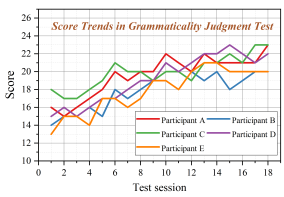
Figure 1. The results of the Grammaticality Judgment Test.
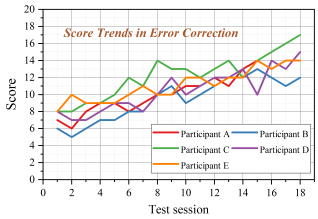
Figure 2. The results of the Error Correction Task.
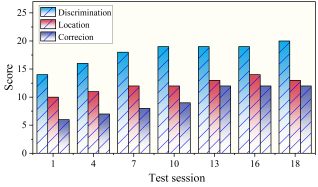
Figure 3. Participant C’s Accuracy Rates for Grammaticality Judgment, Error Location, and Error Correction Across Sessions.
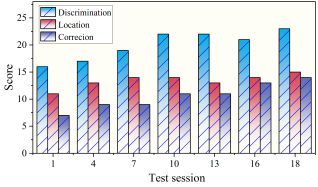
Figure 4. Participant D’s Accuracy Rates for Grammaticality Judgment, Error Location, and Error Correction Across Sessions.
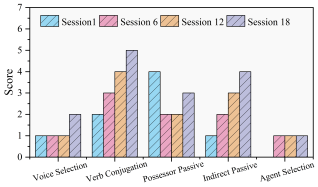
Figure 5. Participant A’s Error Correction Scores for Five Passive Sub-constructs Across Test Sessions.
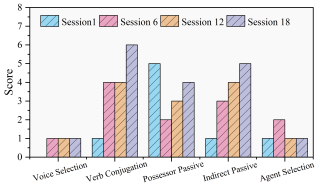
Figure 6. Participant B’s Error Correction Scores for Five Passive Sub-constructs Across Test Sessions.
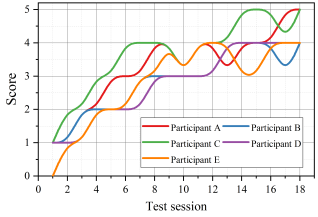
Figure 7. Change in Accuracy for Verb Conjugation in Error Correction Tasks.
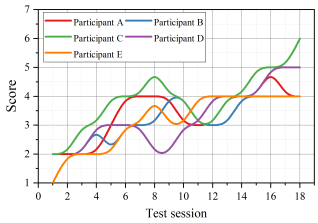
Figure 8. Change in Accuracy for Indirect Passive in Error Correction Tasks.
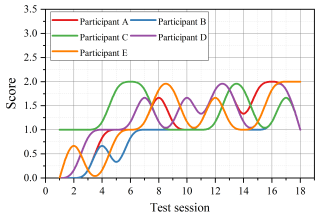
Figure 9. Persistently Low Accuracy in Agent Selection Across Sessions.
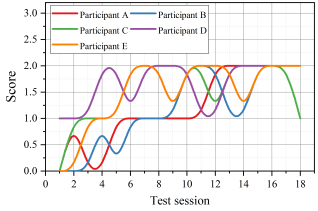
Figure 10. Persistently Low Accuracy in Voice Selection (Active/Passive) Across Sessions.
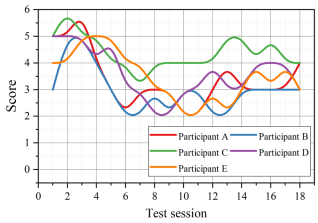
Figure 11. U-shaped Development in the Acquisition of Possessor Passive.

Information



 Share This Article
 Twitter
 Linked In
 Facebook
 Copy
Copy Download