Research Article | | Peer-Reviewed

Selection of Project Delivery Method for Libyan Residential Building Construction by Means of Expert Opinions and Owner Preferences

Received: 25 April 2026     Accepted: 22 May 2026     Published: 17 August 2026
Views:       Downloads:
Abstract

This study addresses the challenges facing the rapidly growing Libyan construction industry, which requires sophisticated decision-making approaches to support the selection of optimal project solutions. One of the most critical decisions in construction projects is the selection of the Project Delivery Method (PDM), which significantly influences project performance and implementation efficiency. In Libya, the Design–Bid–Build (DBB) method remains the dominant delivery approach despite persistent issues related to quality, time performance, and coordination. The present study aims to identify the most suitable PDM for residential building construction in Libya by introducing and evaluating alternative delivery methods within the Libyan construction context. The research integrates owner preferences and expert opinions using the Analytical Hierarchy Process (AHP) as a multi-criteria decision-making tool. Four delivery methods—Design–Bid–Build (DBB), Design–Build (DB), Construction Management at Risk (CM@R), and Integrated Project Delivery (IPD)—were evaluated based on four key criteria: scope/quality, time, cost, and risk. Data were collected through interviews with residential project owners and construction contract experts to obtain the information required for selecting the most appropriate delivery method for residential building projects. All pairwise comparison matrices achieved acceptable consistency ratios, confirming the reliability of the evaluation process. The findings indicate that CM@R is the most suitable project delivery method for residential construction projects in Libya, followed by DB, IPD, and DBB. The results reveal a significant gap between the currently dominant practice and the most performance-oriented delivery approach. Furthermore, the study provides a structured decision-support framework that can assist stakeholders and decision makers in improving project delivery method selection within the Libyan construction industry.

Published in Engineering and Applied Sciences (Volume 11, Issue 4)
DOI 10.11648/j.eas.20261104.12
Page(s) 115-128
Creative Commons

This is an Open Access article, distributed under the terms of the Creative Commons Attribution 4.0 International License (http://creativecommons.org/licenses/by/4.0/), which permits unrestricted use, distribution and reproduction in any medium or format, provided the original work is properly cited.

Copyright

Copyright © The Author(s), 2026. Published by Science Publishing Group

Keywords

Residential Buildings, Project Delivery Methods, Analytical Hierarchy Process, Expert Opinions, Owner Preferences

1. Introduction
In recent years, Libya has witnessed growing attention in the construction industry leading to growing numbers in the construction programs with implementing critical projects and strategic infrastructural changes . Furthermore, growing population, demographic changes, as well as international attention have made an everlasting impact on the Libyan infrastructure, both, within and intercity services, as well as, domestic and international facilities . Therefore, construction industry has become one of the major and budget consumption industries in the country . Characteristics inherent in the construction industry, such as time elapse and resource depletion, deem the whole process critical and compromise the preliminary objectives and threatening the time, cost, and scope constraints . Due to their unique nature, construction projects are critically significant, change-prone, and risk-susceptible endeavors . Moreover, construction characteristics, namely long-time execution and huge-quantity consumption, require profound familiarity with the available resources and governing constraints, and deep understanding of the decision-making process and techniques in order to achieve project objectives and strategic goals . Scientific, systematic and methodical strategies should be implemented to minimise risks inherent to the construction industry and maximise benefits related to the life cycle of the project, as well as optimizing advantages and opportunities with best practices and sophisticated methodologies. Hence, the need for a sophisticated approach to help decision makers in their quest for best alternative .
In recent decades, research has witnessed noticeable growth in the field of decision making and artificial intelligence. Moreover, scientific methods and systematic approaches have been adopted and utilized with successful and accurate solutions paving the way for decision makers to obtain precise alternatives for their multi-alternative problems . Furthermore, due to the sophisticated and complicated nature of the construction industry, as well as its rapid and incessant change and overwhelming challenges, decision makers and policy makers strive in searching for appropriate solutions and alternatives to their recurrent questions and frequent demands . Innovative and state-of-the-are approaches have been developed, improved, and tested, which made complex systems less complex by means of mathematical tools and artificial intelligence .
As far as the history goes, construction industry has had accompanied mankind from early ages and developed along the way. The construction project has become interestingly significant and critically complex, multiple parties with intricate and intertwined relationships, defining and determining clear and transparent relationships has a prominent impact on the successful completion of the project bringing about a legal and functional frame for the parties to uphold and advocate . The first and most important relationship is established by the three main parties in any construction project; which are the owner, designer and contractor, which is known as the project delivery method (PDM). Many project delivery methods have been introduced and utilized in the industry, the type of arrangement and interrelationships depend on many factors and criteria, and the successful selection of the appropriate method has a huge impact on the successful completion of the project . Ranging from traditional methods to sophisticated approaches, project delivery methods offer spectrum of contractual strategies with well-defined relationships and responsibilities, pre-determined authorities and duties, and legalized accountabilities and liabilities .
The construction sector in Libya is a fundamental component of national development, with residential building projects representing a significant share of both public and private investment . Despite this importance, many residential construction projects continue to face persistent challenges such as cost overruns, schedule delays, quality deficiencies, and contractual disputes. A substantial portion of these issues can be tracked and attributed to decisions made during the early stages of projects, particularly the selection of an appropriate Project Delivery Method (PDM) .
The most common Project Delivery Methods adopted in the construction industry include Design–Bid–Build (DBB), Design–Build (DB), Construction Management at Risk (CM@R), and Integrated Project Delivery (IPD). These methods differ significantly in terms of contractual arrangements, risk allocation, stakeholder involvement, and levels of collaboration . In the Libyan construction industry, however, Design–Bid–Build (DBB) remains the predominant and most widely used delivery method for residential building projects. This dominance is mainly driven by traditional procurement practices, regulatory familiarity, and owner preference, rather than a structured evaluation of project-specific requirements .
Although DBB offers advantages such as clear separation of roles and competitive bidding, its extensive application in Libya has revealed several limitations, including fragmented project teams, limited coordination among stakeholders, and a higher potential for disputes and delays. Alternative delivery methods such as DB, CMR, and IPD provide more integrated and collaborative frameworks that may offer improved project performance under certain conditions. Nevertheless, their adoption in the Libyan residential construction sector remains limited and insufficiently examined .
The purpose of this research is to select the most appropriate Project Delivery Method for the construction of residential buildings in Libya. This is achieved through a comparative evaluation of common PDMs, with particular emphasis on the dominant use of the Design–Bid–Build method, and by integrating expert opinions with owner preferences. The study aims to support informed decision-making, improve project outcomes, and contribute to the advancement of construction management practices within the Libyan residential construction sector.
2. Problem Statement
In the Libyan residential construction sector, the Design–Bid–Build (DBB) method remains the dominant and most frequently adopted Project Delivery Method. While DBB has long been favoured due to its familiarity, regulatory acceptance, and perceived transparency . Its continued use is largely based on traditional practice rather than systematic evaluation . As residential construction projects become more complex and demand improved performance in terms of time, cost, quality, and risk management, the suitability of DBB as the default delivery method has increasingly been questioned .
The persistent occurrence of schedule delays, cost overruns, coordination issues, and contractual disputes in Libyan residential building projects suggests a potential mismatch between the commonly used DBB method and the actual needs of such projects . Despite the availability of alternative Project Delivery Methods—such as Design–Build (DB), Construction Management at Risk (CMR), and Integrated Project Delivery (IPD)—their applicability and potential benefits within the Libyan context remain insufficiently explored . Moreover, decision-making related to PDM selection often lacks structured criteria and rarely incorporates both expert judgment and owner preferences in a systematic manner .
The absence of a clear, evidence-based framework for selecting the most appropriate Project Delivery Method has resulted in the continued reliance on DBB, even in cases where alternative methods may offer superior project outcomes . This research addresses this problem by examining the limitations of the prevailing DBB approach and by developing a structured method for selecting suitable PDMs for residential building construction in Libya based on expert opinions and owner preferences.
3. Literature Review
3.1. Residential Building Construction in Libya and DBB-Related Challenges
Residential buildings represent a major portion of construction activity in Libya and play a critical role in meeting housing demand and supporting social stability . These projects are typically characterized by limited budgets, strict cost control requirements, and strong owner involvement, particularly in private residential developments . However, the performance of residential building projects in Libya has often fallen short of expectations, with frequent delays, cost overruns, and quality-related issues .
The widespread use of the Design–Bid–Build (DBB) method has contributed to several of these challenges. DBB separates the design and construction phases into sequential processes, resulting in fragmented project teams and limited interaction between designers and contractors during the early stages of the project . In the Libyan residential construction context, where changes during construction are common and site conditions are often uncertain, this lack of early coordination frequently leads to design inconsistencies, change orders, and disputes .
Furthermore, the DBB method places the majority of construction risk on the contractor while limiting the contractor’s input during the design phase . This approach has proven problematic in Libya, where contractors’ practical knowledge could otherwise help mitigate constructability issues and material availability constraints .
As a result, residential projects procured through DBB often experience inefficiencies that negatively affect time, cost, and quality performance .
Although DBB continues to be favoured due to its familiarity and regulatory acceptance , its limitations are increasingly evident in the context of modern residential building requirements . This highlights the need to critically assess the suitability of DBB and to explore alternative Project Delivery Methods that may offer improved integration, flexibility, and risk management for residential construction projects in Libya .
3.2. Owner Characteristics in Libyan Residential Construction
Owners play a central role in residential building construction in Libya, particularly in influencing procurement decisions and the selection of Project Delivery Methods . Residential project owners in Libya typically include public authorities, private developers, and individual homeowners, each with distinct priorities and decision-making behaviours, but generally sharing a strong preference for cost certainty and adherence to traditional procurement practices such as DBB .
Many residential building owners rely heavily on familiar methods, especially the Design–Bid–Build approach, due to limited exposure to alternative delivery systems and insufficient technical knowledge regarding their potential benefits . Decision-making is often influenced by previous experience, regulatory constraints, and perceived risk rather than by systematic evaluation of project needs . This conservative approach can limit innovation and reduce the likelihood of adopting delivery methods that promote collaboration and early contractor involvement .
Additionally, owner involvement in Libyan residential projects is often high, particularly during the construction phase, where changes to design or scope are common . Under the DBB framework, such changes frequently result in delays, claims, and cost increases .
Understanding owner characteristics and preferences is therefore essential when evaluating Project Delivery Methods, as the effectiveness of any delivery system is closely linked to the owner’s capacity, expectations, and willingness to engage in collaborative project arrangements .
3.3. Overview of Project Delivery Methods in Residential Construction
Project Delivery Methods (PDMs) define the contractual structure, responsibilities, and workflow for construction projects, directly influencing project performance in terms of cost, time, quality, and risk management .
PDMs determine how design, procurement, and construction are sequenced and how stakeholders interact, making their selection a critical managerial decision for project success .
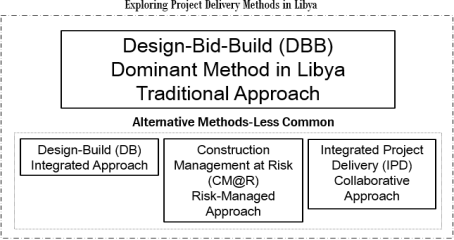
Among residential building projects globally, the most widely recognized PDMs include Design–Bid–Build (DBB), Design–Build (DB), Construction Management at Risk (CMR), and Integrated Project Delivery (IPD) . Each method presents distinct advantages and limitations, which affect their suitability depending on project complexity, owner preferences, and local construction practices . Figure 1, shows the common four project delivery methods, the diagram highlights the dominance of Design–Bid–Build (DBB) and shows alternative methods—Design–Build (DB), Construction Management at Risk (CMR), and Integrated Project Delivery (IPD)—as less frequently adopted approaches in Libya .
Figure 1. Comparative overview of common Project Delivery Methods for residential construction in Libya.
3.3.1. Design–Bid–Build (DBB)
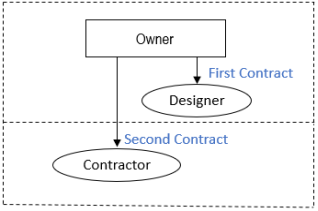
Figure 2. Contractual relationships in the Design–Bid–Build (DBB) method for residential construction.
The traditional method, separates design and construction into sequential phases, the Owner holds separate contracts with the Designer and Contractor, while the Consultant provides advisory services , Figure 2. It offers clear contractual roles, competitive bidding, and cost transparency. However, DBB often suffers from fragmented communication between designers and contractors, limited contractor involvement in design, and increased potential for schedule delays and cost overruns, this diagram highlights the sequential nature of DBB and the limited integration between design and construction . In residential construction, particularly in Libya, these limitations are exacerbated by changing owner requirements, material supply challenges, and site uncertainties, making DBB less flexible in responding to project complexities .
3.3.2. Design–Build (DB)
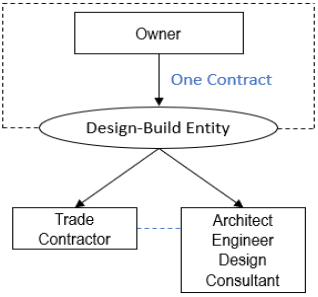
Integrates design and construction under a single contract, fostering collaboration, reducing change orders, and enabling faster project delivery . The Owner contracts a single Design–Build entity responsible for both design and construction, integrating the contractor and designer . The Consultant may participate in an advisory role, highlighting the method’s collaborative and integrated structure, Figure 3, . DB allows contractors to contribute practical expertise during design, improving constructability and risk management . Despite these advantages, DB adoption in many developing and Middle Eastern markets, such as Libya, remains limited due to regulatory constraints, unfamiliarity among owners, and entrenched reliance on DBB .
Figure 3. Contractual relationships in the Design–Build (DB) method.
3.3.3. Construction
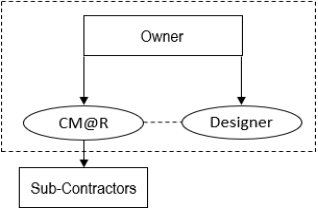
Management at Risk (CM@R) Provides early contractor involvement and shared risk management while maintaining a separate design contract, Figure 4 . The Owner holds separate contracts with the Designer and Construction Manager (CM), who provides pre-construction services, risk management, and construction execution under a Guaranteed Maximum Price (GMP) contract . The Consultant provides advisory support, illustrating the semi-integrated nature of CM@R . CM@R is particularly effective for complex residential projects requiring tight coordination and phased construction . Its adoption in Libya, however, is constrained by limited local experience and a lack of formal frameworks to guide its implementation, and the dominance of traditional DBB procurement, a pattern similar to that observed in other regions where regulatory and institutional readiness for CM@R is still emerging .
Figure 4. Contractual relationships in the Construction Management at Risk (CMR) method.
3.3.4. Integrated Project Delivery (IPD)
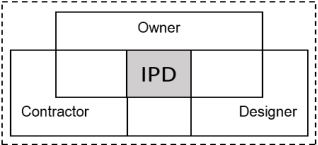
Represents the most collaborative approach, involving all major stakeholders early in the project through shared goals, risk, and reward mechanisms . All key stakeholders—including Owner, Designer, Contractor, and Consultant—sign a single multi-party contract, Figure 5 . This approach emphasizes shared risk, collaborative decision-making, and high integration throughout the project lifecycle . IPD has been shown internationally to improve efficiency, reduce disputes, and enhance project quality . Nevertheless, the method is still largely theoretical in many developing countries, such as Libya, where contractual culture and owner practices favour conventional DBB arrangements .
Figure 5. Contractual relationships in the Integrated Project Delivery (IPD) method.
This review highlights that while alternative delivery methods (DB, CM@R, IPD) offer potential improvements over DBB, their adoption in Libyan residential construction is minimal. The literature suggests that integrating owner preferences and expert opinions into PDM selection could help identify methods better suited to local project needs, moving beyond reliance on the traditional DBB approach.
Table 1. Comparative Analysis of Project Delivery Methods for Residential Building Construction in Libya.

Delivery Method

Description

Key Advantages

Key Limitations

Applicability in Libya

Design–Bid–Build (DBB)

Traditional sequential approach; design completed before bidding/construction

Clear contractual roles; competitive bidding; cost transparency

Fragmented teams; limited contractor input in design; higher risk of delays/overruns

Dominant method; widely used due to familiarity, regulatory acceptance, and traditional practices

Design–Build (DB)

Single contract for design and construction; integrated responsibility

Faster delivery; improved coordination; contractor input improves constructability

Less cost transparency; owners less familiar; requires trust

Limited adoption; potential for improved project performance if owners accept integrated contracts

Construction Management at Risk (CM@R)

Owner contracts separately with designer; contractor involved early to manage risk

Early contractor involvement; shared risk; better coordination

Requires experienced contractor; less common; regulatory adaptation needed

Rarely used; could benefit complex or phased residential projects

Integrated Project Delivery (IPD)

Collaborative approach with all stakeholders sharing goals, risk, and rewards

High collaboration; reduced disputes; improved quality

Complex contractual arrangements; requires cultural shift

Minimal adoption; potential in high-value or complex residential projects but not yet feasible for most Libyan projects

4. Research Methodology
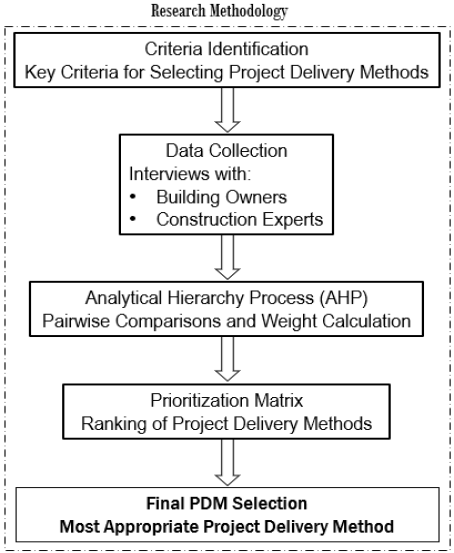
This study adopts a structured multi-criteria decision-making approach to identify the most appropriate project delivery method (PDM) for residential building construction in Libya. Given the complexity of delivery method selection and the involvement of both qualitative judgments and quantitative evaluation, the Analytical Hierarchy Process (AHP) was employed as the primary decision-support tool. AHP is widely recognized in construction management research for its ability to incorporate expert knowledge, compare multiple alternatives, and ensure logical consistency in judgments.
Figure 6. Research methodology for selecting the most appropriate Project Delivery Method for residential construction in Libya.

The workflow, Figure 6, integrates interviews with owners and experts, criteria identification, Analytical Hierarchy Process (AHP) analysis, prioritization of alternatives, and guided final decision-making.
4.1. Selection Criteria
The selection of a project delivery method requires a structured evaluation of the criteria that most strongly influence project performance. Given the multi-dimensional nature of construction projects and the variability of owner objectives, the decision problem is inherently multi-criteria. To address this complexity, the present study adopts the Analytical Hierarchy Process (AHP), which enables the systematic comparison and prioritization of decision criteria and alternatives . Based on a comprehensive review of the literature and expert consultations, four dominant selection criteria were identified: Scope/Quality, Time, Cost, and Risk. These criteria represent the core dimensions through which construction project success is commonly assessed and provide a robust foundation for comparative evaluation of project delivery methods .
1) Scope and Quality
Scope and quality reflect the ability of a project delivery method to achieve the intended functional requirements, technical specifications, and performance standards of a project. This criterion considers design completeness, constructability, coordination between project participants, and the likelihood of achieving the desired quality outcomes. Delivery methods that promote early collaboration and integrated decision-making are generally associated with improved scope control and quality performance . Within the AHP framework, this criterion captures the owner’s emphasis on meeting project requirements without scope deviation or quality compromise .
2) Time
The time criterion represents the effectiveness of a delivery method in ensuring schedule adherence and timely project completion. It accounts for factors such as procurement duration, design–construction overlap, decision-making efficiency, and the potential for schedule acceleration. Construction projects often face significant time-related pressures due to financial, operational, or market constraints. Accordingly, this criterion evaluates the extent to which a delivery method can reduce delays, enhance schedule certainty, and respond flexibly to time-critical demands .
3) Cost
Cost remains one of the most influential criteria in project delivery method selection, particularly from the owner’s perspective. This criterion addresses initial cost estimation accuracy, cost control mechanisms, and the probability of cost overruns during project execution. It also reflects the degree of cost certainty achieved at early project stages. Within the AHP model, cost is treated as a key economic performance indicator that captures both direct construction costs and the financial risks associated with change orders and claims .
4) Risk
Risk refers to the exposure of the project to uncertainties related to design, construction, contractual relationships, and external conditions. This criterion evaluates how effectively a delivery method allocates and manages risks among project stakeholders. Poor risk allocation can lead to disputes, delays, and cost escalation. Therefore, delivery methods that facilitate early risk identification, shared responsibility, and collaborative risk management are generally preferred. In the AHP analysis, risk serves as a critical criterion for assessing the resilience and reliability of each delivery method under uncertain project conditions .
4.2. Data Collection and Expert Input
Primary data were collected through semi-structured interviews with two main stakeholder groups: owners of residential building projects and experts specializing in construction contracts and project delivery systems. These participants were selected due to their direct involvement in delivery method decisions and their practical experience within the Libyan construction sector. During the interviews, respondents were asked to perform pairwise comparisons of selection criteria and project delivery alternatives based on their professional judgment and project experience.
4.3. Hierarchical Structure of the AHP Model
The AHP model was structured into three hierarchical levels. The first level represents the overall goal, which is the selection of the most appropriate project delivery method for residential building construction. The second level consists of the four evaluation criteria identified through literature review and expert consultation: Scope/Quality, Time, Cost, and Risk. The third level includes the four alternative project delivery methods evaluated in this study: Design–Bid–Build (DBB), Design–Build (DB), Construction Management at Risk (CM@R), and Integrated Project Delivery (IPD).
The process involved:
1) Structuring the decision problem hierarchically, with the goal of selecting the most appropriate PDM at the top, criteria and sub-criteria in the middle, and alternative delivery methods at the bottom.
2) Conducting pairwise comparisons of criteria and alternatives using the data collected from owners and experts.
3) Calculating relative weights and consistency ratios to ensure the reliability of the judgments.
4.4. Prioritization Matrix
The results of the AHP analysis were consolidated into a final prioritization matrix, which ranks the four PDMs (DBB, DB, CMR, IPD) according to their suitability for residential building projects in Libya. This matrix integrates both expert opinions and owner preferences, providing a clear, quantitative basis for selecting the most appropriate delivery method.
4.5. Pairwise Comparison and Weight Determination
Pairwise comparison matrices were developed for the selection criteria and for the alternatives under each criterion using Saaty’s fundamental scale . Eigenvector normalization was applied to derive the relative weights of criteria and alternatives. To ensure the reliability of the judgments, Consistency Index (CI) and Consistency Ratio (CR) values were calculated for each matrix. All final matrices achieved a Consistency Ratio equal to or less than the acceptable threshold (CR ≤ 0.10), with the finalized matrices exhibiting CR = 0.00, indicating perfect consistency and high confidence in the judgment structure.
4.6. Aggregation and Final Prioritization
The local priorities of the alternatives under each criterion were aggregated using weighted summation to obtain the global priority vector for each project delivery method. This process resulted in a ranked list of alternatives based on their overall suitability for residential construction projects in Libya. The final prioritization matrix provides a transparent and systematic basis for comparing delivery methods while explicitly reflecting owner preferences and expert evaluations.
4.7. Data Analysis and Validation
The prioritization matrix was analysed to identify the most preferred PDM and to highlight the relative importance of each selection criterion. Sensitivity analysis was conducted to verify the robustness of the results, ensuring that variations in individual judgments did not significantly alter the final ranking. The methodology allows for a transparent, repeatable process that can guide owners and practitioners in making informed PDM decisions for residential projects in the Libyan construction context.
5. Results and Discussion
5.1. Results of AHP Analysis
The Analytical Hierarchy Process (AHP) was applied to evaluate four project delivery methods—Design–Bid–Build (DBB), Design–Build (DB), Construction Management at Risk (CM@R), and Integrated Project Delivery (IPD)—for residential building construction in Libya. The initial pairwise comparison matrices (Table 2) yielded varying consistency ratios (Table 3), which is expected given the subjective nature of expert judgment. Nevertheless, all consistency ratio values remained within the acceptable limits recommended by Saaty, confirming the reliability of the comparison results.
Table 2. Original pairwise comparisons outcomes.

Criteria

Preference

DBB

DB

CM@R

IPD

Scope/Quality

0.51

0.05

0.15

0.62

0.17

Duration

0.32

0.04

0.55

0.28

0.13

Cost

0.13

0.56

0.13

0.05

0.26

Risks

0.04

0.10

0.03

0.58

0.29

Table 3. Consistencies of the original pairwise comparisons.

Consistency

Item

Consistency Index (CI)

Consistency Ratio (CR)

Preference

0.11

0.12

Scope/Quality

0.05

0.06

Duration

0.08

0.09

Cost

0.08

0.09

Risks

0.15

0.16

The initial priority vector (Table 4) demonstrates a clear differentiation among the evaluated project delivery methods. Construction Management at Risk (CM@R) achieved the highest overall score (0.44), reflecting its strong performance under the most influential criteria, particularly scope/quality and time. Design–Build (DB) ranked second (0.27), benefiting primarily from its advantages in schedule performance but showing relatively weaker alignment with quality-related requirements. In contrast, Integrated Project Delivery (IPD) and Design–Bid–Build (DBB) recorded substantially lower scores of 0.17 and 0.12, respectively, largely due to their limited effectiveness in addressing the dominant selection criteria identified by owners and experts.
Table 4. Original priority vector.

Alternatives

Scores

CM@R

0.44

DB

0.27

IPD

0.17

DBB

0.12

To improve the logical consistency of the AHP model, follow-up interviews were conducted with residential project owners and construction contract experts to refine the original pairwise judgments. This refinement process aimed to achieve fully consistent comparison matrices while preserving the initial preference structure and dominant decision trends identified in the preliminary analysis. The finalized pairwise comparison matrices produced a global priority vector with a Consistency Ratio (CR = 0.00), indicating perfect internal consistency and confirming the robustness and methodological reliability of the decision model. These results provide a sound basis for subsequent analysis and interpretation of the selected project delivery methods (Table 5).
Table 5. Final (Modified) pairwise comparisons outcomes.

Criteria

Preference

DBB

DB

CM@R

IPD

Scope/Quality

0.56

0.06

0.19

0.56

0.19

Duration

0.19

0.05

0.41

0.41

0.14

Cost

0.19

0.56

0.19

0.06

0.19

Risks

0.06

0.14

0.05

0.41

0.41

The final prioritization results (Table 6) confirm that Construction Management at Risk (CM@R) attained the highest overall priority score (0.43), followed by Design–Build (DB) (0.22), Integrated Project Delivery (IPD) (0.19), and Design–Bid–Build (DBB) (0.16), while preserving the original ranking order and maintaining close numerical proximity to the preliminary results. Notably, although DBB remains the predominant project delivery method in Libya, it demonstrated the weakest performance when evaluated against the selected criteria, underscoring a clear misalignment between prevailing practice and performance-based suitability for residential building projects.
Table 6. Final priority vector.

Alternatives

Scores

CM@R

0.43

DB

0.22

IPD

0.19

DBB

0.16

5.2. Influence of Selection Criteria on Delivery Method Ranking
The dominance of CM@R in the final ranking can be directly attributed to the relative importance of the selection criteria and the performance of each delivery method under those criteria. Scope/Quality, which received the highest weight (0.56), played a decisive role in shaping the final outcome. CM@R demonstrated superior performance in achieving project scope alignment and construction quality due to early contractor involvement, constructability input during the design phase, and enhanced coordination among project participants. In contrast, DBB showed weak performance under this criterion, as the strict separation between design and construction often leads to constructability issues, design omissions, and quality-related disputes.
Time and Cost, each weighted at 0.19, further reinforced the advantage of CM@R and DB over DBB. Under DBB, construction activities cannot commence until design completion and contract award, which frequently results in extended project durations and limited flexibility to respond to changes. Conversely, CM@R allows for overlapping design and construction phases, while DB integrates design and construction under a single contractual entity, both of which contribute to improved schedule reliability. From a cost perspective, DBB was perceived as offering initial cost transparency through competitive bidding; however, the results indicate that this advantage is often undermined by change orders, claims, and cost overruns arising from design deficiencies.
Risk, although assigned the lowest weight (0.06), still influenced the ranking outcomes. DBB relies heavily on post-design risk transfer to the contractor, which in practice often results in adversarial relationships and dispute escalation. CM@R and IPD, by contrast, promote earlier risk identification and shared responsibility, reducing uncertainty during execution. The relatively lower importance assigned to risk reflects the traditional risk tolerance of Libyan residential project owners, who tend to prioritize visible project outcomes such as quality and completion over formal risk management frameworks.
5.3. DBB Dominance Versus Performance-Based Suitability
The findings reveal a clear discrepancy between current practice and performance-based suitability in the Libyan residential construction sector. Although DBB remains the dominant delivery method due to regulatory familiarity, perceived simplicity, and owner conservatism, the AHP results demonstrate that it is the least suitable option when evaluated against key project performance criteria. This misalignment suggests that DBB’s prevalence is driven more by institutional inertia and limited owner exposure to alternative delivery methods than by objective performance considerations.
CM@R emerged as the most appropriate delivery method, offering a balanced solution that enhances quality outcomes while maintaining owner control and financial predictability. DB ranked second, indicating its potential suitability for residential projects where time certainty is critical and owner involvement in design decisions is limited. IPD, while outperforming DBB, ranked below DB and CM@R, reflecting challenges related to contractual integration, collaborative culture, and legal readiness within the Libyan construction environment.
5.4. Implications for Residential Construction in Libya
The results of this study suggest that adopting alternative delivery methods—particularly CM@R—could significantly improve residential project outcomes in Libya. Transitioning away from exclusive reliance on DBB requires increased owner awareness, contractual reform, and capacity building among industry stakeholders. The structured AHP framework presented in this research provides a practical decision-support tool that enables owners and policymakers to evaluate delivery methods based on project-specific priorities rather than traditional practice alone.
6. Conclusion and Recommendations
6.1. Conclusion
This research investigated the selection of an appropriate project delivery method for residential building construction in Libya using a structured Analytical Hierarchy Process (AHP) framework based on owner preferences and expert judgment. Four commonly used delivery methods—Design–Bid–Build (DBB), Design–Build (DB), Construction Management at Risk (CM@R), and Integrated Project Delivery (IPD)—were evaluated against four key selection criteria: Scope/Quality, Time, Cost, and Risk. The final AHP model achieved full consistency, ensuring the reliability and robustness of the results.
The findings indicate that Construction Management at Risk (CM@R) is the most suitable project delivery method for residential building construction in Libya, achieving the highest overall priority score. This outcome reflects CM@R’s superior performance in addressing the most critical criterion, Scope/Quality, as well as its balanced capabilities in schedule control, cost management, and risk handling. Despite the widespread use of Design–Bid–Build (DBB) in Libya, the results demonstrate that DBB ranks lowest among the evaluated alternatives when assessed against performance-based criteria. This highlights a clear gap between traditional practice and optimal delivery method selection based on project objectives.
The study further reveals that Libyan residential project owners place greater emphasis on achieving functional requirements and construction quality than on minimizing cost or formally managing risk. This preference structure explains why delivery methods that encourage early contractor involvement and improved coordination outperform traditional sequential approaches. Overall, the research confirms that reliance on DBB is driven primarily by familiarity and institutional inertia rather than by its ability to deliver superior project outcomes.
6.2. Recommendations
Based on the results of this study, several recommendations are proposed to enhance residential construction project performance in Libya:
1). Adoption of Alternative Delivery Methods
Project owners and decision-makers should consider adopting CM@R as a viable alternative to DBB for residential buildings, particularly for projects with complex scope requirements or quality-sensitive elements. CM@R offers improved constructability, early cost feedback, and enhanced coordination without fully relinquishing owner control.
2). Owner Awareness and Capacity Building
There is a need to increase owner awareness regarding the advantages and limitations of different project delivery methods. Training programs, professional workshops, and technical guidelines should be developed to support informed decision-making and reduce resistance to non-traditional delivery systems.
3). Contractual and Regulatory Development
Regulatory authorities and professional bodies should review and modernize contractual frameworks to facilitate the implementation of CM@R and DB. Standardized contract templates and clear risk allocation mechanisms would reduce uncertainty and encourage wider adoption.
4). Use of Structured Decision-Support Tools
The AHP-based framework presented in this study can be used as a practical decision-support tool for selecting project delivery methods based on project-specific priorities. Owners are encouraged to adopt similar multi-criteria approaches rather than relying solely on traditional practices.
5). Future Research Directions
Future studies may expand this research by incorporating additional criteria such as sustainability, market conditions, and procurement capacity, or by applying the framework to other building types and infrastructure projects. Comparative studies involving public-sector projects could further validate the findings.
Abbreviations

PDM

Project Delivery Method

AHP

Analytical Hierarchy Process

DBB

Design–Bid–Build

DB

Design–Build

CM@R

Construction Management at Risk

IPD

Integrated Project Delivery

CI

Consistency Index

CR

Consistency Ratio

Author Contributions
Abdulmojeb Ali Almhroog: Conceptualization, Data curation, Formal Analysis, Investigation, Methodology, Project administration, Resources, Software, Supervision, Validation, Visualization, Writing – original draft, Writing – review & editing
Conflicts of Interest
The author declares no conflicts of interest.
References
[1] M. A. Youssef, G. Abukhder, and A. Gliah, “Libyan Construction Projects Delivery Systems: Empirical Comparison Between Design-Build And Design-Bid-Build,” vol. 2, p. 17, May 2017,
[2] A. Almhroog, “Development of a mathematical model for the selection of the Project Delivery Method for the Libyan Public Construction Projects,” JAU, vol. 10, no. 3, pp. 195–214, Oct. 2025,
[3] O. Elmansouri, A. Almhroog, and I. Badi, “Urban transportation in Libya: An overview,” vol. 8, p. 100161, Nov. 2020,
[4] A. Elgadi, I. A. Wahab, L. Ismail, F. Abbas, and E. Samsudin, “URBAN PLANNING OF SUSTAINABLE DEVELOPMENT MODEL FOR LIBYAN CITIES,” Journal of Islamic Architecture, Dec. 2021,
[5] A. Meshref, E. Elkasaby, and O. Wageh, “Innovative reliable approach for optimal selection for construction infrastructures projects delivery systems,” Innovative Infrastructure Solutions, vol. 5, pp. 1–10, May 2020,
[6] K. Molenaar and A. Songer, “MODEL FOR PUBLIC SECTOR DESIGN-BUILD PROJECT SELECTION,” Journal of Construction Engineering and Management-asce, vol. 124, pp. 467–479, Dec. 1998,
[7] S. Graves, J. Ringuest, and A. Medaglia, “Models & Methods for Project Selection,” Jan. 2003,
[8] A. Sanni, M. Onifade, D. Ighravwe, and A. Ojo, “Development of a Framework for the Effective Management of Public Buildings’ Construction Projects,” Universal Journal of Management, Feb. 2023,
[9] M. Hussein, A. Eltoukhy, A. Karam, I. Shaban, and T. Zayed, “Modelling in off-site construction supply chain management: A review and future directions for sustainable modular integrated construction,” Journal of Cleaner Production, vol. 310, p. 127503, Aug. 2021,
[10] O. Alshboul, A. Shehadeh, G. Almasabha, and A. Almuflih, “Extreme Gradient Boosting-Based Machine Learning Approach for Green Building Cost Prediction,” Sustainability, May 2022,
[11] A. Waqar, A. Qureshi, and W. Alaloul, “Barriers to Building Information Modeling (BIM) Deployment in Small Construction Projects: Malaysian Construction Industry,” Sustainability, Jan. 2023,
[12] O. Owais et al., “From Competency Mapping to Digital Twin Integration: Developing a Next-Gen Digital Project Manager Model for Smart Construction,” J. Inf. Technol. Constr., vol. 30, pp. 1431–1458, Sep. 2025,
[13] A. Ghadamsi and N. Braimah, “The Impact of Design-Bid-Build Procurement Methods on Project Performance in Libya,” Journal of Construction Engineering and Project Management, vol. 6, pp. 16–23, Jun. 2016,
[14] M. A. Youssef, M. S. E. Mohamed, and A. A. S. Balah, “Fuzzy model for Libyan construction projects delivery system selection,” International Journal of Construction Management, vol. 24, pp. 643–650, Aug. 2022,
[15] V. Demetracopoulou, W. O’brien, N. Khwaja, J. Feghaly, and M. E. Asmar, “A critical review and analysis of decision-support processes and tools for project delivery method selection,” Engineering, Construction and Architectural Management, Sep. 2022,
[16] S. Ahmed and S. El-Sayegh, “Multicriterion Decision-Support Model for Selecting the Appropriate Delivery Method in Sustainable Construction Projects,” Journal of Architectural Engineering, Jan. 2024,
[17] Q. Zhong, H. Tang, and C. Chen, “A Framework for Selecting Construction Project Delivery Method Using Design Structure Matrix,” Buildings, Apr. 2022,
[18] M. A. Almuhannadi and A. S. Ghareeb, “Enhancing design–bid–build project delivery: A comprehensive review and framework for contractor selection and project optimisation in the construction industry,” Organization, Technology and Management in Construction: an International Journal, vol. 16, pp. 63–80, Jan. 2024,
[19] Q. Zhong, H. Tang, C. Chen, and M. Igor, “A Comprehensive Appraisal of the Factors Impacting Construction Project Delivery Method Selection: A Systematic Analysis,” Journal of Asian Architecture and Building Engineering, vol. 22, pp. 802–820, May 2022,
[20] F. E. Elhaniash, “Evaluation of Construction Efficiency in the Implementation of the Construction Project in Libya,” International Journal of Science and Research (IJSR), Aug. 2023,
[21] B. S. M. A. Almukhtar and V. Ramasamy, “A Review of Project Management Research in Libya’s Construction Industry: A Literature Analysis,” Educational Administration: Theory and Practice, Jan. 2024,
[22] A. Higham and M. Troug, “Exploration of time delay and cost overrun in Libyan public housing projects,” Sep. 2018. Available:
[23] E. Omoniyi, V. Akinola, and O. Alake, “Impact of Characteristics of Design-Bid-Build Delivery System on Construction Project Performance in Nigeria,” LAUTECH Journal of Civil and Environmental Studies, Mar. 2021,
[24] E. Gashi and M. Ivezaj, “Quality management for design – Bid-build versus design-and-build contracts for infrastructure projects,” International Review of Applied Sciences and Engineering, Oct. 2023,
[25] R. Khalef and I. El-Adaway, “Advancing Airport Project Delivery: A Comparison of Design–Build and Traditional Methods in Terms of Schedule and Cost Performance,” Journal of Management in Engineering, Nov. 2023,
[26] S. Ahmed and S. El-Sayegh, “Critical Review of the Evolution of Project Delivery Methods in the Construction Industry,” Buildings, Dec. 2020,
[27] M. Ahmed, G. Aswed, and H. A. Mohammed, “Decision-Making for Project Delivery System in Construction Projects Based on SWARA-TOPSIS Methods,” Tikrit Journal of Engineering Sciences, Mar. 2024,
[28] M. Bolomope, A.-R. Amidu, S. Ajayi, and A. Javed, “Decision-Making Framework for Construction Clients in Selecting Appropriate Procurement Route,” Buildings, Dec. 2022,
[29] H. Mahmoud, M. Ndiaye, S. Beheiry, and H. Adada, “Multi-Criteria Decision Making Methods and Project Delivery Approaches,” 2020 International Conference on Decision Aid Sciences and Application (DASA), pp. 179–183, Nov. 2020,
[30] F. Elharare and S. Stevović, “Measurement the efficiency of building project management,” Ekonomika, Journal for Economic Theory and Practice and Social Issues, vol. 62, pp. 129–140, Jan. 2016,
[31] J.-W. Zhu, L.-N. Zhou, L. Li, and W. Ali, “Decision Simulation of Construction Project Delivery System under the Sustainable Construction Project Management,” Sustainability, Mar. 2020,
[32] S. Chen and X. Liu, “Key factors affecting project delivery system selection in the Chinese construction industry,” Heliyon, vol. 10, Oct. 2024,
[33] H. Martin, T. Lewis, and A. Petersen, “Factors affecting the choice of construction project delivery in developing oil and gas economies,” Architectural Engineering and Design Management, vol. 12, pp. 170–188, Mar. 2016,
[34] S. H. Kacem, G. Jobidon, and I. Iordanova, “Interdependence between Factors Influencing the Selection of Project Delivery Systems and Modular Construction,” Modular and Offsite Construction (MOC) Summit Proceedings, Nov. 2025,
[35] M. Khanna, F. Elghaish, S. McIlwaine, and T. Brooks, “Feasibility of implementing IPD approach for infrastructure projects in developing countries,” J. Inf. Technol. Constr., vol. 26, pp. 902–921, Nov. 2021,
[36] S. Z. Syed Zuber, M. N. Mohd Nawi, F. A. Abdul Nifa, and A. Y. Bahaudin, “An Overview of Project Delivery Methods in Construction Industry,” International Journal of Supply Chain Management, vol. 7, no. 6, pp. 177–182, Dec. 2018,
[37] R. Chahuán, H. Mesa, O. Zegarra, B. Barkokébas, and L. Alarcón, “Impact of Project Delivery System Selection on Value Generation,” Annual Conference of the International Group for Lean Construction, Jun. 2025,
[38] M. Sherif, I. Abotaleb, and F. Alqahtani, “Application of Integrated Project Delivery (IPD) in the Middle East: Implementation and Challenges,” Buildings, Apr. 2022,
[39] E. Rwakarehe and B. Ndyanabo, “Comparative Analysis on Design Error Risks in Design- Bid-Build and Design-Build Construction Approaches,” Tanzania Journal of Engineering and Technology, Apr. 2025,
[40] S. Kortenko, L. Koskela, P. Tzortzopoulos, and S. Haghsheno, “Negative Effects of Design-Bid-Build Procurement on Construction Projects,” pp. 733–744, Jul. 2020,
[41] A. Suratkon, R. Yunus, and R. Deraman, “Characteristics of Procurement Methods in Malaysia – Comparing Design-Bid-Build, Design-Build and Construction Management,” International Journal of Sustainable Construction Engineering and Technology, vol. 11, Jun. 2020,
[42] D. H. Ly, H. Moon, H. Shin, and Y. Ahn, “Critical Risk Factors of Stakeholder Collaboration Impacting BIM Implementation in High‐Rise Residential Building Projects Under the DBB System: A Delphi Survey,” Advances in Civil Engineering, Jan. 2024,
[43] S. Kebede, “Assessment of causes and settlement mechanisms of construction disputes in public work contracts: an Ethiopian perspective,” Archives of Civil Engineering, Nov. 2023,
[44] J. Buertey, E. Dadadzogbor, and F. Atsrim, “Procurement path influencing factors in Ghana: managing the challenge of cultural shift,” International Journal of Construction Management, vol. 21, pp. 78–92, Nov. 2018,
[45] P. Nguyen and P. Nguyen, “Risk Management in Engineering and Construction: A Case Study in Design-Build Projects in Vietnam,” Engineering, Technology & Applied Science Research, vol. 10, pp. 5237–5241, Feb. 2020,
[46] I. Katar, “ENHANCING THE PROJECT DELIVERY QUALITY; LEAN CONSTRUCTION CONCEPTS OF DESIGN-BUILD & DESIGN-BID-BUILD METHODS,” The International Journal of Management, vol. 10, Dec. 2019,
[47] J. Sullivan, M. Asmar, J. Chalhoub, and H. Obeid, “Two Decades of Performance Comparisons for Design-Build, Construction Manager at Risk, and Design-Bid-Build: Quantitative Analysis of the State of Knowledge on Project Cost, Schedule, and Quality,” Journal of Construction Engineering and Management-asce, vol. 143, p. 4017009, Jun. 2017,
[48] R. Smith, E. Carraher, and P. DeLisle, “Collaborative Project Delivery Tools,” pp. 19–38, Mar. 2017,
[49] E. Minchin et al., “Guide for Design Management on Design-Build and Construction Manager/General Contractor Projects,” NCHRP Report, Oct. 2014,
[50] S. Al-Smadi and A. Alhndawi, “A Comparison Between The (Design-Build DB) and (Design-Bid-Build DBB) Approaches Used in the Jordanian Construction Sector and Clarify the Risks Associated with Each Approach,” East African Journal of Engineering, Oct. 2021,
[51] D. Willis and T. Alves, “Contracting for Collaboration in Construction,” Proc. 27th Annual Conference of the International Group for Lean Construction (IGLC), Jul. 2019,
[52] P. Eriksson, S. Lingegård, and A.-T. Järvenpää, “Innovation outcomes and processes in infrastructure projects – a comparative study of Design-Build and Design-Build-Maintenance contracts,” Construction Management and Economics, vol. 40, pp. 142–156, Jan. 2022,
[53] L. Kestle, A. Day, and T. Puolitaival, “Value-adding collaborative design and construct sustainability work practices on increasingly complex AEC projects,” IOP Conference Series: Earth and Environmental Science, vol. 1389, Aug. 2024,
[54] J. Shane and D. Gransberg, “Coordination of Design Contract with Construction Manager-at-Risk Preconstruction Service Contract,” Transportation Research Record, vol. 2151, pp. 55–59, Jan. 2010,
[55] Y. Nagumo, “A STUDY ON THE COLLABORATIVE METHOD BETWEEN ARCHITECTS AND SPECIALIST CONTRACTORS IN BRITISH MANAGEMENT PROCUREMENT,” Journal of Architecture and Planning (Transactions of AIJ), Dec. 2022,
[56] C. Farnsworth, R. Warr, J. Weidman, and D. Hutchings, “Effects of CM/GC Project Delivery on Managing Process Risk in Transportation Construction,” Journal of Construction Engineering and Management-asce, vol. 142, p. 4015091, Mar. 2016,
[57] G. Cunningham, “Commissioning Large Public Projects Using Construction Manager at Risk (CM@R),” Jan. 2005. Available:
[58] T. Ogundare, R. Kassa, O. Maali, B. Lines, J. Smithwick, and K. Sullivan, “Current Practices in the Development of Guaranteed Maximum Price (GMP) Contracts,” Construction Research Congress 2024, Mar. 2024,
[59] P. Bernstein and R. Deutsch, “Design Project Delivery,” pp. 423–451, Feb. 2017,
[60] A. Palihakkara and B. Perera, “Risk management in guaranteed maximum price (GMP) contracts,” Smart and Sustainable Built Environment, Jan. 2022,
[61] A. Bides, “Using CMAR Contracts for HDD Projects,” Pipelines 2023, Aug. 2023,
[62] N. Gransberg and D. Gransberg, “Public Project Construction Manager-at-Risk Contracts: Lessons Learned from a Comparison of Commercial and Infrastructure Projects,” Journal of Legal Affairs and Dispute Resolution in Engineering and Construction, vol. 12, p. 4519039, Feb. 2020,
[63] G. Jergeas, “Legal Aspects Toolset,” Evolving Toolbox for Complex Project Management, Oct. 2019,
[64] K. Kabirifar and M. Mojtahedi, “The impact of Engineering, Procurement and Construction (EPC) Phases on Project Performance: A Case of Large-scale Residential Construction Project,” Buildings, Jan. 2019,
[65] M. S. Raza, B. Tayeh, and T. Ali, “Owner’s obligations in promoting occupational health and safety in preconstruction of projects: A literature viewpoint,” Results in Engineering, Dec. 2022,
[66] M. R. Rodrigues and S. Lindhard, “Benefits and challenges to applying IPD: experiences from a Norwegian mega-project,” Construction Innovation, Sep. 2021,
[67] E. Sari et al., “Design bid build to integrated project delivery: Strategic formulation to increase partnering,” Journal of Infrastructure, Policy and Development, Dec. 2023,
[68] M. Viana, B. Hadikusumo, M. Mohammad, and Z. Kahvandi, “Integrated Project Delivery (IPD): An Updated Review and Analysis Case Study,” Journal of Engineering, Project, and Production Management, vol. 10, pp. 147–161, Mar. 2020,
[69] A. Pal and A. Nassarudin, “Integrated Project Delivery Adoption Framework for Construction Projects in India,” pp. 337–348, Jul. 2020,
[70] T. Mei, S. Zhong, H. Lan, Z. Guo, and Y. Qin, “Configuration Analysis of Integrated Project Delivery Principles’ Obstacle to Construction Project Level of Collaboration,” Sustainability, Feb. 2023,
[71] R. Eissa, M. A. Nabi, and I. El-Adaway, “Risk–Reward Share Allocation under Different Integrated Project Delivery Relational Structures: A Monte-Carlo Simulation and Cooperative Game Theoretic Solutions Approach,” Journal of Construction Engineering and Management, Apr. 2024,
[72] P. Pishdad-Bozorgi, “Case Studies on the Role of Integrated Project Delivery (IPD) Approach on the Establishment and Promotion of Trust,” International Journal of Construction Education and Research, vol. 13, pp. 102–124, Apr. 2017,
[73] W. Meléndez, J. Abregu-Gonzales, and K. Perez-Rubio, “Integrated Project Delivery (IPD) in Enterprises Subcontractors. Case Study: Road Impact Mitigation Project,” Annual Conference of the International Group for Lean Construction, Jun. 2025,
[74] S. Jadidoleslami, E. Saghatforoush, A. Heravi, and C. Preece, “A practical framework to facilitate constructability implementation using the integrated project delivery approach: a case study,” International Journal of Construction Management, vol. 22, pp. 1225–1239, Nov. 2019,
[75] F. Hamzeh et al., “Integrated project delivery as an enabler for collaboration: a Middle East perspective,” Built Environment Project and Asset Management, Feb. 2019,
[76] D. Refahy, A. Othman, and A. Nessim, “Challenges of Implementing Integrated Project Delivery in the Construction Industry in Egypt,” IOP Conference Series: Earth and Environmental Science, vol. 1396, Sep. 2024,
[77] I. Mahdi and K. Al-Reshaid, “Decision support system for selecting the proper project delivery method using analytical hierarchy process (AHP),” International Journal of Project Management, vol. 23, pp. 564–572, Oct. 2005,
[78] A. Darko, A. Chan, E. Ameyaw, E. Owusu, E. Pärn, and D. Edwards, “Review of application of analytic hierarchy process (AHP) in construction,” International Journal of Construction Management, vol. 19, pp. 436–452, Sep. 2019,
[79] M. Khalil, “Selecting the appropriate project delivery method using AHP,” International Journal of Project Management, vol. 20, pp. 469–474, Aug. 2002,
[80] P. Razi, M. Ali, and N. Ramli, “Overview of analytical hierarchy process decision making method for construction risk management,” IOP Conference Series: Earth and Environmental Science, vol. 244, Mar. 2019,
[81] R. Nurlia, W. Yureana, and A. Putri, “Study of factors affecting construction quality, cost, and time in building project using analytical hierarchy process (AHP),” E3S Web of Conferences, Jan. 2023,
[82] V. Demetracopoulou, W. O’Brien, and N. Khwaja, “Quantitative assessment of cost and schedule goals for transportation infrastructure design-build vs design-bid-build selection criteria,” Engineering, Construction and Architectural Management, Mar. 2025,
[83] M. Assaf, M. Hussein, S. Abdelkhalek, and T. Zayed, “A Multi-Criteria Decision-Making Model for Selecting the Best Project Delivery Systems for Offsite Construction Projects,” Buildings, Feb. 2023,
[84] S. Khodabocus and S. Seyis, “Multi-criteria decision-making model for risk management in modular construction projects,” International Journal of Construction Management, vol. 24, pp. 240–250, Nov. 2023,
[85] Y. Gamal and A. Moh. A. Saber, “Analyzing the application of the analytical hierarchy process in developing a robust risk management framework for construction projects in Egypt,” Asian Journal of Civil Engineering, vol. 25, pp. 3729–3745, Mar. 2024,
[86] M. Wijayaningtyas, Y. M. Orissa, and Munasih, “The Application of Analytical Hierarchy Process (AHP) to Determine The Construction Project Risk,” E3S Web of Conferences, Jan. 2024,
[87] U. Issa, S. Mosaad, and M. Hassan, “Evaluation and selection of construction projects based on risk analysis,” Structures, vol. 27, pp. 361–370, Oct. 2020,
[88] T. L. Saaty, “The Analytic Hierarchy Process.” McGraw-Hill, 1980. Available:
[89] T. L. Saaty, “Highlights and critical points in the theory and application of the Analytic Hierarchy Process,” European Journal of Operational Research, vol. 74, no. 3, pp. 426–447, May 1994,
[90] T. L. Saaty and L. G. Vargas, Models, methods, concepts & applications of the analytic hierarchy process, 2nd ed. in International series in operations research & management science, no. v. 175. New York: Springer, 2012.
Cite This Article
  • APA Style

    Almhroog, A. A. (2026). Selection of Project Delivery Method for Libyan Residential Building Construction by Means of Expert Opinions and Owner Preferences. Engineering and Applied Sciences, 11(4), 115-128. https://doi.org/10.11648/j.eas.20261104.12

    Copy | Download

    ACS Style

    Almhroog, A. A. Selection of Project Delivery Method for Libyan Residential Building Construction by Means of Expert Opinions and Owner Preferences. Eng. Appl. Sci. 2026, 11(4), 115-128. doi: 10.11648/j.eas.20261104.12

    Copy | Download

    AMA Style

    Almhroog AA. Selection of Project Delivery Method for Libyan Residential Building Construction by Means of Expert Opinions and Owner Preferences. Eng Appl Sci. 2026;11(4):115-128. doi: 10.11648/j.eas.20261104.12

    Copy | Download

  • @article{10.11648/j.eas.20261104.12,
      author = {Abdulmojeb Ali Almhroog},
      title = {Selection of Project Delivery Method for Libyan Residential Building Construction by Means of Expert Opinions and Owner Preferences},
      journal = {Engineering and Applied Sciences},
      volume = {11},
      number = {4},
      pages = {115-128},
      doi = {10.11648/j.eas.20261104.12},
      url = {https://doi.org/10.11648/j.eas.20261104.12},
      eprint = {https://article.sciencepublishinggroup.com/pdf/10.11648.j.eas.20261104.12},
      abstract = {This study addresses the challenges facing the rapidly growing Libyan construction industry, which requires sophisticated decision-making approaches to support the selection of optimal project solutions. One of the most critical decisions in construction projects is the selection of the Project Delivery Method (PDM), which significantly influences project performance and implementation efficiency. In Libya, the Design–Bid–Build (DBB) method remains the dominant delivery approach despite persistent issues related to quality, time performance, and coordination. The present study aims to identify the most suitable PDM for residential building construction in Libya by introducing and evaluating alternative delivery methods within the Libyan construction context. The research integrates owner preferences and expert opinions using the Analytical Hierarchy Process (AHP) as a multi-criteria decision-making tool. Four delivery methods—Design–Bid–Build (DBB), Design–Build (DB), Construction Management at Risk (CM@R), and Integrated Project Delivery (IPD)—were evaluated based on four key criteria: scope/quality, time, cost, and risk. Data were collected through interviews with residential project owners and construction contract experts to obtain the information required for selecting the most appropriate delivery method for residential building projects. All pairwise comparison matrices achieved acceptable consistency ratios, confirming the reliability of the evaluation process. The findings indicate that CM@R is the most suitable project delivery method for residential construction projects in Libya, followed by DB, IPD, and DBB. The results reveal a significant gap between the currently dominant practice and the most performance-oriented delivery approach. Furthermore, the study provides a structured decision-support framework that can assist stakeholders and decision makers in improving project delivery method selection within the Libyan construction industry.},
     year = {2026}
    }
    

    Copy | Download

  • TY  - JOUR
    T1  - Selection of Project Delivery Method for Libyan Residential Building Construction by Means of Expert Opinions and Owner Preferences
    AU  - Abdulmojeb Ali Almhroog
    Y1  - 2026/08/17
    PY  - 2026
    N1  - https://doi.org/10.11648/j.eas.20261104.12
    DO  - 10.11648/j.eas.20261104.12
    T2  - Engineering and Applied Sciences
    JF  - Engineering and Applied Sciences
    JO  - Engineering and Applied Sciences
    SP  - 115
    EP  - 128
    PB  - Science Publishing Group
    SN  - 2575-1468
    UR  - https://doi.org/10.11648/j.eas.20261104.12
    AB  - This study addresses the challenges facing the rapidly growing Libyan construction industry, which requires sophisticated decision-making approaches to support the selection of optimal project solutions. One of the most critical decisions in construction projects is the selection of the Project Delivery Method (PDM), which significantly influences project performance and implementation efficiency. In Libya, the Design–Bid–Build (DBB) method remains the dominant delivery approach despite persistent issues related to quality, time performance, and coordination. The present study aims to identify the most suitable PDM for residential building construction in Libya by introducing and evaluating alternative delivery methods within the Libyan construction context. The research integrates owner preferences and expert opinions using the Analytical Hierarchy Process (AHP) as a multi-criteria decision-making tool. Four delivery methods—Design–Bid–Build (DBB), Design–Build (DB), Construction Management at Risk (CM@R), and Integrated Project Delivery (IPD)—were evaluated based on four key criteria: scope/quality, time, cost, and risk. Data were collected through interviews with residential project owners and construction contract experts to obtain the information required for selecting the most appropriate delivery method for residential building projects. All pairwise comparison matrices achieved acceptable consistency ratios, confirming the reliability of the evaluation process. The findings indicate that CM@R is the most suitable project delivery method for residential construction projects in Libya, followed by DB, IPD, and DBB. The results reveal a significant gap between the currently dominant practice and the most performance-oriented delivery approach. Furthermore, the study provides a structured decision-support framework that can assist stakeholders and decision makers in improving project delivery method selection within the Libyan construction industry.
    VL  - 11
    IS  - 4
    ER  - 

    Copy | Download

Author Information
  • Abstract
  • Keywords
  • Document Sections

    1. 1. Introduction
    2. 2. Problem Statement
    3. 3. Literature Review
    4. 4. Research Methodology
    5. 5. Results and Discussion
    6. 6. Conclusion and Recommendations
    Show Full Outline
  • Abbreviations
  • Author Contributions
  • Conflicts of Interest
  • References
  • Cite This Article
  • Author Information