Abstract
In the digital space, data communication is essential for ensuring the efficient transfer and processing of vast amounts of information across networks and devices. This paper provides a comprehensive review of current trends, challenges, and opportunities in data communication networks. The research design uses a structured survey to outline specific challenges in data communication and equally highlight opportunities which details key advancements in data communication networks. The methodology adopted descriptive and exploratory design approach to ensure accurate phenomenal explanation of important systemic terms. Key issues such as bandwidth limitations, interference, security concerns, scalability, and energy consumption are examined in details. Emerging technologies and innovations in 5G, blockchain, edge computing, artificial intelligence (AI), and machine learning (ML) are also explored. The study also highlights opportunities for deploying green communication technologies. This is aimed at minimaxing energy consumption to support sustainable network operations. Presented in this work are some proposed solutions to some of the current challenges of data communication. Real-world applications and case studies further illustrate the practical implications of some the advancements in the present-day data communication systems. Overall, the study provides valuable insights; which can guide researchers, entrepreneurs and industry professionals to shape the future of global data networks. By leveraging on these solutions and innovations, the general performance of data communication systems can be enhanced.
|
Published in
|
Communications (Volume 13, Issue 1)
|
|
DOI
|
10.11648/j.com.20261301.12
|
|
Page(s)
|
7-16 |
|
Creative Commons
|

This is an Open Access article, distributed under the terms of the Creative Commons Attribution 4.0 International License (http://creativecommons.org/licenses/by/4.0/), which permits unrestricted use, distribution and reproduction in any medium or format, provided the original work is properly cited.
|
|
Copyright
|
Copyright © The Author(s), 2026. Published by Science Publishing Group
|
Keywords
Data Communication, Energy Consumption, Blockchain, Edge Computing, Artificial Intelligence (AI),
Machine Learning (ML)
1. Introduction
To efficiently transfer and distribute data across a range of devices and networks, modern information systems mostly rely on data communication and networking. These platforms facilitate communication, teamwork, and exchange of information throughout our interconnected globe. Technological advancements have led to a large increase in the volume of data that is gathered, transported, and processed; thus, there is an increasing demand for dependable and scalable data communication networks
| [1] | Zaidi, N., & Yusof, M. H. M. (2023). Data communication and networking: Challenges and solutions. Authorea Preprints. |
[1]
. In a linked society, data networking and communication are essential to facilitating the seamless exchange of information between people
| [2] | Jumairi, M. D. A. (2023). Challenges in data communication and networking. Authorea Preprints. |
[2]
.
Data communications is the transfer of digital data between two or more computers. A computer network, often known as a data network, is a type of telecommunications network that enables computer data exchange. Computing equipment are physically connected to one another through the use of cables or wireless medium. The Internet is the most well-known computer network., transferring data via a point-to-point or point-to-multipoint communication channel, either as a digital bitstream or as a digitised analogue signal. An electromagnetic signal, such as a microwave, infrared, radio wave, or electrical voltage, is used to represent the data
| [3] | Bush, S. F. (2010). Nanoscale communication networks. Artech House. |
[3]
.
Professionals utilise networking to broaden their circles of friendship and connections, learn about job openings in their industries, and become more informed about news and trends in their sectors and the broader world
| [4] | Connor, C. O. Data communication and Networking. |
[4]
. Computer networking is the process of connecting several devices together so they may easily exchange data and software resources.
Furthermore, from a different angle about networking. According to (Jumairi, 2023) a network is made up of two or more computers connected together so they can share files, communicate electronically, or share resources. The most widely used definition of a digital signal classifies both baseband and passband signals that represent bitstreams as digital transmission. In contrast, another definition restricts the definition of digital signal to baseband signals and defines passband transmission of digital data as a type of digital-to-analog conversion
| [5] | Sunkari, S. (2021). A Brief Study on Data Communication and Computer Networks. Available at SSRN 3904826. |
[5]
.
Digital communications coming from a data source, such as a computer or keyboard, might be considered data sent
| [6] | Zahanuddin, A. (2023). Challenges in Data Communication and Networking. Authorea Preprints. |
[6]
. It could also be an analogue signal, like a video or phone call, converted to a bitstream using more sophisticated source coding (analog-to-digital conversion and data compression) techniques like Pulse-Code Modulation (PCM). Codec equipment performs this source coding and decoding.
Source and receiver have extremely basic definitions
| [7] | Spurgeon, C. E. (2000). Ethernet: the definitive guide" O'Reilly Media, Inc.". |
[7]
. The device that sends the data is referred to as the source, and the device that receives it is referred to as the receiver. The transfer and receive of data and its maintenance during the process are the goals of data communication.
2. Research Design
The design approach adopted for the development of this study is the descriptive and exploratory research design. This is aimed at describing a phenomenon accurately and systematically thereby providing an overview of existing conditions, behaviors and characteristics. Through the gathering of data on the current state of the art data communication, the research design uses a structured survey to outline specific challenges in data communication and equally highlight opportunities which details advancements in 5G communication technology and beyond. This method ensures a robust analysis through the dependence on the strengths of the descriptive and exploratory research, offering a well-outlined view of the data communication landscape.
3. Brief History of Data Communication
Since the beginning of communication, data has been transmitted by non-electronic methods. Since the invention of the telephone, analogue signal data has been transmitted electronically. But the first modern applications of data electromagnetic transmission were digital signals, such as telegraphy (1809) and teletypewriters (1906). These applications influenced the early 20th century theoretical work in data transmission and information theory conducted by Harry Nyquist, Ralph Hartley, Claude Shannon, and others
| [8] | Pan, D., Dhall, R., Lieberman, A., & Petitti, D. B. (2015). A mobile cloud-based Parkinson’s disease assessment system for home-based monitoring. JMIR mHealth and uHealth, 3(1), e3956. |
[8]
.
Computer buses and peripheral devices can communicate with one another via parallel and serial connections, such as those found in Firewire (1995), USB (1996), and RS-232 (1969). Since 1951, storage media have also used data transfer techniques for error detection and repair. Modems (1940), Local Area Networks (LAN) adapters (1964), repeaters, repeater hubs, microwave lines, wireless network access points (1997), and other computer networking devices all use data communication.
When combined with Time Division Multiplexing (TDM) and Pulse Code Modulation (PCM), or sampling and digitization, data communication is used in telephone networks to transport several conversations over a single copper or fiber cable (1962). Many value-added services are now possible because to the digital and software-controlled telephone exchanges. In 1976, for instance, the first AXE telephone exchange was introduced. Integrated Services Digital Network (ISDN) services have made it feasible to communicate digitally with end users since the late 1980s. Broadband access methods including ADSL, cable modems, Fiber-To-The-Building (FTTB), and Fiber-To-The-Home (FTTH) have proliferated in small workplaces and households since the end of the 1990s. There is currently a trend towards packet mode communication, such as IP telephony and IPTV, replacing traditional telecommunication services.
More power for signal processing is possible when analogue signals are sent digitally. Errors brought on by random processes can be found and fixed thanks to the capacity to process a communications signal. Alternatively, digital signals might be sampled rather than continually seen. Compared to multiplexing analogue signals, multiplexing digital signals is far easier. Digital communications has expanded rapidly due to all of these benefits, as well as the fact that recent developments in solid-state electronics and wideband communication channels have made it possible for scientists to fully realize these benefits. Due to the high need for computer data transmission and the capabilities of digital communications, analogue communication is rapidly losing ground to digital communication.
Numerous digital telecommunication applications that use data transmission principles have also been made possible by the digital revolution. Examples include video conferencing, digital TV (1998), digital radio (1999), telemetry, and second-generation (1991) and subsequent cellular telephone systems. According to Bradley, data communications refer to the actual physical transport of data via a point-to-point or point-to-multipoint communication channel, either as a digital bit stream or as a digitized analogue signal. Copper lines, optical fibers, wireless communication channels, storage media, and computer buses are a few examples of these channels. An electromagnetic signal, such as a microwave, radio wave, electrical voltage, or infrared signal, is used to represent the data.
Digital communications is the transfer of discrete messages across either an analogue or digital channel, whereas analogue transmission is the transfer of a constantly fluctuating analogue signal over an analogue channel. Either a limited set of continuously varying wave forms (passband transmission) or a sequence of pulses (baseband transmission) are used to represent the messages through digital modulation. Modem equipment performs the passband modulation and matching demodulation, which is often referred to as detection. The most widely used definition of a digital signal classifies both baseband and passband signals that represent bitstreams as digital transmission. In contrast, another definition restricts the definition of digital signal to baseband signals and classifies passband transmission of digital data as a type of digital-to-analogue conversion.
Digital messages coming from a data source, like a computer or keyboard, can be considered data that is sent. It could also be an analogue signal, such a video or phone conversation, that has been converted to a bitstream by means of more sophisticated source coding (analogue-to-digital conversion and data compression) techniques or pulse-code modulation (PCM). Codec equipment performs this source coding and decoding.
The components of a data communication system are as follows
| [7] | Spurgeon, C. E. (2000). Ethernet: the definitive guide" O'Reilly Media, Inc.". |
[7]
:
1) Message: It is the data or information that needs to be shared. It may include any combination of text, numbers, images, audio, and video.
2) Sender: That message is created and sent by the gadget/computer.
3) Receiver: The computer or gadget that gets the message is it. The source and recipient computers are typically located in different places. The kind of network that is utilized in between determines the distance between the sender and the recipient.
4) Medium: It is the physical conduit or route that carries a message from the sender to the recipient. The medium can be wireless, such as lasers, radio waves, and microwaves, or wired, such as coaxial cables, fiber-optic cables, and twisted pair wire.
5) Protocol: It is a system of guidelines that controls how the gadgets communicate with one another. Sender and recipient communicate with one other using the same protocols.
Through data transmission circuits, a data communication system can gather data from remote sites and then send processed findings back to those same remote locations. A more comprehensive perspective of data communication networks is shown in
Figure 1.
The various data transmission methods that are now widely used have developed progressively, either to enhance the methods that were previously in use or to replace them with improved features and alternatives. When choosing communication systems, there are additional terms related to data communication to deal with, like baud rate, modems, routers, LAN, WAN, TCP/IP, and ISDN. Thus, it is essential to go over and comprehend these terminology as well as the methodical development of data communication techniques
| [10] | Ezeh, I. H. (2020). Challenges of bandwidth and power limitations in cellular communication: a review. |
[10]
.
4. Challenges of Data Communication System
Networks and systems work hard to move data from one location to another, but in the process, they can lose some of the important information they are trying to transmit. Bit mistakes, packet loss, and address depletion are common problems in networking and data communication.
4.1. Bandwidth Limitation
The maximum quantity of data that may be sent via a network in a specific amount of time is referred to as bandwidth. Typically, bits per second (bps) is used to measure it. When the network's bandwidth is constrained, it implies that its ability to send data is also constrained. Data transmission may be impacted in a number of ways by this
| [11] | Satnam, S., Amit, K., Yunfei, L., & Sawtantar, S. K. (2012). Bandwidth extension in LTE-advanced using carrier aggregation. International Journal of Computer Science and Technology (IJCST), 3(1), 7-11. |
[11]
.
First of all, data transmission speed can be slowed down by bandwidth restrictions. The amount of data being transferred will take longer to arrive at its destination if it exceeds the bandwidth that is available. This can be especially problematic for real-time applications where a delay in data transmission might result in a bad user experience, like online gaming or video conferencing
| [12] | DevX. (2024). Network degradation. Network Degradation – Glossary. Accessed August 2024 from https://www.devx.com |
[12]
. Second, latency is the amount of time it takes for a data packet to get from one location in a network to another, can be exacerbated by bandwidth restrictions. High latency can impede the seamless operation of programs and result in communication delays. For instance, high latency might cause a gap between the voice and video during a video conference, making it challenging to follow the conversation
| [11] | Satnam, S., Amit, K., Yunfei, L., & Sawtantar, S. K. (2012). Bandwidth extension in LTE-advanced using carrier aggregation. International Journal of Computer Science and Technology (IJCST), 3(1), 7-11. |
[11]
.
In summary, bandwidth plays a crucial role in the transfer of data. It establishes the effectiveness and speed of data transfer across a network. Limitations on bandwidth can have a negative impact on a network's performance by causing packet loss, latency, and sluggish data transmission. For this reason, it's critical to guarantee that a network has enough bandwidth to manage data flow effectively.
4.2. Interference and Signal Degradation
Unsettling issues with interference have an impact on how well wireless communication systems operate. Wireless signal transmission is more prone to interference, which might impact neighboring consumer and electrical device functionality. Air serves as the medium for signal transmission in wireless communication systems. Since transmitters share the air, devices using the same frequencies may be mutually accessible, which could interfere with one another's ability to function. Interference occurs when additional wireless signals cause a disruption or weakening of the wireless communication signals. Interference can affect any device that emits electromagnetic signals.
The term "network degradation" describes the gradual deterioration of a communication network's functioning or performance. Increased traffic, hardware or system malfunctions, or problems with the software might all be the cause of this. Users might thus encounter sluggish data transfers, poor call quality, or intermittent service. The phenomenon known as "network degradation" happens when a network's efficiency or performance gradually deteriorates, frequently resulting in a less-than-ideal user experience. Contrary to popular belief, it serves no malicious or disruptive purpose; rather, it is a natural byproduct of intricate network systems and the various demands placed on them
| [13] | Kumar, U., & Gambhir, S. (2014). A literature review of security threats to wireless networks. International Journal of Future Generation Communication and Networking, 7(4), 25-34. |
[13]
.
Degradation of the network can be caused by a number of things, including an increase in traffic, a decrease in bandwidth, problems with hardware and software, and outside interference. Network administrators must keep a careful eye on their systems and pinpoint the reasons behind any decline in order to put the right solutions in place and sustain peak network performance and dependability over time.
4.3. Security Concerns in Data Communication
Protecting wireless networks from attacks that may jeopardize their availability, confidentiality, and integrity is essential to ensuring their security. These attacks frequently take advantage of holes in security procedures. An overview of the many methods used in security assaults is given in this section. These attacks can concentrate only on one of these two aspects, or they can target both secrecy and integrity. To improve comprehension, a variety of security attack methods are covered
.
According to
| [15] | AHMAD, S. M. D. S. (2023). Challenges in Transmission of Data and Network Connectivity. Authorea Preprints. |
[15]
, network security involves a number of difficulties and complications, such as the following:
1) Advancement strategies employed in network intrusions: One major challenge to network security is the dynamic nature of cyberattacks. Threat actors modify their strategies on a regular basis in reaction to technology breakthroughs. An illustration of this is the emergence of block chain technology, which has given rise to fresh malware assaults such as cryptojacking. Network security defenses must therefore be adaptable and quick to react in order to successfully counter these changing threats.
2) User compliance: All users on a network must share responsibility for maintaining network security. Promoting widespread adherence to recommended practices and remaining flexible in the face of new risks provide a challenge.
3) Remote and mobile connectivity: As bring your own device (BYOD) rules are increasingly used, a complex and dispersed network of devices has emerged that needs to be secured by organizations. In addition, the growing trend of remote work emphasizes the significance of wireless security because workers frequently use public or personal networks to access company networks.
4) Outside partners: Vendors of security products, managed security services, and anonymous cloud providers frequently get access to an organization's network, potentially creating vulnerabilities.
Layers are present in networks, as the Open Systems Interconnection (OSI) model illustrates. When data moves between devices, it traverses across several layers, and various cyberthreats target different layers. Thus, for a network to be deemed secure, every layer in the stack needs to be secured
| [16] | Kumar, K. (2024). Energy consumption directions in telecommunication networks. LinkedIn. Accessed August 2024 from https://www.linkedin.com |
[16]
.
4.4. Scalability Issues
Scalability is the ability of a business to grow its investments or output without having to make major changes to its infrastructure. A scalable company may adjust its output to satisfy changes in demand without sacrificing effectiveness or quality. This adaptability makes it possible to handle heavier workloads without compromising performance and makes it possible to quickly respond to shifting market needs for the lowest possible cost. It becomes imperative for the system or infrastructure to handle the expanding workload while preserving peak performance when the demand for a good or service rises. The graph highlights how important scalability is for meeting increasing demand without sacrificing effectiveness.
It emphasises how crucial it is to match the ability to improve performance with rising demand or sales volume. Companies that scale up their resources by adding more servers, boosting bandwidth, or improving network infrastructure, can effectively handle these expanding demands and maintain adequate performance levels.
As an organization grows, technological limitations frequently arise due to the expansion of its infrastructure. The current technology, especially the antiquated or legacy systems, might not be able to meet the growing needs. Investing in technological solutions that provide scalability and can efficiently handle the expanding needs of the business is crucial to overcoming this difficulty. Adopting contemporary strategies like cloud-based solutions and technological advancements that can be expanded profitably can offer the flexibility and adaptability required to smoothly support business expansion. Organizations can get beyond technology constraints and facilitate seamless operations scalability by modernizing their technology stack.
4.5. Energy Consumption
Communication networks are used to transport data for TV, radio, and phone services, as well as between households, companies, and the internet. Both mobile and wired networks are used to transport data. For the same quantity of data to be transmitted, wired networks often consume less energy than mobile networks. Networks primarily use fixed energy for operation (Box 2). Since peak data traffic is typically far higher than average traffic, networks are designed to accommodate it. As a result, a large portion of the equipment stays idle for the most of the day.
The overall energy consumption of telecommunication networks is made up of a variety of components, including base stations, end-user devices, transmission equipment, and information processing centres. Data centres serve as the backbone of network infrastructure, processing, storing, and hosting applications. The majority of the energy used in data centres is produced by the operation of the cooling systems, networking equipment, and servers. Data centres require enormous amounts of power to accommodate this demand for processing/storage capacity as the amount of data traffic rises and the variety of cloud services grows
| [17] | Hinton, K., Baliga, J., Feng, M., Ayre, R., & Tucker, R. S. (2011). Power consumption and energy efficiency in the internet. IEEE Network, 25(2), 6-12. |
[17]
.
Data is carried throughout the network using transmission equipment consisting of switches, routers, and optical transmission systems. These devices use energy when processing data packets, amplifying them, and transmitting them across wireless or fiber optic connections. The energy efficiency of these devices is influenced by variables like as transmission distances, network structure, and equipment utilization
.
A wireless telecommunication network's base stations act as a source of connectivity for mobile and Internet of Things devices. The network technology of base stations is one of the numerous factors that affect their energy usage. In densely populated locations where there is a strong demand for service, base stations may need to use a significant amount of energy to ensure continuous transmission or communication.
Additionally, end-user devices like computers, tablets, smartphones, and other home appliances do contribute to the energy consumption from communications networks. Power is also required for networking, processing, and display activities. End-user device energy consumption is expected to increase dramatically due to the proliferation of connected devices and the adoption of the Internet of Things.
5. Opportunities in Data Communication
Thanks to technological developments like artificial intelligence, the Internet of Things (IoT), and improved network security protocols, the data communication industry is expected to increase. The need for qualified workers in data communications will probably continue to grow as more companies use digital solutions, providing bright prospects for those who want to enter the industry.
5.1. Edge Computing
It may not be novel to have computing power close to the sources of data
. When the phrase "edge computing" originally arose in 2002, it meant that applications ought to be transferred from cloud data centres to the network edge from a commercial standpoint
| [20] | Pang, H. H., & Tan, K. (2004). Authenticating query results in edge computing. In Proceedings. 20th International Conference on Data Engineering (pp. 560–571). |
[20]
. Later, in 2004, the phrase was applied to a system that dispersed program methods and the associated data to the network's edge in an effort to improve system performance
| [21] | Al-Dulaimy, A., Sharma, Y., Khan, M. G., & Taheri, J. (2020). Introduction to edge computing. |
[21]
. When cloud computing could only provide resources distributed and hosted on cloud data centres in the core network, edge computing progressed until it was able to solve many of the issues related to cloud computing. Edge computing did this by offering elastic resources to end users at the edge of the network.
Therefore, edge computing can be defined as the model that processes data near its source at the network's edge in order to optimise cloud computing systems. It permits technologies to locate computational and storage resources near the data source, primarily near the network's edge
| [22] | Atmaja A., Setia L., Fajar M., & Ismar R., (2022) Low Cost IoT based Home Smart Locker to Receive Online Shopping Packages. Andalasian International Journal of Applied Science Engineering and Technology 2(03): 126-132
http://dx.doi.org/10.25077/aijaset.v2i03.57 |
[22]
.
Edge computing lowers latency and bandwidth consumption by processing data closer to its source, or at the network's edge. For real-time processing applications like industrial automation, driverless cars, and smart cities, this is essential. Edge computing boosts system efficiency and user experience by facilitating quicker decision-making and boosting the performance and dependability of crucial applications.
5.2. Artificial Intelligence and Machine Learning
With its diverse fields, machine learning (ML) has led the way in automation, bringing intelligence to machines to reduce costs and errors while boosting productivity. "The programming of a digital computer to behave in a way which, if done by humans or animals, would be described as involving the process of learning" is the focus of machine learning (ML), a subfield of artificial intelligence
| [23] | Samuel, A. L. (1959). Some studies in machine learning using the game of checkers. IBM Journal of research and development, 3(3), 210-229. |
[23]
. After seeing its surroundings, a ML system performs better on subsequent tasks
| [24] | Russell, S., & Norvig, P. (2010). Artificial intelligence: a modern approach. 3rd. Upper Saddle River, EUA: Prentice-Hall. |
[24]
. Data are representations of these observations, and the sources of the data are called sensors. A ML system builds and may update an internal model of its working environment based on data availability. ML makes it possible for communication systems to automatically identify connections that would otherwise be too complex for human experts to detect through systematic mining and extraction of valuable information from traffic data
| [25] | Zhang, C., Patras, P., & Haddadi, H. (2019). Deep learning in mobile and wireless networking: A survey. IEEE Communications surveys & tutorials, 21(3), 2224-2287. |
[25]
.
An increasing number of new technology concepts are being introduced for communication networks. These novel ideas impact the tiered architecture beyond the application layer and the physical layer. The performance of these technologies can be further enhanced by the ML disciplines. For instance, wireless networks' spectral and energy efficiency are greatly increased by huge Multiple-Input Multiple-Output (MIMO) systems in the physical layer
| [26] | Lu, L., Li, G. Y., Swindlehurst, A. L., Ashikhmin, A., & Zhang, R. (2014). An overview of massive MIMO: Benefits and challenges. IEEE journal of selected topics in signal processing, 8(5), 742-758. |
| [27] | Larsson, E. G., Edfors, O., Tufvesson, F., & Marzetta, T. L. (2014). Massive MIMO for next generation wireless systems. IEEE communications magazine, 52(2), 186-195. |
[26, 27]
. According to
| [28] | Wen, C. K., Jin, S., Wong, K. K., Chen, J. C., & Ting, P. (2014). Channel estimation for massive MIMO using Gaussian-mixture Bayesian learning. IEEE Transactions on Wireless Communications, 14(3), 1356-1368. |
[28]
, machine learning approaches have the potential to greatly enhance the performance of large MIMO systems by mitigating issues such as pilot signal contamination. The application of machine learning (ML) disciplines can enhance cognitive radio performance in spectrum sharing and heterogeneous access networks for resource sharing
| [29] | Jiang, C., Zhang, H., Ren, Y., Han, Z., Chen, K. C., & Hanzo, L. (2016). Machine learning paradigms for next-generation wireless networks. IEEE Wireless Communications, 24(2), 98-105. |
[29]
.
AI and ML have the ability to predict network congestion, identify and reduce security threats, and optimise network operations. AI may dynamically control network traffic in data communication to guarantee peak performance and minimise downtime. To create more dependable and effective networks, machine learning algorithms, for example, can use pattern analysis to anticipate and stop possible breakdowns. Data safety is improved by AI-driven security solutions' real-time threat detection and anomaly detection.
5.3. Internet of Things (IoT)
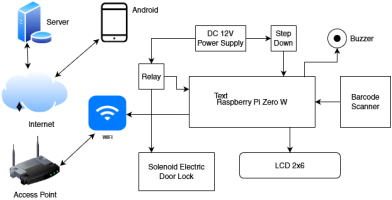
The Internet of Things (IoT) with block diagram shown in
Figure 2, has become a disruptive technology in recent years, with the potential to change how people communicate, work, and live
| [30] | Rejeb, A., Rejeb, K., Appolloni, A., Jagtap, S., Iranmanesh, M., Alghamdi, S.,... & Kayikci, Y. (2024). Unleashing the power of internet of things and blockchain: A comprehensive analysis and future directions. Internet of Things and Cyber-Physical Systems, 4, 1-18. |
[30]
. Massive volumes of data are continuously being generated by IoT devices, opening up new channels for communication and data sharing
| [31] | Li, C., Wang, J., Wang, S., & Zhang, Y. (2024). A review of IoT applications in healthcare. Neurocomputing, 565, 127017. |
[31]
. As a result, there is increasing interest in creating effective and efficient IoT data exchange techniques.
Numerous sensor types can be found in IoT environments, which measure environmental physical factors and convert them first into electrical impulses and subsequently into digital data. They also generate a wide range of data in various formats. Actually, the success of the Internet of Things is linked to the effective administration of these data, which in some crucial and time-sensitive applications need to be processed and disseminated in real time, reliably, and quickly
| [33] | Albreem, M. A., Sheikh, A. M., Alsharif, M. H., Jusoh, M., & Yasin, M. N. M. (2021). Green Internet of Things (GIoT): Applications, practices, awareness, and challenges. IEEe Access, 9, 38833-38858. |
[33]
. To effectively manage huge volumes of data, new technologies and methods must be developed and incorporated. Additionally, communication technologies are always changing to suit the demands of the Internet of Things and offer solutions that may be tailored to a variety of application domains. As a result, a huge range of IoT applications that have just been created and implemented have a big impact on our personal and work lives. Furthermore, the rise of many IoT application domains has been facilitated by the emergence of novel use cases
| [34] | Tlili, S., Mnasri, S., & Val, T. (2022). The internet of things enabling communication technologies, applications and challenges: a survey. International Journal of Wireless and Mobile Computing, 23(1), 9-21. |
[34]
.
As IoT ecosystems grow, a multitude of devices can connect and communicate with one another, creating smart surroundings. IoT devices can automate and optimise energy usage in smart homes, improving comfort and cutting expenses. IoT has the potential to increase operating efficiency, forecast maintenance needs, and provide real-time machinery monitoring in industrial settings. Smart cities, where networked systems can control traffic, save energy use, and enhance public services, are made possible by the growth of IoT
| [35] | Perwej, Y., Omer, M. K., Sheta, O. E., Harb, H. A. M., & Adrees, M. S. (2019). The future of Internet of Things (IoT) and its empowering technology. International Journal of Engineering Science, 20192. |
| [36] | Vatambeti, R., Krishna, E. P., Karthik, M. G., & Damera, V. K. (2024). Securing the medical data using enhanced privacy preserving based blockchain technology in Internet of Things. Cluster Computing, 27(2), 1625-1637. |
| [37] | Al-Turjman, F., Nawaz, M. H., & Ulusar, U. D. (2020). Intelligence in the Internet of Medical Things era: A systematic review of current and future trends. Computer Communications, 150, 644-660. |
[35-37]
.
5.4. Blockchain Technology
Blockchain is a distributed, decentralised ledger technology that makes record-keeping safe and open. It is made up of a series of blocks connected by cryptographic hashes, each of which carries a list of transactions or other data. The unique quality of blockchain is its decentralised structure, which makes it impervious to fraud, manipulation, and censorship. The increased security that blockchain provides is one of the main benefits of using it in communication. Threats such as unauthorised access and data breaches frequently affect traditional communication platforms. Blockchain guarantees data integrity and guards against unauthorised changes with its consensus methods and encryption. In delicate industries like healthcare, where patient data confidentiality is critical, this increased security is especially important
| [38] | Khan, M. H. A. (2025). From ideology to implementation: real-world blockchain use cases and the European Union's strategies for adoption. |
[38]
.
According to
| [39] | Iansiti, M., & Lakhani, K. R. (2017). The truth about blockchain. Harvard business review, 95(1), 118-127. |
[39]
, a blockchain is "an open, distributed ledger that can record transactions between two parties efficiently and in a verifiable and permanent way" by design. typically run by a peer-to-peer network that complies with a protocol for node certification and communication. Each block's data cannot be changed once it has been recorded without also altering all blocks that come after it, necessitating network consensus. Blockchain is a distributed, highly error-tolerant technology with a secure design.
| [40] | Raval, S. (2016). Decentralized applications: harnessing Bitcoin's blockchain technology. " O'Reilly Media, Inc.". |
[40]
Public keys are used in block cryptography
| [41] | Brito, J., & Castillo, A. (2013). Bitcoin: A primer for policymakers. Mercatus Center at George Mason University. |
[41]
. Owners can communicate with the blockchain or access their digital assets using private keys. (The Economist, 2015)
In communication networks, blockchain can offer transparent and safe data transfers. Blockchain technology can improve confidence in digital transactions and communications by guaranteeing the validity and integrity of data. Blockchain, for example, can trace and verify the origin and flow of items in supply chain management, increasing transparency and lowering fraud.
Table 1 presents some of the challenges in data communication and how the emerging network trends can be used as a solution to tackle the challenges.
Table 1. Summary of challenges and Solutions.
Challenges in Data Communication | Proposed Solution using the Opportunities | How it works |
Bandwidth Limitations | 5G and Edge Computing | 5G networks provide higher bandwidth, while edge computing reduces the load on central networks, increasing data transmission capacity. |
Interference and Signal Degradation | Advanced Signal Processing & Adaptive Modulation | AI-driven signal processing and adaptive modulation techniques dynamically adjust signal quality to mitigate interference and degradation |
Security Concerns | Blockchain & AI-based Encryption | Blockchain offers decentralized, tamper-resistant data exchanges, while AI-based encryption enhances real-time threat detection and protection. |
Scalability Issues | Cloud Computing and Network Function Virtualization (NFV) | Cloud computing allows dynamic resource allocation, while NFV enables scalable, flexible network infrastructure |
Energy Consumption | Energy-efficient Protocols & Green Communication Technologies | Energy-efficient protocols, combined with renewable energy sources and green technologies, reduce overall power consumption in data networks |
A number of significant challenges must be overcomed in order for data transmission to proceed, including low bandwidth, deteriorating signals, security worries, scalability problems, and excessive energy consumption. As shown in
Table 1, upcoming technologies such as 5G, edge computing, AI-based encryption, enhanced signal processing, and green communication technologies can help solve these problems. For instance, adaptive modulation and sophisticated signal processing assist reduce interference and signal degradation, while 5G and edge computing greatly boost bandwidth and decrease latency. Blockchain technology provides decentralised data protection against security risks, while AI-based encryption allows encryption to react instantly to changing cyberthreats.
Network function virtualisation (NFV) and cloud computing also improve network scalability by enabling flexible, on-demand resource allocation without the need for physical upgrades. The goal of energy-efficient protocols and green communication technologies is to lower network energy consumption, resulting in data transfer that is both environmentally benign and sustainable. When taken as a whole, these potentials overcome current constraints and enhance sustainability, performance, and security while meeting the expanding demands of data communication.
6. Real-world Applications and Case Studies
Data communication plays a pivotal role in facilitating advancements across various sectors, particularly in smart cities, healthcare, manufacturing, and beyond. The integration of emerging technologies such as 5G, blockchain, IoT, and green communication practices highlights both the challenges and opportunities for future networks.
In the realm of smart cities, the use of data communication systems is critical for optimizing urban services like traffic management, energy distribution, and waste collection. For instance, Barcelona’s Smart City Initiative has leveraged IoT-enabled sensors to manage parking, monitor energy usage, and improve public transport efficiency. This initiative utilizes robust data communication frameworks to process real-time data and reduce both energy consumption and traffic congestion, demonstrating how IoT can transform urban environments
| [42] | Borges, L. M., Velez, F. J., & Lebres, A. S. (2019). Survey on the smart city concept: What is it and what could it be? IEEE Communications Surveys & Tutorials, 21(3), 2891-2915. |
[42]
.
The healthcare sector has also significantly benefited from data communication, particularly in telemedicine and remote monitoring systems. In rural India, telemedicine programs have allowed patients in remote areas to connect with healthcare providers in urban centers. These systems depend on real-time data communication networks to transmit health data, enabling timely consultations and diagnostic services. This example highlights the role of data communication in bridging the healthcare gap between rural and urban areas
| [43] | Anand, S., Mukherjee, P., & Das, M. (2020). Telemedicine in rural India: A case study of its application in healthcare. Journal of Health Informatics, 15(2), 120-132. |
[43]
.
In smart manufacturing and Industry 4.0, data communication is essential for real-time monitoring and automation. Siemens’ Amberg Electronics Factory in Germany stands out as a prime example. This highly automated factory uses data communication networks to enable machines to communicate with each other, reducing downtime and improving production efficiency. The data flow within the factory is facilitated through IoT sensors and edge computing, allowing for instantaneous adjustments in the production process.
Blockchain technology, another emerging trend, has found significant applications in supply chain management. For example, Walmart, in collaboration with IBM, has implemented a blockchain-based system to improve the transparency and traceability of food products. The system enables suppliers, retailers, and consumers to track food items from farm to table, ensuring the integrity and authenticity of data. This system demonstrates how blockchain can provide a decentralized, tamper-proof communication protocol that enhances trust within supply chains
| [44] | Khan, S. B., Kumar, A., Mashat, A., Pruthviraja, D., Imam Rahmani, M. K., & Mathew, J. (2024). Artificial intelligence in next-generation networking: energy efficiency optimization in IoT networks using hybrid LEACH protocol. SN Computer Science, 5(5), 546. |
[44]
.
The deployment of 5G networks is also revolutionizing sectors such as transportation, particularly in the development of autonomous vehicles. Tesla’s Full-Self Driving system relies heavily on data communication between vehicles and cloud servers to update driving algorithms in real-time. With the low-latency and high-bandwidth capabilities of 5G, autonomous vehicles are able to make split-second decisions that enhance road safety and vehicle coordination. This case underscores the potential of 5G in enabling new, data-intensive applications that were previously unattainable with traditional communication networks
| [45] | Nguyen, D. C., Ding, M., Pathirana, P. N., Seneviratne, A., Li, J., Niyato, D.,... & Poor, H. V. (2021). 6G Internet of Things: A comprehensive survey. IEEE Internet of Things Journal, 9(1), 359-383. |
[45]
.
Lastly, the telecommunications sector is increasingly focused on reducing energy consumption through the use of green communication technologies. Google’s data centers provide an exemplary case of how companies are integrating energy-efficient protocols and renewable energy sources to minimize their environmental impact. By using machine learning algorithms to optimize cooling systems, Google has successfully reduced its energy consumption by 40%, highlighting the importance of sustainable communication networks in today’s data-driven world (Google, 2021).
7. Conclusion
A descriptive and exploratory research design is used in this study to thoroughly examine the situation of data communication today. The study, which primarily focusses on developments in 5G technology, uses a structured poll to identify distinct potential and challenges within the area. By utilising the advantages of both descriptive and exploratory approaches, the approach guarantees a methodical and accurate representation of modern data communication processes.
Data communication's history begins with early, non-electronic techniques and ends with contemporary digital transmission. Telegraphy and teletypewriters were among the first technologies used in digital communication, and they helped to improve theory in important ways. Numerous technologies, like as modems, LAN adapters, and digital services like ISDN and broadband, have evolved throughout time in this industry. Many advantages have resulted from the switch from analogue to digital communication, including better signal processing, more effective multiplexing, and improved error detection.
Five fundamental parts make up data communication systems: message, sender, receiver, medium, and protocol. Any combination of text, numbers, pictures, audio, and video can be used in the message. The devices engaged in sending and receiving the communication are called the sender and receiver, respectively. The message is transmitted through the medium, which can be wired or wireless. The collection of guidelines controlling device-to-device communication are known as protocols. These elements work together to facilitate efficient data transfer across networks.
Data communication still confronts a number of difficulties despite its developments, such as signal deterioration, interference, and bandwidth restrictions. Networks must continually adapt to new cyberthreats and ensure user compliance; therefore, security is of utmost importance. Another crucial factor is scalability, which calls for networks to effectively manage rising demand without sacrificing efficiency. Furthermore, energy consumption is still a major issue, especially for wireless base stations and data centres. The Internet of Things, blockchain technology, edge computing, AI, and machine learning, among other technical advancements, present viable answers to these problems and will propel data transmission in the future towards increased security and efficiency.
Abbreviations
ML | Machine Learnng |
IoT | Internet of Things |
FTTH | Fiber-To-The-Home |
FTTB | Fiber-To-The-Building |
AI | Artificial Intelligence |
Author Contributions
Falana Solape: Conceptualization, Resources
Justus Chukwunonyerem: Conceptualization, Resources
Abonyi Dorathy Obianuju: Conceptualization, Supervision
Eze Ogochukwu Edith: Methodology
Kenneth Somadina Onuigbo: Methodology
Ezenwukwa Nnenna Dorathy: Investigation
Cyril Osamhonyi Ogbeiwi: Investigation
Aidoghe Osaremhen Lucky: Data Curation
Uchenna Osuji: Data Curation
Ogwu Mercy: Investigation
Ebele Vitalis Ekweozoh: Data curation
Okolo Obinna: Data curation
Ogonna Elochukwu Charles: Methodology
Ugwueye Chidi Gloria: Investigation
Chapi Jonah: Data curation
Omulu Chinedu: Methodology
Conflicts of Interest
The authors have no conflict of interest in this work.
References
| [1] |
Zaidi, N., & Yusof, M. H. M. (2023). Data communication and networking: Challenges and solutions. Authorea Preprints.
|
| [2] |
Jumairi, M. D. A. (2023). Challenges in data communication and networking. Authorea Preprints.
|
| [3] |
Bush, S. F. (2010). Nanoscale communication networks. Artech House.
|
| [4] |
Connor, C. O. Data communication and Networking.
|
| [5] |
Sunkari, S. (2021). A Brief Study on Data Communication and Computer Networks. Available at SSRN 3904826.
|
| [6] |
Zahanuddin, A. (2023). Challenges in Data Communication and Networking. Authorea Preprints.
|
| [7] |
Spurgeon, C. E. (2000). Ethernet: the definitive guide" O'Reilly Media, Inc.".
|
| [8] |
Pan, D., Dhall, R., Lieberman, A., & Petitti, D. B. (2015). A mobile cloud-based Parkinson’s disease assessment system for home-based monitoring. JMIR mHealth and uHealth, 3(1), e3956.
|
| [9] |
Paetsch, M. (1993). Evolution of mobile communications in the us and europe: Regulation, technology, and markets. The Artech House mobile communications library.
|
| [10] |
Ezeh, I. H. (2020). Challenges of bandwidth and power limitations in cellular communication: a review.
|
| [11] |
Satnam, S., Amit, K., Yunfei, L., & Sawtantar, S. K. (2012). Bandwidth extension in LTE-advanced using carrier aggregation. International Journal of Computer Science and Technology (IJCST), 3(1), 7-11.
|
| [12] |
DevX. (2024). Network degradation. Network Degradation – Glossary. Accessed August 2024 from
https://www.devx.com
|
| [13] |
Kumar, U., & Gambhir, S. (2014). A literature review of security threats to wireless networks. International Journal of Future Generation Communication and Networking, 7(4), 25-34.
|
| [14] |
Barney, N., & Lutkevich, B. (2022). Network security. Networking. Retrieved from
https://www.techtarget.com/searchnetworking/definition/network-security
|
| [15] |
AHMAD, S. M. D. S. (2023). Challenges in Transmission of Data and Network Connectivity. Authorea Preprints.
|
| [16] |
Kumar, K. (2024). Energy consumption directions in telecommunication networks. LinkedIn. Accessed August 2024 from
https://www.linkedin.com
|
| [17] |
Hinton, K., Baliga, J., Feng, M., Ayre, R., & Tucker, R. S. (2011). Power consumption and energy efficiency in the internet. IEEE Network, 25(2), 6-12.
|
| [18] |
Chang, C., Srirama, S. N., & Buyya, R. (2018). Internet of Things (IoT) and new computing paradigms. arXiv preprint
https://doi.org/arXiv:1812.00591
|
| [19] |
Margulius, D. (2019). Apps on the edge. InfoWorld. Last accessed July 2019.
https://www.infoworld.com/article/2677229/apps-on-the-edge.html
|
| [20] |
Pang, H. H., & Tan, K. (2004). Authenticating query results in edge computing. In Proceedings. 20th International Conference on Data Engineering (pp. 560–571).
|
| [21] |
Al-Dulaimy, A., Sharma, Y., Khan, M. G., & Taheri, J. (2020). Introduction to edge computing.
|
| [22] |
Atmaja A., Setia L., Fajar M., & Ismar R., (2022) Low Cost IoT based Home Smart Locker to Receive Online Shopping Packages. Andalasian International Journal of Applied Science Engineering and Technology 2(03): 126-132
http://dx.doi.org/10.25077/aijaset.v2i03.57
|
| [23] |
Samuel, A. L. (1959). Some studies in machine learning using the game of checkers. IBM Journal of research and development, 3(3), 210-229.
|
| [24] |
Russell, S., & Norvig, P. (2010). Artificial intelligence: a modern approach. 3rd. Upper Saddle River, EUA: Prentice-Hall.
|
| [25] |
Zhang, C., Patras, P., & Haddadi, H. (2019). Deep learning in mobile and wireless networking: A survey. IEEE Communications surveys & tutorials, 21(3), 2224-2287.
|
| [26] |
Lu, L., Li, G. Y., Swindlehurst, A. L., Ashikhmin, A., & Zhang, R. (2014). An overview of massive MIMO: Benefits and challenges. IEEE journal of selected topics in signal processing, 8(5), 742-758.
|
| [27] |
Larsson, E. G., Edfors, O., Tufvesson, F., & Marzetta, T. L. (2014). Massive MIMO for next generation wireless systems. IEEE communications magazine, 52(2), 186-195.
|
| [28] |
Wen, C. K., Jin, S., Wong, K. K., Chen, J. C., & Ting, P. (2014). Channel estimation for massive MIMO using Gaussian-mixture Bayesian learning. IEEE Transactions on Wireless Communications, 14(3), 1356-1368.
|
| [29] |
Jiang, C., Zhang, H., Ren, Y., Han, Z., Chen, K. C., & Hanzo, L. (2016). Machine learning paradigms for next-generation wireless networks. IEEE Wireless Communications, 24(2), 98-105.
|
| [30] |
Rejeb, A., Rejeb, K., Appolloni, A., Jagtap, S., Iranmanesh, M., Alghamdi, S.,... & Kayikci, Y. (2024). Unleashing the power of internet of things and blockchain: A comprehensive analysis and future directions. Internet of Things and Cyber-Physical Systems, 4, 1-18.
|
| [31] |
Li, C., Wang, J., Wang, S., & Zhang, Y. (2024). A review of IoT applications in healthcare. Neurocomputing, 565, 127017.
|
| [32] |
Atmaja, A. P., Setia, L. D., Fajar, M. S., & Ismar, M. R. (2022). Low cost IoT based home smart locker to receive online shopping packages. Andalasian International Journal of Applied Science, Engineering and Technology, 2(3), 126-132.
|
| [33] |
Albreem, M. A., Sheikh, A. M., Alsharif, M. H., Jusoh, M., & Yasin, M. N. M. (2021). Green Internet of Things (GIoT): Applications, practices, awareness, and challenges. IEEe Access, 9, 38833-38858.
|
| [34] |
Tlili, S., Mnasri, S., & Val, T. (2022). The internet of things enabling communication technologies, applications and challenges: a survey. International Journal of Wireless and Mobile Computing, 23(1), 9-21.
|
| [35] |
Perwej, Y., Omer, M. K., Sheta, O. E., Harb, H. A. M., & Adrees, M. S. (2019). The future of Internet of Things (IoT) and its empowering technology. International Journal of Engineering Science, 20192.
|
| [36] |
Vatambeti, R., Krishna, E. P., Karthik, M. G., & Damera, V. K. (2024). Securing the medical data using enhanced privacy preserving based blockchain technology in Internet of Things. Cluster Computing, 27(2), 1625-1637.
|
| [37] |
Al-Turjman, F., Nawaz, M. H., & Ulusar, U. D. (2020). Intelligence in the Internet of Medical Things era: A systematic review of current and future trends. Computer Communications, 150, 644-660.
|
| [38] |
Khan, M. H. A. (2025). From ideology to implementation: real-world blockchain use cases and the European Union's strategies for adoption.
|
| [39] |
Iansiti, M., & Lakhani, K. R. (2017). The truth about blockchain. Harvard business review, 95(1), 118-127.
|
| [40] |
Raval, S. (2016). Decentralized applications: harnessing Bitcoin's blockchain technology. " O'Reilly Media, Inc.".
|
| [41] |
Brito, J., & Castillo, A. (2013). Bitcoin: A primer for policymakers. Mercatus Center at George Mason University.
|
| [42] |
Borges, L. M., Velez, F. J., & Lebres, A. S. (2019). Survey on the smart city concept: What is it and what could it be? IEEE Communications Surveys & Tutorials, 21(3), 2891-2915.
|
| [43] |
Anand, S., Mukherjee, P., & Das, M. (2020). Telemedicine in rural India: A case study of its application in healthcare. Journal of Health Informatics, 15(2), 120-132.
|
| [44] |
Khan, S. B., Kumar, A., Mashat, A., Pruthviraja, D., Imam Rahmani, M. K., & Mathew, J. (2024). Artificial intelligence in next-generation networking: energy efficiency optimization in IoT networks using hybrid LEACH protocol. SN Computer Science, 5(5), 546.
|
| [45] |
Nguyen, D. C., Ding, M., Pathirana, P. N., Seneviratne, A., Li, J., Niyato, D.,... & Poor, H. V. (2021). 6G Internet of Things: A comprehensive survey. IEEE Internet of Things Journal, 9(1), 359-383.
|
Cite This Article
-
APA Style
Solape, F., Obianuju, A. D., Chukwunonyerem, J., Edith, E. O., Onuigbo, K. S., et al. (2026). Review on Challenges and Opportunities of Current Trends in Data Communication. Communications, 13(1), 7-16. https://doi.org/10.11648/j.com.20261301.12
 Copy
|
Copy
|
 Download
ACS Style
Solape, F.; Obianuju, A. D.; Chukwunonyerem, J.; Edith, E. O.; Onuigbo, K. S., et al. Review on Challenges and Opportunities of Current Trends in Data Communication. Communications. 2026, 13(1), 7-16. doi: 10.11648/j.com.20261301.12
Copy
|
Download
AMA Style
Solape F, Obianuju AD, Chukwunonyerem J, Edith EO, Onuigbo KS, et al. Review on Challenges and Opportunities of Current Trends in Data Communication. Communications. 2026;13(1):7-16. doi: 10.11648/j.com.20261301.12
Copy
|
Download
-
@article{10.11648/j.com.20261301.12,
  author = {Falana Solape and Abonyi Dorathy Obianuju and Justus Chukwunonyerem and Eze Ogochukwu Edith and Kenneth Somadina Onuigbo and Ezenwukwa Nnenna Dorathy and Cyril Osamhonyi Ogbeiwi and Aidoghe Osaremhen Lucky and Uchenna Osuji and Ogwu Mercy Ojochenemi and Ebele Vitalis Ekweozoh and Okolo Obinna and Ogbonna Elochukwu Charles and Ugwueye Chidi Gloria and Chapi Jonah and Omulu Chinedu Emeka},
  title = {Review on Challenges and Opportunities of Current Trends in Data Communication},
  journal = {Communications},
  volume = {13},
  number = {1},
  pages = {7-16},
  doi = {10.11648/j.com.20261301.12},
  url = {https://doi.org/10.11648/j.com.20261301.12},
  eprint = {https://article.sciencepublishinggroup.com/pdf/10.11648.j.com.20261301.12},
  abstract = {In the digital space, data communication is essential for ensuring the efficient transfer and processing of vast amounts of information across networks and devices. This paper provides a comprehensive review of current trends, challenges, and opportunities in data communication networks. The research design uses a structured survey to outline specific challenges in data communication and equally highlight opportunities which details key advancements in data communication networks. The methodology adopted descriptive and exploratory design approach to ensure accurate phenomenal explanation of important systemic terms. Key issues such as bandwidth limitations, interference, security concerns, scalability, and energy consumption are examined in details. Emerging technologies and innovations in 5G, blockchain, edge computing, artificial intelligence (AI), and machine learning (ML) are also explored. The study also highlights opportunities for deploying green communication technologies. This is aimed at minimaxing energy consumption to support sustainable network operations. Presented in this work are some proposed solutions to some of the current challenges of data communication. Real-world applications and case studies further illustrate the practical implications of some the advancements in the present-day data communication systems. Overall, the study provides valuable insights; which can guide researchers, entrepreneurs and industry professionals to shape the future of global data networks. By leveraging on these solutions and innovations, the general performance of data communication systems can be enhanced.},
 year = {2026}
}
Copy
|
Download
-
TY  - JOUR
T1  - Review on Challenges and Opportunities of Current Trends in Data Communication
AU  - Falana Solape
AU  - Abonyi Dorathy Obianuju
AU  - Justus Chukwunonyerem
AU  - Eze Ogochukwu Edith
AU  - Kenneth Somadina Onuigbo
AU  - Ezenwukwa Nnenna Dorathy
AU  - Cyril Osamhonyi Ogbeiwi
AU  - Aidoghe Osaremhen Lucky
AU  - Uchenna Osuji
AU  - Ogwu Mercy Ojochenemi
AU  - Ebele Vitalis Ekweozoh
AU  - Okolo Obinna
AU  - Ogbonna Elochukwu Charles
AU  - Ugwueye Chidi Gloria
AU  - Chapi Jonah
AU  - Omulu Chinedu Emeka
Y1  - 2026/03/17
PY  - 2026
N1  - https://doi.org/10.11648/j.com.20261301.12
DO  - 10.11648/j.com.20261301.12
T2  - Communications
JF  - Communications
JO  - Communications
SP  - 7
EP  - 16
PB  - Science Publishing Group
SN  - 2328-5923
UR  - https://doi.org/10.11648/j.com.20261301.12
AB  - In the digital space, data communication is essential for ensuring the efficient transfer and processing of vast amounts of information across networks and devices. This paper provides a comprehensive review of current trends, challenges, and opportunities in data communication networks. The research design uses a structured survey to outline specific challenges in data communication and equally highlight opportunities which details key advancements in data communication networks. The methodology adopted descriptive and exploratory design approach to ensure accurate phenomenal explanation of important systemic terms. Key issues such as bandwidth limitations, interference, security concerns, scalability, and energy consumption are examined in details. Emerging technologies and innovations in 5G, blockchain, edge computing, artificial intelligence (AI), and machine learning (ML) are also explored. The study also highlights opportunities for deploying green communication technologies. This is aimed at minimaxing energy consumption to support sustainable network operations. Presented in this work are some proposed solutions to some of the current challenges of data communication. Real-world applications and case studies further illustrate the practical implications of some the advancements in the present-day data communication systems. Overall, the study provides valuable insights; which can guide researchers, entrepreneurs and industry professionals to shape the future of global data networks. By leveraging on these solutions and innovations, the general performance of data communication systems can be enhanced.
VL  - 13
IS  - 1
ER  -
Copy
|
Download





 Share This Article
 Twitter
 Linked In
 Facebook