Pharmacognostic Valorization of Strychnos afzelii Gilg. Stems Used as Traditional Chewing Sticks in Western Cote d’Ivoire: Phytochemical and Elemental Profile
Traditional chewing sticks remain widely used for oral hygiene in many African communities. In western Cote d’Ivoire, stems of Strychnos afzelii Gilg. are sold in local markets and used as traditional chewing sticks. However, information on their phytochemical composition and elemental profile remains limited. This study aimed to contribute to the pharmacognostic characterization of S. afzelii stems. Plant material was collected at Glaogouin, approximately 5 km from Man, Cote d’Ivoire, and botanically authenticated at the National Floristic Center of Abidjan (voucher specimen UCJ011524). Aqueous and 70% hydroethanolic extracts were prepared by 24-h maceration. Phytochemical screening was performed using qualitative color and precipitation reactions and thin-layer chromatography (TLC). The elemental composition of the powdered stems was determined by scanning electron microscopy coupled with energy-dispersive X-ray spectroscopy (SEM-EDS). Extraction yields were 14.0% and 16.9% for the aqueous and hydroethanolic extracts, respectively. Both extracts contained polyphenols, flavonoids, catechin tannins, coumarins, aromatic amino acids and proteins. The elemental profile was dominated by calcium (27444.32 mg/kg), followed by potassium (2856.55 mg/kg), sulfur (1992.71 mg/kg), silicon (1868.81 mg/kg), aluminum (1188.71 mg/kg), and magnesium (1020.95 mg/kg). Cadmium was detected at 18.40 mg/kg, whereas lead was detected at 1.30 mg/kg. These findings provide preliminary pharmacognostic data on S. afzelii stems and contribute to the scientific documentation of a traditionally used chewing-stick plant in western Cote d’Ivoire.
This is an Open Access article, distributed under the terms of the Creative Commons Attribution 4.0 International License (http://creativecommons.org/licenses/by/4.0/), which permits unrestricted use, distribution and reproduction in any medium or format, provided the original work is properly cited.
Traditional plant-based oral hygiene practices constitute an important component of ethnobotanical knowledge in many African communities. Chewing sticks are traditionally used for cleaning the teeth and oral cavity and may provide both mechanical cleaning and exposure to plant-derived chemical constituents
[1]
Akaji EA, Otakhoigbogie U. Ethnopharmacological applications of chewing sticks on oral health care. In: Chauhan DN, Singh PR, Shah K, Chauhan NS, editors. Natural Oral Care in Dental Therapy. Hoboken: Wiley; 2020. p. 383–392.
Tessema FB, Gonfa YH, Getachew M, Bachheti RK. Role of traditional chewing sticks in oral hygiene and other benefits. In: Non-Timber Forest Products, Food, Healthcare and Industrial Applications. Cham: Springer; 2021. p. 39–73.
Ramli H, Mohd-Dom TN, Mohd-Said S. Clinical benefits and adverse effects of siwak (Salvadora persica) use on periodontal health: a scoping review of literature. BMC Oral Health. 2021; 21: 618.
. Their continued use has stimulated increasing interest in the phytochemical and biological characterization of the plants used as chewing sticks. The oral-health benefits associated with chewing sticks may depend on several factors, including the plant species, plant organ, preparation method, chemical composition, and frequency of use
[1]
Akaji EA, Otakhoigbogie U. Ethnopharmacological applications of chewing sticks on oral health care. In: Chauhan DN, Singh PR, Shah K, Chauhan NS, editors. Natural Oral Care in Dental Therapy. Hoboken: Wiley; 2020. p. 383–392.
Tessema FB, Gonfa YH, Getachew M, Bachheti RK. Role of traditional chewing sticks in oral hygiene and other benefits. In: Non-Timber Forest Products, Food, Healthcare and Industrial Applications. Cham: Springer; 2021. p. 39–73.
Ramli H, Mohd-Dom TN, Mohd-Said S. Clinical benefits and adverse effects of siwak (Salvadora persica) use on periodontal health: a scoping review of literature. BMC Oral Health. 2021; 21: 618.
. Previous investigations of chewing-stick plants have reported the presence of phenolic compounds, flavonoids, tannins, alkaloids, terpenoids and other secondary metabolites that may contribute to antimicrobial or antioxidant properties
[2]
Tessema FB, Gonfa YH, Getachew M, Bachheti RK. Role of traditional chewing sticks in oral hygiene and other benefits. In: Non-Timber Forest Products, Food, Healthcare and Industrial Applications. Cham: Springer; 2021. p. 39–73.
Ramli H, Mohd-Dom TN, Mohd-Said S. Clinical benefits and adverse effects of siwak (Salvadora persica) use on periodontal health: a scoping review of literature. BMC Oral Health. 2021; 21: 618.
Frédérich M, Tits M, Angenot L. Indole alkaloids from Strychnos species and their antiplasmodial and cytotoxic activities. Chemistry of Natural Compounds. 2003; 39(6): 513–519.
. The genus Strychnos L. is of particular pharmacognostic interest because of its richness in specialized metabolites, especially indole alkaloids. Several Strychnos species have been investigated for their chemical diversity and biological activities
[6]
He W, Wang P, Chen J, Xie W. Recent progress in the total synthesis of Strychnos alkaloids. Organic & Biomolecular Chemistry. 2020; 18: 1046–1056.
Maertens G, Deruer E, Denis M, Canesi S. Common strategy for the synthesis of some Strychnos indole alkaloids. Journal of Organic Chemistry. 2020; 85(9): 6098–6108.
Ohiri FC, Verpoorte R, Baerheim Svendsen A. The African Strychnos species and their alkaloids: a review. Journal of Ethnopharmacology. 1983; 9(2–3): 167–223.
. The genus includes species known for pharmacologically active alkaloids and therefore represents an important group for natural-product research. Strychnos afzelii Gilg. is a tropical African species whose traditional uses and chemical composition remain comparatively poorly documented. Earlier investigations demonstrated the presence of alkaloids in the stem bark of S. afzelii and reported antimicrobial effects associated with some of these constituents
[9]
Verpoorte R, Kode EW, van Doorne H, Baerheim Svendsen A. Antimicrobial effect of the alkaloids from Strychnos afzelii Gilg. Planta Medica. 1978; 33(3): 237–242.
. In particular, bisnor-dihydrotoxiferine, bisnor-C-alkaloid H and caracurine V were identified among the alkaloids associated with antimicrobial activity
[9]
Verpoorte R, Kode EW, van Doorne H, Baerheim Svendsen A. Antimicrobial effect of the alkaloids from Strychnos afzelii Gilg. Planta Medica. 1978; 33(3): 237–242.
. Ethnobotanical information also indicates the use of S. afzelii stems as chewing sticks in Cote d’Ivoire and other parts of West Africa
[10]
Portères R. A curious Arab-Islamic and Neo-African cultural element: chewed plant sticks used as tooth-cleaning sticks. Journal of Tropical Agriculture and Applied Botany. 1974; 21(1–3): 1–36.
. However, available information concerning the global phytochemical profile of the stems and their elemental composition remains scarce. Extraction procedures are critical in pharmacognostic investigations because solvent polarity strongly influences the classes and quantities of compounds recovered from plant material
[11]
Azwanida NN. A review on the extraction methods use in medicinal plants, principle, strength and limitation. Medicinal & Aromatic Plants. 2015; 4(3): 196.
. Maceration is a simple and widely applicable extraction technique, while hydroethanolic mixtures can provide a broader extraction range for compounds with different polarities
[11]
Azwanida NN. A review on the extraction methods use in medicinal plants, principle, strength and limitation. Medicinal & Aromatic Plants. 2015; 4(3): 196.
. Therefore, the present study aimed to characterize the stems of S. afzelii used as traditional chewing sticks in western Cote d’Ivoire through: (i) determination of aqueous and hydroethanolic extraction yields; (ii) qualitative phytochemical screening; (iii) thin-layer chromatographic characterization; and (iv) determination of the elemental profile using SEM-EDS.
2. Materials and Methods
2.1. Plant Material and Botanical Identification
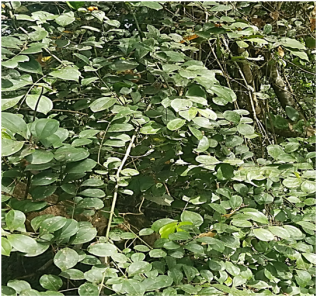
The plant material consisted of stems of Strychnos afzelii Gilg. (Figure 1). Samples were collected at Glaogouin, a village located approximately 5 km from Man, in western Cote d’Ivoire. Botanical identification was performed at the National Floristic Center (CNF), Abidjan, Cote d’Ivoire. A voucher specimen was deposited in the herbarium under accession number UCJ011524. Preliminary observations conducted in local markets in Man indicated that stems of S. afzelii are commercially available and commonly used as traditional chewing sticks for oral hygiene. This field observation motivated the selection of the species for the present phytochemical and elemental investigation.
Figure 1. Stems of Strychnos afzelii Gilg. used as traditional chewing sticks in western Cote d’Ivoire.
2.2. Collection, Drying and Preparation of Plant Material
The stems of S. afzelii were collected in the study area and cut into small fragments. The plant material was carefully washed with water to remove superficial impurities and then dried for seven days under continuous air conditioning at approximately 18°C. After drying, the material was powdered using an electric grinder at the Central Laboratory of the University of Man. The resulting powder was stored in appropriate conditions and used for phytochemical and elemental analyses as well as for extract preparation.
2.3. Preparation of Plant Extracts
2.3.1. Aqueous Extraction
One hundred grams (100 g) of powdered S. afzelii stems were macerated in 1 L of distilled water for 24 h under magnetic stirring. Maceration was selected because it is a simple extraction procedure that allows plant constituents to diffuse into a suitable solvent without requiring prolonged heating
[11]
Azwanida NN. A review on the extraction methods use in medicinal plants, principle, strength and limitation. Medicinal & Aromatic Plants. 2015; 4(3): 196.
. After extraction, the macerate was pressed through sterile cloth and subsequently filtered through cotton to obtain a clear filtrate. The filtrate was dried slowly in an oven at 50°C for 24 h. The resulting dry extract was collected in an airtight container and stored at 4°C until further analysis.
2.3.2. Hydroethanolic Extraction
One hundred grams (100 g) of powdered stems were macerated in 1 L of 70% ethanol for 24 h under magnetic stirring. Hydroethanolic mixtures are frequently used in plant extraction because their intermediate polarity can facilitate the recovery of compounds exhibiting different physicochemical properties
[11]
Azwanida NN. A review on the extraction methods use in medicinal plants, principle, strength and limitation. Medicinal & Aromatic Plants. 2015; 4(3): 196.
. The macerate was subsequently pressed through sterile cloth and filtered through cotton. The filtrate was dried slowly in an oven at 40°C for 24 h. The dry extract was collected in an airtight container and stored at 4°C until further analyses.
2.4. Determination of Extraction Yield
The extraction yield was calculated as the ratio between the mass of dry extract obtained after solvent removal and the initial mass of plant powder used for extraction
[11]
Azwanida NN. A review on the extraction methods use in medicinal plants, principle, strength and limitation. Medicinal & Aromatic Plants. 2015; 4(3): 196.
The extraction yield was calculated using equation (1):
(1)
2.5. Qualitative Phytochemical Screening
2.5.1. Tube Characterization Tests
Qualitative phytochemical screening was performed on the aqueous and 70% hydroethanolic extracts of S. afzelii stems.
The main classes of secondary metabolites were investigated using color and precipitation reactions according to previously described phytochemical screening procedures
[13]
Békro YA, Mamyrbekova-Békro JA, Boua BB, Tra Bi FH, Ehilé EE. Ethnobotanical study and phytochemical screening of Caesalpinia benthamiana (Baill.) Herend. & Zarucchi (Caesalpiniaceae). Sciences & Nature. 2007; 4(2): 217–225.
N’gaman KCC, Békro YA, Mamyrbékova-Békro JA, Bénie A, Gooré Bi S. On the composition of secondary metabolites and the antioxidant activity of crude extracts from Gmelina arborea Roxb. (Verbenaceae) from Cote d’Ivoire, West Africa: analysis by thin-layer chromatography. European Journal of Scientific Research. 2009; 36(2): 161–171.
[13, 14]
. The investigation included polyphenols, flavonoids, catechin tannins, gallotannins, alkaloids, saponins, coumarins, anthocyanins, sterols and polyterpenes, aromatic amino acids, reducing sugars, proteins, gums and mucilages. Results were expressed qualitatively using "+" for detection and "−" for non-detection under the experimental conditions.
2.5.2. Thin-layer Chromatography
Thin-layer chromatography (TLC) was used to complement the qualitative phytochemical screening, following a modified procedure previously described for the chromatographic characterization of plant metabolites
[14]
N’gaman KCC, Békro YA, Mamyrbékova-Békro JA, Bénie A, Gooré Bi S. On the composition of secondary metabolites and the antioxidant activity of crude extracts from Gmelina arborea Roxb. (Verbenaceae) from Cote d’Ivoire, West Africa: analysis by thin-layer chromatography. European Journal of Scientific Research. 2009; 36(2): 161–171.
[15]
Mamyrbékova-Békro JA, Konan KM, Békro YA, Djié Bi MG, Zomi Bi TJ, Mambo V, Boua BB. Phytocompounds of the extracts of four medicinal plants of Cote d’Ivoire and assessment of their potential antioxidant by thin layer chromatography. European Journal of Scientific Research. 2008; 24(2): 219–228.
[14, 15]
. A solution of the dry extract was prepared at 10 mg/mL by dissolving 10 mg of extract in 1 mL of methanol. A volume of 20 µL, corresponding to 200 µg of extract, was applied using capillary tubes onto aluminum-backed silica gel 60 F254 plates. The plates were developed in a saturated chromatographic chamber containing chloroform/ethyl acetate/acetic acid/water (2.5:7:0.2:1, v/v/v/v), with two drops of ammonia solution added to the mobile phase. After development, the plates were dried and examined under visible light and ultraviolet radiation at 254 and 365 nm.
Specific spraying reagents were used for the detection of different phytochemical groups: 2% ferric chloride (FeCl3) for phenolic compounds and tannins, 5% ethanolic aluminum chloride (AlCl3) for flavonoids, 5% methanolic potassium hydroxide (KOH) for Anthrone/anthraquinone derivatives, and 25% ammonia (NH3) for coumarins
[14]
N’gaman KCC, Békro YA, Mamyrbékova-Békro JA, Bénie A, Gooré Bi S. On the composition of secondary metabolites and the antioxidant activity of crude extracts from Gmelina arborea Roxb. (Verbenaceae) from Cote d’Ivoire, West Africa: analysis by thin-layer chromatography. European Journal of Scientific Research. 2009; 36(2): 161–171.
[15]
Mamyrbékova-Békro JA, Konan KM, Békro YA, Djié Bi MG, Zomi Bi TJ, Mambo V, Boua BB. Phytocompounds of the extracts of four medicinal plants of Cote d’Ivoire and assessment of their potential antioxidant by thin layer chromatography. European Journal of Scientific Research. 2008; 24(2): 219–228.
[14, 15]
.
The retention factor (Rf) was calculated according to equation (2):
(2)
2.6. Elemental Analysis
The elemental composition of S. afzelii stem powder was determined after mineralization of the plant material. Powdered samples were incinerated at 550°C for 24 h in a Naberthern MORE THAN HEAT furnace at the National Center for Agronomic Research (CNRA), Bingerville, Cote d’Ivoire. The resulting ash was analyzed at the Analysis and Research Center (CAR) of PETROCI, Abidjan, Cote d’Ivoire. Elemental analysis was performed using a Zeiss Supra 40 VP FEG scanning electron microscope coupled with energy-dispersive X-ray spectroscopy (SEM-EDS) and equipped with an Oxford Instruments X-ray detector and an INCA Dry Cool microanalysis platform. Acceleration voltages ranging from 0.1 to 30 keV were used according to analytical requirements. Different magnifications, ranging from 12× to 1.000.000×, were applied depending on sample characteristics. The reported analytical resolution was 2 nm. The concentrations were initially reported by the analytical system mainly as oxide forms. To facilitate interpretation of the elemental composition of the plant material, oxide concentrations were converted into elemental concentrations using the corresponding elemental mass fraction. The elemental concentrations were expressed as percentage (%) and milligrams per kilogram of dry matter (mg/kg). The elemental analysis was performed in triplicate and mean values were reported.
2.7. Data Processing
Extraction yields and qualitative phytochemical results were organized and processed using Microsoft Excel. Elemental analytical data were transcribed from the laboratory analytical report and converted from measured oxide forms into elemental concentrations. The conversion from percentage to mg/kg was performed according to equation (3):
Only the corrected elemental concentrations obtained after conversion were used for interpretation of the elemental profile.
3. Results
3.1. Extraction Yield
The extraction yields obtained from S. afzelii stems are presented in Table 1.
Thus, the hydroethanolic extraction yield was 2.9 percentage points higher than that obtained with water.
Table 1. Extraction yields of aqueous and 70% hydroethanolic extracts from Strychnos afzelii stems.
Extracts of S. afzelii
Plant powder (g)
Dry extract (g)
Yield (%)
Aqueous
100
14.0
14.0
Hydroethanolic 70%
100
16.9
16.9
3.2. Phytochemical Screening
The qualitative phytochemical screening results are presented in Table 2.
Both aqueous and hydroethanolic extracts showed positive reactions for polyphenols, flavonoids, catechin tannins, coumarins, aromatic amino acids and proteins. Gallotannins, alkaloids, saponins, anthocyanins, sterols and polyterpenes, and reducing sugars were not detected in either extract. Gums and mucilages were detected only in the aqueous extract.
Table 2. Qualitative phytochemical screening of aqueous and 70% hydroethanolic extracts of Strychnos afzelii stems.
Phytochemical group
Aqueous extract
Hydroethanolic extract
Polyphenols
+
+
Flavonoids
+
+
Catechin tannins
+
+
Gallotannins
−
−
Alkaloids
−
−
Saponins
−
−
Coumarins
+
+
Anthocyanins
−
−
Sterols and polyterpenes
−
−
Aromatic amino acids
+
+
Reducing sugars
−
−
Proteins
+
+
Gums and mucilages
+
−
+ = detected; − = not detected under the experimental conditions.
3.3. TLC Characterization
TLC analysis provided additional evidence for several groups of secondary metabolites in the extracts.
In the hydroethanolic extract, tannins were detected following spraying with 2% FeCl3, with dark spots observed under visible light. Anthrone/anthraquinone derivatives were detected following treatment with 5% KOH, producing yellow-orange spots. Flavonoid-related spots were observed following treatment with 5% AlCl3. Coumarins were revealed by green fluorescence following exposure to 25% ammonia.
In the aqueous extract, migration of tannins, anthrone/anthraquinone derivatives and flavonoids was not observed under the experimental TLC conditions, whereas coumarin-related spots were detected.
Table 3. Compounds detected by TLC in aqueous and 70% hydroethanolic extracts of Strychnos afzelii stems.
Reagents Extracts
Tannins FeCl3 2%
Anthrone/anthraquinone derivatives KOH 5%
Flavonoids AlCl3 5%
Coumarins NH3 25%
Hydroethanolic extract
Rf: 0.50; 0.75 (dark spots)
Rf: 0,3025; 0.3025 (yellow-orange spots)
Rf: 0.9375; 0.9375 (yellow-orange fluorescence)
Rf: 0.9375; 0.60; 0.25 (green fluorescence)
Aqueous extract
Rf: 0
Rf: 0
Rf: 0
Rf = 0.375; 0.750 (green fluorescence)
Rf= Retention factor.
3.4. Elemental Profile of Strychnos Afzelii Stems
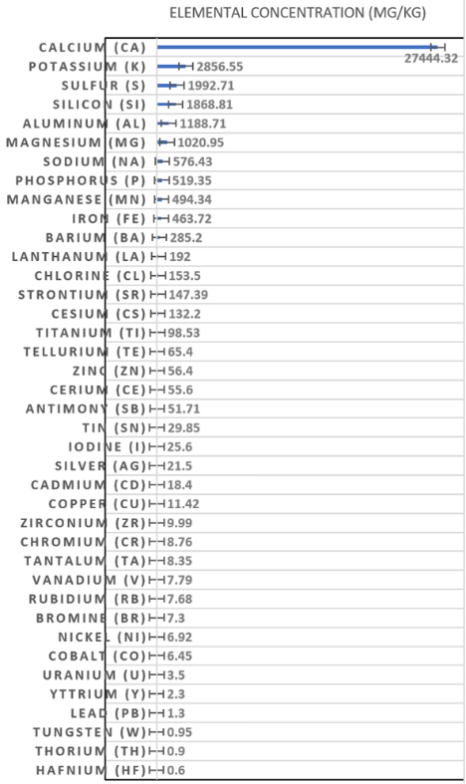
SEM-EDS analysis revealed a diverse elemental composition in the stems of S. afzelii. After conversion of the measured oxide forms into elemental concentrations, calcium was the predominant element, reaching 2.74443% (27444.32 mg/kg). It was followed by potassium (0.28566%; 2856.55 mg/kg), sulfur (0.19927%; 1992.71 mg/kg), silicon (0.18688%; 1868.81 mg/kg), aluminum (0.11887%; 1188.71 mg/kg), and magnesium (0.10210%; 1020.95 mg/kg). Sodium, phosphorus, manganese, iron, barium, lanthanum, chlorine, strontium, and cesium were detected at intermediate concentrations, whereas the remaining elements occurred at lower or trace levels. Cadmium and lead were detected at 18.40 and 1.30 mg/kg, respectively, while several elements, including arsenic, selenium, mercury, thallium, and bismuth, were below the detection limits (Figure 2).
These results indicate a mineral profile characterized by a marked predominance of calcium, accompanied by substantial amounts of potassium, sulfur, silicon, aluminum, and magnesium, together with a broad diversity of minor and trace elements.
Figure 2. Corrected elemental profile of Strychnos afzelii stems determined by SEM-EDS after conversion of measured forms into elemental concentrations.
3.5. Elements Below the Detection Limits
Gallium, germanium, selenium, arsenic, niobium, molybdenum, mercury, thallium and bismuth were below the detection limits of the analytical method (Table 4).
Table 4. Elements below the detection limits of the SEM-EDS method.
Element
Measured form
Elemental concentration (%)
Elemental concentration (mg/kg)
Gallium (Ga)
Ga
<0.00005
<0.50
Germanium (Ge)
Ge
<0.00005
<0.50
Selenium (Se)
Se
<0.00005
<0.50
Arsenic (As)
As2O3
<0.000053
<0.53
Niobium (Nb)
Nb2O5
<0.000098
<0.98
Molybdenum (Mo)
Mo
<0.00010
<1.00
Mercury (Hg)
Hg
<0.00010
<1.00
Thallium (Tl)
Tl
<0.00010
<1.00
Bismuth (Bi)
Bi
<0.00010
<1.00
Values preceded by "<" indicate concentrations below the analytical detection limit.
4. Discussion
The extraction yields obtained from S. afzelii stems were 14.0% for the aqueous extract and 16.9% for the 70% hydroethanolic extract. The higher yield obtained with the hydroethanolic solvent may be explained by the ability of water-ethanol mixtures to solubilize compounds with different polarities
[11]
Azwanida NN. A review on the extraction methods use in medicinal plants, principle, strength and limitation. Medicinal & Aromatic Plants. 2015; 4(3): 196.
. Solvent polarity is a major determinant of extraction efficiency and strongly influences the chemical composition of plant extracts
[11]
Azwanida NN. A review on the extraction methods use in medicinal plants, principle, strength and limitation. Medicinal & Aromatic Plants. 2015; 4(3): 196.
. The phytochemical screening demonstrated the presence of polyphenols, flavonoids, catechin tannins, coumarins, aromatic amino acids and proteins in both extracts. These groups of compounds are frequently reported in medicinal and traditionally used plants and may contribute to several biological properties, including antioxidant and antimicrobial activities
[3]
Ramli H, Mohd-Dom TN, Mohd-Said S. Clinical benefits and adverse effects of siwak (Salvadora persica) use on periodontal health: a scoping review of literature. BMC Oral Health. 2021; 21: 618.
Békro YA, Mamyrbekova-Békro JA, Boua BB, Tra Bi FH, Ehilé EE. Ethnobotanical study and phytochemical screening of Caesalpinia benthamiana (Baill.) Herend. & Zarucchi (Caesalpiniaceae). Sciences & Nature. 2007; 4(2): 217–225.
. Chewing-stick plants constitute an important but still comparatively under-investigated source of phytochemicals, and further characterization of their chemical composition and biological properties has been recommended
[16]
Nyambe MM, Kwembeya EG, Lisao K, Hans R. Oral hygiene in Namibia: A case of chewing sticks. Journal of Ethnopharmacology. 2021; 277: 114203.
. The detection of tannins, flavonoids and coumarins by TLC further supports the qualitative screening results. However, TLC provides mainly qualitative or semi-quantitative information. Consequently, the detected groups should not be interpreted as evidence of the presence of specific individual compounds without complementary chromatographic or spectrometric identification. The absence of detectable alkaloids in both extracts deserves particular consideration. The genus Strychnos is well known for its indole alkaloids
[6]
He W, Wang P, Chen J, Xie W. Recent progress in the total synthesis of Strychnos alkaloids. Organic & Biomolecular Chemistry. 2020; 18: 1046–1056.
Maertens G, Deruer E, Denis M, Canesi S. Common strategy for the synthesis of some Strychnos indole alkaloids. Journal of Organic Chemistry. 2020; 85(9): 6098–6108.
Ohiri FC, Verpoorte R, Baerheim Svendsen A. The African Strychnos species and their alkaloids: a review. Journal of Ethnopharmacology. 1983; 9(2–3): 167–223.
. More specifically, previous investigations of S. afzelii demonstrated the presence of several alkaloids in stem bark extracts and reported antimicrobial activity associated with some of these compounds
[9]
Verpoorte R, Kode EW, van Doorne H, Baerheim Svendsen A. Antimicrobial effect of the alkaloids from Strychnos afzelii Gilg. Planta Medica. 1978; 33(3): 237–242.
. The absence of a positive alkaloid reaction in the present investigation may therefore be related to differences in the plant organ examined, extraction solvent, extraction conditions, concentration of the compounds or sensitivity of the qualitative test. Consequently, the negative alkaloid result should be interpreted as non-detection under the experimental conditions used, rather than as evidence that S. afzelii stems are completely devoid of alkaloids. The elemental analysis revealed a strongly calcium-dominated profile. Calcium reached 27444.32 mg/kg, representing the highest elemental concentration detected. Potassium (2856.55 mg/kg), sulfur (1992.71 mg/kg), silicon (1868.81 mg/kg), aluminum (1188.71 mg/kg) and magnesium (1020.95 mg/kg) were the next most abundant elements. The relatively high concentrations of calcium and potassium indicate that these elements constitute major components of the elemental profile of the stems. Nevertheless, elemental detection alone does not demonstrate nutritional, therapeutic or pharmacological efficacy. The biological significance of these elements depends on their chemical forms, bioavailability, exposure levels and interactions with other constituents.
Several trace elements were also detected. Of particular interest were zinc (56.40 mg/kg) and copper (11.42 mg/kg), which are essential elements involved in numerous biological processes. However, their presence in the plant material should not automatically be interpreted as a nutritional advantage because the actual amount released during chewing and subsequently absorbed by the human organism was not determined. The detection of cadmium at 18.40 mg/kg deserves particular attention. Lead was detected at 1.30 mg/kg. Because plants can accumulate potentially toxic elements from their growing environment, the occurrence of heavy metals in plant materials intended for human use warrants appropriate monitoring and risk assessment
[17]
Hlihor RM, Roșca M, Hagiu-Zaleschi L, Simion IM, Daraban GM, Stoleru V. Medicinal Plant Growth in Heavy Metals Contaminated Soils: Responses to Metal Stress and Induced Risks to Human Health. Toxics. 2022; 10(9): 499.
. Because the stems are reportedly used repeatedly as chewing sticks, the presence of potentially toxic elements warrants further investigation. Nevertheless, the SEM-EDS results should be interpreted cautiously because this technique is primarily suitable for elemental screening and semi-quantitative characterization. Confirmation by a validated quantitative technique such as ICP-MS, ICP-OES or AAS would be desirable before drawing conclusions concerning toxicological safety
[18]
Senila M. Recent Advances in the Determination of Major and Trace Elements in Plants Using Inductively Coupled Plasma Optical Emission Spectrometry. Molecules. 2024; 29(13): 3169.
. The detection limits obtained for arsenic, mercury, selenium and other elements were low, with arsenic below 0.53 mg/kg, selenium below 0.50 mg/kg, mercury below 1.00 mg/kg and bismuth below 1.00 mg/kg. These results provide useful preliminary information on the elemental composition of the material but should also be confirmed by a quantitative analytical method
[18]
Senila M. Recent Advances in the Determination of Major and Trace Elements in Plants Using Inductively Coupled Plasma Optical Emission Spectrometry. Molecules. 2024; 29(13): 3169.
. The combined phytochemical and elemental characterization therefore provides a broader pharmacognostic profile of S. afzelii stems. The results are particularly relevant because the plant material is traditionally commercialized and used as a chewing stick in western Cote d’Ivoire.
However, the present study has several limitations. The phytochemical investigation was qualitative, and no quantitative determination of total phenolics, flavonoids or tannins was performed. Likewise, the individual chemical constituents responsible for the observed TLC profiles were not identified. Further investigations using HPLC-DAD, LC-MS/MS, GC-MS or NMR would therefore be useful for chemical characterization.
Similarly, the elemental data obtained by SEM-EDS should be considered preliminary. Confirmatory quantitative analysis would be necessary to establish reliable concentrations and assess possible exposure during repeated use as a chewing stick. Recent advances in plant elemental analysis highlight the importance of appropriate sample preparation and validated quantitative analytical procedures for reliable determination of major and trace elements
[18]
Senila M. Recent Advances in the Determination of Major and Trace Elements in Plants Using Inductively Coupled Plasma Optical Emission Spectrometry. Molecules. 2024; 29(13): 3169.
The present study provides preliminary pharmacognostic data on the stems of Strychnos afzelii Gilg. used traditionally as chewing sticks in western Cote d’Ivoire. The extraction yields were 14.0% for the aqueous extract and 16.9% for the 70% hydroethanolic extract. Qualitative phytochemical screening demonstrated the presence of polyphenols, flavonoids, catechin tannins, coumarins, aromatic amino acids and proteins in both extracts. TLC further supported the presence of tannins, flavonoids and coumarin-related compounds. The elemental profile was dominated by calcium (27444.32 mg/kg), followed by potassium, sulfur, silicon, aluminum and magnesium. Several trace elements were also detected, including zinc, copper and cadmium. The detection of cadmium and lead highlights the need for further quantitative and toxicological investigations before any conclusion can be drawn regarding the long-term safety of repeated use. Overall, these findings contribute to the scientific documentation and pharmacognostic valorization of S. afzelii as a traditional chewing-stick plant in Cote d’Ivoire. Future studies should focus on the quantitative determination and identification of its bioactive constituents, evaluation of antimicrobial and antioxidant activities, and confirmation of its elemental composition using more sensitive quantitative analytical techniques.
Abbreviations
AAS
Atomic Absorption Spectroscopy
AlCl3
Aluminum Chloride
CAR
Analysis and Research Center
CNF
National Floristic Center
CNRA
National Center for Agronomic Research
EDS
Energy-Dispersive X-ray Spectroscopy
FeCl3
Ferric Chloride
FEG
Field Emission Gun
GC-MS
Gas Chromatography–Mass Spectrometry
HPLC-DAD
High-Performance Liquid Chromatography with Diode-Array Detection
Scanning Electron Microscopy Coupled With Energy-Dispersive X-ray Spectroscopy
TLC
Thin-Layer Chromatography
Acknowledgments
The authors thank the National Floristic Center (CNF), Abidjan, Cote d’Ivoire, for botanical identification and voucher specimen registration. The authors also acknowledge the National Center for Agronomic Research (CNRA), Bingerville, and the Analysis and Research Center (CAR) of PETROCI, Abidjan, for their technical assistance with sample mineralization and elemental analysis.
Akaji EA, Otakhoigbogie U. Ethnopharmacological applications of chewing sticks on oral health care. In: Chauhan DN, Singh PR, Shah K, Chauhan NS, editors. Natural Oral Care in Dental Therapy. Hoboken: Wiley; 2020. p. 383–392.
Tessema FB, Gonfa YH, Getachew M, Bachheti RK. Role of traditional chewing sticks in oral hygiene and other benefits. In: Non-Timber Forest Products, Food, Healthcare and Industrial Applications. Cham: Springer; 2021. p. 39–73.
Ramli H, Mohd-Dom TN, Mohd-Said S. Clinical benefits and adverse effects of siwak (Salvadora persica) use on periodontal health: a scoping review of literature. BMC Oral Health. 2021; 21: 618.
Frédérich M, Tits M, Angenot L. Indole alkaloids from Strychnos species and their antiplasmodial and cytotoxic activities. Chemistry of Natural Compounds. 2003; 39(6): 513–519.
Maertens G, Deruer E, Denis M, Canesi S. Common strategy for the synthesis of some Strychnos indole alkaloids. Journal of Organic Chemistry. 2020; 85(9): 6098–6108.
Ohiri FC, Verpoorte R, Baerheim Svendsen A. The African Strychnos species and their alkaloids: a review. Journal of Ethnopharmacology. 1983; 9(2–3): 167–223.
Verpoorte R, Kode EW, van Doorne H, Baerheim Svendsen A. Antimicrobial effect of the alkaloids from Strychnos afzelii Gilg. Planta Medica. 1978; 33(3): 237–242.
Portères R. A curious Arab-Islamic and Neo-African cultural element: chewed plant sticks used as tooth-cleaning sticks. Journal of Tropical Agriculture and Applied Botany. 1974; 21(1–3): 1–36.
Azwanida NN. A review on the extraction methods use in medicinal plants, principle, strength and limitation. Medicinal & Aromatic Plants. 2015; 4(3): 196.
Békro YA, Mamyrbekova-Békro JA, Boua BB, Tra Bi FH, Ehilé EE. Ethnobotanical study and phytochemical screening of Caesalpinia benthamiana (Baill.) Herend. & Zarucchi (Caesalpiniaceae). Sciences & Nature. 2007; 4(2): 217–225.
N’gaman KCC, Békro YA, Mamyrbékova-Békro JA, Bénie A, Gooré Bi S. On the composition of secondary metabolites and the antioxidant activity of crude extracts from Gmelina arborea Roxb. (Verbenaceae) from Cote d’Ivoire, West Africa: analysis by thin-layer chromatography. European Journal of Scientific Research. 2009; 36(2): 161–171.
[15]
Mamyrbékova-Békro JA, Konan KM, Békro YA, Djié Bi MG, Zomi Bi TJ, Mambo V, Boua BB. Phytocompounds of the extracts of four medicinal plants of Cote d’Ivoire and assessment of their potential antioxidant by thin layer chromatography. European Journal of Scientific Research. 2008; 24(2): 219–228.
[16]
Nyambe MM, Kwembeya EG, Lisao K, Hans R. Oral hygiene in Namibia: A case of chewing sticks. Journal of Ethnopharmacology. 2021; 277: 114203.
Hlihor RM, Roșca M, Hagiu-Zaleschi L, Simion IM, Daraban GM, Stoleru V. Medicinal Plant Growth in Heavy Metals Contaminated Soils: Responses to Metal Stress and Induced Risks to Human Health. Toxics. 2022; 10(9): 499.
Senila M. Recent Advances in the Determination of Major and Trace Elements in Plants Using Inductively Coupled Plasma Optical Emission Spectrometry. Molecules. 2024; 29(13): 3169.
Delphine, M. E., Brigitte, K. N. (2026). Pharmacognostic Valorization of Strychnos afzelii Gilg. Stems Used as Traditional Chewing Sticks in Western Cote d’Ivoire: Phytochemical and Elemental Profile. American Journal of Bioscience and Bioengineering, 14(5), 92-100. https://doi.org/10.11648/j.bio.20261405.11
Delphine, M. E.; Brigitte, K. N. Pharmacognostic Valorization of Strychnos afzelii Gilg. Stems Used as Traditional Chewing Sticks in Western Cote d’Ivoire: Phytochemical and Elemental Profile. Am. J. BioSci. Bioeng.2026, 14(5), 92-100. doi: 10.11648/j.bio.20261405.11
Delphine ME, Brigitte KN. Pharmacognostic Valorization of Strychnos afzelii Gilg. Stems Used as Traditional Chewing Sticks in Western Cote d’Ivoire: Phytochemical and Elemental Profile. Am J BioSci Bioeng. 2026;14(5):92-100. doi: 10.11648/j.bio.20261405.11
@article{10.11648/j.bio.20261405.11,
  author = {Monyn-Kouamé Ebalah Delphine and Kouamé N’guessan Brigitte},
  title = {Pharmacognostic Valorization of Strychnos afzelii Gilg. Stems Used as Traditional Chewing Sticks in Western Cote d’Ivoire: Phytochemical and Elemental Profile},
  journal = {American Journal of Bioscience and Bioengineering},
  volume = {14},
  number = {5},
  pages = {92-100},
  doi = {10.11648/j.bio.20261405.11},
  url = {https://doi.org/10.11648/j.bio.20261405.11},
  eprint = {https://article.sciencepublishinggroup.com/pdf/10.11648.j.bio.20261405.11},
  abstract = {Traditional chewing sticks remain widely used for oral hygiene in many African communities. In western Cote d’Ivoire, stems of Strychnos afzelii Gilg. are sold in local markets and used as traditional chewing sticks. However, information on their phytochemical composition and elemental profile remains limited. This study aimed to contribute to the pharmacognostic characterization of S. afzelii stems. Plant material was collected at Glaogouin, approximately 5 km from Man, Cote d’Ivoire, and botanically authenticated at the National Floristic Center of Abidjan (voucher specimen UCJ011524). Aqueous and 70% hydroethanolic extracts were prepared by 24-h maceration. Phytochemical screening was performed using qualitative color and precipitation reactions and thin-layer chromatography (TLC). The elemental composition of the powdered stems was determined by scanning electron microscopy coupled with energy-dispersive X-ray spectroscopy (SEM-EDS). Extraction yields were 14.0% and 16.9% for the aqueous and hydroethanolic extracts, respectively. Both extracts contained polyphenols, flavonoids, catechin tannins, coumarins, aromatic amino acids and proteins. The elemental profile was dominated by calcium (27444.32 mg/kg), followed by potassium (2856.55 mg/kg), sulfur (1992.71 mg/kg), silicon (1868.81 mg/kg), aluminum (1188.71 mg/kg), and magnesium (1020.95 mg/kg). Cadmium was detected at 18.40 mg/kg, whereas lead was detected at 1.30 mg/kg. These findings provide preliminary pharmacognostic data on S. afzelii stems and contribute to the scientific documentation of a traditionally used chewing-stick plant in western Cote d’Ivoire.},
 year = {2026}
}
TY  - JOUR
T1  - Pharmacognostic Valorization of Strychnos afzelii Gilg. Stems Used as Traditional Chewing Sticks in Western Cote d’Ivoire: Phytochemical and Elemental Profile
AU  - Monyn-Kouamé Ebalah Delphine
AU  - Kouamé N’guessan Brigitte
Y1  - 2026/10/20
PY  - 2026
N1  - https://doi.org/10.11648/j.bio.20261405.11
DO  - 10.11648/j.bio.20261405.11
T2  - American Journal of Bioscience and Bioengineering
JF  - American Journal of Bioscience and Bioengineering
JO  - American Journal of Bioscience and Bioengineering
SP  - 92
EP  - 100
PB  - Science Publishing Group
SN  - 2328-5893
UR  - https://doi.org/10.11648/j.bio.20261405.11
AB  - Traditional chewing sticks remain widely used for oral hygiene in many African communities. In western Cote d’Ivoire, stems of Strychnos afzelii Gilg. are sold in local markets and used as traditional chewing sticks. However, information on their phytochemical composition and elemental profile remains limited. This study aimed to contribute to the pharmacognostic characterization of S. afzelii stems. Plant material was collected at Glaogouin, approximately 5 km from Man, Cote d’Ivoire, and botanically authenticated at the National Floristic Center of Abidjan (voucher specimen UCJ011524). Aqueous and 70% hydroethanolic extracts were prepared by 24-h maceration. Phytochemical screening was performed using qualitative color and precipitation reactions and thin-layer chromatography (TLC). The elemental composition of the powdered stems was determined by scanning electron microscopy coupled with energy-dispersive X-ray spectroscopy (SEM-EDS). Extraction yields were 14.0% and 16.9% for the aqueous and hydroethanolic extracts, respectively. Both extracts contained polyphenols, flavonoids, catechin tannins, coumarins, aromatic amino acids and proteins. The elemental profile was dominated by calcium (27444.32 mg/kg), followed by potassium (2856.55 mg/kg), sulfur (1992.71 mg/kg), silicon (1868.81 mg/kg), aluminum (1188.71 mg/kg), and magnesium (1020.95 mg/kg). Cadmium was detected at 18.40 mg/kg, whereas lead was detected at 1.30 mg/kg. These findings provide preliminary pharmacognostic data on S. afzelii stems and contribute to the scientific documentation of a traditionally used chewing-stick plant in western Cote d’Ivoire.
VL  - 14
IS  - 5
ER  -





 Share This Article
 Twitter
 Linked In
 Facebook

 Copy
 Download