1. Introduction
Dairy production systems are increasingly moving toward precision-based nutritional approaches that aim to better match nutrient supply with animal physiological demand while limiting unnecessary nutrient losses and environmental impacts. Recent advances in precision nutrition emphasize the integration of metabolizable protein systems, amino acid balancing, and data-driven feeding strategies to improve nutrient utilization and reduce environmental losses associated with dairy production
| [2] | Arriola Apelo, S. I., Singer, L. M., & Kebreab, E. (2023). Precision nutrition in dairy cattle: Advances in amino acid and nitrogen utilization. Journal of Dairy Science, 106(2), 1201-1220.
https://doi.org/10.3168/jds.2022-22468 |
| [17] | Lee, C., Morris, D. L., & Dietrich, K. (2022). Precision feeding strategies for improving nitrogen efficiency in dairy cattle. Animals, 12(9), 1183. https://doi.org/10.3390/ani12091183 |
| [32] | White, R. R., Capper, J. L., & McFadden, J. W. (2023). Precision nutrition and environmental sustainability in dairy cattle production. Frontiers in Animal Science, 4, 1189452.
https://doi.org/10.3389/fanim.2023.1189452 |
| [34] | White, R. R., Hanigan, M. D., & Arriola Apelo, S. I. (2023). Precision feeding and amino acid balancing strategies for improving nitrogen efficiency in dairy cows. Journal of Dairy Science, 106(9), 6120-6138.
https://doi.org/10.3168/jds.2023-23211 |
[2, 17, 32, 34]
. Sustainable nitrogen management has become a critical component of modern livestock production because inefficient nitrogen utilization contributes to ammonia emissions, nitrate losses, and greenhouse gas emissions
| [6] | Food and Agriculture Organization of the United Nations (FAO). (2019). Livestock and environment interactions: Nitrogen management in animal production systems. Rome: FAO. |
| [9] | Hristov, A. N., Oh, J., Firkins, J. L., Dijkstra, J., Kebreab, E., Waghorn, G., Makkar, H. P. S., Adesogan, A. T., Yang, W., Lee, C., Gerber, P. J., Henderson, B., & Tricarico, J. M. (2011). Mitigation of greenhouse gas emissions in livestock production - A review. Journal of Animal Science, 89(11), 4382-4405.
https://doi.org/10.2527/jas.2011-4609 |
| [13] | Kebreab, E., Liedke, A., Caro, D., et al. (2023). Environmental impacts of dairy production and mitigation strategies. Annual Review of Animal Biosciences, 11, 1-25.
https://doi.org/10.1146/annurev-animal-021022-102356 |
[6, 9, 13]
.
Among all nutrients, nitrogen (N) has received particular attention because its efficiency of utilization strongly determines milk production efficiency, feeding cost structure, and environmental sustainability outcomes
| [1] | Arriola Apelo, S. I., Knapp, J. R., & Hanigan, M. D. (2023). Invited review: Current understanding and future directions for nitrogen utilization efficiency in dairy cattle. Journal of Dairy Science, 106, 1-18. https://doi.org/10.3168/jds.2022-22706 |
| [7] | Hristov, A. N., Bannink, A., Crompton, L. A., Huhtanen, P., Kreuzer, M., McGee, M., Nozière, P., Reynolds, C. K., Bayat, A. R., Yan, T., & Dijkstra, J. (2022). Nitrogen in ruminant nutrition: Efficiency and environmental impacts. Animal, 16(S1), 100-115. https://doi.org/10.1016/j.animal.2021.100357 |
[1, 7]
. As dairy production intensifies globally, improving nitrogen use efficiency (NUE) has therefore become both a nutritional and environmental priority. In practice, dairy diets have traditionally been formulated using relatively high crude protein (CP) levels to ensure adequate metabolizable protein (MP) supply and safeguard milk production performance. Although this strategy reduces the risk of nutrient limitation, it often leads to nutrient oversupply under practical farm conditions
| [32] | White, R. R., Capper, J. L., & McFadden, J. W. (2023). Precision nutrition and environmental sustainability in dairy cattle production. Frontiers in Animal Science, 4, 1189452.
https://doi.org/10.3389/fanim.2023.1189452 |
| [35] | Zanton, G. I., & VandeHaar, M. J. (2022). Feeding strategies to optimize milk production and nitrogen efficiency. Journal of Dairy Science, 105(3), 2100-2115.
https://doi.org/10.3168/jds.2021-21458 |
[32, 35]
. Empirical evidence shows that increasing dietary protein beyond animal requirements results in diminishing returns in milk yield while consistently increasing nitrogen excretion, indicating inefficient nutrient capture within productive pathways
| [1] | Arriola Apelo, S. I., Knapp, J. R., & Hanigan, M. D. (2023). Invited review: Current understanding and future directions for nitrogen utilization efficiency in dairy cattle. Journal of Dairy Science, 106, 1-18. https://doi.org/10.3168/jds.2022-22706 |
| [15] | Lee, C., Hristov, A. N., & Cassidy, T. (2022). Effects of dietary crude protein on nitrogen excretion and milk production in dairy cows. Journal of Dairy Science, 105(6), 5021-5035.
https://doi.org/10.3168/jds.2021-21695 |
[1, 15]
. From an economic perspective, inefficient nitrogen utilization represents a substantial cost burden in dairy systems because protein supplements are among the most expensive feed components. When nitrogen is not effectively converted into milk protein, a large proportion is lost through urine and feces instead of being retained for productive purposes
| [7] | Hristov, A. N., Bannink, A., Crompton, L. A., Huhtanen, P., Kreuzer, M., McGee, M., Nozière, P., Reynolds, C. K., Bayat, A. R., Yan, T., & Dijkstra, J. (2022). Nitrogen in ruminant nutrition: Efficiency and environmental impacts. Animal, 16(S1), 100-115. https://doi.org/10.1016/j.animal.2021.100357 |
| [32] | White, R. R., Capper, J. L., & McFadden, J. W. (2023). Precision nutrition and environmental sustainability in dairy cattle production. Frontiers in Animal Science, 4, 1189452.
https://doi.org/10.3389/fanim.2023.1189452 |
[7, 32]
. Beyond economic inefficiency, these losses also create environmental pressure. Nitrogen released from livestock systems undergoes complex transformations, including ammonia volatilization, nitrate leaching, and nitrous oxide production, which contribute to air pollution, water contamination, and climate change impacts
| [5] | Dijkstra, J., Oenema, O., van Groenigen, J. W., Spek, J. W., van Vuuren, A. M., & Bannink, A. (2013). Diet effects on urine composition of cattle and N2O emissions. Animal, 7(S2), 292-302. https://doi.org/10.1017/S1751731113000578 |
| [8] | Hristov, A. N., Hanigan, M., Cole, A., Todd, R., McAllister, T. A., Ndegwa, P. M., & Rotz, A. (2011). Review: Ammonia emissions from dairy farms and beef feedlots. Canadian Journal of Animal Science, 91(1), 1-35.
https://doi.org/10.4141/CJAS10034 |
| [11] | Kebreab, E., Dijkstra, J., Bannink, A., France, J., & Martin, C. (2023). Nutrient management and greenhouse gas emissions in dairy systems. Global Change Biology, 29(3), 845-860.
https://doi.org/10.1111/gcb.16531 |
| [23] | Powell, J. M., Rotz, C. A., & Wattiaux, M. A. (2022). Environmental implications of nitrogen management in dairy production systems. Agricultural Systems, 198, 103365.
https://doi.org/10.1016/j.agsy.2022.103365 |
| [24] | Powell, J. M., Rotz, C. A., & Wattiaux, M. A. (2022). Nitrogen cycling and environmental losses in dairy production systems. Agriculture, Ecosystems & Environment, 330, 107891.
https://doi.org/10.1016/j.agee.2022.107891 |
[5, 8, 11, 23, 24]
.
Urinary nitrogen is rapidly transformed into ammonia (NH
3), contributing to air pollution and ecosystem acidification, while further microbial and biochemical transformations generate nitrous oxide (N
2O), a greenhouse gas with significantly higher warming potential than carbon dioxide
| [11] | Kebreab, E., Dijkstra, J., Bannink, A., France, J., & Martin, C. (2023). Nutrient management and greenhouse gas emissions in dairy systems. Global Change Biology, 29(3), 845-860.
https://doi.org/10.1111/gcb.16531 |
| [23] | Powell, J. M., Rotz, C. A., & Wattiaux, M. A. (2022). Environmental implications of nitrogen management in dairy production systems. Agricultural Systems, 198, 103365.
https://doi.org/10.1016/j.agsy.2022.103365 |
[11, 23]
. The biological complexity of nitrogen utilization in dairy cattle is largely driven by rumen microbial metabolism. Dynamic modelling approaches have demonstrated that nitrogen utilization depends on interactions among dietary protein fractions, rumen microbial activity, animal metabolism, and environmental losses
| [12] | Kebreab, E., France, J., Mills, J. A. N., Allison, R., & Dijkstra, J. (2010). A dynamic model of nitrogen metabolism in dairy cattle and environmental implications. Ecological Modelling, 221(16), 1907-1917.
https://doi.org/10.1016/j.ecolmodel.2010.05.012 |
| [26] | Reynolds, C. K., Crompton, L. A., & Mills, J. A. N. (2014). Improving the efficiency of nitrogen utilization in cattle. Animal, 8(7), 1184-1198.
https://doi.org/10.1017/S1751731114001022 |
[12, 26]
. Classical ruminant nutrition principles further highlight that efficient microbial protein synthesis requires synchronization between nitrogen availability and fermentable energy supply
| [31] | Van Soest, P. J. (1994). Nutritional Ecology of the Ruminant (2nd ed.). Ithaca, NY: Cornell University Press. |
[31]
.. After ingestion, dietary protein is partitioned into rumen degradable protein (RDP) and rumen undegradable protein (RUP). RDP supplies nitrogen required for microbial growth and microbial protein synthesis, whereas RUP escapes ruminal degradation and is digested in the small intestine. Together with endogenous protein losses, these fractions determine the total metabolizable protein available for absorption and productive functions such as milk synthesis
| [20] | National Academies of Sciences, Engineering, and Medicine (NASEM). (2021). Nutrient Requirements of Dairy Cattle (8th revised ed.). Washington, DC: National Academies Press.
https://doi.org/10.17226/25806 |
| [27] | Schwab, C. G., & Broderick, G. A. (2022). A 100-year review: Protein and amino acid nutrition in dairy cows. Journal of Dairy Science, 105(3), 1885-1912.
https://doi.org/10.3168/jds.2021-20766 |
[20, 27]
. Nitrogen efficiency is therefore governed not by protein intake alone, but by the interaction between protein degradation patterns, fermentable energy supply, and amino acid availability. When ruminal nitrogen availability exceeds microbial demand, ammonia accumulates and is converted into urea in the liver, leading to increased urinary nitrogen excretion. Conversely, when nitrogen supply is insufficient, microbial activity declines, fiber digestion is impaired, and microbial protein synthesis is reduced. As a result, synchronization between nitrogen release and energy availability in the rumen is a key determinant of efficient nutrient utilization. Recent developments in precision protein nutrition have shifted attention toward improving coordination between ruminal nitrogen degradation and carbohydrate fermentation, alongside refinement of amino acid balance at the intestinal level. These integrated strategies enhance microbial protein synthesis efficiency, improve metabolizable protein utilization, and reduce nitrogen losses without compromising milk production performance
| [1] | Arriola Apelo, S. I., Knapp, J. R., & Hanigan, M. D. (2023). Invited review: Current understanding and future directions for nitrogen utilization efficiency in dairy cattle. Journal of Dairy Science, 106, 1-18. https://doi.org/10.3168/jds.2022-22706 |
| [32] | White, R. R., Capper, J. L., & McFadden, J. W. (2023). Precision nutrition and environmental sustainability in dairy cattle production. Frontiers in Animal Science, 4, 1189452.
https://doi.org/10.3389/fanim.2023.1189452 |
[1, 32]
. Consequently, feeding strategies such as reduced crude protein diets, targeted amino acid supplementation, and controlled-release nitrogen sources are increasingly being adopted as practical approaches to improve NUE in dairy systems. Based on this background, the present systematic review synthesizes current scientific evidence on nitrogen utilization in dairy cattle, with emphasis on metabolizable protein dynamics, rumen microbial protein synthesis, and emerging precision feeding strategies designed to enhance nitrogen use efficiency while minimizing environmental impacts.
2. Methods
2.1. Literature Search
This systematic review was designed to consolidate and critically evaluate existing scientific evidence on nitrogen utilization and precision protein nutrition in dairy cattle. The review was conducted in accordance with the Preferred Reporting Items for Systematic Reviews and Meta-Analyses (PRISMA) guidelines, ensuring a transparent, replicable, and structured approach to study identification, screening, and synthesis
| [19] | Moher, D., Liberati, A., Tetzlaff, J., & Altman, D. G. (2009). Preferred reporting items for systematic reviews and meta-analyses: The PRISMA statement. PLoS Medicine, 6(7), e1000097. https://doi.org/10.1371/journal.pmed.1000097 |
| [21] | Page, M. J., McKenzie, J. E., Bossuyt, P. M., Boutron, I., Hoffmann, T. C., Mulrow, C. D., et al. (2021). The PRISMA 2020 statement: An updated guideline for reporting systematic reviews. BMJ, 372, n71. https://doi.org/10.1136/bmj.n71 |
[19, 21]
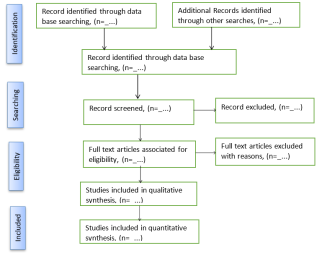
. The PRISMA framework was used to organize the identification, screening, eligibility assessment, and inclusion stages of the review process (
Figure 1).
The methodological framework comprised several interconnected steps, including development of a comprehensive search strategy, application of predefined eligibility criteria, systematic screening of records, structured data extraction, and qualitative synthesis of findings. This structured approach facilitated a focused assessment of evidence on nitrogen use efficiency and precision feeding strategies in dairy production systems, while also improving consistency across the included studies.
2.2. Literature Search Strategy
A broad and systematic search was conducted across major scientific databases, including Web of Science, Scopus, PubMed, CAB Abstracts, and Google Scholar. These sources were selected to ensure comprehensive coverage of peer-reviewed literature in animal nutrition and ruminant metabolism. To minimize publication bias and capture additional relevant evidence, grey literature sources such as conference proceedings, institutional reports, postgraduate theses, and technical documents were also included.
The search was limited to studies published between 2000 and 2025 to capture both foundational concepts and recent advancements in nitrogen metabolism, metabolizable protein systems, and precision feeding approaches
| [10] | Kebreab, E., Clark, K., Wagner-Riddle, C., & France, J. (2010). Methane and nitrous oxide emissions from livestock: Modelling approaches and mitigation strategies. Animal Feed Science and Technology, 166-167, 515-528.
https://doi.org/10.1016/j.anifeedsci.2010.04.015 |
| [20] | National Academies of Sciences, Engineering, and Medicine (NASEM). (2021). Nutrient Requirements of Dairy Cattle (8th revised ed.). Washington, DC: National Academies Press.
https://doi.org/10.17226/25806 |
[10, 20]
. Key terms were combined using Boolean operators (“AND” and “OR”) to improve search precision. The main keywords included: “nitrogen use efficiency,” “metabolizable protein,” “rumen degradable protein,” “rumen undegradable protein,” “amino acid balancing,” “precision feeding,” “dairy cattle,” and “nitrogen excretion.”
Search strings were adapted slightly for each database to account for differences in indexing systems and search interfaces, while maintaining consistency in conceptual focus across all platforms.
2.3. Eligibility Criteria
Eligibility criteria were defined prior to screening to ensure consistency and relevance to the research objectives. Included studies comprised peer-reviewed journal articles, conference papers, and technical reports focusing on protein nutrition and nitrogen metabolism in dairy cattle. Studies addressing nitrogen use efficiency, milk production responses, nitrogen excretion pathways, and precision feeding strategies were considered relevant.
Both experimental approaches (in vivo and in vitro studies) and modeling-based studies were included, provided they contributed quantitative or mechanistic insights into nitrogen utilization processes
| [3] | Broderick, G. A. (2003). Effects of varying dietary protein and energy levels on the production of lactating dairy cows. Journal of Dairy Science, 86, 1370-1381.
https://doi.org/10.3168/jds.S0022-0302(03)73720-2 |
| [4] | Dijkstra, J., France, J., Ellis, J. L., Strathe, A. B., Kebreab, E., & Bannink, A. (2013). Ruminal pH and microbial protein synthesis: Modeling nutrient synchrony. Animal Feed Science and Technology, 183(1-2), 1-13.
https://doi.org/10.1016/j.anifeedsci.2013.04.012 |
[3, 4]
.
Studies were excluded based on the following conditions:
1) Non-ruminant species focus
2) Lack of quantitative or mechanistic relevance to nitrogen metabolism
3) Duplicate datasets or repeated publications
4) Review articles, books, book chapters, or abstracts without primary data
5) Non-English publications
6) The predefined inclusion and exclusion criteria applied during screening are summarized in
Table 1.
2.4. Study Selection Process
The study selection followed a structured PRISMA-guided procedure consisting of four sequential stages: identification, screening, eligibility assessment, and final inclusion. Initially, all records retrieved from the databases were imported into reference management software, where duplicate entries were systematically removed.
In the next stage, titles were screened to exclude clearly irrelevant studies. Remaining articles underwent abstract screening to assess thematic alignment with nitrogen utilization and dairy protein nutrition. Finally, full-text articles were carefully reviewed to confirm eligibility based on predefined criteria (
Table 3).
This multi-stage selection process enhanced transparency, reduced selection bias, and ensured methodological rigor throughout the review process (Moher et al., 2009; Page et al., 2021). The overall workflow is summarized in the PRISMA flow diagram (
Figure 1).
Table 1. Inclusion and Exclusion Criteria.
Criterion | Eligibility | Exclusion |
Literature type | Journal articles, conference papers, technical reports | Books, book chapters, unrelated reviews |
Language | English | Non-English |
Time frame | 2000-2025 | Outside selected years |
Species | Dairy cattle and ruminants | Non-ruminants |
Accessibility | Full-text available | Full-text unavailable |
2.5. Research Questions
Three research questions were formulated to guide the evidence synthesis (
Table 2). These questions were designed to capture both nutritional mechanisms and applied implications of nitrogen use efficiency (NUE) in dairy cattle systems.
Table 2. Research Questions.
Research Questions (RQ) | Description |
RQ1 | What are the main nutritional strategies that influence nitrogen use efficiency in dairy cattle? |
RQ2 | How do metabolizable protein, rumen degradable protein, and rumen undegradable protein affect milk production and nitrogen utilization? |
RQ3 | What are the key research gaps and future directions in precision protein nutrition and environmental sustainability in dairy systems? |
2.6. Systematic Review Process
The study selection followed the PRISMA framework and was implemented through four sequential stages: identification, screening, eligibility assessment, and final inclusion. This structured procedure was used to ensure transparency, traceability, and reproducibility throughout the review process.
In the first stage, all records retrieved from different databases were imported into reference management software, where duplicate entries were systematically identified and removed. The remaining records were then subjected to title screening to eliminate studies that were clearly unrelated to nitrogen utilization or dairy protein nutrition.
Next, abstracts were reviewed to assess thematic relevance to precision protein nutrition, metabolizable protein systems, and nitrogen use efficiency in dairy cattle. Studies that passed this stage were further examined at full-text level against the predefined eligibility criteria to confirm their suitability for inclusion.
The database-specific search strategy is presented in
Table 3, whereas the overall study selection procedure is illustrated in
Figure 1.
Overall, this structured PRISMA-guided approach improved methodological rigor, reduced selection bias, and ensured systematic documentation of all inclusion decisions (Moher et al., 2009; Page et al., 2021).
Table 3. Search Strings Used for the Systematic Review.
Database | Search Area | Keywords / Search Strings |
Web of Science | Topic | “nitrogen use efficiency” AND “dairy cattle” |
Scopus | Title, Abstract, Keywords | “precision feeding” OR “metabolizable protein” |
PubMed | Advanced Search | “rumen degradable protein” AND “nitrogen excretion” |
Google Scholar | Full Search | “precision protein nutrition in dairy cattle” |
CAB Abstracts | Topic Search | “amino acid balancing” AND “milk protein synthesis” |
2.7. Data Extraction and Analysis
Data extraction was carried out using a structured Microsoft Excel template specifically developed for this review. For each included study, key information was systematically recorded, including publication year, geographic location, experimental design, dietary protein composition, crude protein levels, rumen degradable protein (RDP), rumen undegradable protein (RUP), amino acid profile, milk yield, milk protein content, and indicators of nitrogen utilization efficiency and nitrogen excretion.
The extraction process began with abstract-level screening, followed by full-text review to ensure accurate capture of relevant methodological and outcome variables. Extracted data were then synthesized qualitatively to identify major themes and emerging patterns across studies.
Where appropriate, findings from experimental studies were compared with results from modeling approaches to assess consistency and explain observed variation in nitrogen utilization responses
| [8] | Hristov, A. N., Hanigan, M., Cole, A., Todd, R., McAllister, T. A., Ndegwa, P. M., & Rotz, A. (2011). Review: Ammonia emissions from dairy farms and beef feedlots. Canadian Journal of Animal Science, 91(1), 1-35.
https://doi.org/10.4141/CJAS10034 |
| [26] | Reynolds, C. K., Crompton, L. A., & Mills, J. A. N. (2014). Improving the efficiency of nitrogen utilization in cattle. Animal, 8(7), 1184-1198.
https://doi.org/10.1017/S1751731114001022 |
[8, 26]
. This comparative synthesis strengthened interpretation at both mechanistic and system levels.
2.8. Quality Assessment
The methodological quality of the included studies was evaluated using predefined criteria focusing on experimental rigor, sample size adequacy, replication level, clarity of dietary treatments, and reliability of laboratory and analytical methods. Studies were categorized as high, moderate, or low quality based on predefined methodological criteria.
Based on these criteria, studies were categorized as high, moderate, or low quality. During synthesis and interpretation, greater analytical weight was given to studies with stronger experimental design and higher methodological reliability (Sinclair et al., 2014; NASEM, 2021).
Figure 1. The PRISMA flow diagram.
3. Results
3.1. Literature Search Results
The study selection followed the PRISMA guidelines to ensure a transparent and reproducible review process
| [19] | Moher, D., Liberati, A., Tetzlaff, J., & Altman, D. G. (2009). Preferred reporting items for systematic reviews and meta-analyses: The PRISMA statement. PLoS Medicine, 6(7), e1000097. https://doi.org/10.1371/journal.pmed.1000097 |
| [21] | Page, M. J., McKenzie, J. E., Bossuyt, P. M., Boutron, I., Hoffmann, T. C., Mulrow, C. D., et al. (2021). The PRISMA 2020 statement: An updated guideline for reporting systematic reviews. BMJ, 372, n71. https://doi.org/10.1136/bmj.n71 |
[19, 21]
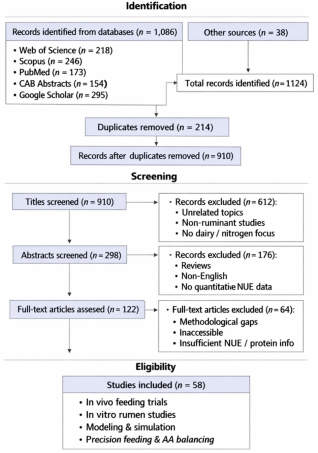
. The comprehensive search across Web of Science, Scopus, PubMed, CAB Abstracts, Google Scholar, and grey literature sources initially identified 895 records related to nitrogen utilization, metabolizable protein, rumen nitrogen metabolism, and precision feeding strategies in dairy cattle.
After removing duplicates using reference management software, the remaining records were screened based on titles and abstracts to assess relevance to nitrogen use efficiency (NUE), protein nutrition, and environmental sustainability in dairy systems. Studies focusing on non-ruminants, non-relevant nutritional topics, reviews, conference abstracts without primary data, and inaccessible full texts were excluded according to predefined criteria.
Following full-text assessment, 67 studies were retained for detailed evaluation, of which 58 studies met all inclusion criteria and were included in the final synthesis (
Figure 2). This selection reflects a focused body of literature directly addressing precision protein nutrition and nitrogen utilization in dairy cattle.
Overall, the included studies covered key themes such as dietary crude protein regulation, rumen degradable protein (RDP), rumen undegradable protein (RUP), metabolizable protein (MP), amino acid balancing, microbial protein synthesis, nitrogen excretion pathways, and emerging precision feeding technologies aimed at improving NUE.
Figure 2. Flow chart of study selection process.
3.2. Study Characteristics
This review synthesized evidence from studies published between 2000 and 2025, focusing exclusively on peer-reviewed research articles to ensure methodological consistency and comparability. Non-research publications such as books, reviews, and abstracts without primary data were excluded.
A total of 58 studies were included in the final analysis (
Figure 1). A clear temporal pattern emerged, with a marked increase in publications after 2010 and a rapid expansion in the last decade. This reflects a broader shift in dairy nutrition research from crude protein-based formulation toward metabolizable protein systems, amino acid balancing, and precision nitrogen management.
The distribution of studies across journal categories is summarized in
Table 4.
Table 4. Distribution of included studies by journal category and publication period.
Journal category | Representative journals | Main focus | Trend (2000-2025) |
A High-impact animal science journals | Journal of Dairy Science, Animal, Journal of Animal Science, Animal Feed Science and Technology | Dairy nutrition, nitrogen metabolism, precision feeding | Dominant and steadily increasing |
B Applied nutrition journals | Journal of Dairy Research, Livestock Science, British Journal of Nutrition, Animal Nutrition | Protein efficiency, rumen function | Stable contribution |
C Agricultural/environmental journals | Science of the Total Environment, Agricultural Systems, PLoS ONE, Sustainability | Nitrogen losses, environmental impacts | Strong growth after 2015 |
D Specialized/technical journals | Biotechnology, modeling, environmental journals | Microbial processes, nitrogen cycling | Gradual increase |
Grey literature | Theses, reports, technical documents | Applied dairy systems | Limited but useful |
Overall, high-impact animal science journals remain the primary source of evidence, although environmental and systems-based research has increased notably, reflecting growing concern for sustainability alongside productivity.
3.3. Overview of the Reviewed Literature
The literature shows a consistent upward trend in research attention toward nitrogen utilization efficiency and precision protein nutrition in dairy cattle between 2000 and 2025. Early work was largely concentrated in North America and Europe, where advanced feeding systems and environmental regulations drove early adoption of nutrient optimization strategies
| [8] | Hristov, A. N., Hanigan, M., Cole, A., Todd, R., McAllister, T. A., Ndegwa, P. M., & Rotz, A. (2011). Review: Ammonia emissions from dairy farms and beef feedlots. Canadian Journal of Animal Science, 91(1), 1-35.
https://doi.org/10.4141/CJAS10034 |
| [20] | National Academies of Sciences, Engineering, and Medicine (NASEM). (2021). Nutrient Requirements of Dairy Cattle (8th revised ed.). Washington, DC: National Academies Press.
https://doi.org/10.17226/25806 |
[8, 20]
.
More recent studies from Asia indicate growing interest in sustainable dairy nutrition and emission reduction strategies
| [32] | White, R. R., Capper, J. L., & McFadden, J. W. (2023). Precision nutrition and environmental sustainability in dairy cattle production. Frontiers in Animal Science, 4, 1189452.
https://doi.org/10.3389/fanim.2023.1189452 |
[32]
. However, research from African dairy systems remains limited, particularly under smallholder and tropical conditions, highlighting a clear geographic knowledge gap.
Recent modelling studies have increasingly contributed to evaluating nitrogen flows, economic trade-offs, and environmental consequences of alternative feeding strategies at farm and system levels
| [10] | Kebreab, E., Clark, K., Wagner-Riddle, C., & France, J. (2010). Methane and nitrous oxide emissions from livestock: Modelling approaches and mitigation strategies. Animal Feed Science and Technology, 166-167, 515-528.
https://doi.org/10.1016/j.anifeedsci.2010.04.015 |
| [12] | Kebreab, E., France, J., Mills, J. A. N., Allison, R., & Dijkstra, J. (2010). A dynamic model of nitrogen metabolism in dairy cattle and environmental implications. Ecological Modelling, 221(16), 1907-1917.
https://doi.org/10.1016/j.ecolmodel.2010.05.012 |
| [14] | Kebreab, E., Strathe, A. B., Fadel, J. G., Moraes, L. E., & Casper, D. P. (2023). Nitrogen efficiency and environmental sustainability in dairy cattle systems. Frontiers in Animal Science, 4, 112233. https://doi.org/10.3389/fanim.2023.112233 |
[10, 12, 14]
. Despite methodological differences, these studies converge on a common conclusion: improving nitrogen use efficiency requires better synchronization of dietary nitrogen supply with microbial and metabolic demand.
This progression also reflects a conceptual shift from crude protein-centered feeding toward metabolizable protein (MP)-based and amino acid-oriented nutritional models.
Table 5. General Characteristics of the Reviewed Studies.
Study Category | Main Focus | Common Outcomes |
In vivo feeding trials | Dietary protein manipulation | Milk yield, nitrogen excretion responses |
In vitro rumen studies | Fermentation dynamics | Ammonia production, microbial protein synthesis |
Modeling studies | System-level evaluation | Environmental and economic performance |
Precision feeding studies | Amino acid balancing | Improved NUE, reduced N losses |
3.4. Concepts of Nitrogen Utilization in Dairy Cattle
Nitrogen use efficiency (NUE) refers to the proportion of dietary nitrogen converted into productive outputs, mainly milk protein, rather than being lost through excretion
| [10] | Kebreab, E., Clark, K., Wagner-Riddle, C., & France, J. (2010). Methane and nitrous oxide emissions from livestock: Modelling approaches and mitigation strategies. Animal Feed Science and Technology, 166-167, 515-528.
https://doi.org/10.1016/j.anifeedsci.2010.04.015 |
| [20] | National Academies of Sciences, Engineering, and Medicine (NASEM). (2021). Nutrient Requirements of Dairy Cattle (8th revised ed.). Washington, DC: National Academies Press.
https://doi.org/10.17226/25806 |
[10, 20]
. Improving NUE is increasingly recognized as a central goal because it links animal productivity, feed efficiency, and environmental sustainability.
In ruminants, nitrogen metabolism is primarily regulated by rumen microbial fermentation. Dietary protein is degraded into rumen degradable protein (RDP), which supports microbial growth, while rumen undegradable protein (RUP) bypasses the rumen and is digested in the small intestine
. Together with microbial crude protein (MCP) and endogenous contributions, these fractions determine metabolizable protein (MP), the actual protein available for absorption and production
| [20] | National Academies of Sciences, Engineering, and Medicine (NASEM). (2021). Nutrient Requirements of Dairy Cattle (8th revised ed.). Washington, DC: National Academies Press.
https://doi.org/10.17226/25806 |
[20]
.
Nitrogen efficiency is therefore governed not only by total protein intake but by the balance between protein fractions, fermentable energy, and amino acid supply. Excess nitrogen is converted to urea and excreted, contributing to environmental losses such as ammonia volatilization, nitrate leaching, and nitrous oxide emissions
| [8] | Hristov, A. N., Hanigan, M., Cole, A., Todd, R., McAllister, T. A., Ndegwa, P. M., & Rotz, A. (2011). Review: Ammonia emissions from dairy farms and beef feedlots. Canadian Journal of Animal Science, 91(1), 1-35.
https://doi.org/10.4141/CJAS10034 |
| [23] | Powell, J. M., Rotz, C. A., & Wattiaux, M. A. (2022). Environmental implications of nitrogen management in dairy production systems. Agricultural Systems, 198, 103365.
https://doi.org/10.1016/j.agsy.2022.103365 |
[8, 23]
.
Table 6. Major Concepts of Nitrogen Utilization in Dairy Cattle.
Concept | Description | Importance |
NUE | Efficiency of nitrogen conversion to milk protein | Production & environmental indicator |
RDP | Rumen-degraded protein | Microbial growth support |
RUP | Bypass protein | Amino acid supply |
MCP | Microbial protein | Major amino acid source |
MP | Absorbable protein | Milk synthesis support |
MUN | Milk urea nitrogen | Diet balance indicator |
3.5. Dietary Crude Protein and NUE
Across studies, dietary crude protein (CP) level consistently emerged as a primary driver of nitrogen efficiency. High-CP diets were repeatedly associated with elevated milk urea nitrogen (MUN) concentrations and increased urinary nitrogen losses, with little or no improvement in milk yield
| [3] | Broderick, G. A. (2003). Effects of varying dietary protein and energy levels on the production of lactating dairy cows. Journal of Dairy Science, 86, 1370-1381.
https://doi.org/10.3168/jds.S0022-0302(03)73720-2 |
| [7] | Hristov, A. N., Bannink, A., Crompton, L. A., Huhtanen, P., Kreuzer, M., McGee, M., Nozière, P., Reynolds, C. K., Bayat, A. R., Yan, T., & Dijkstra, J. (2022). Nitrogen in ruminant nutrition: Efficiency and environmental impacts. Animal, 16(S1), 100-115. https://doi.org/10.1016/j.animal.2021.100357 |
[3, 7]
.
This indicates inefficient nitrogen capture, whereby excess dietary protein is converted into urea and excreted, resulting in both economic losses and increased environmental pollution risks
| [22] | Powell, J. M., Gourley, C. J. P., Rotz, C. A., & Weaver, D. M. (2010). Nitrogen use efficiency: A potential performance indicator and policy tool for dairy farms. Environmental Science & Policy, 13(3), 217-228.
https://doi.org/10.1016/j.envsci.2010.03.007 |
[22]
.
In contrast, moderate reductions in dietary CP, when combined with appropriate energy supply and amino acid balance, were shown to maintain milk production while improving nitrogen retention efficiency
| [15] | Lee, C., Hristov, A. N., & Cassidy, T. (2022). Effects of dietary crude protein on nitrogen excretion and milk production in dairy cows. Journal of Dairy Science, 105(6), 5021-5035.
https://doi.org/10.3168/jds.2021-21695 |
| [32] | White, R. R., Capper, J. L., & McFadden, J. W. (2023). Precision nutrition and environmental sustainability in dairy cattle production. Frontiers in Animal Science, 4, 1189452.
https://doi.org/10.3389/fanim.2023.1189452 |
[15, 32]
.
Table 7. Effects of Dietary Protein Level on Nitrogen Utilization.
Condition | Production Response | Nitrogen Loss |
Excess CP | Slight/no milk gain | High urinary N |
Balanced CP | Stable production | Improved retention |
CP reduction + AA balance | Stable milk protein | Reduced losses |
Imbalance | Poor efficiency | High ammonia/urea |
3.6. Rumen Protein Fractions and Microbial Efficiency
The balance between rumen degradable protein (RDP) and rumen undegradable protein (RUP) plays a central role in nitrogen utilization efficiency. Previous research has demonstrated that inappropriate synchronization between ruminal nitrogen release and carbohydrate fermentation reduces microbial protein capture and increases nitrogen losses
| [4] | Dijkstra, J., France, J., Ellis, J. L., Strathe, A. B., Kebreab, E., & Bannink, A. (2013). Ruminal pH and microbial protein synthesis: Modeling nutrient synchrony. Animal Feed Science and Technology, 183(1-2), 1-13.
https://doi.org/10.1016/j.anifeedsci.2013.04.012 |
| [12] | Kebreab, E., France, J., Mills, J. A. N., Allison, R., & Dijkstra, J. (2010). A dynamic model of nitrogen metabolism in dairy cattle and environmental implications. Ecological Modelling, 221(16), 1907-1917.
https://doi.org/10.1016/j.ecolmodel.2010.05.012 |
| [31] | Van Soest, P. J. (1994). Nutritional Ecology of the Ruminant (2nd ed.). Ithaca, NY: Cornell University Press. |
[4, 12, 31]
. Adequate RDP supports microbial protein synthesis, which is a major source of metabolizable protein
| [20] | National Academies of Sciences, Engineering, and Medicine (NASEM). (2021). Nutrient Requirements of Dairy Cattle (8th revised ed.). Washington, DC: National Academies Press.
https://doi.org/10.17226/25806 |
[20]
.
However, excess RDP leads to ammonia accumulation and increased urinary nitrogen losses
| [8] | Hristov, A. N., Hanigan, M., Cole, A., Todd, R., McAllister, T. A., Ndegwa, P. M., & Rotz, A. (2011). Review: Ammonia emissions from dairy farms and beef feedlots. Canadian Journal of Animal Science, 91(1), 1-35.
https://doi.org/10.4141/CJAS10034 |
[8]
. Conversely, insufficient RUP restricts amino acid supply to high-producing dairy cows
| [27] | Schwab, C. G., & Broderick, G. A. (2022). A 100-year review: Protein and amino acid nutrition in dairy cows. Journal of Dairy Science, 105(3), 1885-1912.
https://doi.org/10.3168/jds.2021-20766 |
[27]
.
Optimal nitrogen efficiency is achieved when rumen nitrogen release is synchronized with carbohydrate fermentation, improving microbial protein capture and reducing nitrogen losses.
Table 8. Functional Roles of RDP and RUP.
Fraction | Function | Imbalance Effect |
RDP | Microbial support | Ammonia excess |
RUP | Amino acid supply | Production limits |
Balanced ratio | Efficient synthesis | Improved NUE |
3.7. Metabolizable Protein and Amino Acid Balancing
Metabolizable protein (MP) provides a more accurate representation of usable dietary protein than crude protein systems
| [20] | National Academies of Sciences, Engineering, and Medicine (NASEM). (2021). Nutrient Requirements of Dairy Cattle (8th revised ed.). Washington, DC: National Academies Press.
https://doi.org/10.17226/25806 |
[20]
. It reflects absorbed amino acids available for maintenance and milk production.
Lysine and methionine were consistently identified as the first-limiting amino acids in dairy cows
| [16] | Lee, C., Hristov, A. N., Cassidy, T. W., Heyler, K. S., Lapierre, H., Varga, G. A., Parys, C., & Brzezicka, E. (2012). Rumen-protected lysine, methionine, and histidine increase milk protein yield in dairy cows. Journal of Dairy Science, 95(10), 6042-6056. https://doi.org/10.3168/jds.2012-5581 |
| [29] | Sinclair, K. D., Garnsworthy, P. C., & Webb, R. (2014). Effects of nutrition and metabolic status on reproductive efficiency in dairy cattle. Animal, 8(S1), 1-10.
https://doi.org/10.1017/S1751731114000224 |
[16, 29]
. Optimizing essential amino acid supply allows reductions in dietary crude protein while maintaining milk protein production and improving nitrogen retention efficiency
| [2] | Arriola Apelo, S. I., Singer, L. M., & Kebreab, E. (2023). Precision nutrition in dairy cattle: Advances in amino acid and nitrogen utilization. Journal of Dairy Science, 106(2), 1201-1220.
https://doi.org/10.3168/jds.2022-22468 |
| [28] | Schwab, C. G., & Broderick, G. A. (2022). Balancing amino acids in dairy cattle diets for improved nitrogen efficiency. Journal of Dairy Science, 105(8), 6780-6795.
https://doi.org/10.3168/jds.2022-22006 |
| [34] | White, R. R., Hanigan, M. D., & Arriola Apelo, S. I. (2023). Precision feeding and amino acid balancing strategies for improving nitrogen efficiency in dairy cows. Journal of Dairy Science, 106(9), 6120-6138.
https://doi.org/10.3168/jds.2023-23211 |
| [36] | Zanton, G. I., & VandeHaar, M. J. (2022). Precision feeding and protein utilization in lactating dairy cows. Veterinary Clinics of North America: Food Animal Practice, 38(3), 487-503.
https://doi.org/10.1016/j.cvfa.2022.06.004 |
[2, 28, 34, 36]
. Their supplementation improves milk protein yield and nitrogen efficiency even at reduced crude protein levels.
Table 9. Benefits of MP-Based Feeding.
Strategy | Benefit |
CP-based feeding | Simple but less precise |
MP-based feeding | More biologically accurate |
Amino acid balancing | Higher efficiency |
Precision feeding | Lower nitrogen loss |
3.8. Production Trade-offs and Precision Feeding
Precision feeding strategies that synchronize amino acid supply with energy availability can maintain milk yield while improving nitrogen efficiency. Recent studies indicate that precision ration formulation and targeted nutrient delivery can simultaneously improve productivity, economic efficiency, and environmental performance
| [17] | Lee, C., Morris, D. L., & Dietrich, K. (2022). Precision feeding strategies for improving nitrogen efficiency in dairy cattle. Animals, 12(9), 1183. https://doi.org/10.3390/ani12091183 |
| [18] | Lee, C., Morris, D. L., & Dietz, R. E. (2022). Dietary protein reduction and nitrogen efficiency in dairy cows. Animal Feed Science and Technology, 289, 115340.
https://doi.org/10.1016/j.anifeedsci.2022.115340 |
| [30] | Sinclair, L. A., Blake, C. W., & Griffin, P. (2014). Precision feeding strategies and nitrogen utilization in dairy cattle. Animal, 8(5), 780-790.
https://doi.org/10.1017/S1751731114000339 |
| [35] | Zanton, G. I., & VandeHaar, M. J. (2022). Feeding strategies to optimize milk production and nitrogen efficiency. Journal of Dairy Science, 105(3), 2100-2115.
https://doi.org/10.3168/jds.2021-21458 |
| [36] | Zanton, G. I., & VandeHaar, M. J. (2022). Precision feeding and protein utilization in lactating dairy cows. Veterinary Clinics of North America: Food Animal Practice, 38(3), 487-503.
https://doi.org/10.1016/j.cvfa.2022.06.004 |
| [37] | Zanton, G. I., & VandeHaar, M. J. (2022). Revisiting protein nutrition in dairy cattle: Balancing production and sustainability. Journal of Dairy Science, 105(5), 4012-4028.
https://doi.org/10.3168/jds.2021-21566 |
[17, 18, 30, 35-37]
. However, this trade-off is not biological but nutritional in origin.
Precision feeding strategies that synchronize amino acid supply with energy availability can maintain milk yield while improving nitrogen efficiency and reducing nitrogen excretion
| [1] | Arriola Apelo, S. I., Knapp, J. R., & Hanigan, M. D. (2023). Invited review: Current understanding and future directions for nitrogen utilization efficiency in dairy cattle. Journal of Dairy Science, 106, 1-18. https://doi.org/10.3168/jds.2022-22706 |
| [35] | Zanton, G. I., & VandeHaar, M. J. (2022). Feeding strategies to optimize milk production and nitrogen efficiency. Journal of Dairy Science, 105(3), 2100-2115.
https://doi.org/10.3168/jds.2021-21458 |
[1, 35]
.
3.9. Environmental Implications of Nitrogen Loss
Urinary nitrogen is rapidly converted into ammonia, nitrate, and nitrous oxide, creating environmental impacts that extend beyond the farm boundary. These nitrogen pathways are major contributors to atmospheric pollution, eutrophication, and greenhouse gas emissions from livestock systems
| [5] | Dijkstra, J., Oenema, O., van Groenigen, J. W., Spek, J. W., van Vuuren, A. M., & Bannink, A. (2013). Diet effects on urine composition of cattle and N2O emissions. Animal, 7(S2), 292-302. https://doi.org/10.1017/S1751731113000578 |
| [9] | Hristov, A. N., Oh, J., Firkins, J. L., Dijkstra, J., Kebreab, E., Waghorn, G., Makkar, H. P. S., Adesogan, A. T., Yang, W., Lee, C., Gerber, P. J., Henderson, B., & Tricarico, J. M. (2011). Mitigation of greenhouse gas emissions in livestock production - A review. Journal of Animal Science, 89(11), 4382-4405.
https://doi.org/10.2527/jas.2011-4609 |
| [13] | Kebreab, E., Liedke, A., Caro, D., et al. (2023). Environmental impacts of dairy production and mitigation strategies. Annual Review of Animal Biosciences, 11, 1-25.
https://doi.org/10.1146/annurev-animal-021022-102356 |
| [23] | Powell, J. M., Rotz, C. A., & Wattiaux, M. A. (2022). Environmental implications of nitrogen management in dairy production systems. Agricultural Systems, 198, 103365.
https://doi.org/10.1016/j.agsy.2022.103365 |
| [24] | Powell, J. M., Rotz, C. A., & Wattiaux, M. A. (2022). Nitrogen cycling and environmental losses in dairy production systems. Agriculture, Ecosystems & Environment, 330, 107891.
https://doi.org/10.1016/j.agee.2022.107891 |
| [25] | Powell, J. M., Wattiaux, M. A., & Rotz, C. A. (2010). Nitrogen use efficiency and losses in dairy production systems. Journal of Environmental Quality, 39(6), 211-220.
https://doi.org/10.2134/jeq2010.0128 |
| [33] | White, R. R., Hall, M. B., & Firkins, J. L. (2023). Nitrogen utilization and environmental impact in dairy cattle: A review. Animal Feed Science and Technology, 305, 115132.
https://doi.org/10.1016/j.anifeedsci.2023.115132 |
[5, 9, 13, 23-25, 33]
. A consistent relationship was observed between high dietary protein intake and increased nitrogen emissions
| [11] | Kebreab, E., Dijkstra, J., Bannink, A., France, J., & Martin, C. (2023). Nutrient management and greenhouse gas emissions in dairy systems. Global Change Biology, 29(3), 845-860.
https://doi.org/10.1111/gcb.16531 |
[11]
.
Table 10. Environmental Impacts of Nitrogen Loss.
Pathway | Impact |
Ammonia | Air pollution |
Nitrate | Water contamination |
N2O | Climate change |
Manure N | Eutrophication |
3.10. Modeling Insights
Modeling studies consistently show that reducing dietary crude protein while maintaining amino acid balance improves both economic and environmental performance. Process-based and farm-scale models have demonstrated that integrated nitrogen management can reduce emissions while maintaining animal productivity
| [10] | Kebreab, E., Clark, K., Wagner-Riddle, C., & France, J. (2010). Methane and nitrous oxide emissions from livestock: Modelling approaches and mitigation strategies. Animal Feed Science and Technology, 166-167, 515-528.
https://doi.org/10.1016/j.anifeedsci.2010.04.015 |
| [12] | Kebreab, E., France, J., Mills, J. A. N., Allison, R., & Dijkstra, J. (2010). A dynamic model of nitrogen metabolism in dairy cattle and environmental implications. Ecological Modelling, 221(16), 1907-1917.
https://doi.org/10.1016/j.ecolmodel.2010.05.012 |
| [14] | Kebreab, E., Strathe, A. B., Fadel, J. G., Moraes, L. E., & Casper, D. P. (2023). Nitrogen efficiency and environmental sustainability in dairy cattle systems. Frontiers in Animal Science, 4, 112233. https://doi.org/10.3389/fanim.2023.112233 |
| [22] | Powell, J. M., Gourley, C. J. P., Rotz, C. A., & Weaver, D. M. (2010). Nitrogen use efficiency: A potential performance indicator and policy tool for dairy farms. Environmental Science & Policy, 13(3), 217-228.
https://doi.org/10.1016/j.envsci.2010.03.007 |
[10, 12, 14, 22]
. Synchronization of rumen nitrogen and energy supply improves microbial protein synthesis efficiency
| [4] | Dijkstra, J., France, J., Ellis, J. L., Strathe, A. B., Kebreab, E., & Bannink, A. (2013). Ruminal pH and microbial protein synthesis: Modeling nutrient synchrony. Animal Feed Science and Technology, 183(1-2), 1-13.
https://doi.org/10.1016/j.anifeedsci.2013.04.012 |
[4]
.
Nitrogen efficiency is driven by interactions among dietary composition, rumen microbial activity, and systemic metabolism
| [20] | National Academies of Sciences, Engineering, and Medicine (NASEM). (2021). Nutrient Requirements of Dairy Cattle (8th revised ed.). Washington, DC: National Academies Press.
https://doi.org/10.17226/25806 |
| [26] | Reynolds, C. K., Crompton, L. A., & Mills, J. A. N. (2014). Improving the efficiency of nitrogen utilization in cattle. Animal, 8(7), 1184-1198.
https://doi.org/10.1017/S1751731114001022 |
[20, 26]
. The most effective strategies combine reduced crude protein intake, optimized RDP balance, amino acid supplementation, and energy synchronization
| [1] | Arriola Apelo, S. I., Knapp, J. R., & Hanigan, M. D. (2023). Invited review: Current understanding and future directions for nitrogen utilization efficiency in dairy cattle. Journal of Dairy Science, 106, 1-18. https://doi.org/10.3168/jds.2022-22706 |
| [32] | White, R. R., Capper, J. L., & McFadden, J. W. (2023). Precision nutrition and environmental sustainability in dairy cattle production. Frontiers in Animal Science, 4, 1189452.
https://doi.org/10.3389/fanim.2023.1189452 |
[1, 32]
.
4. Discussion
Findings confirm that excessive crude protein intake is a major driver of nitrogen inefficiency, increasing nitrogen excretion without proportional improvements in milk production. Similar conclusions have been reported across experimental, modelling, and farm-scale studies emphasizing improved protein precision rather than increased protein supply
| [7] | Hristov, A. N., Bannink, A., Crompton, L. A., Huhtanen, P., Kreuzer, M., McGee, M., Nozière, P., Reynolds, C. K., Bayat, A. R., Yan, T., & Dijkstra, J. (2022). Nitrogen in ruminant nutrition: Efficiency and environmental impacts. Animal, 16(S1), 100-115. https://doi.org/10.1016/j.animal.2021.100357 |
| [15] | Lee, C., Hristov, A. N., & Cassidy, T. (2022). Effects of dietary crude protein on nitrogen excretion and milk production in dairy cows. Journal of Dairy Science, 105(6), 5021-5035.
https://doi.org/10.3168/jds.2021-21695 |
| [18] | Lee, C., Morris, D. L., & Dietz, R. E. (2022). Dietary protein reduction and nitrogen efficiency in dairy cows. Animal Feed Science and Technology, 289, 115340.
https://doi.org/10.1016/j.anifeedsci.2022.115340 |
| [22] | Powell, J. M., Gourley, C. J. P., Rotz, C. A., & Weaver, D. M. (2010). Nitrogen use efficiency: A potential performance indicator and policy tool for dairy farms. Environmental Science & Policy, 13(3), 217-228.
https://doi.org/10.1016/j.envsci.2010.03.007 |
| [27] | Schwab, C. G., & Broderick, G. A. (2022). A 100-year review: Protein and amino acid nutrition in dairy cows. Journal of Dairy Science, 105(3), 1885-1912.
https://doi.org/10.3168/jds.2021-20766 |
[7, 15, 18, 22, 27]
. The shift toward metabolizable protein and amino acid-based nutrition reflects improved biological accuracy in diet formulation
| [20] | National Academies of Sciences, Engineering, and Medicine (NASEM). (2021). Nutrient Requirements of Dairy Cattle (8th revised ed.). Washington, DC: National Academies Press.
https://doi.org/10.17226/25806 |
[20]
.
4.1. Conclusion
This review demonstrates that improving nitrogen use efficiency (NUE) in dairy cattle relies primarily on enhancing the accuracy of protein utilization rather than increasing dietary crude protein levels. Across the reviewed studies, excessive protein supply was consistently linked with increased nitrogen losses and limited gains in milk production. In contrast, strategies that improve amino acid balance, optimize rumen microbial activity, and synchronize nitrogen and energy availability enhance the conversion of dietary nitrogen into milk protein.
The available evidence supports a shift from conventional crude protein-based ration formulation toward metabolizable protein and amino acid-based feeding approaches that more closely match animal requirements. Such targeted nutritional management can improve feed efficiency, reduce nitrogen emissions, and contribute to more environmentally sustainable dairy production systems.
4.2. Future Directions
Although substantial progress has been made in understanding nitrogen metabolism and improving protein utilization, several research gaps remain. Current evidence is largely derived from intensive dairy systems in developed regions, while knowledge from tropical, smallholder, and low-input production systems is still limited. Future studies should therefore focus on developing context-specific feeding strategies that incorporate differences in feed resources, climate conditions, animal characteristics, and farm management practices.
Further long-term field evaluations are needed to assess the economic feasibility, environmental benefits, and practical adoption of precision protein feeding under diverse production conditions. Emerging technologies, including digital monitoring tools, predictive models, and automated feeding systems, may further improve nutrient management and support real-time dietary optimization.
Future research should also adopt integrated approaches that link nitrogen efficiency with greenhouse gas mitigation, animal health, reproductive performance, and climate resilience. Combining nutritional innovations with environmental assessment and technological advancement will be critical for developing dairy systems that achieve higher productivity while reducing ecological impacts. Overall, precision protein nutrition offers a promising pathway toward more efficient, profitable, and sustainable dairy production.





 Share This Article
 Twitter
 Linked In
 Facebook
 Copy
Copy Download