Research Article | | Peer-Reviewed

Experiences and Needs of Nursing Interns in Nurse-Patient Communication Simulation Training: A Qualitative Study

Received: 27 May 2026     Accepted: 8 June 2026     Published: 26 June 2026
Views:       Downloads:
Abstract

Background: Effective nurse-patient communication is essential for quality care, yet nursing interns often lack practical skills. Simulation-based education is promising, but qualitative research on interns' lived experiences remains limited. Purpose: This study explored the authentic experiences and needs of nursing interns during nurse-patient communication simulation training. Methods: A qualitative descriptive study with a phenomenological approach was conducted. Semi-structured interviews were held with 18 nursing interns from a Chinese university hospital between April and June 2024. Data were analyzed using Colaizzi's seven-step phenomenological method. Results: Six themes emerged: (1) negative emotional experiences during participation; (2) recognition of the Communication Simulation Training model; (3) perceived deficiency in communication skills; (4) improvement in clinical communication competence; (5) implications for future clinical practice; and (6) expectations or unmet learning needs. Participants experienced significant anxiety yet valued the realistic learning environment, recognizing both their communication limitations and growth opportunities. Conclusions: Communication Simulation Training effectively addresses the theory-practice gap in communication skills development. Clinical educators should enhance simulation-based teaching through standardized training management and diversified strategies to improve nursing interns' communication competence and foster higher-quality patient care.

Published in American Journal of Nursing Science (Volume 15, Issue 3)
DOI 10.11648/j.ajns.20261503.14
Page(s) 68-82
Creative Commons

This is an Open Access article, distributed under the terms of the Creative Commons Attribution 4.0 International License (http://creativecommons.org/licenses/by/4.0/), which permits unrestricted use, distribution and reproduction in any medium or format, provided the original work is properly cited.

Copyright

Copyright © The Author(s), 2026. Published by Science Publishing Group

Keywords

Clinical Communication, Communication Simulation Training, Nurse-Patient Relationship, Nursing Education, Nursing Interns, Qualitative Research

1. Introduction
Clinical communication competence is a fundamental skill for nurses and a core behavior that epitomizes the professional value of nursing . Effective nurse-patient communication serves as the bedrock for establishing harmonious relationships and is a critical determinant in enhancing the quality of patient care . Research has consistently demonstrated that proficient communication contributes significantly to patient outcomes, including accelerated recovery, improved pain management, greater adherence to treatment plans, and an enhanced overall quality of life .
Nursing interns, as novice practitioners entering clinical settings, require foundational communication skills to perform their duties effectively . However, limited clinical exposure often results in inadequate practical communication experience and technique, frequently leading to communication barriers . Studies indicate that nursing students’ communication skills are generally below average, and approximately 65% of nurse-patient disputes are attributed to communication failures by nursing students .
Although Communication Simulation Training demonstrates recognized efficacy as a teaching methodology, current research remains predominantly quantitative, with relatively limited in-depth qualitative investigations exploring interns' subjective experiences and learning needs during such training. This study therefore employs a phenomenological approach to extend the current understanding of nursing interns' authentic experiences and needs during Communication Simulation Training.
2. Background
2.1. Clinical Communication in Nursing
Clinical communication in nursing encompasses the complex interplay of knowledge, skills, and attitudes required to effectively exchange information, build rapport, and facilitate shared decision-making with patients and healthcare teams . It is a core clinical competency that directly impacts patient safety, satisfaction, and care outcomes. For nursing interns, who are in a critical transition from student to professional, the ability to communicate effectively is not merely an academic exercise but a fundamental requirement for safe practice and professional socialization .
2.2. The Theory-Practice Gap and Chinese Context
A significant challenge in cultivating this competency lies in the inherent theory-practice gap within nursing education. This is particularly pronounced in the Chinese context, where educational paradigms have historically placed a stronger emphasis on theoretical knowledge acquisition than on the development of practical communicative abilities . Consequently, while Chinese nursing students often possess robust theoretical foundations, they frequently experience considerable anxiety and demonstrate a lack of preparedness when confronted with the unstructured and emotionally charged communication scenarios of real-world clinical practice .
2.3. Definition of “Internship” in This Study
To avoid ambiguity due to global variations in nursing training structures, we clarify that in the context of this study (China), a “nursing internship” refers to a supervised, full-time clinical placement undertaken by nursing students in the final year of their academic program (either a three-year junior college or a four-year baccalaureate degree). During this period (typically 8–10 months), interns rotate through various hospital departments, working under the direct supervision of a clinical instructor (preceptor). They are expected to integrate theoretical knowledge into practice, develop basic clinical skills, and gradually assume responsibility for patient care. This internship is a mandatory component for graduation and licensure eligibility.
2.4. Simulation-Based Training and Research Gap
Communication Simulation Training has been identified as a potent pedagogical strategy to bridge this theory-practice gap. It is an experiential learning approach where students engage in simulated exercises through role-playing and dialogue within environments meticulously designed to replicate authentic clinical situations . This method is characterized by its dual principles of authenticity and purposefulness, providing a controlled yet realistic setting for students to practice and refine their skills without risk to actual patients . The clinical internship period is universally acknowledged as the most pivotal stage for integrating and applying these communication skills into practice .
However, the existing body of literature on Communication Simulation Training possesses a notable limitation. The majority of domestic and international studies have explored the effects of this method from a quantitative research perspective, primarily focusing on measuring outcomes such as skill acquisition rates or confidence levels through scales and surveys . There is a conspicuous scarcity of qualitative research that delves into the lived experiences, subjective perceptions, and intrinsic needs of the nursing interns themselves. This gap underscores a lack of understanding of the phenomenological aspects of the learning process, which are Communication Simulation Training crucial for clinical educators to design more empathetic, learner-centered, and effective training interventions. Therefore, this study employs a phenomenological research approach to gain an in-depth understanding of nursing interns' authentic experiences and needs during Communication Simulation Training.
3. Methods
3.1. Study Design
A descriptive qualitative design was used to address the study aim. This approach was selected to provide a rich, straight description of the participants' experiences and needs. The research adhered to the Consolidated Criteria for Reporting Qualitative Research (COREQ) guidelines .
3.2. Participants and Setting
The study was conducted between April and June 2024 in the surgical department of the First Affiliated Hospital of Jinan University in Guangzhou, China. Using purposive sampling to ensure diversity in educational backgrounds, we recruited 18 nursing interns (5 undergraduates and 13 junior college students) who had completed a structured Communication Simulation Training course on nurse–patient communication.
The clinical teaching team recruited potential participants in person by introducing the study. Interested individuals were then screened against the inclusion criteria. All eligible participants received a detailed information sheet and provided written informed consent before participating. No one refused to participate or dropped out subsequently. Recruitment continued until data saturation was achieved, which was defined as three consecutive interviews yielding no new themes. Consequently, no repeat interviews were necessary.
3.3. Inclusion and Exclusion Criteria
Participants were included if they (1) were nursing interns in the surgical department, (2) had fully participated in the Communication Simulation Training teaching activity, and (3) able to provide informed consent. Participants were excluded if their participation in the teaching process was incomplete.
3.4. Data Collection
Semi-structured interviews were conducted face-to-face in quiet rooms within the hospital to avoid disruptions. An interview guide (Table 1) was developed based on literature and teaching objectives, covering topics such as simulation experience, skill development, and training suggestions. The interview guide was pilot-tested with two nursing interns (not included in the final sample) to ensure clarity and relevance.
Table 1. The semi-structured interview question list.

No.

Questions

1

What are your views on implementing the nurse-patient Communication Simulation Training model during clinical internship?

2

What were your thoughts and experiences during the simulation?

3

What did you gain from the nurse-patient communication simulation?

4

Which aspects do you think you performed well in, and which areas still need improvement?

5

What impact does this have on your future clinical practice?

6

Do you have any needs or suggestions regarding this teaching method or clinical instructors?

Each interview lasted 20–60 minutes and was audio-recorded with consent, alongside concurrent field notes. Interviews were carried out by two research team members. One researcher holds a Master of Nursing degree, engages in clinical nursing education work, and received systematic training in qualitative interviewing. This researcher also has practical experience in phenomenological clinical education research, and had no prior acquaintance with enrolled participants. The researcher knew all participants were surgical nursing interns who had finished Communication Simulation Training training, and clearly disclosed the academic focus on nursing simulation learning experience to interviewees. Probing, paraphrasing and summarizing strategies were adopted to acquire in-depth information. Data collection and preliminary analysis proceeded iteratively until thematic saturation was achieved.
3.5. Data Analysis
The Colaizzi seven-step phenomenological analysis was used to analyze the data. Interview recordings were transcribed verbatim and anonymized. Two researchers independently coded the transcripts using NVivo 12.0 software. Initial codes were grouped into subthemes and themes through an iterative process of discussion and refinement. Discrepancies were resolved through consensus. Thematic saturation was confirmed after the 18th interview. To enhance credibility, the preliminary thematic structure was discussed with the entire research team, which included senior nursing educators and a qualitative research methodologist. Themes were derived inductively from the data rather than pre-determined.
3.6. Ethical Considerations
According to the institutional policy of the First Affiliated Hospital of Jinan University, ethical approval was not required for this study because it involved only nursing interns (not patients) and did not include any experimental interventions. However, all participants provided written informed consent prior to enrollment, and the study was conducted in accordance with the ethical principles of the Declaration of Helsinki. Participants were fully briefed on study objectives, experimental procedures, data privacy rules and the right to opt out freely at any stage. All personal identifiable information was deleted, and research data was preserved under secure storage to safeguard personal privacy.
3.7. Rigour and Reflexivity
Trustworthiness was ensured according to the criteria established by Lincoln and Guba . Credibility was established through prolonged engagement and member checking; a summary of the findings was returned to five participants for verification, and their feedback was incorporated into the final analysis. Dependability was achieved by maintaining a clear audit trail of all research decisions. Confirmability was strengthened through reflexivity: during regular meetings, all researchers documented and discussed their assumptions and biases regarding simulation education. For instance, the team acknowledged their prior belief in the value of simulation and consciously worked to avoid leading questions during interviews or imposing pre-conceived themes during analysis. Finally, transferability was supported by providing thick descriptions of the study context and participant characteristics.
4. Results
Characteristics of Participants
All 18 participants were female nursing interns aged 20~22 years. Among them, 13 were junior college students and 5 were undergraduate students. All had completed a Communication Simulation Training training course on nurse–patient communication within the surgical department of the First Affiliated Hospital of Jinan University. General participant information is summarized in Table 2.
Table 2. General Information of Interviewees (n=18).

Participant ID

gender

Age (years)

Educational Background

C1

Female

21

Junior College

C2

Female

20

Junior College

C3

Female

22

Junior College

C4

Female

21

Junior College

C5

Female

20

Bachelor's Degree

C6

Female

21

Bachelor's Degree

C7

Female

22

Junior College

C8

Female

21

Junior College

C9

Female

21

Junior College

C10

Female

20

Junior College

C11

Female

20

Junior College

C12

Female

21

Junior College

C13

Female

21

Junior College

C14

Female

22

Bachelor's Degree

C15

Female

22

Junior College

C16

Female

21

Junior College

C17

Female

20

Junior College

C18

Female

21

Junior College

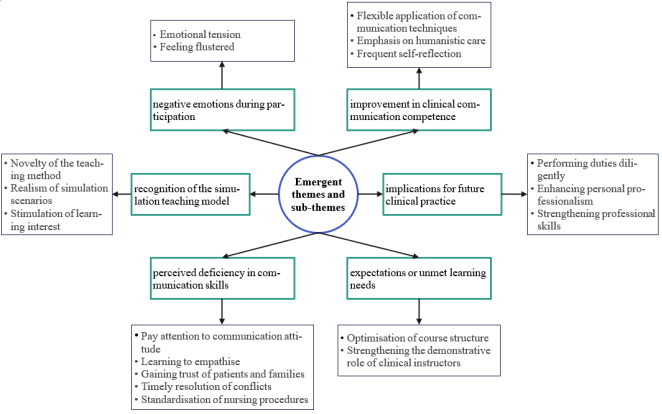
Following phenomenological analysis of the interview data, six overarching themes were identified, comprising 18 sub-themes. A detailed coding tree is provided in Figure 1, illustrating the thematic structure derived from the data. The themes were as follows: (1) Negative emotional experiences during simulation participation; (2) Recognition and acceptance of the Communication Simulation Training teaching model; (3) Awareness of deficiencies in communication competence; (4) Improvement in clinical communication skills; (5) Insights and implications for future clinical practice; and (6) Needs and expectations for teaching improvement. Subsequent sections of this paper discuss each theme in greater detail, with illustrative quotes extracted from participant interviews to further expound the findings and enrich the narrative.
Figure 1. Themes and subthemes.
Theme 1: Negative emotions during participation
This theme and its corresponding subthemes elucidate the psychological and emotional experiences of nursing interns when engaging in Communication Simulation Training for nurse-patient communication. It reveals how the high-fidelity simulation environment triggered significant affective responses among participants, while also highlighting their recognition of the simulation's pedagogical value despite these challenges. Furthermore, it demonstrates how the interns' limited clinical experience influenced their ability to adapt to unscripted clinical scenarios.
Emotional tension
Participants universally reported experiencing heightened anxiety during simulation exercises. This emotional state was characterized by physical symptoms such as trembling hands, mental blankness, and forgetfulness of previously learned procedures. The tension arose from concerns about making mistakes in front of peers and instructors, coupled with the desire to demonstrate clinical competence.
The emotional impact was particularly evident in scenarios requiring quick decision-making: "I had many ideas before the simulation, but I was too nervous at the time. I couldn't execute most of them, and the result did not meet my expectations" (C12). Another participant noted the physical manifestations of anxiety: "It was my first time facing such a situation, and I was genuinely scared. My hands were even trembling" (C3). The tension also affected clinical performance: "Actually, I had prepared a pain assessment scale before the simulation, but I was so nervous that I forgot to assess the patient's pain" (C4). Despite these challenges, some participants recognized that moderate tension could enhance learning: "I think I performed my role reasonably well, although I felt a bit nervous. The whole process went smoothly overall, and it reminded me of real outpatient scenarios" (C2).
Feeling flustered
Unlike emergency drills, in scenario-based simulations, nursing students are unaware of the scenario progression outline beforehand. Due to their limited clinical exposure, many have never encountered such clinical situations. When facing sudden events or demanding patients, they often feel overwhelmed and disorganized. This subtheme reflects the cognitive and emotional disorientation experienced by participants when faced with complex, unfolding clinical situations.
Participants described experiencing mental disorganization and impaired clinical reasoning: "Before the simulation, I imagined various events and scenarios, but I was still at a loss during the actual session. I panicked—I remember leaving one task unfinished and jumping to the next..." (C4). The lack of predetermined scripts contributed to this sense of disorientation: "In usual role-play exercises, we've already seen all the procedures and scripts. But I hadn't seen the script for this simulation, so I was indeed a bit flustered" (C7). The flustered feeling adversely affected technical performance: "When doing the IV infusion, I forgot to expel the air and connected it directly. That never happened when I worked with real patients before" (C5). Participants described the experience as mentally overwhelming: "I felt like all my actions were rushed—everything happened so fast, and there was a constant sense of panic" (C9).
Theme 2: Recognition of the Communication Simulation Training model
Despite the initial psychological challenges, participants demonstrated strong endorsement of the simulation-based learning approach, recognizing its significant educational value in bridging theoretical knowledge and practical clinical application. This theme encompasses students' appreciation for the innovative teaching methodology and its multiple pedagogical benefits, including enhanced engagement, improved skill transfer, deeper understanding of complex clinical scenarios, and better preparation for real-world clinical practice. The positive reception of this educational approach suggests that well-designed simulation experiences can effectively address the theory-practice gap that often plagues traditional nursing education.
Novelty of the teaching method
Participants contrasted the simulation-based learning with traditional theoretical instruction, highlighting the experiential nature of the former as particularly valuable for developing practical communication skills. The interactive format was praised for its ability to promote active engagement and critical thinking.
Many participants expressed genuine enthusiasm for this innovative educational approach. One student noted: "It's my third month of internship, and this is the first time I've taken this kind of class—it seems quite interesting" (C17). The simulation format successfully encouraged perspective-taking and patient-centered thinking, as described by another participant: "Today's class suddenly gave me a new perspective—why don't we think from the patient's point of view, their concerns and needs?" (C9). The collaborative and interactive nature of the simulation experience was particularly valued. This participatory approach not only enhanced engagement but also fostered a learning community where students could learn from both instructors and peers. One participant elaborated on this aspect: "Previously, all our communication classes were theoretical. But today's simulation class was practical. The classroom atmosphere was great—the teacher had us sit in a circle to share our views on effective communication and exchange internship communication experiences. I had never experienced this kind of teaching method before" (C7).
Realism of simulation scenarios
The authenticity and clinical accuracy of the simulated scenarios emerged as crucial factors in facilitating meaningful learning experiences. Participants consistently noted that the realistic portrayal of clinical situations enabled deep immersion in their roles and enhanced the transferability of learned skills to actual practice settings. The physical realism of the simulation environment, including accurate medical equipment, realistic patient simulators, and authentic clinical documentation, contributed significantly to the sense of authenticity and professional engagement.
The realistic scenario design promoted genuine emotional and cognitive engagement. The scenarios effectively mirrored the complexities and challenges of actual clinical practice: "I think everyone really tried to immerse themselves in their roles. They performed well and got into character—it felt very real" (C8). "That patient was so difficult and irritable—we often encounter similar cases during our internships" (C6).
The physical and environmental realism particularly enhanced the immersive quality of the experience. Instructors confirmed the authenticity of student performances and engagement: "When I entered the ward and saw the bright red fluid in the drainage bag on the girl playing the patient, I was startled. It was so realistic—even the patient was so convincing—it instantly got me into character" (C9). "What impressed me about this class is how deeply students got into character. Their performances were very authentic and reflected the kinds of situations we face during internships" (C1).
Stimulation of learning interest
The simulation format successfully enhanced student engagement and motivation to learn communication skills, effectively addressing the common problem of disengagement often associated with traditional lecture-based approaches. Participants reported increased interest in communication training and greater appreciation for its importance in clinical practice, citing the interactive, relevant, and challenging nature of the learning experience as key factors in maintaining engagement and promoting deep learning.
The enjoyable and engaging nature of the simulation approach was frequently mentioned by participants. Many described enhanced intrinsic motivation to develop communication skills: "This format is really fun—we didn't resist it or find it boring. Instead, we learned the key concepts through the process of play" (C6). "The classroom atmosphere was great. I feel more interested in continuing to study communication, and I've realized how important it is. I'll keep reflecting on it after class too" (C5). The experiential learning approach facilitated deeper understanding of complex communication concepts and their clinical applications. One participant noted the power of observational learning. The supportive learning environment and collaborative atmosphere were widely appreciated: "Some arguments and problems between the nurse and patient were presented through a short performance by our classmates, and we all felt it deeply" (C11). "Through this course and the in-depth scenario-based learning, I've developed a deeper understanding of the importance of medical communication" (C14). "The students who participated in this simulation all did great. During the feedback session, we sat in a circle, and the atmosphere was excellent. This kind of teaching is very effective—I really liked it" (C17).
Theme 3: Perceived deficiency in communication skills
The simulation experience served as a powerful mirror for participants to recognize their own deficiencies in clinical communication. This theme encompasses the various aspects of communication weaknesses identified by students through reflective practice and peer observation.
Pay attention to communication attitude
Participants developed a sophisticated understanding of how communication attitude fundamentally shapes nurse-patient interactions and clinical outcomes. The simulation experience revealed that technical competence alone is insufficient without an appropriate communication approach characterized by empathy, respect, and emotional intelligence. Students recognized that their communication attitude could either facilitate therapeutic relationships or create barriers to effective care, particularly in challenging clinical situations involving anxious patients or complex family dynamics.
Multiple participants observed how specific communication behaviors affected patient responses. The importance of emotional self-regulation emerged as a critical insight: "At first, the nurse addressed the patient by name directly and spoke in a stiff tone. I think we should treat patients with a gentle and caring attitude" (C8). "The nurse sounded a bit impatient, so I believe we shouldn't bring our own emotions into work" (C17). The simulations provided valuable lessons about patience and adaptive communication strategies. This learning extended to understanding how communication attitude affects therapeutic relationships: "When we encounter patients with poor emotional states in the future, we need to be patient, communicate from multiple angles, and explain patiently" (C11). "Through this simulation course, I realized we should not bring negative emotions to patients, let alone scold them loudly. We should communicate more and understand their thoughts" (C6).
Learning to empathise
The experience of role-playing both patients and healthcare providers enabled students to develop deeper empathic understanding and perspective-taking abilities. Participants gained profound insights into patient experiences, emotions, and the underlying factors influencing patient behaviors in clinical settings. This empathic development emerged as a transformative aspect of the simulation experience, allowing students to move beyond technical communication skills to genuinely patient-centered care approaches.
Several students described how the simulation helped them understand the psychological dimensions of patient care. The recognition of medical factors influencing behavior represented another important insight: "This patient was in a restless state. If we, as nurses, give a perfunctory explanation, the patient may feel helpless" (C17). "I later found out that the patient had a history of hyperthyroidism—no wonder she was so anxious. In retrospect, I can understand now" (C3). The patient role-playing experience proved particularly transformative for developing empathy. This perspective-taking led to important insights about clinical practice priorities: "I played the role of a patient this time, and thinking from their perspective, I realized patients aren't actually that difficult to deal with" (C5). "Our work is just like this simulation—sometimes we're rushing from one task to the next, but in reality, patients really need our help. We must practice empathy and listen more to their inner needs" (C10).
Gaining trust of patients and families
Participants identified trust-building as a critical component of effective nurse-patient relationships and developed awareness of the multifaceted nature of establishing and maintaining trust in clinical settings. The simulation revealed how technical competence, communication transparency, family inclusion, and consistent professionalism collectively contribute to building therapeutic relationships based on mutual trust and respect.
Technical knowledge and procedural competence emerged as foundational elements for establishing trust. Students recognized the importance of early trust establishment in the clinical relationship: "When administering IV medication, I didn't clearly explain the drug's function—I felt something was wrong. Knowledge and professional skills are essential for gaining patients' trust" (C14). "If we establish a sense of trust with patients and their families early on, I believe everything that follows will go more smoothly" (C2). The simulation also highlighted the crucial need to include family members in communication processes: "In this simulation, I truly overlooked the family members. I focused only on the patient and ignored the family's presence—we really need to improve on this and address their questions properly" (C15). "The communication was somewhat crude—nurses were speaking to the patient but ignored the family. In fact, the family might be even more anxious than the patient, and we must give them more attention" (C7). The consequences of breached trust became evident through simulation outcomes: "Don't treat patients perfunctorily. For example, in today's simulation, if you failed to verify and missed the injection, the patient likely won't let you try again—because she's lost trust in you" (C4).
Timely resolution of conflicts
The simulations provided valuable, practical lessons in conflict recognition, de-escalation techniques, and management strategies. Participants learned to identify early warning signs of conflict, implement appropriate intervention strategies, and understand the importance of timely resolution in maintaining therapeutic relationships and ensuring patient safety. This learning encompassed both interpersonal conflict management and system-level approaches to addressing clinical disagreements.
Students recognized the value of team-based approaches to conflict resolution. One participant suggested. The importance of appropriate escalation and resource utilization emerged: "In a situation like today's unresolved conflict, we could have had another nurse step in to explain. That way, the problem wouldn't worsen, nor would the tension escalate" (C1). "This patient had a conflict with the nurse. To calm both sides, we could ask the head nurse to intervene" (C4). Safety considerations in managing potentially aggressive situations became apparent. The simulations also taught specific techniques for apology and reconciliation after errors. Professional accountability and error management approaches were emphasized through the experience: "Patients with violent tendencies are common in clinical practice. It can feel unfair at times, but to avoid physical harm, we can call security for help" (C15).
"While performing perineal care, I forgot to draw the curtain. First, we must apologize and then communicate gently with the patient. Once the patient sees our softened attitude, her emotions will also calm down" (C18). "Because we didn't complete the three checks and eight rights properly, we should first apologize to the patient sincerely, use a good tone, and try to resolve the issue—patients will forgive us if our attitude is honest" (C13).
Standardisation of nursing procedures
The simulations reinforced the critical importance of following established protocols and procedures while demonstrating the consequences of deviation from standards. Participants recognized that standardization not only ensures patient safety but also prevents misunderstandings, maintains professional credibility, and provides a framework for accountable practice. This learning extended beyond simple rule-following to understanding the rationale behind procedures and their relationship to quality care.
Students observed how protocol deviations can contribute to clinical problems. The impact of attention to detail and meticulous practice became evident: "In this simulation, because the nurse did not follow standardized procedures, I believe she partially contributed to the escalation of the nurse-patient conflict" (C13). "I noticed that the student playing the doctor was very patient and meticulous, even warming the stethoscope before use. But the nurse was less careful, which may have led to the patient venting her frustration on the nurse later" (C5). The patient perspective on procedural failures provided valuable insights. The simulation also revealed systemic issues in clinical education and practice variation: "Speaking from the patient's perspective, I think she had a point. The nurse didn't verify or expel the air—there were real issues. But how should we address them?" (C18). "As interns with limited clinical exposure, we notice that different preceptors teach different techniques. Sometimes this confuses us—we really should have standardized procedures" (C6).
Theme 4: Improvement in clinical communication competence
This theme captures the specific communication skills, strategies, and abilities that participants developed and enhanced through the simulation experience. It reflects the progressive growth in practical communication capabilities that students achieved, moving from theoretical understanding to applied competence. The findings demonstrate that simulation-based learning effectively promotes the integration of communication knowledge, skills, and attitudes, preparing students for the complex communication challenges of real clinical practice. Participants showed development across multiple domains of communication competence, including technical skills, emotional intelligence, and reflective practice abilities.
Flexible application of communication techniques
Participants learned to apply structured communication frameworks and adapt their communication approach based on specific patient needs, clinical contexts, and situational demands. This subtheme reflects the development of flexible, patient-centered communication strategies that move beyond rigid formulaic approaches to genuine adaptive competence. Students demonstrated growth in their ability to select appropriate communication techniques, modify their approach based on patient responses, and integrate multiple communication strategies effectively.
The SBAR (Situation-Background-Assessment-Recommendation) framework emerged as a particularly valuable tool for structured communication. One participant described its application. Students began transferring these learned techniques to real clinical settings: "In today's Communication Simulation Training, I used the SBAR communication model taught by the instructor to report the patient's condition to the doctor. I found it very effective and plan to continue using this method during my internship" (C1). "Although I am currently an intern and still rely on my teacher's guidance, I've started using the SBAR communication model to report conditions to my instructor" (C4). Participants developed metacognitive awareness of their communication needs and strategies. One student noted. The complexity of clinical communication became apparent through the simulation experience: "From now on, I need to start thinking about these issues, such as what communication techniques can be used to avoid unnecessary troubles—I should familiarize myself with them" (C17). "I used to think that good communication required eloquence, but after this simulation, I realized it's a comprehensive process involving speaking, listening, and questioning—just talking alone doesn't guarantee effective communication" (C11). The practical benefits of structured communication approaches were recognized by multiple participants. Students also learned the importance of adapting communication to individual patient characteristics: "This lesson taught me how to use the SBAR model, which presents problems more clearly and directly. It's a great way to improve our work efficiency" (C13). "If a patient doesn't have a high level of education, I feel they may not understand professional terms well. We should adopt different communication strategies for different patients" (C15).
Emphasis on humanistic care
Participants developed greater awareness and enhanced ability to incorporate humanistic principles into their clinical practice and communication approaches. This subtheme reflects the growth in compassionate, dignity-preserving care that acknowledges the whole person rather than just the clinical condition. Students demonstrated progress in recognizing opportunities for humanistic care, implementing specific caring behaviors, and understanding the relationship between humanistic approaches and therapeutic outcomes.
Privacy protection and dignity preservation emerged as critical aspects of humanistic care. Students recognized the powerful modeling effect of instructor behavior on their own development: "In the simulation, the nurse failed to protect the patient's privacy in time, causing dissatisfaction from the family. I will definitely pay more attention to this in the future" (C14). "During my internship, my instructor showed great care for me, and I learned to care for my patients too. This seems to help improve my communication skills..." (C11). The conceptual understanding of humanistic care deepened significantly through the simulation experience. Practical applications of humanistic principles became clearer through direct experience: "The Communication Simulation Training course set by the teacher was excellent. I think it's very helpful for my future work. I now understand the importance of humanistic care—it's also a key aspect of nurse-patient communication" (C13). "In future clinical work, I'll try to maintain a better attitude. If a patient doesn't understand, I'll use plain, understandable language to communicate" (C15). The ethical dimensions of care and communication were emphasized throughout the learning process: "This class reminded us to always protect patients' privacy during procedures and show humanistic care to avoid causing psychological trauma" (C1).
Frequent self-reflection
The simulation experience fostered the development of reflective practice skills and habits that support ongoing professional growth. Participants learned to critically examine their own performance, identify specific areas for improvement, develop action plans for enhancement, and recognize the value of continuous self-assessment in clinical practice. This reflective competence emerged as a fundamental skill supporting all other communication abilities and ensuring continued development beyond the simulation experience.
Students engaged in meaningful critical self-assessment following the simulation activities. The simulations prompted new awareness of communication gaps and development needs: "This made me reflect—have I truly performed the 'three checks and eight rights' in daily work? Have I been meticulous, patient, and responsible?" (C13). I realize I haven't really thought about how to communicate with patients. After a long day at work, I feel exhausted and sometimes fail to communicate effectively" (C3). The reflective process led to valuable new insights about communication and clinical practice. Patient-centered care concepts emerged naturally through reflection: "Today's class taught me what real communication means, and I've started reflecting on the issues I face as a nurse" (C4). "This scenario made it clear that we must center our care around the patient and take the words of family members seriously" (C10). Students developed concrete plans for handling future clinical challenges based on their reflections. The long-term impact of reflective learning was recognized by several students: "If I make a mistake during future internships, I'll offer a sincere apology, actively resolve the issue, gain the patient's forgiveness, and reflect on my actions to avoid repeating the mistake" (C15).
"I believe the knowledge I've gained from this lesson will become a solid foundation supporting me throughout my professional journey!" (C2).
Theme 5: implications for future clinical practice
This theme encompasses the practical lessons, professional resolutions, and practice intentions that participants formulated for their future nursing practice based on the simulation experience. It reflects the translation of simulation learning into concrete plans for clinical excellence, professional development, and quality patient care. The findings demonstrate that simulation-based education effectively promotes the transfer of learning to future practice contexts and supports the development of professional identity and practice philosophy. Participants articulated specific commitments to improved practice, enhanced personal qualities, and continued skill development that reflect deep learning and professional growth.
Performing duties diligently
Participants developed stronger commitment to meticulous, careful, and thorough nursing practice through the simulation experience. This subtheme captures the renewed dedication to precision, patient safety, and quality care that emerged from confronting the consequences of practice errors and omissions in the simulated environment. Students articulated specific resolutions to adhere more strictly to protocols, maintain higher standards of care, and prioritize patient needs over convenience or efficiency.
Students resolved to implement more rigorous adherence to established protocols and procedures. The importance of consistent rigorous practice was emphasized: "In the future, whenever I perform procedures on patients, I will strictly follow the 'three checks and eight rights,' be more careful, and prioritize the patient's perspective, rather than just trying to finish quickly and neglecting their feelings" (C16). "During my upcoming internship, I will strictly implement the clinical 'three checks and eight rights' and always remind myself that as an intern, I must treat everything with rigor" (C12). The connection between diligent practice and therapeutic relationship-building was recognized by multiple participants. Students understood the reciprocal relationship between quality care and patient responses: "This Communication Simulation Training class arranged by our teacher helped me understand the importance of fulfilling one's duties well, as it may directly affect the nurse-patient relationship" (C14). "In the future, I must take full responsibility for my patients. I believe if I treat them well, their responses to us will be positive" (C8). The consequences of inadequate or careless practice became clear through the simulation experience. The simulation also provided valuable perspective on professional boundaries and role clarity: "In this simulation, some nursing procedures were indeed not standardized. When questioned by the patient, the nurse couldn't explain, which I think is unacceptable" (C5). "Clinical work is like today's role-play—I just need to fulfill my role well during work hours, and when I get home, I can return to my original self" (C3).
Enhancing personal professionalism
Participants recognized the need to develop specific personal attributes, professional virtues, and emotional intelligence capabilities essential for effective nursing practice. This subtheme reflects the commitment to personal growth, character development, and emotional maturation that emerged through the simulation experience. Students articulated intentions to cultivate patience, compassion, resilience, and other qualities that support therapeutic relationships and clinical excellence.
Self-discipline and professional accountability emerged as crucial qualities for clinical practice. Students expressed specific intentions to cultivate important professional virtues: "In clinical settings, instructors may be busy and not always supervise you—so you must practice self-discipline" (C1). "I hope this communication exercise helps me carry out every task carefully in future internships, treating everyone with patience, compassion, and responsibility" (C14). The simulations provided valuable insights into the personal challenges and rewards of nursing practice. Emotional self-regulation and management emerged as essential capabilities: "Today's interpersonal communication simulation helped me deeply realize the challenges of being a nurse and reflect on how to become a competent one" (C6). "Even if patients speak rudely or behave poorly, we shouldn't respond in the same way. As nurses, we must control our temper" (C8). Students developed concrete plans for ongoing personal and professional development. "During future internships, I'll gradually accumulate knowledge, cultivate patience, reflect on my mistakes, and mentally ask myself the five W's before each procedure" (C9).
Strengthening professional skills
Participants recognized the need for continuous development of clinical knowledge, technical abilities, and integrative competencies essential for competent nursing practice. This subtheme reflects the commitment to ongoing learning, skill enhancement, and knowledge integration that emerged through the simulation experience. Students articulated specific plans for knowledge acquisition, skill practice, and competence development that will support their transition to independent practice.
Proactive learning approaches and self-directed skill development were planned by multiple participants. Students recognized opportunities for continuous skill development in clinical settings: "Before interning in any department, I need to first understand the common conditions of the patients there; otherwise, it would be hard to report accurately to the instructor" (C11). "When clinical duties are light, we should proactively check the wards, identify clinical problems, and humbly seek guidance from experienced teachers to improve our competence" (C2). The importance of comprehensive professional development was emphasized by participants. The integration of theoretical knowledge and practical communication skills was recognized as essential: "In future internships, I will keep improving my knowledge and technical skills so that I can earn the trust of patients, their families, and my instructors" (C7). "Thanks to our teacher for arranging this course. It has been really helpful for our internship. Moving forward, I'll keep strengthening my professional knowledge—it's inseparable from communication" (C15). The crucial connection between theoretical learning and clinical application was emphasized through the simulation experience. "To perform well in future nursing practice, we need to apply the theoretical knowledge learned in school to real clinical settings" (C6).
Theme 6: expectations or unmet learning needs
Participants provided constructive feedback and practical suggestions for enhancing simulation-based learning experiences based on their direct experience. This theme captures their recommendations for optimizing course design, instructional approaches, and support systems to maximize learning outcomes. The findings demonstrate students' ability to critically evaluate educational methods and contribute valuable insights for curriculum improvement. Participants offered specific suggestions regarding preparation processes, time allocation, instructor roles, and standardization needs that reflect thoughtful consideration of optimal learning conditions.
Optimisation of course structure
Students offered detailed suggestions for improving the timing, preparation, structure, and organization of simulation activities to enhance learning outcomes and reduce unnecessary stress. These recommendations reflected their experiences with both effective and challenging aspects of the current simulation design and their understanding of conditions that support optimal learning.
The need for better familiarity with simulation content and expectations emerged as a common theme. "The course is quite interesting, but we are not familiar enough with the simulation content, which made us feel flustered during the exercise" (C18). "I hope the instructor can walk us through the simulation content in advance—it would help us form a deeper impression" (C11). "If we receive the teaching materials one or two weeks earlier, we could privately discuss and prepare for the simulation in advance" (C3). Time constraints and pacing issues were identified as significant limitations. Extended session times were recommended to allow for more comprehensive learning: "The teacher told us the time limit for the simulation beforehand, so I just wanted to get it done quickly and not delay others. I think that contributed to my nervousness" (C5). "If the class could be extended by 30 minutes, I would have had time to share a communication case I encountered last week in the department so we could all learn from each other" (C17).
Strengthening the demonstrative role of clinical instructors
Participants emphasized the importance of instructor support, standardization, modeling, and feedback in maximizing learning outcomes from simulation experiences. These recommendations reflected students' needs for guidance, consistency, and expert input to support their learning and development. The suggestions addressed both the quantitative aspect of instructor involvement and the qualitative dimensions of teaching effectiveness.
The need for emotional support and encouragement during challenging simulations was highlighted. Standardization of teaching methods and techniques emerged as another important need: "When the patient refused the injection, I felt discouraged. But if my instructor had encouraged and supported me, I believe I would have tried to persuade the patient" (C10). "In my current department, each instructor teaches a different disinfection method. I really hope for standardized instruction so that patients won't question my practice" (C4). Students particularly valued expert modeling and demonstration of advanced communication skills. "Whenever a patient resists being treated by an intern, my instructor always manages to convince them. I find such communicative instructors very charismatic, and I hope they can teach me how to do the same" (C7).
5. Discussion
The findings of this study indicate that nursing students have recognized that irregular and unskilled clinical practices are key contributors to nurse-patient conflicts, reduced patient trust, and their own lack of communication confidence . Specifically, our data revealed that participants frequently identified inconsistent nursing procedures (e.g., different preceptors teaching different disinfection methods, as reported by C6 and C4) and failure to follow standardized protocols (e.g., omitting the “three checks and eight rights” as noted by C13 and C18) as direct causes of patient distrust and conflict escalation. Students reported inconsistencies in clinical demonstrations and theoretical explanations among instructors, which caused confusion and undermined their confidence during implementation. This aligns with the findings of Chen Yufang et al. , who noted that a gap between theory and practice, coupled with inadequate skills, hinders students from providing reasonable explanations during communication breakdowns, thereby increasing the risk of disputes. Clinical instructors play a pivotal role in shaping students’ professional values and clinical competencies , and their behaviors have a lasting impact. Therefore, clinical teaching must be standardized by developing hospital-wide standardized core nursing procedures and communication protocols ; enhancing instructor qualification certification, structured training, and regular evaluations; implementing a two-way feedback system between instructors and students ; and creating individualized skill enhancement plans for each nursing student . Only by ensuring consistent and high-quality clinical instruction can a solid foundation of professional competence be established for developing nursing students’ communication skills , thereby boosting their confidence in interacting with patients.
Through the Communication Simulation Training in this study, nursing students significantly enhanced their understanding of the importance of humanistic care. They realized that a caring attitude, respectful behavior, privacy protection, and awareness of patients’ psychological states are central to building trust, resolving conflicts, and achieving effective communication . This echoes the “Healthy China 2030” Planning Outline, which emphasizes the importance of humanistic care in healthcare services. However, research by Guo Yujie et al. indicates that the overall level of humanistic care qualities among undergraduate nursing students still needs improvement. This study also found that the care and respect conveyed by instructors significantly enhanced students’ professional identity and willingness to communicate . Research by Hanifi et al. warns that negative attitudes from instructors can undermine students’ confidence and motivation, indirectly affecting patient trust. Therefore, clinical teaching must place humanistic care at its core: instructors should lead by example, not only teaching skills but also emphasizing emotional communication, offering care, trust, and respect to students, and fostering a supportive and inclusive learning environment . In scenario design and feedback, elements of humanistic care (such as empathy, respect, and privacy protection) should be intentionally integrated and reinforced to guide students in continuous reflection and the cultivation of moral emotions , ultimately internalizing care as a professional habit.
Nursing students commonly reported that communication education during school was primarily theoretical, with limited practical opportunities, making it difficult to apply knowledge flexibly in clinical settings . This finding aligns with the conclusions of Xie et al. . This study confirmed that Communication Simulation Training, due to its realism, high engagement, and strong practical orientation, effectively compensates for the shortcomings of traditional theoretical instruction and significantly improves students’ ability to apply communication skills . Nursing students expressed a strong desire for more hands-on training based on real clinical cases. Studies by Kong Dehai et al. and Wang Wei et al. also support that practice-oriented training can effectively improve physician-patient/nurse-patient communication skills. Therefore, practical training in nurse-patient communication should be greatly enhanced by systematically offering dedicated communication practice courses or workshops during nursing internships. Carefully design and collect a diverse array of real clinical communication cases (e.g., breaking bad news, managing angry family members, addressing cultural differences) to create realistic simulation scenarios . Clearly integrate training objectives related to structured communication models such as SBAR and other key techniques into the simulations . Through frequent, high-fidelity simulation drills, students can translate theoretical knowledge into actionable communication skills, continuously gain experience, and improve their ability to handle complex communication scenarios.
The nursing students in this study highly recognized the Communication Simulation Training teaching model, describing it as novel, realistic, and able to stimulate learning interest and initiative—findings consistent with those of Hu Hongyi et al. . However, some students reported that excessive nervousness affected their performance and suggested optimizing the course structure, such as increasing pre-class familiarization and extending the duration for in-depth discussions. The guided feedback session was regarded by students as a valuable learning opportunity and the "soul" of Communication Simulation Training teaching . This component not only reinforces knowledge and skills but also fosters meaningful behavioral change through deep reflection. Therefore, efforts to promote Communication Simulation Training teaching must focus on refinement and depth :
Efforts to promote Communication Simulation Training must focus on refinement and depth . First, careful case selection and design is essential: the difficulty level should match students' abilities and internship stage—achievable but challenging—to avoid excessive anxiety . Second, adequate preparation should be provided, including background and role information in advance, giving students ample time to familiarize themselves with the case and reduce on-site confusion. Third, educators should create a safe learning environment that emphasizes learning over evaluation, encourages trial and error, and fosters a respectful atmosphere to alleviate stress . Fourth, guided feedback should be strengthened by allocating sufficient time for structured feedback, led by experienced instructors, to help students deeply analyze communication behaviors (successes and shortcomings) , decision rationales, emotional responses, and alternatives—thereby fostering critical thinking and self-reflection . Finally, individual needs should be addressed by providing specific guidance tailored to each student's performance and concerns during the feedback session .
6. Strengths and Limitations
This study captured rich qualitative data through in-depth interviews with 18 nursing interns from the First Affiliated Hospital of Jinan University in Guangzhou, providing detailed insights into their experiences with Communication Simulation Training. The participants represented a diverse range in terms of clinical internship experience, personal communication styles, and exposure to various clinical settings, contributing to a comprehensive understanding of simulation-based learning in nurse-patient communication training. The use of focus groups and individual interviews allowed for both collective discussion and personal reflection, enhancing the depth of the findings.
However, several limitations should be acknowledged. First, the study was conducted in a single tertiary hospital in China, which may affect the transferability of findings to other cultural or healthcare contexts. Second, the sample size, while sufficient for qualitative inquiry, prevents broad generalization. Third, the reliance on self-reported data introduces the potential for social desirability bias. Finally, the study did not directly observe the transfer of learned communication skills to actual clinical practice with patients. Future research could address these limitations by employing multi-center designs, incorporating observational methods, and including longitudinal assessment of communication skill retention and transfer to clinical practice.
7. Recommendations for Further Research
Further research should explore the long-term impact of simulation-based communication training on actual clinical performance and patient outcomes. This includes investigating how skills learned in simulation settings translate to real nurse-patient interactions across different clinical contexts and patient populations. Research should also examine the optimal frequency and duration of simulation training needed to maintain and enhance communication competencies throughout nursing education and into professional practice.
Additionally, studies should compare the effectiveness of different simulation modalities (e.g., high-fidelity manikins, standardized patients, virtual reality) in developing specific communication skills. Research is needed to identify the key elements of simulation debriefing that most effectively promote reflective practice and skill development. Further investigation should also explore how cultural factors and individual learning styles influence the effectiveness of simulation-based communication training, particularly in diverse educational and clinical settings.
8. Implications for Practice
Based on the findings, the following actionable recommendations are proposed:
Integrate comprehensive Communication Simulation Training into nursing education curricula, addressing emotional management, empathy development, trust-building, conflict resolution, and humanistic care.
Allocate resources for standardized simulation scenarios, faculty training in simulation facilitation, and supportive learning environments that reduce unnecessary anxiety while maintaining realistic challenges.
Incorporate simulation-based communication training into ongoing professional development programs for practicing nurses.
Mandate diverse clinical scenarios that address cultural diversity, health literacy variations, and complex family dynamics.
Develop faculty programs that enhance instructors' abilities to facilitate effective debriefing sessions and provide meaningful feedback on communication performance.
9. Conclusions
Clinical internship is an essential phase in the transition from nursing student to professional nurse and a crucial stage in student development. Clinical communication competence is a core skill for nursing students and a fundamental guarantee for building harmonious nurse-patient relationships. During internships, clinical instructors should focus on practical communication training, standardize instructional management, and promote diverse and innovative teaching methods to enhance students' communication skills.
Abbreviations

COREQ

Consolidated Criteria for Reporting Qualitative Research

DOI

Digital Object Identifier

ORCID

Open Researcher and Contributor ID

SBAR

Situation-Background-Assessment-Recommendation

Acknowledgments
The authors would like to express their sincere gratitude to everyone who has assisted with our paper.
Author Contributions
Yuying Song: Conceptualization, Data curation, Writing – original draft
Huixiang Lai: Formal Analysis, Investigation, Methodology
Guihong Wu: Resources, Validation, Writing – review & editing
Mei Feng: Project administration, Supervision
Qingran Lin: Conceptualization, Funding acquisition, Writing – review & editing
Manli Liu: Data curation, Software, Visualization
Funding
This study was supported by the Scientific Research Fund of The First Affiliated Hospital of Jinan University (Funding No.2023204), China. The funders had no role in the study design, collection, analysis, interpretation of data, writing of the report, or decision to submit the article for publication.
Conflicts of Interest
The authors declare no conflicts of interest.
References
[1] Berglund, L., von Knorring, J., & McGrath, A. (2023). When theory meets reality- a mismatch in communication: A qualitative study of clinical transition from communication skills training to the surgical ward. BMC Medical Education, 23(1), 728.
[2] Chen, T.-T., Huang, Y.-J., Chen, C.-R., Hsu, C.-W., Huang, S.-L., & Hsieh, C.-L. (2025). Effects of feedback and reflection on communication skills training for occupational therapy students. The American Journal of Occupational Therapy: Official Publication of the American Occupational Therapy Association, 79(4), 7904205060.
[3] Chen, Y., Hua, Y., Xu, Z. R., et al. (2020). The correlation between the hospital care atmosphere perception and clinical communication competence of nursing interns. Chinese Journal of Nursing Education, 17(05), 447–450.
[4] Chen, Y. F., Lü, H. Q., Huang, L., et al. (2020). Status and influencing factors of nurse-patient communication competence among vocational nursing interns under a high-quality nursing model. Health Vocational Education, 38(22), 58–60.
[5] Cusanza, S. A., Speroni, K. G., Curran, C. A., & Azizi, D. (2021). Effect of individualized learning plans on nurse learning outcomes and risk mitigation. Journal of Healthcare Risk Management: The Journal of the American Society for Healthcare Risk Management, 40(4), 17–29.
[6] Del Vecchio, A., Moschella, P. C., Lanham, J. G., & Zavertnik, J. E. (2022). Acting to teach communication skills to nurses. The Clinical Teacher, 19(4), 289–293.
[7] Desselle, S. P., Clubbs, B. H., & Darbishire, P. L. (2023). Motivating language and social provisions in the inculcation of pharmacy students’ professional identity. American Journal of Pharmaceutical Education, 87(6), 100010.
[8] Dokoohaki, R., Rambod, M., Pasyar, N., Parviniannasab, A. M., Shaygan, M., Kalyani, M. N., Mohebbi, Z., & Jaberi, A. (2024). Comparison of professional competency and anxiety of nursing students trained based on two internship models: A comparative study. BMC Medical Education, 24(1), 968.
[9] Edmiston, E. A., Hardin, H. K., & Dolansky, M. A. (2023). Making the case for a change in patient education techniques: Moving toward scenario and simulation-based approaches. Clinical Nursing Research, 32(5), 863–864.
[10] Greene, J., & Ramos, C. (2021). A mixed methods examination of health care provider behaviors that build patients’ trust. Patient Education and Counseling, 104(5), 1222–1228.
[11] Guo, Y. J., Guan, X. M., & Xu, T. (2013). The status quo of the caring character of baccalaureate students majoring in nursing and an analysis of the related factors. Chinese Journal of Practical Nursing, 29(5), 70–73.
[12] Günay, U., & Kılınç, G. (2018). The transfer of theoretical knowledge to clinical practice by nursing students and the difficulties they experience: A qualitative study. Nurse Education Today, 65, 81–86.
[13] Haddon Mullins, C., Roderick, A., Deaver, J., & Willig, J. (2020). Contemporary practice of standardised bedside teaching rounds. The Clinical Teacher, 17(5), 483–488.
[14] Hong, X. F., He, J. K., Fu, L. X., et al. (2020). Effect of case study combined with Communication Simulation Training in the cultivation of doctor-patient communication ability of clinical medical interns. China Higher Medical Education, 286(10), 96–97.
[15] Hu, H. Y., & Shi, T. T. (2021). The effect of standardized patient-based Communication Simulation Training teaching on nursing students’ communication and empathy skills. Health Vocational Education, 39(20), 99–101.
[16] Jallad, S. T. (2025). Effectiveness of simulation-based education on educational practices of communication skills, satisfaction, and self-confidence among undergraduate nursing students. Creative Nursing, 31(2), 135–143.
[17] Jin, J., & Zhang, Y. (2021). Evaluation of the effect of Communication Simulation Training teaching under OSCE-guided feedback in obstetric nursing education. China Higher Medical Education, 2021(01), 93–94.
[18] Joolaee, S., Ashghali Farahani, M., Jafarian Amiri, S. R., & Varaei, S. (2016). Support in clinical settings as perceived by nursing students in Iran: A qualitative study. Nursing and Midwifery Studies, 5(1), e31292.
[19] Kong, D. H., Yin, G., Feng, D. X., et al. (2021). The effect of outpatient practice teaching on interns' doctor-patient communication ability. China Higher Medical Education, 2021(09), 80–81.
[20] Kuo, Y. L., Lee, J. T., & Yeh, M. Y. (2021). Intergenerational narrative learning to bridge the generation gap in humanistic care nursing education. Healthcare, 9(10), 1291.
[21] Li, J., Li, X., Gu, L., Zhang, R., Zhao, R., Cai, Q., Lu, Y., Wang, H., Meng, Q., & Wei, H. (2019). Effects of simulation-based deliberate practice on nursing students’ communication, empathy, and self-efficacy. Journal of Nursing Education, 58(12), 681–689.
[22] Li, M. Z. (2016). The application of the CICARE communication model between nurses and patients during the visiting period in the ICU [Master’s thesis, Nanhua University]. Nanhua University Institutional Repository.
[23] Lincoln, Y. S., & Guba, E. (1985). Naturalistic inquiry. SAGE Publications Ltd.
[24] Mei, Y. (2022). Application of the clinical case teaching mode in gynecological nursing teaching. Computational and Mathematical Methods in Medicine, 2022, 9739313.
[25] Myers, K., & Chou, C. L. (2016). Collaborative and bidirectional feedback between students and clinical preceptors: Promoting effective communication skills on health care teams. Journal of Midwifery and Women’s Health, 61(S1), 22–27.
[26] Nasrin, H., Soroor, P., & Soodabeh, J. (2012). Nursing challenges in motivating nursing students through clinical education: A grounded theory study. Nursing Research and Practice, 2012, 161359.
[27] Ogunbiyi, M. O., & Obiri-Darko, E. (2020). Medical students’ corner: Barriers to communication during the COVID-19 pandemic. JMIR Medical Education, 6(2), e24989.
[28] Padilha, J. M., Machado, P. P., Ribeiro, A., Ramos, J., & Costa, P. (2019). Clinical virtual simulation in nursing education: Randomized controlled trial. Journal of Medical Internet Research, 21(3), e11529.
[29] Pan, F., Song, Z. L., & Shen, J. (2022). Application of interactive communication mode combined with problem-based learning in clinical teaching of undergraduate nursing students. Chinese Journal of Practical Nursing, 38(02), 140–146.
[30] Park, J. E., & Kim, J. H. (2021). Nursing students' experiences of psychological safety in simulation education: A qualitative study. Nurse Education in Practice, 55, 103163.
[31] Paterson, C., Paterson, N., Jackson, W., & Work, F. (2020). What are students’ needs and preferences for academic feedback in higher education? A systematic review. Nurse Education Today, 85, 104236.
[32] Rock, L. K. (2021). Communication as a high-stakes clinical skill: “just-in-time” simulation and vicarious observational learning to promote patient- and family-centered care and to improve trainee skill. Academic Medicine: Journal of the Association of American Medical Colleges, 96(11), 1534–1539.
[33] Saragih, I. D., Tarihoran, D. E. T. A. U., Lin, W.-T., & Lee, B.-O. (2024). Outcomes of scenario-based simulation courses in nursing education: A systematic review and meta-analysis. Nurse Education Today, 136, 106145.
[34] Sharkiya, S. H. (2023). Quality communication can improve patient-centred health outcomes among older patients: A rapid review. BMC Health Services Research, 23(1), 886.
[35] Smith, M. B., Macieira, T. G. R., Bumbach, M. D., Garbutt, S. J., Citty, S. W., Stephen, A., Ansell, M., Glover, T. L., & Keenan, G. (2018). The use of simulation to teach nursing students and clinicians palliative care and end-of-life communication: A systematic review. The American Journal of Hospice & Palliative Care, 35(8), 1140–1154.
[36] Solli, H., Haukedal, T. A., Husebø, S. E., & Reierson, I. Å. (2020). The art of balancing: The facilitator’s role in briefing in simulation-based learning from the perspective of nursing students - a qualitative study. BMC Nursing, 19, 99.
[37] Tong, A., P. Sainsbury, and J. Craig. 2007. “Consolidated Criteria for Reporting Qualitative Research (COREQ): A 32-Item Checklist for Interviews and Focus Groups.” International Journal for Quality in Health Care 19, no. 6: 349–357.
[38] Wang, W., & Zhu, L. X. (2021). Research on special training of doctor-patient communication based on practical teaching in emergency environments. Chinese Journal of Medical Education Research, 20(05), 565–569.
[39] Wang, Y., Zhang, Y., Liu, M., Zhou, L., Zhang, J., Tao, H., & Li, X. (2020). Research on the formation of humanistic care ability in nursing students: A structural equation approach. Nurse Education Today, 86, 104315.
[40] Xie, J., Ding, S., Wang, C., & Liu, A. (2013). An evaluation of nursing students' communication ability during practical clinical training. Nurse Education Today, 33(8), 823–827.
[41] Xu, S. L., Ding, C. Y., & Mao, J. (2021). A qualitative study on undergraduate nursing students' willingness for nurse-patient communication during internships based on Push-Pull Theory. Health Vocational Education, 39(17), 113–115.
[42] Yang, L., Li, S. N., Wang, Q., Pan, S., & Zhao, W. (2025). Unveiling the relationships of professional identity, values and communication competence in nursing students’ clinical practice behaviours: A cross-sectional study and mediation model analysis. Nursing Open, 12(7), e70270.
[43] Zhang, J., Yuan, Y., & Hu, L. Y. (2019). Research progress on training of clinical communication ability among nursing interns. Chinese Journal of Modern Nursing, 25(15), 1973–1977.
[44] Zhu, X., Rask, M., & Xu, H. (2023). First year nursing students’ reflections about developing their verbal nursing skills during their nursing education in China: A qualitative study. Frontiers in Public Health, 11, 1149512.
Cite This Article
  • APA Style

    Song, Y., Lai, H., Wu, G., Feng, M., Lin, Q., et al. (2026). Experiences and Needs of Nursing Interns in Nurse-Patient Communication Simulation Training: A Qualitative Study. American Journal of Nursing Science, 15(3), 68-82. https://doi.org/10.11648/j.ajns.20261503.14

    Copy | Download

    ACS Style

    Song, Y.; Lai, H.; Wu, G.; Feng, M.; Lin, Q., et al. Experiences and Needs of Nursing Interns in Nurse-Patient Communication Simulation Training: A Qualitative Study. Am. J. Nurs. Sci. 2026, 15(3), 68-82. doi: 10.11648/j.ajns.20261503.14

    Copy | Download

    AMA Style

    Song Y, Lai H, Wu G, Feng M, Lin Q, et al. Experiences and Needs of Nursing Interns in Nurse-Patient Communication Simulation Training: A Qualitative Study. Am J Nurs Sci. 2026;15(3):68-82. doi: 10.11648/j.ajns.20261503.14

    Copy | Download

  • @article{10.11648/j.ajns.20261503.14,
      author = {Yuying Song and Huixiang Lai and Guihong Wu and Mei Feng and Qingran Lin and Manli Liu},
      title = {Experiences and Needs of Nursing Interns in Nurse-Patient Communication Simulation Training: A Qualitative Study},
      journal = {American Journal of Nursing Science},
      volume = {15},
      number = {3},
      pages = {68-82},
      doi = {10.11648/j.ajns.20261503.14},
      url = {https://doi.org/10.11648/j.ajns.20261503.14},
      eprint = {https://article.sciencepublishinggroup.com/pdf/10.11648.j.ajns.20261503.14},
      abstract = {Background: Effective nurse-patient communication is essential for quality care, yet nursing interns often lack practical skills. Simulation-based education is promising, but qualitative research on interns' lived experiences remains limited. Purpose: This study explored the authentic experiences and needs of nursing interns during nurse-patient communication simulation training. Methods: A qualitative descriptive study with a phenomenological approach was conducted. Semi-structured interviews were held with 18 nursing interns from a Chinese university hospital between April and June 2024. Data were analyzed using Colaizzi's seven-step phenomenological method. Results: Six themes emerged: (1) negative emotional experiences during participation; (2) recognition of the Communication Simulation Training model; (3) perceived deficiency in communication skills; (4) improvement in clinical communication competence; (5) implications for future clinical practice; and (6) expectations or unmet learning needs. Participants experienced significant anxiety yet valued the realistic learning environment, recognizing both their communication limitations and growth opportunities. Conclusions: Communication Simulation Training effectively addresses the theory-practice gap in communication skills development. Clinical educators should enhance simulation-based teaching through standardized training management and diversified strategies to improve nursing interns' communication competence and foster higher-quality patient care.},
     year = {2026}
    }
    

    Copy | Download

  • TY  - JOUR
    T1  - Experiences and Needs of Nursing Interns in Nurse-Patient Communication Simulation Training: A Qualitative Study
    AU  - Yuying Song
    AU  - Huixiang Lai
    AU  - Guihong Wu
    AU  - Mei Feng
    AU  - Qingran Lin
    AU  - Manli Liu
    Y1  - 2026/06/26
    PY  - 2026
    N1  - https://doi.org/10.11648/j.ajns.20261503.14
    DO  - 10.11648/j.ajns.20261503.14
    T2  - American Journal of Nursing Science
    JF  - American Journal of Nursing Science
    JO  - American Journal of Nursing Science
    SP  - 68
    EP  - 82
    PB  - Science Publishing Group
    SN  - 2328-5753
    UR  - https://doi.org/10.11648/j.ajns.20261503.14
    AB  - Background: Effective nurse-patient communication is essential for quality care, yet nursing interns often lack practical skills. Simulation-based education is promising, but qualitative research on interns' lived experiences remains limited. Purpose: This study explored the authentic experiences and needs of nursing interns during nurse-patient communication simulation training. Methods: A qualitative descriptive study with a phenomenological approach was conducted. Semi-structured interviews were held with 18 nursing interns from a Chinese university hospital between April and June 2024. Data were analyzed using Colaizzi's seven-step phenomenological method. Results: Six themes emerged: (1) negative emotional experiences during participation; (2) recognition of the Communication Simulation Training model; (3) perceived deficiency in communication skills; (4) improvement in clinical communication competence; (5) implications for future clinical practice; and (6) expectations or unmet learning needs. Participants experienced significant anxiety yet valued the realistic learning environment, recognizing both their communication limitations and growth opportunities. Conclusions: Communication Simulation Training effectively addresses the theory-practice gap in communication skills development. Clinical educators should enhance simulation-based teaching through standardized training management and diversified strategies to improve nursing interns' communication competence and foster higher-quality patient care.
    VL  - 15
    IS  - 3
    ER  - 

    Copy | Download

Author Information
  • School of Nursing, Jinan University, Guangzhou, China

    Research Fields: Nursing education, Qualitative research

  • School of Nursing, Jinan University, Guangzhou, China

    Research Fields: Nursing education, Clinical communication

  • Gastrointestinal Surgery, The First Affiliated Hospital of Jinan University, Guangzhou, China

    Research Fields: Clinical nursing, Simulation-based learning

  • Gastrointestinal Surgery, The First Affiliated Hospital of Jinan University, Guangzhou, China

    Research Fields: Nursing management, Clinical education

  • Gastrointestinal Surgery, The First Affiliated Hospital of Jinan University, Guangzhou, China

    Research Fields: Nursing education, Communication skills training

  • Gastrointestinal Surgery, The First Affiliated Hospital of Jinan University, Guangzhou, China

    Research Fields: Nursing informatics, Data analysis

  • Abstract
  • Keywords
  • Document Sections

    1. 1. Introduction
    2. 2. Background
    3. 3. Methods
    4. 4. Results
    5. 5. Discussion
    6. 6. Strengths and Limitations
    7. 7. Recommendations for Further Research
    8. 8. Implications for Practice
    9. 9. Conclusions
    Show Full Outline
  • Abbreviations
  • Acknowledgments
  • Author Contributions
  • Funding
  • Conflicts of Interest
  • References
  • Cite This Article
  • Author Information