
 ,
Komilov Ne’matilla Muxammadjonovich,
Xamzayev Asrorxon Akmalxonovich,
Matyoqubov Doston Zohidjon O‘g‘li*
,
Komilov Ne’matilla Muxammadjonovich,
Xamzayev Asrorxon Akmalxonovich,
Matyoqubov Doston Zohidjon O‘g‘li*
In potato cultivation, mechanical inter-row tillage plays an important role in loosening the soil, eliminating weeds, crushing soil clods, and creating favorable soil conditions for the development of the plant root system. The effectiveness of inter-row tillage largely depends on the geometric and kinematic parameters of the working tools and their interaction with the soil. The aim of this study is to theoretically substantiate the main geometric and kinematic parameters of a rotary loosening blade designed for inter-row tillage in potato cultivation. The study analyzes the principal geometric parameters of the rotary blade, including the bending angle, lateral angle, bending line angle, tangential edge height, bending radius, rotational radius, working width, and cutting-edge characteristics. For the theoretical analysis, the rotational radius of the rotary loosener was assumed to be 0.17 m, with four blades mounted on one side of the disc. The blade wing length was taken as 0.07 m, while the sharpening angle of the cutting edge was set at 30°. Based on the obtained theoretical relationships, the main kinematic parameters of the rotary loosener were determined for different operating conditions. At a rotor rotational speed of 120–140 rpm, the corresponding angular velocity was calculated as 12.57–14.66 rad/s, while the peripheral velocity of the blade tip ranged from 2.14 to 2.49 m/s. At an aggregate travel speed of 3–5 km/h, the kinematic operating mode coefficient varied from 1.54 to 2.99. The obtained results provide a theoretical basis for selecting appropriate geometric and kinematic parameters of rotary loosening blades and can be used in the design and improvement of mechanical inter-row tillage equipment for potato cultivation.
| Published in | American Journal of Mechanics and Applications (Volume 13, Issue 4) |
| DOI | 10.11648/j.ajma.20261304.11 |
| Page(s) | 59-63 |
| Creative Commons |
This is an Open Access article, distributed under the terms of the Creative Commons Attribution 4.0 International License (http://creativecommons.org/licenses/by/4.0/), which permits unrestricted use, distribution and reproduction in any medium or format, provided the original work is properly cited. |
| Copyright |
Copyright © The Author(s), 2026. Published by Science Publishing Group |
Potato, Row Spacers, Rotary Ripper, Knife, Geometric Parameter, Rotation Radius, Rotational Speed, Kinematic Coefficient
 or
or 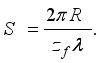 (1)
(1)  (2)
(2)
|
|
|
|
|
|---|---|---|
120 | 12,57 | 2,14 |
130 | 13,61 | 2,31 |
140 | 14,66 | 2,49 |
| Central Point |
| Rotational Radius |
| Bending Radius |
| Lateral Angle |
| [1] | Study on the three-dimensional modeling of the geometric shape and trochoidal motion trajectory of rotary tillage blades. Biosystems Engineering, 2004, 89(1), 47-58. |
| [2] | To‘raqulov, M. Results of using rotary cultivator working elements for inter-row tillage. Eurasian Journal of Academic Research, 2024, 4(12), 95-100. |
| [3] | Design and experimental study of a disc cultivator for primary inter-row tillage of potatoes. 2020, 51(8), 98-108. |
| [4] | Li, Y., Zhou, W., Sun, Z., Chen, T., et al. Analysis and experimental study of the working process of the soil-engaging disc of a potato cultivator. INMATEH Agricultural Engineering, 2022. |
| [5] | Abdulkhayev, X., Tojiddinov, S. Device for inter-row tillage of row crops grown on ridges. Research Focus International Scientific Journal, 2022, 1(1), 320-323. |
| [6] | Pervushin, V. F., Salimzyanov, M. Z., Casimov, N. G., Shmykov, S. N., Costin, A. V. Justification of the parameters and operating modes of a rotary cultivator for potato crops. Journal of Agriculture and Horticulture Research, 2026, 9(2), 1-11. |
| [7] | Bayboboev, A. N., Kodirov, S. T., Akbarov, Sh. B., Goipov, U. G., Khamzaev, A. A. Calculation of the technological process of soil separation using a loosening drum. |
| [8] | Akhmetov, Adilbek Agabekovich. Development of a combined machine with rotary working elements for pre-sowing tillage of saline soils. |
| [9] | Bayboboev, N. G., Mukhamedov, J. M., Akbarov, Sh. B. Optimization of the parameters of the support-copying device of a potato harvester. Bulletin of Ryazan State Agrotechnological University named after P. A. Kostychev, 2015, 4(28), 45-48. |
| [10] | Umirov, A. T. Mechanization of Vegetable and Potato Production. 2023, 30 p. |
| [11] | Shoumarova, M., Abdillayev, T. Agricultural Machinery. Tashkent: Sharq, 2014, 300 p. |
| [12] | Bayboboev, N. G., Khamzaev, A. A. Harvesting Jerusalem artichoke using potato diggers. Scientific Knowledge of Modernity, 2017, No. 3, 24-27. |
| [13] | Akmalkhonovich, K. A., Dzhorayevich, A. Z., Rafiqjon o‘g‘li, X. X. Calculation of operating modes of cardan transmissions of an experimental digger for harvesting Jerusalem artichoke. British Journal of Global Ecology and Sustainable Development, 2023, 16, 121-126. |
| [14] | Turdaliev, Vohidjon Mahsudovich. Scientific and Technical Solutions for the Development of a Combined Machine for Soil Tillage and Vegetable Crop Sowing. Tashkent, 2018. |
| [15] | Kidirov, Adham Rustamovich. Justification of the Parameters of a Passive Rotary Tiller for Surface Soil Tillage. Dissertation. Namangan, 2023. |
| [16] | Hamidov, A. Soil Tillage Technologies. Tashkent: O‘qituvchi, 2007, 45 p. |
| [17] | Simulation and Experimental Study of Rotary Tillage Blades. Agriculture Journal, 2023. |
APA Style
G‘ulomovic, B. N., Muxammadjonovich, K. N., Akmalxonovich, X. A., O‘g‘li, M. D. Z. (2026). Theoretical Justification of the Parameters of a Rotary Loosening Blade for Inter-row Tillage in Potato Cultivation. American Journal of Mechanics and Applications, 13(4), 59-63. https://doi.org/10.11648/j.ajma.20261304.11
ACS Style
G‘ulomovic, B. N.; Muxammadjonovich, K. N.; Akmalxonovich, X. A.; O‘g‘li, M. D. Z. Theoretical Justification of the Parameters of a Rotary Loosening Blade for Inter-row Tillage in Potato Cultivation. Am. J. Mech. Appl. 2026, 13(4), 59-63. doi: 10.11648/j.ajma.20261304.11
@article{10.11648/j.ajma.20261304.11,
  author = {Bayboboev Nabijon G‘ulomovic and Komilov Ne’matilla Muxammadjonovich and Xamzayev Asrorxon Akmalxonovich and Matyoqubov Doston Zohidjon O‘g‘li},
  title = {Theoretical Justification of the Parameters of a Rotary Loosening Blade for Inter-row Tillage in Potato Cultivation},
  journal = {American Journal of Mechanics and Applications},
  volume = {13},
  number = {4},
  pages = {59-63},
  doi = {10.11648/j.ajma.20261304.11},
  url = {https://doi.org/10.11648/j.ajma.20261304.11},
  eprint = {https://article.sciencepublishinggroup.com/pdf/10.11648.j.ajma.20261304.11},
  abstract = {In potato cultivation, mechanical inter-row tillage plays an important role in loosening the soil, eliminating weeds, crushing soil clods, and creating favorable soil conditions for the development of the plant root system. The effectiveness of inter-row tillage largely depends on the geometric and kinematic parameters of the working tools and their interaction with the soil. The aim of this study is to theoretically substantiate the main geometric and kinematic parameters of a rotary loosening blade designed for inter-row tillage in potato cultivation. The study analyzes the principal geometric parameters of the rotary blade, including the bending angle, lateral angle, bending line angle, tangential edge height, bending radius, rotational radius, working width, and cutting-edge characteristics. For the theoretical analysis, the rotational radius of the rotary loosener was assumed to be 0.17 m, with four blades mounted on one side of the disc. The blade wing length was taken as 0.07 m, while the sharpening angle of the cutting edge was set at 30°. Based on the obtained theoretical relationships, the main kinematic parameters of the rotary loosener were determined for different operating conditions. At a rotor rotational speed of 120–140 rpm, the corresponding angular velocity was calculated as 12.57–14.66 rad/s, while the peripheral velocity of the blade tip ranged from 2.14 to 2.49 m/s. At an aggregate travel speed of 3–5 km/h, the kinematic operating mode coefficient varied from 1.54 to 2.99. The obtained results provide a theoretical basis for selecting appropriate geometric and kinematic parameters of rotary loosening blades and can be used in the design and improvement of mechanical inter-row tillage equipment for potato cultivation.},
 year = {2026}
}
TY  - JOUR
T1  - Theoretical Justification of the Parameters of a Rotary Loosening Blade for Inter-row Tillage in Potato Cultivation
AU  - Bayboboev Nabijon G‘ulomovic
AU  - Komilov Ne’matilla Muxammadjonovich
AU  - Xamzayev Asrorxon Akmalxonovich
AU  - Matyoqubov Doston Zohidjon O‘g‘li
Y1  - 2026/10/09
PY  - 2026
N1  - https://doi.org/10.11648/j.ajma.20261304.11
DO  - 10.11648/j.ajma.20261304.11
T2  - American Journal of Mechanics and Applications
JF  - American Journal of Mechanics and Applications
JO  - American Journal of Mechanics and Applications
SP  - 59
EP  - 63
PB  - Science Publishing Group
SN  - 2376-6131
UR  - https://doi.org/10.11648/j.ajma.20261304.11
AB  - In potato cultivation, mechanical inter-row tillage plays an important role in loosening the soil, eliminating weeds, crushing soil clods, and creating favorable soil conditions for the development of the plant root system. The effectiveness of inter-row tillage largely depends on the geometric and kinematic parameters of the working tools and their interaction with the soil. The aim of this study is to theoretically substantiate the main geometric and kinematic parameters of a rotary loosening blade designed for inter-row tillage in potato cultivation. The study analyzes the principal geometric parameters of the rotary blade, including the bending angle, lateral angle, bending line angle, tangential edge height, bending radius, rotational radius, working width, and cutting-edge characteristics. For the theoretical analysis, the rotational radius of the rotary loosener was assumed to be 0.17 m, with four blades mounted on one side of the disc. The blade wing length was taken as 0.07 m, while the sharpening angle of the cutting edge was set at 30°. Based on the obtained theoretical relationships, the main kinematic parameters of the rotary loosener were determined for different operating conditions. At a rotor rotational speed of 120–140 rpm, the corresponding angular velocity was calculated as 12.57–14.66 rad/s, while the peripheral velocity of the blade tip ranged from 2.14 to 2.49 m/s. At an aggregate travel speed of 3–5 km/h, the kinematic operating mode coefficient varied from 1.54 to 2.99. The obtained results provide a theoretical basis for selecting appropriate geometric and kinematic parameters of rotary loosening blades and can be used in the design and improvement of mechanical inter-row tillage equipment for potato cultivation.
VL  - 13
IS  - 4
ER  -
The Department of Mechanization agriculture, Namangan State Technical University, Namangan, Uzbekistan
Biography: Bayboboev Nabijon G‘ulomovich is a highly respected Doctor of Technical Sciences and a professor, renowned for his extensive contributions to the field. He has conducted extensive research in the field of agricultural machinery, particularly in fertilizer application and potato cultivation technologies. Currently, he works as a professor at the Department of Agricultural Mechanization at the Namangan State Technical University He is also the chairman of the specialized academic council for doctoral dissertations in technical sciences. Bayboboev is the author of more than 100 scientific publications, including monographs, articles, and teaching manuals. He holds several patents for inventions that have been practically implemented in Uzbekistan’s agricultural sector.
Research Fields: Agricultural Mechanization, Design of Fertilizer Application Systems, Potato Harvesting Technologies, Development of Resource-efficient Machinery for Soil Cultivation

The Department of Mechanization agriculture, Namangan State Technical University, Namangan, Uzbekistan
Biography: Komilov Ne’matilla Muxammadjonovich is a respected PhD-qualified associate professor at the Namangan State Technical University, with specialized expertise in agricultural mechanization—particularly in soil tillage and fertilizer application technologies. His impactful work in both theoretical and applied research supports ongoing innovations in Uzbekistan’s mechanized agriculture sector.
Research Fields: Soil Tillage Mechanization, Fertilizer Distribution Systems, Theoretical and Experimental Studies of Rotary and Disk-based Working Tools, Kinematics of Granular Fertilizer Flow

The Department of Transport Engineering, Namangan State Technical University, Namangan, Uzbekistan
Biography: Xamzayev Asrorxon Akmalxonovich is a researcher specializing in agricultural engineering and agricultural machinery. His research interests include the design, development, and optimization of agricultural machines and working implements for soil tillage and crop cultivation. His scientific activities focus particularly on mechanization technologies for potato and other row crops, rotary tillage implements, soil-engaging working elements, and the theoretical and experimental investigation of their operating parameters.
Research Fields: Mechanization of Harvesting Processes, Baler-collector Design, Humate-treated Forage Harvesting Technologies, Optimization of Machine Parameters for Crop Handling
The Department of Mechanization agriculture, Namangan State Technical University, Namangan, Uzbekistan
Biography: Matyoqubov Doston Zohidjon O‘g‘li is currently student an PhD. at the Namangan State Technical University in Uzbekistan. His academic focus is on post-harvest processing technology and the drying of vegetables.
Research Fields: Post-harvest Processing, Vegetable Drying Methods, Food Technology, Optimization of Drying Parameters for Quality Preservation in Agricultural Products


Information


 Share This Article
 Twitter
 Linked In
 Facebook
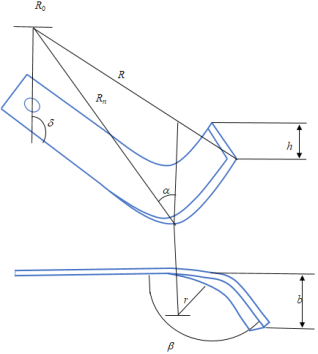
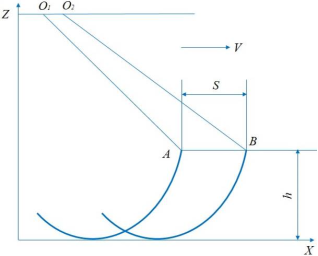
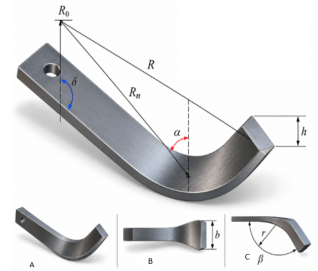
 - Central point
 - Rotational radius
 - Bending radius
 - Lateral angle
 - Bending line angle
 - Bending angle
 - Bending radius
 - Tangential edge height
 - Working width
 , rpm
, rpm rad/s
rad/s m/s
m/s Copy
Copy Download