
 ,
Amare Nigatu Zewdie,
Gashaw Dessie,
Yadelew Yimer,
Hassen Ahmed,
Chernet Desalegn Gebeyehu,
Mulugeta Kassaw
,
Amare Nigatu Zewdie,
Gashaw Dessie,
Yadelew Yimer,
Hassen Ahmed,
Chernet Desalegn Gebeyehu,
Mulugeta Kassaw
Diabetes mellitus is a heterogeneous group of disorders characterized by hyperglycemia due to an absolute or relative deficit in insulin production or action. Many plant species have been screened for their pharmacological properties in the treatment of diabetes mellitus. Cordia africana is a traditional medicinal plant used to treat various health problems. The objective of this study is to evaluate the effect of hydromethanolic leaf extract of Cordia africana (Wanza) on blood glucose levels, serum electrolytes, and α-amylase inhibitory activities in Streptozotocin-induced diabetic mice. The method used is an experimental study conducted on streptozotocin-induced diabetic male mice. The mice were organized into 6 groups, each having five members: normal mice (negative control), diabetics treated with distilled water (positive control), diabetics treated with glibenclamide (standard control), and the other three groups were diabetic mice treated with different doses of leaf extract. Their fasting blood sugar was measured on the 0th, 7th, and 14th days of the experiment. Serum electrolytes (Na+, K+, Cl−, and Ca2+) had also been determined on the 14th day of the experiment. The antioxidant properties and in vitro α-Amylase inhibitory actions of the extract had also been evaluated. The acute toxicity profile of the extract was assessed in 5 randomly selected female mice. The results of the study revealed that the hydromethanolic leaf extract of Cordia africana has a significant blood glucose-lowering effect. On the 7th and 14th day, the mean blood glucose levels of diabetic mice treated with 5mg glibenclamide, 200 mg/kg, and 400 mg/kg extract significantly diminished. Deranged serum electrolytes (Na+, K+, Cl−, and Ca2+) and reduced body weight were significantly improved at both doses of the extract, as well as in 5mg glibenclamide-treated mice. Besides, good antioxidant and α-amylase inhibitory activity were obtained from the in vitro lab tests. In conclusion, the results of this study exhibited that the hydromethanolic leaf extract of Cordia africana remarkably reduces blood sugar and body weight in streptozotocin-induced diabetic mice. Likewise, it improves deranged serum electrolytes. The extract also inhibits α-amylase activities.
| Published in | American Journal of Laboratory Medicine (Volume 11, Issue 3) |
| DOI | 10.11648/j.ajlm.20261103.11 |
| Page(s) | 51-63 |
| Creative Commons |
This is an Open Access article, distributed under the terms of the Creative Commons Attribution 4.0 International License (http://creativecommons.org/licenses/by/4.0/), which permits unrestricted use, distribution and reproduction in any medium or format, provided the original work is properly cited. |
| Copyright |
Copyright © The Author(s), 2026. Published by Science Publishing Group |
Blood Glucose, A-amylase Inhibitor, Antioxidant, Cordia Africana, Serum Electrolyte
No | Secondary metabolite | Tests performed | Result |
|---|---|---|---|
1 | Terpenoids | Salkowske test | + |
2 | Polyphenols | FeCl3 | ++ |
3 | Saponins | Foam test | ++ |
4 | Anthraquinones | Born Trager's test | + |
5 | Flavonoids | Shinoda test | ++ |
6 | Tannins | FeCl3 test | - |
7 | Alkaloids | Wagner test | ++ |
8 | Glycosides | Keller Kilian test | + |
9 | Steroid | Salkowske test | + |
Group | Fasting Blood Sugar | ||
|---|---|---|---|
On day 0 | On the 7th day | On the 14th day | |
Healthy control | 112.40 ± 3.130 | 116.60 ± 1.140b | 127.60 ± 4.393b |
Dm control | 288.20 ± 7.050a | 311.80 ± 5.263a | 344.60 ± 5.550a |
Dm + GLC 5 mg/kg | 287.20 ± 5.070a | 215.40 ± 10.310ba | 168.00 ± 1.581ba |
Dm + CALE 100 mg/kg | 282.00 ± 16.233a | 245.40 ± 23.287bac | 190.60 ± 8.473 bac |
Dm + CALE 200 mg/kg | 286.40 ± 17.855a | 223.60 ± 21.732ba | 178.60 ± 4.615ba |
Dm+ CALE 400 mg/kg | 298.40 ± 14.433a | 226.40 ± 7.470ba | 183.00 ± 11.225ba |
Groups | Sodium (mEq/L) | Potassium (mEq/L) | Calcium mEq/L) | Chlorine (mEq/L) |
|---|---|---|---|---|
Healthy control | 142.80 ± 1.020 | 5.0200 ± 0.09695 | 9.5800 ± 0.28531 | 101.60 ± 1.140 |
Diabetic control | 128.40 ± 0.510a | 3.4200 ± 0.05831a | 7.4200 ± 0.45978a | 92.20 ± 4.970a |
Diabetic + GLC 5 mg/kg | 142.00 ± 0.447b | 4.9600 ± 0. 27019b | 9.3800 ± 0.16553b | 98.60 ± 3.192b |
Dm + 100 mg/kg extract | 131.60 ± 0.748ab | 3.6600 ± 0.12083ac | 8.2800 ± 0.17720a | 95.40 ± 5.030ac |
Dm + 200 mg/kg extract | 137.60 ± 0.510b | 4.600 ± 0.07071ab | 8.8200 ± 0.29223b | 97.60± 2.074ab |
Dm + 400 mg/kg extract | 140.40 ± 0.812b | 4.9000 ± 0.07071b | 9.2000 ± 0.21448b | 98.00 ± 1.871ab |
CALE | Cordia africana Leaf Extract |
DM | Diabetes Mellitus |
FBS | Fasting Blood Sugar |
OECD | Organization for Economic Cooperation and Development |
STZ | Streptozotocin |
| [1] | Alam U, Asghar O, Azmi S, Malik RA. General aspects of diabetes mellitus. Handbook of Clinical Neurology. 2014; 126: 211-22. |
| [2] | Saeedi P, Petersohn I, Salpea P, Malanda B, Karuranga S, Unwin N, et al. Global and regional diabetes prevalence estimates for 2019 and projections for 2030 and 2045: Results from the International Diabetes Federation Diabetes Atlas. Diabetes research and clinical practice. 2019; 157: 107843. |
| [3] | Peer N, Kengne A-P, Motala AA, Mbanya JC. Diabetes in the Africa Region: an update. Diabetes research and clinical practice. 2014; 103(2): 197-205. |
| [4] | Pizzino G, Irrera N, Cucinotta M, Pallio G, Mannino F, Arcoraci V, et al. Oxidative Stress: Harms and Benefits for Human Health. Oxid Med Cell Longev. 2017; 2017: 8416763. |
| [5] | Rösen P, Nawroth P, King G, Möller W, Tritschler HJ, Packer L. The role of oxidative stress in the onset and progression of diabetes and its complications: asummary of a Congress Series sponsored byUNESCO‐MCBN, the American Diabetes Association and the German Diabetes Society. Diabetes/metabolism research and reviews. 2001; 17(3): 189-212. |
| [6] | Fukunaka A, Fujitani Y. Role of zinc homeostasis in the pathogenesis of diabetes and obesity. International journal of molecular sciences. 2018; 19(2): 476. |
| [7] | Alberici LC, Vercesi AE, Oliveira HC. Mitochondrial energy metabolism and redox responses to hypertriglyceridemia. Journal of bioenergetics and biomembranes. 2011; 43(1): 19-23. |
| [8] | Evans JL, Maddux BA, Goldfine ID. The molecular basis for oxidative stress-induced insulin resistance. Antioxidants & redox signaling. 2005; 7(7-8): 1040-52. |
| [9] | Liamis G, Milionis HJ, Elisaf M. Hyponatremia in patients with infectious diseases. Journal of Infection. 2011; 63(5): 327-35. |
| [10] | Liamis G, Liberopoulos E, Barkas F, Elisaf M. Diabetes mellitus and electrolyte disorders. World J Clin Cases. 2014; 2(10): 488-96. |
| [11] | Franjic S. In Shortly About Diabetes. Arch Cancer Sci Treat. 2018; 1(1): e101. |
| [12] | Babby A, Elanchezhiyan C, Suhasini S, Chandirasegaran G. Antihyperglycemic effect of tannic acid in streptozotocin induced diabetic rats. Int J Curr Res. 2014; 6(3): 5396-8. |
| [13] | Prabhakar PK, Doble M. Mechanism of action of natural products used in the treatment of diabetes mellitus. Chinese journal of integrative medicine. 2011; 17(8): 563-74. |
| [14] | Bekele T, Naslund B-A. Population structure and regereration of woody species in a broad-leaved afromontane rain forest, south-west Ethiopia. Ethiopian Journal of Natural Resources. 2003. |
| [15] | Fichtl R, Adi A. Honeybee flora of Ethiopia: Margraf; 1994. |
| [16] | Mohmmed FSE. Antibacterial Activity of Leaves and Fruits Extracts Of the Gumbil Tree (Cordia africana L.): University of Gezira; 2015. |
| [17] | Nigussie G, Ibrahim F, Neway S. A Phytopharmacological Review on a Medicinal Plant: Cordia africana Lam. Journal of Tropical Pharmacy and Chemistry. 2021; 5(3): 254-63. |
| [18] | Kifle ZD, Belayneh YM. Antidiabetic and anti-hyperlipidemic effects of the crude hydromethanol extract of Hagenia abyssinica (Rosaceae) leaves in streptozotocin-induced diabetic mice. Diabetes, Metabolic Syndrome and Obesity: Targets and Therapy. 2020; 13: 4085. |
| [19] | Geleta B, Makonnen E, Debella A, Tadele A. In vivo antihypertensive and antihyperlipidemic effects of the crude extracts and fractions of Moringa stenopetala (Baker f.) Cufod. leaves in rats. Frontiers in pharmacology. 2016; 7: 97. |
| [20] | Sarker SD, Latif Z, Gray AI. Natural product isolation. Natural products isolation. 2006: 1-25. |
| [21] | Saadane A, Lessieur EM, Du Y, Liu H, Kern TS. Successful induction of diabetes in mice demonstrates no gender difference in development of early diabetic retinopathy. Plos one. 2020; 15(9): e0238727. |
| [22] | Fawcett A, Rose M. Guidelines for the housing of mice in scientific institutions. Animal Welfare Unit, NSW Department of Primary Industries, West Pennant Hills Anim Res Rev Panel. 2012; 1: 1-43. |
| [23] | Care IoLARCo, Animals UoL. Guide for the care and use of laboratory animals: US Department of Health and Human Services, Public Health Service, National …; 1986. |
| [24] | Tamiru W, Engidawork E, Asres K. Evaluation of the effects of 80% methanolic leaf extract of Caylusea abyssinica (fresen.) fisch. & Mey. on glucose handling in normal, glucose loaded and diabetic rodents. BMC complementary and alternative medicine. 2012; 12(1): 1-7. |
| [25] | Sharma S, Choudhary M, Bhardwaj S, Choudhary N, Rana AC. Hypoglycemic potential of alcoholic root extract of Cassia occidentalis Linn. in streptozotocin induced diabetes in albino mice. Bulletin of Faculty of Pharmacy, Cairo University. 2014; 52(2): 211-7. |
| [26] | Bowe JE, Franklin ZJ, Hauge-Evans AC, King AJ, Persaud SJ, Jones PM. Metabolic phenotyping guidelines: assessing glucose homeostasis in rodent models. Journal of endocrinology. 2014; 222(3): G13-G25. |
| [27] | Baquer NZ, Kumar P, Taha A, Kale R, Cowsik S, McLean P. Metabolic and molecular action of Trigonella foenum-graecum (fenugreek) and trace metals in experimental diabetic tissues. Journal of biosciences. 2011; 36(2): 383-96. |
| [28] | Jonsson M, Jestoi M, Nathanail AV, Kokkonen U-M, Anttila M, Koivisto P, et al. Application of OECD Guideline 423 in assessing the acute oral toxicity of moniliformin. Food and chemical toxicology. 2013; 53: 27-32. |
| [29] | Wickramaratne MN, Punchihewa J, Wickramaratne D. In-vitro alpha amylase inhibitory activity of the leaf extracts of Adenanthera pavonina. BMC Complementary and Alternative Medicine. 2016; 16(1): 1-5. |
| [30] | Islam S, Nasrin S, Khan MA, Hossain AS, Islam F, Khandokhar P, et al. Evaluation of antioxidant and anticancer properties of the seed extracts of Syzygium fruticosum Roxb. growing in Rajshahi, Bangladesh. BMC Complement Altern Med. 2013; 13: 142. |
| [31] | Gilgun-Sherki Y, Rosenbaum Z, Melamed E, Offen D. Antioxidant therapy in acute central nervous system injury: current state. Pharmacological reviews. 2002; 54(2): 271-84. |
| [32] | Rahman MM, Islam MB, Biswas M, Khurshid Alam AHM. In vitro antioxidant and free radical scavenging activity of different parts of Tabebuia pallida growing in Bangladesh. BMC Research Notes. 2015; 8(1): 621. |
| [33] | Sunmonu TO, Afolayan AJ. Evaluation of antidiabetic activity and associated toxicity of Artemisia afra aqueous extract in wistar rats. Evidence-Based Complementary and Alternative Medicine. 2013; 2013. |
| [34] | Tijjani R, Zezi A, Shafiu R, Umar M. Anti-inflammatory and antioxidants properties of the ethanolic stem bark extract of Cordia africana (Lam.). Annals of Phytomedicine. 2015; 4(2): 83-7. |
| [35] | Ksouri R, Megdiche W, Falleh H, Trabelsi N, Boulaaba M, Smaoui A, et al. Influence of biological, environmental and technical factors on phenolic content and antioxidant activities of Tunisian halophytes. Comptes Rendus Biologies. 2008; 331(11): 865-73. |
| [36] | Abdel-Aleem ER, Attia EZ, Farag FF, Samy MN, Desoukey SY. Total phenolic and flavonoid contents and antioxidant, anti-inflammatory, analgesic, antipyretic and antidiabetic activities of Cordia myxa L. leaves. Clinical Phytoscience. 2019; 5(1): 29. |
| [37] | rights are reserved by Busineni A, Goud J. Streptozotocin-A Diabetogenic Agent in Animal Models. 2015. |
| [38] | Szkudelski T. The mechanism of alloxan and streptozotocin action in B cells of the rat pancreas. Physiological research. 2001; 50(6): 537-46. |
| [39] | Lenzen S. The mechanisms of alloxan-and streptozotocin-induced diabetes. Diabetologia. 2008; 51(2): 216-26. |
| [40] | Giles-Rivas D, Estrada-Soto S, Aguilar-Guadarrama AB, Almanza-Pérez J, García-Jiménez S, Colín-Lozano B, et al. Antidiabetic effect of Cordia morelosana, chemical and pharmacological studies. Journal of Ethnopharmacology. 2020; 251: 112543. |
| [41] | Sachin C, Harish Chandra V, Mandeep Kumar G, Hitesh K, Sudhansu Ranjan S, Ramesh Kumar G, et al. Antidiabetic Aptitude of Cordia sebestena and its Outcome on Biochemical Parameters, Serum Electrolytes, and Hematological Markers. Pharmacognosy Journal. 2019; 11(2). |
| [42] | Elekofehinti O, Kamdem J, Kade I, Rocha J, Adanlawo I. Hypoglycemic, antiperoxidative and antihyperlipidemic effects of saponins from Solanum anguivi Lam. fruits in alloxan-induced diabetic rats. South African Journal of Botany. 2013; 88: 56-61. |
| [43] | Lee K-T, Jung TW, Lee H-J, Kim S-G, Shin Y-S, Whang W-K. The antidiabetic effect of ginsenoside Rb2 via activation of AMPK. Archives of pharmacal research. 2011; 34(7): 1201-8. |
| [44] | Choudhary N, Khatik GL, Suttee A. The possible role of saponin in type-II diabetes-a review. Current diabetes reviews. 2021; 17(2): 107-21. |
| [45] | Plants IM. CMAUP: A Database of Collective Molecular Activities of Useful Plants. Food Chem. 173: 972-8. |
| [46] | Deng Y, He K, Ye X, Chen X, Huang J, Li X, et al. Saponin rich fractions from Polygonatum odoratum (Mill.) Druce with more potential hypoglycemic effects. Journal of Ethnopharmacology. 2012; 141(1): 228-33. |
| [47] | McAnuff MA, Harding WW, Omoruyi FO, Jacobs H, Morrison EY, Asemota HN. Hypoglycemic effects of steroidal sapogenins isolated from Jamaican bitter yam, Dioscorea polygonoides. Food and Chemical Toxicology. 2005; 43(11): 1667-72. |
| [48] | Bhavsar SK, Föller M, Gu S, Vir S, Shah MB, Bhutani K, et al. Involvement of the PI3K/AKT pathway in the hypoglycemic effects of saponins from Helicteres isora. Journal of ethnopharmacology. 2009; 126(3): 386-96. |
| [49] | Furman BL. Streptozotocin‐induced diabetic models in mice and rats. Current Protocols. 2021; 1(4): e78. |
| [50] | Nair KS, Halliday D, Matthews DE, Welle SL. Hyperglucagonemia during insulin deficiency accelerates protein catabolism. American Journal of Physiology-Endocrinology and Metabolism. 1987; 253(2): E208-E13. |
| [51] | Asrie AB, Abdelwuhab M, Shewamene Z, Gelayee DA, Adinew GM, Birru EM. Antidiarrheal activity of methanolic extract of the root bark of Cordia africana. Journal of Experimental Pharmacology. 2016; 8: 53. |
| [52] | Khan RN, Saba F, Kausar SF, Siddiqui MH. Pattern of electrolyte imbalance in Type 2 diabetes patients: Experience from a tertiary care hospital. Pak J Med Sci. 2019; 35(3): 797-801. |
| [53] | Chaudhary S, Verma HC, Gupta MK, Kumar H, Swain SR, Gupta RK, et al. Antidiabetic aptitude of Cordia sebestena and its outcome on biochemical parameters, serum electrolytes, and hematological markers. Pharmacognosy Journal. 2019; 11(2). |
| [54] | Kim Y, Keogh JB, Clifton PM. Polyphenols and glycemic control. Nutrients. 2016; 8(1): 17. |
| [55] | Alhadi EA, Khalid HS, Alhassan MS, Ali AA, Babiker SG, Alabdeen EMZ, et al. Antioxidant and cytotoxicity activity of Cordia africana in Sudan. Advancement in Medicinal Plant Research. 2015; 3(2): 29-32. |
APA Style
Tesfa, K. H., Zewdie, A. N., Dessie, G., Yimer, Y., Ahmed, H., et al. (2026). Effect of Hydromethanolic Leaf Extract of Cordia Africana (Boraginaceae) “Wanza” on Blood Glucose Level and Serum Electrolytes in Streptozotocin-Induced Diabetic Mice. American Journal of Laboratory Medicine, 11(3), 51-63. https://doi.org/10.11648/j.ajlm.20261103.11
ACS Style
Tesfa, K. H.; Zewdie, A. N.; Dessie, G.; Yimer, Y.; Ahmed, H., et al. Effect of Hydromethanolic Leaf Extract of Cordia Africana (Boraginaceae) “Wanza” on Blood Glucose Level and Serum Electrolytes in Streptozotocin-Induced Diabetic Mice. Am. J. Lab. Med. 2026, 11(3), 51-63. doi: 10.11648/j.ajlm.20261103.11
AMA Style
Tesfa KH, Zewdie AN, Dessie G, Yimer Y, Ahmed H, et al. Effect of Hydromethanolic Leaf Extract of Cordia Africana (Boraginaceae) “Wanza” on Blood Glucose Level and Serum Electrolytes in Streptozotocin-Induced Diabetic Mice. Am J Lab Med. 2026;11(3):51-63. doi: 10.11648/j.ajlm.20261103.11
@article{10.11648/j.ajlm.20261103.11,
  author = {Kibur Hunie Tesfa and Amare Nigatu Zewdie and Gashaw Dessie and Yadelew Yimer and Hassen Ahmed and Chernet Desalegn Gebeyehu and Mulugeta Kassaw},
  title = {Effect of Hydromethanolic Leaf Extract of Cordia Africana (Boraginaceae) “Wanza” on Blood Glucose Level and Serum Electrolytes in Streptozotocin-Induced Diabetic Mice},
  journal = {American Journal of Laboratory Medicine},
  volume = {11},
  number = {3},
  pages = {51-63},
  doi = {10.11648/j.ajlm.20261103.11},
  url = {https://doi.org/10.11648/j.ajlm.20261103.11},
  eprint = {https://article.sciencepublishinggroup.com/pdf/10.11648.j.ajlm.20261103.11},
  abstract = {Diabetes mellitus is a heterogeneous group of disorders characterized by hyperglycemia due to an absolute or relative deficit in insulin production or action. Many plant species have been screened for their pharmacological properties in the treatment of diabetes mellitus. Cordia africana is a traditional medicinal plant used to treat various health problems. The objective of this study is to evaluate the effect of hydromethanolic leaf extract of Cordia africana (Wanza) on blood glucose levels, serum electrolytes, and α-amylase inhibitory activities in Streptozotocin-induced diabetic mice. The method used is an experimental study conducted on streptozotocin-induced diabetic male mice. The mice were organized into 6 groups, each having five members: normal mice (negative control), diabetics treated with distilled water (positive control), diabetics treated with glibenclamide (standard control), and the other three groups were diabetic mice treated with different doses of leaf extract. Their fasting blood sugar was measured on the 0th, 7th, and 14th days of the experiment. Serum electrolytes (Na+, K+, Cl−, and Ca2+) had also been determined on the 14th day of the experiment. The antioxidant properties and in vitro α-Amylase inhibitory actions of the extract had also been evaluated. The acute toxicity profile of the extract was assessed in 5 randomly selected female mice. The results of the study revealed that the hydromethanolic leaf extract of Cordia africana has a significant blood glucose-lowering effect. On the 7th and 14th day, the mean blood glucose levels of diabetic mice treated with 5mg glibenclamide, 200 mg/kg, and 400 mg/kg extract significantly diminished. Deranged serum electrolytes (Na+, K+, Cl−, and Ca2+) and reduced body weight were significantly improved at both doses of the extract, as well as in 5mg glibenclamide-treated mice. Besides, good antioxidant and α-amylase inhibitory activity were obtained from the in vitro lab tests. In conclusion, the results of this study exhibited that the hydromethanolic leaf extract of Cordia africana remarkably reduces blood sugar and body weight in streptozotocin-induced diabetic mice. Likewise, it improves deranged serum electrolytes. The extract also inhibits α-amylase activities.},
 year = {2026}
}
TY  - JOUR
T1  - Effect of Hydromethanolic Leaf Extract of Cordia Africana (Boraginaceae) “Wanza” on Blood Glucose Level and Serum Electrolytes in Streptozotocin-Induced Diabetic Mice
AU  - Kibur Hunie Tesfa
AU  - Amare Nigatu Zewdie
AU  - Gashaw Dessie
AU  - Yadelew Yimer
AU  - Hassen Ahmed
AU  - Chernet Desalegn Gebeyehu
AU  - Mulugeta Kassaw
Y1  - 2026/07/22
PY  - 2026
N1  - https://doi.org/10.11648/j.ajlm.20261103.11
DO  - 10.11648/j.ajlm.20261103.11
T2  - American Journal of Laboratory Medicine
JF  - American Journal of Laboratory Medicine
JO  - American Journal of Laboratory Medicine
SP  - 51
EP  - 63
PB  - Science Publishing Group
SN  - 2575-386X
UR  - https://doi.org/10.11648/j.ajlm.20261103.11
AB  - Diabetes mellitus is a heterogeneous group of disorders characterized by hyperglycemia due to an absolute or relative deficit in insulin production or action. Many plant species have been screened for their pharmacological properties in the treatment of diabetes mellitus. Cordia africana is a traditional medicinal plant used to treat various health problems. The objective of this study is to evaluate the effect of hydromethanolic leaf extract of Cordia africana (Wanza) on blood glucose levels, serum electrolytes, and α-amylase inhibitory activities in Streptozotocin-induced diabetic mice. The method used is an experimental study conducted on streptozotocin-induced diabetic male mice. The mice were organized into 6 groups, each having five members: normal mice (negative control), diabetics treated with distilled water (positive control), diabetics treated with glibenclamide (standard control), and the other three groups were diabetic mice treated with different doses of leaf extract. Their fasting blood sugar was measured on the 0th, 7th, and 14th days of the experiment. Serum electrolytes (Na+, K+, Cl−, and Ca2+) had also been determined on the 14th day of the experiment. The antioxidant properties and in vitro α-Amylase inhibitory actions of the extract had also been evaluated. The acute toxicity profile of the extract was assessed in 5 randomly selected female mice. The results of the study revealed that the hydromethanolic leaf extract of Cordia africana has a significant blood glucose-lowering effect. On the 7th and 14th day, the mean blood glucose levels of diabetic mice treated with 5mg glibenclamide, 200 mg/kg, and 400 mg/kg extract significantly diminished. Deranged serum electrolytes (Na+, K+, Cl−, and Ca2+) and reduced body weight were significantly improved at both doses of the extract, as well as in 5mg glibenclamide-treated mice. Besides, good antioxidant and α-amylase inhibitory activity were obtained from the in vitro lab tests. In conclusion, the results of this study exhibited that the hydromethanolic leaf extract of Cordia africana remarkably reduces blood sugar and body weight in streptozotocin-induced diabetic mice. Likewise, it improves deranged serum electrolytes. The extract also inhibits α-amylase activities.
VL  - 11
IS  - 3
ER  -
Department of Biochemistry, University of Gondar, Gondar, Ethiopia
School of Medicine, Woldia University, Woldia, Ethiopia
Department of Biochemistry, University of Gondar, Gondar, Ethiopia
Department of Biochemistry, University of Gondar, Gondar, Ethiopia
School of Medicine, Woldia University, Woldia, Ethiopia
Department of Biomedical Sciences, Mattu University, Metu, Ethiopia
School of Medicine, Bahir Dar University, Bahir Dar, Ethiopia
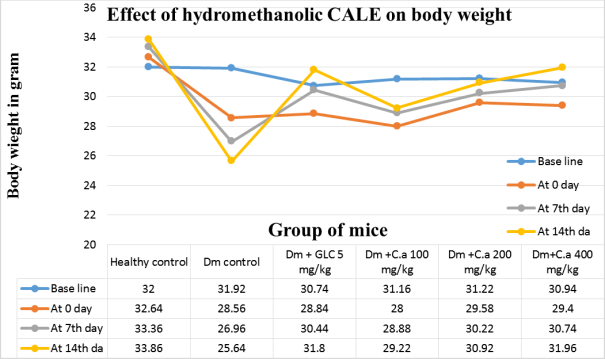
Figure 1. The effect of hydromethanolic CALE on the body weight of STZ-induced diabetic mice.
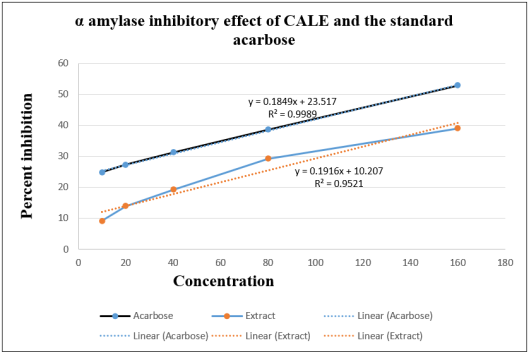
Figure 2. Percentage inhibition of α-amylase enzyme by CALE and standard Acarbose at different concentrations.
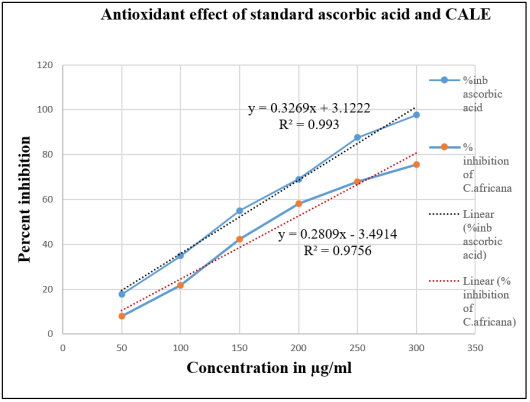
Figure 3. Percentage inhibition of DPPH by ascorbic acid and hydromethanolic leaves extract of C. africana at different concentrations.

Information


 Share This Article
 Twitter
 Linked In
 Facebook
 Copy
Copy Download