Objective: To assess clinicians perspectives on the diagnosis and management of infections in the pediatric intensive care unit (PICU) in India, with a focus on common pathogens, diagnostic and therapeutic approaches, meropenem usage, antimicrobial stewardship, and clinicians' perceptions of the efficacy, safety, and clinical outcomes of meropenem therapy. Methods: Clinicians across India participated in a cross-sectional survey using a structured 23-item questionnaire that assessed pathogen profile, diagnostic and therapeutic practices, meropenem usage, antimicrobial stewardship, and clinicians' perceptions of efficacy, safety, and clinical outcomes. Data were analyzed using descriptive statistics. Results: Among the 205 clinicians who participated in the survey, more than three-quarters (76.59%) identified bacterial infections as the most common cause of pediatric infections in the PICU. Nearly two-thirds (63.90%) reported that newborns and infants were the age group at the highest risk of developing severe infections in the PICU. Most clinicians (78.05%) recognized sepsis as the most common complication associated with ventilator-associated pneumonia in pediatric patients. Additionally, 74% preferred antibiotics as the initial treatment for critically ill pediatric patients with confirmed septic shock. Meropenem was the preferred antimicrobial agent for both empirical and targeted therapy, depending on the clinical scenario, as reported by 80% of respondents. Approximately three-quarters (75.61%) identified inadequate awareness of antibiotic stewardship as the primary factor contributing to the misuse or overuse of meropenem. Furthermore, 87% considered meropenem's broad-spectrum activity against both Gram-positive and Gram-negative organisms to be its greatest therapeutic advantage. Based on the 5-point Global Improvement Scale, 69% reported marked improvement in clinical outcomes following meropenem therapy. Conclusion: The survey emphasizes the importance of early antibiotic therapy, appropriate meropenem use, and antimicrobial stewardship. Meropenem is perceived as an effective broad-spectrum agent, with favorable clinical outcomes reported by most clinicians, supporting its role in the management of severe pediatric infections.
This is an Open Access article, distributed under the terms of the Creative Commons Attribution 4.0 International License (http://creativecommons.org/licenses/by/4.0/), which permits unrestricted use, distribution and reproduction in any medium or format, provided the original work is properly cited.
Pediatric infections remain a major cause of admission to pediatric intensive care units (PICUs) worldwide. Severe infections, including sepsis, pneumonia, meningitis, ventilator-associated pneumonia, bloodstream infections, and complicated intra-abdominal infections, are associated with substantial morbidity and mortality in critically ill children. The international SPROUT study, conducted across 128 PICUs in 26 countries, reported a point prevalence of severe sepsis of 8.2% among PICU patients, with a higher prevalence in Asia (15.3%), highlighting the significant burden of severe infections in this region
[1]
Weiss SL, Fitzgerald JC, Pappachan J, Wheeler D, Jaramillo-Bustamante JC, Salloo A, et al. Global epidemiology of pediatric severe sepsis: the Sepsis Prevalence, Outcomes, and Therapies study. Am J Respir Crit Care Med. 2015; 191(10): 1147-1157.
. Respiratory tract infections, particularly pneumonia, continue to be a leading cause of PICU admissions globally. In 2015, an estimated 138 million episodes of childhood pneumonia occurred worldwide, and pneumonia remained one of the leading infectious causes of death among children younger than five years
[2]
McAllister DA, Liu L, Shi T, Chu Y, Reed C, Burrows J, et al. Global, regional, and national estimates of pneumonia morbidity and mortality in children younger than 5 years between 2000 and 2015: a systematic analysis. Lancet Glob Health. 2019; 7(1): e47-e57.
. India bears a high burden of severe pediatric infections, accounting for nearly 32% of global childhood pneumonia cases. In Indian PICUs, respiratory illnesses, sepsis, and healthcare-associated infections are major causes of admission and mortality
[2]
McAllister DA, Liu L, Shi T, Chu Y, Reed C, Burrows J, et al. Global, regional, and national estimates of pneumonia morbidity and mortality in children younger than 5 years between 2000 and 2015: a systematic analysis. Lancet Glob Health. 2019; 7(1): e47-e57.
Mokkarala P, Patil MG, Salunkhe S, Mane S, Awase S, Reddy Koralla M. Systematic review and meta-analysis on the pattern of admissions and treatment outcomes in PICU. J Neonatal Surg. 2025; 14(8S): 258-72.
Meropenem is a broad-spectrum carbapenem β-lactam antibiotic widely used for the treatment of severe bacterial infections in critically ill pediatric patients. It exerts bactericidal activity by binding to multiple penicillin-binding proteins (PBPs), thereby inhibiting peptidoglycan cross-linking during bacterial cell wall synthesis, leading to cell lysis and death. Meropenem exhibits time-dependent bactericidal activity and remains stable against most chromosomal and plasmid-mediated β-lactamases, including extended-spectrum β-lactamases (ESBLs). Its broad-spectrum activity against Gram-positive, Gram-negative, and anaerobic pathogens makes it an important option for both empirical and targeted therapy in severe pediatric infections
[5]
Baldwin CM, Lyseng-Williamson KA, Keam SJ. Meropenem: a review of its use in the treatment of serious bacterial infections. Drugs. 2008; 68(6): 803-838.
Despite the widespread use of meropenem in PICUs, data on clinicians' practices, antimicrobial stewardship, and perceptions of its clinical effectiveness in India remain limited. Therefore, this survey evaluates current clinical practice patterns in the diagnosis and management of pediatric infections in the PICU, with particular emphasis on common pathogens, diagnostic and therapeutic strategies, meropenem prescribing practices, antimicrobial stewardship, and clinicians' perceptions of its efficacy, safety, and clinical outcomes.
2. Materials and Methods
2.1. Study Settings
Between June and December 2025, a cross-sectional survey was undertaken among clinicians involved in the diagnosis and management of pediatric infections in the PICU across major Indian cities. Ethical approval was obtained from the Bangalore Ethics Independent Ethics Committee (ECR/355/Indt/KA/2022), recognized by the Drug Controller General of India, and the survey was conducted in compliance with the approved ethical standards.
2.2. Study Participants
Clinicians actively involved in the management of pediatric infections in the PICU were invited to participate in the survey in March 2025. Overall, 205 clinicians from major cities across different Indian states, ensuring broad geographic representation, agreed to participate and provided the requested information.
2.3. Study Procedure
Clinicians who consented to participate received the Praretco- CT (Paediatric Response Towards effective Carbapenem Treatment) questionnaire booklet. The survey instrument consisted of 23 questions designed to to capture information on the epidemiology and burden of pediatric infections in the PICU, common bacterial pathogens, age groups at highest risk, causes of mortality, determinants of disease severity, complications of ventilator-associated pneumonia, diagnostic approaches for ventilator-associated pneumonia and viral respiratory infections, and management strategies for meningitis and septic shock. The questionnaire further assessed indications for meropenem usage, empirical and targeted use of meropenem, factors influencing empirical antibiotic selection, methods of meropenem administration, dose adjustment according to renal function, concerns regarding carbapenem resistance, combination therapy practices, factors contributing to meropenem misuse, monitoring for adverse effects, occurrence of adverse drug reactions, perceived clinical benefits of meropenem, and overall treatment outcomes using a 5-point Global Improvement Scale. The questionnaire demonstrated acceptable internal consistency based on split-half reliability (coefficient alpha), although further refinement may improve its reliability in future applications. Criterion validity was evaluated by comparing clinicians' responses with independent assessments conducted by an external reviewer and a statistician. Potential sources of variability, including differences in clinical experience and familiarity with newer therapeutic agents, were acknowledged during the validation process. Participants were informed that they could omit any question if they chose to do so and were requested to complete the questionnaire independently without discussing their responses with colleagues. Written informed consent was obtained from all clinicians prior to their participation in the survey.
2.4. Statistical Analysis
Survey responses were analysed using descriptive statistical methods. Categorical variables were summarized as frequencies and percentages. The findings were presented using tables and figures generated in Microsoft Excel.
3. Results
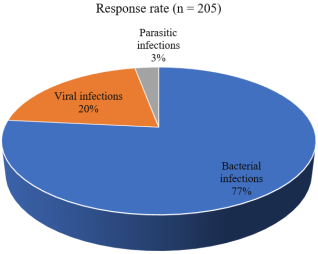
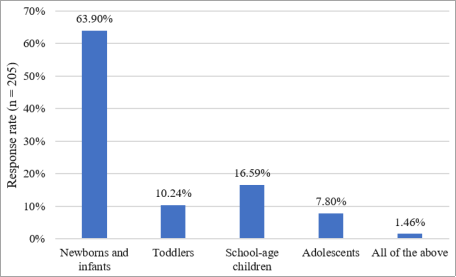
A total of 205 clinicians participated in the survey. More than three-quarters (77%) of the respondents identified bacterial infections as the most common cause of pediatric infections in the PICU (Figure 1). Approximately 80% of the participants identified Streptococcus pneumoniae as one of the most common bacterial pathogens associated with PICU-acquired infections. The majority (63.90%) of respondents identified newborns and infants as the age group at the highest risk of developing severe infections in the PICU (Figure 2).
Approximately 47% of respondents reported sepsis as the leading cause of mortality among pediatric patients with infections in the PICU. Around 44% of clinicians identified nutritional status as the key determinant of infection severity in pediatric patients admitted to the PICU. The majority (78.05%) of respondents reported sepsis as the most common complication of ventilator-associated pneumonia in pediatric patients admitted to the PICU (Table 1).
Figure 2. Distribution of responses on the age group at highest risk for severe infections in the PICU.
Table 1. Distribution of responses on the most common complication of ventilator-associated pneumonia in pediatric PICU patients.
Complications
Response rate (n = 205)
Sepsis
78.05%
Cardiovascular collapse
8.29%
Renal failure
1.95%
Chronic lung disease
7.8%
All of the above
3.9%
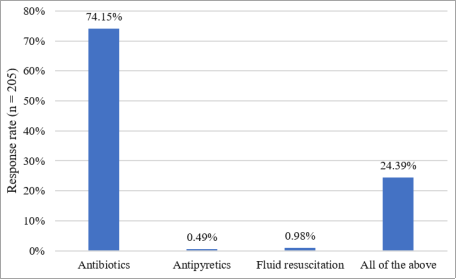
Nearly half (48.78%) of the respondents considered bronchoalveolar lavage (BAL) the gold standard for diagnosing ventilator-associated pneumonia. Half (50.24%) of the respondents reported that PCR testing for viral RNA/DNA as the primary diagnostic tool used for identifying viral respiratory infections in pediatric patients in the PICU. More than two-thirds (66.83%) of respondents considered early initiation of intravenous antibiotics as the most important management strategy for pediatric patients with meningitis in the PICU. Similarly, 74.15% reported antibiotics as the preferred initial therapy for critically ill pediatric patients with confirmed septic shock (Figure 3).
Figure 3. Distribution of responses on the preferred initial therapy for critically ill pediatric patients with confirmed septic shock.
About 56% of the participants reported sepsis/septic shock as the most frequent indication for preferring meropenem. The majority (79.51%) reported using meropenem for both empirical and targeted therapy, depending on the clinical scenario (Table 2). Approximately 52% of respondents indicated that the patient's clinical presentation and severity of illness were the primary factors influencing empirical meropenem usage. More than half (56.59%) of the clinicians preferred short-duration infusion (30 minutes) for meropenem administration. Approximately 42% reported always adjusting the meropenem dosage according to renal function.
Nearly half (49.27%) of the respondents were extremely concerned about the increasing rates of carbapenem resistance in clinical practice. Approximately 53% of clinicians reported using meropenem in combination with other antibiotics for suspected polymicrobial infections. The majority (75.61%) identified lack of awareness regarding antimicrobial stewardship as the most important factor contributing to the misuse or overuse of meropenem (Table 3). Furthermore, 87.8% considered meropenem's broad-spectrum activity against both Gram-positive and Gram-negative organisms to be its principal therapeutic advantage (Table 4).
Table 2. Distribution of responses on the primary use of meropenem in clinical practice.
Views
Response rate (n = 205)
Empirical therapy (before culture results are available)
9.76%
Targeted therapy (after culture results and sensitivity data are available)
10.73%
Both (depending on the clinical scenario)
79.51%
Table 3. Distribution of responses on the most significant factors contributing to meropenem misuse or overuse.
Factors
Response rate (n = 205)
Lack of awareness about antibiotic stewardship
75.61%
Diagnostic uncertainty
6.34%
Empirical treatment without proper de-escalation
12.68%
Fear of poor patient outcomes if a broad-spectrum antibiotic is not used
5.37%
Table 4. Distribution of responses on the primary benefits of meropenem in critically ill pediatric patients.
Benefits
Response rate (n = 205)
Broad-spectrum activity against both gram-positive and gram-negative organisms
87.8%
Only effective against gram-negative bacteria
8.78%
Narrow spectrum reducing risk of resistant pathogens
2.44%
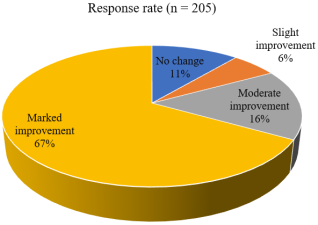
Approximately 63% of respondents reported regularly monitoring patients for potential adverse effects or complications associated with meropenem. About 90% of clinicians had encountered no adverse drug reactions associated with meropenem. Based on the 5-point Global Improvement Scale, 69% of respondents reported marked improvement in clinical outcomes following meropenem therapy (Figure 4).
Figure 4. Distribution of responses on rating the clinical outcomes with meropenem based on a 5-point global improvement scale.
4. Discussion
The survey indicates that bacterial infections remain the predominant cause of pediatric infections in the PICU, with Streptococcus pneumoniae identified as one of the most common pathogens. This finding is consistent with published evidence showing that bacterial pathogens continue to contribute substantially to severe infections, particularly pneumonia and sepsis, among critically ill children. Dorofaeff et al. reported that bacterial pathogens, particularly Streptococcus pneumoniae and Staphylococcus aureus, are the leading causes of severe pneumonia requiring PICU admission, highlighting the significant contribution of bacterial infections to pediatric critical illness
[7]
Dorofaeff T, Mohseni-Bod H, Cox PN. Infections in the PICU. Textbook of Clinical Pediatrics. 2012: 2537–63.
[7]
. Similarly, Gormley et al., in a multicenter cohort study, found that community-acquired bacterial infections were a major indication for PICU admission, with lower respiratory tract infections accounting for 43% of cases and meningitis for 20%
[8]
Levy M, Mary A, Cour Andlauer F, Rousseaux J, Berthomieu L, Brehin C, et al. A contemporary overview of severe community-acquired bacterial infections in pediatric intensive care units. Ann Intensive Care. 2026; 16: 100112.
. Wattal and Goel also reported that bloodstream infections caused predominantly by gram-negative organisms, especially Klebsiella pneumoniae, along with gram-positive bacteria, are frequently encountered in PICUs, further emphasizing the substantial burden of bacterial infections among critically ill children
[9]
Wattal C, Goel N. Pediatric Blood Cultures and Antibiotic Resistance: An Overview. Indian J Pediatr. 2020 Feb; 87(2): 125-131.
The majority of respondents identified newborns and infants as the age group at the highest risk for severe infections in the PICU. Freedman et al. demonstrated that younger age is an independent risk factor for PICU admission due to infectious diseases, with infancy and low birth weight significantly increasing the likelihood of severe infections requiring intensive care
[10]
Freedman J, Leibovitz E, Sergienko R, Levy A. Risk factors for hospitalization at the pediatric intensive care unit among infants and children younger than 5 years of age diagnosed with infectious diseases. Pediatr Neonatol. 2023 Mar; 64(2): 133-139.
. Similarly, the Centers for Disease Control and Prevention (CDC) reports that newborns, particularly preterm infants, are highly susceptible to severe bacterial infections such as early-onset neonatal sepsis, a major cause of neonatal morbidity and PICU admission
[11]
Centers for Disease Control and Prevention (CDC). Active Bacterial Core surveillance (ABCs): early-onset neonatal sepsis surveillance and trends [Internet]. 2025 [cited 2026 Jul 23]. Available from:
. Consistent with these findings, the World Health Organization (WHO) states that young infants (0–59 days) bear a disproportionately high burden of serious bacterial infections, including sepsis, meningitis, and pneumonia, which contribute substantially to mortality and frequently necessitate intensive care management
[12]
World Health Organization. Executive summary. In: WHO recommendations for management of serious bacterial infections in infants aged 0–59 days [Internet]. Geneva: World Health Organization; 2024 [cited 2026 Jul 23]. Available from:
Another important observation of the present survey is the identification of sepsis as the most common complication of ventilator-associated pneumonia in pediatric PICU patients. Vijay et al. reported that sepsis was the most common admitting diagnosis among mechanically ventilated children and highlighted ventilator-associated pneumonia as a serious healthcare-associated infection associated with systemic infection, prolonged mechanical ventilation, and poor clinical outcomes. Gram-negative organisms were identified as the predominant causative pathogens
[13]
Vijay G, Mandal A, Sankar J, Kapil A, Lodha R, Kabra SK. Ventilator Associated Pneumonia in Pediatric Intensive Care Unit: Incidence, Risk Factors and Etiological Agents. Indian J Pediatr. 2018 Oct; 85(10): 861-866.
. Similarly, Bhattacharya et al. demonstrated that pediatric ventilator-associated pneumonia was associated with prolonged mechanical ventilation, extended PICU stay, and increased mortality, reflecting progression to severe systemic illness. The predominance of gram-negative pathogens further underscores the high risk of sepsis and other serious complications in children with ventilator-associated pneumonia
[14]
Bhattacharya P, Kumar A, Kumar Ghosh S, Kumar S. Ventilator-Associated Pneumonia in Paediatric Intensive Care Unit Patients: Microbiological Profile, Risk Factors, and Outcome. Cureus. 2023 Apr 27; 15(4): e38189.
Many respondents in the present survey preferred antibiotics as the initial therapy for critically ill pediatric patients with confirmed septic shock. This finding is consistent with current international guidelines that emphasize the importance of early empirical antimicrobial therapy in improving clinical outcomes. Weiss et al., in the Surviving Sepsis Campaign guidelines, recommend administering empiric broad-spectrum intravenous antibiotics within 1 hour of recognizing septic shock in children, highlighting early antimicrobial therapy as a cornerstone of initial management that is associated with improved survival and reduced mortality
[15]
Tissieres P, Kissoon N, Zimmerman JJ, Wong HR, Wolf J, Williams EA, et al. Surviving Sepsis Campaign international guidelines for the management of septic shock and sepsis-associated organ dysfunction in children. Pediatr Crit Care Med. 2020; 21(2): e52-e106.
. Similarly, the American College of Critical Care Medicine guidelines advocate prompt initiation of empiric broad-spectrum antibiotics immediately after obtaining appropriate cultures, as delays in antibiotic administration are associated with increased mortality and poorer clinical outcomes
[16]
Zuckerberg AL, Zimmerman JJ, Weiss SL, Weingarten-Abrams J, Torres A, Scott HF, et al. American College of Critical Care Medicine clinical practice parameters for hemodynamic support of pediatric and neonatal septic shock. Crit Care Med. 2017; 45(6): 1061-1093.
. Consistent with these recommendations, the WHO also advises the immediate initiation of parenteral broad-spectrum antibiotics as part of the initial management bundle for children with suspected or confirmed septic shock, alongside fluid resuscitation and supportive care
[17]
World Health Organization. Pocket book of hospital care for children [Internet]. 2nd ed. Geneva: World Health Organization; 2013 [cited 2026 Jul 23]. Available from:
The majority of respondents reported using meropenem for both empirical and targeted therapy, depending on the clinical scenario, and considered its broad-spectrum activity against both Gram-positive and Gram-negative organisms to be its principal therapeutic advantage. These findings are consistent with current guideline recommendations and published evidence. The Infectious Diseases Society of America (IDSA) guidance by Tamma et al. recommends empirical carbapenem therapy, including meropenem, for patients at high risk of infections caused by extended-spectrum β-lactamase (ESBL)-producing Enterobacterales, followed by targeted therapy based on microbiological identification and antimicrobial susceptibility testing
[18]
Infectious Diseases Society of America (IDSA). AMR guidance [Internet]. [cited 2026 Jul 23]. Available from:
. Similarly, the Surviving Sepsis Campaign guidelines by Weiss et al. recommend initiating broad-spectrum empirical antibiotics in children with septic shock, followed by de-escalation to targeted therapy according to culture and susceptibility results
[15]
Tissieres P, Kissoon N, Zimmerman JJ, Wong HR, Wolf J, Williams EA, et al. Surviving Sepsis Campaign international guidelines for the management of septic shock and sepsis-associated organ dysfunction in children. Pediatr Crit Care Med. 2020; 21(2): e52-e106.
. The broad-spectrum activity of meropenem has also been well documented. Baldwin et al. described meropenem as a carbapenem with potent activity against a wide range of Gram-positive and Gram-negative pathogens, including ESBL-producing Enterobacterales, making it an appropriate option for the empirical treatment of serious infections
[5]
Baldwin CM, Lyseng-Williamson KA, Keam SJ. Meropenem: a review of its use in the treatment of serious bacterial infections. Drugs. 2008; 68(6): 803-838.
The majority of respondents identified a lack of awareness regarding antibiotic stewardship as the most important factor contributing to the misuse or overuse of meropenem. This finding is supported by previous studies. Gerber et al., on behalf of the American Academy of Pediatrics (AAP), reported that inappropriate antibiotic prescribing and inadequate implementation of antimicrobial stewardship principles contribute to unnecessary broad-spectrum antibiotic use and the emergence of antimicrobial resistance, emphasizing the importance of education and stewardship programs in optimizing antibiotic prescribing in children
[19]
Gerber JS, Jackson MA, Tamma PD, Zaoutis TE, Maldonado YA, O'Leary ST, et al. Antibiotic stewardship in pediatrics. Pediatrics. 2021; 147(1): e2020040295.
. Similarly, Rungsitsathain et al. demonstrated that structured antimicrobial stewardship interventions, including prospective audit and feedback, improved meropenem de-escalation and reduced the acquisition of carbapenem-resistant Gram-negative bacteria, highlighting the role of effective stewardship in promoting appropriate meropenem use
[20]
Rungsitsathian K, Wacharachaisurapol N, Nakaranurack C, Usayaporn S, Sakares W, Kawichai S, et al. Acceptance and outcome of interventions in a meropenem de-escalation antimicrobial stewardship program in pediatrics. Pediatr Int. 2021; 63(12): 1458-1465.
. Zaffagnini et al. showed that pediatric antimicrobial stewardship interventions incorporating education, audit, feedback, and prescribing guidelines significantly reduced antibiotic consumption while improving prescribing appropriateness, underscoring the critical role of stewardship awareness in preventing unnecessary broad-spectrum antibiotic use
[21]
Zaffagnini A, Rigotti E, Opri F, Opri R, Simiele G, Tebon M, et al. Enforcing surveillance of antimicrobial resistance and antibiotic use to drive stewardship: experience in a paediatric setting. J Hosp Infect. 2024; 144: 14-19.
Based on the 5-point Global Improvement Scale, many respondents reported marked improvement in clinical outcomes following meropenem therapy. This finding is supported by previous studies. Fujii et al. demonstrated excellent clinical efficacy of meropenem in a multicenter study involving 389 pediatric patients, with 95–98% of patients achieving good or excellent clinical responses across serious infections, including pneumonia, septicemia, meningitis, and urinary tract infections. The study also reported bacteriological eradication in 96.7% of isolates, indicating significant clinical improvement following meropenem therapy
[22]
Fujii R, Yoshioka H, Fujita K, Maruyama S, Sakata H, Inyaku F, et al. Pharmacokinetic and clinical studies with meropenem in the pediatric field. Pediatric Study Group of Meropenem. Jpn J Antibiot. 1992; 45(6): 697-717.
[22]
. Similarly, Schuler demonstrated in a multicenter randomized trial involving 170 hospitalized children that meropenem achieved satisfactory clinical responses in 98% of patients and exhibited efficacy comparable to cefotaxime-based regimens in the treatment of severe pediatric bacterial infections
[23]
Schuler D. Safety and efficacy of meropenem in hospitalised children: randomised comparison with cefotaxime, alone and combined with metronidazole or amikacin. Meropenem Paediatric Study Group. J Antimicrob Chemother. 1995 Jul; 36 Suppl A: 99-108.
. Furthermore, Wang et al. reported that optimized meropenem exposure in critically ill infants and children significantly enhanced antibacterial efficacy, resulting in greater reductions in fever, white blood cell count, and C-reactive protein without increasing adverse events, thereby improving overall clinical outcomes
[24]
Wang Z, Bi J, You D, Tang Y, Liu G, Yu J, et al. Improving the efficacy for meropenem therapy requires a high probability of target attainment in critically ill infants and children. Front Pharmacol. 2022; 13: 961863.
This study provides valuable evidence on contemporary clinical practices for the diagnosis and management of pediatric infections in the PICU across India by capturing the perspectives of 205 practicing clinicians. It comprehensively assessed pathogen epidemiology, diagnostic and therapeutic approaches, meropenem prescribing practices, antimicrobial stewardship, safety monitoring, and treatment outcomes using a structured questionnaire. However, the findings are limited by the cross-sectional survey design and reliance on self-reported clinician responses, which may be subject to recall and response bias.
5. Conclusions
This cross-sectional survey provides contemporary insights into clinicians' perspectives on the diagnosis and management of pediatric infections in the PICU across India. The findings indicate that bacterial infections, particularly those caused by Streptococcus pneumoniae, are perceived as the predominant cause of severe pediatric infections, with newborns and infants considered the most vulnerable population. Sepsis was identified as the leading complication of ventilator-associated pneumonia, and most clinicians emphasized the importance of early initiation of broad-spectrum intravenous antibiotics for critically ill children with septic shock.
Meropenem was widely preferred for both empirical and targeted therapy because of its broad-spectrum activity and perceived clinical effectiveness against severe infections. Most respondents reported favorable clinical outcomes with meropenem, minimal adverse drug reactions, and recognized its value in the management of serious pediatric infections. At the same time, clinicians identified inadequate awareness of antimicrobial stewardship as the principal contributor to inappropriate meropenem use, highlighting the need for strengthened stewardship initiatives, timely microbiological diagnosis, culture-guided de-escalation, and rational antibiotic prescribing.
Overall, these findings reflect current clinical practice patterns among Indian clinicians and support the continued role of meropenem as an important therapeutic option for severe pediatric infections in the PICU when used judiciously within antimicrobial stewardship frameworks. The results also provide useful real-world evidence that may inform future clinical practice, educational programs, and antibiotic stewardship strategies aimed at optimizing outcomes while minimizing antimicrobial resistance.
6. Recommendations
The present survey provides valuable insights into current clinical perspectives on the diagnosis and management of pediatric infections in the PICU; however, further research is warranted to strengthen the evidence base and optimize clinical practice. Future studies should include large-scale, multicenter prospective investigations evaluating real-world treatment outcomes, antimicrobial prescribing patterns, and resistance trends across diverse healthcare settings in India. Observational studies comparing empirical and culture-guided meropenem therapy, including antimicrobial de-escalation strategies, would help define best practices for antibiotic stewardship in critically ill pediatric patients.
Further research should also assess the impact of structured antimicrobial stewardship programs on prescribing behavior, antimicrobial resistance, healthcare costs, and patient outcomes in PICUs. In addition, pharmacokinetic and pharmacodynamic studies evaluating optimized meropenem dosing strategies, including prolonged or continuous infusion in critically ill children, would provide important evidence for improving therapeutic efficacy while minimizing the emergence of resistance. Finally, randomized controlled trials and implementation studies evaluating rapid diagnostic technologies, biomarker-guided antimicrobial therapy, and stewardship interventions are needed to facilitate earlier targeted treatment, improve clinical outcomes, and promote rational antibiotic use in pediatric intensive care settings.
Krishna Kumar Manjunath: Data curation, Formal Analysis, Investigation, Visualization, Writing – original draft, Writing – review & editing
Conflicts of Interest
The authors declare no conflicts of interest.
References
[1]
Weiss SL, Fitzgerald JC, Pappachan J, Wheeler D, Jaramillo-Bustamante JC, Salloo A, et al. Global epidemiology of pediatric severe sepsis: the Sepsis Prevalence, Outcomes, and Therapies study. Am J Respir Crit Care Med. 2015; 191(10): 1147-1157.
McAllister DA, Liu L, Shi T, Chu Y, Reed C, Burrows J, et al. Global, regional, and national estimates of pneumonia morbidity and mortality in children younger than 5 years between 2000 and 2015: a systematic analysis. Lancet Glob Health. 2019; 7(1): e47-e57.
Mokkarala P, Patil MG, Salunkhe S, Mane S, Awase S, Reddy Koralla M. Systematic review and meta-analysis on the pattern of admissions and treatment outcomes in PICU. J Neonatal Surg. 2025; 14(8S): 258-72.
Baldwin CM, Lyseng-Williamson KA, Keam SJ. Meropenem: a review of its use in the treatment of serious bacterial infections. Drugs. 2008; 68(6): 803-838.
Dorofaeff T, Mohseni-Bod H, Cox PN. Infections in the PICU. Textbook of Clinical Pediatrics. 2012: 2537–63.
[8]
Levy M, Mary A, Cour Andlauer F, Rousseaux J, Berthomieu L, Brehin C, et al. A contemporary overview of severe community-acquired bacterial infections in pediatric intensive care units. Ann Intensive Care. 2026; 16: 100112.
Freedman J, Leibovitz E, Sergienko R, Levy A. Risk factors for hospitalization at the pediatric intensive care unit among infants and children younger than 5 years of age diagnosed with infectious diseases. Pediatr Neonatol. 2023 Mar; 64(2): 133-139.
Centers for Disease Control and Prevention (CDC). Active Bacterial Core surveillance (ABCs): early-onset neonatal sepsis surveillance and trends [Internet]. 2025 [cited 2026 Jul 23]. Available from:
World Health Organization. Executive summary. In: WHO recommendations for management of serious bacterial infections in infants aged 0–59 days [Internet]. Geneva: World Health Organization; 2024 [cited 2026 Jul 23]. Available from:
Bhattacharya P, Kumar A, Kumar Ghosh S, Kumar S. Ventilator-Associated Pneumonia in Paediatric Intensive Care Unit Patients: Microbiological Profile, Risk Factors, and Outcome. Cureus. 2023 Apr 27; 15(4): e38189.
Tissieres P, Kissoon N, Zimmerman JJ, Wong HR, Wolf J, Williams EA, et al. Surviving Sepsis Campaign international guidelines for the management of septic shock and sepsis-associated organ dysfunction in children. Pediatr Crit Care Med. 2020; 21(2): e52-e106.
Zuckerberg AL, Zimmerman JJ, Weiss SL, Weingarten-Abrams J, Torres A, Scott HF, et al. American College of Critical Care Medicine clinical practice parameters for hemodynamic support of pediatric and neonatal septic shock. Crit Care Med. 2017; 45(6): 1061-1093.
World Health Organization. Pocket book of hospital care for children [Internet]. 2nd ed. Geneva: World Health Organization; 2013 [cited 2026 Jul 23]. Available from:
Rungsitsathian K, Wacharachaisurapol N, Nakaranurack C, Usayaporn S, Sakares W, Kawichai S, et al. Acceptance and outcome of interventions in a meropenem de-escalation antimicrobial stewardship program in pediatrics. Pediatr Int. 2021; 63(12): 1458-1465.
Zaffagnini A, Rigotti E, Opri F, Opri R, Simiele G, Tebon M, et al. Enforcing surveillance of antimicrobial resistance and antibiotic use to drive stewardship: experience in a paediatric setting. J Hosp Infect. 2024; 144: 14-19.
Fujii R, Yoshioka H, Fujita K, Maruyama S, Sakata H, Inyaku F, et al. Pharmacokinetic and clinical studies with meropenem in the pediatric field. Pediatric Study Group of Meropenem. Jpn J Antibiot. 1992; 45(6): 697-717.
[23]
Schuler D. Safety and efficacy of meropenem in hospitalised children: randomised comparison with cefotaxime, alone and combined with metronidazole or amikacin. Meropenem Paediatric Study Group. J Antimicrob Chemother. 1995 Jul; 36 Suppl A: 99-108.
Wang Z, Bi J, You D, Tang Y, Liu G, Yu J, et al. Improving the efficacy for meropenem therapy requires a high probability of target attainment in critically ill infants and children. Front Pharmacol. 2022; 13: 961863.
Suresh, M., Manjunath, K. K. (2026). Expert Perspectives on the Diagnosis and Management of Infections in the Pediatric Intensive Care Unit:
A Cross-sectional Survey of Indian Clinicians. American Journal of Internal Medicine, 14(4), 57-64. https://doi.org/10.11648/j.ajim.20261404.11
Suresh, M.; Manjunath, K. K. Expert Perspectives on the Diagnosis and Management of Infections in the Pediatric Intensive Care Unit:
A Cross-sectional Survey of Indian Clinicians. Am. J. Intern. Med.2026, 14(4), 57-64. doi: 10.11648/j.ajim.20261404.11
Suresh M, Manjunath KK. Expert Perspectives on the Diagnosis and Management of Infections in the Pediatric Intensive Care Unit:
A Cross-sectional Survey of Indian Clinicians. Am J Intern Med. 2026;14(4):57-64. doi: 10.11648/j.ajim.20261404.11
@article{10.11648/j.ajim.20261404.11,
  author = {Manjula Suresh and Krishna Kumar Manjunath},
  title = {Expert Perspectives on the Diagnosis and Management of Infections in the Pediatric Intensive Care Unit:
A Cross-sectional Survey of Indian Clinicians},
  journal = {American Journal of Internal Medicine},
  volume = {14},
  number = {4},
  pages = {57-64},
  doi = {10.11648/j.ajim.20261404.11},
  url = {https://doi.org/10.11648/j.ajim.20261404.11},
  eprint = {https://article.sciencepublishinggroup.com/pdf/10.11648.j.ajim.20261404.11},
  abstract = {Objective: To assess clinicians perspectives on the diagnosis and management of infections in the pediatric intensive care unit (PICU) in India, with a focus on common pathogens, diagnostic and therapeutic approaches, meropenem usage, antimicrobial stewardship, and clinicians' perceptions of the efficacy, safety, and clinical outcomes of meropenem therapy. Methods: Clinicians across India participated in a cross-sectional survey using a structured 23-item questionnaire that assessed pathogen profile, diagnostic and therapeutic practices, meropenem usage, antimicrobial stewardship, and clinicians' perceptions of efficacy, safety, and clinical outcomes. Data were analyzed using descriptive statistics. Results: Among the 205 clinicians who participated in the survey, more than three-quarters (76.59%) identified bacterial infections as the most common cause of pediatric infections in the PICU. Nearly two-thirds (63.90%) reported that newborns and infants were the age group at the highest risk of developing severe infections in the PICU. Most clinicians (78.05%) recognized sepsis as the most common complication associated with ventilator-associated pneumonia in pediatric patients. Additionally, 74% preferred antibiotics as the initial treatment for critically ill pediatric patients with confirmed septic shock. Meropenem was the preferred antimicrobial agent for both empirical and targeted therapy, depending on the clinical scenario, as reported by 80% of respondents. Approximately three-quarters (75.61%) identified inadequate awareness of antibiotic stewardship as the primary factor contributing to the misuse or overuse of meropenem. Furthermore, 87% considered meropenem's broad-spectrum activity against both Gram-positive and Gram-negative organisms to be its greatest therapeutic advantage. Based on the 5-point Global Improvement Scale, 69% reported marked improvement in clinical outcomes following meropenem therapy. Conclusion: The survey emphasizes the importance of early antibiotic therapy, appropriate meropenem use, and antimicrobial stewardship. Meropenem is perceived as an effective broad-spectrum agent, with favorable clinical outcomes reported by most clinicians, supporting its role in the management of severe pediatric infections.},
 year = {2026}
}
TY  - JOUR
T1  - Expert Perspectives on the Diagnosis and Management of Infections in the Pediatric Intensive Care Unit:
A Cross-sectional Survey of Indian Clinicians
AU  - Manjula Suresh
AU  - Krishna Kumar Manjunath
Y1  - 2026/08/24
PY  - 2026
N1  - https://doi.org/10.11648/j.ajim.20261404.11
DO  - 10.11648/j.ajim.20261404.11
T2  - American Journal of Internal Medicine
JF  - American Journal of Internal Medicine
JO  - American Journal of Internal Medicine
SP  - 57
EP  - 64
PB  - Science Publishing Group
SN  - 2330-4324
UR  - https://doi.org/10.11648/j.ajim.20261404.11
AB  - Objective: To assess clinicians perspectives on the diagnosis and management of infections in the pediatric intensive care unit (PICU) in India, with a focus on common pathogens, diagnostic and therapeutic approaches, meropenem usage, antimicrobial stewardship, and clinicians' perceptions of the efficacy, safety, and clinical outcomes of meropenem therapy. Methods: Clinicians across India participated in a cross-sectional survey using a structured 23-item questionnaire that assessed pathogen profile, diagnostic and therapeutic practices, meropenem usage, antimicrobial stewardship, and clinicians' perceptions of efficacy, safety, and clinical outcomes. Data were analyzed using descriptive statistics. Results: Among the 205 clinicians who participated in the survey, more than three-quarters (76.59%) identified bacterial infections as the most common cause of pediatric infections in the PICU. Nearly two-thirds (63.90%) reported that newborns and infants were the age group at the highest risk of developing severe infections in the PICU. Most clinicians (78.05%) recognized sepsis as the most common complication associated with ventilator-associated pneumonia in pediatric patients. Additionally, 74% preferred antibiotics as the initial treatment for critically ill pediatric patients with confirmed septic shock. Meropenem was the preferred antimicrobial agent for both empirical and targeted therapy, depending on the clinical scenario, as reported by 80% of respondents. Approximately three-quarters (75.61%) identified inadequate awareness of antibiotic stewardship as the primary factor contributing to the misuse or overuse of meropenem. Furthermore, 87% considered meropenem's broad-spectrum activity against both Gram-positive and Gram-negative organisms to be its greatest therapeutic advantage. Based on the 5-point Global Improvement Scale, 69% reported marked improvement in clinical outcomes following meropenem therapy. Conclusion: The survey emphasizes the importance of early antibiotic therapy, appropriate meropenem use, and antimicrobial stewardship. Meropenem is perceived as an effective broad-spectrum agent, with favorable clinical outcomes reported by most clinicians, supporting its role in the management of severe pediatric infections.
VL  - 14
IS  - 4
ER  -
Suresh, M., Manjunath, K. K. (2026). Expert Perspectives on the Diagnosis and Management of Infections in the Pediatric Intensive Care Unit:
A Cross-sectional Survey of Indian Clinicians. American Journal of Internal Medicine, 14(4), 57-64. https://doi.org/10.11648/j.ajim.20261404.11
Suresh, M.; Manjunath, K. K. Expert Perspectives on the Diagnosis and Management of Infections in the Pediatric Intensive Care Unit:
A Cross-sectional Survey of Indian Clinicians. Am. J. Intern. Med.2026, 14(4), 57-64. doi: 10.11648/j.ajim.20261404.11
Suresh M, Manjunath KK. Expert Perspectives on the Diagnosis and Management of Infections in the Pediatric Intensive Care Unit:
A Cross-sectional Survey of Indian Clinicians. Am J Intern Med. 2026;14(4):57-64. doi: 10.11648/j.ajim.20261404.11
@article{10.11648/j.ajim.20261404.11,
  author = {Manjula Suresh and Krishna Kumar Manjunath},
  title = {Expert Perspectives on the Diagnosis and Management of Infections in the Pediatric Intensive Care Unit:
A Cross-sectional Survey of Indian Clinicians},
  journal = {American Journal of Internal Medicine},
  volume = {14},
  number = {4},
  pages = {57-64},
  doi = {10.11648/j.ajim.20261404.11},
  url = {https://doi.org/10.11648/j.ajim.20261404.11},
  eprint = {https://article.sciencepublishinggroup.com/pdf/10.11648.j.ajim.20261404.11},
  abstract = {Objective: To assess clinicians perspectives on the diagnosis and management of infections in the pediatric intensive care unit (PICU) in India, with a focus on common pathogens, diagnostic and therapeutic approaches, meropenem usage, antimicrobial stewardship, and clinicians' perceptions of the efficacy, safety, and clinical outcomes of meropenem therapy. Methods: Clinicians across India participated in a cross-sectional survey using a structured 23-item questionnaire that assessed pathogen profile, diagnostic and therapeutic practices, meropenem usage, antimicrobial stewardship, and clinicians' perceptions of efficacy, safety, and clinical outcomes. Data were analyzed using descriptive statistics. Results: Among the 205 clinicians who participated in the survey, more than three-quarters (76.59%) identified bacterial infections as the most common cause of pediatric infections in the PICU. Nearly two-thirds (63.90%) reported that newborns and infants were the age group at the highest risk of developing severe infections in the PICU. Most clinicians (78.05%) recognized sepsis as the most common complication associated with ventilator-associated pneumonia in pediatric patients. Additionally, 74% preferred antibiotics as the initial treatment for critically ill pediatric patients with confirmed septic shock. Meropenem was the preferred antimicrobial agent for both empirical and targeted therapy, depending on the clinical scenario, as reported by 80% of respondents. Approximately three-quarters (75.61%) identified inadequate awareness of antibiotic stewardship as the primary factor contributing to the misuse or overuse of meropenem. Furthermore, 87% considered meropenem's broad-spectrum activity against both Gram-positive and Gram-negative organisms to be its greatest therapeutic advantage. Based on the 5-point Global Improvement Scale, 69% reported marked improvement in clinical outcomes following meropenem therapy. Conclusion: The survey emphasizes the importance of early antibiotic therapy, appropriate meropenem use, and antimicrobial stewardship. Meropenem is perceived as an effective broad-spectrum agent, with favorable clinical outcomes reported by most clinicians, supporting its role in the management of severe pediatric infections.},
 year = {2026}
}
TY  - JOUR
T1  - Expert Perspectives on the Diagnosis and Management of Infections in the Pediatric Intensive Care Unit:
A Cross-sectional Survey of Indian Clinicians
AU  - Manjula Suresh
AU  - Krishna Kumar Manjunath
Y1  - 2026/08/24
PY  - 2026
N1  - https://doi.org/10.11648/j.ajim.20261404.11
DO  - 10.11648/j.ajim.20261404.11
T2  - American Journal of Internal Medicine
JF  - American Journal of Internal Medicine
JO  - American Journal of Internal Medicine
SP  - 57
EP  - 64
PB  - Science Publishing Group
SN  - 2330-4324
UR  - https://doi.org/10.11648/j.ajim.20261404.11
AB  - Objective: To assess clinicians perspectives on the diagnosis and management of infections in the pediatric intensive care unit (PICU) in India, with a focus on common pathogens, diagnostic and therapeutic approaches, meropenem usage, antimicrobial stewardship, and clinicians' perceptions of the efficacy, safety, and clinical outcomes of meropenem therapy. Methods: Clinicians across India participated in a cross-sectional survey using a structured 23-item questionnaire that assessed pathogen profile, diagnostic and therapeutic practices, meropenem usage, antimicrobial stewardship, and clinicians' perceptions of efficacy, safety, and clinical outcomes. Data were analyzed using descriptive statistics. Results: Among the 205 clinicians who participated in the survey, more than three-quarters (76.59%) identified bacterial infections as the most common cause of pediatric infections in the PICU. Nearly two-thirds (63.90%) reported that newborns and infants were the age group at the highest risk of developing severe infections in the PICU. Most clinicians (78.05%) recognized sepsis as the most common complication associated with ventilator-associated pneumonia in pediatric patients. Additionally, 74% preferred antibiotics as the initial treatment for critically ill pediatric patients with confirmed septic shock. Meropenem was the preferred antimicrobial agent for both empirical and targeted therapy, depending on the clinical scenario, as reported by 80% of respondents. Approximately three-quarters (75.61%) identified inadequate awareness of antibiotic stewardship as the primary factor contributing to the misuse or overuse of meropenem. Furthermore, 87% considered meropenem's broad-spectrum activity against both Gram-positive and Gram-negative organisms to be its greatest therapeutic advantage. Based on the 5-point Global Improvement Scale, 69% reported marked improvement in clinical outcomes following meropenem therapy. Conclusion: The survey emphasizes the importance of early antibiotic therapy, appropriate meropenem use, and antimicrobial stewardship. Meropenem is perceived as an effective broad-spectrum agent, with favorable clinical outcomes reported by most clinicians, supporting its role in the management of severe pediatric infections.
VL  - 14
IS  - 4
ER  -





 Share This Article
 Twitter
 Linked In
 Facebook
 Copy
Copy Download