Abstract
Antimicrobial resistance (AMR) poses a significant public health and economic threat across West Africa, driven by weak pharmaceutical regulation, inappropriate antimicrobial use, and intensive agricultural practices. Although regional frameworks advocate a cross-sectoral One Health approach, implementation of National Action Plans (NAPs) remains limited. This study examined how media volume, thematic framing, and source distribution influence the implementation of One Health AMR policies within the ECOWAS sub-region. A mixed-methods approach was employed, combining bilingual content and framing analysis of a purposive sample of 356 media artefacts published or broadcast between June 2024 and May 2026 across selected Anglophone (Nigeria and Ghana) and Francophone (Senegal and Côte d’Ivoire) print and broadcast media organisations. The findings revealed a substantial regional salience deficit, with a mean prominence score of 1.38. Approximately 87.9% of AMR reports appeared on inside pages or during off-peak broadcast periods, indicating limited editorial priority. Furthermore, 64.0% of the coverage framed AMR primarily as a human health issue, while livestock-related factors (17.7%) and environmental contamination (6.2%) received comparatively little attention. Only 12.1% of the reports adopted an integrated One Health perspective. The study concludes that media reporting on AMR in West Africa remains largely reactive and insufficiently reflects the multisectoral nature of antimicrobial resistance. It recommends strengthening specialised health journalism, improving science communication, promoting cross-sectoral collaboration, and providing dedicated communication funding within future National Action Plans to support effective One Health policy implementation.
Keywords
Antimicrobial resistance (AMR), One Health, Media advocacy, Health communication, West Africa, ECOWAS,
Agenda-Setting Theory, Framing Theory
1. Introduction
Antimicrobial resistance (AMR) has emerged as one of the most significant cross-border public health threats in West Africa, driven by weak healthcare systems, unregulated over-the-counter antibiotic sales, and the widespread use of antimicrobials in livestock production. Addressing this growing challenge requires a coordinated One Health approach that recognises the interconnectedness of human, animal, and environmental health. Although regional and national frameworks have been developed to promote multisectoral collaboration, translating these commitments into effective National Action Plans (NAPs) still depends on strong political will, institutional coordination, and public engagement. As the “Fourth Estate,” the media plays a critical role in translating scientific evidence into public knowledge, shaping policy discourse, and generating the political momentum needed to support effective implementation of One Health interventions across the ECOWAS sub-region
| [4] | World Health Organisation. (2023). Global Antimicrobial Resistance and Use Surveillance System (GLASS) Report. Geneva, Switzerland: World Health Organisation. |
| [5] | World Health Organisation. (2023). Antimicrobial Resistance. Geneva, Switzerland: World Health Organisation. |
| [6] | World Health Organisation Regional Office for Africa. (2023). Regional Strategy on Antimicrobial Resistance Communications and Advocacy. Brazzaville, Republic of the Congo: WHO Regional Office for Africa. |
| [7] | West African Health Organisation. (2022). Regional One Health Strategic Framework for West Africa. Bobo-Dioulasso, Burkina Faso: West African Health Organisation. |
| [8] | Africa Centres for Disease Control and Prevention. (2024). West Africa AMR Community of Practice Report. Addis Ababa, Ethiopia: Africa CDC. |
| [9] | Food and Agriculture Organisation of the United Nations, United Nations Environment Programme, World Health Organisation, & World Organisation for Animal Health. (2022). One Health Joint Plan of Action (2022-2026): Working Together for the Health of Humans, Animals, Plants and the Environment. Rome, Italy: FAO. |
| [10] | Nigeria Centre for Disease Control and Prevention. (2024). Nigeria National Action Plan on Antimicrobial Resistance 2.0 (2024-2028). Abuja, Nigeria: NCDC. |
[4-10]
.
Despite its importance, media coverage of AMR in West Africa remains fragmented and largely reactive. Health reporting in the region often prioritises high-profile infectious disease outbreaks, while the slower, less visible threat of AMR receives comparatively limited attention. Moreover, many reports fail to demonstrate the interconnections between inappropriate antibiotic use in humans, antimicrobial use in animals, and environmental contamination, thereby weakening public understanding of the One Health concept
| [9] | Food and Agriculture Organisation of the United Nations, United Nations Environment Programme, World Health Organisation, & World Organisation for Animal Health. (2022). One Health Joint Plan of Action (2022-2026): Working Together for the Health of Humans, Animals, Plants and the Environment. Rome, Italy: FAO. |
| [13] | O’Neill, J. (2016). Tackling Drug-Resistant Infections Globally: Final Report and Recommendations. Review on Antimicrobial Resistance. |
| [17] | United Nations Environment Programme. (2023). Bracing for Superbugs: Strengthening Environmental Action in the One Health Response to Antimicrobial Resistance. Nairobi, Kenya: United Nations Environment Programme. |
[9, 13, 17]
. This limited and fragmented coverage reduces public awareness and weakens the policy pressure needed to strengthen antimicrobial stewardship and regulatory enforcement.
Against this background, this study examines the role of the media in shaping antimicrobial resistance policy across West Africa. By analysing patterns of media coverage, narrative framing, and institutional communication, the study explores how journalism can be better leveraged to support evidence-informed policymaking, strengthen public engagement, and advance One Health policy implementation across the ECOWAS region
| [6] | World Health Organisation Regional Office for Africa. (2023). Regional Strategy on Antimicrobial Resistance Communications and Advocacy. Brazzaville, Republic of the Congo: WHO Regional Office for Africa. |
| [7] | West African Health Organisation. (2022). Regional One Health Strategic Framework for West Africa. Bobo-Dioulasso, Burkina Faso: West African Health Organisation. |
| [8] | Africa Centres for Disease Control and Prevention. (2024). West Africa AMR Community of Practice Report. Addis Ababa, Ethiopia: Africa CDC. |
| [9] | Food and Agriculture Organisation of the United Nations, United Nations Environment Programme, World Health Organisation, & World Organisation for Animal Health. (2022). One Health Joint Plan of Action (2022-2026): Working Together for the Health of Humans, Animals, Plants and the Environment. Rome, Italy: FAO. |
| [10] | Nigeria Centre for Disease Control and Prevention. (2024). Nigeria National Action Plan on Antimicrobial Resistance 2.0 (2024-2028). Abuja, Nigeria: NCDC. |
[6-10]
.
2. Theoretical Framework & Literature Review
2.1. Theoretical Framework
To systematically analyse how media reporting influences antimicrobial resistance (AMR) policy in West Africa, this study is anchored in two complementary communication theories: Agenda-Setting Theory and Framing Theory. These theories provide a robust analytical framework for examining how media attention shapes public awareness, influences policy priorities, and frames public understanding of antimicrobial resistance and the One Health approach
| [1] | McCombs, M. E., & Shaw, D. L. (1972). The Agenda-Setting Function of Mass Media. Public Opinion Quarterly, 36(2), 176-187. |
| [2] | Entman, R. M. (1993). Framing: Toward Clarification of a Fractured Paradigm. Journal of Communication, 43(4), 51-58. |
[1, 2]
.
2.1.1. Agenda-Setting Theory (McCombs & Shaw, 1972)
Core Premise: Agenda-Setting Theory posits that while the media may not tell people what to think, it significantly influences what they think about by determining which issues receive prominence in public discourse
| [1] | McCombs, M. E., & Shaw, D. L. (1972). The Agenda-Setting Function of Mass Media. Public Opinion Quarterly, 36(2), 176-187. |
[1]
. By giving greater visibility to certain topics through front-page headlines or prime-time broadcasts, media organisations shape public priorities and influence political agendas.
Application to AMR in West Africa: This study applies Agenda-Setting Theory to assess the volume, frequency, and prominence of media coverage of AMR in West Africa. At the first level of agenda-setting, limited media coverage reduces public awareness and limits the visibility of AMR within national policy agendas. From a policy perspective, governments in the region often respond to issues that receive sustained media attention. Consequently, when news organisations prioritise high-profile disease outbreaks such as Lassa fever or Mpox over the slower and less visible challenge of AMR, policymakers face reduced public pressure to adequately fund and implement One Health National Action Plans (NAPs)
| [1] | McCombs, M. E., & Shaw, D. L. (1972). The Agenda-Setting Function of Mass Media. Public Opinion Quarterly, 36(2), 176-187. |
| [10] | Nigeria Centre for Disease Control and Prevention. (2024). Nigeria National Action Plan on Antimicrobial Resistance 2.0 (2024-2028). Abuja, Nigeria: NCDC. |
[1, 10]
.
2.1.2. Framing Theory (Entman, 1993)
Core Premise: Framing Theory explains how the media selects certain aspects of reality and makes them more salient, thereby influencing how audiences understand problems, assign responsibility, and support particular policy responses
| [2] | Entman, R. M. (1993). Framing: Toward Clarification of a Fractured Paradigm. Journal of Communication, 43(4), 51-58. |
[2]
.
Application to AMR in West Africa: This study draws on Entman’s framing framework to examine how journalists portray antimicrobial resistance within the West African context. When media reports present AMR primarily as the result of individual behaviours, such as patients failing to complete prescribed antibiotic treatment, the issue is largely perceived as one of personal responsibility. However, when media coverage adopts a broader One Health perspective by linking antimicrobial use in humans and animals with environmental contamination and weak regulatory systems, it encourages a more comprehensive understanding of AMR and reinforces the need for coordinated, multisectoral policy interventions
| [2] | Entman, R. M. (1993). Framing: Toward Clarification of a Fractured Paradigm. Journal of Communication, 43(4), 51-58. |
| [9] | Food and Agriculture Organisation of the United Nations, United Nations Environment Programme, World Health Organisation, & World Organisation for Animal Health. (2022). One Health Joint Plan of Action (2022-2026): Working Together for the Health of Humans, Animals, Plants and the Environment. Rome, Italy: FAO. |
[2, 9].
2.2. Literature Review
2.2.1. The One Health Framework and the AMR Crisis in West Africa
Antimicrobial resistance (AMR) is widely recognised as one of the most significant global publichealth threats, with particularly serious implications for West Africa because of weak health systems, limited pharmaceutical regulation, and intensive agricultural practices
| [4] | World Health Organisation. (2023). Global Antimicrobial Resistance and Use Surveillance System (GLASS) Report. Geneva, Switzerland: World Health Organisation. |
| [5] | World Health Organisation. (2023). Antimicrobial Resistance. Geneva, Switzerland: World Health Organisation. |
| [6] | World Health Organisation Regional Office for Africa. (2023). Regional Strategy on Antimicrobial Resistance Communications and Advocacy. Brazzaville, Republic of the Congo: WHO Regional Office for Africa. |
[4-6]
. The existing literature indicates that the sub-region faces a convergence of interconnected risk factors that accelerate the emergence and spread of resistant microorganisms. These include widespread over-the-counter access to critical antibiotics without prescription, the routine sub-therapeutic use of antimicrobials in poultry and livestock production, and poor environmental sanitation that allows pharmaceutical residues and resistant organisms to contaminate rivers and other communal water sources
| [6] | World Health Organisation Regional Office for Africa. (2023). Regional Strategy on Antimicrobial Resistance Communications and Advocacy. Brazzaville, Republic of the Congo: WHO Regional Office for Africa. |
| [9] | Food and Agriculture Organisation of the United Nations, United Nations Environment Programme, World Health Organisation, & World Organisation for Animal Health. (2022). One Health Joint Plan of Action (2022-2026): Working Together for the Health of Humans, Animals, Plants and the Environment. Rome, Italy: FAO. |
| [17] | United Nations Environment Programme. (2023). Bracing for Superbugs: Strengthening Environmental Action in the One Health Response to Antimicrobial Resistance. Nairobi, Kenya: United Nations Environment Programme. |
| [18] | World Organisation for Animal Health. (2023). Annual Report on Antimicrobial Agents Intended for Use in Animals. Paris, France: World Organisation for Animal Health. |
[6, 9, 17, 18]
.
Despite increasing regional recognition of the One Health approach, significant policy and implementation gaps remain. The West African Health Organisation (WAHO) has promoted multisectoral collaboration to strengthen antimicrobial resistance surveillance and control across ECOWAS member states
| [7] | West African Health Organisation. (2022). Regional One Health Strategic Framework for West Africa. Bobo-Dioulasso, Burkina Faso: West African Health Organisation. |
[7]
. However, implementation of National Action Plans (NAPs) continues to be fragmented, with human health, agriculture, and environmental sectors frequently operating in isolation. Limited intersectoral coordination, weak regulatory enforcement, and inadequate resource allocation has constrained effective implementation of One Health strategies, allowing many of the underlying drivers of antimicrobial resistance to persist
| [7] | West African Health Organisation. (2022). Regional One Health Strategic Framework for West Africa. Bobo-Dioulasso, Burkina Faso: West African Health Organisation. |
| [10] | Nigeria Centre for Disease Control and Prevention. (2024). Nigeria National Action Plan on Antimicrobial Resistance 2.0 (2024-2028). Abuja, Nigeria: NCDC. |
| [11] | Ministry of Health, Ghana. (2023). National Action Plan on Antimicrobial Resistance. Accra, Ghana: Ministry of Health. |
| [12] | Ministry of Health and Social Action, Senegal. (2022). National Strategic Plan on Antimicrobial Resistance. Dakar, Senegal: Ministry of Health and Social Action. |
[7, 10-12]
.
Antimicrobial resistance is recognized as a global health emergency, but its dynamics in West Africa are uniquely aggressive. Existing medical literature emphasizes that the sub-region faces a convergence of compounding risk factors:
* The Triad of Acceleration: Unregulated over-the-counter (OTC) access to critical antibiotics, widespread sub-therapeutic use of antimicrobials in poultry and livestock farming, and poor environmental sanitation that flushes active drug residues into communal water sources.
* The Policy Gap: While regional bodies like the West African Health Organisation (WAHO) have pushed for One Health integration, academic scholars note that national implementations remain siloed. Human health ministries rarely co-author enforcement strategies with ministries of agriculture or environment, resulting in fragmented regulations that are easily bypassed.
2.2.2. Historical Patterns of Health Journalism in West Africa
The health communication literature indicates that reporting on public health issues in West Africa has traditionally been reactive rather than preventive. Evidence from studies of media coverage during the 2014–2016 Ebola epidemic and more recent Mpox outbreaks shows that news organisations tend to devote greater attention to highly visible and rapidly evolving health emergencies because they align with established news values, including timeliness, conflict, human interest, and visual impact
| [19] | Health Communication. (2022). Media Framing of Infectious Disease Outbreaks and Public Health Policy. Health Communication, 37(9), 1158-1168. |
| [20] | The Lancet Global Health. (2022). Lessons from Ebola for Public Health Communication in Africa. The Lancet Global Health, 10(11), e1543-e1545. |
[19, 20]
.
By contrast, antimicrobial resistance (AMR) has frequently been described as an “invisible pandemic” because its consequences emerge gradually and often lack the dramatic characteristics associated with epidemic outbreaks. Consequently, AMR receives comparatively limited media attention despite its growing burden on healthcare systems, increasing mortality, and wider socioeconomic consequences
| [5] | World Health Organisation. (2023). Antimicrobial Resistance. Geneva, Switzerland: World Health Organisation. |
| [6] | World Health Organisation Regional Office for Africa. (2023). Regional Strategy on Antimicrobial Resistance Communications and Advocacy. Brazzaville, Republic of the Congo: WHO Regional Office for Africa. |
| [13] | O’Neill, J. (2016). Tackling Drug-Resistant Infections Globally: Final Report and Recommendations. Review on Antimicrobial Resistance. |
| [16] | World Bank. (2017). Drug-Resistant Infections: A Threat to Our Economic Future. Washington, DC: World Bank. |
[5, 6, 13, 16]
.
2.2.3. The Structural Obstacles to Science Communication
The literature examining interactions among scientists, journalists, and policymakers in Africa highlights several structural barriers that constrain effective communication on antimicrobial resistance. One major challenge is the complexity of scientific language. Technical concepts such as plasmid-mediated resistance, antimicrobial stewardship, and horizontal gene transfer are often difficult for non-specialist journalists to interpret and communicate accurately to diverse audiences
| [3] | Krippendorff, K. (2018). Content Analysis: An Introduction to Its Methodology (4th ed.). SAGE Publications. |
| [6] | World Health Organisation Regional Office for Africa. (2023). Regional Strategy on Antimicrobial Resistance Communications and Advocacy. Brazzaville, Republic of the Congo: WHO Regional Office for Africa. |
[3, 6]
. This communication gap can reduce public understanding of AMR and limit informed engagement with evidence-based policy discussions.
Furthermore, many media organisations in low- and middle-income countries operate under significant financial, technical, and logistical constraints. Limited newsroom resources often reduce opportunities for in-depth investigative reporting and increase reliance on government press releases and reports produced by international organisations. As a result, media coverage may mirror official narratives rather than critically examining policy implementation, regulatory shortcomings, and community-level drivers of antimicrobial resistance
| [8] | Africa Centres for Disease Control and Prevention. (2024). West Africa AMR Community of Practice Report. Addis Ababa, Ethiopia: Africa CDC. |
| [19] | Health Communication. (2022). Media Framing of Infectious Disease Outbreaks and Public Health Policy. Health Communication, 37(9), 1158-1168. |
[8, 19]
.
2.2.4. Gaps in Current Literature
Although a substantial body of literature exists on media coverage of major infectious disease outbreaks, including Ebola and COVID-19 in Africa, and a separate body of research documents the prevalence and burden of antimicrobial resistance (AMR) in West African health systems, limited attention has been paid to the intersection between these fields
| [5] | World Health Organisation. (2023). Antimicrobial Resistance. Geneva, Switzerland: World Health Organisation. |
| [6] | World Health Organisation Regional Office for Africa. (2023). Regional Strategy on Antimicrobial Resistance Communications and Advocacy. Brazzaville, Republic of the Congo: WHO Regional Office for Africa. |
| [13] | O’Neill, J. (2016). Tackling Drug-Resistant Infections Globally: Final Report and Recommendations. Review on Antimicrobial Resistance. |
| [19] | Health Communication. (2022). Media Framing of Infectious Disease Outbreaks and Public Health Policy. Health Communication, 37(9), 1158-1168. |
| [20] | The Lancet Global Health. (2022). Lessons from Ebola for Public Health Communication in Africa. The Lancet Global Health, 10(11), e1543-e1545. |
[5, 6, 13, 19, 20]
. Existing studies have largely examined AMR from clinical, microbiological, or epidemiological perspectives, while relatively few have explored how media reporting influences public understanding, policy development, and the implementation of One Health approaches.
Furthermore, there is a notable lack of comparative research examining how media organisations in Anglophone countries, such as Nigeria and Ghana, and Francophone countries, including Senegal and Côte d’Ivoire, frame antimicrobial resistance and related cross-border health challenges. This gap limits understanding of how differences in media systems, language, and policy environments may shape public discourse and regional responses to AMR
| [6] | World Health Organisation Regional Office for Africa. (2023). Regional Strategy on Antimicrobial Resistance Communications and Advocacy. Brazzaville, Republic of the Congo: WHO Regional Office for Africa. |
| [7] | West African Health Organisation. (2022). Regional One Health Strategic Framework for West Africa. Bobo-Dioulasso, Burkina Faso: West African Health Organisation. |
| [8] | Africa Centres for Disease Control and Prevention. (2024). West Africa AMR Community of Practice Report. Addis Ababa, Ethiopia: Africa CDC. |
| [9] | Food and Agriculture Organisation of the United Nations, United Nations Environment Programme, World Health Organisation, & World Organisation for Animal Health. (2022). One Health Joint Plan of Action (2022-2026): Working Together for the Health of Humans, Animals, Plants and the Environment. Rome, Italy: FAO. |
| [10] | Nigeria Centre for Disease Control and Prevention. (2024). Nigeria National Action Plan on Antimicrobial Resistance 2.0 (2024-2028). Abuja, Nigeria: NCDC. |
| [19] | Health Communication. (2022). Media Framing of Infectious Disease Outbreaks and Public Health Policy. Health Communication, 37(9), 1158-1168. |
[6-10, 19]
.
By combining agenda-setting and framing theories with bilingual content analysis, this study addresses an important gap in the literature by providing one of the first comparative assessments of media advocacy and One Health antimicrobial resistance policy across the ECOWAS sub-region. The findings contribute new evidence on the role of the media in supporting multisectoral collaboration, strengthening policy implementation, and advancing the One Health agenda in West Africa
| [1] | McCombs, M. E., & Shaw, D. L. (1972). The Agenda-Setting Function of Mass Media. Public Opinion Quarterly, 36(2), 176-187. |
| [2] | Entman, R. M. (1993). Framing: Toward Clarification of a Fractured Paradigm. Journal of Communication, 43(4), 51-58. |
| [9] | Food and Agriculture Organisation of the United Nations, United Nations Environment Programme, World Health Organisation, & World Organisation for Animal Health. (2022). One Health Joint Plan of Action (2022-2026): Working Together for the Health of Humans, Animals, Plants and the Environment. Rome, Italy: FAO. |
[1, 2, 9]
.
2.2.5. Global Context and Comparative Literature
The global response to antimicrobial resistance has increasingly adopted the One Health approach, recognising that the health of humans, animals, plants, and the environment is interconnected. The Quadripartite organisations—the World Health Organisation (WHO), the World Organisation for Animal Health (WOAH), the Food and Agriculture Organisation of the United Nations (FAO), and the United Nations Environment Programme (UNEP)—developed the One Health Joint Plan of Action (2022-2026) to strengthen coordinated action across these sectors. Notably, Action Track 5 of the Joint Plan focuses on curbing the “silent pandemic” of antimicrobial resistance through improved surveillance, antimicrobial stewardship, multisectoral collaboration, and risk communication
| [9] | Food and Agriculture Organisation of the United Nations, United Nations Environment Programme, World Health Organisation, & World Organisation for Animal Health. (2022). One Health Joint Plan of Action (2022-2026): Working Together for the Health of Humans, Animals, Plants and the Environment. Rome, Italy: FAO. |
[9]
. However, the findings of the present study suggest that media coverage in West Africa continues to place limited emphasis on the environmental and animal health dimensions of AMR, despite their central role within the One Health framework. This disconnect highlights the need for stronger media engagement to support comprehensive implementation of One Health strategies
| [6] | World Health Organisation Regional Office for Africa. (2023). Regional Strategy on Antimicrobial Resistance Communications and Advocacy. Brazzaville, Republic of the Congo: WHO Regional Office for Africa. |
| [7] | West African Health Organisation. (2022). Regional One Health Strategic Framework for West Africa. Bobo-Dioulasso, Burkina Faso: West African Health Organisation. |
| [9] | Food and Agriculture Organisation of the United Nations, United Nations Environment Programme, World Health Organisation, & World Organisation for Animal Health. (2022). One Health Joint Plan of Action (2022-2026): Working Together for the Health of Humans, Animals, Plants and the Environment. Rome, Italy: FAO. |
| [14] | The Lancet. (2024). Antimicrobial resistance: A global health emergency. The Lancet, 403(10427), 677-678. |
| [15] | The Lancet Global Health. (2023). Strengthening One Health approaches for antimicrobial resistance. The Lancet Global Health, 11(8), e1123-e1124. |
[6, 7, 9, 14, 15]
.
Comparative studies on health journalism further demonstrate that media attention is often concentrated on rapidly evolving public health emergencies, such as the 2014-2016 Ebola outbreak and more recent epidemic events, because these crises possess greater immediacy, visual impact, and perceived news value than chronic public health challenges
| [19] | Health Communication. (2022). Media Framing of Infectious Disease Outbreaks and Public Health Policy. Health Communication, 37(9), 1158-1168. |
| [20] | The Lancet Global Health. (2022). Lessons from Ebola for Public Health Communication in Africa. The Lancet Global Health, 10(11), e1543-e1545. |
[19, 20]
. Consequently, long-term threats such as antimicrobial resistance frequently receive less sustained coverage, reducing public awareness and limiting political momentum for policy action. This pattern supports the concept of an “outbreak culture,” in which reactive reporting on acute health emergencies overshadows sustained reporting on slower but equally significant threats. The present study extends this body of literature by demonstrating that similar reporting patterns persist across both Anglophone and Francophone media in West Africa, thereby limiting the visibility of One Health policy issues within the regional public discourse
3. Methodology
3.1. Research Design
This study adopted a mixed-methods descriptive research design, integrating quantitative content analysis with qualitative framing analysis to examine how media reporting influences antimicrobial resistance (AMR) policy in West Africa. The quantitative component systematically analysed the manifest content of media coverage, including the volume, frequency, prominence, and placement of reports, to assess the agenda-setting role of the media
| [1] | McCombs, M. E., & Shaw, D. L. (1972). The Agenda-Setting Function of Mass Media. Public Opinion Quarterly, 36(2), 176-187. |
| [3] | Krippendorff, K. (2018). Content Analysis: An Introduction to Its Methodology (4th ed.). SAGE Publications. |
[1, 3]
. The qualitative component examined the latent meanings, thematic patterns, and framing strategies employed by journalists to evaluate how AMR was represented within the One Health framework and how such representations may influence public understanding and policy discourse
| [2] | Entman, R. M. (1993). Framing: Toward Clarification of a Fractured Paradigm. Journal of Communication, 43(4), 51-58. |
| [3] | Krippendorff, K. (2018). Content Analysis: An Introduction to Its Methodology (4th ed.). SAGE Publications. |
[2, 3]
.
3.2. Sampling Framework and Media Selection
A purposive sampling technique was employed to select influential media organisations from four strategically selected West African countries: Nigeria, Ghana, Senegal, and Côte d’Ivoire. These countries were chosen to provide balanced representation of the Anglophone and Francophone media landscapes within the ECOWAS region. Media outlets were selected based on three criteria: (i) national circulation and readership, (ii) broadcast reach and audience influence, and (iii) their recognised role in shaping public opinion and national policy discourse on health-related issues. This sampling strategy ensured the inclusion of leading print, digital, and broadcast media capable of influencing public awareness and policy discussions on antimicrobial resistance and the One Health approach.
Table 1. Sampling Matrix of Selected West African Media Houses.
Country | Media Sphere | Print/Digital Outlets (Manifest Text) | Broadcast Outlets (Transcripts/Audio) |
Nigeria Anglophone | News Agency of Nigeria (NAN), | The Guardian Nigeria, Premium Times | Channels Television (Prime-Time News) |
Ghana Anglophone | Daily Graphic, | Ghanaian Times | Joy FM / Joy News TV |
Senegal Francophone | Le Soleil, | Sud Quotidien | RTS (Radiodiffusion Télévision Sénégalaise) |
Côte d’Ivoire Francophone | Fraternité Matin, | L'Inter | RTI (Radiodiffusion Télévision Ivoirienne) |
3.2.1. Unit of Analysis and Timeframe
The study covered 24 months, from 1 June 2024 to 31 May 2026, to capture media reporting during a period of significant regional engagement on antimicrobial resistance (AMR) and One Health policy development in West Africa. This timeframe encompassed key policy discussions and regional health initiatives relevant to the implementation of National Action Plans (NAPs) on AMR
| [6] | World Health Organisation Regional Office for Africa. (2023). Regional Strategy on Antimicrobial Resistance Communications and Advocacy. Brazzaville, Republic of the Congo: WHO Regional Office for Africa. |
| [7] | West African Health Organisation. (2022). Regional One Health Strategic Framework for West Africa. Bobo-Dioulasso, Burkina Faso: West African Health Organisation. |
| [8] | Africa Centres for Disease Control and Prevention. (2024). West Africa AMR Community of Practice Report. Addis Ababa, Ethiopia: Africa CDC. |
| [9] | Food and Agriculture Organisation of the United Nations, United Nations Environment Programme, World Health Organisation, & World Organisation for Animal Health. (2022). One Health Joint Plan of Action (2022-2026): Working Together for the Health of Humans, Animals, Plants and the Environment. Rome, Italy: FAO. |
| [10] | Nigeria Centre for Disease Control and Prevention. (2024). Nigeria National Action Plan on Antimicrobial Resistance 2.0 (2024-2028). Abuja, Nigeria: NCDC. |
[6-10]
.
The unit of analysis was the individual media artefact. For print and digital media, this included news reports, feature articles, editorials, opinion articles, and investigative reports. For broadcast media, the unit of analysis comprised prime-time news bulletins, panel discussion programmes, and investigative documentaries focusing on AMR, One Health, or related public health policy issues.
3.2.2. Inclusion and Exclusion Criteria
To ensure consistency and relevance, the study included media reports published or broadcast between 1 June 2024 and 31 May 2026 that focused on antimicrobial resistance (AMR), antibiotic resistance, the One Health approach, antimicrobial stewardship, or related policy and regulatory issues within the ECOWAS sub-region. Eligible materials comprised news reports, feature articles, editorials, policy-focused opinion pieces, investigative reports, and broadcast news transcripts from selected print, digital, and broadcast media outlets in Nigeria, Ghana, Senegal, and Côte d’Ivoire. Both English- and French-language publications were included to provide balanced representation of the Anglophone and Francophone media landscapes.
Media reports were excluded if they were published outside the study period, were duplicate or syndicated versions of the same story, lacked substantial focus on AMR, One Health, or related policy issues, or consisted primarily of promotional or commercial content. Reports with insufficient information for content and framing analysis, as well as materials that did not align with the study objectives, were also excluded.
3.3. Data Collection Protocol and Search Strings
Data were retrieved from digital news archives, LexisNexis, media-monitoring databases, and official online repositories maintained by the selected media organisations. For broadcast media, archival video recordings and official YouTube uploads were transcribed and analysed. To ensure comprehensive retrieval of relevant media content across both Anglophone and Francophone countries, bilingual search strategies were developed using English and French keywords commonly associated with antimicrobial resistance, One Health, and related policy issues.
The English search string included the following terms: (“antimicrobial resistance” OR “AMR” OR “antibiotic resistance” OR “superbug” OR “One Health” OR “antibiotic misuse” OR “veterinary drugs” OR “poultry antibiotics”) AND (“policy” OR “regulation” OR “ministry” OR “law” OR “West Africa”). The French search string comprised: (“résistance aux antimicrobiens” OR “RAM” OR “résistance aux antibiotiques” OR “superbactérie” OR “Une Seule Santé” OR “One Health” OR “abus d’antibiotiques” OR “médicaments vétérinaires”) AND (“politique” OR “réglementation” OR “ministère” OR “loi” OR “Afrique de l’Ouest”).
3.4. Operationalisation and Coding Sheet Matrix
To convert qualitative media content into measurable data, a standardised coding instrument was developed based on established principles of quantitative content analysis and media framing research
| [2] | Entman, R. M. (1993). Framing: Toward Clarification of a Fractured Paradigm. Journal of Communication, 43(4), 51-58. |
| [3] | Krippendorff, K. (2018). Content Analysis: An Introduction to Its Methodology (4th ed.). SAGE Publications. |
[2, 3]
. Each sampled media artefact was systematically coded using predefined variables relating to prominence, thematic focus, narrative framing, and primary information sources. The coding framework enabled consistent classification of media content and facilitated both quantitative statistical analysis and qualitative interpretation of reporting patterns across the selected countries.
Table 2. Content Analysis Coding Matrix.
Code ID | Variable Name | Operational Definition & Coding Values | Theoretical Link) |
V101 | Prominence Index | 1 = Low (Inner page / brief mention / off-peak) 2 = Medium (Dedicated segment / page 3-5) 3 = High (Front page / Lead broadcast story / Editorial) | Agenda-Setting (Salience) |
V102 | One Health Integration | 1 = Siloed Human (Only discusses human medicine) 2 = Siloed Animal/Env (Only livestock or waste) 3 = Integrated One Health (Connects two or more sectors explicitly) | Conceptual Alignment |
V103 | Primary Narrative Frame | 1 = Attribution of Responsibility (Blaming patients/farmers) 2 = Economic/Health Consequence (Focus on deaths/costs) 3 = Action/Solution Frame (Focus on policy/enforcement) | Framing Theory (Entman) |
V104 | Primary Source Quoted | 1 = Political/Government Official (Ministries, WAHO) 2 = Scientific/Academic (Researchers, Doctors) 3 = Lay Public (Farmers, Open-market drug vendors) | Agenda-Setting (Source Power) |
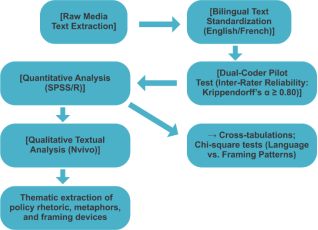
3.5. Data Analysis Pipeline
Once coding is completed, the analytical workflow will proceed through the following stages:
Figure 1. Data collection and analysis workflow for the study.
Quantitative data will be analysed using SPSS or R. Descriptive statistics (frequencies and percentages) will be used to map reporting volume and distribution. Inferential statistics, particularly Chi-square tests of independence, will examine whether significant differences exist in how Anglophone and Francophone media frame antimicrobial resistance (AMR).
Qualitative analysis will be conducted using NVivo to support thematic and framing analysis of the texts. This will involve identifying recurring metaphors, catchphrases, and ideological patterns used in the representation of AMR policy enforcement in West Africa.
3.6. Reliability, Validity, And Ethical Considerations
1) Inter-Rater Reliability (IRR): To minimize subjectivity, two independent bilingual coders will analyse a pilot sample comprising 10% of the dataset. Reliability will be assessed using Krippendorff’s alpha (α), with a threshold of α ≥ 0.80 required before full-scale coding proceeds.
2) Validity: Face and construct validity will be ensured through the adaptation of established media framing categories derived from peer-reviewed literature in political communication and media studies.
3) Ethical Considerations: This study relies exclusively on publicly available media content, including published and broadcast materials. As such, it does not involve human participants or private data and is therefore exempt from institutional human subject ethical review requirements.
4. Results
4.1. Prominence and Distribution of AMR Reporting
Table 3. Prominence and Distribution of AMR Reporting by Country.
Country | Total Artifacts (N) | Front Page / Lead Segment (n / %) | Inside Page / Off-Peak (n / %) | Mean Prominence Score (1–3)* |
Nigeria | 142 | 18 (12.7%) | 124 (87.3%) | 1.41 |
Ghana | 98 | 11 (11.2%) | 87 (88.8%) | 1.34 |
Senegal | 64 | 9 (14.1%) | 55 (85.9%) | 1.48 |
Côte d’Ivoire | 52 | 5 (9.6%) | 47 (90.4%) | 1.28 |
Total / Average | 356 | 43 (12.1%) | 313 (87.9%) | 1.38 |
4.2 Discussion
Table 4. Distribution of Media Themes Across Linguistic Divides.
Theme / Pillar Focus | Anglophone Media (n = 240) | Francophone Media (n = 116) | Total Sub-Region (N = 356) | Total Percentage (%) |
Siloed Human Health (Abuse, clinical wards) | 156 | 72 | 228 | 64.0% |
Siloed Animal Health (Poultry, livestock growth) | 42 | 21 | 63 | 17.7% |
Siloed Environment (Effluents, open drainage) | 14 | 8 | 22 | 6.2% |
Integrated One Health (Interconnected approach) | 28 | 15 | 43 | 12.1% |
Total | 240 (100%) | 116 (100%) | 356 | |
The empirical findings from this study provide critical insights into how the West African media shapes the public and political realities of antimicrobial resistance (AMR). By analyzing the volume, themes, and framing of coverage across 356 media artifacts, several structural patterns emerge that explain current policy stagnation in the ECOWAS sub-region.
4.2.1. The Salience Deficit and the “Outbreak Culture”
The findings presented in
Table 3 reveal a substantial salience deficit in media reporting on antimicrobial resistance (AMR) across West Africa. During the 24-month study period, only 356 media artefacts were identified across four countries, representing an average of fewer than four AMR-related reports per media organisation each year. Furthermore, the regional Mean Prominence Score of 1.38 indicates that AMR coverage was predominantly confined to inside newspaper pages or off-peak broadcast periods, with only 12.1% of reports receiving front-page placement or serving as lead broadcast stories.
These findings are consistent with Agenda-Setting Theory, which suggests that the prominence accorded to an issue by the media strongly influences its visibility within public and political agendas
| [1] | McCombs, M. E., & Shaw, D. L. (1972). The Agenda-Setting Function of Mass Media. Public Opinion Quarterly, 36(2), 176-187. |
[1]
. The findings also support previous research indicating that West African newsrooms tend to prioritise highly visible and rapidly evolving disease outbreaks, such as Lassa fever, Ebola, cholera, and Mpox, over slower, less visible public health threats
| [6] | World Health Organisation Regional Office for Africa. (2023). Regional Strategy on Antimicrobial Resistance Communications and Advocacy. Brazzaville, Republic of the Congo: WHO Regional Office for Africa. |
| [19] | Health Communication. (2022). Media Framing of Infectious Disease Outbreaks and Public Health Policy. Health Communication, 37(9), 1158-1168. |
| [20] | The Lancet Global Health. (2022). Lessons from Ebola for Public Health Communication in Africa. The Lancet Global Health, 10(11), e1543-e1545. |
[6, 19, 20]
. Because AMR develops gradually and lacks the dramatic characteristics associated with epidemic outbreaks, it receives comparatively limited media attention. This low level of media visibility may reduce public awareness and weaken the political commitment required to adequately fund and implement One Health National Action Plans across the region
| [7] | West African Health Organisation. (2022). Regional One Health Strategic Framework for West Africa. Bobo-Dioulasso, Burkina Faso: West African Health Organisation. |
| [9] | Food and Agriculture Organisation of the United Nations, United Nations Environment Programme, World Health Organisation, & World Organisation for Animal Health. (2022). One Health Joint Plan of Action (2022-2026): Working Together for the Health of Humans, Animals, Plants and the Environment. Rome, Italy: FAO. |
| [10] | Nigeria Centre for Disease Control and Prevention. (2024). Nigeria National Action Plan on Antimicrobial Resistance 2.0 (2024-2028). Abuja, Nigeria: NCDC. |
[7, 9, 10]
.
4.2.2. The Siloisation of Health Journalism
The thematic distribution presented in
Table 4 highlights a significant imbalance in media framing of antimicrobial resistance. Approximately 64.0% of the sampled reports presented AMR primarily as a human health issue, while comparatively little attention was given to animal health (17.7%) and environmental contamination (6.2%). Only 12.1% of the analysed media reports adopted a comprehensive One Health perspective by explicitly linking human, animal, and environmental health.
These findings are consistent with Framing Theory, which argues that the way issues are presented influences how audiences assign responsibility and identify appropriate policy responses
| [2] | Entman, R. M. (1993). Framing: Toward Clarification of a Fractured Paradigm. Journal of Communication, 43(4), 51-58. |
[2]
. By framing AMR predominantly as a clinical or medical problem, media coverage may inadvertently divert attention from other important drivers of antimicrobial resistance, including inappropriate antimicrobial use in livestock production, environmental contamination, and weaknesses in regulatory systems. Consequently, media narratives may limit support for coordinated multisectoral interventions that are fundamental to effective One Health implementation
| [6] | World Health Organisation Regional Office for Africa. (2023). Regional Strategy on Antimicrobial Resistance Communications and Advocacy. Brazzaville, Republic of the Congo: WHO Regional Office for Africa. |
| [9] | Food and Agriculture Organisation of the United Nations, United Nations Environment Programme, World Health Organisation, & World Organisation for Animal Health. (2022). One Health Joint Plan of Action (2022-2026): Working Together for the Health of Humans, Animals, Plants and the Environment. Rome, Italy: FAO. |
| [17] | United Nations Environment Programme. (2023). Bracing for Superbugs: Strengthening Environmental Action in the One Health Response to Antimicrobial Resistance. Nairobi, Kenya: United Nations Environment Programme. |
[6, 9, 17]
.
4.2.3. Cross-Border and Linguistic Commonalities
The findings demonstrate remarkable similarities in AMR reporting across the Anglophone and Francophone media systems included in the study. Human-centred reporting dominated both Anglophone media (65.0%) and Francophone media (62.1%), indicating that the communication gap extends beyond language and colonial history.
These similarities suggest that the challenges affecting AMR reporting are primarily institutional rather than linguistic or cultural. Journalists across Nigeria, Ghana, Senegal, and Côte d’Ivoire appear to face comparable constraints, including limited specialised training in science and health journalism, inadequate newsroom resources for investigative reporting, and heavy reliance on official government statements and institutional press releases
| [6] | World Health Organisation Regional Office for Africa. (2023). Regional Strategy on Antimicrobial Resistance Communications and Advocacy. Brazzaville, Republic of the Congo: WHO Regional Office for Africa. |
| [8] | Africa Centres for Disease Control and Prevention. (2024). West Africa AMR Community of Practice Report. Addis Ababa, Ethiopia: Africa CDC. |
| [19] | Health Communication. (2022). Media Framing of Infectious Disease Outbreaks and Public Health Policy. Health Communication, 37(9), 1158-1168. |
[6, 8, 19]
. These factors may restrict opportunities for in-depth reporting on informal medicine markets, antimicrobial use in livestock production, environmental contamination, and other structural drivers of antimicrobial resistance. Strengthening specialised health journalism and improving access to scientific information will therefore be essential for promoting more comprehensive and policy-relevant media coverage of AMR across West Africa
| [6] | World Health Organisation Regional Office for Africa. (2023). Regional Strategy on Antimicrobial Resistance Communications and Advocacy. Brazzaville, Republic of the Congo: WHO Regional Office for Africa. |
| [8] | Africa Centres for Disease Control and Prevention. (2024). West Africa AMR Community of Practice Report. Addis Ababa, Ethiopia: Africa CDC. |
| [9] | Food and Agriculture Organisation of the United Nations, United Nations Environment Programme, World Health Organisation, & World Organisation for Animal Health. (2022). One Health Joint Plan of Action (2022-2026): Working Together for the Health of Humans, Animals, Plants and the Environment. Rome, Italy: FAO. |
[6, 8, 9]
.
5. Conclusion and Policy Recommendations
5.1. Conclusion
This study provides an empirical assessment of how media reporting shapes public discourse and policy attention on antimicrobial resistance (AMR) in West Africa. Guided by Agenda-Setting Theory and Framing Theory, the analysis of 356 media artefacts from Nigeria, Ghana, Senegal, and Côte d’Ivoire demonstrates that the media remain an underutilised actor in advancing the One Health agenda across the ECOWAS sub-region
| [1] | McCombs, M. E., & Shaw, D. L. (1972). The Agenda-Setting Function of Mass Media. Public Opinion Quarterly, 36(2), 176-187. |
| [2] | Entman, R. M. (1993). Framing: Toward Clarification of a Fractured Paradigm. Journal of Communication, 43(4), 51-58. |
[1, 2]
.
The findings reveal a significant salience deficit, reflected in a regional Mean Prominence Score of 1.38, indicating that AMR receives limited editorial attention compared with acute infectious disease outbreaks. Furthermore, most media coverage framed AMR primarily as a human health issue, with limited attention to antimicrobial use in animals and environmental contamination. This fragmented reporting undermines the multisectoral principles of the One Health approach and reduces opportunities for public engagement and policy accountability
| [6] | World Health Organisation Regional Office for Africa. (2023). Regional Strategy on Antimicrobial Resistance Communications and Advocacy. Brazzaville, Republic of the Congo: WHO Regional Office for Africa. |
| [7] | West African Health Organisation. (2022). Regional One Health Strategic Framework for West Africa. Bobo-Dioulasso, Burkina Faso: West African Health Organisation. |
| [9] | Food and Agriculture Organisation of the United Nations, United Nations Environment Programme, World Health Organisation, & World Organisation for Animal Health. (2022). One Health Joint Plan of Action (2022-2026): Working Together for the Health of Humans, Animals, Plants and the Environment. Rome, Italy: FAO. |
| [10] | Nigeria Centre for Disease Control and Prevention. (2024). Nigeria National Action Plan on Antimicrobial Resistance 2.0 (2024-2028). Abuja, Nigeria: NCDC. |
[6, 7, 9, 10]
.
Overall, the findings suggest that limited, low-prominence, and siloed reporting contributes to weak policy visibility and insufficient public advocacy for antimicrobial resistance. Strengthening health journalism, promoting evidence-based communication, and fostering collaboration between the media, policymakers, researchers, and regional institutions will be essential for supporting the effective implementation of National Action Plans and advancing the One Health agenda in West Africa
| [7] | West African Health Organisation. (2022). Regional One Health Strategic Framework for West Africa. Bobo-Dioulasso, Burkina Faso: West African Health Organisation. |
| [9] | Food and Agriculture Organisation of the United Nations, United Nations Environment Programme, World Health Organisation, & World Organisation for Animal Health. (2022). One Health Joint Plan of Action (2022-2026): Working Together for the Health of Humans, Animals, Plants and the Environment. Rome, Italy: FAO. |
| [10] | Nigeria Centre for Disease Control and Prevention. (2024). Nigeria National Action Plan on Antimicrobial Resistance 2.0 (2024-2028). Abuja, Nigeria: NCDC. |
[7, 9, 10]
.
5.2. Policy Recommendations
To strengthen media engagement and support effective implementation of One Health antimicrobial resistance policies across West Africa, the following recommendations are proposed for governments, regional organisations, media institutions, and development partners.
5.2.1. Strengthening Journalistic Capacity
Media organisations should establish dedicated science and public health desks to improve the quality and consistency of reporting on antimicrobial resistance and other complex health issues. In addition, regional institutions, universities, and professional associations should collaborate to develop specialised One Health journalism fellowships and continuous professional development programmes that equip journalists with the knowledge and skills required to report across the human, animal, and environmental health sectors
| [6] | World Health Organisation Regional Office for Africa. (2023). Regional Strategy on Antimicrobial Resistance Communications and Advocacy. Brazzaville, Republic of the Congo: WHO Regional Office for Africa. |
| [7] | West African Health Organisation. (2022). Regional One Health Strategic Framework for West Africa. Bobo-Dioulasso, Burkina Faso: West African Health Organisation. |
| [8] | Africa Centres for Disease Control and Prevention. (2024). West Africa AMR Community of Practice Report. Addis Ababa, Ethiopia: Africa CDC. |
| [9] | Food and Agriculture Organisation of the United Nations, United Nations Environment Programme, World Health Organisation, & World Organisation for Animal Health. (2022). One Health Joint Plan of Action (2022-2026): Working Together for the Health of Humans, Animals, Plants and the Environment. Rome, Italy: FAO. |
[6-9]
.
5.2.2. Strengthening Institutional Health Communication
National Ministries of Health, Agriculture, and Environment should improve public communication by presenting scientific information in clear, accessible language that can be readily understood by policymakers, journalists, and the general public. Technical concepts should be translated into practical messages that emphasise their health, social, and economic implications. Furthermore, national AMR coordinating committees should adopt a proactive communication strategy by engaging the media throughout the year rather than limiting communication to awareness campaigns or international commemorative events
| [6] | World Health Organisation Regional Office for Africa. (2023). Regional Strategy on Antimicrobial Resistance Communications and Advocacy. Brazzaville, Republic of the Congo: WHO Regional Office for Africa. |
| [9] | Food and Agriculture Organisation of the United Nations, United Nations Environment Programme, World Health Organisation, & World Organisation for Animal Health. (2022). One Health Joint Plan of Action (2022-2026): Working Together for the Health of Humans, Animals, Plants and the Environment. Rome, Italy: FAO. |
| [10] | Nigeria Centre for Disease Control and Prevention. (2024). Nigeria National Action Plan on Antimicrobial Resistance 2.0 (2024-2028). Abuja, Nigeria: NCDC. |
[6, 9, 10]
.
5.2.3. Strengthening Regional Collaboration and Sustainable Financing
Regional organisations, particularly the West African Health Organisation (WAHO) and ECOWAS, should facilitate the establishment of a West African One Health Media Network to promote cross-border collaboration, knowledge sharing, and joint investigative reporting on antimicrobial resistance and related health security issues
| [7] | West African Health Organisation. (2022). Regional One Health Strategic Framework for West Africa. Bobo-Dioulasso, Burkina Faso: West African Health Organisation. |
| [8] | Africa Centres for Disease Control and Prevention. (2024). West Africa AMR Community of Practice Report. Addis Ababa, Ethiopia: Africa CDC. |
[7, 8]
. In addition, future National Action Plans should include dedicated funding for public communication, media engagement, and journalism capacity strengthening. Ring-fenced communication budgets would support sustained public awareness campaigns, documentary production, investigative reporting, and community engagement activities that strengthen accountability and accelerate implementation of One Health policies
| [7] | West African Health Organisation. (2022). Regional One Health Strategic Framework for West Africa. Bobo-Dioulasso, Burkina Faso: West African Health Organisation. |
| [9] | Food and Agriculture Organisation of the United Nations, United Nations Environment Programme, World Health Organisation, & World Organisation for Animal Health. (2022). One Health Joint Plan of Action (2022-2026): Working Together for the Health of Humans, Animals, Plants and the Environment. Rome, Italy: FAO. |
| [10] | Nigeria Centre for Disease Control and Prevention. (2024). Nigeria National Action Plan on Antimicrobial Resistance 2.0 (2024-2028). Abuja, Nigeria: NCDC. |
[7, 9, 10]
.
Abbreviation
AMR | Antimicrobial Resistance |
ECOWAS | Economic Community of West African States |
One Health | One Health Approach |
NAP | National Action Plan |
WAHO | West African Health Organisation |
WHO | World Health Organization |
WHO AFRO | World Health Organization Regional Office for Africa |
WOAH | World Organisation for Animal Health |
FAO | Food and Agriculture Organization of the United Nations |
UNEP | United Nations Environment Programme |
Africa CDC | Africa Centres for Disease Control and Prevention |
GLASS | Global Antimicrobial Resistance and Use Surveillance System |
NCDC | Nigeria Centre for Disease Control and Prevention |
SPSS | Statistical Package for the Social Sciences |
Acknowledgments
The author sincerely acknowledges Professor Oyewole Tomori and Agbenike Daniel Bukola for their valuable editorial support, critical review, and proofreading of the manuscript. The author also acknowledges Dr Tochi Okwor, Head of Disease Prevention and Control, Nigeria Centre for Disease Control and Prevention (NCDC); Dr Mary Alex-Wele, Consultant Clinical Microbiologist and Head of the Department of Medical Microbiology & Parasitology at the University of Port Harcourt Teaching Hospital; Mr Kadiri Abdulrahman, Senior Editor, News Agency of Nigeria (NAN); and Dr Sati Ngulukun, Director of Research at the National Veterinary Research Institute (NVRI), Vom, Plateau State, for their valuable contributions and support. Their constructive comments and suggestions contributed significantly to improving the clarity, coherence, and overall quality of this work.
The author also used artificial intelligence-assisted writing tools, including ChatGPT and QuillBot, to support language editing, paraphrasing, and improvement of readability. The author takes full responsibility for the accuracy, interpretation, originality, and final content of the manuscript.
Author Contributions
Racheal Abujah: Conceptualization, Data curation, Formal analysis, Investigation, Methodology, Resources, Validation, Visualization, Writing - original draft, Writing - review & editing
Conflicts of Interest
The author declares no conflicts of interest.
References
| [1] |
McCombs, M. E., & Shaw, D. L. (1972). The Agenda-Setting Function of Mass Media. Public Opinion Quarterly, 36(2), 176-187.
|
| [2] |
Entman, R. M. (1993). Framing: Toward Clarification of a Fractured Paradigm. Journal of Communication, 43(4), 51-58.
|
| [3] |
Krippendorff, K. (2018). Content Analysis: An Introduction to Its Methodology (4th ed.). SAGE Publications.
|
| [4] |
World Health Organisation. (2023). Global Antimicrobial Resistance and Use Surveillance System (GLASS) Report. Geneva, Switzerland: World Health Organisation.
|
| [5] |
World Health Organisation. (2023). Antimicrobial Resistance. Geneva, Switzerland: World Health Organisation.
|
| [6] |
World Health Organisation Regional Office for Africa. (2023). Regional Strategy on Antimicrobial Resistance Communications and Advocacy. Brazzaville, Republic of the Congo: WHO Regional Office for Africa.
|
| [7] |
West African Health Organisation. (2022). Regional One Health Strategic Framework for West Africa. Bobo-Dioulasso, Burkina Faso: West African Health Organisation.
|
| [8] |
Africa Centres for Disease Control and Prevention. (2024). West Africa AMR Community of Practice Report. Addis Ababa, Ethiopia: Africa CDC.
|
| [9] |
Food and Agriculture Organisation of the United Nations, United Nations Environment Programme, World Health Organisation, & World Organisation for Animal Health. (2022). One Health Joint Plan of Action (2022-2026): Working Together for the Health of Humans, Animals, Plants and the Environment. Rome, Italy: FAO.
|
| [10] |
Nigeria Centre for Disease Control and Prevention. (2024). Nigeria National Action Plan on Antimicrobial Resistance 2.0 (2024-2028). Abuja, Nigeria: NCDC.
|
| [11] |
Ministry of Health, Ghana. (2023). National Action Plan on Antimicrobial Resistance. Accra, Ghana: Ministry of Health.
|
| [12] |
Ministry of Health and Social Action, Senegal. (2022). National Strategic Plan on Antimicrobial Resistance. Dakar, Senegal: Ministry of Health and Social Action.
|
| [13] |
O’Neill, J. (2016). Tackling Drug-Resistant Infections Globally: Final Report and Recommendations. Review on Antimicrobial Resistance.
|
| [14] |
The Lancet. (2024). Antimicrobial resistance: A global health emergency. The Lancet, 403(10427), 677-678.
|
| [15] |
The Lancet Global Health. (2023). Strengthening One Health approaches for antimicrobial resistance. The Lancet Global Health, 11(8), e1123-e1124.
|
| [16] |
World Bank. (2017). Drug-Resistant Infections: A Threat to Our Economic Future. Washington, DC: World Bank.
|
| [17] |
United Nations Environment Programme. (2023). Bracing for Superbugs: Strengthening Environmental Action in the One Health Response to Antimicrobial Resistance. Nairobi, Kenya: United Nations Environment Programme.
|
| [18] |
World Organisation for Animal Health. (2023). Annual Report on Antimicrobial Agents Intended for Use in Animals. Paris, France: World Organisation for Animal Health.
|
| [19] |
Health Communication. (2022). Media Framing of Infectious Disease Outbreaks and Public Health Policy. Health Communication, 37(9), 1158-1168.
|
| [20] |
The Lancet Global Health. (2022). Lessons from Ebola for Public Health Communication in Africa. The Lancet Global Health, 10(11), e1543-e1545.
|
Cite This Article
-
ACS Style
Abujah, R. Framing the Silent Pandemic: A Descriptive Study on Media Advocacy and One Health AMR Policy in West Africa. Am. J. Health Policy Manag. 2026, 1(1), 24-33. doi: 10.11648/j.ajhpm.20260101.13
 Copy
|
Copy
|
 Download
-
@article{10.11648/j.ajhpm.20260101.13,
  author = {Racheal Abujah},
  title = {Framing the Silent Pandemic: A Descriptive Study on Media Advocacy and One Health AMR Policy in West Africa},
  journal = {American Journal of Health Policy and Management},
  volume = {1},
  number = {1},
  pages = {24-33},
  doi = {10.11648/j.ajhpm.20260101.13},
  url = {https://doi.org/10.11648/j.ajhpm.20260101.13},
  eprint = {https://article.sciencepublishinggroup.com/pdf/10.11648.j.ajhpm.20260101.13},
  abstract = {Antimicrobial resistance (AMR) poses a significant public health and economic threat across West Africa, driven by weak pharmaceutical regulation, inappropriate antimicrobial use, and intensive agricultural practices. Although regional frameworks advocate a cross-sectoral One Health approach, implementation of National Action Plans (NAPs) remains limited. This study examined how media volume, thematic framing, and source distribution influence the implementation of One Health AMR policies within the ECOWAS sub-region. A mixed-methods approach was employed, combining bilingual content and framing analysis of a purposive sample of 356 media artefacts published or broadcast between June 2024 and May 2026 across selected Anglophone (Nigeria and Ghana) and Francophone (Senegal and Côte d’Ivoire) print and broadcast media organisations. The findings revealed a substantial regional salience deficit, with a mean prominence score of 1.38. Approximately 87.9% of AMR reports appeared on inside pages or during off-peak broadcast periods, indicating limited editorial priority. Furthermore, 64.0% of the coverage framed AMR primarily as a human health issue, while livestock-related factors (17.7%) and environmental contamination (6.2%) received comparatively little attention. Only 12.1% of the reports adopted an integrated One Health perspective. The study concludes that media reporting on AMR in West Africa remains largely reactive and insufficiently reflects the multisectoral nature of antimicrobial resistance. It recommends strengthening specialised health journalism, improving science communication, promoting cross-sectoral collaboration, and providing dedicated communication funding within future National Action Plans to support effective One Health policy implementation.},
 year = {2026}
}
Copy
|
Download
-
TY  - JOUR
T1  - Framing the Silent Pandemic: A Descriptive Study on Media Advocacy and One Health AMR Policy in West Africa
AU  - Racheal Abujah
Y1  - 2026/09/30
PY  - 2026
N1  - https://doi.org/10.11648/j.ajhpm.20260101.13
DO  - 10.11648/j.ajhpm.20260101.13
T2  - American Journal of Health Policy and Management
JF  - American Journal of Health Policy and Management
JO  - American Journal of Health Policy and Management
SP  - 24
EP  - 33
PB  - Science Publishing Group
UR  - https://doi.org/10.11648/j.ajhpm.20260101.13
AB  - Antimicrobial resistance (AMR) poses a significant public health and economic threat across West Africa, driven by weak pharmaceutical regulation, inappropriate antimicrobial use, and intensive agricultural practices. Although regional frameworks advocate a cross-sectoral One Health approach, implementation of National Action Plans (NAPs) remains limited. This study examined how media volume, thematic framing, and source distribution influence the implementation of One Health AMR policies within the ECOWAS sub-region. A mixed-methods approach was employed, combining bilingual content and framing analysis of a purposive sample of 356 media artefacts published or broadcast between June 2024 and May 2026 across selected Anglophone (Nigeria and Ghana) and Francophone (Senegal and Côte d’Ivoire) print and broadcast media organisations. The findings revealed a substantial regional salience deficit, with a mean prominence score of 1.38. Approximately 87.9% of AMR reports appeared on inside pages or during off-peak broadcast periods, indicating limited editorial priority. Furthermore, 64.0% of the coverage framed AMR primarily as a human health issue, while livestock-related factors (17.7%) and environmental contamination (6.2%) received comparatively little attention. Only 12.1% of the reports adopted an integrated One Health perspective. The study concludes that media reporting on AMR in West Africa remains largely reactive and insufficiently reflects the multisectoral nature of antimicrobial resistance. It recommends strengthening specialised health journalism, improving science communication, promoting cross-sectoral collaboration, and providing dedicated communication funding within future National Action Plans to support effective One Health policy implementation.
VL  - 1
IS  - 1
ER  -
Copy
|
Download






 Share This Article
 Twitter
 Linked In
 Facebook