1. Introduction
1.1. Background
Uganda's rural primary schools face a persistent last mile connectivity challenge: despite the National Backbone Infrastructure reaching 52 districts, only 14% of primary schools have internet connectivity, leaving millions of learners excluded from the benefits of digital education
| [1] | TechAfrica News. (2025, July). 1 in 4 left offline: Rethinking last-mile connectivity for rural Africa. TechAfrica News.
https://www.techafricanews.com |
[1]
. While digital technologies have been globally recognized as transformative tools for improving teaching and learning outcomes
| [2] | International Telecommunication Union. (2024). Assessment of last-mile connectivity projects in Uganda (ITU-D Report). ITU. https://www.itu.int |
[2]
, their integration into rural schools in low-income countries remains constrained by infrastructural gaps, affordability barriers, and limited teacher preparedness challenges that are particularly acute in sub-Saharan Africa
| [3] | UNESCO. (2020). COVID-19 impact on education: Global monitoring report. UNESCO Publishing.
https://www.unesco.org |
[3]
. This paper presents baseline evidence from the Digitally Enabled Community-Centered Early Childhood Development Approach (DECEDA) project, implemented in Uganda in 2025 with funding from the Uganda Communications Commission (UCC) through the Universal Service and Access Fund (UCUSAF). The study specifically examines the baseline state of digital infrastructure, connectivity, and teacher digital competencies across 31 rural primary schools in 30 districts before DECEDA's interventions were implemented, providing empirical evidence on the structural and capacity gaps that deter equitable ICT integration in Uganda's education system.
Rural schools across low-income countries face persistent last mile barriers limited hardware, unreliable electricity, poor internet connectivity, and inadequate infrastructure that prevent equitable participation in digital learning
| [4] | African Development Bank. (2021). Uganda rural electricity access project: Last-mile connectivity component (AfDB Project Report). African Development Bank Group.
https://www.afdb.org |
[4]
. Addressing these barriers requires both technical and instructional prerequisites, including sustained teacher training and institutional support, without which even well-funded interventions struggle to achieve meaningful adoption
| [5] | Husu, J. (2019). Virtual classrooms and accessibility in developing contexts. Educational Technology Review, 12(3), 45-61. |
| [6] | Instefjord, E., & Munthe, E. (2018). Teachers' professional digital competence: Experiences from rural schools. Computers & Education, 122, 191-201.
https://doi.org/10.1016/j.compedu.2018.04.004 |
| [7] | Palvia, S., Aeron, P., Gupta, P., Mahapatra, D., Parida, R., Rosner, R., & Sindhi, S. (2018). Online education: Worldwide status, challenges, trends, and implications. Journal of Global Information Technology Management, 21(4), 233-241.
https://doi.org/10.1080/1097198X.2018.1542262 |
[5-7]
.
In Uganda, these challenges are compounded by deep rural-urban inequities that have widened despite national policy efforts. While the government has expanded the National Backbone Infrastructure and introduced frameworks such as the National ICT Policy and the Education Sector Strategic Plan, school-level adoption remains weak. Only 14% of primary schools have internet connectivity, teacher-to-pupil ratios in rural areas frequently exceed 1: 55, and access to functional digital tools is extremely limited
| [1] | TechAfrica News. (2025, July). 1 in 4 left offline: Rethinking last-mile connectivity for rural Africa. TechAfrica News.
https://www.techafricanews.com |
[1]
. The gap between national infrastructure investment and classroom-level reality defines the core research problem this study addresses.
The Digitally Enabled Community-Centered Early Childhood Development Approach (DECEDA) project, implemented in 2025 with funding from the Uganda Communications Commission (UCC) through the Universal Service and Access Fund (UCUSAF), serves in this study as the operational framework for a baseline diagnostic assessment. Rather than evaluating DECEDA's outcomes, this study uses the project's pre-implementation phase as a structured opportunity to empirically document the state of digital infrastructure, connectivity, and teacher digital competencies across participating rural primary schools before any interventions were introduced. In this sense, DECEDA functions as a case study context geographically diverse, institutionally grounded, and policy-relevant within which last mile connectivity challenges can be systematically examined. Its community-centered design, combining infrastructure enhancement, teacher capacity building, localized content development, and peer support mechanisms, makes it a particularly instructive lens through which to understand both the barriers to and enablers of equitable ICT integration in Uganda's rural primary schools.
The DECEDA project operates on an anchor-beneficiary school model, in which strategically selected anchor schools serve as digitally equipped hubs providing resources, mentorship, and technical support to surrounding beneficiary schools within their catchment areas. Anchor schools are prioritized for superior ICT infrastructure, reliable internet connectivity, and intensive teacher training, positioning them as centres of excellence from which digital pedagogical practices are expected to diffuse outward to beneficiary schools. This structural differentiation creates a natural comparative framework: differences in infrastructure quality, connectivity reliability, and teacher digital confidence between anchor and beneficiary schools provide direct empirical evidence of how access to technology shapes instructional practice and teacher adoption rates. Explicitly examining this contrast is central to understanding whether the hub-and-spoke model can bridge last mile connectivity gaps or whether beneficiary schools remain structurally disadvantaged despite proximity to anchor facilities.
Despite growing scholarly attention to ICT integration in African education systems, significant gaps remain in the empirical literature. Most existing studies focus on secondary schools or urban contexts, leaving rural primary schools which constitute the majority of Uganda's education system comparatively understudied
| [8] | Uganda Communications Commission. (2022). National ICT infrastructure and connectivity report. UCC.
https://www.ucc.co.ug |
| [9] | UNESCO. (2023). Global education monitoring report: Technology in education - A tool on whose terms? UNESCO Publishing. https://www.unesco.org/gem-report |
[8, 9]
. Furthermore, while national-level assessments document infrastructure deficits in broad terms, there is a lack of school-level baseline evidence that simultaneously captures digital infrastructure availability, connectivity barriers, and teacher digital competencies within a single, geographically diverse study. Studies that do examine rural ICT integration tend to focus on single districts or specific interventions rather than providing a nationally representative baseline across multiple regions
| [1] | TechAfrica News. (2025, July). 1 in 4 left offline: Rethinking last-mile connectivity for rural Africa. TechAfrica News.
https://www.techafricanews.com |
| [10] | Nkumba University & Uganda Communications Commission. (2025). DECEDA project implementation report. Nkumba University. |
[1, 10]
. This study addresses these gaps by providing the first comprehensive, multi-regional baseline assessment of last mile connectivity challenges in Uganda's rural primary schools, conducted within the framework of the DECEDA project across 31 schools in 30 districts spanning all five of Uganda's regions.
This paper focuses specifically on Objective One of the DECEDA project: assessing the baseline state of digital infrastructure, connectivity, and teacher digital competencies in participating rural primary schools. The study provides evidence on the extent of last mile connectivity barriers and their implications for equitable ICT integration in Uganda’s education system.
1.2. Problem Statement
Despite sustained national investment in ICT infrastructure and policy frameworks, Uganda's rural primary schools remain structurally disconnected from the benefits of digital education. The core problem is not the absence of national-level ambition but the persistent gap between infrastructure availability and school-level access a gap shaped by unreliable electricity, unaffordable internet services, inadequate hardware, and critically low teacher digital competencies
. While these challenges are broadly acknowledged in policy discourse, the specific nature, extent, and interaction of these barriers at the school level remain poorly documented, particularly across geographically diverse rural contexts.
The research problem this study addresses is therefore twofold. First, there is insufficient empirical evidence on the baseline state of digital infrastructure and connectivity in Uganda's rural primary schools across multiple regions. Second, existing assessments of teacher digital competencies in this context tend to be narrow in scope, self-reported without triangulation, and disconnected from the infrastructural realities teachers operate within
| [10] | Nkumba University & Uganda Communications Commission. (2025). DECEDA project implementation report. Nkumba University. |
| [12] | Mpirirwe, D., Lubega, J., & Mirembe, D. P. (2021). Professional development for ICT integration in Uganda's primary schools. Journal of Education and Practice, 12(6), 112-124. https://doi.org/10.7176/JEP/12-6-13 |
[10, 12]
. Without this baseline evidence, interventions risk being designed on assumptions rather than ground-level realities, limiting their effectiveness and sustainability.
This study addresses this problem by conducting a comprehensive baseline diagnostic across 31 rural primary schools in 30 districts within the DECEDA project framework, generating the empirical evidence needed to understand what last mile connectivity challenges actually look like at the school level and what they mean for equitable ICT integration in Uganda's education system.
1.3. Objectives of the Study
The main objective of the study was to assess the baseline state of digital infrastructure, connectivity, and teacher digital competencies in Uganda's rural primary schools prior to the implementation of the DECEDA project. The specific objectives were to:
1) Examine the availability of digital infrastructure such as electricity supply, computers, and internet connectivity in rural primary schools.
2) Identify connectivity barriers limiting access to affordable and reliable internet services for teaching and learning.
3) Assess teacher digital literacy and competencies to determine readiness for ICT integration in classroom practice.
1.4. Research Questions
1) What digital infrastructure is available in Uganda’s rural primary schools to support ICT-enabled teaching and learning?
2) What barriers limit rural primary schools’ access to affordable and reliable internet connectivity for teaching and learning?
3) What is the level of digital literacy and ICT competence among teachers in rural primary schools, and how prepared are they to integrate digital tools into classroom practice?
1.5. Significance of the Study
This study makes three distinct contributions. First, it provides the first comprehensive, multi-regional school-level baseline on digital infrastructure, connectivity, and teacher digital competencies across Uganda's rural primary schools evidence that is currently absent from the literature. Second, by situating this baseline within the DECEDA project framework, the findings offer a replicable diagnostic model that development partners and policymakers can adapt for similar contexts across sub-Saharan Africa. Third, the study generates actionable evidence directly relevant to Uganda's National Development Plan III and Sustainable Development Goal 4, equipping policymakers, District Education Officers, school leaders, and teacher-training institutions with the ground-level data needed to design targeted, equity-sensitive ICT interventions rather than relying on broad policy assumptions.
2. Literature Review
2.1. Digital Technology Integration in Education: Global and Regional Perspectives
A consistent finding across global research is that while digital technologies hold significant potential for transforming teaching and learning, their benefits remain unevenly distributed concentrated in well-resourced urban settings while rural and low-income schools lag behind
| [11] | Umar, A., Instefjord, E., & Mørch, A. (2023). Teacher digital competence in Sub-Saharan Africa: A systematic review. Computers & Education, 194, 104706.
https://doi.org/10.1016/j.compedu.2022.104706 |
| [13] | African Development Bank. (2021). ICT for education in Africa: Progress and challenges (AfDB Sector Report). African Development Bank Group. https://www.afdb.org |
[11, 13]
. The ITU reports that internet penetration in developed nations exceeds 87% compared to below 25% in least developed countries
| [3] | UNESCO. (2020). COVID-19 impact on education: Global monitoring report. UNESCO Publishing.
https://www.unesco.org |
[3]
, a disparity that reflects not merely technical deficits but deeper structural inequalities in how educational infrastructure is prioritized and funded. The COVID-19 pandemic sharpened this reality, with nearly 1.6 billion learners globally affected by school closures those in rural and underserved areas disproportionately so due to unreliable connectivity and limited device access
| [14] | Bigirwa, J. P., Ndawula, S., & Naluwemba, E. F. (2020). Instructional design quality and e-learning uptake in Ugandan universities. Journal of Educational Technology & Society, 23(2), 35-47. |
[14]
. Scholars broadly agree that connectivity is therefore not a peripheral technical concern but a foundational prerequisite for equitable participation in digital learning.
Where the literature diverges, however, is on what it takes beyond connectivity to achieve meaningful ICT integration. Some studies emphasize hardware access and infrastructure reliability as the primary bottleneck
| [13] | African Development Bank. (2021). ICT for education in Africa: Progress and challenges (AfDB Sector Report). African Development Bank Group. https://www.afdb.org |
| [15] | Asare, K., Osei-Bonsu, K., & Mensah, F. (2023). ICT integration in primary schools: Policy and practice across Sub-Saharan Africa. Education Policy Review, 14(1), 22-39. |
[13, 15]
, while others argue that teacher preparedness and institutional support are equally if not more determinative of integration outcomes
| [6] | Instefjord, E., & Munthe, E. (2018). Teachers' professional digital competence: Experiences from rural schools. Computers & Education, 122, 191-201.
https://doi.org/10.1016/j.compedu.2018.04.004 |
| [16] | Aziz, T. (2020). ICT policy implementation challenges in low-income education systems. African Journal of ICT in Education, 7(2), 88-104. |
[6, 16]
. This debate points to an important synthesis: infrastructure and capacity are not sequential prerequisites but interdependent conditions. Professional development programmes, when combined with reliable infrastructure, significantly improve teachers' confidence and ICT adoption rates
| [16] | Aziz, T. (2020). ICT policy implementation challenges in low-income education systems. African Journal of ICT in Education, 7(2), 88-104. |
| [17] | Ndejjo, R., Musoke, D., & Wanyenze, R. (2023). ICT use in Ugandan schools: Administrative and pedagogical perspectives. Makerere University School of Public Health. |
[16, 17]
; yet without infrastructure, even well-trained teachers cannot sustain digital practice. This interdependence is central to understanding why ICT integration fails in rural contexts and frames the analytical lens of this study.
2.2. ICT Integration in African Education Systems
African evidence reinforces and contextualizes the global picture, while revealing region-specific dynamics that generic frameworks often overlook. Across Kenya, Tanzania, Nigeria, and other sub-Saharan contexts, a recurring pattern emerges: pilot projects succeed in introducing digital tools but fail to sustain adoption due to poor electricity access, weak internet coverage, and limited technical support
| [10] | Nkumba University & Uganda Communications Commission. (2025). DECEDA project implementation report. Nkumba University. |
[10]
. The African Development Bank notes that rural electrification and broadband expansion remain deeply uneven, creating a structural ceiling on what school-level ICT interventions can achieve regardless of pedagogical design or teacher training quality.
Critically, the African literature also highlights a dependency problem that distinguishes this context from global norms. The widespread reliance on externally developed platforms such as Moodle or Blackboard raises persistent concerns about contextual relevance, affordability, and long-term sustainability in resource-constrained environments
| [18] | Bakesha, S., Namugenyi, C., & Wesonga, J. (2021). ICT adoption in Ugandan secondary schools: Barriers and enablers. Makerere Journal of Higher Education, 10(1), 55-72.
https://doi.org/10.4314/majohe.v10i1.5 |
[18]
. This pattern suggests that many African ICT initiatives are designed for adoption rather than ownership, creating fragility when donor support ends. At the same time, research consistently shows that institutional support structures including school leadership commitment, peer mentorship, and district-level oversight are critical enablers that are frequently absent in rural settings
| [6] | Instefjord, E., & Munthe, E. (2018). Teachers' professional digital competence: Experiences from rural schools. Computers & Education, 122, 191-201.
https://doi.org/10.1016/j.compedu.2018.04.004 |
| [19] | Mishra, P., & Koehler, M. J. (2006). Technological pedagogical content knowledge: A framework for teacher knowledge. Teachers College Record, 108(6), 1017-1054.
https://doi.org/10.1111/j.1467-9620.2006.00684.x |
[6, 19]
. The African experience therefore points to a dual gap: insufficient infrastructure and insufficient institutional embeddedness, both of which must be addressed simultaneously for ICT integration to be sustainable.
2.3. Uganda’s Connectivity and Education Landscape
Uganda's experience crystallizes the tensions identified in the broader African literature into a specific national context. Despite the rollout of the National Backbone Infrastructure reaching 52 districts and policy commitments through the revised National ICT Policy (2021) and National Development Plan III (2020/25), only 14% of primary schools have internet connectivity
| [1] | TechAfrica News. (2025, July). 1 in 4 left offline: Rethinking last-mile connectivity for rural Africa. TechAfrica News.
https://www.techafricanews.com |
[1]
. This stark disconnect between infrastructure availability and school-level access illustrates what scholars describe as the policy-practice gap the failure of macro-level investments to translate into micro-level outcomes
| [8] | Uganda Communications Commission. (2022). National ICT infrastructure and connectivity report. UCC.
https://www.ucc.co.ug |
| [9] | UNESCO. (2023). Global education monitoring report: Technology in education - A tool on whose terms? UNESCO Publishing. https://www.unesco.org/gem-report |
[8, 9]
. Rural primary schools bear the brunt of this gap, with teacher-to-pupil ratios frequently exceeding 1: 55, understocked libraries, and extremely limited access to functional digital tools.
The Ugandan literature further reveals an important sectoral imbalance: ICT adoption efforts have been disproportionately concentrated in secondary schools and urban areas, while rural primary schools which educate the majority of Ugandan children have received comparatively little attention
. Where ICT has been adopted in primary schools, it has largely served administrative rather than instructional purposes, with classroom integration remaining weak due to unreliable electricity and restricted internet access
| [21] | Rogers, E. M. (2003). Diffusion of innovations (5th ed.). Free Press. |
[21]
. E-learning platforms, where used, are predominantly externally developed, with 81% of platforms in Ugandan institutions sourced from outside the country, raising concerns about local relevance and sustainability
| [15] | Asare, K., Osei-Bonsu, K., & Mensah, F. (2023). ICT integration in primary schools: Policy and practice across Sub-Saharan Africa. Education Policy Review, 14(1), 22-39. |
[15]
. Taken together, these findings point to a critical evidence gap: there is currently no comprehensive, multi-regional, school-level baseline that simultaneously documents infrastructure availability, connectivity barriers, and teacher digital competencies in Uganda's rural primary schools the gap this study directly addresses.
2.4. Theoretical Framework
This study is grounded in three complementary theoretical frameworks that together explain the multidimensional challenges of ICT integration in rural primary schools.
The Digital Divide Theory (van Dijk, 2006)
| [22] | van Dijk, J. (2006). The network society (2nd ed.). SAGE Publications. |
[22]
provides the foundational lens for this study. It moves beyond simple access gaps to explain how inequalities in technology access are shaped by social, economic, and infrastructural disparities. In the context of Uganda's rural schools, the digital divide manifests across multiple dimensions: physical access to devices and connectivity, skills access related to teacher digital competencies, and usage access concerning the quality and relevance of ICT use in teaching practice.
The Diffusion of Innovations Theory (Rogers, 2003)
offers a framework for understanding how new technologies are adopted within educational institutions. It identifies key factors influencing adoption rates, including relative advantage, compatibility with existing practices, complexity, trialability, and observability. These factors help explain why, despite national infrastructure investments, ICT adoption in Uganda's rural schools remains constrained by teacher readiness, institutional support, and connectivity reliability.
The Technological Pedagogical Content Knowledge (TPACK) Framework (Mishra & Koehler, 2006)
| [21] | Rogers, E. M. (2003). Diffusion of innovations (5th ed.). Free Press. |
[21]
frames the assessment of teacher digital competencies in this study. TPACK posits that effective technology integration requires teachers to simultaneously master content knowledge, pedagogical strategies, and technological tools. This framework guided the design of the teacher competency assessment instruments and the interpretation of findings related to teacher readiness for ICT-enhanced classroom practice.
Together, these frameworks situate the study's baseline assessment within established theoretical discourse on digital inclusion, technology adoption, and teacher professional development, providing a conceptual foundation for interpreting both infrastructure gaps and capacity deficits identified in the DECEDA project schools.
3. Research Approach and Methodology
This section describes the research approach adopted, data collection methods, sampling procedures, and data analysis techniques employed in evaluating the DECEDA project's implementation and outcomes across Uganda's rural primary schools.
3.1. Research Approach
This study adopted an explanatory sequential mixed-methods design, in which quantitative data collection and analysis were conducted first, followed by qualitative inquiry specifically designed to explain, contextualize, and deepen the quantitative findings (Creswell & Plano Clark, 2018)
| [23] | Creswell, J. W., & Plano Clark, V. L. (2018). Designing and conducting mixed methods research (3rd ed.). SAGE Publications. |
[23]
. This design was selected as most appropriate for a baseline diagnostic study of this nature, where the primary goal is to establish measurable, comparable indicators of infrastructure availability, connectivity barriers, and teacher digital competencies across geographically diverse schools, and then draw on qualitative evidence to illuminate the contextual factors, institutional dynamics, and lived experiences that quantitative data alone cannot capture.
The explanatory sequential design is particularly well-suited to this study's positioning as a pre-intervention baseline assessment within the DECEDA project. By first establishing quantitative baselines through structured surveys administered to 104 teachers and 31 school heads, and subsequently conducting 78 key informant interviews to explain patterns and anomalies in the survey data, the design ensures that the findings are both statistically grounded and contextually meaningful. This phased approach also enabled the research team comprising experts from Nkumba University, the Ministry of Education and Sports, the National Curriculum Development Centre, and private sector technical specialists to iteratively refine qualitative inquiry instruments based on emerging quantitative trends, strengthening the internal coherence and validity of the overall assessment.
3.2. Study Population
The DECEDA Project covered 30 districts strategically distributed across Uganda’s five regions: Central, Eastern, Northern, Western, and West Nile. This geographic distribution ensured national representation and captured diverse rural contexts with varying levels of infrastructure development, connectivity challenges, and educational resource availability.
The study population comprised six stakeholder groups, each contributing distinct data relevant to different dimensions of the baseline assessment.
Table 1 summarizes each group, their numbers, the data collection method used, and their specific analytical contribution to the study findings
Table 1. Study Participants by Stakeholder Group, Data Collection Method, and Analytical Contribution.
Stakeholder Group | No. of Participants | Data Collection Method | Analytical Contribution |
Primary School Teachers | 104 (survey); 116 nominated | Survey Questionnaire; Focus Group Discussions | Teacher digital literacy levels, ICT competencies, classroom technology use, and training needs |
Head Teachers | 31 (one per school) | Survey Questionnaire; Key Informant Interview | School infrastructure availability, ICT planning status, internet budget allocation, and leadership support |
Coordinating Centre Tutors (CCTs) & District Education Officers (DEOs) | 78 (combined) | Key Informant Interviews | District-level perspectives on connectivity barriers, policy implementation challenges, and sustainability |
Ministry of Education and Sports (MoES) Officials | 5 | Key Informant Interviews | National policy perspectives on ICT frameworks, funding mechanisms, and alignment with education sector strategic plans |
Learners | Not counted | Classroom Observation | Evidence of actual ICT integration practices and learner engagement levels during live lesson delivery |
3.3. Sampling Strategy
Schools were selected through purposive sampling, a methodologically appropriate strategy for baseline diagnostic studies where the goal was not statistical generalizability but rather the systematic documentation of conditions across contexts that are theoretically and practically relevant to the research problem (Patton, 2002)
| [24] | Patton, M. Q. (2002). Qualitative research and evaluation methods (3rd ed.). SAGE Publications. |
[24]
. Purposive sampling was selected over random sampling because the study required schools that represented the full spectrum of rural infrastructure conditions, geographic diversity, and institutional arrangements characteristic of Uganda's primary education system criteria that random selection could not guarantee given the uneven distribution of rural schools across regions.
To address the potential for selection bias inherent in purposive sampling, the selection process was governed by explicit, pre-determined criteria developed in consultation with the Ministry of Education and Sports, District Education Officers, Core Primary Teacher Colleges, and Coordinating Centre Tutors. These criteria included: geographic distribution across all five of Uganda's regions (Central, Eastern, Northern, Western, and West Nile); representation of typical rural infrastructure constraints including limited electricity access, poor connectivity, and inadequate hardware; and strategic inclusion of anchor schools with relatively stronger resources to enable comparative analysis with beneficiary schools. The resulting sample of 31 schools comprising 31 beneficiary schools with 5 anchor schools across 30 districts was not designed to be statistically representative of all Ugandan rural primary schools, but rather to provide a nationally diverse, criteria-driven baseline that reflects the range of conditions within which the DECEDA project operates. This approach is consistent with established practice in mixed-methods baseline assessments in low-income educational contexts (Mertens, 2015)
| [25] | Mertens, D. M. (2015). Research and evaluation in education and psychology (4th ed.). SAGE Publications. |
[25]
.
Regarding teacher participants, 116 teachers (90 male and 26 female) teaching Primary 5–7 Mathematics, English, and Science were initially nominated by head teachers based on their subject expertise, demonstrated commitment to professional development, and potential to serve as digital champions. Of these, 104 teachers completed and submitted valid survey questionnaires and constitute the survey respondent sample reported in Section 4.0. All 116 nominated teachers participated in the broader project activities including key informant interviews and focus group discussions where applicable.
3.4. Data Collection Methods
Five complementary data collection methods were employed, each selected for its specific methodological contribution to the explanatory sequential design.
Survey Questionnaires were administered to 104 teachers and 31 head teachers to generate quantitative baseline data on school infrastructure availability, teacher digital literacy levels, ICT competency, frequency of technology use in classroom instruction, and institutional readiness. Surveys were digitized using Kobo Toolbox (https://ee.kobotoolbox.org/x/N2P9NBeY) to enable both online and offline data collection across geographically dispersed schools with varying connectivity levels, ensuring data quality and consistency.
Key Informant Interviews (KII) were conducted with 78 participants including head teachers, District Education Officers, Coordinating Centre Tutors, and MoES officials. Semi-structured in nature, these interviews were designed to explain and contextualize patterns emerging from the quantitative survey data, providing deeper qualitative insight into connectivity barriers, institutional support mechanisms, policy alignment challenges, and sustainability considerations.
Focus Group Discussions (FGDs) were conducted with teachers and administrators to explore collective experiences of technology adoption, identify shared challenges and enablers, and understand peer support dynamics within and across schools. FGDs provided group-level qualitative data that complemented the individual-level survey responses.
Classroom Observations were conducted during monitoring visits and live lesson delivery sessions to generate objective, non-self-reported evidence of actual ICT integration practices, teacher confidence, and learner engagement directly addressing the limitations of self-reported competency data.
Document Review involved systematic analysis of existing policy documents, curriculum materials, training reports, and monitoring records to situate school-level findings within broader institutional and policy contexts.
3.5. Data Analysis
Quantitative data from survey questionnaires was analysed using descriptive statistics including frequencies, percentages, means, and cross-tabulations to establish baseline profiles of infrastructure availability, teacher digital competency levels, technology usage rates, and institutional readiness across regions, school types, and teacher demographics. Microsoft Excel was used for data cleaning, coding, and analysis. Cross-tabulations were specifically employed to compare infrastructure and competency indicators between anchor and beneficiary schools, and across Uganda's five regions, enabling identification of geographic and structural disparities in digital access and teacher preparedness.
Qualitative data from key informant interviews, focus group discussions, classroom observation notes, and open-ended survey responses was analysed using Braun and Clarke's (2006)
six-phase thematic analysis framework. In the first phase, the research team familiarized themselves with the data through repeated reading of transcripts and field notes. In the second phase, initial codes were generated systematically across the entire dataset, with each coding unit representing a discrete idea, experience, or observation relevant to the research questions. In the third phase, codes were sorted and grouped into candidate themes reflecting patterns across the data. In the fourth phase, themes were reviewed and refined against the coded extracts and the full dataset to ensure internal coherence and clear boundaries between themes. In the fifth phase, themes were defined and named to capture their analytical essence. In the sixth phase, the final report was produced by selecting representative extracts and situating themes within the broader literature.
To ensure coding reliability, two members of the research team independently coded a randomly selected subset of 20% of qualitative transcripts. Intercoder agreement was assessed and discrepancies were resolved through discussion until consensus was reached. This process strengthened the credibility and consistency of the qualitative findings.
Triangulation was achieved through systematic convergence of quantitative survey findings, qualitative interview and FGD data, and observational evidence. Where findings across methods aligned, conclusions were drawn with greater confidence. Where discrepancies emerged for instance, between self-reported teacher competencies in surveys and observed classroom practices these were noted and explored analytically as substantively meaningful divergences rather than methodological inconsistencies, consistent with the explanatory sequential design's intent to use qualitative data to explain quantitative patterns.
3.6. Ethical Considerations
All participants provided informed consent prior to data collection. Confidentiality was maintained through anonymization of responses, and participation was voluntary. Ethical clearance was obtained from Nkumba University’s Institutional Review Board, with approval granted by the Ministry of Education and Sports.
4. Results and Discussion
This section presents the findings from the DECEDA project baseline assessment.
4.1. Respondent Demographics
A total of 182 participants contributed to the baseline assessment comprising of 104 teacher survey respondents and 78 key informants across 31 primary schools in 30 districts. Among teacher survey respondents, male teachers constituted a significant majority at 78.8% (82), compared to 21.2% (22) female teachers a gender imbalance that mirrors broader structural inequities in rural teacher deployment in Uganda and has direct implications for interpreting gender-disaggregated findings on digital confidence and competency reported later in this section. The largest age cohort among teachers was 35–44 years at 45.2% (47), followed by 25–34 years. Among the 78 key informants, District Education Officers constituted the largest group at 53.8% (42), followed by head teachers at 39.7% (31), Coordinating Centre Tutors at 3.8% (3), and Primary Teacher College Principals at 2.6% (2), providing a multi-level institutional perspective on connectivity and capacity challenges.
Figure 1. A figure showing survey Demographics.
Regarding teaching experience, the largest group had between 11–15 years of experience 36.5%, (38), followed by those with over 16 years 32.7%, (34). Regionally, the West Nile region had the highest representation at 26.9% (28), followed by Central and Northern Uganda as shown in the figure above.
4.2. Availability of Digital Infrastructure in Rural Primary Schools
The baseline findings reveal a deeply inadequate digital infrastructure landscape across Uganda's rural primary schools one characterized not merely by equipment shortages but by systemic institutional neglect that cuts across hardware availability, power reliability, human resource support, and institutional planning. Taken together, these findings confirm the digital divide theory's prediction
| [22] | van Dijk, J. (2006). The network society (2nd ed.). SAGE Publications. |
[22]
that physical access gaps in low-income contexts are multidimensional, extending well beyond device ownership to encompass the entire ecosystem of conditions necessary for functional digital learning environments (van Dijk, 2006).
1) ICT Laboratories and Device Availability
The most fundamental infrastructure gap is the near-absence of ICT laboratories. Of the 31 schools assessed, 74.2% (23) had no ICT laboratory whatsoever, leaving the majority of schools without a dedicated space for digital learning. Of the 8 schools that did have ICT labs, 75% (6) could accommodate only 40 learners or fewer insufficient for typical rural class sizes that frequently exceed 55 pupils per teacher. This finding directly reflects the pattern documented across sub-Saharan Africa, where pilot infrastructure investments reach a small proportion of schools while the majority remain unequipped (African Development Bank, 2021)
| [15] | Asare, K., Osei-Bonsu, K., & Mensah, F. (2023). ICT integration in primary schools: Policy and practice across Sub-Saharan Africa. Education Policy Review, 14(1), 22-39. |
[15]
.
Figure 2. A pie chart and bar graph showing existence of digital infrastructure in the surveyed schools.
Device availability mirrors this scarcity. Among schools with computer labs, only 41.2% (7) had computers, 23.5% (4) had tablets, and 11.8% (2) had smartphones, with an average of just 6 functional computers per school among those that reported having them. District-level data reinforces this picture: 75.9% (22) of district officials reported that 30% or fewer of public primary schools in their districts are equipped with core digital tools. Qualitative evidence amplifies this finding as one district official noted, schools are encouraged to acquire at minimum a laptop for administrative data management, yet even this basic threshold remains unmet in most schools. Another key informant confirmed that across 60 public primary schools in one district, none had a computer laboratory for learning purposes, only basic computers used for printing and administrative tasks. This distinction between administrative and instructional device use is analytically significant: it suggests that where devices exist, they serve institutional management rather than pedagogical purposes a pattern consistent with Ugandan studies showing ICT adoption prioritized for administration over classroom integration (See Section 2.3).
2) Power Supply and Maintenance
While 65.1% (28) of schools reported relying on the national electricity grid as their primary power source, this figure mask’s significant reliability concerns. An additional 23.3% (10) depend on solar power and 9.3% (4) on generators sources that are less stable and more costly to maintain. Critically, maintenance practices are severely weak: only 6.5% (2) of schools conduct monthly equipment servicing, while 38.7% (12) never conduct any maintenance at all. This neglect accelerates equipment deterioration and renders functional devices non-functional over time, further shrinking the already limited device pool. The combination of unreliable power and absent maintenance creates a compounding infrastructure deficit that no single intervention can resolve in isolation.
Figure 3. A graph Showing the Primary source of Electricity in the Selected Public Schools.
3) Human Resource and Institutional Support
Human resource support for ICT is equally deficient. Only 19.4% (6) of schools have full-time dedicated IT staff or technicians, while 35.5% (11) rely on part-time or volunteer personnel, and the remaining 45.2% (14) have no IT support whatsoever. This absence of technical human capital means that even schools with functional equipment lack the capacity to maintain, troubleshoot, or optimize their use a finding that aligns with the TPACK framework's emphasis on the interdependence of technological, pedagogical, and content knowledge as prerequisites for effective ICT integration (Mishra & Koehler, 2006)
| [21] | Rogers, E. M. (2003). Diffusion of innovations (5th ed.). Free Press. |
[21]
.
Figure 4. Graphs showing presence of dedicated IT staff/technicians in the selected schools.
Institutional planning deficits compound these human resource gaps. Among surveyed teachers, only 16.3% (17) confirmed that their schools have ICT-related plans or guidelines, while 83.7% (87) reported no such written plans exist. Less than a quarter of key informants just 11.5% (9) of 78 stated their schools had a technology integration plan. This near-total absence of institutional ICT planning reflects the policy-practice gap identified in the literature (Section 2.3): schools are expected to integrate technology without the administrative frameworks, designated personnel, or budgetary provisions needed to do so sustainably. Without written ICT plans, technology adoption becomes ad hoc and personality-dependent rather than institutionally embedded making it highly vulnerable to staff turnover and donor withdrawal.
Figure 5. A pie chart showing availability of ICT plans or guidelines in schools.
4.3. Connectivity Barriers Affecting Access to Affordable and Reliable Internet
Despite Uganda's National Backbone Infrastructure reaching 52 districts, the baseline findings reveal that meaningful internet access at the school level remains the exception rather than the rule. The connectivity picture that emerges from this assessment is one of layered barriers geographic, financial, infrastructural, and institutional that interact to keep rural primary schools effectively disconnected from the benefits of national-level investments. This pattern is consistent with the diffusion of innovations theory's concept of the adoption ceiling: structural barriers prevent innovations from diffusing beyond early adopters regardless of the availability of the technology at the macro level (Rogers, 2003)
.
1) Internet Access Patterns and Regional Disparities
Survey findings reveal a stark connectivity deficit: 82% (87 of 104) of teacher respondents reported that their schools lack reliable internet access, while only 14% of schools nationally have internet connectivity despite the National Backbone Infrastructure expansion
| [1] | TechAfrica News. (2025, July). 1 in 4 left offline: Rethinking last-mile connectivity for rural Africa. TechAfrica News.
https://www.techafricanews.com |
[1]
. Regional disparities are pronounced and analytically significant. Key informant interviews from West Nile and Central regions highlighted that many schools in these areas lack access to stable and affordable internet entirely. As one key informant from the West Nile region explained, most schools in the area have no internet access, though efforts are underway to submit their names for last mile connectivity support. This regional concentration of connectivity deficits reflects broader geographic inequalities in infrastructure investment, where peripheral regions particularly West Nile and parts of Northern Uganda receive disproportionately less attention despite facing the greatest connectivity challenges.
Figure 6. A figure showing internet access patterns and regional disparities.
Among the minority of schools with internet access, mobile data dominates as the primary connection type, reported by 77% of connected schools. This reliance on mobile data is not a deliberate pedagogical choice but a default response to the absence of fibre infrastructure a pattern confirmed by national data showing that the majority of rural schools connected through mobile networks experience slow, intermittent, and expensive connectivity
| [27] | Voogt, J., Knezek, G., Cox, M., Knezek, D., & ten Brummelhuis, A. (2013). Under which conditions does ICT have a positive effect on teaching and learning? Journal of Computer Assisted Learning, 29(1), 4-14.
https://doi.org/10.1111/j.1365-2729.2011.00453.x |
[27]
. As one ICT coordinator in the Central Region noted, even when internet is available it is slow and keeps dropping, causing lesson interruptions and eroding learner interest and engagement. This qualitative insight is analytically important: it illustrates that connectivity statistics alone measuring whether a school has internet access understate the problem, since intermittent and slow connectivity is functionally equivalent to no connectivity for sustained ICT-enabled teaching.
“Most of the West Nile schools don’t have. But the last time we were organizing a survey, we submitted some of their names for the last mile connectivity.” KII Respondent West Nile Region.
2) Underlying Barriers: Affordability, Power, and Institutional Capacity
The barriers underlying these connectivity patterns are multidimensional and mutually reinforcing. Affordability emerges as the most frequently cited obstacle, with 46% (75 of 104) of survey respondents identifying the high cost of data and subscription services as the most significant barrier to reliable internet use. This affordability crisis is acute at the institutional level: 67% of schools operate without a dedicated internet budget, meaning connectivity depends entirely on donor support or personal teacher expenditure rather than sustainable institutional provision. As one head teacher from West Nile District explained, schools rely on donor-funded data bundles that last only a few weeks before the school goes offline until external support arrives again. This donor dependency creates a cycle of intermittent connectivity that makes sustained ICT integration practically impossible.
Figure 7. A figure describing underlying barriers to internet access and Usage.
Power unreliability compounds the affordability problem. Key informants across multiple regions emphasized that even where internet is available, frequent power outages particularly in schools relying on the national grid without backup systems make it impossible to plan ICT lessons consistently. One teacher from a rural primary school described constant power outages that prevent consistent lesson planning, while a head teacher from the Eastern Region highlighted the poor quality of network connectivity and the inability of many community members to afford internet. A head teacher from the Western Region further identified the lack of funds to acquire up-to-date internet server systems as a critical institutional barrier. Together, these qualitative accounts reveal that connectivity barriers are not merely technical but deeply socio-economic rooted in institutional underfunding, community poverty, and the absence of sustainable financing models for rural school connectivity.
“We have constant power outages, and electricity is not available everywhere only in some places. This makes it difficult to plan ICT lessons consistently.” (Teacher, Rural Primary School)
“The network connectivity especially MTN is very poor, and also people don’t have money to buy the internet.” (Head teacher, Eastern Region.)
“Lack of funds to buy the up-to-date internet server system.” (Head teacher, Western Region.)
These findings are consistent with international evidence: the ITU reports that in low-income countries like Uganda, internet affordability remains one of the most significant structural barriers to digital inclusion, with rural schools disproportionately affected by both high costs and weak infrastructure
| [3] | UNESCO. (2020). COVID-19 impact on education: Global monitoring report. UNESCO Publishing.
https://www.unesco.org |
[3]
. The Digital 2024 Uganda report by DataReportal
similarly confirms that only 28% of Uganda's population uses the internet, with rural penetration significantly lower a macro-level pattern that directly manifests in the school-level connectivity deficits documented in this baseline.
“Even when we have internet, it’s slow and keeps dropping. Lessons get interrupted, and learners lose interest.” (ICT Coordinator, Central Region)
3) Stakeholder Responses and Pathways Forward
When asked what support is needed to improve internet connectivity, respondents identified a consistent set of priorities that point toward both immediate relief and structural change. Subsidizing internet costs was the most frequently cited need, identified by 31% (68) of respondents, reflecting the centrality of affordability in sustaining digital connectivity. Provision of backup power solutions particularly solar installations and generators was the second most common recommendation, directly addressing the power unreliability that compounds connectivity challenges. Additional suggestions included fibre internet installation, pre-downloading of digital content for offline use, and community-based internet sharing models.
Figure 8. A pie chart showing support needed to improve internet according to respondents.
These stakeholder recommendations align with proven strategies from comparable contexts. The BOSCO-Uganda initiative
demonstrates the feasibility of solar-powered connectivity solutions in remote Ugandan communities, while experiences from Kenya and Tanzania show that subsidized education-specific internet bundles negotiated between governments and telecommunications providers can significantly reduce the affordability barrier for rural schools. However, these solutions require coordinated policy commitment and sustained financing conditions that are currently absent in the majority of DECEDA project schools, where 67% lack internet budgets and 45.2% lack IT staff capable of managing connectivity infrastructure. Bridging this gap demands not only technical investment but institutional capacity building and financial sustainability planning that goes beyond one-off infrastructure grants.
4.4. Teacher Digital Literacy and Competencies
Teacher digital literacy is the bridge between infrastructure availability and meaningful ICT integration in classroom practice. The baseline findings from this assessment paint a consistent picture of critically low digital competencies among teachers in Uganda's rural primary schools a deficit that spans basic tool familiarity, formal ICT training, collaborative practice, and confidence in technology-enhanced pedagogy. Interpreted through the TPACK framework (Mishra & Koehler, 2006)
| [21] | Rogers, E. M. (2003). Diffusion of innovations (5th ed.). Free Press. |
[21]
, these findings reveal that teachers lack not only the technological knowledge component of TPACK but also the pedagogical integration skills needed to translate digital tool awareness into effective classroom practice. Without simultaneous development of all three TPACK knowledge domains content, pedagogy, and technology ICT integration will remain superficial regardless of infrastructure improvements.
1) Baseline Digital Competency Levels
Among the 104 teacher respondents, confidence in basic digital skills is alarmingly low across the board. The lowest confidence levels were recorded for Microsoft Word, PowerPoint, and projector use tools central to structured lesson delivery. Notably, 45.2% (47) of teachers reported never having used a projector, and a significant proportion struggled with basic word processing tasks. While most teachers could perform rudimentary functions such as powering on a computer or using a mobile phone, competency drops sharply when tasks require sustained, pedagogically purposeful technology use. These findings are consistent with a national study assessing primary teacher trainees across Uganda, which similarly documented significant gaps in writing and presentation tool proficiency suggesting that the competency deficit is systemic rather than school-specific.
Figure 9. A figure describing participants level of confidence in basic digital skills.
Confidence in using digital tools to support teaching remains particularly low. Nationally, only 20.2% (21) of teachers reported feeling confident in using digital tools for classroom instruction. Regional variation is significant: while some regions show marginally higher confidence levels, the Western region consistently trails, with only 44.4% (8 of 18) of teachers reporting awareness of digital teaching tools the lowest regional figure in the assessment. These regional disparities mirror the infrastructure deficits documented in Section 4.1 and reflect the compounding effect of weak infrastructure on teacher confidence and adoption willingness a relationship the diffusion of innovations theory identifies as the compatibility factor: teachers are less likely to adopt technologies they perceive as incompatible with their working conditions (Rogers, 2003)
.
2) Training and Professional Development Gaps
The training deficit underlying these competency gaps is severe. Of the 104 teacher respondents, 74% (77) reported not having received any formal training on integrating ICT into their teaching, while only 26% (27) indicated they had received such training. This finding is independently corroborated by key informant assessments: of 28 key informants who assessed teacher digital competency levels, 35.7% (10) described teacher competency as very low, reflecting a broad institutional awareness of the training deficit that has yet to translate into systematic remediation.
Figure 10. A pie chart showing if participants had ever received any ICT formal training.
Regional patterns in training access reveal an important paradox. West Nile one of the most infrastructure-deprived regions accounted for the largest share of teachers reporting formal ICT integration training at 11.54% of all respondents. This counterintuitive finding warrants analytical attention: it may reflect targeted donor-funded training interventions in the region rather than sustained institutional provision, suggesting that training access in underserved regions is episodic and project-dependent rather than systematically embedded in teacher professional development pathways. This pattern reinforces the diffusion of innovations framework's warning about the sustainability ceiling of externally driven adoption efforts.
Participation in peer learning communities a critical enabler of sustained professional development is similarly weak. Of 78 key informant respondents, 83.3% (65) reported that teacher participation in peer learning communities for digital integration is low across their localities. This absence of peer learning structures means that the minority of teachers who do have digital skills have limited formal channels through which to share knowledge with colleagues, further concentrating competency in isolated individuals rather than building institutional capacity.
Figure 11. A pie-chart showing teacher participation in peer learning.
3) Digital Tool Usage and Collaboration Patterns
Despite critically low formal competency levels, teachers demonstrate pragmatic adaptive behaviour in their use of digital tools defaulting to low-bandwidth, accessible platforms that function within their infrastructure constraints. Of the 104 teachers surveyed, 64.4% (67) reported awareness of digital teaching tools, while 79.8% (83) reported using WhatsApp for teaching-related purposes including sharing lesson notes, coordinating assignments, and hosting informal discussions. Among the 92 teachers who reported using collaboration tools, WhatsApp was cited by 98.9% (91), while more structured platforms such as Google Classroom were used by a small minority.
Figure 12. Graphs showing digital tool usage.
This heavy reliance on WhatsApp is analytically significant for two reasons. First, it demonstrates that teachers are not technologically disengaged they actively seek digital solutions within the constraints available to them. Second, it reveals the ceiling imposed by infrastructure limitations: WhatsApp functions on basic smartphones with minimal data requirements, while pedagogically richer platforms such as learning management systems, video conferencing tools, and interactive content platforms require connectivity speeds and device capabilities that are currently unavailable in most DECEDA project schools. The gap between what teachers use and what they could use with adequate infrastructure and training represents the opportunity cost of the current connectivity and capacity deficit.
Frequency of ICT integration into lesson delivery confirms that meaningful digital pedagogy remains the exception rather than the norm. The majority 50% (53) of teachers reported integrating ICT tools into teaching rarely or never, while consistent daily integration was reported by a small minority. Head teacher data corroborates this finding: only 22.6% (7) of head teachers reported relying on government-provided digital resources, while the majority depend on teacher-sourced or donor-provided materials confirming that centrally supplied digital content is largely absent from rural primary school classrooms.
4) Cross-Cutting Disparities: Gender, Region, and School Type
Three cross-cutting dimensions of disparity emerge from the teacher competency findings that demand explicit analytical attention: gender, region, and school type.
Gender disparities in digital confidence and tool usage are evident throughout the data. Male teachers who constitute 78.8% of survey respondents reported significantly higher awareness of digital teaching tools at 67.1% (55 of 82) compared to female teachers. This gender gap reflects structural inequities documented in the broader literature: female teachers in rural Uganda have historically had less exposure to technology during their own schooling, face greater domestic time constraints that limit self-directed learning, and have been underrepresented in ICT-focused professional development programmes (Areba et al., 2021)
| [30] | Areba, G. N., Lating, P. O., & Moya, M. (2021). Gender dimensions of ICT adoption among teachers in rural Uganda. African Journal of Educational Studies in Mathematics and Sciences, 17(1), 45-59. |
[30]
. The gender imbalance in the survey sample itself 78.8% male means that female teacher experiences are underrepresented in the quantitative findings, and targeted qualitative engagement with female teachers would be essential in subsequent phases of the DECEDA project to fully understand and address gender-specific barriers to digital adoption.
Figure 13. Showing awareness and confidence in using digital tools.
Regional disparities in competency levels mirror and compound the infrastructure disparities documented in Section 4.1. The Northern region shows comparatively higher digital tool familiarity at 90% (18 of 20 teachers), while the Western region trails significantly at 44.4% (8 of 18). These regional patterns are not random they reflect the cumulative effect of differential infrastructure investment, training programme reach, and institutional support across Uganda's regions, pointing to the need for regionally differentiated intervention strategies rather than uniform national programmes.
The contrast between anchor and beneficiary schools represents perhaps the most analytically significant disparity in the teacher competency findings. Anchor schools selected for their relatively stronger infrastructure and designated as digital hubs show higher rates of teacher digital tool awareness and confidence compared to beneficiary schools. This differential confirms a core theoretical proposition of the TPACK framework and the diffusion of innovations theory: teacher digital competency development is not solely a function of training provision but is deeply shaped by the infrastructure environment within which teachers work. Teachers in schools with functional computers, reliable electricity, and internet connectivity have more opportunities to practice, experiment, and develop confidence with digital tools creating a self-reinforcing cycle of competency development that is structurally unavailable to teachers in beneficiary schools with minimal infrastructure. Explicitly documenting and monitoring this anchor-beneficiary differential will be critical for evaluating the hub-and-spoke diffusion model that underpins the DECEDA project's theory of change.
5) Barriers Faced by Teachers and Learners
Teachers face multiple compounding barriers in accessing and using digital educational content. Internet and data challenges top the list at 25.0% (26 teachers), followed closely by device scarcity and equipment failures at 23.1% (24). These barriers do not operate independently a teacher without reliable internet cannot use online content, a teacher without a functional device cannot practice digital skills, and a teacher without confidence cannot effectively integrate the tools they do have access to. The interaction of these barriers creates a compound disadvantage that is greater than the sum of its parts.
Figure 14. Showing barriers to digital education content for teachers.
Learners face a parallel but distinct set of challenges. Device scarcity is the most frequently cited barrier at 30.8% (32), followed by digital illiteracy and skill gaps at 19.2% (20). The learner experience of digital exclusion is therefore doubly mediated by the school's infrastructure deficit and by the teacher's competency deficit. A learner in a school with no ICT laboratory, taught by a teacher with no formal ICT training, using a curriculum not designed around digital tools, faces structural exclusion from digital learning that no single intervention can address in isolation. This compound exclusion is precisely what the DECEDA project's multi-layered intervention model combining infrastructure enhancement, teacher training, content development, and peer mentorship is designed to address, and it is the baseline reality against which the project's subsequent impact must be measured.
4.5. Theoretical Implications
The baseline findings from the DECEDA project contribute empirical grounding to three theoretical frameworks that together explain the multidimensional nature of last mile connectivity challenges in Uganda's rural primary schools.
Regarding Digital Divide Theory, the findings confirm and extend van Dijk's (2006)
| [22] | van Dijk, J. (2006). The network society (2nd ed.). SAGE Publications. |
[22]
multi-dimensional conceptualization of the digital divide beyond simple access gaps. The data reveal that digital exclusion in Uganda's rural primary schools operates simultaneously across four dimensions: motivational access where low teacher confidence and institutional disengagement create psychological barriers to technology adoption; physical access where only 14% of schools have internet connectivity and 74.2% lack ICT laboratories entirely; skills access where 74% of teachers have received no formal ICT training and only 20.2% report confidence in digital tool use; and usage access where even teachers with some digital awareness default to low-bandwidth tools like WhatsApp rather than pedagogically richer platforms. This four-dimensional exclusion pattern suggests that interventions targeting only one dimension for instance, providing devices without addressing skills or motivation will be insufficient to bridge the digital divide in this context. The findings therefore extend digital divide theory by demonstrating how its dimensions interact and compound each other in resource-constrained rural school settings, creating a self-reinforcing cycle of exclusion that requires multi-dimensional intervention.
Regarding the Diffusion of Innovations Theory, Rogers' (2003)
framework helps explain why national infrastructure investments have failed to translate into school-level ICT adoption. The baseline data suggest that the five adoption factors relative advantage, compatibility, complexity, trialability, and observability are all unfavorably configured in Uganda's rural primary schools. Teachers do not perceive a clear relative advantage in using digital tools when connectivity is unreliable and devices are scarce. ICT integration is incompatible with the physical infrastructure conditions most teachers work within. Digital tools are perceived as complex by 74% of teachers who have never received formal training. Trialability is severely limited by the absence of functional devices and reliable connectivity in most schools. And the observability of successful ICT integration seeing peers effectively use digital tools in classroom practice is minimal given that only a small minority of teachers integrate ICT regularly. The diffusion ceiling identified in the findings where adoption remains confined to a small minority of teachers and anchor schools is therefore theoretically predictable given these unfavourable adoption conditions. This finding suggests that the DECEDA project's peer mentorship and anchor school model directly addresses the observability and trialability barriers identified by diffusion theory, and its effectiveness in shifting these conditions should be a primary focus of subsequent project evaluation.
Regarding the TPACK Framework, the findings reveal a systemic deficit across all three knowledge domains. Teachers' technological knowledge is critically low 74% lack formal ICT training and 45.2% have never used a projector. Their pedagogical content knowledge while rooted in years of classroom experience has not been developed in ways that integrate digital tools, meaning teachers lack the pedagogical integration skills to translate any digital tool awareness they do have into effective lesson design. And the absence of institutional support, ICT plans in 83.7% of schools, and peer learning structures means that the organizational conditions necessary for TPACK development are largely absent. This three-dimensional TPACK deficit has a direct practical implication: teacher training programmes that focus solely on technological skills teaching teachers how to use specific tools without simultaneously developing pedagogical integration competencies and institutional support structures will produce limited and unsustainable outcomes. The DECEDA project's capacity building component should therefore be evaluated not only on whether teachers learn to use digital tools but on whether they develop the integrated TPACK competencies needed to embed those tools into sustained classroom practice.
4.6. Comparative Perspectives: Uganda in the Sub-Saharan African Context
Situating Uganda's baseline findings within the broader Sub-Saharan African context reveals both the commonality of last mile connectivity challenges across the region and the specific dimensions in which Uganda's rural primary schools face particularly acute deficits. This comparative analysis draws on published evidence from Kenya, Tanzania, Rwanda, Ghana, and Nigeria to identify patterns of convergence and divergence that inform both the theoretical significance and practical implications of the DECEDA baseline findings.
1) Infrastructure and Connectivity
Uganda's 14% school-level internet connectivity rate, while alarming in absolute terms, is broadly consistent with regional patterns. Studies from Tanzania report similarly low rural school connectivity rates, with the majority of connected schools relying on mobile data rather than fixed broadband mirroring Uganda's finding that 77% of connected schools depend on mobile data as their primary connection type
| [10] | Nkumba University & Uganda Communications Commission. (2025). DECEDA project implementation report. Nkumba University. |
[10]
. In Kenya, despite more advanced national broadband infrastructure through the National Optic Fibre Backbone Infrastructure, rural primary school connectivity remains constrained by the last mile problem, with connectivity concentrated in urban and peri-urban schools while remote rural schools remain largely unconnected. Ghana's experience similarly shows that while national connectivity indices have improved, school-level access in rural areas lags significantly behind urban counterparts.
Where Uganda diverges from regional comparators is in the severity of its institutional planning deficit. The finding that 83.7% of Uganda's rural primary schools lack written ICT plans is particularly striking when compared to Rwanda, where the government's mandatory ICT integration planning requirements embedded in the Education Sector Strategic Plan have resulted in significantly higher rates of school-level ICT planning, though implementation quality varies considerably. This comparison suggests that Uganda's policy-practice gap is not merely a resource problem but a governance problem: the absence of mandatory institutional planning requirements creates a structural void that resource investments alone cannot fill.
2) Teacher Digital Competencies
Uganda's teacher competency findings reflect a pattern documented across Sub-Saharan Africa, but with specific dimensions of severity. The finding that 74% of Uganda's rural primary school teachers have received no formal ICT integration training is consistent with evidence from Nigeria, where studies report that the majority of primary school teachers in rural states lack formal digital skills training despite national ICT policy commitments
| [10] | Nkumba University & Uganda Communications Commission. (2025). DECEDA project implementation report. Nkumba University. |
[10]
. Tanzania's experience similarly shows that teacher training colleges have been slow to integrate ICT pedagogy into pre-service curricula, producing graduates ill-equipped for digital classroom practice.
However, Uganda's finding that only 20.2% of teachers report confidence in using digital tools for instruction is notably low even by regional standards. Rwanda's teacher competency assessments, conducted within the framework of the Smart Classroom initiative, report higher baseline confidence levels attributable in part to the government's sustained investment in school-based ICT coaching and the deployment of trained ICT teachers in primary schools. This comparison highlights the importance of continuous, school-based professional development over one-off training events a lesson directly relevant to the design of the DECEDA project's capacity building component.
3) Affordability and Sustainability
The affordability barrier documented in Uganda where 67% of schools lack a dedicated internet budget and 46% of teachers cite data costs as the most significant connectivity barrier reflects a regional pattern of institutional underfunding for school-level ICT. In Ghana and Nigeria, studies consistently show that schools depend on donor-funded connectivity rather than sustainable institutional budgets, creating the same cycle of intermittent access documented in Uganda's DECEDA schools
| [10] | Nkumba University & Uganda Communications Commission. (2025). DECEDA project implementation report. Nkumba University. |
[10]
. Kenya's experience with the Digital Literacy Programme offers a partial counterpoint: government-negotiated bulk internet pricing for schools has reduced per-school connectivity costs, though sustainability challenges persist as the programme scales.
The most instructive regional comparison for Uganda may be Rwanda's approach to sustainability, which combines government subsidies, community-based maintenance frameworks, and public-private partnerships with telecommunications providers to create layered financing models for school connectivity. While Rwanda's context differs from Uganda's in important ways including higher population density and a smaller geographic footprint that reduces infrastructure costs the financing model principles are transferable and directly relevant to the DECEDA project's recommendations for sustainable connectivity in Uganda's rural primary schools.
4.7. Limitations and Directions for Future Research
While this study makes a significant empirical contribution as the first comprehensive, multi-regional baseline assessment of last mile connectivity challenges in Uganda's rural primary schools, several limitations must be acknowledged in interpreting its findings.
1) Sampling Limitations
The study employed purposive sampling to select 31 schools across 30 districts, prioritizing geographic diversity and representation of typical rural infrastructure constraints. While this approach ensures nationally diverse coverage, it does not produce a statistically representative sample of all rural primary schools in Uganda. Schools were selected in consultation with the Ministry of Education and Sports and District Education Officers, introducing the possibility that schools with established relationships with education authorities were overrepresented, while the most isolated and under-resourced schools which may face even more severe connectivity challenges were potentially underrepresented. Findings should therefore be interpreted as indicative of conditions across the range of DECEDA project schools rather than as nationally generalizable statistics.
Notwithstanding these sampling constraints, the study’s findings demonstrate meaningful transferability to comparable rural primary school contexts across sub-Saharan Africa. Transferability in qualitative and mixed-methods research is established not through statistical representativeness but through the provision of sufficiently thick contextual description that enables readers to judge the applicability of findings to their own settings (Lincoln and Guba, 1985). This study meets that standard: the detailed documentation of infrastructure conditions, connectivity barriers, and teacher competency profiles across five geographically diverse Ugandan regions provides a contextually rich baseline that mirrors conditions documented in Tanzania, Nigeria, Ghana, and rural Kenya. The structural conditions underpinning the findings reliance on mobile data as the primary connectivity type, absence of institutional ICT planning, low rates of formal teacher ICT training, and donor-dependent financing are not.
Uganda-specific phenomena but reflect a regional pattern of last-mile digital exclusion documented consistently across low-income sub-Saharan African contexts. The multi-regional, criterion-based sampling strategy, spanning all five of Uganda’s geographic regions and 30 districts with deliberate variation in infrastructure availability, anchor-beneficiary school type, and regional context, strengthens the basis for analytical generalization beyond the DECEDA project schools. Researchers and policymakers in comparable rural contexts in East, West, and Southern Africa can draw on the baseline diagnostic instruments, the phased ICT planning roadmap, and the hub-and-spoke peer support model as transferable frameworks, adapting them to local governance structures and infrastructure conditions while retaining the underlying logic of community-centered, institutionally grounded ICT integration.
2) Self-Reported Competency Data
Teacher digital competency assessments relied primarily on self-reported confidence and usage data collected through structured survey questionnaires. Self-reported data is inherently subject to social desirability bias teachers may overstate their competency levels to appear more capable to researchers or understate them to signal training needs. While classroom observations were conducted during monitoring visits to provide objective corroboration of self-reported data, the observational component was not systematic enough to fully triangulate all self-reported competency findings. Future assessments should incorporate structured performance-based competency rubrics such as standardized digital task completion assessments to provide more objective and reliable measures of teacher digital skills alongside self-reported data.
3) Gender Representation
Female teachers were significantly underrepresented in the survey sample at 21.2% (22 of 104), reflecting the actual gender composition of upper primary teachers in rural schools but limiting the statistical power of gender-disaggregated analysis. While gender patterns are identified and discussed in the findings, the small absolute number of female respondents means that gender-specific conclusions should be interpreted with caution. Future studies should deliberately oversample female teachers to enable more robust gender-disaggregated analysis, and should employ qualitative methods specifically designed to capture female teachers' experiences of digital exclusion and the structural barriers they face.
4) Baseline Scope
As a pre-intervention baseline assessment, this study documents existing conditions before the DECEDA project interventions were implemented. It does not measure the effectiveness of those interventions, and the findings should not be interpreted as evidence of the project's impact. A follow-up endline assessment using the same instruments and sample frame will be essential to measure change attributable to DECEDA interventions and to evaluate the hub-and-spoke anchor-beneficiary model's effectiveness in diffusing digital competencies from anchor to beneficiary schools.
5) Directions for Future Research
The findings and limitations of this study point to four priority directions for future research. First, a matched endline assessment using the same sample frame and instruments should be conducted following the completion of DECEDA project interventions to measure change in infrastructure availability, connectivity access, and teacher digital competencies providing rigorous evidence of the project's impact and the effectiveness of the community-centered hub-and-spoke model. Second, a qualitative study specifically focused on female teachers' experiences of digital exclusion in rural primary schools is needed to generate the gender-disaggregated evidence necessary for designing equity-sensitive ICT interventions. Third, a longitudinal study tracking teacher digital competency development over multiple years from pre-service training through in-service professional development would provide critical evidence on the most effective pathways for building sustainable TPACK competencies in resource-constrained contexts. Fourth, a comparative study examining the school-level ICT integration outcomes of different national policy models including Rwanda's mandatory ICT planning requirements and Kenya's Digital Literacy Programme within the Ugandan context would provide actionable policy evidence for closing the governance and institutional planning gaps identified in this baseline.

 ,
Jude Lubega
,
Jude Lubega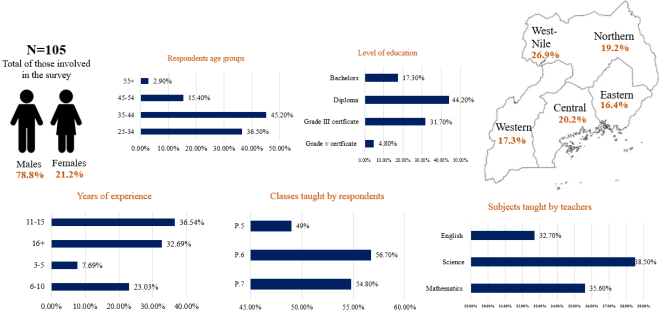
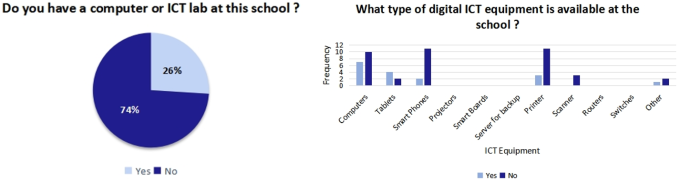
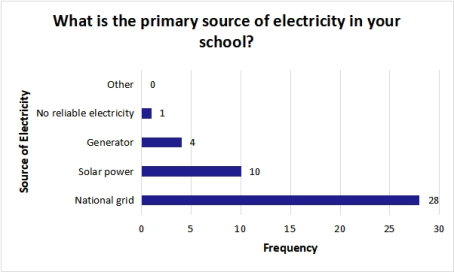
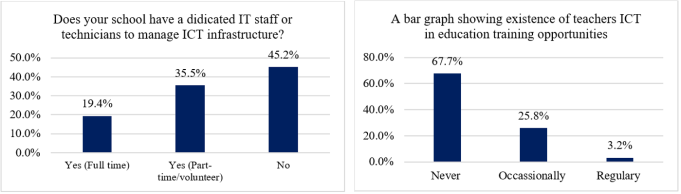
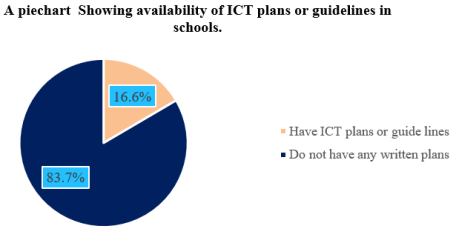
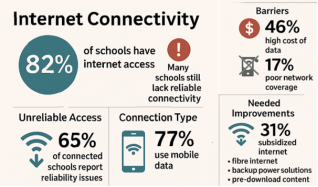

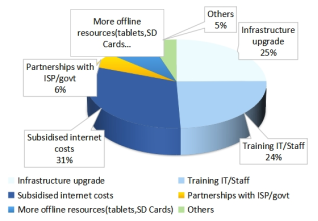
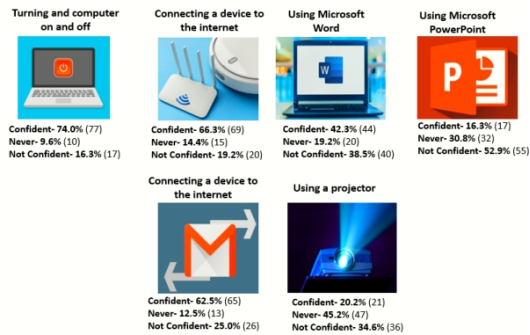
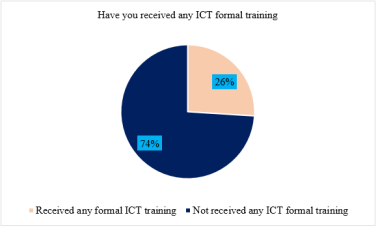
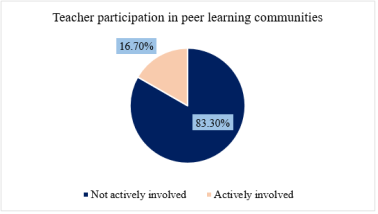
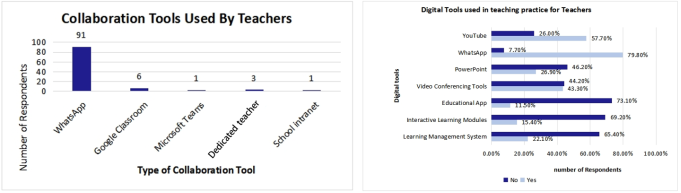
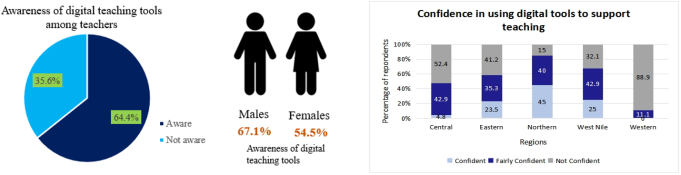
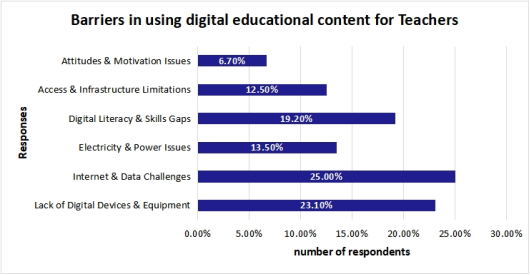



 Share This Article
 Twitter
 Linked In
 Facebook
 Copy
Copy Download