Abstract
The Anaerobic Digestion of Cow Dung and Rumen Fluid for Biogas Production was investigated using a 75L bio-digester. The substrate mixture, comprising cow dung and rumen fluid in a 1:1 ratio, was anaerobically digested with a water-to-substrate ratio of 1:1. The digester was stirred thrice daily to ensure optimal mixing and biogas production. Over a 14-day retention period, biogas production was monitored, and the resulting gas composition was analyzed. The biogas yielded 57.99% methane (CH4), 39.99% carbon dioxide (CO2), 2.00% oxygen (O2), 0.01% hydrogen sulphide (H2S), and 0.01% water vapor. The findings demonstrate the feasibility of co-digesting cow dung and rumen fluid for biogas production, highlighting the potential for sustainable energy generation from agro-industrial waste. The study reveals that the anaerobic digestion process was effective in converting organic waste into a valuable energy resource. The presence of methane as the primary component indicates the potential for energy generation, while the low oxygen content confirms the anaerobic nature of the process. The results suggest that co-digestion of cow dung and rumen fluid can enhance biogas production, offering a promising solution for waste management and renewable energy production. This study Reveal the optimization of biogas production from agro-industrial waste, contributing to the development of sustainable energy solutions. The outcomes of this research have significant implications for Nigeria's energy sector, where abundant agricultural waste can be harnessed to meet energy demands.
|
Published in
|
American Journal of Energy Engineering (Volume 14, Issue 2)
|
|
DOI
|
10.11648/j.ajee.20261402.12
|
|
Page(s)
|
56-61 |
|
Creative Commons
|

This is an Open Access article, distributed under the terms of the Creative Commons Attribution 4.0 International License (http://creativecommons.org/licenses/by/4.0/), which permits unrestricted use, distribution and reproduction in any medium or format, provided the original work is properly cited.
|
|
Copyright
|
Copyright © The Author(s), 2026. Published by Science Publishing Group
|
Keywords
Biogas, Cow-dung, Anaerobic, Digestion, Rumen, Fluid
1. Introduction
The increasing demand for energy and the need to reduce greenhouse gas emissions have led to a growing interest in renewable energy sources. Biogas production through anaerobic digestion (AD) is a promising technology that can help address energy security and waste management challenges. This study focuses on the anaerobic digestion of cow dung and rumen fluid for biogas production, exploring the potential of these substrates as feedstocks for renewable energy generation.
Anaerobic digestion is a biological process that breaks down organic matter in the absence of oxygen, producing biogas (a mixture of methane and carbon dioxide) and a nutrient-rich digestate. Cow dung and rumen fluid are abundant agricultural wastes that can be used as feedstocks for AD. Rumen fluid, in particular, is a promising co-substrate due to its high microbial content and nutrient-rich composition. The co-digestion of cow dung and rumen fluid can enhance biogas yields and improve process stability.
In Nigeria, where agriculture is a significant contributor to the economy, the utilization of livestock waste for biogas production can provide a clean and sustainable energy source, reduce environmental pollution, and promote rural development.
According to Adeleke et al., biogas production using locally fabricated bioreactors is a viable option for small-scale energy generation. The study demonstrated the feasibility of producing biogas from cow dung using a locally fabricated bioreactor
| [1] | Adeleke, A. J., Ogudana, T., Oyelami, S., & Yusuf, T. O. (2020). Production of biogas using locally fabricated bioreactor. Pacific Journal of Science and Technology, 21(2), 80-87. |
[1]
.
Ankathi et al. emphasized the sustainability of biogas production from anaerobic digestion of food waste and animal manure, highlighting the potential for renewable energy generation and waste management.
| [2] | Ankathi, S. K., Chaudhari, U. S., Handler, R. M., & Shonnard, D. R. (2024). Sustainability of biogas production from anaerobic digestion of food waste and animal manure. Applied Microbiology, 4(1), 418-438. |
[2]
.
The experimental study by Benali et al. showed that cow dung can be used as a viable feedstock for biogas production, offering an alternative to fossil fuels.
| [3] | Benali, M., Hamad, T., & Hamad, Y. (2019). Experimental study of biogas production from cow dung as an alternative for fossil fuels. Journal of Sustainable Bioenergy Systems, 9(3), 91-97. |
[3]
.
Hagos et al. reviewed the anaerobic co-digestion process for biogas production, highlighting the progress, challenges, and perspectives in the field
| [4] | Hagos, K., Zong, J., Li, D., Liu, C., & Lu, X. (2017). Anaerobic co-digestion process for biogas production: Progress, challenges and perspectives. Renewable and Sustainable Energy Reviews, 76, 1485-1496. |
[4]
. Obileke et al. optimized methane production from anaerobic digestion of cow dung, demonstrating an efficient approach to biogas production
| [5] | Obileke, K., Makaka, G., & Nwokolo, N. (2022). Efficient methane production from anaerobic digestion of cow dung: An optimization approach. Challenges, 13(2), 53. |
[5]
. Shehu et al. investigated anaerobic digestion of cow dung for biogas production in Kara Market, Sokoto, Nigeria, providing insights into the potential for biogas production in the region
| [6] | Shehu, A., Maishanu, H. M., Yelwa, S. M., & Baki, A. S. (2025). Anaerobic digestion of cow dung for biogas production in Kara Market, Sokoto, Nigeria. Asian Journal of Biological Sciences, 18(3), 679-692. |
[6]
. These studies demonstrate the potential for biogas production from cow dung and highlight the importance of optimizing the anaerobic digestion process for efficient energy generation.
Anaerobic digestion is a widely used technology for biogas production from organic waste, including cow dung and rumen fluid. According to Song et al., anaerobic digestion involves microbiological processes that break down organic matter in the absence of oxygen, producing biogas (mainly methane and carbon dioxide) as a renewable energy source
| [7] | Song, Y., Qiao, W., Westerholm, M., Huang, G., Taherzadeh, M. J., & Dong, R. (2023). Microbiological and Technological Insights on Anaerobic Digestion of Animal Manure: A Review. Fermentation, 9(5), 436. |
[7]
. Hilmi et al. highlight the potential of co-digestion of cow dung with other substrates like food waste to enhance biogas yields
| [8] | Hilmi, N. A. M., Zakarya, I. A., Gunny, A. A. N., Izhar, T. N. T., Zaaba, S. K., Samah, M. F., Daud, Z. A. A. M., & Beson, M. R. C. (2023). Co-digestion of food waste with cow dung by anaerobic digestion for biogas production. IOP Conference Series: Earth and Environmental Science, 1135, 012034. |
[8]
. Nasir et al. review the application of anaerobic digestion technology in treating livestock manure for biogas production
| [9] | Nasir, I. M., Ghazi, T. I. M., & Omar, R. (2012). Anaerobic digestion technology in livestock manure treatment for biogas production: A review. Engineering in Life Sciences, 12(3), 258-269. |
[9]
. Awasthi et al. demonstrate improved methane yield via co-digestion of cow dung with food waste
| [10] | Awasthi, S. K., Joshi, R., Dhar, H., et al. (2018). Improving methane yield and quality via co-digestion of cow dung mixed with food waste. Bioresource Technology, 251, 259-263. |
[10]
. Dareioti and Kornaros explore two-stage anaerobic digestion systems for efficient biogas production
| [11] | Dareioti, M. A., & Kornaros, M. (2015). Anaerobic mesophilic co-digestion of ensiled sorghum, cheese whey and liquid cow manure in a two-stage CSTR system: Effect of hydraulic retention time. Bioresource Technology, 175, 553-562. |
[11]
. Alengebawy et al. discuss the role of anaerobic digestion in sustainable bioenergy recovery from agricultural waste
| [12] | Alengebawy, A., Ran, Y., Osman, A., Jin, K., Samer, M., & Ai, P. (2024). Anaerobic digestion of agricultural waste for biogas production and sustainable bioenergy recovery: A review. Environmental Chemistry Letters, 22, 2641-2668. |
[12]
.
1.1. Main Objective
The main objective of this study is to investigate the anaerobic digestion of cow dung and rumen fluid for biogas production.
1.2. Specific Objectives
1) Substrate Preparation: To prepare and characterize cow dung and rumen fluid as substrates for anaerobic digestion.
2) Digester Design and Fabrication: To design and fabricate a suitable anaerobic digester for the co-digestion of cow dung and rumen fluid.
3) Biogas Production: To evaluate the biogas production potential of cow dung and rumen fluid through anaerobic digestion, assessing the effects of substrate composition and process parameters on biogas yield and composition.
2. Materials and Methods
The anaerobic digestion of cow dung and rumen fluid for biogas production was investigated using a 75L plastic biogas digester. The experiment was conducted in batch mode, with daily monitoring of gas yield for 21 days. The digester was charged with a mixture of cow dung and rumen fluid in a 1:1 ratio, with an equal amount of water added (1:1:1, cow dung: rumen fluid: water).
The ambient temperature ranged from 20-30°C, while the slurry temperature ranged from 25-40°C. The pH and pressure of the digester were also monitored throughout the experiment.
The biogas production was measured daily, and the composition of the biogas was analyzed to determine the methane content. The flammability of the biogas was also tested at different stages of digestion.
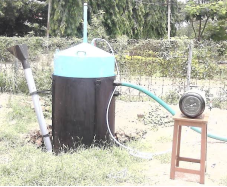
The biodigester used for this research was a 75L capacity plastic prototype digester (
Figure 1), located at the Chemical Engineering department, Imo State Polytechnic Omuma, Orlu Campus. The study was conducted between August and September 2023.
Apparatus
1) Burette: Used for accurate measurement and dispensing of liquids, often in titration processes.
2) Pipette: Used for precise measurement and transfer of small volumes of liquids.
3) Syringes (5ml, 2ml): Used for measuring and injecting small volumes of liquids.
4) Measuring cylinders (75L, others): Used for measuring volumes of liquids.
5) Retort stand and clamp: Used for supporting and holding apparatus in place.
6) Beakers: Used for mixing, heating, and measuring liquids.
7) Mortar and Pestle: Used for grinding and mixing solid substances.
8) Thermometer: Used for measuring temperature.
9) Centrifuge: Used for separating mixtures based on density differences.
10) Lovibond comparator: Used for colorimetric analysis and pH measurement.
11) Multi-parameter: Used for measuring multiple water quality parameters (e.g., pH, temperature, conductivity).
12) pH meter (Jenway 3505, UK): Used for measuring the pH of a solution.
13) Scrubber: Used for removing impurities and contaminants from biogas.
14) Desulfurizer: Used for removing hydrogen sulfide (H2S) from biogas.
Figure 1. Experimental Set-Up of Biogas Production From Cow.
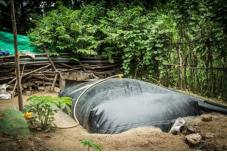
Figure 2. Experimental Set-Up of Biogas Production Storage.
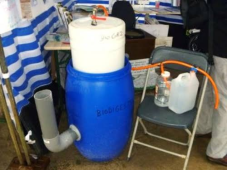
Figure 3. Experimental Set-Up Rumen Fluid for Biogas Production.
Cow dung was procured from Obinze Cow slaughter market and rumen fluid was collected from the same location. The materials used for this study included:
Top loading balance (20kg)- 1L calibrated glass transparent measuring cylinder- Digital pH meter- Thermometer- 75L plastic biodigester- Scrubber- Desulfurize.
Substrate Preparation
Fresh cow dung and rumen fluid were collected from the slaughter house in Obinze, Imo state. The substrates were prepared by mixing cow dung and rumen fluid in a specific ratio. The mixture was then fed into the biodigester.
Experimental Setup
The anaerobic digestion experiment was conducted in a 75L plastic biodigester. The digester was charged with the substrate mixture and water, and the biogas production was monitored daily for 21 days. The ambient temperature ranged from 20-30°C, while the slurry temperature ranged from 25-40°C.
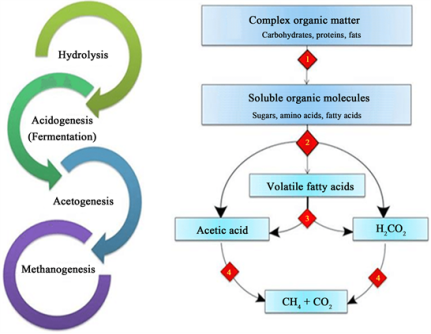
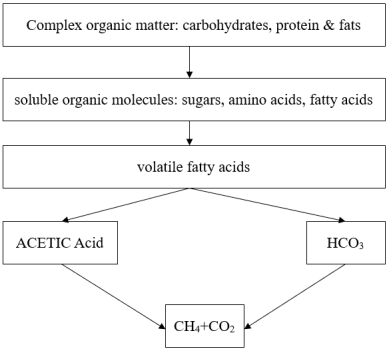
Figure 4. Flow Chart of Anaerobic Digestion Process.
Figure 5. Flow chart of anaerobic digestion process.
3. Monitoring and Analysis
Table 1. Mix Mass of charge stock and water.
Sample ID | Cow dung (kg) | Rumen Fluid (kg) | Water (L) | Total Mass (kg) | pH |
A | 5.0 | 2.5 | 2.5 | 10.0 | 6.8 |
B | 5.0 | 2.5 | 5.0 | 12.5 | 6.9 |
C | 5.0 | 5.0 | 2.5 | 12.5 | 6.7 |
D | 5.0 | 5.0 | 5.0 | 15.0 | 6.8 |
The pH, temperature, and biogas production were monitored daily. The biogas composition was analyzed to determine the methane content. The flammability of the biogas was also tested.
The table shows four different mixtures of cow dung, rumen fluid, and water, with varying ratios. The pH of each mixture is slightly alkaline, ranging from 6.7 to 6.9, which is suitable for anaerobic digestion.
1) Sample A has a lower water content, which lead to a higher concentration of microorganisms and potentially higher biogas production.
2) Sample D has a higher water content, which lead to a more diluted mixture and potentially lower biogas production.
3) Samples B and C have the same total mass, but different ratios of cow dung to rumen fluid, which affect the biogas composition and yield.
Experimental Setup
The digester was loaded with a mixture of cow dung and water in a 1:1 ratio (5kg cow dung: 5L water). The mixture was prepared by weighing 5kg of dry cow dung and mixing it with 5L of water.
Digester Loading and Operation
The digester was loaded at once with the prepared mixture, and the environment was maintained closed throughout the 20-day retention period. The digester was operated in the mesophilic temperature range.
Key Parameters:
Waste mass of dry cow dung: 5 kg- Mass of water: 5 kg (or L, since density of water ≈ 1 kg/L)- Mix ratio: Cow dung: Water = 1:1 (or 5:5)- Hydraulic retention time: 20 days- Temperature range: Mesophilic.
Measurement Methods
Biogas production was measured daily using a graduated cylinder.
Experimental Procedure
1) 5kg of cow dung was mixed with 5kg of water (1:1 ratio) and stirred thoroughly.
2) 1kg of sodium alginate (sodium silicate solution) was added to aid slurry homogeneity.
3) 0.23kg of fresh rumen content was used to inoculate the medium with methanogens.
4) The digester was sealed, and initial temperature (27°C) and pH (6.8) readings were taken.
Fermentation and Monitoring
The digester was allowed to ferment for 21 days under mesophilic conditions (25-30°C). The pH range was 5.8-6.8, suitable for biogas production. The digester was agitated daily and kept in the dark to prevent algae growth and retain heat.
Measurements
1) Temperature: daily ambient and slurry temperatures (25-110°C thermometer)
2) pH: monitored every 3 days (digital pH meter, PHS-3c)
3) Biogas volume: measured daily by downward displacement (1L calibrated glass cylinder)
4) Flammability: checked using a locally fabricated biogas burner
Digester Operation
The digester was charged and monitored for 21 days. Anaerobic fermentation degraded the waste, producing biogas. The setup allowed for:
Gas collection and storage- Stirring and mixing- Adding new waste and maintaining operating temperature- Discharge of residuals- Access for repairs and maintenance.
4. Results and Discussion
The results show that temperature, pH, and total solids concentration affect biogas production. Ambient and slurry temperatures were monitored to determine digestion rate and retention time. Temperature affects microbial activity, and the mesophilic range (20-45°C) was identified for slurry temperature.
1) Ambient temperature fluctuated with climate conditions, affecting heat loss/gain and microbial activity.
2) Slurry temperature up to 32°C was recorded, with ambient temperature ranging from 20-30°C.
3) pH 7 was most favorable at mesophilic temperatures, with organic acids forming during decomposition.
Biogas production increased as gas was removed from the system. Cow dung produced the highest biogas volume (400.3mls) with 68.0% methane content. Production started on day 2, peaked on day 10, and had 27.2% CO2 content.
5. Conclusion
As Nigeria navigates the complexities of energy insecurity and environmental degradation, the Anaerobic Digestion of Cow Dung and Rumen Fluid for Biogas Production emerges as a beacon of hope. This study unlocks the doors to a paradigm shift, where waste is transformed into a valuable energy resource, and sustainability is woven into the fabric of our communities. The co-digestion process ignites a symphony of microorganisms, harmonizing waste management and energy production in a majestic dance of biogas generation. As the methane-rich biogas rises, it carries with it the promise of a cleaner, brighter future – one where energy poverty is alleviated, and the environment is rejuvenated. This research is a clarion call to action, beckoning Nigeria to harness the untapped potential of its agricultural waste and forge a path towards a greener, more resilient energy landscape.
Author Contributions
Ibe Raymond Obinna: Conceptualization, Resources, Visualization
Amechi Jonathan: Data curation, Formal analysis, Supervision
Nnadikwe Johnson: Investigation, Methodology, Writing – review & editing
Conflicts of Interest
The authors declare no conflicts of interest.
References
| [1] |
Adeleke, A. J., Ogudana, T., Oyelami, S., & Yusuf, T. O. (2020). Production of biogas using locally fabricated bioreactor. Pacific Journal of Science and Technology, 21(2), 80-87.
|
| [2] |
Ankathi, S. K., Chaudhari, U. S., Handler, R. M., & Shonnard, D. R. (2024). Sustainability of biogas production from anaerobic digestion of food waste and animal manure. Applied Microbiology, 4(1), 418-438.
|
| [3] |
Benali, M., Hamad, T., & Hamad, Y. (2019). Experimental study of biogas production from cow dung as an alternative for fossil fuels. Journal of Sustainable Bioenergy Systems, 9(3), 91-97.
|
| [4] |
Hagos, K., Zong, J., Li, D., Liu, C., & Lu, X. (2017). Anaerobic co-digestion process for biogas production: Progress, challenges and perspectives. Renewable and Sustainable Energy Reviews, 76, 1485-1496.
|
| [5] |
Obileke, K., Makaka, G., & Nwokolo, N. (2022). Efficient methane production from anaerobic digestion of cow dung: An optimization approach. Challenges, 13(2), 53.
|
| [6] |
Shehu, A., Maishanu, H. M., Yelwa, S. M., & Baki, A. S. (2025). Anaerobic digestion of cow dung for biogas production in Kara Market, Sokoto, Nigeria. Asian Journal of Biological Sciences, 18(3), 679-692.
|
| [7] |
Song, Y., Qiao, W., Westerholm, M., Huang, G., Taherzadeh, M. J., & Dong, R. (2023). Microbiological and Technological Insights on Anaerobic Digestion of Animal Manure: A Review. Fermentation, 9(5), 436.
|
| [8] |
Hilmi, N. A. M., Zakarya, I. A., Gunny, A. A. N., Izhar, T. N. T., Zaaba, S. K., Samah, M. F., Daud, Z. A. A. M., & Beson, M. R. C. (2023). Co-digestion of food waste with cow dung by anaerobic digestion for biogas production. IOP Conference Series: Earth and Environmental Science, 1135, 012034.
|
| [9] |
Nasir, I. M., Ghazi, T. I. M., & Omar, R. (2012). Anaerobic digestion technology in livestock manure treatment for biogas production: A review. Engineering in Life Sciences, 12(3), 258-269.
|
| [10] |
Awasthi, S. K., Joshi, R., Dhar, H., et al. (2018). Improving methane yield and quality via co-digestion of cow dung mixed with food waste. Bioresource Technology, 251, 259-263.
|
| [11] |
Dareioti, M. A., & Kornaros, M. (2015). Anaerobic mesophilic co-digestion of ensiled sorghum, cheese whey and liquid cow manure in a two-stage CSTR system: Effect of hydraulic retention time. Bioresource Technology, 175, 553-562.
|
| [12] |
Alengebawy, A., Ran, Y., Osman, A., Jin, K., Samer, M., & Ai, P. (2024). Anaerobic digestion of agricultural waste for biogas production and sustainable bioenergy recovery: A review. Environmental Chemistry Letters, 22, 2641-2668.
|
Cite This Article
-
APA Style
Obinna, I. R., Jonathan, A., Johnson, N. (2026). Anaerobic Digestion of Cow Dung and Rumen Fluid for Biogas Production. American Journal of Energy Engineering, 14(2), 56-61. https://doi.org/10.11648/j.ajee.20261402.12
 Copy
|
Copy
|
 Download
ACS Style
Obinna, I. R.; Jonathan, A.; Johnson, N. Anaerobic Digestion of Cow Dung and Rumen Fluid for Biogas Production. Am. J. Energy Eng. 2026, 14(2), 56-61. doi: 10.11648/j.ajee.20261402.12
Copy
|
Download
AMA Style
Obinna IR, Jonathan A, Johnson N. Anaerobic Digestion of Cow Dung and Rumen Fluid for Biogas Production. Am J Energy Eng. 2026;14(2):56-61. doi: 10.11648/j.ajee.20261402.12
Copy
|
Download
-
@article{10.11648/j.ajee.20261402.12,
  author = {Ibe Raymond Obinna and Amechi Jonathan and Nnadikwe Johnson},
  title = {Anaerobic Digestion of Cow Dung and Rumen Fluid for Biogas Production},
  journal = {American Journal of Energy Engineering},
  volume = {14},
  number = {2},
  pages = {56-61},
  doi = {10.11648/j.ajee.20261402.12},
  url = {https://doi.org/10.11648/j.ajee.20261402.12},
  eprint = {https://article.sciencepublishinggroup.com/pdf/10.11648.j.ajee.20261402.12},
  abstract = {The Anaerobic Digestion of Cow Dung and Rumen Fluid for Biogas Production was investigated using a 75L bio-digester. The substrate mixture, comprising cow dung and rumen fluid in a 1:1 ratio, was anaerobically digested with a water-to-substrate ratio of 1:1. The digester was stirred thrice daily to ensure optimal mixing and biogas production. Over a 14-day retention period, biogas production was monitored, and the resulting gas composition was analyzed. The biogas yielded 57.99% methane (CH4), 39.99% carbon dioxide (CO2), 2.00% oxygen (O2), 0.01% hydrogen sulphide (H2S), and 0.01% water vapor. The findings demonstrate the feasibility of co-digesting cow dung and rumen fluid for biogas production, highlighting the potential for sustainable energy generation from agro-industrial waste. The study reveals that the anaerobic digestion process was effective in converting organic waste into a valuable energy resource. The presence of methane as the primary component indicates the potential for energy generation, while the low oxygen content confirms the anaerobic nature of the process. The results suggest that co-digestion of cow dung and rumen fluid can enhance biogas production, offering a promising solution for waste management and renewable energy production. This study Reveal the optimization of biogas production from agro-industrial waste, contributing to the development of sustainable energy solutions. The outcomes of this research have significant implications for Nigeria's energy sector, where abundant agricultural waste can be harnessed to meet energy demands.},
 year = {2026}
}
Copy
|
Download
-
TY  - JOUR
T1  - Anaerobic Digestion of Cow Dung and Rumen Fluid for Biogas Production
AU  - Ibe Raymond Obinna
AU  - Amechi Jonathan
AU  - Nnadikwe Johnson
Y1  - 2026/04/11
PY  - 2026
N1  - https://doi.org/10.11648/j.ajee.20261402.12
DO  - 10.11648/j.ajee.20261402.12
T2  - American Journal of Energy Engineering
JF  - American Journal of Energy Engineering
JO  - American Journal of Energy Engineering
SP  - 56
EP  - 61
PB  - Science Publishing Group
SN  - 2329-163X
UR  - https://doi.org/10.11648/j.ajee.20261402.12
AB  - The Anaerobic Digestion of Cow Dung and Rumen Fluid for Biogas Production was investigated using a 75L bio-digester. The substrate mixture, comprising cow dung and rumen fluid in a 1:1 ratio, was anaerobically digested with a water-to-substrate ratio of 1:1. The digester was stirred thrice daily to ensure optimal mixing and biogas production. Over a 14-day retention period, biogas production was monitored, and the resulting gas composition was analyzed. The biogas yielded 57.99% methane (CH4), 39.99% carbon dioxide (CO2), 2.00% oxygen (O2), 0.01% hydrogen sulphide (H2S), and 0.01% water vapor. The findings demonstrate the feasibility of co-digesting cow dung and rumen fluid for biogas production, highlighting the potential for sustainable energy generation from agro-industrial waste. The study reveals that the anaerobic digestion process was effective in converting organic waste into a valuable energy resource. The presence of methane as the primary component indicates the potential for energy generation, while the low oxygen content confirms the anaerobic nature of the process. The results suggest that co-digestion of cow dung and rumen fluid can enhance biogas production, offering a promising solution for waste management and renewable energy production. This study Reveal the optimization of biogas production from agro-industrial waste, contributing to the development of sustainable energy solutions. The outcomes of this research have significant implications for Nigeria's energy sector, where abundant agricultural waste can be harnessed to meet energy demands.
VL  - 14
IS  - 2
ER  -
Copy
|
Download





 Share This Article
 Twitter
 Linked In
 Facebook