Research Article | | Peer-Reviewed

Spatio-Temporal Distribution and Comparative Analysis of Schistosomiasis and Soil-transmitted Helminthiasis in Plateau State, Nigeria (1990–2025)

Received: 30 April 2026     Accepted: 14 May 2026     Published: 30 May 2026
Views:       Downloads:
Abstract

Schistosomiasis and soil-transmitted helminthiasis (STH) remain major public health concerns in Nigeria, particularly in Plateau State where environmental and socio-economic conditions favour transmission. This study assessed the spatio-temporal distribution and comparative epidemiology of schistosomiasis and STH across Local Government Areas (LGAs) in Plateau State from 1990 to 2025 using secondary data from published literature. Data were stratified into four time periods (1990–1999, 2000–2009, 2010–2019, and 2020–2025) and analysed to identify spatial patterns, temporal trends, and co-endemicity. Results showed that schistosomiasis prevalence was historically high, with values exceeding 60% in some LGAs, but declined significantly in recent years, with near elimination observed in Pankshin (0.0%). In contrast, STH prevalence remained widespread, with persistent moderate-to-high levels in several LGAs, including Jos North (38.3%), Jos South (42.6%), and Wase (49.9%). Spatial heterogeneity was evident, with rural LGAs exhibiting higher schistosomiasis prevalence due to water contact, while urban areas showed increased STH prevalence linked to poor sanitation. The findings highlight differential responses to control interventions, with schistosomiasis showing greater reduction compared to STH. Integrated control strategies combining chemotherapy, water, sanitation, and hygiene (WASH), and geospatial surveillance are recommended for sustainable disease control. This study will provide the first comprehensive spatiotemporal and comparative analysis of schistosomiasis and STH in Plateau State over a 35-year period, bridging a critical evidence gap for Nigeria's neglected tropical diseases (NTDs) elimination efforts. The findings will directly inform the Plateau State Ministry of Health and the Federal Ministry of Health on how to spatially target limited resources, optimize MDA frequency based on local transmission dynamics, and design integrated WASH-NTD interventions. The methodology is replicable for other NTD-endemic states in Nigeria and across sub-Saharan Africa, contributing to the WHO 2030 roadmap goals for NTD elimination.

Published in American Journal of BioScience (Volume 14, Issue 3)
DOI 10.11648/j.ajbio.20261403.12
Page(s) 55-63
Creative Commons

This is an Open Access article, distributed under the terms of the Creative Commons Attribution 4.0 International License (http://creativecommons.org/licenses/by/4.0/), which permits unrestricted use, distribution and reproduction in any medium or format, provided the original work is properly cited.

Copyright

Copyright © The Author(s), 2026. Published by Science Publishing Group

Keywords

Schistosomiasis, Soil-transmitted Helminths, GIS, Spatial Distribution, Plateau State, Nigeria

1. Introduction
Schistosomiasis and soil-transmitted helminthiasis (STH) remain among the most persistent neglected tropical diseases (NTDs), exerting a substantial public health burden across sub-Saharan Africa. Schistosomiasis, caused by blood flukes of the genus Schistosoma, affects more than 250 million people globally, with over 90% of cases occurring in Africa (WHO, 2023). In parallel, STH infections principally Ascaris lumbricoides, Trichuris trichiura, and hookworms infect approximately 1.5 billion people worldwide, disproportionately impacting populations living in conditions of poverty, inadequate sanitation, and poor hygiene (WHO, 2023; Jourdan et al., 2018). These infections are associated with chronic morbidity, including anemia, malnutrition, impaired cognitive development, and reduced productivity, thereby perpetuating cycles of poverty and health inequities (Damashi et al., 2026, Hotez et al., 2014). Nigeria bears one of the highest burdens of helminth infections globally, with both schistosomiasis and STH widely distributed across its diverse ecological zones. National mapping efforts have revealed marked spatial heterogeneity, with prevalence patterns strongly influenced by environmental, climatic, and socio-economic factors (Ekpo et al., 2013; Olamiju et al., 2016). Despite sustained control efforts through preventive chemotherapy primarily mass drug administration (MDA) using praziquantel for schistosomiasis and albendazole or mebendazole for STH transmission persists in many endemic communities. Challenges such as inconsistent treatment coverage, reinfection, weak health systems, and limited access to water, sanitation, and hygiene (WASH) infrastructure continue to undermine elimination goals (WHO, 2021; Colley et al., 2014). Plateau State, located in north-central Nigeria, presents a unique epidemiological landscape for helminth transmission due to its heterogeneous topography, moderate climate, and abundance of freshwater bodies. The ecology of schistosomiasis in the region is closely tied to the distribution of freshwater snail intermediate hosts, particularly Bulinus and Biomphalaria species, while STH transmission is facilitated by soil contamination resulting from poor sanitation practices. Empirical studies conducted across different local government areas (LGAs) in Plateau State have demonstrated significant spatial variability in infection prevalence. For instance, earlier investigations in the 1990s reported relatively low to moderate prevalence rates, whereas more recent studies have identified localized hotspots with substantially higher infection intensities, reflecting both environmental suitability and human behavioral factors (Dawet et al., 2012; Damen et al., 2018). The transmission dynamics of schistosomiasis and STH are inherently spatio-temporal, shaped by the interaction of environmental variables such as temperature, rainfall, vegetation cover, soil moisture, and hydrology, alongside human activities including water contact, agriculture, and sanitation practices. Climatic variability and land use changes such as irrigation development, urbanization, and deforestation have been shown to influence the survival and distribution of infective stages and intermediate hosts, thereby altering disease risk patterns over time (Stensgaard et al., 2019; Pullan et al., 2014). Consequently, the distribution of these infections is often highly focal and dynamic, necessitating analytical approaches that explicitly incorporate both spatial and temporal dimensions.
In recent years, advances in geospatial technologies, including geographic information systems (GIS), remote sensing, and machine learning, have revolutionized the study of infectious disease epidemiology (Damashi et al., 2023). These tools enable the integration of environmental and epidemiological data to model disease risk, identify transmission hotspots, and predict future trends with greater precision (Hay et al., 2013; Weiss et al., 2018). In Nigeria, geospatial modelling has been increasingly applied to map the distribution of schistosomiasis and STH; however, most studies have been cross-sectional or disease-specific, with limited emphasis on long-term temporal dynamics and comparative analyses within specific regions such as Plateau State (Damashi et al., 2023).
A comparative spatio-temporal assessment of schistosomiasis and STH is particularly due to their overlapping geographic distribution, shared determinants, and frequent co-infection within affected populations. Co-endemicity not only amplifies disease burden but also has implications for integrated control strategies, as interventions targeting one disease may influence the transmission dynamics of the other (Pullan et al., 2014; Hotez et al., 2014). Furthermore, evaluating temporal trends from 1990 to 2025 provides a critical opportunity to assess the impact of past and ongoing interventions, including national NTD control programmes and global initiatives aligned with the WHO 2030 NTD roadmap (WHO, 2021). Therefore, this study aims to investigate the spatio-temporal distribution and conduct a comparative analysis of schistosomiasis and soil-transmitted helminthiasis in Plateau State, Nigeria, over a 35-year period (1990–2025). By integrating historical epidemiological data with environmental and geospatial variables, the study seeks to elucidate patterns, identify persistent hotspots, and evaluate temporal trends in transmission. The findings are expected to contribute to evidence-based decision-making, support targeted intervention strategies, and enhance ongoing efforts toward the control and eventual elimination of these neglected tropical diseases in the region.
2. Materials and Methods
2.1. Study Area
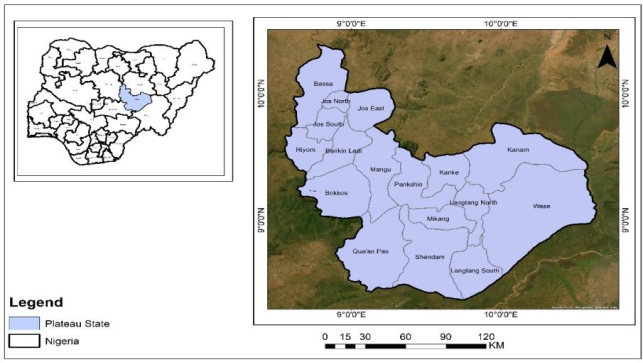
Plateau State is located in north-central Nigeria and comprises 17 LGAs, including Jos North, Jos South, Pankshin, Langtang North, Shendam, and Wase as shown in Figure 1. The state is characterized by a tropical climate with distinct wet and dry seasons, average annual rainfall of 1,200–1,500 mm, and temperatures ranging between 18°C and 30°C. These conditions favour parasite survival and transmission.
Figure 1. Map of Plateau State. Source: Author(s) Analysis, 2026.
2.2. Data Sources
Secondary data were obtained from published articles, including peer-reviewed journals, institutional reports, and online repositories. Studies included in the analysis reported prevalence of schistosomiasis and/or STH within Plateau State LGAs.
2.3. Data Stratification
Data were grouped into four temporal categories:
1990–1999
2000–2009
2010–2019
2020–2025
Prevalence values were extracted and assigned to corresponding LGAs.
2.4. Data Analysis
Descriptive statistics were used to summarize prevalence trends
Comparative analysis was conducted between schistosomiasis and STH
Spatial patterns were interpreted based on LGA distribution
GIS-based conceptual interpretation was applied to explain environmental drivers
3. Results and Discussion
Spatio-temporal Trends in Schistosomiasis Prevalence Across Plateau State (1990–2025)
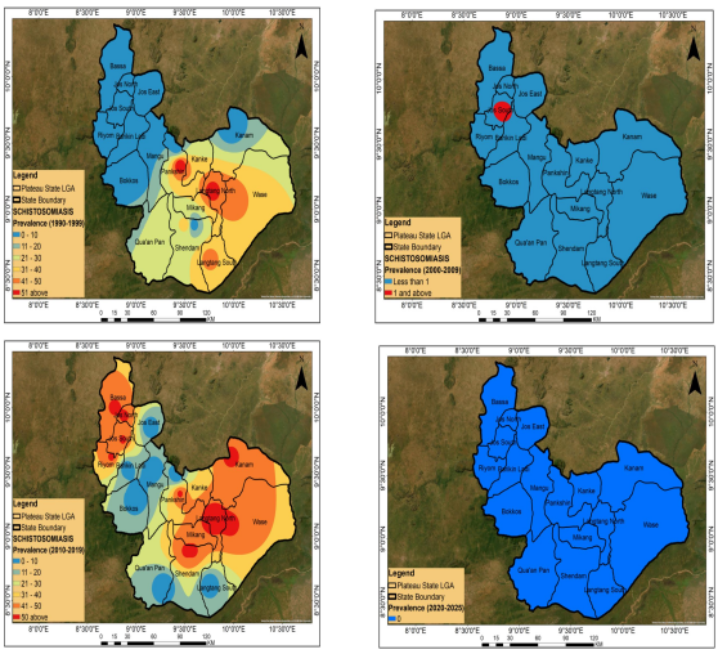
The synthesis of published data (Table 1) reveals pronounced spatio-temporal variation in schistosomiasis prevalence across the Local Government Areas (LGAs) of Plateau State over a 35-year period (1990–2025). Prevalence values ranged from 0.0% to 62.4%, indicating a transition from hyper-endemic to low-endemic conditions in some areas (Damashi et al., 2026). During the 1990–1999 period, prevalence was generally high, with several LGAs recording hyper-endemic levels (>50%). Notably, Pankshin (62.4%), Langtang North (58.8%), and Wase (50.0%) exhibited the highest burden. Similarly, Shendam (40.2%) and Langtang South (45.4%) recorded substantial transmission levels. In contrast, the 2000–2009 period shows limited data coverage but includes extremely low prevalence in Jos South (0.3%), suggesting localized control or ecological differences. The 2010–2019 period reflects a mixed pattern, with some LGAs showing persistent moderate-to-high prevalence (e.g., Langtang North: 55.7%) while others reported moderate reductions (e.g., Shendam: 26.3%). However, several LGAs still recorded values around 49.9%, indicating sustained transmission. By the 2020–2025 period, a general decline is evident in many LGAs, with some areas achieving very low or zero prevalence, notably Pankshin (0.0%) and Barkin Ladi (0.9%). However, persistent moderate prevalence (≈49.9%) remains in LGAs such as Bassa, Kanam, Wase, and Langtang North, indicating ongoing transmission hotspots as shown in Figure 2.
3.1. Temporal Decline and Impact of Control Interventions
The observed reduction in schistosomiasis prevalence from the 1990s to the 2020–2025 period reflects the impact of sustained control interventions, particularly mass drug administration (MDA) with praziquantel. The dramatic decline in LGAs such as Pankshin (62.4% → 0.0%) demonstrates the effectiveness of long-term chemotherapy programmes when consistently implemented (Binshak et al., 2023; Griswold et al., 2022). This trend aligns with global and national reports indicating that repeated MDA significantly reduces infection intensity and prevalence, especially among school-aged children (Hotez et al., 2014; WHO, 2020). However, the uneven reduction across LGAs suggests variability in intervention coverage, compliance, and environmental conditions.
Despite overall progress, several LGAs including Langtang North, Wase, Kanam, Bassa, and Shendam continue to exhibit moderate to high prevalence in recent years (Table 1 and Figure 2). This persistence highlights the role of environmental and ecological factors, particularly: Proximity to perennial water bodies, Presence of snail intermediate hosts, Irrigation and agricultural water use systems. These findings are consistent with earlier studies demonstrating that schistosomiasis transmission is strongly linked to freshwater ecosystems and human-water contact patterns (Steinmann et al., 2006; Brooker et al., 2006). The data clearly demonstrate spatial heterogeneity, with LGAs exhibiting distinct epidemiological profiles: High-endemic clusters: Langtang North, Wase, Kanam, Moderate/fluctuating zones: Jos North, Jos South, Riyom, Low-endemic/controlled zones: Pankshin, Barkin Ladi. This pattern supports the concept of focal transmission, where schistosomiasis persists in specific ecological niches rather than being uniformly distributed. Such heterogeneity has been widely reported in spatial epidemiological studies across Africa (Brooker, 2007) and Urban LGAs such as Jos North and Jos South exhibit fluctuating prevalence patterns, with values ranging from very low (0.3%) to relatively high (~49.9%). This variability may be attributed to: Peri-urban settlements with poor sanitation, Migration and population mobility, Uneven access to safe water and healthcare services. These findings are consistent with studies showing that urban areas may still sustain transmission due to informal settlements and environmental inequalities (Colley et al., 2014).
The persistence of hotspots suggests that achieving elimination will require a multi-sectoral approach combining chemotherapy with environmental and behavioural interventions, as recommended by WHO (2020).
Table 1. Schistosomiasis prevalence from published articles.

LGA

Prevalence reported by year (%)

LGA

(1990-1999)

2000-2009

2010-2019

2020-2025

BASSA

49.9, 49.9

RIYOM

50.0,9.9

JOS NORTH

23.6, 9.9,49.9

JOS SOUTH

0.3

49.9, 9.9

JOS EAST

9.9,9.9

BARKIN LADI

9.9,0.9

BOKKOS

9.9, 9.9

MANGU

9.9, 9.9

PANKSHIN

62.4

49.9, 9.9

0.0

KANKE

9.9, 9.9

KANAM

49.9, 49.9

WASE

50.0

49.9, 49.9

LANGTANG NORTH

58.8

55.7,49.9, 49.9

LANGTANG SOUTH

45.4

9.9, 9.9

MIKANG

49.9, 9.9

SHENDAM

40.2

26.3, 49.9, 9.9

QUAANPAN

22.9

9.9, 9.9

Figure 2. Showing schistosomiasis temporal trend 1990-2025.
3.2. Spatio-Temporal Distribution of STH Prevalence Across Plateau State (1990–2025)
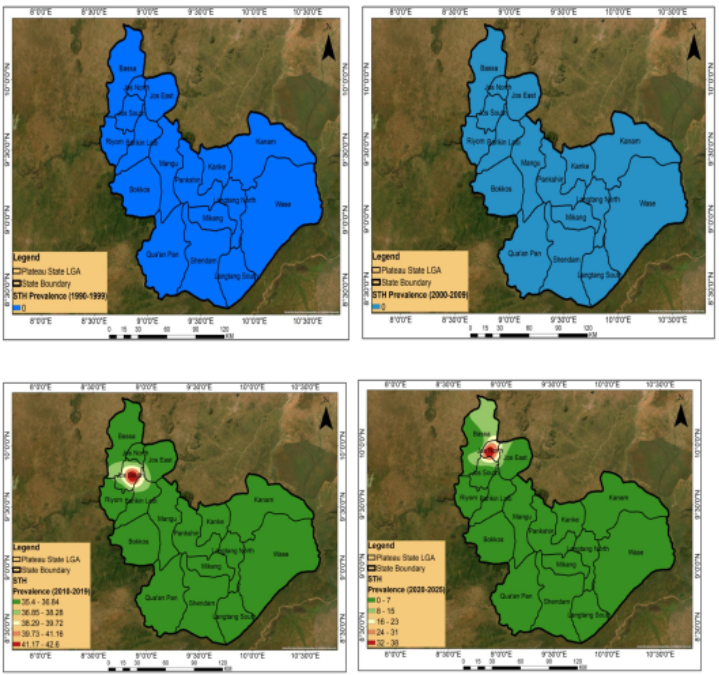
Table 2 presents the spatio-temporal distribution of Soil-Transmitted Helminth (STH) prevalence across the LGAs of Plateau State over four epidemiological periods. The data show moderate to high prevalence levels in earlier periods, followed by progressive but uneven decline in recent years, with some LGAs still exhibiting persistent or even increasing prevalence (Figure 3). Although data for 1990–1999 and 2000–2009 are largely unavailable, the 2010–2019 period provides a baseline where most LGAs recorded prevalence values clustered around: 35.4% (high baseline prevalence), 9.9% (moderate prevalence), 1.9% (low prevalence in some LGAs). This suggests that STH infections were widely endemic across Plateau State during this period (Damashi et al., 2026). By the 2020–2025 period, there is evidence of declining prevalence in some LGAs, for example: Pankshin: 2.29%, Jos North: 38.3% (increase compared to earlier low values). However, some LGAs still show moderate to high prevalence, including: Wase: up to 49.9%, Jos South: 42.6%, Jos North: 38.3%. This indicates heterogeneous progress in control efforts across the state (Figure 3).
3.3. Persistence of Moderate-to-High Endemicity
The data indicate that STH infections remain widely distributed across Plateau State, with many LGAs maintaining moderate prevalence levels even in recent years. The consistent appearance of 35.4% across multiple LGAs in the 2010–2019 period suggests a historical widespread environmental contamination with helminth eggs. This observation aligns with findings by Hotez et al. (2008), who noted that STH infections are highly persistent in environments characterized by poor sanitation, inadequate waste disposal, and favourable climatic conditions. The reduction to low prevalence levels (e.g., 1.9% and 2.29%) in some LGAs such as Pankshin reflects the impact of preventive chemotherapy programmes, particularly school-based deworming initiatives. This trend is consistent with global evidence showing that periodic administration of albendazole or mebendazole significantly reduces infection intensity and prevalence (Pullan et al., 2014; WHO, 2020). Despite overall progress, certain LGAs demonstrate persistent or increasing prevalence, notably: Jos North (increase to 38.3%), Jos South (42.6%), Wase (up to 49.9%). This pattern suggests ongoing transmission and possible reinfection cycles, which may result from: High population density (urban/peri-urban settings), Poor sanitation infrastructure, Inadequate behavioural change (e.g., open defecation, poor hygiene). Urban LGAs such as Jos North and Jos South are particularly noteworthy. While urbanization is often associated with improved sanitation, the presence of informal settlements and slums can sustain high levels of environmental contamination. Similar findings were reported by Pullan and Brooker (2012), who emphasized that urban poverty is a significant driver of STH transmission.
The combined evaluation of Table 1 and Table 2 reveals distinct yet overlapping spatio-temporal patterns of schistosomiasis (SCH) and soil-transmitted helminthiasis (STH) across Plateau State (Figure 2 and Figure 3). Both diseases exhibited moderate to high prevalence during earlier decades, followed by variable declines in recent years, although the magnitude and consistency of reduction differ markedly between the two infections. Schistosomiasis shows extremely high prevalence in the 1990s (up to 62.4% in Pankshin, 58.8% in Langtang North). Noticeable decline by 2020–2025, with some LGAs achieving near elimination (e.g., Pankshin: 0.0%) agreeing with the work of (Binshak et al., 2023). However, persistent hotspots remain (e.g., Wase, Kanam, Bassa ~49.9%). While Soil-Transmitted Helminths (STH) shows Widespread moderate-to-high prevalence in 2010–2019 (~35.4% baseline across many LGAs), gradual decline in some areas (e.g., Pankshin: 2.29%) and persistent or increasing prevalence in others (e.g., Jos North: 38.3%, Jos South: 42.6%, Wase: 49.9%). The comparative analysis demonstrates that while significant progress has been made in reducing schistosomiasis prevalence in Plateau State, soil-transmitted helminthiasis remains more persistent and less responsive to current interventions. The observed spatial heterogeneity and co-endemicity underscore the importance of: Localized intervention strategies, Integration of environmental and behavioural control measures, Application of geospatial tools for precision public health. Achieving long-term control and elimination will require a multi-sectoral approach that combines treatment, sanitation, environmental management, and spatial monitoring.
Table 2. Soil Transmitted Helminths Prevalence from published Articles.

LGA

Prevalence reported by year (%)

LGA

1990-1999

2000-2009

2010-2019

2020-2025

BASSA

35.4, 9.9, 9.9

RIYOM

35.4, 9.9, 9.9

JOS NORTH

35.4,9.9,1.9, 24.0

38.3

JOS SOUTH

35.4,9.9,1.9, 42.6

JOS EAST

35.4, 9.9, 1.9

BARKIN LADI

35.4, 9.9, 1.9

BOKKOS

35.4, 9.9, 9.9

MANGU

35.4, 9.9, 1.9

PANKSHIN

35.4, 9.9, 9.9

2.29

KANKE

35.4, 9.9, 9.9

KANAM

35.4, 9.9, 19.9

WASE

35.4, 19.9, 49.9

LANGTANG NORTH

35.4, 9.9, 19.9

LANGTANG SOUTH

35.4, 19.9, 19.9

MIKANG

35.4, 19.9, 19.9

SHENDAM

35.4, 19.9, 19.9

QUAANPAN

35.4, 19.9, 19.9

Figure 3. STH temporal trend from 1990-2025.
4. Conclusion
The observed declining trends in both schistosomiasis and STH prevalence over the 35-year study period (1990-2025) reflect the cumulative impact of control interventions, particularly MDA programs. However, the persistence of transmission in southeastern and southern LGAs indicates that current strategies are insufficient to achieve elimination in high-risk ecological zones. This finding aligns with WHO (2022) reports that while MDA reduces morbidity, reinfection remains common in areas with continued exposure to unsafe water and poor sanitation. The seasonal pattern peak transmission during and after rainy seasons underscores the need for climate-sensitive control planning. For schistosomiasis, transmission peaks during the rainy season when snail habitats expand and water contact increases (Stensgaard et al., 2013). For STH, the rainy season creates favorable soil moisture conditions for egg development, while the dry season may see reduced transmission but not elimination, particularly in areas with poor sanitation (Okoye et al., 2022).
Abbreviations

SCH

Schistosomiasis

STH

Soil Tranasmitted Helminthiasis

MDA

Mass Drug Administration

WASH

Water, Sanitation and Hygiene

NTDs

Neglected Tropical Diseases

LGAs

Local Government Areas

Author Contributions
Damashi Mantim Tali: Conceptualization, Data curation, Formal Analysis, Funding acquisition, Methodology, Software, Validation, Visualization, Writing – original draft
Dami Danjuma Philibus: Investigation, Supervision, Writing – review & editing
Danaan Anthony Dakul: Conceptualization, Formal Analysis, Investigation, Resources, Supervision, Writing – review & editing
Conflicts of Interest
The authors declare no conflicts of interest.
References
[1] World Health Organization (WHO). (2023). Schistosomiasis and soil-transmitted helminth infections: Fact sheets. Geneva: WHO.
[2] Jourdan, P. M., Lamberton, P. H. L., Fenwick, A., & Addiss, D. G. (2018). Soil-transmitted helminth infections. The Lancet, 391(10117), 252–265.
[3] Damashi Mantim Tali, Joseph Julfa N Nden, Binshak Nenrot, et al. Spatial Distribution of Schistosomiasis and Soil-Transmitted Helminthiasis (STH) in Plateau State, Nigeria. J Clin Exp Epidemiol Res. 2026; 2(1): 1-7.
[4] Hotez, P. J., Alvarado, M., Basáñez, M. G., et al. (2014). The global burden of disease study 2010: Interpretation and implications for neglected tropical diseases. PLoS Neglected Tropical Diseases, 8(7), e2865.
[5] Ekpo, U. F., Hürlimann, E., Schur, N., et al. (2013). Mapping and prediction of schistosomiasis in Nigeria using compiled survey data and Bayesian geospatial modelling. Geospatial Health, 7(2), 355–366.
[6] Olamiju, F., Okoronkwo, C., Mba, I. C., et al. (2016). Mapping of schistosomiasis and soil-transmitted helminthiasis in Nigeria. PLoS Neglected Tropical Diseases, 10(3), e0004610.
[7] World Health Organization (2020). Ending the neglect to attain the Sustainable Development Goals: A roadmap for neglected tropical diseases 2021–2030.
[8] Colley, D. G., Bustinduy, A. L., Secor, W. E., & King, C. H. (2014). Human schistosomiasis. The Lancet, 383(9936), 2253–2264.
[9] Dawet, A., Yakubu, D. P., Longdet, I. Y., & Benjamin, C. B. (2012). Prevalence and intensity of schistosomiasis among residents of Plateau State, Nigeria. African Journal of Biomedical Research, 15(2), 83–89.
[10] Damen, J. G., Banwat, E. B., Egah, D. Z., & Allanana, J. A. (2018). Parasitic infections among school children in Plateau State, Nigeria. Nigerian Journal of Parasitology, 39(2), 123–130.
[11] Stensgaard, A. S., Vounatsou, P., Sengupta, M. E., & Utzinger, J. (2019). Schistosomiasis risk profiling and mapping using geospatial tools. Advances in Parasitology, 103, 123–178.
[12] Pullan, R. L., Smith, J. L., Jasrasaria, R., & Brooker, S. J. (2014). Global numbers of infection and disease burden of soil-transmitted helminth infections. Parasites & Vectors, 7, 37.
[13] Damashi, M. T, Abdullahi, B. R., Binshak, N., Helen, D. N., Lawrence, F. J., Haruna, D. T., & Saeedu, A. H. (2023). Assessment of Schistosomiasis Risk Zone in Abuja Using Geospatial Technique. Open Access Library Journal, 10(11), 1-16.
[14] Hay, S. I., Battle, K. E., Pigott, D. M., et al. (2013). Global mapping of infectious disease. Philosophical Transactions of the Royal Society B, 368(1614), 20120250.
[15] Weiss, D. J., Lucas, T. C. D., Nguyen, M., et al. (2018). Mapping the global prevalence, incidence, and mortality of Plasmodium falciparum, 2000–2017. The Lancet, 394(10195), 322–331.
[16] World Health Organization (WHO). (2021). Ending the neglect to attain the Sustainable Development Goals: A road map for neglected tropical diseases 2021–2030. Geneva: WHO.
[17] Binshak, N., Danaan, D. A., Tali, D. M., & Helen, D. N. (2023). Impact Assessment of Schistosomiasis and Soil-Transmitted Helminthiasis Following Ten (10) Years (2009-2019) of Continuous Treatment with Praziquantel and Albendazole in Endemic Area, Plateau State. OALib, 10, 1-10.
[18] Griswold, E. P., Eigege, A., Adelamo, S. E., Mancha, B. S., Kenrick, N., Sambo, Y.,... & Noland, G. S. (2022). Impact of Three to Five Rounds of Mass Drug Administration on Schistosomiasis and Soil-Transmitted Helminths in School-Aged Children in North-Central Nigeria. The American Journal of Tropical Medicine and Hygiene, 107(1), 132-142.
[19] Steinmann, P., Keiser, J., Bos, R., Tanner, M., & Utzinger, J. (2006). Schistosomiasis and water resources development: Systematic review, meta-analysis, and estimates of people at risk. *Lancet Infectious Disease, 6*, 411-425.
[20] Brooker, S., Clements, A. C., & Bundy, D. A. (2006). Global epidemiology, ecology, and control of soil-transmitted helminth infections. Advances in Parasitology, 62, 221–261.
[21] Brooker, S. (2007). Spatial epidemiology of human schistosomiasis in Africa: risk models, transmission dynamics and control. Transactions of the Royal Society of Tropical Medicine and Hygiene, 101(1), 1-8.
[22] Hotez, P. J., et al. (2008). Helminth infections: the great neglected tropical diseases. Journal of Clinical Investigation, 118(4), 1311–1321.
[23] Pullan, R. L., & Brooker, S. J. (2012). The global limits and population at risk of soil-transmitted helminth infections. Parasites & Vectors, 5, 81.
[24] World Health Organization. (2022). WHO guideline on control and elimination of human schistosomiasis. Geneva: World Health Organization.
[25] Stensgaard, A. S., Utzinger, J., Vounatsou, P., Hürlimann, E., Schur, N., Saarnak, C. F. L., Simoonga, C., Mubita, P., Kabatereine, N. B., Tchuem Tchuenté, L. A., Rahbek, C., & Kristensen, T. K. (2013). Large-scale determinants of intestinal schistosomiasis and intermediate host snail distribution across Africa: Does climate matter? Acta Tropica, *128*(2), 378–390.
[26] Okoye, C. J., Eze, E. A., & Adamu, Y. (2022). Soil moisture variation and STH survival in tropical Nigeria: Insights from seasonal studies. African Health Geography, 9(1), 56–70.
Cite This Article
  • APA Style

    Tali, D. M., Philibus, D. D., Dakul, D. A. (2026). Spatio-Temporal Distribution and Comparative Analysis of Schistosomiasis and Soil-transmitted Helminthiasis in Plateau State, Nigeria (1990–2025). American Journal of BioScience, 14(3), 55-63. https://doi.org/10.11648/j.ajbio.20261403.12

    Copy | Download

    ACS Style

    Tali, D. M.; Philibus, D. D.; Dakul, D. A. Spatio-Temporal Distribution and Comparative Analysis of Schistosomiasis and Soil-transmitted Helminthiasis in Plateau State, Nigeria (1990–2025). Am. J. BioScience 2026, 14(3), 55-63. doi: 10.11648/j.ajbio.20261403.12

    Copy | Download

    AMA Style

    Tali DM, Philibus DD, Dakul DA. Spatio-Temporal Distribution and Comparative Analysis of Schistosomiasis and Soil-transmitted Helminthiasis in Plateau State, Nigeria (1990–2025). Am J BioScience. 2026;14(3):55-63. doi: 10.11648/j.ajbio.20261403.12

    Copy | Download

  • @article{10.11648/j.ajbio.20261403.12,
      author = {Damashi Mantim Tali and Dami Danjuma Philibus and Danaan Anthony Dakul},
      title = {Spatio-Temporal Distribution and Comparative Analysis of Schistosomiasis and Soil-transmitted Helminthiasis in Plateau State, Nigeria (1990–2025)},
      journal = {American Journal of BioScience},
      volume = {14},
      number = {3},
      pages = {55-63},
      doi = {10.11648/j.ajbio.20261403.12},
      url = {https://doi.org/10.11648/j.ajbio.20261403.12},
      eprint = {https://article.sciencepublishinggroup.com/pdf/10.11648.j.ajbio.20261403.12},
      abstract = {Schistosomiasis and soil-transmitted helminthiasis (STH) remain major public health concerns in Nigeria, particularly in Plateau State where environmental and socio-economic conditions favour transmission. This study assessed the spatio-temporal distribution and comparative epidemiology of schistosomiasis and STH across Local Government Areas (LGAs) in Plateau State from 1990 to 2025 using secondary data from published literature. Data were stratified into four time periods (1990–1999, 2000–2009, 2010–2019, and 2020–2025) and analysed to identify spatial patterns, temporal trends, and co-endemicity. Results showed that schistosomiasis prevalence was historically high, with values exceeding 60% in some LGAs, but declined significantly in recent years, with near elimination observed in Pankshin (0.0%). In contrast, STH prevalence remained widespread, with persistent moderate-to-high levels in several LGAs, including Jos North (38.3%), Jos South (42.6%), and Wase (49.9%). Spatial heterogeneity was evident, with rural LGAs exhibiting higher schistosomiasis prevalence due to water contact, while urban areas showed increased STH prevalence linked to poor sanitation. The findings highlight differential responses to control interventions, with schistosomiasis showing greater reduction compared to STH. Integrated control strategies combining chemotherapy, water, sanitation, and hygiene (WASH), and geospatial surveillance are recommended for sustainable disease control. This study will provide the first comprehensive spatiotemporal and comparative analysis of schistosomiasis and STH in Plateau State over a 35-year period, bridging a critical evidence gap for Nigeria's neglected tropical diseases (NTDs) elimination efforts. The findings will directly inform the Plateau State Ministry of Health and the Federal Ministry of Health on how to spatially target limited resources, optimize MDA frequency based on local transmission dynamics, and design integrated WASH-NTD interventions. The methodology is replicable for other NTD-endemic states in Nigeria and across sub-Saharan Africa, contributing to the WHO 2030 roadmap goals for NTD elimination.},
     year = {2026}
    }
    

    Copy | Download

  • TY  - JOUR
    T1  - Spatio-Temporal Distribution and Comparative Analysis of Schistosomiasis and Soil-transmitted Helminthiasis in Plateau State, Nigeria (1990–2025)
    AU  - Damashi Mantim Tali
    AU  - Dami Danjuma Philibus
    AU  - Danaan Anthony Dakul
    Y1  - 2026/05/30
    PY  - 2026
    N1  - https://doi.org/10.11648/j.ajbio.20261403.12
    DO  - 10.11648/j.ajbio.20261403.12
    T2  - American Journal of BioScience
    JF  - American Journal of BioScience
    JO  - American Journal of BioScience
    SP  - 55
    EP  - 63
    PB  - Science Publishing Group
    SN  - 2330-0167
    UR  - https://doi.org/10.11648/j.ajbio.20261403.12
    AB  - Schistosomiasis and soil-transmitted helminthiasis (STH) remain major public health concerns in Nigeria, particularly in Plateau State where environmental and socio-economic conditions favour transmission. This study assessed the spatio-temporal distribution and comparative epidemiology of schistosomiasis and STH across Local Government Areas (LGAs) in Plateau State from 1990 to 2025 using secondary data from published literature. Data were stratified into four time periods (1990–1999, 2000–2009, 2010–2019, and 2020–2025) and analysed to identify spatial patterns, temporal trends, and co-endemicity. Results showed that schistosomiasis prevalence was historically high, with values exceeding 60% in some LGAs, but declined significantly in recent years, with near elimination observed in Pankshin (0.0%). In contrast, STH prevalence remained widespread, with persistent moderate-to-high levels in several LGAs, including Jos North (38.3%), Jos South (42.6%), and Wase (49.9%). Spatial heterogeneity was evident, with rural LGAs exhibiting higher schistosomiasis prevalence due to water contact, while urban areas showed increased STH prevalence linked to poor sanitation. The findings highlight differential responses to control interventions, with schistosomiasis showing greater reduction compared to STH. Integrated control strategies combining chemotherapy, water, sanitation, and hygiene (WASH), and geospatial surveillance are recommended for sustainable disease control. This study will provide the first comprehensive spatiotemporal and comparative analysis of schistosomiasis and STH in Plateau State over a 35-year period, bridging a critical evidence gap for Nigeria's neglected tropical diseases (NTDs) elimination efforts. The findings will directly inform the Plateau State Ministry of Health and the Federal Ministry of Health on how to spatially target limited resources, optimize MDA frequency based on local transmission dynamics, and design integrated WASH-NTD interventions. The methodology is replicable for other NTD-endemic states in Nigeria and across sub-Saharan Africa, contributing to the WHO 2030 roadmap goals for NTD elimination.
    VL  - 14
    IS  - 3
    ER  - 

    Copy | Download

Author Information
  • Abstract
  • Keywords
  • Document Sections

    1. 1. Introduction
    2. 2. Materials and Methods
    3. 3. Results and Discussion
    4. 4. Conclusion
    Show Full Outline
  • Abbreviations
  • Author Contributions
  • Conflicts of Interest
  • References
  • Cite This Article
  • Author Information